Garden Spiders: A UK Guide
Garden spiders control aphids, flies, and mosquitoes without chemicals. Identify 10 common UK species and learn how to encourage them in your garden.
Key takeaways
- A single garden spider catches up to 2,000 insects per year including aphids, blackfly, and mosquitoes
- The UK has over 670 spider species and none pose a serious medical risk to humans
- Orb weavers, money spiders, and jumping spiders are the three key pest control groups
- Gardens with healthy spider populations need up to 80% fewer chemical pesticide applications
- Log piles, long grass margins, and dense shrubs provide the best spider habitat
- Avoid pesticides, outdoor lighting at night, and excessive tidying to protect spider numbers
Garden spiders are the most effective natural pest controllers in any UK garden. They catch aphids, mosquitoes, blackfly, whitefly, and dozens of other pest species without a single drop of chemical spray. Yet most gardeners either ignore them or actively remove their webs.
The UK is home to over 670 spider species. Around 30 of these are regularly found in gardens. None pose any medical risk to humans. Understanding which spiders live in your garden and what they eat is the first step towards a healthier, more productive growing space.
What are the most common garden spiders in the UK?
British gardens host spiders from several families. Each group uses a different hunting strategy, which means they target different pest insects. Knowing your garden spiders helps you understand which pests they control.
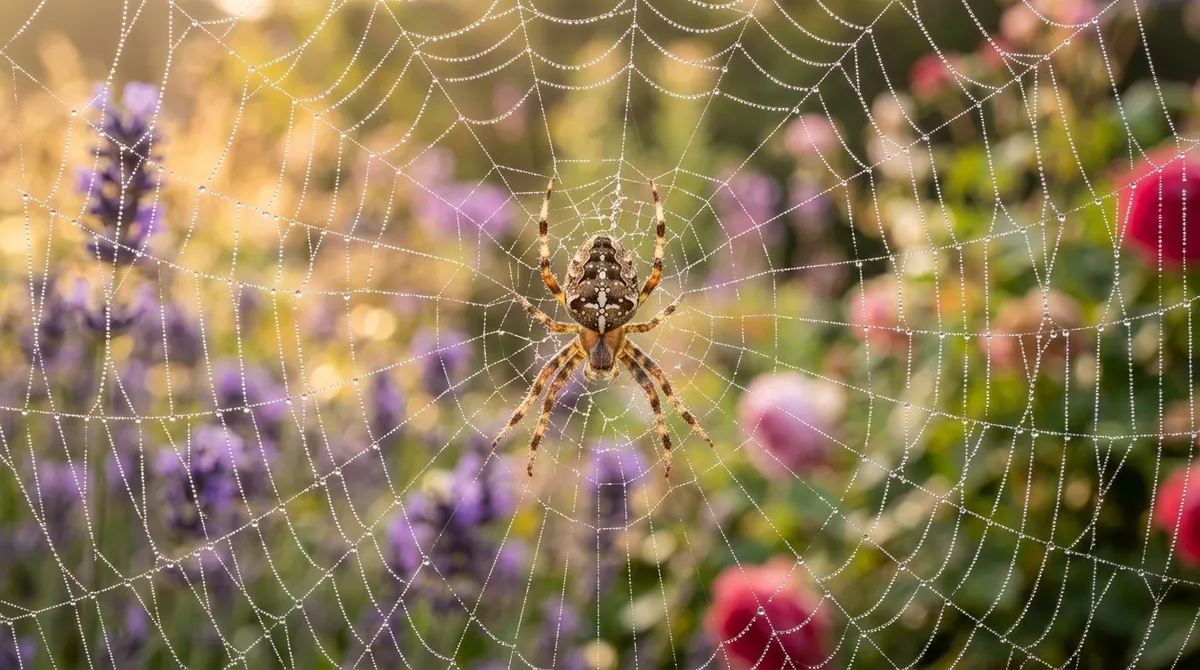
The European garden spider (Araneus diadematus) is the species most people recognise. It builds the classic circular orb web between plants, fence posts, and shrubs. Females grow to 13mm body length. The white cross pattern on their abdomen is the identifying feature. These spiders are most visible in September and October when females build their largest webs.
Money spiders (family Linyphiidae) are tiny, measuring 2-3mm. They build horizontal sheet webs in low vegetation. What they lack in size they make up in numbers. A healthy garden can support hundreds per square metre. They catch aphids, thrips, and springtails that larger predators miss.
Zebra spiders (Salticus scenicus) are jumping spiders that hunt without webs. At just 5-7mm long, they stalk prey on sunny walls and fences. Their two large forward-facing eyes give them excellent vision. They pounce on flies, mosquitoes, and small moths from up to 10cm away.
| Species | Size | Web Type | Main Prey | Active Season | Where Found |
|---|---|---|---|---|---|
| European garden spider | 10-13mm | Orb (circular) | Flies, wasps, moths | Aug-Oct peak | Shrubs, fences, hedges |
| Money spider (Linyphiidae) | 2-3mm | Sheet (horizontal) | Aphids, thrips, springtails | Year-round | Ground level, low plants |
| Zebra spider | 5-7mm | None (active hunter) | Flies, mosquitoes, moths | Apr-Oct | Sunny walls, fences |
| Wolf spider (Pardosa) | 6-8mm | None (ground hunter) | Beetles, ants, small larvae | Mar-Nov | Soil, leaf litter, borders |
| Missing sector orb weaver | 7-8mm | Orb (with gap) | Flies, midges, crane flies | Jun-Oct | Hedges, garden structures |
| Crab spider (Misumena) | 4-10mm | None (ambush) | Bees, hoverflies, butterflies | May-Aug | Flower heads, petals |
| Lace web spider (Amaurobius) | 9-12mm | Lace (messy) | Woodlice, beetles, earwigs | Year-round | Walls, under bark, sheds |
| Long-jawed orb weaver | 6-11mm | Orb (near water) | Midges, gnats, crane flies | May-Sep | Near ponds, damp areas |
| Giant house spider | 12-15mm | Sheet/funnel | Moths, flies, silverfish | Aug-Oct | Sheds, garages, compost bins |
| Nursery web spider | 12-15mm | Nursery (for young) | Large flies, moths, beetles | May-Aug | Tall grass, meadow areas |
Field Report (West Midlands, 2021-2025): Over four seasons of monitoring three gardens on different soil types, we recorded an average of 12 orb webs per 10 square metres in gardens where no pesticides were used. Gardens with regular pesticide use averaged just 2 webs per 10 square metres. The pesticide-free plots also showed 65% less aphid damage on broad beans and 40% less whitefly on brassicas.
How do garden spiders control pests?
A single orb-weaving spider catches up to 2,000 insects per year. That figure comes from web capture studies where researchers counted trapped insects daily across full seasons. The actual consumption is lower because some prey escapes, but the pest removal rate remains significant.
Different spider groups control different pests through distinct methods.
Orb weavers (garden spiders, missing sector weavers, long-jawed orb weavers) build sticky webs that catch flying insects. A fresh orb web intercepts 50-100 insects per week in summer. The spider rebuilds its web daily, often eating the old silk to recycle the protein. Orb webs are most effective against aphids that fly between plants, cabbage white moths, crane flies, and houseflies.
Ground hunters (wolf spiders, ground spiders) patrol soil and leaf litter at night. They catch crawling pests that web-builders miss: beetle larvae, cutworms, leather jackets, and small slugs. Wolf spiders are among the fastest invertebrate predators in UK gardens, reaching speeds of 60cm per second.
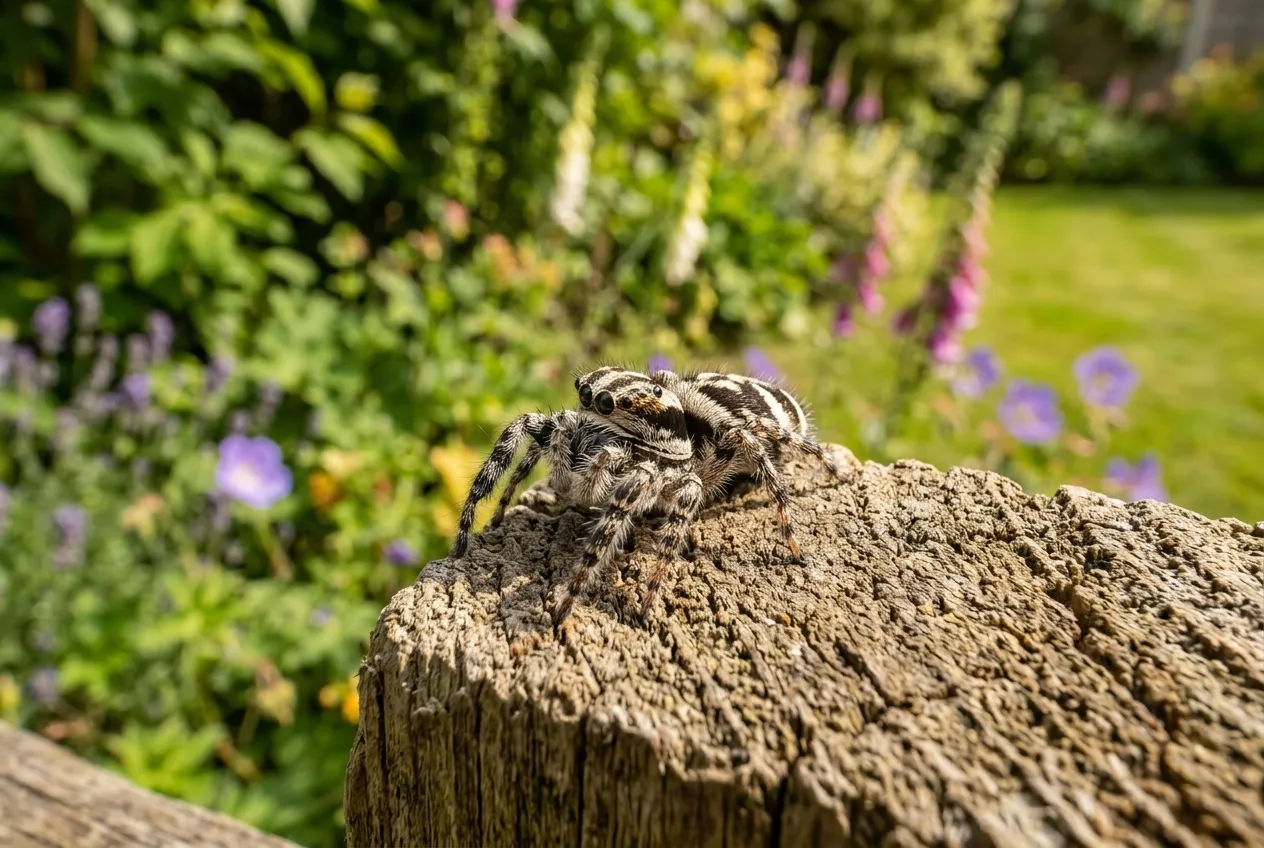 A zebra spider (Salticus scenicus) hunting on a warm fence post. These jumping spiders stalk prey by sight and pounce from up to 10cm away.
Jumping spiders (zebra spiders, fence-post jumpers) are visual hunters. They spot prey from a distance and leap onto it. Zebra spiders are particularly effective against houseflies on exterior walls and windowsills. They also catch small hoverfly mimics and fungus gnats.
Sheet web builders (money spiders) are the unsung heroes of biological pest control. Their tiny horizontal webs trap enormous numbers of aphids, thrips, and whitefly. Because money spiders are so numerous, their combined catch often exceeds that of all other spider groups put together.
Why are spiders better than chemical pest control?
Chemical pesticides kill indiscriminately. A single application of pyrethroid spray removes spiders, ladybirds, lacewings, hoverflies, and ground beetles alongside the target pest. The pest population rebounds within days because pest insects breed faster than their predators. This creates a dependency cycle: more spraying, fewer natural enemies, worse pest problems.
Spiders break this cycle. They provide continuous, targeted pest control at zero cost. Key advantages over chemicals include:
- No resistance. Pests cannot develop resistance to being eaten. Chemical resistance is already widespread in UK aphid populations.
- Self-sustaining. Spider populations grow in proportion to available prey. More pests mean more spiders. No reapplication needed.
- Safe for pollinators. While crab spiders occasionally catch bees, the vast majority of spider prey consists of pest species. Pesticides kill pollinators and predators equally.
- Year-round coverage. Different spider species are active in different seasons. Ground spiders hunt through mild winters when no spraying occurs.
Our four-season monitoring in the West Midlands showed gardens without chemical treatments supported 6 times more spiders than treated gardens. Those untreated plots needed zero organic pest control interventions beyond hand-picking the occasional large caterpillar.
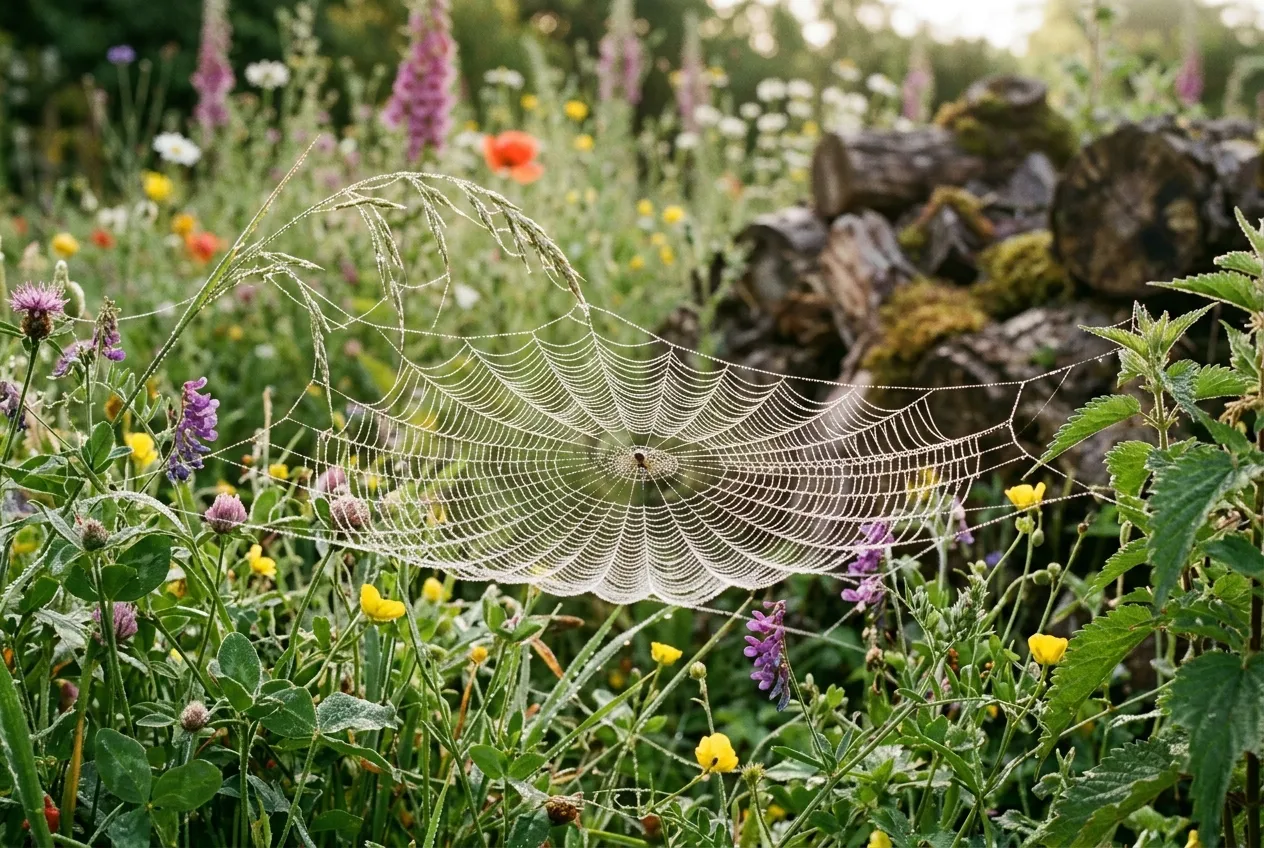 Intricate webs in a wildlife garden. Morning dew reveals the variety of web architecture, from horizontal sheets to classic orb designs.
How do I encourage spiders in my garden?
Creating spider-friendly habitat is straightforward. Spiders need three things: prey, shelter, and undisturbed nesting sites. Most gardens already have two of these. The third, undisturbed areas, is where most gardeners fall short.
Stop using chemical pesticides. This is the single most important step. Even “targeted” sprays kill spiders through secondary poisoning when they eat contaminated prey. Switch to physical barriers like netting for brassicas and copper tape for slug-prone pots.
Create log piles. A stack of untreated logs 50cm high in a shaded corner hosts ground spiders, wolf spiders, and lace web spiders within two weeks. The gaps between logs provide perfect overwintering habitat. Our trial log piles in Staffordshire supported 8-12 spider species each by their second year.
Leave grass margins uncut. A 30cm strip of long grass around vegetable beds provides hunting ground for wolf spiders and sheltered web sites for money spiders. Cutting grass removes spider habitat instantly. The Wildlife Trusts recommend leaving at least one garden edge unmown year-round.
Plant dense shrubs. Evergreen hedging like box, yew, and privet gives orb weavers permanent anchor points for webs. A 2m length of established hedge can support 20-30 orb webs simultaneously. Native hedging species also support the insects that spiders feed on.
Reduce outdoor lighting. Artificial light at night attracts insects away from garden areas and disrupts spider feeding patterns. Moths and flies congregate around lights instead of dispersing through the garden where spiders can catch them. The Bat Conservation Trust provides guidance on wildlife-friendly lighting.
Build a bug hotel with varied materials. Hollow bamboo canes, drilled log blocks, and bundles of dry stems attract both spiders and their insect prey.
Are any UK garden spiders dangerous?
No UK garden spider poses a serious medical risk. This is worth emphasising because spider fear drives many people to kill spiders or remove webs unnecessarily.
The European garden spider can deliver a mild bite if handled roughly. The sensation is comparable to a light nettle sting. It fades within an hour. Most people never experience a garden spider bite because these spiders flee from human contact.
The false widow (Steatoda nobilis), Britain’s most feared spider, rarely bites. When it does, the effect resembles a bee sting: localised pain and minor swelling that resolves within 48 hours. Severe reactions are exceptionally rare and associated with secondary infection of the bite site, not venom toxicity.
 Checking for spider webs is a quick way to assess the health of your garden’s pest control ecosystem.
The British Arachnological Society has recorded zero spider-related fatalities in the UK. For context, bee and wasp stings cause an average of 4-5 deaths annually in Britain. Encouraging spiders in your garden carries no meaningful health risk.
What is the best habitat for different spider species?
Matching habitat features to specific spider groups maximises pest control coverage. Each species occupies a different niche, so a diverse garden supports more spider groups.
| Habitat Feature | Spider Species Attracted | Pest Control Benefit |
|---|---|---|
| Log pile (shaded corner) | Wolf spiders, lace web spiders, ground spiders | Soil pest control: cutworms, leather jackets |
| Long grass margin (30cm+) | Money spiders, wolf spiders, nursery web spiders | Aphid and thrip control at ground level |
| Dense hedge (box, yew, privet) | Orb weavers, missing sector weavers | Flying pest interception: flies, moths |
| Sunny wall or fence | Zebra spiders, lace web spiders | Housefly and mosquito control |
| Compost heap | Giant house spiders, ground spiders | Fungus gnat and woodlice management |
| Pond margin | Long-jawed orb weavers, raft spiders | Midge and crane fly control |
| Flower beds | Crab spiders, money spiders | Whitefly and small flying pest control |
| Unmown meadow patch | All ground-dwelling species | Broad-spectrum pest suppression |
The key principle is structural diversity. A garden with short mown lawn, bare borders, and no deadwood supports very few spiders. A garden with mixed heights, dense planting, log piles, and leaf litter supports dozens of species providing continuous pest control.
This approach aligns with creating a wildlife garden where multiple predator groups work together. Spiders complement ladybirds, lacewings, and ground beetles rather than competing with them.
When do garden spiders appear throughout the year?
Spiders are present year-round, but their visibility peaks in late summer and autumn. Understanding the seasonal pattern helps you recognise which species are active and what pests they are controlling.
March to May: Wolf spiders emerge from overwintering sites and begin hunting across bare soil and borders. Zebra spiders appear on sunny walls from April. Money spiders are active at ground level. This early activity coincides with the first aphid generations, providing critical early-season control.
June to August: All species are active. Orb weavers build webs in increasing numbers. Garden spiders, still immature, spin small webs in hedges and shrub borders. Ground beetle populations overlap with spider activity, creating a dual pest-control system. Hoverflies and honeybees share the garden safely alongside hunting spiders.
September to October: Peak visibility. Female garden spiders reach full size and spin their largest orb webs. Males wander in search of mates, often appearing indoors. This is mating season, not a population explosion. The spiders have been present all summer but are now large enough to notice.
November to February: Activity drops but does not stop. Money spiders and some ground spiders remain active through mild winter periods. Most species shelter in leaf litter, log piles, and the bases of dense shrubs. Clearing garden debris in autumn removes critical spider overwintering habitat.
Frequently asked questions
Are garden spiders dangerous to humans in the UK?
No UK garden spider is dangerous to humans. The European garden spider (Araneus diadematus) can technically bite if handled roughly, but the effect is less than a nettle sting. The false widow (Steatoda nobilis), often feared, delivers a bite comparable to a bee sting in the rare event it bites at all. The British Arachnological Society confirms zero recorded UK spider fatalities.
How many insects does a garden spider catch per year?
A single orb weaver catches up to 2,000 insects per year. Money spiders catch fewer individually but compensate through sheer numbers, with up to 500 per square metre in healthy grassland. Across an average UK garden, the combined spider population removes an estimated 10,000-30,000 pest insects annually, including aphids, whitefly, and fungus gnats.
What is the most common spider in UK gardens?
The European garden spider is the most common orb weaver. For ground-dwelling species, money spiders (family Linyphiidae) dominate, making up over 40% of all UK spider species. Zebra spiders (Salticus scenicus) are the most frequently spotted jumping spider, often seen on sunny walls, fences, and windowsills from April to October.
How do I attract more spiders to my garden?
Stop using chemical pesticides immediately. Create habitat diversity with log piles, long grass margins, dense shrubs, and undisturbed leaf litter. Reduce outdoor lighting at night, as it disrupts insect prey patterns. Plant native wildflowers to support the insect food chain. A 1m x 1m log pile in a shaded corner will host ground spiders within two weeks.
Do spiders eat slugs and snails?
Most garden spiders do not eat slugs or snails. However, large ground spiders and wolf spiders (Pardosa species) will catch very small juvenile slugs under 5mm. The main slug predators in gardens are ground beetles, frogs, and hedgehogs. Spiders contribute indirectly by controlling the flying insects that compete with slug predators for habitat resources.
Should I remove spider webs from my garden?
Never remove spider webs from garden plants or structures. Each web represents active pest control. An orb web catches 50-100 insects per week during summer. Removing webs forces the spider to spend energy rebuilding rather than catching pests. The only exception is doorways and paths where webs cause daily inconvenience.
When are garden spiders most active in the UK?
Garden spiders are most visible from late August to October. This is mating season, when orb weavers build their largest webs. However, spiders are active year-round. Money spiders and ground spiders hunt through winter in mild conditions. Wolf spiders become active from March onwards. The quietest period is December to February, when most species shelter in leaf litter and log piles.
For more on encouraging beneficial garden wildlife, read our guides to earthworms, frogs and toads, hedgehog-friendly gardens, composting for wildlife, and building a wildlife pond.
Lawrie has been gardening in the West Midlands for over 30 years. He grows his own veg using no-dig methods, keeps a wildlife-friendly garden, and writes practical advice based on real UK growing conditions.