Key takeaways
- Plan 7 core habitats first, then borders: pond, dead wood, long grass, native hedge, bare ground, nectar succession, shelter
- Target 70 per cent native or near-native planting across the whole plot, not just one wildlife corner
- A pond 600mm deep with a 1 in 5 shallow shelf is the single highest-value habitat
- Cut hard surface below 30 per cent of the plot to keep ground open for soil life and solitary bees
- Provide nectar across all 12 months, not just June to August, to support early and late insects
- A 130mm gap at every fence base links gardens into a hedgehog highway across the street
Habitat-first garden design flips the usual order of planning a plot. Instead of drawing borders and lawn first, you map the habitats an ecosystem needs, then fit the human garden around them. This wildlife garden design method took centre stage at the 2026 Chelsea Flower Show, where habitat-led plots outnumbered traditional show gardens. It treats your plot as a working habitat garden, not a decorated outdoor room.
How habitat-first design differs from a normal wildlife garden
A standard wildlife garden bolts features onto an ordinary plot. People keep a tidy lawn and neat borders, then add a bug hotel in one corner and a small pond in another. The wildlife area is a guest in a human garden. It usually covers under 15 per cent of the plot.
The method is design-led, not accidental. Each habitat connects to the next so animals move freely. A frog can travel from pond to log pile to hedge base without crossing open mown grass. This connectivity is the part most wildlife gardens miss. A pond on its own is a help. A pond linked by cover to three other habitats is a population.
Gardener’s tip: Sketch the habitats on a scale plan before buying a single plant. Mark the pond, the dead wood, the long grass and the hedge line first. Borders and seating come last, in the spaces left over.
The seven core habitats every plot needs
Seven habitats cover the needs of most UK garden wildlife. Build all seven and you support the full chain from soil microbes to garden birds. Each one fills a different niche.
A pond delivers the biggest single gain. Dead wood feeds beetles, fungi and the birds that eat them. Long grass shelters insects and small mammals. A native hedge gives nesting, berries and a wildlife corridor. Bare ground lets solitary bees nest. Nectar succession keeps pollinators fed all year. Shelter and corridors link the lot together.
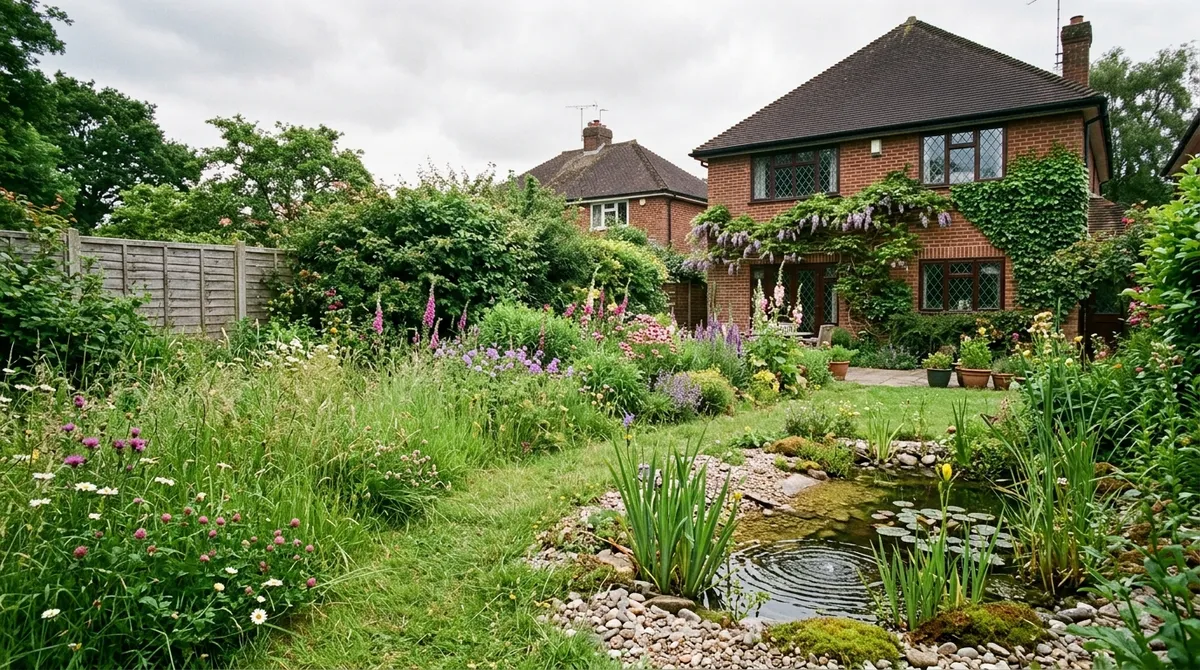
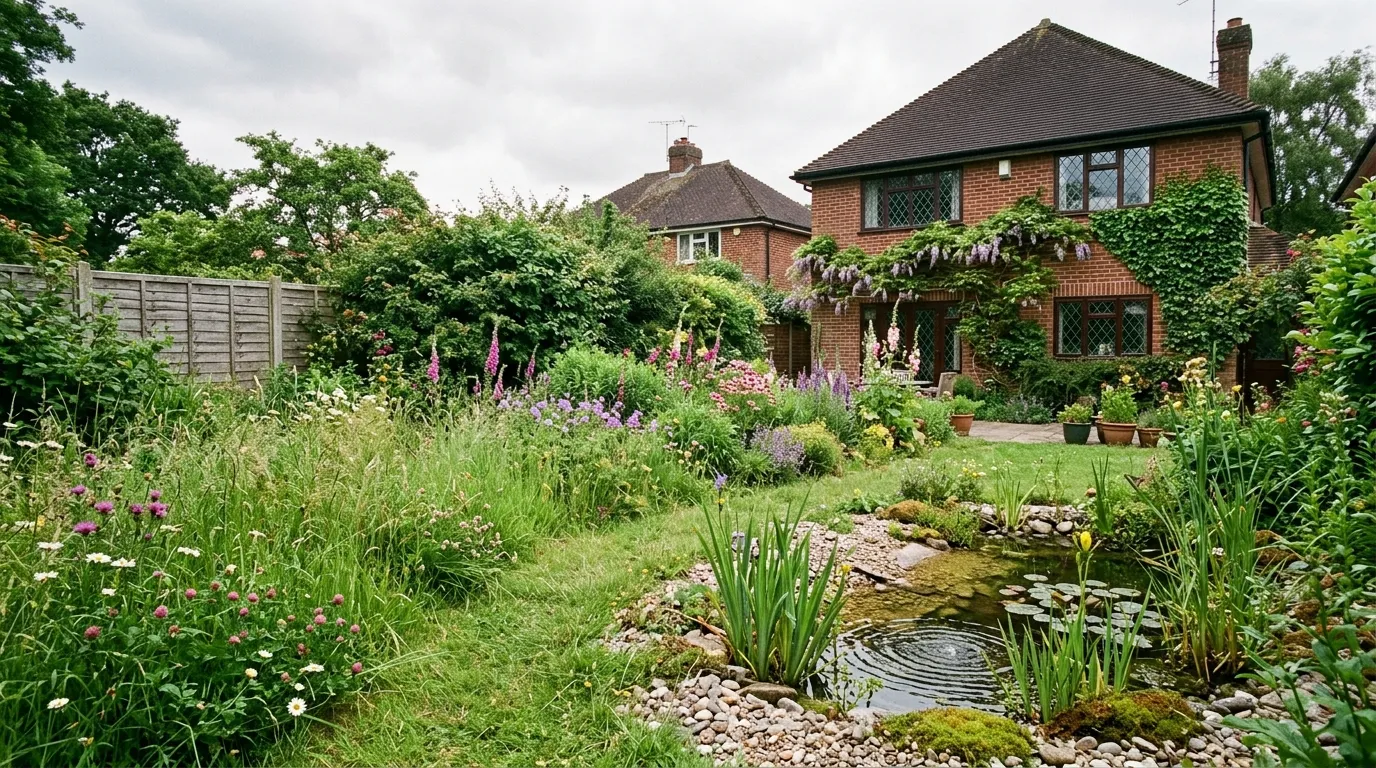 A habitat-first plot reads as a working ecosystem. Water, long grass and a native border sit at the centre, with seating fitted into the gaps.
Water: the pond that does most of the work
Dig it 600mm deep at the centre. Slope one side at 1 in 5 so creatures climb out and tadpoles warm in the shallows. Leave fish out. Fish eat tadpoles and invertebrates and cut the species count by half. A pond needs no pump and no filter for wildlife.
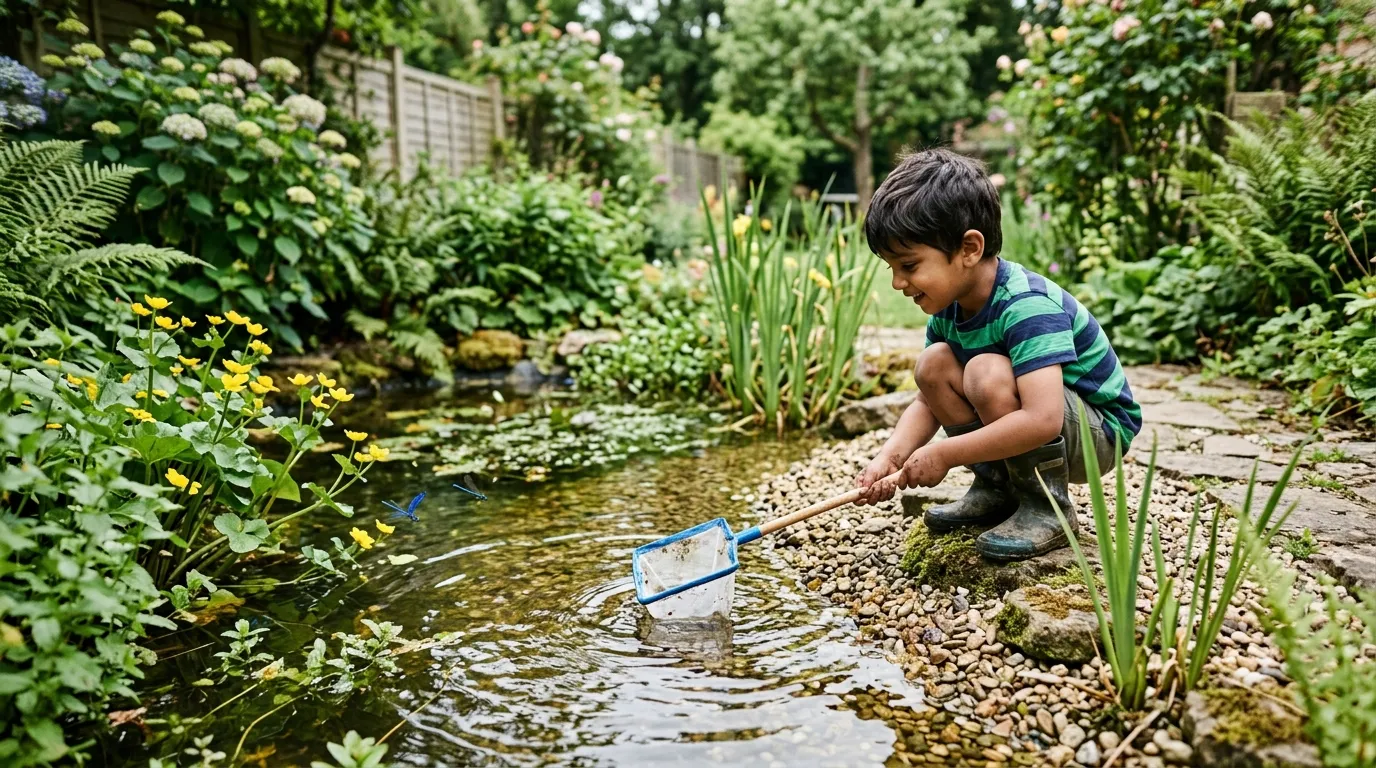 A 3 square metre pond with a shelf sloping at 1 in 5. No fish, no pump, and a shallow edge for animals to climb out and tadpoles to warm.
Dead wood: the log pile and standing stump
A log pile turns waste branches into a habitat for stag beetle larvae, woodlice, fungi and the wrens that hunt them. Stack 6 to 10 logs of 100mm or more diameter in light shade. Half-bury the bottom layer so it stays damp.
Stag beetle larvae spend 3 to 6 years in rotting wood before they emerge. A standing dead stump, left 600 to 900mm tall, suits them even better than a flat pile. Dead wood is the habitat UK gardens lose most, because people burn or chip every fallen branch.
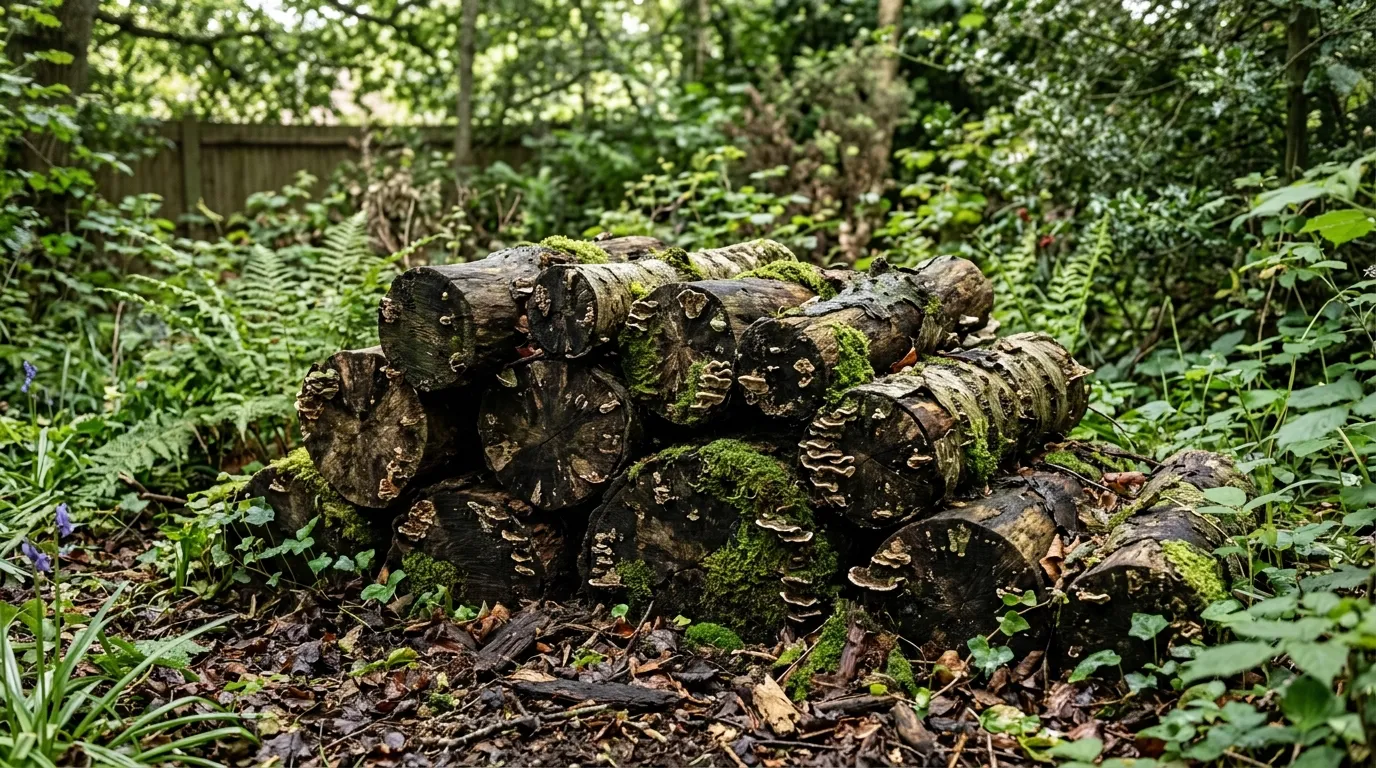 A log pile in light shade with the lowest logs half-buried. Damp, rotting wood feeds stag beetle larvae for up to six years.
Long grass and mini-meadow
Long grass is the cheapest high-value habitat in any garden. Stop mowing one third of the lawn and the species count climbs within a single summer. Long grass shelters caterpillars, grasshoppers, voles and the eggs of common blue and meadow brown butterflies.
For a fuller meadow, cut the grass once in late summer and remove the clippings to lower soil fertility. Add yellow rattle in autumn to weaken vigorous grasses. A 20 square metre mini-meadow on poor soil can carry 25 to 40 plant species within three years.
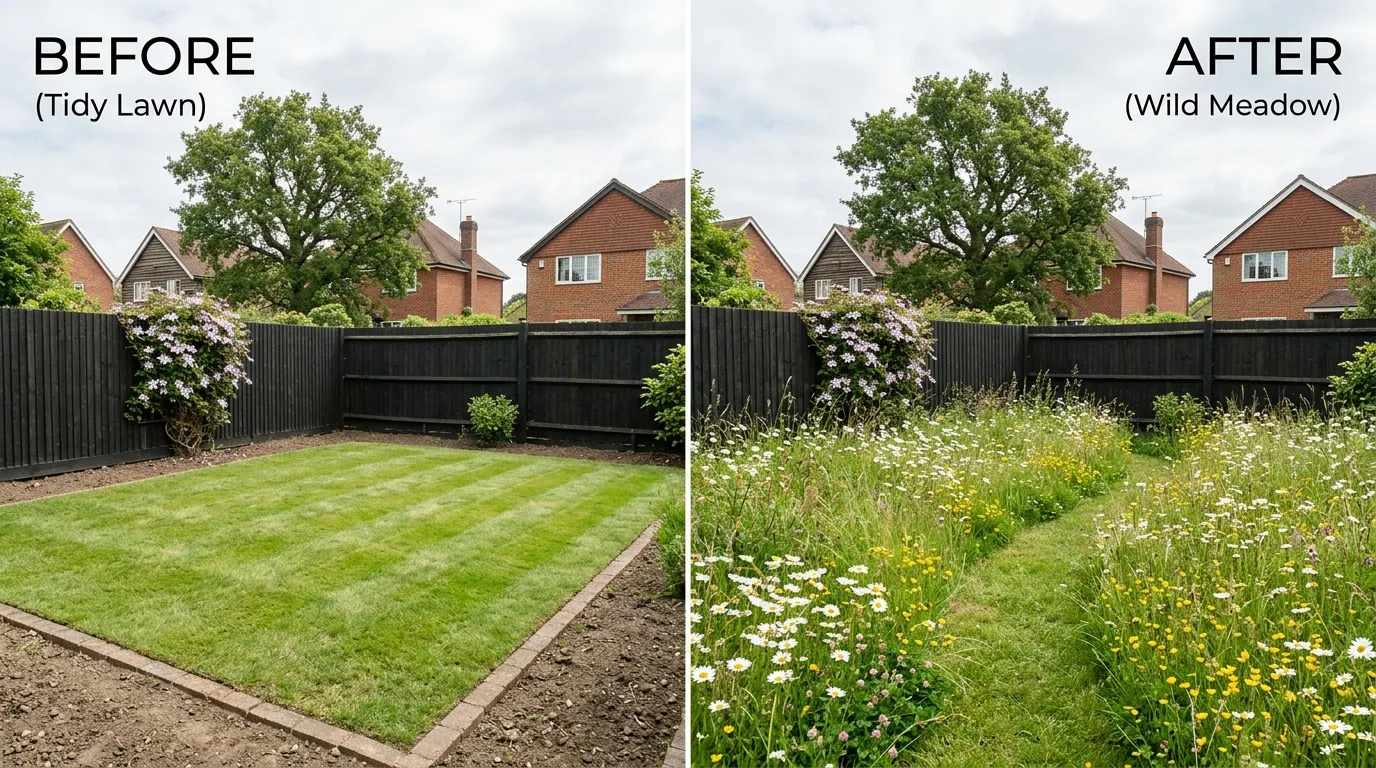 Left: a closely mown lawn with bare edges. Right: the same corner left as long grass and mini-meadow with a mown path. The species count climbs within one summer.
Native hedge and the shrub layer
A native hedge of hawthorn, blackthorn, hazel and dog rose does four jobs at once. It nests birds, feeds insects, fruits for autumn and links your plot to the next as a corridor. Hawthorn alone supports around 150 insect species.
Plant a mixed native hedge as bare-root whips in winter at 5 to 6 plants per metre in a double staggered row. Let it grow to 1.5 to 2 metres and cut on a 2 to 3 year rotation so it always carries berries and nesting cover.
Bare ground and sand for solitary bees
Bare ground sounds like neglect but it is a habitat in short supply. Around 70 per cent of the UK’s 270 solitary bee species nest in bare soil or sand. They cannot dig through mulch, gravel or dense planting.
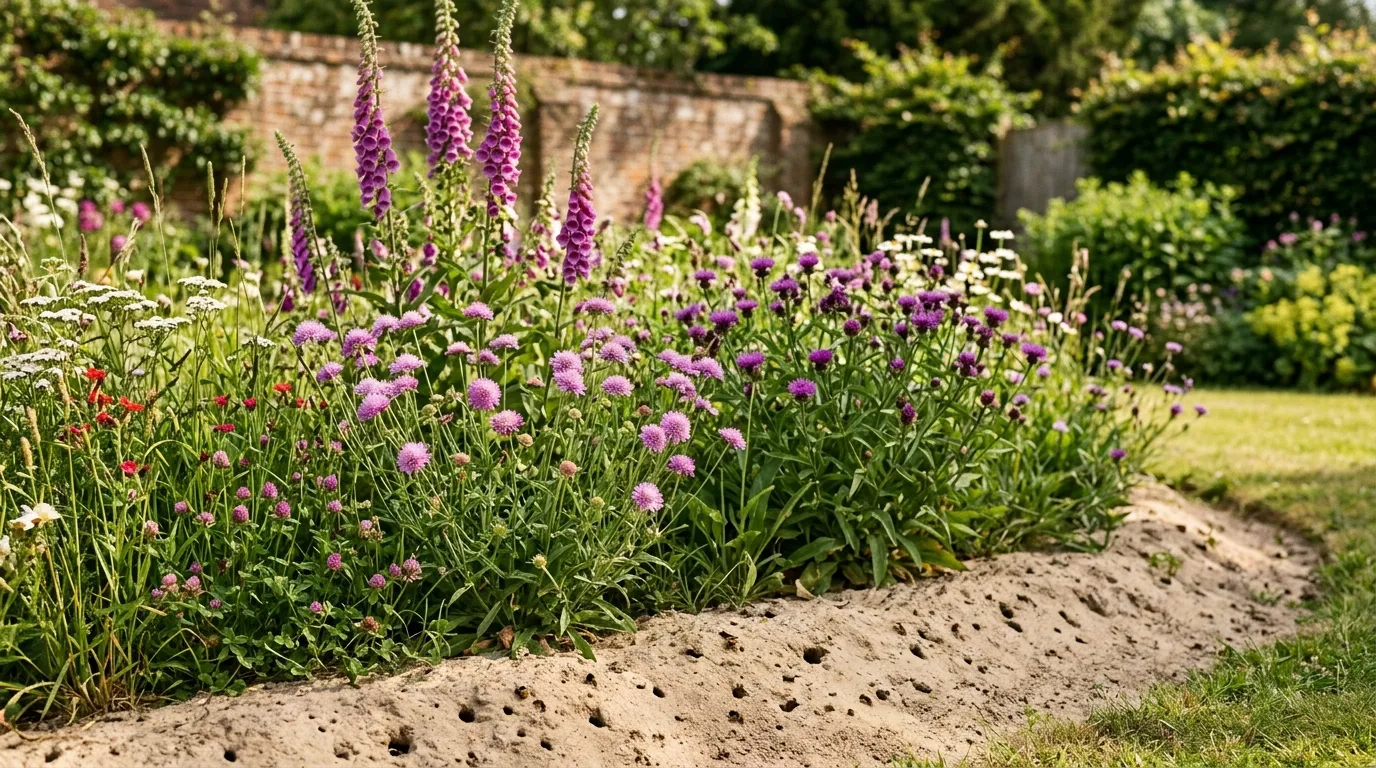 A south-facing sand bank beside a native border. Most UK solitary bees nest in bare soil and cannot tunnel through mulch or gravel.
Nectar across all twelve months
Nectar succession means flowers in every month, not just the June to August peak. Early bumblebee queens emerge in February and starve if nothing is open. Ivy, the last big nectar source, feeds wasps and hoverflies into November.
Plan the planting so something flowers each month. Winter aconite and snowdrop carry January and February. Pulmonaria and willow catkins cover March. Ivy and Verbena bonariensis run the autumn. This twelve-month plan is what most wildlife borders miss.
Shelter and corridors that link it all
Shelter and corridors tie the six habitats into one system. Hedgehogs, frogs and ground beetles need cover to move between water, food and nesting. A bare lawn is a barrier. A run of long grass, hedge base and leaf litter is a road.
Leave leaf litter under hedges. Link long grass to the pond edge. Keep a corridor of cover from the boundary to the centre. The aim is that an animal never has to cross open ground to reach the next habitat.
Comparing the habitats: space, cost and species
The pond and hedge give the highest return. Dead wood and corridors cost nothing but waste material and restraint. The most common error is to spend on the pond and skip the free habitats that make it work.
A wildlife-first zoning plan for a 120 square metre garden
A typical UK back garden runs 100 to 150 square metres. Here is how to zone 120 square metres for habitat first. The split keeps habitat at 70 per cent and human space at 30 per cent.
Work outward from the boundary:
- Boundary (full perimeter): native mixed hedge, 1 metre wide. Roughly 30 metres of run on a 120 square metre plot.
- Far third (40 m sq): the wild core. Pond of 3 square metres, log pile, bare sand bank, and long grass or mini-meadow around them.
- Middle third (40 m sq): nectar succession borders either side of a mown grass or bark path. This is the layer people see and enjoy most.
- Near third (40 m sq): the human zone. Patio at 12 square metres, seating, washing line, shed. Hard surface stays under 30 per cent of the whole plot.
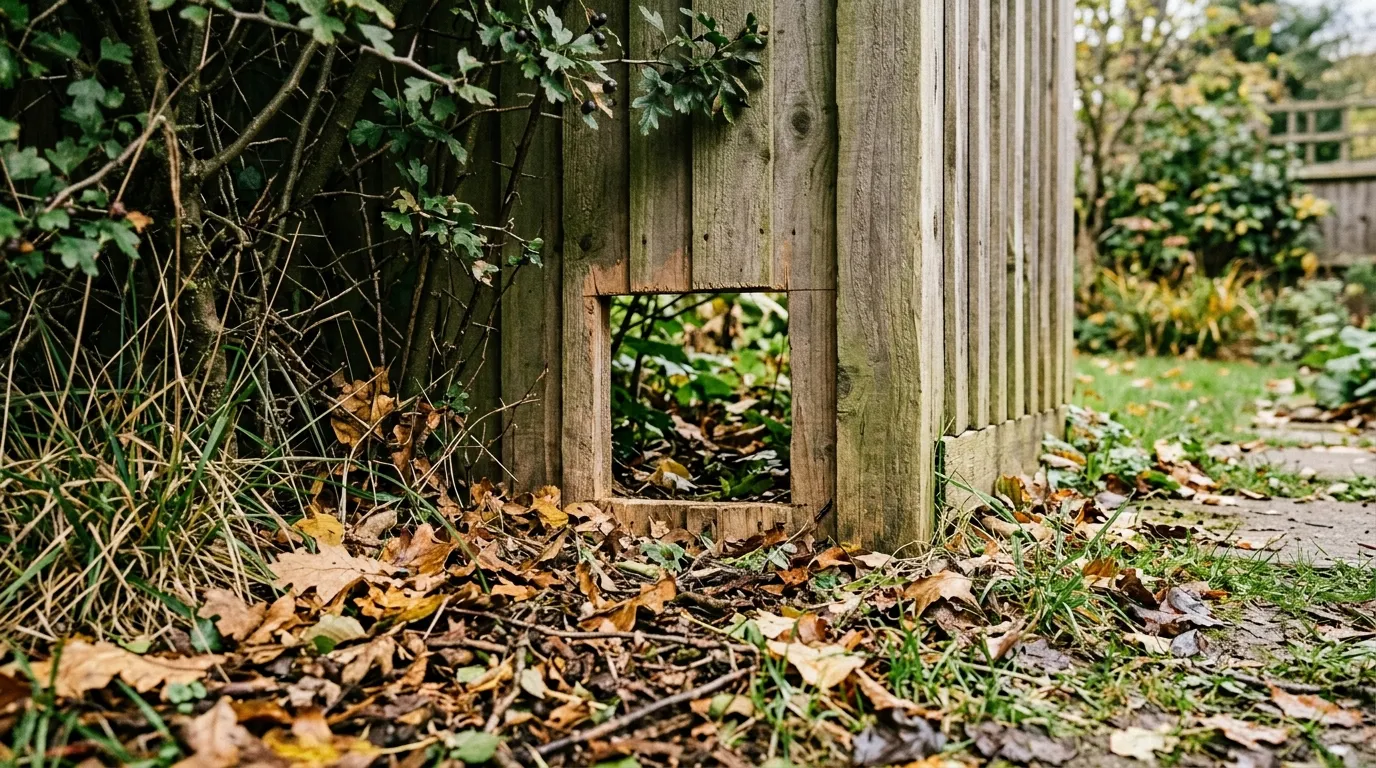 A 130mm gap at the hedge base links one garden to the next. Hedgehogs roam up to 2 kilometres a night and need ten or more connected gardens.
Designing for connectivity between gardens
A single habitat garden is an island. Connectivity turns a street of gardens into one large habitat. Hedgehogs show why this matters. They roam 1 to 2 kilometres a night and need access to 10 or more gardens to find enough food and a mate.
Cut a 130mm square hole at the base of every fence, the size of a CD case. This is a hedgehog highway. Frogs, toads and ground beetles use it too. The Wildlife Trusts run a national hedgehog highway scheme that maps these gaps street by street.
Better still, replace solid fence panels with native hedge where you can. A hedge is a corridor in its own right, not just a gap. Where fences must stay, plant climbers like honeysuckle and ivy up them to add cover and nectar. The aim is a continuous green route from your boundary to the next.
Warning: Never use slug pellets or broad-spectrum insecticides in a habitat garden. They kill the invertebrates the whole food chain depends on, and poison the hedgehogs, frogs and birds that eat them. A balanced habitat controls pests through predators instead.
Hitting the 70 per cent native planting target
Native plants support far more wildlife than exotics because UK insects evolved alongside them. The contrast is stark. Oak hosts around 280 insect species. Sycamore, a non-native, supports about 15. Aim for 70 per cent native or near-native planting across the whole plot.
This does not mean a weed patch. Many native and near-native plants are garden-worthy: foxglove, field scabious, betony, hardy geranium and viper’s bugloss all earn a border place. Mix them with long-flowering garden plants for the remaining 30 per cent, chosen for late nectar.
Apply the target across every layer:
- Hedge: all native (hawthorn, blackthorn, hazel, dog rose, field maple).
- Meadow: native grasses and wildflowers plus yellow rattle.
- Borders: mostly native perennials, topped up with single-flowered garden plants.
- Trees: native or insect-rich, such as crab apple, rowan or silver birch.
Single, open flowers beat double blooms every time. Double flowers often carry no accessible nectar or pollen. The Bumblebee Conservation Trust lists the best species in its pollinator-friendly planting guidance.
Cutting hard surfaces below 30 per cent
Hard surfaces are dead habitat. Paving, decking and gravel block soil life, stop solitary bees nesting and shed rainwater into drains. Keep hard surface under 30 per cent of the plot in a habitat-first design.
Where you do need a surface, choose permeable options. Gravel over a membrane-free base lets water soak in. Bark or self-binding gravel paths carry foot traffic and still breathe. Planted joints in paving give mining bees and low plants a foothold.
Planning nectar across the year
A habitat garden must feed pollinators in all twelve months, not just summer. Queen bumblebees emerge as early as February. The autumn brood and overwintering hoverflies need food into November. Gaps in the calendar starve them.
The table below maps reliable UK nectar sources month by month. Each one is hardy and widely available.
| Month | Key nectar source | Pollinators fed |
|---|---|---|
| January | Winter aconite, mahonia | Early bumblebee queens on warm days |
| February | Snowdrop, crocus, hellebore | Emerging queen bumblebees |
| March | Pulmonaria, willow catkins | Solitary bees, queen bees |
| April | Primrose, flowering currant | Hairy-footed flower bee, mining bees |
| May | Hawthorn, comfrey, geum | Bumblebees, hoverflies |
| June | Foxglove, viper’s bugloss | Long-tongued bumblebees |
| July | Field scabious, knapweed | Butterflies, solitary bees |
| August | Verbena, marjoram, lavender | Butterflies, all bees |
| September | Sedum, Michaelmas daisy | Late butterflies, hoverflies |
| October | Ivy, dahlia (single) | Wasps, hoverflies, late bees |
| November | Ivy, mahonia | Late hoverflies, drone flies |
| December | Mahonia, winter honeysuckle | Mild-day foragers |
Ivy does more than its reputation suggests. It is the last big nectar source of the year and feeds dozens of species into November. Let a patch flower rather than cutting it every year.
Month-by-month habitat gardening calendar
Habitat gardening needs less work than a tidy garden, but the timing matters. Cutting grass or hedges at the wrong moment destroys the wildlife you built the plot for. This calendar keeps the work in step with the seasons.
| Month | Main task |
|---|---|
| January | Cut hedges only if no berries left; plan new habitats |
| February | Plant bare-root native hedge whips before bud burst |
| March | Clear pond debris before frogs spawn; sow yellow rattle gaps |
| April | Leave nesting hedges uncut; top up bare sand patch |
| May | Mow paths only; let meadow and long grass grow |
| June | Deadhead nectar plants; keep pond topped with rainwater |
| July | Refresh bare ground; divide spreading perennials |
| August | Cut and remove meadow hay once seed has dropped |
| September | Plant spring nectar bulbs; build or top up log piles |
| October | Leave leaf litter under hedges; plant native trees |
| November | Cut hedges after berries gone; leave seed heads standing |
| December | Check fence gaps stay open; leave a wild corner untouched |
The two rules that matter most: never cut a hedge between March and August when birds nest, and never tidy the whole plot in autumn. Standing seed heads and leaf litter shelter overwintering insects and feed birds through winter.
Common mistakes in habitat garden design
Most habitat gardens fail in the same few ways. Each mistake comes from applying tidy-garden thinking to a wild plot. Avoiding these four lifts the species count fastest.
Non-native nectar only. A border of bedding plants may flower hard but feeds little. Many double and exotic flowers carry no usable nectar. Make native species the structural majority and keep garden flowers as a top-up, not the base.
Isolated features. A pond with mown grass around it, or a bug hotel in the open, supports far less than a linked habitat. Wildlife needs cover to reach water and food. Connect every feature with long grass, hedge base or leaf litter.
Forgetting the off-season. Building for the summer peak leaves February queens and November hoverflies with nothing. Plan nectar across all twelve months and leave structure standing through winter for shelter.
Monitoring what your garden actually supports
You do not need a moth trap to start. A weekly five minute pause to note what you see builds a record. Apps that log sightings help. The point is to track change over years, so you know which habitat each new species needs.
Next step
Now you have the habitat-first method, read our wildlife pond guide for step-by-step construction of the single highest-value habitat on the list.
Our team produces practical UK gardening guidance from source research, contributor records and established horticultural practice. Editorial standards are overseen by Matt W.