Key takeaways
- A mast year produces 10 to 50 times a normal seed crop, then a lean year or two follows
- Predator satiation is the leading theory: a glut overwhelms jays, mice and squirrels so seed survives
- A warm dry spring during flowering is the main weather trigger, alongside the previous summer's conditions
- Pollen coupling synchronises whole regions, so oaks for miles around mast in the same autumn
- Wood mouse and bank vole numbers can double or treble the spring after a mast year
A mast year is one of the few wildlife events you can see, hear and trip over without leaving your garden. In a true mast year, oak and beech trees pour out an enormous seed crop. Acorns and beech nuts crunch underfoot, fill the gutters, and dent the odd car roof. The following spring, carpets of tree seedlings appear in lawns and borders. Then the trees fall quiet again for a year or two.
What a mast year actually is
A mast year is a year when trees produce a far larger seed crop than normal, all at the same time across a region. The word mast is old. It comes from the Old English maest and meant the nuts on a woodland floor that pigs were turned out to eat. Hard mast is nuts and acorns. Soft mast is fleshy fruit like haws and berries.
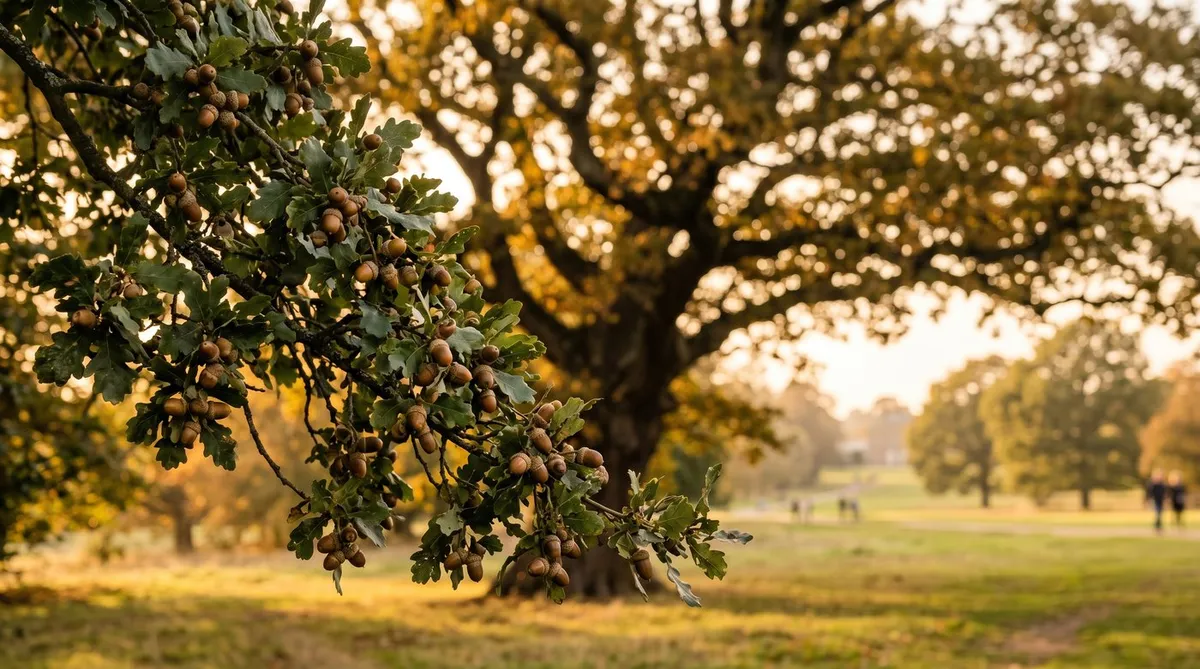
In a normal autumn, a mature pedunculate oak (Quercus robur) sets a modest crop. In a mast year it can produce 10 to 50 times as much. Estimates for a single large oak run into the tens of thousands of acorns. The key feature is synchrony. It is not one tree having a good year. Whole woods, and oaks for miles around, mast together.
After a mast year, the trees rest. The next one or two autumns bring very little seed. This boom and bust is the heart of the phenomenon, and the reason it shapes so much else.
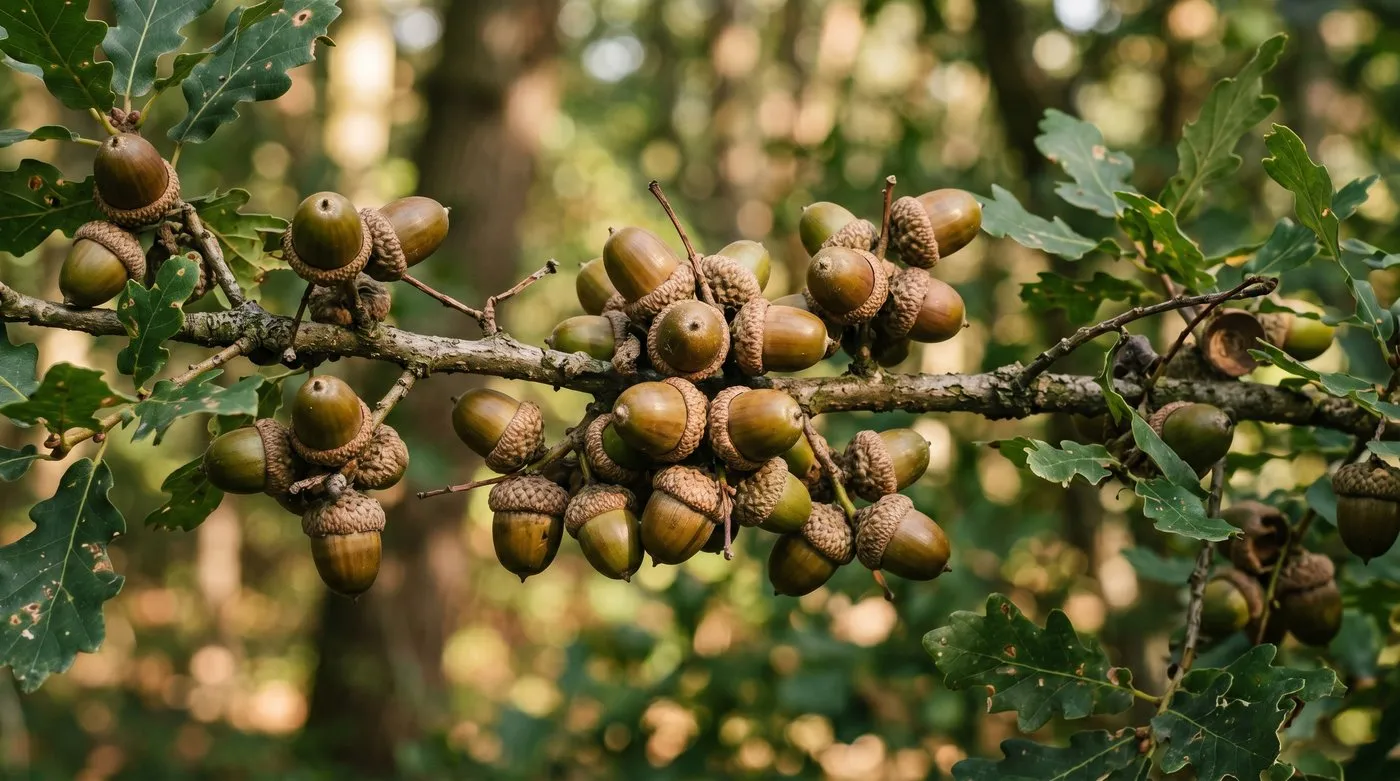 A single oak branch loaded with acorns. In a mast year one mature oak can set tens of thousands of acorns, against a few hundred in a lean year.
The science of why trees mast
There is no single cause. Three ideas work together to explain mast years, and researchers still debate the balance between them.
Predator satiation
The leading theory is predator satiation. Animals eat acorns and beech nuts: jays, wood mice, bank voles, grey squirrels, deer and, in a few areas, wild boar. If a tree cropped the same modest amount every year, it would simply feed a large, stable population of seed eaters. They would take almost the whole crop.
By cropping huge amounts at once, the trees overwhelm those animals. There is more seed than they can eat or store. The surplus survives to germinate. The lean years in between also keep seed-eater numbers down, so the next glut hits a smaller, hungrier population.
Resource matching and pollen coupling
Setting seed is expensive. A tree needs stored reserves to fruit heavily, so it cannot mast every year. This is resource matching. After a big crop, the tree spends a year or two rebuilding before it can do it again.
Pollen coupling explains the synchrony. Wind-pollinated trees like oak and beech release vast clouds of pollen. A tree only sets a heavy crop if enough pollen arrives during its short flowering window. When conditions favour flowering, every tree flowers at once and shares pollen, so they all fruit together. When conditions are poor, pollination fails across the board.
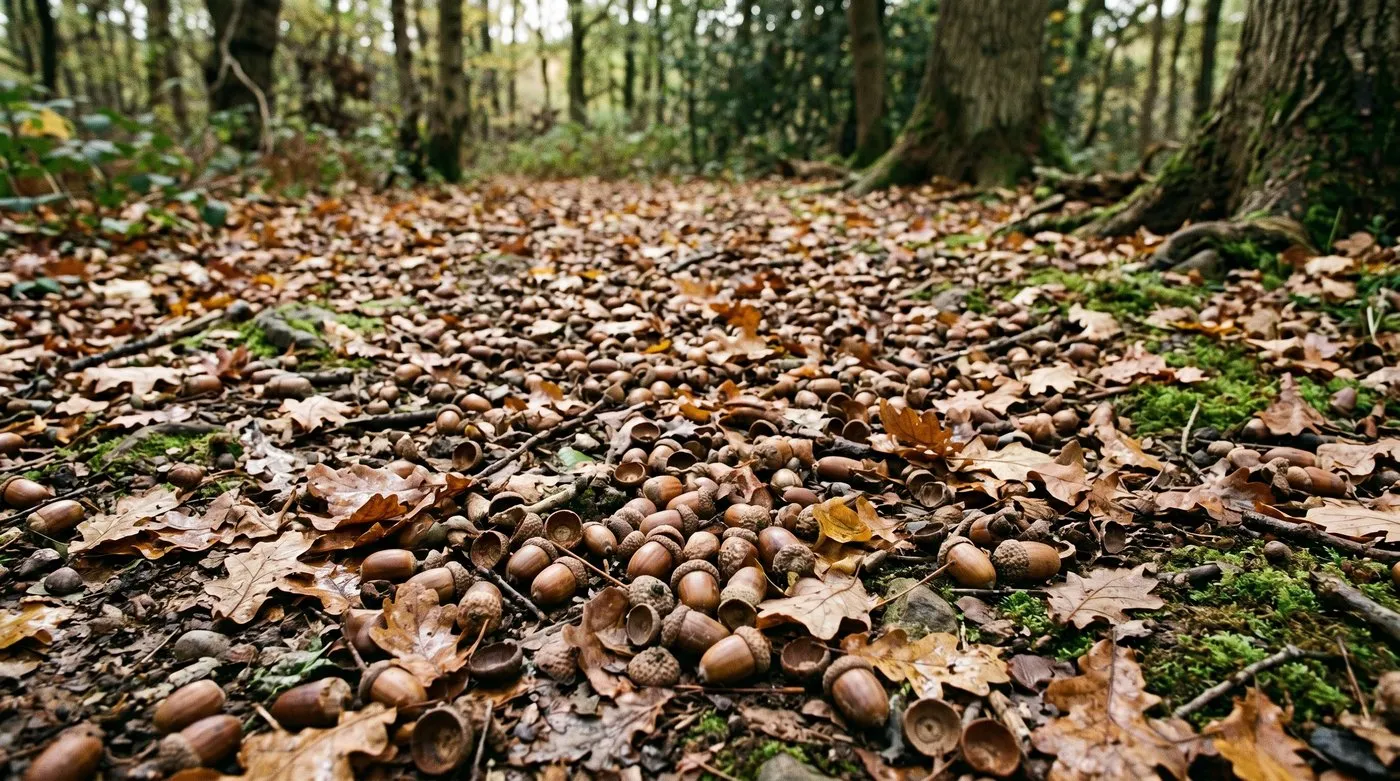 Acorns blanket the ground after a mast year. This glut is the point: there is far more than the local jays, mice and squirrels can ever eat or hide.
Weather cues that set the trigger
Weather is the switch that links it all together. A warm dry spring during flowering is the main trigger. Dry air carries pollen well and lets flowers pollinate cleanly. A cold wet spring damages flowers and washes pollen out of the air, so the crop fails.
The previous summer matters too. A warm summer the year before helps trees lay down the reserves and form the flower buds for next spring. Researchers also point to a “two summers” pattern in oak: the weather across two consecutive growing seasons shapes the crop. Because weather acts over whole regions, it switches every tree on or off together. That is what produces synchronised masting at the scale of a county.
How a mast year ripples through UK wildlife
A mast year is a pulse of food, and the effects run on for over a year. The animals that eat acorns and beech mast respond first.
Jays are the great acorn movers. A single jay can cache several thousand acorns in one autumn, burying them one or two at a time across woods and gardens. Many are never recovered, so jays plant oaks for free. Wood mice and bank voles breed hard on the surplus. After a heavy crop their numbers can double or treble the following spring. Grey squirrels put on weight and breed better, and deer and wild boar benefit where they occur.
The boom then climbs the food chain. Tawny owls breed more successfully in the spring after a mast year, because there are far more mice and voles to feed chicks. Stoats, weasels and foxes also do well. There is a public-health footnote too. More mice can mean more ticks completing their lifecycle on small mammals, which can raise local Lyme disease risk a year or two later. The effect is real but modest and varies a lot by site.
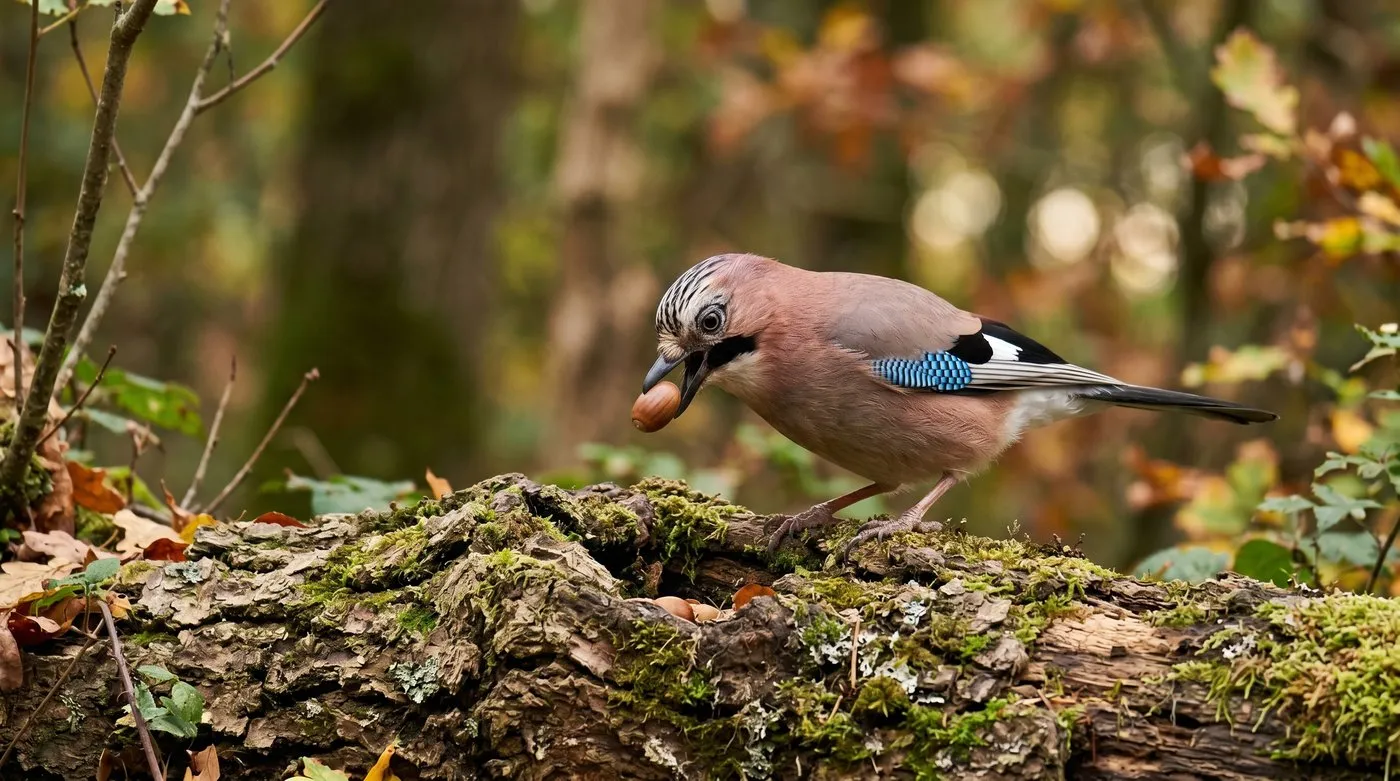 A jay carrying an acorn to bury. One jay can cache several thousand acorns each autumn, and the forgotten ones grow into new oaks.
Mast year versus a normal year at a glance
The contrast between a mast year and an ordinary autumn is stark, both for the trees and for everything that lives off them. The table below sets the two side by side.
| Feature | Mast year | Normal year |
|---|---|---|
| Seed quantity | 10 to 50x normal, tens of thousands per oak | A few hundred to low thousands per oak |
| Ground cover | Thick carpet of acorns or nuts | Scattered, easy to walk on |
| Seedlings next spring | Dense germination, dozens per square metre | Sparse, often near zero |
| Wildlife response | Mice, voles, jays, squirrels all boom | Stable to declining seed-eater numbers |
| Following autumns | Trees rest, very low crop for 1-2 years | Modest, fairly steady crop |
| Gutter and lawn impact | Blocked gutters, dented cars, seedling lawns | Minimal household nuisance |
Which UK trees have mast years
Not every tree masts, and those that do work to different rhythms. The heavy maskers are wind-pollinated trees with nutritious, hard seed.
Pedunculate oak (Quercus robur) and sessile oak (Quercus petraea) are the classic UK maskers, cropping heavily every two to five years. Beech (Fagus sylvatica) is the other big one, with marked beech mast years roughly every four to six years. Hazel (Corylus avellana) and sweet chestnut (Castanea sativa) also boom and bust, though they crop more often. Conifers like Sitka spruce show masting too.
A related garden version is biennial bearing in apples and pears. A tree fruits heavily one year, exhausts itself, then crops poorly the next. The cause overlaps with masting: a heavy crop drains reserves and suppresses next year’s flower buds. You can ease it by thinning fruit in the heavy year, as covered in our guide to growing apple trees in the UK.
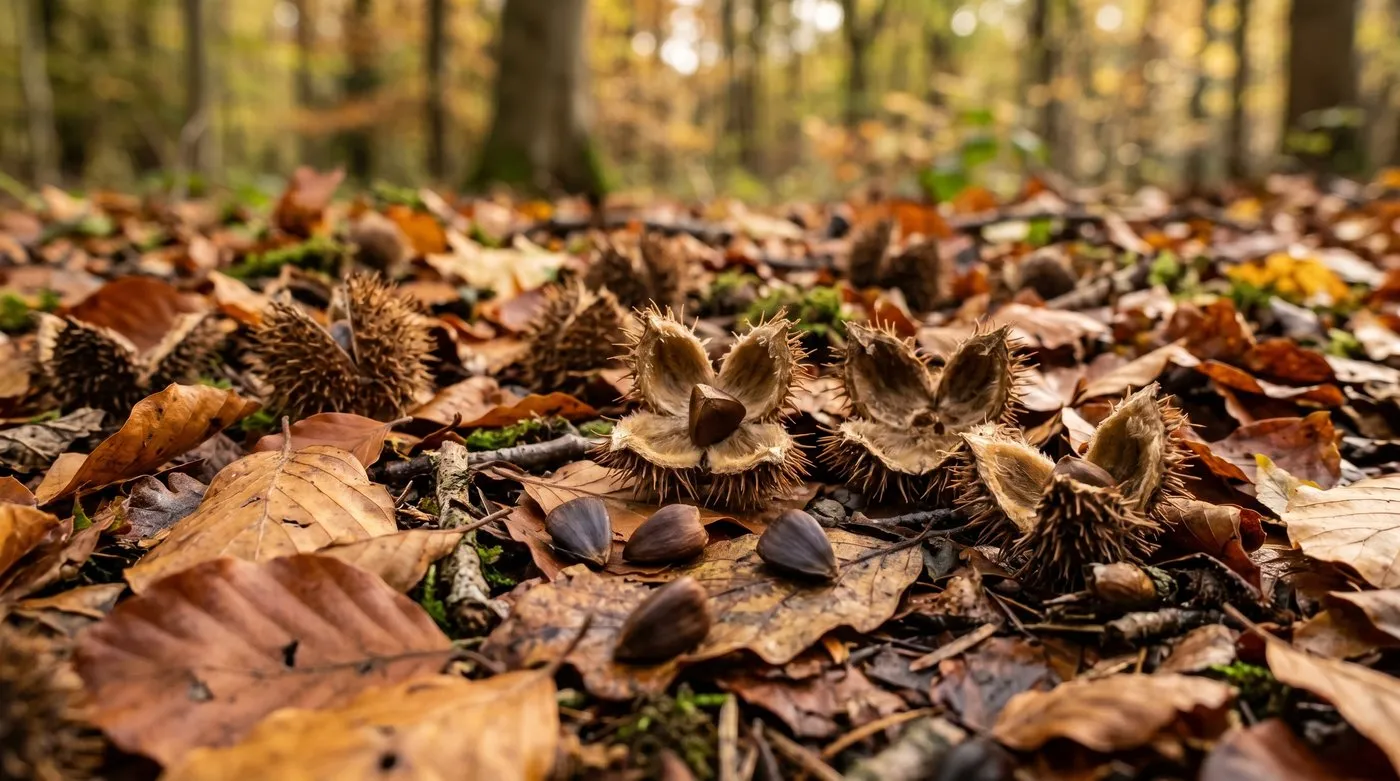 Beech mast: the spiky husks split to drop triangular nuts. Beech tends to mast every four to six years, less often than oak.
| Species | Latin name | Rough mast interval |
|---|---|---|
| Pedunculate oak | Quercus robur | Every 2-5 years |
| Sessile oak | Quercus petraea | Every 2-5 years |
| Beech | Fagus sylvatica | Every 4-6 years |
| Hazel | Corylus avellana | Frequent, with clear boom years |
| Sweet chestnut | Castanea sativa | Frequent, with clear boom years |
What gardeners and homeowners notice
You do not need to study phenology to spot a mast year. The signs turn up in the garden, on the drive and in the gutters.
The first sign is the noise and crunch of acorns or nuts underfoot. Lawns and paths fill with them. Gutters block as nuts and husks collect in the runs, so a mast autumn is a good time to clear them. Cars parked under oaks pick up dents and scratches from falling acorns. Bird activity surges, with jays, wood pigeons and nuthatches all working the trees.
The next spring brings the clearest sign of all: a carpet of tree seedlings. Oak and beech seedlings pop up in lawns, borders, pots and gravel, far from the parent tree, planted by jays and squirrels. Most gardeners simply hoe or mow them off. A few are worth potting on, which we come to below.
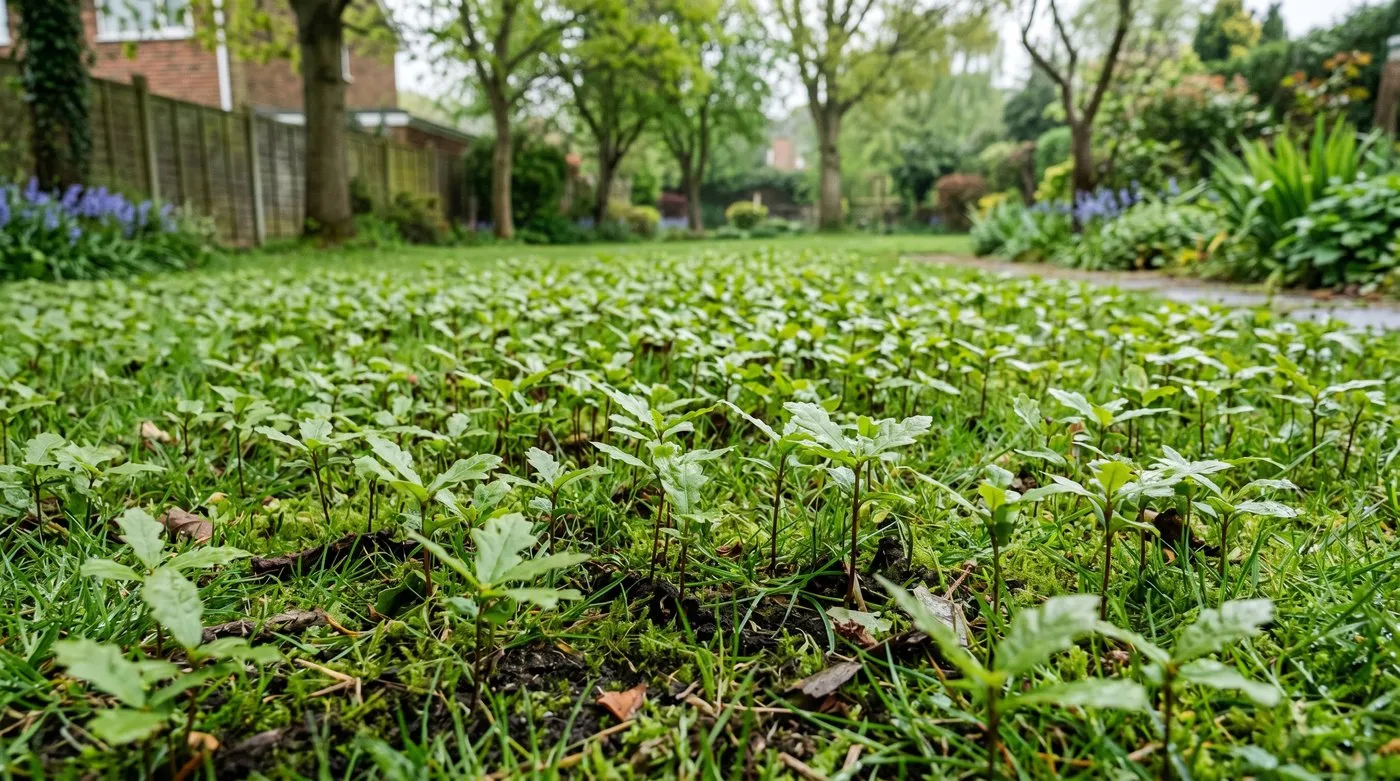 Oak seedlings carpet a lawn the spring after a mast year. Jays and squirrels bury acorns far from the parent tree, so seedlings appear everywhere.
Recent UK mast years and the climate question
The UK has seen several widely reported strong mast years in recent decades, with 2020 noted across much of England as a heavy acorn autumn. Records of beech and oak masting now go back many years through long-running tree and wildlife surveys.
The pattern appears to be shifting. Warmer springs can favour the good pollination that drives a heavy crop. Several researchers suggest climate change may be making mast years more frequent or less predictable, and that the old regular rhythm is breaking down. The claims are still being tested and the picture is not settled. What is clear is that masting is tightly tied to weather, so a changing climate is likely to change the pattern. National recording schemes run by bodies such as the British Trust for Ornithology help track how seed crops and the wildlife that depends on them respond.
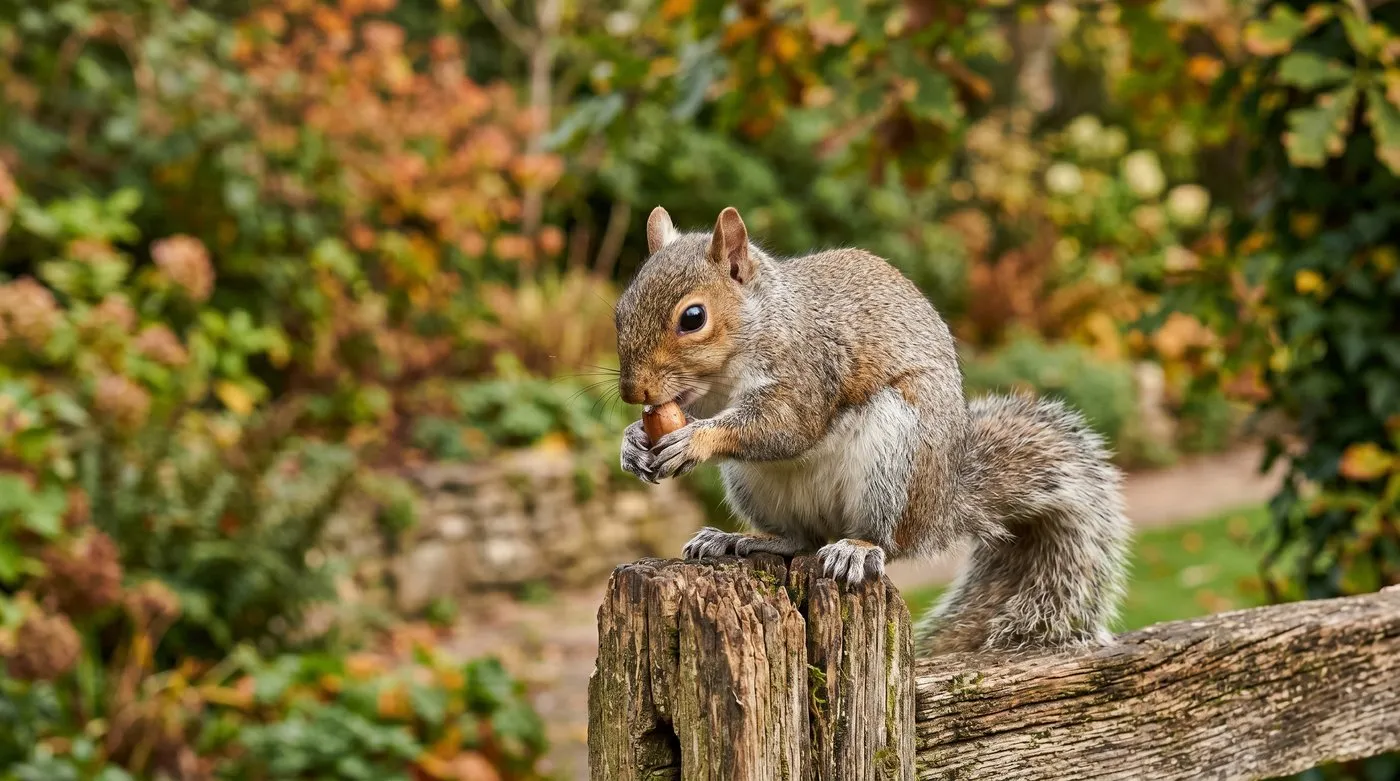 A grey squirrel feasting in a mast autumn. Squirrels, like mice and voles, put on weight and breed better when seed is abundant.
What to do with a mast year glut
A mast year hands you free nuts and free seedlings. There are easy ways to use both.
You can compost surplus acorns and seedlings, though acorns are slow to break down, so crush or shred them first. Sweep them off paths and lawns where they are a slip hazard or will sprout. The best use is to pot up a few seedlings. Lift small oak or hazel seedlings in spring, pot them into deep pots, and grow them on for a couple of years before planting out. For nut species in particular, our guide to growing nut trees in the UK covers spacing and aftercare. If you want a tree for a smaller plot, choose carefully using our list of the best small native trees for UK gardens.
Gardener’s tip: Acorns germinate fast. Pot up viable ones within a few weeks of collecting, point the root tip down, and cover with 2 to 3cm of compost. A mast year is the cheapest chance you will get to grow native oaks from scratch.
Common misconceptions about mast years
Mast years attract folklore, and a few myths come up every autumn. Here are the ones worth correcting.
“A mast year means a hard winter is coming.” False. The crop reflects the past spring’s weather, not a forecast. Trees cannot predict the winter ahead. The heavy crop was set months earlier at flowering.
“Every tree masts on the same cycle.” False. Oak, beech, hazel and chestnut all run to different intervals, and even neighbouring oaks can vary. Synchrony works within a species across a region, not across all species at once.
“Masting is just a tree being healthy.” False. A mast year actually drains a tree’s reserves, which is why a lean year follows. It is a reproductive strategy, not a sign of an unusually good year for the tree’s growth.
“More acorns simply means more oaks.” Mostly false. Predators take the great majority of seed even in a glut. The point of masting is that a small surplus escapes, not that every acorn grows.
Mast years and the wider garden food web
A mast year is a reminder that one tree’s behaviour can move a whole garden’s wildlife. The mice that boom on acorns feed the owls. The jays that bury them plant the next generation of oaks. Birds that hunt the insects on the trees benefit from the cover and food a mature tree gives.
You can lean into this. Mature native trees are the backbone of a wildlife garden, and even small gardens can host them, as set out in our guide to the best trees for small gardens in the UK. Trees that crop well also tend to give strong autumn colour, covered in our guide to the best trees for autumn colour in the UK. To turn the seed glut into birdlife, pair it with feeders and water, as explained in how to attract birds to your garden.
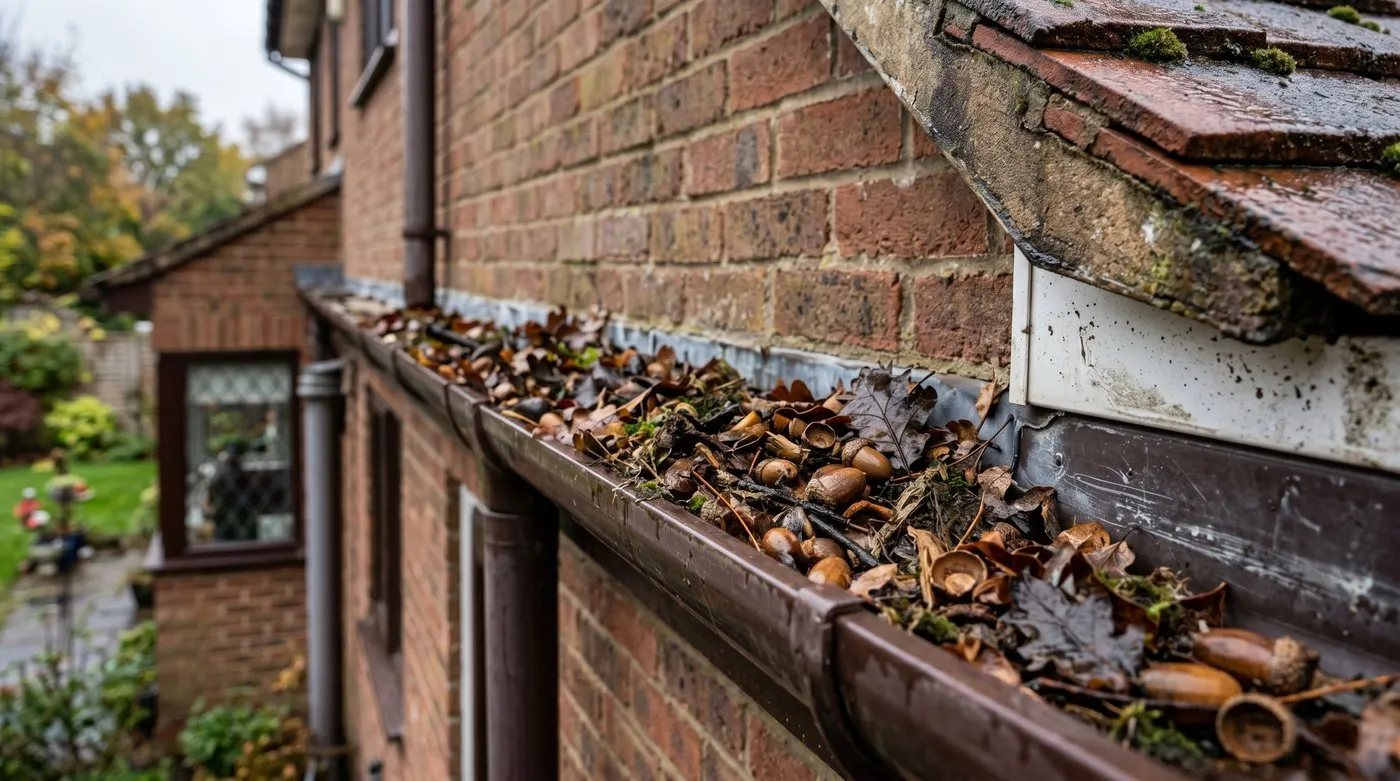 Acorns and husks pile up in a gutter during a mast autumn. Clearing gutters under oak and beech is a sensible mast-year job.
A quadrat count costs nothing and gives you a record no website can. Over a few years you build a picture of your own trees’ rhythm. It also makes the boom and bust real: you watch the mouse-eaten husks pile up, then the seedlings carpet the lawn, then the lean year arrive on cue.
How to spot the next UK mast year
You can read the signs through the season. Watch oak and beech in spring. A warm dry spell during flowering, in late April and May, is the cue for a strong crop. By midsummer you can see developing acorns and beech husks on the branches. By September the ground tells you everything.
Now you understand mast years
Our team produces practical UK gardening guidance from source research, contributor records and established horticultural practice. Editorial standards are overseen by Matt W.