Key takeaways
- All 10 picks can be kept under 5 metres in a small UK garden with light pruning or the right rootstock
- Native trees feed far more wildlife than exotics: hawthorn hosts around 300 insect species, willow over 450
- Rowan and crab apple give blossom for pollinators in spring and berries for birds in autumn
- Bare-root whips cost 2 to 8 pounds each and plant best between November and March
- Keep any tree at least 2 to 3 metres from the house and check its final spread before planting
- Some berries are toxic to people: spindle, holly and bird cherry stones should never be eaten
The best small native trees for UK gardens give you spring blossom, autumn berries and far more wildlife than any imported ornamental. Native trees for small gardens stay under 5 metres yet feed hundreds of insect species, because British insects and birds evolved alongside them. A native tree here means a species that arrived in Britain naturally after the last ice age, before people started importing plants. This guide ranks 10 of them, all kept under 5 metres, by their value to wildlife and to a small plot.
Every pick on this list earns its space. We cover what each tree gives you, how to keep it small, when to plant, and the mistakes that turn a good choice into a problem. The advice comes from growing these trees on heavy Staffordshire clay since 2014 and logging what visits them.
Why native trees beat exotic ornamentals for wildlife
Native trees feed far more wildlife than imported ornamentals, because British insects evolved to eat them. A flowering cherry from Japan looks pretty in April. It hosts almost no caterpillars, because no UK moth or butterfly recognises its leaves as food. A native hawthorn, by contrast, supports around 300 insect species. Those insects are the food that feeds nesting birds.
The numbers are stark. UK native willows host over 450 associated insect species. Oak tops 2,300, though it is far too big for a small garden. The exotic trees sold in most garden centres often support fewer than 10. When a blue tit needs roughly 100 caterpillars a day to raise one brood, the difference decides whether birds breed in your garden at all.
Berries matter just as much in winter. Rowan, hawthorn, holly and spindle all carry fruit that redwings, fieldfares, blackbirds and thrushes depend on from October to February. The Woodland Trust lists these species among the highest-value small trees for British wildlife. Choosing native is the single biggest decision you make for the life in your garden.
The 10 best small native trees ranked
The table below ranks 10 native trees that stay under 5 metres in a garden setting, ordered by overall wildlife value and suitability for a small plot. Heights assume light pruning or a dwarfing rootstock where noted. Crab apple and rowan lead because they combine pollinator blossom, bird berries and a tidy shape.
| Tree | Botanical name | Height at maturity | Spread | Wildlife value | Season of interest | Soil and aspect |
|---|---|---|---|---|---|---|
| Hawthorn | Crataegus monogyna | 4 to 5m (clipped) | 2 to 4m | Very high, ~300 insect species | Spring blossom, autumn haws | Any soil, sun or part shade |
| Crab apple | Malus sylvestris | 4 to 5m | 3 to 4m | Very high, blossom and fruit | Spring blossom, autumn fruit | Most soils, full sun |
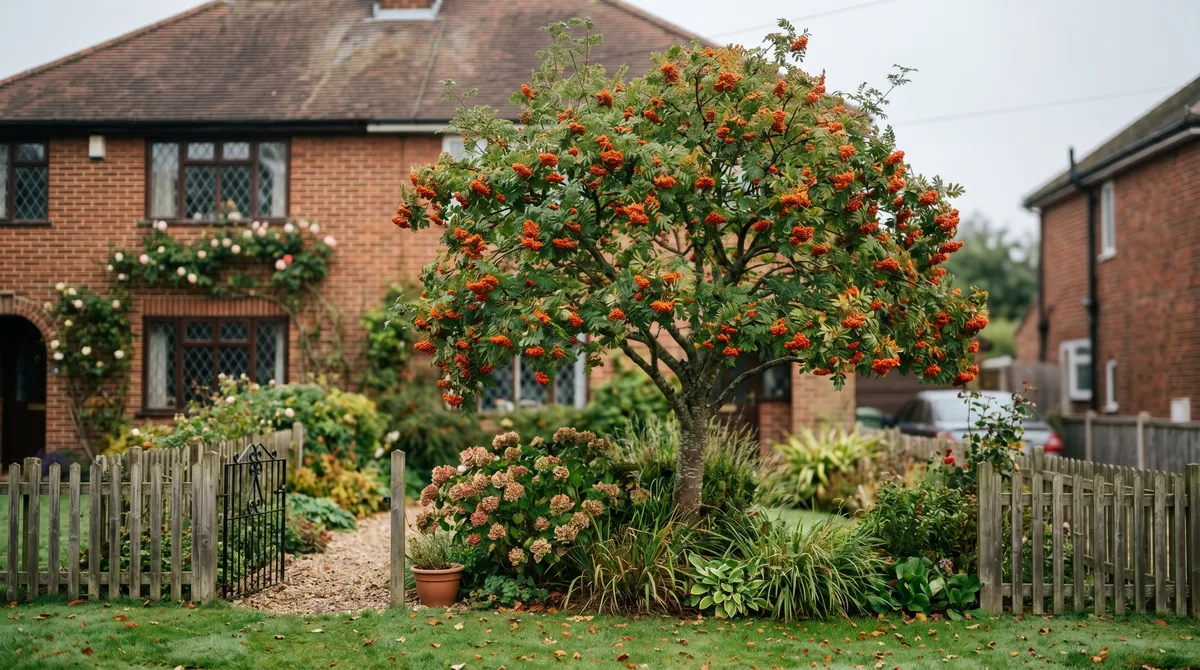
| Rowan | Sorbus aucuparia | 4 to 5m | 2 to 3m | Very high, berries for thrushes | Spring flowers, autumn berries | Most soils, tolerates exposure |
| Goat willow | Salix caprea | 3 to 4m (coppiced) | 2 to 3m | Highest, 450+ insect species | Spring catkins | Damp soil, sun |
| Hazel | Corylus avellana | 3 to 5m (coppiced) | 3 to 4m | High, catkins and nuts | Late winter catkins | Any soil, sun or part shade |
| Elder | Sambucus nigra | 3 to 4m (pruned) | 3 to 4m | High, flowers and berries | Summer flowers, autumn berries | Rich soil, sun or part shade |
| Spindle | Euonymus europaeus | 3 to 4m | 2 to 3m | High, pink fruit for birds | Autumn fruit and leaf colour | Chalk or clay, sun or part shade |
| Field maple | Acer campestre | 4 to 5m (clipped) | 3 to 4m | High, aphids feed birds | Autumn yellow colour | Any soil, sun or part shade |
| Bird cherry | Prunus padus | 4 to 5m (pruned) | 3 to 4m | High, blossom and cherries | Spring blossom, summer fruit | Moist soil, sun or part shade |
| Holly | Ilex aquifolium | 4 to 5m (clipped) | 2 to 3m | High, berries and shelter | Winter berries, evergreen | Any soil, sun or shade |
Each of these can be kept under 5 metres with the methods covered below. For a wider look at the options, including a few non-native picks, see our guide to the best trees for small gardens in the UK.
Rowan and crab apple, the two best all-rounders
Crab apple (Malus sylvestris) is the better choice where you want blossom and pollinators. Its spring flowers are among the best nectar sources for bees of any small native tree. Pick a variety on a dwarfing M26 or MM106 rootstock to hold it to 3 to 4 metres. The small autumn fruits feed blackbirds and thrushes and make excellent jelly. Crab apple also pollinates nearby eating apples, so it earns its place in a productive garden as well as a wildlife one.
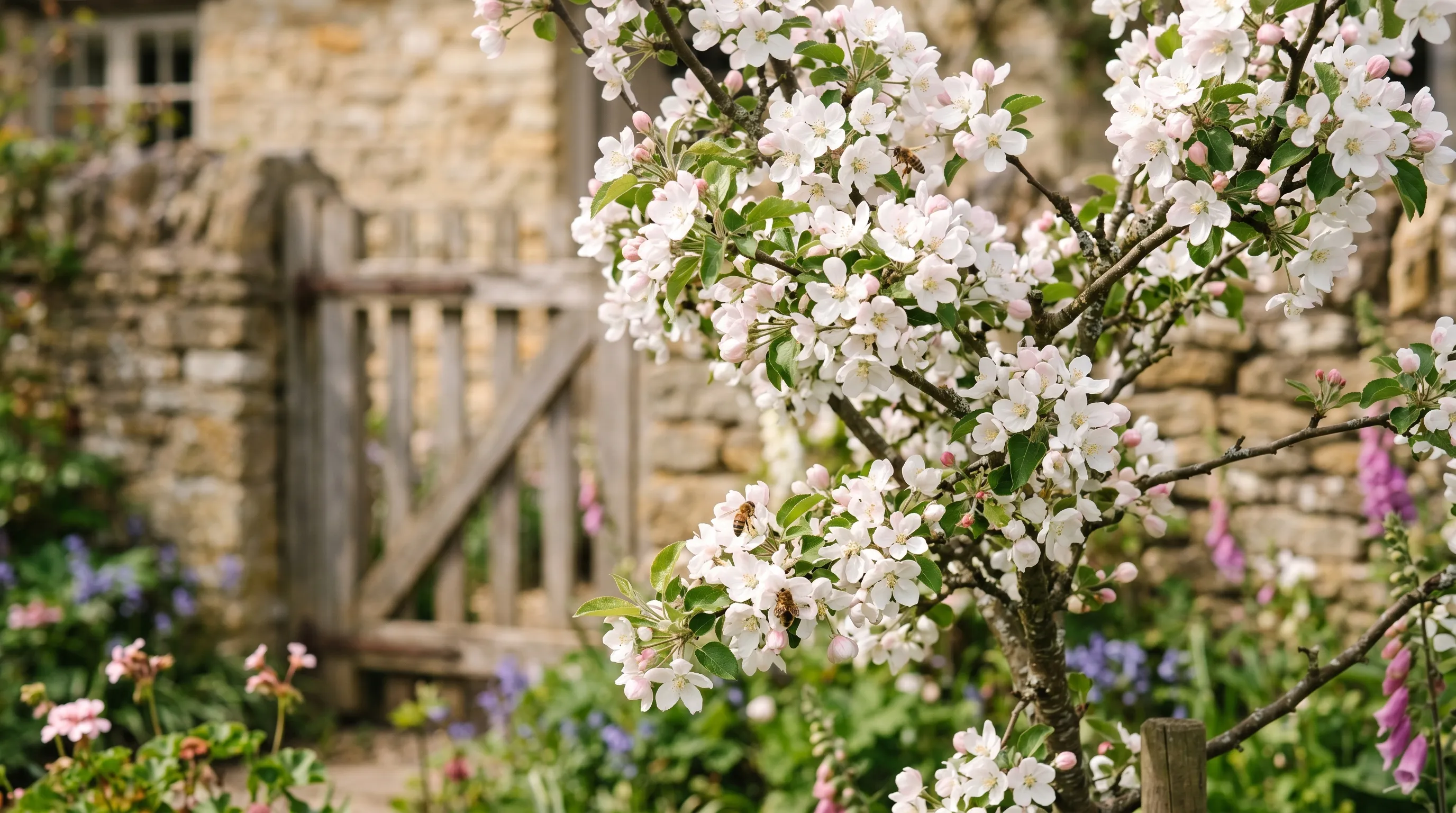 Crab apple blossom in late April. The flowers are one of the strongest early nectar sources of any native tree.
Hawthorn and spindle for hedgerow wildlife value
Spindle (Euonymus europaeus) earns its place for autumn drama and bird food. It stays a modest 3 to 4 metres and thrives on chalk and clay. In October the leaves turn rich pink and red, and the strange four-lobed seed capsules split to show orange seeds inside. Robins and other birds take the seeds readily. Spindle is also a key host for the spindle ermine moth and overwintering blackfly that, oddly, feed early birds. It belongs in any garden built around UK native plants.
Warning: Spindle berries are toxic to people and can cause sickness if eaten, despite being safe for birds. The bright pink capsules look tempting to children, so site spindle where small children do not graze. Holly and bird cherry stones are also poisonous, and raw elderberries cause stomach upset until cooked.
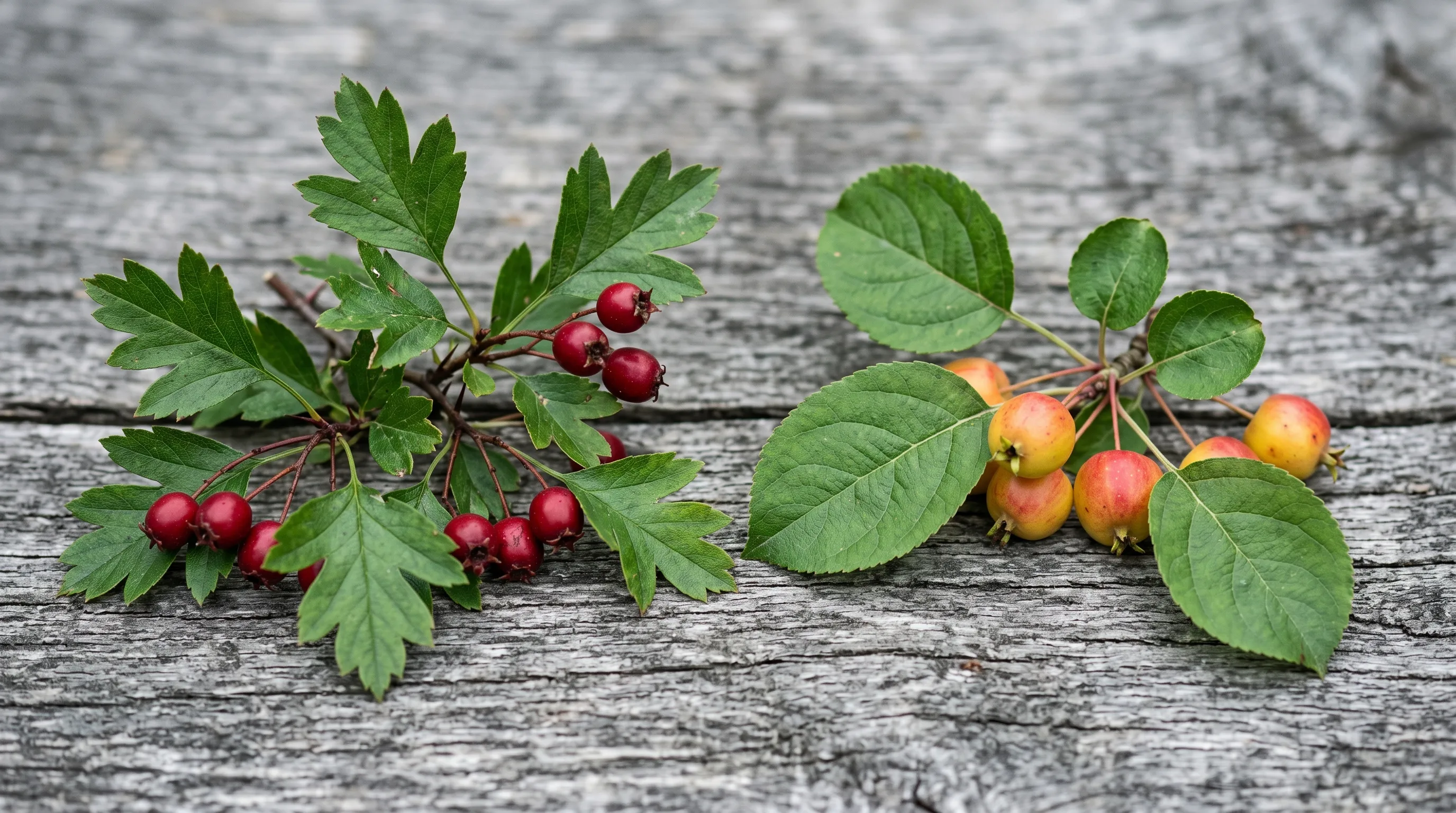 Hawthorn (left) carries small dark-red haws and lobed leaves. Crab apple (right) has larger fruit and rounded leaves.
Hazel, elder and goat willow for fast wildlife results
Goat willow (Salix caprea) supports more insects than any other tree on this list, over 450 species. A full goat willow gets big, so grow it as a coppiced multi-stem and cut it back hard every few years to hold it to 3 to 4 metres. The spring catkins, pussy willow, are a vital early pollen source for queen bumblebees emerging from hibernation. For a guaranteed small tree, the grafted weeping form Salix caprea ‘Kilmarnock’ stays at 1.5 to 2 metres on its standard stem.
Hazel (Corylus avellana) gives you nuts, early catkins and superb structure. Grown as a coppiced multi-stem it stays 3 to 5 metres and tolerates shade well. The February catkins shed pollen weeks before most trees flower. Squirrels and woodpeckers take the autumn nuts, and the stems give you pea sticks and bean poles each winter.
Elder (Sambucus nigra) is the fastest tree here to give results. It romps to 3 to 4 metres in a few years and responds to hard pruning. Its summer flowers make cordial, its autumn berries make wine, and both feed a long list of insects and birds. Elder, hazel and willow all suit a plot designed to create a wildlife garden in the UK because they establish and feed wildlife so quickly.
How to keep a native tree small in a garden
Most native trees can be held well under 5 metres with two methods: rootstock choice and pruning. Get this right and a tree that grows 10 metres in a hedgerow sits happily in a 4 by 4 metre garden corner.
For fruit trees like crab apple, the rootstock controls final size. M26 gives a 2.5 to 3 metre tree, MM106 about 3 to 4 metres. Ask the nursery for the rootstock before you buy, because a crab apple on vigorous seedling stock will outgrow a small garden fast. Rowan, hawthorn and spindle have no dwarfing rootstocks, so you control their size by pruning instead.
Coppicing and pollarding turn naturally large trees into permanent small ones. Cut hazel, willow, field maple and elder back hard to a low framework every three to five years in winter. They regrow as multi-stem shrubs rather than tall trees. Multi-stem planting also keeps trees smaller and looks better in a modern garden, because the height splits across several thinner stems. A single-stem tree of the same species always grows taller.
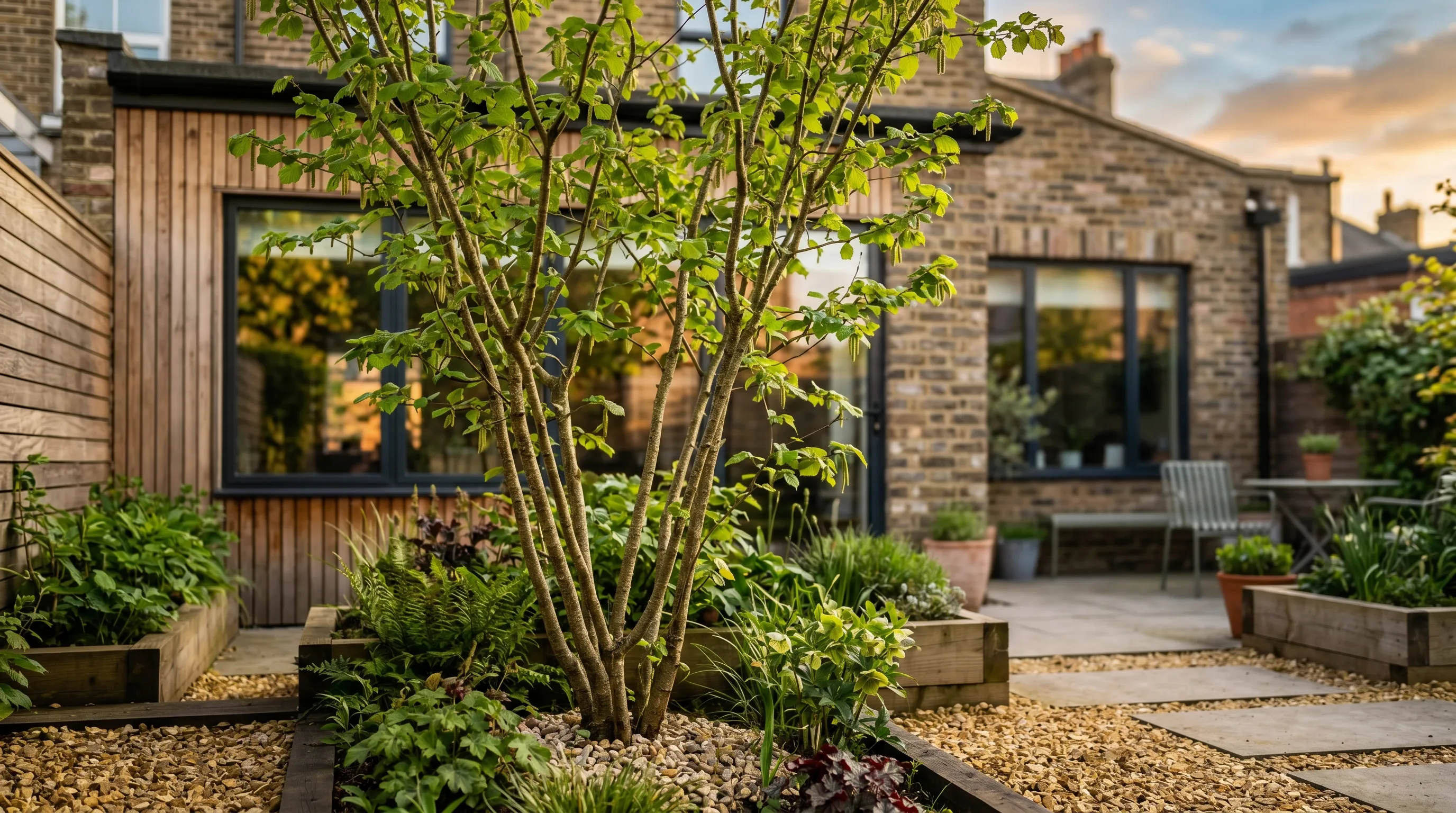 A multi-stem hazel as a courtyard feature. Splitting the growth across several stems keeps the overall height down.
How and when to plant a native tree
Plant bare-root native trees between November and March, while they are dormant. This is the cheapest and most reliable method. Bare-root whips cost just 2 to 8 pounds each from specialist UK nurseries, against 25 to 60 pounds for a pot-grown tree. They establish faster too, because the roots grow straight out into your soil rather than circling in a pot.
Dig a square hole, not round, about twice the width of the roots but no deeper than the root system. A square hole stops roots circling the sides. Spread the roots over a low mound of soil in the base, set the tree so the old soil mark on the stem sits level with the ground, then firm the soil back in stages. Water in well even in winter to settle the soil around the roots.
Stake low, with a single short stake angled into the prevailing wind, tied a third of the way up the stem. A low tie lets the top sway, which thickens the trunk and anchors the tree faster. Remove the stake after two years. Mulch a 1 metre circle with bark or compost to suppress grass, which competes hard with young tree roots for water.
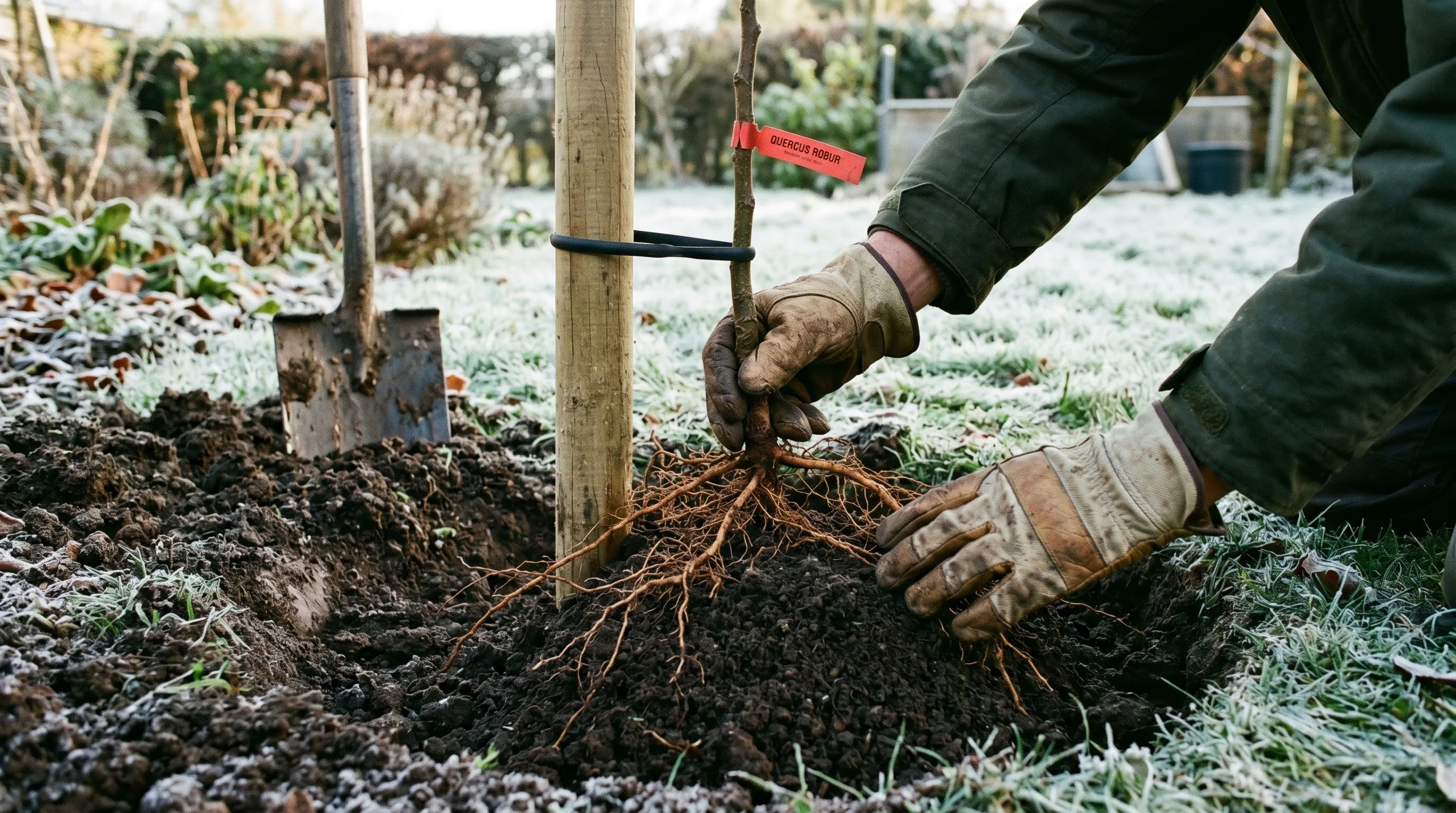 Bare-root planting in January. Spread the roots over a low mound and never plant deeper than the old soil mark on the stem.
How far from the house should you plant?
Keep small native trees at least 2 to 3 metres from the house wall. The trees on this list have shallow, fibrous root systems and stay under 5 metres, so they rarely threaten foundations on stable ground. The risk rises on shrinkable clay soils, where any tree drawing water can cause the clay to shrink and crack, leading to subsidence. On clay, allow at least the tree’s mature height as the distance to the wall.
Avoid vigorous water-seeking species near drains, walls and patios. Willow and elder have the most opportunistic roots and should sit well away from underground pipes. Field maple, holly and spindle are the safest near boundaries because they are slower and less thirsty.
Check the final spread, not just the height. A rowan only 3 metres across is fine on a narrow boundary, but a crab apple spreading 4 metres will overhang a neighbour’s garden within a decade. Measure the spot before you buy, and remember the tree grows in three dimensions. For autumn-interest planning, our notes on the best trees for autumn colour in the UK cover spread alongside leaf colour.
Single specimen or a small group?
A single specimen tree suits a focal point, while a small group does more for wildlife. One well-chosen rowan or crab apple as a lawn feature gives structure, height and a clear visual anchor to a small garden. This is the right call for a tidy front garden or a courtyard where space is tight.
If space is very tight, plant a single tree underplanted with native shrubs and a wildflower circle. You get layered habitat from ground to canopy in barely 2 square metres. The tree gives the height, the shrubs give the nesting cover, and the flowers feed pollinators below.
Common mistakes when choosing a small native tree
A few avoidable errors turn a good native tree into a long-term problem. Watch for these.
Planting a forest tree that gets too big. Oak, beech, ash and lime are native, but they grow to 20 metres or more and have no place in a small garden. Mature oaks in the south east also face oak processionary moth, another reason to leave them to the countryside. Even silver birch reaches 15 metres. Stick to the species in this list, which top out under 5 metres with management. Check the mature size on the label, not the size of the young plant in the pot.
Ignoring the final spread near the house. People plan for height and forget width. A tree spreading 4 metres scrapes the gutters and shades the windows long before it is tall. Measure the gap to walls, fences and boundaries, then halve the mature spread to find how close the trunk can sit.
Buying a single vigorous-rootstock fruit tree by mistake. A crab apple on the wrong rootstock doubles its expected size. Always confirm the rootstock with the nursery and choose M26 or MM106 for a small garden.
Treating berries as harmless. Spindle, holly and bird cherry stones are toxic to people. Site these away from where children play and graze, even though birds eat the fruit safely.
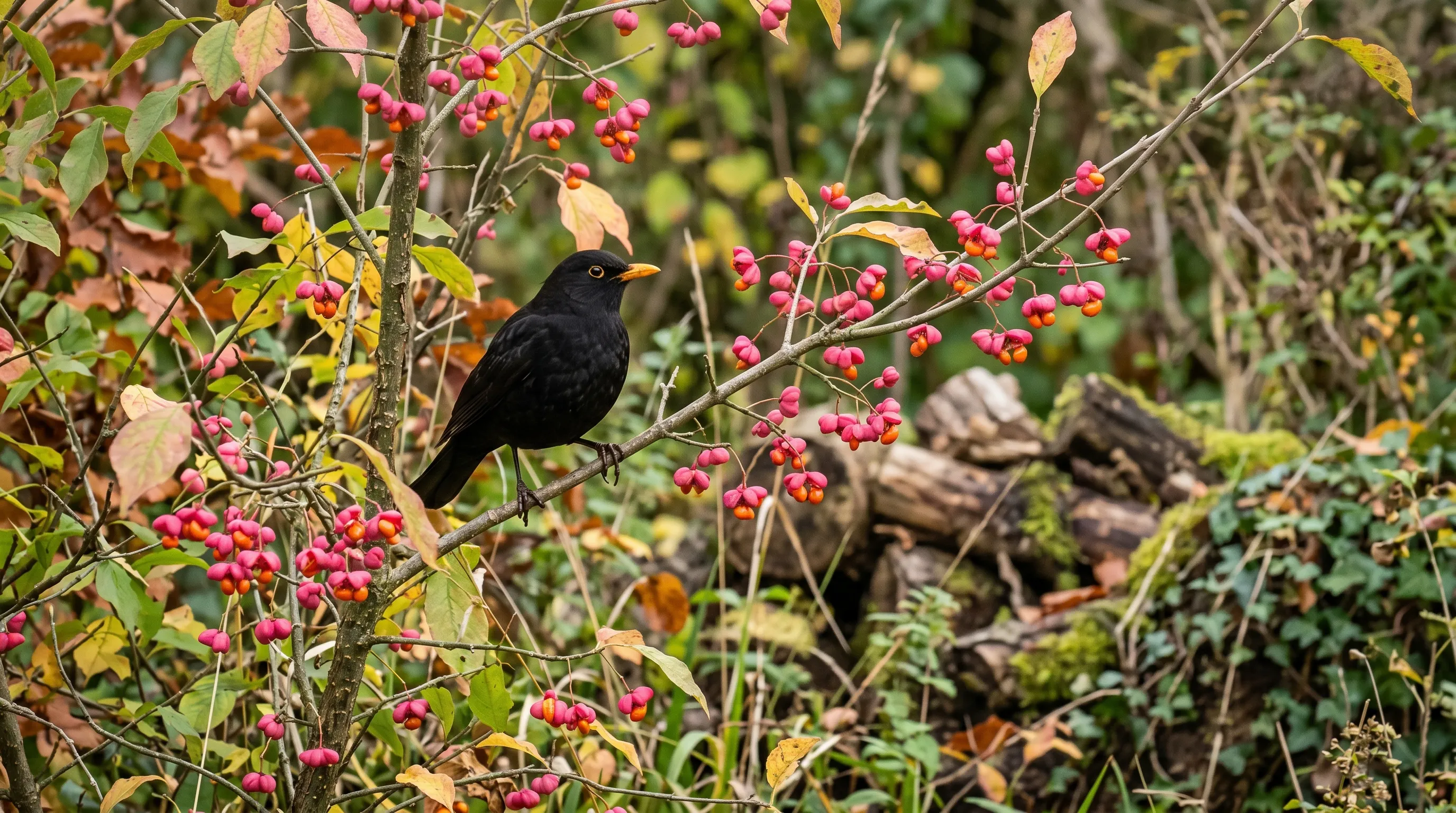 Spindle’s pink autumn capsules feed birds but are toxic to people. Keep it clear of where children play.
Native tree planting calendar for the UK
Timing makes the difference between a tree that powers away and one that sulks. The table shows the best month-by-month plan for UK native trees.
| Month | Task |
|---|---|
| November | Best month to plant bare-root whips, soil still warm |
| December | Continue bare-root planting in unfrozen ground |
| January | Plant bare-root, coppice hazel, willow and elder |
| February | Final bare-root planting, prune dormant trees, last coppicing |
| March | Last chance for bare-root before bud break, mulch all young trees |
| April | Water new trees weekly, blossom appears on crab apple and bird cherry |
| May | Hawthorn blossom, keep new trees watered through dry spells |
| June | Water young trees in dry weather, summer-prune fruit trees lightly |
| July to August | Keep watering, berries begin colouring on rowan |
| September | Plan and order bare-root stock, berries ripen for birds |
| October | Prepare planting sites, autumn leaf colour on spindle and field maple |
Gardener’s tip: Order bare-root trees in September for November delivery. The best native species and rootstocks sell out at specialist nurseries by midwinter, and bare-root only ships during the dormant season. Pot-grown trees plant year round but cost three to five times more and establish more slowly.
A small native tree is the most useful thing you can plant in a UK garden. It feeds insects, shelters nesting birds, gives berries through winter, and stays a manageable size with a little care. Start with one rowan or crab apple, plant it bare-root this winter, and you will see the difference in a single season.
Our team produces practical UK gardening guidance from source research, contributor records and established horticultural practice. Editorial standards are overseen by Matt W.