Key takeaways
- Most overnight lawn digging in the UK is animals hunting leatherjacket or chafer grubs in the turf
- Badgers roll back turf in strips, foxes leave single conical holes 8 to 12cm wide, birds make many 1 to 2cm pencil holes
- Solitary mining bees make tiny 1cm volcano mounds in spring and are completely harmless and legal to leave
- Grub numbers above 30 to 50 per square metre usually trigger heavy digging from badgers and crows
- Pathogenic nematodes applied above 12C kill 60 to 90% of grubs and stop most digging in two to three weeks
- Badgers are protected by law, so you must never block a sett or harm them under any circumstances
Small holes in the lawn overnight are one of the most common garden mysteries in the UK, and the culprit is almost always an animal hunting grubs in your turf. If you wake to fresh digging, scattered soil, or strips of grass peeled back, something visited in the dark looking for food. The good news is that the evidence left behind tells you exactly what was digging holes in your lawn at night.
This guide is built around a diagnostic table. You match what you see in the morning, the hole size, the spoil, any droppings, and the season, to the animal responsible. We then explain the root cause most people miss, the leatherjackets and chafer grubs drawing the diggers in, and how to control them humanely and legally. The advice comes from five years of diagnosing and treating this on a clay lawn in Staffordshire.
How to read the evidence in your lawn
The morning evidence is your identification kit. Before you reach for any deterrent, spend ten minutes reading the scene. Four clues narrow down the culprit fast: the size and shape of the hole, the spoil or loose soil around it, any droppings or hair, and the time of year. Each digging animal leaves a distinct signature.
Hole shape matters most. A single clean conical pit points to a fox. Many shallow pencil-thin holes point to birds probing for grubs. Turf rolled back in strips, like peeling carpet, is the unmistakable mark of a badger. A neat 2 to 4cm round burrow tucked against a wall or shed is a rat or mouse.
Then check the spoil. Foxes and badgers fling soil out in a fan. Mining bees leave a tidy volcano of fine tilth. Worms leave only soft casts with no hole at all. Note whether the damage is fresh and damp, which confirms an overnight visit rather than old disturbance.
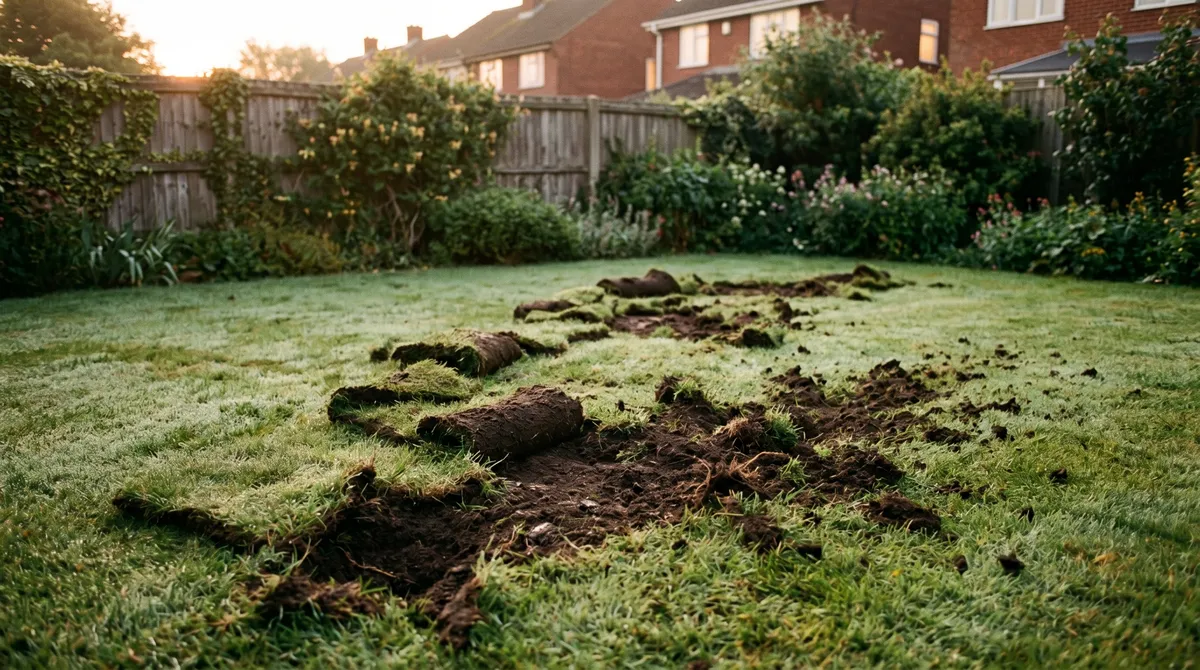
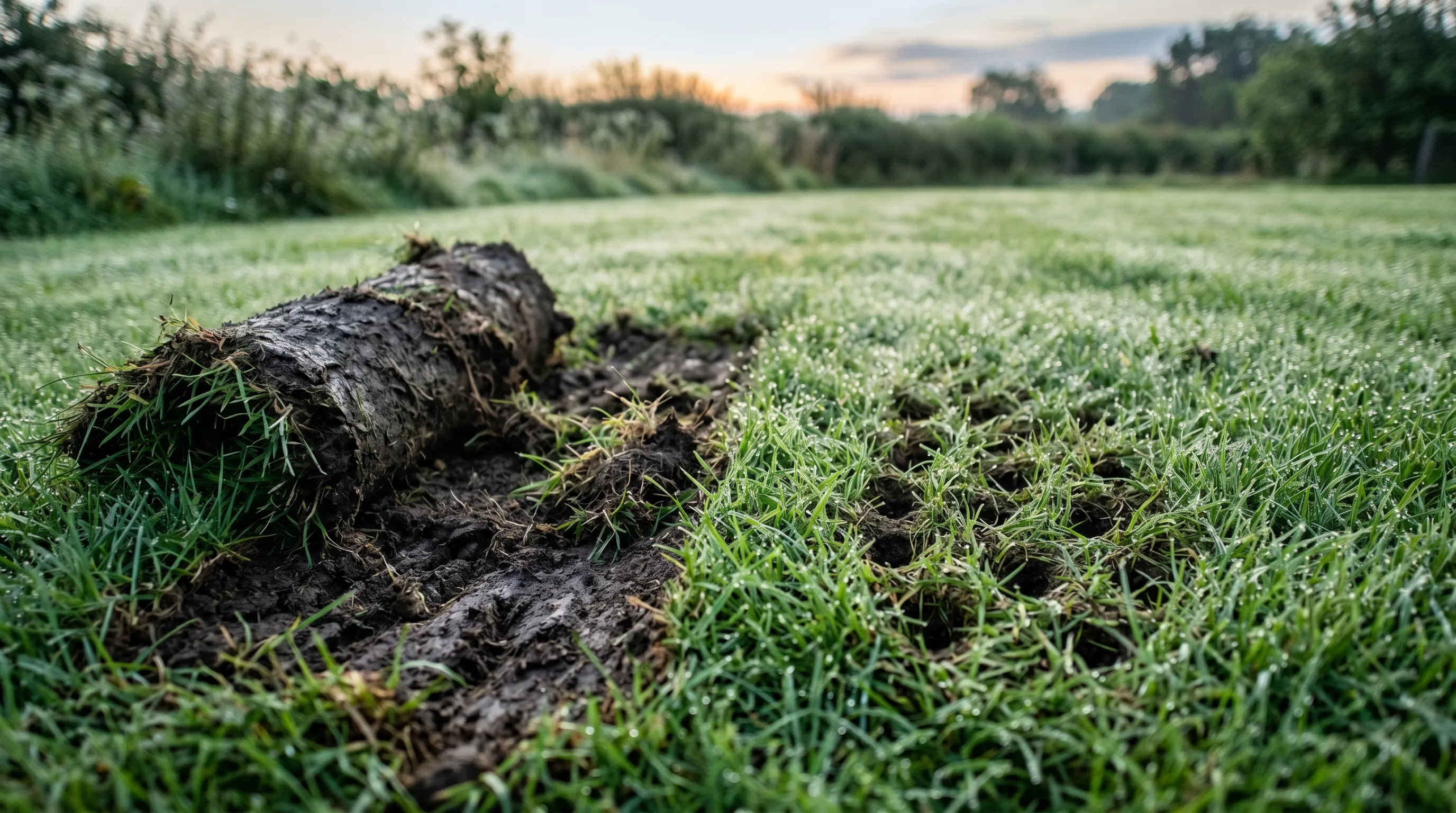 Two signatures in one frame: badger turf-roll on the left, shallow bird pecking holes on the right. Reading the shape is the fastest route to an ID.
The lawn hole diagnostic table
This is the central tool of the guide. Find the row that matches your morning evidence. Most UK lawn digging falls into one of these culprits. Match on more than one clue where you can, as a single feature can mislead.
| Culprit | Hole size & shape | Spoil & soil signs | Other clues (droppings, hair, turf) | Active when | What they want |
|---|---|---|---|---|---|
| Badger | Turf rolled back in strips, snout pits 5 to 15cm | Soil flung in fans, large divots | Dung pits (latrines), coarse black-white hair on fences | Night, all year, worst autumn | Leatherjackets, chafer grubs, earthworms |
| Fox | Single conical hole 8 to 12cm wide, 10 to 20cm deep | Loose soil scattered to one side | Twisted dark scat, rubbish or bins raided | Night, all year | Grubs, buried food, voles |
| Rats & mice | Round burrow 2 to 4cm, often paired entrances | Soil fan, smooth runs to cover | Droppings near walls, sheds, compost | Night, all year | Shelter, food stores, seed |
| Grey squirrel | Shallow scrape 3 to 5cm, neatly refilled | Small surface divot, minimal soil | Disturbance under trees, dug nuts | Day, autumn caching | Burying and retrieving nuts |
| Birds (starlings, crows, magpies) | Many 1 to 2cm pencil holes in clusters | Tiny soil specks, turf left intact | White droppings, flocks feeding at dawn | Day, dawn, autumn and spring | Leatherjackets, chafer grubs |
| Green woodpecker | Round probing holes 1 to 3cm, often in groups | Little spoil, deep narrow holes | Distinctive yaffle call, single bird on lawn | Day, autumn and winter | Leatherjackets in the turf |
| Mole | No open hole, raised soil cones | Fresh loose conical heaps, ridges | Surface ridges where tunnels run | Day and night, all year | Earthworms and grubs in tunnels |
| Solitary mining bees | Tiny 0.5 to 1cm volcano mound | Neat ring of fine tilth, single hole | Single bees entering holes, sunny banks | Day, spring (April to June) | Nesting tunnels, nothing harmful |
| Earthworms | No hole, only surface casts | Soft squiggles of soil, no pit | Casts smear when mown | Damp nights, autumn and spring | Normal feeding, no damage |
| Rabbit | Scrape 5 to 10cm, larger warren entrances | Soil fan, scratched bare patches | Round droppings, nibbled grass edges | Dawn and dusk | Grazing, scraping, burrowing |
| Hedgehog | Shallow snuffle holes 2 to 4cm | Light surface disturbance | Cylindrical shiny droppings with insect bits | Night, spring to autumn | Beetles, worms, slugs, grubs |
The pattern across most rows is the same. The animal is hunting the grubs in your turf. That is the thread that links badgers, crows, woodpeckers and hedgehogs together, and it points straight to the real fix.
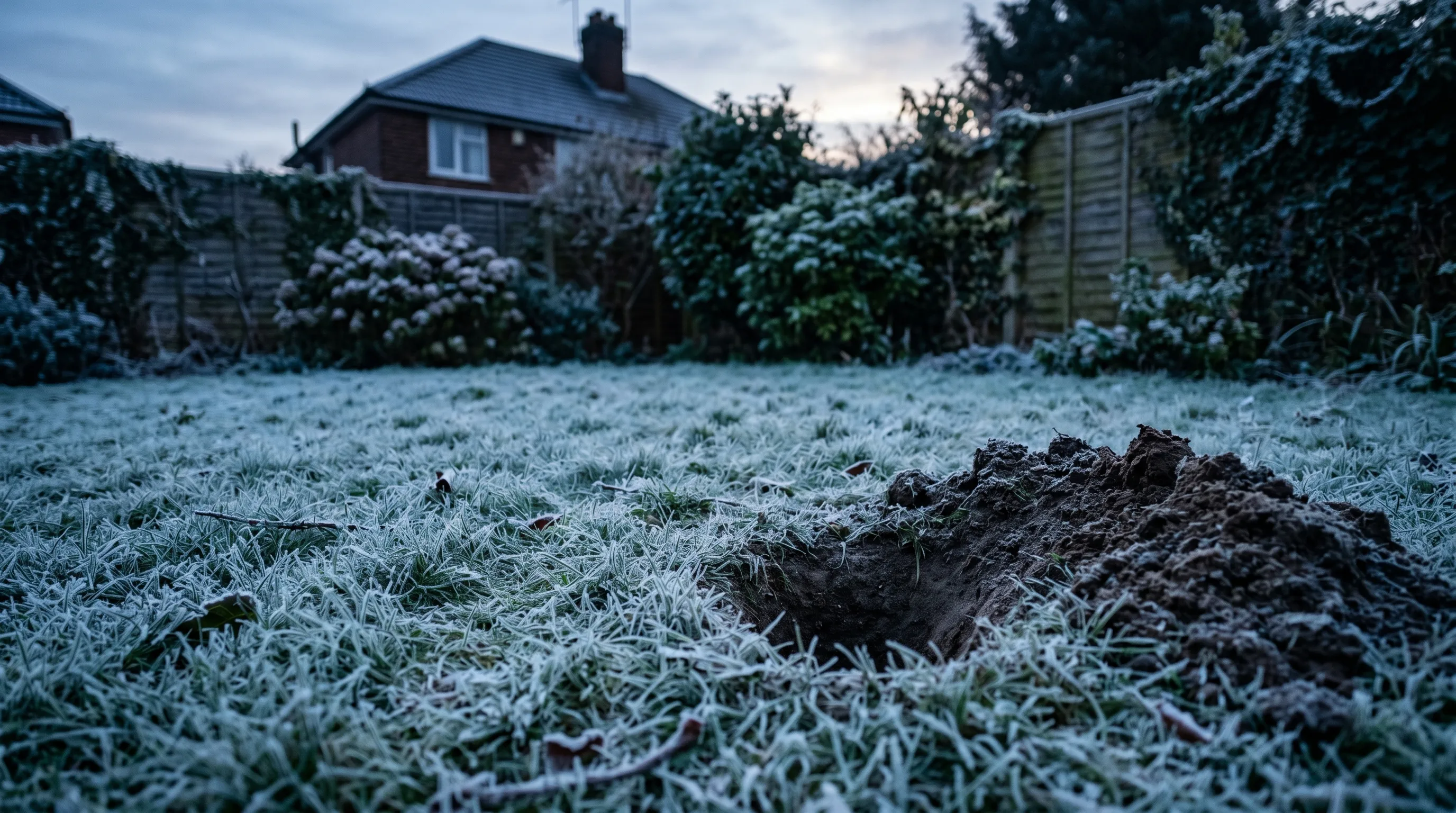 A classic fox signature: one conical pit, soil thrown to a single side. Foxes dig with purpose, not the scattered chaos of a badger.
Badgers: turf rolled back like carpet
Badgers cause the most dramatic overnight lawn damage in the UK. They use their powerful front claws to roll back whole strips of turf, peeling it like carpet to expose the grubs beneath. A single badger clan can lift several square metres in one night. The damage looks far worse than a fox or bird, and it tends to recur on the same lawn night after night while the food lasts. Our dedicated guide on how to stop badgers digging up the lawn sets out the legal limits and the source-fix in full.
Badgers are drawn almost entirely by leatherjackets and chafer grubs. A lawn carrying 30 or more grubs per square metre is a reliable nightly meal, and they will return until the count drops. Importantly, badgers are protected by the Protection of Badgers Act 1992. You cannot block a sett, trap, or harm them. The only lawful and effective fix is to remove their food. Our chafer grubs in lawns guide explains how to clear the grubs and stop the damage.
Warning: Badgers and their setts are protected under the Protection of Badgers Act 1992. It is a criminal offence to kill, injure, trap a badger, or block, damage or disturb a sett. Never fill in a hole you suspect leads to a sett. If badgers are digging your lawn, control the grubs instead and seek advice from the Badger Trust.
Foxes, rats and mice: holes near cover
Foxes dig single, deliberate conical holes rather than the scattered chaos of a badger. Each pit is typically 8 to 12cm across at the surface and tapers down 10 to 20cm. A fox digs where its nose tells it a grub, vole or buried scrap sits below. The giveaway is usually elsewhere in the garden: a raided bin, scattered rubbish, or a twisted dark scat left on a path or molehill as a territory marker.
Birds and woodpeckers: many small pencil holes
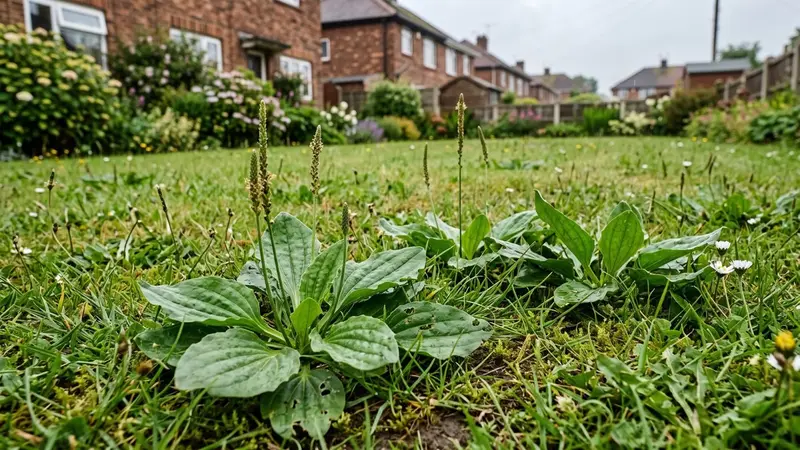
Birds leave many small holes, not one big one. This is the easiest signature to read once you know it. Starlings, crows, magpies and rooks probe the turf with their beaks, leaving clusters of pencil-thin holes 1 to 2cm wide. The turf itself stays intact, just dotted with tiny pits. You often catch a flock feeding on the lawn at dawn, which confirms the diagnosis on the spot.
The green woodpecker is the specialist. It hunts leatherjackets in short grass and leaves rounder, deeper probing holes, sometimes in tidy groups. A single bird with a loud laughing yaffle call working methodically across the lawn is almost certainly a green woodpecker after grubs.
Bird damage is cosmetic and short-lived, and the birds are doing you a service by eating the grubs. There is no need to deter them, and many are protected anyway. If anything, a healthy starling flock is a sign you have a grub problem worth treating at source. To bring more useful insect-eaters in deliberately, see how to attract more birds to your garden.
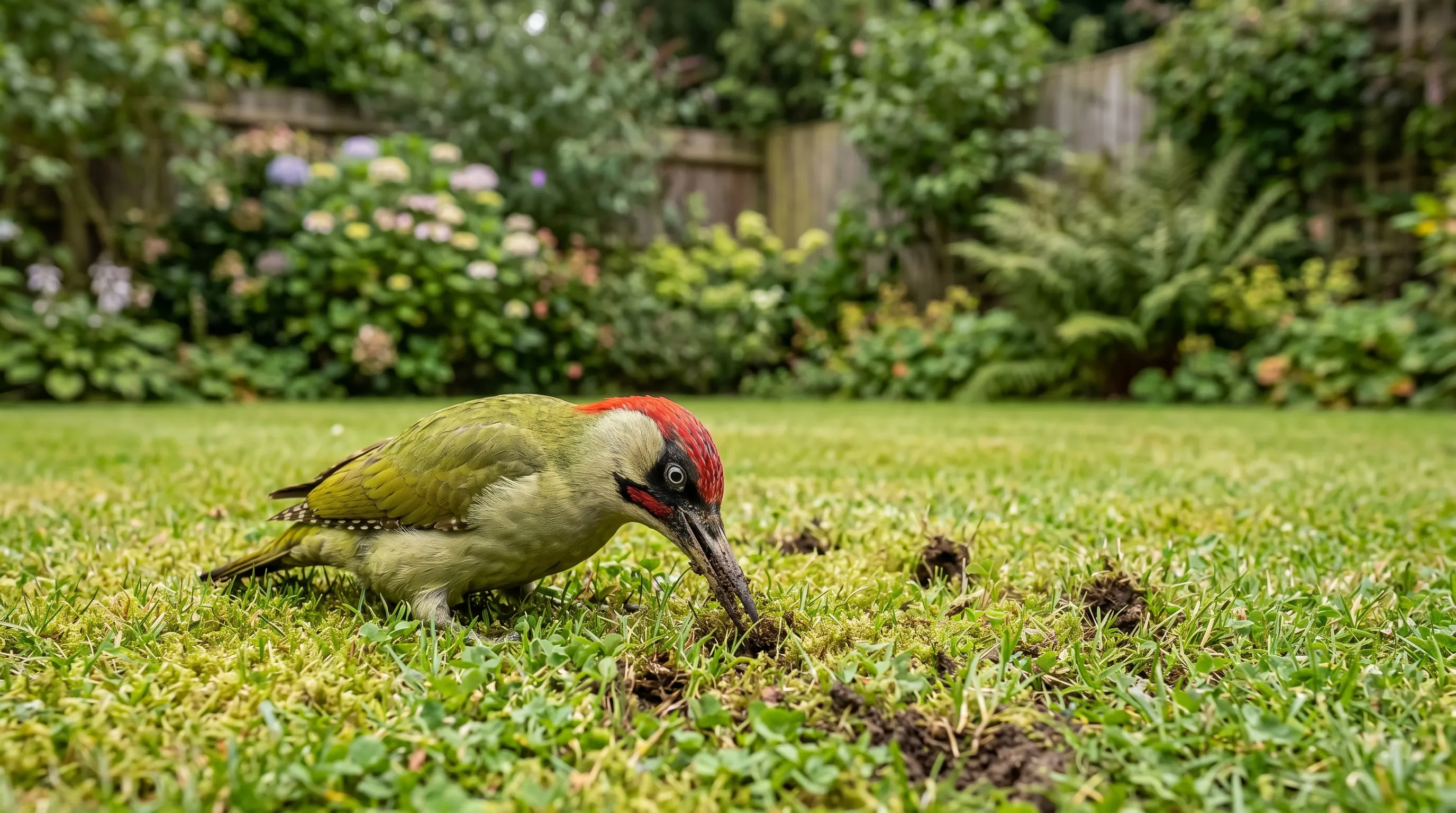 A green woodpecker working a lawn for leatherjackets leaves clusters of small probing holes. The bird is a symptom, the grubs are the cause.
Moles, mining bees and worms: the harmless lookalikes
Three culprits get blamed for holes they do not actually make, and telling them apart saves needless worry.
Moles raise soil, they do not leave open holes. A molehill is a cone of fresh, loose soil pushed up from a tunnel below, with no open entrance on top. You may also see raised ridges snaking across the lawn where surface feeding tunnels run. If your problem is heaps and ridges rather than open pits, read our guide on how to get rid of moles instead.
Earthworms make no hole at all. They leave soft casts of digested soil on the surface, which smear when mown but indicate a healthy soil. If you instead find shallow scrapes and nibbled grass edges, see our guide on rabbits scraping the lawn. Hedgehogs leave shallow snuffle holes 2 to 4cm wide as they forage for beetles and worms at night. Both are welcome. Encourage hedgehogs with a hedgehog-friendly garden.
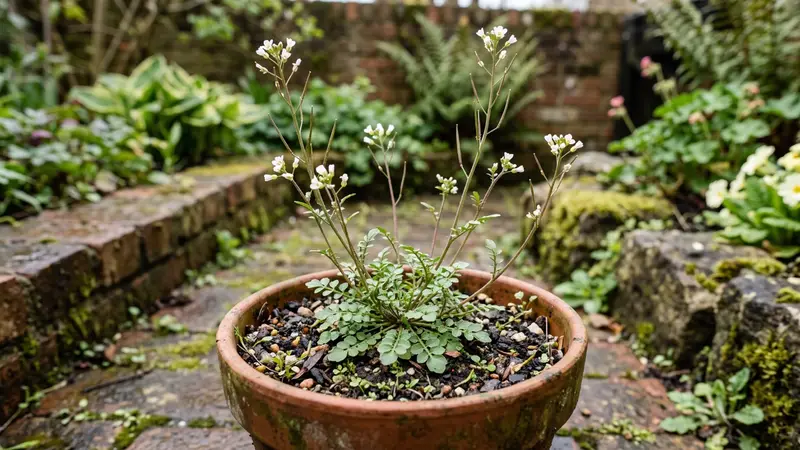
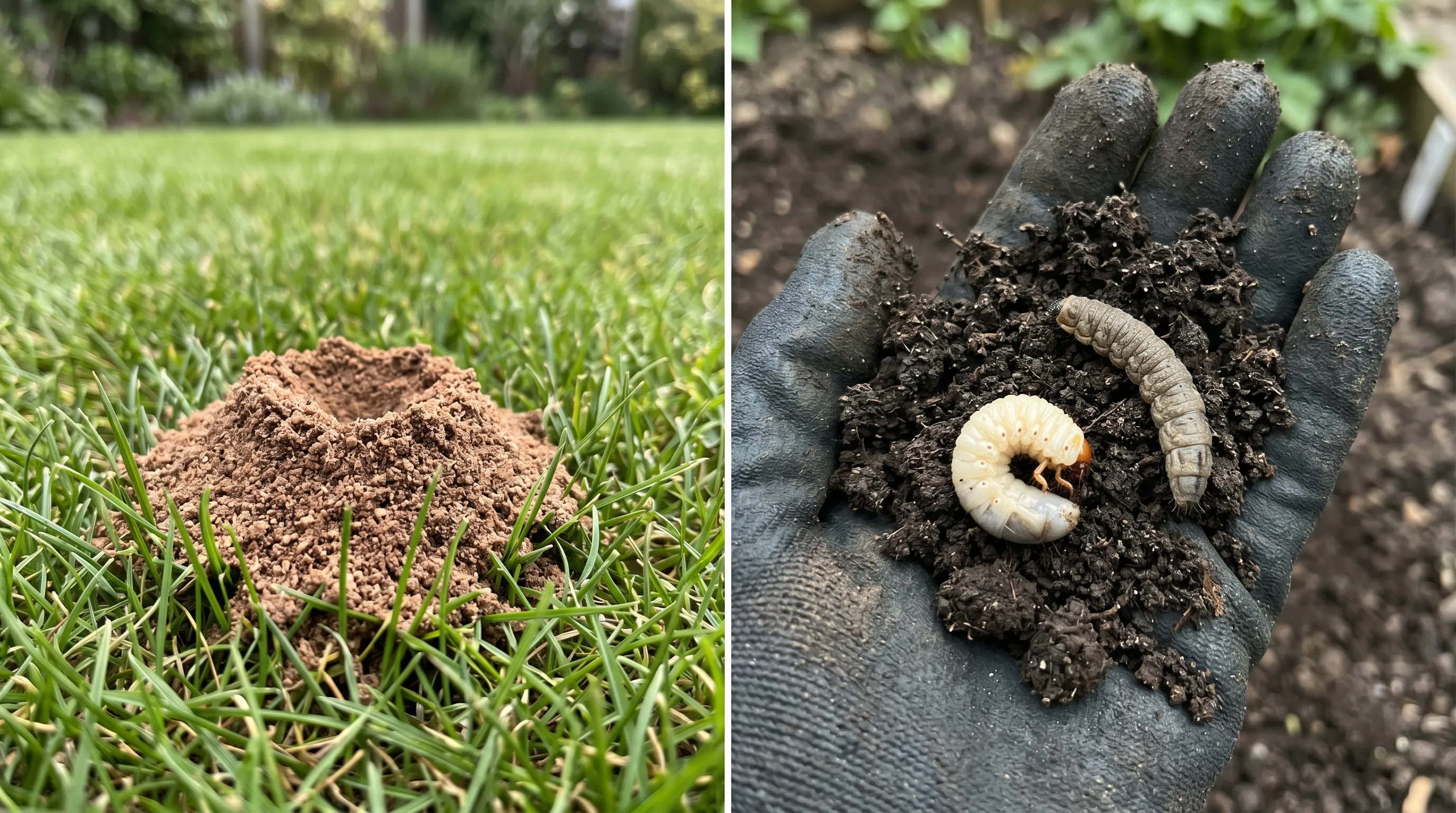 Harmless and harmful side by side: a mining bee volcano (left) versus the chafer grub and leatherjacket (right) that draw the real diggers in.
The root cause most people miss: grubs in the turf
Here is the point that turns a frustrating problem into a solvable one. The animals are not interested in your lawn. They are interested in what lives under it. Treat the holes as symptoms. The disease is a population of grubs feeding on your grass roots, and until you deal with them the digging returns season after season.
Two grubs cause almost all of it in the UK.
Leatherjackets are the larvae of crane flies, the daddy-long-legs. They are legless, grey-brown, tough-skinned and 2 to 4cm long. Adults lay eggs in late summer, often into damp lawns, and the larvae feed on grass roots through autumn, winter and the following spring. A heavy infestation runs to 100 or more per square metre and causes yellow dying patches alongside the digging.
Chafer grubs are the larvae of chafer beetles. They are creamy white, C-shaped, with a brown head and three pairs of legs, growing to 1.5 to 3cm. They feed on roots from late summer, growing largest in September and October before digging deeper for winter. Even 30 to 50 per square metre will draw badgers and crows to a lawn nightly.
The diagnosis is simple. Cut three sides of a 30cm square of turf with a spade, peel it back, and count the grubs in the top 5cm. Anything above 30 grubs per square metre means the lawn is a feeding station, and the digging will continue until the grubs are gone. This grub damage can sit alongside other turf problems, so cross-check our guide to lawn disease identification if you also see discolouration.
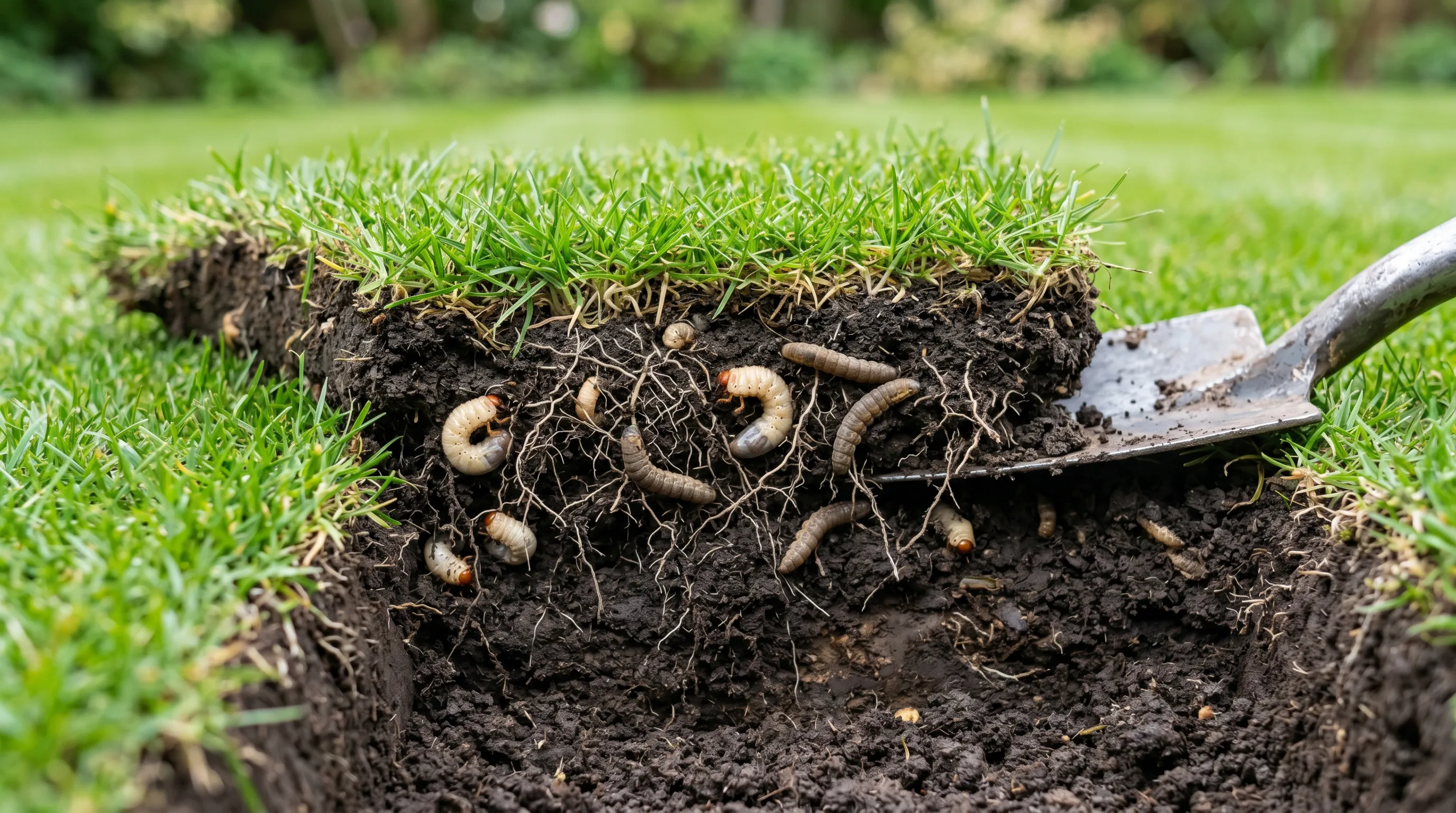 Lift a 30cm square of turf and count what is in the top 5cm. Above 30 grubs per square metre and the nightly digging will continue until you treat them.
How to control the grubs and stop the digging
Pathogenic nematodes are the gold standard control. These microscopic worms hunt grubs in the soil and kill them within days, and they are safe for pets, children, wildlife and pollinators. Two species do the work: Steinernema feltiae and Steinernema carpocapsae for leatherjackets, and Heterorhabditis bacteriophora for chafer grubs. Timing and soil temperature decide success.
The control hierarchy below ranks the realistic options. Note that deterrents alone, the bottom rows, rarely work while grubs remain in the lawn.
| Problem / animal | Humane, legal control | Effectiveness | Role |
|---|---|---|---|
| Chafer grubs | H. bacteriophora nematodes, soil above 12C | 60 to 90% kill in 2 to 3 weeks | Primary treatment, source fix |
| Leatherjackets | S. feltiae / S. carpocapsae nematodes | 60 to 80% kill in autumn or spring | Primary treatment, source fix |
| Both grubs | Improve drainage, aerate, scarify | Reduces egg-laying year on year | Long-term prevention |
| Badgers | Remove grubs (food), never block setts | Digging stops once food gone | Lawful root-cause fix |
| Foxes & rats | Secure bins, clear food, block cover | Removes the reason to dig | Habitat management |
| Birds | Leave alone, they eat the grubs | They are helping, not harming | No action needed |
| Mining bees | Leave alone, harmless pollinators | Gone naturally in weeks | No action needed |
| All diggers | Scent or sonic deterrents | Limited, short-lived at best | Supplementary only |
Apply nematodes when soil temperatures sit above 12C, which in most of the UK means March to May for spring treatment or September to October for autumn. Water the lawn well before and after applying, and keep the turf moist for two weeks so the nematodes can move and hunt. A repeat dose the following season keeps numbers low.
Common mistakes when tackling lawn diggers
A few predictable errors waste money and let the digging carry on. Avoid these and you fix the problem properly.
Treating the holes, not the grubs. Filling holes and scattering repellent does nothing while the food source remains. The animals simply dig elsewhere on the lawn. Always count the grubs first and treat the cause.
Applying nematodes too cold. Nematodes need soil above 12C to move and hunt. Apply them in cold late autumn or midwinter and most die before reaching a grub. Use a soil thermometer and aim for the mild windows of spring and early autumn.
Letting the lawn dry out after treatment. Nematodes travel through a film of soil water. A lawn that dries out after application strands and kills them. Keep the turf damp for at least two weeks.
Blocking a badger sett. This is illegal and risks prosecution under the 1992 Act. It also fails, because a determined clan will simply dig a new way in. Remove the grubs instead.
Deterring the birds. Starlings and woodpeckers on the lawn are a free grub survey. Scaring them off hides the symptom and loses you a natural control. Treat the grubs and the birds move on by themselves.
Seasonal calendar of UK lawn diggers
Digging follows the grub lifecycle and the seasons. This calendar shows when each culprit is most active, so you can time both diagnosis and treatment.
| Month | Most active diggers | What to do |
|---|---|---|
| January to February | Badgers, foxes, woodpeckers | Diagnose, count grubs, plan spring nematodes |
| March | Badgers, birds, leatherjackets feeding | Apply nematodes once soil hits 12C |
| April | Mining bees emerge, leatherjackets active | Leave bees, continue grub treatment |
| May | Mining bees nesting, foxes with cubs | Spring nematode window closes, keep lawn damp |
| June to July | Quieter, foxes, rabbits at dawn | Aerate and scarify to reduce egg-laying |
| August | Crane flies and chafers laying eggs | Improve drainage before the next generation |
| September | Badgers, crows heavy, chafer grubs large | Autumn nematode window opens above 12C |
| October | Badgers peak, woodpeckers, chafer grubs | Apply autumn nematodes, count grubs |
| November to December | Badgers, foxes, woodpeckers | Final mild-window treatment, then monitor |
Autumn is the high-risk season. Crane flies and chafer beetles have just laid, the new grubs are feeding hard near the surface, and badgers feed up before winter. A September or October nematode dose, applied while the soil is still warm, breaks the cycle before the worst digging starts. The Royal Horticultural Society provides further detail on grub identification and lifecycle.
Frequently asked questions
Why are there suddenly holes in my lawn overnight?
An animal has found a food source under your turf. The sudden onset usually means grub numbers crossed the threshold that makes nightly digging worthwhile. Leatherjackets and chafer grubs feed near the surface in autumn and spring, drawing in badgers, foxes and birds. Count the grubs in a test square to confirm, then treat them at source.
How do I tell a badger hole from a fox hole?
Badgers roll turf back in strips, foxes dig single conical pits. Badger damage looks like peeled carpet across a wide area with soil flung in fans. A fox leaves one neat cone-shaped hole, 8 to 12cm wide, with soil to one side. Check for badger latrines and coarse black-white hair on fences to confirm a badger.
Are nematodes safe for pets and children?
Yes, nematodes are completely safe for pets, children and wildlife. They are microscopic worms that target only insect larvae in the soil. They pose no risk to mammals, birds, fish or amphibians, and are approved for organic gardening in the UK. You water them in and the lawn is safe to use immediately.
Will the digging stop on its own?
It usually stops once the grubs are gone or eaten. If animals clear the grubs themselves, digging fades, but the damage continues until then. Treating with nematodes speeds this up, cutting grub numbers by 60 to 90% and stopping most digging within two to three weeks. Untreated, a fresh grub generation simply restarts the cycle.
Can I get rid of the animals instead of the grubs?
No, removing the food is more effective and often more lawful. Badgers are legally protected, and foxes and birds simply return while grubs remain. Deterrents give short-lived results at best. Treating the grubs removes the reason any animal digs, which solves the problem permanently rather than moving it around the lawn.
Our team produces practical UK gardening guidance from source research, contributor records and established horticultural practice. Editorial standards are overseen by Matt W.