Key takeaways
- An obelisk adds vertical height and a focal point to a flat border, pot or veg plot
- Match the idea to the spot: sweet peas and roses for flowers, runner beans for crops
- Clematis, climbing roses, sweet peas and runner beans are the classic obelisk climbers
- Anchor obelisks firmly: a leafy one in full growth catches the wind like a sail
- Plant climbers 30 to 45cm from the base and train them in a clockwise spiral, tying in
- Timber, metal and rustic hazel all work; pick for the style and budget of your garden
A garden obelisk is the quickest way to add height, structure and a focal point to a flat garden. It lifts climbing plants up into the eye line, draws the gaze along a border or path, and turns a bare patch into something with presence, all from a single, movable structure. Whether you want a tower of scented sweet peas by the door, a productive bean frame on the allotment, or a smart metal pillar of clematis in a border, the obelisk does the job.
Why an obelisk earns its place
An obelisk works because it adds vertical height exactly where a flat garden lacks it, and because it concentrates a climber into a freestanding focal point rather than flat against a wall. Most borders are strong on low and medium planting and weak on height away from the boundaries. An obelisk fixes that in the middle of a bed, where there is nothing to climb.
It also changes how a climber performs. Against a wall a climber spreads sideways and much of it sits flat and half-hidden. On an obelisk the same plant is seen in the round, lit from every side, and held at a size you can actually manage. That suits moderate climbers like clematis, sweet peas and climbing roses far better than a rampant wall-eater would manage.
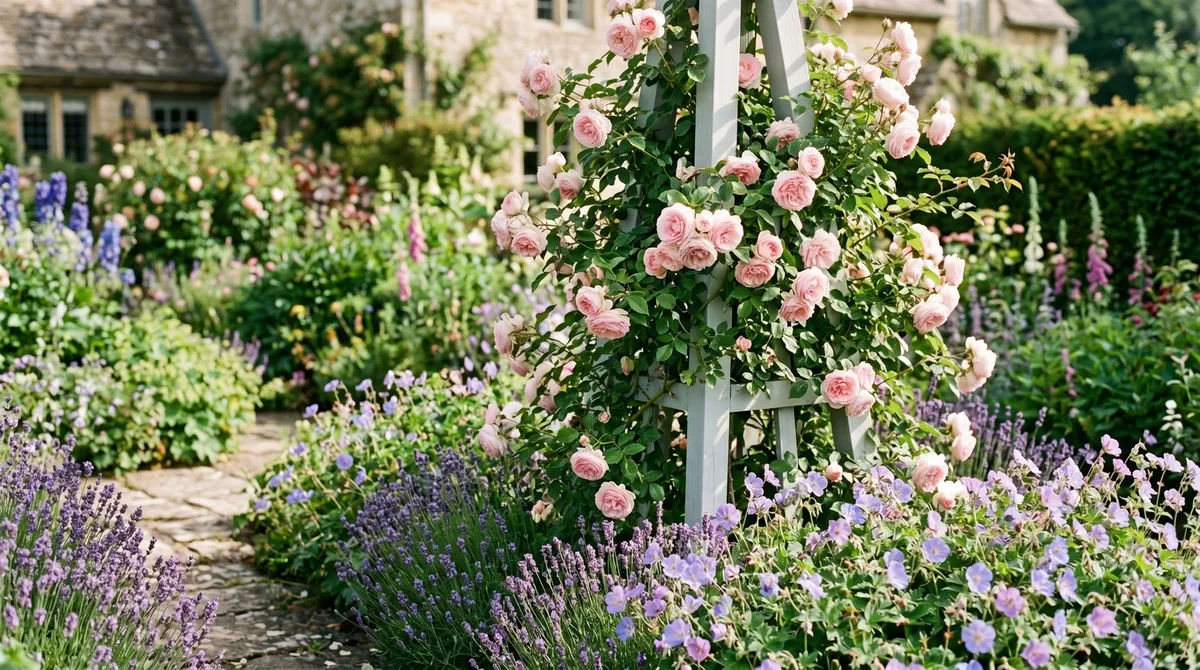
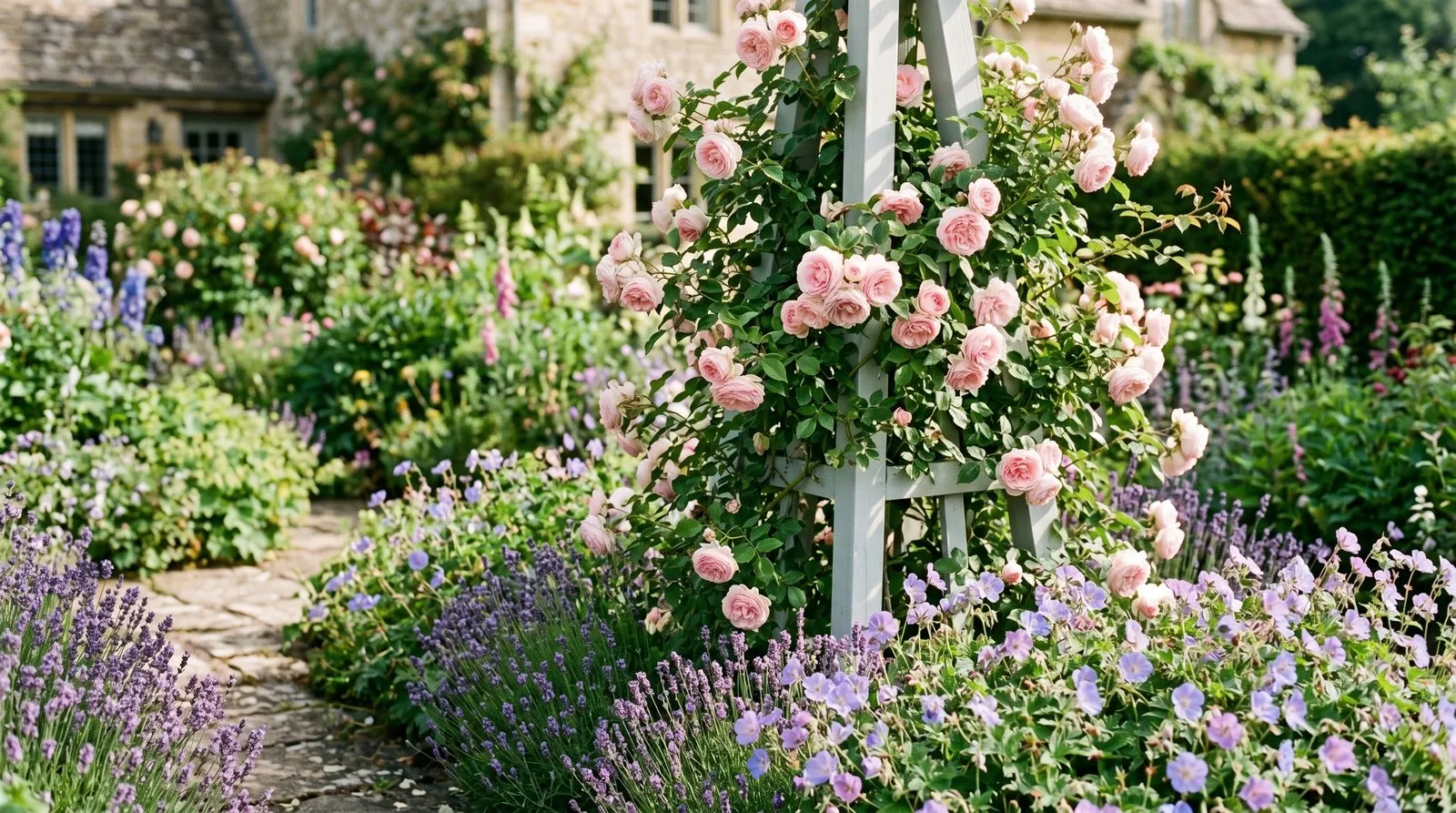 An obelisk lifts a climber into the eye line and gives a flat border a focal point. Here, climbing roses turn a plain bed into the heart of the garden.
10 garden obelisk ideas to try
The best obelisk for you depends on what you want it to do: flowers, crops, a focal point or height in a pot, with a different design suiting each job. The ten ideas below cover the range, from the purely ornamental to the frankly productive. Pick the one that fits your spot and your style.
| # | Obelisk idea | Best for | Climber to grow |
|---|---|---|---|
| 1 | Painted timber sweet pea tower | Scent and cut flowers | Sweet peas |
| 2 | Rustic hazel or willow wigwam | Allotment and cottage style | Runner beans, sweet peas |
| 3 | Metal obelisk in a border | Long-season flowers | Clematis viticella |
| 4 | Border focal point | Drawing the eye | Climbing rose |
| 5 | Obelisk in a large container | Patios and small gardens | Compact clematis |
| 6 | A matched pair framing a path | Formality and rhythm | Matching roses |
| 7 | Runner bean wigwam | A productive crop | Runner beans |
| 8 | Repeat-flowering rose pillar | Months of bloom | Climbing rose |
| 9 | Cut-flower sweet pea obelisk | A picking patch | Sweet peas |
| 10 | Contemporary metal or copper | Modern gardens | A single clematis |
Ideas one, nine and the rose pillars are about flowers. A painted timber obelisk of sweet peas by a door or path is hard to beat for scent, and picking the flowers keeps them coming all summer, as our guide to growing sweet peas explains. A metal obelisk of clematis brings long-season colour to the middle of a border, especially with the hard-pruned viticella types covered in our clematis growing guide. A repeat-flowering climbing rose trained up an obelisk gives months of bloom from one plant, and our pick of the best climbing roses flags the most reliable.
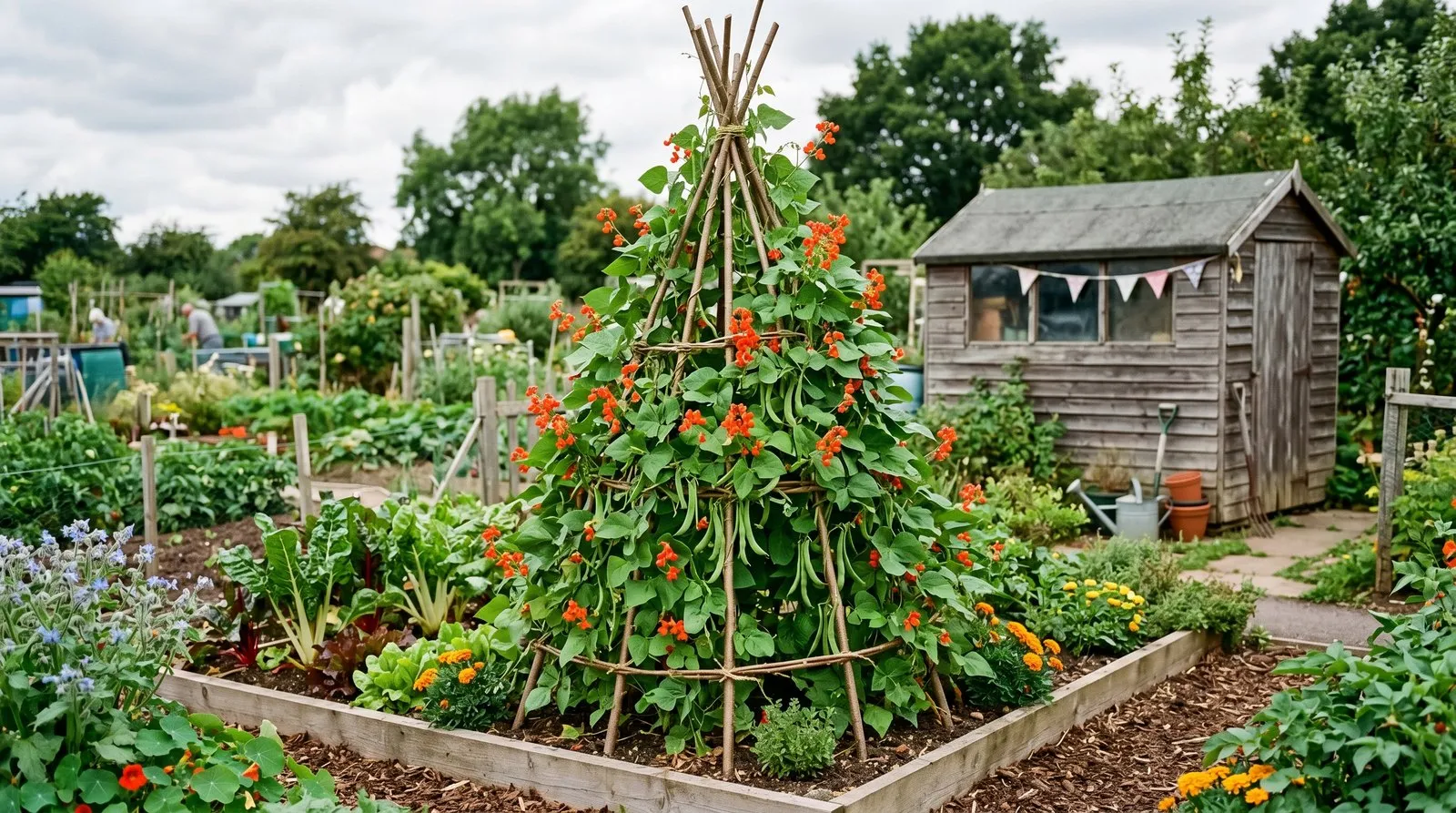 A home-made hazel wigwam is the cheapest obelisk of all, and runner beans turn it into a productive, colourful crop frame.
Productive obelisks for the veg plot
On the allotment an obelisk earns its keep as a crop support, lifting runner beans, climbing peas and squashes off the ground and into easy picking. The same structure that shows off a clematis will carry a heavy crop, and a vertical frame uses far less ground than letting beans sprawl.
The classic is the runner bean wigwam, idea seven. A circle of canes or hazel rods lashed at the top makes a sturdy, airy frame, with one bean to each upright. Trained up the canes, the plants crop heavily in a small footprint and stay easy to harvest, which our guide to which vegetables need a trellis or frame sets in context. Water well at flowering, because beans drop their flowers if they go dry.
A rustic hazel wigwam, idea two, is the cheapest obelisk you can have. Cut sturdy hazel uprights and weave in whippy willow or dogwood stems, and you have a support that costs nothing and looks completely at home in a cottage garden or allotment, exactly as the RHS suggests for sweet peas. Renew it each spring and it doubles as a winter job that uses prunings you would otherwise burn. Our runner bean growing guide covers spacing and watering.
Obelisks for pots, paths and focal points
In a small garden or on a patio, an obelisk in a large container brings height where there is no border to plant in, and a matched pair frames a path or gateway with instant formality. These are the design jobs an obelisk does better than almost anything else.
A matched pair of obelisks, idea six, framing a path, a gateway or a view brings a sense of arrival and rhythm that a single one cannot. Plant them identically, with the same rose or clematis on each, so they read as a pair. For a stronger structure over a path, an obelisk’s cousin the rose arch does a similar job, and our guide to building a rose arch walks through it. A single obelisk as a border focal point, idea four, works best on a clear sightline from a door, a seat or a path, framed by lower planting that funnels the eye towards it.
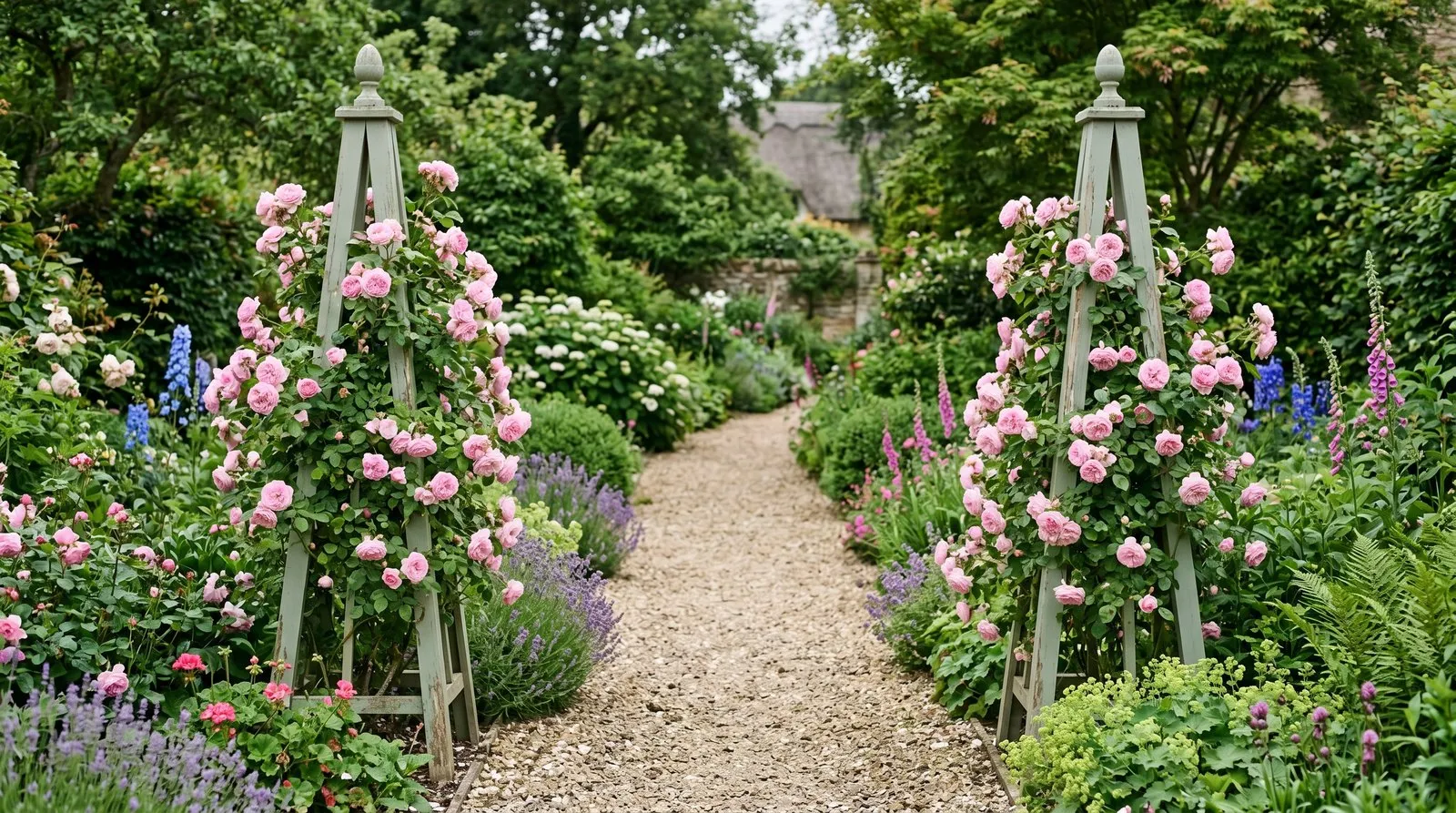 A matched pair of obelisks framing a path brings rhythm and a sense of arrival that a single one cannot. Plant them identically so they read as a pair.
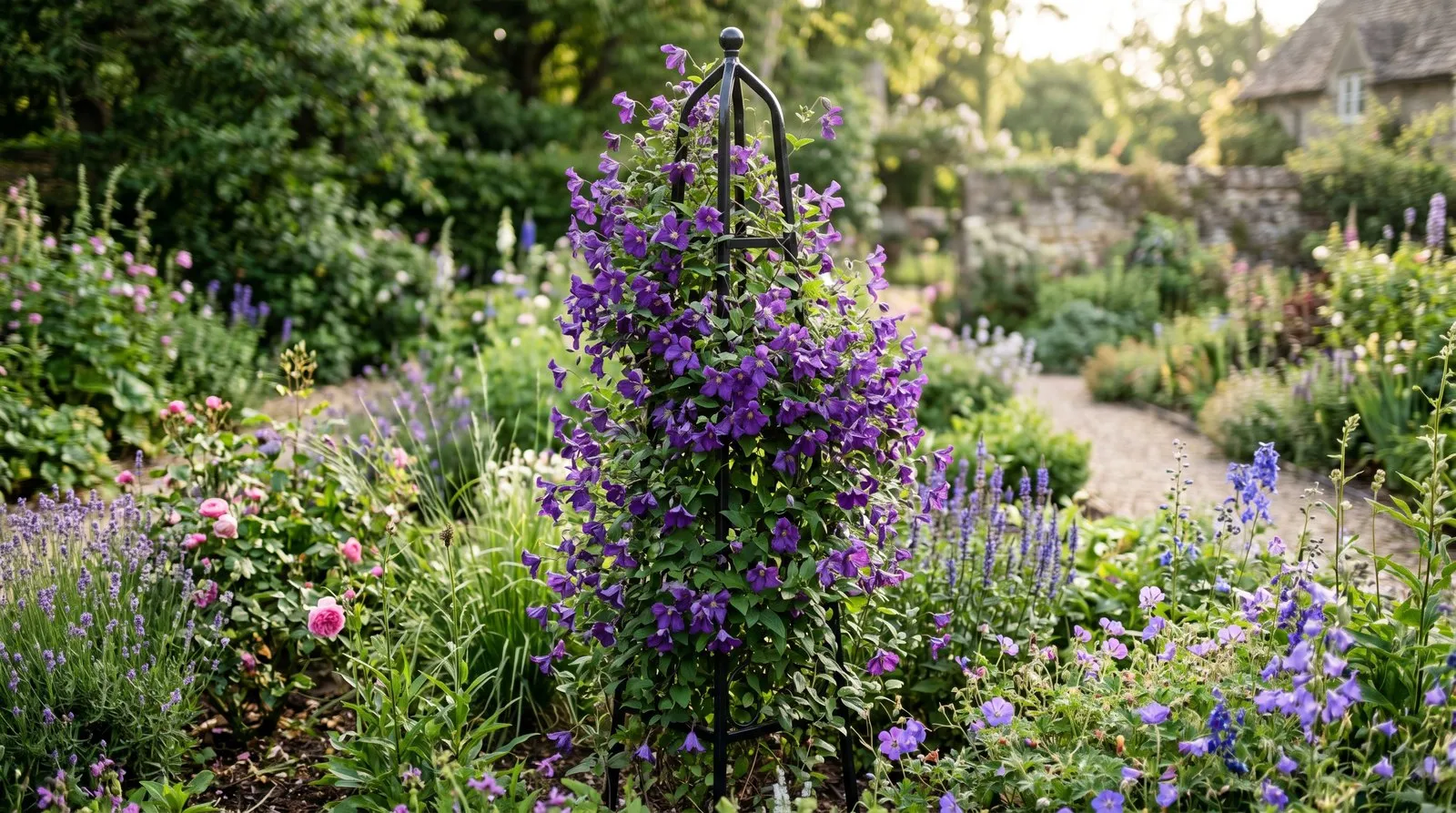 A metal obelisk of clematis brings long-season colour to the middle of a border, where there is otherwise nothing for a climber to scale.
The best climbers for an obelisk
The ideal obelisk climber is moderately vigorous, responds to training, and flowers or crops over a long season, which rules out the rampant wall-eaters. Match the plant to the frame and you get a clothed, flowering column; pick something too vigorous and it swamps the structure in a single season.
These are the reliable choices for a UK obelisk:
- Clematis (viticella and other Group 3 types). Long-flowering, easy to train and hard-pruned each spring, so they never outgrow the frame. See our clematis pruning guide for the timing.
- Climbing and rambling roses (repeat-flowering). Train the stems near horizontal for flowers all the way up. Choose disease-resistant, repeat-flowering kinds.
- Sweet peas. The classic annual obelisk climber, grown for scent and cut flowers, and easy from an autumn or spring sowing.
- Runner and climbing beans. The productive choice, heavy-cropping and quick from seed each year.
- Golden hop (Humulus lupulus ‘Aureus’). A vigorous perennial for a larger, sturdy obelisk, dying back each winter and romping up again in spring, covered in our guide to growing hops.
For the full range, including which climbers suit shade, walls or wildlife, see our roundup of the best climbing plants for UK gardens. Avoid self-clinging climbers like ivy and Virginia creeper, which hide the frame rather than decorate it, and the truly rampant ones that will outgrow any obelisk in a season.
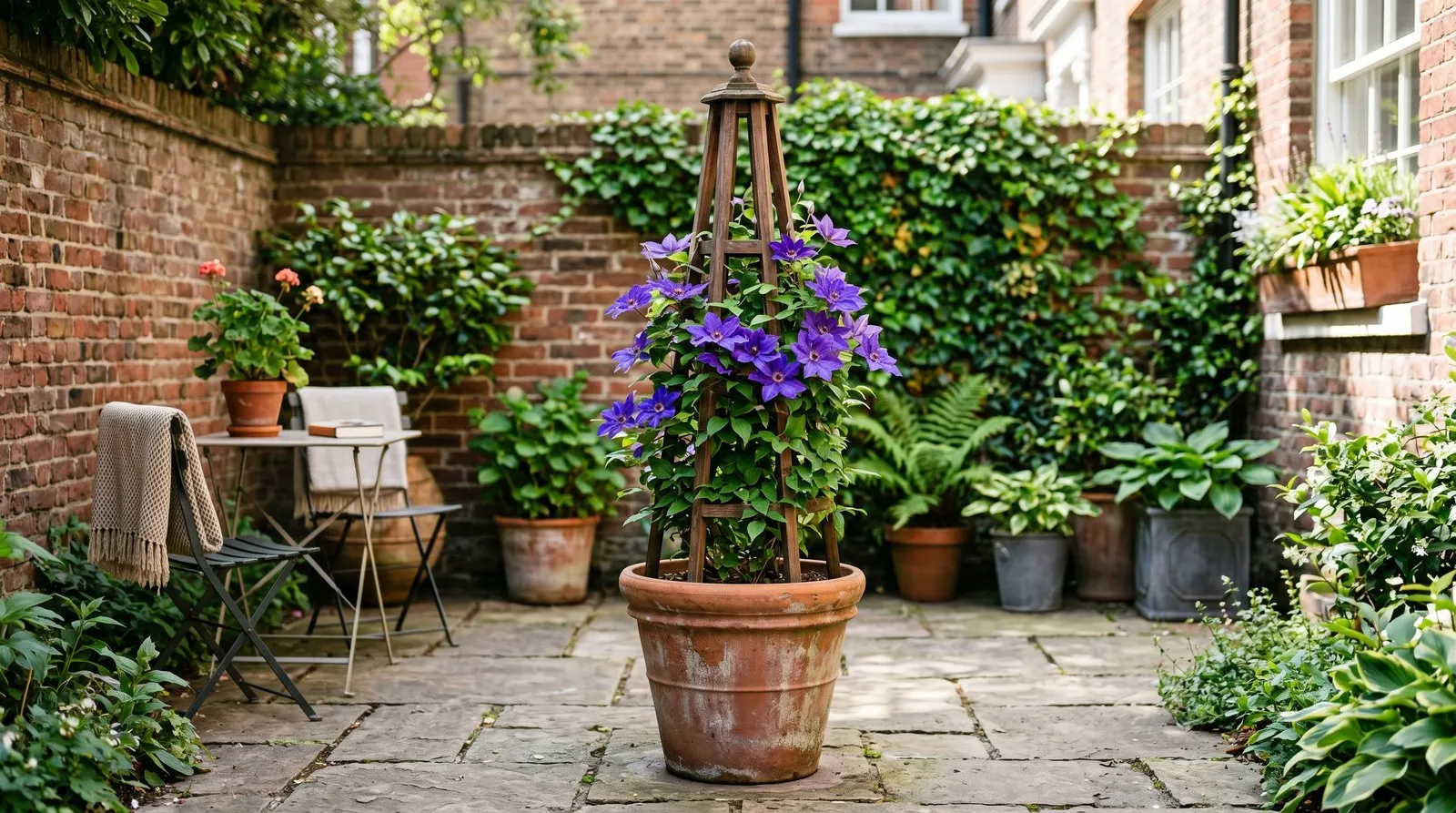 An obelisk in a large pot brings height to a patio or courtyard where there is no border. Use a wide, heavy container for stability.
How to plant, train and anchor an obelisk
Plant climbers 30 to 45cm out from the base, train them in a clockwise spiral tied in little and often, and sink the obelisk firmly so the wind cannot rock it. Get these three things right and the obelisk performs for years; get them wrong and you have a leaning frame with flowers only at the top.
Start with anchoring, because a fully grown, leafy obelisk catches the wind like a sail. Sink the legs 30 to 60cm into the ground, and in soft or exposed sites set them in a rapid-set post concrete. Test it by rocking it by hand before you plant; it should not move. For an obelisk in a pot, use a wide, heavy container and stand it out of the fiercest wind.
Then plant and train. Set the climber 30 to 45cm out from the base, where the soil stays moist and the roots are not crowded by the legs, and lead the shoots in to the frame. Clematis go in deep, with the crown 5 to 8cm below the surface, as the RHS clematis guide advises, to help them recover from clematis wilt. Train the growth in a clockwise spiral, winding it round the obelisk and tying in with soft twine every 20 to 30cm. Keep the early growth low and almost horizontal, which triggers flowering shoots all the way up the frame rather than a bare base and a flowery hat. Sweet peas cling with tendrils but still flower better for a little tying in, exactly as the RHS notes for sweet peas.
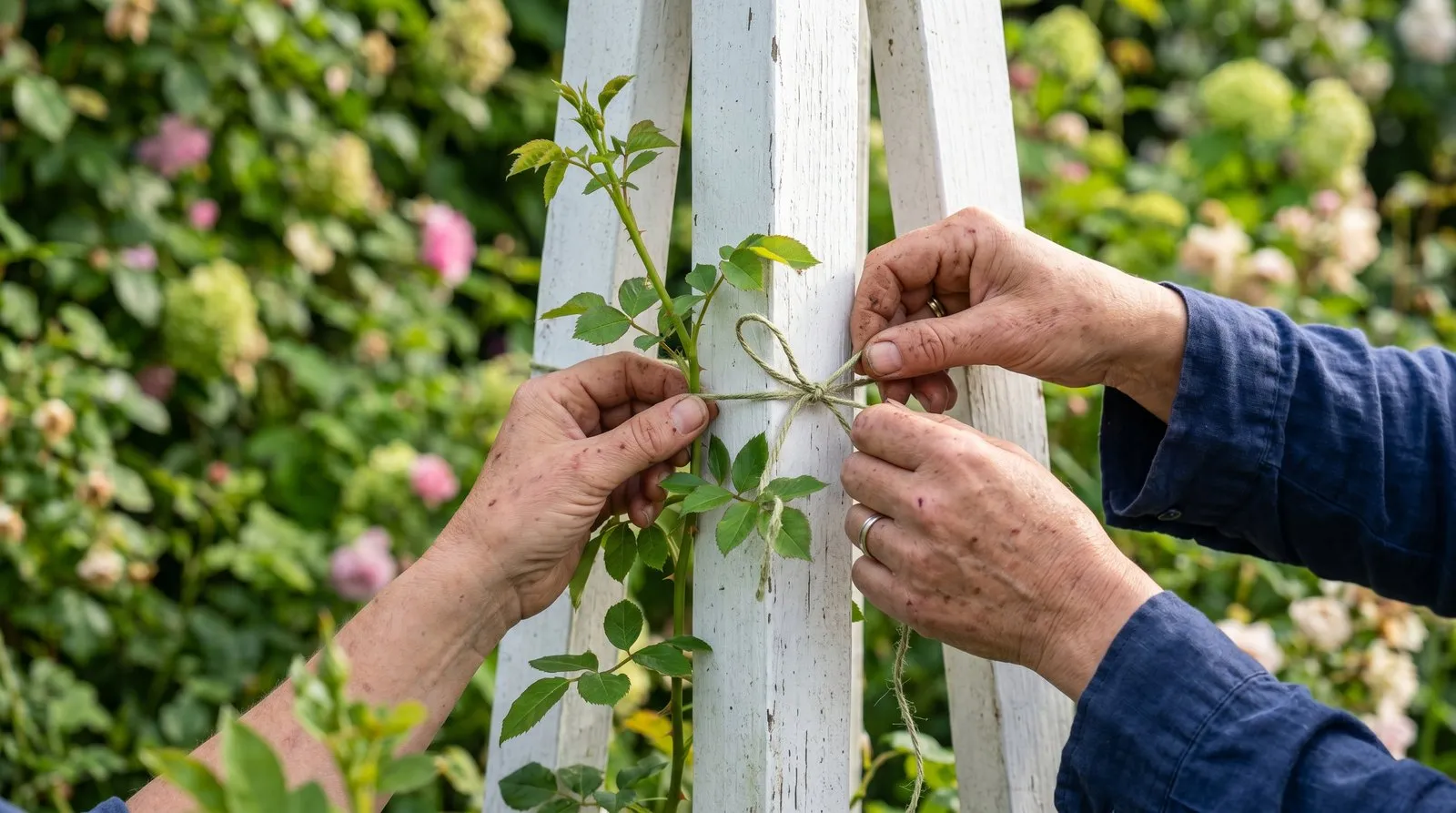 Tie in low and often, winding shoots round the frame. Early, near-horizontal training is the secret to flowers from base to tip.
Choosing materials and getting the size right
That, in the end, is the whole art of the garden obelisk: pick the design for the job, match the height and material to the spot, plant a climber that suits the size, and train it in early and often. Do that and a single, simple structure will give you height, flowers or crops, and a focal point that lifts the whole garden.
Related reading: For a support that roots and keeps growing, read our guide to weaving living willow.
Frequently asked questions
What is the best plant to grow up a garden obelisk?
Clematis, climbing roses and sweet peas are the best flowering climbers for an obelisk, and runner beans the best edible one. Choose moderate-vigour climbers that respond to training rather than rampant ones that swamp the frame. Clematis viticella types and repeat-flowering climbing roses are especially good, because they flower over a long season and suit the size of a typical obelisk.
How tall should a garden obelisk be?
Most garden obelisks are between 1.5 and 2.4 metres tall. Use 1.5 to 1.8 metres for borders and containers, and 1.8 to 2.4 metres for focal points, allotments and runner beans. Scale the obelisk to its setting: a tall obelisk dominates a small bed, while a short one is lost at the back of a deep border. Sink it firmly so wind cannot rock it.
How do you anchor a garden obelisk so it doesn’t blow over?
Sink the legs 30 to 60cm into the ground, and use a rapid-set post concrete in soft or exposed ground. A fully grown, leafy obelisk catches the wind like a sail, so the deeper and firmer the better. For obelisks in pots, use a heavy, wide container and a free-draining but weighty compost, and stand it in a sheltered spot out of the strongest wind.
How do you train a climber up an obelisk?
Plant the climber 30 to 45cm out from the base and lead the shoots in to the frame. Train them in a clockwise spiral, winding them round and tying in with soft twine every 20 to 30cm. Start low and keep the early growth almost horizontal, which triggers flowering shoots all the way up rather than just at the top. Tie in little and often through the season.
Can you put an obelisk in a pot?
Yes, an obelisk in a large container is one of the best ways to add height to a patio or small garden. Use a wide, heavy, frost-proof pot at least 45 to 50cm across for stability, a loam-based compost, and a smaller-growing climber such as a compact clematis or a few sweet peas. Water containers daily in summer, because they dry out far faster than open ground.
Our team produces practical UK gardening guidance from source research, contributor records and established horticultural practice. Editorial standards are overseen by Matt W.