Key takeaways
- Build only in the dormant season, roughly November to early April, before the rods leaf out
- A 2.4m dome takes about 84 rods of 2.4 to 3m long, pushed 25 to 30cm into the ground
- Space uprights every 30cm around the circle and leave a 60cm door gap
- Use vigorous Salix viminalis for the frame, adding coloured willows for pattern
- Keep structures at least 3m from drains, walls and paving: willow roots seek water
Learning how to build a living willow dome turns a bundle of bare winter sticks into a green, growing garden room. A living willow dome is made by pushing dormant willow rods into the ground in a circle, then bending and weaving them into a framework that roots and grows. Living willow structures cover domes, tunnels, arches and woven fences, all built from the same simple method. The work is cheap, needs no power tools, and suits a free winter weekend.
This guide draws on eight years of building living willow on heavy Staffordshire clay. It covers the one deadline that decides success, the species that root best, the build sequence for a dome, and the aftercare that turns a thin cage into a solid, wind-stopping structure.
What a living willow structure actually is
A living willow structure is a framework of willow rods that root in the ground and keep growing. You are not building with dead timber. You are planting living cuttings that knit into a permanent, leafy shape. Willow roots so readily that a freshly cut rod pushed into moist winter soil will sprout roots and shoots within weeks.
Four forms cover almost every garden use. A dome or igloo is a round den, 2 to 3m across. A tunnel is a walk-through arch of paired rods, often several metres long. A single arch frames a path or gateway. A fedge, short for fence-hedge, is a flat woven screen used for privacy or to divide a plot.
All four are built the same way: dormant rods pushed in, tops tied, thinner rods woven diagonally through the uprights. The difference is only the plan on the ground. Willow is the traditional material because it is cheap, flexible and roots from cuttings better than almost any other UK plant.
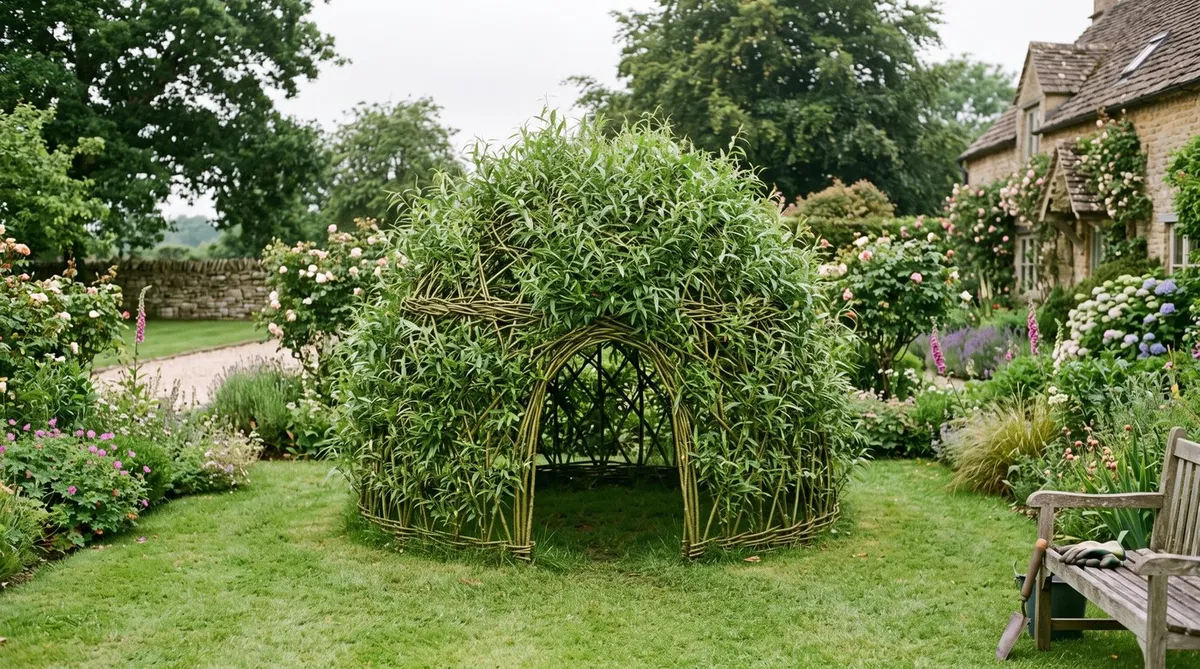
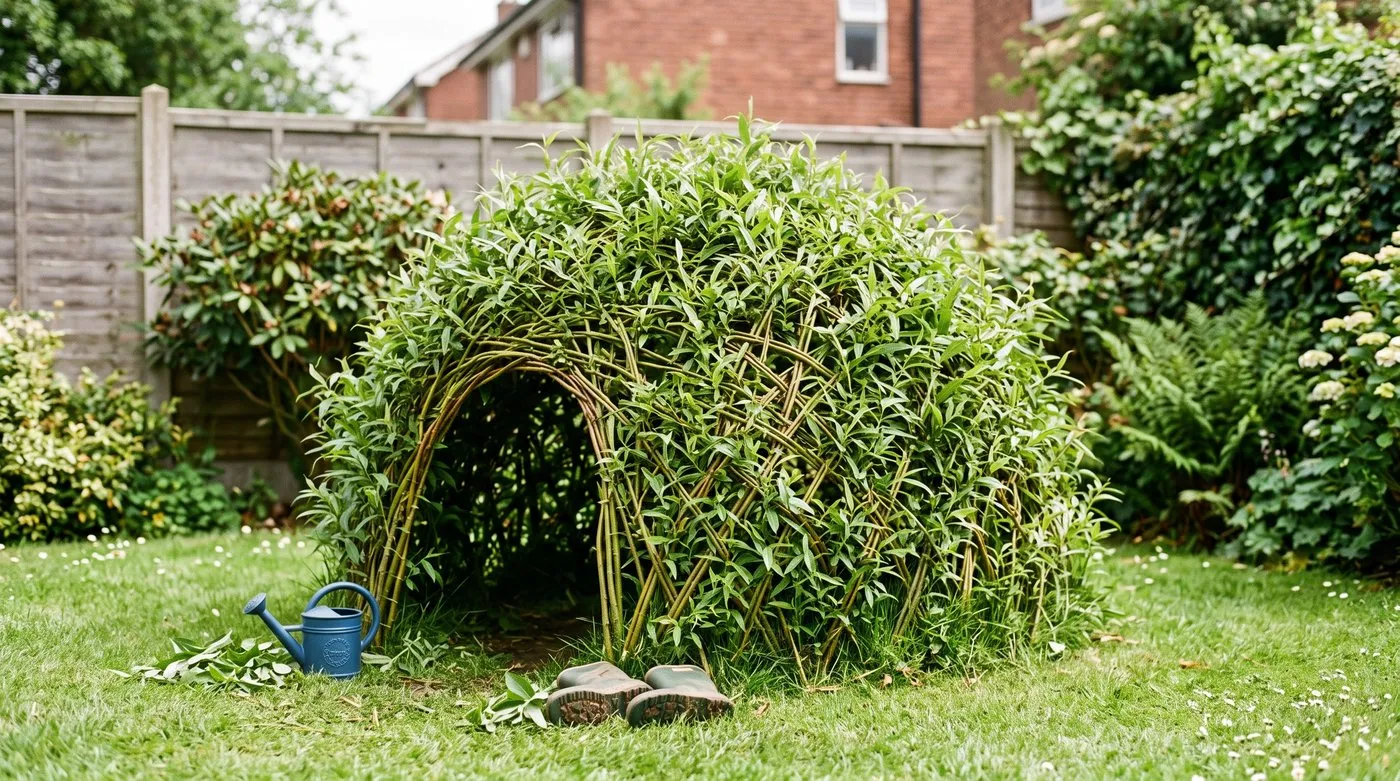 A living willow dome in a Midlands back garden. The rods rooted in place and now grow into a solid, leafy den each summer.
When to build: the dormant-season window
Timing is the one factor that makes or breaks the whole project. Build only in the dormant season, roughly November to early April. The rods must be freshly cut and still dormant, with no leaves showing. A dormant rod is a living cutting that will root. A rod in leaf has already committed its energy to growth and usually fails.
The reason is simple biology. In winter the willow holds its reserves in the stem, not the leaves. Pushed into cold, damp soil, it roots from the buried section before it needs to feed a canopy. Plant too late, once buds have burst, and the rod tries to support leaves it has no roots to supply. It wilts and dies.
Aim for December to March as the safest core of the window. The soil is moist, frosts are easing, and you still have weeks before bud-break. Avoid days when the ground is frozen solid or waterlogged.
| Month | Building status |
|---|---|
| November | Good. Rods becoming dormant, soil still workable. Order early. |
| December | Ideal. Fully dormant, damp soil, easy to push rods in. |
| January | Ideal. Peak dormancy. Best month for a clean, firm planting. |
| February | Ideal. Still dormant. Our first Staffordshire dome went in now. |
| March | Good. Plant early in the month before buds swell. |
| Early April | Last chance. Only if buds are still tight and not breaking. |
| Mid-April to October | Too late. Rods are in leaf and will not root. Wait for winter. |
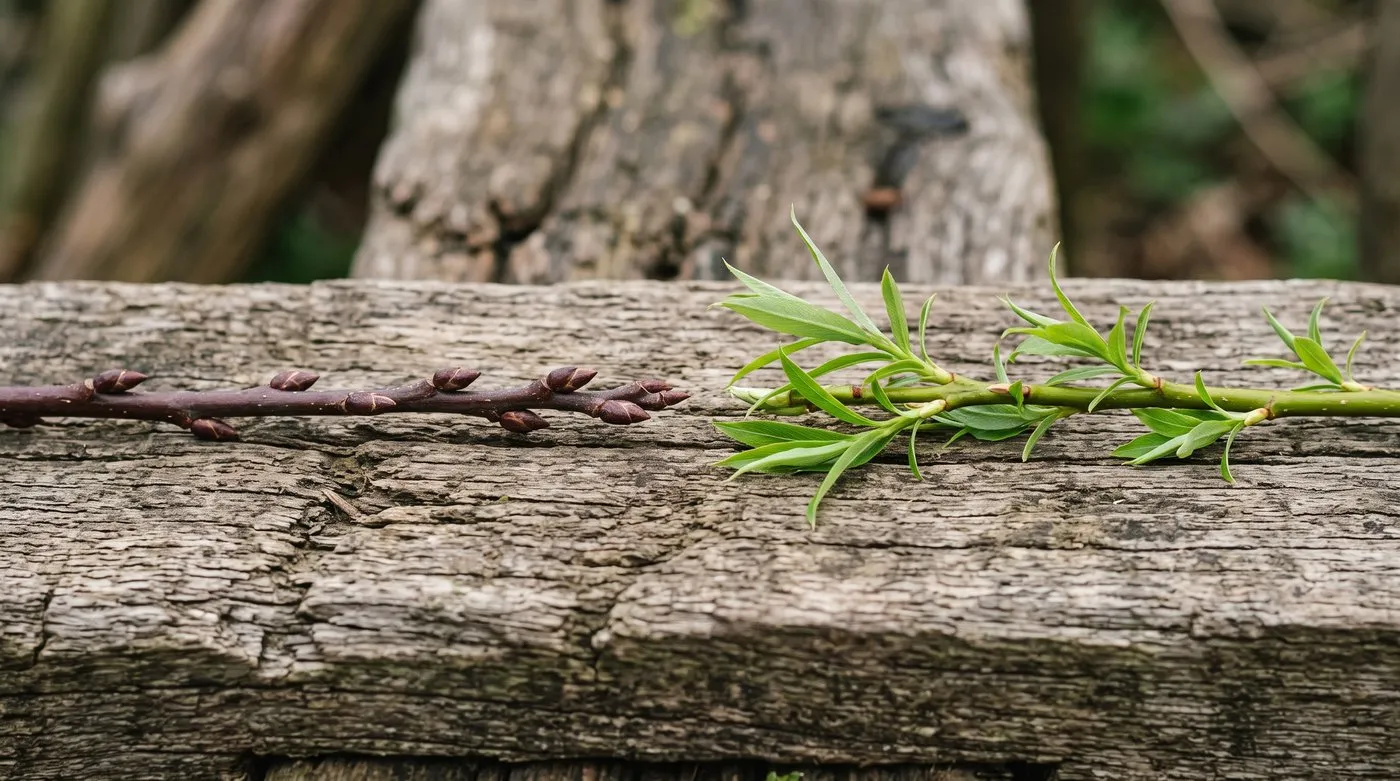 Left, a dormant rod ready to plant. Right, a rod already in leaf. Only the bare, dormant rod will root when pushed into the ground.
Choosing willow: the osier and the coloured stems
Species choice affects how well the frame roots and how it looks. For the structure itself, use a vigorous, straight-growing willow. For colour and pattern in the weave, add a few ornamental types.
Salix viminalis, the common osier, is the standard choice. It is fast, straight, flexible and roots from dormant cuttings with near-total reliability. Its rods reach 2 to 3m in a single season, which is exactly what a dome frame needs. This is the willow most basket makers and structure builders start with.
Dome, tunnel, arch or fedge: which structure to build
Not every willow project is a dome. Pick the form that fits your space and use. The table ranks them by how easy they are to build well, and lists the rods and room each one needs.
| Structure | Rods needed | Space required | Difficulty | Best use |
|---|---|---|---|---|
| Dome or igloo | 60-120 | 3m circle | Easiest to start | Children’s den, garden feature |
| Single arch | 12-20 | 1.5m wide gap | Easiest | Path or gateway feature |
| Tunnel | 100-200+ | 1m wide, several m long | Moderate | Walk-through, play route |
| Fedge (woven fence) | 3-4 per metre run | 60cm deep strip | Moderate | Screen, privacy, plot divider |
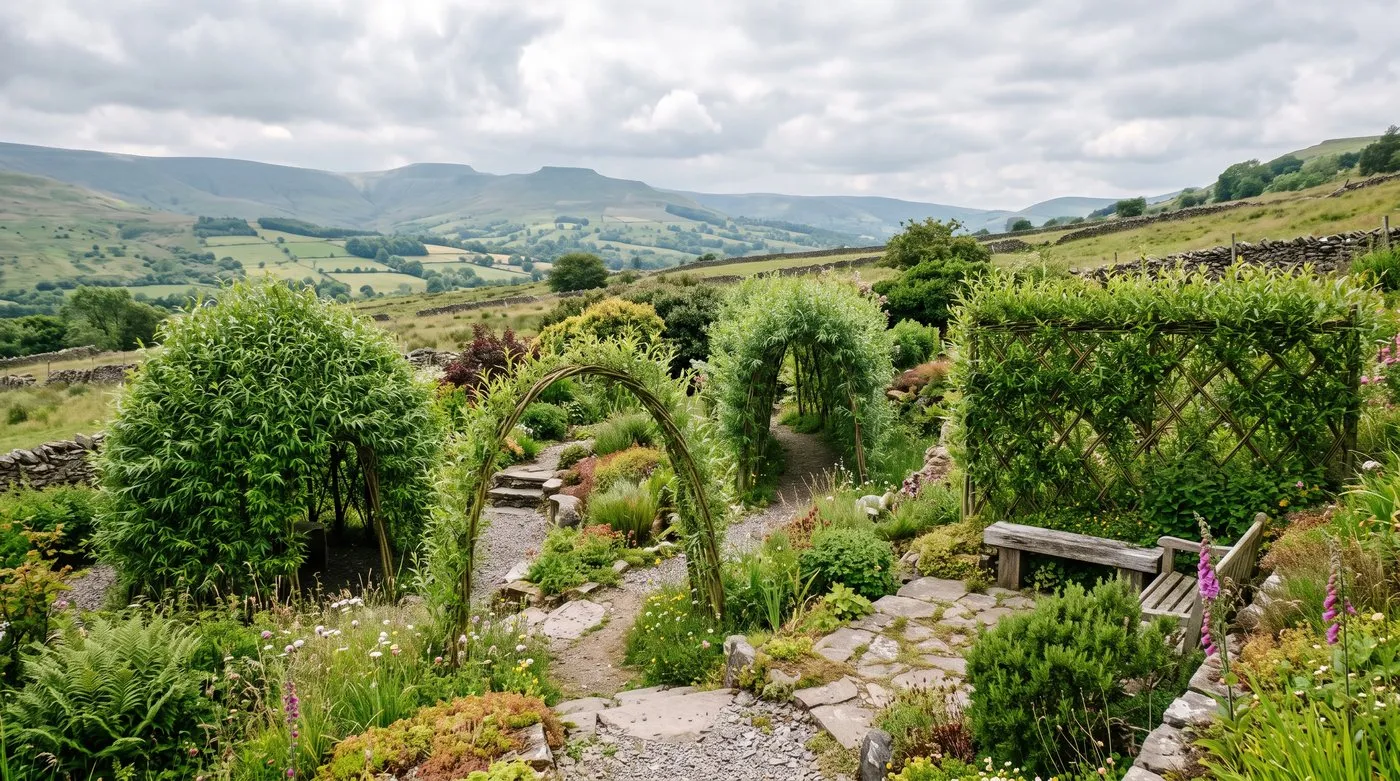 The four common forms in one Welsh garden. Same method, different plan: dome, arch, tunnel and a woven fedge screen.
How to build a living willow dome step by step
A 2.4m dome takes one person about six hours, or an afternoon with a helper. Have your rods, membrane and ties ready before you start, and keep the cut rods cool and damp until they go in.
- Clear and prepare the ground. Mow and strip a circle 3m across. Dig over the top 15cm to loosen it. Grass is the biggest killer of young willow, so clear generously.
- Lay the membrane. Peg a woven weed-suppressing membrane over the whole footprint. Cut a slit at each planting point so the rod passes into bare soil while grass stays down.
- Mark the circle and door. Mark a circle 2 to 3m across. Space planting points every 30cm around it. Leave a 60cm gap for the doorway.
- Push in the uprights. Push each 2.4 to 3m rod 25 to 30cm into the ground through a slit. Firm the soil around each one so it stands solid.
- Bend and tie the crown. Bend opposing rods over to meet in the centre. Tie their tops together with soft jute to form the domed roof.
- Weave the lattice. Push in thinner rods at an angle. Weave them diagonally through the uprights, over and under, then cross the other way to build a diamond lattice.
- Tie every joint. Tie each crossing with soft string or a rubber tree-tie. The ties hold the shape until the willow roots and stiffens on its own.
- Water in. Soak the base of every rod with at least 10 litres straight away. Keep the soil damp all through the first two summers.
The whole structure costs around £60 in rods and membrane, less if you cut your own willow. That is a fraction of the price of a bought playhouse, and it grows greener every year.
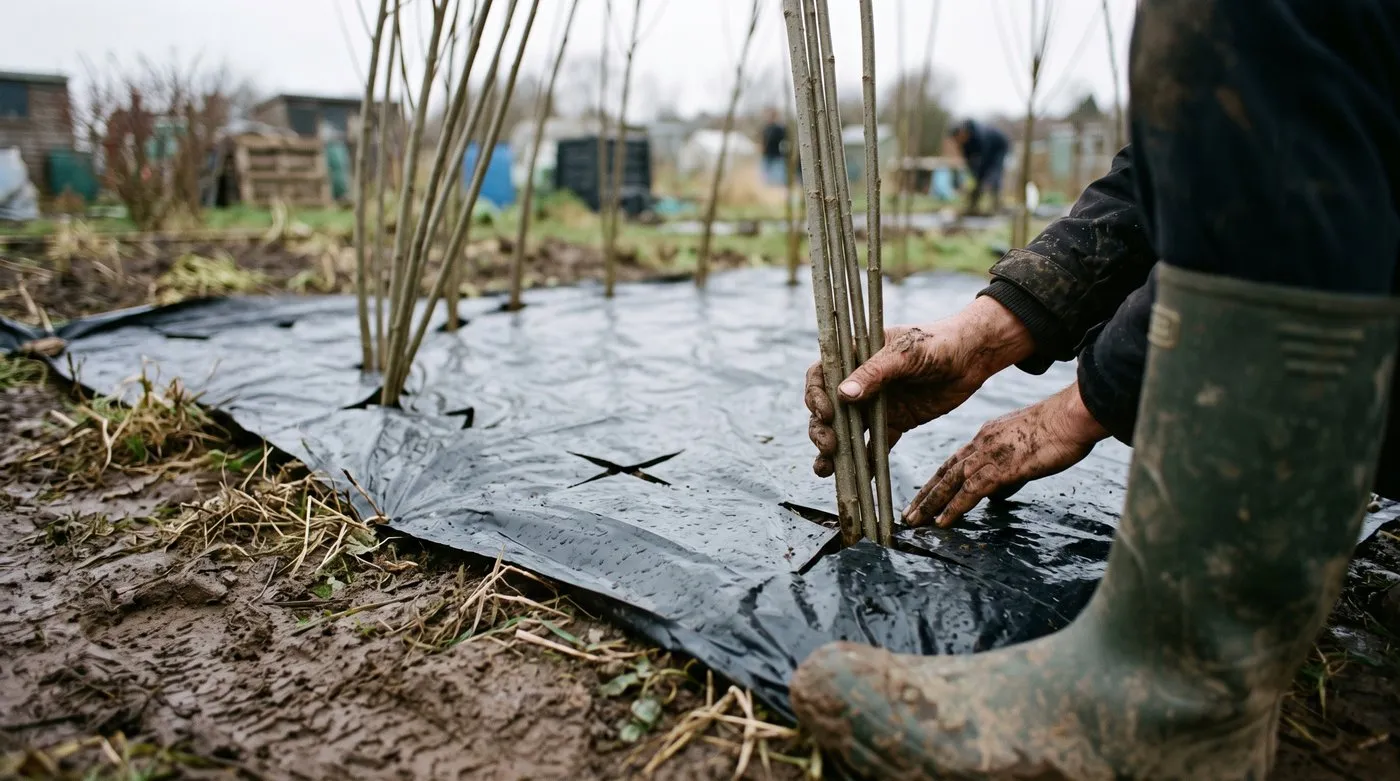 Pushing the uprights 25 to 30cm into slit-cut membrane. Firm each rod so it stands solid before you start bending and tying.
Weaving the lattice and tying the joints
The weave is what turns a ring of upright sticks into a rigid structure. Once the uprights are in and the crown is tied, work the thinner rods through them on the diagonal. Take a rod, push its base into the ground beside an upright, then weave it up through the frame, passing in front of one upright and behind the next.
Cross a second set of rods the opposite way to make a diamond lattice. This is what gives the dome its strength and its finished look. Tighter weaving makes a denser, more solid structure. Looser weaving leaves a more open, airy cage. Use coloured willows here so the pattern shows through the summer leaves.
Tie every crossing point. Use soft jute string or rubber tree-ties, never wire.
Warning: Never tie living willow with wire or plastic-coated ties. As the rods swell each year, hard material bites into the growing stem and can girdle and kill it. Jute rots away over a season, by which time the willow joints have usually fused together on their own.
 Left, a joint tied with soft jute that rots harmlessly away. Right, wire cutting into a swelling rod. Always tie living willow with soft, biodegradable material.
 A three-year-old dome in a Scottish garden. Annual winter weaving turned a thin frame into these dense, wind-stopping walls.
Aftercare through the year: watering, weeding and weaving
A living willow structure is planted, not built once and forgotten. Two jobs keep it alive and thickening: heavy watering in the early years, and weaving in the new growth each winter.
Water is the priority. Willow is thirsty, and young rods have small root systems. Through the first two summers, soak the base with 15 to 20 litres a week in any dry spell. A structure that dries out in its first June can lose half its rods. Keep the base weed-free too, as grass and weeds steal both water and light from the young willow.
Winter weaving thickens the walls. Each dormant season, from November to March, weave the year’s new whippy growth back into the frame and tie it in. Cut out any dead or broken rods at the same time. This is the job that turns a thin cage into a solid green room.
| Month | Task |
|---|---|
| January | Weave in new growth and tie the joints. Cut out any dead rods. |
| February | Finish weaving. Last window to add or replace rods while dormant. |
| March | Final dormant weaving. Firm any loose uprights before bud-break. |
| April | Buds break and leaves appear. Keep the base weed-free. Do not cut. |
| May | Growth speeds up. Start watering new structures in dry weather. |
| June | Water heavily, 15 to 20 litres a week, if dry. Weed the base. |
| July | Peak growth and water demand. Keep young structures soaked. |
| August | Keep watering established plants only in drought. Enjoy the den. |
| September | Growth slows. Ease off watering as autumn rain returns. |
| October | Leaves fall. Plan which new growth to weave in over winter. |
| November | Rods dormant again. Begin the winter weave and any repairs. |
| December | Weave and tie in cold, calm spells. Order new rods if extending. |
Gardener’s tip: Do the winter weave on a mild, still January day when the rods are most supple. Cold, brittle willow snaps as you bend it. If a rod feels stiff, warm it briefly in your hands or leave the job for a milder day. Supple rods bend into the frame without cracking.
Willow roots travel far in search of water, which is where structures cause trouble if sited badly. Keep every dome, tunnel and fedge at least 3m from drains, foundations, walls and paving. The roots can lift slabs and work into cracked pipes.
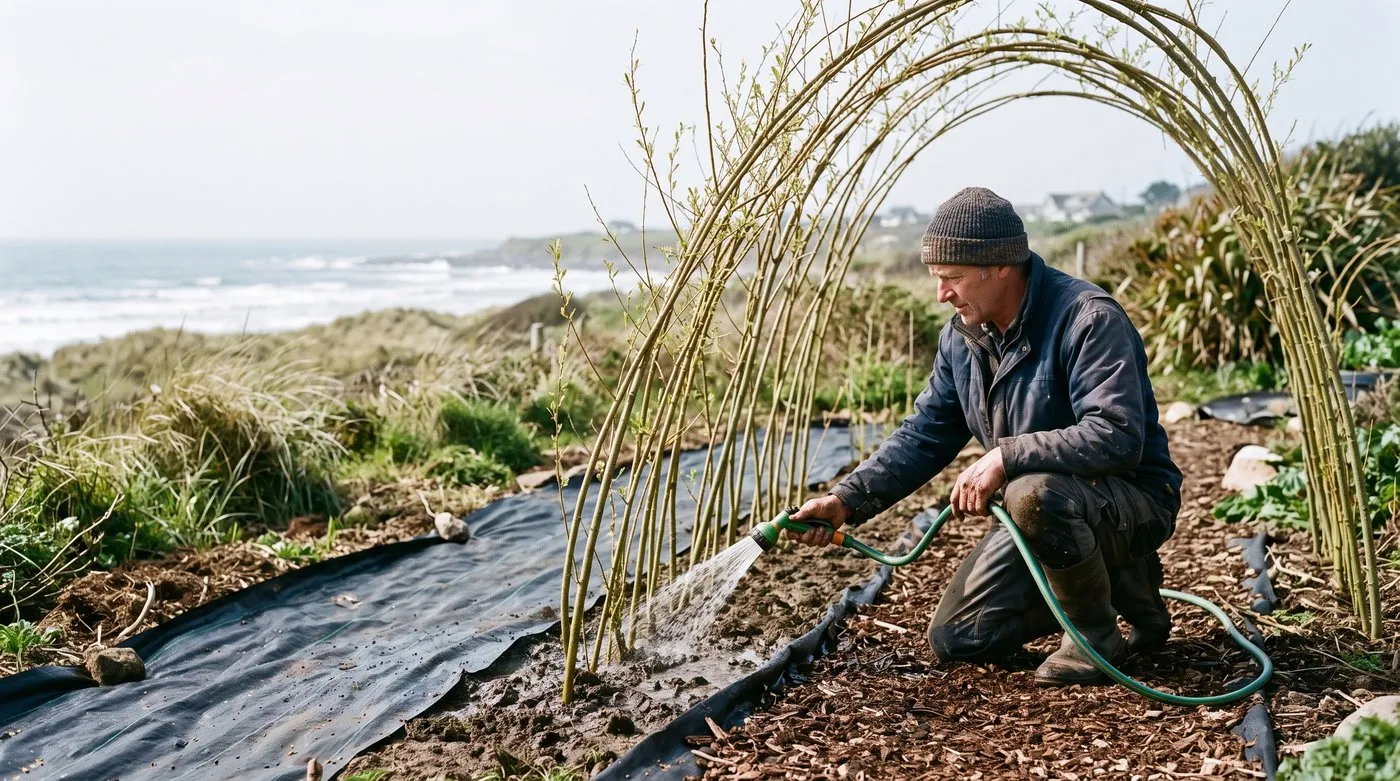 Soaking the base of a young willow tunnel in a coastal garden. Heavy watering through the first two summers is what gets the rods rooted.
Common mistakes when building a living willow dome
- Building in summer. The commonest failure by far. Rods cut or planted in leaf will not root and simply die. Build only in the dormant season, November to early April, using freshly cut dormant rods.
- Skipping the membrane. Plant straight into grass and the turf smothers the young willow. Weeds outcompete it for water and light. Always lay a weed-suppressing membrane with planting slits.
- Not watering enough. Willow is thirsty, and dry first summers kill rods wholesale. Soak the base with 15 to 20 litres a week through any dry spell for the first two years.
- Planting too close to buildings. Willow roots seek water and can lift paving or enter drains. Keep structures at least 3m from any wall, pipe, foundation or slab.
- Tying with wire. Wire and plastic ties cut into the swelling stems and girdle them. Use soft jute or rubber tree-ties that give as the willow grows, or rot away.
Frequently asked questions
When can you build a living willow dome in the UK?
Build only in the dormant season, roughly November to early April. The rods must not have leafed out, or they will not root. Freshly cut dormant willow pushed into moist winter soil roots readily. Once buds break and leaves appear, usually by mid-April, the window has closed until the following winter.
How many willow rods do you need for a dome?
A 2.4m dome needs about 84 rods for the frame and weavers. Around 28 to 30 uprights form the structure, spaced every 30cm, with the rest woven in as a diagonal lattice. A larger 3m dome takes 100 to 120 rods. Order 10 percent extra to allow for breakages and thin rods.
What is the best willow for living structures?
Salix viminalis, the common osier, is the best all-rounder. It is vigorous, straight, flexible and roots easily from dormant cuttings. Add coloured willows such as Salix alba vitellina or Salix daphnoides for pattern in the weave. Buy graded rods or a kit from a specialist willow grower between November and April.
Do living willow structures need a lot of water?
Yes, willow is thirsty and needs heavy watering for the first two summers. Soak the base with 15 to 20 litres a week through dry spells while the roots establish. After two seasons the structure draws its own water and needs help only in a drought. Never let young rods dry out in their first year.
How far should a willow structure be from a house or drain?
Keep it at least 3m from drains, walls, foundations and paving. Willow roots are vigorous and water-seeking, and can lift slabs or enter cracked pipes. Site domes and tunnels in open lawn or a play area, well clear of any building or underground service. This is the single most important siting rule.
How long does a living willow dome take to establish?
A dome looks solid within two to three growing seasons. In the first summer the rods root and throw 1 to 1.8m of new growth. By the second winter you weave that growth in to thicken the walls. By year three the dome is dense and screens well. Annual winter weaving keeps it strong for many years.
What do you tie living willow with?
Use soft biodegradable string such as jute or rubber tree-ties. Never use wire or plastic-coated ties. As the rods swell, hard material cuts into the growing stem and can girdle it. Jute rots away over a season, by which time the willow joints have often fused together on their own.
Can you make a living willow fence or screen?
Yes, a woven living willow fence is called a fedge. It is built the same way as a dome but as a flat panel, with uprights in a line and rods woven diagonally between them. A fedge makes a low-cost screen 1.5 to 2m tall. It needs the same dormant-season planting and heavy first-year watering.
Our team produces practical UK gardening guidance from source research, contributor records and established horticultural practice. Editorial standards are overseen by Matt W.