Key takeaways
- A standard sleeper is 2.4m by 200mm by 100mm and weighs 40 to 70kg, so plan two-person lifts
- New oak lasts 20 to 30 plus years; treated softwood 10 to 15 years; reclaimed varies wildly
- Reclaimed creosote sleepers must never edge edible beds, play areas or seating under UK rules
- Budget 25 to 50 pounds per linear metre installed for single-course edging in 2026
- Pin every sleeper to the ground with 600mm rebar to stop it shifting after one wet winter
Railway sleeper edging frames a border, path or lawn in solid timber that lasts for decades, not seasons. A single new oak sleeper measures 2.4m long and weighs up to 70kg, so it sits where you put it and holds a crisp line that thin timber boards or plastic strip never manage. The chunky 100mm profile reads as deliberate, permanent groundwork rather than a temporary fix. This guide covers the three sleeper types, real UK costs, how to install single-course edging that does not shift, eight design ideas, and the creosote safety rules you must follow.
Which railway sleeper type suits your garden
There are three sleeper types on the UK market, and the right one depends on your budget, the lifespan you want, and whether the timber will sit near food crops or children.
New oak sleepers are the premium choice. Oak is a dense hardwood with natural tannins that resist rot, so a new oak sleeper lasts 20 to 30 plus years even in ground contact. They arrive untreated and weather to a silver-grey over two seasons. Expect to pay 40 to 70 pounds per sleeper.
New softwood sleepers are pressure-treated pine or spruce. The treatment forces preservative deep into the timber, giving a 10 to 15 year life. They cost 20 to 35 pounds each, roughly half the price of oak, and are lighter to handle at the lower end of the weight range.
 New oak sleeper edging after two seasons. The timber silvers naturally and needs no treatment to reach a 20 to 30 year life.
The creosote safety warning you must read first
Genuine reclaimed railway sleepers are treated with creosote, a coal-tar preservative, and this is not a small footnote. Creosote contains compounds that can leach into soil and skin, smells strongly of tar in warm weather, and can stain clothing on contact. In the UK, the sale and reuse of creosote-treated timber to consumers is restricted, and reclaimed sleepers are sold for ornamental use with that restriction in mind.
Warning: Never use reclaimed creosote sleepers to edge vegetable beds, fruit beds, herb beds, around children’s play areas, or anywhere people sit. The oils can transfer to skin and leach into edible soil.
Sleeper sizes, weights and safe handling
Knowing the dimensions before you order stops you buying the wrong thing or hurting your back. The most common UK size is 2.4m long by 200mm wide by 100mm thick. A heavier grade measures 2.4m by 250mm by 125mm and suits stacked retaining work.
Weight is the part people underestimate. A standard softwood sleeper weighs 40 to 50kg, and a dense oak or larger 250 by 125 sleeper reaches 60 to 70kg or more. That is a genuine two-person lift. A single person dragging a 65kg oak sleeper across a lawn is how strains and dropped corners happen.
- Always lift with two people, one at each end, knees bent.
- Use a sack truck or rollers to move sleepers across longer distances.
- Wear gloves; new oak throws splinters and reclaimed sleepers carry old metal.
- Stack delivered sleepers on bearers off the ground until you fit them.
A pack of ten sleepers weighs around half a tonne, so check your access and where the delivery lorry can drop them before you order.
How to install single-course sleeper edging
Single-course edging is one sleeper laid on its side or flat, framing a bed or path. It is the most common and most useful sleeper job, and it is well within a competent DIY weekend. Work along these stages.
- Mark the line. Run a string line between pegs for straight edges, or a hose pipe for curves. Sleepers do not bend, so set curves as a series of short straight runs with mitred joints.
- Dig a shallow trench. Excavate 80 to 120mm deep along the line so the sleeper sits part-buried. This locks it against sideways movement.
- Lay a gravel bed. Add 50mm of sharp gravel or coarse sand in the trench and rake it level. This is the single biggest factor in lifespan; it drains water away from the timber.
- Set and level each sleeper. Lay the sleeper on the bed, butt the ends tight to the next, and check level along the run with a spirit level. Tap down high spots with a rubber mallet.
- Pin to the ground. Drill two 12mm holes per sleeper and drive 600mm steel rebar or 50mm timber stakes through into firm ground below. This stops the sleeper walking after rain.
- Backfill with drainage gravel. Pack gravel behind the buried face, not soil, so water drains rather than sitting against the wood.
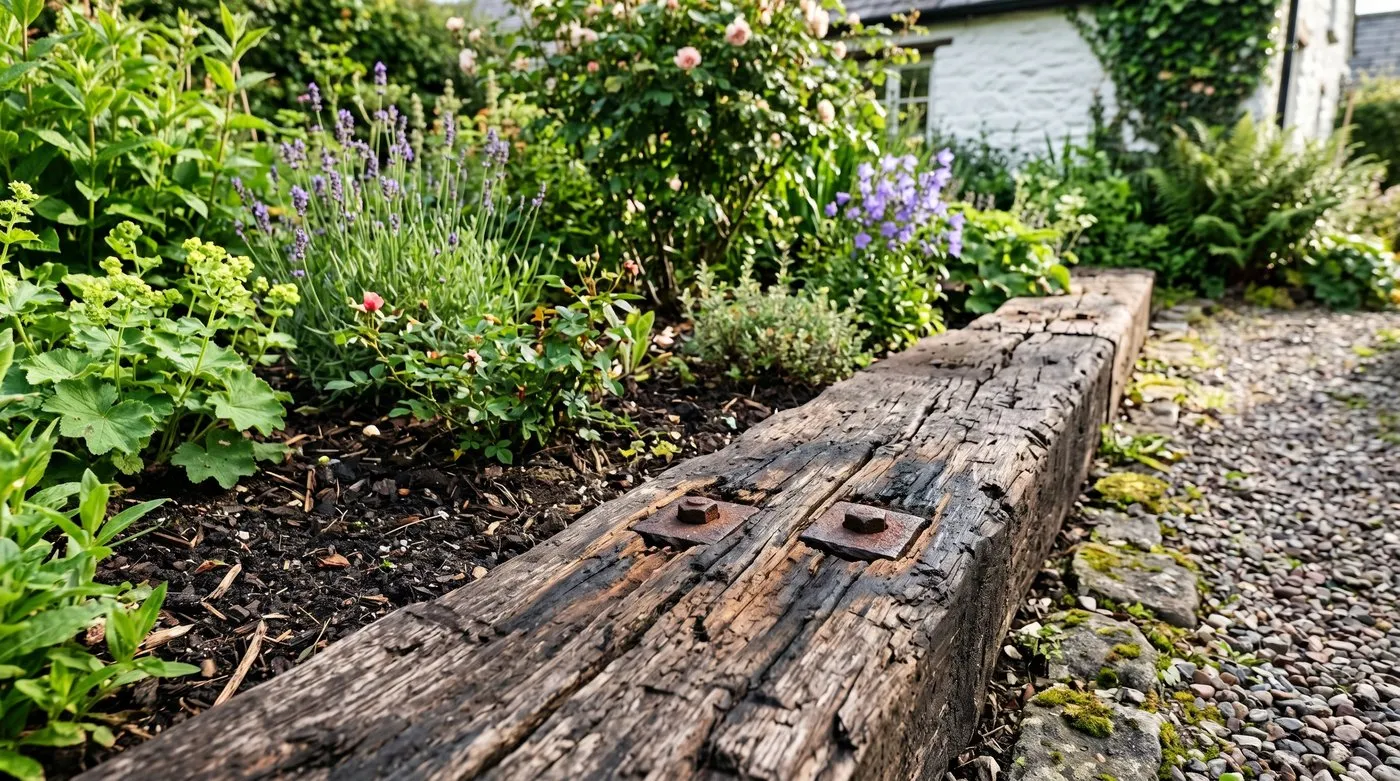 A reclaimed sleeper with original bolt holes and tar streaking. Characterful for ornamental borders, but never for edible beds.
Cutting sleepers safely
Sleepers come in fixed 2.4m lengths, so most jobs need cuts. A petrol or battery chainsaw cuts a full sleeper in one pass and is fastest for several cuts. A circular saw with a 190mm blade cuts most of the way through, then you finish the last 10 to 20mm with a handsaw. Mark all four faces first for a square cut. Always wear eye protection, ear defenders, gloves and steel toe boots, and cut outdoors on firm bearers.
Eight railway sleeper edging ideas for UK gardens
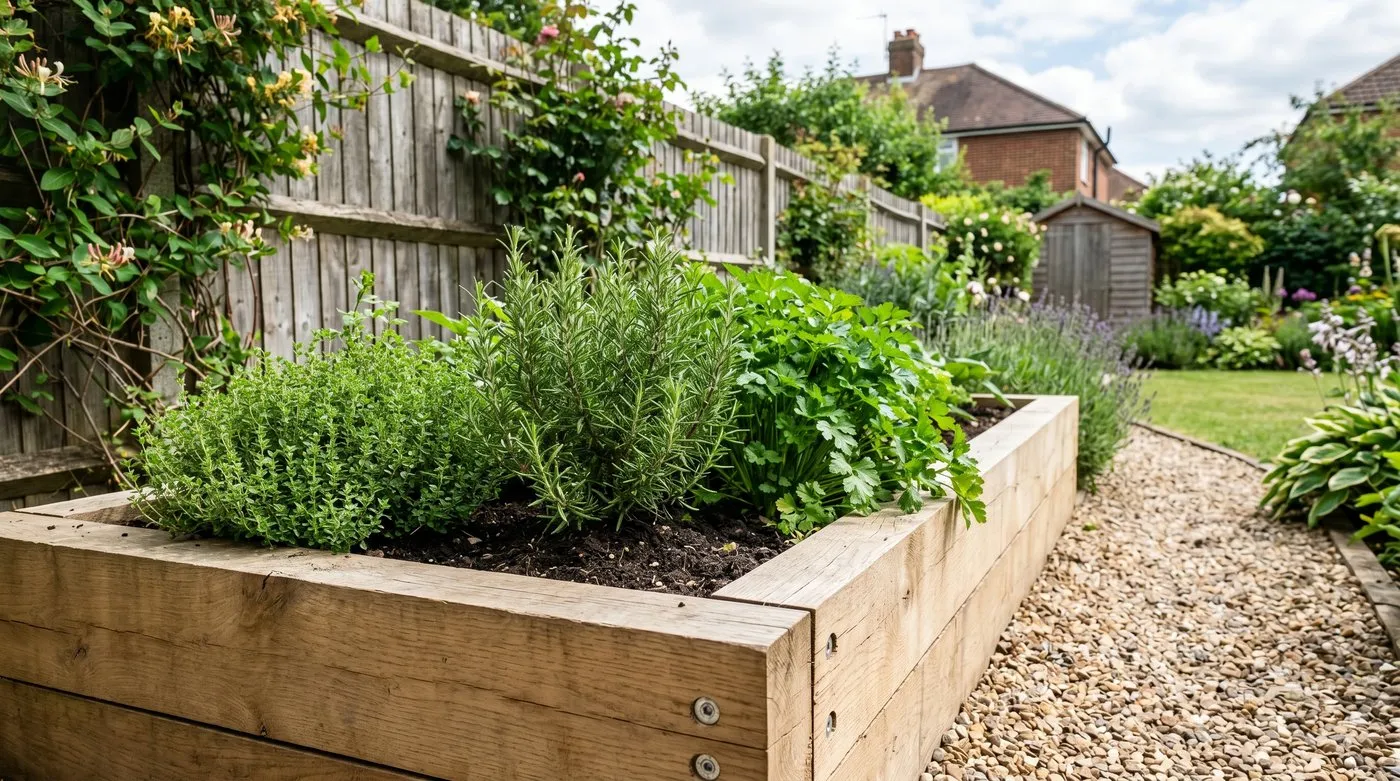 A single-course oak raised bed for herbs. New oak is safe for edible crops, unlike reclaimed creosote sleepers.
Building low raised beds and tiered terraces
A low raised bed is the natural next step up from edging. For a single course, butt the corners or cut a simple halving joint, then drill and drive two 200mm timber screws into each corner so the box holds square. Pin the base to the ground as for edging. Line the inner face with permeable membrane to keep soil off the timber and slow rot.
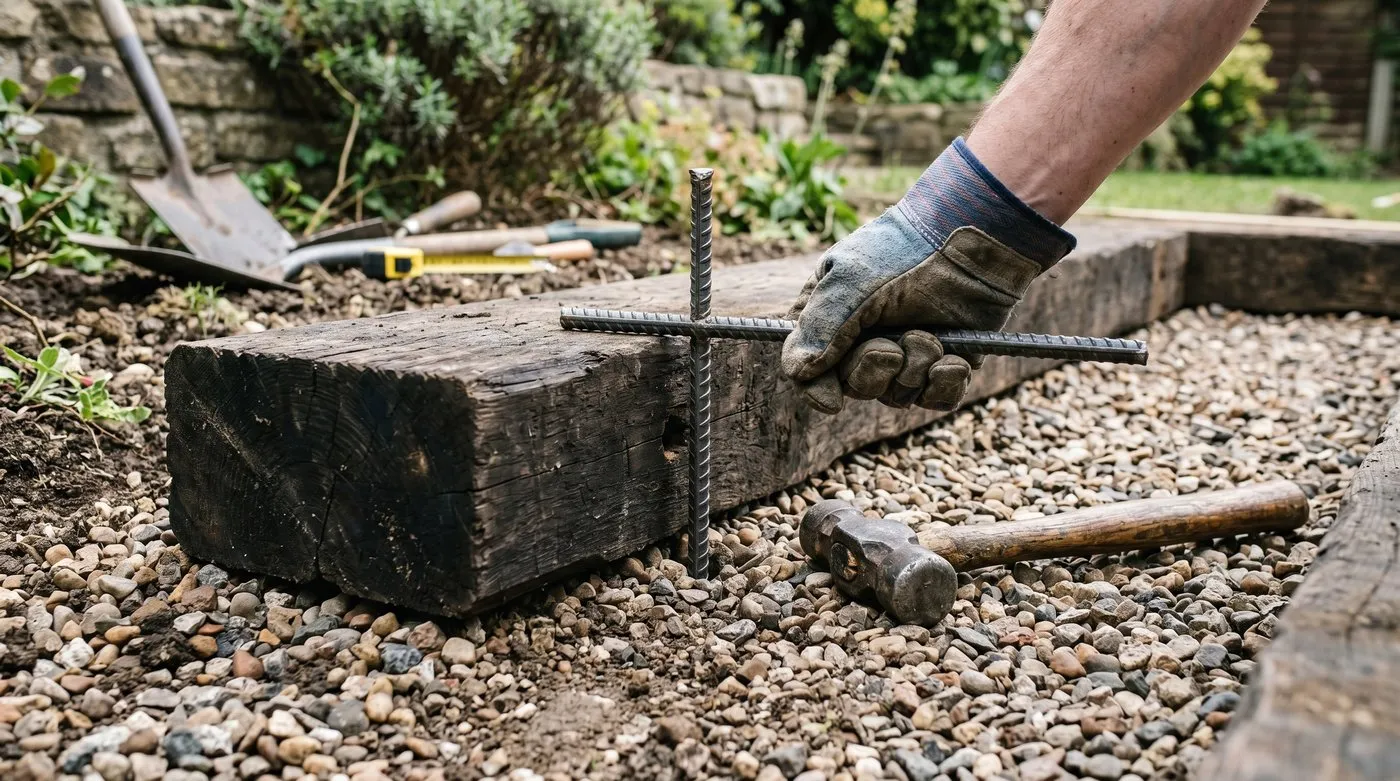 Pinning a sleeper with 600mm rebar. Skipping this step is why so many sleeper edges shift after one winter.
How sleeper edging compares to other materials
Sleepers are not the only edging option, and they are not always the right one. Here is how they stack up against the common alternatives.
- Timber boards (gravel board or scaffold board) are cheap and easy to cut, but thin, lighter and shorter-lived. They rot in five to eight years and need stakes every metre. Sleepers are heavier and last far longer.
- Natural stone is beautiful and effectively permanent, but the most expensive option and slow to lay. Sleepers give a strong line for a fraction of the cost and labour.
- Metal (steel or aluminium) edging makes a thin, modern line, ideal flush with a lawn, but it gives no height or planter function. Sleepers offer bulk and the option to retain soil.
- Plastic edging is the cheapest, but looks it, and degrades in UV light within a few years. Sleepers read as quality and age well.
Choose sleepers when you want a chunky, permanent edge that can also raise a bed or retain a low bank. Choose metal or plastic when you only need a thin visual line at ground level.
Sleeper type comparison table
| Sleeper type | Typical lifespan | Cost each | Best use | Edible-bed safe? |
|---|---|---|---|---|
| New oak | 20-30+ years | £40-£70 | Raised veg beds, seating edges, premium borders | Yes |
| New treated softwood | 10-15 years | £20-£35 | Budget raised beds, path edging, general edging | Yes |
| Reclaimed (creosote) | 10-20+ years, variable | £25-£45 | Ornamental borders only, away from food and people | No |
Five common mistakes with railway sleeper edging
Using reclaimed creosote sleepers near edibles. This is the serious one. Creosote can leach into soil and transfer to skin. Keep reclaimed sleepers for ornamental beds only, and use new oak or treated softwood for anything growing food.
Not pinning the sleepers. A loose sleeper on clay shifts within one wet winter as the ground swells and shrinks. Always drill and drive rebar or stakes through into firm ground below.
No drainage behind the timber. Backfilling with soil traps water against the wood and rots it from the buried face. Always pack gravel behind and below, and add a land drain on tiered work.
Skipping the level base. Laying sleepers straight on lumpy soil means an uneven line and gaps that fill with water. Always dig a shallow trench and bed on 50mm of levelled gravel.
Butting cut end-grain into wet soil. End-grain soaks up water like a straw. Where a cut end sits against damp soil, seal it with end-grain preservative or face it with gravel so it can dry.
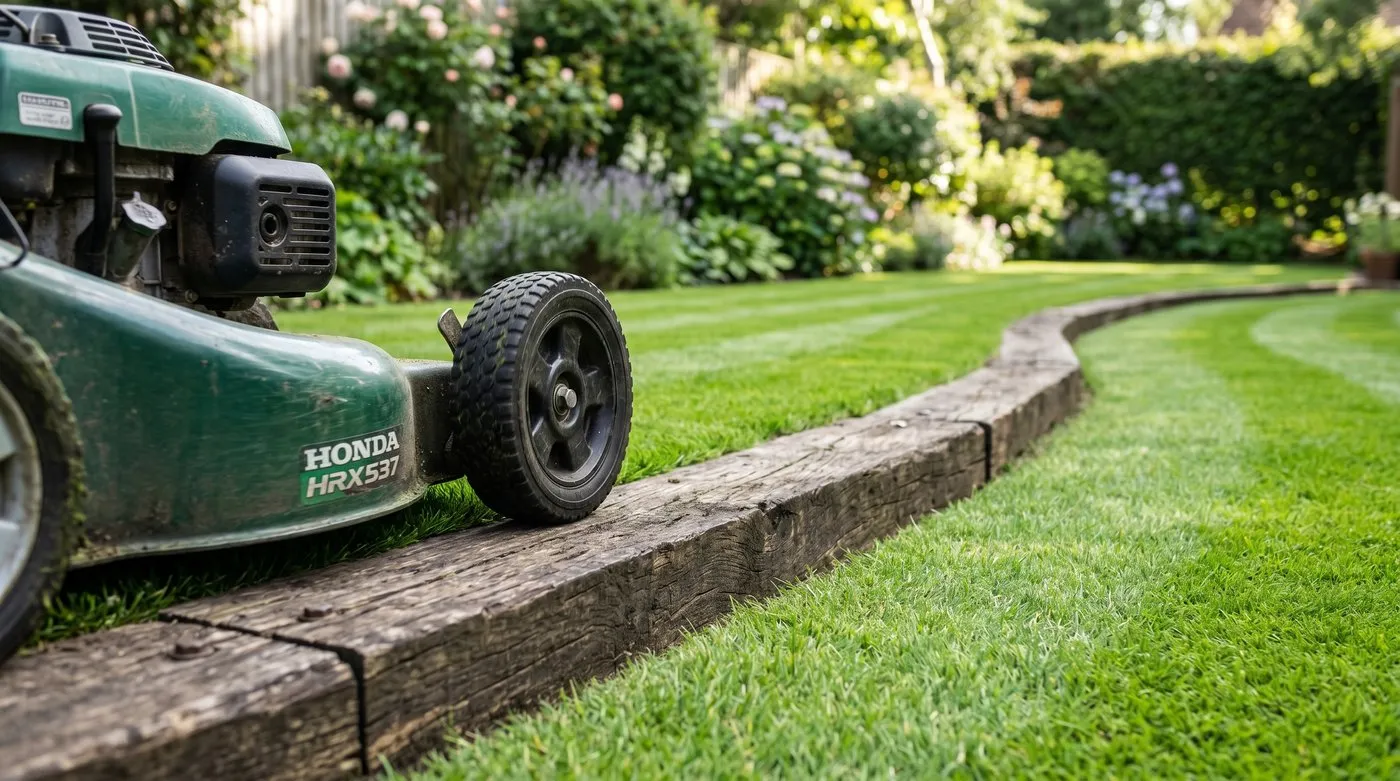 Sleepers laid flat and flush with the turf make a mowing strip, so the mower wheel runs along the timber and removes strimming.
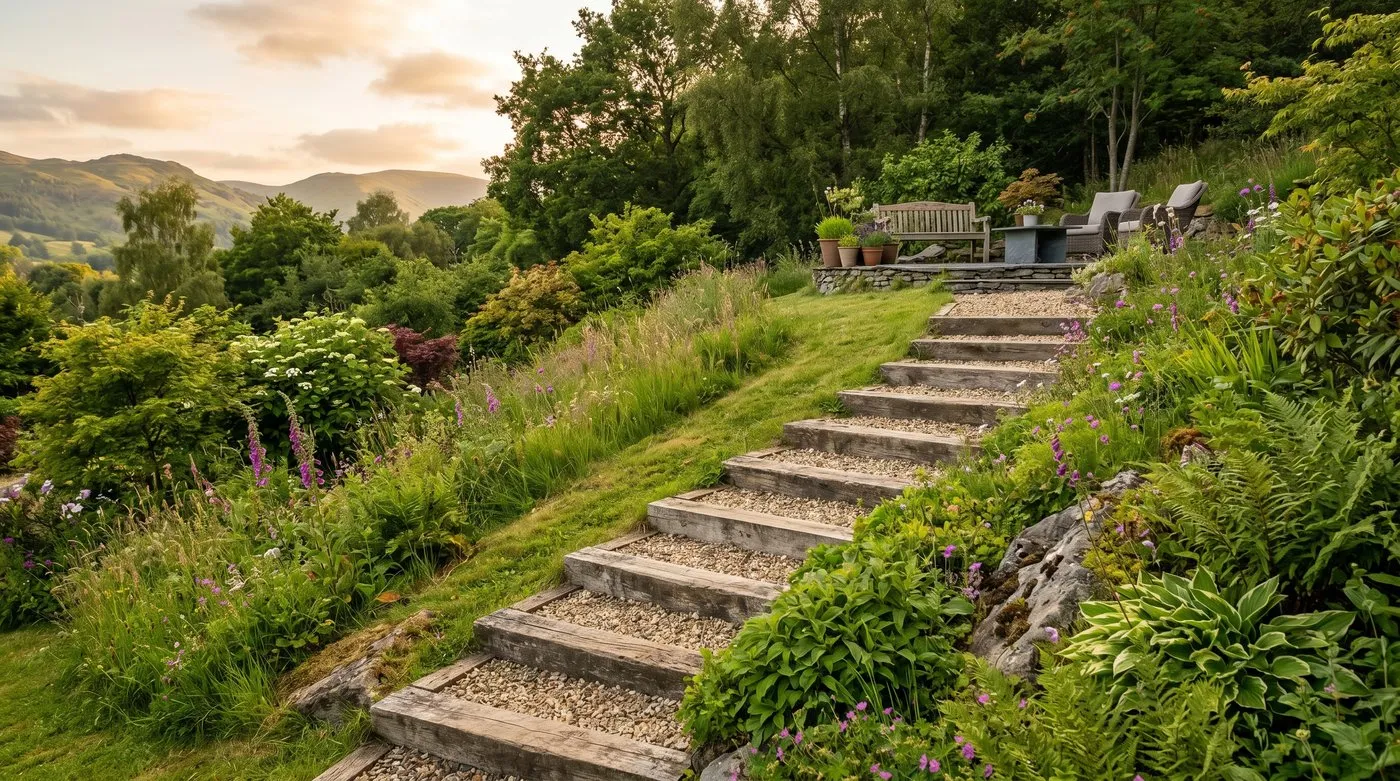 Sleeper steps across a slope. Generous treads and gravel behind each riser give a solid, slip-resistant climb.
Month-by-month sleeper edging calendar
| Month | Task |
|---|---|
| January | Plan layouts and measure runs while beds are bare. Order sleepers before spring price rises. |
| February | Check delivery access. Stack delivered sleepers on bearers off the ground to keep them dry. |
| March | Mark out lines with string and pegs. Soil is workable but not yet waterlogged on most ground. |
| April | Dig trenches and lay gravel beds. Drier soil makes levelling easier than in winter. |
| May | Set, level and pin sleepers. Backfill with drainage gravel behind every face. |
| June | Build raised beds and fill with topsoil. Plant up once timber is fixed and firm. |
| July | Seal any cut end-grain that sits against soil with preservative in dry weather. |
| August | Check tiered terraces for any forward lean after summer storms. Add gravel behind if needed. |
| September | Inspect older softwood sleepers for soft rot at ground contact before winter wet. |
| October | Clear leaves from behind sleepers so water drains rather than ponding against timber. |
| November | Re-drive any pins that have lifted. Top up gravel beds where they have washed thin. |
| December | Note any sleepers due for replacement next season. Photograph runs to track weathering. |
Now you have a plan for sleeper edging
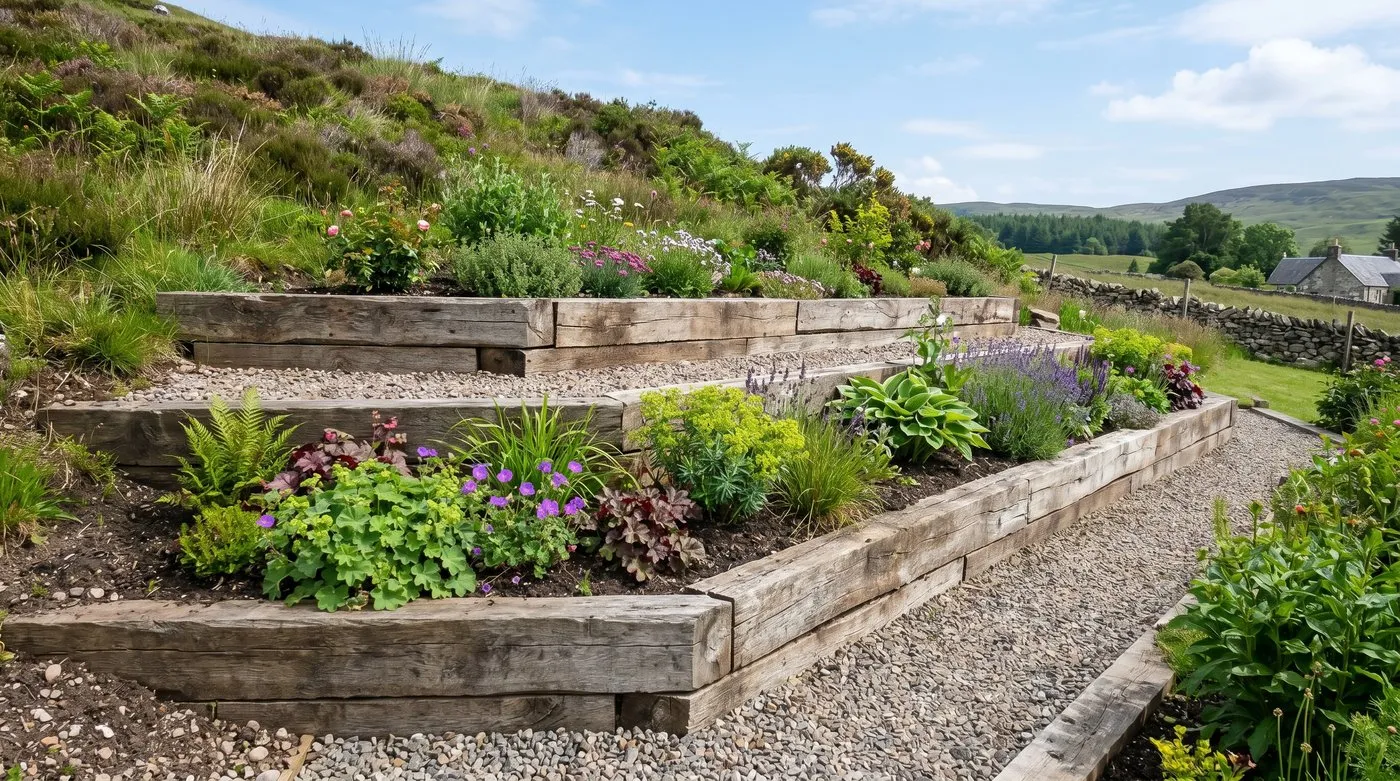 Three-tier terraced sleeper beds on a slope. Each course is set back and screwed to the one below, with gravel drainage behind.
Our team produces practical UK gardening guidance from source research, contributor records and established horticultural practice. Editorial standards are overseen by Matt W.