Key takeaways
- About 19% of UK households rent privately, and most tenancies ban digging, drilling, or removing the landlord's plants
- A full container garden costs 150-400 pounds and moves with you in one or two car loads
- Raised planters on feet or castors avoid digging and lift growing height to 80-90cm for easy reach
- No-drill options (clamp planters, tension rods, free-standing screens) leave zero marks on walls or fences
- Solar and battery lighting needs no wiring, so it never breaches the agreement or risks your deposit
- Photograph the garden on day one so you can restore the exact layout before the final inspection
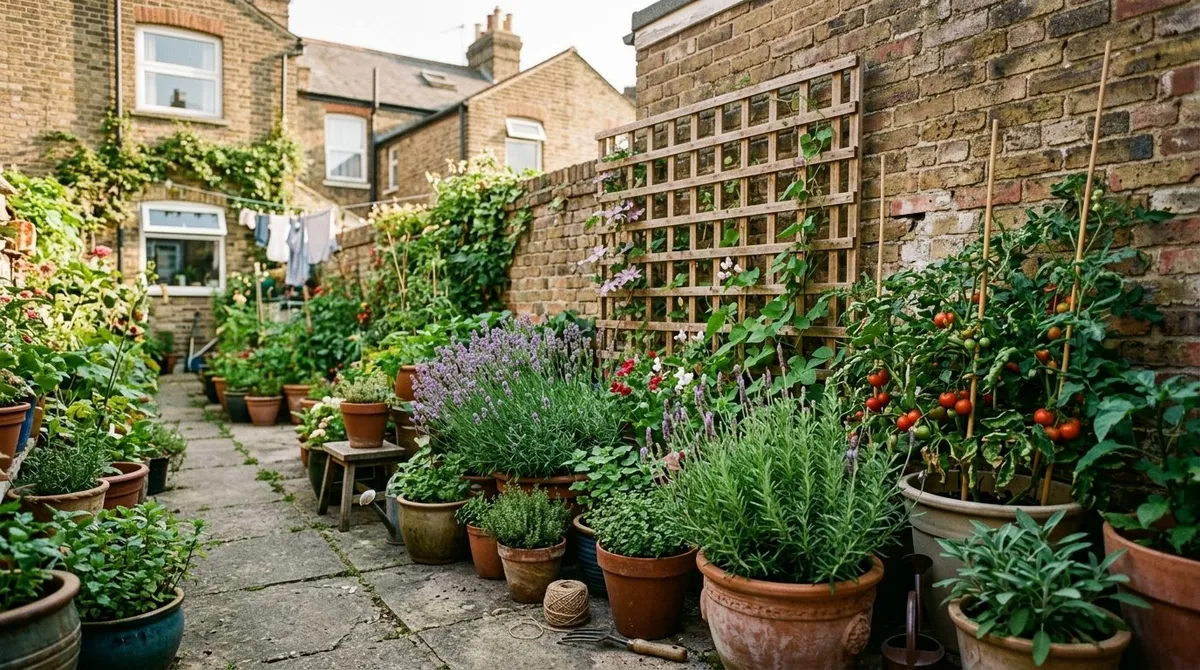
Around 19% of UK households rent privately, and most tenancy agreements forbid digging beds, drilling walls, or touching the landlord’s planting. That rules out the usual garden makeover. It does not rule out a proper garden. With pots, planters on feet, and no-drill kit, a tenant can build a green, productive outdoor space for 150 to 400 pounds that packs into the car on moving day.
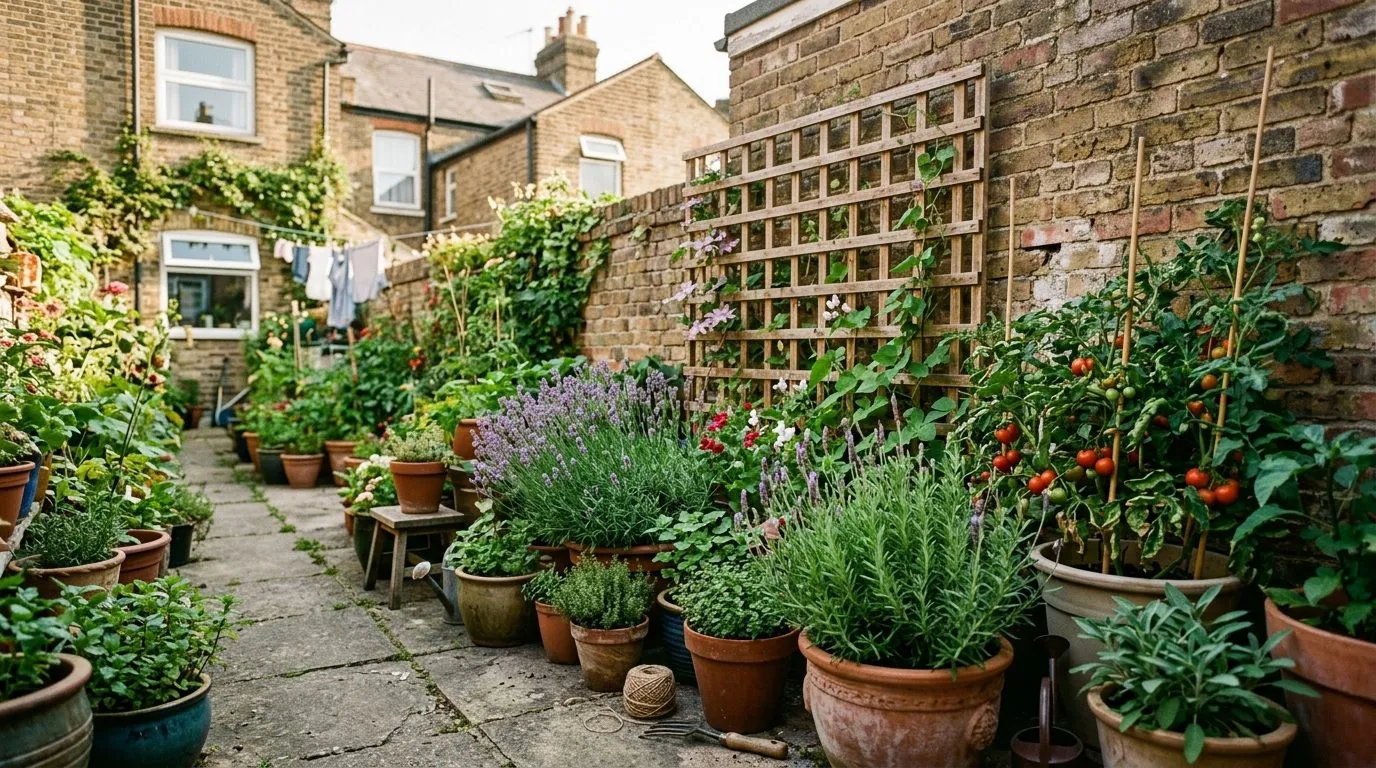
Check your tenancy agreement before you start
Read your agreement first, because some tenancies ban any change to the outside space. Many standard contracts say the garden must be returned in the same condition. A few forbid pots on balconies for weight or fire-escape reasons. Most simply ask that you do not alter the structure or remove the landlord’s plants.
Look for three clauses. One on alterations and fixings. One on the garden’s upkeep. One on what happens to anything left behind. If the wording is vague, email the letting agent and ask in writing whether portable pots and a freestanding screen are fine. A short email now prevents a deposit dispute later.
The Citizens Advice guide to tenancy deposits explains how deductions work. The headline point: you pay only for damage beyond fair wear and tear. Portable gardening causes neither, so it sits safely outside any deduction.
Why containers are the heart of a rental garden
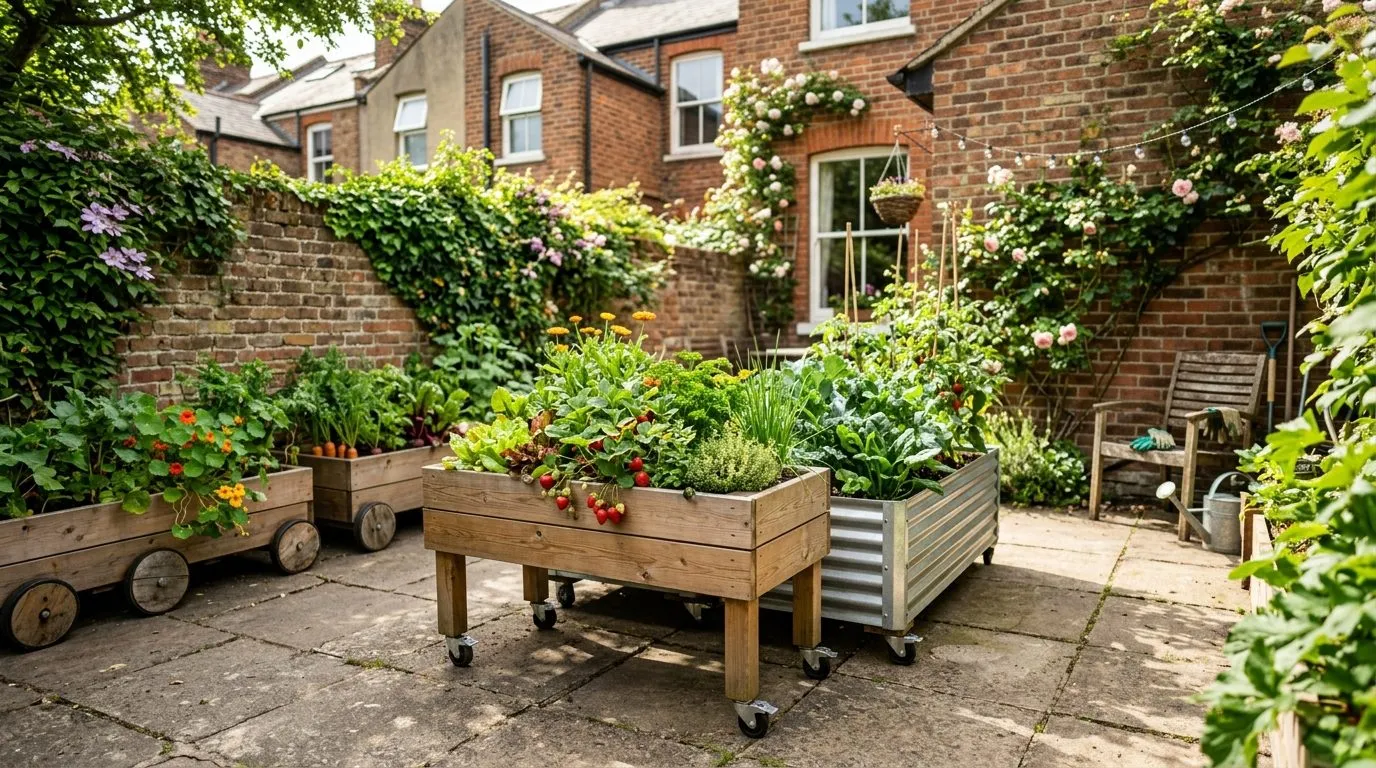
Stand every pot on pot feet or a wheeled trolley. Feet stop water pooling and staining the slabs. Wheels let you slide a heavy planter aside for cleaning or inspection. Both cost a few pounds and protect both your plants and your deposit.
Raised planters on feet beat digging beds
Raised planters on legs give you bed-depth growing with no digging at all. They sit on the surface, so the ground stays untouched. The growing height of 80 to 90cm also saves your back, which matters if you are gardening on hard slabs with no soft border to kneel on.
These planters suit deep-rooted crops that pots struggle with. Carrots, parsnips, potatoes, and runner beans all thrive in a planter 30cm or deeper. Fill the base with broken polystyrene or old pots to cut the weight and the compost cost. A standard 1m planter needs around 80 litres of compost above a drainage layer.
For families, a planter on castors doubles as a movable salad bar. Wheel it into the sun in spring, into shade in a July heatwave, and into the car when the tenancy ends. If you want crops that forgive a busy week, our notes on container plants that thrive on neglect point you to the toughest performers.
No-drill privacy and freestanding trellis
A freestanding trellis adds privacy and a climbing frame without a single screw in the wall. Wall-fixed trellis is the classic deposit trap. The reversible version stands in its own weighted base instead. Drop the post of a trellis screen into a large planter, fill with concrete or heavy gravel, and it holds firm in wind.
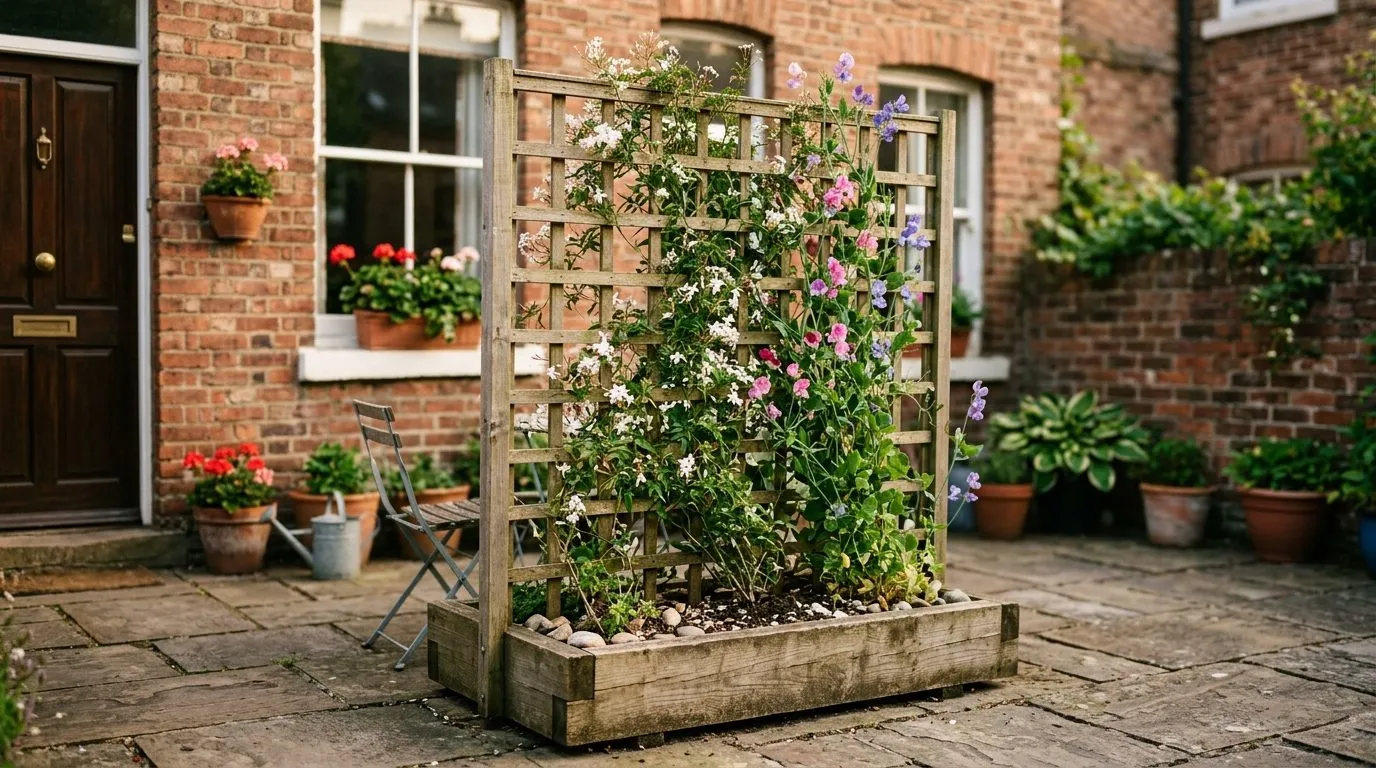
Plant a climber at its foot to soften it. Sweet peas give scent and colour in one season. Star jasmine and clematis come back each year. A row of three 1.8m panels in weighted bases screens a patio from overlooking windows without touching the boundary fence.
No-drill fixings for walls and railings
No-drill fixings let you hang and mount things with zero holes in the landlord’s walls. Several systems do this well. Clamp-on planters grip a balcony railing or fence rail with a screw clamp that tightens onto the metal, not into it. Tension rods wedge between two walls in a porch or alcove to hang baskets.
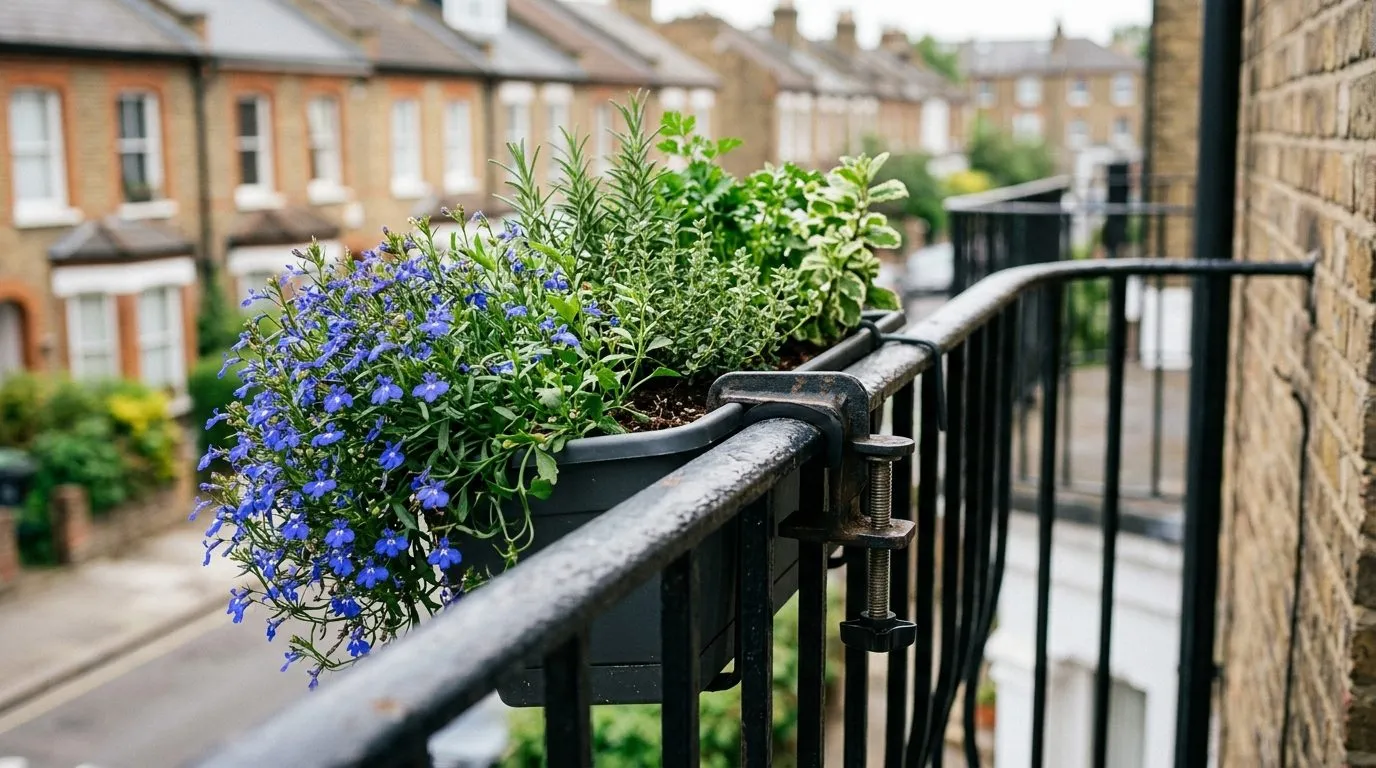
Adhesive hooks rated for outdoor use hold lightweight items like bunting, a thermometer, or a small basket. Peel them off with a hairdryer’s heat on moving day and the paint stays intact. For heavier loads, freestanding shelving and étagères give you tiers of plant display with no fixing at all.
The table below sorts the common fixing problems and the reversible answer for each.
| Want to mount | Avoid (risks deposit) | Deposit-safe alternative | Approx cost |
|---|---|---|---|
| Hanging basket | Wall bracket screwed in | Freestanding basket stand or shepherd’s hook in a pot | £12-25 |
| Railing planters | Drilled wall troughs | Clamp-on railing planters | £10-20 each |
| Trellis screen | Trellis screwed to fence | Trellis in a weighted base planter | £30-60 |
| Fence decoration | Nailed-on panels | Reed or willow screen cable-tied to rails | £15-35 |
| Lights | Wired-in fittings | Solar string lights and lanterns | £15-40 |
| Shelf for pots | Wall-mounted shelf | Freestanding plant étagère | £25-50 |
Container veg, herbs and fruit for renters
Almost every common crop grows in a container, so tenants can grow real food without a bed. Herbs are the easiest start. A windowsill trough of basil, parsley, chives, and mint earns its keep all summer and survives a move in a single trip. Our guide to growing vegetables on a windowsill covers the indoor side for flats with no outdoor space at all.
Dwarf patio fruit trees on M27 or M9 rootstock stay small enough for a 50cm pot and crop for years. They move with you like any pot. A bay, a fig, or a patio apple becomes a long-term companion rather than a fixture left behind.
Movable seating and balcony solutions
Choose folding or lightweight seating so the social part of the garden moves too. A bistro set, folding chairs, or a rattan-effect sofa with a removable base all pack down or load whole into a van. Avoid anything bolted to the patio or built in place. The aim is a garden you carry, table and all.
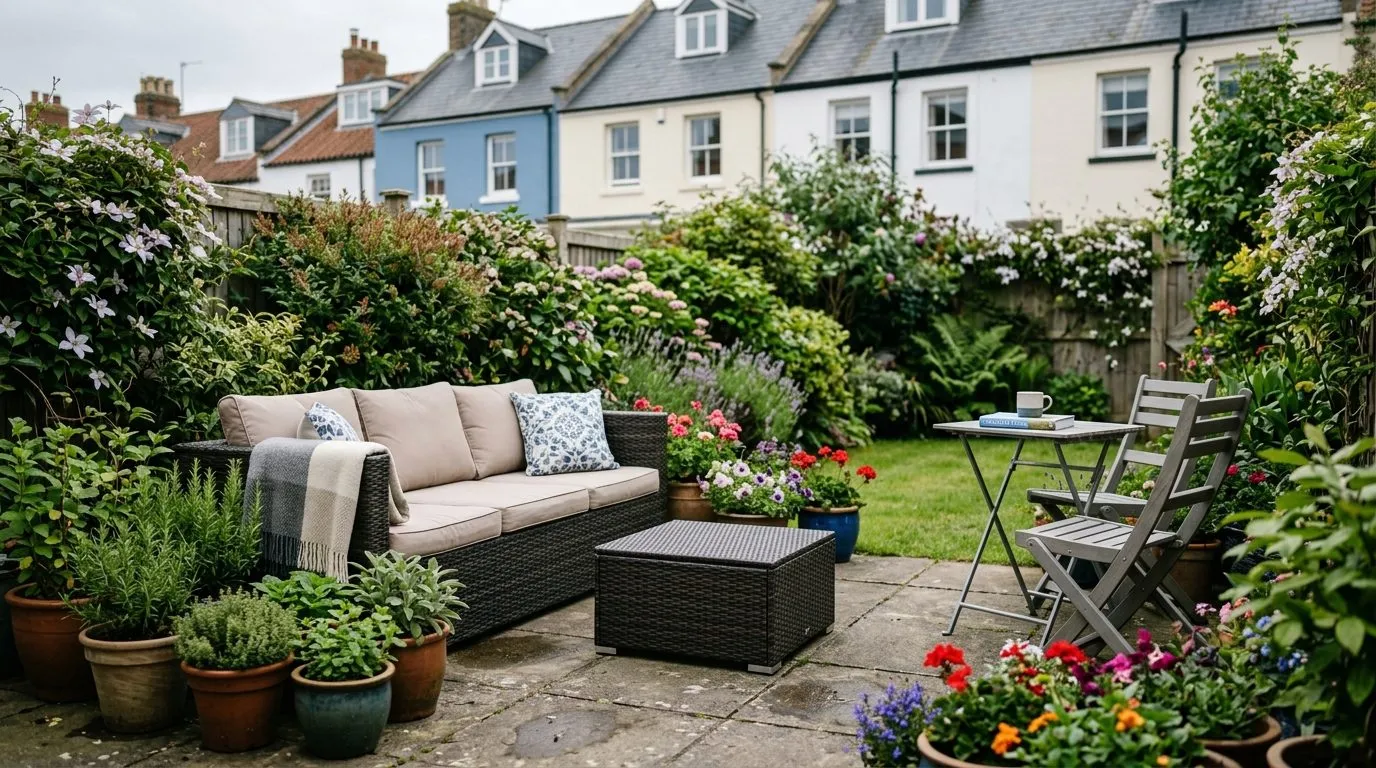
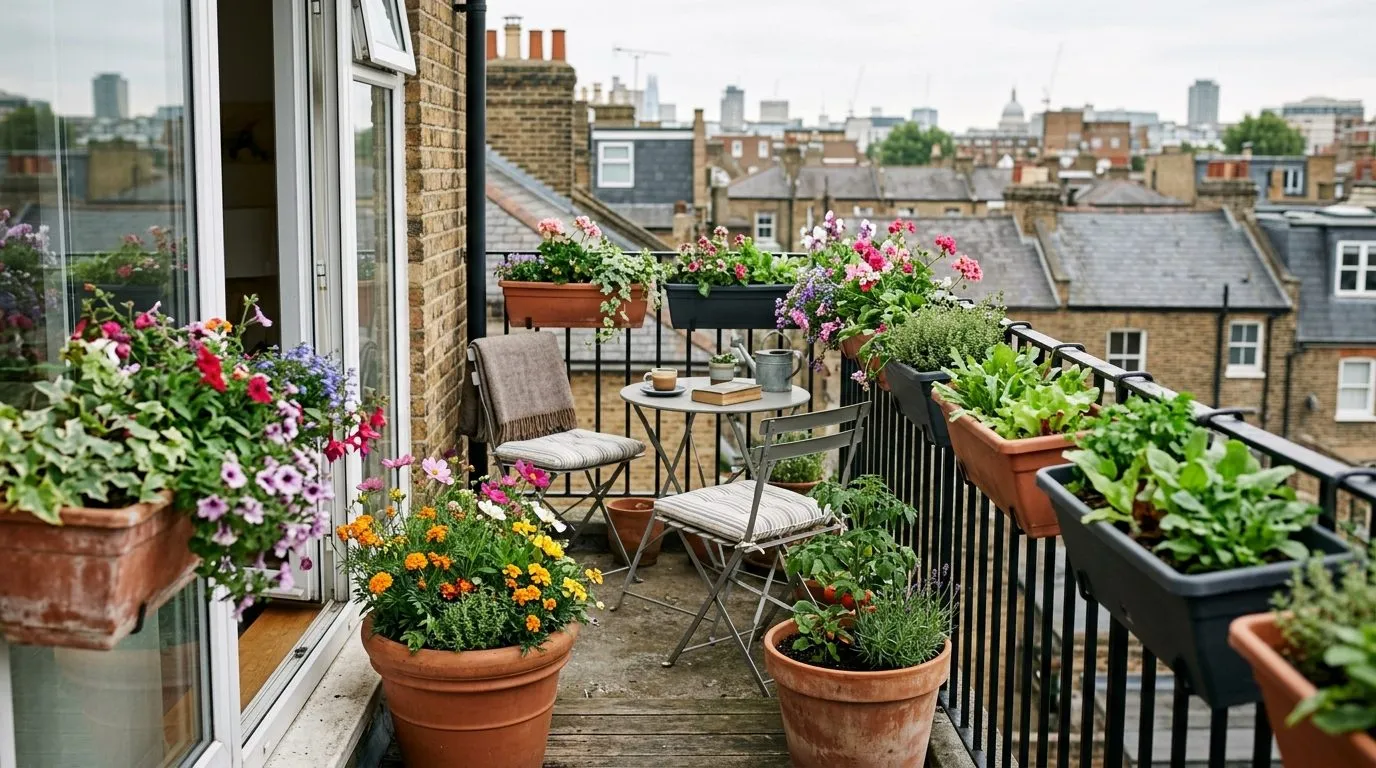
For a paved courtyard or small yard, group the seating and pots into zones. A planted screen separates the seating from the bins. The same thinking that drives good patio garden ideas for small spaces works here, with the one rule that nothing gets fixed down.
Lighting with no wiring
Solar and battery lighting gives you evening atmosphere with no electrician and no breach of the agreement. Hard-wiring an outdoor socket or running cable through a wall is exactly the kind of alteration a tenancy bans. Solar removes the problem. Stake lights charge in daylight and glow at dusk for free.
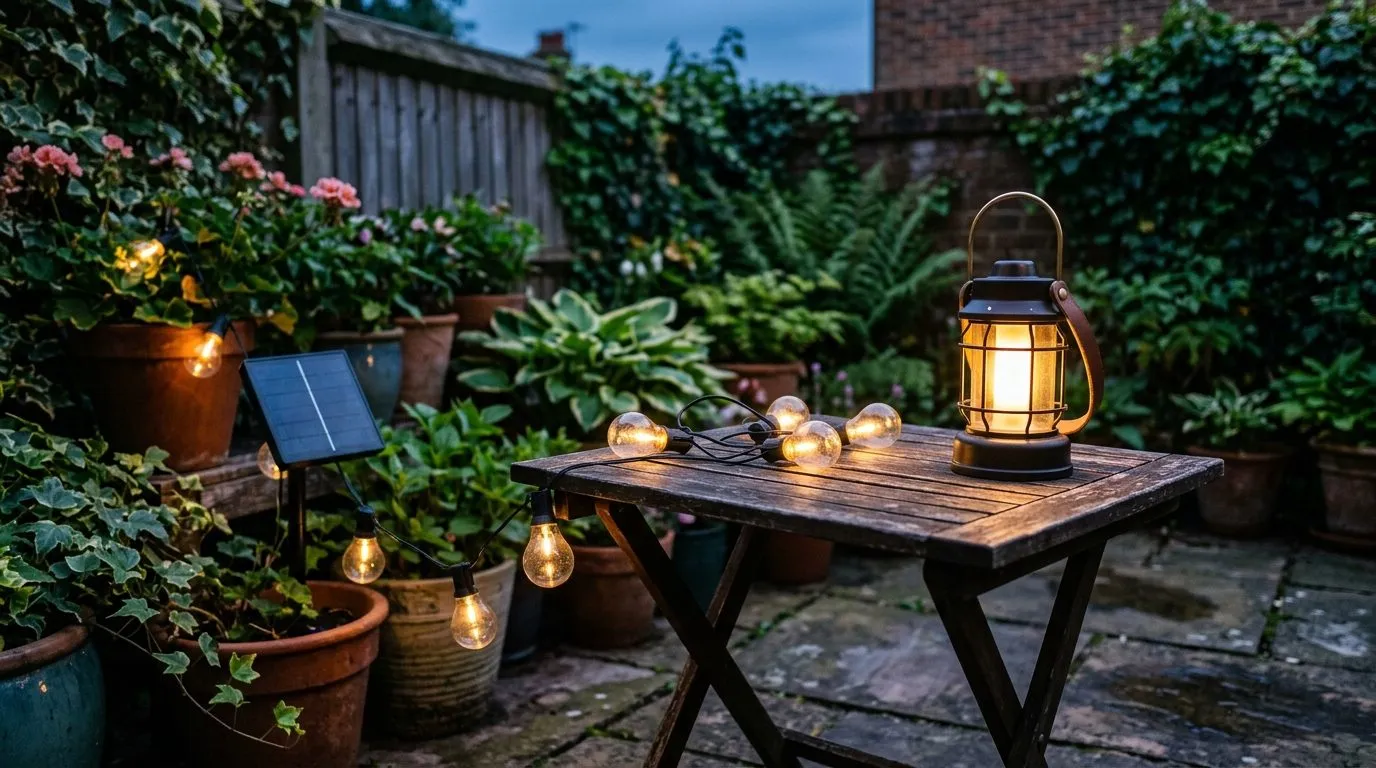
Layer three types for a proper scheme. Solar string lights along the freestanding trellis. A battery lantern on the table. Solar stake lights among the pots to pick out planting. None of it touches the wiring, so none of it risks the deposit. All of it lifts out and comes with you.
Choose lights with replaceable batteries or a USB charge backup for dull winter weeks. Cheap solar units with sealed batteries die within a year. Spending a little more buys lights that survive several moves.
Protecting the landlord’s existing planting
Keep the landlord’s plants alive, because killing established planting is a deductible cost. If the garden came with a lawn, shrubs, or a tree, they are part of the property you must hand back. Water them in dry spells. Mow the lawn if the agreement asks. Do not dig anything out, even a plant you dislike.
Work your container garden around the existing planting rather than over it. Stand pots on the patio, not on a flower bed where they shade and starve what is underneath. If a shrub is genuinely in the way, email the agent before you touch it. Permission in writing is your only safe route to removing anything rooted.
When you move out, the existing planting should look as healthy as your move-in photos show. That single comparison protects you from the most common garden-related deposit claim.
Common mistakes renters make in the garden
Digging a bed “just a small one”
A bed is the fastest way to a dispute. Once you break the turf, restoring it perfectly is hard and the landlord may charge for returfing. Keep growing above ground in containers and the lawn stays intact.
Drilling for “just one bracket”
A single hole feels harmless until the inspection. Drilled fixings, wall plugs, and the marks they leave are classic deductions. Every job that tempts a drill has a freestanding or clamp-on answer instead.
Leaving plants in the ground on move-out
Plants you put in the soil may legally belong to the property. Tenants have lost prized shrubs this way. Keep everything in pots so ownership is never in question, then load them with the rest of your things.
Forgetting the move-in photos
Without dated photos of the garden’s original state, you have no proof of the condition you inherited. Photograph every angle on day one, including the lawn and the landlord’s plants. Restore that exact layout before the final check.
Buying sealed-battery solar lights
Cheap solar lights with non-replaceable batteries last one season. Renters who move often waste money replacing them. Pay a little more for replaceable or USB-backed units that survive several homes.
Putting it all together
Frequently asked questions
Can I garden if I rent my home?
Yes, tenants can garden using fully portable pots and planters. Avoid digging beds, drilling walls, or removing the landlord’s existing plants. Check your tenancy agreement first, since some ban any change to the outside space. Container gardening keeps everything reversible and lets you take the plants when you move.
What can I grow in a rented garden without digging?
Grow almost anything in containers. Herbs, salad, tomatoes, strawberries, dwarf fruit trees, and most flowers do well in pots. Raised planters on feet hold deep-rooted veg like carrots. A 45cm pot suits a tomato plant, while a windowsill trough handles herbs all summer.
Can I put up a trellis in a rented garden?
Use a freestanding trellis, never one screwed to a wall. Weight a trellis screen into a heavy planter or a pot of concrete so it stands alone. This adds privacy and a climbing frame without a single drill hole. It packs flat and moves with you.
How do I add privacy to a rental garden?
Stack freestanding screens, tall pots, and bamboo in planters. A row of 1.8m planted trellis panels in weighted bases blocks sightlines without fixings. Willow or reed screens clip to existing fence rails with cable ties, which cut off cleanly on exit. Nothing touches the structure permanently.
Will gardening affect my deposit?
Not if you keep everything portable and reversible. Damage from digging, drilling, or killing the landlord’s plants can be deducted. Containers, pot feet, and no-drill fixings leave no marks. Photograph the garden when you move in, then restore that exact state before the final inspection.
What lighting can I use in a rented garden?
Use solar and battery lighting only, never hard-wired fittings. Solar string lights, stake lights, and lanterns need no electrician and no wiring through walls. They charge in daylight and come with you when you leave. This avoids any electrical work that would breach the agreement.
Can I take my garden plants when I move out?
Yes, anything in a pot is legally yours to take. Plants you put in the ground may count as part of the property. Keep everything in containers so there is no dispute. Lift, water, and load pots into the car on moving day like any other belonging.
Our team produces practical UK gardening guidance from source research, contributor records and established horticultural practice. Editorial standards are overseen by Matt W.