Key takeaways
- A 40cm or larger glazed pot holds enough compost to buffer 7 to 10 days between waterings in summer
- Succulents like sedum store water in fleshy leaves and tolerate 14 to 21 days of drought in a pot
- A free-draining mix of 60% peat-free compost, 25% grit and 15% perlite stops roots rotting and drying hard
- Silver and hairy foliage (Stachys, Festuca glauca, Senecio) reflects sunlight and cuts water loss by up to 30%
- Glazed and plastic pots hold moisture far longer than porous terracotta in full sun
- A 3cm gravel mulch slows surface evaporation and keeps the compost cooler in heat
Container plants that thrive on neglect are drought-adapted species grown in the right pot with the right compost. Get those two things correct, and a low-maintenance container combination can go a week or more between waterings, even through a UK summer. These plants are not weaklings clinging on. They evolved on dry hillsides and rocky slopes, and a sunny patio in a gritty pot suits them perfectly.
Why some containers cope with neglect
Drought tolerance in a pot comes down to three plant adaptations and one growing setup. Plants that survive neglect are not simply tough. They carry physical features that store or conserve water, and you amplify those features with the right pot and mix.
The first adaptation is water storage. Succulents like sedum, sempervivum and echeveria hold reserves of water in thick, fleshy leaves and stems. A mature Sedum ‘Matrona’ leaf is around 90% water by weight. The plant draws on that store during dry spells, so it keeps going long after thirsty bedding has collapsed. This is why a succulent pot can survive two to three weeks without a drink.
The second adaptation is reflective and hairy foliage. Silver-leaved plants such as Stachys byzantina, Festuca glauca and Senecio cineraria are coated in fine hairs or a waxy bloom. These reflect sunlight, lower leaf temperature and trap a thin layer of still air that slows evaporation. Guidance from the Royal Horticultural Society notes that silver and grey foliage is a reliable marker of drought adaptation in garden plants.
The third adaptation is deep or fleshy roots and a Mediterranean origin. Many neglect-tolerant plants, including lavender, thyme and many ornamental grasses, come from regions with hot dry summers. They root deeply to find moisture and grow slowly, so they ask for less water in the first place.
How pot size, material and compost change everything
The growing setup matters as much as the plant choice. The same sedum thrives in one pot and dies in another. Four variables decide how long a container goes between waterings: pot size, pot material, compost type and mulch.
Pot size is the biggest lever. A larger pot holds more compost, and more compost holds more water in reserve. A 40cm pot can buffer 7 to 10 days between waterings in UK summer. A 20cm pot of the same planting may need daily watering in a heatwave. If you want low maintenance, go big. The compost volume is your water battery.
Pot material decides how fast that battery drains. Unglazed terracotta is porous, so water evaporates through the clay walls as well as the open surface. A terracotta pot in full sun dries roughly twice as fast as a glazed or plastic pot of the same size. Glazed ceramic and plastic seal the sides, so the only water loss is from the top. For neglect-tolerant pots, choose glazed or plastic and keep terracotta for shade or for plants that hate wet roots.
Gardener’s tip: If you love the look of terracotta but want the moisture retention of plastic, line the inside of the pot with a sheet of pond liner or a cut bin bag before filling. Punch drainage holes in the base of the liner. The clay still breathes a little, but the lining cuts side evaporation sharply.
A self-watering pot with a built-in reservoir takes neglect further still. The reservoir holds 2 to 5 litres and wicks moisture up to the roots, extending the gap between top-ups to two or three weeks for many plants.
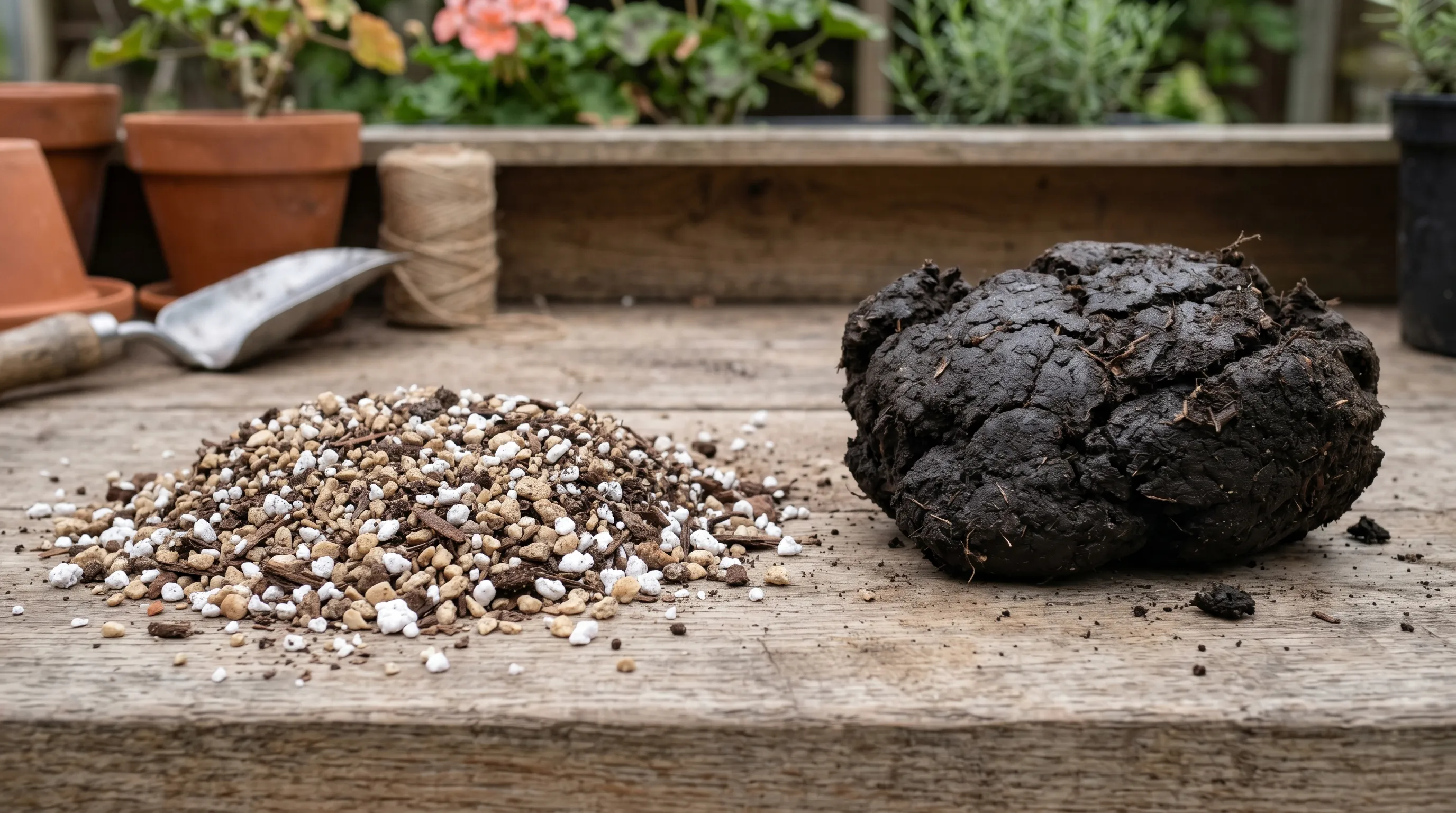 Left: a free-draining gritty mix that stays open and easy to re-wet. Right: peat compost that has set hard and shed water. The mix on the left is what neglect pots need.
The gritty free-draining mix that prevents drought stress
Drought-tolerant plants need a free-draining gritty compost, not standard multipurpose alone. This sounds backwards. Surely water-retentive compost helps in a drought? It does not, for two reasons.
First, pure peat-based or peat-free multipurpose compost slumps over a season into a dense block. When it dries fully it sets hard, sheds water off the surface and becomes very difficult to re-wet. The roots sit in a brick. Second, the plants we are using actually rot in waterlogged compost during wet spells. They need air around their roots.
Six neglect-proof container recipes for UK gardens
Each recipe below uses the thriller, filler and spiller structure. The thriller is the tall focal plant, the filler is the rounded mid-height body, and the spiller trails over the rim. All are drought-tolerant and suit a large gritty pot. Match the aspect to the recipe.
The hot sunny pot
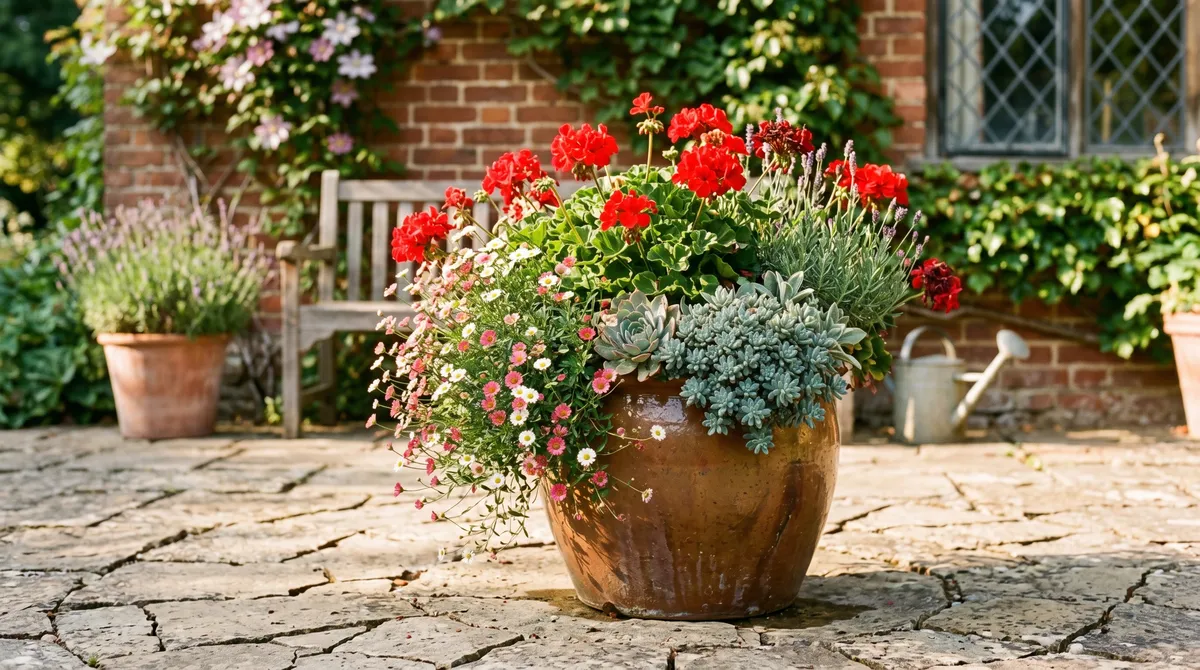
For a south-facing patio in full sun. Thriller: zonal Pelargonium (a true geranium relative that stores water in its stems). Filler: Sedum ‘Matrona’ for fleshy water storage. Spiller: Erigeron karvinskianus, the Mexican fleabane, which flowers for months on almost no water. This pot copes with 10 to 14 days of neglect. Water once a week in a heatwave, once a fortnight otherwise.
The silver drought pot
For the driest, hottest, most exposed spot. Thriller: Festuca glauca, a steely blue grass. Filler: Stachys byzantina (lamb’s ears) for its silver felted leaves. Spiller: Senecio ‘Angel Wings’ or Calocephalus, both intensely silver. Every plant here is built for drought, so the whole pot can run 14 days dry. The silver palette also looks cool and calm in fierce sun.
The architectural pot
For a doorway or focal point that needs structure. Thriller: Agapanthus, which flowers better when its roots are crowded and dry. Filler: a ring of Sempervivum (houseleeks) that need almost no water. Spiller: creeping thyme tumbling over the rim, releasing scent when brushed. Agapanthus and thyme both prefer to dry out, so this pot is genuinely low effort.
The shady neglect pot
For a north-facing doorstep or a shaded side return. Thriller: Heuchera in a deep red or lime selection. Filler: Bergenia (elephant’s ears), with broad leathery leaves that resist drying. Spiller: trailing ivy, which is close to indestructible. Shade plants lose less water than sun plants, so this pot often goes 10 to 14 days even in summer.
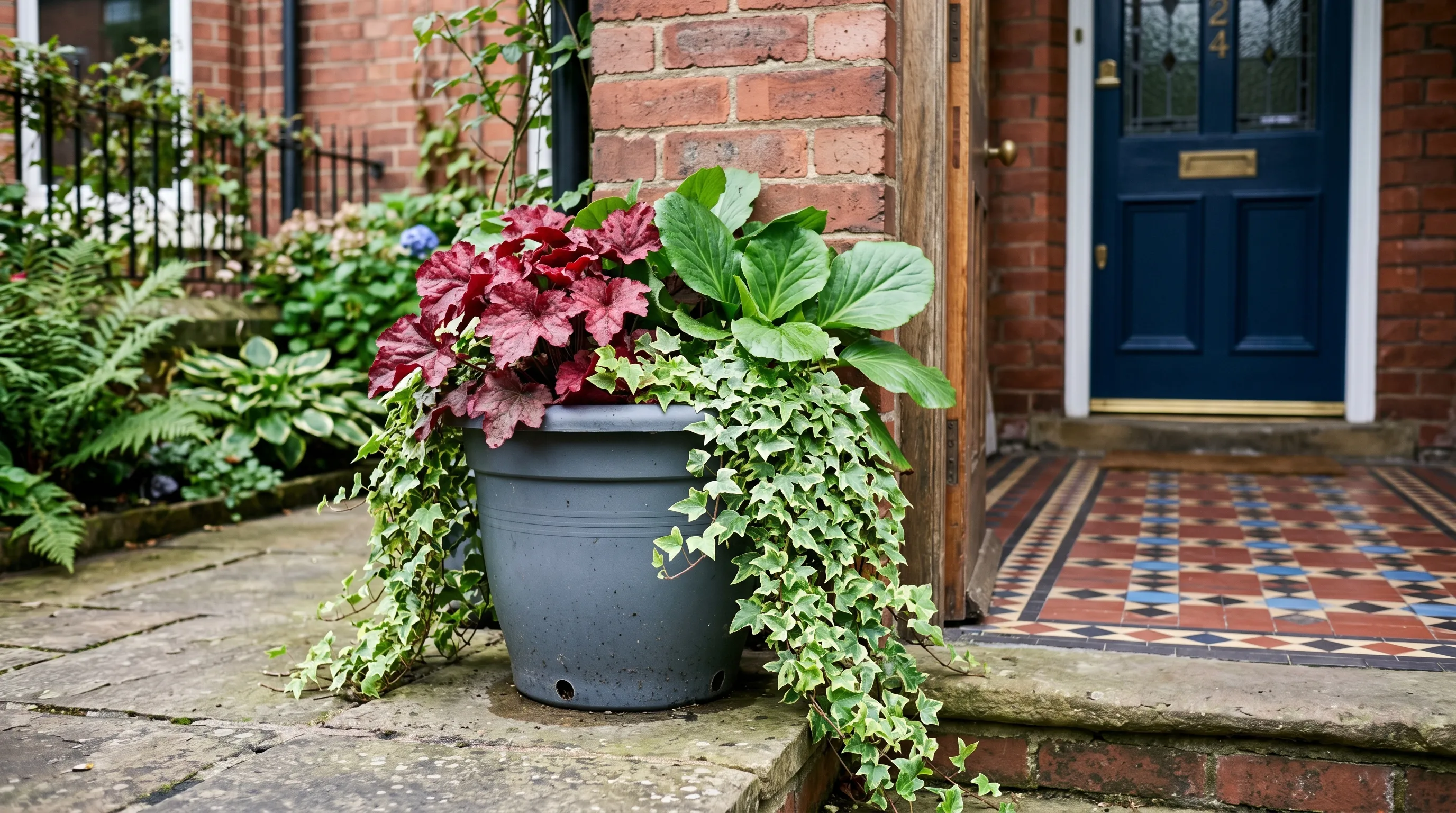 A shady neglect pot for a north-facing doorstep: Heuchera, Bergenia and trailing ivy cope with low light and go a fortnight between waterings.
The grasses and daisies pot
For movement and a long season with no deadheading. Thriller: Stipa tenuissima, the feathery Mexican feather grass. Filler: a clump of Festuca glauca. Spiller: Erigeron karvinskianus weaving through. Ornamental grasses cope with drought once established and need cutting back only once a year.
The Mediterranean herb pot
For a sunny kitchen door, useful as well as tough. Thriller: upright rosemary. Filler: a French lavender such as Lavandula stoechas. Spiller: trailing thyme or prostrate rosemary. These herbs come from dry Mediterranean hillsides and resent rich, wet compost. Keep the mix lean and gritty and they thrive on neglect.
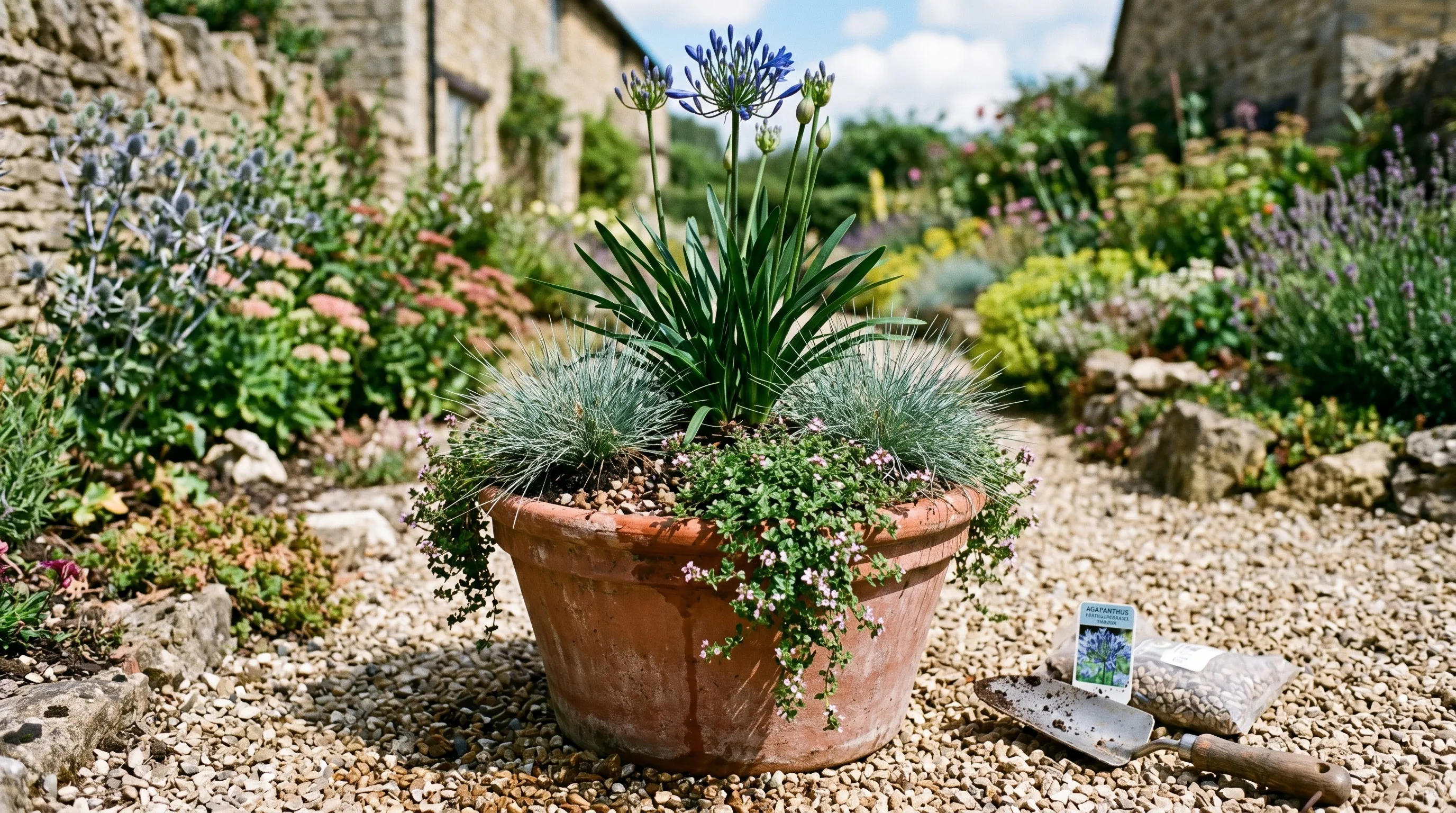 Building a thriller, filler and spiller combination: a tall focal plant, a rounded mid-height body and trailing edge plants, all chosen for drought tolerance.
Ranked plant table: how long each survives without water
Sempervivum and sedum top the list because they store water internally. Heuchera sits lower because, although it tolerates dry shade, it sulks if the compost bakes completely. For more on the toughest individual species, see our guide to drought-tolerant plants for UK gardens and the dedicated guide to growing sedum.
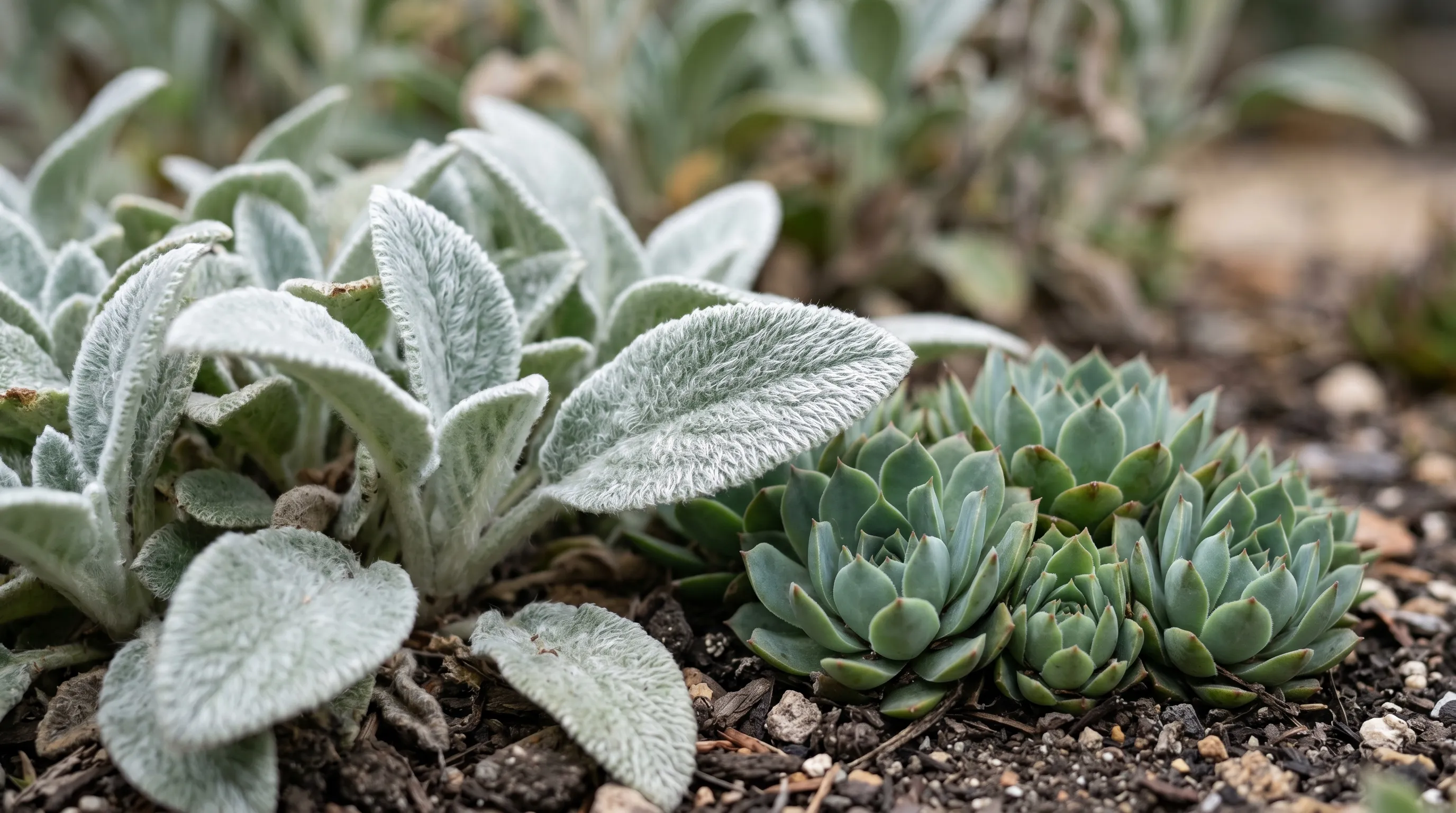 The two drought strategies side by side: silver hairs on lamb’s ears reflect heat, while the fleshy Sempervivum rosettes store water internally.
Common mistakes that kill low-maintenance pots
Most failed neglect pots come down to five avoidable errors. Each one undoes the drought tolerance the plants would otherwise have.
Using a pot that is too small. A 15cm or 20cm pot holds so little compost that it dries within hours in heat, no matter how tough the plant. Tiny pots need daily watering. Go to 40cm or larger for a genuinely low-maintenance display.
Planting in peat-based compost that sets hard. Pure multipurpose compost slumps, then bakes into a water-shedding block. When you finally water it, the water runs off the surface and out of the drainage holes without wetting the roots. Always cut it with 25% grit and 15% perlite.
Standing terracotta in full sun. Porous clay loses water through its walls. A terracotta pot in baking sun can dry twice as fast as a glazed one. Either line it or move it to shade.
Choosing thirsty bedding sold as low maintenance. Petunias, busy Lizzies and fuchsias are sometimes marketed as easy, but they wilt within a day of missing a watering. They are the opposite of neglect-tolerant. Read the plant, not the label, and pick succulents, silvers and grasses instead.
Skipping drainage. A pot with blocked holes or no drainage rots roots in the first wet spell. Drought-tolerant plants hate sitting in water far more than they hate going dry. Keep the holes clear and raise pots on feet.
Warning: Never seal the drainage holes to hold more water in a pot. Drought-tolerant plants like sedum, lavender and sempervivum rot fast in waterlogged compost. Free drainage is what keeps them alive through both summer drought and a wet UK winter.
Grouping and placing pots to cut watering further
Where you stand a pot changes how often it needs water. Three placement tricks reduce watering with no change to the planting.
Use light shade for part of the day. Full midday sun drives the fastest water loss. A spot that gets morning sun then afternoon shade, or dappled light through a tree, cuts evaporation while still giving most drought plants enough light. Only the true sun-lovers like lavender and Pelargonium insist on all-day sun.
Raise pots off hot paving. Bare paving and decking in sun radiate heat into the base of a pot. Standing pots on feet or a gravel bed lets air circulate underneath and keeps the compost cooler. Cooler compost dries more slowly.
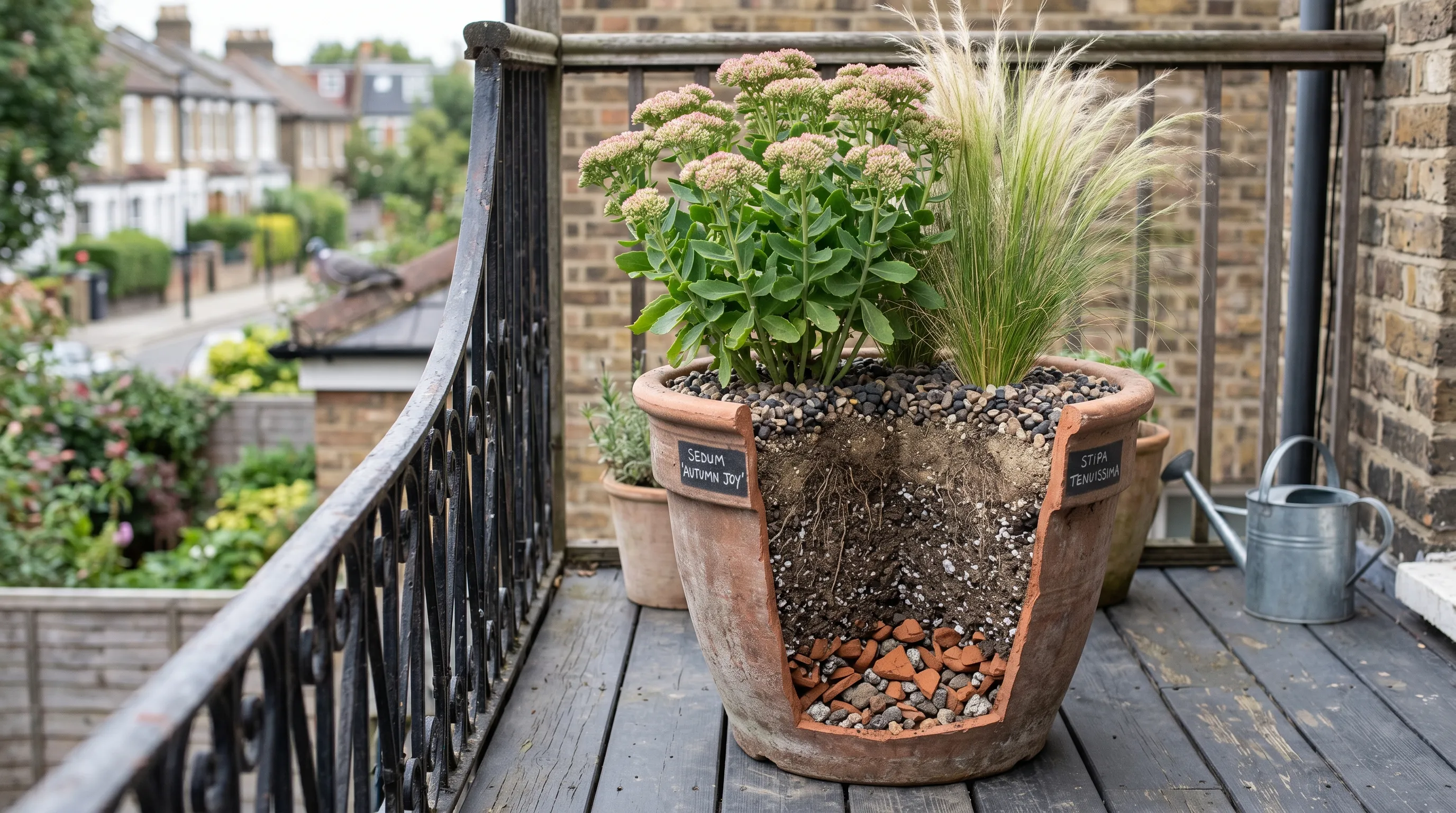 A correctly built neglect pot: free-draining crocks at the base, a gritty open compost in the middle and a gravel mulch on the surface to slow evaporation.
Month-by-month care for neglect containers
Even low-maintenance pots benefit from a few minutes of attention at the right times. The calendar below covers the UK growing year. Watering frequency assumes a large gritty pot in sun.
| Month | Task |
|---|---|
| January | Check pots are draining. Raise on feet if waterlogged. No watering needed. |
| February | Brush off dead foliage from sedum and grasses. Check no pots are sitting in trays of water. |
| March | Top up gravel mulch. Begin light watering only if compost is bone dry. |
| April | Pot up new combinations using the 60/25/15 gritty mix. Water in well, then leave to settle. |
| May | Established pots need watering roughly once a fortnight. Watch for late frost on tender Pelargonium. |
| June | Water once a week in dry spells. Group pots together as temperatures rise. |
| July | Peak heat. Water large pots every 7 to 10 days, small pots more often. Mulch slows the dry-out. |
| August | Keep watering weekly in heatwaves. Shear back Erigeron if it sprawls. Enjoy sedum flowers forming. |
| September | Reduce watering as nights cool. Leave seed heads and grasses standing for structure. |
| October | Stop feeding. Move tender Pelargonium to a frost-free spot or treat as annual. |
| November | Ensure free drainage before winter wet. Raise all pots on feet. No watering. |
| December | Leave hardy pots outdoors. Sedum and grass skeletons give winter form. Check drainage after heavy rain. |
When a tough container plant finally slows down, learn how to root prune plants in pots to refresh it without potting on.
Frequently asked questions
Which container plants survive the longest without watering?
Succulents like sedum and sempervivum survive longest, often 14 to 21 days. They store water in fleshy leaves and stems. In a large pot of gritty compost they shrug off a UK heatwave with no mains irrigation. Silver-leaved plants such as Festuca glauca, Stachys and Senecio also cope well, lasting 10 to 14 days because reflective hairs cut water loss.
Do terracotta or plastic pots dry out faster?
Terracotta dries out far faster than plastic or glazed pots. Unglazed terracotta is porous, so water evaporates through the clay walls as well as the surface. A terracotta pot in full sun can need watering twice as often as a glazed or plastic pot of the same size. For neglect-tolerant displays, choose glazed ceramic or plastic and reserve terracotta for shade.
What is the best compost for low-maintenance containers?
A free-draining gritty mix works best for drought-tolerant pots. Use roughly 60% peat-free multipurpose compost, 25% horticultural grit and 15% perlite by volume. This stops the compost setting hard and rotting roots in wet spells, while the larger pore spaces let roots breathe. Avoid pure peat-based compost, which slumps, sets like concrete when dry and is very hard to re-wet.
How big should a pot be to need less watering?
Aim for 40cm diameter or larger to cut watering frequency. More compost means more water held in reserve. A 40cm pot can buffer 7 to 10 days between waterings in UK summer, while a 20cm pot may need daily watering in heat. The larger the pot, the slower the compost dries and the more forgiving the planting becomes.
Can low-maintenance containers survive winter outdoors in the UK?
Yes, most drought-tolerant container plants are hardy down to minus 10C. Sedum, sempervivum, Festuca glauca and thyme overwinter outdoors across most of the UK. The real winter risk is waterlogging, not cold. Raise pots on feet so they drain freely, and the same gritty mix that beats summer drought also stops roots sitting wet and rotting in a cold, soggy winter.
Start your first neglect-proof pot
Our team produces practical UK gardening guidance from source research, contributor records and established horticultural practice. Editorial standards are overseen by Matt W.