Key takeaways
- Wisley's twin mixed borders run 128m each; the trick to copy is one plant repeated every 3-4m
- Repeat planting is the cheapest idea: £0 if you divide existing perennials, £40.50 for nine pots of one salvia
- A crevice trough copies the 1911 Rock Garden for about £62, including five alpines at £4.50 each
- Step-over apples cost £25-35 bare-root and crop at 45cm high along a path edge
- A 60cm still water bowl gives the Jellicoe canal effect for £60-180, with no pump or liner
- Adult entry costs about £18; one visit with a notebook replaces a £500 designer consultation
Why visit RHS Wisley for garden ideas?
Wisley is the Royal Horticultural Society’s flagship garden: 240 acres of borders, rock work, glasshouses, fruit and trial beds near Woking in Surrey. The site was gifted to the RHS in 1903 and now draws over a million visitors a year. Adult entry costs about £18 and RHS Wisley opens year-round, with members visiting free.
Mid-April was a deliberate choice. Tulips were peaking, magnolias still held flower on Battleston Hill, and the alpine displays were in full spate. More usefully, the bones of every area were still visible before summer growth covered them.
What can you copy from Wisley’s mixed borders?
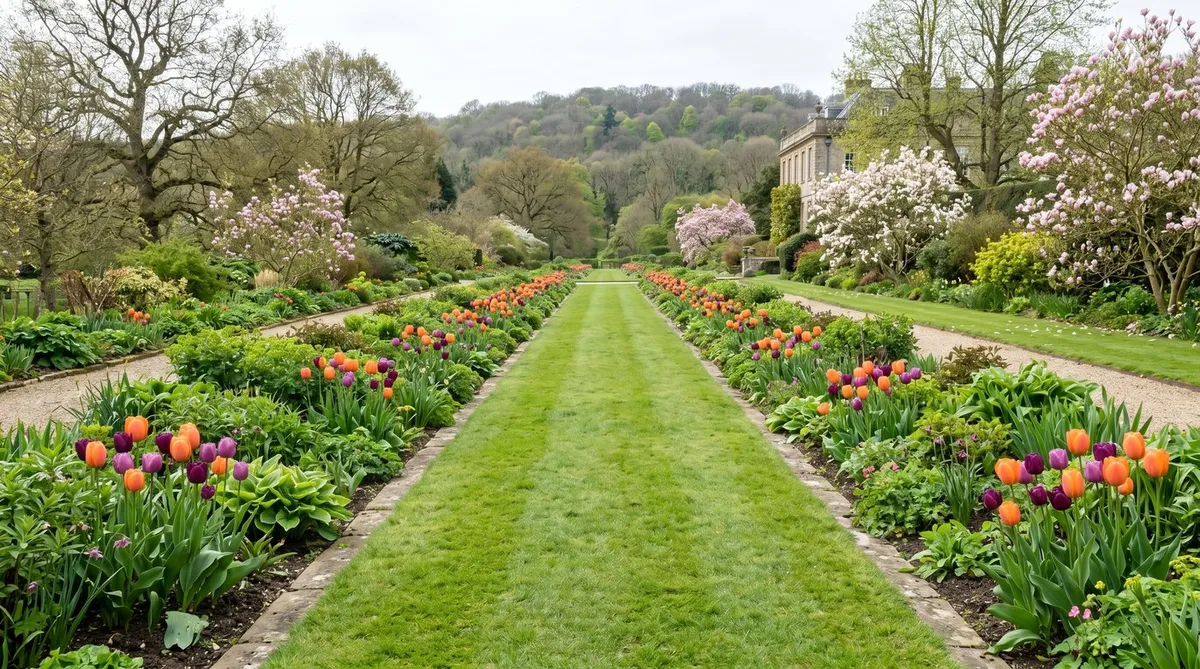
The twin mixed borders are the single most instructive thing at Wisley. Each runs about 128m long and 6m deep, flanking a grass walk up towards Battleston Hill. Three ideas transfer directly to a garden border of 5m or more.
1. Repeat one signature plant down the whole border
2. Plant in sevens and nines, not one of everything
Big drifts read clearly from 20m away; single plants vanish. Wisley plants herbaceous perennials in blocks of seven, nine or more of one variety. The budget trick is brutal but simple: buy fewer varieties in bigger numbers. Five varieties times seven plants beats thirty-five different impulse buys every time, and it costs the same.
3. Layer bulbs through the border for an early act
The April borders were carrying their first performance entirely on bulbs, weeks before the perennials woke. Tulips and narcissi were threaded between the emerging clumps, so no bare soil showed. At home, 50 tulip bulbs cost £15-20 in September and tuck into the gaps in an hour. In containers, the same layering principle becomes a bulb lasagne with three storeys of flower from one pot.
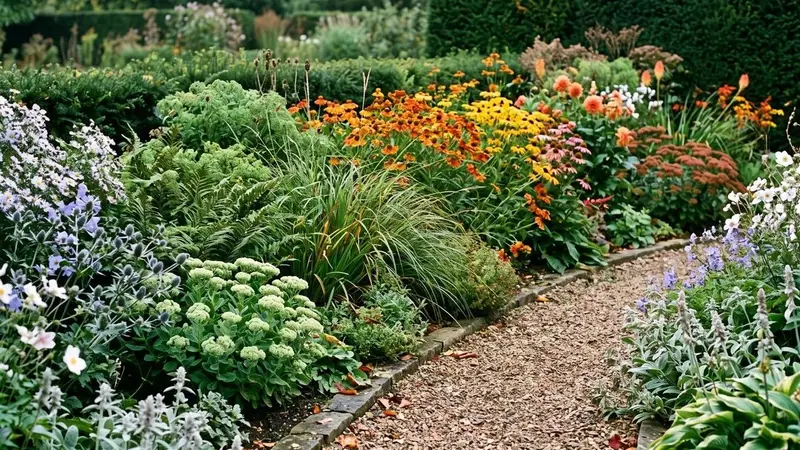
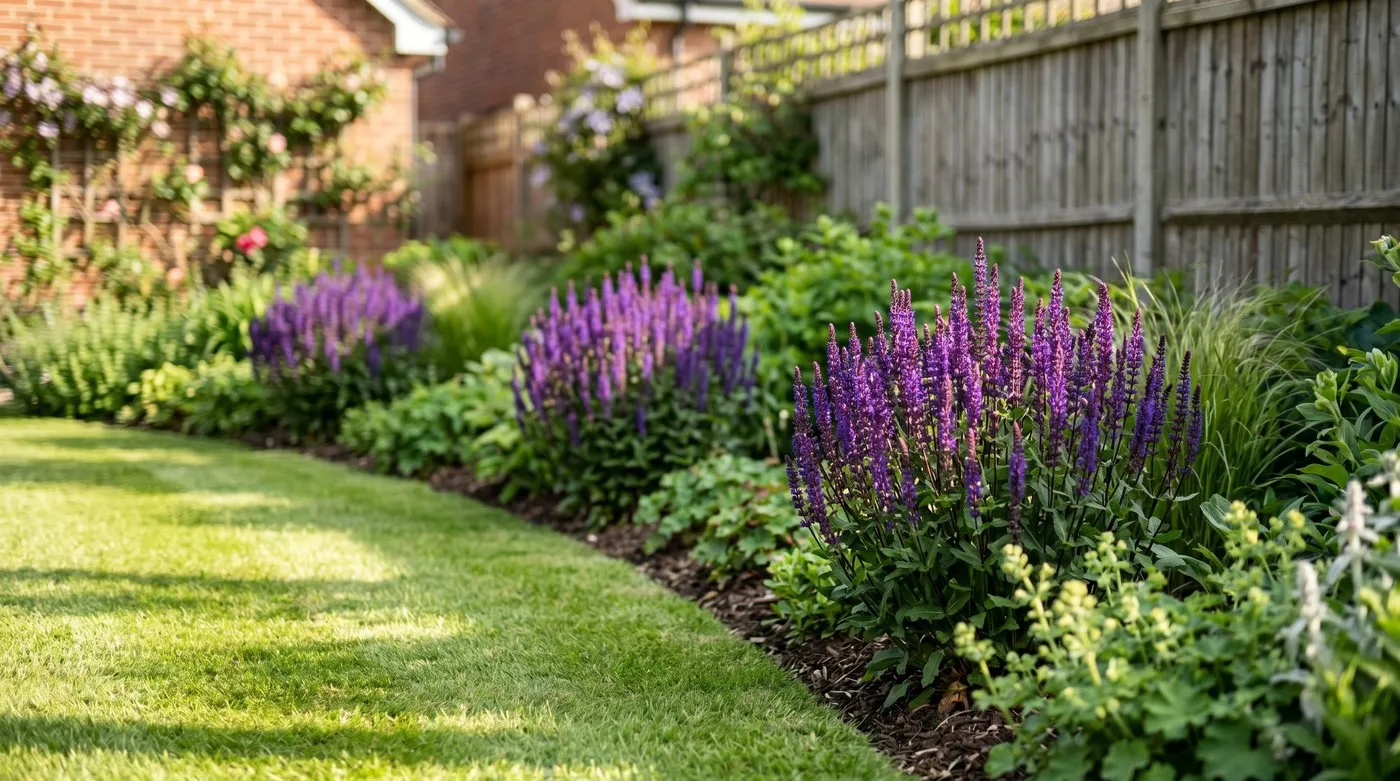 The repeat trick at domestic scale: three groups of Salvia ‘Caradonna’ spaced 3m apart, £40.50 the lot.
The Glasshouse borders: matrix and bold foliage
The planting around the Glasshouse, designed by Piet Oudolf when it opened in 2007, supplies the two boldest transferable ideas.
4. Build a matrix of grasses, then drop perennials through it
Oudolf’s borders here are roughly 70% grasses and 30% flowering perennials, planted through each other rather than in separate blocks. The grass matrix carries the show from July to February with almost no work. At home, 9cm pots of Deschampsia or Molinia cost £4-6 and go in at three per square metre, with echinacea or salvia dotted through at one per square metre. Our guide to ornamental grasses covers which species hold their shape through a wet UK winter.
5. Give one corner to oversized foliage
The Exotic Garden proves a small dose of giant leaves changes the feel of a whole space. You need one corner, not a jungle. A fatsia costs £25, a Tetrapanax £35-60, and a hardy banana around £30. Three plants and a 2m corner gave a friend’s Woking garden a different character for under £100. The bigger the leaf, the fewer plants you need.
Can a small garden use Wisley’s rock and gravel planting?
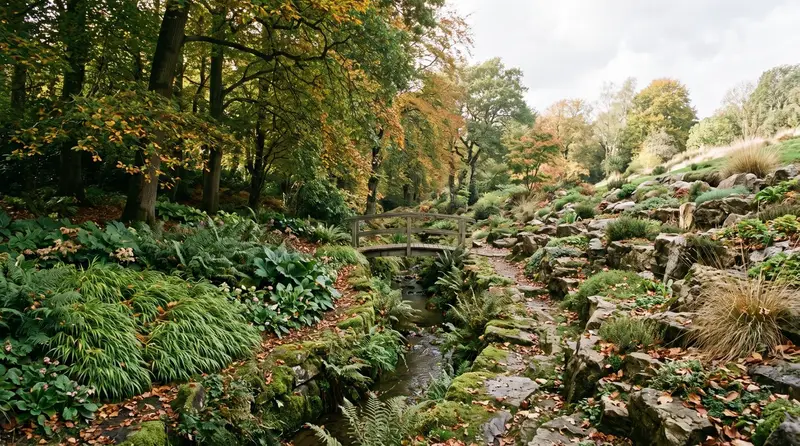
Yes, and the small-scale versions are cheaper than almost anything else on this list. Wisley’s Rock Garden was built in 1911 on a scale nobody sane would copy. The portable versions work anywhere.
6. Plant a crevice trough instead of a rockery
7. Use gravel as both mulch and growing medium
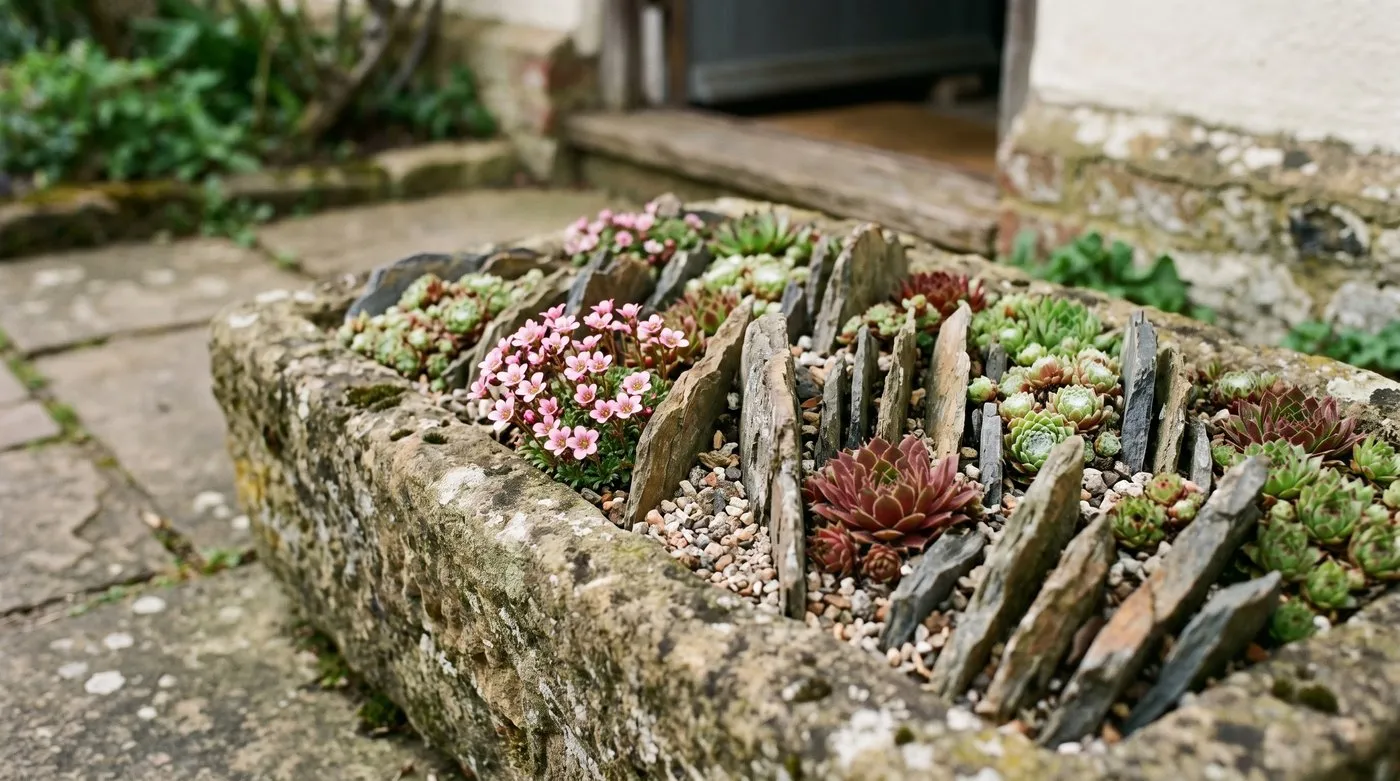 The Rock Garden at doorstep scale: slate on edge, gritty compost, five alpines, about £62 all in.
What edible ideas does the World Food Garden offer?
The World Food Garden and the fruit collections show food growing as design, not allotment sprawl. Wisley’s orchards hold one of the largest apple collections in the country, and two ideas scale down beautifully.
8. Edge a path with step-over apples
A step-over apple is a single-tier espalier cropping at 45cm high, and it makes a productive edge instead of a fence. Bare-root trees cost £25-35 planted November to March, and two posts with a single wire complete the job for under £15. Training takes ten minutes a year. The technique is the simplest case in our guide to training fruit trees as espaliers.
9. Run your own three-variety trial before mass planting
Wisley’s trial fields test cultivars side by side for the Award of Garden Merit, and the habit transfers directly. Before committing a whole bed to one variety, grow three candidates side by side for a season and keep notes. Three seed packets cost about £9. Last summer this saved me from sowing a full 3m row of a lettuce that bolted by mid-June in Stafford.
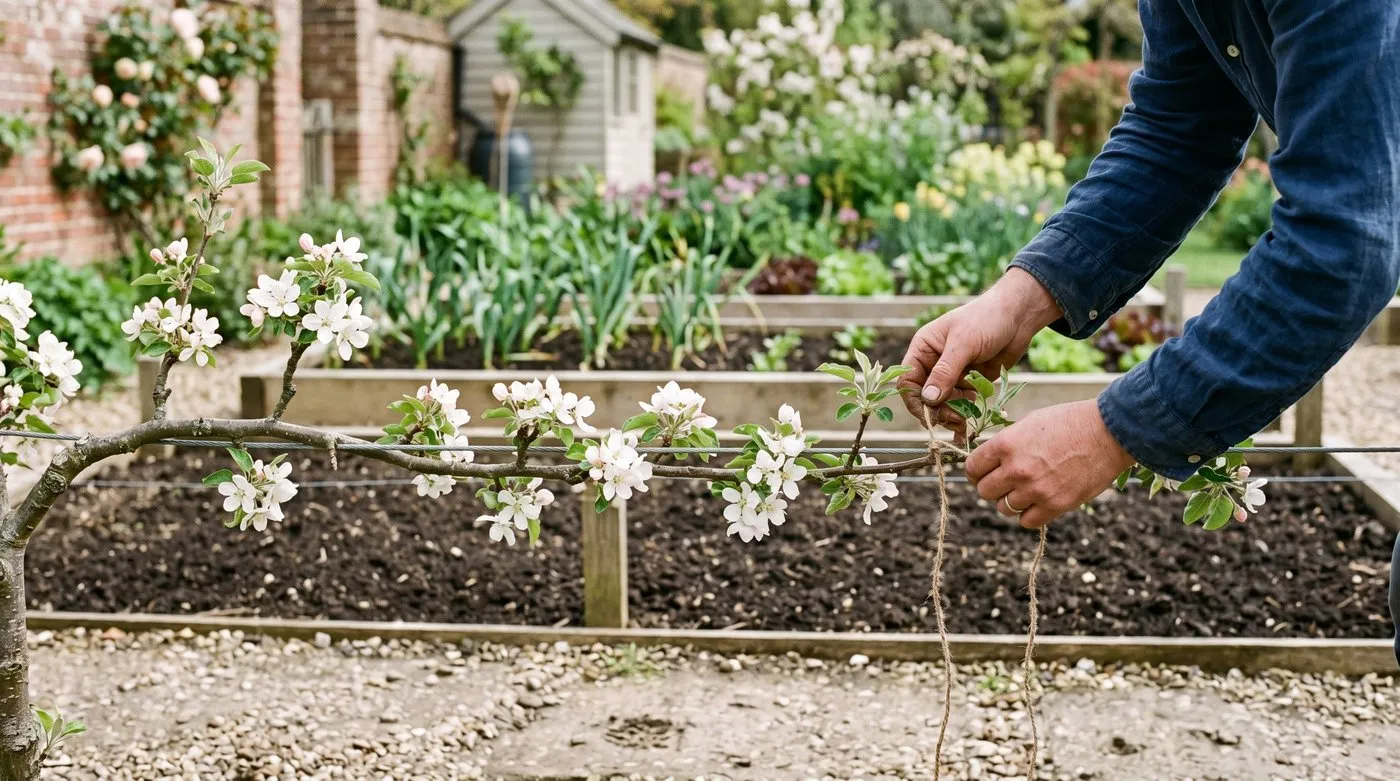 A step-over apple crops at 45cm high: £25-35 for the bare-root tree, under £15 for posts and wire.
Finishing touches: still water and scent by the seat
Two quieter ideas did more for atmosphere than anything showy, and both come from opposite ends of the garden’s history.
10. Use a still water bowl as a focal point
11. Plant scent within a metre of the seat
The Wellbeing Garden at Hilltop, opened in 2021, places fragrant planting hard against its benches rather than across the path. On a cool April morning the scent still registered while sitting down. At home the rule is one sniffable plant within 1m of wherever you actually sit. A daphne costs £25-35, a sarcococca £15 for winter, or a £6 pot of night-scented stock for summer evenings.
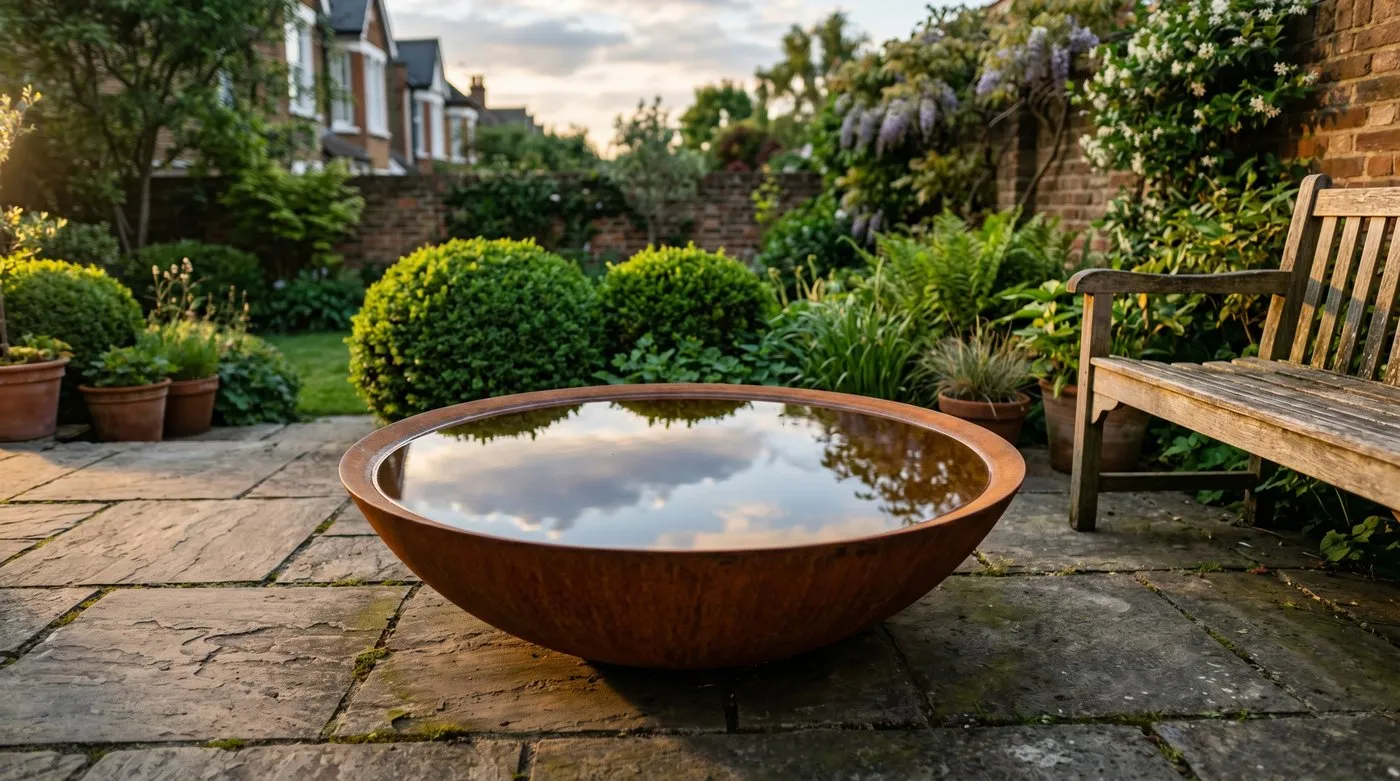 The Jellicoe canal at patio scale: a sealed 60cm bowl, dead-still water, £60-180 and no pump.
What do the 11 ideas cost to copy?
Every idea was priced at the Wisley plant centre on 14 April 2026, then cross-checked against ordinary nursery and DIY-store prices. The table uses the cheaper of the two.
| # | Idea | What you buy | Rough cost |
|---|---|---|---|
| 1 | Repeat planting | 9 x 9cm pots of one perennial | £0-41 |
| 2 | Bigger drifts | Same budget, fewer varieties | £0 |
| 3 | Bulbs through the border | 50 tulip bulbs | £15-20 |
| 4 | Grass matrix | 9cm grasses, 3 per m² | £12-18 per m² |
| 5 | Bold foliage corner | Fatsia, Tetrapanax or hardy banana | £25-90 |
| 6 | Crevice trough | Trough, slate, 5 alpines | £55-70 |
| 7 | Gravel planting | 25kg bags, laid 5cm deep | £6-8 per bag |
| 8 | Step-over apples | Bare-root tree, posts, wire | £40-50 |
| 9 | Three-variety trial | 3 seed packets | £9 |
| 10 | Still water bowl | 60-90cm sealed bowl | £60-180 |
| 11 | Scent by the seat | Daphne, sarcococca or stock | £6-35 |
Common mistakes when copying a big garden
- Copying the plant list instead of the spacing. The named cultivars matter far less than the 3-4m repeat rhythm and the drifts of seven and nine. Get the geometry right with cheap plants before buying rare ones.
- Buying one of everything in the plant centre. Thirty-five different plants make a collection, not a design. Walk out with five varieties in sevens and the border designs itself.
- Ignoring your own soil. Wisley gardens on poor, sandy, acid ground and chooses plants to suit it. A gravel-garden palette will sulk in cold Midlands clay. Match the idea to your conditions, not the postcode.
- Scaling water up instead of down. A 6m formal canal needs engineering. A 60cm sealed bowl needs a spirit level. The reflection effect is identical; only the invoice differs.
- Visiting once and planning the whole year from it. An April visit tells you nothing about August. Two visits twelve weeks apart cost £36 and stop you building a garden with one good month.
Frequently asked questions
Is RHS Wisley worth visiting for garden design ideas?
Yes, it offers more copyable ideas per acre than any UK garden. The 240 acres cover borders, rock work, glasshouse planting, trial beds and fruit, so most garden styles are demonstrated somewhere. Take a notebook and photograph plant labels. One £18 visit replaces hours of guesswork at the garden centre.
When is the best time to visit RHS Wisley?
How much does it cost to visit RHS Wisley?
Adult entry costs about £18, and RHS members go free. Booking online in advance is cheaper than paying on the gate. An RHS membership pays for itself in three or four garden visits a year. Parking at Wisley is free.
What is the cheapest Wisley idea to copy at home?
Repeat planting costs nothing if you divide perennials you already grow. Lift one strong clump in autumn, split it into three or five, and space the pieces evenly down the border. Bought new, nine 9cm pots of one perennial cost about £40.50 and do the same job.
Can you take cuttings or seeds at RHS Wisley?
No, taking any plant material from RHS gardens is not permitted. Photograph the label and the planting around it instead. Most plants on display are sold in the on-site plant centre, and staff will check stock if you show them your label photo.
How big are Wisley’s mixed borders?
Each of the twin borders runs about 128 metres long and 6 metres deep. The scale is not the lesson, though. The spacing is. Groups repeat every 3 to 4 metres, which is exactly the rhythm that works in a 9-metre garden border.
Our team produces practical UK gardening guidance from source research, contributor records and established horticultural practice. Editorial standards are overseen by Matt W.