Key takeaways
- The full audit takes 60 minutes of checks plus one 24-hour jam-jar soil test
- Full sun means 6+ hours a day; photograph the garden at 9am, 1pm and 5pm to prove it
- Frost pockets against solid fences can sit 4-5C colder than the open lawn
- New-build topsoil is often just 100-150mm deep over compacted subsoil
- An £8-12 capsule kit reads soil pH to within about 0.5, enough to choose plants by
- Buried mortar near house walls pushed pH from 6.8 to 7.6 across one 11m garden
Why audit before you buy a single plant?
One hour of measuring saves hundreds of pounds in dead plants. Most failures trace back to a mismatch the plant never had a chance against: a sun-lover in four hours of light, an acid-lover at pH 7.5, an evergreen parked in a frost pocket. A £30 shrub cannot fix a site problem.
Which way does your garden face?
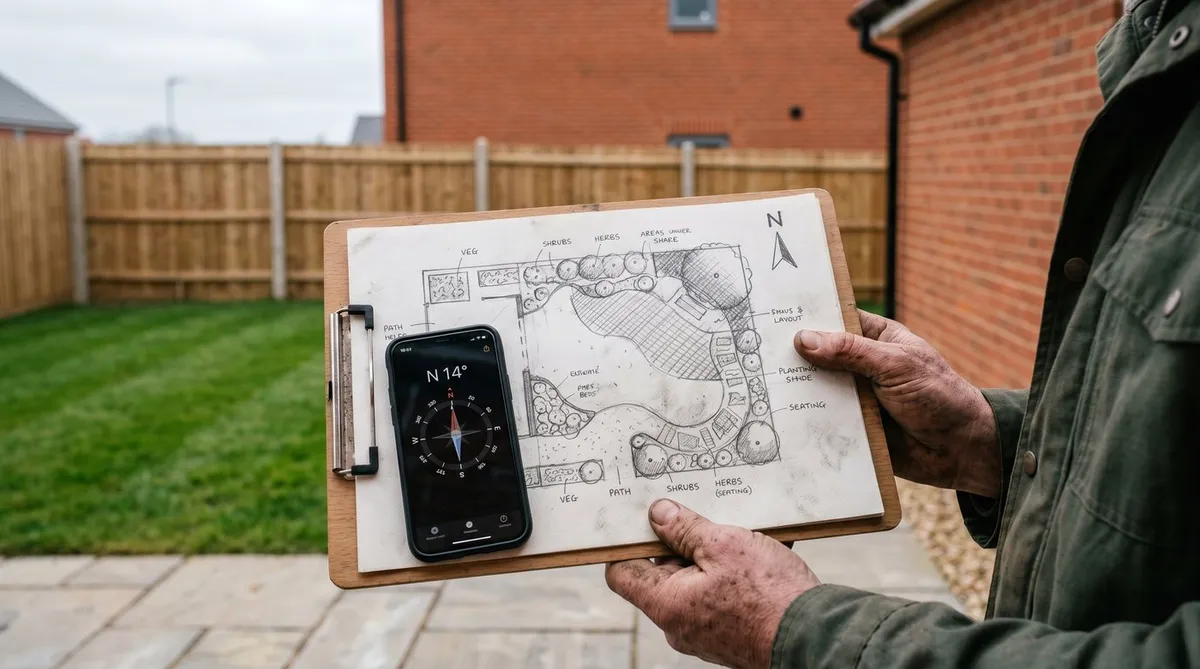
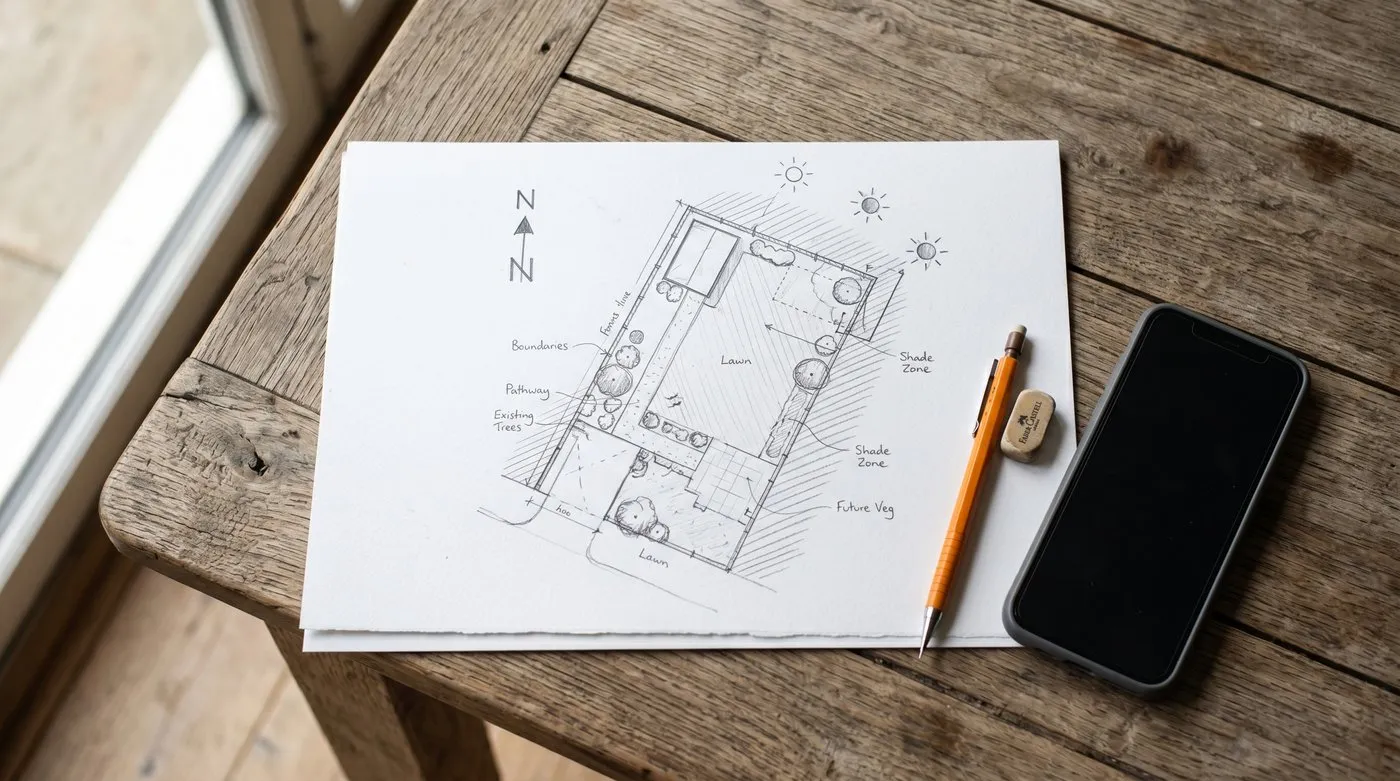
Aspect is the single fact that shapes everything else, and it takes five minutes to establish. Stand with your back against the rear wall of the house and read a phone compass; the bearing you face is the garden’s aspect. South-facing (roughly 135 to 225 degrees) means sun across the main space most of the day. North-facing keeps the nearest beds in the building’s shadow. East-facing gardens get morning sun and afternoon shade; west-facing plots get the reverse.
How much sun does each part really get?
Full sun means six or more hours of direct light a day, and the only honest way to measure it is to look three times. Photograph the whole garden from an upstairs window at 9am, 1pm and 5pm on one clear day, about three minutes per visit. Anywhere lit in all three shots is full sun, two shots is partial (3-6 hours), one or none is shade.
Where do frost pockets form?
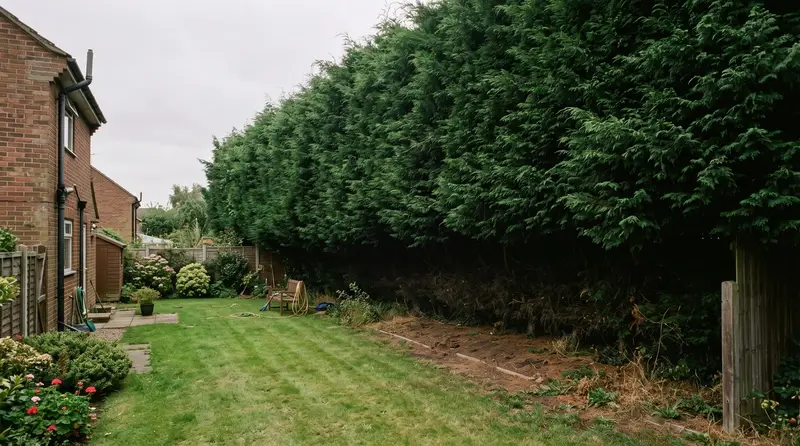
Cold air behaves like water: it flows downhill and pools behind anything solid. A frost pocket forms wherever that flow gets trapped, typically against a fence, a hedge bottom or in a dip. Air in a pocket can sit 4-5C colder than the open garden on a still, clear night, the difference between a marginal plant shrugging off winter and turning to mush.
The check costs five minutes on the next frosty morning. Walk out at about 9am and note which patches are still white after the rest of the lawn has cleared. In Telford on 12 March, the lawn had thawed by 9am but a 1.5m-wide stripe along the solid north fence stayed frosted until 11am. The slightly tender salvias planned for that stripe moved to the house wall, and the fence line got hardy shrubs instead.
No frost during your audit window? The Met Office forecasts will flag the next suitable morning between November and April. Once you know your cold spots, our guide to protecting plants from frost covers fleece weights and covering routines for whatever has to live there.
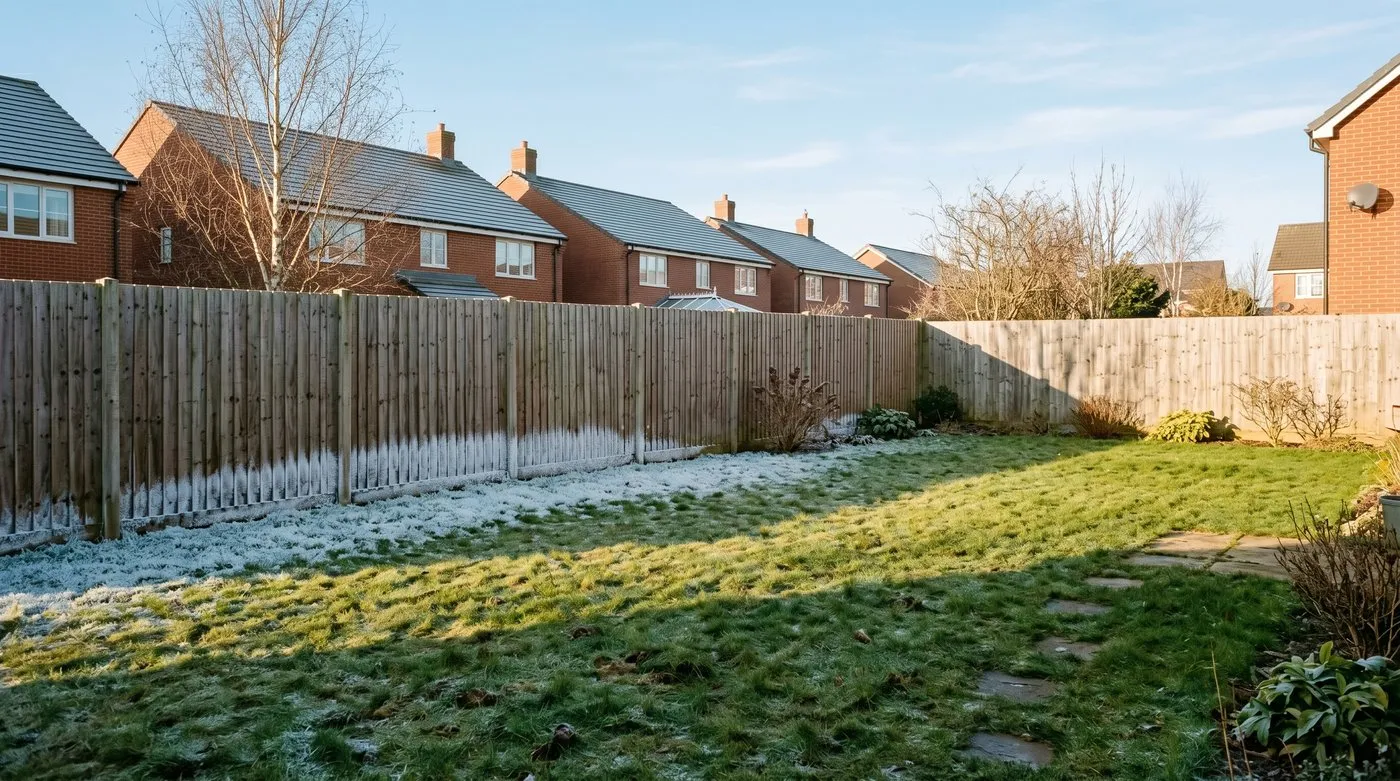 The 9am frost walk in Telford: the lawn cleared but this stripe against the north fence stayed white until 11am.
Finding the wind funnels
Wind accelerates through gaps, and modern estates are full of them. The slot between two houses works like a nozzle: a breeze that barely moves leaves in the open can batter, dry and rock plants standing in the gap line. New-build plots suffer doubly because close-board fences create turbulence on their lee side rather than shelter.
The test is almost free. Tie 30cm strips of light ribbon to four or five bamboo canes and stand them out on a breezy day: one mid-lawn, one in any gap between buildings, one near each exposed corner. Watch for ten minutes. Ribbons that stream flat mark the funnels; ribbons that flutter gently mark the calm.
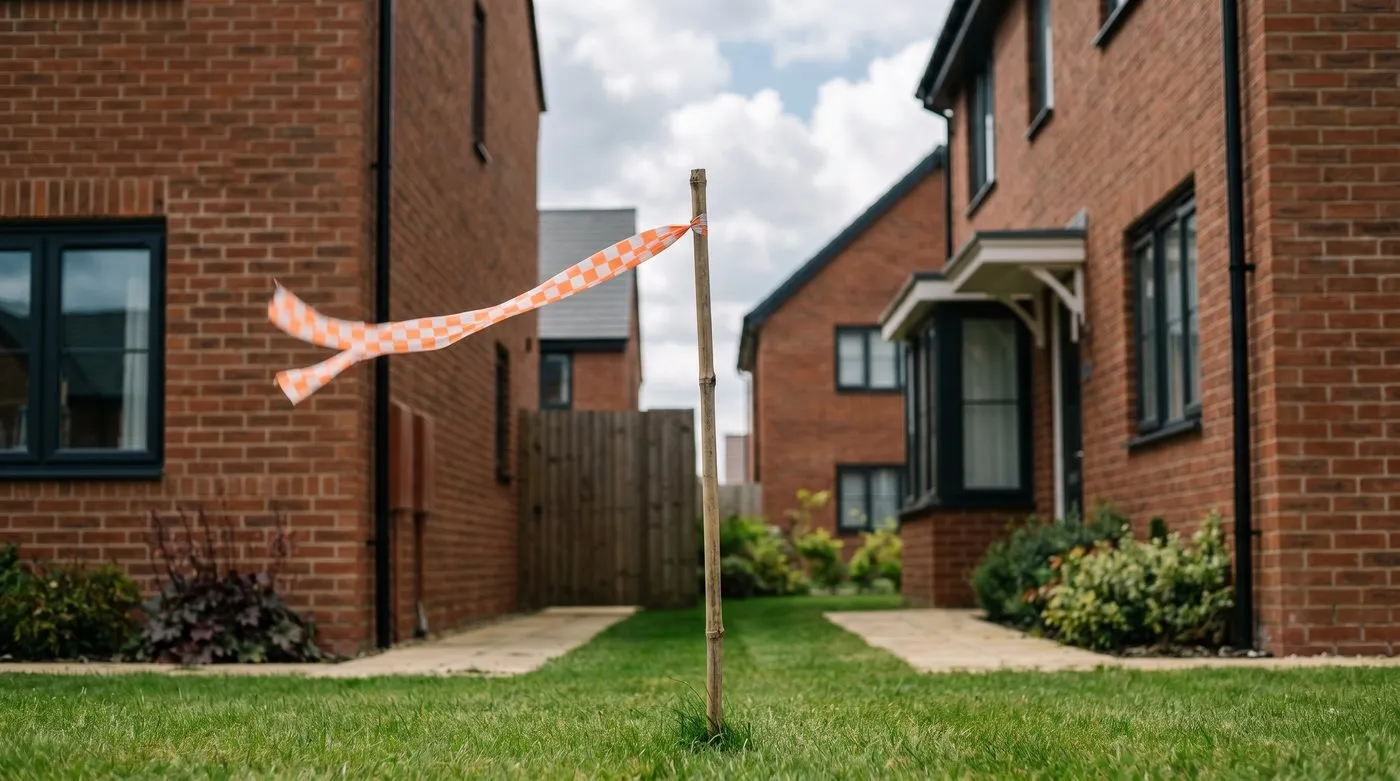 The ribbon test in action: this cane stood in the passage line between two houses and streamed flat while the lawn ribbon hung still.
What is the jam-jar soil test?
The jam-jar test reads your soil’s sand, silt and clay balance for nothing, in 24 hours. Half-fill a straight-sided jar with soil from 10-15cm down, top up with water, add a drop of washing-up liquid and shake hard for a full minute. Then leave it. Sand settles within a minute, silt within about two hours, and clay needs the full 24. Measure each band with a ruler for rough percentages.
Read the result simply. Half or more sand means free-draining soil that needs organic matter and frequent watering. A third or more clay means winter wet, summer cracking and slow spring warming, but good fertility. Close to even thirds is loam. Match the bands against our guide to UK soil types to turn the jar into a plant list.
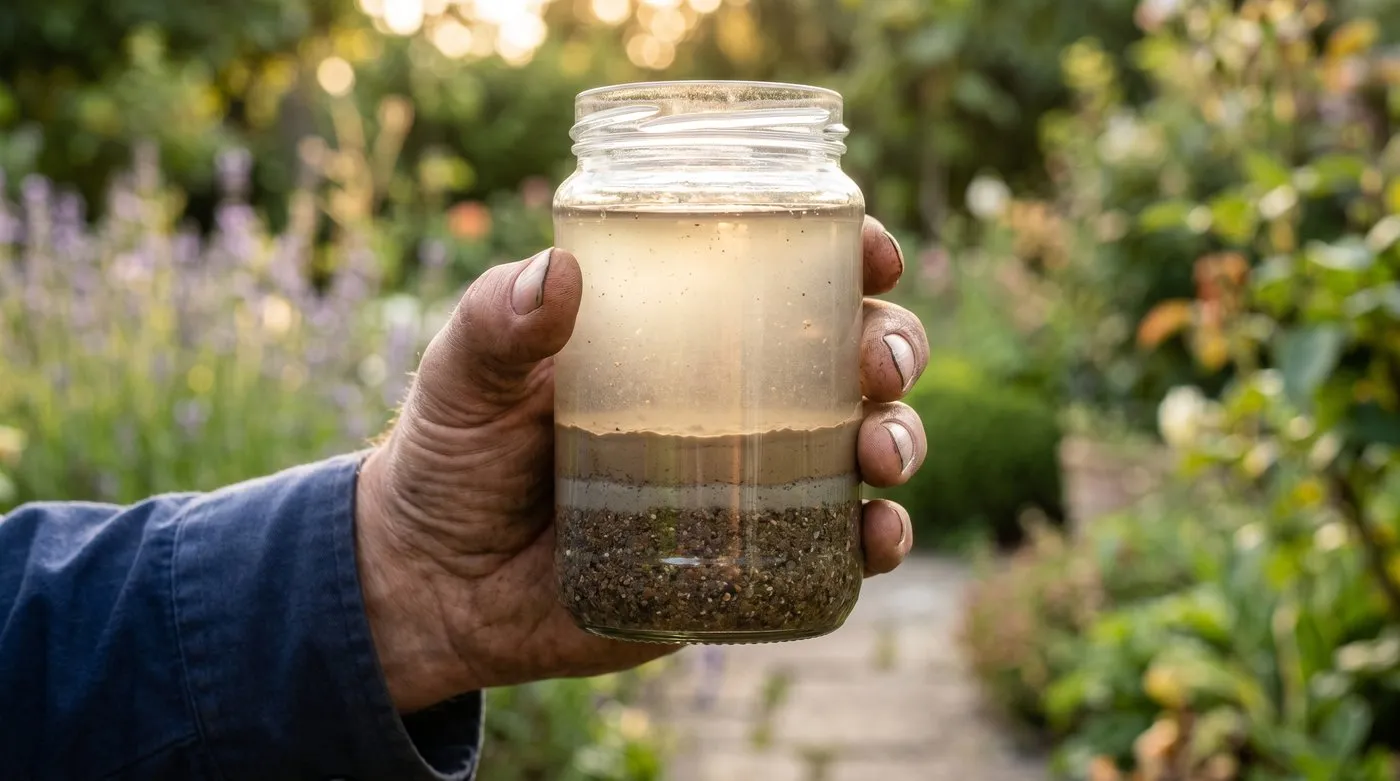 The Telford jar after 24 hours: a deep sand band, thin silt, and a clay layer that explained the waterlogged corner.
Mapping moisture and shade
Ten minutes after rain tells you more about drainage than any gadget. Walk the plot the morning after a wet day and mark three things: standing puddles, ground that squelches underfoot, and ground already drying pale. Puddles that linger more than a few hours flag compaction or a high clay fraction. In Telford, one corner held water until mid-afternoon; the spade later found smeared, compacted clay 120mm below it.
Now overlay the shade reading from your three photos. Crossing the two maps gives four planting zones: damp shade (ferns and hostas), damp sun (moisture-loving perennials), dry shade (the hardest square metres in any garden) and dry sun (Mediterranean herbs and silver foliage). Write the four zones onto the map in coloured pencil and the garden plans itself.
What microclimates does a new-build garden hide?
Every garden, even a bare 11m rectangle, contains spots that run warmer, cooler, wetter or drier than the average. These microclimates are free growing space, and the audit’s last five minutes is spent hunting them.
Check four places. The base of a south- or west-facing house wall stores daytime heat in the brick, often staying 2-4C warmer on winter nights; that is where borderline-hardy things go. The strip within about 45cm of any wall sits in a rain shadow and can stay dust-dry in a wet month, so it suits drought-tolerant plants and nothing else. Paved corners that trap still air bake in summer. And the foot of a north-facing fence stays cool and even, which fussy woodlanders love.
In Telford the south-east house wall became the prize spot: brick-warmed, sheltered from the funnel, sunlit until early afternoon. A fig is going in there this spring. That discovery alone justified the hour.
The 60-minute audit checklist
Run the eight steps in order and the audit fits inside an hour, with only the jam jar carrying over to the next day. The sun photos split across one day, so do those around the rest.
| Step | Check | How | Minutes |
|---|---|---|---|
| 1 | Aspect | Phone compass, back to the house, north arrow on map | 5 |
| 2 | Sun hours | Photos from upstairs at 9am, 1pm and 5pm | 10 |
| 3 | Frost pockets | 9am walk on a frosty morning, mark white patches | 5 |
| 4 | Wind funnels | Ribbon canes out on a breezy day, mark streamers | 10 |
| 5 | Soil texture | Jam-jar test, set up now, read in 24 hours | 5 |
| 6 | Soil pH | Capsule kit, 3-4 spots tested separately | 10 |
| 7 | Moisture map | Post-rain walk: puddles, squelch, dry patches | 10 |
| 8 | Microclimates | Walls, rain shadow, trapped corners, fence bottoms | 5 |
Total: 60 minutes. Kit: phone, paper and pencil, jam jar, pH kit (£8-12), four canes and a metre of ribbon.
Common garden audit mistakes
- Judging sun from a single glance. A garden that looks sunny at noon may get only four hours of direct light. Take all three photos, and repeat in winter when midday sun height drops to about 15 degrees.
- Sampling the top 5cm of soil. New-build topsoil is a thin imported layer, often 100-150mm. Dig to 15cm for the jar sample and push a spade to 30cm to find compaction.
- Trusting a solid fence for shelter. Close-board fencing creates lee-side turbulence, not calm. The ribbon test shows the real airflow; a 50% permeable screen filters wind far better.
- Auditing once and filing it away. Trees grow, neighbours build extensions, shade lines move. Re-run the sun photos each June and December; ten minutes keeps the map honest.
Frequently asked questions
What is a garden audit?
A garden audit is a one-hour survey of sun, soil, frost and wind. You record which way the plot faces, how many hours of sun each area gets, where cold air settles, where wind accelerates, and what the soil is made of. The result is a simple annotated map that tells you what will actually grow where.
How do I find out which way my garden faces?
Stand with your back to the house and check a phone compass. The direction you face is the garden’s aspect. South-facing plots get sun most of the day, north-facing plots see the main beds shaded by the house, and east or west plots split the day in half.
How do I test my soil without buying a kit?
The jam-jar test separates sand, silt and clay in 24 hours. Half-fill a jar with soil, top up with water, shake hard for a minute and leave it to settle. Sand lands within a minute, silt within two hours, and clay takes a full day. Measure each band to read your soil texture.
Where do frost pockets form in a garden?
Frost pockets form where cold air collects against fences, hedges and dips. Cold air flows downhill like water and pools behind any solid barrier. On frosty mornings, walk out at 9am and note which patches stay white after the rest has cleared. Those spots can run 4-5C colder.
When is the best time to do a garden audit?
Any month works, but repeat the sun checks in winter and summer. The sun’s midday height swings from about 15 degrees in December to 62 in June, so a bed in full June sun can sit in total December shade. One audit plus two seasonal sun checks gives the full picture.
How accurate are cheap pH test kits?
Capsule kits read within about 0.5 pH, accurate enough for plant choice. You need to know whether soil sits near 6.0, 7.0 or 7.8, not the second decimal place. Test 3-4 spots separately because pH varies across one garden, especially near house walls where mortar raises it.
Our team produces practical UK gardening guidance from source research, contributor records and established horticultural practice. Editorial standards are overseen by Matt W.