Key takeaways
- A sand garden uses a 15 to 30cm layer of washed sharp sand, not topsoil
- Once established, a sand bed cuts watering by around 70 percent
- Plant bare-root: rinse all compost off the roots before setting them in sand
- Use lime-free graded sharp sand, never play sand or soft building sand with clay
- Lavender, thyme, Salvia, Eryngium and Stipa thrive, and no feed is ever needed
- Losses over four winters ran at 8 percent, against 22 percent in ordinary soil
A sand garden grows perennials in a deep bed of washed sharp sand instead of topsoil. It sounds wrong, yet the lean, gritty medium is one of the surest ways to build a drought-proof UK border. Roots meet no easy feed near the surface. They drive downwards, chasing moisture in the subsoil, and the plants that result are tougher, tighter and far less thirsty than the same species in rich ground.
What a sand garden actually is
A sand garden, or sand bed, is a planted border where the growing medium is a thick layer of low-nutrient sharp sand, usually 15 to 30cm deep, over free-draining ground. Plants are set bare-root into the sand, with all compost washed off the roots first. There is no imported topsoil and no feed. The sand holds very little nitrogen, so nothing grows soft and sappy.
The method was refined by the Swedish grower Peter Korn, who planted large sand beds on thin ground and watched ordinary perennials become drought-hardy. UK gardeners and specialist nurseries have taken it up since the dry summers of 2018 and 2022 pushed water bills and hosepipe bans up the agenda.
The point is not decoration. It is a growing system that trades rich soil for deep, self-reliant roots. A sand garden looks like a gravel or prairie border, but the engineering sits below the surface.
Why deep sand turns ordinary plants drought-proof
The science is about where roots go looking for water. In rich, moist soil, a plant keeps most of its roots in the top 10 to 15cm because food and water are easy there. When drought hits, that shallow zone dries first, and the plant wilts fast.
Three things happen as a result. Growth stays compact and self-supporting, so lavender and Salvia rarely flop. Sappy soft growth, the kind slugs and aphids love, never forms on such a lean diet. And the plants harden off, surviving both drought and wet winters because the crown sits in fast-draining grit, not cold mud. Lean sand is a stress that makes the plant build its own resilience.
Sand garden, gravel garden or zen garden: telling them apart
Three “dry” garden styles get muddled constantly. They are not the same thing, and only one is a sand bed.
A planted sand garden grows perennials in a deep sand layer, as described above. The sand is the root zone. This is the drought-resilient system this guide covers.
A Japanese zen garden (karesansui) uses raked sand or fine gravel as pure ornament. It represents water, holds no plants, and is not a growing system at all. If someone rakes ripples into it, it is a zen garden, not a sand bed.
| Feature | Sand bed (planted) | Gravel garden | Conventional border | Best for |
|---|---|---|---|---|
| Water need (established) | Almost none, 70% less | Low, occasional soak | High, weekly in summer | Sand bed for drought |
| Weeding | Very low, lean surface | Low, gravel suppresses | High, rich soil = weeds | Sand bed for low effort |
| Feeding | None, ever | Light, every 2-3 years | Annual feed and mulch | Sand bed for no inputs |
| Plant range | Med and prairie only | Broad, drought-leaning | Widest of all | Border for variety |
| Setup cost per m² | £30-£60 sand | £15-£30 gravel | £5-£15 compost | Border cheapest to start |
Choosing the right sand for a sand bed
Sand choice makes or breaks the bed. You need washed, lime-free sharp sand that is low in salt and low in fines. Fines are the dust-fine particles that pack down and clog drainage. The wrong sand turns to concrete in a season.
Two types work. Graded horticultural sharp sand and washed grit sand both drain fast and stay open. Particle sizes around 1 to 4mm are ideal. Ask the supplier for washed, lime-free and low-fines material. A lime-free grade matters because most sand-garden plants dislike high alkalinity, and it keeps the pH near neutral.
Never use two common cheap sands. Play sand is soft, rounded and full of fines, so it compacts and holds water. Soft building sand carries clay and silt that clog the bed within weeks. Both defeat the whole point.
Budget around £30 to £60 per square metre for a 20 to 25cm depth of good washed sand, delivered loose by the bulk bag. A single dumpy bag covers roughly 1.2 to 1.6 square metres at that depth. Buy from a builders merchant or aggregate supplier who can confirm the wash and grade.
Warning: Do not use kiln-dried block-paving sand, marine sand or any salted grade. Salt scorches roots and stalls establishment. Always confirm the sand is washed and lime-free before it goes on the bed.
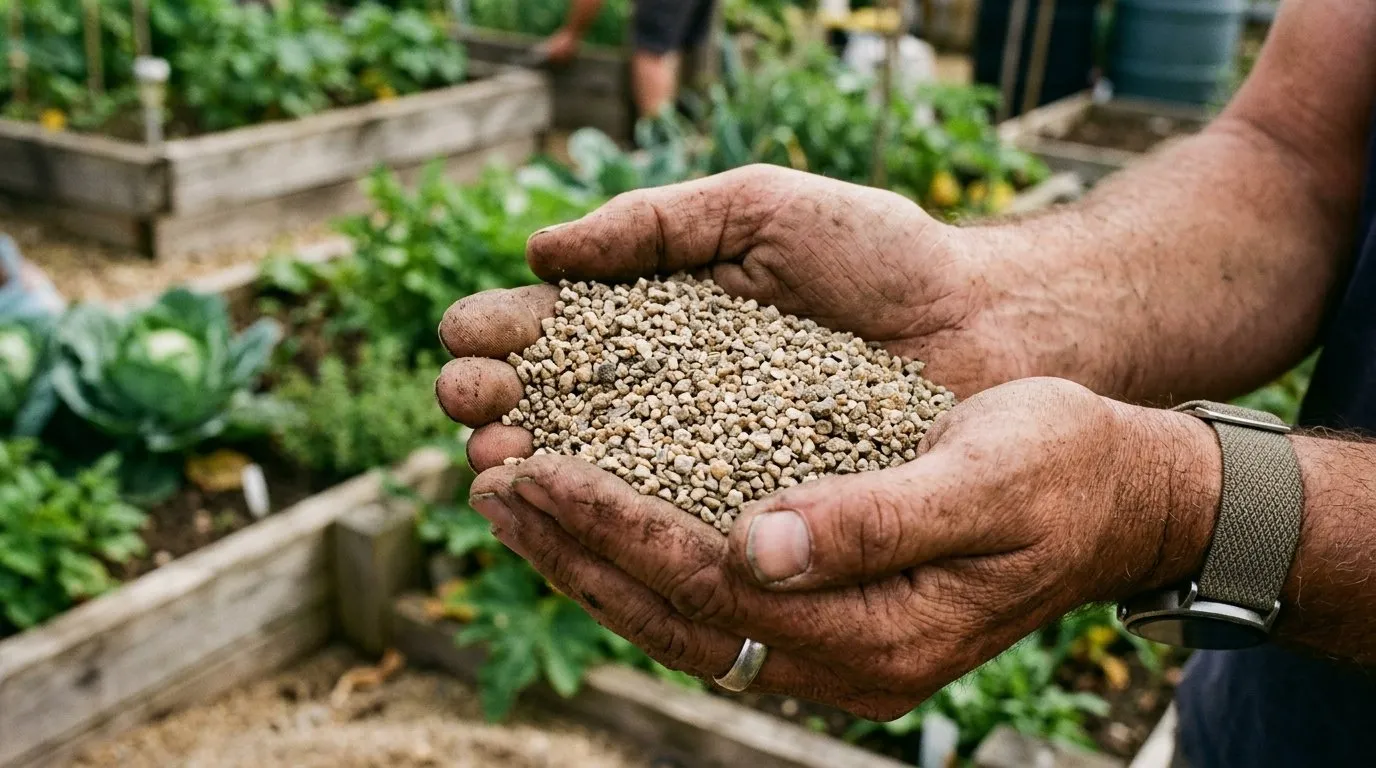 Washed, lime-free sharp sand at 1 to 4mm grit size. It should feel gritty and pour freely, never soft, dusty or claggy.
How deep to make a sand bed, and preparing clay ground
Depth depends on your plants and your ground. 15cm of sharp sand suits low alpines, thymes and Sempervivum on soil that already drains. 25 to 30cm suits Salvia, Eryngium, grasses and larger perennials, and is the safe depth over heavy clay.
Raise the bed edges slightly, by 5 to 10cm, using stone, brick or steel edging. A gently raised bed sheds heavy rain rather than sitting wet. Clear every scrap of perennial weed root first, because couch grass and bindweed will travel up through sand and are miserable to remove later.
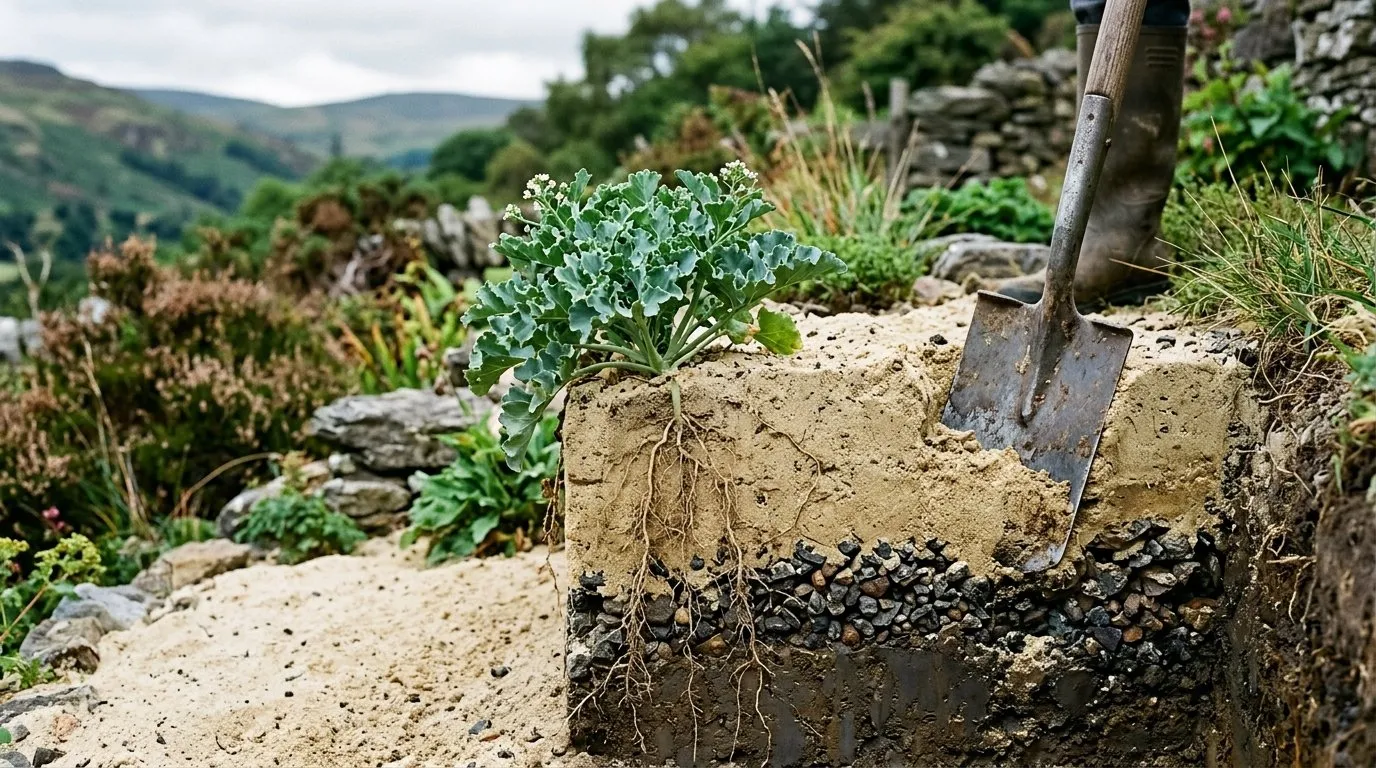 The layered build: 25 to 30cm of sharp sand over a 10cm coarse gravel drainage course, above the cleared clay subsoil. The gravel stops winter waterlogging.
How to plant bare-root into sand
Planting is where a sand garden differs most from a normal border. Plants go in bare-root, with the compost rinsed off. This forces roots to grow straight into the sand rather than sitting in a comfortable pocket of old potting mix.
Work in this order:
- Knock the plant from its pot and gently tease the root ball apart.
- Rinse all compost off in a bucket of water until the roots are clean and bare. This is the step people skip and regret.
- Open a deep, narrow hole in the sand with a trowel or a length of dowel. Aim deeper than the roots are long.
- Feed the roots down so they hang straight, then trickle sand back around them and firm gently.
- Set the crown at sand level, never buried. A buried crown rots in wet weather.
- Water in well to settle the sand around every root.
Spring, from March to May, is the best planting window, with early autumn a good second choice. Bare-root planting into warm, moist sand lets roots chase down before winter. Space plants at their normal distances, because sand-grown perennials stay compact and rarely need dividing.
Gardener’s tip: Rinse the roots properly. A root ball still wrapped in peat-free compost holds a soft, wet core that sits sour in dry sand. Clean bare roots knit into the sand within weeks and drive downwards far faster.
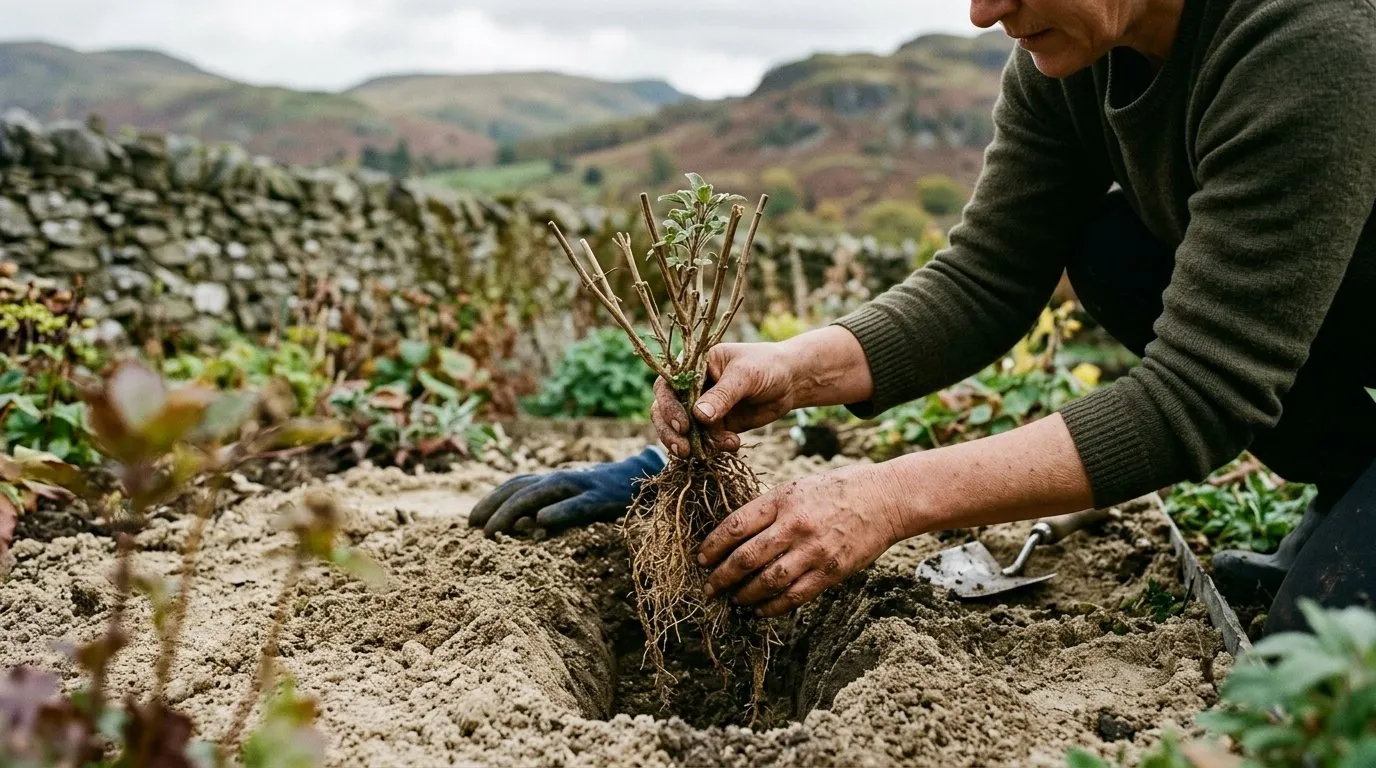 Setting a bare-root Salvia into open sand, roots rinsed clean and hanging straight in a deep hole. Bare-root planting is what drives roots downwards.
The best plants for a UK sand garden
Sand-garden plants share one trait: they hate rich, wet soil and thrive on lean, sharp drainage. Mediterranean and prairie species dominate the list. Most drought-tolerant plants that fail in clay flourish in a deep sand bed.
Reliable performers in UK sand beds include:
- Lavender (Lavandula angustifolia ‘Hidcote’ and ‘Munstead’), which lives far longer and stays tighter in lean sand.
- Thyme (Thymus serpyllum and Thymus vulgaris), spreading into low aromatic mats.
- Dianthus, the pinks, for scent and grey evergreen cushions.
- Salvia nemorosa (‘Caradonna’, ‘Ostfriesland’) for months of upright spikes.
- Eryngium (sea holly) and Verbascum, both deep-rooted and architectural.
- Sedum and Sempervivum for succulent structure and easy division.
- Grasses such as Stipa tenuissima, Stipa gigantea and Festuca glauca for movement.
- Self-seeders like Verbena bonariensis, Erigeron karvinskianus and California poppy, which scatter into the open sand.
Aim for around 60 percent evergreen or grey-leaved structure so the bed reads well in winter. This palette overlaps heavily with Mediterranean garden planting, which uses the same drought-hardy species on sharp drainage.
Warning: Euphorbia suits a sand bed but has milky sap that irritates skin and eyes badly. Wear gloves and eye protection when cutting it, and keep the sap off bare skin in sun.
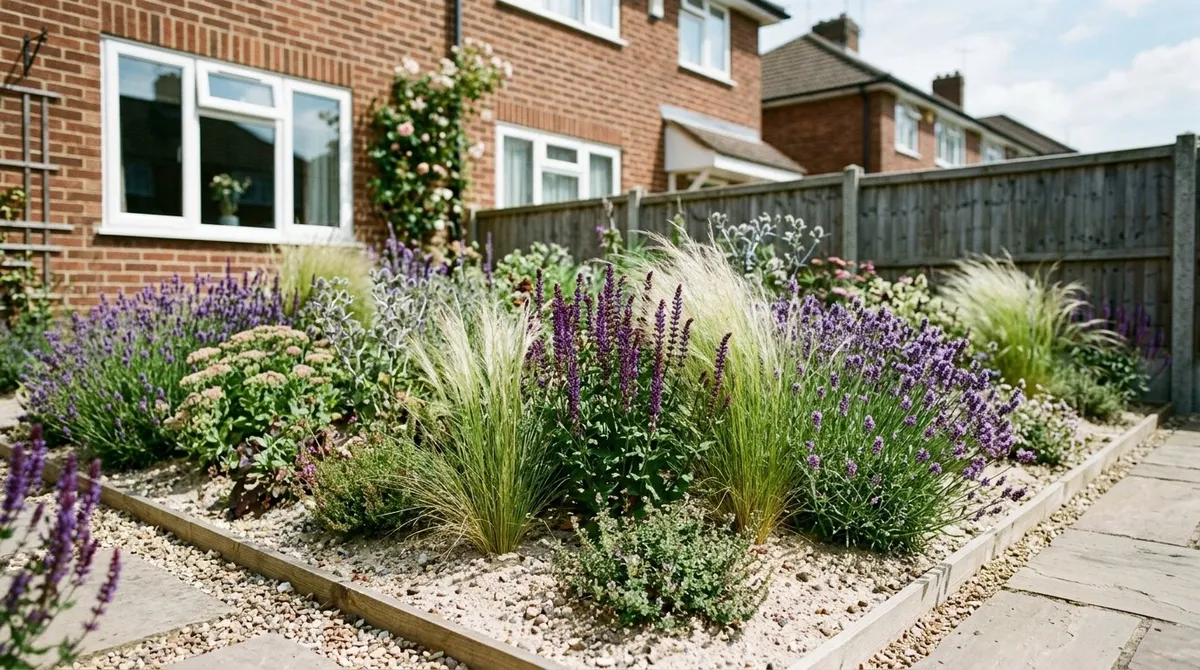
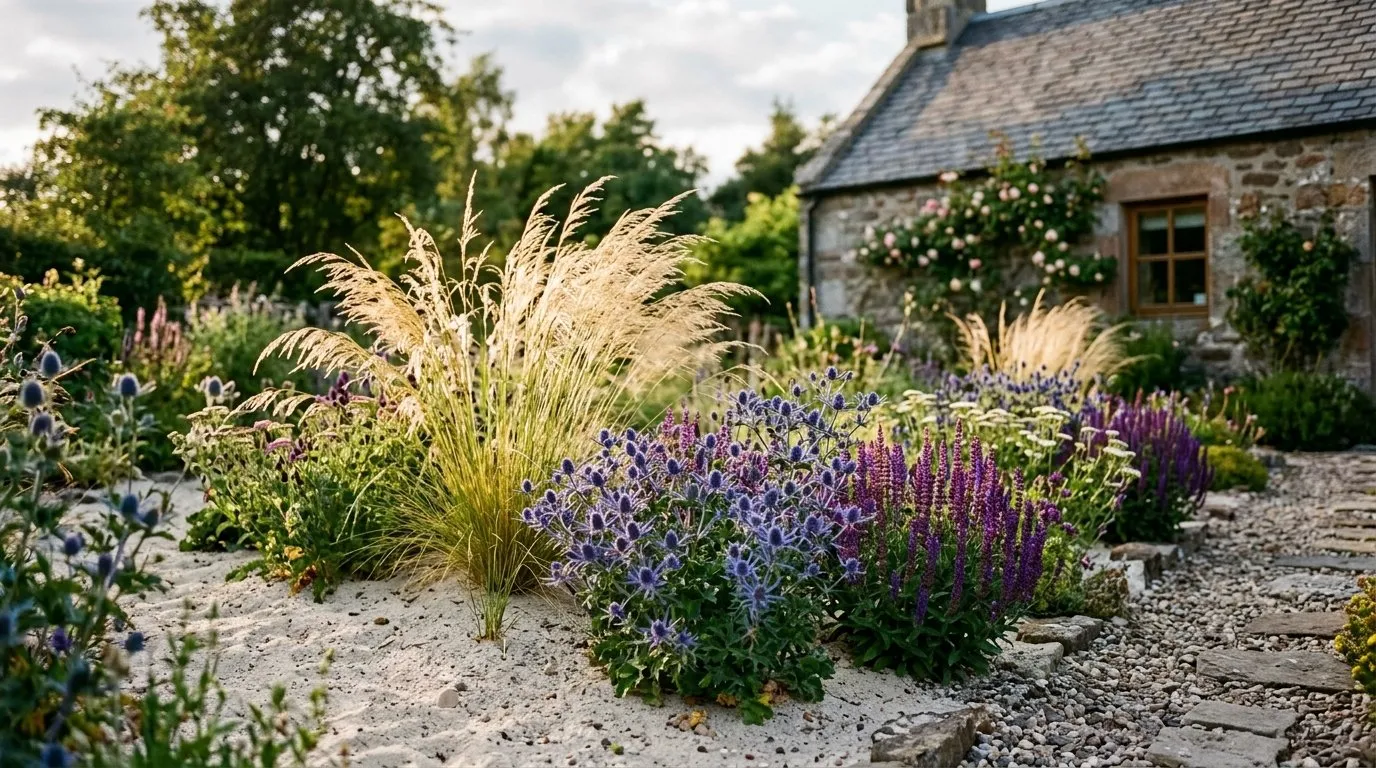 A mature sand bed in its third summer: Stipa, Salvia and Eryngium woven together. Lean sand keeps every plant compact and self-supporting.
Alpine, seaside and small-space sand beds
The sand-bed idea scales up and down. It suits far more than a full border.
Alpine sand beds are a classic use. Alpines demand razor-sharp drainage, and a raised trough or bed of pure sharp sand keeps their crowns dry through wet UK winters. A 15cm sand layer over gravel in a stone trough grows Sempervivum, Saxifraga and dwarf Dianthus that rot in ordinary compost. This is the oldest sand-growing method in British gardening.
Seaside gardens already have the raw material. Coastal plots on sandy ground can plant almost straight into improved sand, adding sea thrift (Armeria maritima), sea kale and Eryngium that shrug off salt wind. The free-draining base is a gift, not a problem.
Small spaces and balconies work in a raised bed or a large trough. A 40 litre trough of sharp sand grows a self-contained thyme, Sedum and pink planting that needs watering only in the hottest spells. It is the lowest-maintenance container planting most flat gardeners will find.
Whatever the scale, a sand garden is a genuine gain for pollinators. Lavender, thyme and Salvia are among the best UK nectar plants, and lean beds full of self-seeders give bees a long feeding season. Plantlife and the Wildlife Trusts gardening advice both rate open, sunny, low-fertility plantings highly for wild bees and other insects.
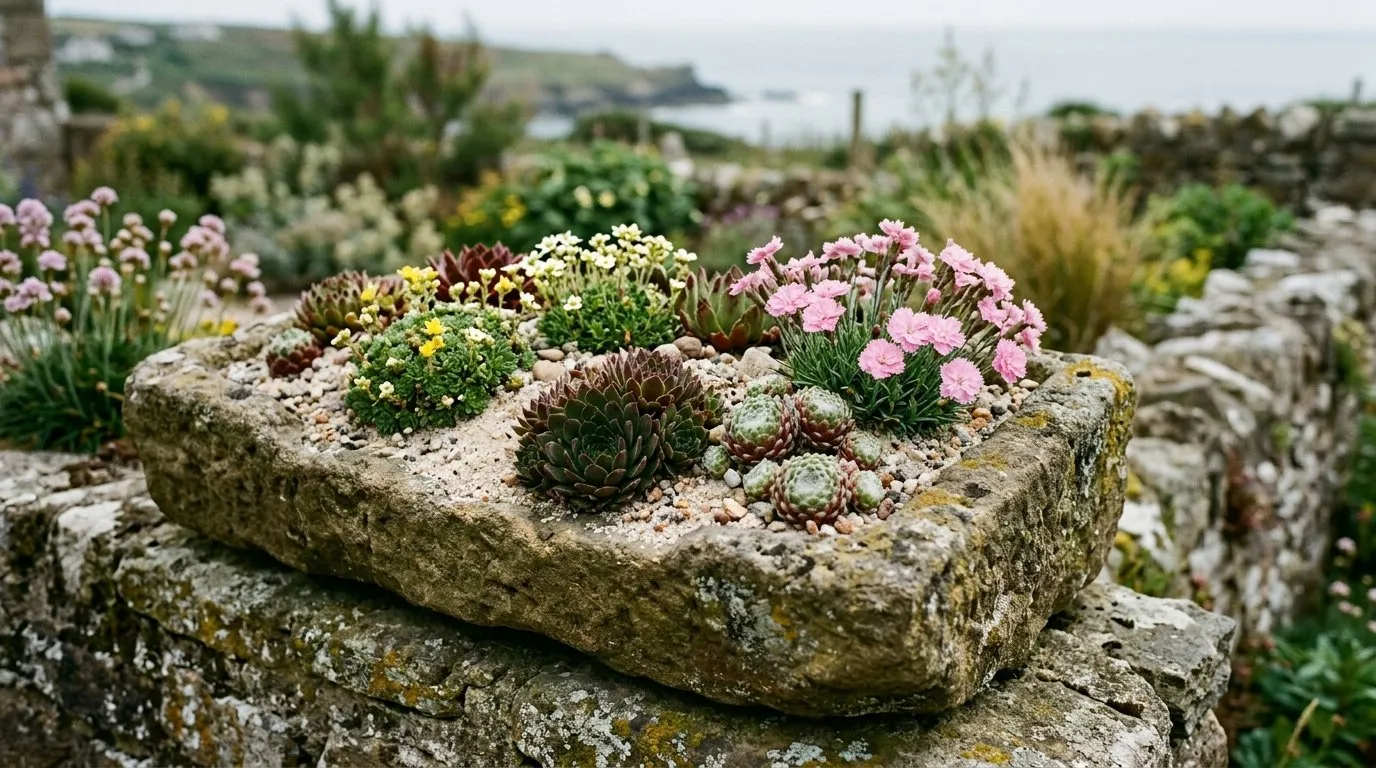 A raised alpine sand bed in a stone trough. Sharp sand keeps alpine crowns dry through a wet UK winter, the usual cause of losses.
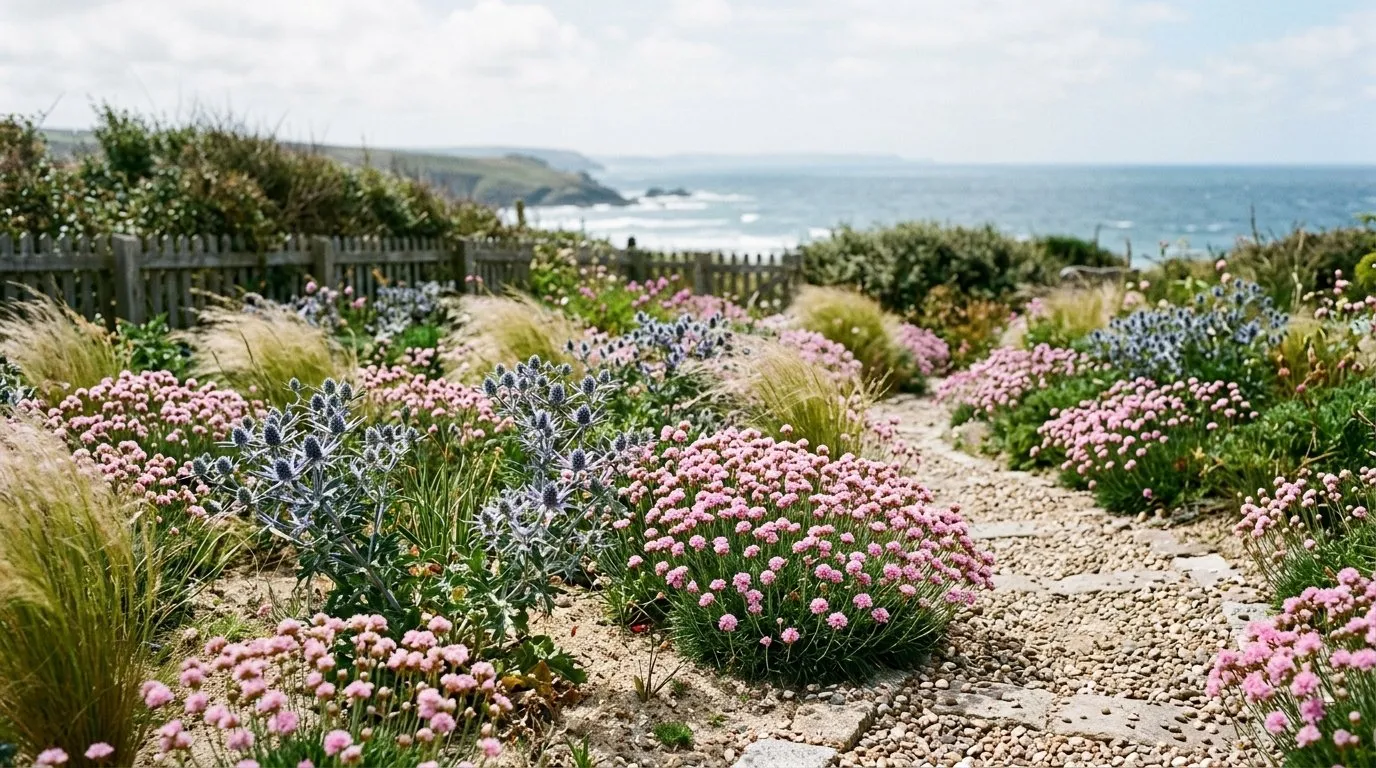 A coastal sand garden where the ground gives the drainage for free. Sea thrift and Eryngium handle both salt wind and drought here.
Month-by-month sand garden calendar
| Month | Task |
|---|---|
| January | Leave the bed alone. Enjoy grey and evergreen structure. Check no gravel drainage is blocked. |
| February | Cut back old grasses and dead stems before new growth. Firm up any frost-lifted crowns. |
| March | Prime planting month begins. Plant bare-root perennials into warm sand. Top up thin sand areas. |
| April | Continue bare-root planting. Water new plants in well. Watch for slugs on soft early growth. |
| May | Sow or plant self-seeders. Water plants set this spring weekly. Established plants need nothing. |
| June | Deadhead early Salvia for a second flush. Established bed needs no water in normal weather. |
| July | Peak drought test. Water only plants from this spring, and only if truly dry. Enjoy the display. |
| August | Shear back leggy thyme and Erigeron. Take cuttings of lavender and pinks for spares. |
| September | Second planting window. Set bare-root plants while the sand stays warm. Divide Sedum. |
| October | Cut back only the messiest growth. Leave grasses and seedheads for winter structure and birds. |
| November | Clear fallen leaves off the sand so it stays open and dry. Check bed edges shed rain. |
| December | Do nothing. The lean, sharp bed carries itself through winter wet far better than rich soil. |
Common mistakes that ruin a sand bed
- Using the wrong sand. Play sand and soft building sand hold fines and clay, so they compact and stay wet. The bed drowns instead of draining. Buy only washed, lime-free sharp sand at 1 to 4mm.
- Planting with the compost left on. People pot plants straight in with the root ball intact. The roots stay in the old mix and never enter the sand. Rinse every root bare before planting.
- Skipping drainage on clay. On heavy ground, sand laid straight on clay traps water beneath it. Crowns rot over winter. Always lay 10cm of coarse gravel under the sand on clay.
- Feeding or improving the sand. Adding compost or fertiliser defeats the whole system. It grows soft, floppy, thirsty plants and lets weeds germinate. A sand bed is meant to stay lean, so never feed it.
- Choosing moisture-loving plants. Hostas, astilbes and hydrangeas want damp, rich ground and will sulk or die. Match the planting to the medium: Mediterranean and prairie species only.
Frequently asked questions
What is a sand garden?
A sand garden grows plants in a deep layer of low-nutrient sharp sand. Roots dive down chasing moisture, so plants become tougher and far more drought-resilient. The lean surface suppresses weeds and needs no feeding. It differs from a raked zen garden, which is ornamental and unplanted.
How deep should a sand garden bed be?
A sand bed needs 15 to 30cm of sharp sand. Fifteen centimetres suits low alpines and thymes on already free-draining ground. Twenty-five to thirty centimetres suits Salvia, grasses and larger perennials, or any bed over heavy clay. Add a gravel drainage layer beneath on clay soils.
What sand do you use for a sand garden?
Use washed, lime-free sharp sand low in salt and fines. Graded horticultural or washed grit sand works well. Never use play sand or soft building sand, which hold clay and fine particles that clog and compact. The sand must drain fast and stay open.
Do plants in a sand garden need watering?
Only while establishing, then rarely. Water new bare-root plants in well, then weekly for the first six to eight weeks. After that, roots reach deep moisture and need almost no watering. Through the 2022 drought our sand bed was watered just three times all summer.
Can I make a sand garden on clay soil?
Yes, with a drainage layer beneath the sand. Dig out 20 to 25cm of clay, lay 10cm of coarse gravel, then 20 to 30cm of sharp sand on top. The gravel stops water pooling under the bed in winter. Raised edges help shed surplus rain.
What plants grow best in a sand garden?
Lavender, thyme, Dianthus, Salvia nemorosa, Eryngium, Verbascum, Sedum and grasses like Stipa. These Mediterranean and prairie plants love sharp drainage and lean soil. Many self-seed happily into open sand. Avoid moisture-lovers, hostas and anything that needs rich, damp ground.
Is a sand garden the same as a Japanese zen garden?
No, they are completely different. A zen garden (karesansui) uses raked sand or gravel as ornament, with no plants. A planted sand garden grows drought-proof perennials in a deep sand bed. This guide covers the planted, water-saving kind, not the raked ornamental style.
Our team produces practical UK gardening guidance from source research, contributor records and established horticultural practice. Editorial standards are overseen by Matt W.