Key takeaways
- Mulch at least 5cm (2in) deep; Monty says anything thinner is a waste of time
- Every fallen leaf is potential leafmould: mow the leaves and pile them in a chicken-wire bay
- Plant tulips in November, as deep as you can, and up to Christmas if you're late
- Leave long grass uncut until after the longest day, 21 June, then rake off every clipping
- Feel the soil before sowing: warm and crumbly means go, cold and clammy means wait
- Prune to a bud or leaf, never paint the wound, and if in doubt, don't cut
Monty Don’s best gardening tips are simple, organic and surprisingly calming. After 23 years on Gardeners’ World, his advice boils down to three things. Look after the soil, work with the seasons and let nature do more of the work.
With his last series on air this autumn, plenty of people are asking what they should actually take from him. So here are his 15 most useful tips, ranked by how much difference they make in an ordinary UK garden.
Every tip comes from Monty’s own words. Most are from the monthly jobs he publishes on his website, and the rest come from the programme and interviews. Under each one you’ll find how to do it this year. After that comes a month-by-month plan and where to find more of his advice.
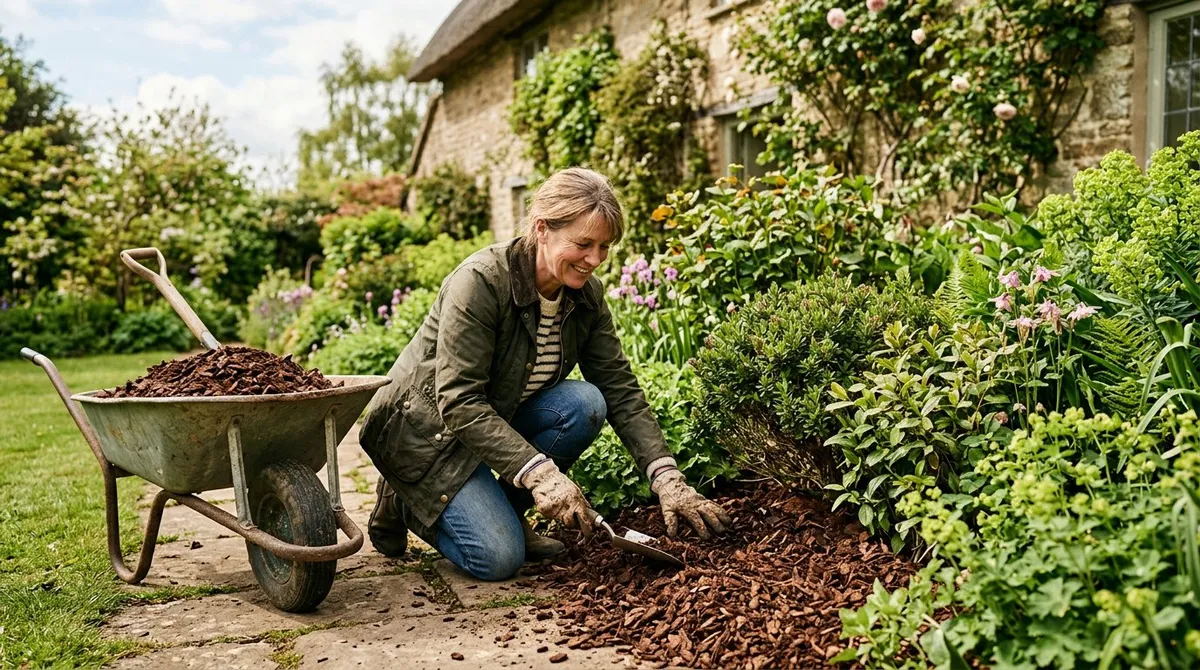
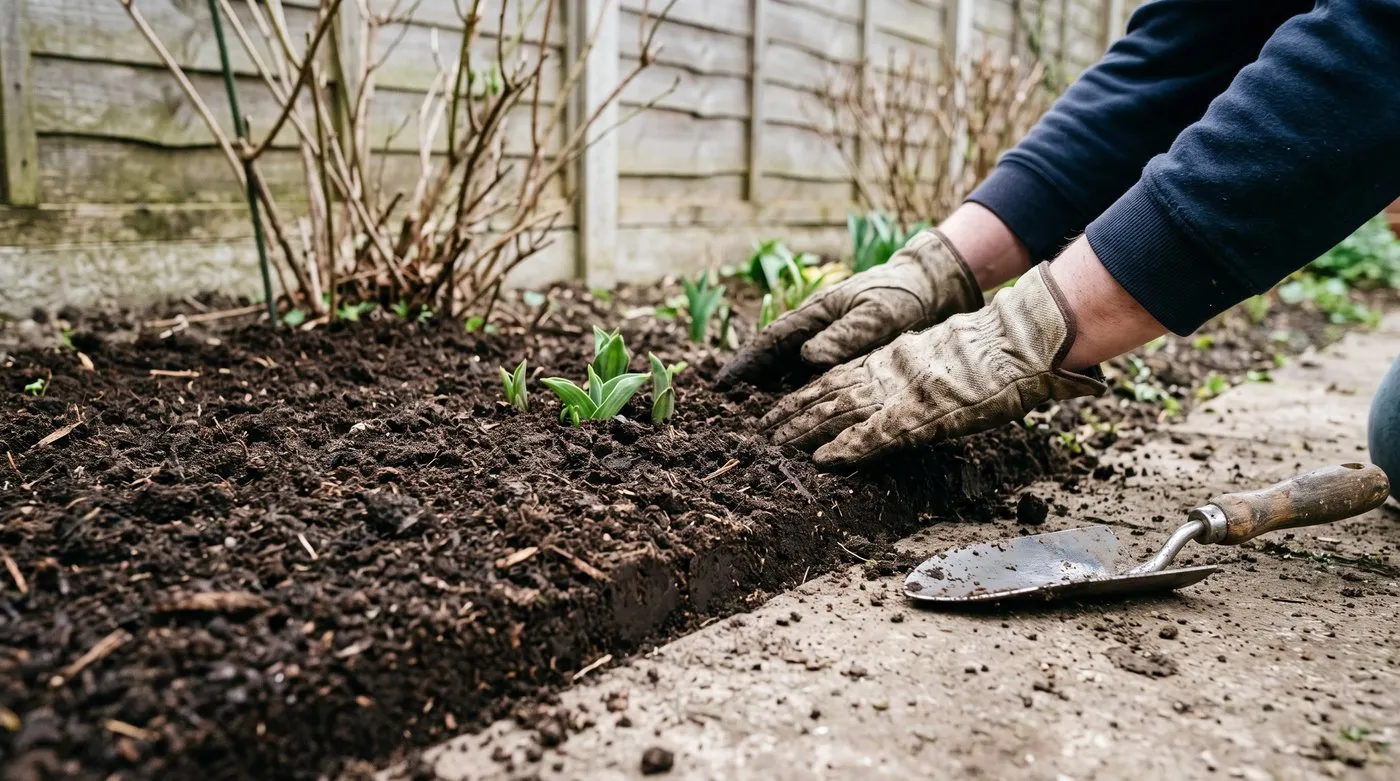 Illustrative image: a mulch layer about 5cm deep, the minimum Monty swears by. Thinner than this and weeds push straight through.
Why is Monty Don’s advice worth following?
Monty Don has been the face of Gardeners’ World since 2003. He took a break after a minor stroke in 2008 and came back in 2011, when the programme moved to his own garden. That garden is Longmeadow in Herefordshire, which he and his wife Sarah began making from a neglected field in 1991.
 Monty Don at RHS Chelsea in May 2017. Photo: “Monty Don at the Chelsea Flower Show” by Mark, via Wikimedia Commons, CC BY 2.0, resized.
He gardens organically, and has done officially since 1997. He was President of the Soil Association for ten years. In 2022 he won the RHS Victoria Medal of Honour, the RHS’s highest award.
The real reason his tips work is that he worked them out on heavy clay that floods. If something copes at Longmeadow, it’ll cope in most UK gardens. His monthly notes also admit when things go wrong. In 2024, floods forced him to dig up his whole Long Walk.
Monty Don’s 15 best gardening tips, ranked
These are ranked by impact: the first few change your whole garden, the later ones fix a single job. Each tip quotes Monty, then shows how to do it.
1. Mulch at least 5cm deep, every year
Mulching is Monty’s number one job. On Gardeners’ World he said a mulch “should be spread thickly enough, 2 inches (5cm) as a minimum. It is a waste of time if thinner.”
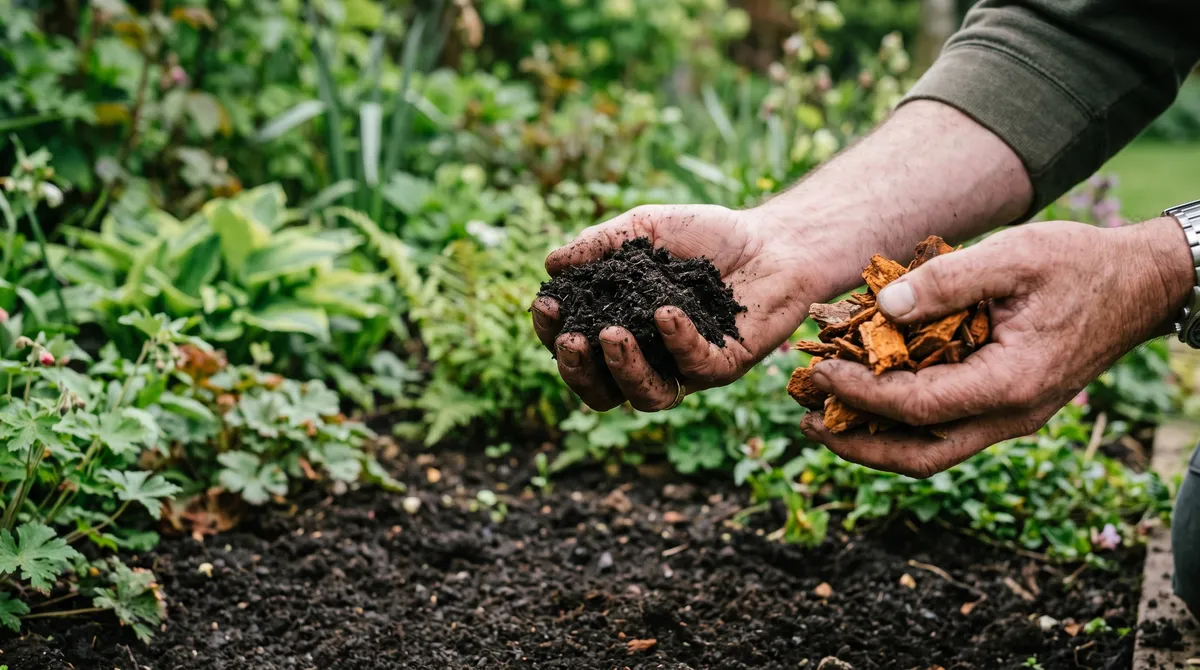
A thick mulch blocks light to weed seeds, stops the soil drying out and feeds the worms. At Longmeadow he mostly uses mushroom compost on his heavy clay, but home-made compost and bark chips work too. He warns against mushroom compost that contains peat, so check the bag.
His cleverest trick is for big gardens. In his January notes he says to mulch half the garden thoroughly each year. That beats mulching all of it thinly. Mulch borders in late winter, before bulbs push through. Not sure of the difference? Our guide to whether mulch is the same as compost sorts it out.
2. Go completely peat-free
Monty has campaigned against peat for decades. On his blog he wrote that ripping up peat “by the thousands of tons” actively increases global warming. A peat bog can take a year to grow a single millimetre. As he puts it, “No garden is worth that.”
His advice is simple: “Check before you buy and only purchase composts that are clearly labeled Peat-Free.” He uses peat-free compost for everything, from tomato seed to dahlia tubers and cuttings.
Peat-free mixes behave a little differently. They can look dry on top while staying wet underneath, so check with a finger before watering. Our peat-free compost guide covers the best types for seeds, pots and borders.
3. Turn every fallen leaf into leafmould
“Every fallen leaf is potential leafmould,” says Monty. It’s free, it’s the best thing for potting mixes and mulches, and it saves trips to the tip.
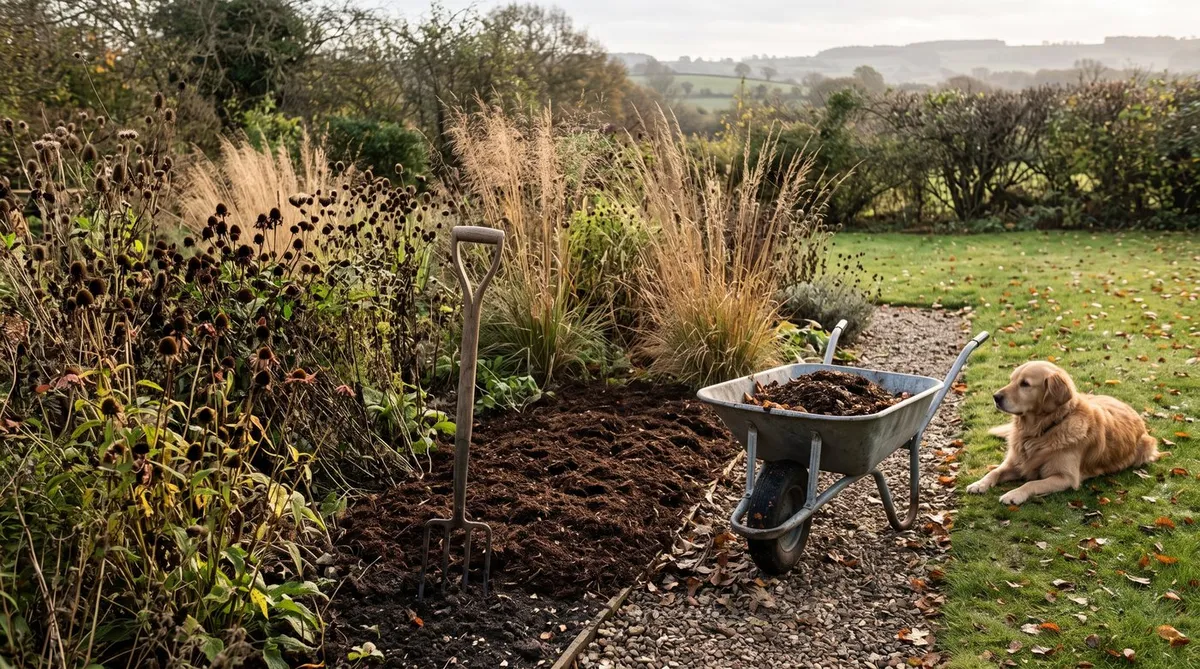
His method takes minutes. Run the mower over fallen leaves on the lawn to chop them up. Tip them into an open heap, or a simple bay made from four posts and chicken wire. Do it early in autumn, then leave it for a year or two.
He mixes last year’s leafmould 50:50 with garden compost to mulch hellebores and spring perennials. Sieved leafmould also goes into his home-made seed and potting compost. Find the full method in our guide to making leaf mould.
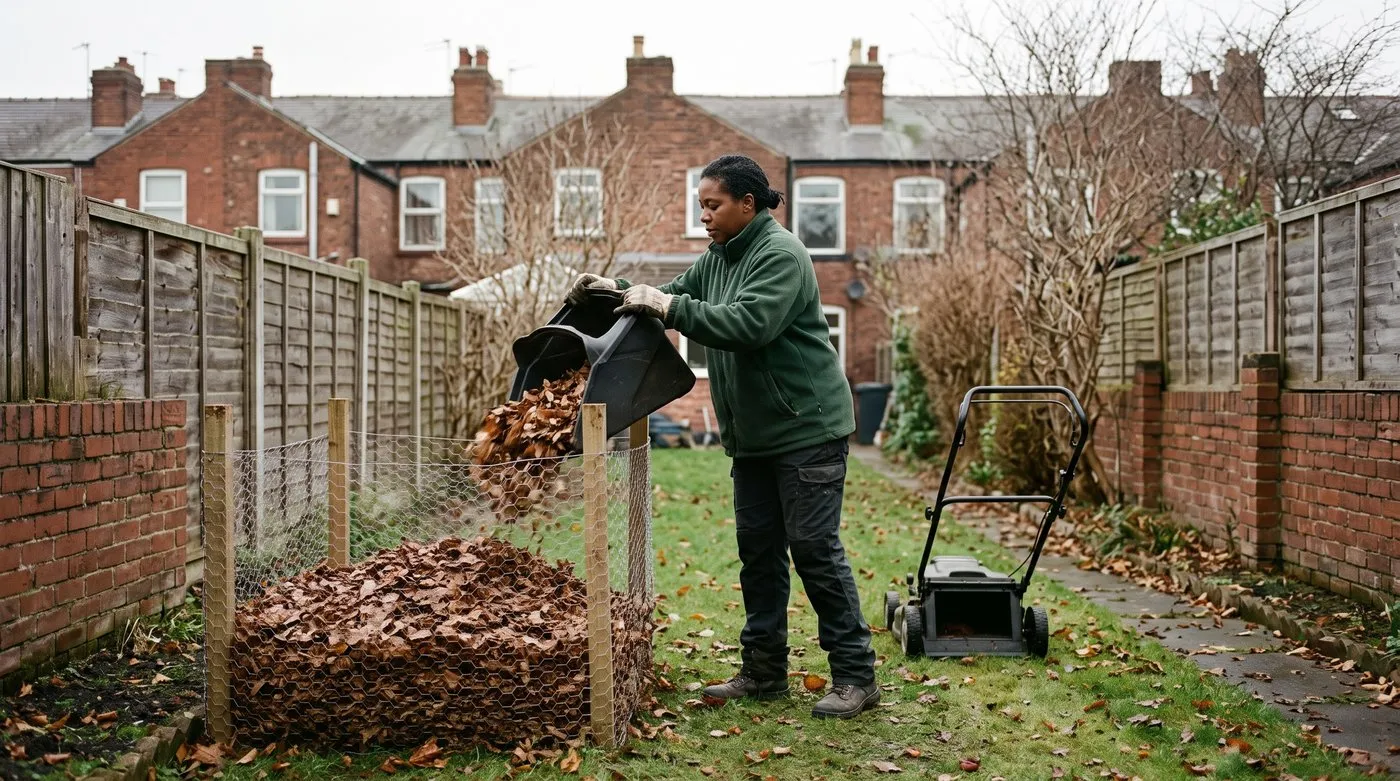 Illustrative image: mowing leaves first chops them up, so they rot down into leafmould far faster.
4. Feel the soil before you sow anything
Monty sows by the feel of the soil, not by the date on the packet. In his March notes he explains the test: “If it feels warm, holds together when squeezed and yet can easily be crumbled then it is ideal.” If it feels cold and clammy, wait.
He’s also very relaxed about being late. “Being too soon with seed sowing is usually more likely to lead to problems than being too late,” he writes. “A healthy plant will always catch up if put in a little late.”
This one tip saves a lot of rotted seed and sulking seedlings. It’s also why his outdoor sowing often starts later than the packets suggest, especially on cold, wet soil.
5. Plant tulips late and deep
Monty plants tulips in November, and goes as deep as he can. For permanent planting he aims for about 30cm (12in), which gives stronger, straighter stems. He’ll keep planting right up to Christmas and even into January.
Waiting until November means the soil is cooler, which cuts the risk of tulip fire disease. Good drainage matters most of all, so he adds grit to heavy soil and to potting compost.
In pots he layers bulbs like a “tulip lasagne”: earliest varieties at the bottom, then mid-season, then late. That way one pot flowers for weeks. Our guide to growing tulips has the best varieties for coming back each year.
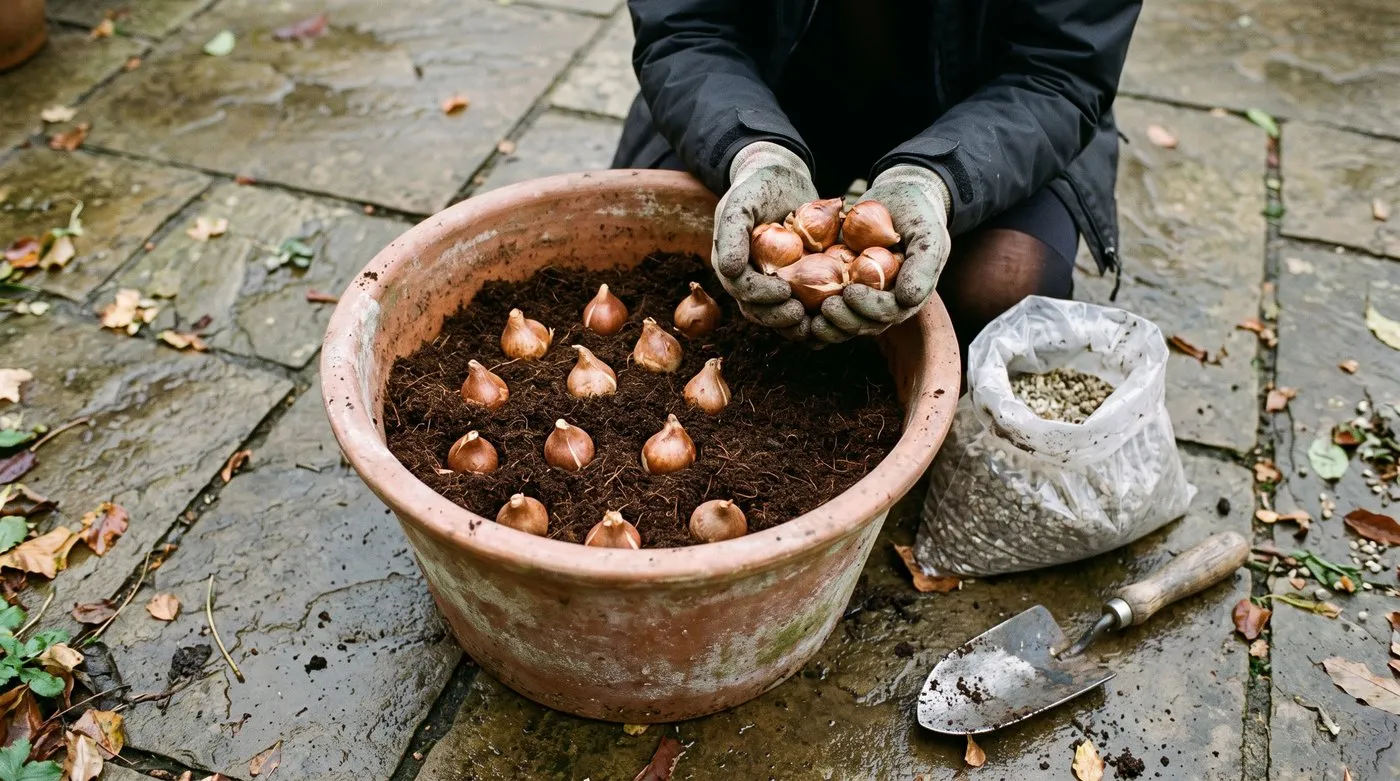 Illustrative image: bulbs go in pointed tips up. In a lasagne pot, cover each layer with compost before adding the next.
6. Leave bulb leaves alone until they’ve gone yellow
Don’t cut, tie or tidy daffodil and tulip leaves after flowering. Monty’s rule is to “leave them until the last trace of green has gone - which will be at least June.”
The leaves are feeding next year’s flowers. Knotting them up or cutting them early is one of the commonest reasons daffodils go “blind” and stop flowering.
He does snap off the faded tulip flower and its seed pod. That way the plant puts its energy back into the bulb. For pots, he waters tulips weekly while they’re growing strongly.
7. Deadhead dahlias by shape, not by size
Monty’s trick for dahlias: buds are round, spent flowers are pointed. Once the petals drop, a spent head becomes “pointed and a cone shape,” while a new bud stays rounded like a ball.
Cut each spent head back to the next side shoot, even if that leaves a long stem. Do it every few days and dahlias will keep flowering until the first frost. He leaves dahlias in the ground until frost blackens the leaves, then lifts them.
To store them, he cuts the stems to about 15cm and dries the tubers upside down for a few days. Then he keeps them in dry compost somewhere cool and frost-free. Our dahlia growing guide covers this step by step.
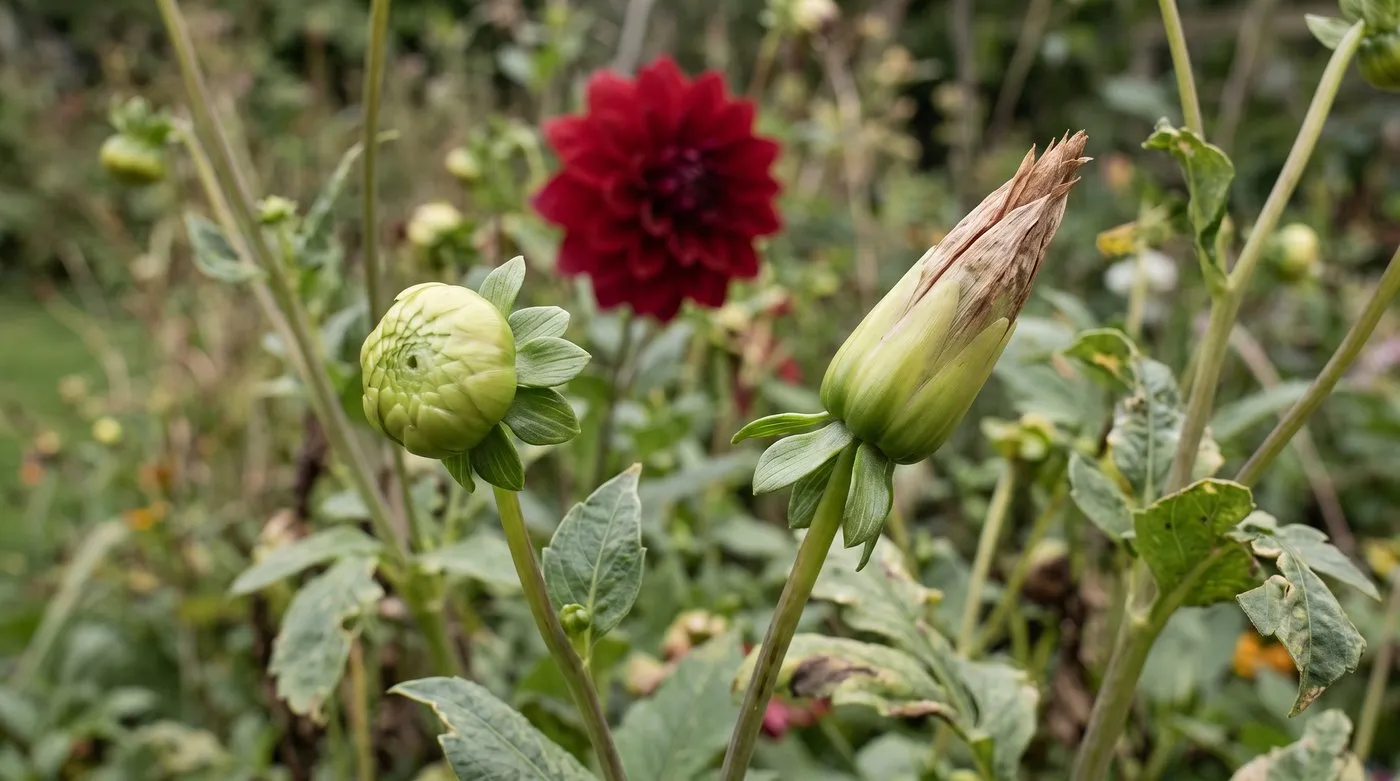 Illustrative image: the round bud on the left will flower. The pointed cone with a papery tip on the right is finished, so snip it off.
8. Do the Chelsea chop on half a clump
In late May, Monty cuts about half of a clump back by half its height. This is the Chelsea chop, named after the show that runs that week. He uses it on heleniums, sedums, lysimachia and solidago.
The cut stems flower a few weeks later and on shorter, sturdier stalks. The uncut half flowers as normal. Together they stretch the display well into autumn, with less flopping.
For a single big clump, he cuts back a third rather than half. Our Chelsea chop guide lists which perennials respond best.
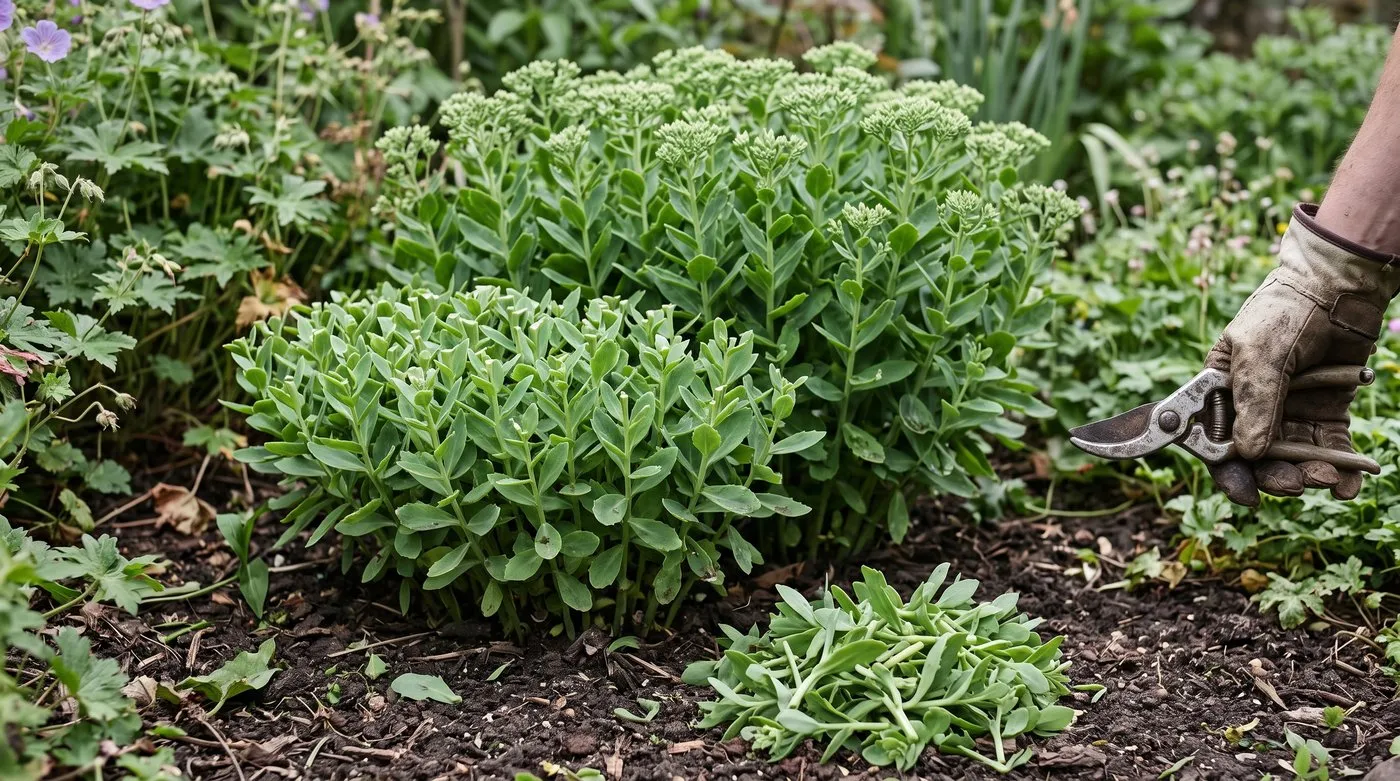 Illustrative image: half the clump chopped, half left alone, so it flowers in two waves.
9. Let the grass grow and mow paths through it
Monty’s advice is to “mow as little as possible.” He cuts paths and lets the rest grow long, full of bulbs and wildflowers. It takes minutes and looks lovely.
His one firm rule: “Nothing should be cut at all until after the longest day on June 21st.” That gives bulb leaves time to die back and flowers time to seed. In late July or August he cuts the long grass right down. Then he rakes up “every last piece” for the compost heap.
Raking off the clippings keeps the soil poor, which helps wildflowers beat the grass. After that first big cut, he keeps it short until winter. Our wildflower meadow guide shows how to start one in a normal lawn.
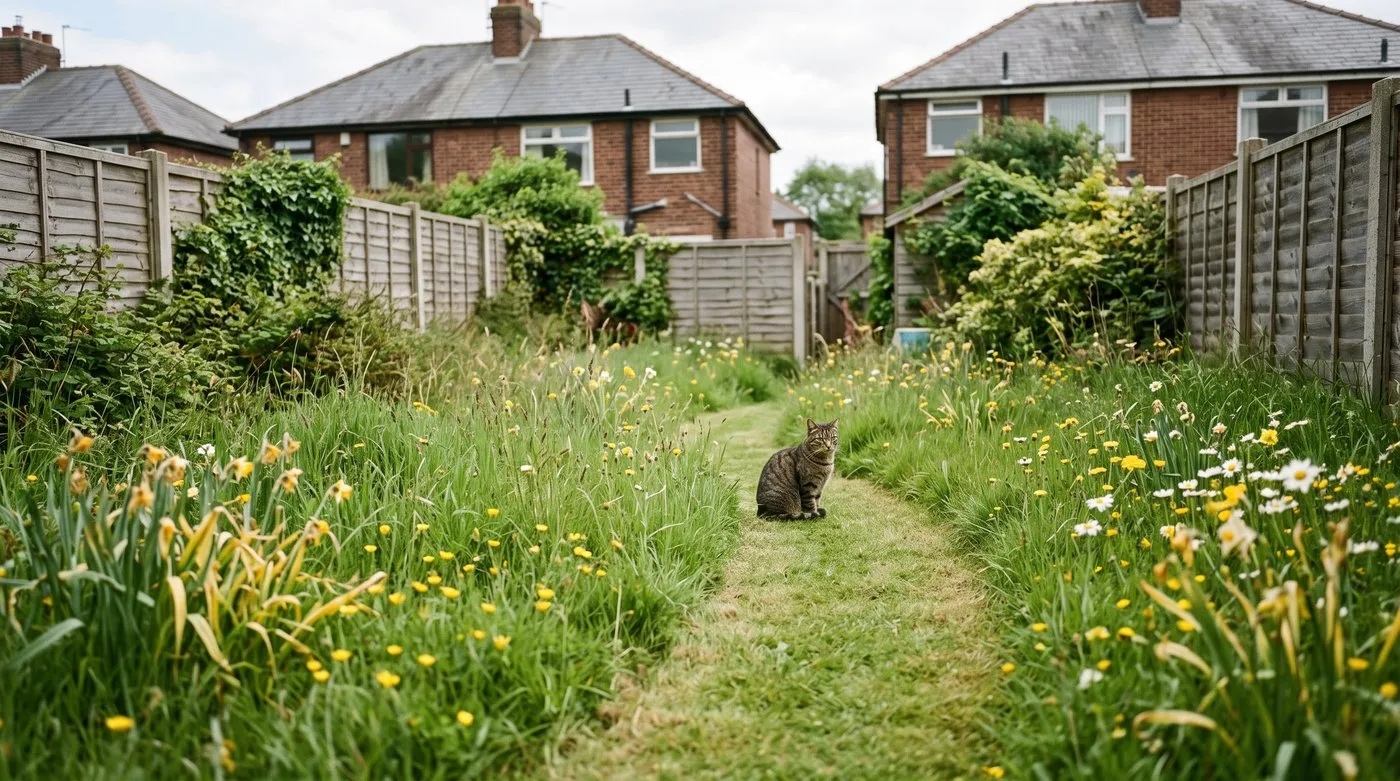 Illustrative image: one mower-width path through long grass. Leave the rest until after 21 June.
10. Feed the soil, not the plant
Monty feeds the soil with compost and mulch, not the plants with fertiliser. Over-feeding makes soft, sappy growth, and that’s exactly what slugs love.
His slug plan uses no pellets at all. Raise tender seedlings somewhere slug-free, like a cold frame or raised table, and check for slugs daily. Grow plants “hard” by avoiding sudden changes in temperature. Then give frogs, toads, beetles, thrushes and hedgehogs places to live.
He does feed pots, though. Containers get a weekly high-potash feed such as liquid seaweed or comfrey in summer. “Never be tempted to make the feed any stronger than the instructions dictate,” he warns. Read more in our guide to feeding the soil, not the plant.
11. Plant bare-root in a wide, shallow hole
For trees, shrubs and hedges, Monty digs wide rather than deep. His March notes describe a hole about 23cm (9in) deep, with the subsoil loosened. He adds no compost or soil improver to the hole.
He dusts mycorrhizal fungi over the roots, plants slightly proud of the soil and firms it into a gentle mound. Then he waters generously and mulches thickly with good compost on top.
Bare-root plants are cheaper and come in more varieties, but they must go in while dormant. Plant deciduous ones any time from October to mid-March, when the ground isn’t frozen or waterlogged. Never let the roots dry out. Our guide to planting a bare-root tree walks through it.
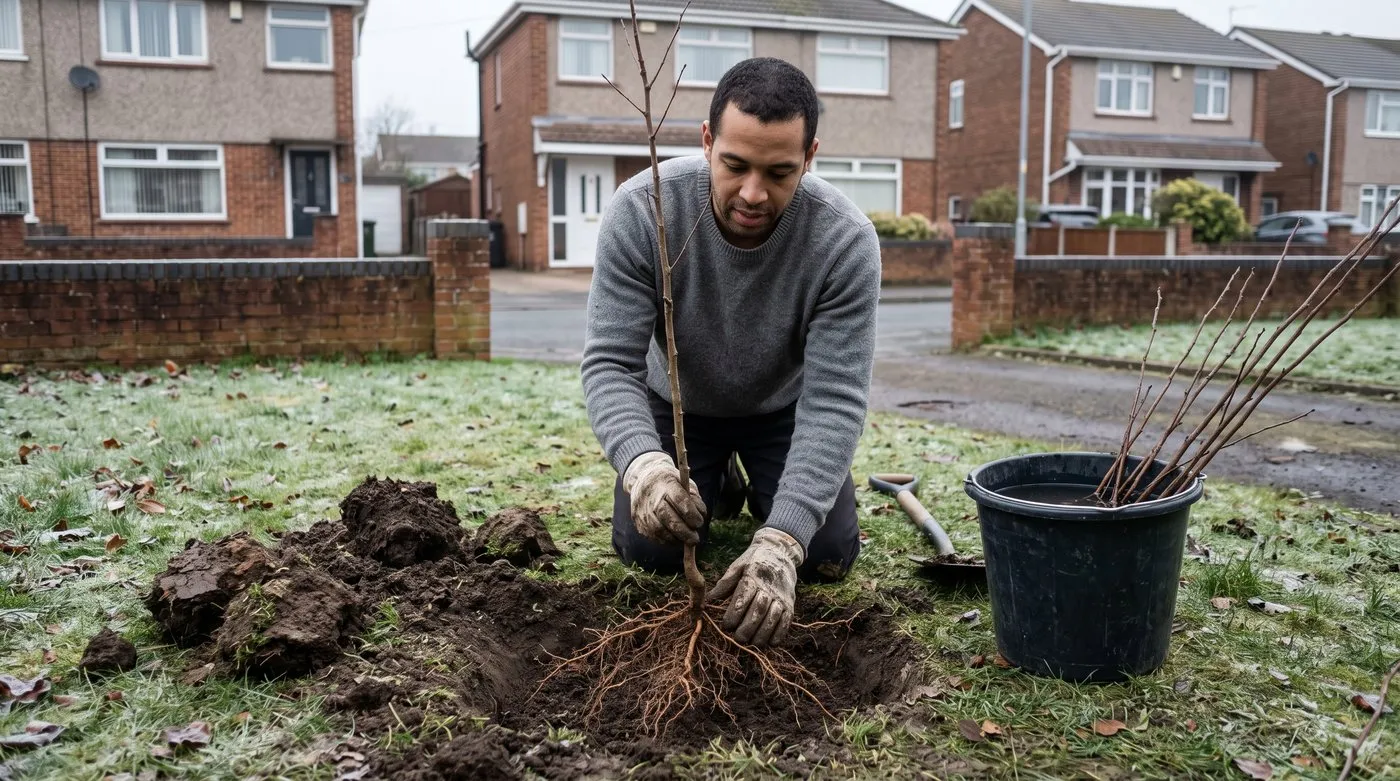 Illustrative image: a wide, shallow hole with the roots spread out. The compost goes on top as a mulch, not in the hole.
12. Sow sweet peas in October
Monty sows sweet peas in autumn for stronger, earlier plants. He puts three seeds in each 8cm (3in) pot or root trainer, using potting compost rather than seed compost.
Once the first leaves show, the pots move to a cold frame or sheltered spot. No heat is needed. As he puts it, “They only need protection from hard frosts, mice and becoming sodden.”
The plants go out in April, two or three per support, into soil enriched with compost. He sows a second batch in February for later flowers. Our guide to sowing sweet peas in autumn covers the timings.
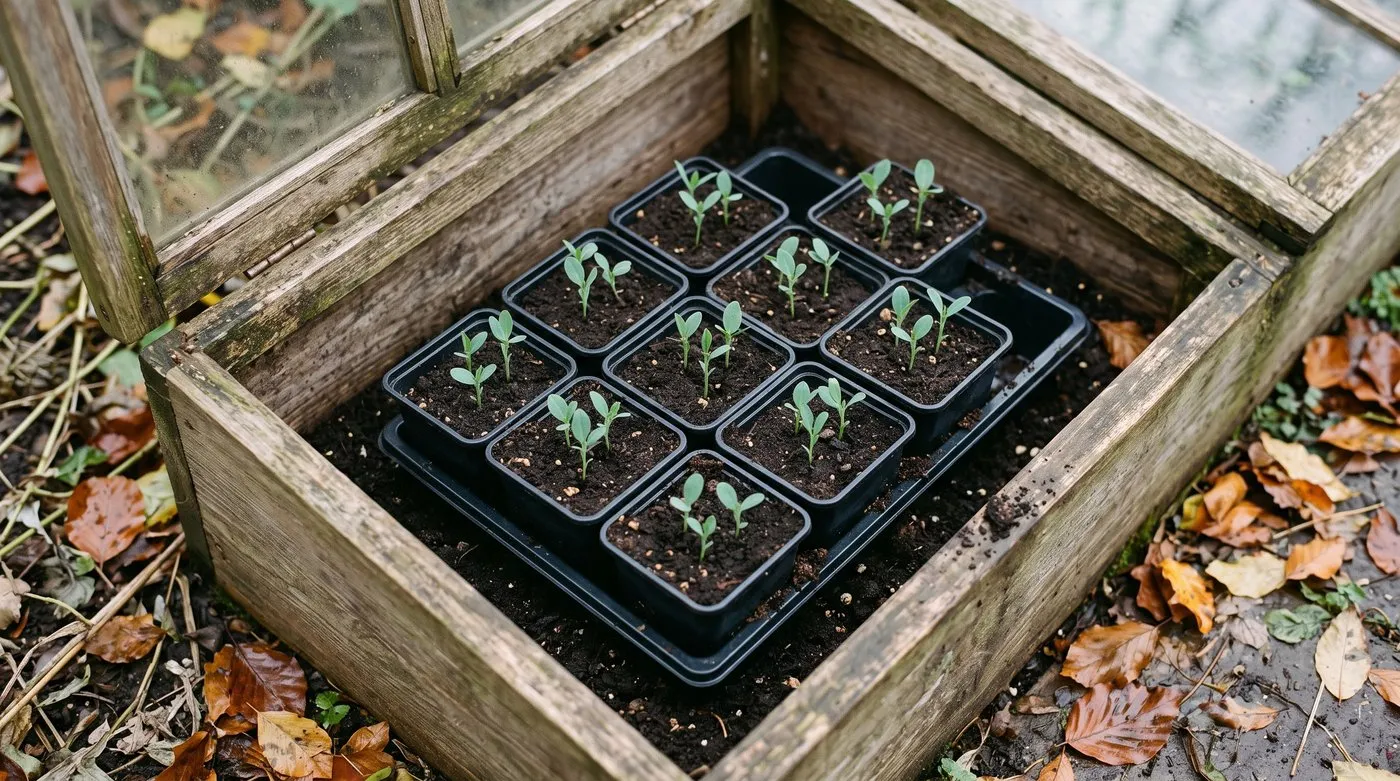 Illustrative image: three sweet pea seedlings to a small pot, kept cool in a cold frame over winter.
13. Prune to something, and if in doubt, don’t
Monty’s pruning rules fit in three lines. “Always cut back to something,” meaning a bud, leaf or side shoot. “Never paint over pruning wounds as this seals in potential disease.” And for fruit trees: “If in doubt about any of this - don’t cut. Wait.”
He also prunes at the right time for each plant. Late-flowering Group 3 clematis are cut hard from mid-February to about 60cm, leaving two pairs of healthy buds. Early clematis like montana are pruned straight after flowering, in late May.
Lavender gets cut back as soon as the flowers fade. Always leave some green shoots, because it often won’t regrow from bare wood. Our clematis pruning guide explains the three groups.
14. Leave some mess for wildlife
Monty leaves leaf drifts, log stacks and prunings under hedges all winter. They shelter hedgehogs, frogs, small mammals and insects. In spring he tidies carefully so he doesn’t disturb anything still waking up.
He also leaves seedheads and sturdy stems standing for winter shape and for birds. He bundles buddleia prunings in a corner for wildlife.
Ponds get the same gentle treatment. When he clears pond weed, he leaves it on the edge for a while. That gives the creatures in it time to crawl back into the water. On the programme he has said the wildlife matters more to him than perfect water lilies. See our guide to a hedgehog-friendly garden for more ideas.
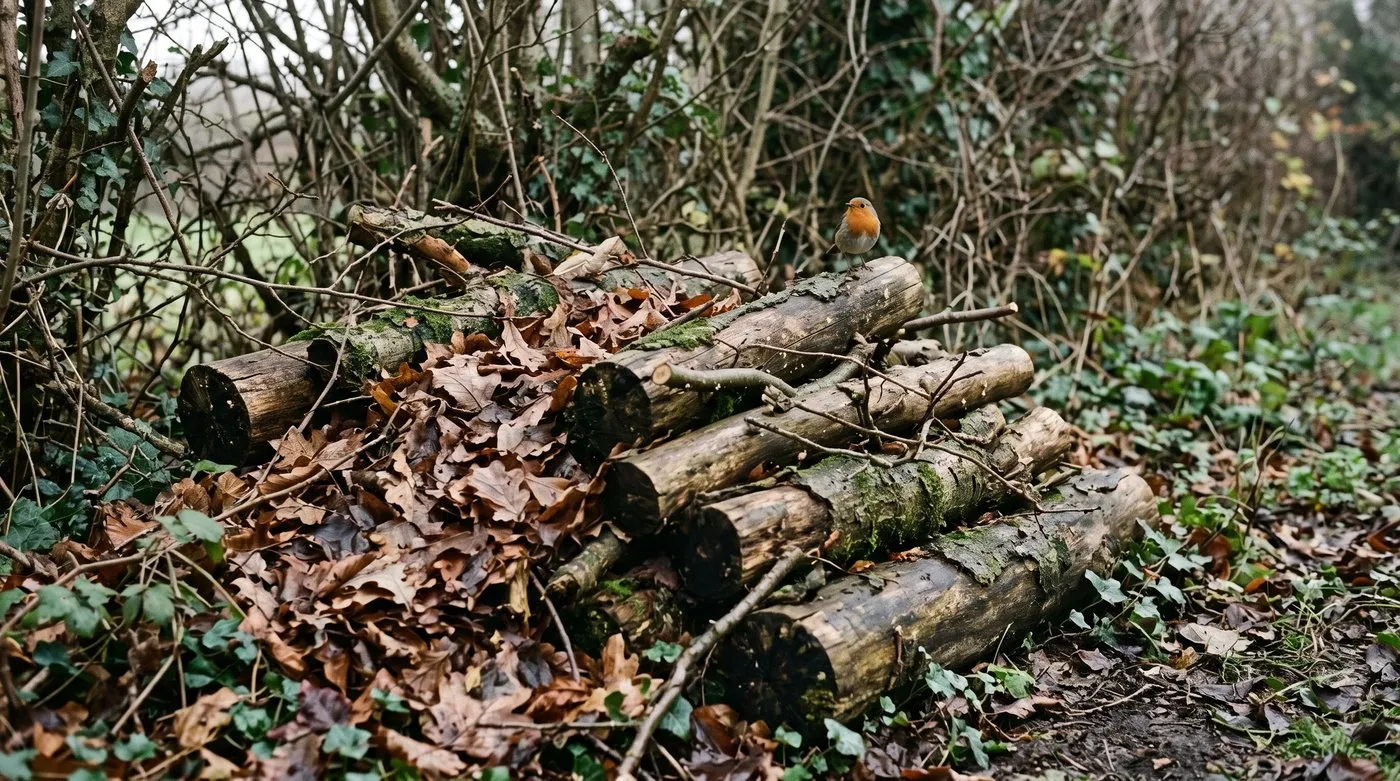 Illustrative image: an untidy corner under a hedge is winter shelter for hedgehogs, frogs and insects.
15. Save seed in paper, never plastic
Monty collects seed in brown paper envelopes, “NOT a plastic bag.” Plastic traps moisture and the seed goes mouldy.
He snips seed heads straight into A5 envelopes and labels each with the date, plant name and where it grew. After a week or two he sieves and cleans the seed. Then it goes into sealed packets somewhere cool and dry. For long-term storage, a lidded tub in the fridge works well.
It’s a lovely, free way to get more plants. Aquilegias, poppies, nigella and sweet peas are easy to start with. Our seed saving guide covers which seeds come true.
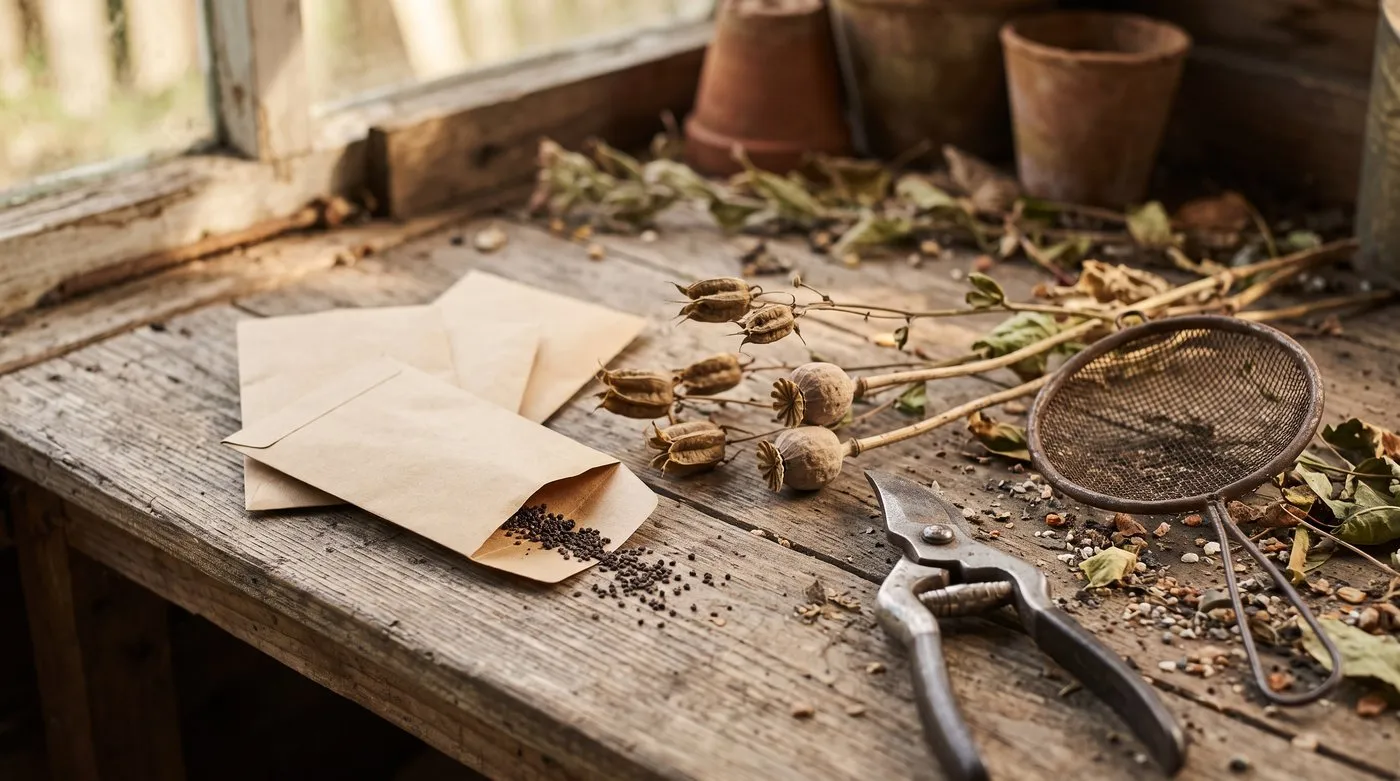 Illustrative image: paper envelopes let seed dry out properly. Plastic bags make it sweat and rot.
Monty Don’s tips at a glance
Use this table to pick the tips that suit your garden and your time. The quick wins are near the top.
| Tip | When to do it | Time it takes | Best for |
|---|---|---|---|
| Mulch 5cm deep | January to March | An afternoon | Every garden, especially heavy clay or dry soil |
| Go peat-free | Every time you buy compost | None | Everyone |
| Make leafmould | October to November | 20 minutes | Gardens with trees nearby |
| Plant tulips deep | November to early January | An hour | Borders and pots |
| Deadhead dahlias | July to October | 5 minutes a few times a week | Late summer colour |
| Chelsea chop | Late May | 10 minutes | Borders that flop |
| Long grass and mown paths | April to August | Saves time | Lawns, wildlife gardens |
| Bare-root planting | October to mid-March | An hour per tree | Hedges, trees, roses |
| Sow sweet peas | October and February | 30 minutes | Cut flowers |
| Save seed | August to October | 10 minutes | Saving money |
Monty Don’s gardening year, month by month
This calendar pulls together the jobs Monty sets each month on his website. Timings suit Longmeadow in Herefordshire, so go a week or two earlier in the south and later in the north.
| Month | Monty’s key jobs |
|---|---|
| January | Mulch borders before bulbs emerge. Finish winter pruning of apples and pears. Sow early salads under cover on a heated mat |
| February | Prune Group 3 clematis and buddleia. Cut back deciduous grasses. Chit potatoes. Sow tomatoes and chillies indoors |
| March | Divide perennials every three to five years. Plant bare-root shrubs. Pot up dahlia tubers. Feel the soil before sowing outside |
| April | Plant out autumn-sown sweet peas. Plant first early potatoes. Put in plant supports before they’re needed |
| May | Do the Chelsea chop. Prune early clematis after flowering. Plant out tender annuals by mid-May after hardening off |
| June | Pinch out tomato side shoots in the morning. Thin apples to two per cluster. Leave long grass until after 21 June |
| July | Summer-prune apples and pears. Cut back oriental poppies and early geraniums for a second flush. Lift garlic with a fork |
| August | Cut long grass and rake it all up. Trim hedges now birds have fledged. Prune lavender. Order spring bulbs |
| September | Plant hardneck garlic. Move perennials while you can see them in flower. Take semi-ripe cuttings |
| October | Make leafmould. Sow sweet peas. Bring tender plants under cover. Prune climbing roses |
| November | Plant tulips deep. Lift dahlias after frost. Take hardwood cuttings. Feed the birds |
| December | Finish tulips by Christmas. Sharpen and clean tools. Sow onion, chilli and tomato seed on Boxing Day |
Gardener’s tip: Monty sows a few seeds every Boxing Day. He admits it’s as much a symbol of the year ahead as anything practical. That’s exactly why it’s worth doing.
Monty Don tips people often get wrong
Most of these mistakes come from doing too much, too soon. Monty’s approach is usually calmer and later than people expect.
- Spreading mulch too thin. A scattering of compost just feeds the weeds. Go 5cm deep, or do half the garden properly this year and the other half next year.
- Tidying bulb leaves. Cutting or knotting daffodil leaves in April starves next year’s flowers. Wait until they’ve completely yellowed, which is usually June.
- Cutting long grass in May. Mowing a meadow patch too early cuts off the seeds and the bulb leaves. Hold off until after 21 June.
- Adding compost to planting holes. For bare-root trees and shrubs, Monty leaves the hole plain. The compost goes on top as a mulch.
- Scattering seed “any old how”. Monty told BBC Breakfast that scattered seed becomes “survival of the fittest”. Sow thinly in rows or plugs instead, then thin.
- Painting pruning cuts. It seals in disease. A clean cut with sharp tools heals itself.
Warning: Check compost bags for peat, including mushroom compost and some bagged manures. “Peat-reduced” still contains peat.
Where to find more of Monty Don’s advice
Monty’s own website is the best free source of his advice. The Tips and Advice section of montydon.com has his monthly jobs, and The Garden page describes each area of Longmeadow. Every quote in the month-by-month table above comes from those notes.
For video, the official Gardening With Monty Don channel on YouTube shares clips from his TV series. Gardeners’ World episodes are on BBC iPlayer. He also writes a column for Gardeners’ World Magazine and posts from the garden on Instagram as @themontydon.
His books are where the advice goes deepest. Here’s which to pick:
| Book | Best for | Why pick it |
|---|---|---|
| The Gardening Book (2023) | Beginners | His most beginner-friendly guide, built around planning a garden like choosing a recipe |
| The Complete Gardener (updated 2021) | Anyone wanting one reference | A full organic guide to every part of the garden |
| Down to Earth (2017) | Keen gardeners short on time | Decades of tips boiled down into short, wise chapters |
| Gardening at Longmeadow (2012) | Fans of the programme | How each part of Longmeadow was made and is looked after |
| The Jewel Garden (2004) | A good read | The story of Monty and Sarah making the garden after their business closed |
The full list is on the books page of his website.
What happens now Monty Don is leaving Gardeners’ World?
Monty announced on 8 September 2026 that his current series of Gardeners’ World would be his last. He filmed his final visit to Longmeadow on 8 October 2026, posting a photo of the crew packing up in the Jewel Garden.
The BBC hasn’t named a new lead presenter. Regular presenters Frances Tophill and Adam Frost are the names most often mentioned. The programme may also move to a shared team.
Longmeadow is a private garden and isn’t opening to visitors. For what’s known about its future, read our guide to Longmeadow after Gardeners’ World.
Frequently asked questions
What is Monty Don’s best gardening tip?
Mulch thickly, at least 5cm deep, every year. He says a thinner layer is a waste of time. A good mulch smothers weeds, holds water and feeds the worms. It saves more work than any other single job.
Does Monty Don use peat compost?
No, he has been peat-free for decades. He has written that digging peat adds to global warming and that no garden is worth it. He tells gardeners to buy only bags clearly labelled peat-free.
How deep does Monty Don plant tulips?
As deep as he can, often around 30cm (12in) in open ground. Deep planting gives sturdier stems and helps tulips come back. For a one-season display, he says an inch or two deep is enough.
When does Monty Don cut his long grass?
Not until after the longest day, 21 June. That lets bulb leaves die back and flowers set seed. He then cuts it short in high summer and rakes up every clipping so the soil stays poor.
Does Monty Don have a YouTube channel?
There’s an official Gardening With Monty Don channel. It shares clips from his TV series. His own notes and monthly jobs are on montydon.com, and he posts from Longmeadow on Instagram as @themontydon.
Which Monty Don book is best for beginners?
The Gardening Book (2023) is the most beginner-friendly. Pick The Complete Gardener for an all-in-one organic reference. Down to Earth is the short, wise one to keep by the back door.
When is Monty Don’s last Gardeners’ World?
His final series ends in autumn 2026. He announced it on 8 September 2026 and filmed his final Longmeadow visit on 8 October. The BBC hasn’t named a new lead presenter yet.
Now you’ve got Monty’s best tips, start with the biggest one. Read our guide to making leaf mould and get this autumn’s leaves working for you, or browse more how-to guides.
Our team produces practical UK gardening guidance from source research, contributor records and established horticultural practice. Editorial standards are overseen by Matt W.