Key takeaways
- Autumn onion sets crop in June to July, 4 to 6 weeks before spring-planted onions
- Plant late September to late October, early November in the far south, tips just showing
- Use only heat-treated overwintering varieties: 'Senshyu', 'Radar', 'Electric', 'Autumn Champion'
- Space sets 10cm apart in rows 25 to 30cm apart on free-draining ground
- Bulbs stay smaller and store poorly, so eat them fresh and grow maincrop onions to store
Autumn onion sets give you the earliest onion harvest of the year. Plant these overwintering onions in October and you can be pulling ripe bulbs in June, a good 4 to 6 weeks before spring-planted sets are ready. They fill the hungry gap in early summer, use beds that would otherwise sit empty over winter, and ask for very little once they are in.
What makes autumn onion sets crop so early
Autumn onion sets are small immature bulbs of special overwintering varieties, planted in autumn to grow through winter and mature the following early summer. The head start is the whole point. A spring-planted set begins from cold in March. An autumn set has already rooted and settled before winter, so it explodes into growth the moment days lengthen and soil warms.
The varieties themselves are the other half of the trick. Nearly all reliable autumn sets are Japanese-type onions, bred for short winter days and long spring days. They belong to a group tuned to the UK photoperiod, so they know when to bulb. Ordinary maincrop onions cannot read the seasons the same way and simply bolt or sulk if planted in autumn.
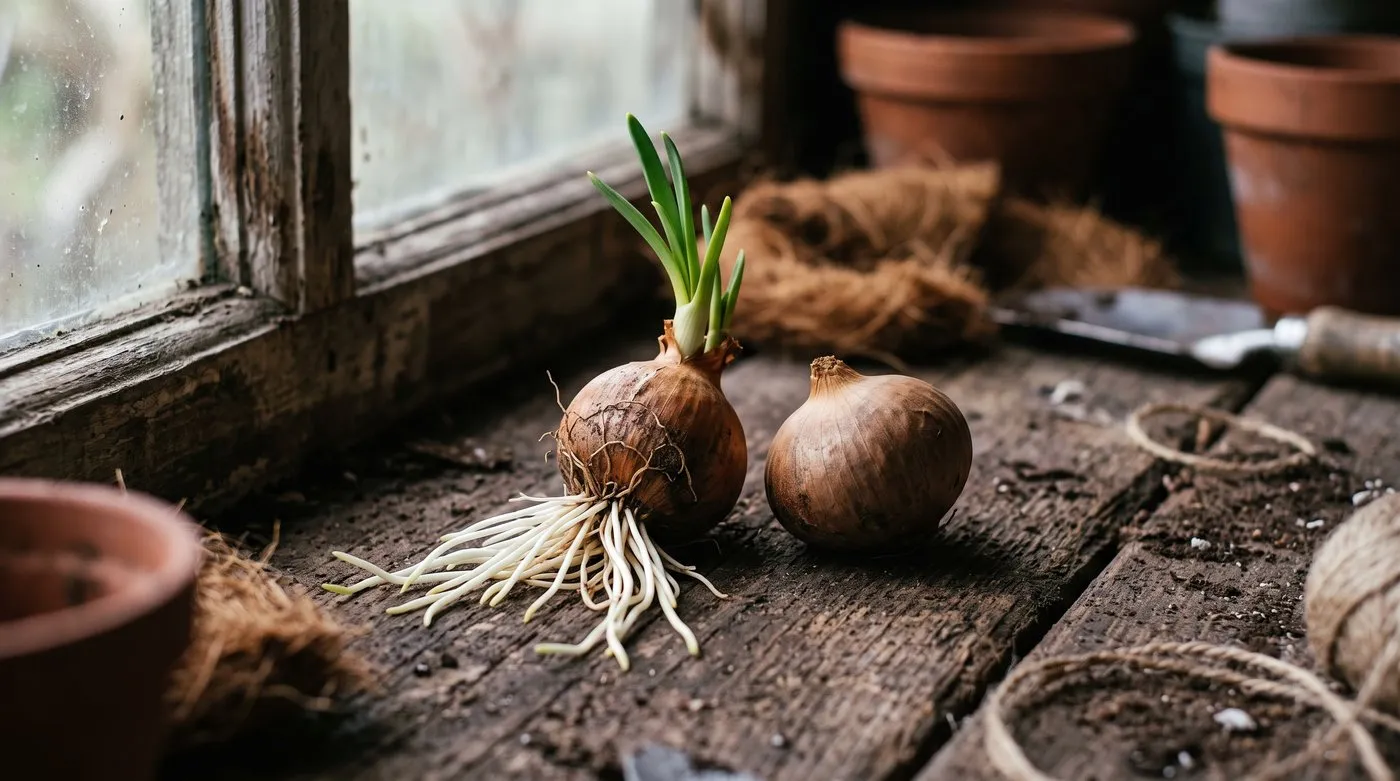 The head start explained: the autumn set roots and settles before winter, so it bulbs weeks earlier than a spring set starting from cold in March.
Why heat treatment stops autumn onions bolting
Bolting is the biggest failure with overwintering onions, and the science explains how to avoid it. Inside every onion set sits a tiny dormant flower embryo. If the set experiences a spell of warmth, then a prolonged cold snap, that embryo is triggered to develop. The plant runs to seed instead of forming a bulb.
Good autumn sets are heat-treated by the grower. They are held at around 30 to 35C for several weeks, which kills that flower embryo. The set can then go through a UK winter without being tricked into flowering. This is why you must buy sets sold specifically for autumn planting.
Warning: Never plant ordinary spring or storage onion sets in autumn. They are not heat-treated, carry a live flower embryo, and most will bolt to seed after a cold winter rather than form a bulb.
Best overwintering onion varieties for UK gardens
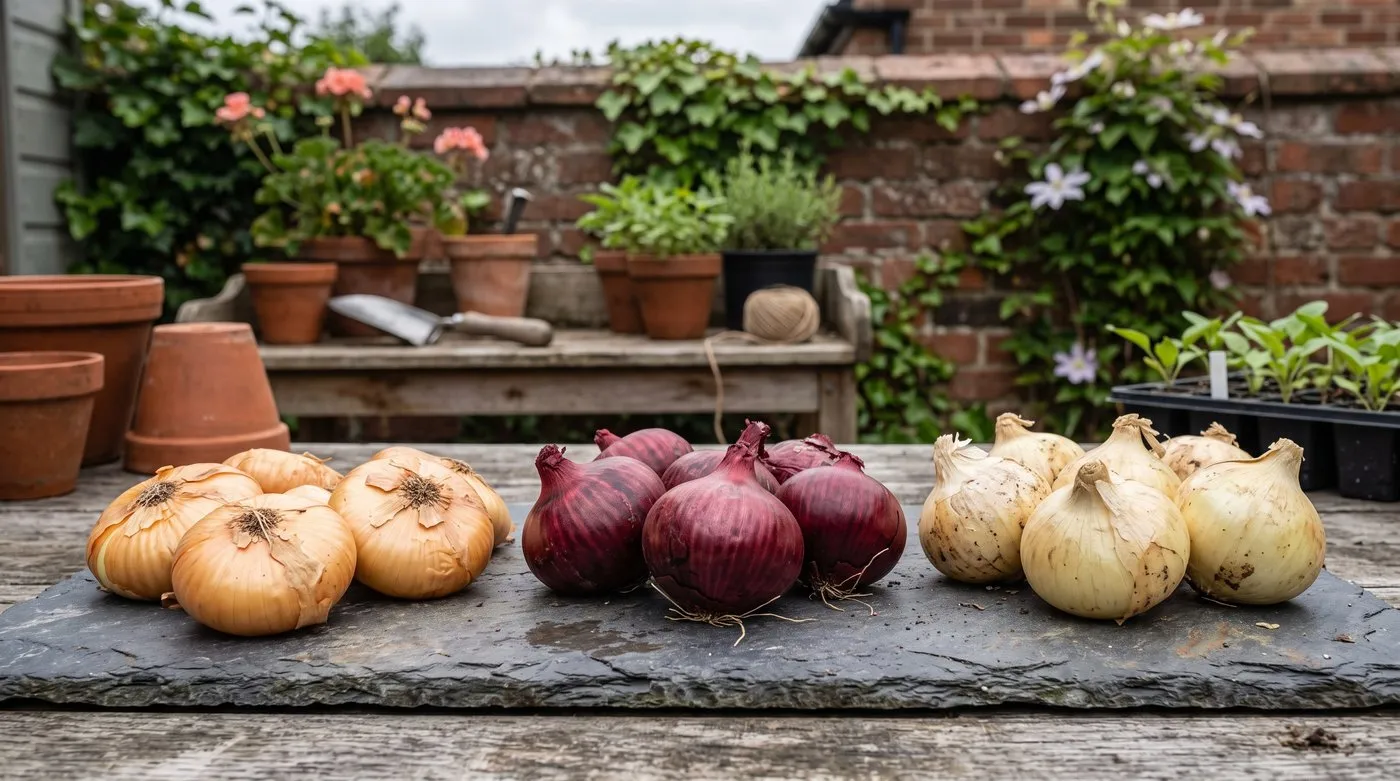 Left to right: flat-round ‘Senshyu’, red-skinned ‘Electric’ and the rounder ‘Autumn Champion’. The reds bolt slightly more but bring colour to an early crop.
When to plant autumn onion sets in the UK
Timing is the make-or-break decision, and the window is narrower than most catalogues admit. The sets need long enough to root and make a little top growth before hard winter, but not so long that they bulb up or grow large enough to bolt.
How to plant autumn onion sets step by step
Planting is quick once the bed is right. The single biggest factor is drainage, so most of the effort goes into the ground, not the sets.
- Choose the sunniest, best-draining bed you have. Full sun and free-draining soil are essential. Onions rot in cold, wet ground, so on heavy clay a raised bed is worth the effort, both for drainage and for the extra warmth it holds.
- Improve the drainage. Fork in coarse grit or sharp sand if your soil is heavy. Do not add fresh manure or rich compost now, as it encourages soft growth that rots. A bed limed and manured for a previous crop is ideal.
- Firm the soil. Tread the bed and rake it level. Onions like firm ground under them. Loose, fluffy soil lets frost heave lift the sets out.
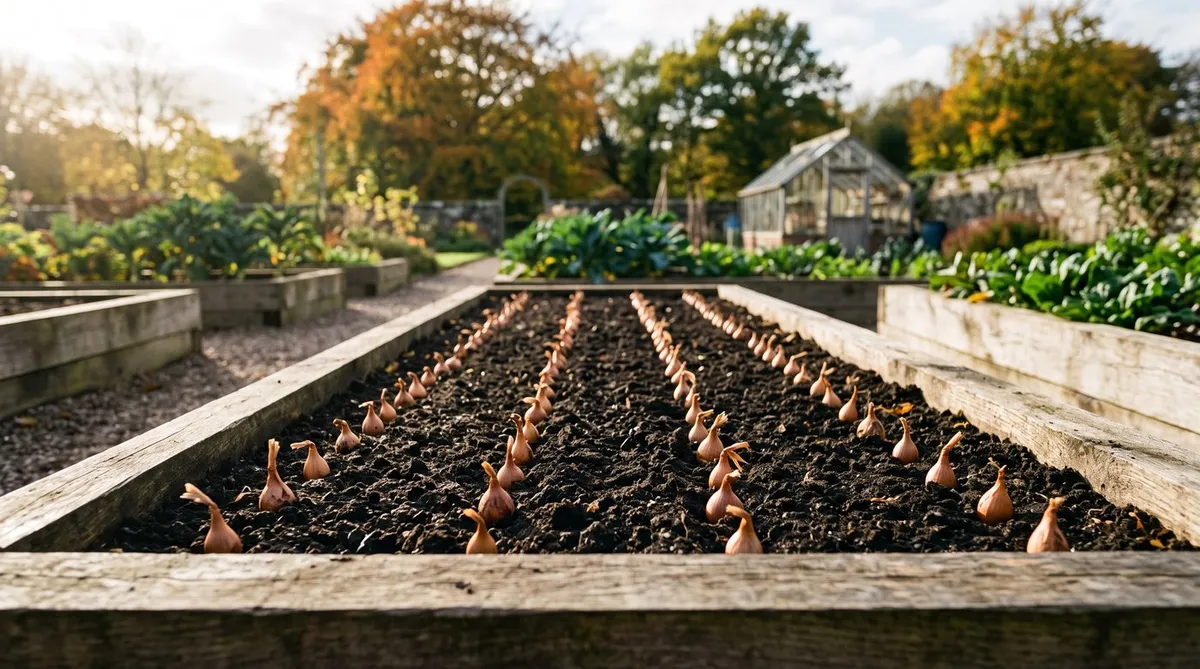
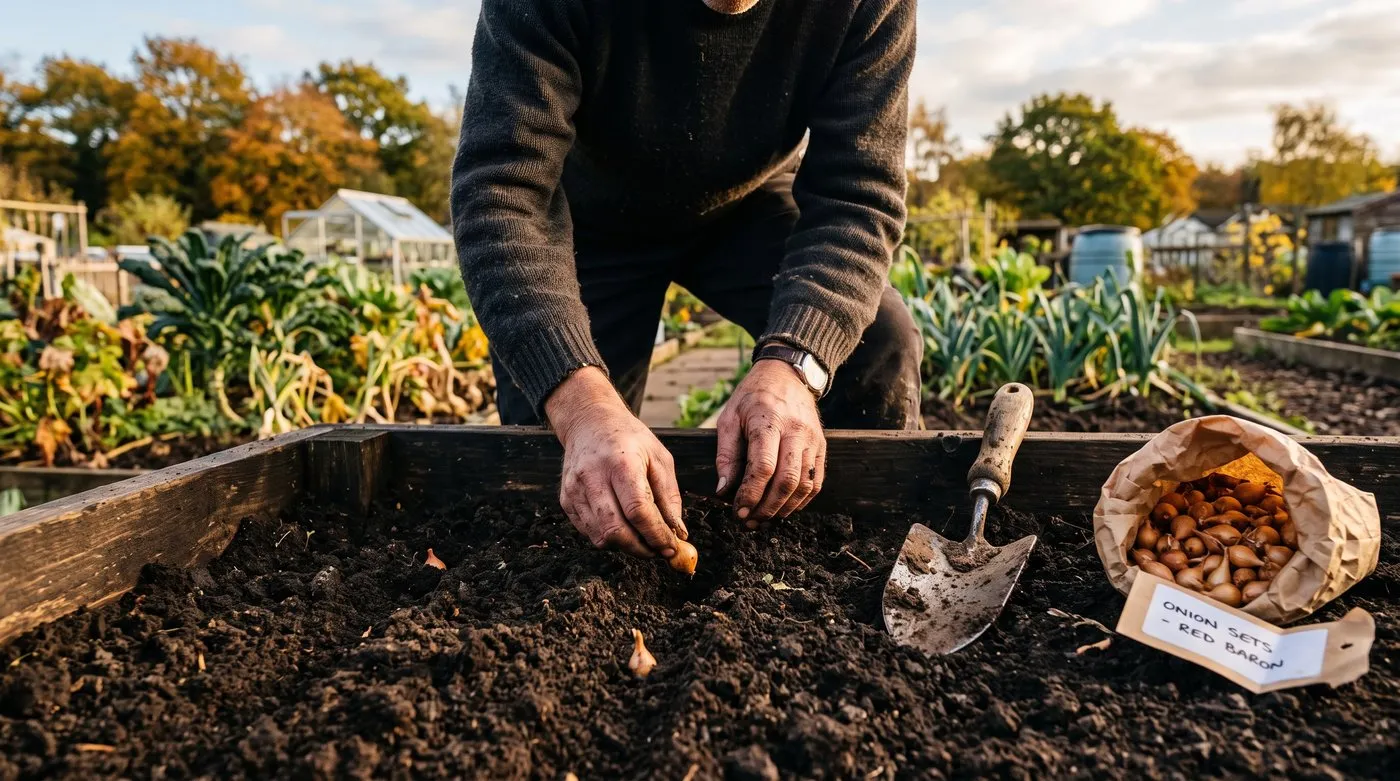
- Push the sets in 10cm apart. Space rows 25 to 30cm apart. Push each set in gently so the tip just shows at the surface. Never bury them fully. Firm the soil around each one.
- Water once, lightly, only if the soil is dry. Autumn soil is usually moist enough. Overwatering at this stage does more harm than good.
That is the whole job. The sets then sit quietly, rooting slowly, until spring wakes them.
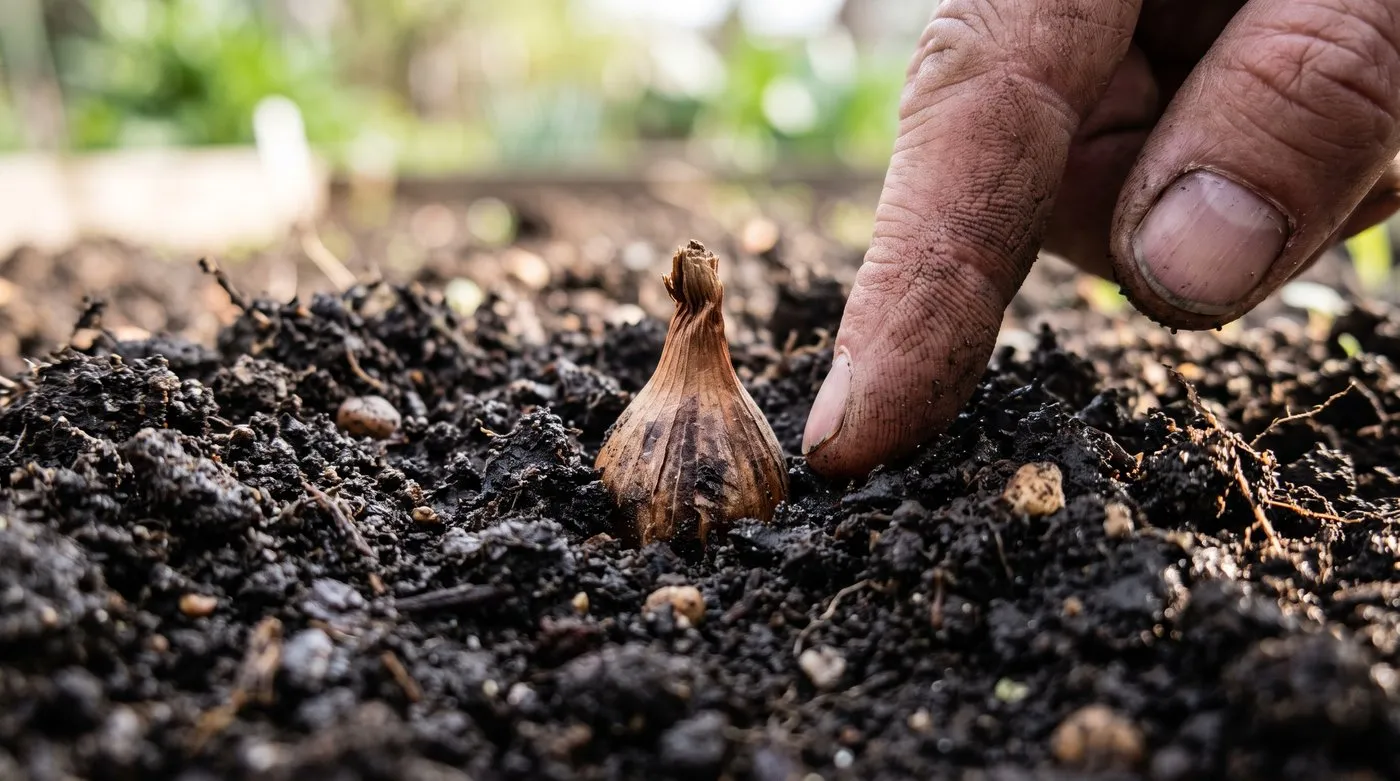 Push each set in until only the papery tip shows. Bury them fully and they rot; leave them proud and birds tug them out.
Protecting overwintering onions through a British winter
Once planted, autumn sets face three threats: birds, frost heave and rot. Each has a simple answer, and none needs much work.
Birds are the first problem, often within days of planting. Blackbirds, pigeons and crows grab the dry papery tips and yank the sets clean out of the ground. Cover the bed with netting or horticultural fleece for the first few weeks until roots anchor the sets. Push any pulled sets straight back in.
Frost heave lifts sets in freeze-thaw weather. As the soil freezes it expands and pushes the shallow roots upward, leaving them dangling clear of the soil. Walk the bed after every hard frost and gently re-firm any lifted sets back down. This one habit saves more onions than anything else over a cold spell.
Rot is the winter killer on wet ground, and drainage is the only real cure. Fleece helps in a severe freeze below -8C, but warmth is not the main issue. Our clay bed with no drainage improvement lost 34 percent of its sets to rot in winter 2019/20. The neighbouring raised bed, same variety, same day, lost just 8 percent. Drainage beats protection every time.
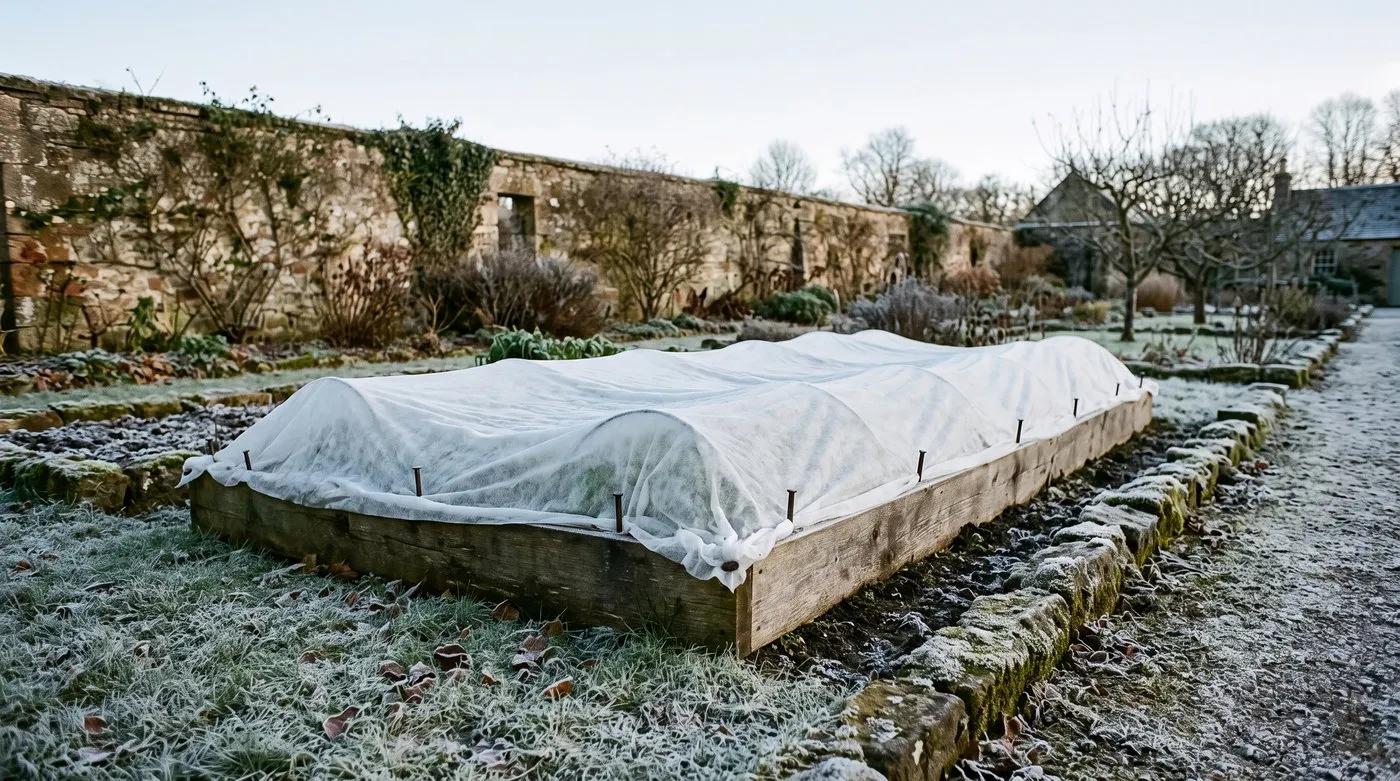 Fleece over the bed keeps birds off newly planted sets and takes the edge off a hard freeze. Good drainage still matters more than warmth.
Month-by-month calendar for autumn onions
| Month | Task |
|---|---|
| September | Order heat-treated overwintering sets. Prepare and firm the bed. Plant in the cold north from mid-month. |
| October | Main planting window. Push sets in 10cm apart, tips showing. Net against birds. |
| November | Late planting in the mild south only. Re-firm any sets lifted by early frosts. |
| December | Sets sit dormant. Walk the bed after hard frosts and press lifted sets back down. |
| January | Little happens above ground. Keep beds weed-free by hand. Check drainage after heavy rain. |
| February | First green tips push up. Remove fleece on mild days. Firm any frost-heaved sets. |
| March | Growth accelerates. Give a light feed of sulphate of ammonia if growth is slow. Hoe weeds carefully. |
| April | Rapid leaf growth. Keep the bed weed-free and watered in dry spells. Watch for any bolters and pull them. |
| May | Bulbs begin to swell. Stop feeding. Ease off watering as bulbs fatten. |
| June | ’Radar’ and early varieties ready to lift as tops flop. Harvest in dry weather. |
| July | Main harvest of ‘Senshyu’ and the rest. Lift, dry and use fresh. |
| August | Beds cleared. Follow on with a fast salad or green manure. Plan next year’s autumn sowing. |
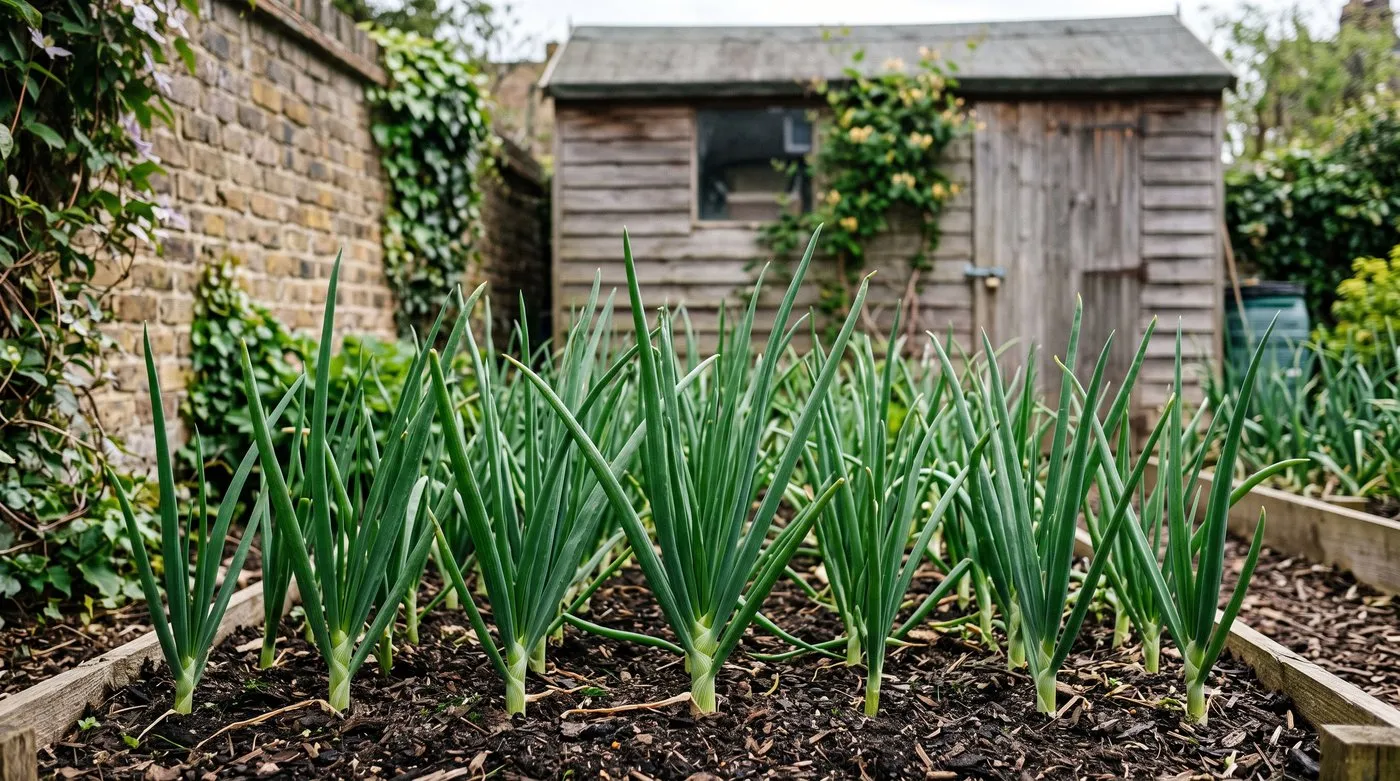 The payoff in April: overwintered sets bulk up fast as days lengthen, weeks ahead of anything spring-planted. This bed was planted the previous October.
Harvesting autumn onions and why they will not store
Autumn onions tell you when they are ready. The tops flop over and yellow, usually in June and July depending on variety. Once half the necks have bent, the bulb has stopped growing. Do not bend the tops down by hand, an old habit that does more harm than good. Let them fall naturally.
Lift the bulbs on a dry day with a fork, easing them up rather than pulling. Lay them out to dry, ideally in the sun on a rack or netting, for 10 to 14 days until the skins are papery and the necks are fully dry. This curing step matters even though these onions will not keep long.
Here is the honest truth about overwintering onions: they do not store well. Their higher water content means they soften or sprout within a few weeks. Treat them as a fresh early crop, not a keeper. In our kitchen the autumn onions are used up by late September, while the spring-planted maincrop onions keep in the shed into the new year. Grow both, and you cover the whole calendar.
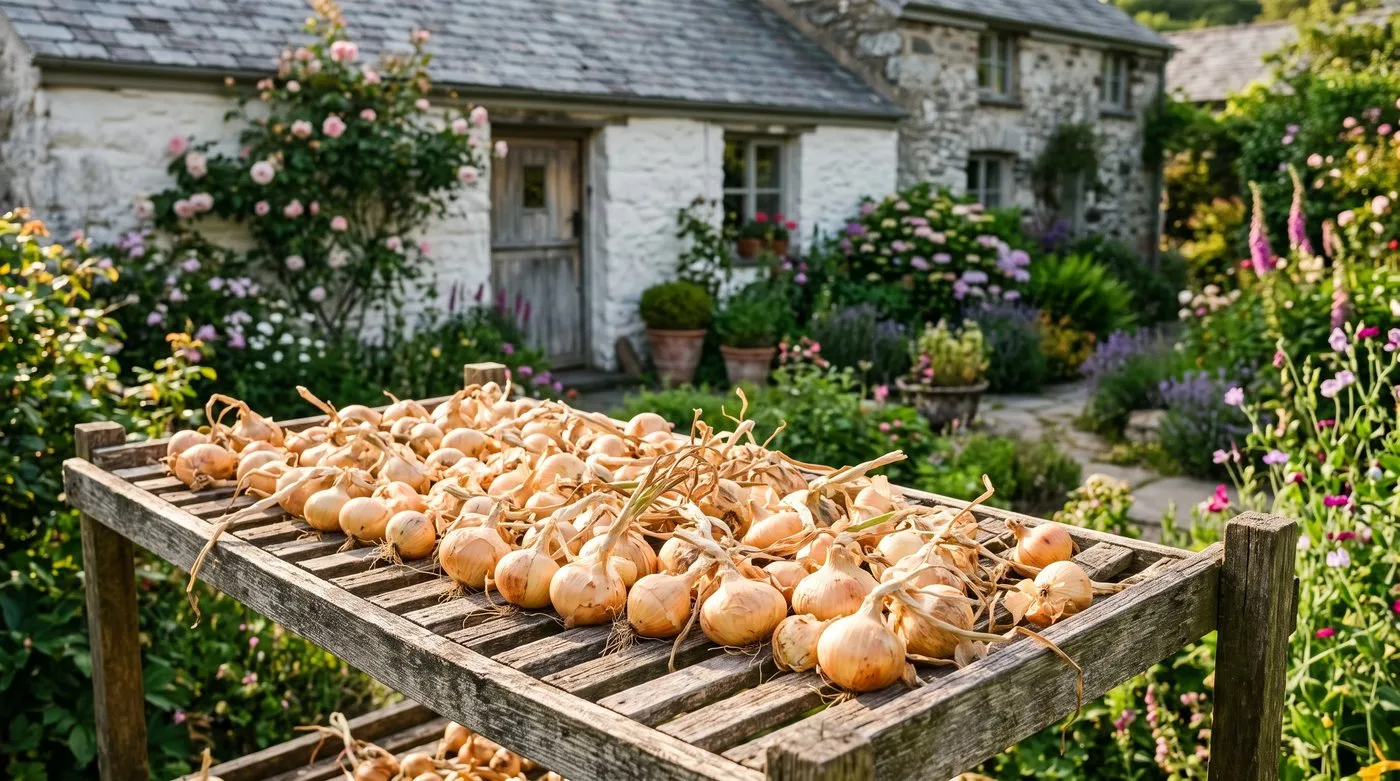 Cure lifted onions for 10 to 14 days until skins are papery. These early bulbs are for eating fresh through summer, not for long storage.
Pairing autumn onions with other overwintering crops
Autumn onions rarely go in alone. They share the winter beds with two natural partners that follow the same rhythm: autumn-planted garlic and overwintering broad beans. All three use empty beds through the cold months and crop in early summer, so they earn their keep when little else is growing.
Plant garlic at the same time as your onion sets. Both are alliums, both want firm, free-draining ground, and both bulb up in spring. Garlic follows the same October timing and the same drainage logic. Keep garlic and onions on the same rotation block so you can move the whole allium family together each year.
Broad beans sown in October or November stand through winter and pod up in May and June, right alongside the onions. See when to plant broad beans for the autumn-sowing timing. Between the three crops you can carry a productive bed straight through the hungry gap, the lean stretch from March to June when winter stores run out and spring sowings are not yet ready.
Common mistakes when growing autumn onion sets
- Using untreated spring or storage sets. Ordinary sets are not heat-treated and carry a live flower embryo. Most bolt to seed after a cold winter. Buy only sets sold for autumn planting.
- Planting too early. Sets in the ground in early September make big top growth that primes them to bolt. Our September batch bolted at 38 percent against 6 percent for the October one. Wait for the proper window.
- Planting into wet, heavy ground. Cold, waterlogged soil rots the sets over winter. On clay, raise the bed or ridge the row and add grit. Undrained clay cost us a third of the crop.
- Burying the sets too deep. Push them in with the tip just showing, not buried. A fully buried set sits wet and rots. A proud set is prone to bird damage, so net it instead.
- Expecting them to store. These are a fresh early crop. Do not hang them up for winter and expect them to keep. Eat them through summer and grow maincrop onions for storage.
Watching for downy mildew and bolting in spring
Two spring problems catch out autumn onions more than spring-planted ones, because the plants are older and the weather is wetter. Both are worth a weekly check from March.
Downy mildew is the main disease risk. A wet, cold winter and a mild damp spring create ideal conditions. It shows as pale, furry grey-purple patches on the leaves, which then yellow and collapse. Space plants for airflow, keep beds weed-free, and pull affected plants early. Our guide to onion downy mildew explains the full cycle and how to break it.
For the wider picture on growing this crop family across the year, the growing section of Garden UK carries our full run of allium and vegetable guides. The RHS advice on growing onions is a useful cross-check on hardiness and timing.
Now you have autumn onions filling the hungry gap in June, read our guide to how to grow garlic for the next step in a productive winter allium bed.
Frequently asked questions
When should I plant autumn onion sets in the UK?
Can I use any onion sets for autumn planting?
No, use only heat-treated overwintering varieties like ‘Senshyu’ or ‘Radar’. Ordinary spring or storage sets are not treated to resist bolting and will run to seed after a cold winter. The heat treatment kills the tiny flower embryo inside the set, which is what stops it bolting.
How early do autumn onions crop compared to spring onions?
Do overwintering onions store well?
No, autumn onions store poorly and should be eaten fresh through summer. Their higher water content means they sprout or soften within a few weeks of lifting. Grow maincrop onions alongside them if you want bulbs that keep into winter.
Why do my autumn onions keep bolting?
Bolting usually means the sets were planted too early or hit a cold snap after warm growth. A set that makes big top growth in autumn is primed to flower in spring. Plant in October, not early September, and choose bolt-resistant varieties to cut the risk.
What soil do autumn onion sets need?
Should I protect autumn onion sets over winter?
Net them against birds and re-firm any sets lifted by frost. Birds pull freshly planted sets out by the dry tips, and frost heave pushes roots clear of the soil. A layer of fleece in a hard freeze helps, but good drainage matters far more than warmth.
Our team produces practical UK gardening guidance from source research, contributor records and established horticultural practice. Editorial standards are overseen by Matt W.