Key takeaways
- Bolting is triggered by cold weather followed by warmth, not by anything you did wrong on the day
- Large sets, early planting into cold soil and drought stress all increase the risk
- A bolted onion will not store: the neck stays thick and the centre turns woody
- Cut the flower stalk out as soon as you see it, then use that bulb first and fresh
- Prevent it with small heat-treated sets, bolt-resistant varieties and planting once the soil warms
- Overwintered Japanese onions are far less prone to cold-triggered bolting
Onions bolt when something in the weather tells them to stop making a bulb and start making seed. You see it as a fat round flower stalk pushing up from the neck of the plant, usually in late spring or early summer, long before the bulb is ready. It is one of the most common and most frustrating onion problems, because by the time you spot the flower the damage is largely done. The good news is that bolting is preventable once you understand what triggers it.
Why do onions bolt?
Onions bolt because they experience a cold spell followed by warmth, which the plant reads as one winter having passed, so it switches to flowering and setting seed. This response is called vernalisation, and it is a survival strategy. An onion is a biennial: in nature it grows a bulb in year one and flowers in year two. A run of cold then warm weather fools a first-year plant into behaving as if it is already in its second year.
That single mechanism sits behind almost every case. The Royal Horticultural Society puts it plainly: bolting in onions is caused by low temperatures in spring, after which the bulbs will not store well. Once you grasp that, the contributing causes all make sense, because each one either exposes the plant to that cold-then-warm swing or stresses it into giving up on the bulb.
The frustrating part is that bolting is set in motion weeks before you see the flower. The plant commits to flowering during the cold period, then sends up the stalk once it warms. So by June, when the stalks appear, you are seeing the result of decisions the onion made back in a chilly spring. Prevention has to happen at planting, which is why getting that right matters so much. Our full guide to growing onions covers the whole season.
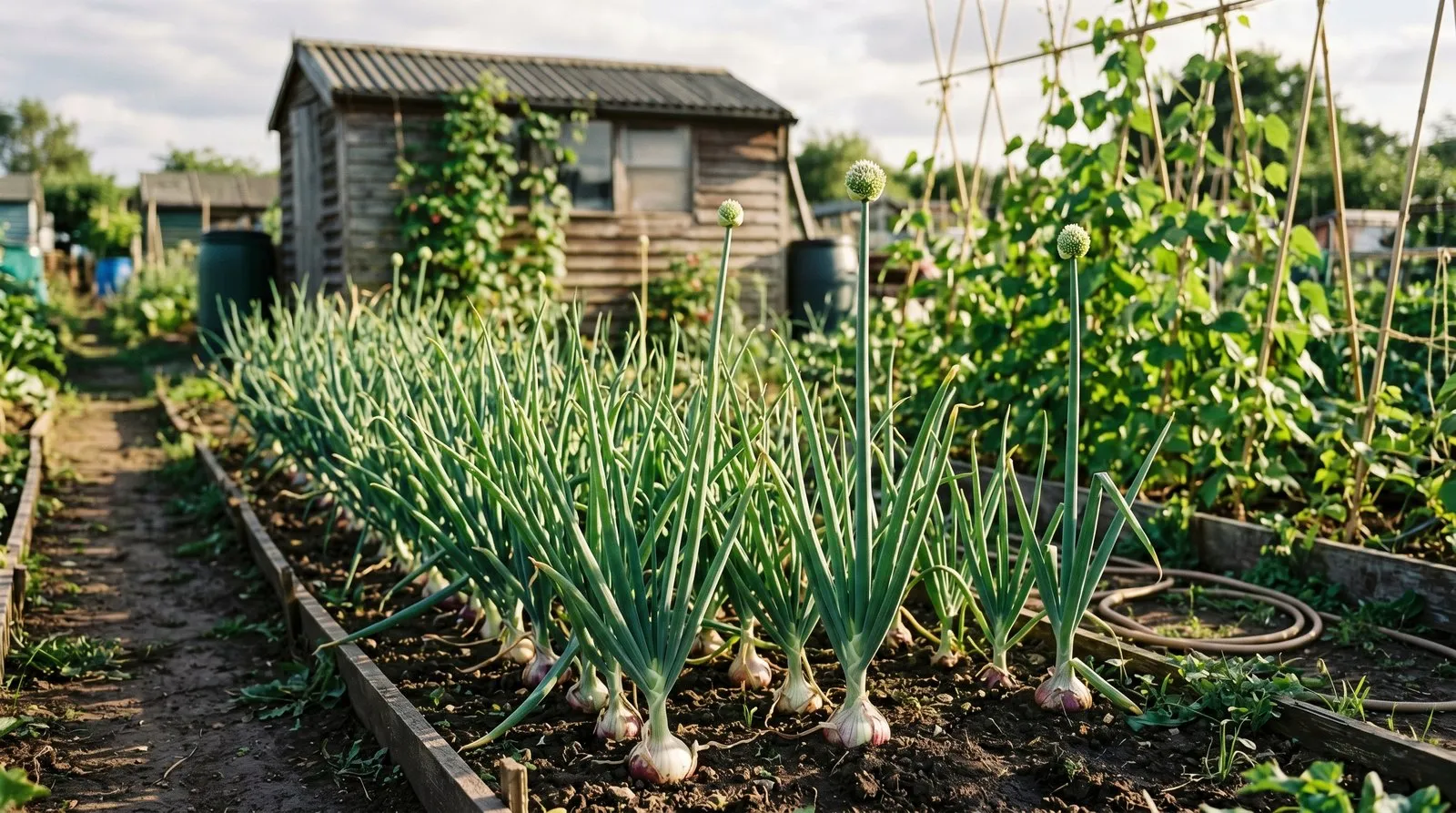 One bolting onion among the rows. The flower stalk appears in early summer, but the trigger came during a cold spell weeks earlier.
The four things that make onions bolt
Large sets, planting too early into cold soil, drought stress and unsettled growth are the four causes that turn a cold spring into a bed full of flower stalks. None acts entirely alone, but each tips the odds towards bolting. Work through them and you can see exactly where your own crop went wrong.
| Cause | Why it triggers bolting | The fix |
|---|---|---|
| Large sets | Bigger sets are physiologically older and more ready to flower | Plant small sets, no thicker than a pencil |
| Planting too early | Cold soil gives the cold spell that starts vernalisation | Wait until soil reaches about 7°C |
| Drought / water stress | Stress makes the plant abandon the bulb and rush to seed | Water steadily through spring and early summer |
| Untreated sets | They have not been heat-treated to remove the flowering trigger | Buy heat-treated sets where you can |
Set size is the one people miss most. A large set has already built up the reserves it needs to flower, so a cold snap pushes it over the edge far more easily than a small one. This is why a bag of cheap, oversized sets is a false economy. Small sets, no thicker than a pencil, are the single best insurance against bolting, a point our comparison of UK onion varieties returns to again and again.
Timing is the next lever. Plant into cold soil in February or early March and you hand the plant exactly the cold period it needs to vernalise. Waiting until the soil has warmed, even by a couple of weeks, removes that trigger. Go by soil temperature, not the date on the seed packet, and check it against our vegetable planting calendar.
What to do with an onion that has already bolted
Once an onion has bolted you cannot reverse it, so cut the flower stalk out early, then lift and use that bulb fresh because it will never store. Spotting the stalk is the moment to act. Snap or cut it off cleanly where it leaves the neck. This does not undo the bolting, but it stops the plant pouring yet more energy into making seed and lets it put a little back into the bulb.
Be realistic about what you have. A bolted onion develops a hard, woody core where the flower stalk runs through the centre, and the neck stays thick and green instead of drying down. That thick neck is the problem for storage, because it never seals, so the bulb rots from the top in a few weeks. The RHS is blunt about it: bolted onions will not keep.
So treat bolted bulbs as the first onions off your plot. Lift them once they reach a usable size, cut out the tough central core, and cook with the rest straight away. They are perfectly good to eat, just not to store. Keep your sound, unbolted bulbs for curing and drying and later storage, and never try to keep a bolted one alongside them, or it will spoil its neighbours.
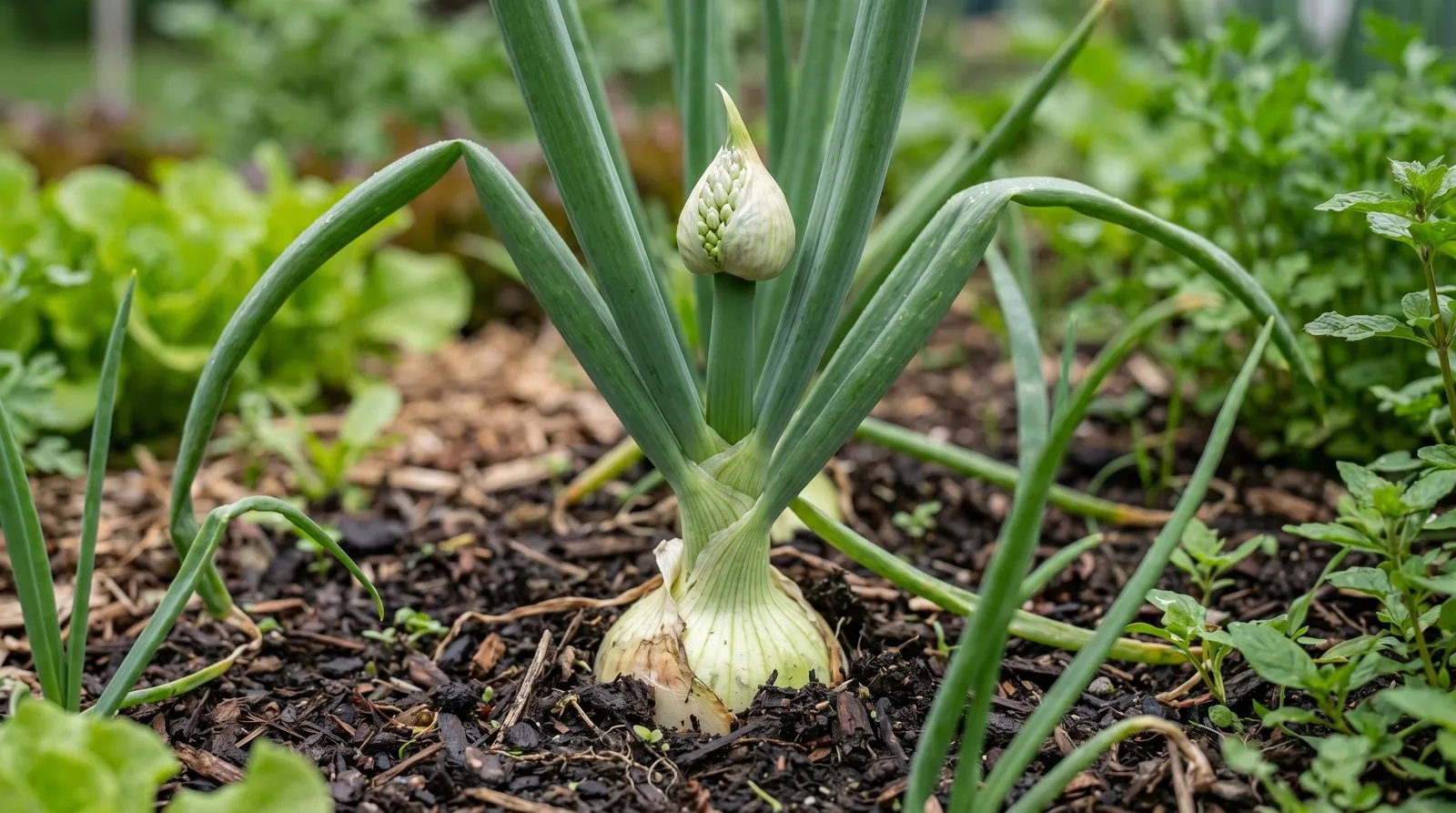 The round flower stalk emerging from the neck is the sign to act. Cut it out here, at the base, as soon as you spot it.
How to cut out a bolting stalk
Remove the flower stalk at its base with a clean snap or a sharp knife, as low as you can without damaging the bulb. Do it the moment you notice the stalk, while it is still soft and green, rather than waiting for the flower head to form. The earlier you catch it, the more growing season the bulb has left to bulk up before you lift it.
Use a clean blade to avoid spreading any disease between plants, and cut just above the neck so you are not slicing into the bulb itself. On a soft young stalk you can often simply bend it sharply and it will snap off. Drop the removed stalks on the compost heap; they carry no pest or disease worth worrying about.
After removing the stalk, mark those plants or lift them to one side in your mind, because they are now on a different timetable to the rest. They will be ready to use sooner and must be eaten sooner. The rest of the bed, the unbolted plants, carries on as normal towards a proper harvest and storage.
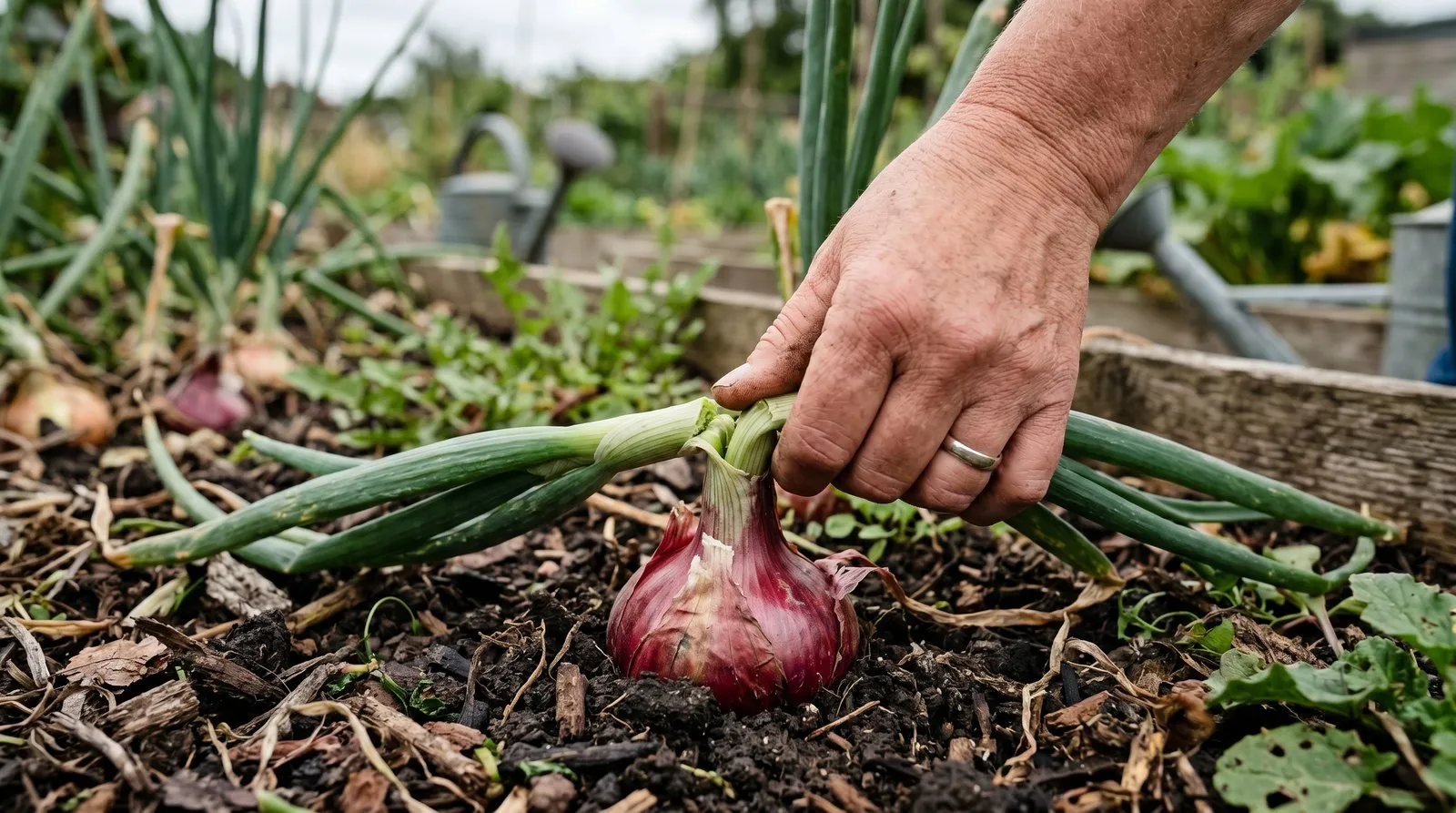 Snap or cut the stalk out at the neck while it is still soft and green. It will not reverse the bolt, but it spares the bulb.
How to stop onions bolting next year
You prevent bolting with three decisions made before and at planting: small heat-treated sets, a bolt-resistant variety, and planting only once the soil has warmed. Get those right and you remove most of the risk before the first leaf appears. The rest is steady growing.
Build your prevention on these points:
- Choose small sets. Pencil-thick or smaller. They are physiologically younger and far less likely to flower than fat ones.
- Buy heat-treated sets. Heat treatment removes the flowering trigger before sale, so these bolt much less than untreated sets.
- Pick the right variety. Reliable maincrop sets bolt less than cheap mixed ones, and red onions tend to bolt more than brown or white. For autumn, grow overwintering Japanese onions such as ‘Senshyu’ and ‘Radar’, bred to take winter cold.
- Plant into warm soil. Wait for around 7°C rather than going by the date. A soil thermometer pays for itself in saved onions.
- Water steadily. Never let the plants dry out and check in spring and early summer, which stress them into bolting.
- Firm the soil and skip fresh manure. Loose soil and soft, sappy growth from fresh manure both raise the risk.
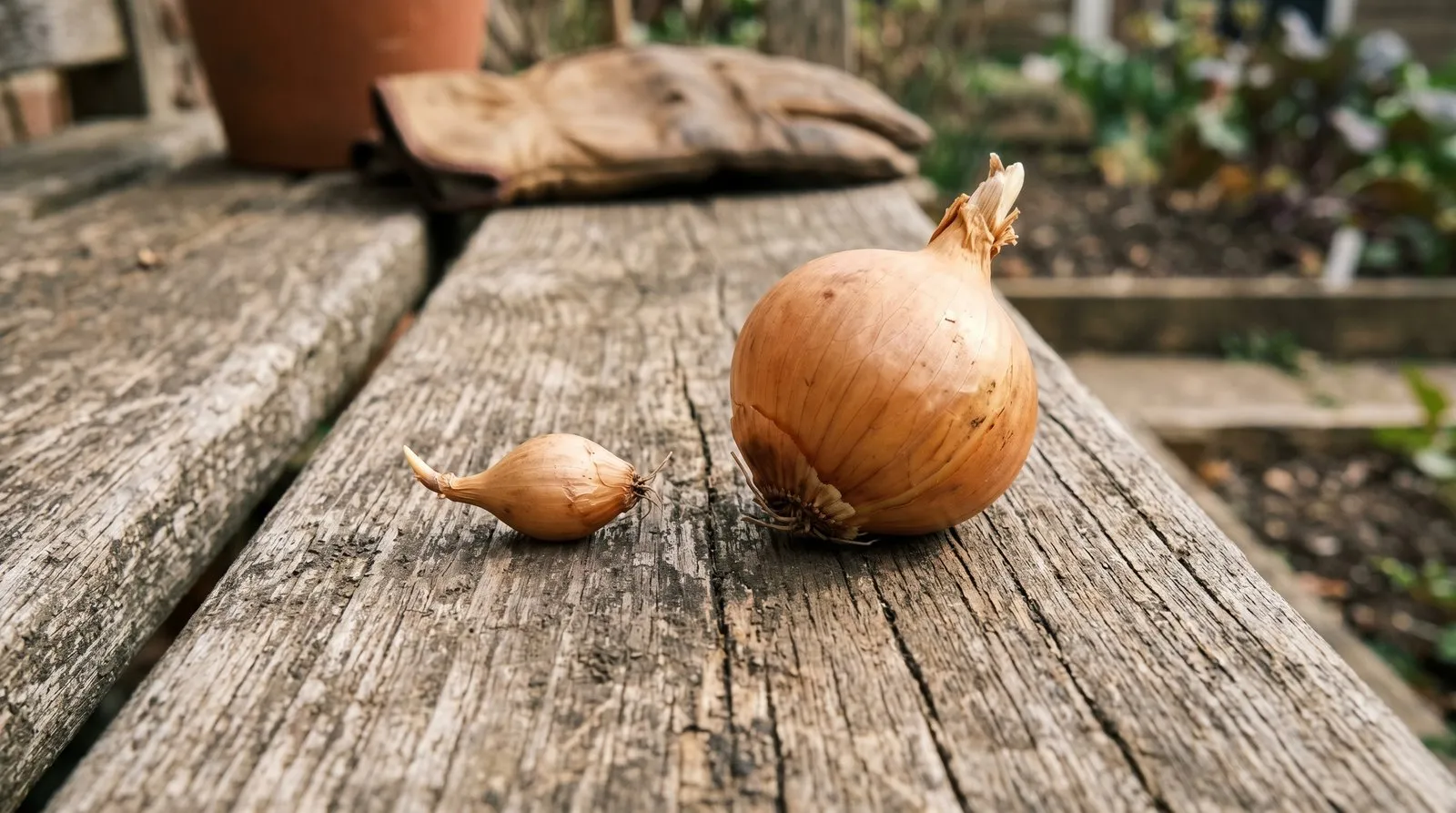 Left, a small set that rarely bolts. Right, an oversized set far more likely to run to flower. Set size is your best lever.
Why a bolted onion will not store
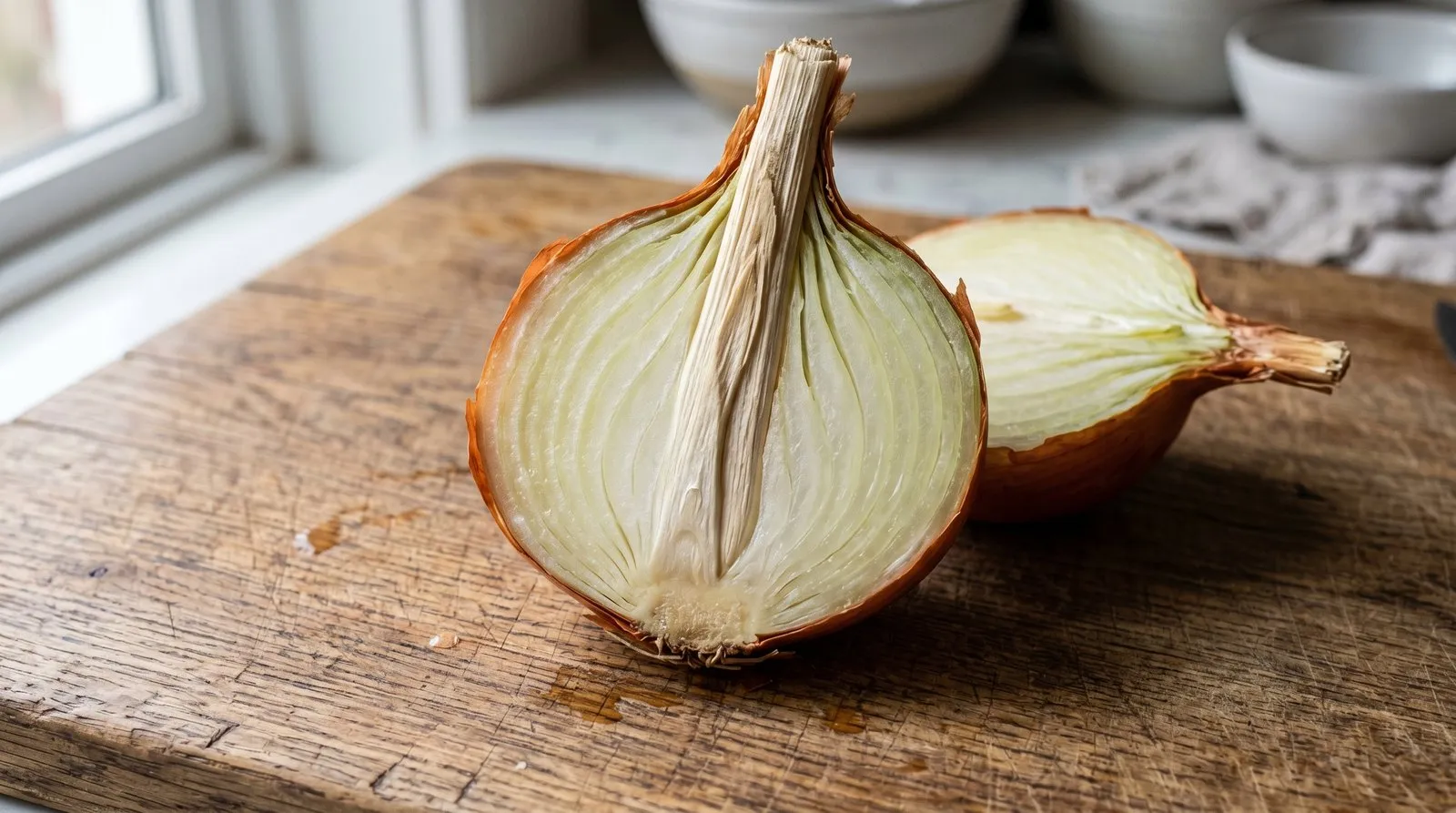 Cut a bolted onion in half and the reason it will not store is plain: a tough, woody core runs right through the middle.
The whole picture, then, is simple once it clicks. Bolting is a cold-weather trigger you set up by accident at planting, not a problem you can spray away later. Plant small heat-treated sets into warm soil, keep the plants growing without a check, and deal with any stalks the moment they appear. Do that, and the round flower stalk in the onion bed becomes a rare sight rather than a yearly disappointment.
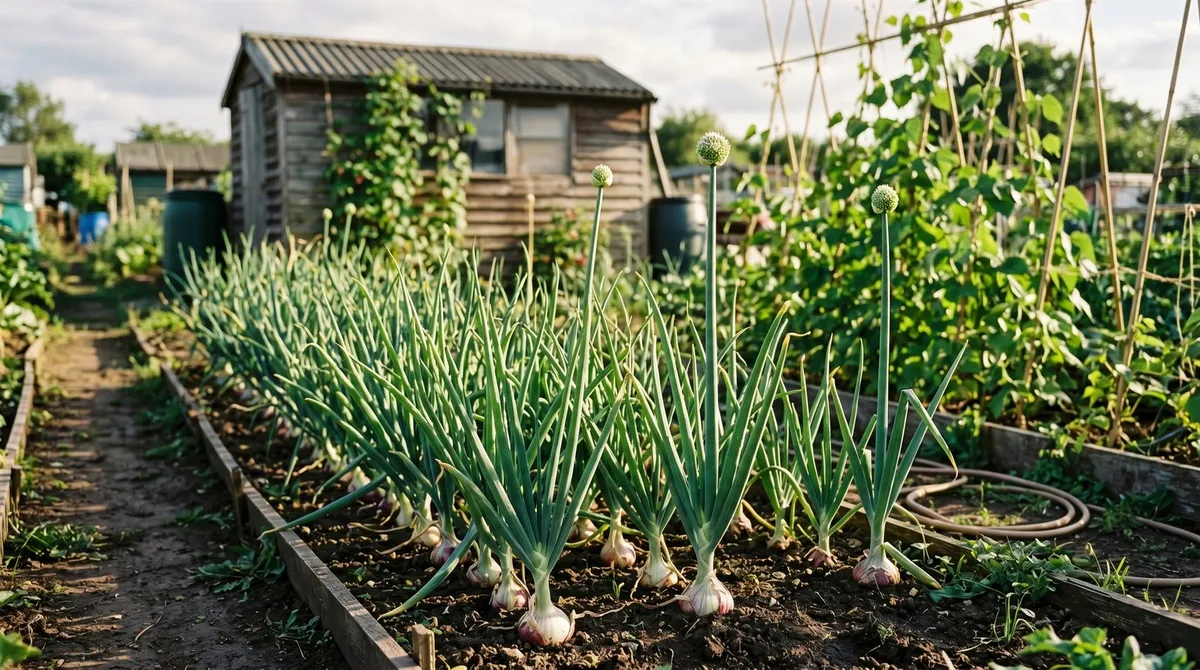
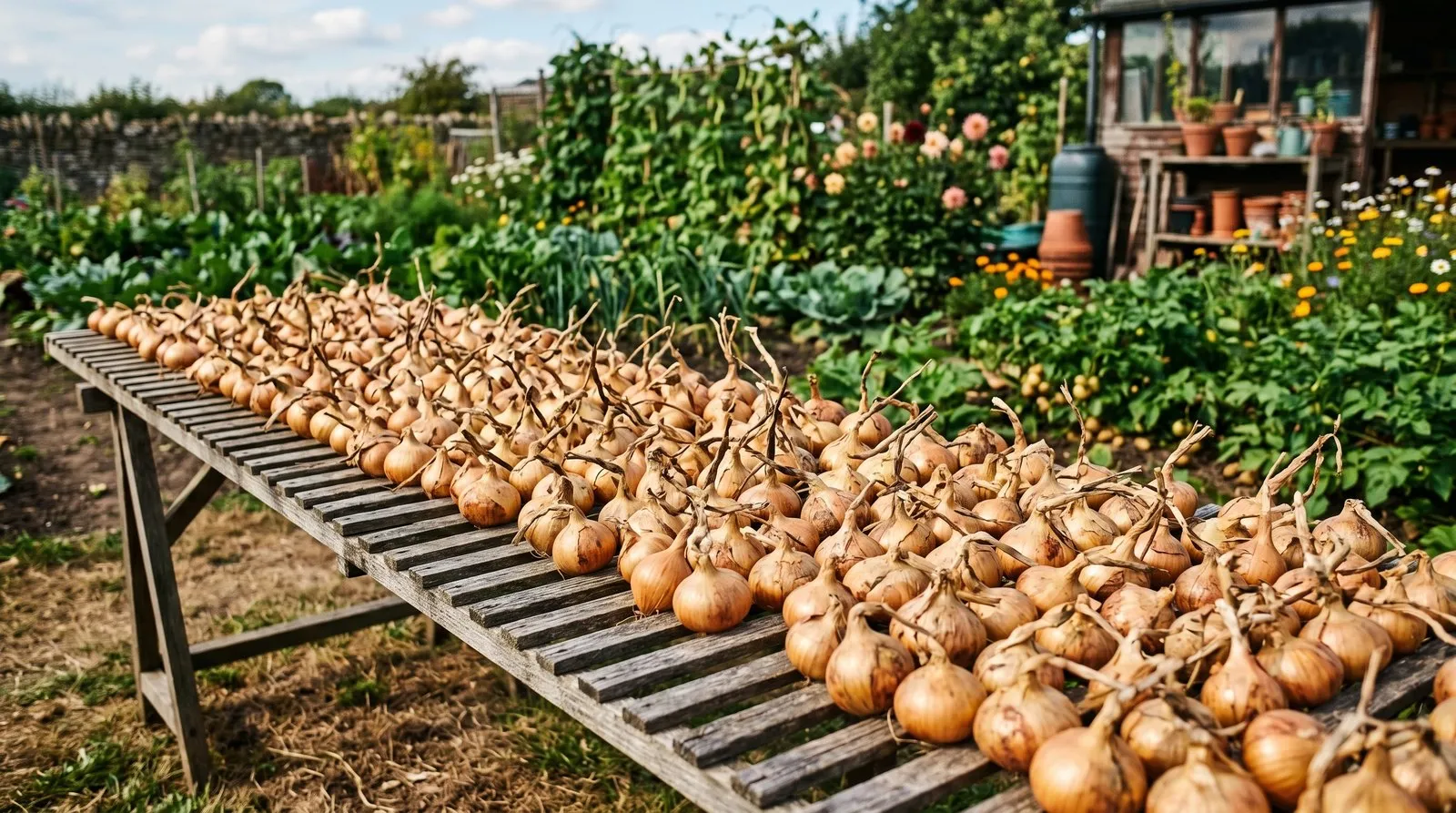 The reward for getting it right: sound, slim-necked onions curing in the sun, the only kind worth putting into store.
For more troubleshooting across the plot, browse our full problems section, and check our notes on common onion and allium diseases so you can tell a bolt from a blight.
Related reading: Autumn-planted sets bolt for different reasons, see our guide to growing overwintering onions.
Frequently asked questions
Why have my onions bolted?
Your onions bolted because they met a cold spell and then warmer weather, which tricks the plant into flowering as if winter had passed. This is called bolting or running to seed. Large sets, planting too early into cold soil, and drought stress all make it more likely. The flower stalk is the plant switching from growing a bulb to making seed.
Can you eat a bolted onion?
Yes, you can eat a bolted onion, but use it soon and fresh rather than storing it. Once an onion bolts it develops a tough, woody core around the flower stalk and the neck stays thick, so it will not cure or keep. Cut out the hard central core and use the rest in cooking promptly. It is perfectly safe, just not a keeper.
Should I cut the flower off a bolting onion?
Yes, cut or snap off the flower stalk as soon as you see it forming. This will not reverse the bolting, but it stops the plant pouring more energy into seed and lets it put a little back into the bulb. Then plan to lift and use that onion first, because it will not store alongside your sound bulbs.
How do I stop my onions bolting next year?
Plant small, heat-treated sets no thicker than a pencil, choose bolt-resistant varieties, and wait until the soil has warmed to around 7°C before planting rather than going by the calendar. Keep the plants watered steadily so they never check, firm the soil at planting, and avoid fresh manure. For autumn crops, grow overwintering Japanese onions, which resist cold-triggered bolting.
Are some onion varieties less likely to bolt?
Yes, bolt resistance varies by variety, and choosing well makes a real difference. Heat-treated sets of reliable maincrop varieties bolt far less than cheap, untreated, oversized sets. Red onions tend to bolt more readily than brown or white types. For autumn planting, overwintering Japanese varieties such as ‘Senshyu’ and ‘Radar’ are bred to take the cold without running to seed.
Our team produces practical UK gardening guidance from source research, contributor records and established horticultural practice. Editorial standards are overseen by Matt W.