Key takeaways
- Biennial bearing means heavy crops one year, almost none the next
- A heavy crop's seeds release hormones that block next year's flower buds
- Bramley, Blenheim Orange and many pears are naturally prone
- Thin blossom or fruitlets in the heavy year to break the cycle
- A late frost or drought stress often triggers the alternating pattern
- Feed, water and mulch to keep cropping steady year to year
Biennial bearing is the most frustrating habit a fruit tree can fall into. One autumn the branches bend under a glut of apples or pears, more than you can use. The next autumn there is almost nothing. The tree is not diseased and it is not dying. It has locked into a two-year rhythm where a heavy crop stops it cropping the following year. This guide explains why biennial bearing happens, which varieties do it most, and exactly how to break the cycle with thinning. You will learn the timing that matters and see the results of thinning a biennial Bramley across two seasons.
The good news is that the habit can be broken. With the right thinning at the right time, a feast-and-famine tree can be coaxed back to cropping usefully every year.
What biennial bearing is and why it happens
Biennial bearing, also called alternate bearing, is when a fruit tree swings between a heavy crop one year and almost none the next. The two years are usually called the on year, with the glut, and the off year, with little or no fruit.
The cause lies in the timing of flower bud formation. A fruit tree forms the flower buds for next year’s crop during the current summer, while it is also ripening this year’s fruit. In a heavy on year, the tree puts so much energy into ripening the glut that it forms few flower buds for the following year. So the off year has little blossom and little fruit.
Once started, the cycle reinforces itself. The light off year lets the tree build up reserves and form masses of flower buds, which gives another heavy on year, and round it goes. Breaking the loop means interrupting it in the on year, before the heavy crop blocks the next year’s buds. The same trees feature in our guide to growing apple trees and growing pear trees.
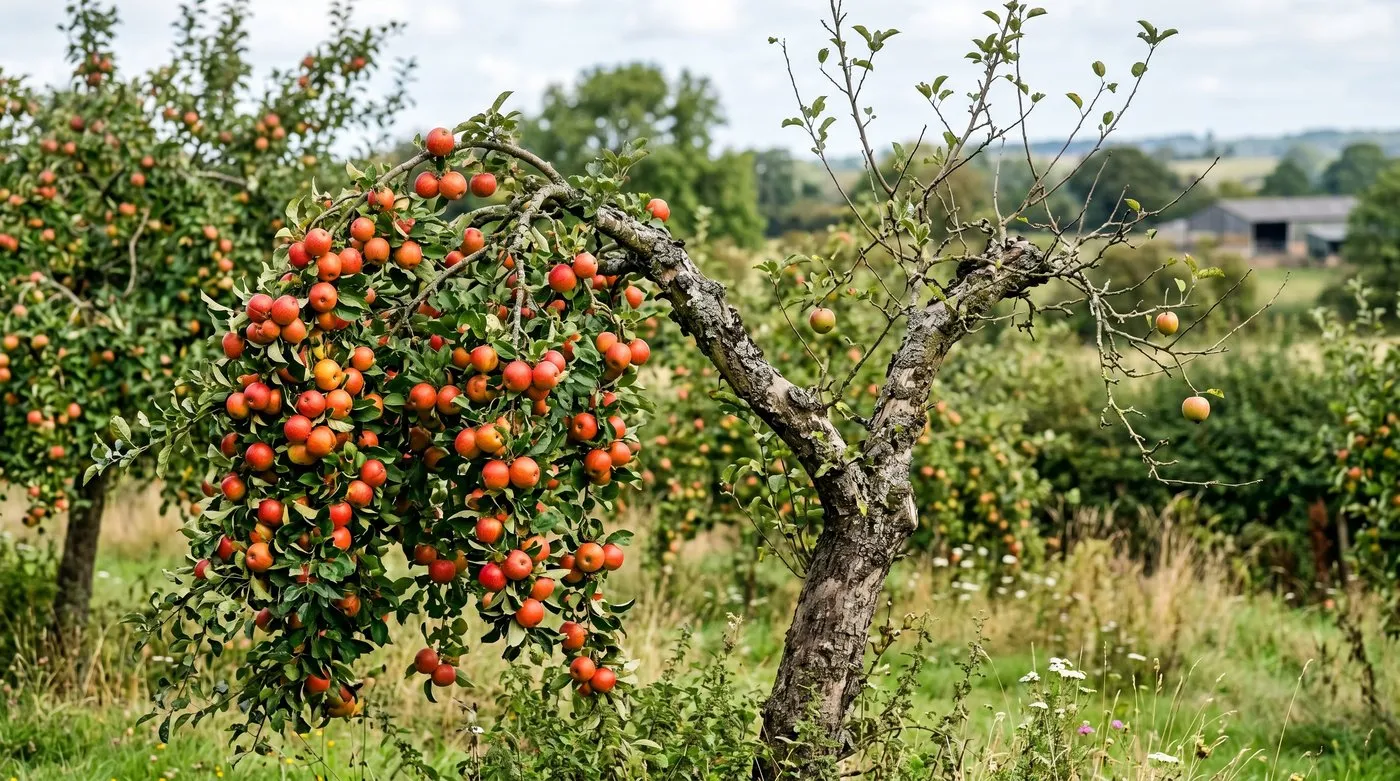 Biennial bearing in one picture. A glut on the on-year branch, almost nothing on the off-year branch of the same tree.
The hormone trigger that drives the cycle
The single most important fact about biennial bearing is that the seeds inside the fruit cause it. Understanding this explains why thinning works and feeding alone does not.
As fruit develops, the seeds release plant hormones, chiefly gibberellins. These hormones travel through the tree and suppress the formation of flower buds for the following year. The more fruit a tree carries, the more seeds it holds, and the stronger this suppression becomes. A tree groaning with a heavy crop is being chemically told not to form next year’s flowers.
This is why a big crop reliably leads to an empty year, and why simply feeding a tree does not fix it. The block is hormonal, not nutritional. Reducing the number of developing fruit, and therefore seeds, lifts the suppression and lets the tree form flower buds again. That is the whole logic behind thinning, and it is why the timing matters so much. The fruit must be reduced while flower buds are still forming, not after.
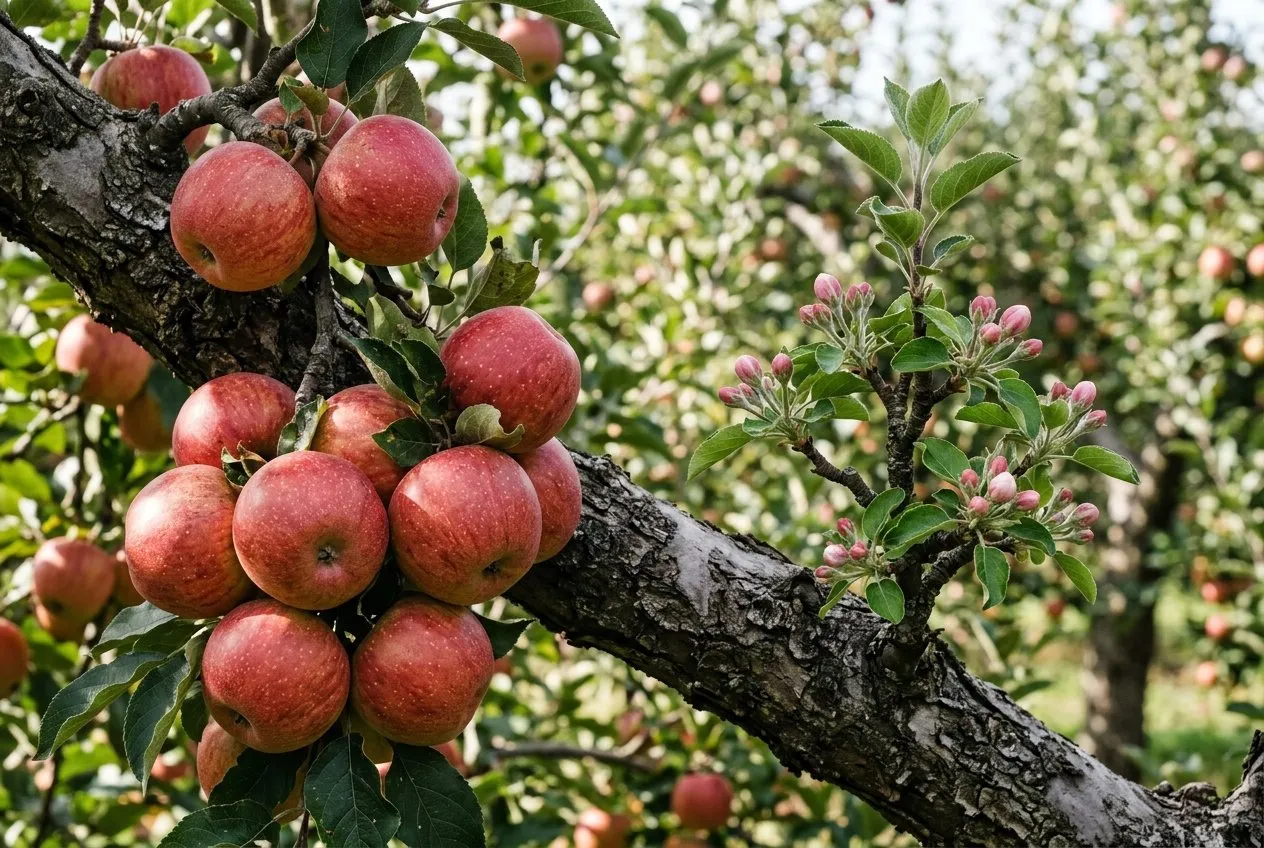 Seeds in the heavy crop release hormones that block next year’s flower buds. Thinning the fruit lifts that chemical brake.
Which apples and pears are most prone
Some varieties biennial bear far more than others. Knowing the prone ones helps you decide whether to thin as a routine or only when the cycle starts.
Among apples, Bramley’s Seedling, Blenheim Orange, Newton Wonder and Laxton’s Superb are all strongly prone. These set heavy crops and slip into the two-year rhythm readily. Many pears alternate too, though Conference is more even than most. By contrast, Cox’s Orange Pippin, Discovery and Egremont Russet crop more steadily and rarely need heavy thinning.
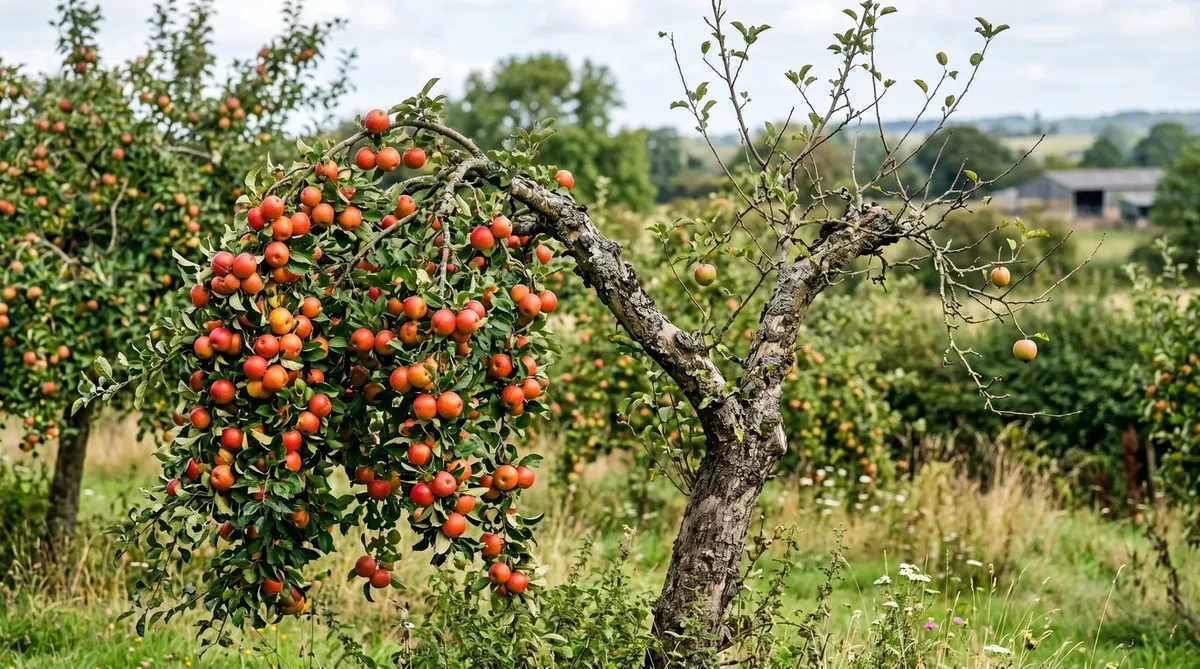
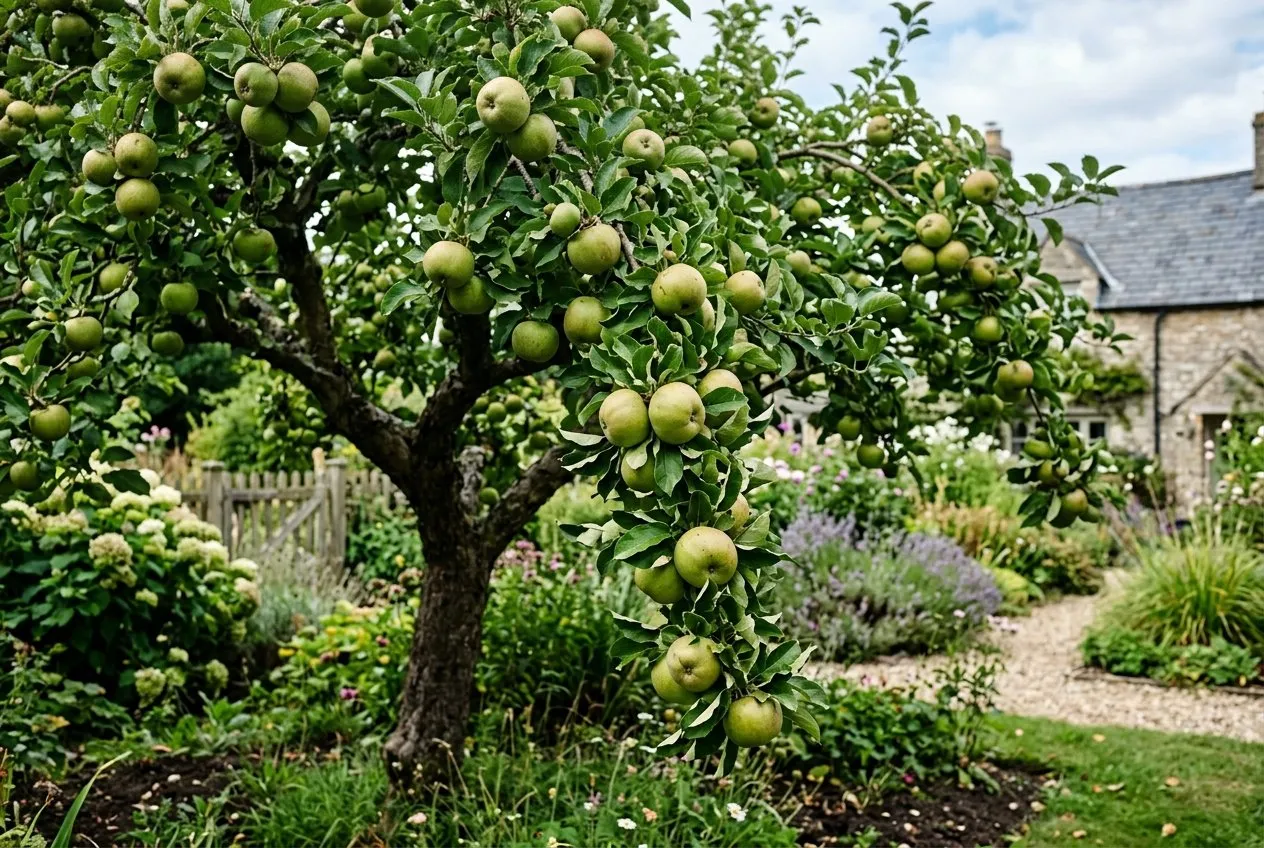 Bramley is one of the most biennial-prone apples. A heavy crop like this blocks next year’s flowers unless thinned.
How to break the cycle with blossom and fruit thinning
Thinning is the proven way to break biennial bearing. The aim is to reduce the crop in the on year so the tree can form flower buds for the off year. There are two windows to do it.
The first is blossom thinning in spring. In the on year, before or just as the blossom opens, rub off or remove a proportion of the flowers, up to about half on a strongly biennial tree. Fewer flowers means fewer fruit, fewer seeds, and less hormonal suppression of next year’s buds.
The second is fruitlet thinning in June, after the tree’s natural June drop. Thin the young fruit to leave one or two per cluster, spaced 10 to 15cm apart. Use scissors or finger and thumb. Follow this order each on year.
- Assess the crop in spring. If blossom is heavy on a biennial tree, plan to thin.
- Thin blossom in the on year. Remove up to half the flowers across the tree, evenly.
- Let the June drop happen. The tree sheds some fruitlets naturally first.
- Thin fruitlets in June. Leave one or two per cluster, 10 to 15cm apart.
- Feed, water and mulch. Support the tree so it can both ripen fruit and form buds.
Gardener’s tip: Thin to the centre of each cluster’s strength, removing the smallest and any damaged fruitlets first. The remaining apples grow larger and cleaner, so a thinned tree gives fewer but better fruit, as well as breaking the biennial cycle.
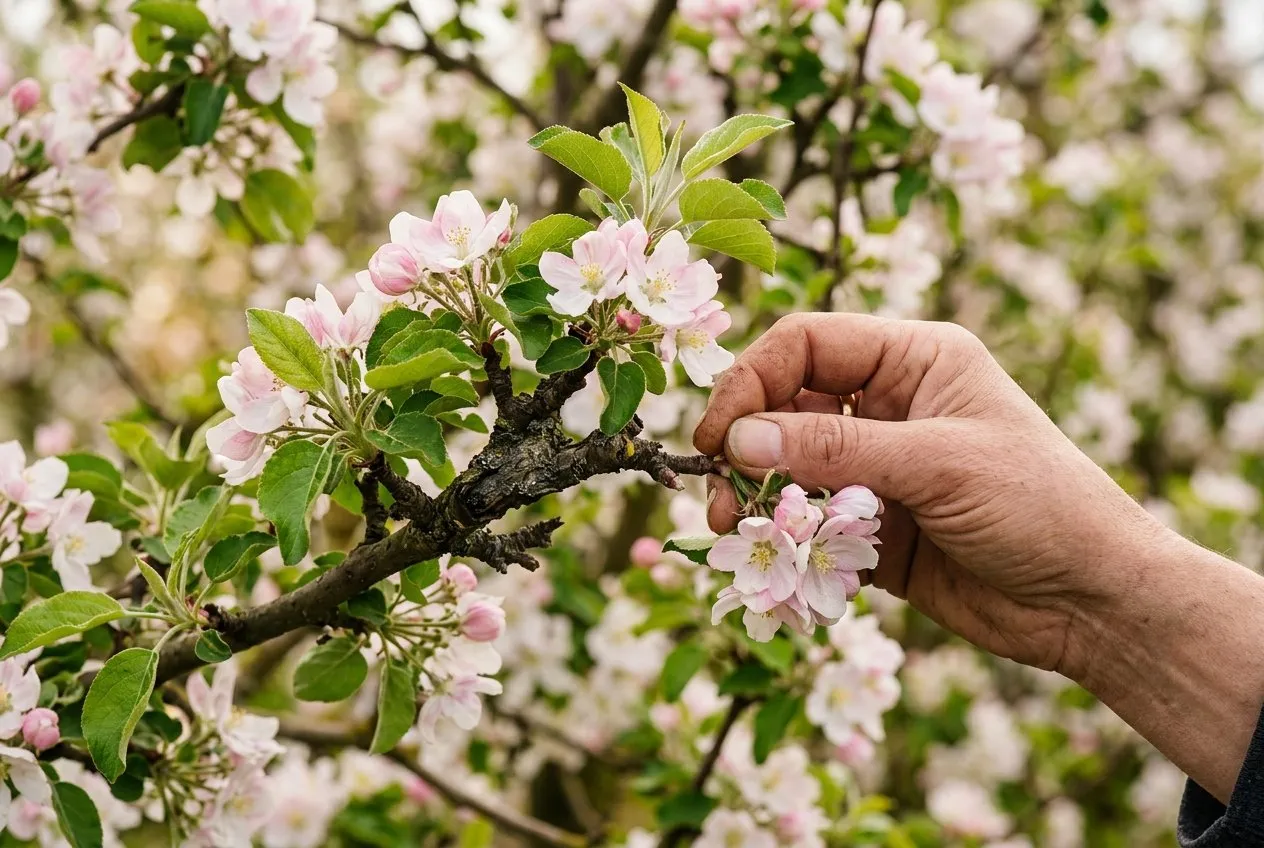 Blossom thinning in the on year. Removing up to half the flowers frees the tree to form buds for the following season.
Thinning methods compared by timing and effect
This table ranks the ways to manage biennial bearing by how much they help and when to do them. Combine the strongest methods for a reliable result.
| Method | When | Effectiveness | What it does | Role |
|---|---|---|---|---|
| Blossom thinning | Spring, on year | High | Cuts fruit and seed load early | Primary control |
| Fruitlet thinning | June, after natural drop | High | Reduces crop and improves size | Primary control |
| Frost protection | Spring blossom | Moderate | Stops frost wiping a year’s crop | Prevention |
| Feeding and mulching | Spring to summer | Moderate | Supports buds and fruit together | Supporting |
| Choosing even varieties | At planting | High for new trees | Avoids prone varieties | Prevention |
The gold standard for breaking biennial bearing is blossom or fruitlet thinning in the on year, supported by good feeding and frost protection. Thinning is the only method that directly tackles the hormonal cause, by cutting the number of seeds. Feeding alone cannot fix it, because the block is chemical, not a shortage of food. Combine thinning with steady care and even a confirmed biennial tree settles into useful annual cropping. The right pruning helps too, covered in our guide to pruning fruit trees.
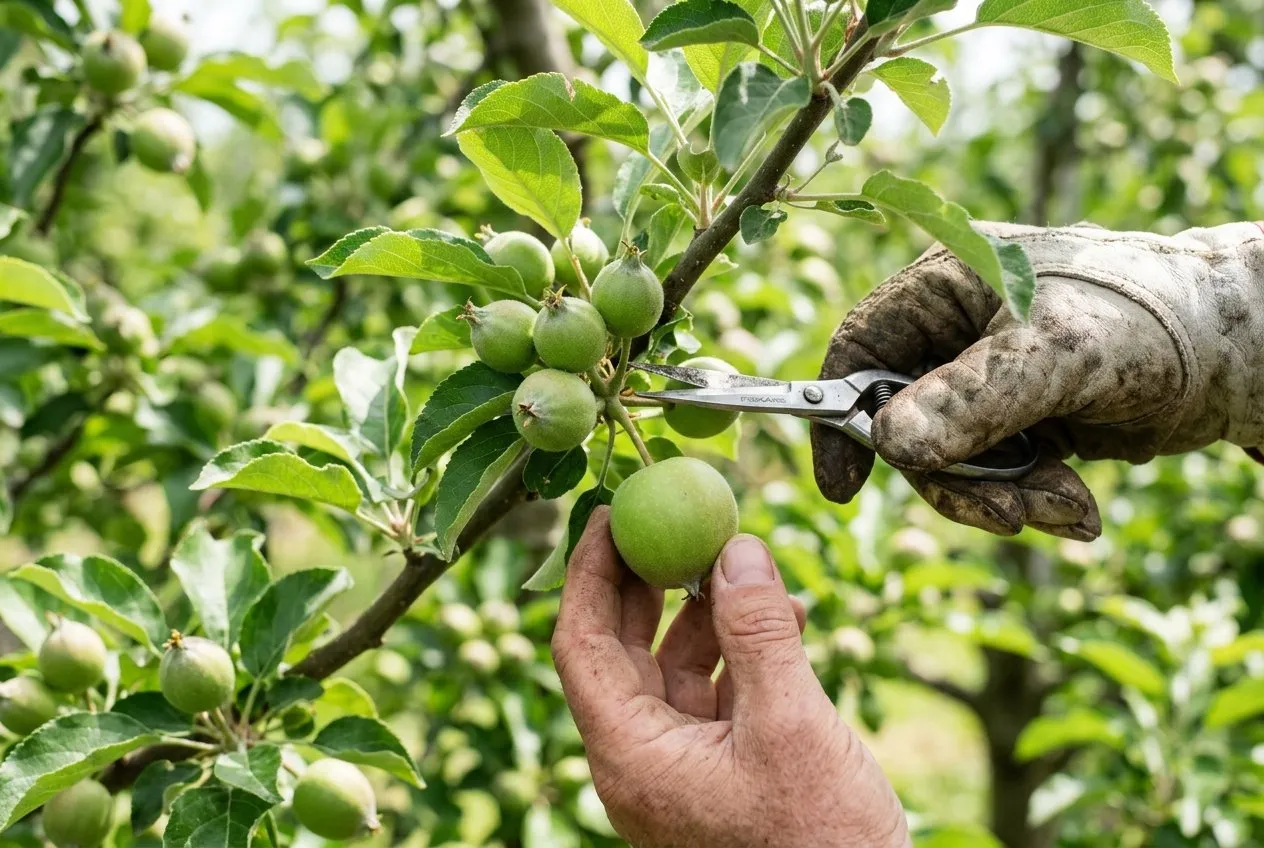 June fruitlet thinning. Leaving one or two apples per cluster, well spaced, breaks the cycle and grows larger fruit.
A month-by-month plan to even out cropping
Managing biennial bearing follows the fruit year closely. This calendar keeps an apple or pear tree cropping steadily in the UK.
| Month | Action |
|---|---|
| January | Winter prune to renew spurs, plan thinning for a heavy year ahead |
| February | Check fruit buds, assess whether this is likely an on year |
| March | Mulch and feed, ready frost protection for blossom |
| April | Protect blossom from late frosts, the common trigger of the cycle |
| May | In an on year, thin blossom by up to half across the tree |
| June | After the natural drop, thin fruitlets to one or two per cluster |
| July | Water well in dry spells so the tree can ripen fruit and set buds |
| August | Keep watering, support heavy branches to prevent breakage |
| September | Harvest, note the crop weight to track the pattern over years |
| October | Clear fallen fruit, feed after harvest, mulch the root zone |
| November | Plant new trees, choosing even-cropping varieties where possible |
| December | Review crop records, plan next year’s thinning from the pattern |
Why frost and stress start the biennial cycle
Thinning treats the cycle, but stress usually starts it. The root cause of a tree first falling into biennial bearing is often a single disrupted year, and a late frost is the classic culprit.
A hard frost in spring can kill a whole year’s blossom. With no crop to ripen, the tree forms masses of flower buds and sets a huge crop the next year. That glut then blocks the following year’s buds, and the alternating rhythm is established from one frosty night. Drought, a poor pollination year, or a heavy pest attack can start it the same way.
The permanent answer is to reduce stress and protect blossom. Cover small trees or wall-trained fruit with fleece on frosty spring nights. Feed, water and mulch so the tree never runs short. Keep on top of pests and disease. A tree kept in steady condition is far less likely to start alternating, and far easier to bring back if it does. Watering matters for fruit quality too, as our guide to apples and pears tasting bitter explains. The Royal Horticultural Society’s advice on biennial bearing backs the same thinning-first approach.
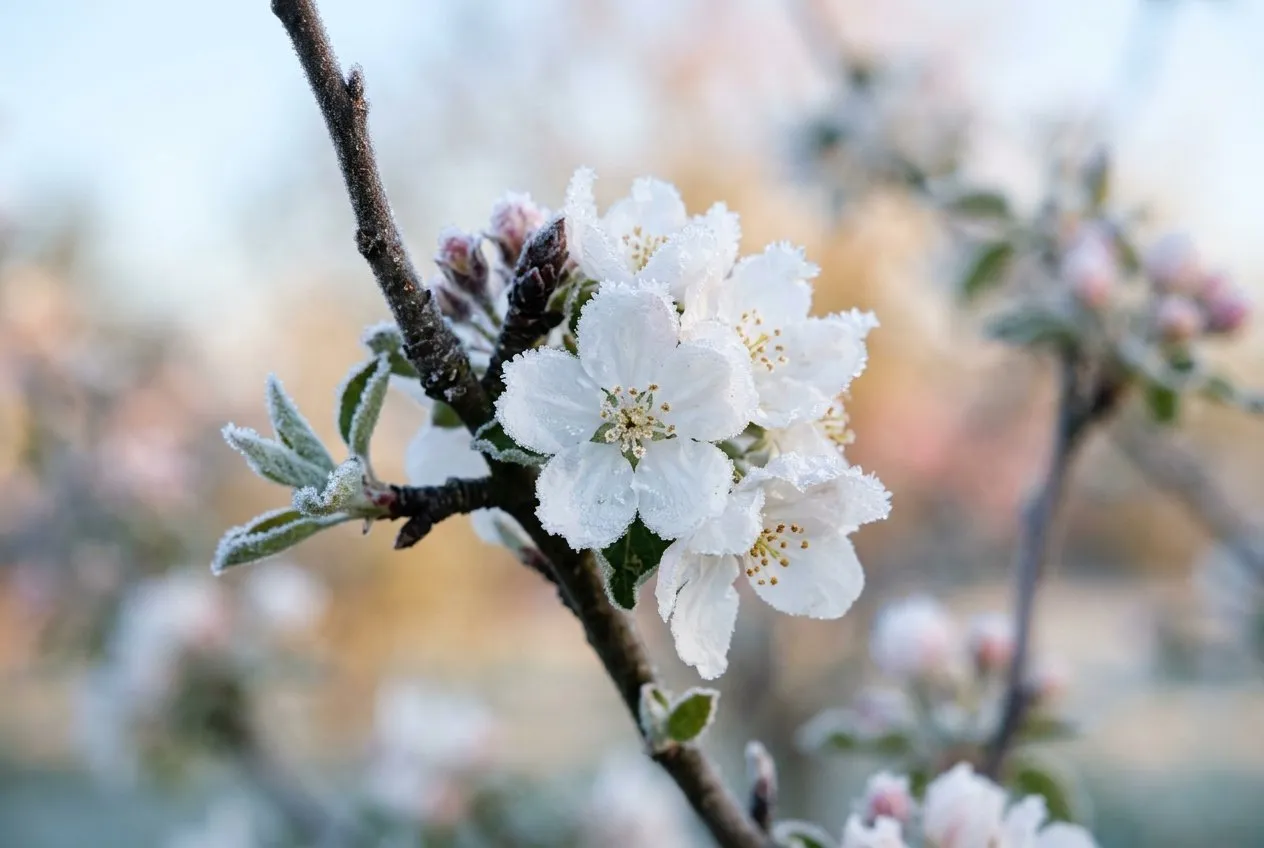 A late frost on blossom can start the whole cycle. Protecting flowers on cold spring nights helps keep cropping even.
Blossom thinning feels counterintuitive, because you are removing potential fruit by hand. But the on-year glut was never usable in full, and the off-year emptiness wasted a whole season. Trading a smaller, even crop for the swings is a clear win in any garden.
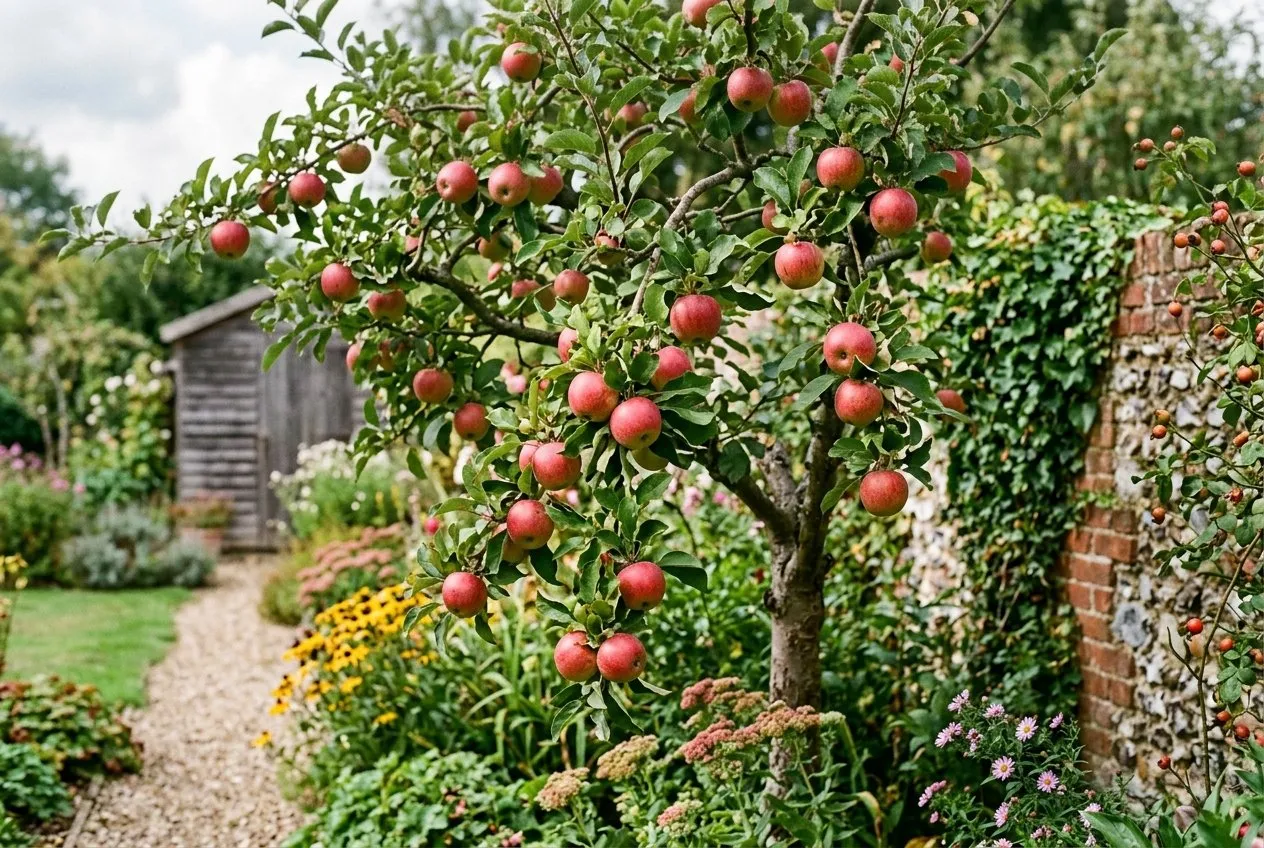 The result of thinning. A moderate, even crop of well-spaced apples every year, instead of one glut followed by an empty season.
Common mistakes when managing biennial bearing
Most attempts to fix biennial bearing fail for a few reasons. These are the errors to avoid.
- Feeding instead of thinning. The cause is hormonal, not hunger. Feeding helps, but only thinning breaks the cycle.
- Thinning too late. Flower buds form in early summer. Thin blossom in spring and fruitlets in June, not in autumn when it is too late to help.
- Thinning too lightly. A token thin barely dents the seed load. On a strongly biennial tree, remove up to half the blossom.
- Ignoring frost. A late frost can start or restart the cycle. Protect blossom on cold spring nights.
- Letting branches break. A heavy on-year crop can snap limbs, setting the tree back. Thin the crop and support heavy branches.
Frequently asked questions
What is biennial bearing in fruit trees?
It is when a tree crops heavily one year then barely at all the next. The heavy crop stops the tree forming flower buds for the following year. Apples and pears are most affected. Thinning the crop in the heavy year breaks the alternating pattern.
How do I stop my apple tree biennial bearing?
Thin the crop hard in the heavy on year. Remove about half the blossom in spring, or thin young fruitlets in June. This lets the tree form flower buds for next year. Steady feeding, watering and mulching also help keep cropping even.
Why does my apple tree only fruit every other year?
A heavy crop’s developing seeds release hormones that block flower bud formation. So a big year is followed by a near-empty one. A late frost that wipes out one year’s blossom can also start the cycle. Thinning the heavy crop resets the rhythm.
Which apple varieties are prone to biennial bearing?
Bramley, Blenheim Orange, Newton Wonder and Laxton’s Superb are all prone. Many pears alternate too. Some varieties like Cox and Discovery crop more evenly. Choosing a less prone variety helps, but thinning works on any tree that has started the cycle.
When should I thin apples to prevent biennial bearing?
Thin blossom in spring, or fruitlets in June after the natural June drop. Remove enough to leave one or two fruit per cluster, spaced about 10 to 15cm apart. In a biennial tree, thin harder in the heavy year to free up energy for flower buds.
Can frost cause biennial bearing?
Yes, a late frost that kills one year’s blossom often starts the cycle. The tree then sets a huge crop the next year, which blocks the following year’s buds. Protecting blossom from frost and thinning heavy crops both help keep the rhythm even.
Now you can break the cycle and crop fruit every year. To get the rest of your tree care right, read our guide to pruning fruit trees, or browse the full growing section for more fruit guides.
Our team produces practical UK gardening guidance from source research, contributor records and established horticultural practice. Editorial standards are overseen by Matt W.