Key takeaways
- Bitter pit causes brown sunken spots and bitterness in apples, from a calcium and watering fault
- Pears go sleepy, brown and mushy when left to ripen on the tree or stored too warm or too long
- Pears must be picked firm and under-ripe, then ripened indoors, or they rot from the core
- Pick apples with the lift-and-twist test, and check maturity with a starch-iodine test
- Store only blemish-free fruit, cool and dark, in a single layer, not touching, away from onions
- Bitter pit is prevented next season with steady watering, not by anything done in store
Apples and pears that taste bitter, mealy or simply off are usually telling you something specific, and the flavour and the look together point to the cause. A bitter apple with brown speckles in the flesh is a different problem from a pear that has gone brown and grainy in the middle, and both are different again from fruit that has simply been stored too long. The good news is that almost every one of these faults is preventable, once you can name it.
Diagnose the problem by symptom
The fastest way to work out why your fruit tastes wrong is to match the flavour and the inside of the fruit to a cause, because each fault has a distinct look. Bitter pit speckles the flesh, sleepy pears brown from the core, over-mature fruit goes mealy, and tainted fruit smells of whatever sat beside it. Cut a piece open and the diagnosis is usually clear.
Use this table to identify what you have before deciding what to do about it.
| Taste and look | Most likely cause | Fruit affected | What it means |
|---|---|---|---|
| Bitter, small brown sunken spots in flesh | Bitter pit | Apples, large fruit worst | Calcium and watering fault |
| Brown, mushy, sweet-rotten from the core | Sleepy pear | Pears | Picked too late or stored too warm |
| Dry, grainy, mealy, woolly texture | Over-mature | Apples and pears | Left too long on tree or in store |
| Bland, starchy, no sweetness | Picked too early | Apples and pears | Starch not yet turned to sugar |
| Tastes of onion, paint or chemicals | Tainting | Apples and pears | Stored near strong smells |
| Bitter, tannic, with rough russet skin | Variety character | Russet apples | Normal, not a fault |
The single most useful split is between problems you caused at picking and storage, like sleepy pears and tainting, and problems set during the growing season, like bitter pit. The first kind you fix straight away by changing how you handle the fruit. The second you fix next year out in the garden.
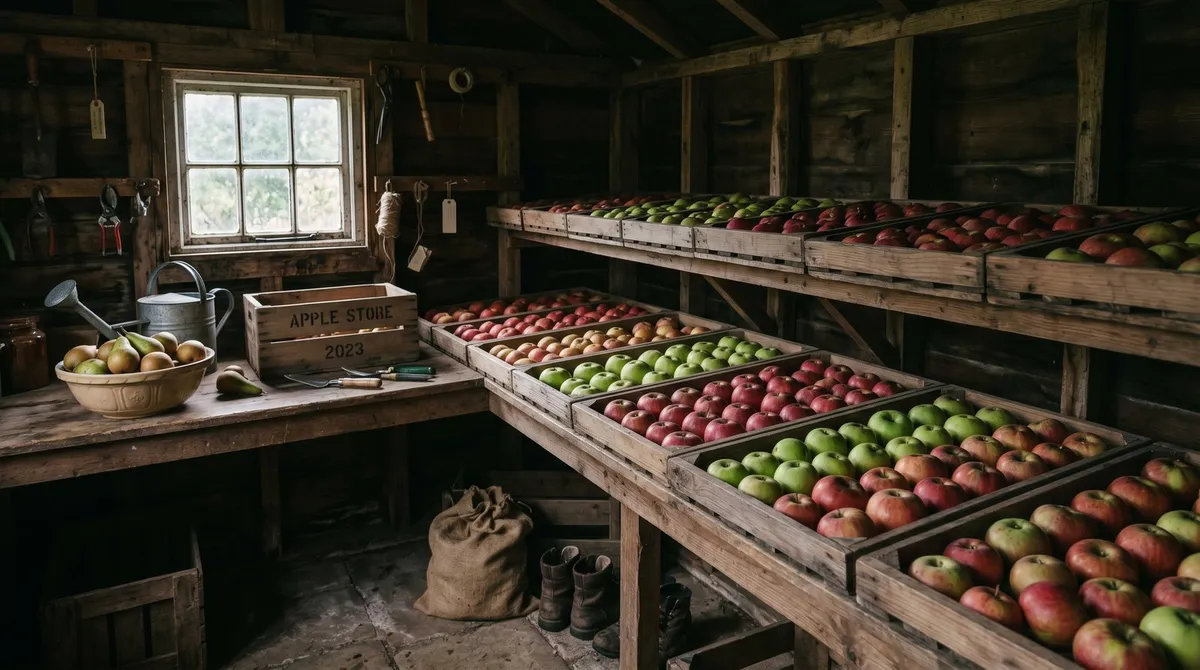
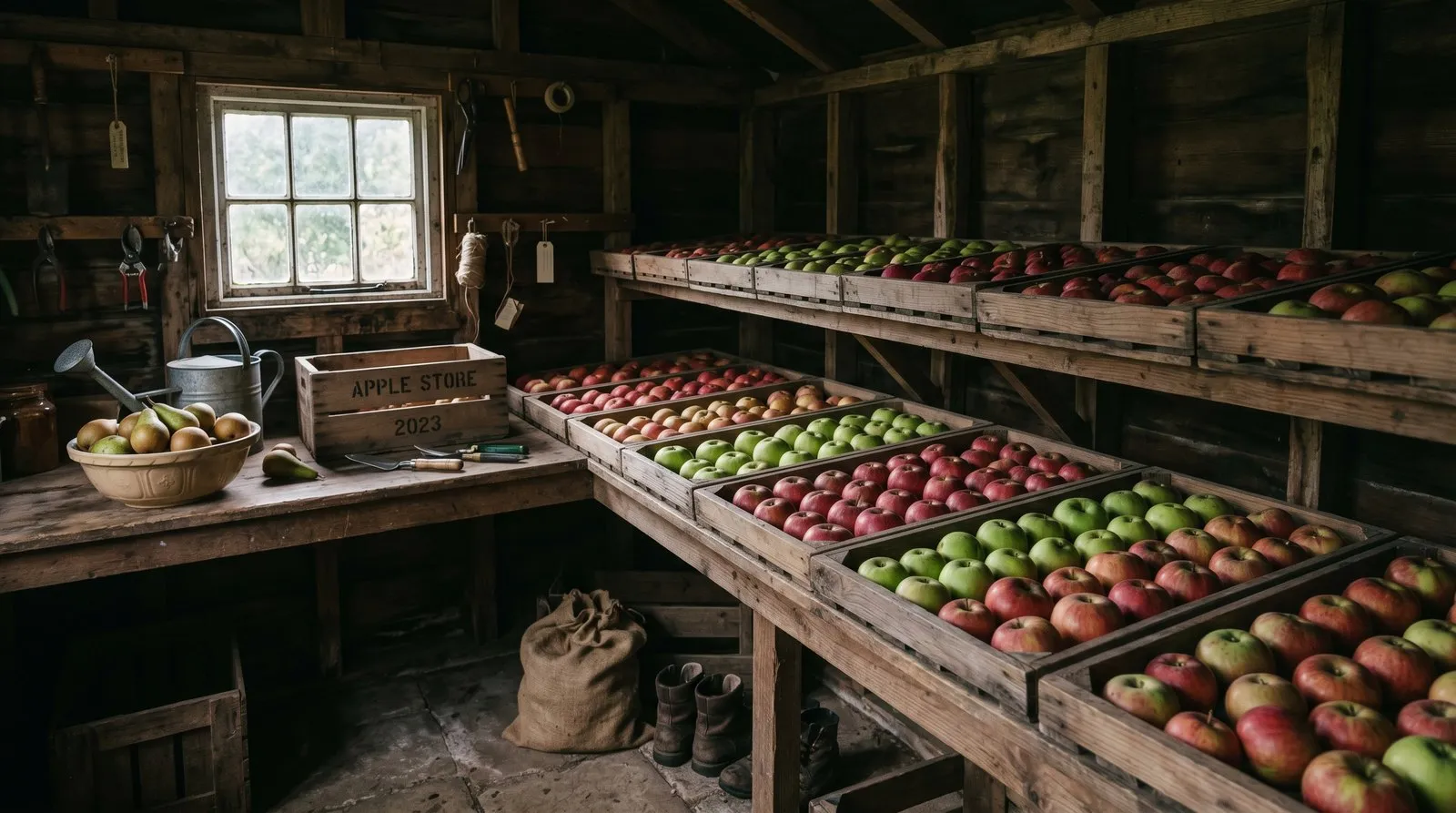 A proper fruit store: apples in a single layer on airy slatted trays, pears ripening separately in a bowl indoors.
Bitter pit: why apples taste bitter
Bitter pit makes apples taste bitter and speckles the flesh with small brown sunken spots, and it is a calcium problem caused by erratic watering, not a disease. It often develops after picking, so a sound-looking apple turns bitter and pitted in store, which is why it catches people out.
The brown flecks sit just under the skin and through the flesh, and the taste is distinctly bitter where they cluster. It is not something you can catch or spread, and you cannot spray it off in store. The real cause is a local shortage of calcium in the fruit, and that shortage almost always comes from uneven watering during the growing season, when the tree could not move calcium steadily into the developing apples. It is worse in large fruit and in certain varieties, with Bramley a notorious sufferer.
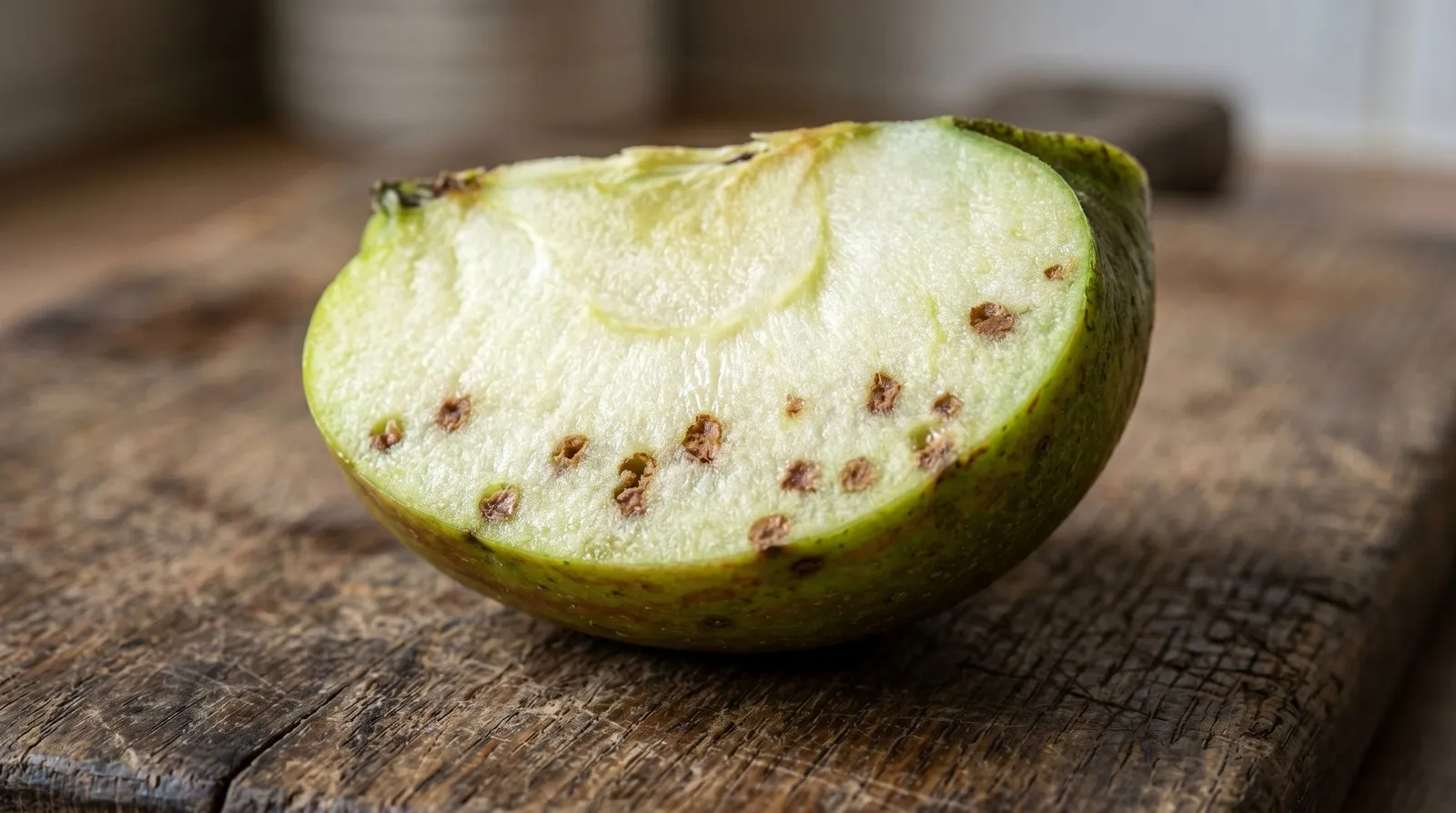 Bitter pit: small brown sunken spots through the flesh and a bitter taste. It is a calcium and watering fault, set in the garden, not the store.
Sleepy pears: why pears go brown and mushy
Pears go sleepy, browning and turning mushy from the core outwards, when they are left to ripen on the tree or stored too warm or too long. It is the most common pear disappointment, and the cause is almost always picking too late. A pear that ripens fully on the tree rots from the inside while still looking decent outside.
This is the single most important thing to understand about pears, and it is the opposite of apples. Pears must be picked while still firm and under-ripe, then ripened indoors. Left to soften on the tree, the flesh around the core goes brown, grainy and sweet-rotten, what the old allotment hands call a sleepy pear. The outside can look perfect while the middle is already spoiling.
The fix is timing and temperature. Pick pears firm, store them cool, and ripen only a few at a time indoors at room temperature, in a bowl, where they turn buttery and sweet in a few days. A ripe banana alongside speeds it up. Stored too warm or kept too long, even correctly picked pears eventually go sleepy, so check them often. For choosing reliable types, see our guide to the best pear tree varieties, and for the whole season our notes on growing pear trees.
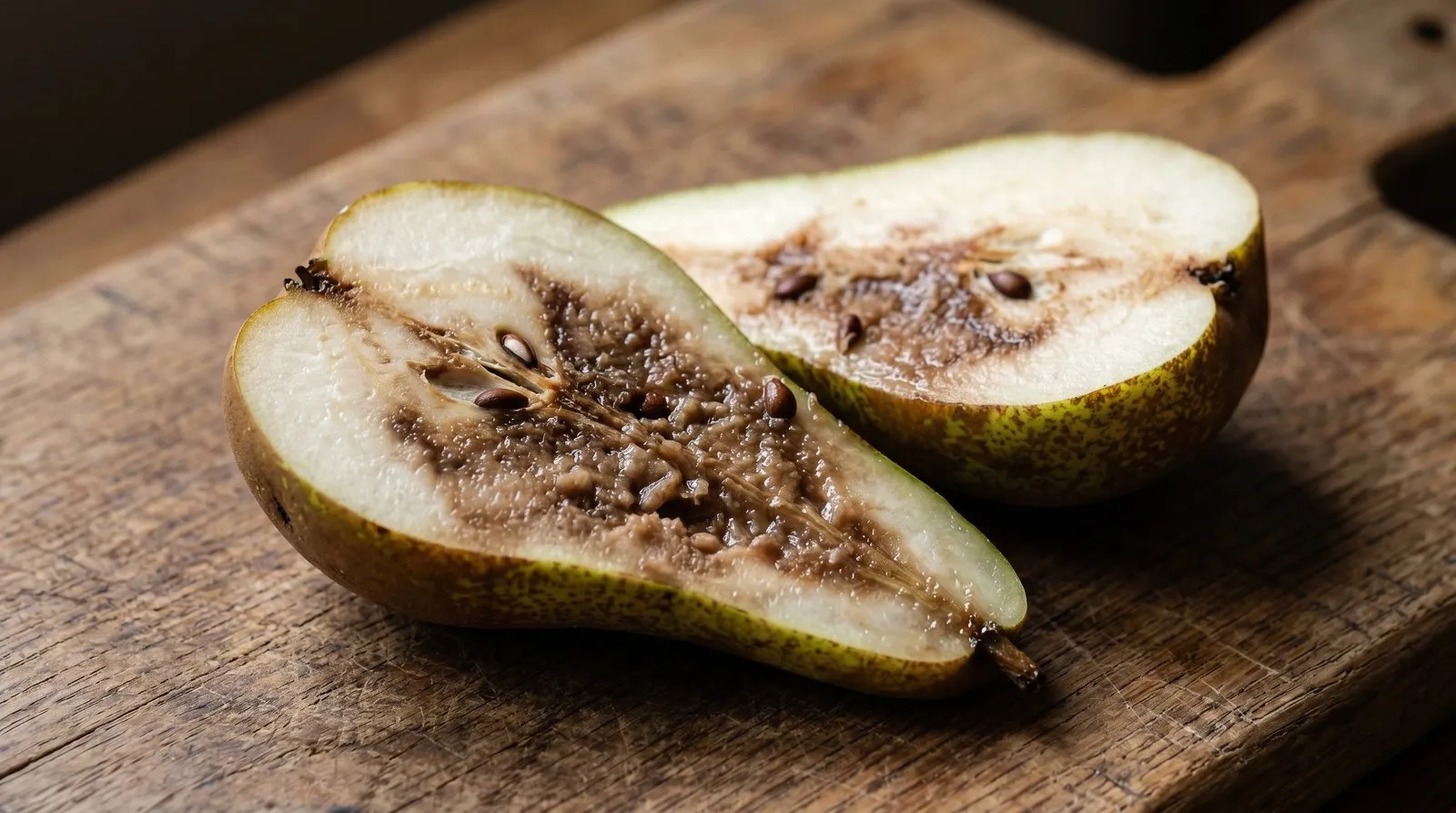 A sleepy pear: brown and grainy from the core out, while the skin still looks sound. The cause is ripening on the tree or storing too warm.
Pick at the right moment with the lift-and-twist test
The lift-and-twist test is the simplest way to pick apples and pears at the right stage, and getting that stage right prevents most storage faults. Cup the fruit in your hand, lift it and give a gentle twist. If it parts easily from the spur with its stalk, it is ready to come; if you have to tug, leave it longer.
The key is what “ready” means for each fruit. An apple should lift away ripe, sweet and ready to eat or store. A pear should lift away firm and under-ripe, because it finishes ripening indoors. So you are testing for two different stages with the same action: pick apples when they release ripe, pick pears when they release while still hard.
For apples you can be more precise with a starch-iodine test. Cut an apple in half, brush the cut face with iodine solution, and read the staining. Starch stains blue-black, and as the fruit ripens its starch turns to sugar, so a riper, more storable apple shows less blue. Lots of blue means it is too starchy and not ready; mostly clear means it is past its storing best. It takes the guesswork out of picking a whole tree.
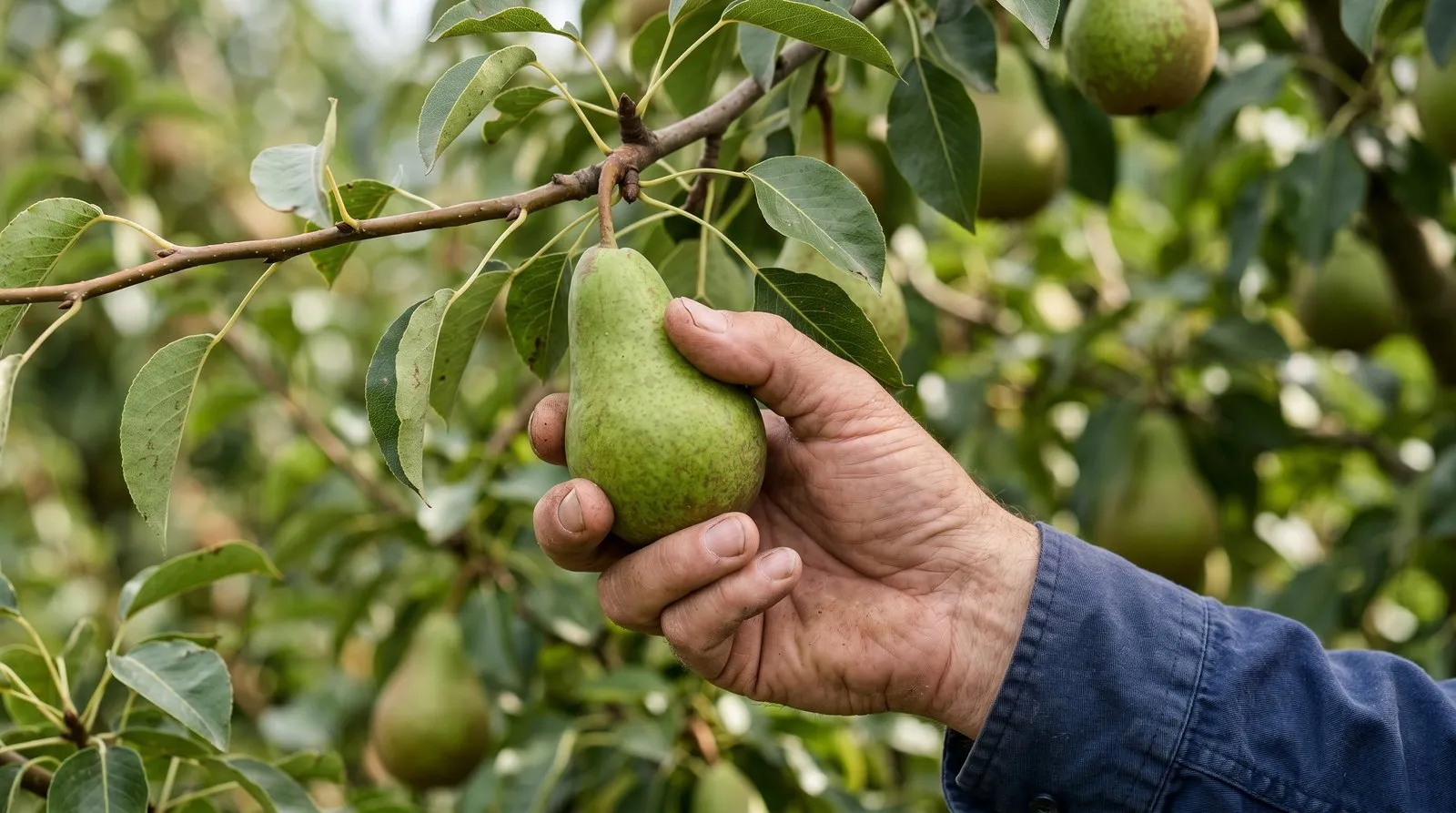 The lift-and-twist test: if the fruit parts easily with its stalk it is ready. Pick pears firm, apples ripe.
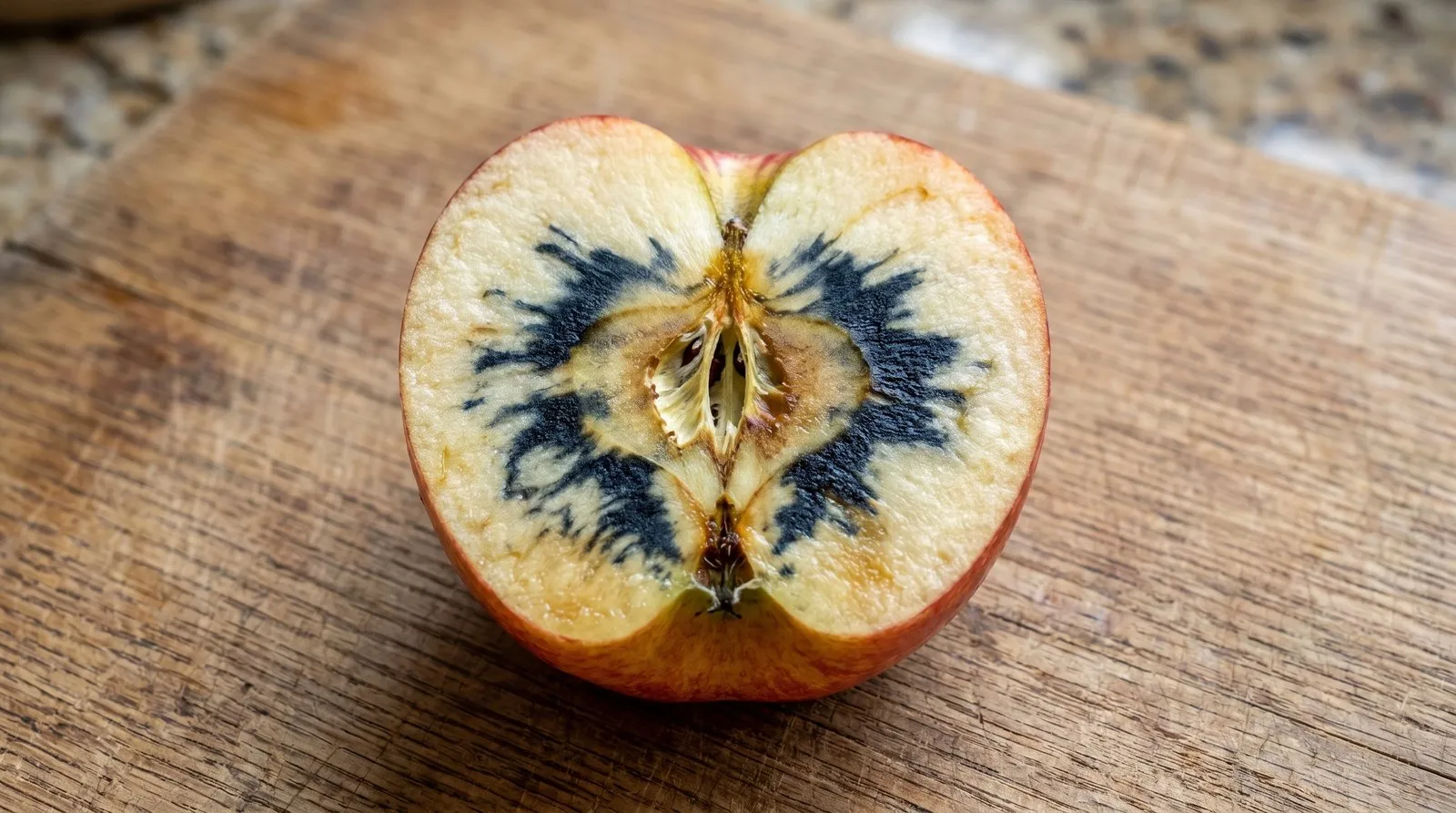 The starch-iodine test on a cut apple: the more the cut face stains blue-black, the more starch remains and the less ripe the fruit.
Store fruit so it keeps and tastes good
Store only perfect fruit, cool, dark and airy, in a single layer that is not touching, and keep it away from strong smells. Storage will not improve fruit, but poor storage ruins good fruit fast, so the rules are about protecting quality, not creating it.
Follow these points for a store that lasts:
The RHS guide to storing fruit gives the same essentials, and our own guide to storing apples and pears covers the detail. If you cannot store well, surplus fruit is better dried or frozen than left to spoil.
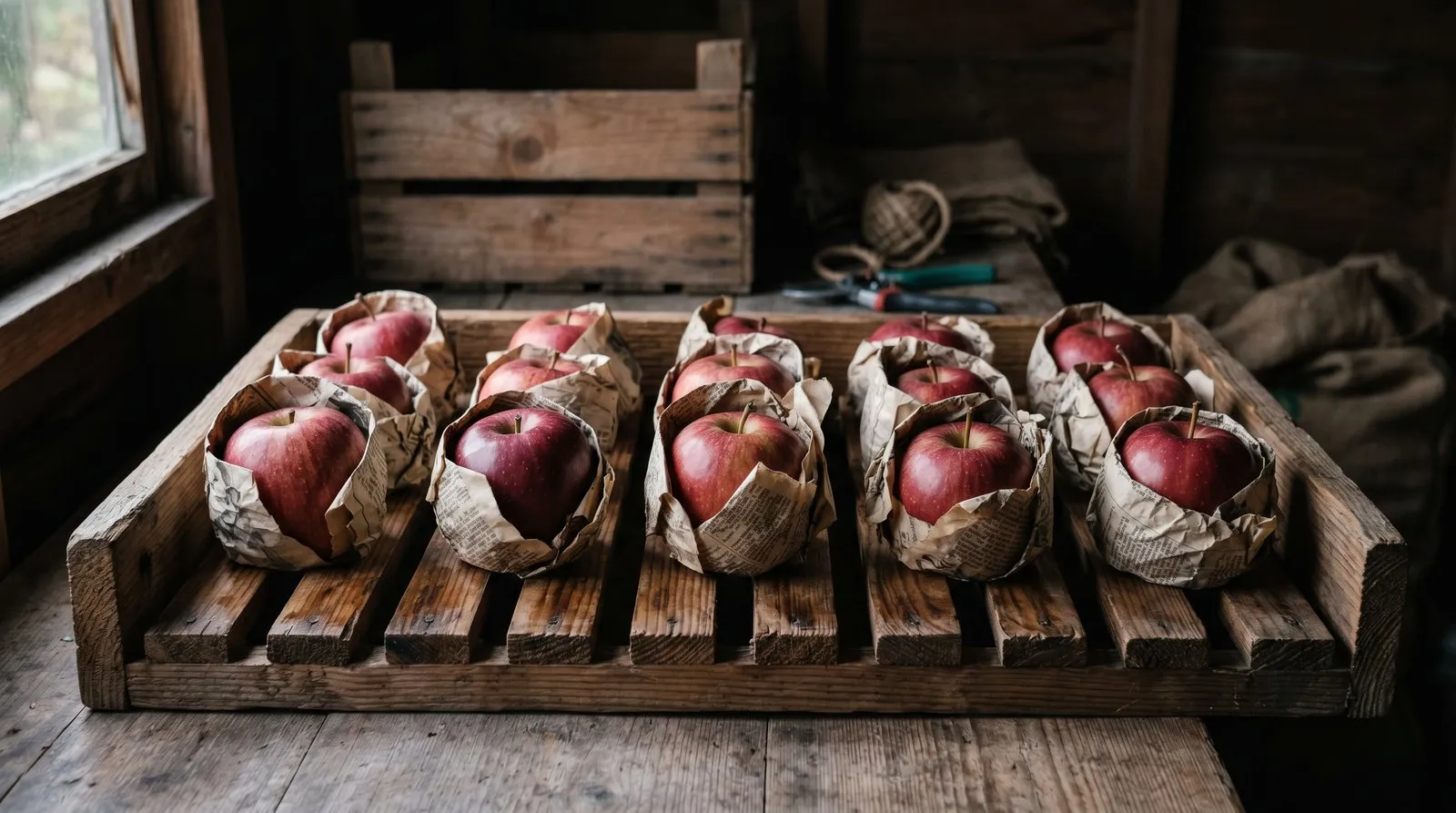 Wrapping sound apples in paper and laying them in a single layer, not touching, slows ageing and stops one bad fruit spoiling the rest.
When bitter is normal, and when it is rot
That is the whole of fruit-flavour diagnosis in one habit: look, taste, and name the cause before you act. Bitter pit and sleepy pears are the two that catch most people, and both are easy to beat once you know them. Pick apples ripe and pears firm, store only sound fruit cool and apart, water steadily through the season, and the bitter, mealy, off-tasting fruit that spoils a winter store becomes a thing of the past.
For more orchard help, browse our full problems section and our guide to growing apple trees for healthy fruit from the start.
Sunken brown spots in the fruit point to a watering fault, explained in our guide to apple bitter pit.
Frequently asked questions
Why do my stored apples taste bitter?
The usual cause is bitter pit, which shows as small brown sunken spots in the flesh and skin and a bitter taste, often developing in store. It is not a disease but a calcium problem driven by erratic watering during the growing season, and it is worse in large fruit and varieties like Bramley. The fix is steady watering next year, not anything you can do once the fruit is picked.
Why are my pears brown and mushy inside?
Those are sleepy pears, browning and going mushy from the core outwards while often looking fine outside. It happens when pears are left to ripen on the tree, or stored too warm or too long. Pears must be picked while still firm and under-ripe, then ripened indoors. Picked at the right moment and ripened off the tree, the same pears turn buttery and sweet instead.
How do I know when to pick apples and pears?
Use the lift-and-twist test: cup the fruit, lift and gently twist, and if it parts easily with the stalk it is ready. Apples should come away ripe; pears should come away firm and under-ripe, ready to ripen indoors. For apples you can also cut one and do a starch-iodine test, where less blue staining means a riper, more storable fruit.
How should I store apples and pears so they keep?
Store only blemish-free fruit with the stalk intact, in a cool, dark, airy place between about 3 and 7°C. Lay them in a single layer, not touching, on slatted trays so air moves around them, and keep them away from strong smells like onions and paint, which taint the fruit. Check regularly and remove any that start to rot before it spreads.
Can I prevent bitter pit in apples?
Yes, but only during the growing season, not in store. Water trees steadily and evenly, especially young and container trees in dry spells, because erratic watering is the main trigger. Avoid over-feeding with nitrogen, do not leave fruit on too long, and on badly affected trees a summer calcium spray can help. Some varieties such as Bramley are simply more prone and need the most care.
Our team produces practical UK gardening guidance from source research, contributor records and established horticultural practice. Editorial standards are overseen by Matt W.