Key takeaways
- Fatsia japonica and Euphorbia characias both survive on under 1.5 hours of care per year
- Trachycarpus fortunei is the only palm hardy across the whole UK, surviving minus 15C
- Phormium tenax reaches 2m and needs full sun for upright form, not floppy growth
- Free-draining soil matters more than feeding: 9 of 10 architectural plant deaths follow winter wet
- Pot-grown agave and echeveria need lifting under cover below 3C from November to March
- Cut dead Phormium leaves at the base, never across the top, or you ruin the shape
Bold foliage shapes are also the starting point for a lush jungle garden design.
What makes a plant architectural
An architectural plant carries a strong, distinct outline that reads from across the garden. The shape is the point. Spikes, fans, sword leaves, bold trunks or huge divided foliage all qualify. Flowers are a bonus, never the main event.
Three features separate true architectural plants from ordinary border fillers. First, a defined silhouette that holds through the year. Second, evergreen or semi-evergreen foliage so the structure survives winter. Third, scale: the plant is large or distinct enough to anchor a space on its own.
In design terms, these plants work as specimens standing alone, as structure repeated through a border, or as a screen giving height and privacy. A garden built on good architectural planting reads well even with no flowers in sight. That is exactly why low-maintenance gardens lean on them so heavily.
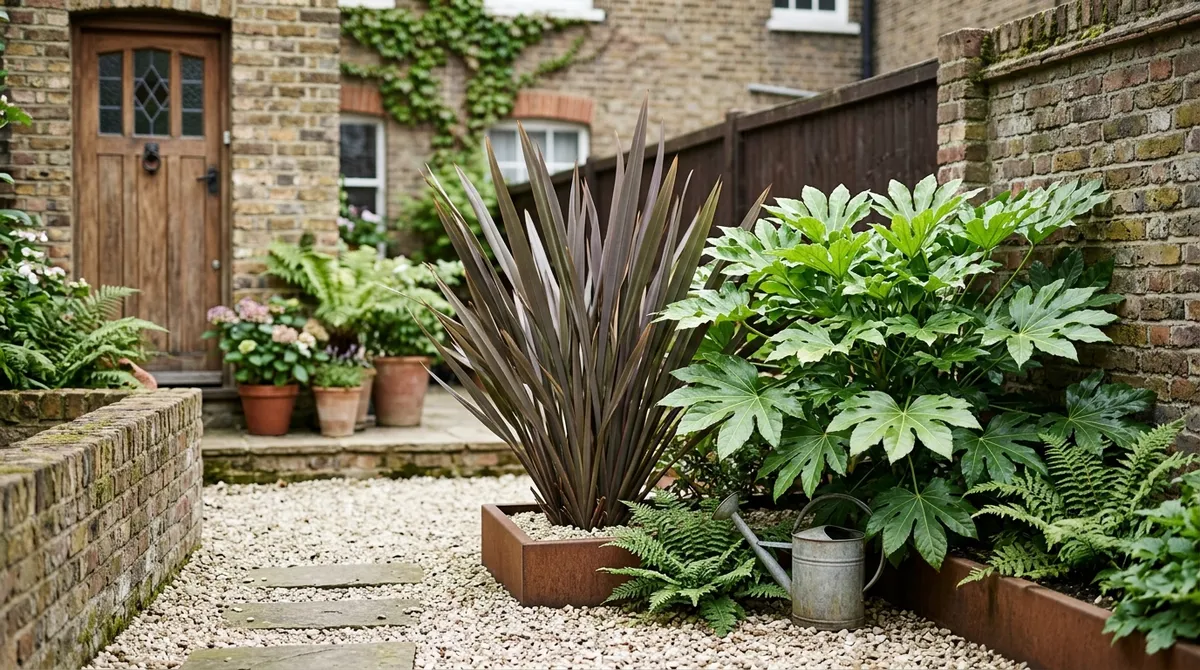
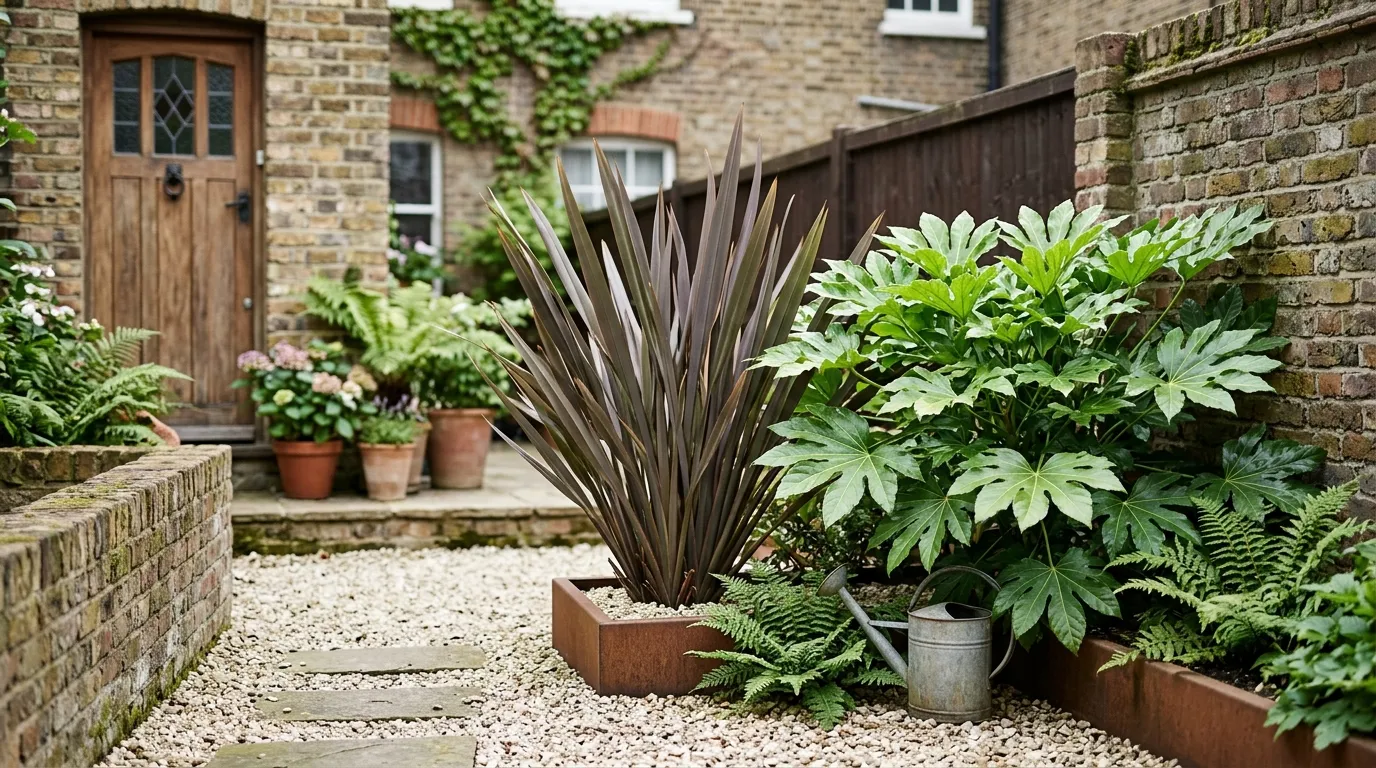 A London townhouse courtyard built on architectural structure. Phormium spikes, glossy Fatsia and gravel carry the space through every season with little input.
Why winter wet kills more plants than cold
Most architectural plant deaths in UK gardens follow waterlogging, not frost. This is the single most important fact for British growers. Many of these plants come from drier climates: New Zealand, the Mediterranean, Mexico, the warm parts of Asia. They tolerate cold, but they rot when their crowns sit in cold wet soil for weeks.
The science is simple. Cold wet soil holds no oxygen around the roots and crown. Tissue that is already stressed by cold cannot fight off the rot fungi that thrive in those conditions. A plant rated to minus 15C on paper dies at minus 6C in a waterlogged clay pocket.
The fix is drainage, every time. Plant on a slight mound. Add 30 to 50 per cent horticultural grit to heavy soil. Avoid frost pockets and low spots where cold air and water both collect. Get this right and most architectural plants shrug off a normal UK winter.
Gardener’s tip: Before you plant anything spiky or exotic, dig a 300mm hole and fill it with water. If it has not drained within four hours, your soil is too wet for most architectural plants without a raised bed or heavy grit amendment.
The top five carry a garden on their own. Fatsia japonica and Euphorbia characias are the lowest effort of all at roughly one hour each per year. The grasses, Miscanthus and Stipa gigantea, are not evergreen but ask only a single annual cut, so they still rate highly on the effort scale.
The shade performers: Fatsia, Mahonia, Astelia
Mahonia x media cultivars such as ‘Charity’ add height and scented winter flowers to a shady corner. They flower from November to February when little else does. Astelia chathamica brings silver sword leaves to part shade and looks striking in a large pot. All three suit the dark, awkward corners that defeat ordinary plants.
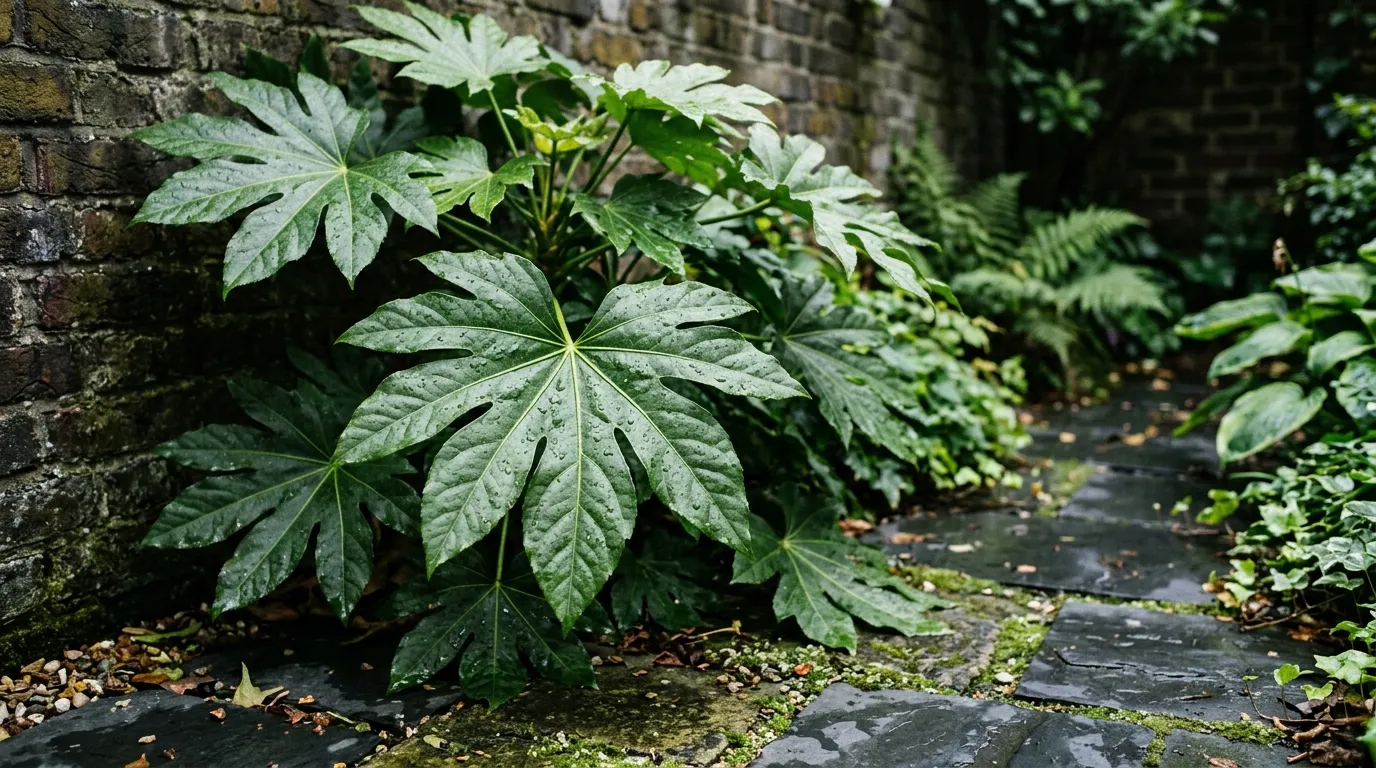 Fatsia japonica thriving in a shaded corner that gets barely two hours of sun a day. Its hand-shaped leaves reach 400mm across and stay glossy all winter.
The sun lovers: Phormium, Yucca, Cordyline
The boldest spiky plants want full sun. In shade they grow loose and lean toward the light, which ruins their form. Phormium tenax, the New Zealand flax, throws stiff sword leaves to 2m or more. Give it full sun and free-draining soil and it stays upright and sharp. For deeper detail on cultivars and colour, see our guide to growing Phormium in UK gardens.
Yucca gloriosa holds rigid blue-green spears and sends up a 1.5m flower spike of cream bells in late summer. It is one of the most drought-proof plants you can grow. Our Yucca growing guide covers the few pitfalls, mostly around winter wet. Cordyline australis gives a palm-like trunk topped with a fountain of strappy leaves. It is the least hardy of the three, taking minus 8C, so site it in a warm sheltered spot. The full picture is in our Cordyline care guide.
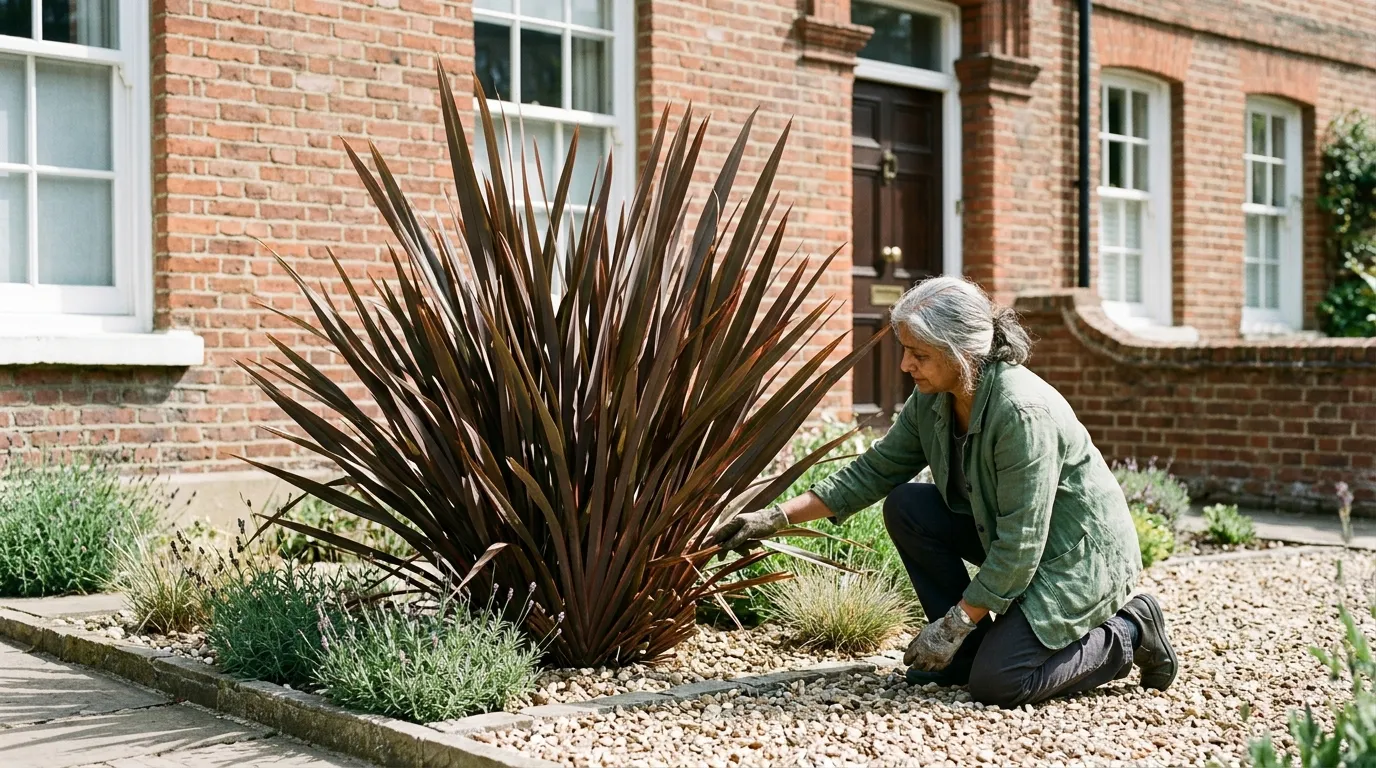 A mature bronze Phormium tenax in full sun keeps its stiff upright form. In shade the same plant grows loose and leans toward the light.
A hardy palm that survives the whole UK
Trachycarpus fortunei, the Chusan palm, is the only palm reliably hardy across all of Britain. It survives minus 15C with the fan leaves intact and tolerates more in a sheltered spot. A 3 to 6 metre trunk topped with 1 metre fan leaves brings instant exotic structure. It is far tougher than its tropical looks suggest.
The plant is happiest in full sun with shelter from cold drying winds that shred the leaves. It grows slowly, around 100 to 200mm of trunk a year once established, so buy the largest you can afford. A 1.5m specimen costs £80 to £180 at most UK nurseries.
Care is minimal. Cut off the lowest brown leaves once or twice a year for a clean trunk. Water in the first two summers, then leave it alone. For a wider range of exotic structure to pair with it, our guide to hardy exotic and tropical plants for the UK lists the best companions. The Chusan palm forms the backbone of many UK courtyard schemes.
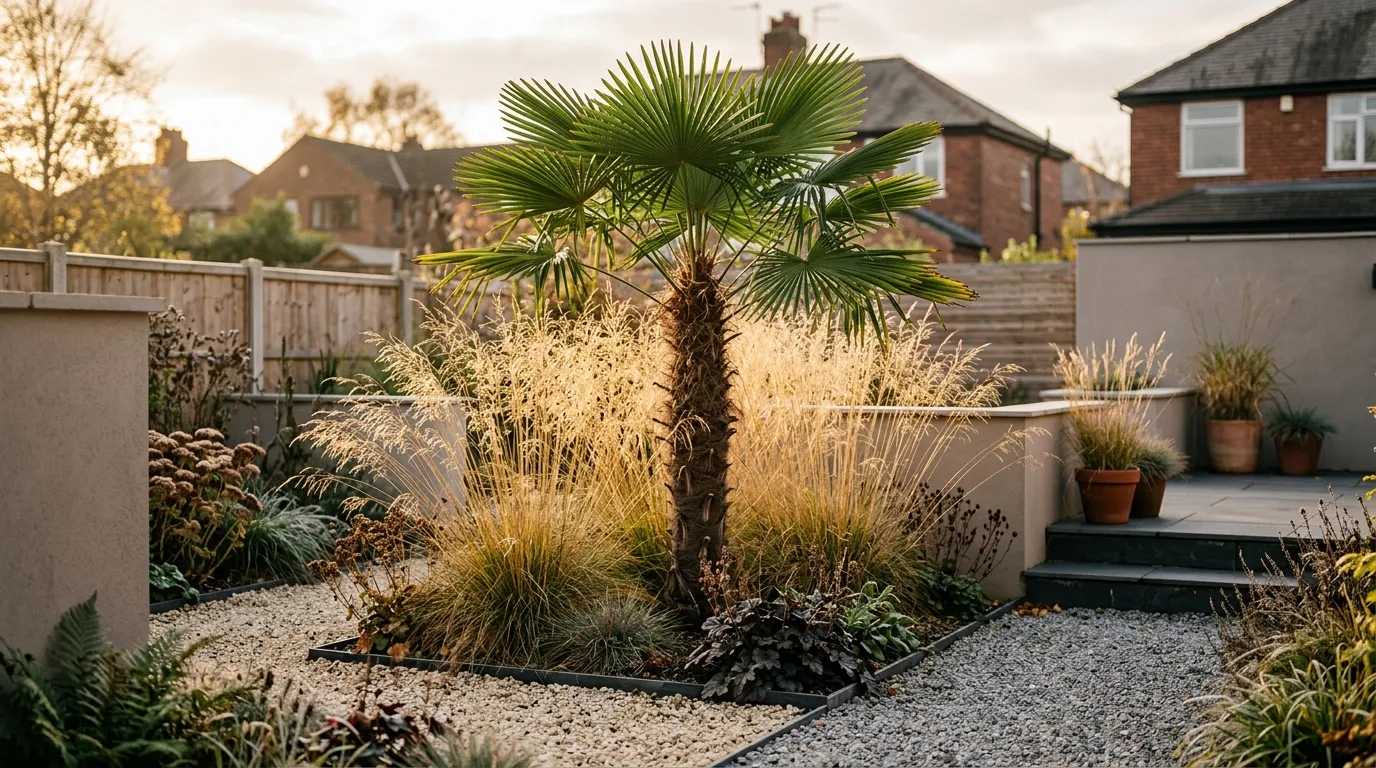 A Trachycarpus palm and Stipa gigantea in a contemporary Manchester gravel garden. The fan leaves survive minus 15C while the grass glows in low autumn light.
Grasses and seedheads for movement and structure
Not all architectural structure needs to be solid and spiky. Large ornamental grasses bring height, movement and winter form for almost no work. Miscanthus sinensis cultivars reach 1.8 to 2.5m and stand through winter as tan plumes. Stipa gigantea sends airy oat-like flower stems to 2.5m that catch low sun. Both ask for one job a year: cut the old growth to the base in late winter.
These grasses pair beautifully with bold foliage. Our ornamental grasses guide for UK gardens covers cultivar choice and timing in full. Verbena bonariensis adds tall, see-through purple flower clusters at 1.5m and self-seeds gently to fill gaps.
Seedheads extend the structural season into winter. Allium flower stems dry to perfect globes that hold for months. Acanthus mollis, bear’s breeches, throws 1.2m spires of hooded flowers above huge glossy leaves. Leave these seedheads standing. They feed the structure of the garden right through the cold months and look striking under frost.
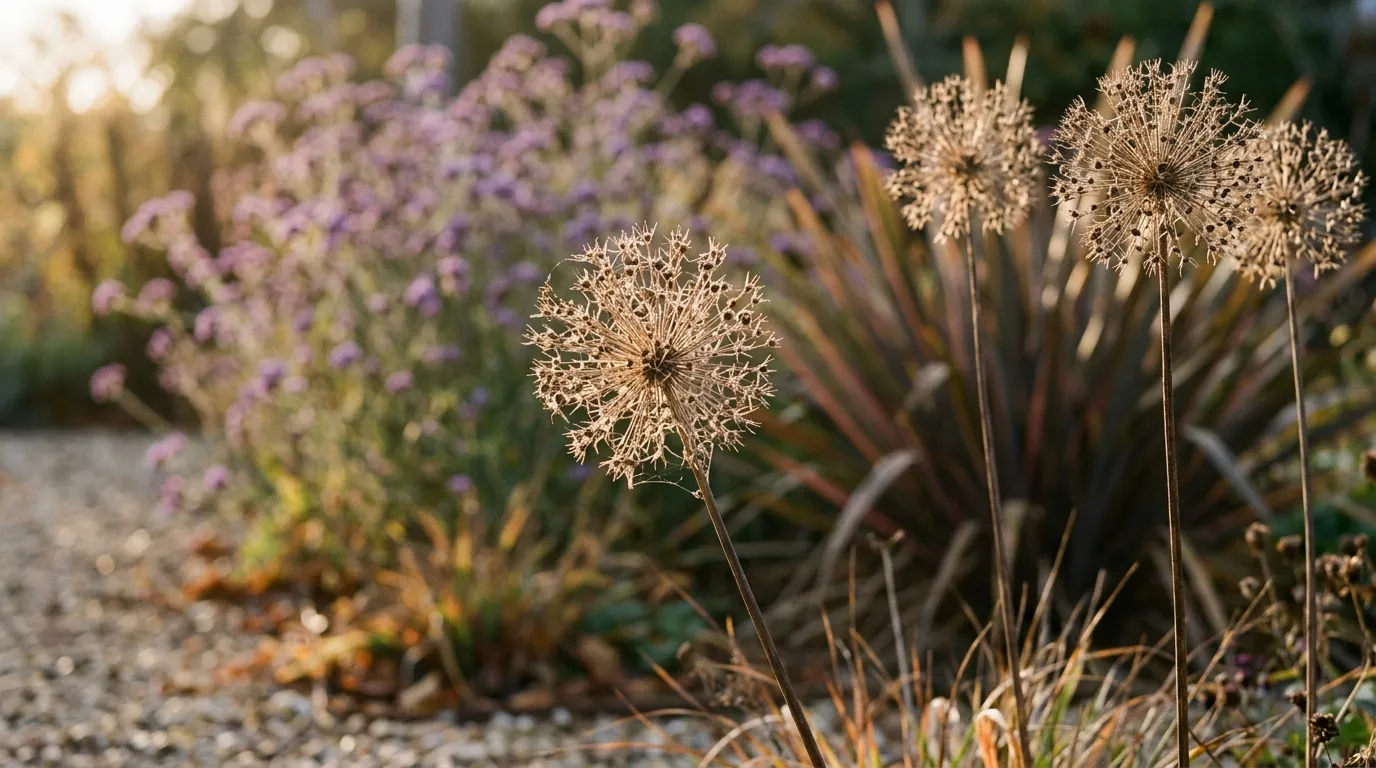 Allium seedheads dry to skeletal globes that hold for months. Left standing, they carry structure right through autumn and winter.
Architectural plants for pots and tender exotics
Pots open up the most dramatic architectural plants, including tender ones you could not risk in the ground. Agave americana and echeveria rosettes bring sculptural symmetry that no hardy plant matches. They are not frost hardy, taking only minus 3C, so they live in pots and move under cover for winter.
Use a gritty, free-draining mix: two parts compost to one part horticultural grit. A pot at least 400mm wide gives stability for top-heavy spiky plants. Cordyline, dwarf Phormium, Astelia and Yucca all grow well in large containers too, and these hardy ones can stay out all year.
The critical rule for tender succulents is timing. Bring agave and echeveria under cover before the first frost, usually late October to early November in most of England. A cold but frost-free porch, greenhouse or shed is ideal. They need almost no water from November to March while dormant. Overwatering in winter is the main way people kill them.
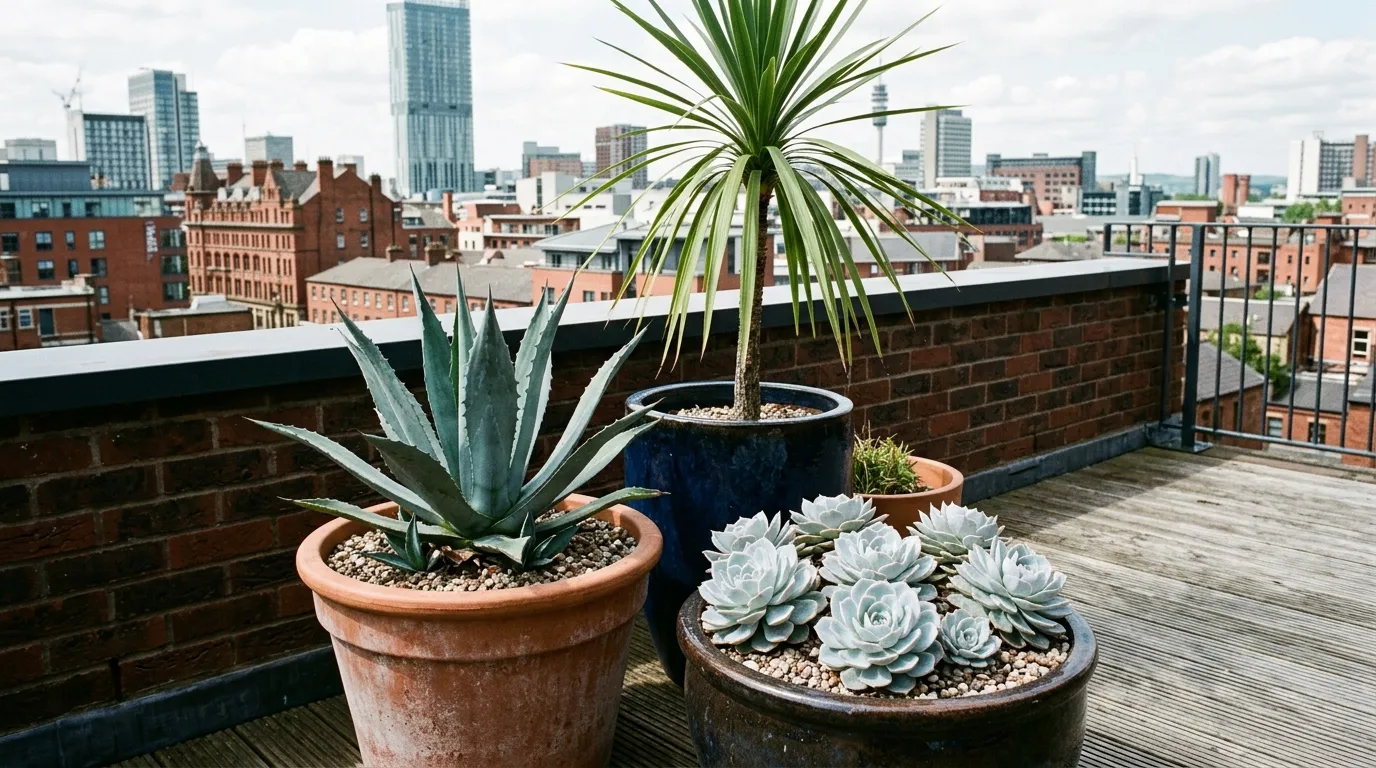 Agave and echeveria rosettes in a Manchester city terrace. These tender exotics live in pots and move under cover before the first November frost.
Pairing plants for a year-round structural garden
A strong architectural scheme repeats a few bold shapes rather than collecting one of everything. Pick three structural plants and use each several times. This reads as deliberate design, not a plant collection. Euphorbia characias repeated through a sunny border ties the whole space together with its lime-green spring flower heads.
Balance spiky shapes with rounded and soft ones. A spiky Phormium sits better beside the rounded mound of a Hebe or the soft cloud of a grass. Too many spikes together feel aggressive and busy. Glossy broad leaves like Fatsia calm down a planting full of swords and spears.
For the layer beneath the architectural specimens, see our guide to evergreen shrubs for year-round interest. It covers the rounded, mounding shapes that set off bold spiky structure. Mix evergreen architectural plants with a few deciduous grasses so the garden keeps form in winter but still changes through the year. That contrast is what stops a structural garden feeling static.
Common mistakes with architectural plants
Planting in a wet, badly drained spot. This is the number one killer. Phormium, Yucca, Astelia and palms rot in cold standing water far below their stated hardiness. Always plant on a mound or in heavily gritted soil. Nine of ten architectural plant deaths in UK gardens follow winter wet, not record cold.
Cutting Phormium leaves across the top. Topping the leaves leaves blunt brown tips that never green up and look wrong all year. Always cut each tired leaf at the very base, reaching into the centre of the clump. Remove no more than a third of leaves at once, in spring.
Siting tender palms or Cordyline in a frost pocket. Cold air pools in low spots and at the base of slopes. A Cordyline rated to minus 8C on flat ground can die at minus 4C in a frost hollow. Plant tender exotics on higher ground or near a warm wall that radiates stored heat overnight.
Leaving tender succulents outside over winter. Agave and echeveria survive minus 3C at most, and only when bone dry. A wet November night at minus 1C can turn an agave to mush. Move all tender pot exotics under cover before the first frost.
Cramming too many spiky plants together. A border of nothing but spikes feels harsh and restless. Break up swords and spears with rounded foliage, soft grasses and broad glossy leaves. The contrast is what makes each architectural plant read clearly.
Year-round care calendar
| Month | Main task |
|---|---|
| January | Check pot exotics under cover are dry, not rotting |
| February | Cut Miscanthus and Stipa to the base before new growth |
| March | Lift and divide overgrown Phormium clumps if needed |
| April | Top-dress beds with grit, plant new architectural specimens |
| May | Move hardened-off agave and echeveria back outside |
| June | Cut tired Phormium leaves at the base, tidy palm trunks |
| July | Water pot-grown plants in dry spells, no feeding needed |
| August | Enjoy Yucca flower spikes, deadhead Euphorbia if untidy |
| September | Cut back Acanthus once flowering finishes |
| October | Move tender succulents under cover before first frost |
| November | Leave grass plumes and Allium seedheads standing |
| December | Brush snow off Fatsia and palm leaves to prevent splitting |
How much these plants really cost
Architectural plants cost more up front than bedding but pay back over years of zero replanting. A 3 litre Fatsia japonica runs £18 to £30, a 2 litre Euphorbia characias £8 to £14. An established Phormium tenax in a 5 litre pot costs £20 to £40. A 1.5m Trachycarpus fortunei sits at £80 to £180, the single biggest outlay in most schemes.
The hidden cost is the grit and drainage prep, not the plants. Budget £40 to £80 in horticultural grit for a typical border to keep these plants alive on clay. That one-off spend prevents the far larger cost of replacing rotted specimens every other winter.
For authoritative hardiness ratings and species checks, the RHS plant finder lists H ratings and growing requirements for every plant named here. It is the standard reference for UK plant hardiness.
Frequently asked questions
What are architectural plants?
Architectural plants have bold, distinct shapes that give a garden structure. Their form does the work, not their flowers. Think spiky Phormium, fan-leaved Fatsia, or the trunk of a Trachycarpus palm. They hold interest through every season, especially winter, and most are evergreen. Designers use them as focal points, screens, or repeated structure through a border.
Which architectural plants are best for low maintenance UK gardens?
Fatsia japonica, Euphorbia characias and Phormium tenax top the list. All three are evergreen, hardy across most of the UK, and need under three hours of care a year. Add Trachycarpus fortunei for a hardy palm and Yucca gloriosa for spikes. None need staking, regular feeding, or annual pruning once established.
Are architectural plants hardy in the UK?
Most are hardy to minus 10C or colder across lowland Britain. Trachycarpus fortunei survives minus 15C, Fatsia japonica minus 15C, and Phormium tenax minus 12C in free-draining soil. Tender exotics like agave and echeveria are the exception and need winter protection. Winter wet kills more architectural plants than frost does.
Do architectural plants need full sun?
Most prefer full sun but several tolerate shade. Fatsia japonica, Mahonia and Astelia thrive in part or full shade. Phormium, Yucca, Cordyline and Trachycarpus want full sun for the tightest, most upright form. In shade these sun-lovers grow looser and lean toward the light, losing their sculptural shape.
How do you prune Phormium without ruining it?
Cut damaged leaves at the very base, never across the top. Topping leaves leaves blunt brown tips that never recover and look wrong all year. Reach into the centre of the clump and slice each tired leaf at ground level with secateurs. Do this in spring, removing no more than a third of leaves at once.
What is the most low-maintenance architectural plant?
Fatsia japonica is the lowest-maintenance choice for UK gardens. It needs roughly one hour of care a year, tolerates deep shade, dry soil and pollution, and stays evergreen. It survives minus 15C and rarely suffers pests. A single shake to drop old leaves in spring is often the only job it needs.
Can you grow architectural plants in pots?
Yes, many architectural plants suit pots well. Agave, echeveria, Cordyline, dwarf Phormium and Astelia all grow happily in containers. Use a gritty, free-draining mix and a pot at least 400mm wide for stability. Move tender succulents under cover before the first frost. Pot-grown plants need watering in dry spells, unlike the same plants in the ground.
Next step
Now you have the structural framework, read our guide to growing Phormium in UK gardens for the cultivar choices and colour combinations that will make your boldest specimen earn its place.
Our team produces practical UK gardening guidance from source research, contributor records and established horticultural practice. Editorial standards are overseen by Matt W.