Key takeaways
- Autumn raspberries fruit on this year's new canes, so you cut the whole row to the ground in February
- No post-and-wire support is needed because the canes are short and self-supporting
- Picking runs from mid August to the first hard frost, usually 8 to 10 weeks
- Plant bare-root canes November to March, 40 to 45cm apart in rows 1.5m apart
- Pest pressure is lighter than summer types because there are no overwintering fruiting canes
Autumn fruiting raspberries are the simplest soft fruit you can grow in a UK garden, and learning how to grow autumn raspberries takes one lesson the day you plant them. These primocane varieties fruit on the current season’s new canes, not last year’s wood. That single fact changes everything about how you prune, support and harvest them. You cut the entire row to the ground each winter, you skip the post-and-wire framework summer raspberries demand, and you pick fresh fruit from mid August right through to the first frost.
Why autumn raspberries fruit on this year’s canes
Autumn raspberries are primocane types, which means they fruit on canes grown in the same year. A cane emerges from the ground in spring, grows to full height by midsummer, then flowers and fruits at its tips from August onward. Summer raspberries work the opposite way. Their canes grow one year, overwinter, then fruit the following summer before dying. That difference in fruiting wood is the root of every other difference between the two.
Because the fruiting cane is brand new each year, you do not keep any old wood. The whole row is disposable. This is why autumn raspberries are so much easier to manage. There is no need to tell last year’s canes apart from this year’s, no careful tying-in of fruited canes, and no tangle of old and new growth to unpick in winter.
Primocane canes also grow shorter and stiffer, typically 1.2 to 1.5m, against 1.8 to 2.2m for summer floricane types. That shorter height is why they hold themselves up without a frame. If you want the full picture on the floricane system, our guide to growing raspberries in the UK covers summer types in detail.
When to plant autumn raspberry canes
Plant bare-root autumn raspberry canes between November and March, while they are dormant. This is the cheapest way to start a row. A bundle of five bare-root canes costs around 8 to 12 pounds from a UK fruit nursery, against 6 to 8 pounds for a single potted plant. Bare-root canes establish fast because the roots go in before spring growth begins.
Choose a sunny, sheltered spot. Raspberries crop best in full sun, though they tolerate light afternoon shade. Avoid frost pockets and exposed sites where wind rocks the canes. The soil wants to be moisture-retentive but free-draining. Raspberries hate waterlogging, which rots the roots and invites cane diseases.
Aim for a slightly acid to neutral soil, pH 6.0 to 6.5. Dig in two bucketfuls of well-rotted manure or garden compost per square metre before planting. On heavy clay, plant on a slight ridge to lift the crowns clear of winter wet. Our no-dig gardening guide explains how a thick compost mulch builds the open, fertile soil raspberries thrive in.
Spacing and planting depth
Space the canes 40 to 45cm apart within the row, with 1.5m between rows if you grow more than one. This spacing gives each cane room and keeps air moving through the row, which cuts fungal disease. Plant each cane so the old soil mark on the stem sits level with the surface. Planting too deep buries the crown and slows new cane production.
Firm the soil gently and water in well. Then cut the cane down to around 25cm. This forces energy into the roots and new spring canes rather than the weak nursery cane. Mulch the row with 5 to 7cm of compost, keeping it clear of the stems.
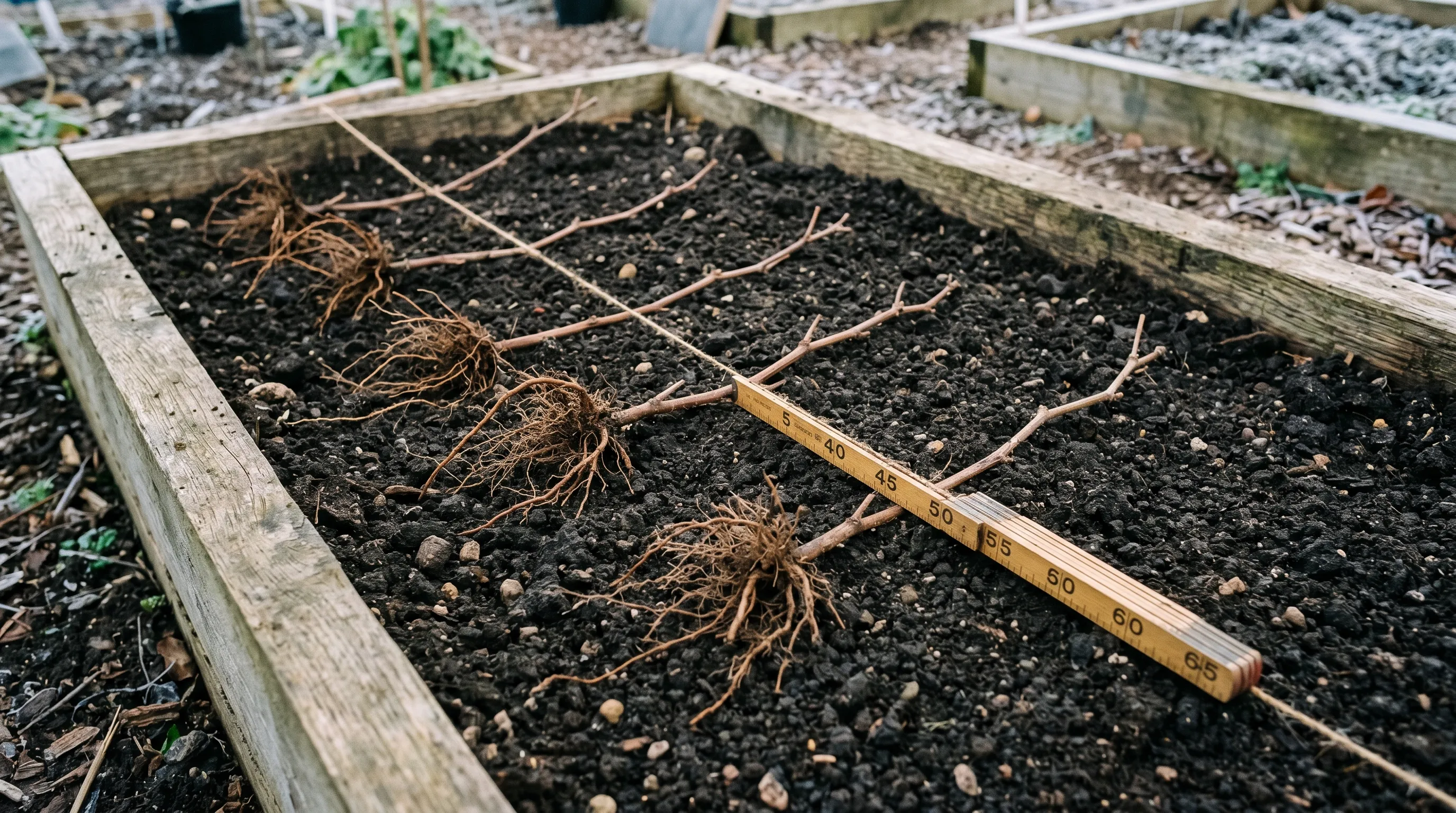 Bare-root canes spaced 45cm apart in a raised bed. The old soil mark on each stem sits level with the surface.
The simple pruning that catches people out
Cut every autumn raspberry cane to ground level in February. This is the whole job. Because the plant fruits on new canes, you remove all of last year’s growth before the new canes appear. Use sharp secateurs or a pair of garden shears and cut each cane to within 2cm of the soil. There is nothing to save and nothing to identify.
This is the part that catches new growers out. People who have grown summer raspberries try to keep some canes, thinking they are protecting next year’s crop. With primocane types that is wrong. Keeping old canes only gives you a smaller, earlier, lower-quality summer crop on tired wood, plus a weaker autumn crop. Cut the lot.
Time the cut for February, before the new canes break ground but after the worst frosts. Cutting too early in autumn removes any late fruit still ripening. Cutting in February also lets the old canes shelter the crown through the coldest weeks. After cutting, top-dress with a balanced feed and a fresh compost mulch.
The double-cropping option
You can take two crops a year from autumn raspberries if you want. Instead of cutting every cane to the ground, leave the strongest canes standing over winter. These fruit at their lower nodes in early summer, then you cut them out after that flush. The new canes still give an autumn crop.
Feeding, watering and mulching for a heavy crop
Feed autumn raspberries once in late February with a balanced general fertiliser at 70g per square metre. A product like Growmore or a fish, blood and bone mix gives steady growth through spring. A second light feed of sulphate of potash in June, at 30g per square metre, hardens the canes and improves fruit set. Avoid high-nitrogen feeds after May, which push soft growth prone to disease.
Water matters most from flowering through fruiting, July to October. Raspberries are shallow-rooted, so the top 30cm of soil drying out hits the crop hard. In a dry spell give the row a thorough soak of around 20 litres per metre once a week, rather than a daily sprinkle. Water at the base to keep the foliage and fruit dry.
A thick mulch does the heavy lifting on moisture and weeds. Lay 5 to 7cm of well-rotted manure, compost or composted bark over the root zone each spring. This holds moisture, suppresses weeds and feeds the soil as it breaks down. Keep the mulch a few centimetres clear of the canes to stop stem rot.
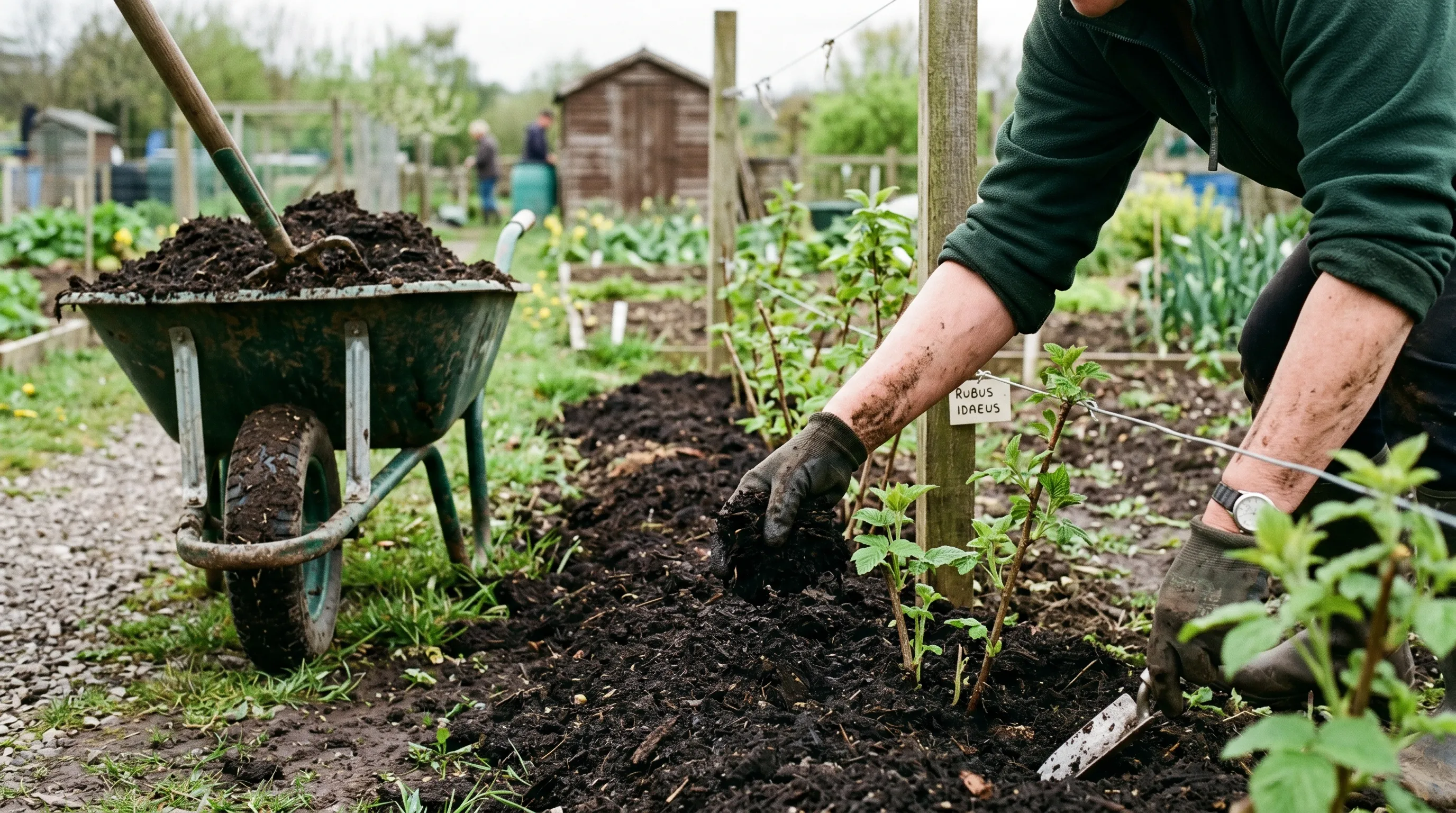 A 5 to 7cm spring mulch of well-rotted compost holds moisture and feeds the row through the growing season.
Best autumn raspberry varieties for UK gardens
‘Polka’ is our pick for the strongest single autumn crop. ‘Joan J’ matches it for ease, with spine-free canes that make picking painless. ‘All Gold’ is worth a few canes purely for the colour and honeyed flavour, though the soft yellow fruit bruises easily and does not travel. For more on choosing soft fruit by flavour and yield, our best blackcurrant varieties guide takes the same ranked approach.
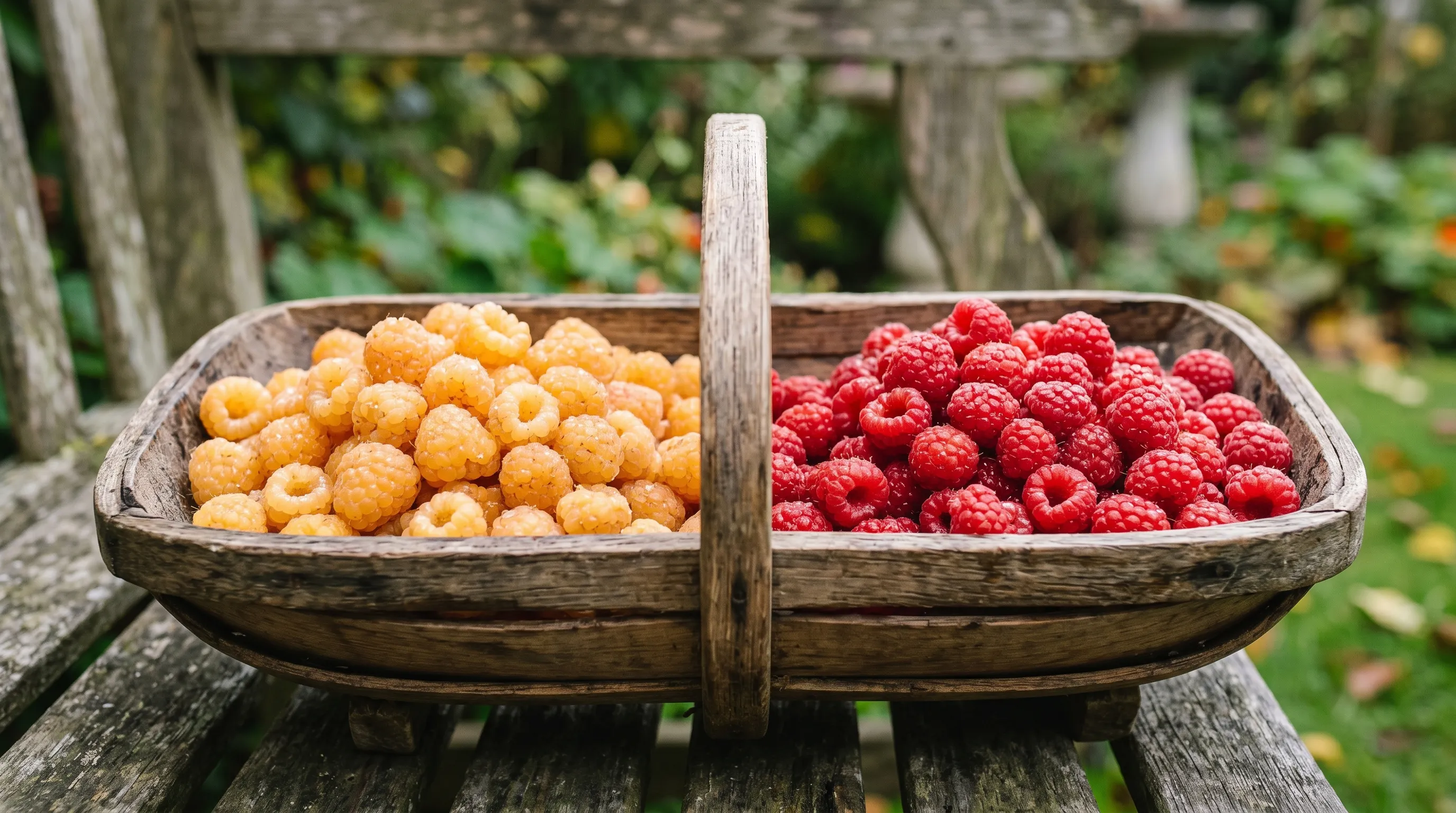 Golden ‘All Gold’ beside red ‘Polka’. The yellow fruit is sweeter and softer, best eaten the day you pick it.
How to harvest autumn raspberries from August to frost
Pick autumn raspberries every two to three days once they ripen, from mid August to the first hard frost. A ripe raspberry pulls cleanly off its central plug with a gentle tug. If it resists, leave it another day. Pick into shallow trays so the fruit does not crush under its own weight, and pick in the morning when the berries are cool and firm.
Pick over the row regularly even if you cannot use all the fruit. Leaving ripe berries on the cane invites grey mould and fruit flies, and slows further ripening. Surplus fruit freezes beautifully, which is the real advantage of a crop that arrives in a steady trickle rather than one summer glut.
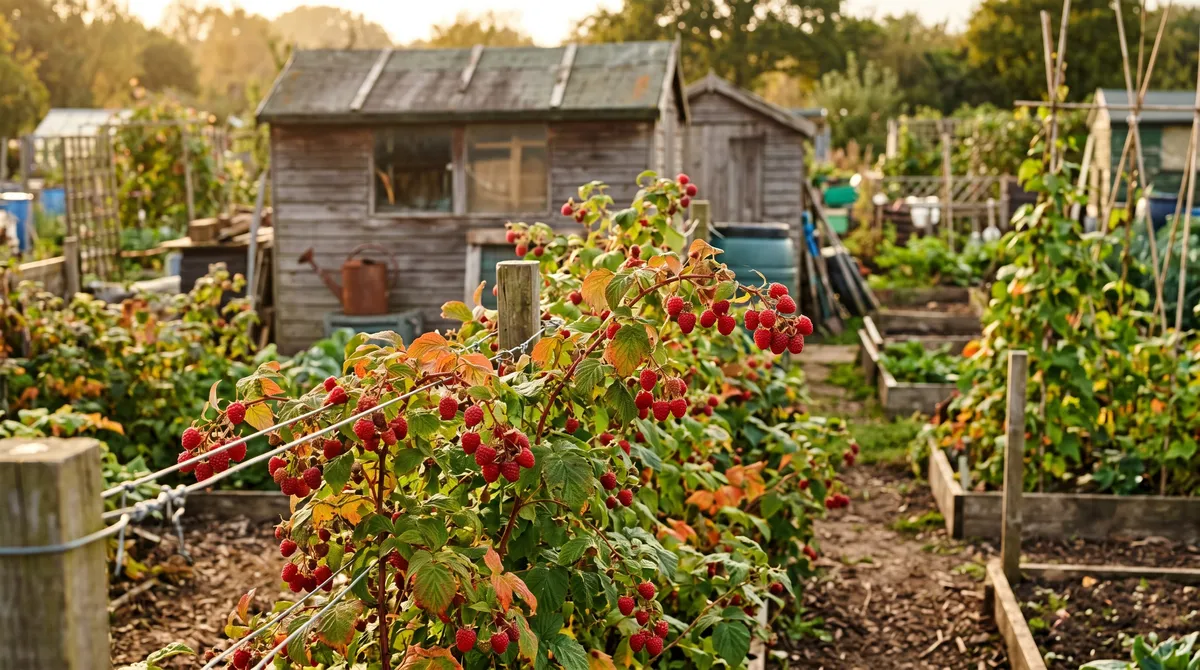
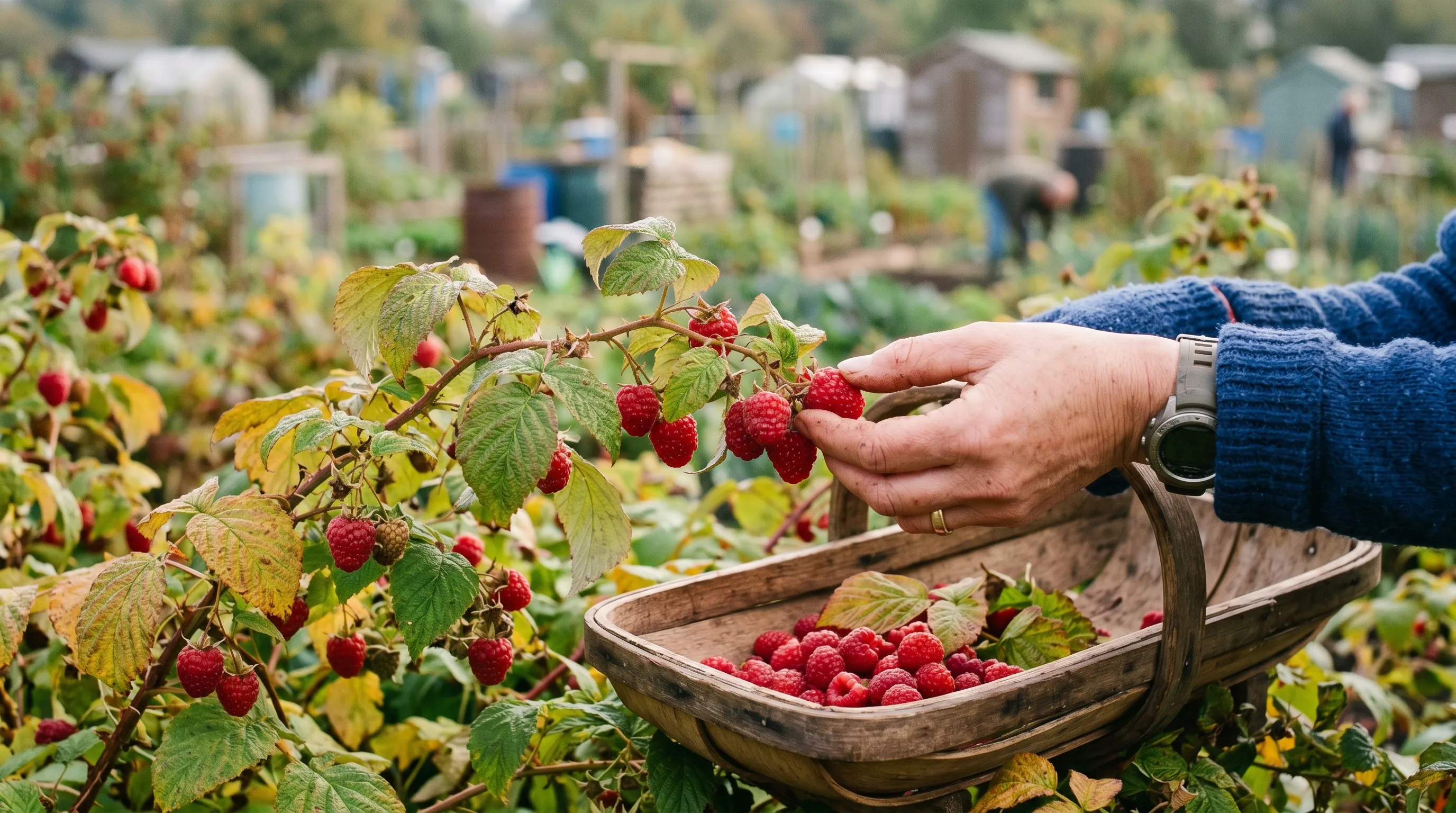 Ripe fruit on a green, current-season cane. A ready berry slips off its plug with a light tug.
Freezing and storing your raspberry crop
Open-freeze autumn raspberries on a tray first, then bag them, so they stay loose rather than freezing into a solid block. Spread the berries in a single layer on a baking tray and freeze for two to three hours. Once solid, tip them into freezer bags or boxes. Frozen this way they keep their shape and you can pour out exactly what you need.
Fresh raspberries last only two to three days in the fridge. Store them unwashed in a single layer, lined with kitchen paper, and wash only when you eat them. Washed fruit goes mouldy within a day. A heavy autumn crop is best dealt with by freezing little and often as you pick.
Why pest pressure is lighter than summer raspberries
Autumn raspberries suffer less pest damage than summer types because they carry no overwintering fruiting canes. The biggest raspberry pest in UK gardens is raspberry beetle, whose grubs spoil the fruit. The beetle lays its eggs on flowers that open before mid July. Autumn raspberries flower later, from July onward, so much of the crop misses the egg-laying window entirely.
Cutting every cane to the ground in winter also breaks the lifecycle of pests and diseases that overwinter on canes. Cane midge, spur blight and cane blight all rely on standing wood through winter. With primocane types that habitat disappears each February, which is why these problems rarely build up.
You still watch for aphids, which spread viruses, and grey mould in wet spells. But the overall workload is lower. For full identification and treatment of the pests that do appear, see our guide to raspberry pests and diseases. The Royal Horticultural Society also publishes a useful overview of raspberry beetle for confirming the grub in your fruit.
Growing autumn raspberries in pots and containers
Autumn raspberries crop well in a container at least 45cm wide and 40cm deep, around 40 litres. This suits a patio, a small yard or a balcony where there is no open ground. Plant three canes per large pot in a soil-based compost such as John Innes No 3, which holds nutrients and water better than a peat-free multipurpose mix alone.
Container plants dry out fast. In summer they need watering every day, sometimes twice in a heatwave, because the limited compost cannot store much moisture. Feed fortnightly through spring and summer with a high-potash tomato feed once flowering starts. Top-dress with fresh compost each spring after the February cut-back.
Choose compact, sturdy varieties for pots. ‘Polka’ and ‘Autumn Treasure’ stay short and crop heavily in containers, while taller, more vigorous types flop without support. Our container vegetable gardening guide covers pot sizes, compost mixes and watering that apply equally to soft fruit.
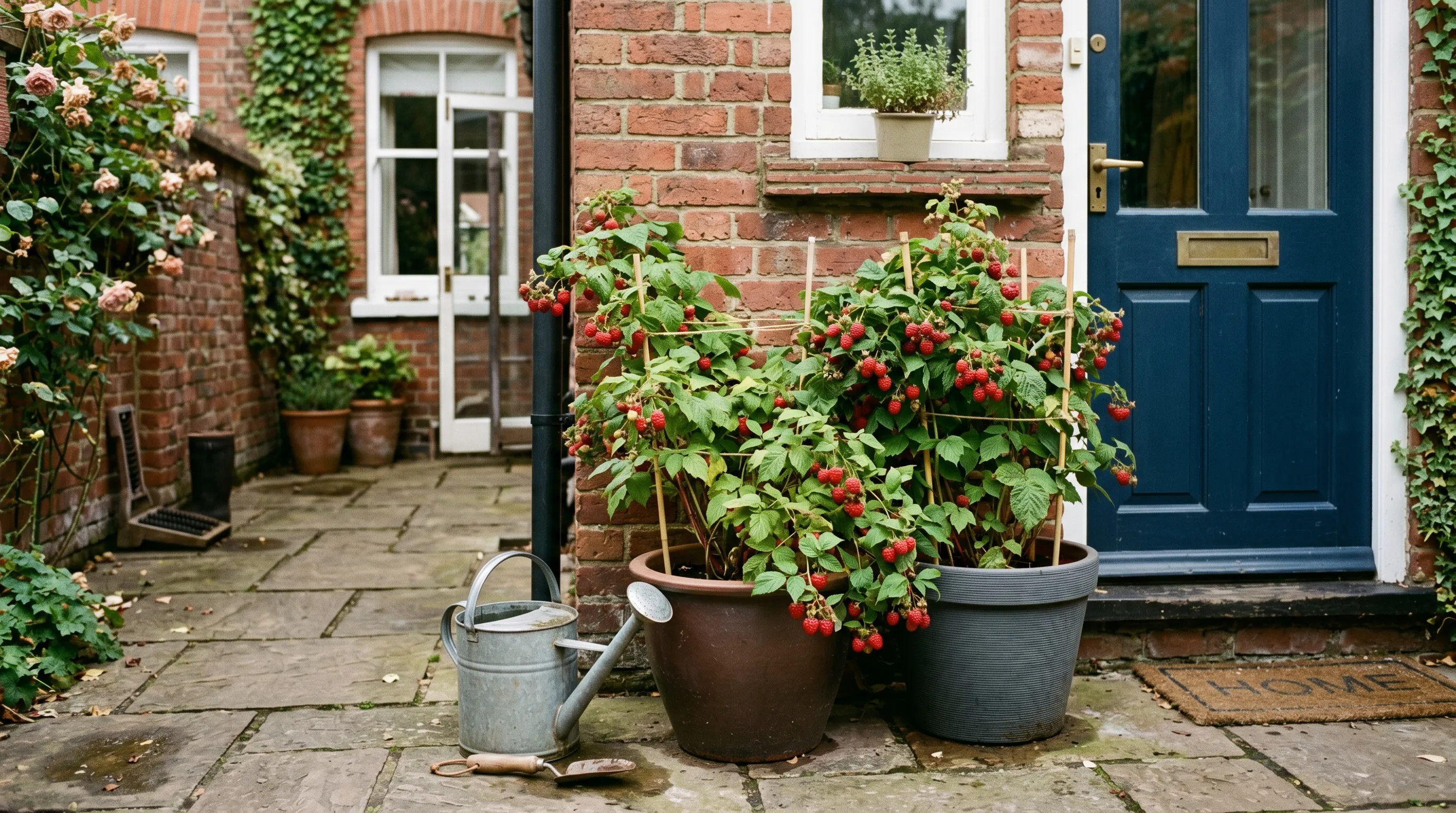 Compact ‘Polka’ cropping in 40 litre patio pots. Container raspberries need daily summer watering and a fortnightly feed.
Common mistakes with autumn raspberries
A few predictable errors turn an easy crop into a disappointing one. Avoid these and an autumn raspberry row looks after itself.
Pruning at the wrong time. Cutting the canes down in autumn removes fruit that is still ripening and exposes the crown to the worst frosts. Wait until February. Cutting in spring, after the new canes have started growing, damages emerging shoots and sets the crop back.
Treating them like summer raspberries. New growers often build a post-and-wire frame and keep last year’s canes, copying the summer raspberry method. Primocane types need neither. Keeping old canes gives a weak, early crop on tired wood and crowds out the new canes that carry the real harvest.
Over-feeding with nitrogen. A common belief is that more feed means more fruit. Heavy nitrogen after May pushes soft, leafy growth that flops over, shades the fruit and invites disease. Feed once in February and once lightly in June, then stop.
Planting too deep or too wet. Burying the crown slows new cane production. Planting on heavy, waterlogged ground rots the roots. Plant shallow, on a slight ridge if your soil is heavy, and improve drainage first.
Month-by-month autumn raspberry calendar
The table below sets out the year’s work for a UK autumn raspberry row. Timings shift a week or two with your region and the season.
| Month | Task |
|---|---|
| January | Order bare-root canes. Plant on mild, frost-free days |
| February | Cut every cane to ground level. Apply balanced feed at 70g per square metre and a compost mulch |
| March | Finish planting bare-root canes. New canes begin to emerge |
| April | Hoe weeds carefully around shallow roots. Water if spring is dry |
| May | Canes growing fast. Watch for aphids. Last chance for any nitrogen feed |
| June | Apply sulphate of potash at 30g per square metre. Begin steady watering |
| July | Flowering begins. Keep the soil moist. Run a string line if outer canes lean |
| August | First fruit ripens from mid month on early varieties. Pick every 2 to 3 days |
| September | Peak cropping. Pick over the whole row regularly and freeze the surplus |
| October | Pick until the first hard frost. Clear fallen leaves to reduce disease |
| November | Plant new bare-root canes. Leave old canes standing to shelter crowns |
| December | Tidy the plot. Plan next year’s varieties from this season’s yields |
A productive autumn raspberry row gives a long, steady harvest for very little work. Plant good varieties at the right spacing, feed and water through summer, then cut the whole row to the ground each February. That single annual cut is the easiest pruning in the fruit garden.
Frequently asked questions
When do you prune autumn fruiting raspberries?
Cut every cane down to ground level in February. Autumn raspberries fruit on the current year’s growth, so the whole row is removed each winter. Use sharp secateurs or shears and cut canes to within 2cm of the soil. New canes push up in spring and crop the same autumn. This is far simpler than summer raspberry pruning, which keeps last year’s canes.
Do autumn raspberries need support?
No, autumn raspberries do not need a support framework. Their canes grow shorter and sturdier than summer types, usually 1.2 to 1.5m, and stand up on their own. A single string line either side of the row stops outer canes flopping after heavy rain. You avoid the post-and-wire system summer raspberries demand, which saves time and cost.
What month do autumn raspberries fruit?
Autumn raspberries fruit from mid August to the first hard frost. In most of the UK that means a picking season running into late October. ‘Autumn Bliss’ starts earliest, around mid August. ‘Polka’ and ‘Joan J’ follow and crop longest, often holding fruit into early November in a mild southern autumn.
How far apart do you plant autumn raspberries?
Space autumn raspberry canes 40 to 45cm apart within the row. Leave 1.5m between rows for picking access and airflow. Closer spacing crowds the canes and raises disease risk. The plants sucker freely and fill gaps within two seasons, so resist planting too densely at the start.
Can you grow autumn raspberries in pots?
Yes, autumn raspberries grow well in large containers. Use a pot at least 45cm wide and 40cm deep, around 40 litres. Plant three canes per pot in a soil-based compost like John Innes No 3. Container plants need watering every day in summer and feeding fortnightly. ‘Polka’ and ‘Autumn Treasure’ are compact enough to crop reliably in pots.
Now you can grow a long autumn harvest, pair it with an early summer crop by reading our guide to growing strawberries in the UK, or browse all our growing guides for more home-grown fruit and vegetables.
Our team produces practical UK gardening guidance from source research, contributor records and established horticultural practice. Editorial standards are overseen by Matt W.