Key takeaways
- Container success depends on root volume, drainage, watering and regular feeding
- Fruiting crops need much larger containers than salads, radishes and spring onions
- Check moisture frequently in summer because small pots dry quickly in sun and wind
- Best 5 starter crops: tomatoes, salad leaves, dwarf beans, courgettes, herbs
- Every container needs drainage holes and enough stable weight for the mature crop
- Deep-rooted and long-lived crops are usually easier in open ground or raised beds
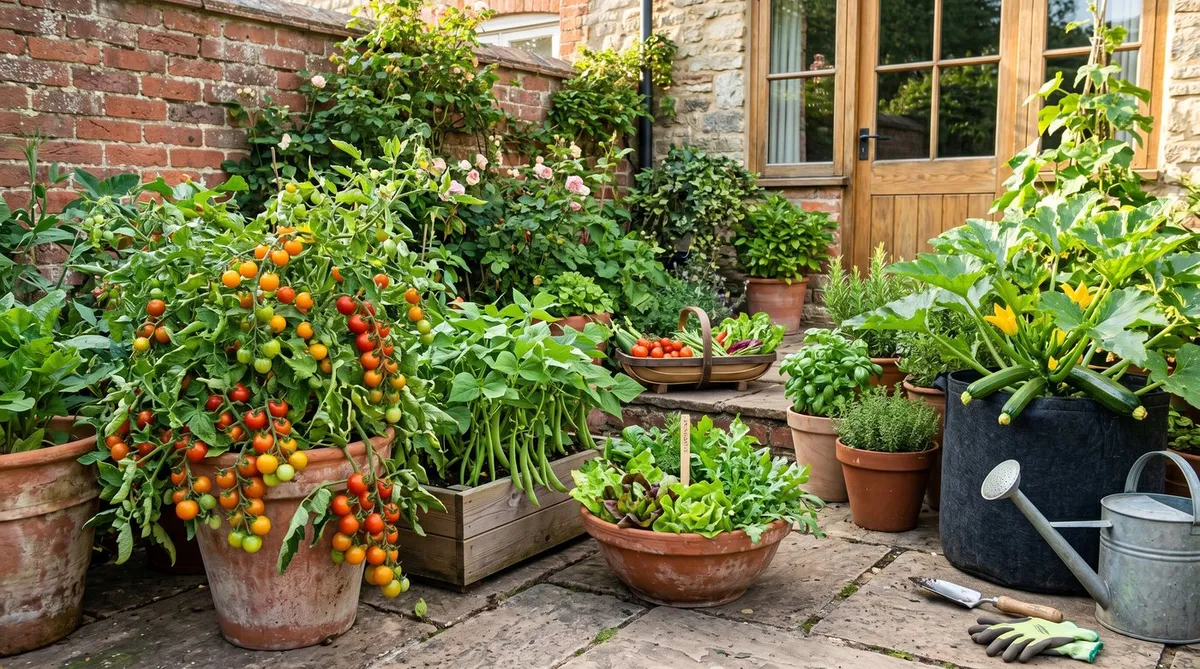
Container vegetables turn a patio, balcony or doorstep into growing space. Salad leaves, radishes and spring onions suit smaller pots, while tomatoes, courgettes, potatoes and cucumbers need much more compost and water.
The RHS container-vegetable guide recommends choosing pots to match root space and warns that small containers dry and exhaust nutrients quickly. This guide compares 20 crops by pot size, depth, sunlight and care.
The minimum pot size table
Pot size is the single biggest factor in container vegetable success. Too small, and the roots run out of compost in midsummer regardless of how well you feed and water.
| Crop | Minimum pot | Ideal pot | Depth needed |
|---|---|---|---|
| Salad leaves (cut-and-come-again) | 5l | 15l | 15cm |
| Rocket | 5l | 10l | 15cm |
| Radish | 5l | 10l | 15cm |
| Spring onion | 5l | 10l | 15cm |
| Pak choi | 10l | 15l | 20cm |
| Lettuce (heading) | 10l | 15l | 20cm |
| Spinach | 10l | 15l | 20cm |
| Herbs (most) | 5l | 10l | 15cm |
| Strawberries | 10l per plant | 15l | 25cm |
| Garlic | 10l (3 cloves) | 15l | 20cm |
| Peas (dwarf) | 15l | 25l | 25cm |
| Dwarf French bean | 25l | 30l | 30cm |
| Beetroot | 15l | 20l | 25cm |
| Carrot (short-rooted only) | 20l | 30l | 30cm |
| Chard | 20l | 25l | 25cm |
| Kale (dwarf) | 25l | 35l | 30cm |
| Tomato (tumbling) | 15l | 20l | 25cm |
| Tomato (bush) | 20l | 25l | 30cm |
| Tomato (cordon) | 30l | 40l | 35cm |
| Pepper | 25l | 30l | 30cm |
| Chilli | 20l | 25l | 30cm |
| Aubergine | 30l | 40l | 35cm |
| Courgette | 40l | 50l | 35cm |
| Cucumber (dwarf) | 25l | 35l | 30cm |
| Runner bean | 30l per cane | 40l | 35cm |
| Potato (first early) | 30l | 50l | 35cm |
| Sweetcorn | 50l (3-4 plants) | 80l | 35cm |
A useful rule: 1 litre of compost per 10cm of expected plant height. A 1.5m cordon tomato needs 30 litres. A 30cm radish needs 5 litres.
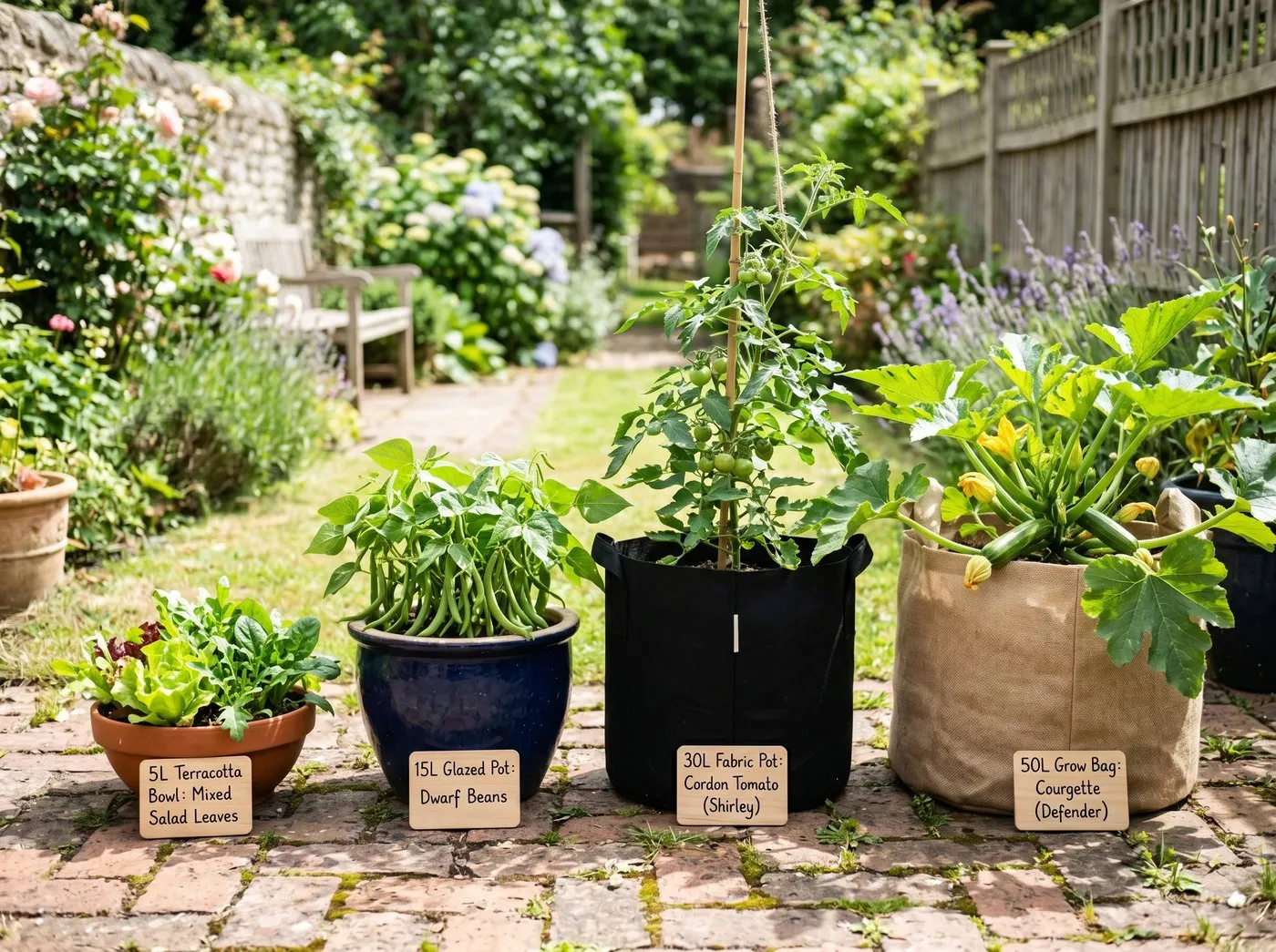 Right-sized pots make the difference between productive and disappointing container vegetables. From 5l salad bowl to 50l courgette bag.
The 20 best UK container vegetables
1. Tomatoes (tumbling cherry)
The most rewarding container crop. Tumbling Tom Red and Tumbling Tom Yellow grow in 15-20 litre pots and yield 3-4kg per plant over a UK season. Hanging baskets work too if at least 35cm wide. For full cultivation detail see our growing tomatoes for UK beginners guide.
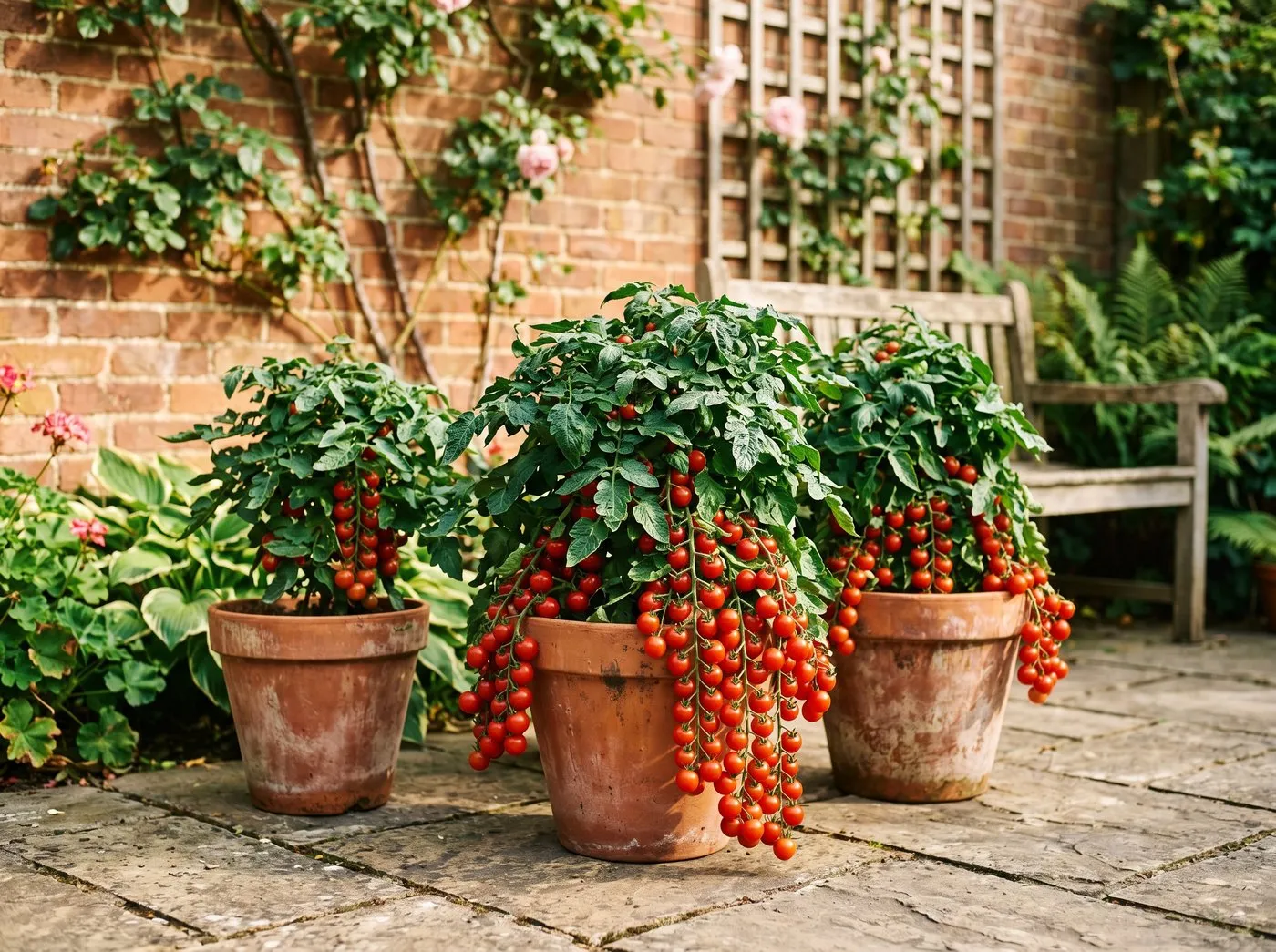 Tumbling Tom Red - the best container cherry tomato for UK patios. Three 20-litre pots gave 11kg of fruit across June-September 2024.
Pot size: 15-20 litre. Sun: 6+ hours direct. Feed: weekly tomato food from first flower.
2. Salad leaves (cut and come again)
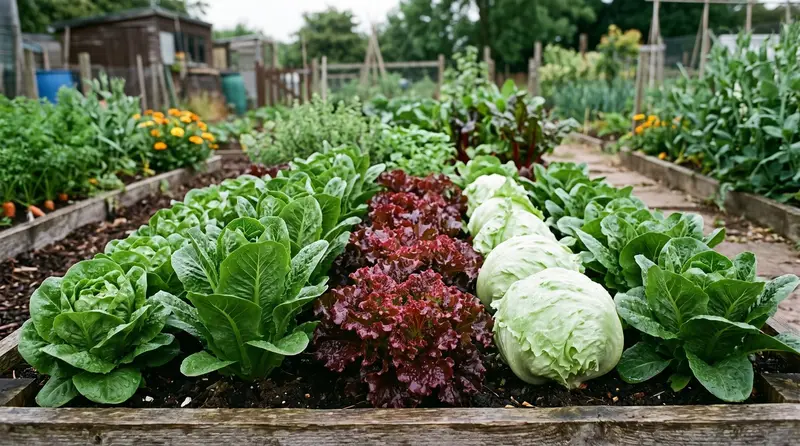
Lowest-effort, highest-frequency harvest of any container crop. Sow a mix of mizuna, mustard, rocket, lettuce and chard in a 30cm bowl. Cut at 8-10cm leaving 2cm stub. Re-grows in 14-21 days for 3-4 cuts before bolting. Our how to grow lettuce UK guide covers heading varieties for the same bowl.
Pot size: 5-15 litre. Sun: 3-6 hours (tolerates light shade). Feed: liquid seaweed monthly.
3. Courgettes
One plant in a 40-50 litre pot yields 8-12 courgettes per week from mid-July through September. Compact varieties like Defender F1 or Patio Star F1 stay small. Sowing timing, training and pollination tips are in our how to grow courgettes UK guide.
Pot size: 40-50 litre. Sun: 6+ hours. Feed: weekly tomato food from first flower.
4. Dwarf French beans
Tendergreen or Speedy in a 25-30 litre pot gives 200-400g per week over 6 weeks of cropping. Self-supporting - no canes needed. Climbing varieties and successional sowing are covered in our how to grow French beans UK guide.
Pot size: 25-30 litre. Sun: 5+ hours. Feed: weekly seaweed.
5. Runner beans
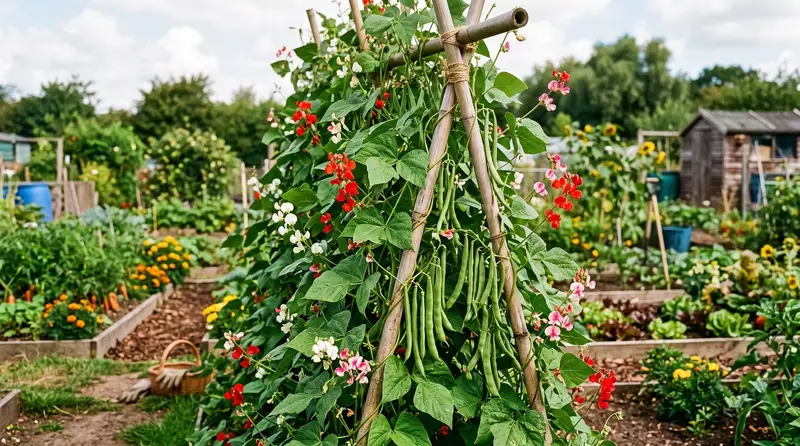
Need a wigwam of canes in a 40-litre pot. Plant 1 bean per cane (4-5 canes total). Painted Lady and Lady Di are reliable. 4-6kg per season from one big pot. Pollination, watering and stringless variety picks are in our how to grow runner beans UK guide.
Pot size: 40 litre minimum. Sun: 5+ hours. Feed: weekly tomato food.
6. Herbs
Basil, parsley, coriander, chives, thyme, oregano, mint - all grow well in 5-10 litre pots. Mint MUST be in a pot - it spreads aggressively in open ground. For the full set of UK herb culture notes, see our how to grow herbs UK and how to grow basil UK guides.
Pot size: 5-10 litre. Sun: varies by herb. Feed: monthly seaweed.
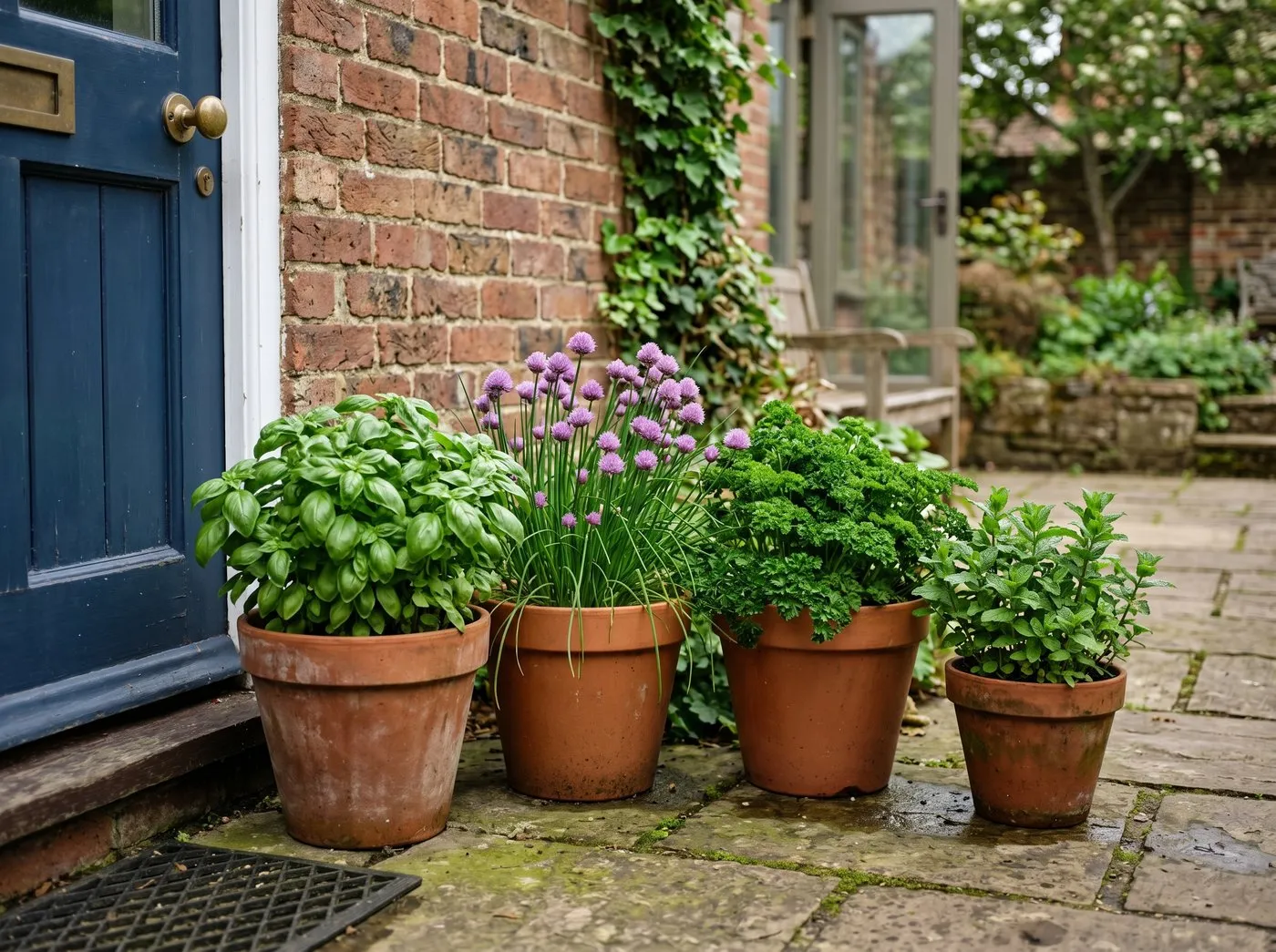 Kitchen-door herb pots - basil, chives, parsley and mint. Mint stays in its own pot or it takes over everything within 50cm.
7. Peppers (sweet and chilli)
A 25-30 litre pot gives one well-fed plant 6-12 peppers depending on variety. Sweet Banana, Apache F1 (chilli), Hungarian Hot Wax all do well. Variety choice and heat-up timings are in our how to grow sweet peppers UK and how to grow chilli peppers UK guides.
Pot size: 25 litre. Sun: 6+ hours essential. Feed: weekly tomato food.
8. Spring onions
Sow a row in any 5-litre pot. 6-8 weeks from sow to first pull. Continuous successional sowing keeps a supply going. Our how to grow spring onions UK guide covers the best UK varieties and overwintering tricks.
Pot size: 5-10 litre. Sun: 4+ hours. Feed: none needed.
9. Radish
20 days from sow to harvest. A 5-litre pot of mixed varieties gives 30-40 radishes in a single sowing. Successional every 2 weeks. Sowing depth, thinning and bolt-resistant varieties are in our how to grow radishes UK guide.
Pot size: 5-10 litre. Sun: 4+ hours. Feed: none needed.
10. Garlic
3 cloves in a 10-litre pot. Plant October-November, harvest July. Low-maintenance through winter. Variety choice (hardneck vs softneck) is covered in our best garlic varieties UK guide, and timing in our how to grow garlic UK guide.
Pot size: 10 litre. Sun: 6+ hours. Feed: seaweed once in spring.
11. Beetroot
Boltardy in a 15-20 litre pot. Multi-sow at 3-4 per cell to grow as a cluster - thin to baby beet sizes from July. Our how to grow beetroot UK guide covers the spacing and harvest windows in more detail.
Pot size: 15-20 litre. Sun: 5+ hours. Feed: none usually needed.
12. Short-rooted carrots
Paris Market, Atlas, Adelaide - round or stubby varieties. A 30-litre pot gives 50-80 baby carrots. Main-crop carrots (Autumn King etc) need too much depth for containers. Carrot root fly defence is essential at this scale - see our how to grow carrots UK guide for the netting setup that protects a container.
Pot size: 20-30 litre, 30cm deep. Sun: 5+ hours. Feed: none.
13. Chard
Bright Lights chard in a 20-25 litre pot gives 4-6 months of cut-and-come-again harvest. Looks ornamental too. Cropping windows and overwintering tips are in our how to grow Swiss chard UK guide.
Pot size: 20-25 litre. Sun: 4-6 hours. Feed: monthly seaweed.
14. Potatoes (first earlies)
Charlotte or Pentland Javelin in a 40-50 litre pot or bag. One seed potato per pot yields 1-2kg of new potatoes. Plant March, harvest June-July. Variety choice is covered in our best potato varieties UK guide; timing in when to plant potatoes UK; the full method in growing potatoes UK.
Pot size: 40-50 litre. Sun: 6+ hours. Feed: none.
15. Strawberries
3-4 plants per 25-litre pot or one plant per pocket of a strawberry planter. Cambridge Favourite for taste, Hapil for heavy crop, Mara des Bois for autumn fruit. Our growing strawberries UK guide covers runners, replanting cycle and slug defence, and fruit in pots and containers covers the wider soft-fruit-in-pots picture.
Pot size: 10 litre per plant. Sun: 6+ hours. Feed: weekly tomato food from first flower.
16. Dwarf peas
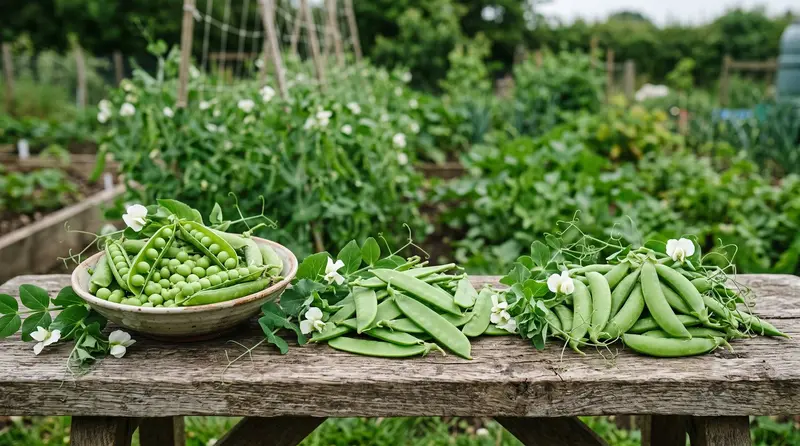
Half Pint, Tom Thumb, Peas-in-a-Pot. A 25-litre pot of dwarf peas gives 500-800g over 4-5 weeks. Self-supporting.
Pot size: 25 litre. Sun: 5+ hours. Feed: none.
17. Rocket
Fastest of all leaf crops. 21 days from sow to harvest in summer. A 10-litre pot gives 4-5 cuts. Bolts in summer heat - successional sow every 3 weeks. Wild vs salad rocket and flea-beetle defence are in our how to grow rocket UK guide.
Pot size: 5-10 litre. Sun: 3-6 hours (prefers cool). Feed: none.
18. Pak choi
20-litre pot. Sow in cool weather (March-April or August-September). Bolts in summer heat above 25C - schedule around the warmest weeks. The full Asian greens family is covered in our how to grow pak choi and Asian greens UK guide.
Pot size: 15-20 litre. Sun: 3-6 hours. Feed: seaweed monthly.
19. Dwarf kale
Dwarf Green Curled or Redbor in a 25-35 litre pot. Crops November-April when little else is going. Survives -5C in pots if mulched. Sowing windows, cavolo nero options and aphid defence are in our how to grow kale UK guide.
Pot size: 25-35 litre. Sun: 4+ hours. Feed: seaweed monthly.
20. Dwarf cucumber
La Diva or Mini Munch in a 25-litre pot. Needs a small trellis. 30-40 fruits per plant over July-September. Outdoor and greenhouse training, plus all-female F1 picks, are in our how to grow cucumbers UK guide.
Pot size: 25-35 litre. Sun: 6+ hours. Feed: weekly tomato food.
Crops that genuinely don’t work in pots
Save the container space for crops that pay back. These need deeper root runs and larger soil volumes than UK containers practically provide:
| Crop | Why it fails in pots |
|---|---|
| Parsnips | Need 30cm+ depth, fork on shallow compost |
| Sprouting broccoli | 1m tall, deep tap root, takes 10 months |
| Swede | Roots need 30cm depth, slow-maturing |
| Asparagus | Perennial, 6-year minimum commitment, deep crowns |
| Salsify | Deep tap root, 25cm minimum |
| Main-crop carrots | Need 30cm+ depth for proper roots |
| Globe artichoke | 1m+ wide, needs ground stability |
| Rhubarb | Long-lived, deep crowns, 60cm depth ideal |
Compost and pot preparation
A practical container mix is:
- 50% multi-purpose compost (peat-free)
- 30% topsoil or loam
- 20% home-made garden compost
This combines drainage, nutrients and water retention. Adjust the mix to the crop and use a peat-free product intended for containers. Loam-based ingredients add weight and can help large pots remain stable.
For deep-rooting crops (tomatoes, courgettes), add a handful of slow-release fertiliser (chicken manure pellets or Vitax Q4) to the compost at planting.
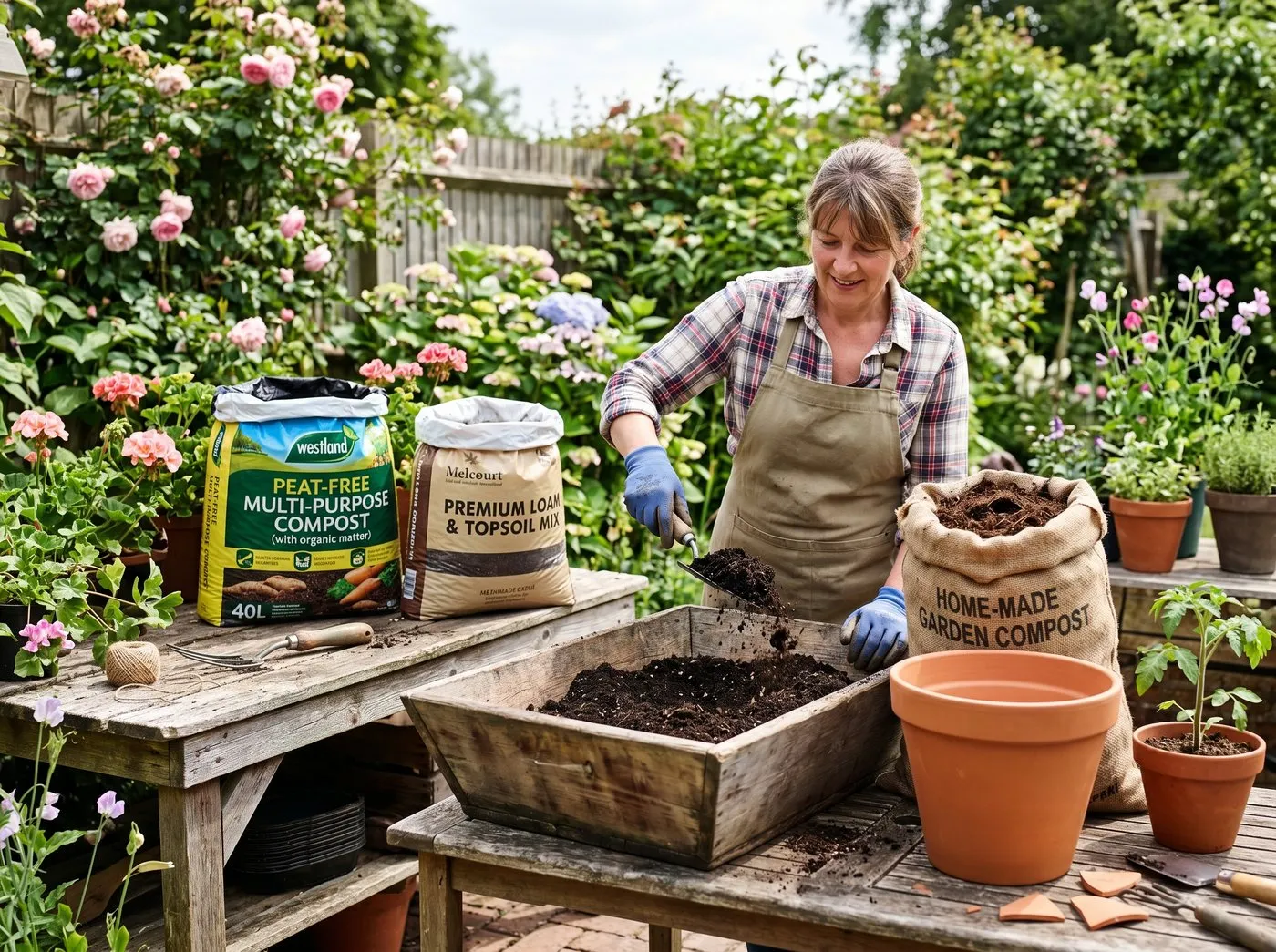 Combine peat-free potting compost with loam and mature home compost where appropriate for the crop.
Watering routine
From mid-May through September, container vegetables need a regular watering schedule:
| Conditions | Frequency |
|---|---|
| Cool/cloudy April-May | Every 3-4 days |
| Warm/sunny June-September | Daily |
| Hot (25C+) June-September | Twice daily |
| Wet autumn weather | Every 4-5 days |
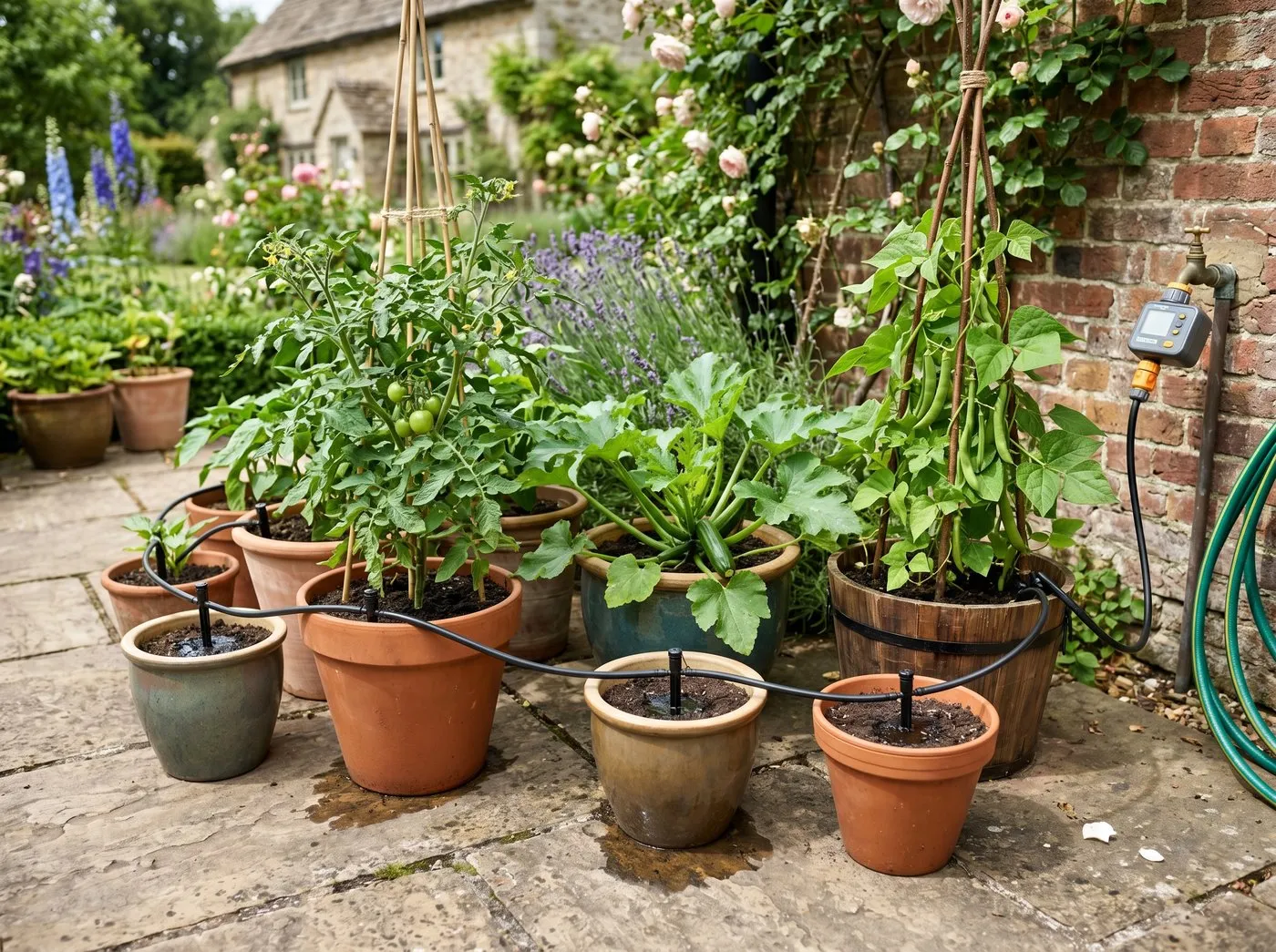 A simple drip kit with a timer - £30-£60 and pays back in saved water and saved time within a single UK summer.
Slug pressure on container vegetables
Containers are not slug-proof. Slugs climb pot rims, especially overnight after watering, and they target the same crops in containers that they target at ground level - lettuce, hostas, strawberries, dahlias and any young seedling. Wipe a copper tape band around each pot rim for the most reliable physical barrier, and check our how to get rid of slugs guide for the full UK control options.
Feeding routine
Container compost is exhausted of available nutrients after 4-6 weeks of plant growth. Feed weekly from first flower (or 6 weeks after planting for leafy crops):
- Tomato food for fruiting crops (tomato, pepper, chilli, courgette, cucumber, aubergine, strawberry, runner bean).
- Liquid seaweed for leafy crops (salads, chard, kale, herbs).
- Slow-release pellets added at planting cover the first 8 weeks.
A 500ml bottle of concentrated tomato feed costs around £6 and feeds 4-6 pots through a season - about £1 per pot in feed costs.
Field note: The RHS container gardening guide covers pot prep, drainage and the basic technique. UK potato variety advice in this guide draws on the AHDB potato variety database.
Best 5 starter crops for a first UK container patio
For a gardener trying containers for the first time, these five crops give the highest reward for the lowest effort:
- Tumbling Tom Red tomato (20l pot, 4kg yield)
- Mixed salad leaves (15l bowl, 4-6 cuts)
- Basil and chives (10l pots, season-long supply)
- Tendergreen French bean (30l pot, 1.5kg yield)
- Charlotte first early potato (40l bag, 1.5kg yield)
Total compost cost: about £25. Total expected yield: roughly £40-£60 worth of supermarket-equivalent produce. Payback within one season.
Now you’ve got the crop list
For specific small-space and dwarf-variety guidance, our dwarf vegetables small spaces UK, best vegetables to grow at home UK and patio garden ideas small spaces guides cover the design and variety choices that turn a patio into a productive plot.
Frequently asked questions
What is the easiest vegetable to grow in pots in the UK?
Cut-and-come-again salad leaves are among the easiest UK container crops. They suit broad, relatively shallow pots and can be resown in small batches. Give them useful light, steady moisture and protection from slugs.
What size pot do tomato plants need?
Tomatoes need a large, stable container with drainage and support where required. Cordon plants need more root space than compact bush or tumbling varieties. Use the seed or plant label as the minimum and choose a larger pot when practical.
Can you grow potatoes in a container?
Yes. Potatoes grow well in large bags or pots with drainage. First earlies are a practical choice because they crop sooner. Use certified seed potatoes, keep the compost evenly moist and follow the supplier’s spacing guidance.
How often should you water container vegetables in the UK?
From June to September, water container vegetables daily. Twice on hot days above 25C. The smaller the pot and the more leaf cover the plant has, the faster it dries out. April-May and September-October need watering every 2-3 days depending on rainfall.
Do container vegetables need feeding?
Yes - container compost has only enough nutrients for 4-6 weeks of growth. From first flower for fruiting crops (tomatoes, courgettes, peppers) or 6 weeks after planting for leafy crops, feed weekly with diluted tomato food or seaweed extract.
Our team produces practical UK gardening guidance from source research, contributor records and established horticultural practice. Editorial standards are overseen by Matt W.