Key takeaways
- Split agastache into two groups: hardy blue A. foeniculum, and the showier but short-lived hybrid and Mexican types
- All agastache need full sun and sharp drainage; wet winter soil, not cold, is what kills them
- A. foeniculum is easy from seed, flowers in its first summer, and self-seeds reliably in UK borders
- The aniseed-scented leaves and flowers make a good herbal tea, plus salads and cordial
- Cut back in spring, not autumn; leave the seedheads for goldfinches and winter structure
- Take basal cuttings in May as insurance against losing tender types over a wet winter
Agastache is two plants pretending to be one. Ask three gardeners about it and you will get three answers, because the name covers the tough blue anise hyssop that seeds itself around a border for years, and the showy orange and pink types that dazzle for a summer and then rot in a wet winter. Knowing which you are buying changes everything.
Get that right and few plants give more. The blue forms feed bees from July to October, drop aniseed leaves you can steep for tea, and ask for almost nothing in return. This guide splits the genus in two, then covers drainage, sowing, winter survival and the kitchen uses that make agastache one of the most useful plants in a sunny UK garden.
What agastache is and the two types you need to know apart
Agastache is a genus of aromatic perennials in the mint family, Lamiaceae, grown for upright spikes of small tubular flowers and strongly scented leaves. The name comes from the Greek for “many ears of wheat”, a fair description of the dense flower spikes. For a UK gardener, the genus divides cleanly into two camps that behave very differently.
The first is hardy anise hyssop, mainly Agastache foeniculum and the closely related Korean mint, A. rugosa. These are prairie and grassland plants from North America and East Asia, hardy to around -15C, with blue to violet flower spikes and leaves that smell of aniseed. They are the reliable, edible, self-seeding half of the family.
The second camp is the showy hybrids and Mexican species: cultivars like ‘Blackadder’ and ‘Blue Fortune’, and the tender oranges and pinks such as A. rupestris, A. aurantiaca and the ‘Kudos’ and ‘Sunrise’ series. These are brighter and more exotic, but shorter-lived, and the orange types are genuinely tender. On heavy or wet soil they behave more like annuals than perennials.
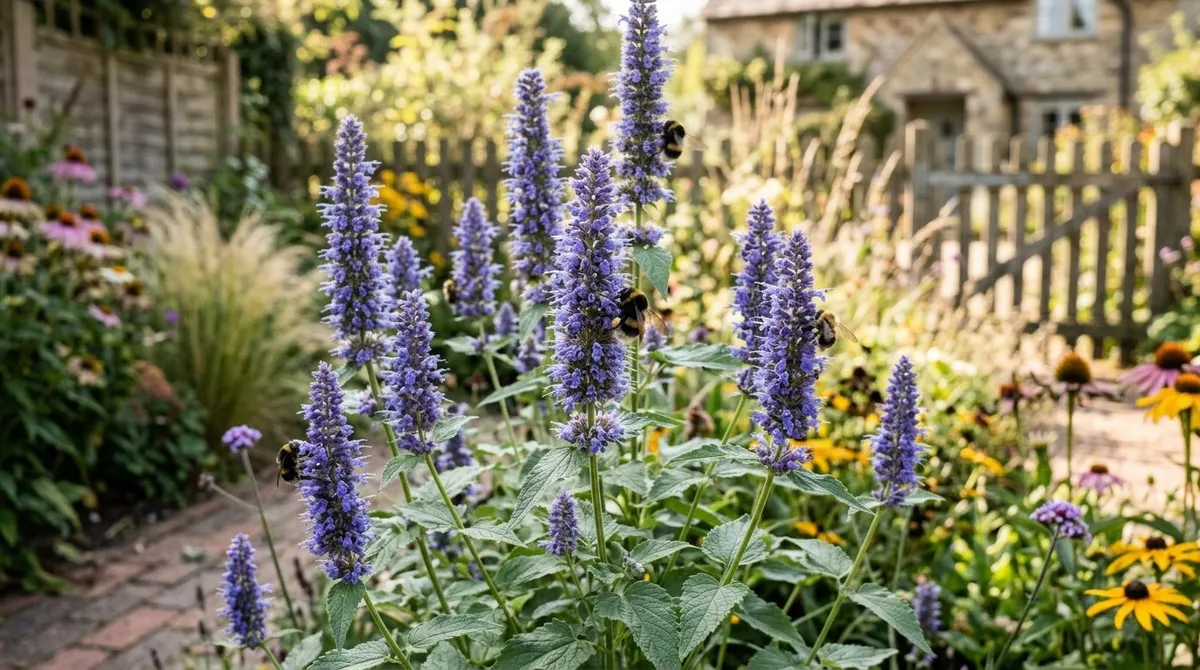
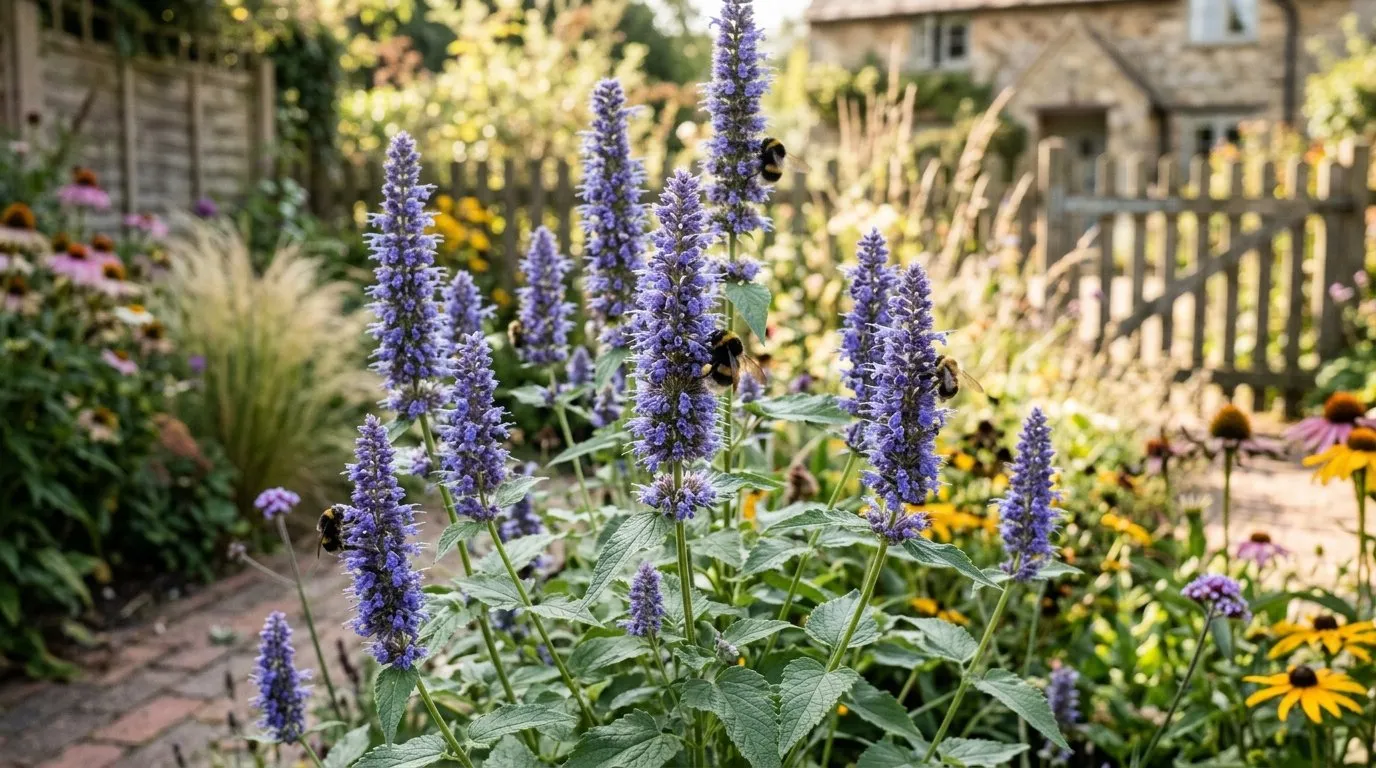 Agastache foeniculum in full flower, the hardy blue anise hyssop that seeds itself around and feeds bees for months.
Hardy anise hyssop versus tender hybrid agastache
The single most useful thing you can learn about agastache is which group a plant belongs to before you buy it. The hardy blues and the tender showy types need different treatment and carry very different expectations of how long they will last. This table sets them side by side.
| Feature | Hardy anise hyssop (A. foeniculum, rugosa) | Showy hybrids and Mexican types |
|---|---|---|
| Example | ’Blue Fortune’, Korean mint, the species | ’Blackadder’, rupestris, ‘Kudos’, ‘Sunrise’ |
| Flower colour | Blue, violet, soft mauve | Deep blue, orange, coral, pink, raspberry |
| Hardiness | H5, to about -15C | H3-H4, some tender below -5C |
| Lifespan in UK | Long-lived, self-seeds | Short-lived, often 2-3 years |
| Leaf scent | Strong aniseed, good for tea | Faint or resinous, less culinary |
| Winter risk | Low on free-draining soil | High, rots in cold wet soil |
| Best use | Reliable border and herb plant | Summer colour, treat as annual if needed |
The lesson from the table is simple. If you want a plant that comes back for a decade and earns its keep as a herb, choose A. foeniculum or a blue hybrid like ‘Blue Fortune’. If you want the hot oranges and raspberry pinks, buy them, enjoy them, but plan to replace or protect them. Their colour is worth the effort as long as you go in with open eyes.
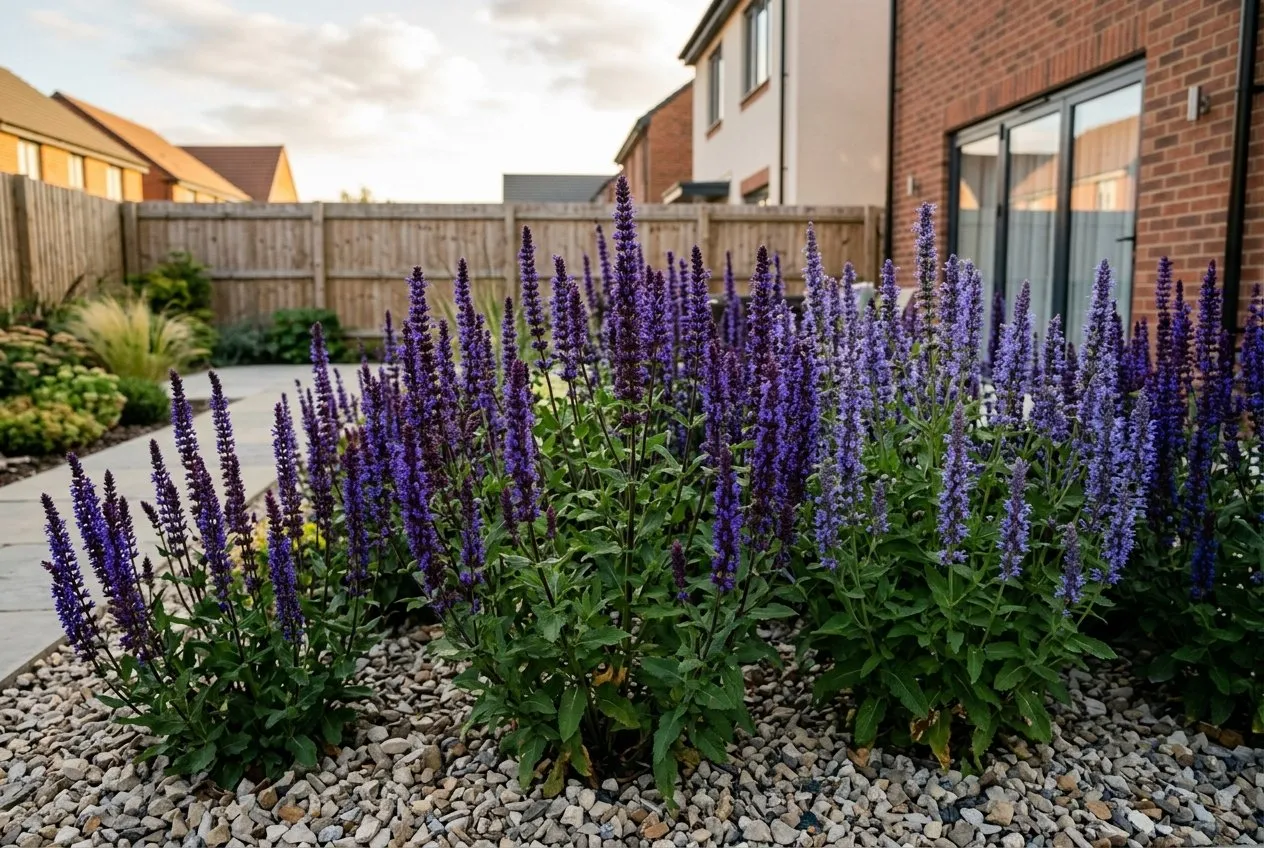 ‘Blackadder’ and ‘Blue Fortune’ in a gravel border. The sharp drainage under the gravel is what keeps these hybrids alive.
Choosing agastache varieties for colour and reliability
The best choice depends on how much winter risk you will accept for colour. Below are the types worth knowing, grouped by how they behave in a UK garden rather than by botany alone.
For dependable blue and long life, start with Agastache foeniculum, the true anise hyssop, at 60-90cm with soft violet-blue spikes and the strongest aniseed leaves. ‘Blue Fortune’ is a sterile hybrid to 90cm, a tidy, long-flowering doer that holds an RHS Award of Garden Merit and stands up well on all but the wettest soil. ‘Black Adder’, sometimes spelt ‘Blackadder’, is darker and showier at 90cm-1.2m, brilliant for bees, but shorter-lived than ‘Blue Fortune’ on clay.
For hot colour and a shorter life, the Mexican and hybrid oranges deliver. A. rupestris, threadleaf giant hyssop, throws smoky orange flowers over narrow grey leaves that smell of root beer, but it is tender and wants sharp drainage. A. aurantiaca cultivars and the compact ‘Kudos’ and ‘Sunrise’ series bring coral, tangerine and raspberry to the front of a border, usually at 40-60cm. Treat all of these as short-lived or as bedding, and take cuttings.
Korean mint, A. rugosa, sits with the hardy group and is worth adding if you want the culinary angle. Its leaves are used in Korean cooking, and it self-seeds much like foeniculum. It pairs well with other aromatic bee plants, and if you like that idea, our guide to growing monarda (bee balm) covers a close cousin with the same appetite for sun and the same value to pollinators.
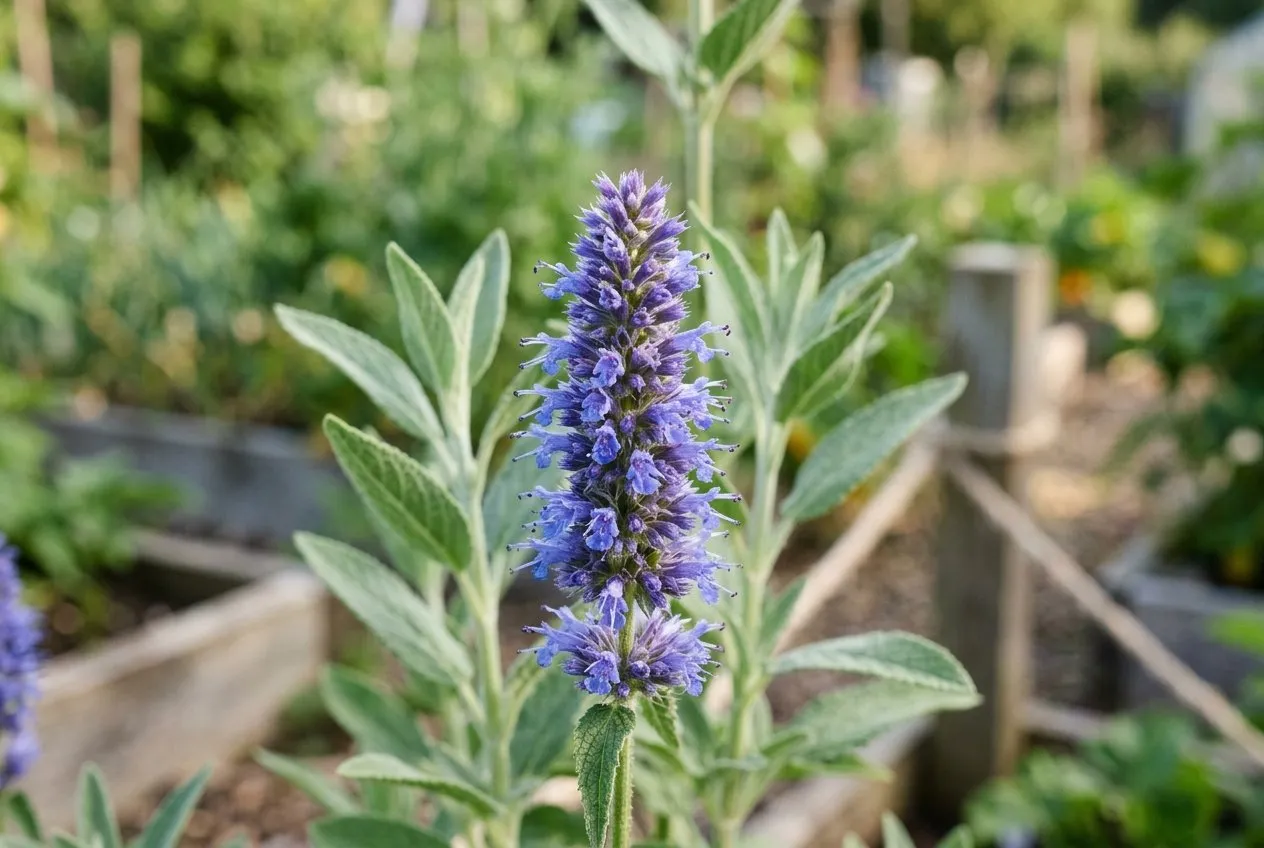 The flower spike of A. foeniculum, hundreds of small nectar-rich florets opening over several weeks.
Where to plant agastache: full sun and sharp drainage
Full sun and free-draining soil are non-negotiable for every agastache. These are open-ground plants from sunny prairies and dry Mexican slopes, and they sulk in shade or wet. Give them at least six hours of direct sun and a spot where water never sits after rain.
Soil matters more than feeding. Agastache flower best on lean, gritty, moderately fertile ground with a neutral to slightly alkaline pH. Rich, heavily manured beds push soft leafy growth and fewer flowers, and soft growth is exactly what rots in winter. On light, sandy or chalky soil you can plant straight away.
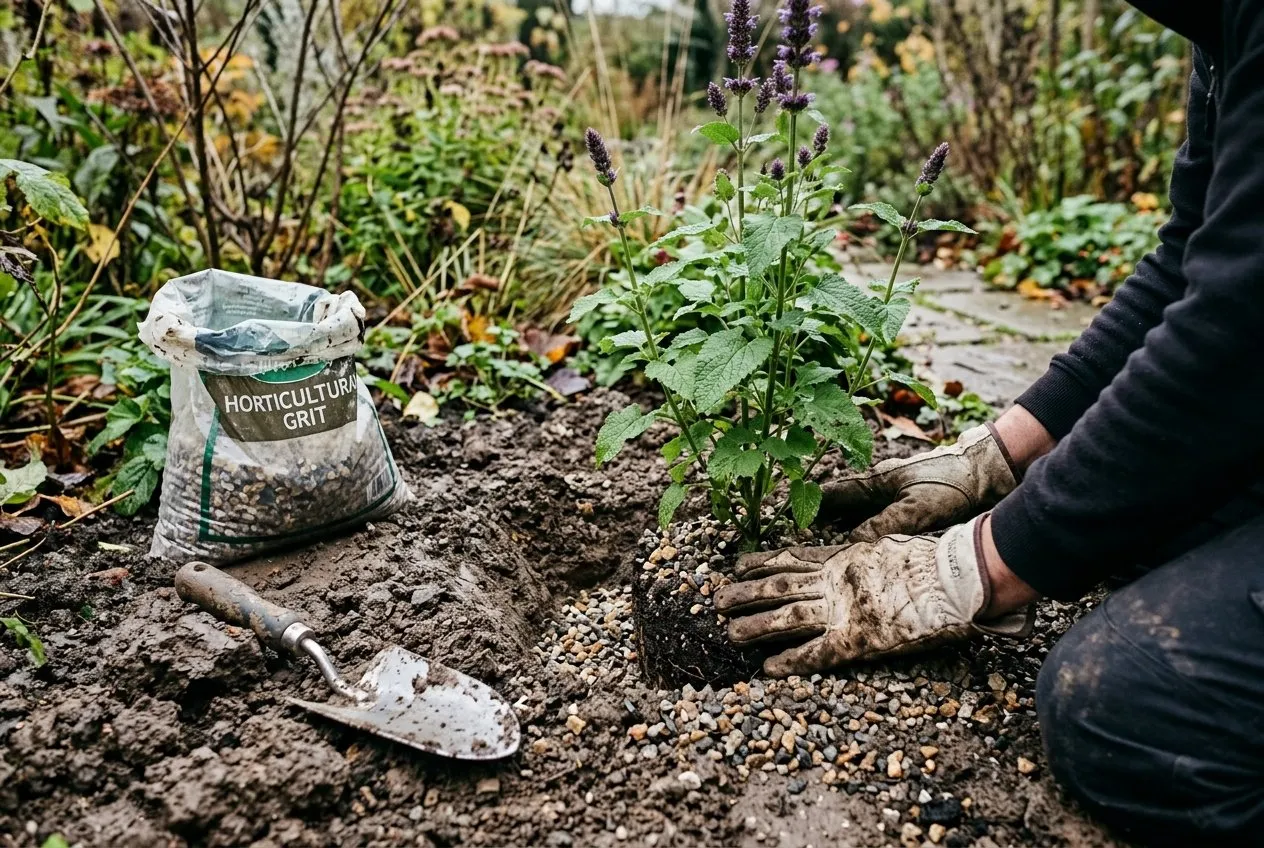 A gravel mulch and a slightly raised bed keep winter rain moving away from the crown, the single biggest factor in overwintering agastache on clay.
How to grow agastache from seed
Agastache is one of the easiest perennials to raise from seed, and early sowings flower in their first summer. This is the cheapest way to fill a border, and the hardy blue types come true enough from seed to be worth sowing by the tray.
Sow from February to April under cover, in a greenhouse, propagator or on a warm windowsill. Fill trays or modules with free-draining seed compost, firm it, and scatter the fine seed on the surface. The seed needs light to germinate, so do not cover it, or press it in with only the lightest dusting of vermiculite. Keep it at 18-21C and moist but not wet. Germination takes one to three weeks.
Prick out seedlings into small pots once they have two true leaves. Grow them on in good light, harden them off over 10-14 days in May, and plant out after the last frost at 30-45cm spacing. Plants sown in February often flower from July the same year. You can also sow direct outdoors in May once the soil has warmed, though results are patchier. The hardy species self-seed so freely that after the first year you may never need to sow again. If you like plants that do this work for you, our list of self-seeding plants is worth a read.
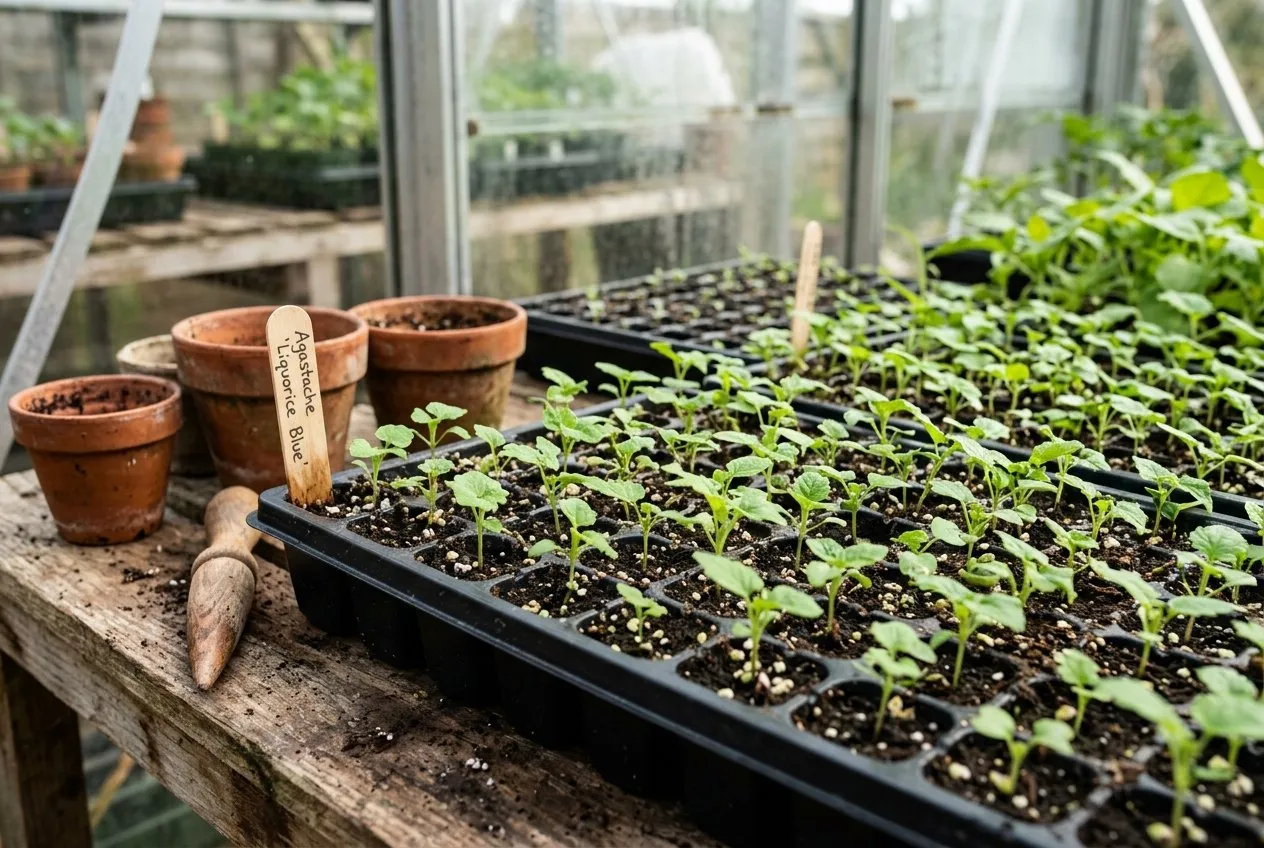 Agastache seedlings pricked out into modules. Surface-sown in February, these will flower by July.
The overwintering problem: keeping tender agastache alive
Winter wet, not cold, is what kills agastache in UK gardens. This is the single fact that explains most losses. The plants evolved in places with cold but dry winters. Our mild, saturated winters keep the soil wet for months, and a fleshy agastache crown sitting in cold water rots from the centre out.
The hardy blues shrug this off in free-draining ground. The tender oranges and the shorter-lived hybrids do not. To carry them through, stack the odds in their favour. Improve drainage before planting, mulch the crown with gravel or grit rather than moisture-holding compost, and leave the top growth standing over winter so the hollow stems shed rain rather than funnel it in. In cold inland gardens, a dry cover of bracken or straw over the crown adds insulation.
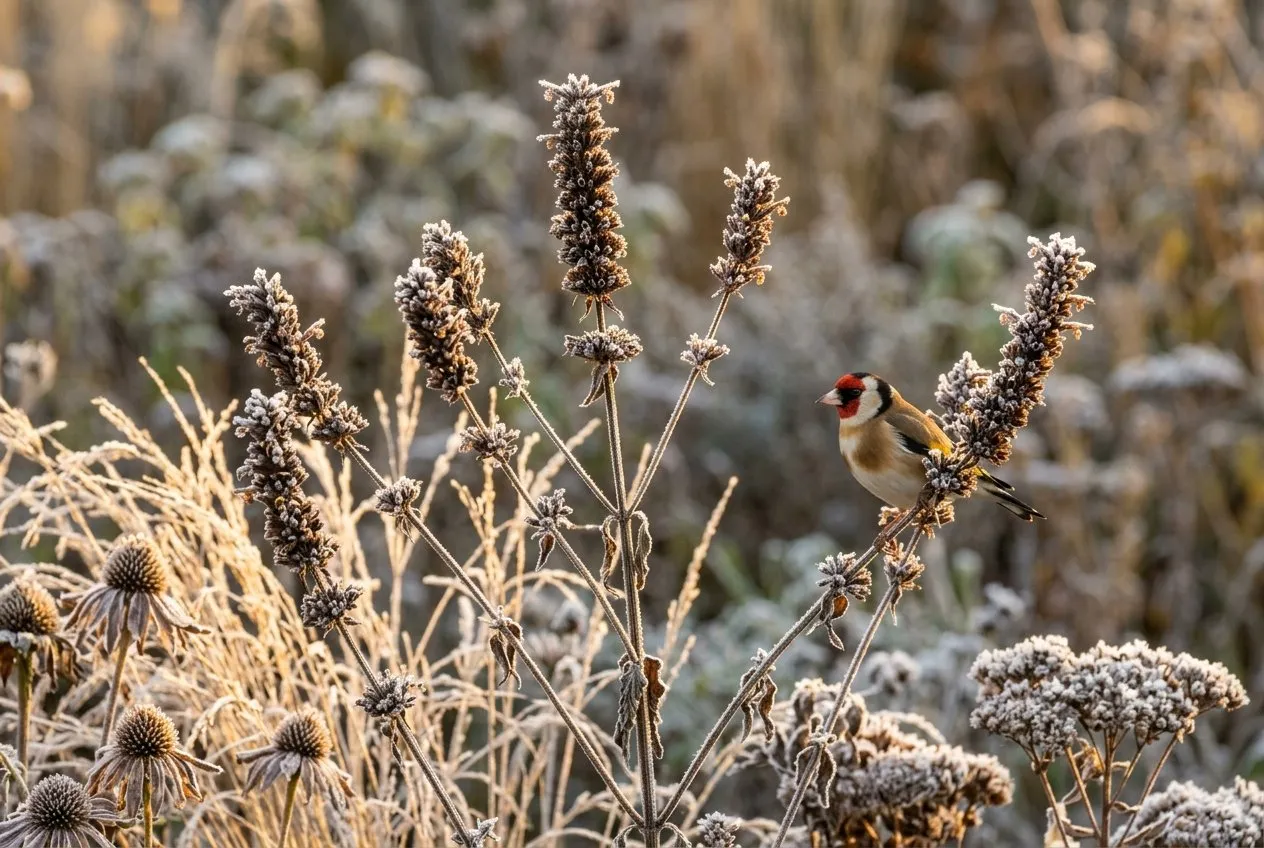 Agastache seedheads left standing over winter. They shelter the crown from wet and feed goldfinches through the cold months.
Cutting back and deadheading agastache the right way
Deadhead for more flowers, but cut back only in spring. These two jobs work on different timetables, and getting them the wrong way round costs you plants and flowers.
Through summer, snip off spent flower spikes as they fade to keep the plant blooming. Deadheading stops the plant pouring energy into seed and pushes a second and third flush of spikes on hybrids like ‘Blue Fortune’. On the hardy species you can leave a few spikes to set seed if you want self-sown seedlings, but remove most to prolong the display. Regular deadheading can stretch flowering from July into October.
Taking agastache cuttings as winter insurance
Basal and softwood cuttings root fast and are the smart way to keep tender agastache going. For any variety you would hate to lose, cuttings are cheaper and more reliable than gambling on winter survival in the ground.
Take cuttings in late spring to early summer, from May to July, when growth is soft and vigorous. Cut a non-flowering shoot 8-10cm long, trim below a leaf node, strip the lower leaves, and push several around the edge of a pot of gritty, free-draining compost. Keep them out of direct sun and lightly moist. Most root within three to four weeks. Pot them on, grow them under cover, and you have young plants to overwinter frost-free.
Using agastache in the kitchen: leaves, flowers and tea
Anise hyssop is a genuine culinary herb, not just a pretty border plant. The leaves and flowers of A. foeniculum and Korean mint carry a clean aniseed and mild liquorice flavour that works in both sweet and savoury cooking. The tender oranges are ornamental only, so keep the kitchen use to the hardy blue types.
Beyond tea, the edible flowers scatter beautifully over salads, summer puddings and cakes, adding colour and a light aniseed note. The leaves flavour fruit compotes, cordials and syrups, and pair well with berries, stone fruit and dark chocolate. A simple flower cordial, made by steeping the spikes in sugar syrup with a little lemon, freezes well and tastes of late summer in December.
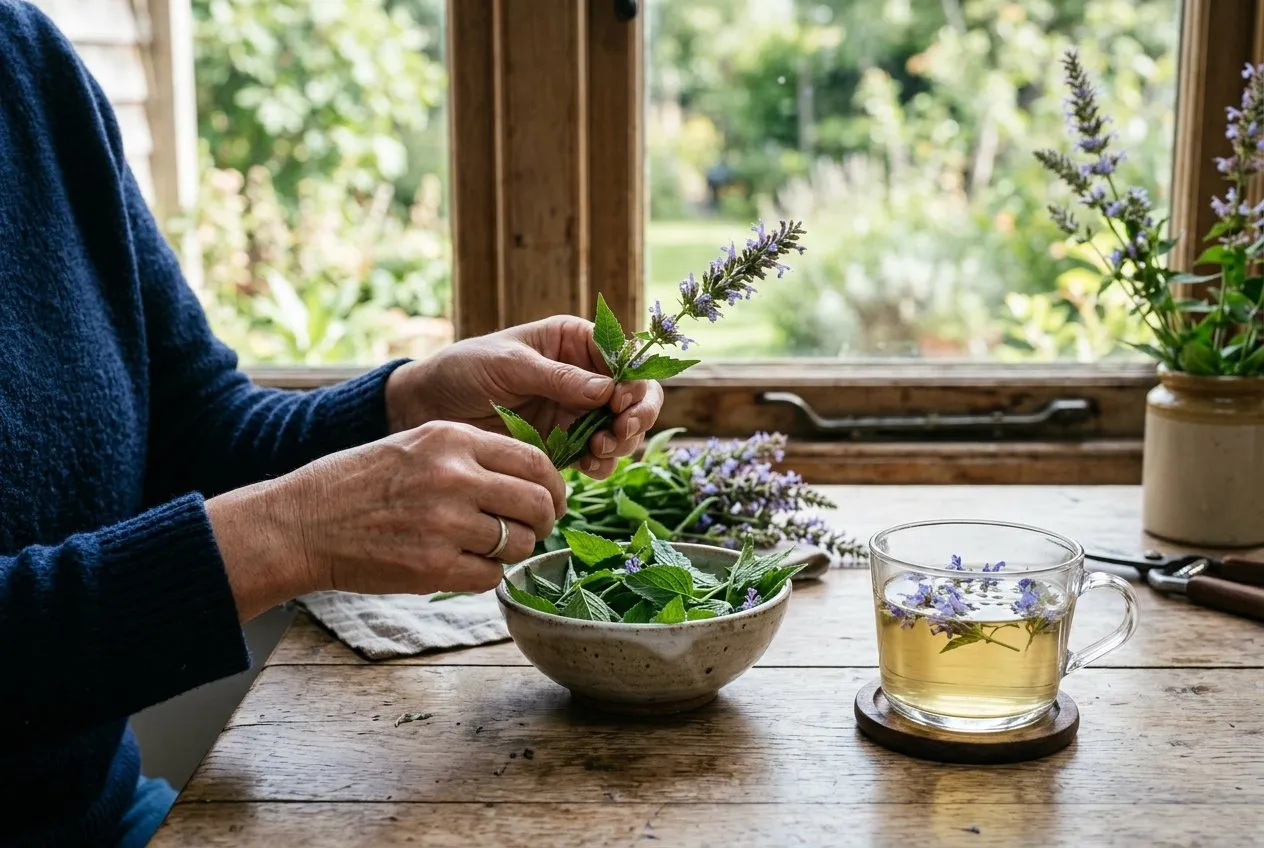 Anise hyssop leaves and flowers make a sweet, aniseed herbal tea. Pick young leaves before flowering for the best flavour.
Agastache for bees, butterflies and late-summer nectar
Agastache is among the best late-summer nectar plants you can grow. Each upright spike carries hundreds of small tubular florets that open in sequence over weeks, giving a long, steady supply of nectar exactly when many border plants have finished. All the flowering types hold RHS Plants for Pollinators status.
To get the most from agastache for wildlife, plant it in a group of three or five rather than dotting singles about. A concentrated block of nectar is easier for insects to find and work. Pair it with other bee-friendly plants such as salvias, echinacea and sedum for a border that hums from midsummer to the first frosts. The Bumblebee Conservation Trust rates long-flowering, nectar-rich plants like these among the most useful additions to a garden (bumblebeeconservation.org).
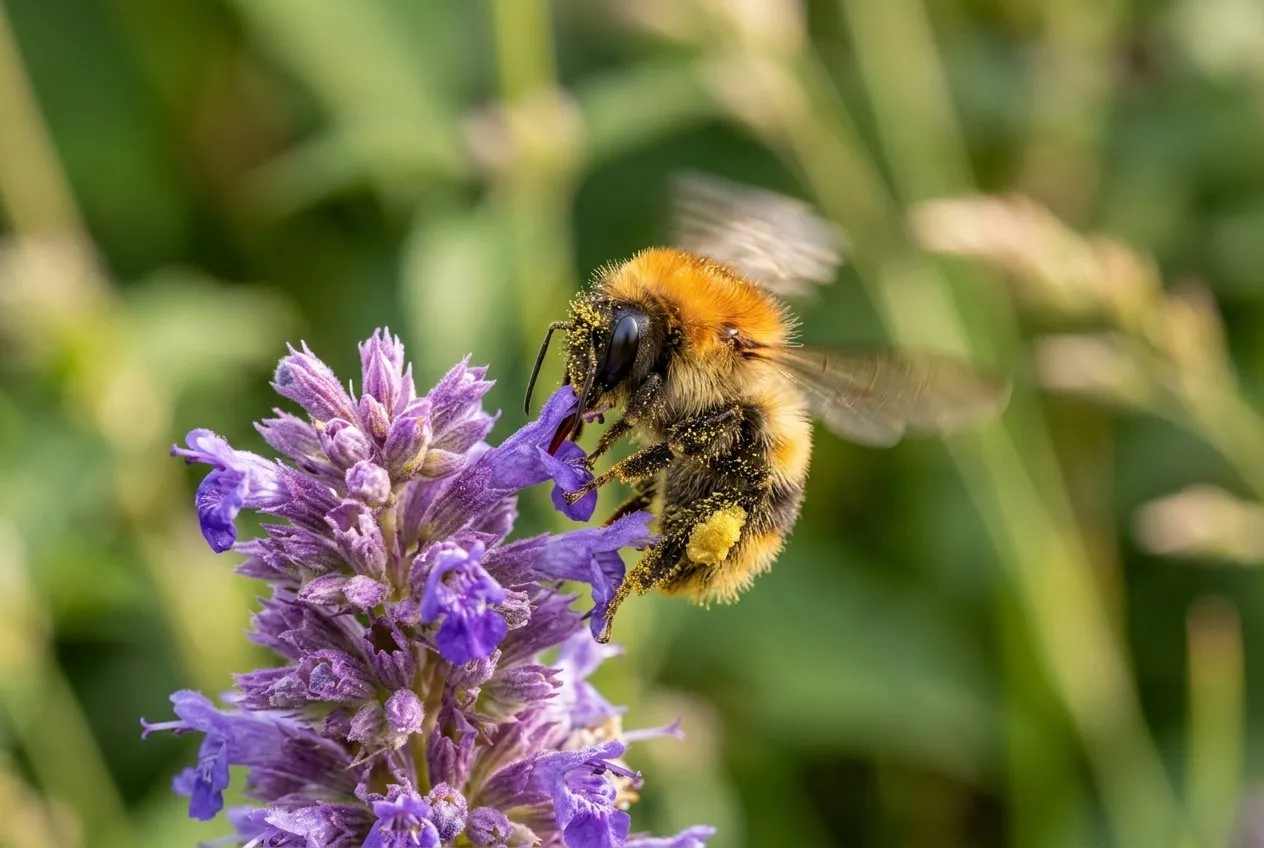 A common carder bee working an agastache spike. The florets open in sequence, feeding pollinators for weeks.
Month-by-month agastache calendar
Timing the key jobs correctly keeps agastache flowering hard and coming through winter. This calendar covers the main tasks across the year for a UK garden.
| Month | Task |
|---|---|
| January | Leave stems and seedheads standing; check crowns are not waterlogged |
| February | Sow seed under cover at 18-21C; resist cutting plants back |
| March | Cut old growth to 10cm as new shoots appear; clear winter debris |
| April | Prick out and grow on seedlings; plant out young stock late in the month |
| May | Harden off and plant out; take basal cuttings from tender types |
| June | Water new plants in dry spells; first flowers open on early types |
| July | Peak flowering begins; deadhead spent spikes for repeat flushes |
| August | Full flower and busiest for bees; keep deadheading, water pots |
| September | Late flowers continue; let a few hardy spikes set seed for self-sowing |
| October | Last flowers fade; leave all top growth standing for winter |
| November | Mulch crowns with gravel; cover tender types or move pots under cover |
| December | No action needed; birds work the standing seedheads |
Common mistakes when growing agastache
Most agastache failures trace back to a handful of avoidable errors. Get these right and the hardy types will thrive for years.
Treating every agastache as fully hardy
The most expensive mistake is assuming your bright orange ‘Kudos’ is as tough as blue A. foeniculum. It is not. Check which group a plant belongs to before you buy, plan winter protection for the tender types, and never blame yourself when a Mexican species dies in a wet February. It was always going to need help.
Planting in rich, damp soil
Agastache flower best on lean, gritty, free-draining ground. Fat, manured soil gives soft leafy growth, fewer flowers, and a crown that rots in winter. Do not feed heavily. Improve drainage with grit before you improve fertility, and grow them harder than you think you should.
Cutting back in autumn
Tidying the stems off in November exposes the crown to cold winter rain and kills more plants than frost ever will. Leave all top growth standing until March. The seedheads look good, shelter the crown, and feed the birds through the cold months.
Growing them in shade
Agastache in shade grow lax, flower poorly, and flop. These are full-sun plants. Give them the sunniest, best-drained spot you have. A south-facing bed against a warm wall suits the tender types especially well.
Skipping the cuttings
Losing a favourite variety to one wet winter is avoidable. Ten minutes taking cuttings in May gives you rooted insurance under glass. Do it every year for anything tender and you will never lose a variety for good. Companion aromatic plants like catmint and salvia propagate just as easily and enjoy the same lean, sunny conditions.
Frequently asked questions
Is agastache hardy in the UK?
Agastache foeniculum is fully hardy in the UK to about -15C. It survives most UK winters as a reliable perennial. The showier hybrids like ‘Blackadder’ and Mexican types like rupestris are less durable. They cope with cold but rot in cold, wet soil. Give them sharp drainage, or take cuttings each summer as insurance.
Can you eat agastache?
Yes, the leaves and flowers of anise hyssop are edible. Agastache foeniculum has an aniseed and mild liquorice flavour. Use young leaves and the blue flowers in herbal tea, salads, cordials and baking. It is a culinary and medicinal herb, not just an ornamental. The flavour is strongest in fresh young leaves picked before flowering.
Is agastache good for bees?
When should I cut back agastache?
Cut agastache back in spring, not autumn. The hollow stems and seedheads shelter the crown through winter wet and feed birds. Leave them standing until March, then cut to 10cm as new shoots appear at the base. Cutting hard in autumn exposes the crown to cold rain and raises the risk of losing the plant.
Does agastache come back every year?
Hardy A. foeniculum returns reliably for years and self-seeds. The blue anise hyssop is a dependable perennial in free-draining soil. The showier hybrids and orange Mexican types are short-lived, often lasting two or three years, and may not survive a wet winter. Treat those as annuals, protect the crown with grit, or overwinter cuttings under cover.
How do you grow agastache from seed?
Surface sow agastache seed from February to April under cover. The seed needs light, so do not bury it. Keep it at 18-21C and it germinates in one to three weeks. Prick out, harden off, and plant out after the last frost. Early sowings flower in their first summer. It is one of the easiest perennials from seed.
Why did my agastache die over winter?
Winter wet rotted the crown, not cold. Most agastache lost in UK gardens die in saturated soil from November to March. The fleshy crown sits in cold water and rots from the centre out. Improve drainage with 30% grit, plant on a slight mound, mulch with gravel not compost, and never cut the stems back before spring.
Now you know how to grow agastache from seed to winter care, keep the border feeding insects into autumn with our guide to the best plants for butterflies in the UK.
Our team produces practical UK gardening guidance from source research, contributor records and established horticultural practice. Editorial standards are overseen by Matt W.