Key takeaways
- Autumn sowing brings the first cut forward by around 21 days, to mid-June
- Ammi majus has open lace-cap umbels; Ammi visnaga has dense domed heads
- The taproot resents disturbance, so direct sow or use 15cm root trainers
- Sap plus sunlight causes phytophotodermatitis, so wear gloves and long sleeves
- Cut when 70 to 80 percent of the florets are open for 9 to 12 days of vase life
Ammi majus is the white filler that carries a British cutting bed from June to September, and almost everyone grows it at half its potential. Learning how to grow Ammi majus properly comes down to one decision made in September, not March. This is Bishop’s flower, a hardy annual umbellifer with flat lace-cap heads on slender stems, and it behaves completely differently depending on when you sow it. There is also a safety point that two of the top-ranking UK guides skip entirely: the sap is phototoxic. This guide covers the visnaga comparison, autumn versus spring sowing with measured results, root disturbance, netting, cutting stage and handling the sap safely.
Ammi majus or Ammi visnaga: which one do you want
They are sold side by side and they are not interchangeable. Both are annual umbellifers in the carrot family, and both are excellent cut flowers, but they do different jobs in a bed and a bucket.
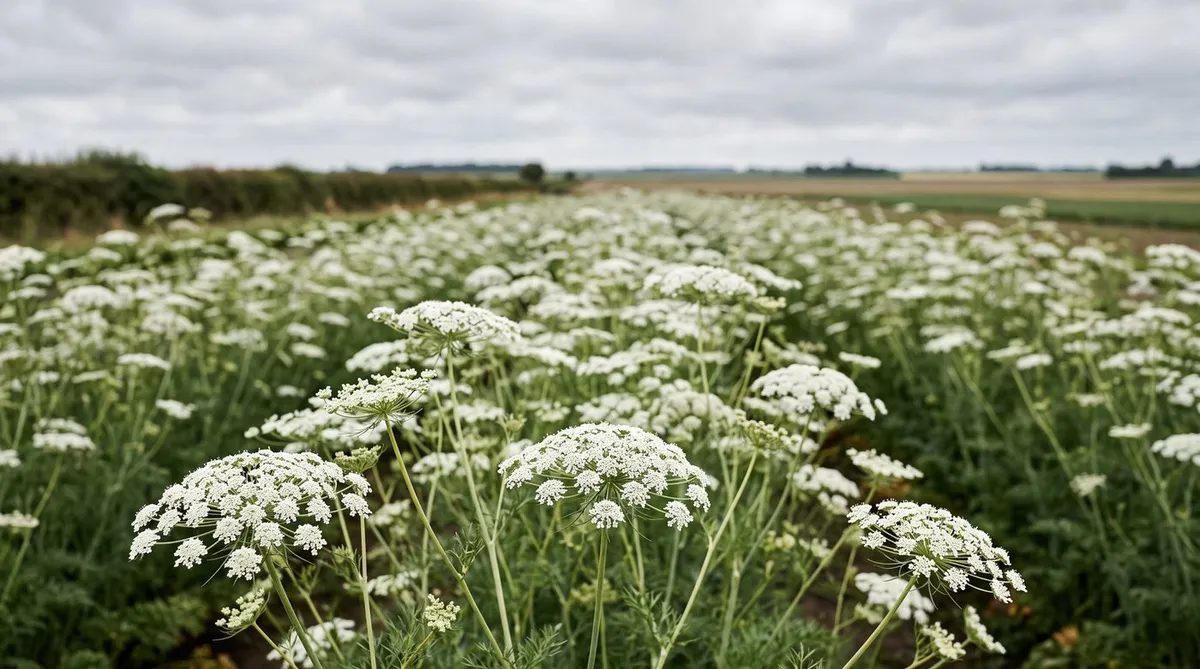
Ammi majus, Bishop’s flower, carries flat or slightly domed umbels 8 to 12cm across, made of dozens of small clusters on radiating spokes with visible gaps between them. The effect is airy and lace-like. Foliage is a fairly coarse, divided mid-green. It flowers from late June on autumn-sown plants and reaches 90 to 120cm.
Ammi visnaga, toothpick weed, carries dense, tightly packed domed heads 10 to 15cm across with almost no gaps, on stiffer stems. Its foliage is much finer and more ferny, and holds well as cut greenery in its own right. It flowers about a month later, from late July, and lasts noticeably longer in the vase.
| Species | Head form | Height | Flowers from | Vase life | Role in a cutting bed |
|---|---|---|---|---|---|
| Ammi majus | Open flat lace-cap, 8-12cm | 90-120cm | Late June | 9-12 days | Gold standard early white filler |
| Ammi visnaga | Dense domed, 10-15cm | 90-110cm | Late July | 12-16 days | Later succession, best vase life |
| Ammi visnaga ‘Green Mist’ | Dense, lime green | 80-100cm | Late July | 12-16 days | Green filler, foliage doubles as greenery |
| Orlaya grandiflora | Small lacy, showy outer petals | 45-60cm | June | 7-9 days | Short front-of-bed white |
| Daucus carota ‘Dara’ | Domed, pink to burgundy | 90-120cm | July | 8-10 days | Coloured alternative, same shape |
Ammi majus is the gold standard for the early white gap, because it fills the fortnight in late June when spring bulbs are finished and most summer annuals have not started. Grow both if you have room. Sow majus in autumn for June and visnaga in spring for August, and you have white filler for four months.
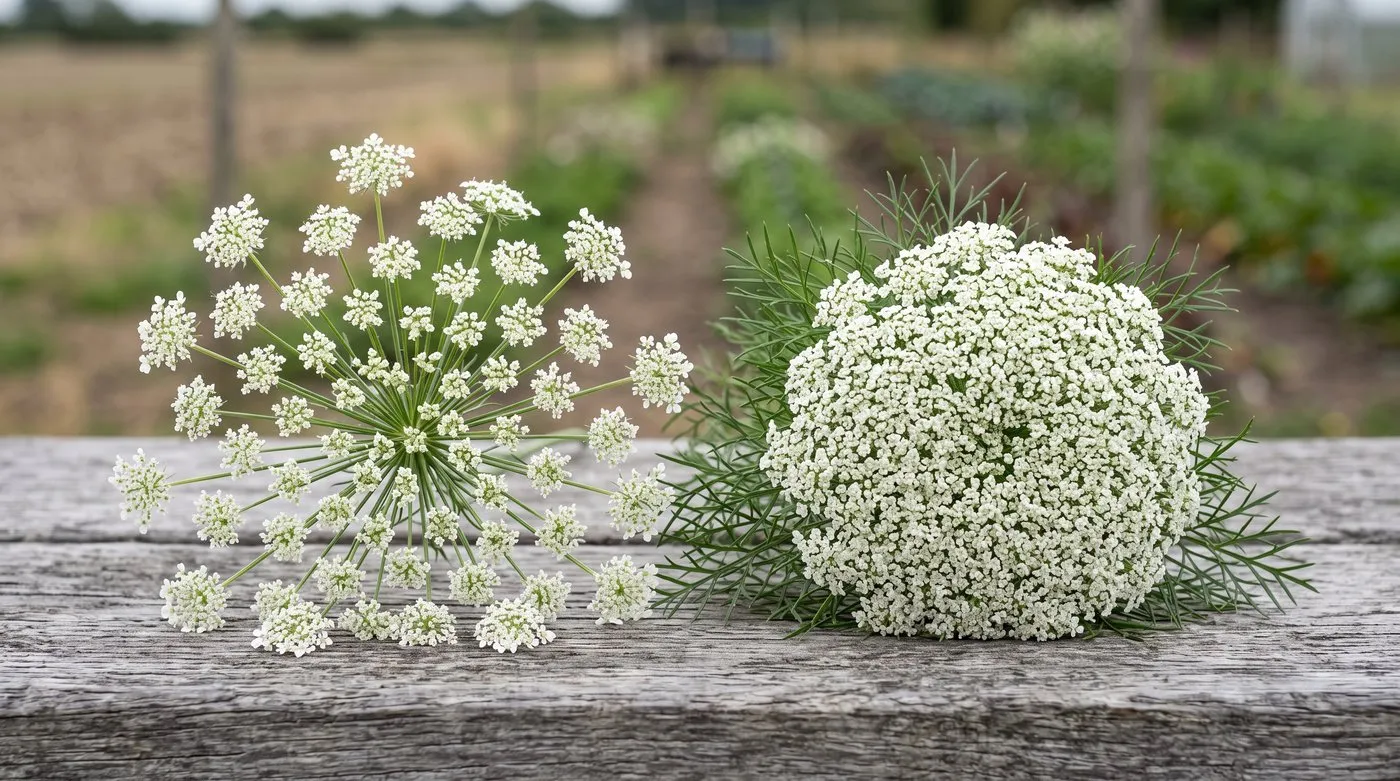 Left, Ammi majus: an open lace-cap umbel with visible gaps between the clusters. Right, Ammi visnaga: a dense domed head on a stiffer stem, flowering a month later.
Autumn sowing beats spring sowing, and here is by how much
That is 32cm more stem, 21 days earlier, and roughly double the crop from an identical packet of seed. The reason is root development. An autumn-sown plant spends October to March building a taproot 25 to 35cm deep while making almost no top growth. When temperatures rise in April it already has the root system to drive a metre of stem. A spring-sown plant is building root and shoot at the same time, in competition.
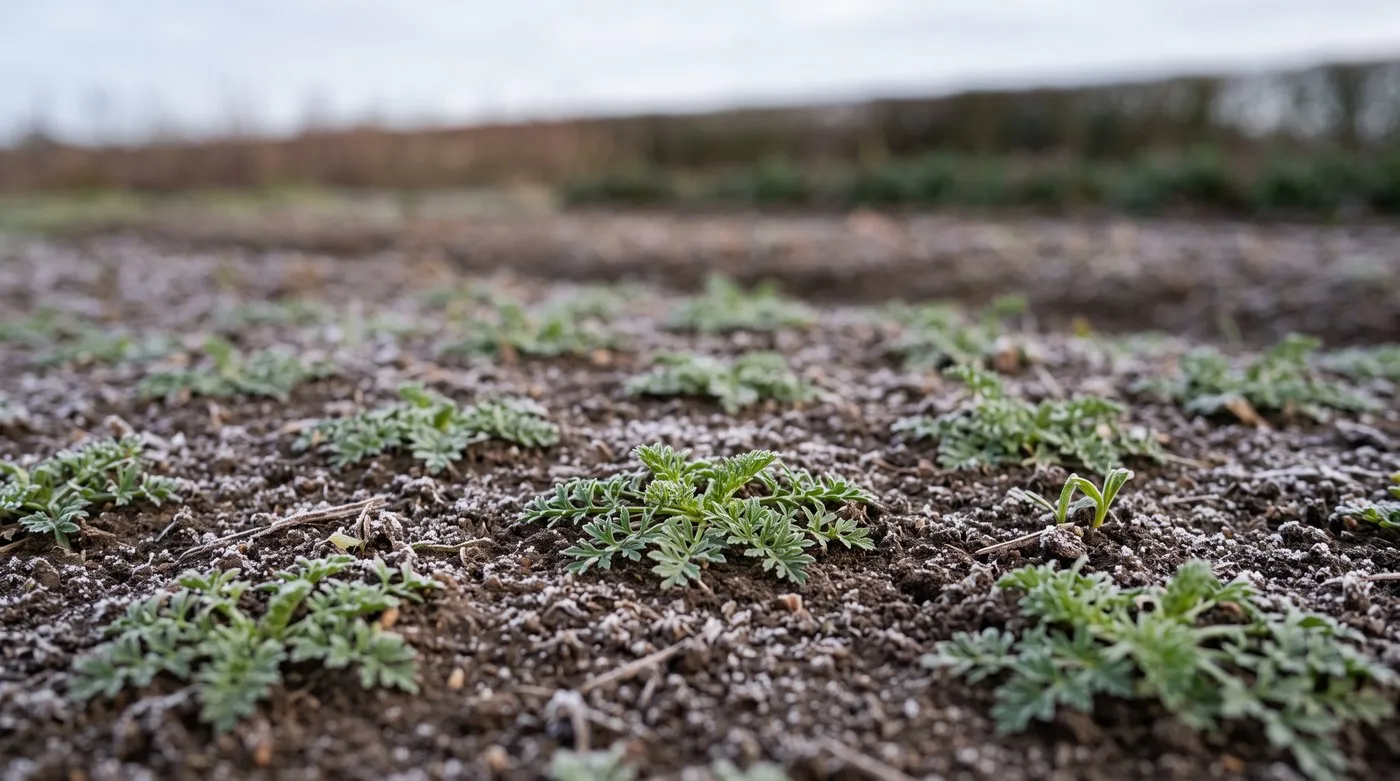 Autumn-sown Ammi majus in February, sitting as flat rosettes barely 6cm across. All the growth from October to March goes into a taproot 25 to 35cm deep.
Direct sowing or modules: why the taproot decides
Ammi majus makes a single deep taproot with few fibrous side roots. That anatomy dictates everything about how you raise it.
Direct sowing is the default. Rake the bed to a fine tilth, water it, and sow thinly in drills 1cm deep or simply broadcast and rake in lightly. The seed is small and needs only the barest covering. Germination takes 14 to 21 days at soil temperatures of 12 to 18C, which is slower than most gardeners expect. Thin the seedlings to 25 to 30cm apart once they have four true leaves. Thin ruthlessly. Plants left at 10cm spacing produce thin stems and half the flowers.
If you must raise plants under cover, use depth. Root trainers 15cm deep, deep 9cm pots, or paper tubes made from newspaper all work. Sow two seeds per cell and remove the weaker seedling with scissors rather than pulling it. Plant out the whole plug intact, without teasing the roots apart at all, when the plant has four to six true leaves.
What does not work is a standard shallow module tray or a seed tray pricked out in the usual way. The taproot hits the base of a 4cm cell, kinks, and the plant never recovers. In our 2022 comparison, shallow-module plants averaged 51cm against 89cm for the same seed in root trainers. That is worse than a bad spring sowing.
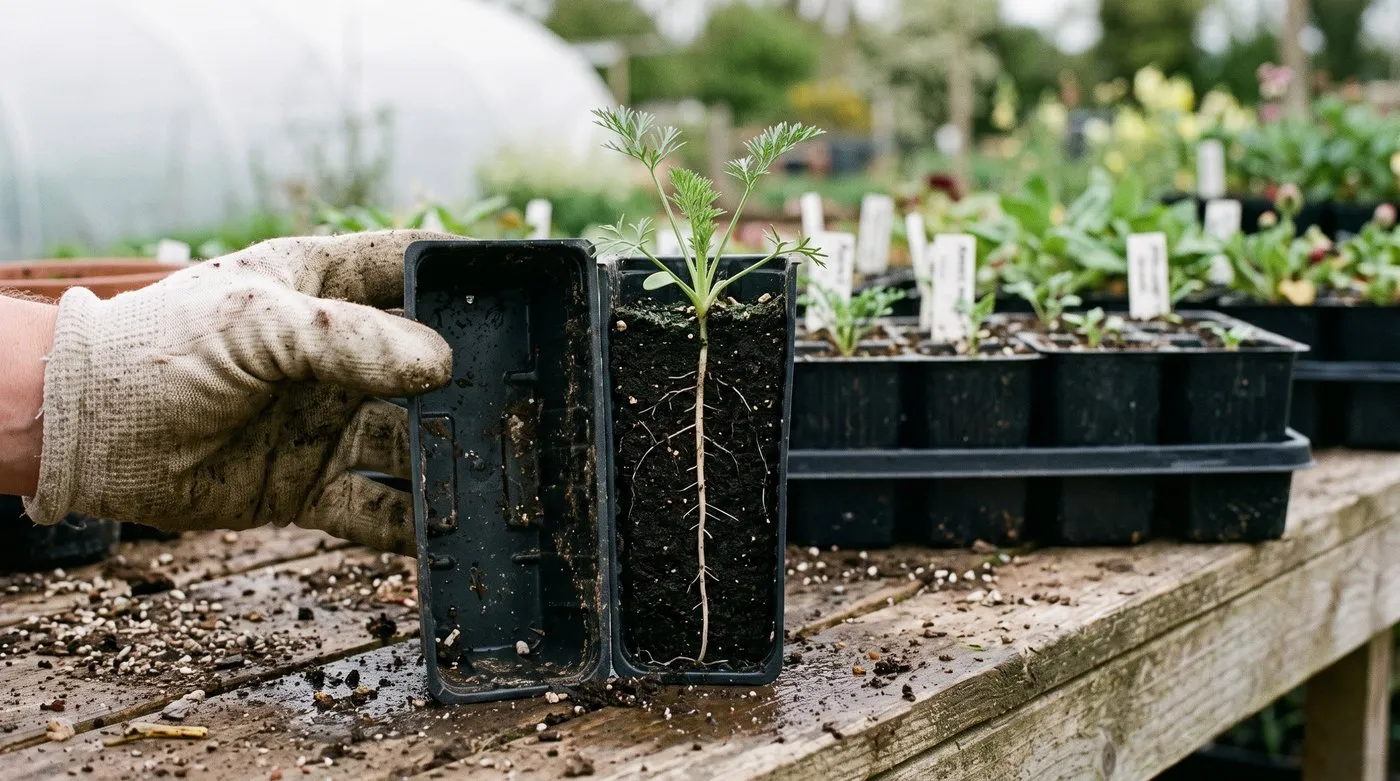 Deep root trainers keep the taproot straight. Tipped out at four true leaves, the root already runs the full 15cm depth of the cell without kinking.
Getting netting up before the plants need it
A metre of Ammi majus on a 6mm stem does not stand up on its own on an open site. The whole plot goes over in one wet windy night in July and the stems kink permanently at the bend, which makes them useless for cutting.
Put support in before the plants reach it. Stretch a horizontal layer of 15cm mesh support netting across the bed at 30cm above soil level, held on canes or metal stakes at the corners and every 1.5 metres along the sides. Do this in April for autumn-sown plants, when they are still rosettes. The plants grow up through the mesh and it holds them from the inside.
One layer is enough for a sheltered bed. On an exposed plot, add a second layer at 70cm. Raising the first layer as the crop grows is the professional approach, but for a garden bed a fixed layer at 30cm is simpler and works.
Spacing feeds into support. At 25 to 30cm apart the plants lean on each other through the mesh and the block holds together. At 45cm they stand alone and fall alone.
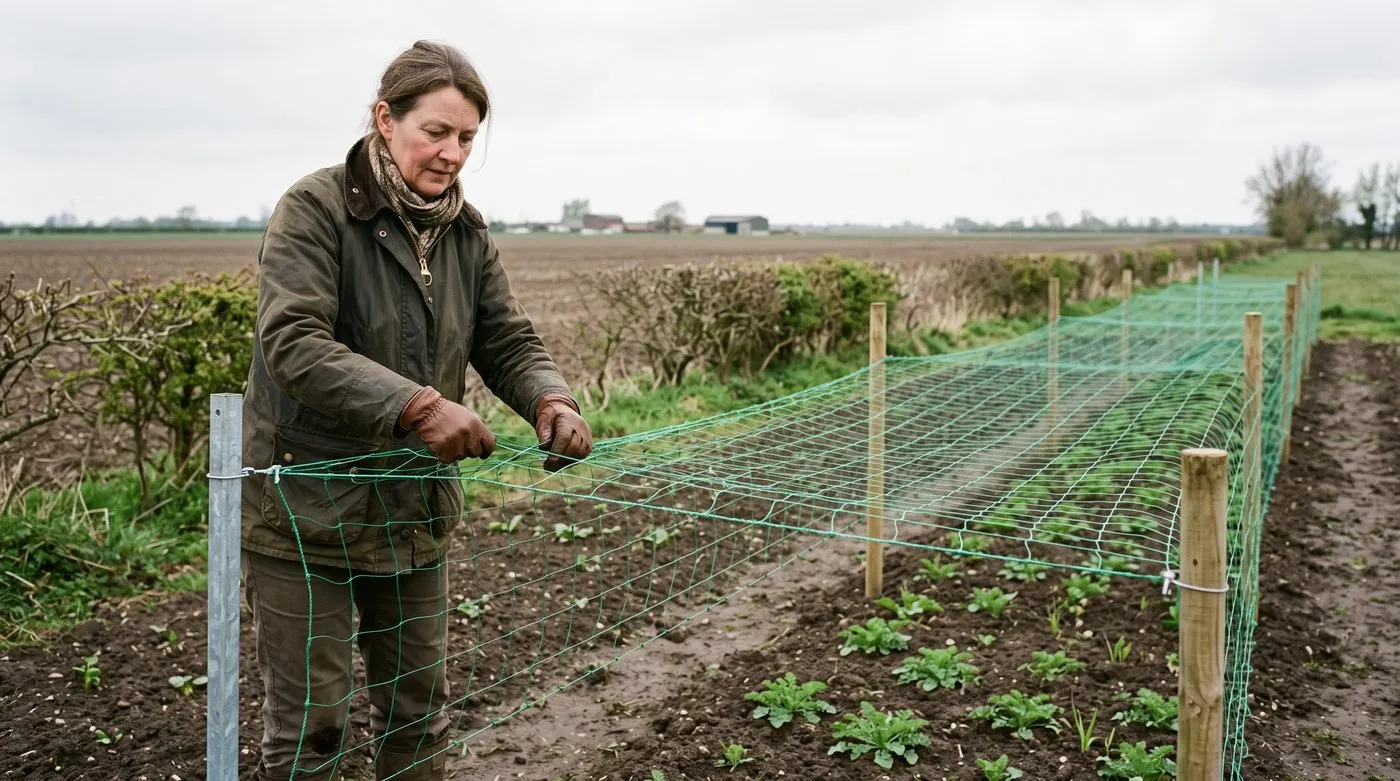 Netting goes up in April, while the plants are still rosettes. A single layer of 15cm mesh at 30cm high holds the whole block once the stems reach a metre.
When to cut Ammi majus for maximum vase life
Cutting stage matters more with umbellifers than with almost any other cut flower, because an immature umbel will not open in water.
Cut when 70 to 80 percent of the florets on the head are open. At that point the outer rings are fully open and the centre still shows a few green unopened clusters. Cut tighter than 50 percent and the head simply wilts within two days without ever opening. Cut at 100 percent and vase life drops to five or six days because the head is already ageing.
Cut in the cool of early morning, before 8am, when the stems are fully turgid. Use a sharp knife or clean secateurs and cut low, taking the stem right down to the base of the plant. Cutting low forces side shoots and is why a well-cropped plant gives 9 to 12 stems rather than 4.
Strip every leaf below the waterline immediately. Ammi foliage rots quickly and turns the water cloudy within 48 hours.
Condition in deep, cool water, 10 to 15C, covering two-thirds of the stem, in a dark cool place for four hours minimum and preferably overnight. This is what gives you 9 to 12 days rather than four. The full technique is in our guide to conditioning cut flowers for longer vase life.
The sap warning most guides leave out
Ammi majus sap contains furanocoumarins. These are the same class of compounds found in giant hogweed, rue and wild parsnip, and they cause phytophotodermatitis: a chemical burn that only develops when treated skin is exposed to ultraviolet light.
The reaction is delayed, which is what makes it dangerous. Sap on the forearm on a sunny morning produces nothing at the time. Redness appears 12 to 24 hours later, blistering peaks at 48 to 72 hours, and the resulting brown pigmentation can last months. People rarely connect the burn to the plant because of the gap.
Ammi is far milder than giant hogweed, and thousands of people cut it every summer without incident. But it is not nothing, and commercial growers who cut hundreds of stems a day do get caught. The RHS lists Ammi among plants that can cause skin reactions.
The precautions are simple and cost nothing.
- Wear gloves and long sleeves when cutting, thinning or clearing Ammi, especially on a bright day.
- Cut early in the morning or on an overcast day where you can choose.
- Wash any sap off skin immediately with soap and cold water.
- If sap does contact skin, keep that area out of sunlight for 48 hours.
- Keep the cutting bucket out of direct sun so hands are not repeatedly wetted with sap-laden water in bright light.
Warning: Never strim or brushcut a bed of Ammi majus in sunshine. Strimming atomises sap into a mist that settles on face, neck and forearms all at once, which is exactly how the worst phytophotodermatitis cases happen. Pull or cut Ammi by hand, in gloves and sleeves. Our guide to giant hogweed identification and removal covers the same chemistry at far higher concentration and is worth reading before you clear any umbellifer.
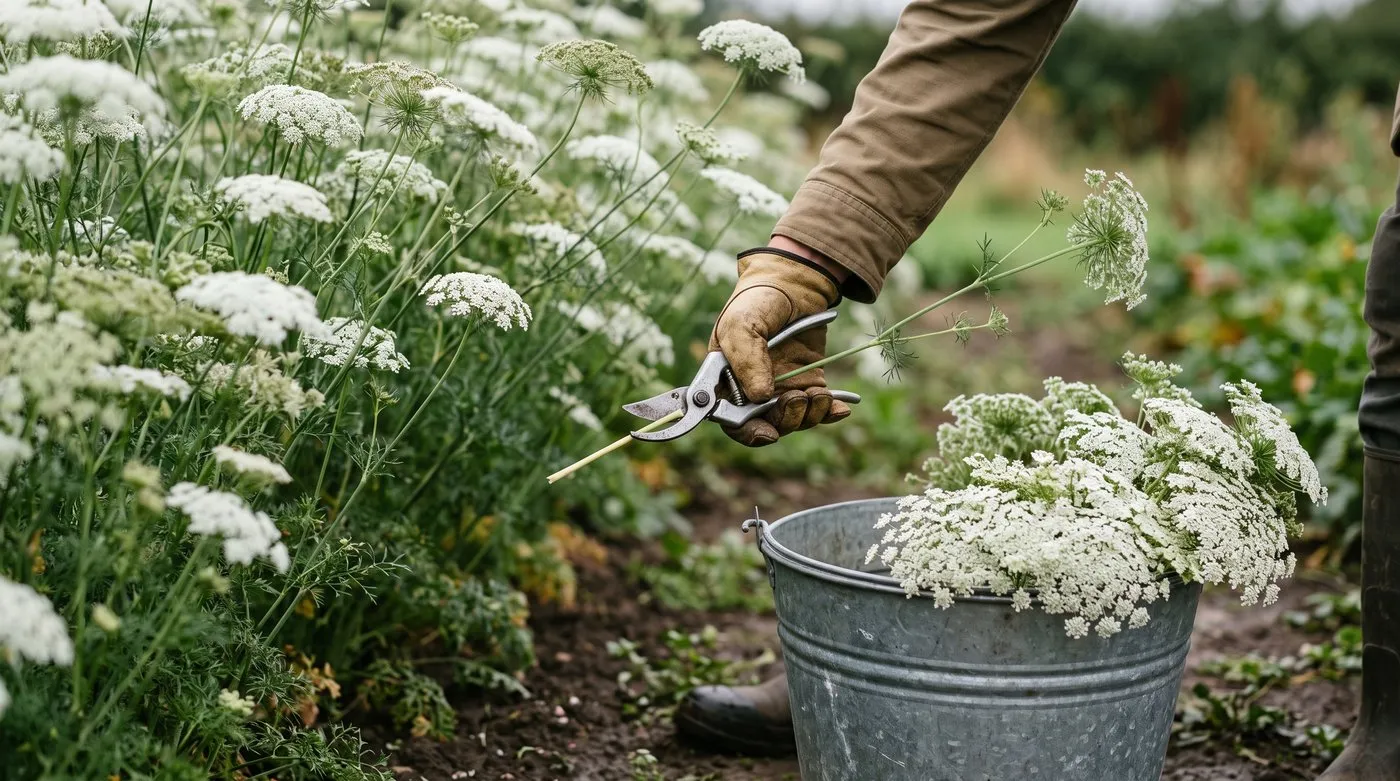 Gloves and long sleeves are not optional. Ammi sap contains furanocoumarins, which cause a delayed chemical burn on skin exposed to sunlight.
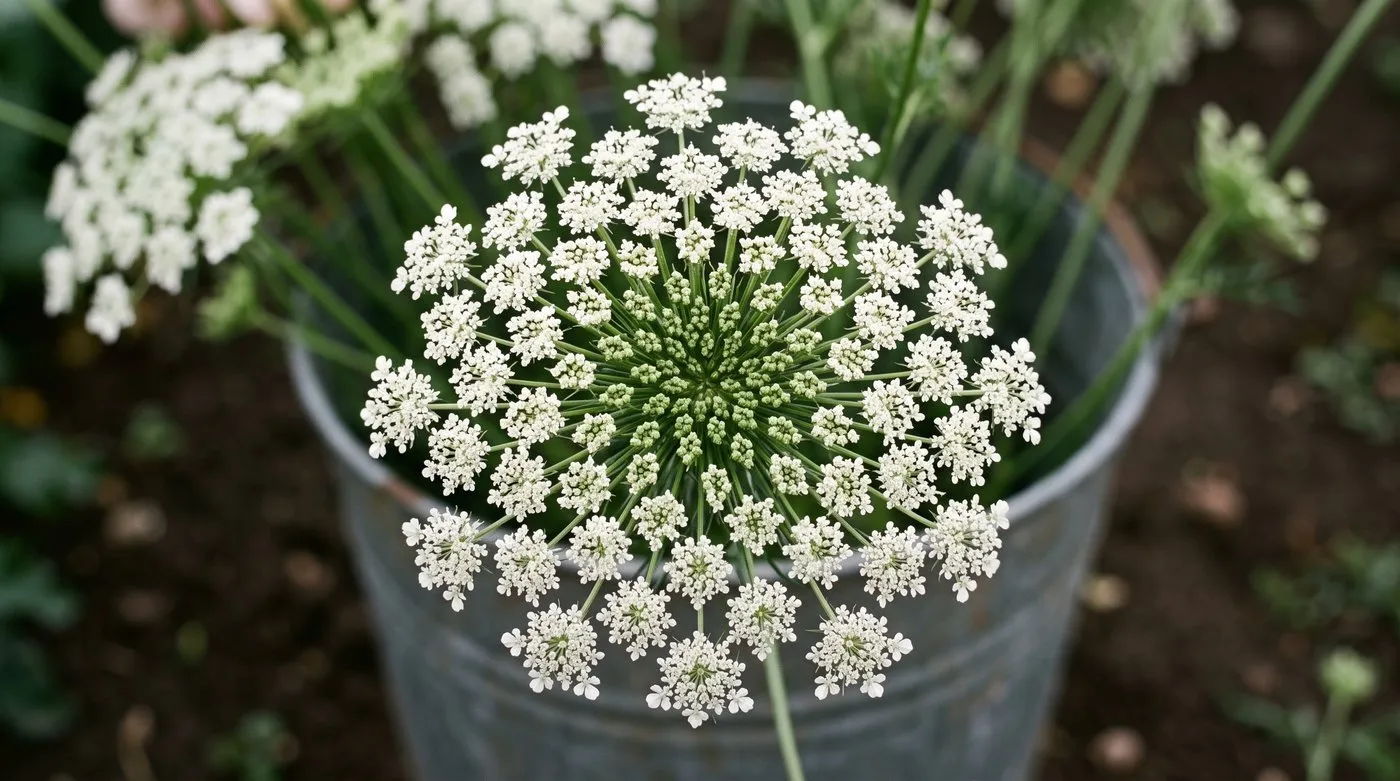 The correct cutting stage. The outer rings of florets are fully open and only a few green clusters remain in the centre, at roughly 75 percent open.
Why Ammi majus flowers short and finishes early
The root cause of a disappointing Ammi crop is nearly always root restriction, and it gets blamed on the weather.
The plant is programmed to build a deep taproot first and flower second. Anything that stops the taproot going down caps the plant’s final height and shortens its season. A shallow module, a compacted pan 20cm down in a bed that has been walked on, a stony subsoil, or a spring sowing that leaves no time for root building all produce the same symptom: a 50 to 70cm plant that throws three or four small heads in July and dies in August.
Gardeners read that as a poor summer or bad seed. It is neither. Our shallow-module plants averaged 51cm in the same season, in the same bed, as root-trainer plants averaging 89cm.
Ammi majus month by month in the UK
| Month | Task |
|---|---|
| January | Overwintering rosettes need nothing. Check fleece is not sitting wet on the plants. |
| February | Lift fleece on mild days for airflow. Remove it entirely in the last week. |
| March | Fallback sowing month if you missed autumn. Sow direct or into deep root trainers. |
| April | Put support netting up at 30cm before plants reach it. Thin to 25 to 30cm apart. |
| May | Stems extend fast. Water only in genuine drought; the taproot finds its own water. |
| June | First umbels open on autumn-sown plants. First cut from around 17 June. |
| July | Peak cutting. Cut low to force side shoots. Spring-sown plants start now. |
| August | Cutting continues. Leave two or three plants uncut to set seed for self-sowing. |
| September | Main sowing month. Direct sow mid-month into a firm, weed-free, forked bed. |
| October | Seedlings emerge at 14 to 21 days. Hoe carefully around them, not through them. |
| November | Plants sit as rosettes. Clear slug shelter and old debris from around them. |
| December | Fleece the bed on heavy soil. One 30gsm layer is enough; the plant is fully hardy. |
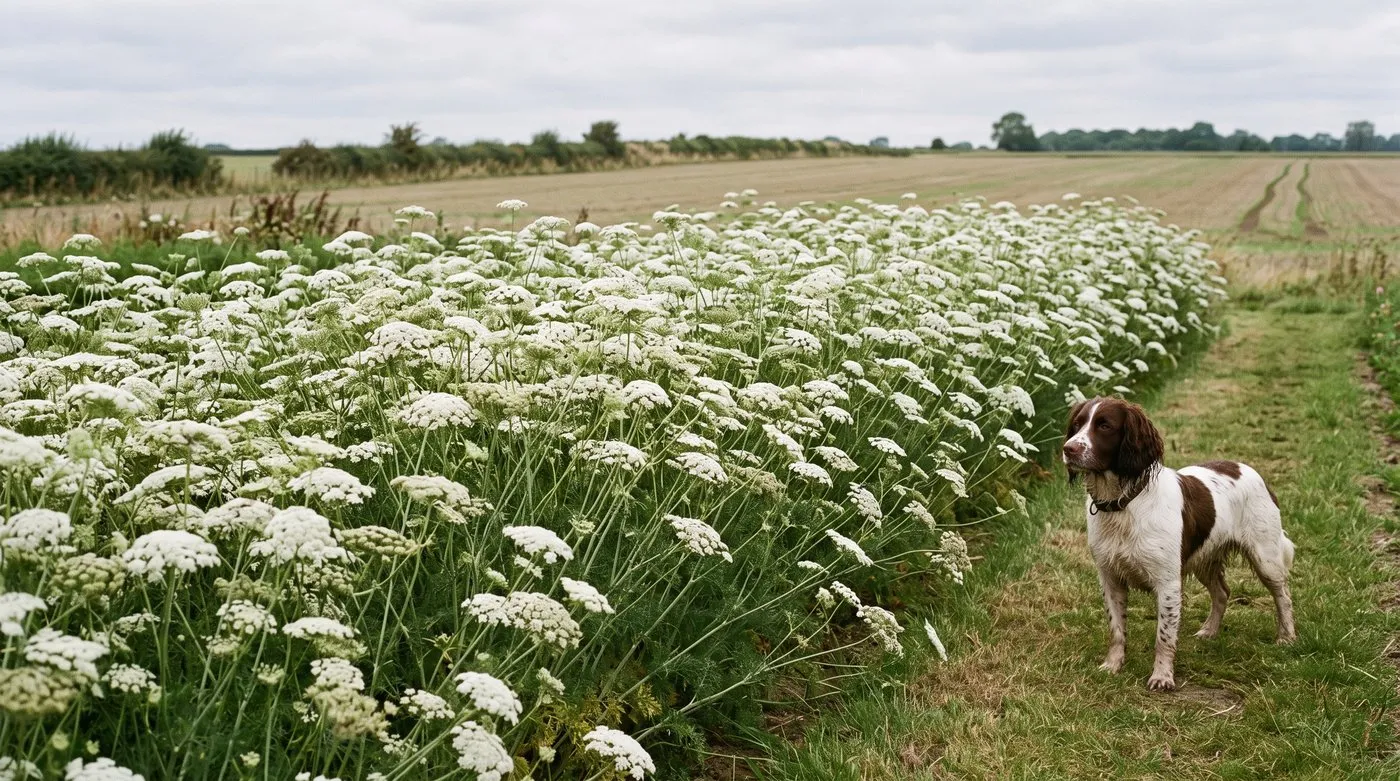 A block grown at 25 to 30cm spacing on a Lincolnshire cut-flower plot. The plants lean on each other through the netting, which is why close spacing helps rather than hinders.
What a bed of Ammi majus costs
Ammi is one of the cheapest cut flowers per stem you can grow, but the netting is the cost people forget.
A first-year block costs £30 to £45 including netting and stakes, dropping to under £4 a year afterwards. At 9 to 12 stems per plant from 40 plants, that is 360 to 480 stems a season, against florist prices of £1.50 to £2.50 a stem.
Common mistakes with Ammi majus
- Sowing in spring by default. A March sowing gives roughly 76cm stems from mid-July. September gives 108cm from mid-June. It happens because seed packets list spring sowing first. Sow in mid-September and treat spring as the fallback.
- Raising it in shallow modules. A 4cm cell kinks the taproot and caps the plant at around 51cm. Use 15cm root trainers or paper tubes, or direct sow, and plant the plug without disturbing it.
- Thinning too gently. Seedlings left at 10cm apart compete and produce thin, short stems. Thin to 25 to 30cm even though it feels wasteful. The remaining plants more than repay the gaps.
- Netting after the plants have grown. Threading a metre-tall crop into mesh damages stems and does not work. Put the netting up in April at 30cm, while the plants are still rosettes.
- Cutting in tight bud. An umbel under 50 percent open never opens in water and wilts in two days. Wait for 70 to 80 percent of florets open, then cut in the cool of the morning.
Now you have Ammi majus timed properly, apply the same autumn-sowing logic to your sweet peas with our guide to autumn sowing sweet peas for earlier flowers, or work through every growing guide on the site.
Frequently asked questions
When should I sow Ammi majus in the UK?
Sow in mid-September for the best plants, or March to April as a fallback. Autumn sowing lets seedlings overwinter as rosettes and build a deep taproot. Those plants flower around three weeks earlier and reach roughly 30cm taller than spring-sown ones.
What is the difference between Ammi majus and Ammi visnaga?
Majus has open lace-cap umbels; visnaga has dense domed heads and ferny foliage. Ammi majus flowers earlier, from late June, with flat heads 8 to 12cm across. Ammi visnaga flowers from late July with tighter, longer-lasting heads on stiffer stems.
Can you transplant Ammi majus seedlings?
Only from deep root trainers, because the taproot resents disturbance. Seedlings moved from open ground or shallow trays bolt short and flower poorly. Use 15cm deep root trainers or paper tubes and plant the whole plug without breaking it up.
Is Ammi majus poisonous or dangerous to handle?
The sap is phototoxic and blisters skin exposed to sunlight. Ammi majus contains furanocoumarins, the same compounds found in giant hogweed but at much lower concentration. Wear gloves and long sleeves when cutting, especially on a bright day.
How tall does Ammi majus grow and does it need support?
It reaches 90 to 120cm and does need support on any open site. The stems are slender at 5 to 8mm and go over in wind or heavy rain. Put a layer of 15cm mesh netting across the bed at 30cm high before the plants reach it.
When should you cut Ammi majus for the vase?
Cut when 70 to 80 percent of the florets on the umbel are open. Cutting in tight bud gives heads that never open and wilt within two days. Cut in the cool of early morning and condition in deep water for four hours.
Does Ammi majus self-seed in UK gardens?
Yes, freely, and self-sown seedlings often outperform sown ones. Leave two or three plants to set seed in August and seedlings appear that autumn. They germinate exactly when the plant wants to, which is why they grow so well.
Our team produces practical UK gardening guidance from source research, contributor records and established horticultural practice. Editorial standards are overseen by Matt W.