Key takeaways
- Sow sweet peas from early October to mid-November in root trainers or deep pots for the longest root run
- Autumn-sown plants flower two to three weeks earlier than spring-sown, on longer stems
- Overwinter in a cold frame or unheated greenhouse; the seedlings stand frost to about -5°C
- Winter ventilation, not warmth, is what keeps them alive; open the frame on every mild day
- Pinch the growing tip out above the third or fourth pair of leaves to force basal side shoots
- Protect the seed from mice, the worst enemy of autumn sowings, with traps or a closed frame
A jar of sweet peas on the kitchen table in early June, while everyone else is still waiting, is the whole reason to sow in October. Autumn-sown plants get a head start that no spring sowing can match.
Sweet peas (Lathyrus odoratus) are hardy annuals. Sown in autumn, they germinate, make a sturdy little plant, then sit through winter building roots rather than top growth. Come spring they race away from a far bigger root system than a February sowing can manage. The reward is earlier flowers, longer stems and stronger plants. This guide covers the October sowing, the winter care that keeps them alive, and the spring planting that turns them into a wall of scent.
Why sow sweet peas in autumn?
Autumn sowing buys two things: time and root depth. A seed sown in October has six months to build roots before it needs to flower. A seed sown in February has barely eight weeks.
The catch is winter. You are keeping a young plant alive through the darkest, wettest months. Get the cold frame care right and autumn sowing is the single biggest upgrade you can make to a sweet pea patch. Get it wrong and you lose the lot to mould or mice. For the wider sowing picture across both seasons, our guide on when to plant sweet peas sets autumn alongside spring.
When to sow autumn sweet peas in the UK
The window runs from early October to mid-November:
- Early to mid-October is ideal across most of the UK. Seedlings make a small, sturdy plant before the light fails.
- Late October to mid-November suits milder southern and coastal gardens.
- After mid-November, germination slows so much that a January or February sowing under glass becomes the better option.
Aim for small, tough seedlings going into winter, not big soft ones. A plant with two or three pairs of leaves overwinters far better than a leggy 20cm seedling. If your October is mild, sow a week or two later rather than earlier.
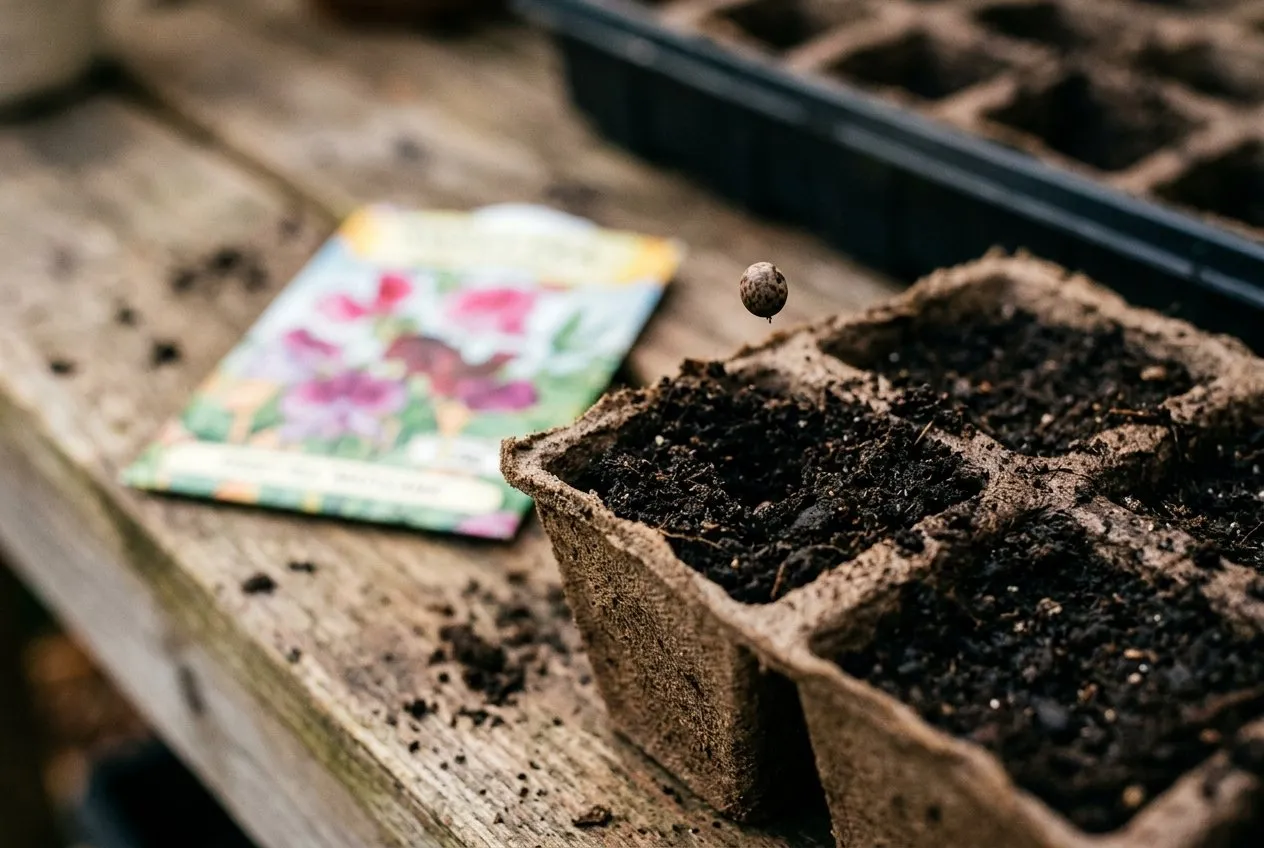 Sow one seed per root trainer cell, 2cm deep. The deep cells let sweet peas build the long roots they want.
How to sow sweet peas in root trainers
Sweet peas grow a long taproot and hate root disturbance, so depth matters more than width. A rolled seed snail gives the same deep root run when root trainers are in short supply.
- Choose deep containers. Root trainers (12-15cm deep) are ideal. Deep 9cm pots, cardboard tubes, or loo rolls also work. Avoid shallow trays.
- Use free-draining compost. Peat-free multipurpose mixed with a handful of perlite or grit per few litres. Winter wet is the killer, so drainage is everything.
- Sow one seed per cell, 2cm deep. No need to soak modern seed. Only chit very hard, dark seed on damp paper until the coat splits.
- Water once, then keep just moist. Germination takes 10-14 days at 12-15°C. A cool, bright windowsill or greenhouse bench is plenty; they do not need heat.
- Move to the cold frame as soon as they are up. The aim now is slow, hard growth, not a warm sprint.
For the exact germination figures across the seed box, our seed germination temperatures table sets sweet peas in context.
Overwintering sweet peas in a cold frame
This is the make-or-break stage. The plants want to be cold, airy and only just moist.
- Ventilate hard. Prop the frame open on every day above 5°C. Stagnant, damp air is what breeds the grey mould (Botrytis) that flattens a frame of seedlings overnight.
- Keep them on the dry side. Water only when the compost surface is dry. Soggy compost in January rots roots.
- Protect from mice. Mice are the number one enemy of autumn sowings. A closed frame, mesh covers and a couple of traps save the crop.
- Pick off dead leaves. Any yellowing leaf left lying on the compost is a mould starter. Remove it.
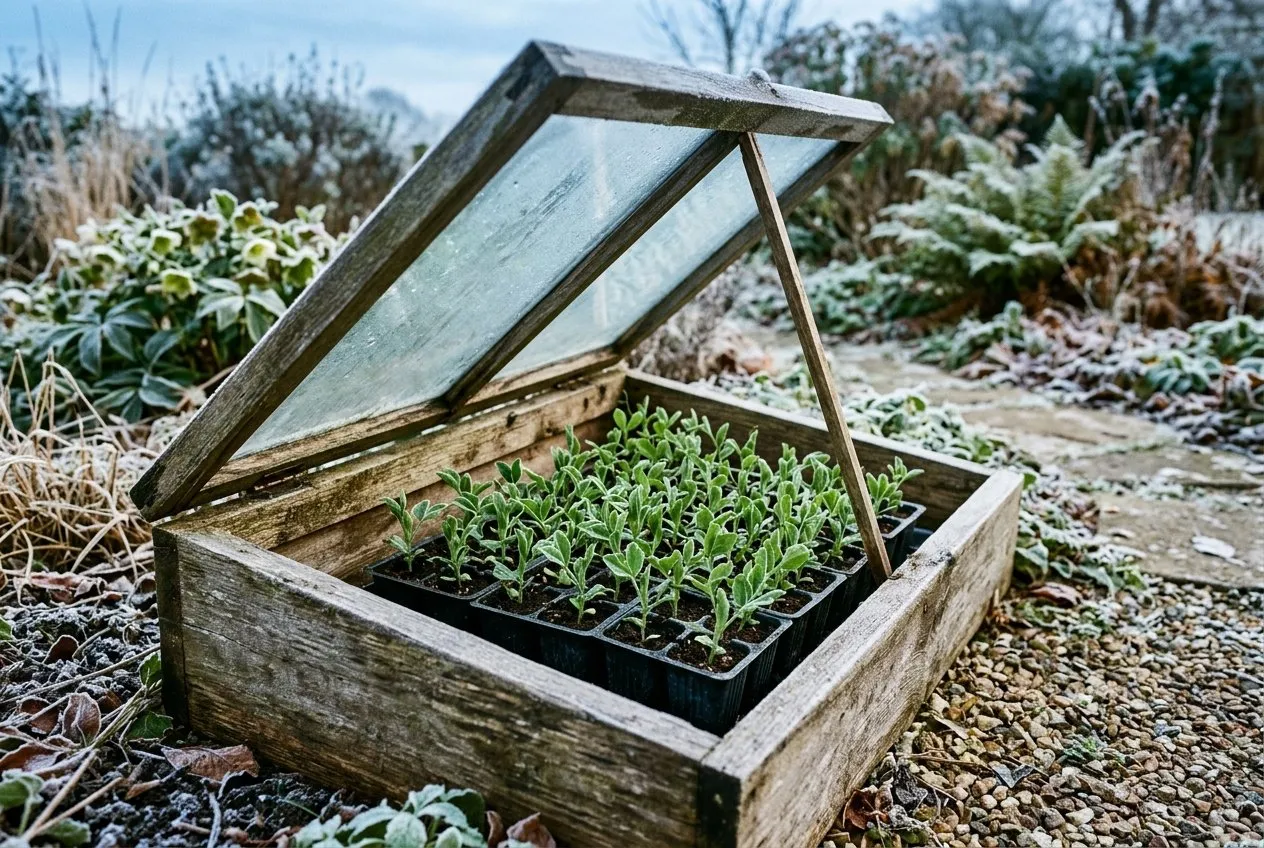 Cold and airy, not warm and cosy. Propping the frame open on mild days stops the grey mould that kills shut-up seedlings.
Pinching out for bushier plants
Once a seedling reaches 10-15cm, pinch out the growing tip just above the third or fourth pair of leaves. Use your finger and thumb. This stops the plant racing upward on one weak stem and forces strong side shoots from the base. Each side shoot becomes a flowering stem.
Autumn-sown plants often throw side shoots on their own, but pinching makes it certain. Do it in late winter, before planting out. Keep the strongest two or three shoots per plant if you are growing for big, long-stemmed blooms.
 Pinch above the third or fourth pair of leaves. The plant answers with strong basal shoots, each one a future flowering stem.
The most scented sweet pea varieties
Not all sweet peas are equal. The old grandifloras carry the strongest scent; the modern Spencer types give longer stems for cutting.
| Variety | Type | Scent | Stem length | Best for |
|---|---|---|---|---|
| ’Matucana’ | Grandiflora (heritage) | Very strong | Short to medium | Scent above all |
| ’Cupani’ | Grandiflora (heritage) | Very strong | Short to medium | Cottage scent |
| ’Gwendoline’ | Spencer | Good | Long | Cutting, show |
| ’Beaujolais’ | Spencer | Moderate | Long | Deep wine colour |
| ’Mrs Collier’ | Grandiflora | Strong | Medium | Cream, weddings |
| ’Painted Lady’ | Grandiflora (heritage) | Strong | Short | Pink and white, oldest variety |
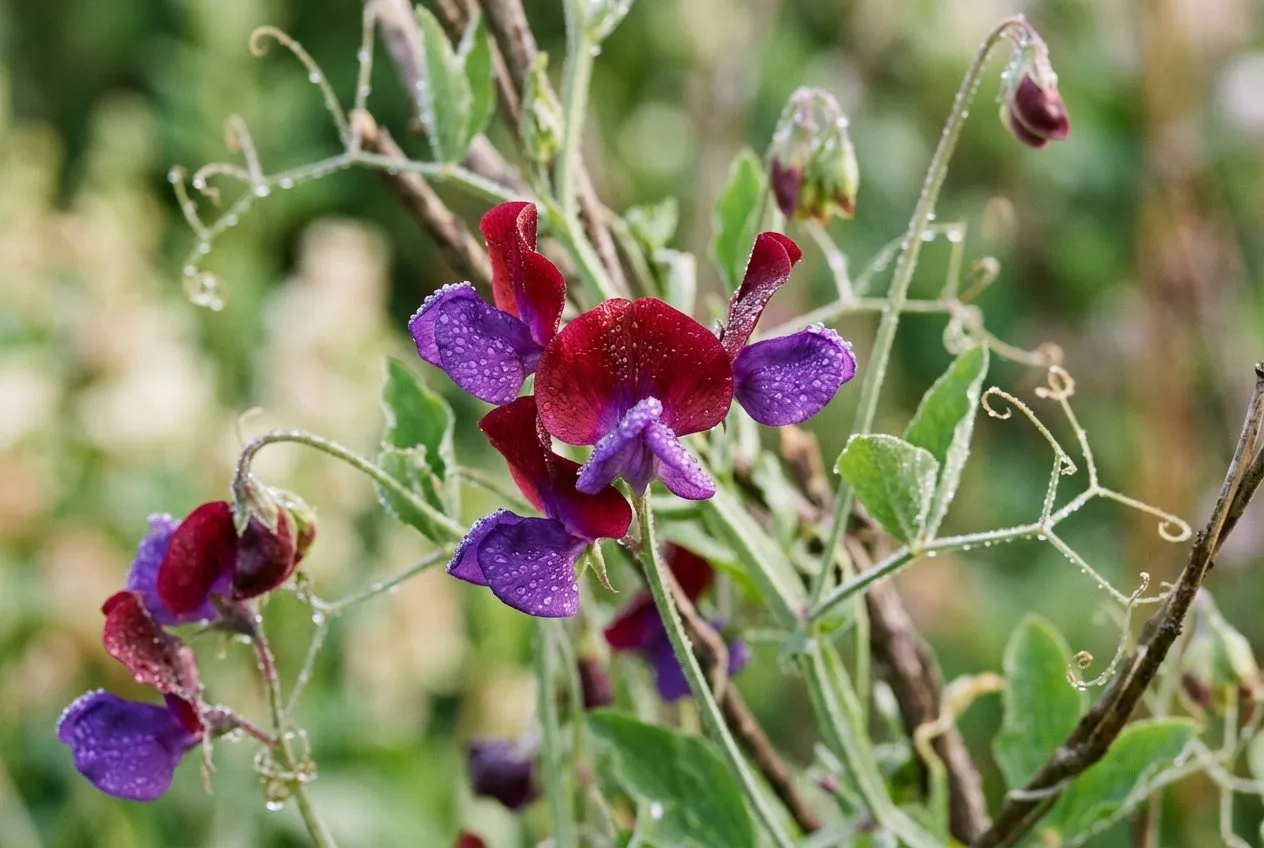 Heritage ‘Matucana’, the most scented sweet pea on the plot, carries up to four bicoloured maroon and violet flowers per stem.
Planting out and supporting in spring
Harden the plants off over 10-14 days, then plant out from late March in mild areas, April further north. Sweet peas are hungry and thirsty, so prepare the ground well.
- Dig in plenty of compost or well-rotted manure the autumn or winter before. A deep, rich, moisture-holding soil grows the longest stems.
- Space plants 20-25cm apart at the base of their support.
- Give them something tall to climb: a hazel wigwam, an obelisk, netting or canes. Sweet peas climb by tendrils and reach 1.8-2.5m.
- Protect young plants from slugs as they go out. The soft new growth is a magnet, as our guide to getting rid of slugs explains.
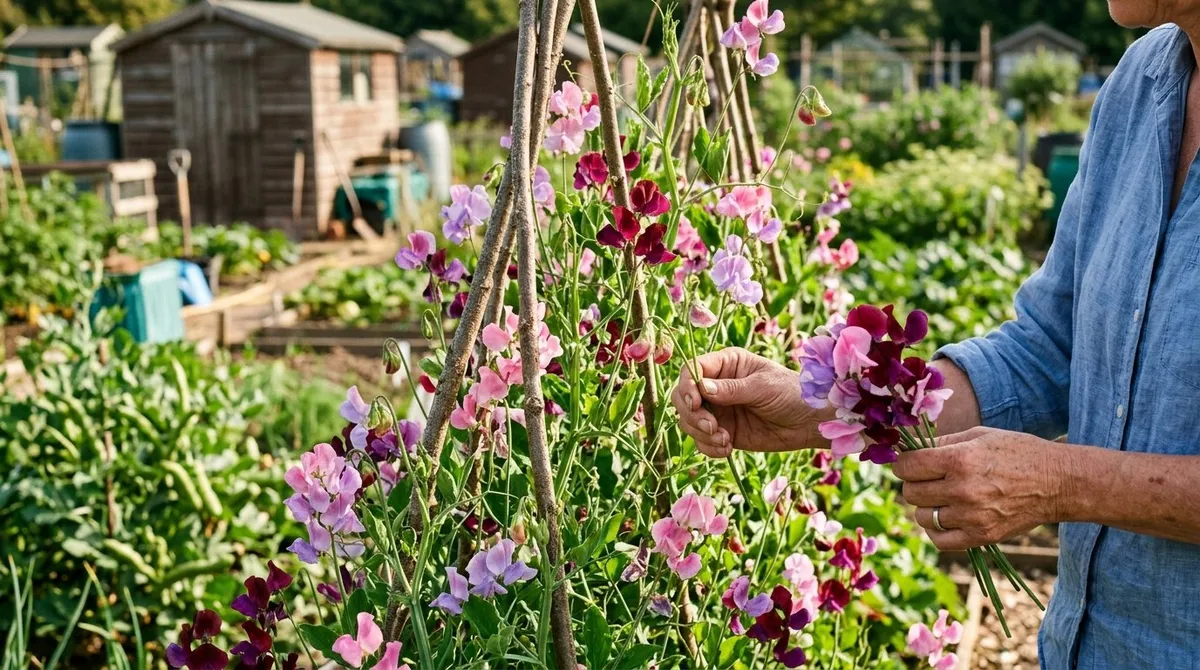
Then keep picking. The more you cut, the more the plant flowers, because a sweet pea that sets seed pods stops blooming. Pick every few days and you keep the scent coming from June into September. They are one of the best cut flowers a UK garden can grow.
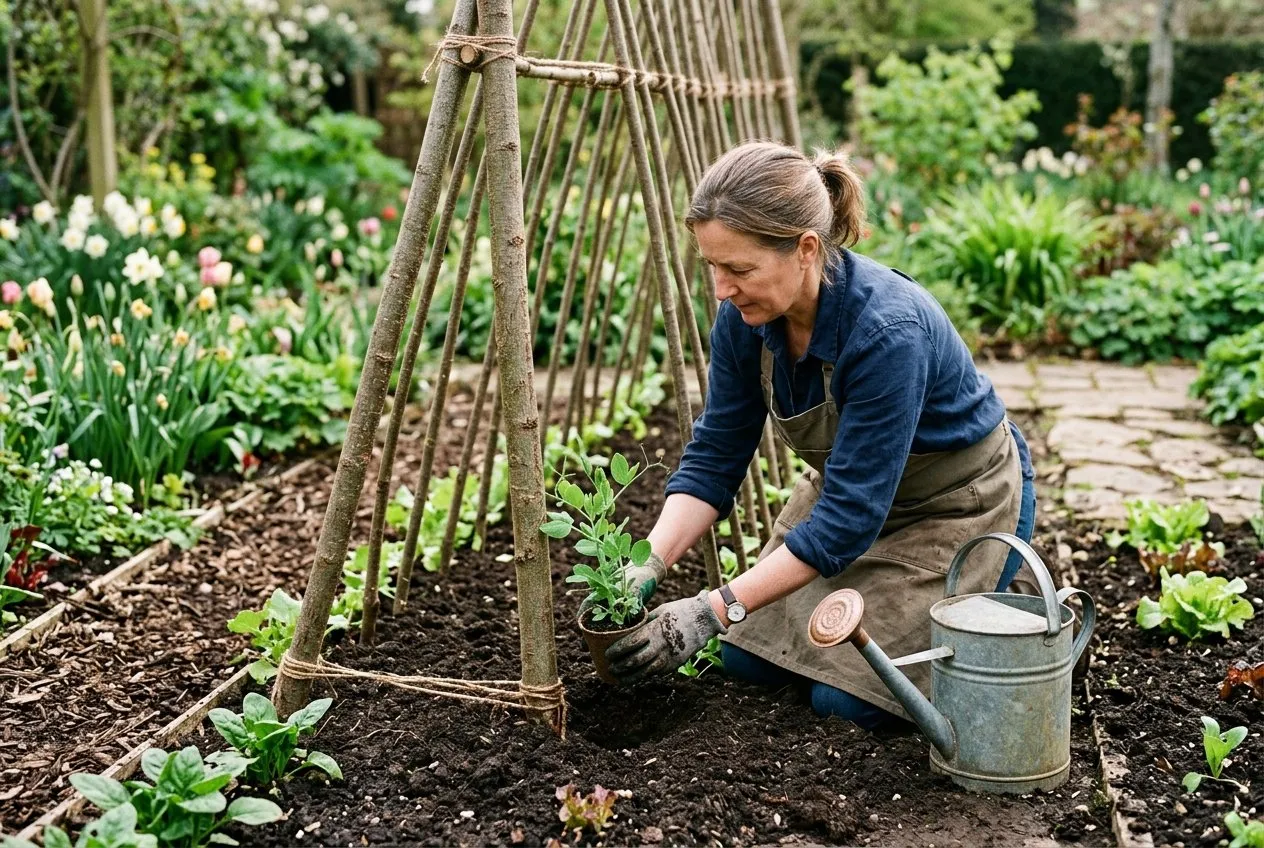 Plant out from late March, 20-25cm apart at the foot of a tall support. Deep, rich soil grows the longest stems.
A month-by-month autumn sweet pea calendar
| Month | Job |
|---|---|
| October | Sow one seed per root trainer cell, 2cm deep, at 12-15°C |
| November | Move seedlings to the cold frame; protect seed and plants from mice |
| Dec to Jan | Keep cold, airy and just moist; ventilate on mild days; remove dead leaves |
| February | Pinch out the growing tips above the third or fourth leaf pair |
| March | Prepare rich, deep ground; begin hardening off; plant out in mild areas |
| April | Plant out; fit supports; protect new growth from slugs |
| May | Tie in and train climbing stems; first flower buds form |
| June | First flowers, two to three weeks before spring-sown plants; pick often |
| Jul to Sep | Keep picking, feeding and watering to extend flowering into autumn |
Common autumn sweet pea mistakes
Five seasons of side-by-side rows keep turning up the same errors.
- Keeping them too warm. Heat makes soft, leggy plants that rot. Cold and airy is the goal.
- A closed-up cold frame. No ventilation breeds grey mould. Open it on every mild day.
- Shallow pots. Sweet peas need root depth. A shallow tray gives a weak, easily checked plant.
- Leaving seed exposed to mice. One night is all it takes to lose a whole sowing.
- Not pinching out. An unpinched plant gives one weak stem instead of several strong ones.
Get those right and autumn sowing rewards you with the earliest, most scented sweet peas on the street.
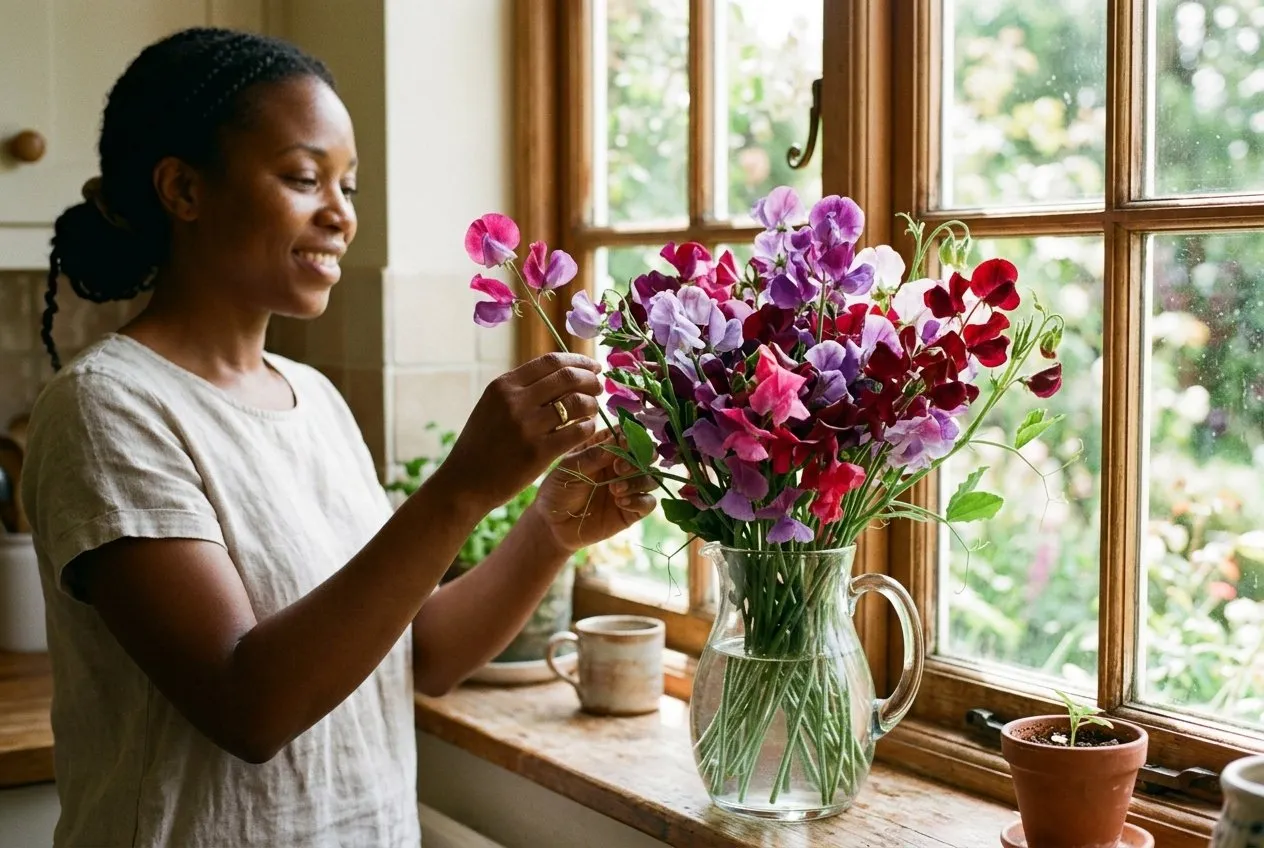 The payoff: a jug of scented stems in early June, weeks before spring-sown plants flower. The more you pick, the more they bloom.
Now you have your earliest sweet peas sorted, read our full guide on how to grow sweet peas from seed for spring sowing and show-growing, and browse the best scented plants to fill the rest of the garden with perfume.
Our team produces practical UK gardening guidance from source research, contributor records and established horticultural practice. Editorial standards are overseen by Matt W.