Key takeaways
- Azaleas are botanically rhododendrons, but gardeners treat them separately: smaller leaves, smaller flowers, more per stem
- They need acid soil, pH 4.5 to 6.0; test yours before planting and rule alkaline ground out
- On neutral or limey soil, grow in raised ericaceous beds or pots, never straight into the border
- Water pot azaleas with rainwater; hard tap water pushes the pH up and yellows the leaves
- Yellow leaves with green veins mean lime-induced chlorosis; sequestered iron is the quick fix
- Plant shallow, mulch with leaf mould or pine needles, and site in light dappled shade
Azaleas give you more flower for the space than almost any other spring shrub. A well-grown plant can vanish under its own blooms for three weeks, then settle into a neat mound for the rest of the year. Get the soil right and they ask for very little.
Are azaleas and rhododendrons the same plant?
Botanically, azaleas are rhododendrons. They sit inside the genus Rhododendron, so every azalea is technically a rhododendron, though not the other way round. Gardeners keep them apart for good practical reasons, and the differences matter when you buy and place them.
Azaleas carry smaller, thinner leaves than most true rhododendrons. The flowers are smaller too, funnel-shaped rather than bell-shaped, and usually have five stamens against the ten or more on a rhododendron bloom. What azaleas lack in flower size they make up in number. A mature Japanese azalea can open hundreds of blooms at once, hiding the foliage completely.
The other split is habit. Many azaleas drop their leaves in autumn, which no true rhododendron does. So if you want scent, autumn colour and a lighter, more open shrub, you are usually looking at an azalea. If you want big evergreen leaves and huge trusses, you want a rhododendron. The growing conditions are near identical, and our guide to how to grow rhododendrons covers the larger-leaved side of the family in full.
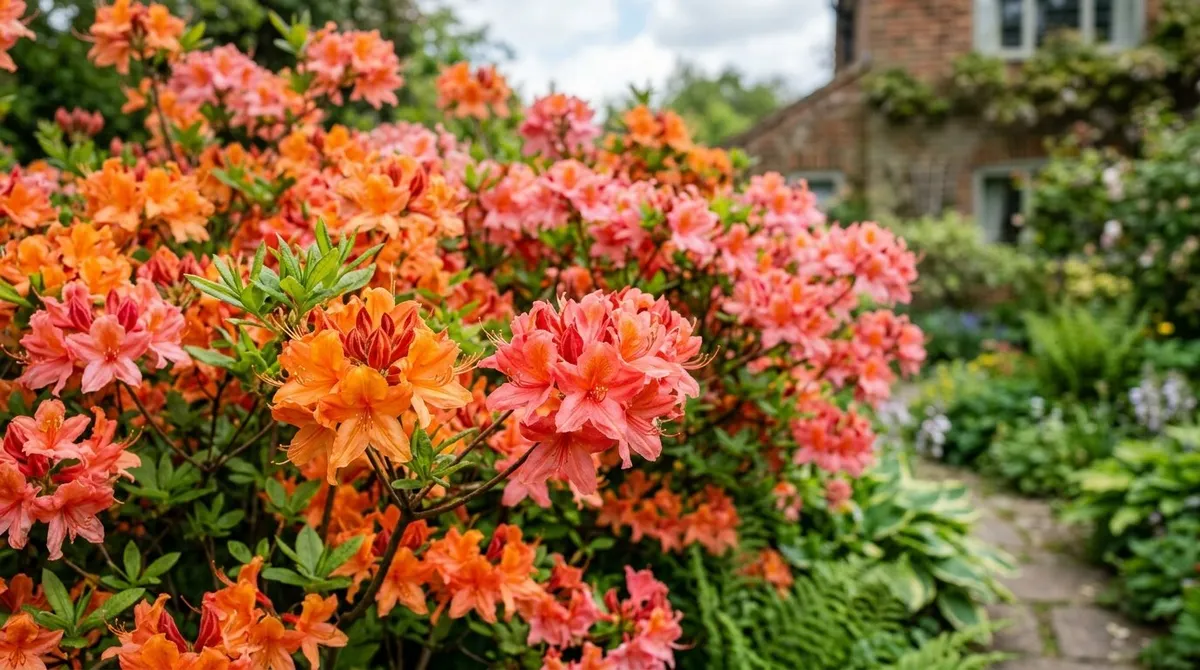
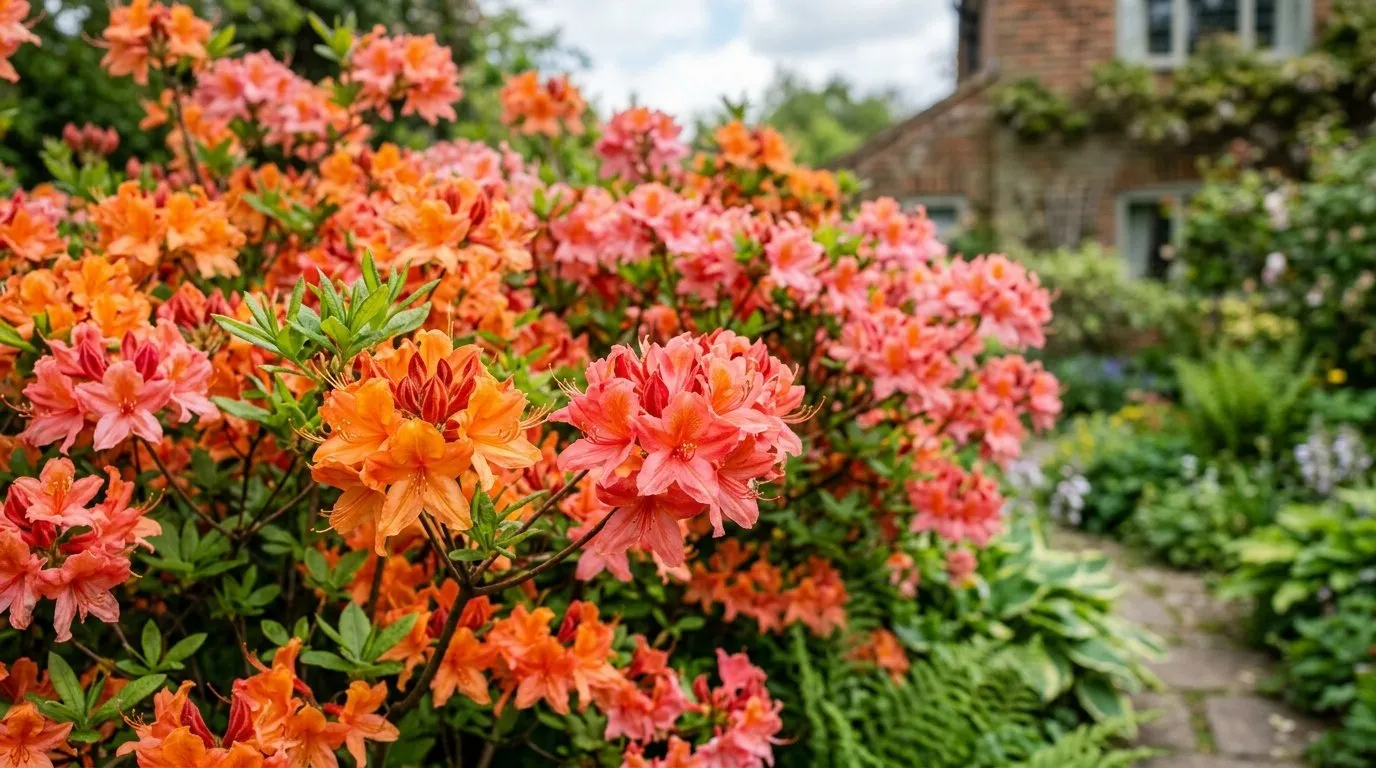 A group of deciduous azaleas at peak flower in late April, the foliage almost hidden under the blooms.
Evergreen and deciduous azaleas: which to grow
The first real decision is evergreen or deciduous, because the two behave very differently. Evergreen azaleas are the low, spreading Japanese types. Deciduous azaleas are the taller, scented, autumn-colouring hybrids. Both are hardy across most of the UK, but they suit different jobs.
Evergreen Japanese azaleas stay compact, often 60cm to 1m tall and wider than they are high. They keep their small glossy leaves through winter and flower in a dense sheet of pink, red, magenta, white or salmon during April and May. Kurume hybrids like ‘Hino Crimson’ and ‘Hinomayo’ are the classic small-garden choice. They take light shade well and make good low structure near a path or pond.
Azalea types compared
| Feature | Evergreen (Japanese) | Deciduous (Exbury, Knap Hill, Ghent) |
|---|---|---|
| Height | 60cm to 1m | 1.2m to 2m |
| Habit | Low, spreading mound | Upright, open shrub |
| Flowers | Small, dense sheet | Large, often scented |
| Colour range | Pink, red, magenta, white | Orange, yellow, red, cream |
| Flowering | April to May | May to early June |
| Scent | Little or none | Strong on Exbury types |
| Autumn colour | None, leaves persist | Fiery red and orange |
| Hardiness | H4 to H5 | H6, fully hardy |
| Best use | Low structure, edging, pots | Border height, scent, autumn |
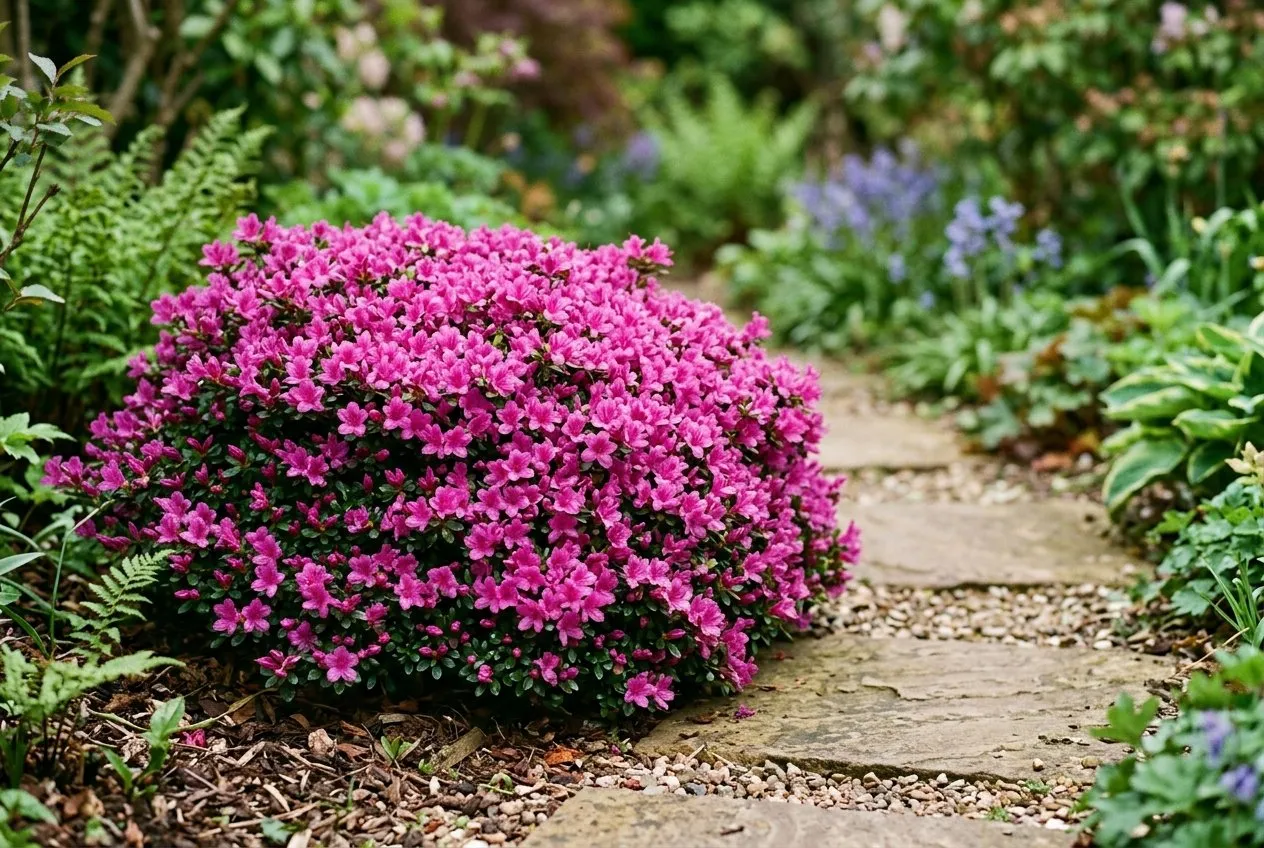 An evergreen Kurume azalea in full flower. These low, dense mounds keep their small leaves through winter.
The right soil pH for azaleas
Azaleas need acid soil, and this is the single fact that decides whether yours thrive or sulk. They are ericaceous plants, from the same family as heathers and blueberries, and they can only draw iron and other nutrients from the ground when the soil is acidic. The target is a pH of 4.5 to 6.0. Above about 7.0 they starve.
Test your soil before you buy a single plant. A cheap chemical test kit costs £4 to £8 and gives a good enough reading from two or three spots around the garden. If your reading sits at 6.0 or below, you can plant azaleas straight into the ground. If it reads 6.5 or higher, you have a choice to make. Our guide to soil pH explained walks through the testing in detail.
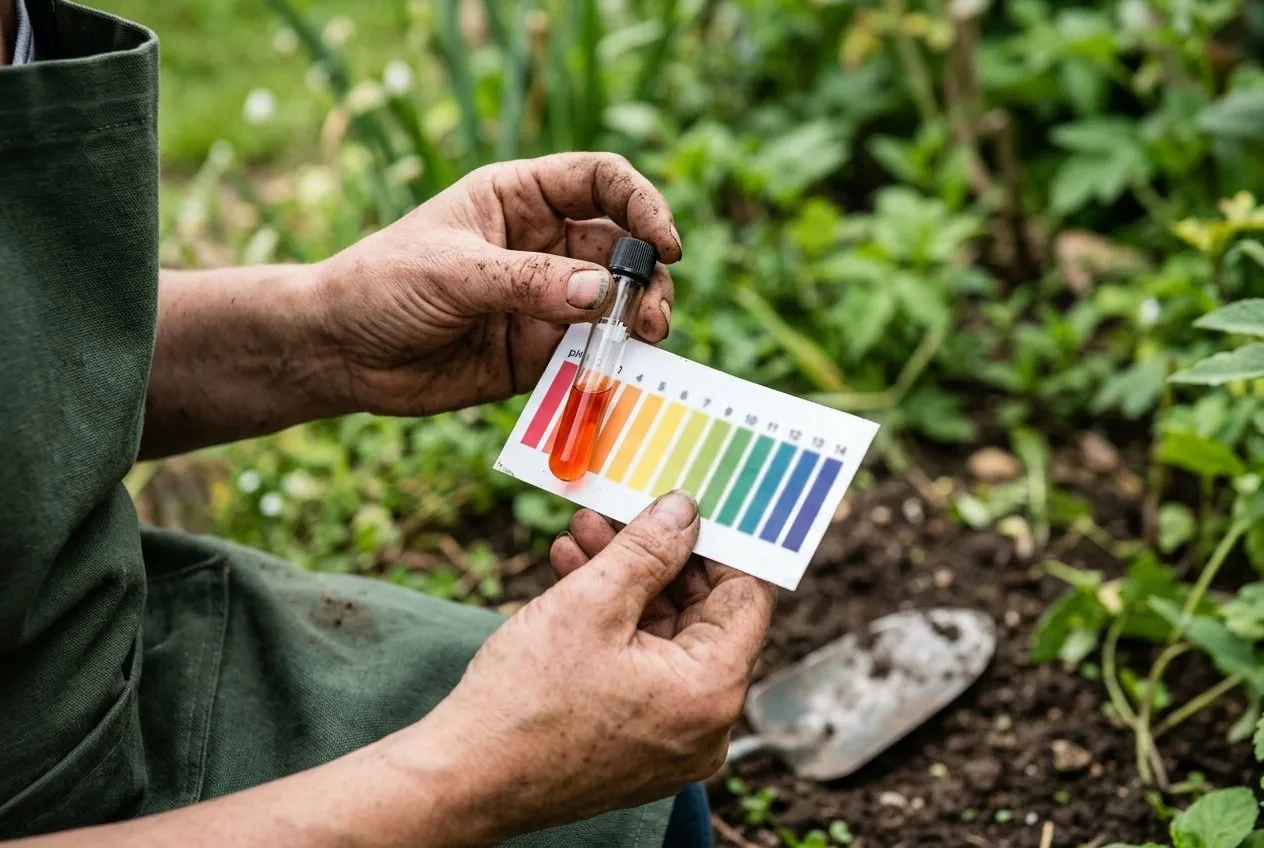 Testing soil pH with a cheap kit. Azaleas need a reading of 4.5 to 6.0; above that they starve.
How to plant azaleas in the ground, raised beds and pots
Plant azaleas shallow, because their roots are shallow. Azaleas grow a dense mat of fine, fibrous roots that sit in the top 20cm to 30cm of soil. They never form a deep taproot. That shapes everything about how you plant, water and mulch them, and burying the root ball is the fastest way to kill one.
On genuine acid soil, dig a hole twice the width of the root ball but no deeper. Tease out the sides of the root ball if it is pot-bound, since azalea roots often circle tightly. Set the plant so the top of the root ball sits level with the soil surface or even 2cm proud. Backfill with the soil you dug out, mixed with plenty of leaf mould or ericaceous compost, and firm gently. Water in with rainwater and mulch.
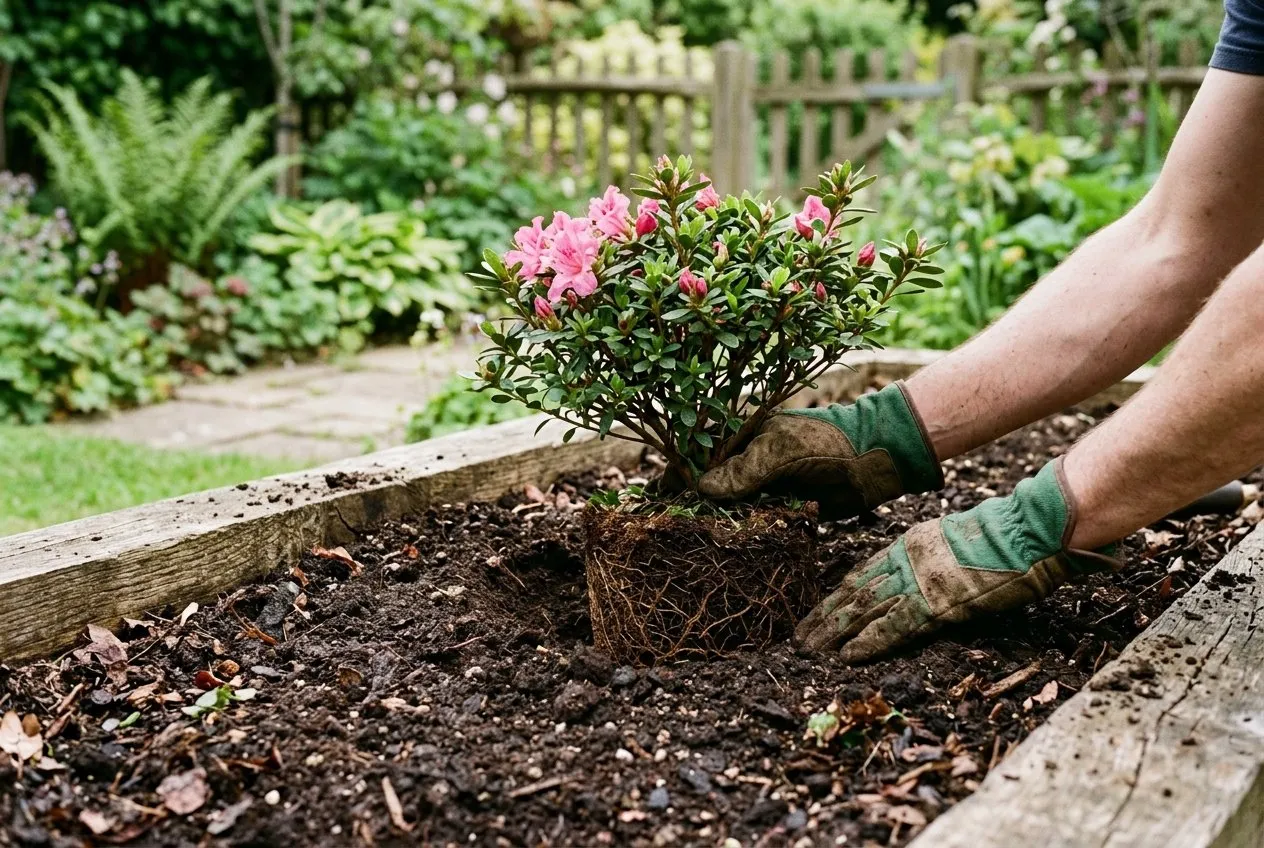 Planting shallow into an ericaceous raised bed. The top of the root ball sits level with the surface, never buried.
Growing azaleas in pots with ericaceous compost
Pots are the simplest answer for any UK gardener on limey soil, and a lot of us are. A container lets you give an azalea the exact acid conditions it needs without touching your garden soil at all. Evergreen Japanese types are the natural choice for pots, though smaller deciduous hybrids work too.
Choose a container 30cm to 45cm across with several drainage holes. Fill it with a peat-free ericaceous compost, which is formulated at the low pH azaleas need. Ordinary multipurpose compost is too alkaline and will yellow the plant within a year. Plant shallow, as in the ground, with the root ball level with the compost surface. Leave a 3cm gap at the rim for watering and top-dress the surface with composted bark or pine needles to hold moisture.
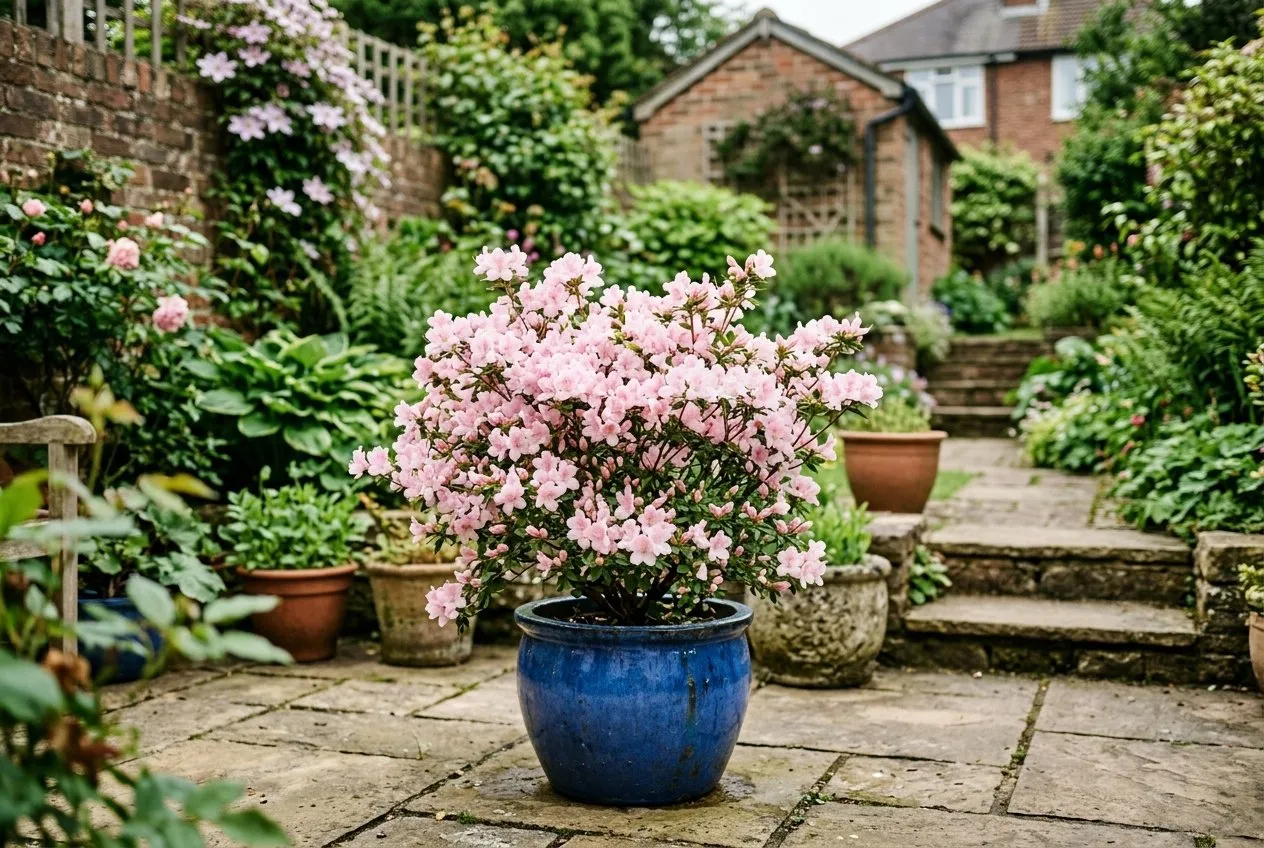 A container azalea in ericaceous compost. Pots let you grow acid-lovers on any soil, including limey clay.
Watering azaleas with rainwater, not tap water
Water azaleas with rainwater whenever you can, especially in pots. This matters more than most guides admit. In hard-water areas, tap water is loaded with dissolved calcium and magnesium, the very lime azaleas cannot tolerate. Water a pot of ericaceous compost with hard tap water for a season and you slowly raise its pH, cancelling out the acid compost you paid for.
If you must use tap water in a hard-water area, use it sparingly and only in short spells, then flush the pot with rainwater as soon as the butts refill. A cupful of white vinegar or a splash of ericaceous liquid feed in a 9-litre can takes the edge off the lime for an emergency top-up, though it is a stopgap, not a routine. Keep the compost evenly moist through the growing season, since the shallow roots dry out fast, but never let a pot sit in a saucer of water.
Why azalea leaves turn yellow: lime-induced chlorosis
Yellow leaves with green veins mean lime-induced chlorosis, and it is the commonest azalea complaint in UK gardens. The leaf blade goes pale yellow or almost cream while the veins stay a clear green, giving a netted look. It is not a disease. It is starvation. The soil or water is too alkaline, so the plant cannot take up iron and manganese even when both are present in the ground.
Do not reach for a general fertiliser, which will not help and may make it worse. The fast fix is sequestered iron, sold as chelated iron or by the old trade name Sequestrene. It delivers iron in a form the plant can use even in slightly alkaline conditions, and a treated azalea often greens up within two to three weeks. Water it on as directed in spring and again in early summer if needed.
Feeding and mulching azaleas through the year
Azaleas are light feeders that hate rich ground. Their fine surface roots want a steady, gentle supply of nutrients, not a heavy dressing of fertiliser. Overfeeding gives soft, sappy growth that scorches in sun and attracts pests. A single application of an ericaceous or acid-plant fertiliser in April is plenty for border plants, following the rate on the pack.
Mulch is more important than feed for azaleas. A 5cm to 7cm layer of leaf mould, composted bark or pine needles laid over the root zone each spring does several jobs at once. It keeps the shallow roots cool and moist, feeds the soil slowly as it breaks down, and, in the case of pine needles and leaf mould, keeps the surface pH low. Keep the mulch clear of the stem itself by a few centimetres to stop it rotting the bark.
Do not hoe or dig around an established azalea. The roots run so close to the surface that any cultivation tears them. A mulch smothers weeds far better than a hoe here, which is another reason to keep it topped up. If you grow azaleas among best plants for acid soil, one blanket mulch of leaf mould over the whole bed serves the lot and saves you fussing over individual plants.
Month-by-month azalea care calendar
| Month | Task |
|---|---|
| January | Check pot azaleas are not frozen solid or waterlogged; move exposed pots to shelter |
| February | Order bare-root deciduous azaleas; prepare raised beds with ericaceous compost |
| March | Top-dress pots with fresh ericaceous compost; check water butts are clean and full |
| April | Apply ericaceous feed to border plants; start fortnightly liquid feed on pots |
| May | Peak flowering; water freely with rainwater; watch for lace bug on evergreen types |
| June | Deadhead spent flowers; light prune of wayward shoots straight after flowering |
| July | Continue fortnightly feed on pots until end of month, then stop; keep well watered |
| August | Watch for powdery mildew on deciduous types in dry spells; keep the roots moist |
| September | Reduce watering as growth slows; enjoy early autumn tints on deciduous azaleas |
| October | Peak autumn colour on deciduous types; refresh mulch with leaf mould or bark |
| November | Apply nematode drench to pots against vine weevil grubs while soil is still warm |
| December | No feeding; protect pots of less hardy evergreen types from hard frost |
Deadheading and pruning azaleas
Azaleas need almost no pruning, which is part of their appeal. The main job is deadheading, and even that is optional on the small-flowered evergreen types. Left alone, an azalea keeps a naturally neat mound for years. Where you do cut, timing is everything, because the flower buds for next spring form over the summer.
Deadhead deciduous and large-flowered azaleas by pinching or snapping off the spent trusses once the flowers fade. Do it carefully. The new shoots and next year’s buds sit right behind the old flower, and a clumsy pull takes them with it. On a big evergreen Japanese azalea smothered in small blooms, deadheading is impractical and unnecessary, so leave it.
If a plant grows lopsided or too large, prune straight after flowering, by late June at the latest. Shorten the wayward shoots back to a healthy leaf or side branch. This gives the plant the whole summer to make new growth and set buds. Cut any later, in autumn or winter, and you simply remove next spring’s flowers. Old, bare evergreen azaleas take a hard renovation cut in early spring and usually reshoot from the base within a season.
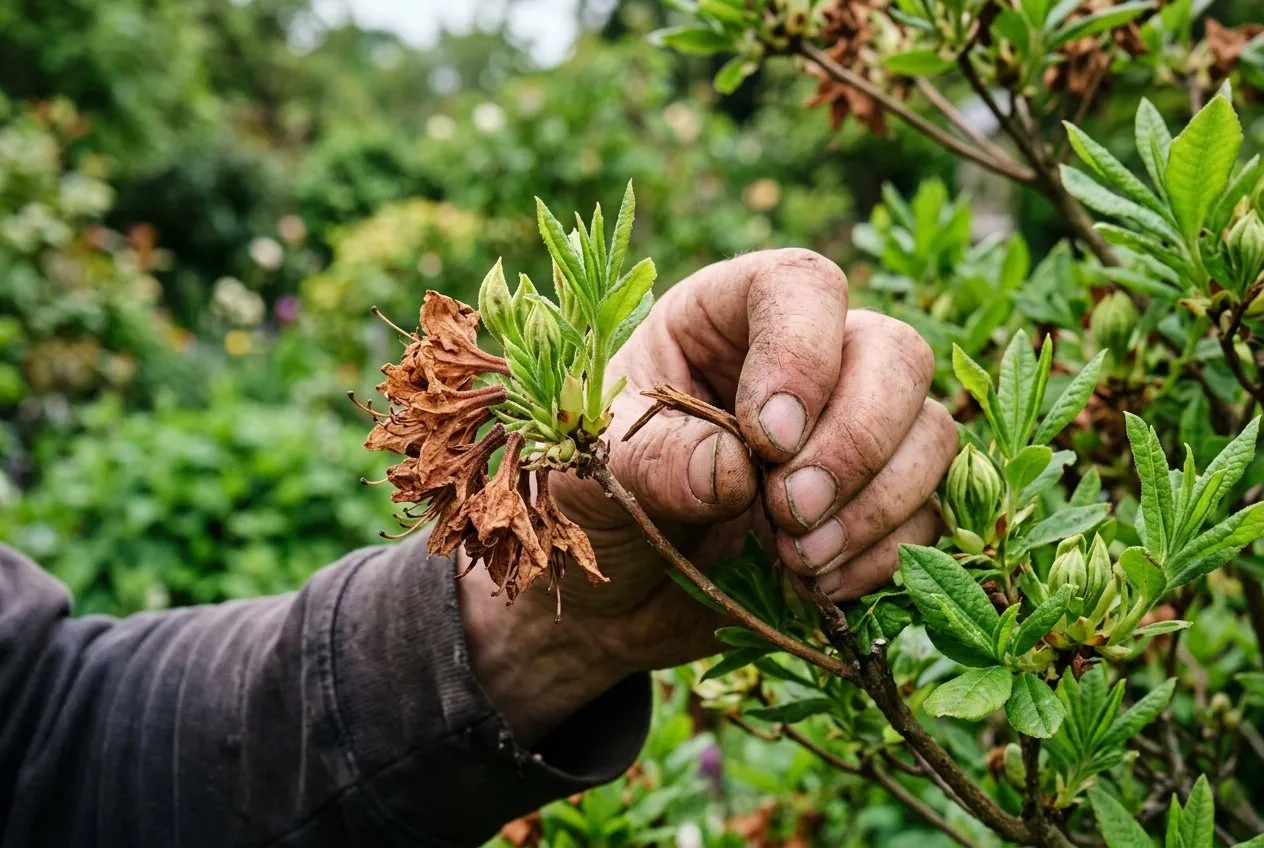 Deadhead by snapping off spent trusses carefully. Next year’s buds sit right behind the old flower.
Azalea pests and diseases to watch for
Azaleas are fairly trouble-free, but a handful of specific problems catch them out. Most are easy to spot and manage without chemicals if you catch them early. The big three in UK gardens are azalea gall, lace bug and vine weevil, with powdery mildew a fourth on deciduous types.
Azalea gall is a fungal problem, caused by Exobasidium vaccinii, most common in cool, wet springs. It turns leaves, buds or flowers into swollen, fleshy, pale green galls that later go silvery-white as they release spores. Pick off and bin every gall by hand before it turns white and spreads. The RHS covers identification and control in detail on its azalea gall page.
Rhododendron lace bug (Stephanitis) is a sap-sucker that mottles the upper leaf surface with fine silvery or yellow stippling, while the undersides carry rusty-brown fecal spots. It thrives on plants in too much sun and dry soil, so shade and moisture are the first defence. Bad infestations weaken the plant. Vine weevil grubs eat the roots of container-grown azaleas over winter, and the adults notch the leaf edges in summer. Nematode drenches in autumn are the cleanest control for pots.
Powdery mildew shows as a grey-white dusty coating on the leaves of deciduous azaleas, usually in a dry late summer. It is more disfiguring than fatal. Keep the roots moist, improve air flow, and remove badly affected leaves in autumn. Good general growing conditions, the acid soil, dappled shade and steady moisture azaleas want anyway, prevent most of these troubles before they start. The full RHS rhododendron and azalea guide sits at rhs.org.uk.
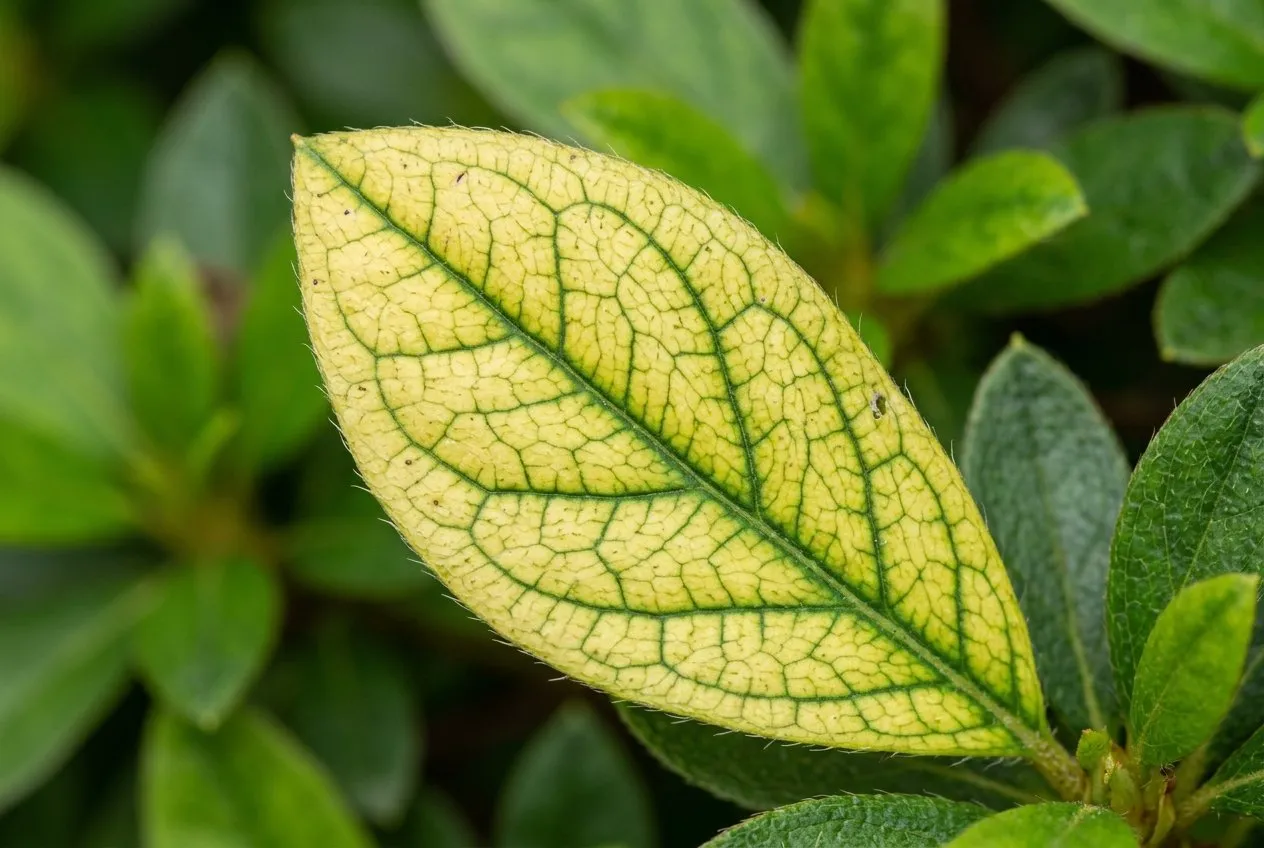 Lime-induced chlorosis: the leaf yellows while the veins stay green. A sign the soil or water is too alkaline.
Common mistakes when growing azaleas
Most azalea failures trace back to a few repeated errors. Avoid these and a plant will thrive for decades with almost no work.
Planting on limey or neutral soil
This is the number one killer. An azalea set into alkaline ground cannot feed itself, yellows within a year or two, and slowly declines. Test your soil first. If it reads above 6.0, grow in raised beds or pots of ericaceous compost instead of fighting the border.
Watering pots with hard tap water
In hard-water areas, tap water slowly raises the pH of ericaceous compost until the plant starves. Collect rainwater in a butt and use it for every pot azalea. Fall back on the tap only in a genuine drought, then flush with rainwater as soon as it rains.
Planting too deep
Azaleas are surface-rooted and hate being buried. Set the root ball level with the soil, or even a touch proud, never below. A buried crown holds water against the stem, rots the bark, and smothers the shallow feeding roots.
Mulching with alkaline material
Mushroom compost, fresh manure and wood ash all push the pH up. Used around an azalea they undo everything else you do. Mulch only with leaf mould, composted bark, pine needles or ericaceous compost, kept clear of the stem.
Cutting at the wrong time
Pruning in autumn or winter removes the flower buds set the previous summer, so the plant fails to bloom. Do all cutting straight after flowering, by late June. Then leave the plant to make and set next year’s buds undisturbed.
Autumn colour from deciduous azaleas
Deciduous azaleas earn their space twice a year. Everyone plants them for the May flowers, but the autumn foliage is nearly as good and lasts longer. As the nights cool in October, the leaves of Exbury, Knap Hill and Ghent hybrids turn through yellow and orange to deep crimson and burgundy before they fall.
The colour is strongest on plants in a little more sun and in a season with a cold, dry autumn. The same plant in deep shade colours weakly and holds its leaves greener for longer. If autumn interest is your aim, site deciduous azaleas where low autumn light will catch them, and pick varieties known for foliage as well as flower. Exbury hybrids reliably give both.
This dual season makes deciduous azaleas a strong choice for a small garden where every shrub has to work hard. They flower with the bulbs in spring, sit quietly and green through summer, then fire up again in autumn alongside acers and other acid-loving neighbours.
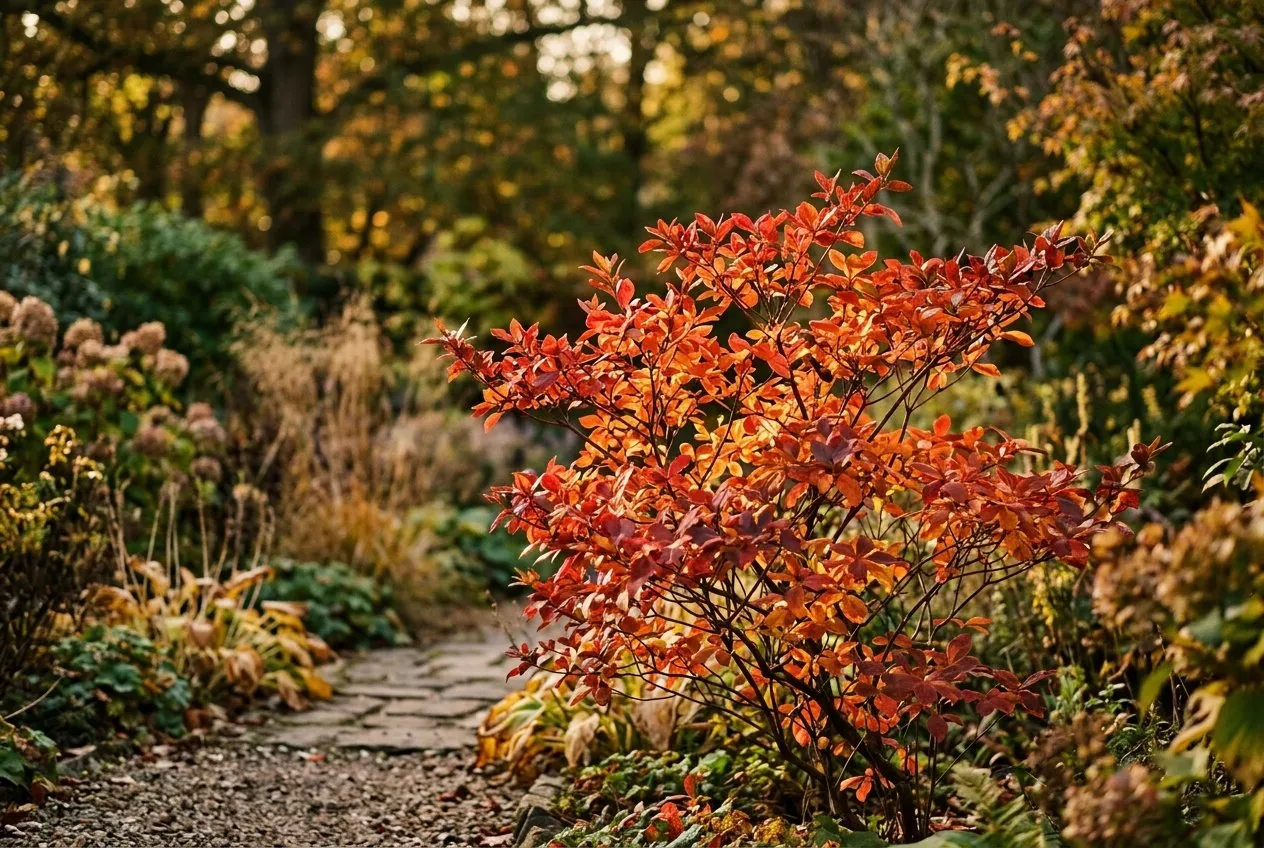 Deciduous azaleas turn fiery red and orange in October, a second season of colour after the spring flowers.
Frequently asked questions
Are azaleas and rhododendrons the same plant?
Botanically yes, azaleas are a subgroup of the genus Rhododendron. Gardeners still separate them by habit. Azaleas carry smaller, thinner leaves and smaller funnel-shaped flowers, usually five stamens per bloom, and many open at once for a solid sheet of colour. True rhododendrons tend to be larger-leaved, evergreen and bell-flowered with ten or more stamens.
What soil do azaleas need?
Acidic soil, ideally pH 4.5 to 6.0. Azaleas are ericaceous and cannot take up iron from alkaline ground, so they yellow and starve on chalk or limey clay. Test your soil first with a cheap kit. If the reading is above 7.0, grow them in raised beds or pots of ericaceous compost instead of the open border.
Why are my azalea leaves turning yellow?
Usually lime-induced chlorosis from soil that is too alkaline. The leaves go pale yellow while the veins stay green, a clear iron and manganese shortage. Hard tap water and lime in the soil both cause it. Switch to rainwater, mulch with ericaceous matter, and apply sequestered iron for a fast green-up within two to three weeks.
Can you grow azaleas in pots?
Yes, pots are the best option on alkaline soil. Use a 30 to 45cm container with ericaceous compost and free drainage. Water only with rainwater and feed with an ericaceous liquid feed from spring to midsummer. Their shallow, fibrous roots suit containers well. Top-dress with fresh ericaceous compost each spring and repot every three to four years.
How much sun do azaleas need?
Light dappled shade suits them best. Full midday sun scorches the flowers and dries the shallow roots, while deep shade gives few blooms. A spot under high deciduous trees or on an east or north-west aspect is ideal. Deciduous azaleas take a little more sun than evergreen Japanese types if the soil stays moist.
When and how do you prune azaleas?
Azaleas need very little pruning. Deadhead spent flowers, then shorten any wayward shoots just after flowering, by late June. This lets next year’s buds form over summer. Never cut in autumn or winter or you lose the flowers. Old, tired evergreen azaleas take a hard renovation cut in spring and usually reshoot from the base.
Do azaleas lose their leaves in winter?
It depends on the type. Deciduous azaleas, such as Exbury, Knap Hill and Ghent hybrids, drop their leaves in autumn after a fiery red and orange display. Evergreen Japanese azaleas keep most of their small leaves through winter, though some bronze in cold spells. Both are hardy across most of the UK once established.
Now you know how to keep an azalea green and flowering, the same acid-loving conditions suit a whole group of shrubs, so pair yours with the picks in our guide to how to grow heather for year-round colour on the same bed.
Our team produces practical UK gardening guidance from source research, contributor records and established horticultural practice. Editorial standards are overseen by Matt W.