Key takeaways
- Test your soil pH first; never dose blind
- Elemental sulphur chips are the only real long-term acidifier
- Roughly 135g sulphur per sq m drops sandy soil one pH unit
- Sulphur takes 3-6 months to act; reapply gradually
- Chalky and alkaline soils cannot be permanently acidified
- Use raised beds, pots and rainwater for ericaceous plants instead
Making UK soil more acidic comes down to one real tool and a lot of honest limits. Elemental sulphur chips lower pH slowly and steadily, but only where the soil will hold the change. On chalk or limestone you are wasting your money. This guide covers how to dose sulphur by target pH drop, when to give up and use containers, why rainwater matters, and the myths that send gardeners down the wrong path.
Test Your Soil pH Before You Touch Anything
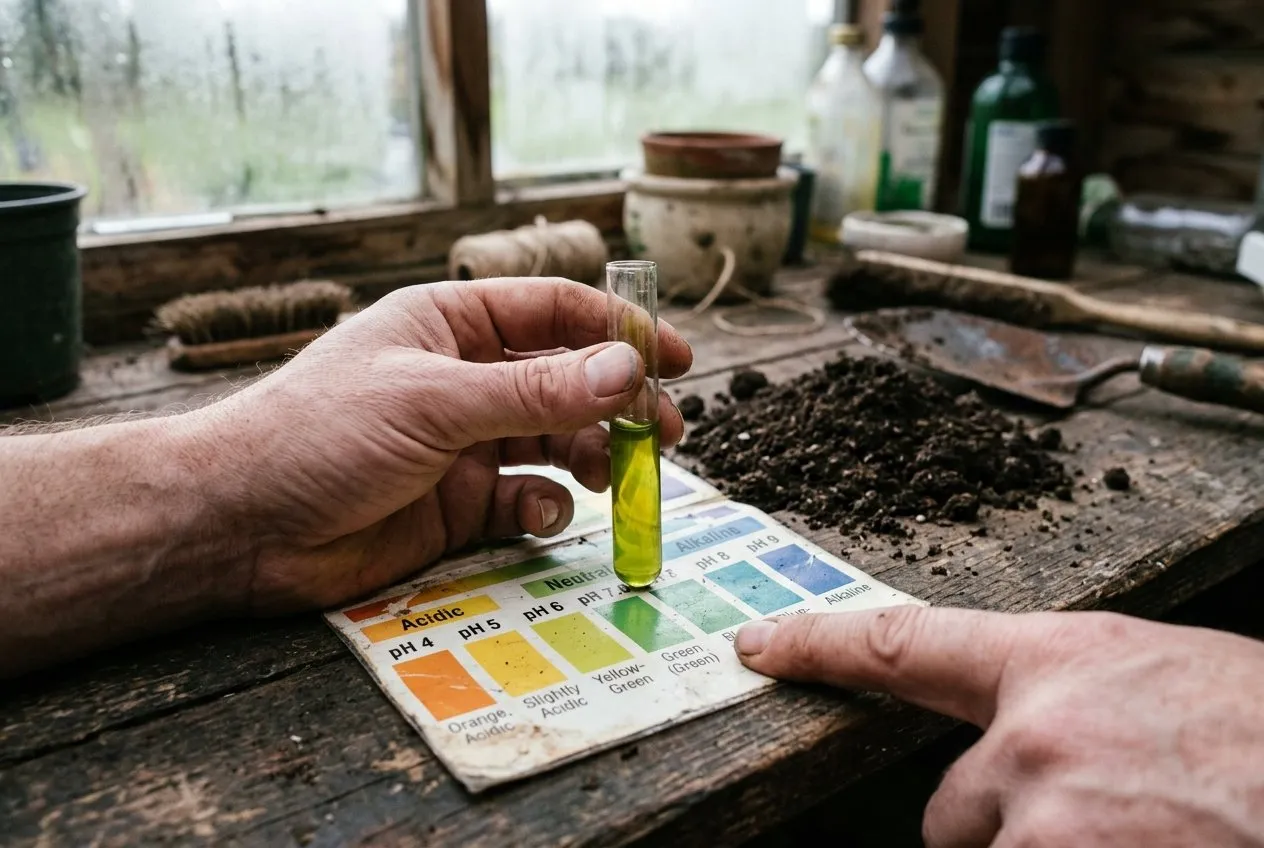
Never add sulphur blind. You need to know your starting pH and your target.
Most acid-loving plants want a pH between 4.5 and 5.5. Rhododendrons, camellias, pieris and blueberries all sit in that band. A reading of 7.0 is neutral. Anything above that is alkaline, and the higher it climbs the harder acidifying becomes.
A cheap chemical test kit costs around £8 and reads to within half a pH unit. A digital probe is quicker but drifts, so calibrate it. Take samples from several spots; one corner can read very differently from another. For the full method, see our guide on reading and adjusting your soil pH.
The single most useful thing the test tells you is whether your soil is chalky. Drop a little soil into vinegar. If it fizzes, there is free lime present and permanent acidifying is off the table.
Why You Cannot Permanently Acidify Chalky Soil
This is the hard truth most articles skip. Chalk and limestone soils buffer themselves.
Sandy and loamy soils with no free lime behave differently. They hold an acidified state for years with only top-up doses. So your soil type decides everything. To understand the chemistry behind this, our explainer on soil pH covers buffering and base saturation in plain terms.
If the vinegar fizzes, stop trying to change the open ground. Move to containers and raised beds. It is cheaper, faster and it actually works.
Sulphur Chips: The Only Real Long-Term Acidifier
Elemental sulphur is the gardener’s proper acidifier. Soil bacteria convert it to sulphuric acid over weeks.
It is slow on purpose. The bacteria need warmth and moisture, so sulphur works best applied between April and September. In cold soil almost nothing happens. Expect 3 to 6 months before the full pH drop shows on a test.
Dose by your target drop, not by guesswork. The table below gives working figures for a one-unit fall. Apply half, wait three months, retest, then top up. Over-dosing in one go can scorch roots and stall the bacteria.
| Soil type | Sulphur to drop 1 pH unit | Timescale | Notes |
|---|---|---|---|
| Sandy | 135g per sq m | 3-4 months | Holds the change well |
| Loam | 200g per sq m | 4-5 months | Steady, reliable |
| Clay | 270g per sq m | 5-6 months | Buffers, needs more |
| Chalky | Not viable | Reverts | Free lime undoes it |
Fork the sulphur into the top 150mm of soil. Water it in. Keep it away from plant stems. A 1kg bag costs around £10 and treats a decent border for a season.
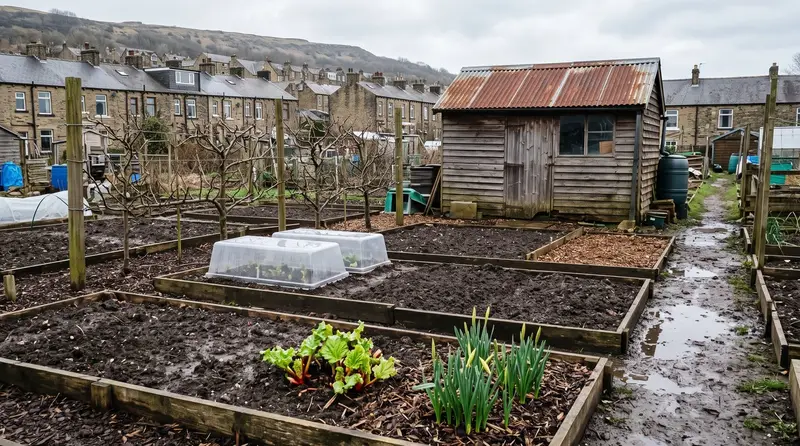
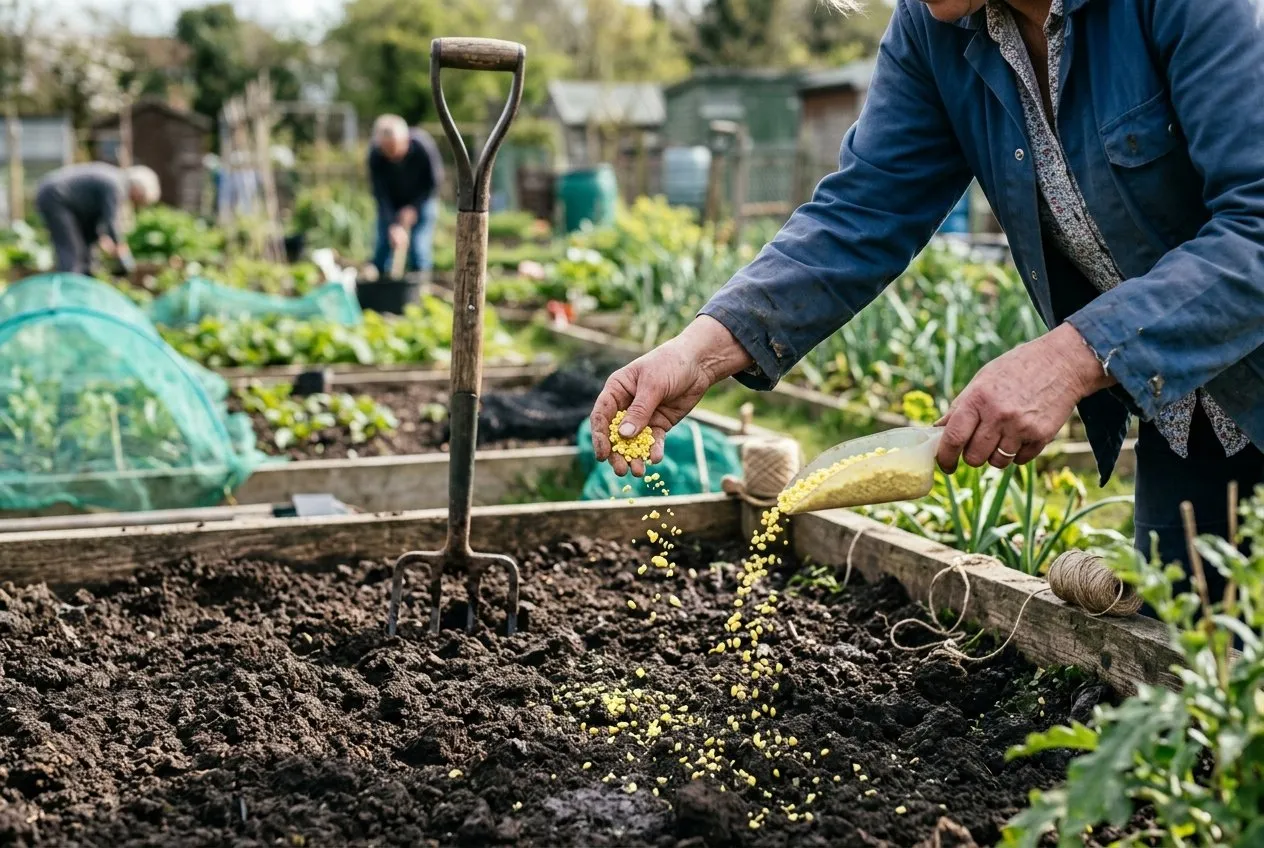 Scattering elemental sulphur chips over an allotment bed in May. Fork into the top 150mm, water in, then retest after three months before adding more. Slow and steady beats a single heavy dose.
Faster Acidifiers and Why They Disappoint
Sulphate of iron acts within days, not months. It is tempting, but the effect is short-lived.
Sulphate of ammonia is an acidifying fertiliser. It nudges pH down while feeding nitrogen, which suits established ericaceous plants. It is a maintenance tool, not a way to convert alkaline ground.
Ericaceous fertilisers do the same gentle job. They keep an already-acid bed in trim. None of these replace sulphur for shifting pH, and none beat chalk.
The Honest Workaround: Raised Beds and Pots
A half-barrel or a raised bed filled with ericaceous compost gives you full control of pH from day one. Blueberries crop heavily in a 45cm pot. Rhododendrons settle happily into a raised bed of lime-free compost mixed with composted bark. The roots never touch your alkaline soil.
Line a raised bed base with permeable membrane if it sits on chalk, so lime cannot wick up. Top up with fresh ericaceous compost each spring, because peat-free mixes lose acidity faster than old peat ones did.
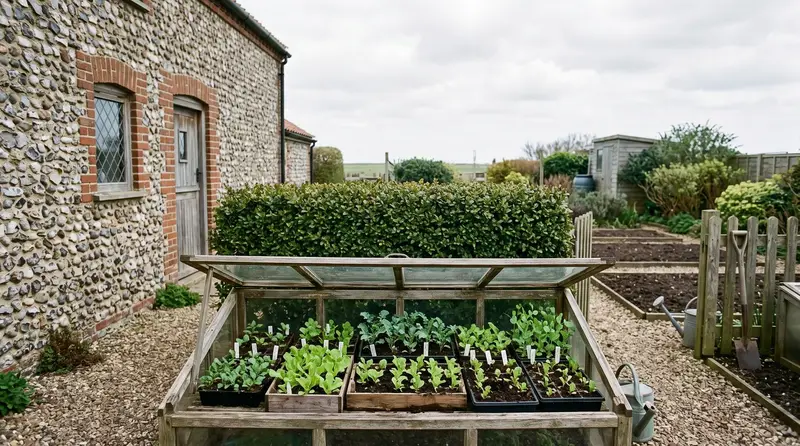
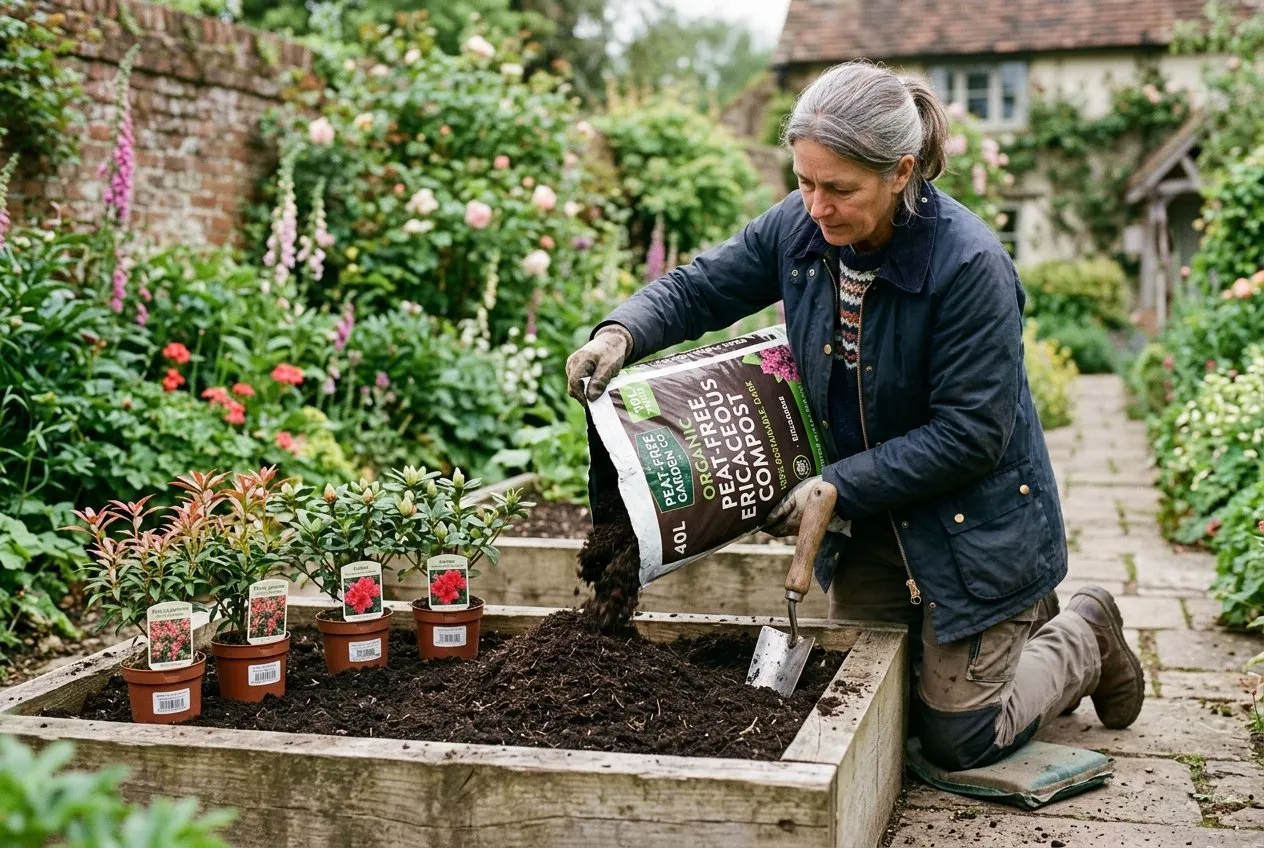 Filling a raised bed with peat-free ericaceous compost at a cottage garden. A controlled acid root zone from day one beats years of fighting alkaline ground. Top up fresh compost each spring.
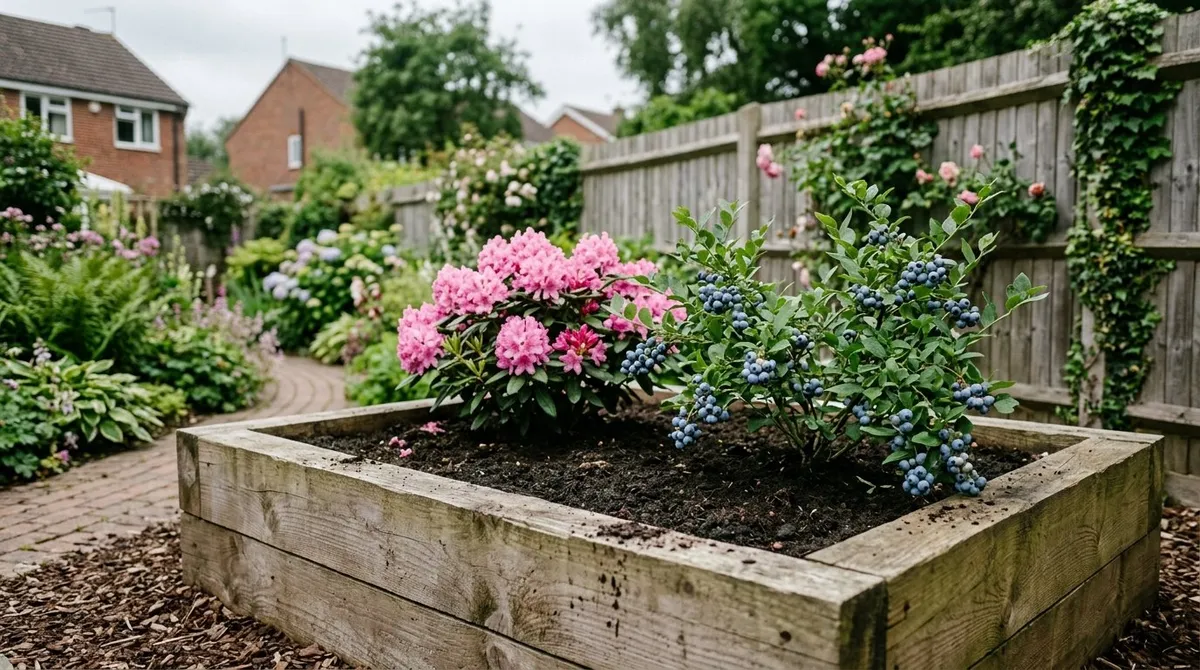
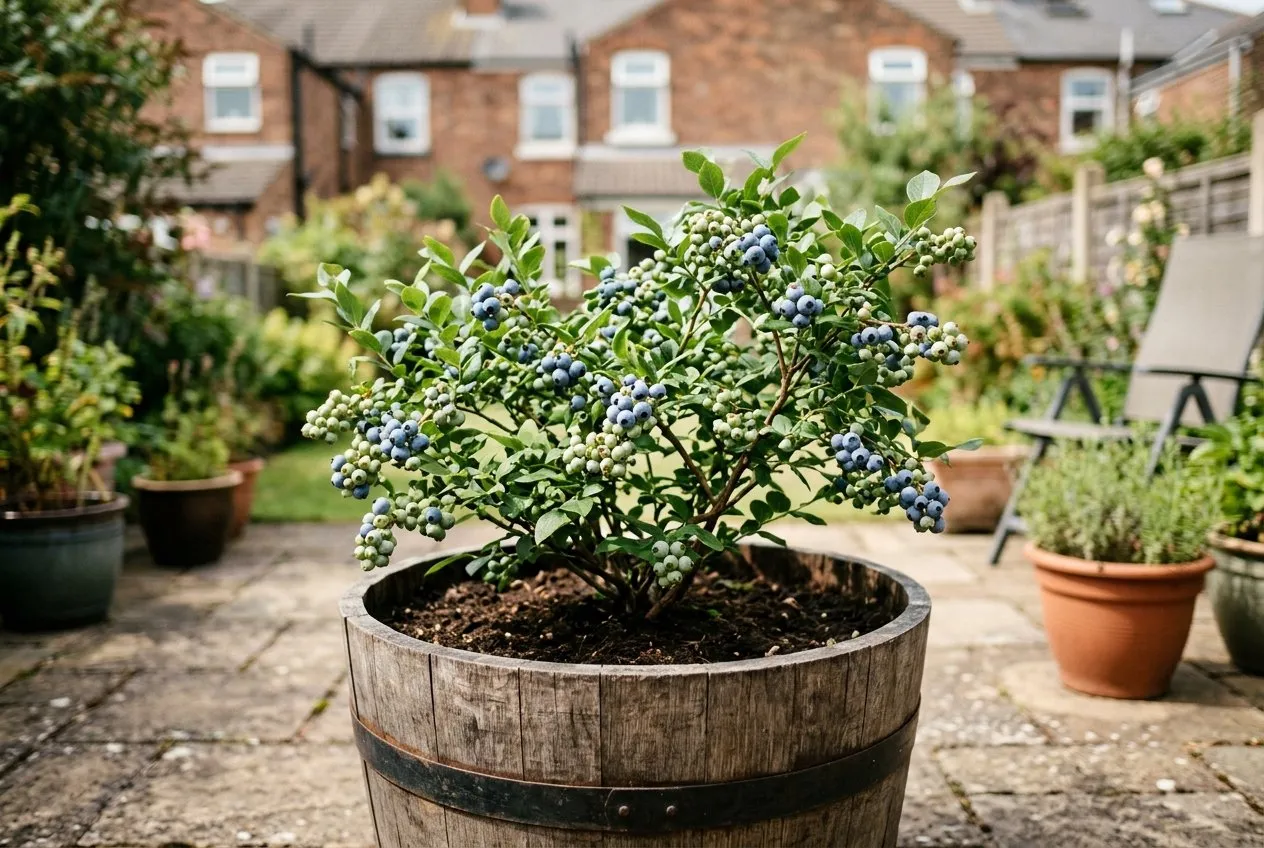 A half-barrel blueberry on a suburban patio. Ericaceous compost gives a guaranteed acid root zone whatever the garden soil is. The single most reliable way to grow acid-lovers in chalk country.
For the plant choices that suit these beds, our list of the best plants for acid soil covers shrubs, perennials and crops. A controlled ericaceous bed is also the surest way to succeed with Meconopsis, the Himalayan blue poppy, which sulks on lime and needs cool, acid, humus-rich ground. For the showiest of them, our guide to growing rhododendrons walks through siting and feeding, and our blueberry growing guide explains pot sizes and pruning.
Water With Rainwater, Not Tap Water
In hard-water areas, tap water quietly undoes your work. It carries dissolved lime.
Collect rainwater in a butt. It is naturally slightly acidic, lime-free and free. A single 200-litre butt off a shed roof keeps several pots happy through a dry spell. Use tap water only as an emergency, then flush with rain next time.
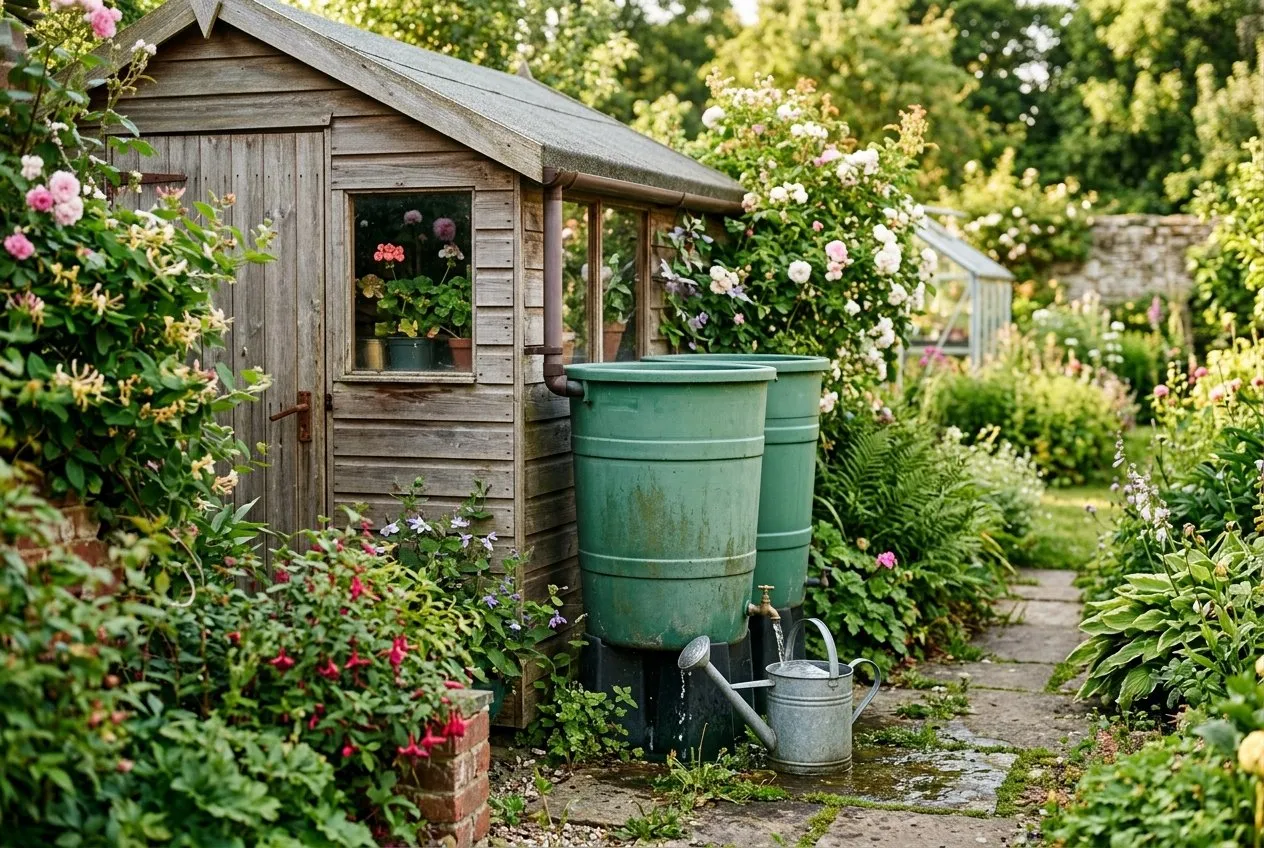 Rainwater butts off a shed roof in Staffordshire. Lime-free rainwater keeps ericaceous pots acidic where hard tap water slowly raises pH over a season.
Myth-Busting: Pine Needles, Coffee Grounds and Leaf Mould
Plenty of folklore promises free acid soil. Most of it barely moves the needle.
Used coffee grounds are close to neutral once brewed; the acid stays in your cup. Pine needles are mildly acidic but break down so slowly they shift pH by a fraction over years. Leaf mould is excellent for structure and moisture, yet it does not acidify in any useful timeframe.
These all improve soil as a mulch or conditioner. None of them is a substitute for sulphur or a controlled container. Treat them as soil food, not pH tools. The RHS reaches the same conclusion in its soil types and analysis advice.
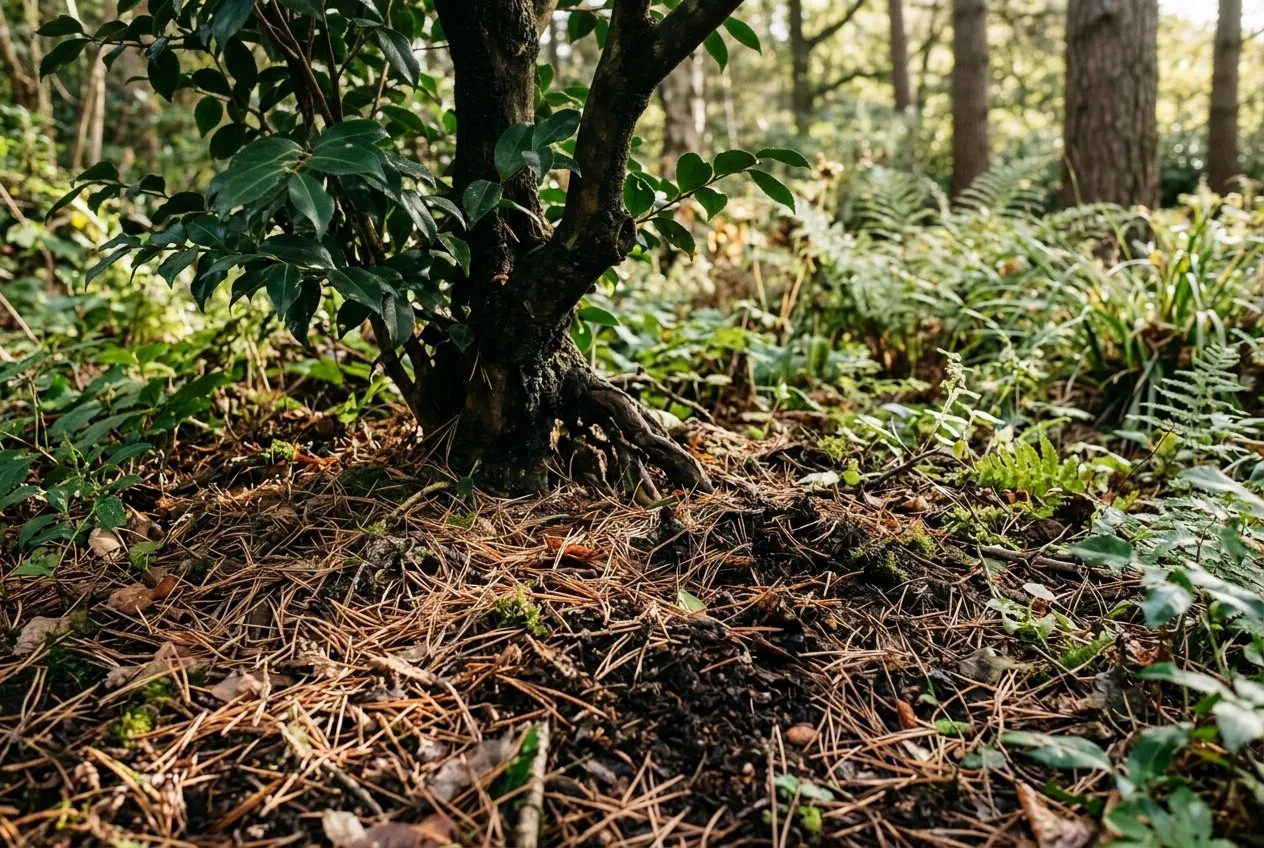 Pine needle and leaf mould mulch around a camellia. Good for moisture and structure, but the pH effect is tiny. Useful as a conditioner, useless as an acidifier.
Keeping an Acid Bed Acid Once You Have It
Acidifying is not a one-off job. Soils drift back towards neutral.
Rain leaches sulphate, microbes consume organic acids, and any nearby lime keeps nudging upward. Retest every spring and autumn. A light top-up of sulphur or an ericaceous feed each year holds the line on sandy soil. On clay, expect to dose more often.
A surface mulch of composted bark or pine bark slows the drift and feeds the bacteria that keep sulphur active. Two readings a year tell you whether to act. This same retest-and-correct rhythm runs through hydrangea colour control too.
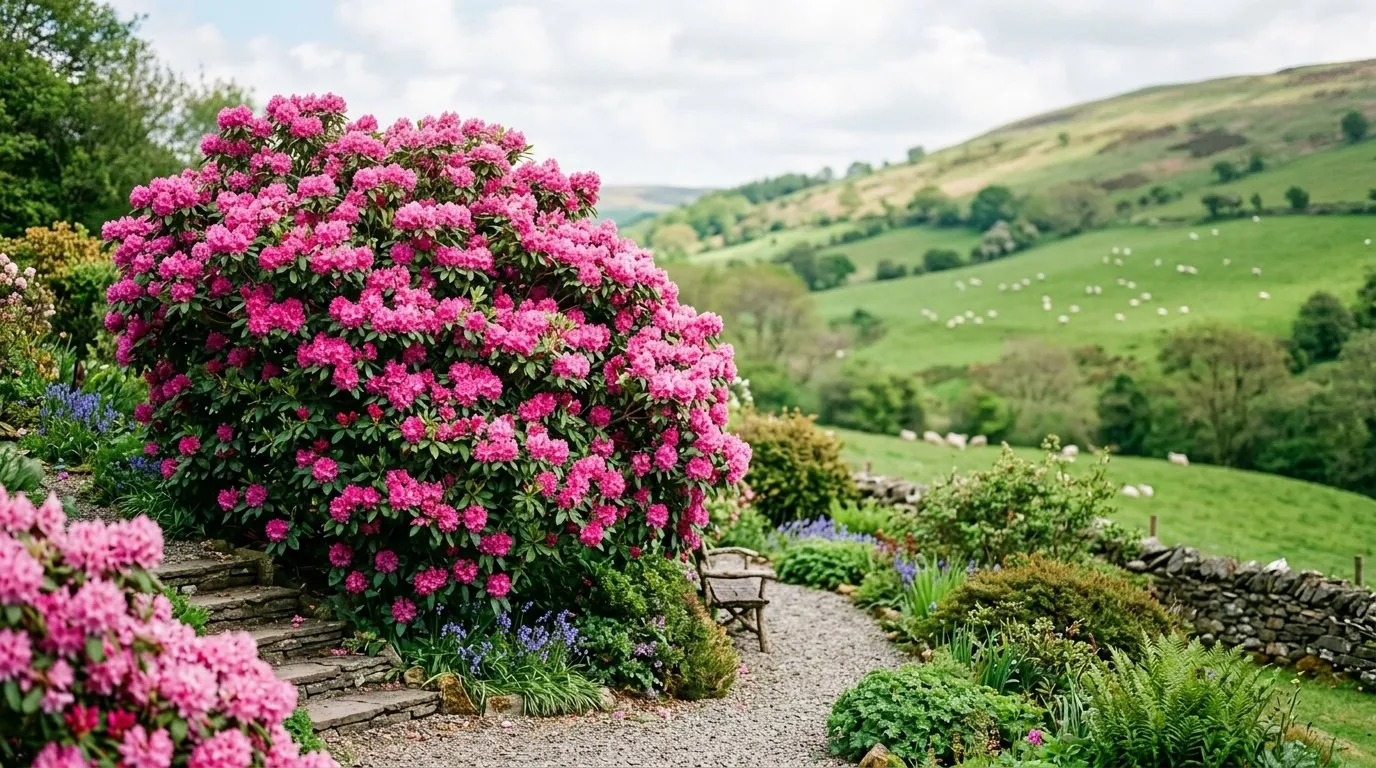 A thriving rhododendron in a Welsh valley garden where the native soil is naturally acid. Where yours is not, a raised ericaceous bed and annual retesting give the same result.
Acidifying and Hydrangea Colour
The same acid chemistry decides hydrangea colour. Acid soil plus available aluminium turns mophead flowers blue.
It is the most popular reason gardeners want acid soil at all. Sulphur and aluminium sulphate together push the blue; lime pushes pink. Our guides on keeping hydrangeas blue and changing hydrangea colour cover the dosing and timing in detail, and they rely on exactly the sulphur and rainwater habits above.
Frequently asked questions
What is the fastest way to make soil acidic?
Elemental sulphur chips are the only reliable long-term method. They lower pH over 3-6 months as soil bacteria convert sulphur to sulphuric acid. There is no safe overnight fix. Sulphate of iron acts faster but only briefly and risks scorching plants.
How much sulphur do I need to lower soil pH?
Around 135g of elemental sulphur per square metre lowers sandy soil by one pH unit. Clay and chalky soils need roughly double because they buffer change. Always test first, apply in stages, and retest after three months before adding more.
Can I make chalky or alkaline soil acidic?
No, not permanently. Free lime in chalky soil keeps neutralising any sulphur you add. Acid-loving plants will struggle long term in the open ground. Grow them in pots or raised beds of ericaceous compost instead, watered with rainwater.
Do coffee grounds and pine needles make soil acidic?
No, the effect is tiny and slow. Used coffee grounds are close to neutral once brewed. Pine needles and leaf mould only acidify by a fraction over years. They improve soil structure but will not move pH enough for ericaceous plants.
Why does rainwater matter for acid-loving plants?
Tap water in hard-water areas contains dissolved lime that slowly raises pH. Watering ericaceous pots with tap water undoes your acidifying over a season. Collect rainwater in a butt; it is naturally slightly acidic and lime-free.
Now build the right bed for your acid-lovers
Acidifying soil works where the ground will hold it and fails where lime fights back. Test first, then choose your route. To pick what to grow, start with the best plants for acid soil. For the showpiece shrubs and crops, our rhododendron guide and blueberry guide cover siting, feeding and pruning. And to get the chemistry straight before you dose anything, read our soil pH explainer alongside this method.
Our team produces practical UK gardening guidance from source research, contributor records and established horticultural practice. Editorial standards are overseen by Matt W.