Key takeaways
- Sow February to March at 18-21C; seed germinates in 10-21 days
- Plant out after the last frost at 75cm spacing; plants sprawl to 1-1.5m
- Poor soil fruits best: rich soil and nitrogen feed grow leaves, not berries
- Pick only when the husk turns papery straw-brown; green-picked fruit never sweetens properly
- Husked berries store 2-4 weeks at room temperature
- Overwintered plants kept at 5C+ fruit 3-4 weeks earlier and yield roughly double
What is a cape gooseberry?
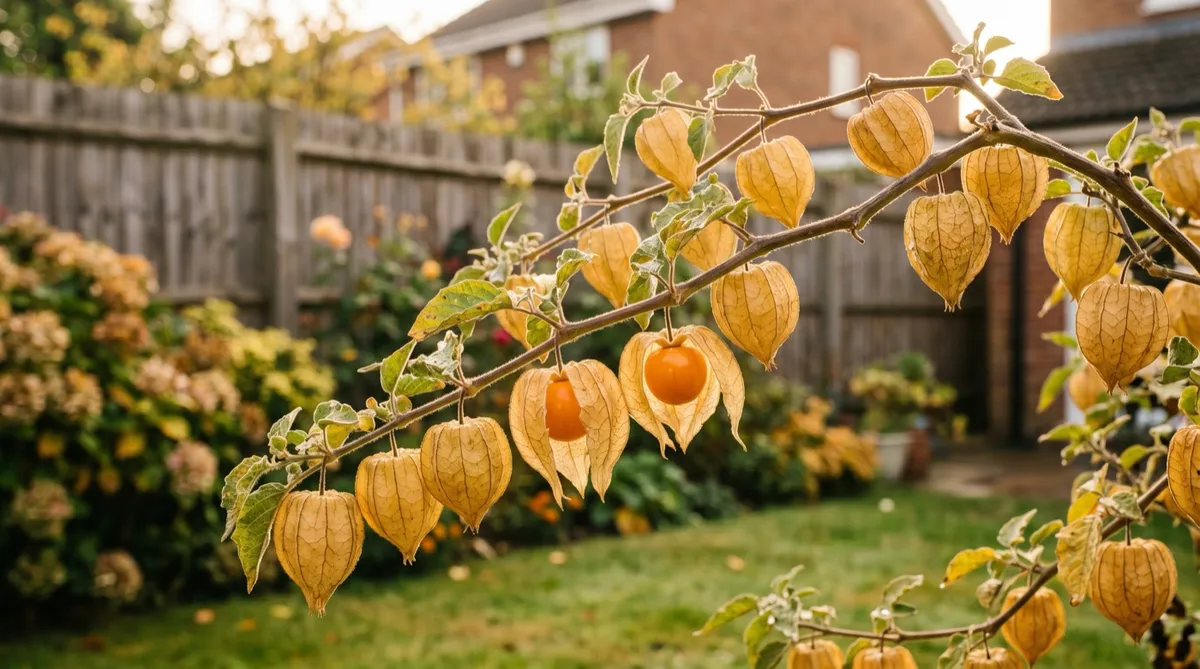
Cape gooseberry is a sprawling, soft-stemmed plant from the Andes, named for the South African Cape where it was widely farmed from the 1800s. The fruit is a round golden berry, 1-2cm across and about 4-5g, sealed inside an inflated papery husk shaped like a Chinese lantern. The flavour sits between pineapple, gooseberry and tomato: sweet first, then sharp.
It belongs to the same genus as the tomatillo but is a different species with a different job in the kitchen. Tomatillo (Physalis philadelphica) produces 4-6cm savoury green fruit that swells until it splits its husk, destined for salsa. Cape gooseberry stays small, sweet and loose inside the husk, and is eaten raw, dipped in chocolate or made into jam. If you want the savoury cousin, our tomatillo growing guide covers it separately. The supermarket fruit labelled physalis is exactly this plant, which makes home growing an easy saving. The RHS lists it as a tender perennial, so UK growers treat it as an annual or overwinter it under cover.
How to sow cape gooseberry seed in the UK
Sow in February or March at 18-21C. The seed is tiny, so sow on the surface of a tray of moist seed compost and cover with 3mm of vermiculite. A heated propagator or a warm windowsill both work. Germination takes 10-21 days, slower and less even than tomato seed, so do not bin the tray at day 14.
Prick out seedlings into 9cm pots once they show two true leaves, usually 3-4 weeks after sowing. Grow them on at 15-18C in good light. Pot on into 1-litre pots when roots fill the 9cm pot, around late April. The timetable matches chillies almost exactly, so if you already follow our chilli pepper growing guide, run the two crops side by side.
By mid May a well-grown plant stands 20-30cm tall. It will look slower than any tomato raised the same way. That is normal. The species spends its first three months building a root system, then sprawls fast from June. Anyone who has raised tomatoes from seed already has every skill this plant needs.
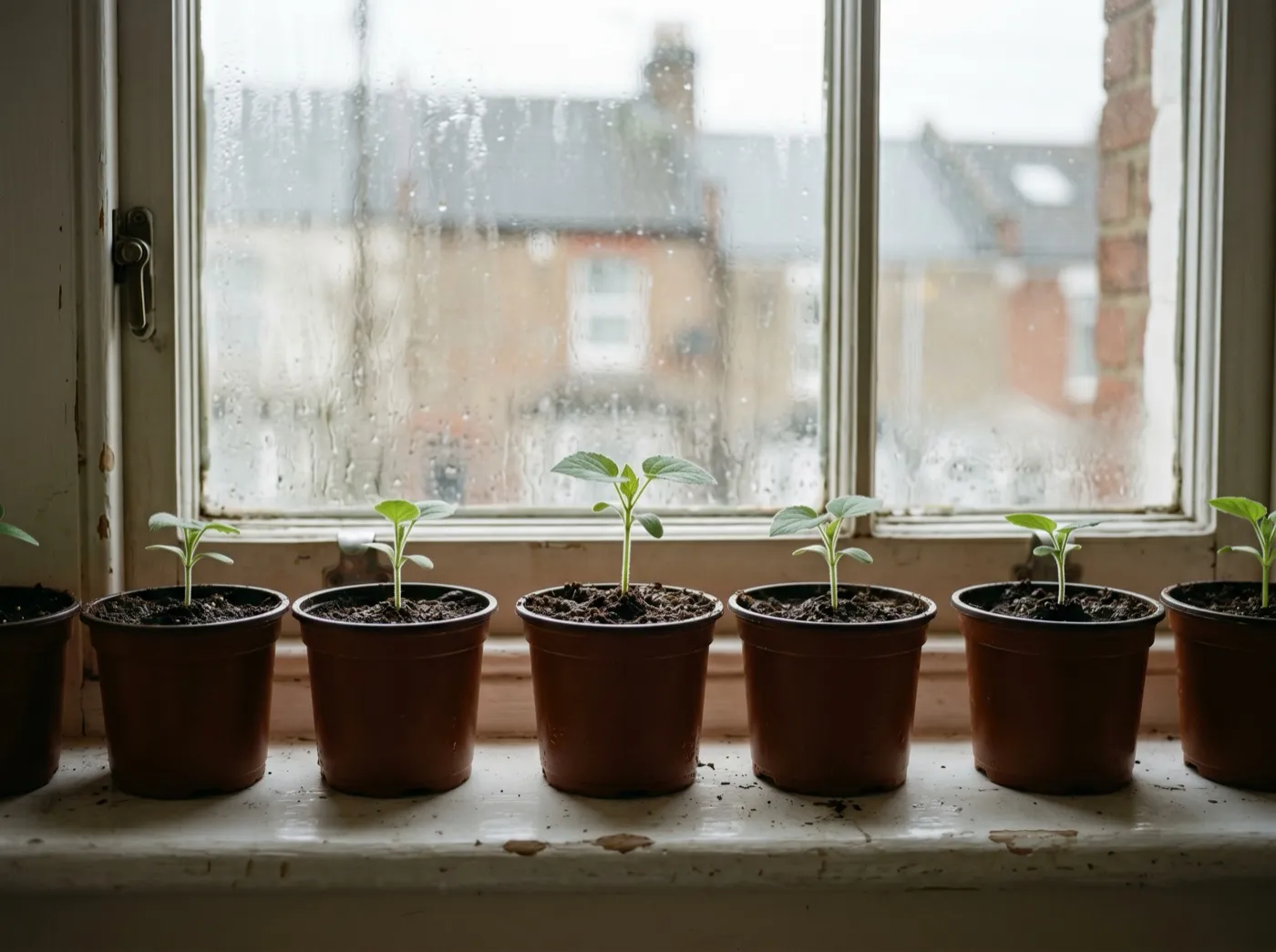 Seedlings at the two-true-leaf stage, pricked out into 9cm pots. Growth looks slow until June, then accelerates.
Planting out: spacing, shelter and pots
Plant out after the last frost, which means late May for most of England and Wales and early June further north. Harden plants off for 7-10 days first. One cold night below 0C will kill unprotected plants, so keep fleece handy and read our guide to protecting plants from frost if a late cold snap threatens.
Choose a sunny, sheltered spot. Wind is the quiet yield-killer: the stems are brittle, and exposed plants snap and stall. A south-facing bed against a fence or wall is ideal. Space plants 75cm apart, because each one sprawls to 1-1.5m wide and about 1m tall. A few canes and string loops stop the laden stems flopping onto soil.
No bed available? A 10-litre pot of multipurpose compost on a warm patio grows a respectable plant. In a greenhouse border or large pot the season stretches a month at either end, which is why protected plants out-crop outdoor ones. Slot the plant into your existing rotation using our greenhouse growing calendar.
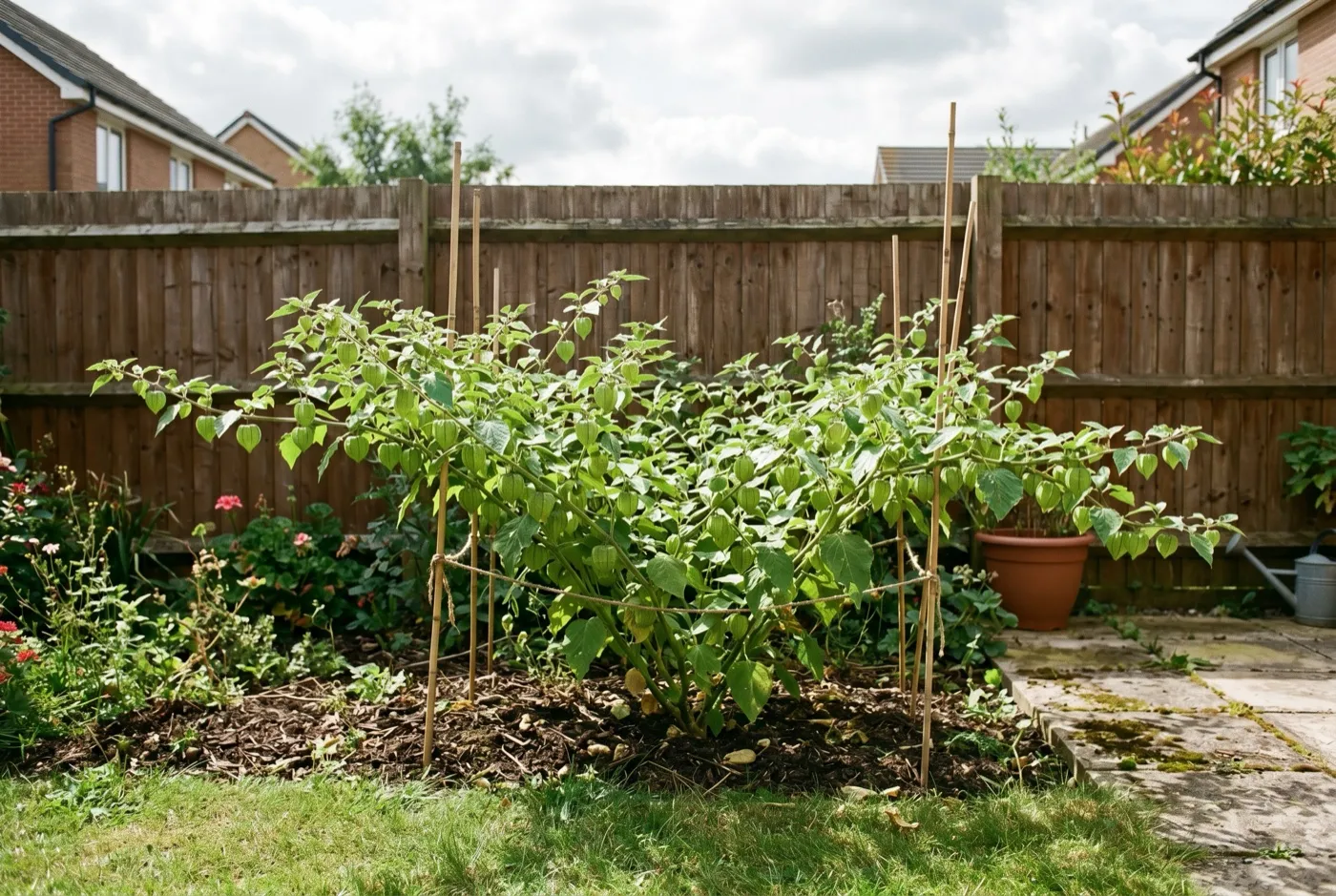 A single plant in a sheltered, sunny bed. By August it covers more than a metre, so the 75cm spacing is not generous.
Why poor soil grows more fruit
Here is the root cause of most cape gooseberry disappointment: rich soil grows leaves, not fruit. The plant evolved on thin, free-draining Andean slopes. Give it manured soil or regular nitrogen feed and it reads the fertility as a signal to build stems and foliage. You get a lush 1.5m bush carrying a dozen berries.
The fix is to do less. Plant into unimproved garden soil, or plain multipurpose compost in pots, with no added manure, no pelleted feed and no liquid tomato feed on a weekly schedule. Water modestly: a thorough soak in dry spells, nothing more. The plant tolerates dry spells far better than a tomato.
Feeding is limited to one or two high-potash feeds once flowering starts in July. Potash pushes flower and fruit rather than leaf. That is the entire feeding programme for the year.
If you have already over-fed a plant, stop all feed, hold back water and let it sulk. Flowers usually follow within 3-4 weeks once the nitrogen supply runs down. Permanent prevention is simple: keep this crop out of the bed you enriched for hungry vegetables, and never share the tomato feeding routine with it.
Cape gooseberry growing methods ranked
The overwintered year-2 plant is the gold standard because it skips the slow three-month establishment phase. It starts the season with a woody base and a full root system, flowers in June rather than July, and ripens fruit weeks before autumn light fades. An outdoor pot is the weakest option but still the easiest entry: one plant, one bag of compost, 80-plus berries.
The limit on every outdoor method is the autumn. Berries that have not ripened by the first frost never will, which is why anything that pulls the season forward earns its place.
From flower to ripe berry: stages and timings
The journey from flower to ripe fruit runs to a fixed sequence. Knowing it stops you panicking in August when everything still looks green.
- Flowering, from July. Yellow bell flowers, 1-2cm, each with five purple-brown blotches at the throat. Flowers are self-fertile, so a single plant crops fine.
- Husk inflation, days 1-10 after set. The calyx swells into a green lantern within 7-10 days. The berry inside is tiny and hard.
- Berry fill, weeks 2-8. The fruit swells to 1-2cm inside its sealed husk. The husk stays green and the berry stays sour.
- Ripening, weeks 8-11. Roughly 70-80 days after flower set, the husk dries from green to papery straw-brown and the berry turns deep golden.
- Drop. Fully ripe fruit often detaches and falls, husk and all. Ground-fall fruit in a dry husk is perfect to eat.
The critical mistake is picking by impatience in the green-husk stage. A cape gooseberry picked green never sweetens properly off the plant. It will turn vaguely yellow in a bowl, but the sugars never arrive and the flavour stays thin and acidic. The husk is the only signal worth trusting.
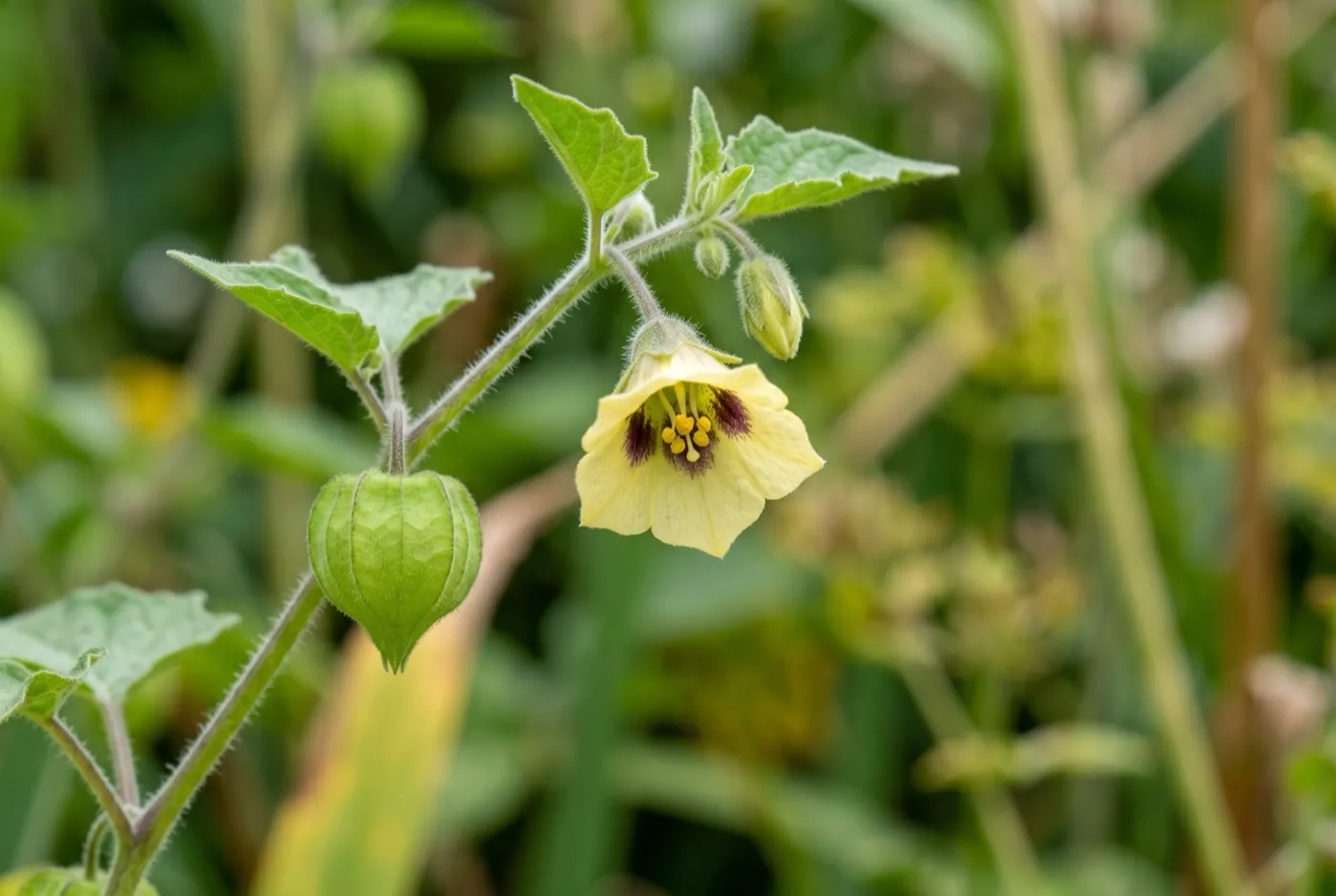 The self-fertile July flower: yellow bells with five purple-brown blotches. Each one becomes a lantern within ten days.
How do you know when a cape gooseberry is ripe?
Read the husk, never the calendar. A ripe cape gooseberry sits inside a husk that has turned fully papery and straw-brown, dry enough to rustle. Peel it back and the berry should be glossy golden orange. If the husk shows any green, close it up and come back in a week.
Storage is where this fruit beats almost every other soft fruit. Left in the husk, berries keep 2-4 weeks at room temperature in a single layer in a bowl. The husk works as a natural wrapper against moisture loss and rot. No refrigeration, no freezing, no rush. Across September and October a pair of plants gave us a rolling bowl of fruit on the kitchen table for seven straight weeks.
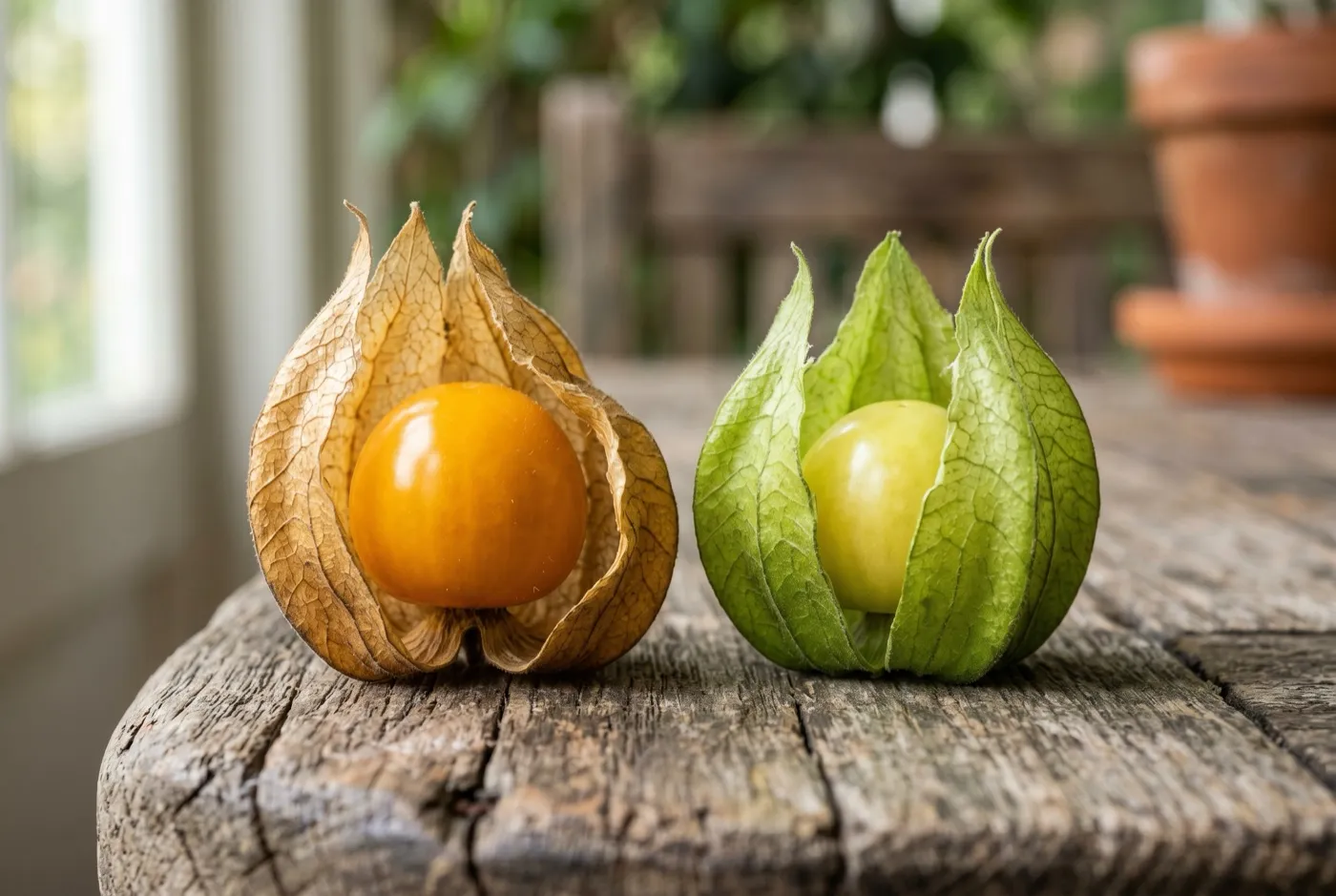 The only test that matters: straw-brown papery husk and golden berry on the left, green husk and pale sour berry on the right.
Cape gooseberry month by month
| Month | Task |
|---|---|
| January | Order seed; check overwintered plants stay above 5C, water once if compost is bone dry |
| February | Sow at 18-21C in a propagator; surface-sow under 3mm of vermiculite |
| March | Main sowing month; prick out earlier sowings into 9cm pots at two true leaves |
| April | Pot on into 1-litre pots; grow at 15-18C in full light; restart watering overwintered plants |
| May | Harden off 7-10 days; plant out late May at 75cm spacing; watch for self-sown volunteers near last year’s spot |
| June | Stake sprawling stems; water in dry spells only; overwintered plants flower now |
| July | Flowering begins on year-1 plants; give the first high-potash feed |
| August | Husks inflating; second and final high-potash feed; first ripe fruit on overwintered plants from late August |
| September | Main ripening starts; collect fruit with straw-brown papery husks and windfalls |
| October | Peak harvest; strip every ripe berry before the first frost blackens the tops |
| November | Cut plants back to 15cm and move under frost-free cover at 5C+, or compost them |
| December | Keep overwintered plants barely moist; they need light but almost no water |
In mild districts the plant self-seeds. Dropped fruit you missed in October becomes a scatter of volunteer seedlings the following May. Pot the strongest up and you have free plants that are already climate-proven.
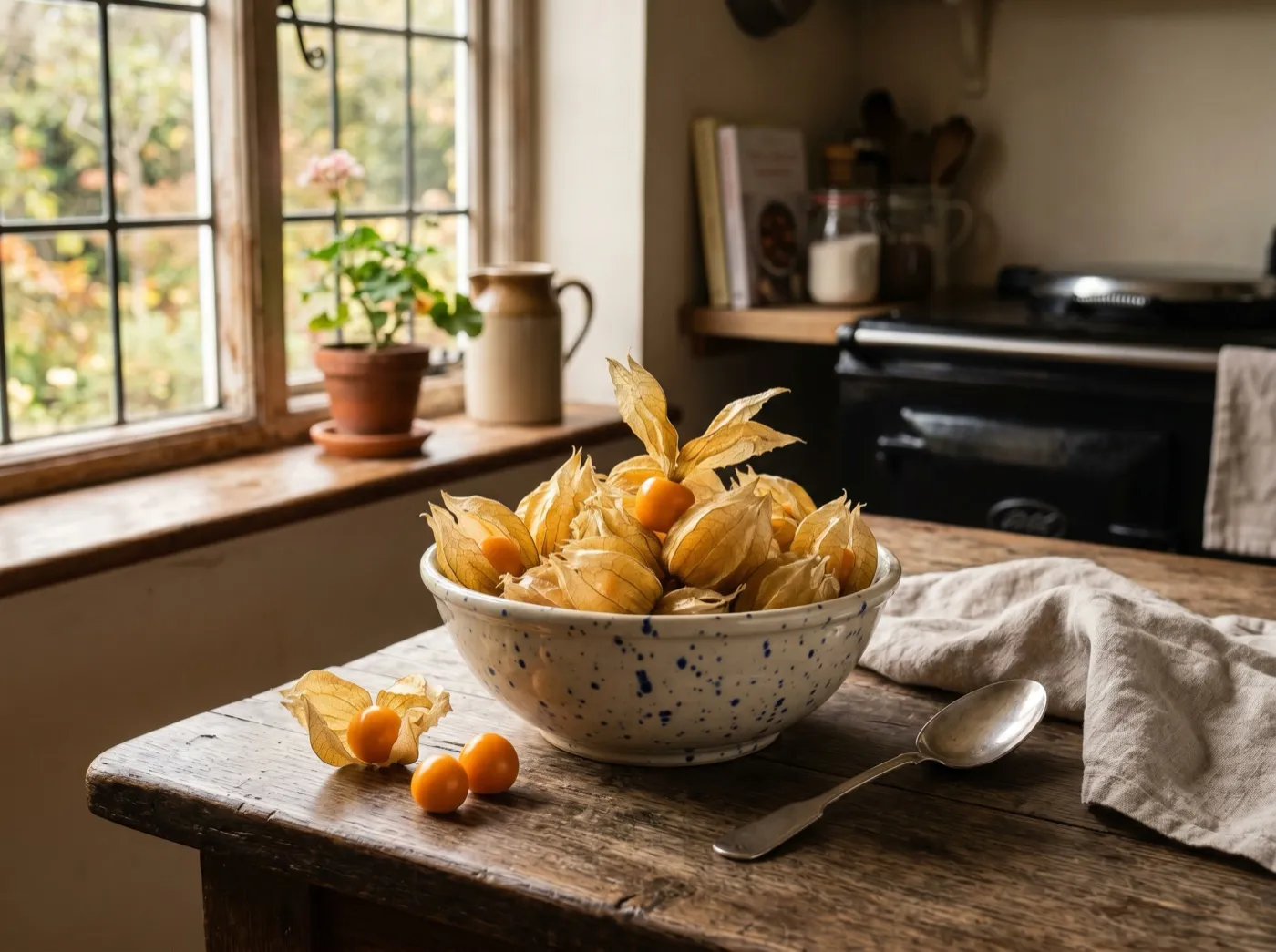 A week of picking from two plants in early October. Fruit left in the husk keeps 2-4 weeks at room temperature.
Overwintering for an earlier, bigger crop
A first-year cape gooseberry often disappoints, ripening its heaviest flush just as frost arrives. The answer is not a different variety. It is keeping the same plant for a second season.
After harvest, cut the plant back to 15cm, lift it into a 10-litre pot if it grew in the ground, and keep it frost-free at 5C or above: a greenhouse with a frost heater, a cold porch or a bright shed window all work. Water perhaps once a month, just enough to stop the compost turning to dust. The plant looks dead until April, then reshoots from the woody base. The same routine suits fuchsias and salvias, covered in our guide to overwintering tender plants.
Second-year plants flower in June because they skip the establishment phase entirely. In yield per minute of effort, ten minutes of cutting back in November is the best-paid job this crop offers.
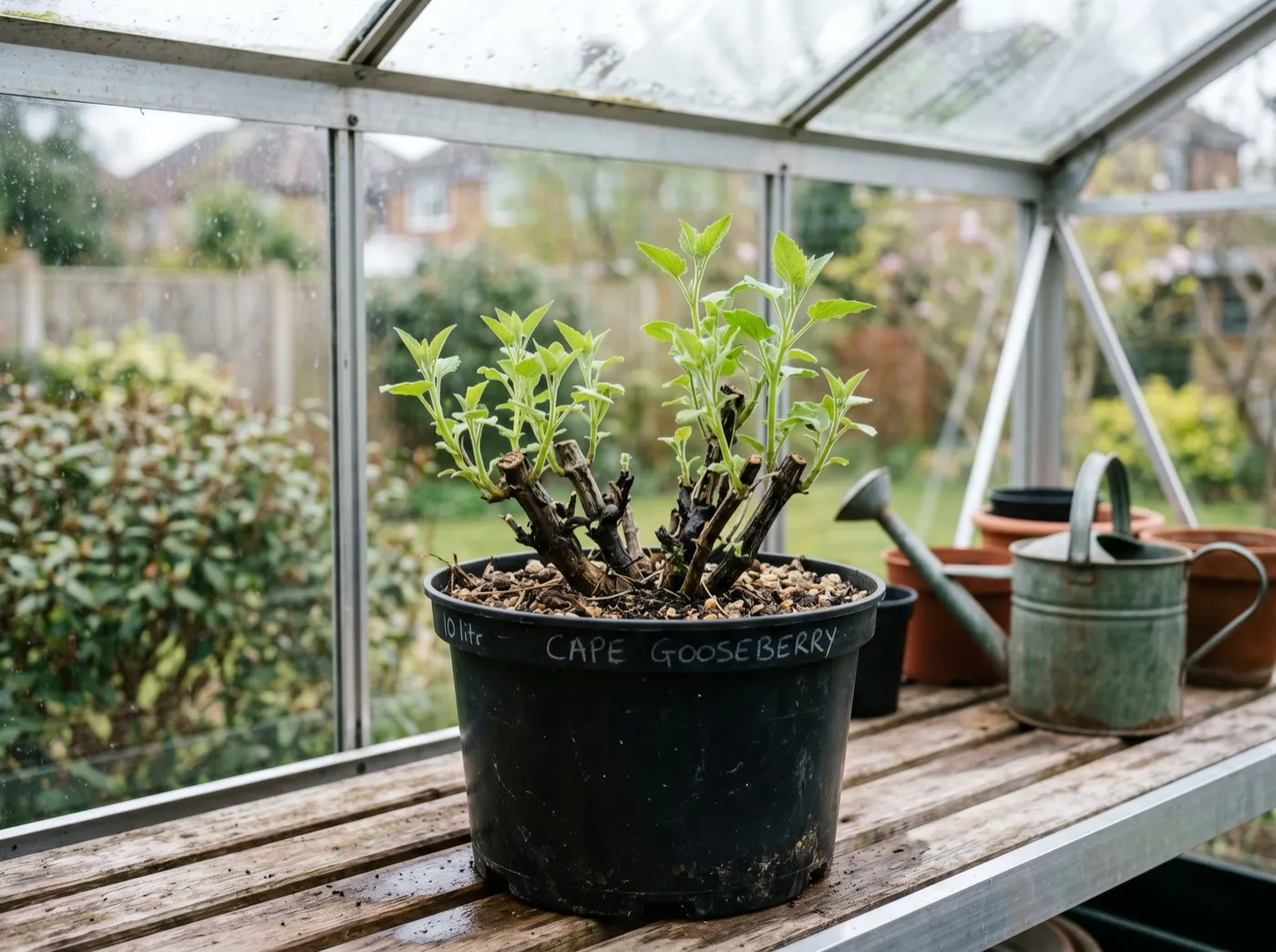 An overwintered plant in April: cut to 15cm in November, held at 5-6C, now reshooting. It will fruit from late August.
Common mistakes with cape gooseberries
- Feeding it like a tomato. Weekly liquid feed and rich soil produce a big leafy plant with a handful of berries. Grow it lean: poor soil, one or two high-potash feeds after flowers show, modest water.
- Picking before the husk papers. Green-husk fruit never sweetens properly off the plant. Wait for the full straw-brown, rustling-dry husk and a golden berry, even if that means leaving fruit into October.
- Planting in an exposed spot. Wind snaps the brittle sprawling stems and stalls growth. Give it a sheltered, south-facing position with a fence or wall behind, and stake the stems by July.
- Treating year one as a failure. A modest 100-berry first season is normal, not a verdict. Cut the plant back, overwinter it at 5C+ and it returns 3-4 weeks earlier with roughly double the fruit.
- Binning the windfalls. Dropped fruit in an intact dry husk is ripe, clean and perfect to eat. Check under the canopy every few days from mid September.
Frequently asked questions
Can you grow cape gooseberries outdoors in the UK?
Yes, in a sunny, sheltered spot once frosts have finished. Plant out in late May at 75cm spacing and expect 100-200 berries per plant by October. A greenhouse or polytunnel ripens more fruit, sooner, but a warm south-facing bed works in most of England and Wales.
Why is my cape gooseberry not fruiting?
Rich soil and nitrogen feed are the usual cause. The plant responds to fertility by growing leafy stems instead of flowers. Grow it in poor or unimproved soil, skip the feed, and give one or two high-potash feeds only once flowers appear in July.
When are cape gooseberries ripe?
When the husk turns papery and straw-brown, usually September to October. The berry inside should be golden orange. Ripe fruit often drops to the ground still wrapped in its husk. Fruit picked while the husk is green never sweetens properly.
Are cape gooseberry and tomatillo the same plant?
No, they are different species in the same Physalis genus. Tomatillo (Physalis philadelphica) gives 4-6cm savoury green fruit that fills its husk. Cape gooseberry (Physalis peruviana) gives 1-2cm sweet golden berries that hang loose inside the husk. Growing methods are similar but flavour and use are completely different.
Can cape gooseberry plants survive a UK winter?
Not outdoors; the first proper frost kills the top growth. The plant is a tender perennial, so cut it back to 15cm and keep it frost-free at 5C or above. Overwintered plants fruit 3-4 weeks earlier the next year and carry roughly double the crop.
How long do cape gooseberries keep?
Fruit left in its husk keeps 2-4 weeks at room temperature. The papery husk acts as a natural wrapper, slowing moisture loss. Once you peel the husk off, eat the berry within a few days or refrigerate it.
Once your first plant is fruiting, there are plenty more oddities worth a corner of the plot, like a row of home-grown quinoa: see our round-up of unusual crops to grow in the UK, or browse the full growing section for every fruit and vegetable guide.
Our team produces practical UK gardening guidance from source research, contributor records and established horticultural practice. Editorial standards are overseen by Matt W.