Key takeaways
- Direct sow 1cm deep from mid-April to mid-May, once soil passes 10C
- Northern-bred varieties 'Titicaca', 'Rainbow' and 'Temuco' ripen in 90-120 days
- Plants reach 1.2-1.8m and need almost no watering once established
- Harvest in September when seeds resist a thumbnail dent, before autumn rain
- Rinse the grain in 4-6 changes of cold water to remove bitter saponins
- A 3m row gives 300-500g of cleaned grain, roughly 50-150g per plant
Why quinoa suits UK gardens better than you would expect
Quinoa belongs to the same genus as fat hen (Chenopodium album), a weed that has thrived on disturbed British ground since before the Iron Age. Fat hen seeds even turned up in the last meal of Denmark’s 2,400-year-old Tollund Man. A crop with that family history needs no mollycoddling here.
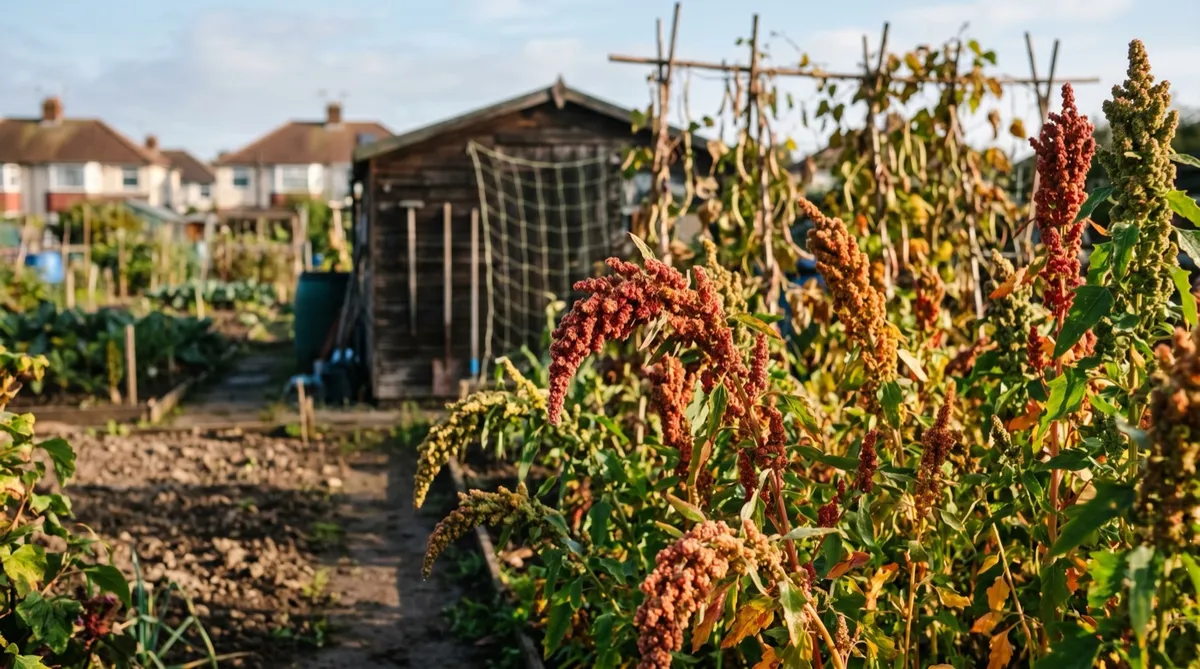
It also earns its place visually. The September seed heads run from cream through orange to deep crimson. If you enjoy unusual crops to grow in the UK, quinoa sits nicely alongside other drought-tolerant vegetables in a low-water plot, and pairs well with a cape gooseberry, another lean-soil South American that asks for little. Garden Organic, the national authority on uncommon edibles, has long encouraged members to trial it: see Garden Organic for their growing network.
Which quinoa varieties grow best in the UK?
When and how to sow quinoa outdoors
Direct sowing works better than transplanting, because quinoa resents root disturbance. The window is mid-April to mid-May, and the trigger is soil temperature, not the calendar. Wait until the soil holds 10C at 5cm depth for a few mornings running. There is a free indicator: when fat hen seedlings start appearing on bare ground, the soil is warm enough for their cousin.
Sow like this:
- Rake the bed to a fine tilth and draw drills 1cm deep, with rows 35-40cm apart.
- Sow thinly, about one seed per 2-3cm. The seed is tiny, so mix it with dry sand for even spacing.
- Water the drill once, then leave it. Germination takes 4-10 days at 10-15C.
- Thin in two passes, first to 10cm, then to a final 25-30cm between plants.
The thinnings are edible, by the way. Treat them like spinach. In the rotation, quinoa belongs with beetroot, chard and spinach, its fellow chenopods, not with brassicas or legumes. Slot it into your beds using our crop rotation planner so it does not follow those relatives for at least two years.
How do you tell quinoa seedlings from fat hen?
Here is the awkward truth: at the two-leaf stage, quinoa and fat hen are nearly identical. Both carry the same grey-green, mealy coating on their young leaves. Both germinate at the same time, in the same conditions, because they are cousins. Plenty of first attempts get hoed off by their own grower in May.
Appearance helps a little. Quinoa seedlings are usually slightly stockier, and ‘Rainbow’ types often show a pink or red flush at the stem base by the four-leaf stage. But the only reliable test is position. Sow in dead-straight rows and mark both ends with canes. Then keep only the plants standing in the line and pull everything between rows, however similar it looks.
Two habits make this easy. Run a stale seedbed first: prepare the bed two weeks early, let the weed flush germinate, hoe it off, then sow. And weed the rows themselves by hand, never with a hoe, until plants pass 15cm. After that quinoa outgrows fat hen and the confusion ends.
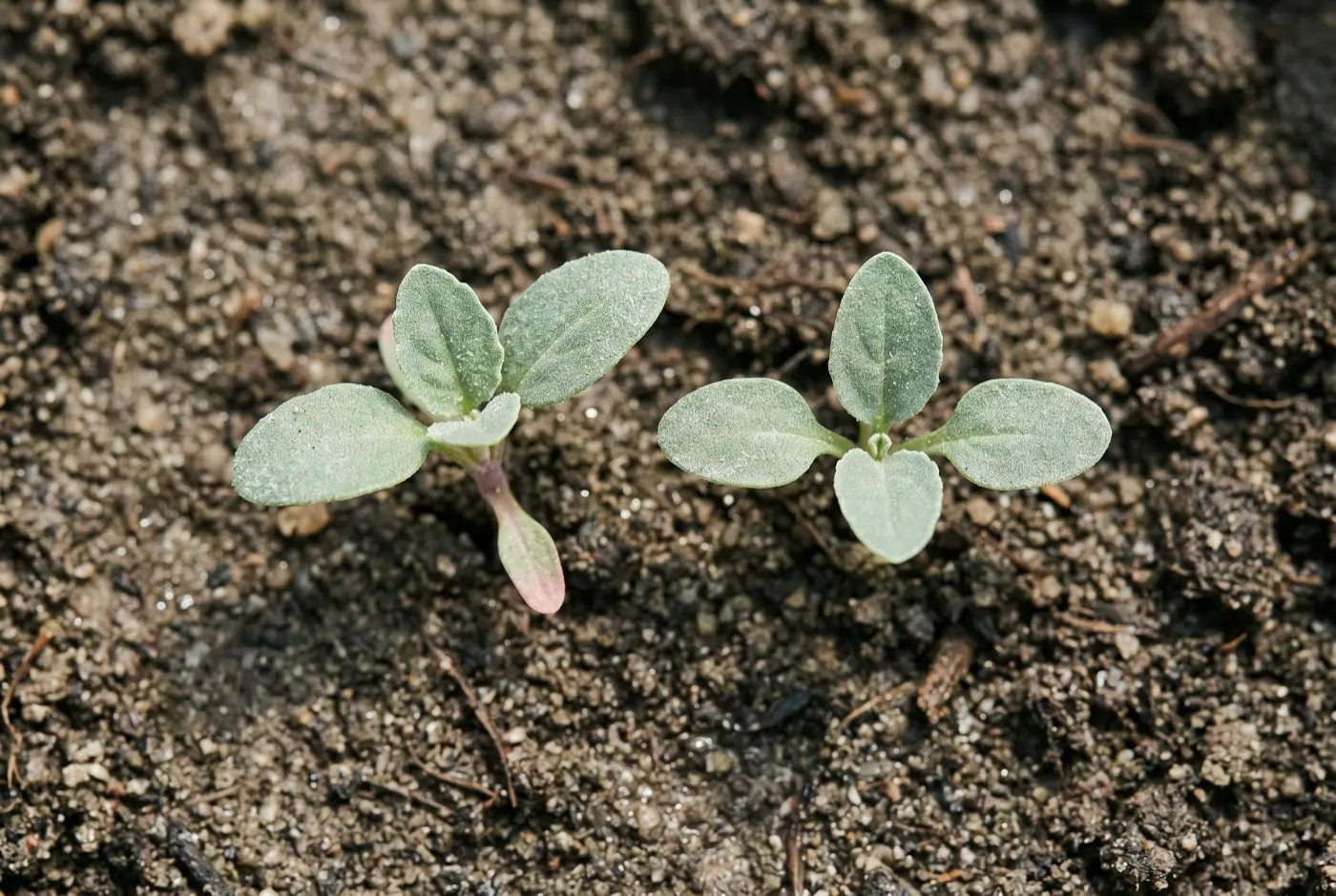 Quinoa on the left, fat hen on the right. At this stage position in the row is the only test you can trust.
Flowering to harvest: the quinoa year from July to September
Growth is slow until June, then rapid. Plants put on 10-15cm a week through midsummer and flower in July, producing dense plumes at every tip. The flowers are tiny and mostly self-pollinating, so isolation is not a worry. Through August the heads swell with seed and start to nod under their own weight.
The show begins in September, when the heads colour up: gold for ‘Titicaca’, cream for ‘Temuco’, and everything from orange to crimson on ‘Rainbow’. Colour alone does not mean ripe, though. Use two checks together:
- The thumbnail test. Press a seed with your thumbnail. Ripe seed resists the dent. If it marks or smears, wait.
- Leaf drop. Ripe plants shed most of their lower leaves, leaving bare stems under bright heads.
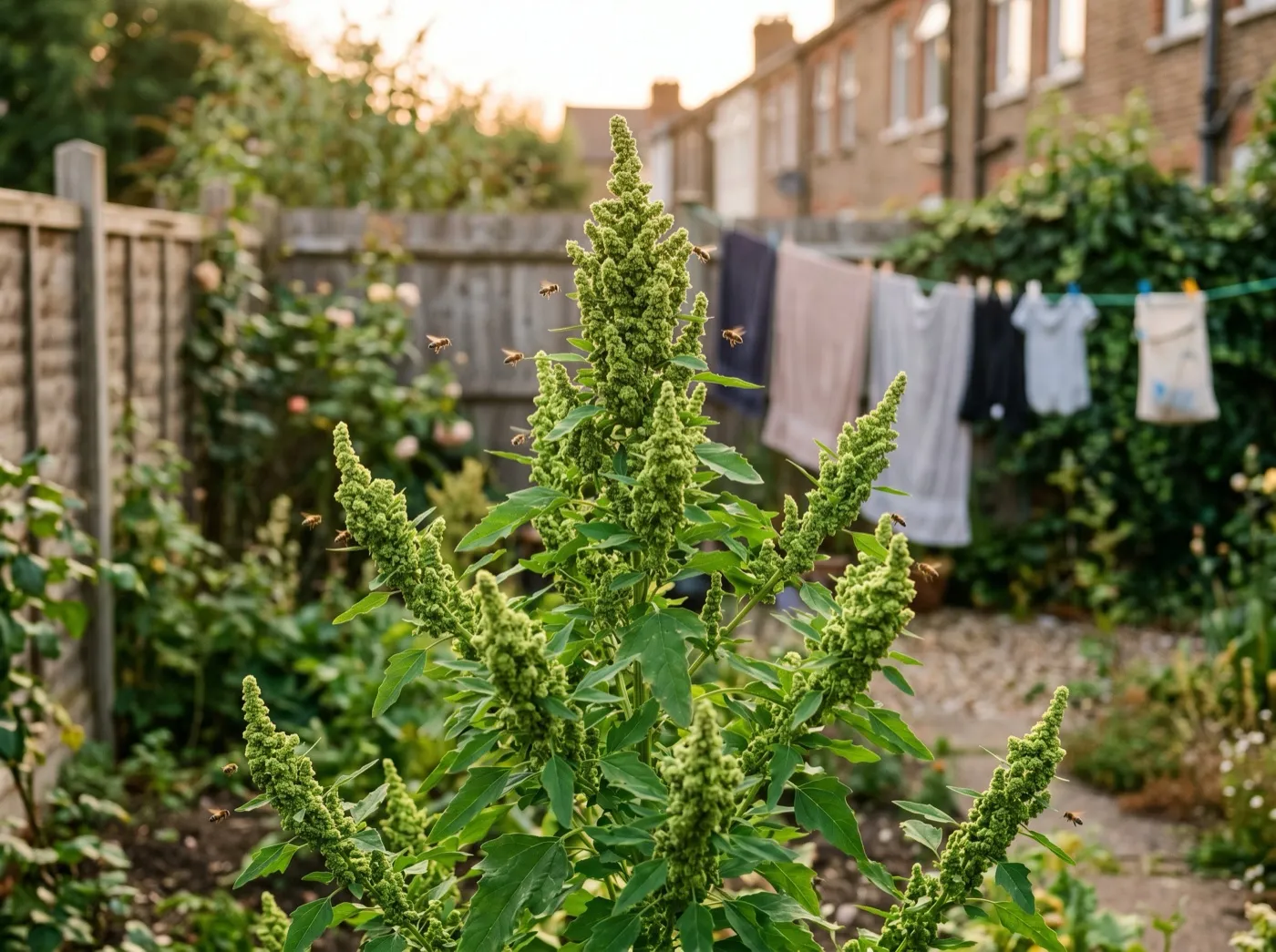 July flowering. Every growing tip carries a plume, and each plume becomes a seed head by September.
Cutting and drying the seed heads
Harvest is a secateurs job. Cut each head with 20-30cm of stem attached, working on a dry day after the morning dew has gone. A 3m row fills one large trug. Handle the heads gently, because fully ripe seed sheds with rough treatment and every dropped seed is lost grain.
Drying follows immediately and it is non-negotiable. Bundle the stems in groups of 4-5 and hang them upside down for 1-2 weeks in a dry, airy place: a shed, garage or covered porch all work. Spread an old sheet or paper beneath the bundles, because the ripest seed drops as the heads dry, and that early-shed seed is often the best of the lot.
The heads are ready to thresh when they feel papery and seed falls with a light shake. In a Staffordshire September that took 9 days in 2025 and 13 in the damper autumn of 2024. The same hang-and-dry principle applies to pulses, covered in our guide to drying beans and peas. The critical mistake is threshing too early: seed at even slightly damp stems clumps, winnows badly and can turn musty in the jar.
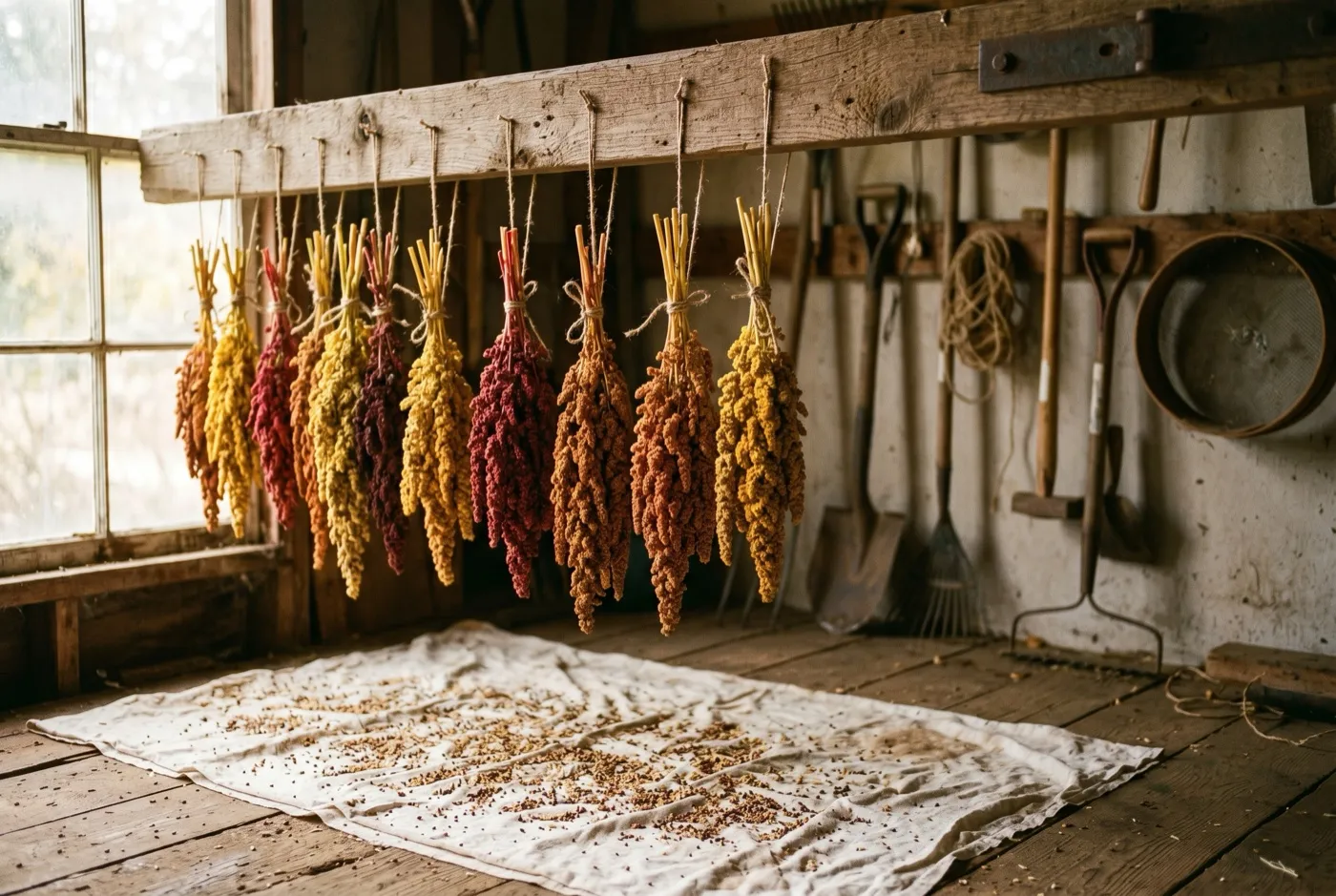 Bundles hung to dry with a sheet below. Papery heads that shed seed with a light shake are ready to thresh.
Threshing and winnowing without special kit
No machinery needed. Threshing is just rubbing the seed free. Put on a pair of dry gloves, hold each head over a clean bin or large bucket, and rub it briskly between your palms. The seed rains down with a surprising amount of chaff, leaf fragments and stem dust. A 3m row takes 10-15 minutes to thresh. Saponin dust can irritate, so work outdoors or wear a basic dust mask.
Winnowing separates seed from chaff using moving air. Quinoa seed is dense and round, the chaff light and flat, so the job is easy:
- Set a household fan on its lowest speed, or wait for a steady light breeze.
- Pour the threshed material slowly between two buckets, about 60cm apart, in front of the airflow.
- The seed drops into the lower bucket while chaff blows clear.
- Repeat 3-4 passes until the seed runs clean.
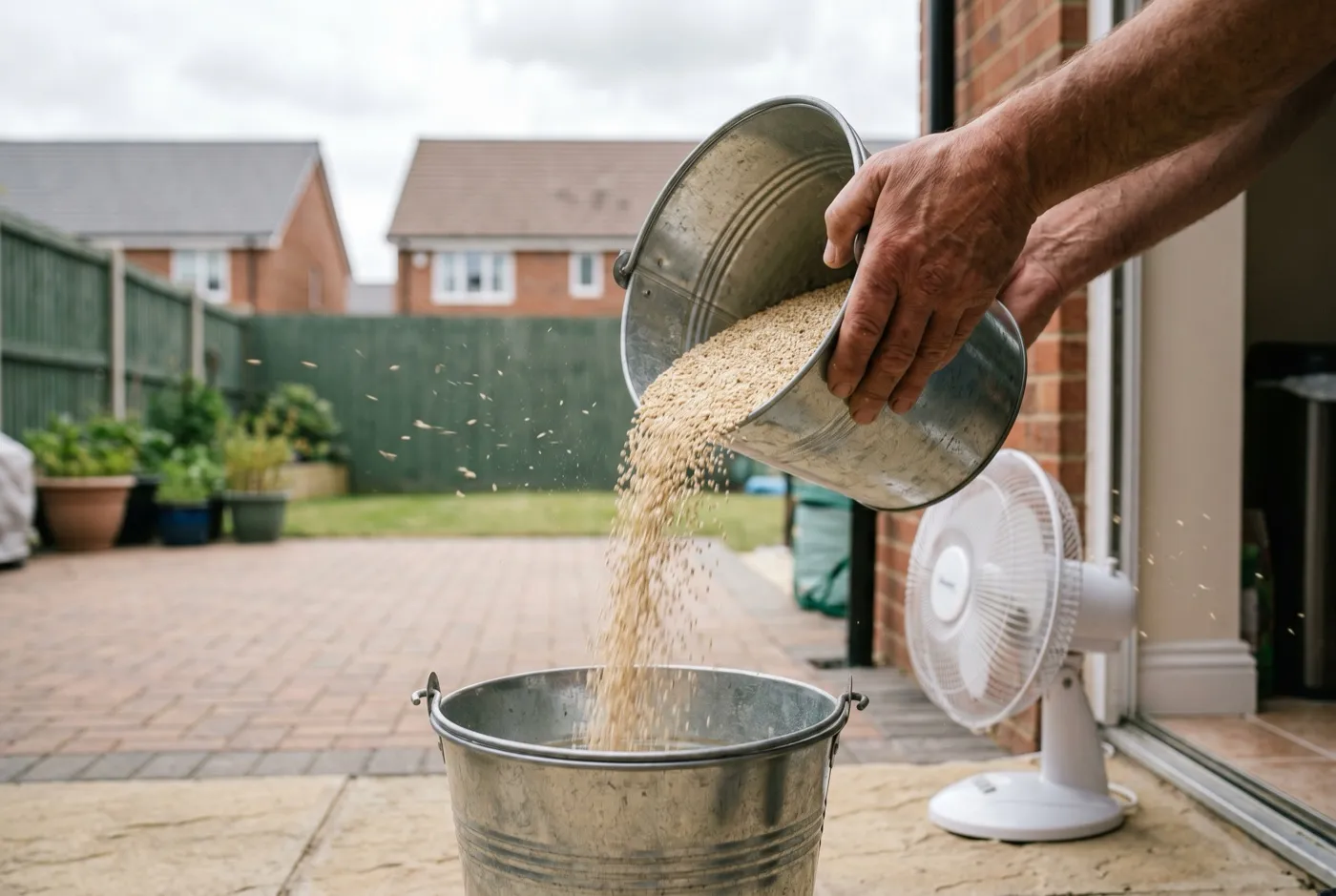 Winnowing in front of a fan on low. Dense seed falls straight down while the lighter chaff blows aside.
The saponin rinse: how to wash quinoa before eating
Every quinoa seed is coated in saponins, bitter compounds the plant makes to deter birds and insects. Commercial quinoa is pre-washed or polished. Yours is not. Cook it unrinsed and the result is soapy and bitter enough to ruin the meal that two seasons of work earned. The rinse takes under half an hour, so do it properly:
- Tip the grain into a deep bowl and cover with cold water to 5cm above the seed.
- Swirl hard with your hand for 30 seconds. The water turns cloudy and foams white. That foam is saponin leaving.
- Let the seed settle for 20-30 seconds, then pour the water off through a fine sieve to catch strays.
- Refill and repeat. Expect 4-6 changes of water before the swirl stops raising foam.
- Run the jar test: shake a teaspoon of grain in a jar half-full of water. No foam means done. Any foam, rinse again.
- Either cook the grain straight away, or dry it within 24 hours: spread it one seed deep on a tray in an airy room for 1-2 days, stirring daily, then jar it.
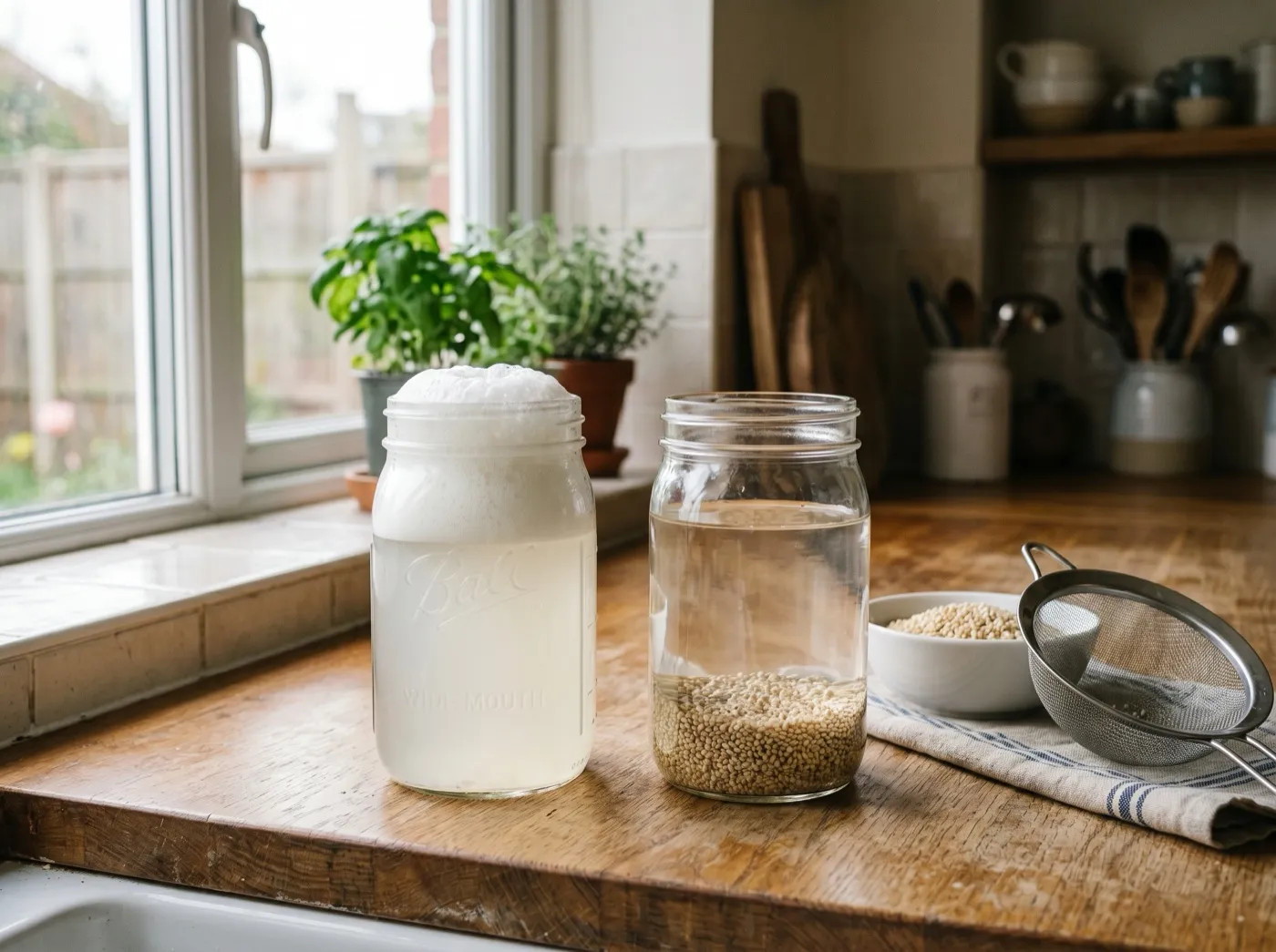 The jar test. Foam on the left means saponins remain. Clear water after five changes means the grain is ready.
What yield to expect from a UK quinoa row
Quinoa is open-pollinated, so a saved handful of your best heads sows next year’s row for nothing. Our guide to seed saving for beginners covers selecting and storing it. Skip the rinse on saved seed: the saponin coat protects it in storage.
Why most UK quinoa attempts fail: the day length problem
The root cause of nearly every failed UK quinoa crop is not climate, slugs or soil. It is photoperiod. Quinoa evolved near the equator on 12-hour days, and most traditional varieties only flower and set seed when days shorten toward that length. At UK latitudes that signal arrives in late September. The plants grow huge, stay green, then meet October frost with unripe seed. Gardeners blame the weather, but the variety never had a chance.
The permanent fix costs nothing extra: only sow varieties bred for northern day lengths. ‘Titicaca’, ‘Temuco’ and ‘Rainbow’ are day-neutral or northern-adapted, which is why they ripen here in 90-120 days while Andean types do not ripen at all.
The same logic rules out the tempting shortcut of sowing supermarket quinoa. Most packet grain is an equatorial type, and much of it has been heat-treated or polished, so it either fails to germinate or grows into a handsome plant that never ripens. Buy proper seed once, save your own after that, and the problem is solved for good.
Quinoa month by month: a UK calendar
| Month | Task |
|---|---|
| January | Order seed of ‘Titicaca’, ‘Rainbow’ or ‘Temuco’ from a specialist supplier |
| February | Choose a sunny, free-draining bed; quinoa follows anything except beetroot, chard or spinach |
| March | Prepare a stale seedbed; warm the soil with clear polythene or fleece if cold |
| April | Direct sow 1cm deep in rows 35-40cm apart once soil holds 10C, usually mid-month onward |
| May | Finish sowing by mid-May; hand weed rows; thin seedlings to 25-30cm in two passes |
| June | Final weed before plants pass 15cm; water young plants only in dry spells |
| July | Flowering; plants reach 1.2m and beyond; no watering needed once established |
| August | Seed heads swell and nod; stake any leaning plants on exposed plots |
| September | Heads colour up; harvest when seed resists a thumbnail dent and leaves have dropped |
| October | Cut any remaining heads before sustained rain; hang bundles to dry for 1-2 weeks |
| November | Thresh, winnow and rinse; dry the cleaned grain and store in airtight jars |
| December | Weigh the harvest, note the best row, and set aside saved seed for spring |
Common mistakes when growing quinoa
Most failed quinoa crops trace back to one of five errors, and all five are avoidable.
Frequently asked questions
Can you grow quinoa in the UK?
Yes, quinoa grows well in the UK with northern-bred varieties. ‘Titicaca’, ‘Rainbow’ and ‘Temuco’ were selected for long summer days and ripen in 90-120 days. Direct sow from mid-April to mid-May and harvest in September. Traditional Andean varieties fail here because UK day length stops them setting seed in time.
When do you sow quinoa in the UK?
Direct sow from mid-April to mid-May, once soil reaches 10C. Sow 1cm deep in rows 35-40cm apart and thin seedlings to 25-30cm. Seed sown earlier into cold, wet soil tends to rot. A mid-May sowing usually catches an April one within three weeks.
How do you remove saponins from quinoa?
Rinse the grain in 4-6 changes of cold water until it stops foaming. Swirl hard, let the seed settle, pour off the cloudy water and repeat. Shake a spoonful in a jar of water as a test: any foam means rinse again. Cook the grain straight away or dry it within 24 hours.
How much quinoa do you get from one plant?
When is quinoa ready to harvest in the UK?
September, when seeds resist a thumbnail dent and most leaves have dropped. Cut whole heads before sustained autumn rain, because ripe seed can sprout in the head. Hang the heads upside down somewhere dry and airy for 1-2 weeks before threshing.
Is quinoa the same plant as fat hen?
No, but they are close relatives in the same Chenopodium genus. Quinoa is Chenopodium quinoa and fat hen is Chenopodium album. The seedlings look almost identical, so weed quinoa rows by hand and only keep plants standing in your sowing line.
Once your jars are full, the obvious next step is bread-scale ambition: read our guide to growing your own grain for flour, or browse the full growing section for more home-grown staples.
Our team produces practical UK gardening guidance from source research, contributor records and established horticultural practice. Editorial standards are overseen by Matt W.