Key takeaways
- It is short-lived: most plants fade after two or three years, faster on wet clay
- Full sun and sharp drainage are non-negotiable; wet winter soil rots the crown
- Deadhead every few days and cut back to 12cm in August for a fresh autumn flush
- 'Arizona Sun' and 'Kobold' both hold an RHS Award of Garden Merit
- Divide every second spring or take basal cuttings to replace ageing plants
The short-lived prairie flower that barely stops blooming
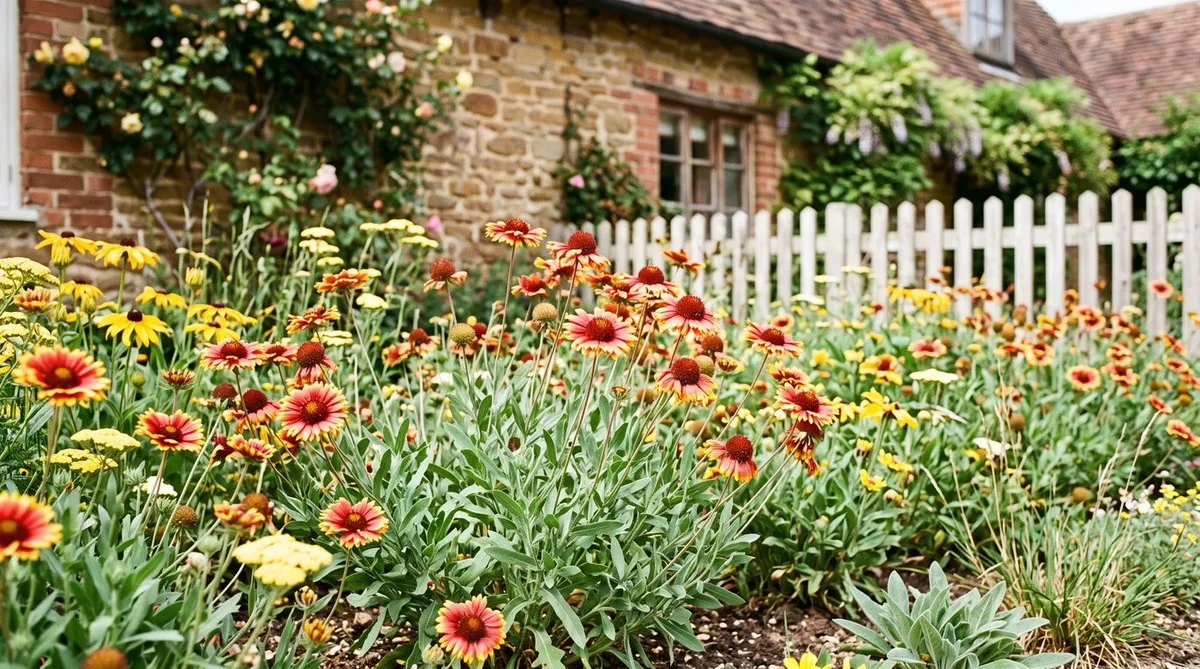
Each plant carries daisy-like flowers on wiry stems above a low rosette of grey-green, slightly hairy leaves. The blooms are typically 5 to 8cm across, with a raised central disc ringed by petals that are often red at the base and yellow at the tip. A single plant produces dozens of flowers in succession from June to the first frost, usually late October or November in most of England.
Most garden gaillardias are Gaillardia x grandiflora, a hybrid between the perennial G. aristata and the annual G. pulchella. That mixed parentage explains the plant’s habit. It flowers hard and fast like an annual, but the roots persist like a perennial, just not for very long. Understanding that trade-off is the key to growing it well.
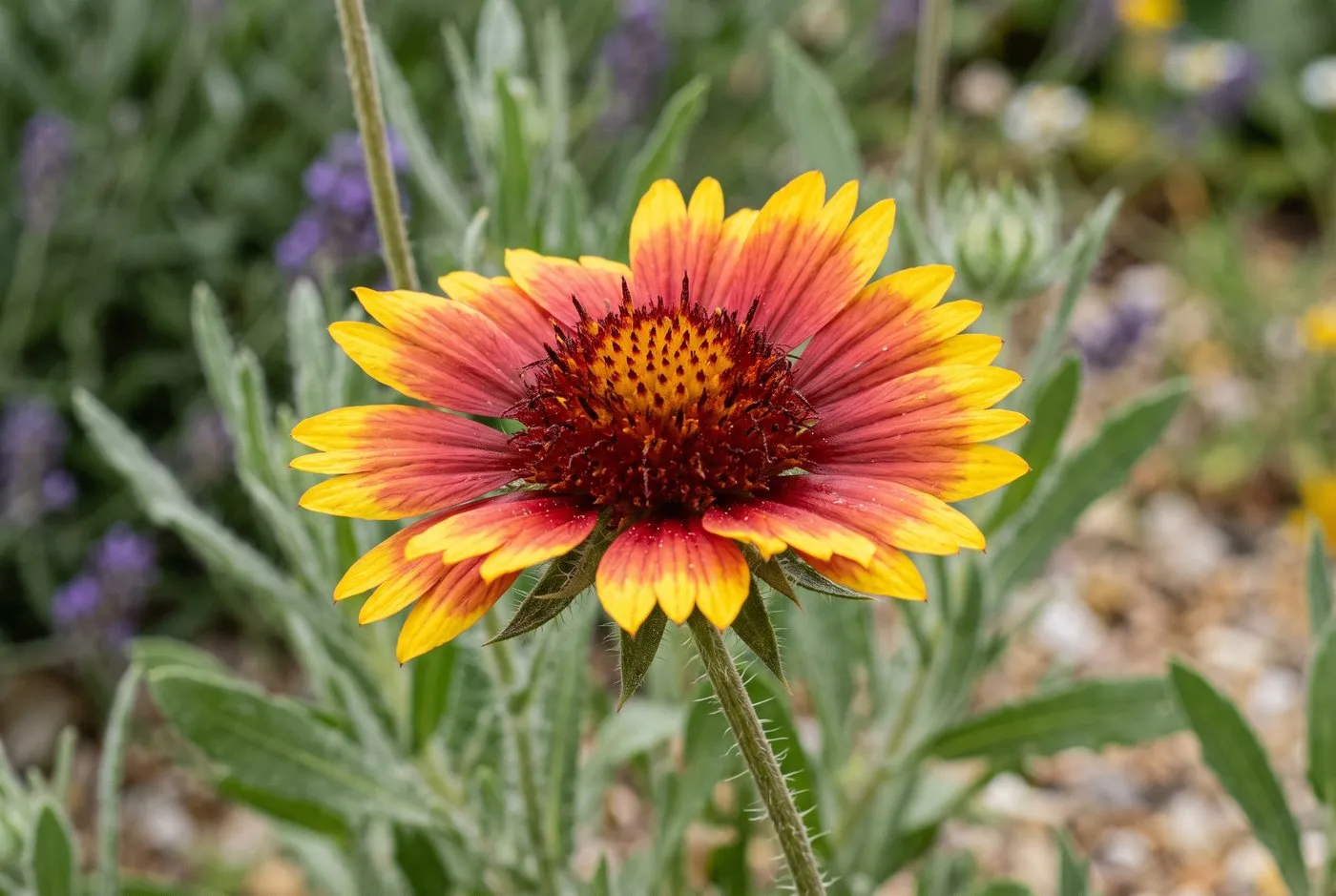 The classic blanket flower: a raised central disc ringed by petals that run red at the base to yellow at the tip. Each bloom is 5 to 8cm across.
Which gaillardia to grow: cultivars compared
Choosing the right cultivar changes how the plant behaves in your garden. Compact seed strains flower in their first summer but act almost like annuals. Named perennial types live longer but need buying as plants. Height ranges widely, from 20cm dwarfs to 75cm border plants, so match the cultivar to its position.
For a first blanket flower, we point people towards ‘Arizona Sun’ or ‘Kobold’ (sold in the UK as ‘Goblin’). Both are compact, both flower for months, and both hold an RHS Award of Garden Merit. The table below ranks the common types by how reliably they perform through a British season, based on our own side-by-side beds.
| Cultivar / species | Height | Flower colour | Type | Best use | Garden reliability |
|---|---|---|---|---|---|
| ’Arizona Sun’ | 20-30cm | Mahogany-red, yellow tips | Seed perennial, AGM | Front of hot border, pots | 1st, flowers year one |
| ’Kobold’ / ‘Goblin’ | 30cm | Red with yellow edge | Perennial, AGM | Gravel, edging, dry beds | 2nd, compact and tough |
| G. aristata | 60-70cm | Yellow with red centre | True perennial | Prairie, meadow, longest-lived | 3rd, hardiest species |
| ’Burgundy’ | 60-75cm | Deep wine-red | Perennial | Mid-border, cut flowers | 4th, needs support |
| ’Arizona Apricot’ | 25-30cm | Soft apricot-yellow | Seed perennial | Pastel schemes, pots | 5th |
| ’Fanfare’ | 30-45cm | Red-and-yellow trumpets | Perennial | Novelty, patio pots | 6th, fussier on drainage |
G. aristata is the longest-lived of the lot, because it is the pure perennial species rather than a hybrid. If you want a plant that lasts, start there. The ‘Arizona’ series flowers in its first year from a spring sowing, which makes it the best value for a quick, cheap display. ‘Burgundy’ is the most striking but the floppiest, so keep it lean and stake it early.
Why gaillardia is short-lived and how to keep it going
This is the honest gap most guides skip. Gaillardia is genuinely short-lived, and no amount of care makes a single plant immortal. Expect two or three good seasons from a garden hybrid before it weakens and dies. The pure species G. aristata lasts a little longer, perhaps four or five years. Once you accept that, growing it becomes easy, because you plan for replacement rather than fighting the inevitable.
Two things shorten its life on top of that natural limit. The first is wet winter soil. The crown of a gaillardia rots when it sits cold and waterlogged from November to March. On our heavy clay that is the single biggest killer. The second is rich soil and feeding. Gaillardia evolved on poor, stony prairie. Give it compost, manure or fertiliser and it grows soft, tall and floppy, then dies faster. A lean, hungry plant lives longer than a fed one.
The fix is a system, not a single job. Grow it in sharp drainage, feed it nothing, and keep a young plant always coming on to replace the old. We divide or take basal cuttings every second spring. That way a patch of blanket flower never truly dies out, even though no individual plant lasts. For the underlying soil problem on clay, our guide to improving heavy clay soil sets out how to build the drainage gaillardia needs.
How to plant gaillardia for the longest life
Plant gaillardia in late spring, from May, once the frosts have passed. Pot-grown plants can go out any time from May to July while they still have a season to establish. Do not plant in autumn. A young plant put out in September rarely survives its first wet winter before the roots take hold.
Choose the sunniest, best-drained spot you have. A south or west-facing bed, a gravel garden, a dry raised bed or a sunny bank all suit it. Gaillardia needs at least six hours of direct sun to flower well. Before planting, fork 30 to 50 percent horticultural grit into the top 20cm of soil to open up the drainage. Add no compost and no fertiliser. Set each plant with the crown level with the surface, never buried, and space them about 30cm apart. On clay, sit the crown on a handful of grit to keep the base drained.
Water in once at planting, then leave them to settle. Established gaillardia is genuinely drought-tolerant and needs no summer watering in all but the driest spells. That makes it a natural partner for other tough sun-lovers. Our list of drought-tolerant plants for UK gardens covers the wider palette, and blanket flower sits happily among them.
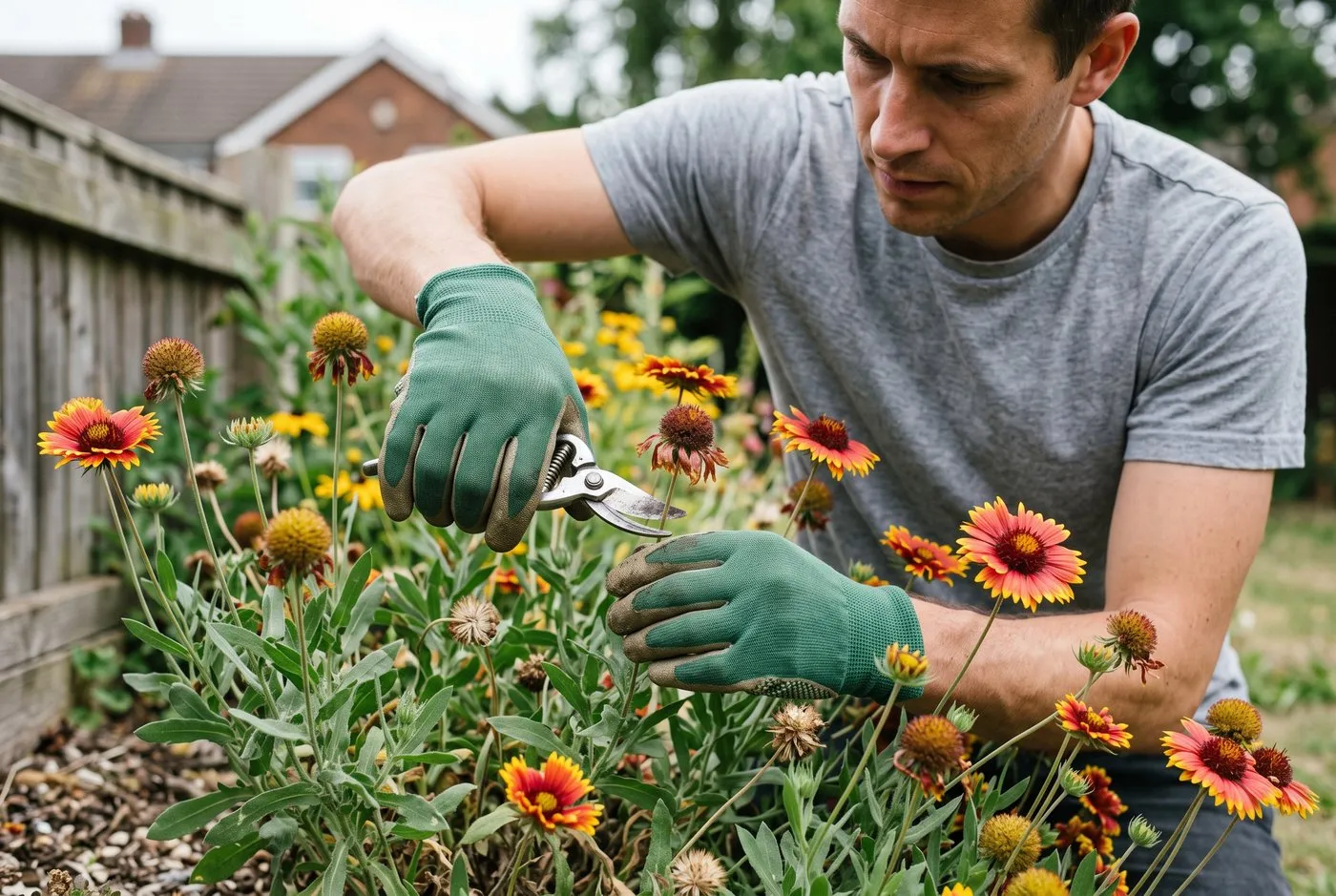 Deadheading is the single job that keeps blanket flower going. Snip each faded bloom back to the next bud every few days through summer.
Deadheading and the late-summer hard cut
Deadheading is the difference between a gaillardia that stops in August and one that flowers into November. Every faded bloom left on the plant sets seed, and seed-setting tells the plant its job is done. Remove the spent flowers and it keeps producing. Snip each dead head back to the next leaf or side bud every three or four days from June onwards. It takes two minutes on a small clump.
By August most plants look tired, with thin stems and fewer flowers. This is when the hard cut earns its keep. Shear the whole plant back to about 12cm, water it once, and within three weeks fresh basal growth pushes up. A second flush of flowers follows through September and October, often better than the first. We do this to every gaillardia in the garden in the second week of August.
The hard cut does more than restart the flowering. It also thins out the soft, exhausted top growth that would otherwise sit wet over the crown into autumn. That lowers the winter rot risk. For the general technique across the border, see our guide to deadheading flowers the right way.
Gardener’s tip: Do not deadhead the very last flowers of the year if you want the plant to self-seed. Leave a few heads on the toughest plant in late September. Gaillardia seed drops around the parent and germinates the next spring, giving you free replacements exactly where the drainage already suits it.
The yearly growth cycle and the mistake that shortens it
Understanding the plant’s yearly rhythm makes every care decision obvious. Gaillardia runs through four clear stages, and each one has a job that either lengthens or shortens the plant’s short life.
- Spring reshoot (March to April). New basal shoots push up from the crown as the soil warms past about 8C. This is the moment to divide or take cuttings, while the young growth is soft.
- Rapid growth (April to May). The rosette expands fast. Any feeding now produces the soft, floppy growth that kills the plant early. Feed nothing.
- Long flowering (June to October). Flowers open in succession for four to five months. Deadheading keeps this going; the August hard cut resets it for a second flush.
- Autumn dormancy (November to February). Top growth dies back. The crown must stay dry and well drained. This is when wet soil rots the plant.
The critical mistake most people make is cutting gaillardia to the ground in autumn and then mulching over the crown. That traps moisture exactly where the plant is most vulnerable. Leave a little dry top growth over winter as a natural cover, clear any soggy debris, and never pile wet mulch onto the crown. The table below shows how the seasons drive the care.
| Stage | Months | Soil condition | Key job |
|---|---|---|---|
| Spring reshoot | March to April | Warming, drying | Divide, take basal cuttings |
| Rapid growth | April to May | Moist, draining | No feed, thin if crowded |
| Long flowering | June to October | Dry, occasional water | Deadhead, hard cut in August |
| Dormancy | November to February | Must stay dry | Keep crown clear, no wet mulch |
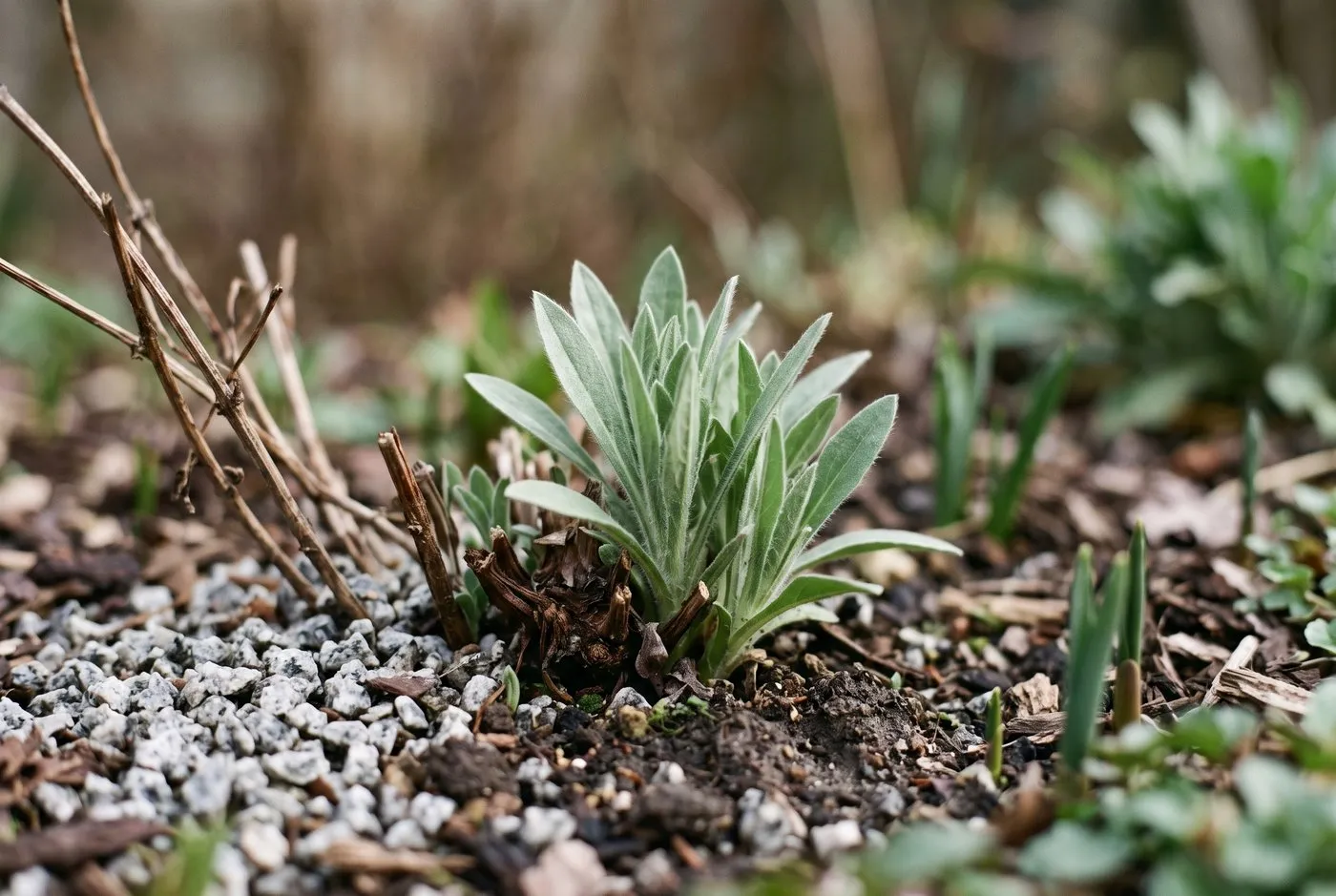 Fresh basal shoots in April are the sign to divide or take cuttings. Soft young growth at the crown roots far faster than older stems.
Month-by-month gaillardia calendar
| Month | Task |
|---|---|
| January | Fully dormant. Keep the crown dry and clear of soggy debris. Check plants have not lifted in frost. |
| February | Sow seed indoors at 18 to 21C in gritty seed compost. Order plug plants of named cultivars. |
| March | Prick out seedlings. Lift and divide established clumps as new shoots appear. Take basal cuttings. |
| April | Harden off young plants. Fork grit into planting beds. Do not feed. Watch for slugs on new shoots. |
| May | Plant out after frost, 30cm apart, crown level with the soil. Sow seed direct in warm gardens. |
| June | First flowers open. Begin deadheading every few days. Water new plants only in dry spells. |
| July | Peak flowering. Keep deadheading. Stake tall ‘Burgundy’ if it starts to lean. Cut for the vase. |
| August | Shear whole plants to 12cm for a fresh flush. Water once after cutting. Take semi-ripe cuttings. |
| September | Second flush of flowers. Reduce watering. Leave a few seed heads on the best plant to self-sow. |
| October | Flowering slows as frosts arrive. Collect ripe seed if wanted. Do not cut plants to the ground yet. |
| November | Growth dies back. Clear wet fallen leaves off the crown. Improve drainage around any soggy plants. |
| December | Dormant. Keep the crown dry and uncovered. Plan next year’s replacements from divisions or seed. |
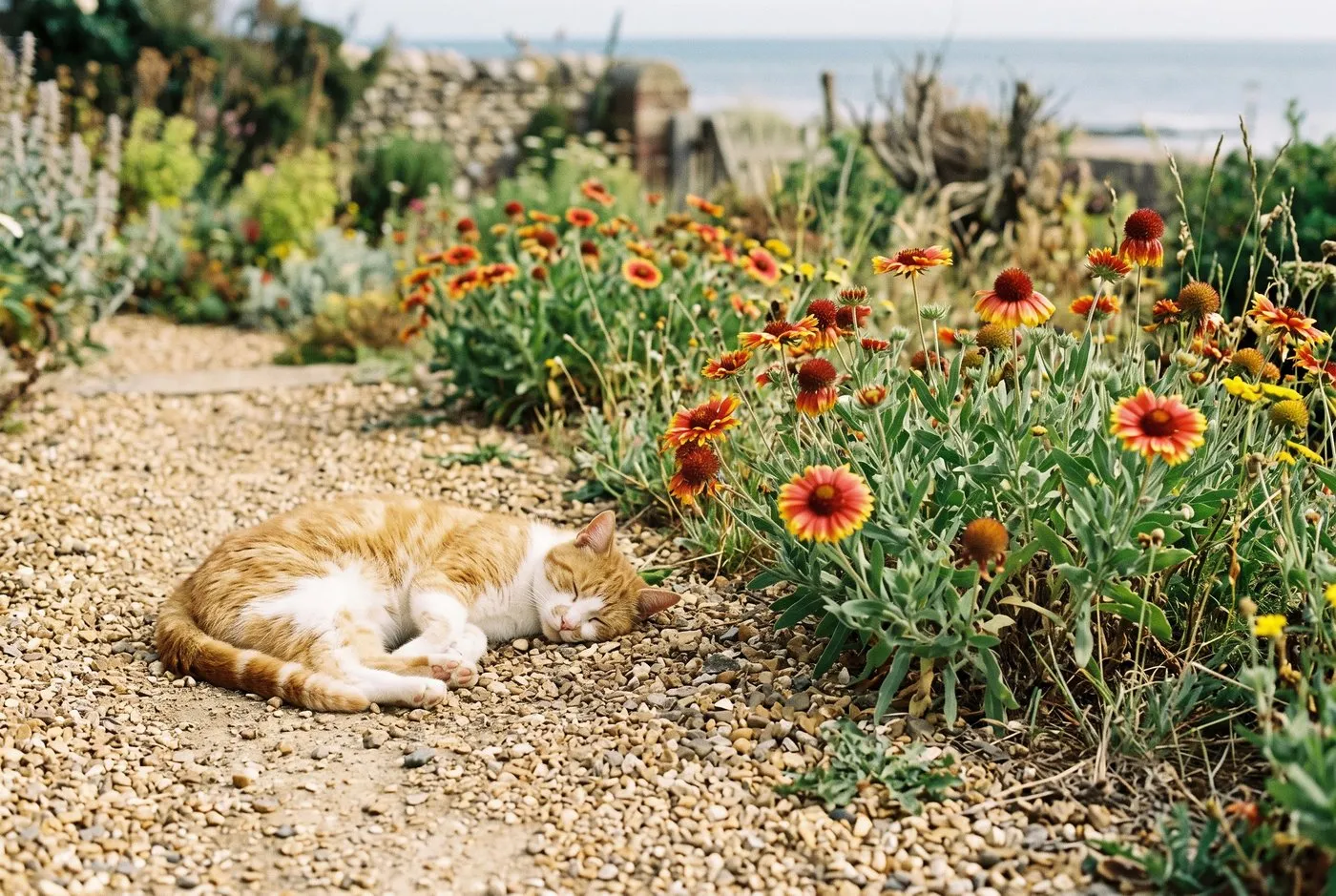 Blanket flower thrives in the same hot, dry gravel that a cat picks to sunbathe on. Sharp drainage suits both the plant and the afternoon nap.
Keeping gaillardia going by division and basal cuttings
Because gaillardia is short-lived, propagation is not optional. It is how you keep a patch alive. The two reliable methods are division and basal cuttings, both done in spring while the plant is in fresh growth.
Division is the quickest. In April, lift an established clump and pull or cut it into pieces, each with roots and two or three shoots. Replant the strongest pieces at once, 30cm apart, and discard the woody old centre. Divided pieces flower the same summer. Our guide to propagation by cuttings, division and layering covers the general technique.
Basal cuttings give more plants from less. In March or April, cut young shoots of about 8cm cleanly from the base of the crown, where they are firm but not yet hollow. Trim below a node, remove the lower leaves, and push them into gritty cutting compost in a propagator at around 18C. They root in three to four weeks. This is how we replace ageing gaillardia every year, so there is always a young plant ready before an old one dies.
You can also grow gaillardia from seed, sown indoors in February or March at 18 to 21C. Seed germinates in 15 to 20 days. Seed-raised ‘Arizona’ and ‘Mesa’ strains flower the first summer, which the named vegetative cultivars will not do. For more plants that repay a spring division habit, see our list of the best perennials for UK gardens.
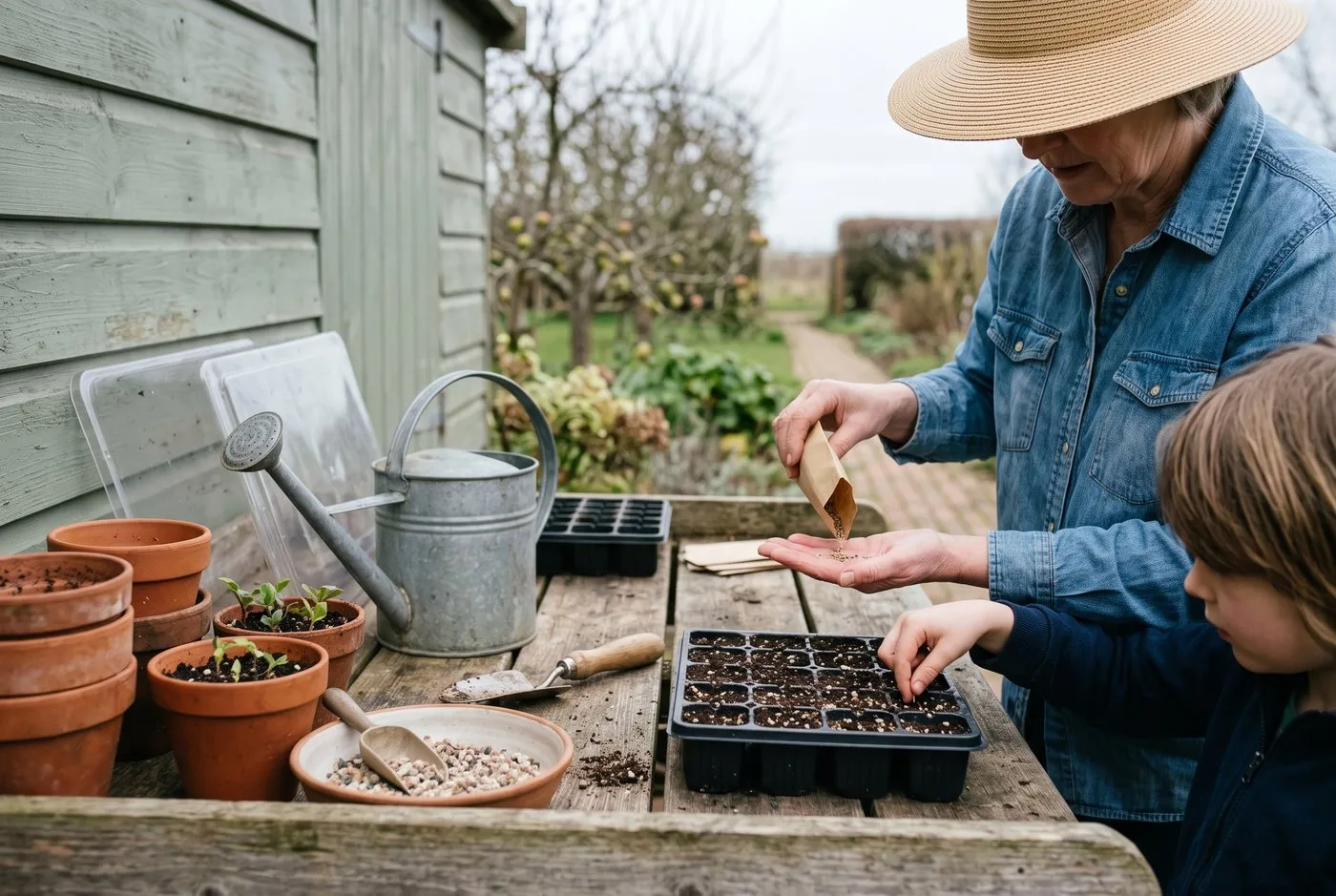 Sowing ‘Arizona’ seed in February. Seed strains flower the first summer, so a cheap packet fills a whole front border by June.
Where gaillardia works: gravel, coast and hot borders
The long flowering season makes it valuable for insects. The open, flat blooms give easy access to bees, hoverflies and butterflies, and because it flowers so late it feeds pollinators well into autumn. Late nectar matters for insects building reserves before winter, a point the Bumblebee Conservation Trust makes about the value of flowers that keep going past September.
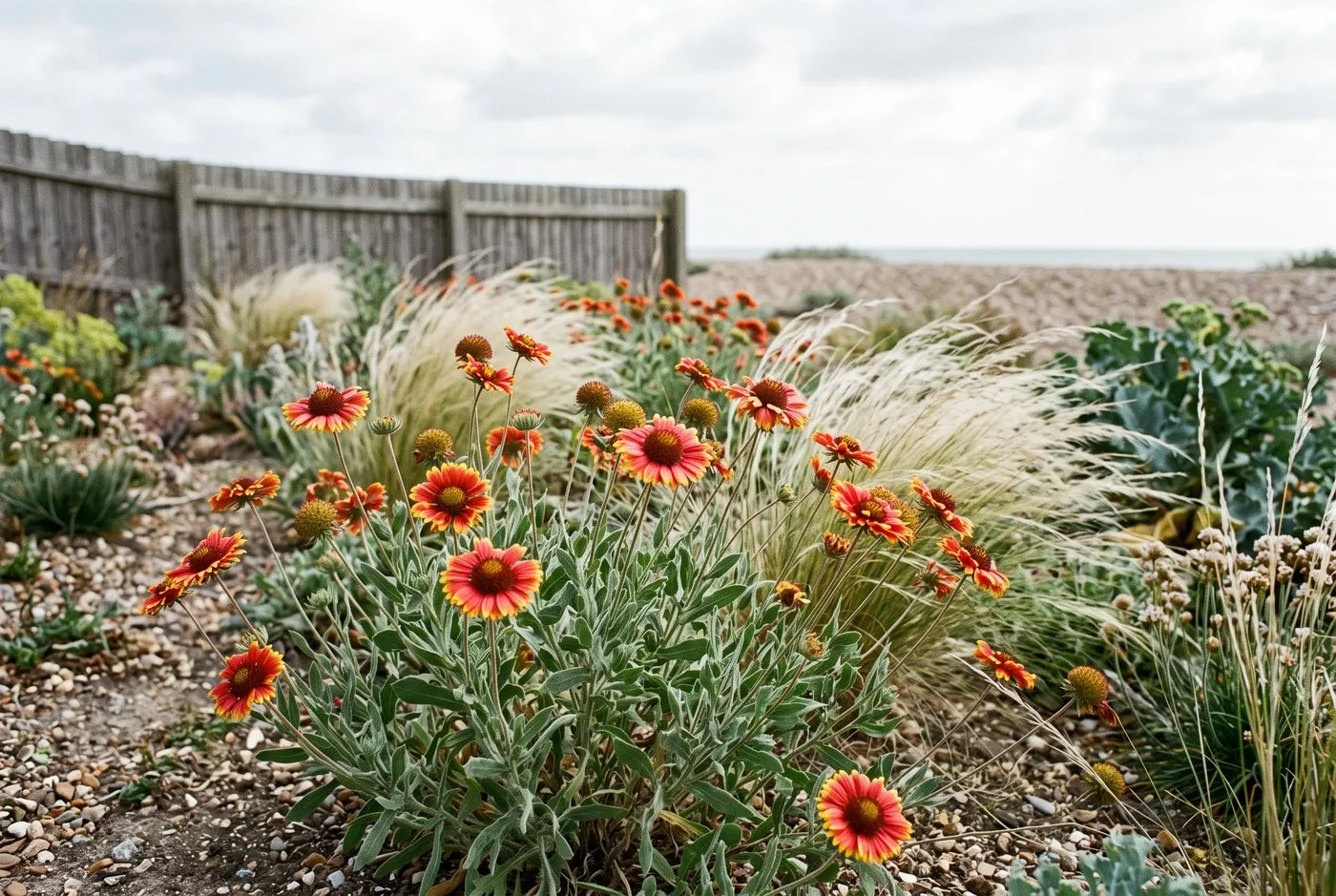 Blanket flower takes wind and salt in its stride where the drainage is sharp. Here it flowers among grasses in an exposed seaside border.
Common mistakes when growing gaillardia
- Feeding it. This is the classic gaillardia killer. Compost, manure and fertiliser produce soft, tall, floppy plants that die young. The plant wants poor, lean soil. Add grit for drainage, never food for growth.
- Wet winter soil. Cold rarely kills gaillardia; waterlogged ground does. The crown rots from November to March in still, soggy corners. Improve drainage, keep the crown clear of wet mulch, and grow it in a raised or gravel bed on clay.
- Not deadheading. Left to set seed, gaillardia slows and stops by late summer. Snip faded blooms every few days and cut the whole plant back in August. This is the difference between three months of flower and five.
- Planting in autumn. Young plants set out in September rarely survive their first winter. Plant in late spring instead, from May, so the roots establish through a full warm season before the wet arrives.
- Expecting it to last forever. No garden gaillardia is long-lived. Gardeners who never divide or sow watch their patch vanish. Take basal cuttings or divide every second spring so a young plant always replaces the old.
Warning: Slugs and snails strip the soft new basal shoots in a single damp spring night, and a chewed crown may not recover. The young growth is most vulnerable from March to May. Ring each crown with grit or wool pellets and check after every wet evening until the leaves toughen.
Now you know how to keep this long-flowering daisy going year after year, read our guide to drought-tolerant plants for UK gardens for partners that thrive in the same lean, sunny beds. You can also browse more of our growing guides for sun-loving plants to grow alongside it.
Frequently asked questions
How do you grow gaillardia in the UK?
Grow gaillardia in full sun with sharp drainage. Give it at least six hours of direct sun and a lean, gritty soil. Do not enrich the ground or feed it. Deadhead often through summer and cut plants back in late summer. On heavy clay, add plenty of grit or grow in a raised bed.
Is gaillardia a perennial or annual?
Gaillardia is a short-lived perennial, though many are grown as annuals. Gaillardia x grandiflora and G. aristata are perennial but often die after two or three years. Gaillardia pulchella is a true annual. Some seed strains flower in their first summer, so gardeners treat them as bedding.
Why does my gaillardia keep dying?
Most gaillardia dies from wet winter soil, not cold. The crown rots when it sits in cold, waterlogged ground from November to March. Rich soil and heavy feeding also shorten its life. Improve drainage with grit, stop feeding, and divide plants every second spring to keep a fresh stock going.
Should you deadhead gaillardia?
Yes, deadhead gaillardia regularly to keep it flowering into autumn. Snip each faded bloom back to the next leaf or bud every few days. This stops the plant setting seed and pushes it to keep producing. A hard cut to about 12cm in August triggers a fresh flush of flowers by September.
How hardy is gaillardia in the UK?
Gaillardia is fully hardy to about -15C in dry soil, roughly RHS H5. In practice it behaves as borderline on wet ground, closer to H3. The roots survive hard frost but rot in cold, waterlogged soil. Sharp drainage matters far more than temperature for winter survival in British gardens.
When do you plant gaillardia?
Plant gaillardia in late spring, from May, once the frosts have passed. Pot-grown plants go out from May to July. Sow seed indoors in February or March at 18 to 21C. Avoid autumn planting, as young plants rarely survive their first wet winter before the roots establish.
Does gaillardia come back every year?
Gaillardia returns for a few years but is not long-lived. Expect two or three good seasons before a plant weakens. Sharp drainage, no feeding and regular division extend this. Many gardeners let it self-seed or take basal cuttings each spring so there is always a young plant coming on to replace the old one.
Our team produces practical UK gardening guidance from source research, contributor records and established horticultural practice. Editorial standards are overseen by Matt W.