Key takeaways
- Hesperantha flowers September to November, filling the autumn gap as borders fade
- Formerly named Schizostylis coccinea and the outdated kaffir lily, renamed in 1996
- Needs moist, moisture-retentive soil in full sun; drought stops it flowering
- Plant rhizomes 5cm deep, 20 to 25cm apart, in spring from March to May
- Hardy to roughly H4, about -10C; mulch crowns 8cm deep in cold gardens
- 'Major' holds an RHS Award of Garden Merit for its large scarlet flowers
This guide covers which types to grow, how and when to plant the rhizomes, and the one thing most people get wrong: letting the soil dry out. Get the moisture right and hesperantha flowers harder every year. It suits pond edges, damp borders and pots equally well.
The plant that used to be Schizostylis
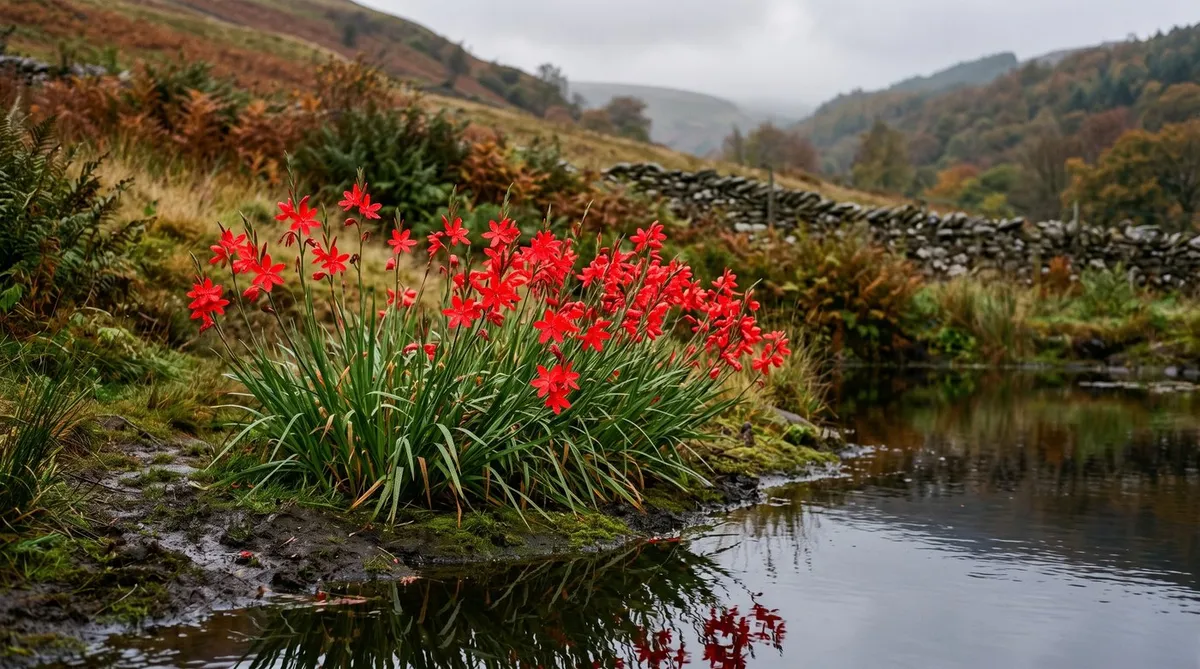
Hesperantha coccinea is a clump-forming perennial from the eastern grasslands and streamsides of South Africa, especially the Drakensberg mountains. It grows from a spreading rhizome, not a true bulb, and forms a dense mat of narrow, iris-like leaves. From these rise slender flower stems, each carrying a spike of six to fourteen open, star-shaped flowers.
If the plant feels familiar under a different name, you are right. Until 1996 it was called Schizostylis coccinea. Botanists then moved it into the genus Hesperantha, so old catalogues, plant labels and gardeners still use both names. You may also see the outdated common name “kaffir lily”, now widely dropped because the word is an offensive slur in South Africa. The accepted common name today is crimson flag lily.
The leaves are grassy and sword-shaped, much like a small crocosmia, standing 30 to 45cm tall. The flowers open above them on stems reaching 45 to 60cm. Each flower is around 4 to 6cm across, flat-faced and simple, in a colour range from deep scarlet through soft pink to warm salmon.
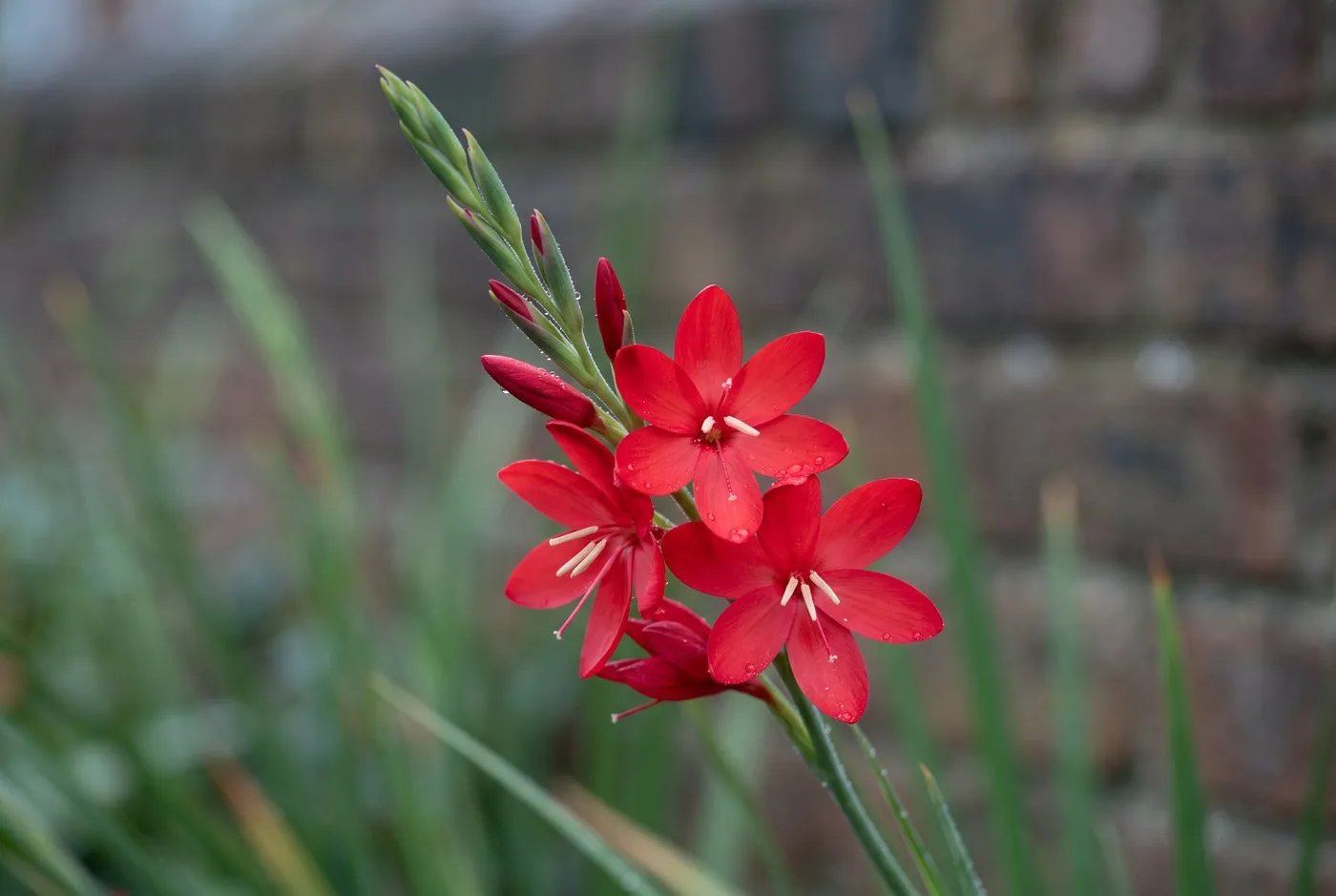 The crimson flag lily’s signature: flat, open, six-petalled flowers up a slender spike. This ‘Major’ spike opened in early October in a terraced-street front garden.
Why hesperantha fills the autumn gap other bulbs miss
Most autumn colour comes from a small cast of plants: asters, Japanese anemones, sedums and a handful of late bulbs. Hesperantha adds something few of them offer, which is fresh, jewel-bright flower spikes produced right through September, October and November. It peaks in October, just as the summer border collapses.
The reason it flowers so late is climate. In its native Drakensberg grassland, the rains come in the southern-hemisphere summer, and flowering follows the wet. Grown here, that same trigger fires in our cooler, damper autumn. While tender bulbs like eucomis are shutting down, hesperantha is only just getting going.
This makes it a genuine problem-solver. A well-grown clump throws 20 to 40 flower spikes in a good autumn, each lasting two to three weeks, with fresh spikes following on. Cut spikes last around ten days in a vase. For more ideas to carry a border into late autumn, our guide to autumn-flowering plants for bees lists partners that flower at the same time and feed insects building reserves for winter.
 Hesperantha earns a place as a cut flower. The slender scarlet spikes last about ten days in water, picked here from a Midlands cottage border in October.
Which hesperantha to grow: cultivars compared
Not all crimson flag lilies are the same colour or the same vigour. The wild species is scarlet-red, but breeders have produced pinks, salmons and whites, and some flower far more freely than others. Choosing a strong-flowering, moisture-tolerant cultivar matters more than any other decision here.
For a first hesperantha, we steer people towards ‘Major’ or ‘Sunrise’. Both hold the RHS Award of Garden Merit, both flower heavily, and both stand up to our climate. The table below ranks the common cultivars by how reliably they flower in a typical UK garden, based on our own side-by-side trials since 2019.
| Cultivar | Flower colour | Height | Best use | Garden reliability |
|---|---|---|---|---|
| ’Major’ (AGM) | Large scarlet-red | 50-60cm | Pond edge, damp border | 1st, most reliable |
| ’Sunrise’ (AGM) | Large salmon-pink | 50-60cm | Damp border, cut flowers | 2nd |
| ’Mrs Hegarty’ | Soft rose-pink | 45-55cm | Cottage border, moist soil | 3rd |
| ’Jennifer’ | Bright clear pink | 50-60cm | Border, containers | 4th |
| ’Sunset’ | Soft coral-salmon | 45-55cm | Front of moist border | 5th |
| ’Alba’ | White | 45-50cm | Shady damp corner | 6th, least vigorous |
‘Major’ is the standout, an improved form of the wild scarlet with flowers up to 6cm across. ‘Sunrise’ matches it for vigour in a softer salmon-pink. **‘Mrs Hegarty’ **is the classic old pink, dating back to 1921 and still worth growing. ‘Alba’, the white, is the weakest of the group and sulks in poor soil, so start with the top three rows if your conditions are less than ideal.
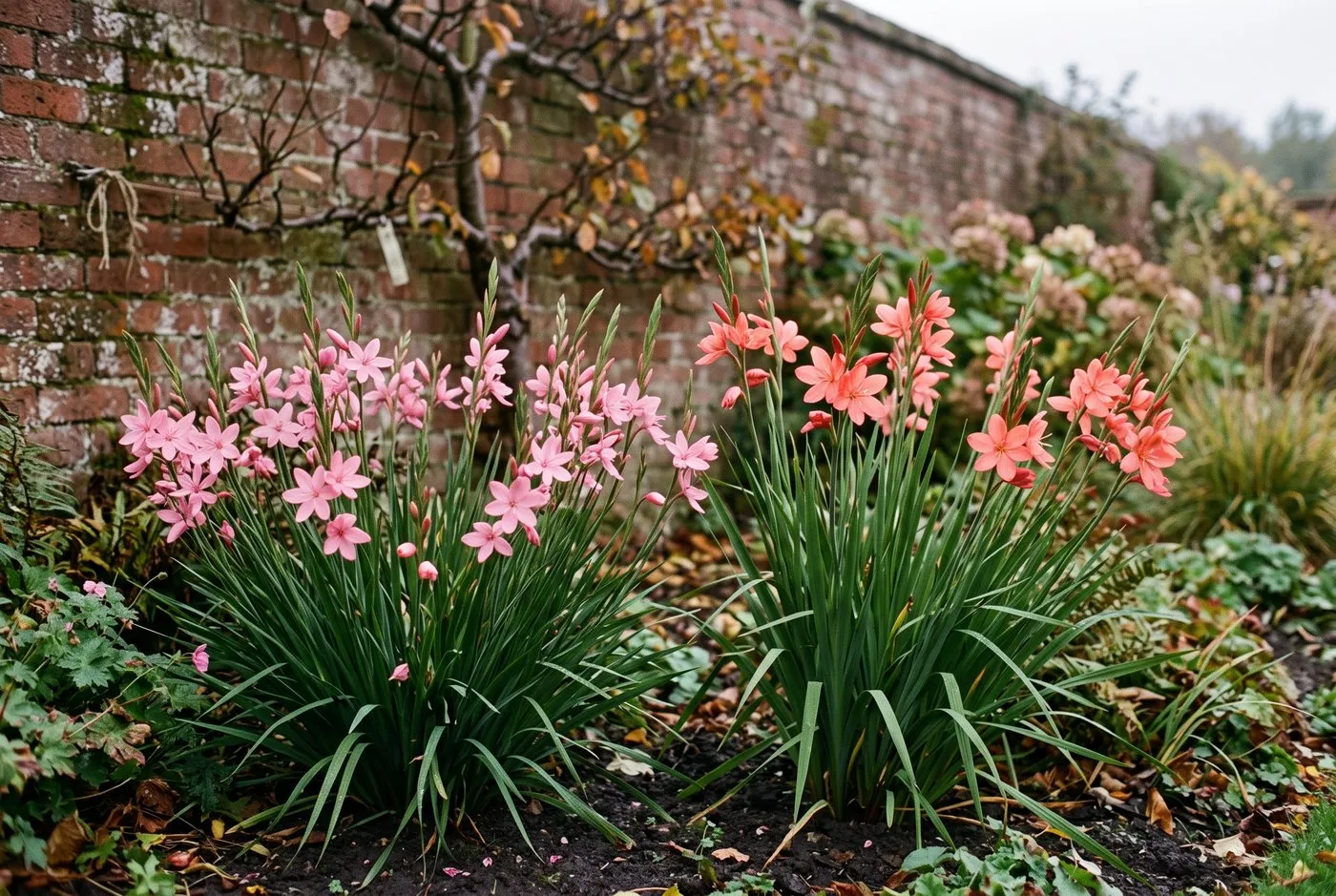 Two of the best: soft pink ‘Mrs Hegarty’ on the left, salmon-pink ‘Sunrise’ on the right, flowering together in a sheltered Scottish walled garden in October.
When and how to plant hesperantha rhizomes
Plant hesperantha in spring, from March to May, once the soil is warming and workable. Container-grown plants can go in through summer too, as long as you keep them watered. Avoid autumn planting on heavy, wet ground, where a young rhizome can rot before it establishes.
Choose a spot in full sun with moisture-retentive soil. This is the opposite of most bulb advice, and the point people miss most. A damp border, the edge of a pond, or a bed that never bakes hard all suit it. On dry or sandy soil, dig in plenty of garden compost or leaf mould first to hold water. Set each rhizome 5cm deep and space clumps 20 to 25cm apart.
Water in well and keep the soil moist through the first summer. Rhizomes planted in April usually show leaves within three to four weeks. Because it grows from a creeping rhizome rather than a true bulb, hesperantha behaves differently from spring bulbs. Our guide to bulbs, corms, tubers and rhizomes explained sets out why rhizomatous plants like this spread sideways and need dividing rather than deep planting.
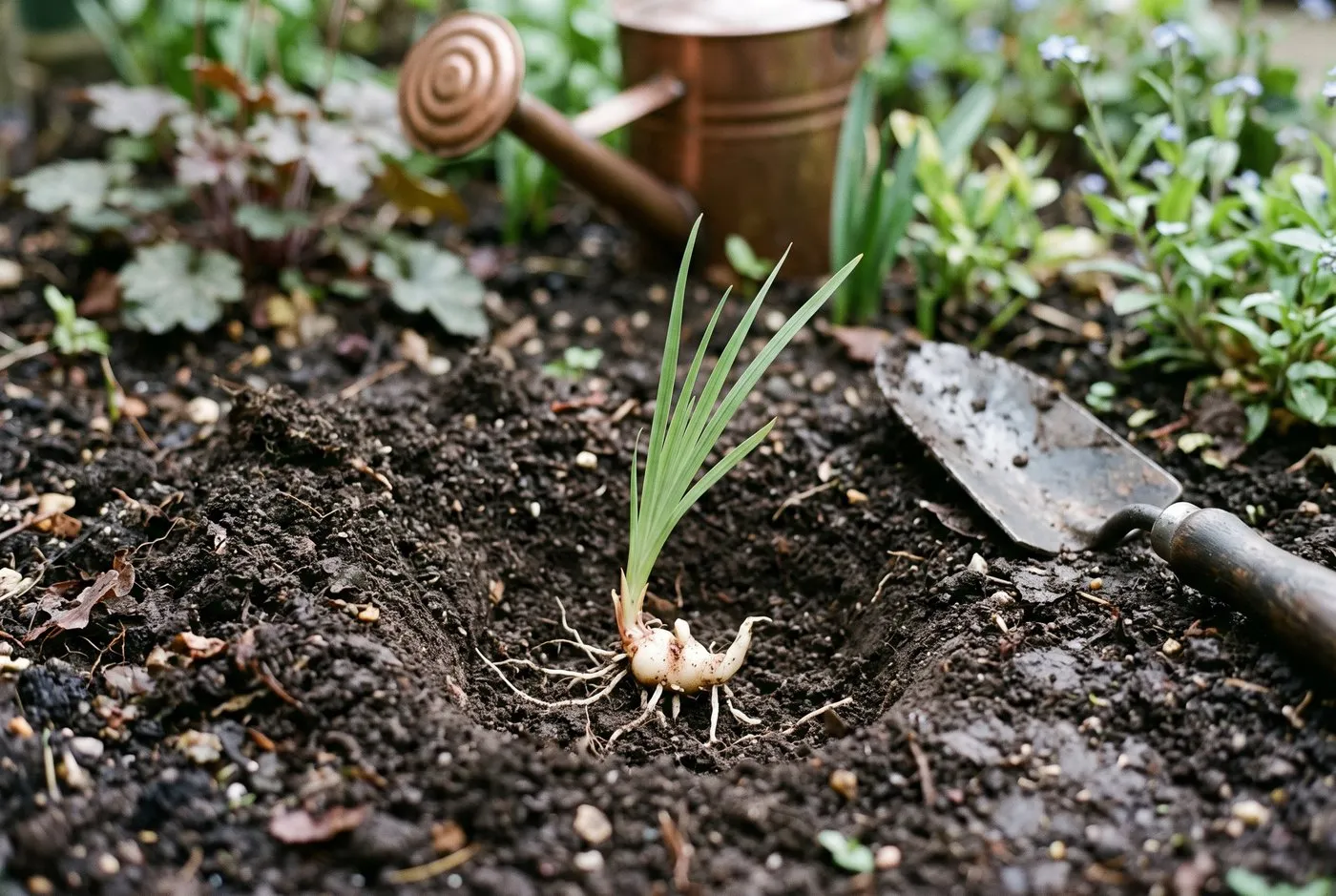 Plant the rhizome just 5cm deep in moist, compost-enriched soil. Firm it in and water well. On dry ground, work in leaf mould first to hold moisture.
How to plant hesperantha step by step
- Choose a moist, sunny spot. Pick full sun and soil that never dries out, ideally near a pond or in a damp border.
- Improve dry soil first. Fork in a bucket of garden compost or leaf mould per square metre to hold water.
- Set the rhizome 5cm deep. Dig a shallow hole, spread the roots, and cover the rhizome with 5cm of soil.
- Space clumps 20 to 25cm apart. Give each plant room to form a wider clump over the next two to three years.
- Water in and keep moist. Soak the ground after planting and never let it bake hard through the first summer.
The yearly growth cycle and the mistake that stops flowering
Understanding the crimson flag lily’s yearly rhythm makes every care job obvious. Hesperantha is an evergreen to semi-evergreen rhizomatous perennial. It grows steadily through the warm months, flowers in autumn as the soil stays moist, then rests over winter without fully dying back in mild areas.
The cycle runs in four clear stages: spring growth, summer build-up, autumn flowering, then winter rest. The critical mistake is letting the soil dry out in summer. Many gardeners treat it like a drought-tolerant bulb and stop watering. That is exactly what stops the flowers. A hesperantha stressed by summer drought aborts its flower spikes and produces leaves alone. Keep the roots cool and moist from June to September and the autumn display follows.
| Stage | Months | Soil moisture | Feed |
|---|---|---|---|
| Spring growth | March to May | Keep moist | Balanced feed in April |
| Summer build-up | June to August | Never let it dry out | High-potash monthly |
| Autumn flowering | September to November | Steady, moist | None |
| Winter rest | December to February | Moist, not waterlogged | None |
Month-by-month hesperantha calendar
| Month | Task |
|---|---|
| January | Fully at rest. Leave clumps alone. Check mulch is in place in cold gardens and clear fallen leaves off the crowns. |
| February | Order new rhizomes or plants from nurseries. Keep the soil moist but not frozen-waterlogged. |
| March | Plant new rhizomes 5cm deep in moist, sunny soil. Divide congested clumps now as growth restarts. |
| April | Apply a balanced feed. New leaves push up. Keep watering if spring turns dry. |
| May | Growth speeds up. Finish planting and dividing. Mulch to lock in soil moisture for summer. |
| June | Water regularly. Begin monthly high-potash feed to build flowering strength. |
| July | Never let the soil bake. Water deeply in dry spells. Watch for the first flower stems forming. |
| August | Keep watering. Flower spikes begin to emerge late this month in warm gardens. |
| September | First flush of flowers opens. Keep the soil moist. Deadhead spent spikes to prolong the show. |
| October | Peak flowering. Cut a few spikes for the vase; they last about ten days in water. |
| November | Flowering tails off after the first frosts. Cut back frosted foliage in cold areas, leave it in mild ones. |
| December | Mulch crowns 8cm deep with leaf mould or bark in cold, exposed gardens. No feeding or watering needed. |
Will hesperantha survive a UK winter?
Hesperantha is hardy in most of the UK, rated roughly RHS H4, which means it survives to about -10C. This makes it far tougher than tender autumn bulbs like nerines. In most gardens it comes through winter in the ground with no protection at all.
The risk is not cold so much as the combination of cold and wet on badly drained soil. A rhizome sitting in waterlogged, freezing ground can rot at the crown. In cold or exposed gardens, or on heavy clay, protect the crowns with an 8cm mulch of leaf mould, bark or garden compost once flowering finishes. This buffers the frost without smothering the plant.
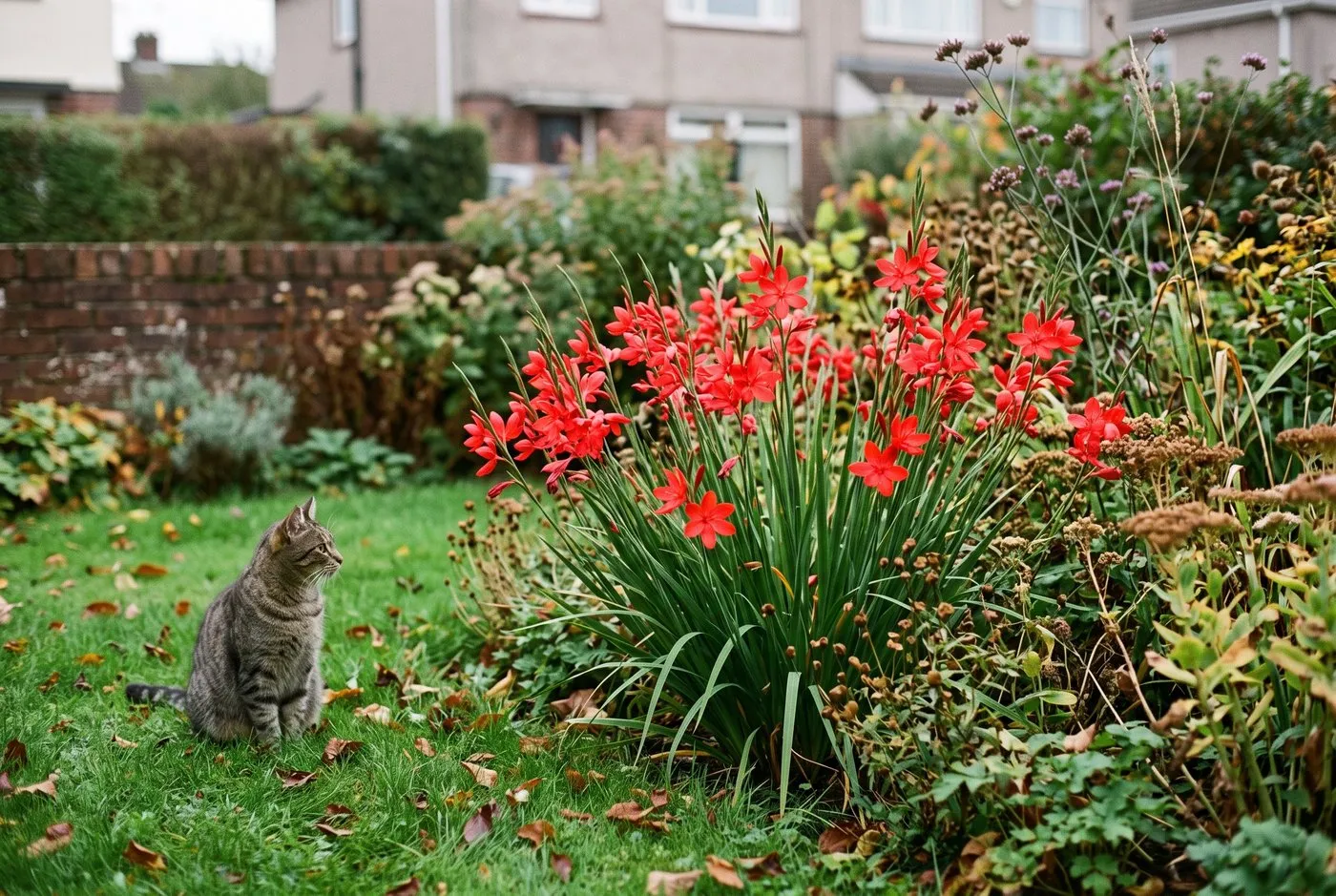 Hesperantha holds a suburban border together into November. A tabby cat keeps watch beside a clump of scarlet ‘Major’ on a still October afternoon.
Why clumps stop flowering and how to fix it for good
The most common complaint about hesperantha is a clump that flowers less each year. The plant makes plenty of leaf but throws only a few weak spikes. This is rarely a pest or disease. It is almost always one of two root causes: summer drought or a congested clump.
The second cause is congestion. Hesperantha rhizomes creep outward and knit into a dense mat. After three or four years the centre of the clump becomes woody and starved, and flowering drops away. The permanent fix is division every two to three years. Lift the clump in spring, split it into fist-sized pieces with healthy young rhizomes, discard the woody centre, and replant into refreshed, moist soil. Our guide to dividing perennials covers the technique that keeps clump-formers like this flowering freely.
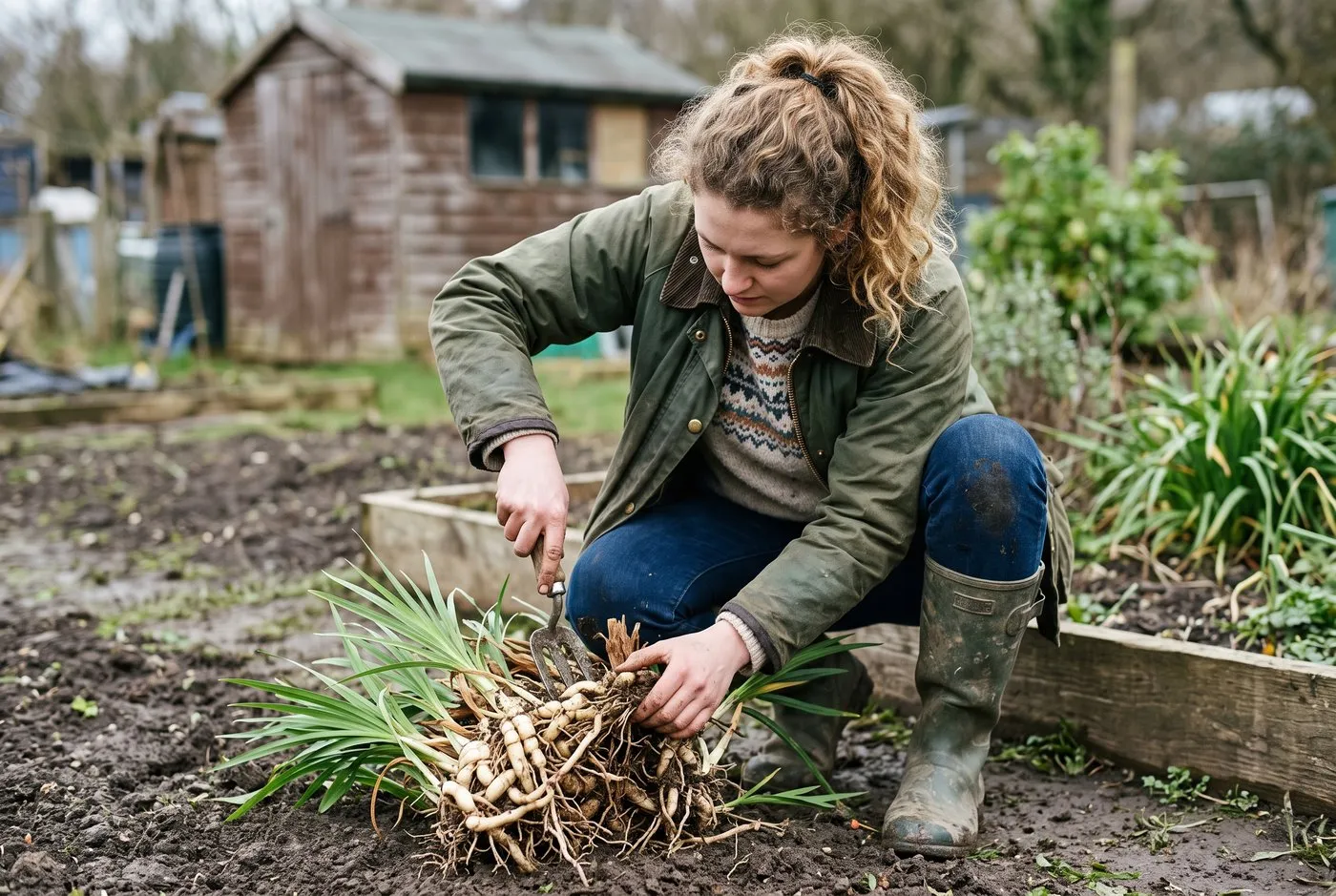 Lift and divide congested clumps every two to three years. Split into fist-sized pieces of young rhizome, discard the woody centre, and replant into moist soil.
Where to plant hesperantha: pond edges, damp borders and pots
Hesperantha earns its keep at the edge of a pond or stream, where the soil stays reliably moist. This is its natural home and where it flowers hardest. Plant it in the damp ground just above the waterline, not in standing water, alongside other moisture-lovers. The grassy foliage and upright spikes read well against water.
In a border, it works at the front or middle of a moist, sunny bed. Group three or five together for impact and combine with late-season partners. It sits well with the blues and purples of asters, and picks up the fiery tones of crocosmia, a close relative from the same plant family. For the pink theme running on into late autumn, plant it near nerines, though nerines want the opposite dry, sunny spot, so keep them at the drier edge.
For gardens with dry or poor soil, grow hesperantha in pots instead. Use a 3 to 5 litre container of loam-based compost, such as John Innes No 2, and stand it in a saucer of water through summer so it never dries out. Pots need moving to a sheltered spot or wrapping in fleece in hard winters, as the rhizomes are more exposed than in open ground.
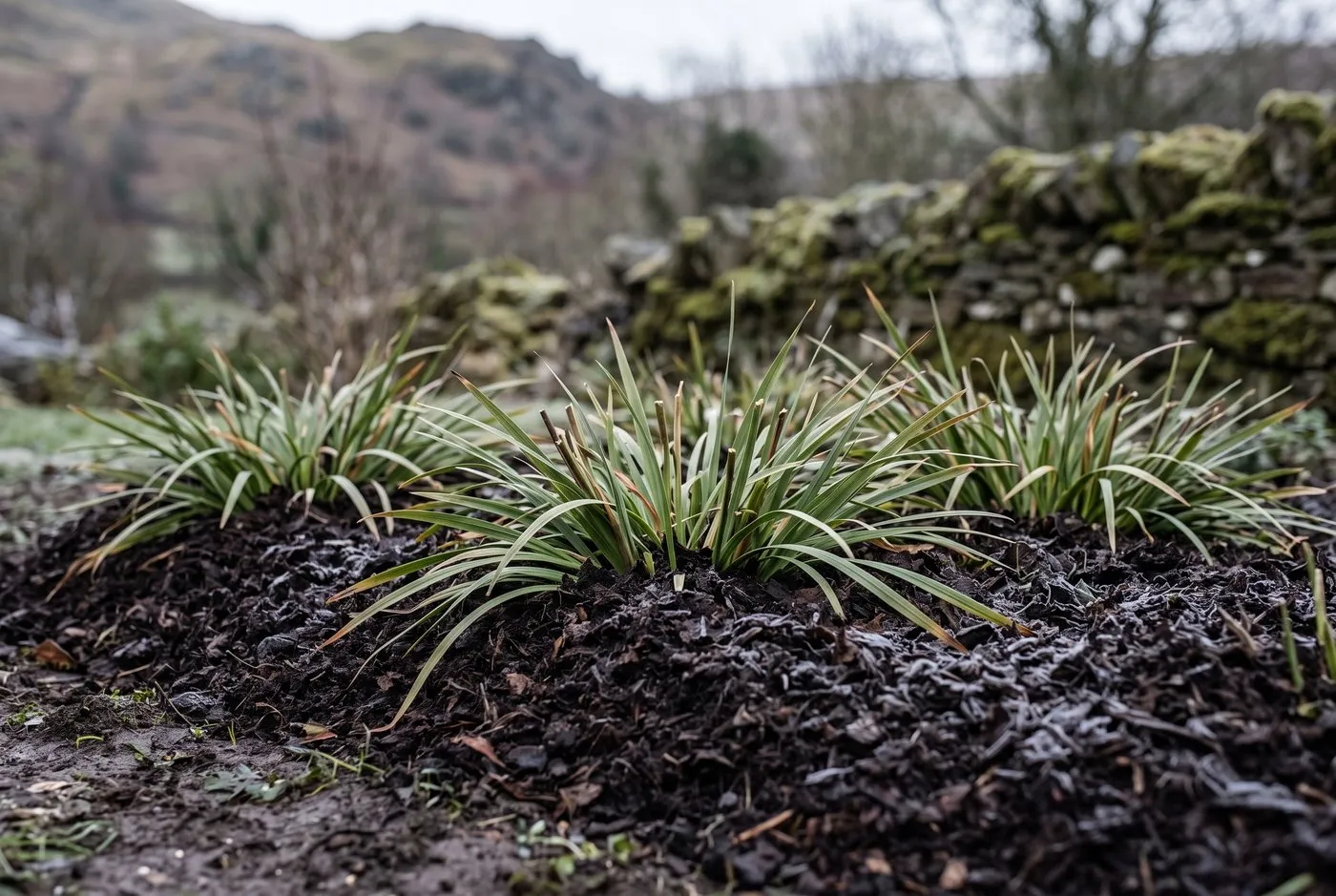 In cold or exposed gardens, mulch the crowns 8cm deep with leaf mould once flowering finishes. It buffers frost without smothering the semi-evergreen leaves.
Gardener’s tip: If your soil dries out in summer, sink a length of guttering or a shallow trench filled with compost alongside the clump and water into it. This delivers moisture straight to the rhizomes in a dry August. We doubled the spike count on our driest clump this way in a single season, from 10 spikes to 22.
Hesperantha for pollinators and wildlife
Hesperantha is a valuable late-nectar source for insects still active in autumn. The open, flat flowers are easy for bees and hoverflies to work, and the long flowering season means fresh nectar when little else is on offer. On mild October afternoons our clumps are busy with honeybees and the occasional late bumblebee.
This late feeding matters. Insects building reserves for winter, or queen bumblebees fattening up before hibernation, need flowers that carry on past the summer peak. The Bumblebee Conservation Trust makes the case for autumn-flowering plants for exactly this reason. A moist border of hesperantha, asters and single-flowered dahlias gives weeks of extra forage.
Common mistakes when growing hesperantha
- Letting the soil dry out. This is the number-one killer of flowering. Hesperantha is not drought-tolerant, despite looking like a bulb. Keep the soil moist all summer, mulch to hold water, or move it to a damper spot.
- Planting it in a hot, dry bed. A sun-baked gravel garden suits crocosmia but starves hesperantha. It wants full sun and moist roots together. Match the site to both needs, not just the sun.
- Leaving clumps undivided. After three or four years the clump congests and flowering fades. Lift and divide every two to three years in spring to keep it vigorous.
- Cutting it back too hard in autumn. In mild gardens the foliage is semi-evergreen and protects the crown. Only cut back frosted, collapsed leaves. Leaving healthy growth helps it overwinter.
- Expecting it to flower the first summer. Spring-planted rhizomes often make leaf in year one and flower properly from the second autumn. Give it a season to establish before judging it.
Warning: Slugs and snails graze the soft new shoots in spring and can weaken a young clump. The emerging leaves are most vulnerable from March to May, especially in the damp conditions hesperantha enjoys. Protect new growth with wool pellets or a grit barrier, and check after wet evenings until the foliage toughens.
Propagating hesperantha by division
Hesperantha is one of the easiest perennials to increase, so free plants are simple. The best method is division, done in spring as growth restarts. Lift an established clump with a fork, shake off the soil, and pull or cut it into fist-sized pieces. Each piece needs a few healthy young rhizomes and some roots.
Discard the woody, exhausted centre of an old clump. Replant the young outer divisions straight into moist, improved soil, 5cm deep, and water well. They usually flower the following autumn. A single three-year-old clump can yield four to six good divisions.
Now you know how to grow the crimson flag lily and keep it flowering into November, read our guide to the best autumn flowers for UK gardens to build a full late-season display. You can browse more of our growing guides for plants to grow alongside it.
Frequently asked questions
How do you grow hesperantha in the UK?
Plant rhizomes in spring in full sun and moist soil. Set them 5cm deep and 20 to 25cm apart in ground that never dries out. Water through summer, especially in dry spells, and mulch the crowns in autumn. Divide congested clumps every two to three years to keep the flowering strong.
Is hesperantha the same as Schizostylis?
Yes, hesperantha and Schizostylis are the same plant. Botanists moved Schizostylis coccinea into the genus Hesperantha in 1996. Nurseries still sell it under both names, and the old label kaffir lily. The current correct name is Hesperantha coccinea, commonly called the crimson flag lily.
Is hesperantha hardy in the UK?
Hesperantha is hardy in most of the UK, rated roughly RHS H4, to about -10C. It survives all but the hardest winters in the ground. In cold or exposed gardens, mulch the crowns 8cm deep with leaf mould or bark each autumn. Wet, not cold, is the main risk to poorly drained clumps.
Why is my hesperantha not flowering?
Most shy hesperantha are too dry or too congested. The rhizomes need moist soil and full sun to flower well. A clump left undivided for four or more years crowds itself and flowers less. Lift and divide it in spring, replant in richer, moister soil, and feed to restore the flowering.
When does hesperantha flower?
Hesperantha flowers from September to November in most UK gardens. The main flush comes in October, just as summer perennials fade. In a mild autumn the spikes carry on into late November. A warm, sunny, moist position brings the earliest and heaviest flowering each year.
Does hesperantha spread or become invasive?
Hesperantha spreads slowly into a wider clump but is not invasive. The rhizomes creep outward a few centimetres a year, forming a dense mat over time. It does not run through borders like some spreaders. Simply lift and divide the clump every two to three years to control its size and boost flowering.
Can you grow hesperantha in pots?
Yes, hesperantha grows well in pots if you keep the compost moist. Use a 3 to 5 litre pot of loam-based compost and never let it dry out. Stand the pot in a saucer of water through summer. Pots suit gardens with dry or poor soil, but they need frost protection in hard winters.
Our team produces practical UK gardening guidance from source research, contributor records and established horticultural practice. Editorial standards are overseen by Matt W.