Key takeaways
- Leucojum are snowflakes, not snowdrops: six equal green-tipped petals per bell, taller stems, and several nodding flowers per stem
- Two garden species: spring snowflake L. vernum (15-20cm, Feb-March, shade) and summer snowflake L. aestivum (60-90cm, April-May, damp)
- Unlike most bulbs, leucojum thrive in damp, heavy or boggy soil and at pond margins where snowdrops rot
- Plant dry bulbs 8-10cm deep in autumn, or move them 'in the green' like snowdrops for far better establishment
- Divide congested clumps in the green after flowering, roughly every 4-5 years, to keep them flowering freely
- Near pest-free and a nectar source for early bees; narcissus bulb fly is the only occasional problem
The confusion is understandable. The flowers are white, nodding and bell-shaped, and they open at roughly the same season. Look closely, though, and the two are easy to tell apart. Learn the difference once and you will never mix them up again. You will also discover a bulb that does something snowdrops cannot: it thrives in wet ground.
Leucojum or Galanthus? The snowdrop that isn’t
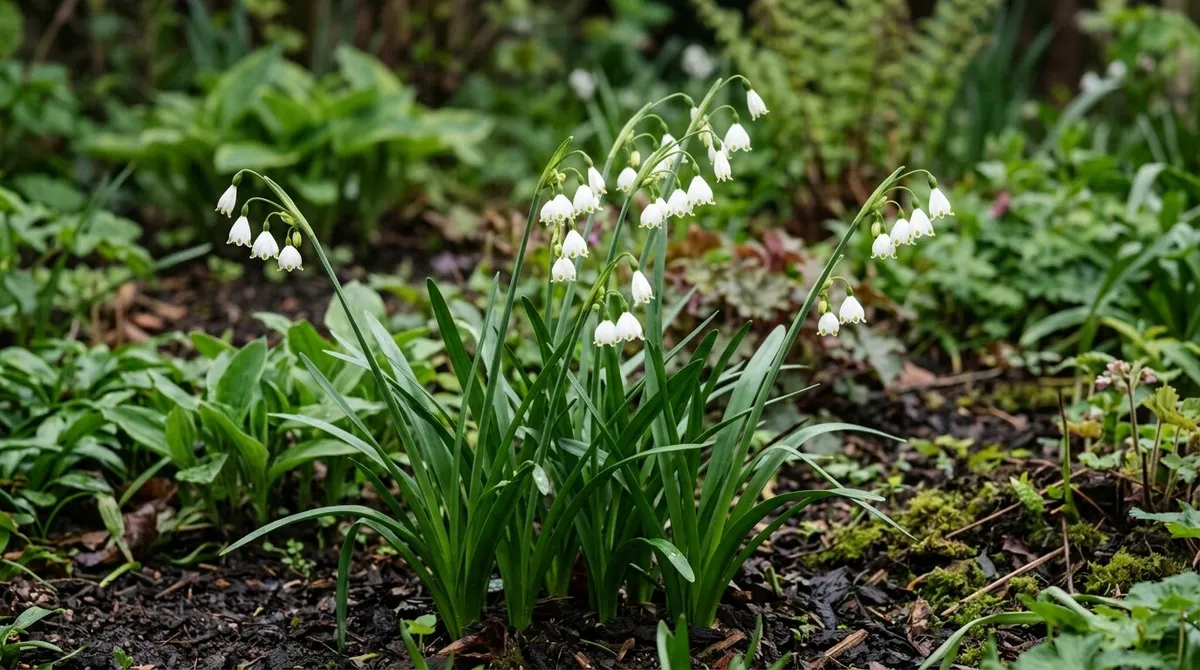
The quickest way to tell a snowflake from a snowdrop is to count the petals. A leucojum (snowflake) bell has six equal petals, each tipped with a small green or yellow spot. A snowdrop (Galanthus) has three long outer petals and three short inner ones marked with green, so the flower looks lopsided by comparison.
There are more differences once you know to look. Snowflakes carry several bells hanging from one taller stem. Snowdrops give a single flower per stem. Snowflakes stand taller, with the summer species reaching 60-90cm against a snowdrop’s 10-15cm. And the flowering season shifts: snowdrops open first, from January, while snowflakes follow, from February into May depending on the species.
If you want the full picture on the plant snowflakes are forever compared to, our guide to growing snowdrops covers Galanthus from planting to twin-scaling. Read the two together and the botany clicks into place.
Leucojum vs Galanthus at a glance
| Feature | Leucojum (snowflake) | Galanthus (snowdrop) |
|---|---|---|
| Petals | Six equal, each tipped green (or yellow) | Three long outer, three short green-marked inner |
| Flowers per stem | Several nodding bells | Usually one |
| Height | 15-20cm (spring) to 60-90cm (summer) | 10-15cm |
| Main flowering | February to May, by species | January to March |
| Preferred soil | Damp, heavy, even boggy | Moist but free-draining; rots if waterlogged |
| Best use | Pond margins, damp grass, wet borders | Woodland, borders, drifts under trees |
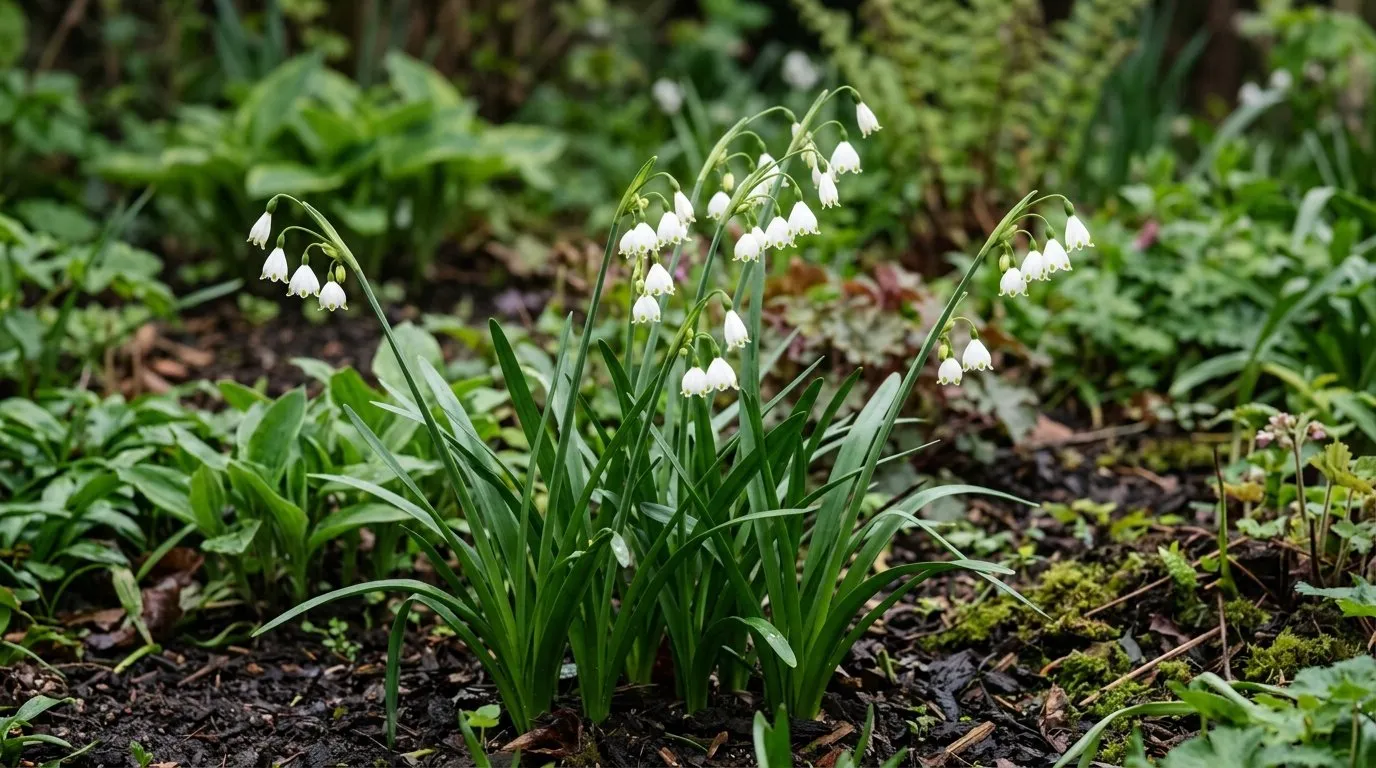 Summer snowflake ‘Gravetye Giant’ in a damp border. Tall stems, several nodding bells each, every petal tipped with green.
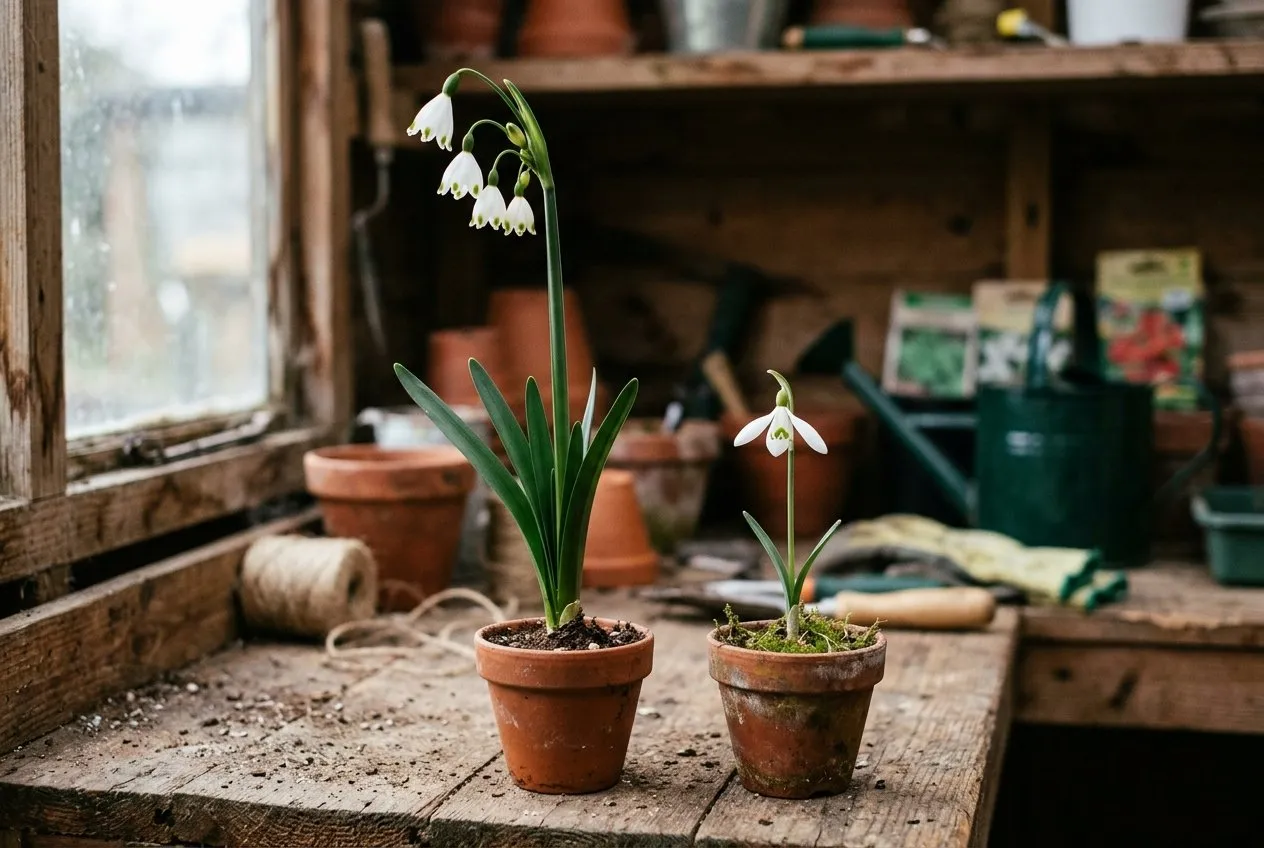 Snowflake on the left, snowdrop on the right. Count the petals: six equal and green-tipped on the leucojum, three long and three short on the snowdrop.
Spring snowflake vs summer snowflake: the two garden species
Two species of leucojum matter for UK gardens, and they behave very differently. Spring snowflake is small and early. Summer snowflake is tall and later. Get the two clear in your head before you buy, because they suit different spots.
Spring snowflake, Leucojum vernum, reaches 15-20cm. It flowers February to March, often alongside the last snowdrops. Each short stem usually carries one plump bell, sometimes two, with fresh green strap leaves around it. It comes from damp central European woodland, so it wants a cool, humus-rich, shaded spot that never bakes dry. Think of it as a woodland edge plant rather than a border bulb.
Summer snowflake, Leucojum aestivum, is the tall one people mistake for a giant snowdrop. The species reaches 45-60cm, and the popular cultivar ‘Gravetye Giant’ pushes to 90cm in good ground. It flowers April to May, with up to eight nodding bells on each leafless stem, every petal tipped green. This is the species for damp borders, pond margins and rough grass. It is far more forgiving than its dainty spring cousin.
There is a colour variation worth knowing. In Leucojum vernum var. carpaticum, and in some forms of L. aestivum, the petal tips are yellow rather than green. ‘Gravetye Giant’ holds the green-tipped look and carries an RHS Award of Garden Merit, so it is the safe first choice.
The two species compared
| Feature | Spring snowflake (L. vernum) | Summer snowflake (L. aestivum) |
|---|---|---|
| Height | 15-20cm | 45-90cm (‘Gravetye Giant’ tallest) |
| Flowering | February to March | April to May |
| Bells per stem | 1, sometimes 2 | Up to 8 |
| Best position | Damp woodland shade | Damp border, pond margin, grass |
| Ease | Fussier, wants cool shade | Easy, vigorous, naturalises freely |
| Petal tips | Green, or yellow in var. carpaticum | Green |
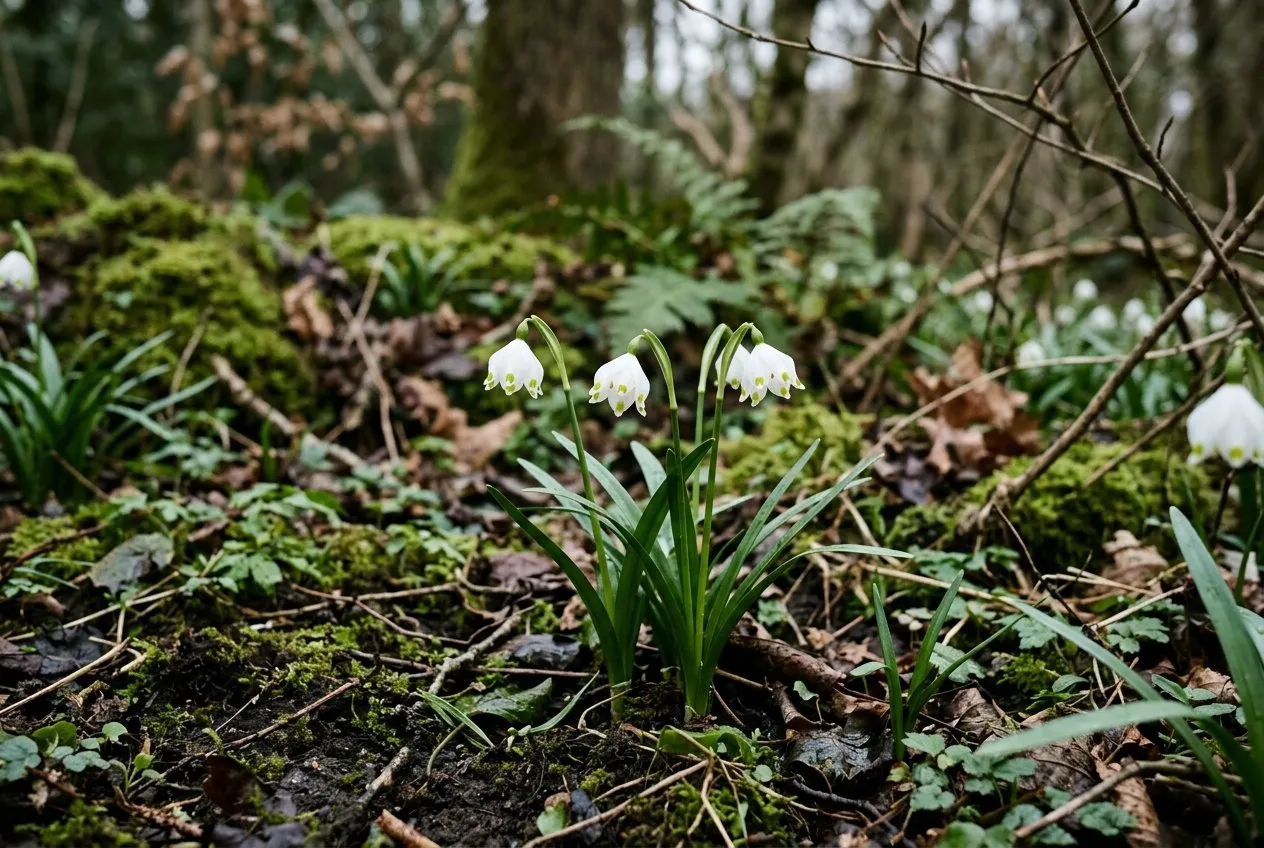 Spring snowflake in damp woodland shade in early March. Short stems, usually one plump green-tipped bell each, among fresh strap leaves.
Why leucojum love damp soil when most bulbs hate it
Leucojum are one of the very few bulbs that grow better in damp soil than in dry. Most spring bulbs, from tulips to alliums, come from dry-summer climates and rot if their roots sit wet. Summer snowflake evolved in wet meadows, ditches and riverbanks across Europe, so moisture is what it expects.
This makes it genuinely useful. Every garden has a difficult wet spot: a low corner, a north-facing bed, the ground near a downpipe or water butt. Snowdrops planted there sulk and dwindle. Summer snowflake settles in and thickens up. If your problem area stays boggy, pair snowflakes with the choices in our guide to plants for wet, boggy soil and you can turn a nuisance patch into a feature.
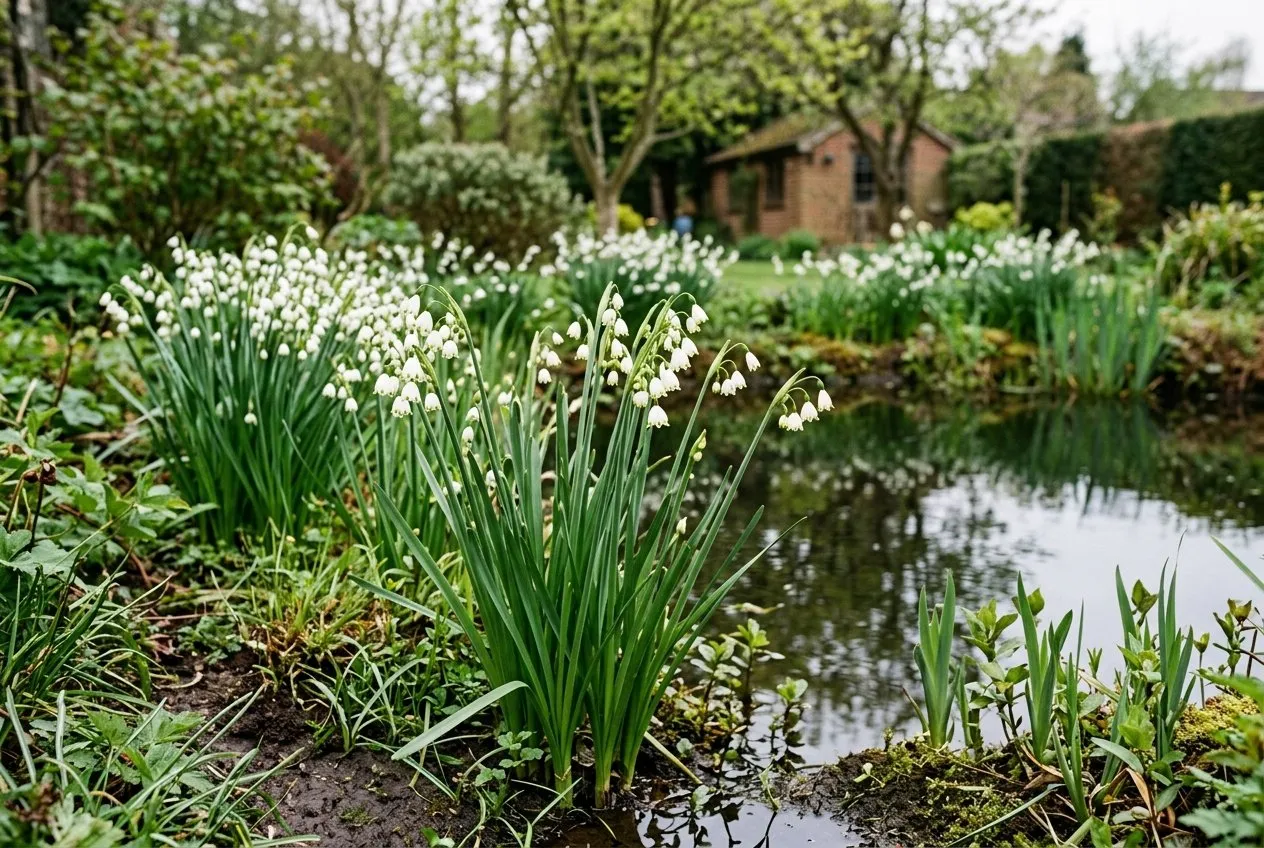 Summer snowflake at a pond margin. This is the spot where it beats snowdrops, growing happily in ground that stays wet all winter.
When and how deep to plant leucojum bulbs
Plant dry leucojum bulbs in autumn, from September to November, at 8-10cm deep. Space them 10-15cm apart, pointed end up, in moist humus-rich soil. Summer snowflake bulbs are large, so give the biggest ones the full 10cm of cover. Firm the soil back and water in if the ground is dry.
Choose the position to match the species. Put spring snowflake in cool shade at a woodland edge or under deciduous shrubs. Put summer snowflake in an open, damp border, at a pond margin, or in rough grass that stays moist. Both want soil that holds water rather than draining fast. If you are still working out how bulbs differ from corms and tubers, our explainer on bulbs, corms, tubers and rhizomes sets out what each one needs.
There is a catch with dry bulbs, though. Leucojum, like snowdrops, dislike being dried out for storage and sale. Dry bulbs in a packet are often shrivelled, and they establish slowly, sometimes sulking for a year or two before they flower well. That is why experienced gardeners reach for the in-the-green method instead.
Warning: Do not buy soft, mouldy or badly shrivelled leucojum bulbs from the bottom of a garden-centre bin in late winter. Half-dead bulbs may never recover. If the only dry bulbs on offer look poor, wait and buy plants in the green in spring instead.
Planting leucojum in the green
Moving leucojum “in the green” means lifting and replanting them while they are still in full leaf, just after flowering, rather than as dormant dry bulbs. It is the same trick that works for snowdrops, and it suits leucojum for the same reason: the bulbs hate drying out.
Buy in-the-green plants from a specialist bulb nursery in spring, usually March or April. They arrive as small clumps with green leaves and roots attached, packed in moist material. Get them in the ground the same day if you can. Dig a hole, set the clump at the same depth it grew before (look for the pale collar on the stems), firm gently, and water in well. Keep the soil moist while the leaves finish feeding the bulb.
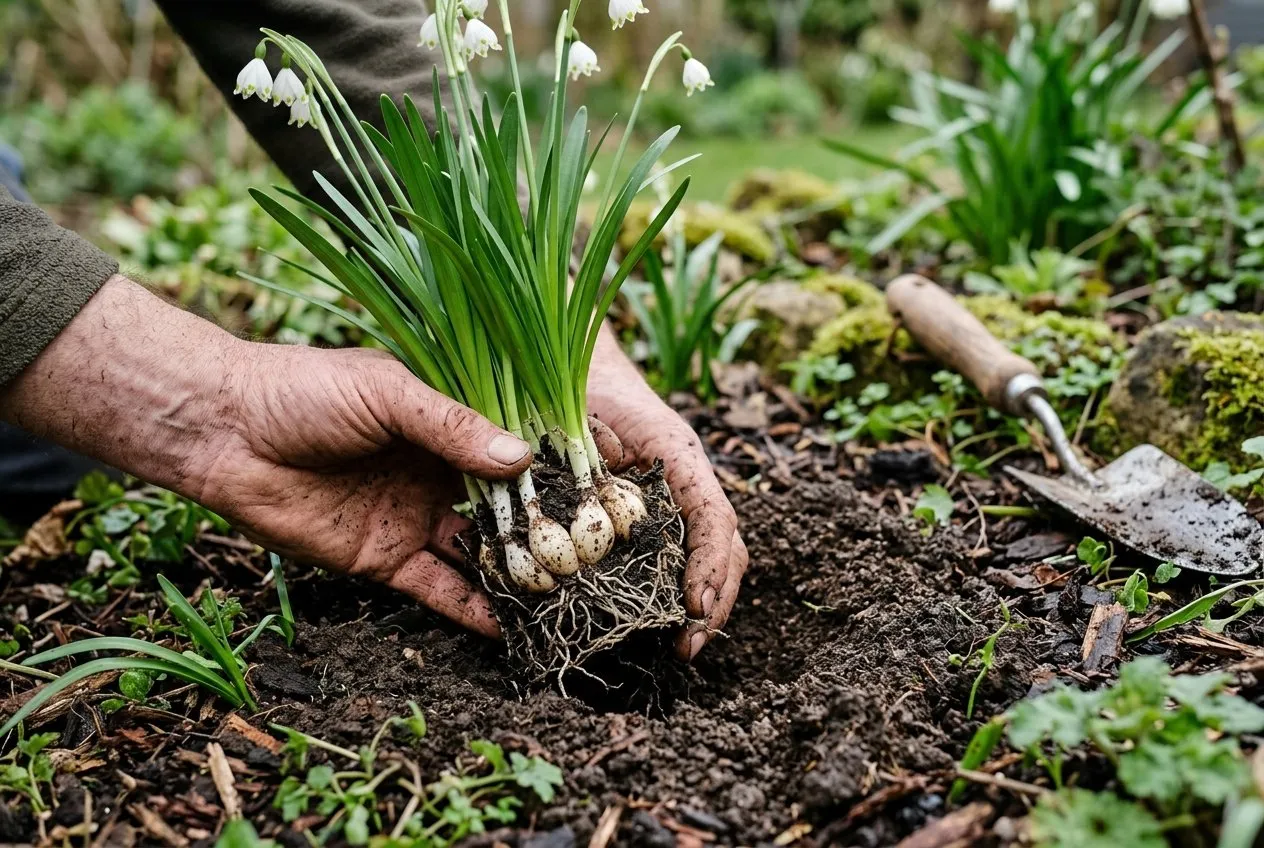 Planting in the green just after flowering. Leucojum resent drying out, so moving them in leaf beats planting shrivelled dry bulbs.
How to naturalise snowflakes in grass and at pond margins
Summer snowflake naturalises beautifully in damp grass and at water edges, spreading into increasing clumps over the years. It is one of the best bulbs for a wet meadow effect, flowering in April and May among the fresh spring growth. Plant it and, given moisture, it largely looks after itself.
For a natural look, scatter bulbs or in-the-green clumps in loose drifts rather than rows. In grass, lift a flap of turf, set the clump in the damp soil beneath, and firm the turf back. Space the groups unevenly so the colony reads as if it seeded itself. Do not mow the grass until the snowflake leaves have yellowed and died back, usually by late June, so the bulb can build up for next year.
At a pond or stream margin, plant summer snowflake in the moist ground just above the waterline. It holds the bank, flowers before the marginal plants get going, and copes with ground that never really dries. Spring snowflake is less suited to open grass; keep it for damp shade under shrubs, where it can spread quietly into a small woodland-edge patch. For more permanent shady plantings, our list of plants for shade pairs well with a drift of spring snowflake.
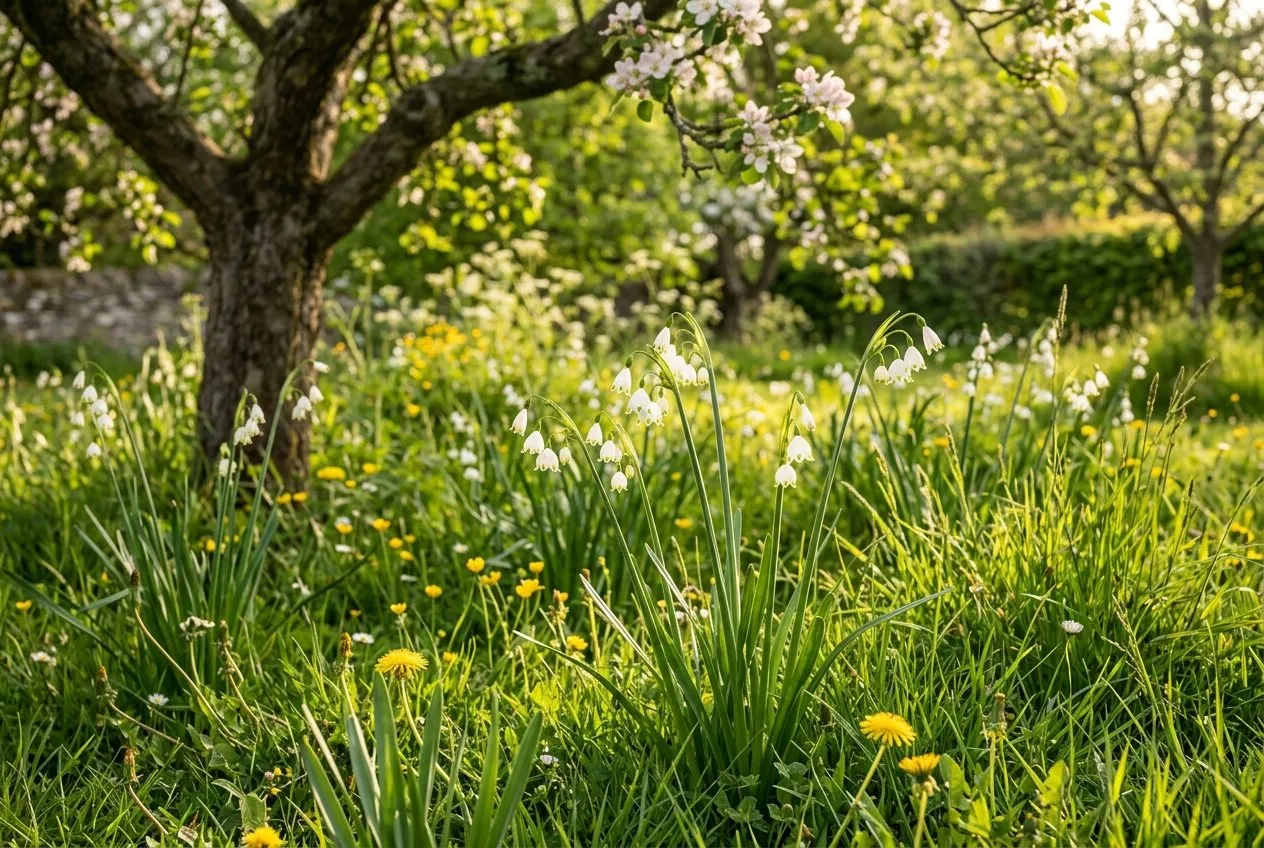 Summer snowflake naturalised in damp grass. Leave the grass unmown until the leaves yellow in June so the bulbs can build up.
Dividing leucojum clumps after flowering
Divide congested leucojum clumps in the green, straight after flowering, roughly every 4-5 years. Splitting a crowded clump keeps flowering strong and gives you free plants to spread around the garden. It is the main job leucojum ever ask of you.
Wait until flowering finishes but the leaves are still green, usually May for summer snowflake and April for the spring species. Lift the whole clump with a fork, keeping as much root and soil as you can. Tease it apart into smaller groups of three to five bulbs by hand, rather than chopping it, so you do not tear the roots. Replant the divisions at once at the same depth, water in, and keep them moist while the leaves die back.
Do not lift and store leucojum dry over summer as you might tulips. The bulbs suffer for it. Divide only when a clump is visibly congested and flowering less, or when you want to start a new patch. Between divisions, feed the same way you would any spring bulb: let the leaves die down naturally and top-dress with leaf mould. Our guide to spring bulb care after flowering covers the feeding and tidying that keeps clumps vigorous.
Year-round care: a month-by-month leucojum calendar
Leucojum are near-zero maintenance once planted in the right spot. The calendar below covers both species. Spring snowflake runs a few weeks ahead of summer snowflake, so shift the flowering and dividing tasks earlier for L. vernum.
| Month | Task |
|---|---|
| January | Nothing needed; spring snowflake buds may appear in mild spells |
| February | Spring snowflake flowers; enjoy it, no action required |
| March | Spring snowflake finishing; summer snowflake pushing up leaves |
| April | Summer snowflake starts flowering; divide spring snowflake in the green if congested |
| May | Peak summer snowflake bloom; divide congested summer clumps after the last bells fade |
| June | Leaves yellow and die back; let them, do not mow grass until they have gone |
| July | Foliage gone; bulbs dormant; keep the ground from baking dry in sun |
| August | No action; ensure damp spots do not dry out completely |
| September | Plant new dry bulbs 8-10cm deep in moist soil; top-dress with leaf mould |
| October | Continue planting dry bulbs; mulch established clumps to hold moisture |
| November | Last chance to plant dry bulbs before winter |
| December | Nothing needed; the bulbs sit quietly in the wet they love |
Leucojum for early bees and pollinators
Leucojum give early nectar to bees at a lean time of year. The nodding white bells open when little else is in flower, from February for spring snowflake into May for the summer species. Queen bumblebees emerging from hibernation, along with early honeybees, work the flowers on mild days when they can fly.
The pollinator value is modest compared to a summer border, but it matters because of the timing. Early spring is the hungry gap for insects, and every clump of snowflakes adds to the food on offer alongside crocus, hellebores and the first pulmonaria. If you are planning an insect-friendly spring, combine them with the choices in our guide to early spring pollinator plants for a proper succession of nectar.
Snowflakes earn their place for wildlife in another way too. Because they thrive in damp, unmown grass, they let you leave a wet corner uncut through spring without it looking neglected. That longer grass shelters ground beetles and other insects. The Bumblebee Conservation Trust highlights early-flowering, nectar-rich plants like these as a help to queen bumblebees in spring (bumblebeeconservation.org).
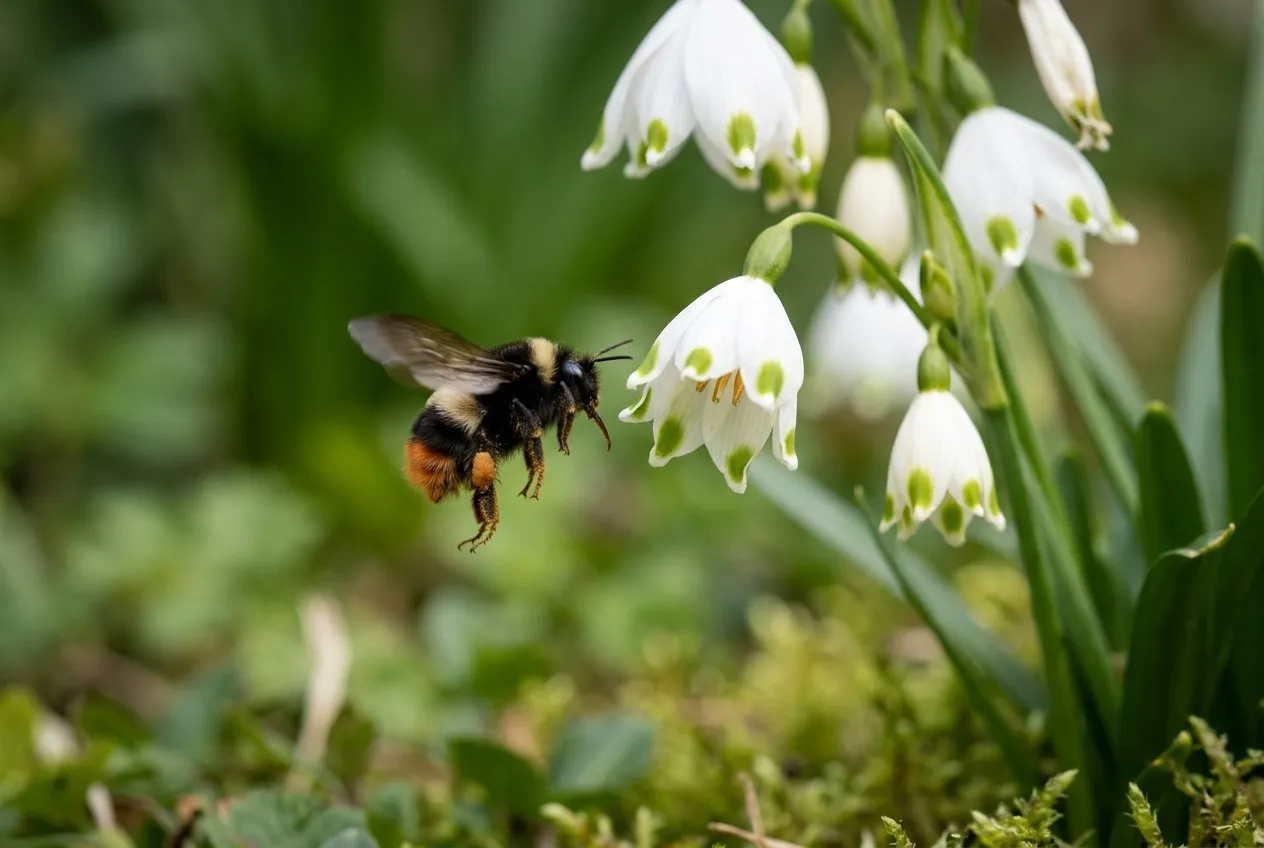 A queen bumblebee working a summer snowflake bell. The flowers give early nectar in the hungry gap before the main border wakes up.
Pests and problems: why snowflakes are close to trouble-free
Leucojum are among the most trouble-free bulbs you can grow. They are largely ignored by slugs, rabbits and deer, and they suffer none of the fungal problems that plague bulbs in wet soil, because wet is exactly what they want. For most gardeners, the plant simply grows and spreads with no intervention at all.
The one pest worth naming is narcissus bulb fly. The adult, which looks like a small bumblebee, lays eggs near the necks of bulbs in the daffodil family and its relatives in late spring. The grubs tunnel into the bulb and hollow it out, so a clump that flowered well one year throws only thin leaves the next. It is occasional rather than common on leucojum, and it prefers bulbs in warm, sunny, dry positions. The damp, cooler spots that suit snowflakes are less attractive to the fly, which is a quiet bonus of growing them where they belong.
If a clump declines for no obvious reason, lift one bulb and check it. A soft, hollow bulb with a grub inside points to bulb fly. Bin any affected bulbs, do not compost them. Firming soil over the bulb necks after the leaves die down helps stop the fly reaching them. Beyond that, there is very little to guard against. Snowflakes ask for damp soil and give back years of flowers.
Common mistakes when growing leucojum
Most leucojum failures come from treating them like ordinary bulbs. Avoid these errors and they are close to foolproof.
Planting them in dry soil
This is the big one. Leucojum want moisture, and the commonest mistake is tucking them into a dry, free-draining border with the tulips. Spring snowflake especially fails if it bakes dry in summer. Give them damp, humus-rich ground, and reserve your driest spots for bulbs that actually like it.
Buying poor dry bulbs and expecting fast results
Dry leucojum bulbs are often shrivelled and slow to settle. Plant a shrunken bulb and it may sulk for a year or two before flowering. Buy plump bulbs early in autumn, or better, buy plants in the green in spring and replant them at once.
Mowing or tidying the leaves too soon
The bulb feeds through its leaves after flowering. Cut them off or mow the grass while they are still green and you starve next year’s flowers. Wait until the foliage has yellowed and collapsed on its own, usually by late June, before you tidy or mow.
Confusing the two species and planting them in the wrong spot
Spring snowflake wants cool woodland shade; summer snowflake wants open, damp ground. Plant them the wrong way round and both disappoint. Check which species you have before you decide where it goes, and match it to the position.
Lifting and storing them dry over summer
Leucojum are not tulips. Dry summer storage shrivels the bulbs and sets them back. Leave them in the ground year-round, and only ever lift them briefly, in the green, to divide a congested clump.
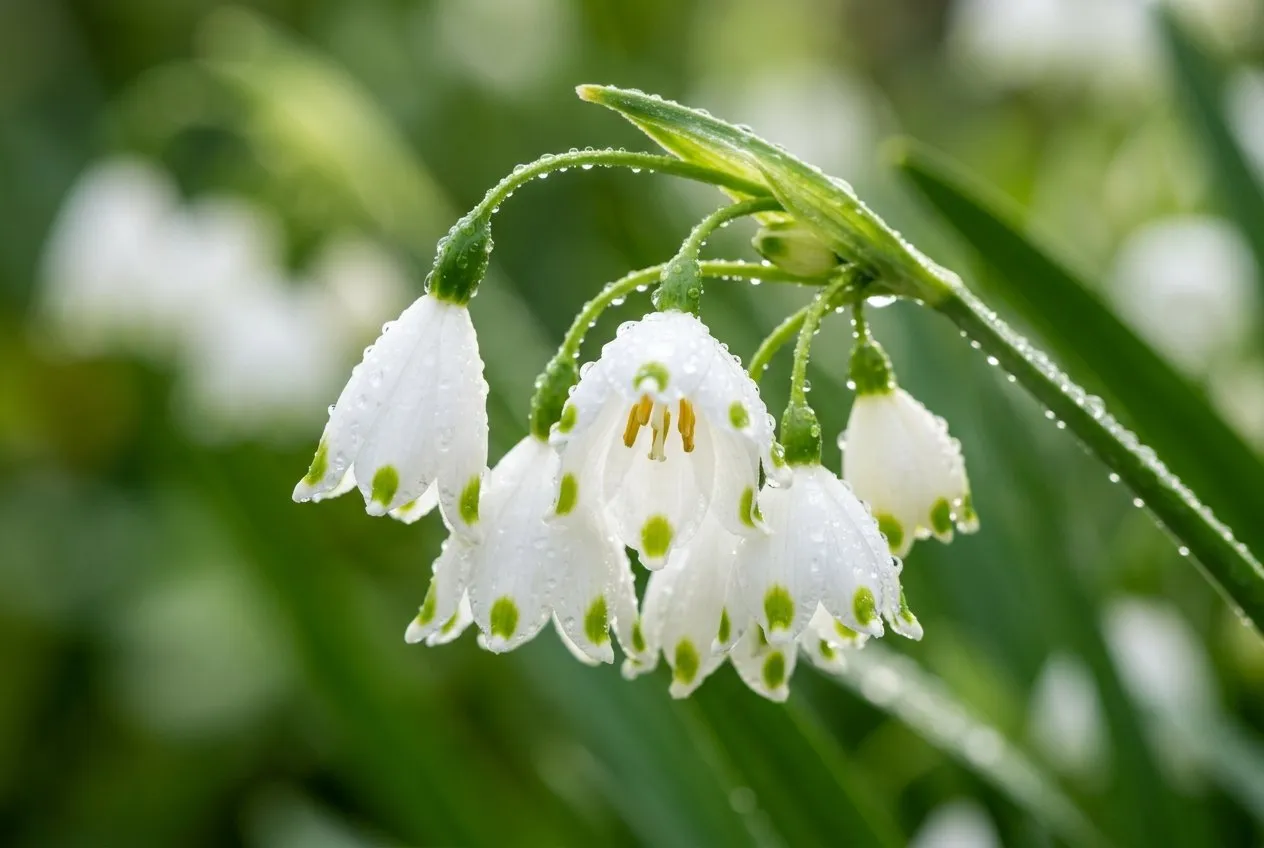 The giveaway detail: six equal petals on each bell, every one tipped with a neat green spot. A snowdrop never looks like this.
Buying the right leucojum for your garden
For most gardens, summer snowflake ‘Gravetye Giant’ is the one to start with. It is vigorous, easy, tall enough to make a statement, and it holds an RHS Award of Garden Merit, so it has proven itself in trial. The RHS notes it reaches around 90cm with up to eight fragrant white bells per stem, each segment tipped green (RHS: Leucojum aestivum ‘Gravetye Giant’). Plant it in a damp border, at a pond margin, or in rough grass, and it will bulk up for years.
Add spring snowflake, Leucojum vernum, only if you have the cool, damp shade it needs. It is a lovely thing in the right spot, flowering with the late snowdrops, but it is fussier and slower to spread than its summer cousin. Do not buy it for an open, sunny border; it will not thank you.
Whichever you choose, source good stock. A specialist bulb nursery selling in-the-green plants in spring will give you a far better start than a shrivelled packet of dry bulbs in autumn. Spend a little more on healthy plants and you skip the years of sulking that poor dry bulbs so often bring.
Frequently asked questions
Is leucojum the same as a snowdrop?
No, leucojum is a snowflake, a different plant from the snowdrop. Both are white spring bulbs, but a snowflake bell has six equal petals, each tipped with green, and several bells hang from one taller stem. A snowdrop has three long outer petals and three short green-marked inner ones, and just one flower per stem.
What is the difference between spring and summer snowflake?
Spring snowflake is short and early; summer snowflake is tall and later. Leucojum vernum reaches 15-20cm and flowers February to March in shade. Leucojum aestivum reaches 60-90cm and flowers April to May, despite the summer name. The summer species also carries more bells per stem and copes with wetter soil.
Why is it called summer snowflake if it flowers in spring?
The name is misleading; summer snowflake flowers in April and May, not summer. Leucojum aestivum was named for flowering later than the spring snowflake, not for true summer bloom. In most UK gardens the last bells fade by the end of May, well before summer proper. Ignore the name and treat it as a late-spring bulb.
Do leucojum like wet soil?
Yes, leucojum are among the few bulbs that thrive in damp soil. Summer snowflake in particular grows happily in heavy, moisture-retentive ground, at pond margins, and in spots that stay wet through winter. This is where it beats snowdrops, which rot in cold wet soil. Spring snowflake prefers damp but not waterlogged woodland conditions.
How deep do you plant leucojum bulbs?
Plant dry leucojum bulbs 8-10cm deep and about 10-15cm apart. Set them in autumn, September to November, pointed end up, in moist humus-rich soil. Summer snowflake bulbs are large, so give the bigger ones the full 10cm. Dry leucojum bulbs establish slowly, which is why many gardeners prefer to move them in the green instead.
Should I plant leucojum in the green?
Yes, moving leucojum in the green usually gives far better results. Like snowdrops, leucojum resent drying out, so lifting and replanting clumps in leaf, just after flowering, beats planting shrivelled dry bulbs in autumn. Buy in-the-green plants from a specialist in spring, or split an existing clump. Replant at once at the same depth and water in.
Do leucojum spread and naturalise?
Yes, established leucojum bulk up steadily and naturalise well. Summer snowflake forms increasing clumps in damp grass, at pond edges, and along ditches, spreading by offsets over the years. It seeds gently too. Lift and divide congested clumps every 4-5 years to keep flowering strong and to spread the colony around the garden.
Now you can tell a snowflake from a snowdrop and grow both, plan the rest of your early display with our guide to when to plant spring bulbs so nothing is missed.
Our team produces practical UK gardening guidance from source research, contributor records and established horticultural practice. Editorial standards are overseen by Matt W.