Key takeaways
- Lewisia is an evergreen alpine from the Siskiyou Mountains; L. cotyledon and its hybrids are the ones to grow
- Neck rot kills more lewisias than cold: plant at 45 degrees in a crevice, or flat with a 2-3cm grit collar
- Morning sun and afternoon shade is the ideal aspect; baking south-facing spots scorch the rosettes
- Water the compost, never the rosette; a splash in the crown in autumn is how the rot starts
- Main flowering is May to June with repeat flushes; the Elise series carries on into autumn if deadheaded
- From November to March keep the crown dry: a propped pane of glass, a cold frame or a cold greenhouse
Lewisia earns its place the moment it flowers: electric pink, salmon, apricot and magenta stars, often candy-striped, held on short stems above a neat evergreen rosette. Nothing else that fits in a wall joint gives you colour that loud. Garden centres sell thousands of them every spring, usually in full bloom, and a depressing number are dead by the following Easter.
They do not die of cold. They die because water sat in the rosette and rotted the neck. That single fact drives everything here: where you plant lewisia, the angle you plant it at, how you water it, and what you do from November to March. Get the neck dry and this is one of the easiest alpines in the country. This guide covers the types worth buying, the 45-degree planting trick, troughs and walls, propagation, and winter cover.
What is lewisia and where does it come from?
Lewisia is a small genus of alpine plants from the mountains of north-west America, named after the explorer Meriwether Lewis, who collected the first specimens on the Lewis and Clark expedition. The species behind nearly every plant sold in the UK is Lewisia cotyledon, the Siskiyou lewisia, from the Siskiyou Mountains of Oregon and northern California. In the wild it grows on cliffs and rocky slopes, wedged into cracks where its roots run cool and deep and rain drains straight off the leaves.
That habitat explains the plant. Lewisia cotyledon builds a flat, evergreen rosette of fleshy, spoon-shaped leaves, 20-30cm across at maturity, on a thick, carrot-like root. The leaves store water, which makes it drought-proof in summer. Flowers come on branched stems 15-30cm tall, each carrying dozens of starry blooms about 2-3cm across, in colours unusually hot for an alpine: rose-pink, magenta, salmon, orange, apricot, yellow and white, many striped with a deeper shade down each petal.
The RHS rates Lewisia cotyledon H4, hardy to around -10C, and lists it for the rock garden, wall crevices and the alpine house, with one blunt condition: protect it from winter wet (RHS: Lewisia cotyledon). A dry lewisia laughs at frost. A wet one rots. Hold that thought through everything that follows.
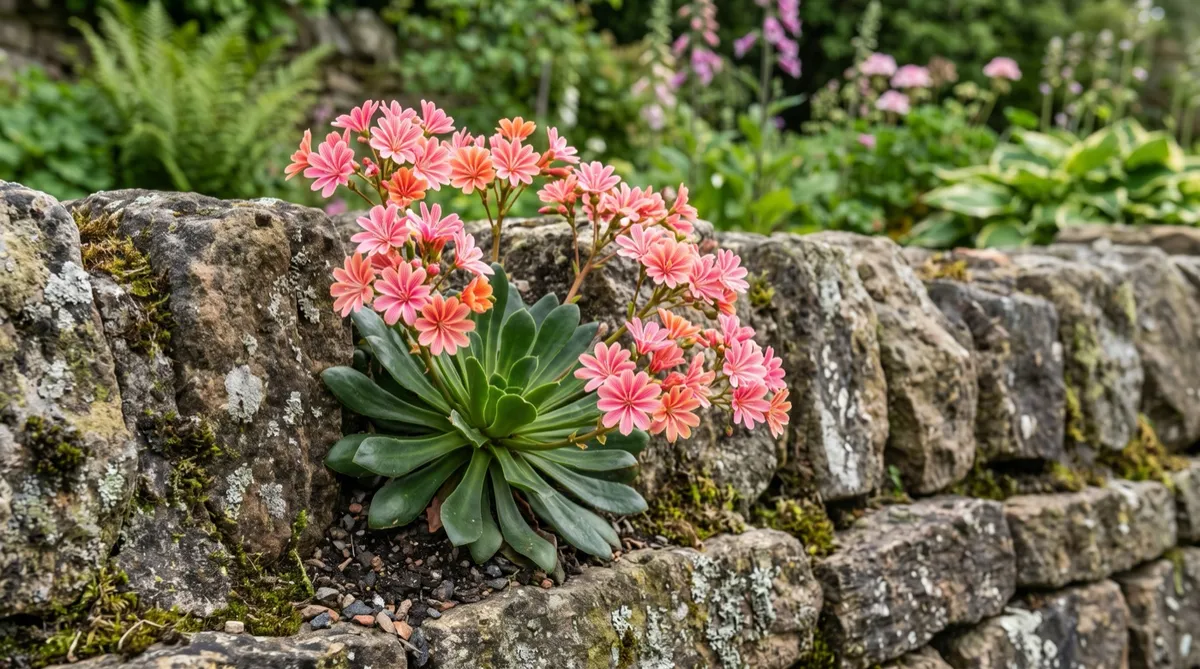
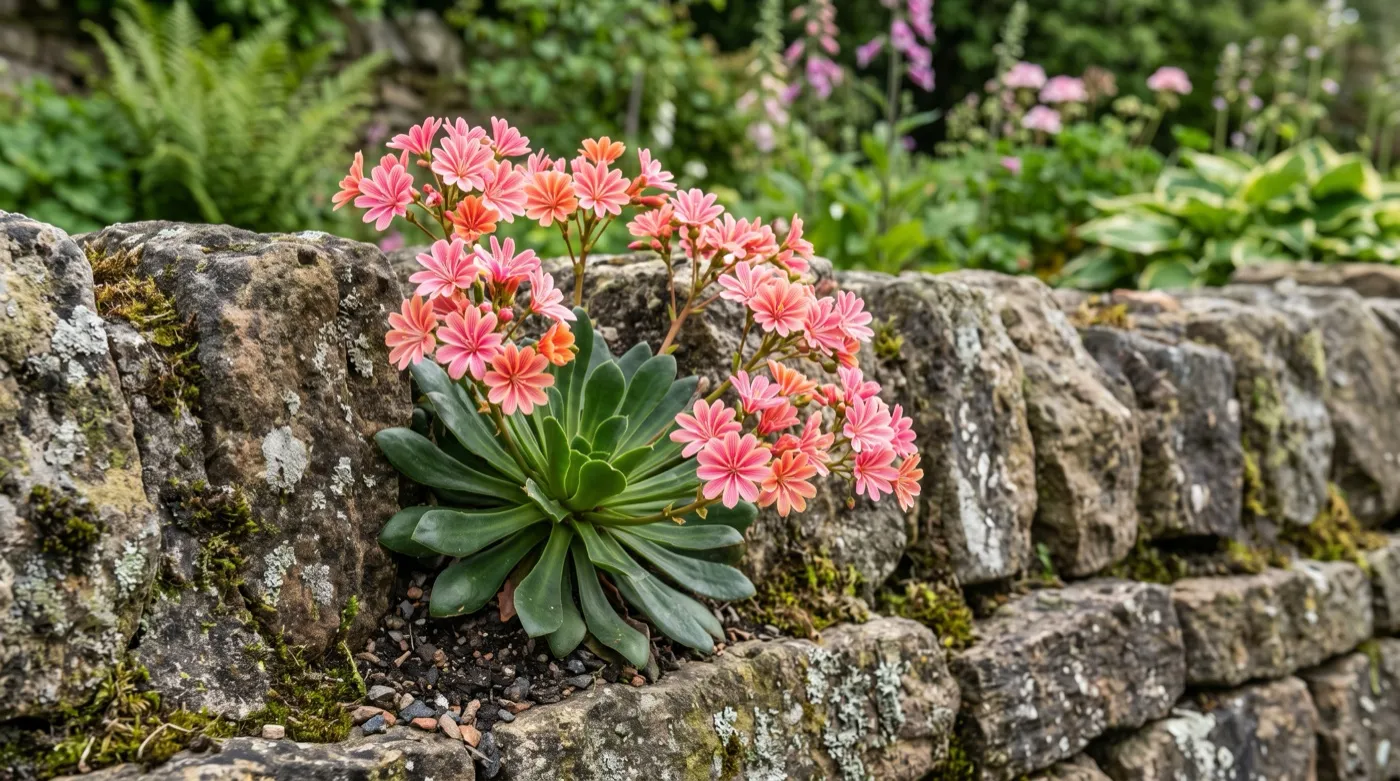 Lewisia doing what it evolved to do: flowering from a near-vertical crack where rain cannot sit in the rosette.
Which lewisia should you grow?
For UK gardens the choice comes down to Lewisia cotyledon seed strains, the modern Elise series, and one outstanding hybrid, ‘Little Plum’. All want identical treatment, so pick on colour, size and flowering habit.
The Sunset Group is the classic garden-centre lewisia: a seed-raised strain of L. cotyledon in mixed fiery shades of pink, orange, salmon and yellow, usually striped. Plants make broad rosettes and flower generously in May and June, with smaller repeat flushes if deadheaded. Ashwood strain plants, from Ashwood Nurseries in the West Midlands, are a step up in flower size and colour saturation; the nursery has bred lewisias for decades and its plants are worth seeking out.
The Elise series changed the game. It is an F1 strain bred to flower in its first year from seed, four to five months after sowing, with no cold period needed, and it repeat-flowers from spring into autumn rather than delivering one big flush. If you want maximum weeks of colour, or you want flowers this year from a spring sowing, Elise is the one. It comes in mixed and single colours, including a ruby red and a white.
‘Little Plum’ is a compact hybrid of Lewisia longipetala, about 15cm tall, with rose-purple flowers tinged orange as they open. It flowers in late spring and often again in autumn, and its smaller rosette suits a shallow alpine pan or a tight trough scheme. Lewisia tweedyi carries huge peach-pink flowers but is fussier about wet; treat it as an alpine-house plant.
Lewisia types compared
| Type | Height | Colours | Flowering | Notes |
|---|---|---|---|---|
| Sunset Group | 20-30cm | Pink, orange, salmon, yellow, striped | May-Jun, some repeat | Classic seed strain, widely sold |
| Ashwood strain | 20-30cm | Saturated mixed shades | May-Jun | Selected UK breeding, larger flowers |
| Elise series | 15-20cm | Mixed or single: pink, red, orange, white | Spring to autumn | F1, flowers first year from seed |
| ’Little Plum’ | 15cm | Rose-purple, orange tint | Late spring + autumn | Compact hybrid, ideal for pans |
| L. tweedyi | 15-20cm | Peach-pink, large | Apr-May | Beautiful, fussy, alpine house |
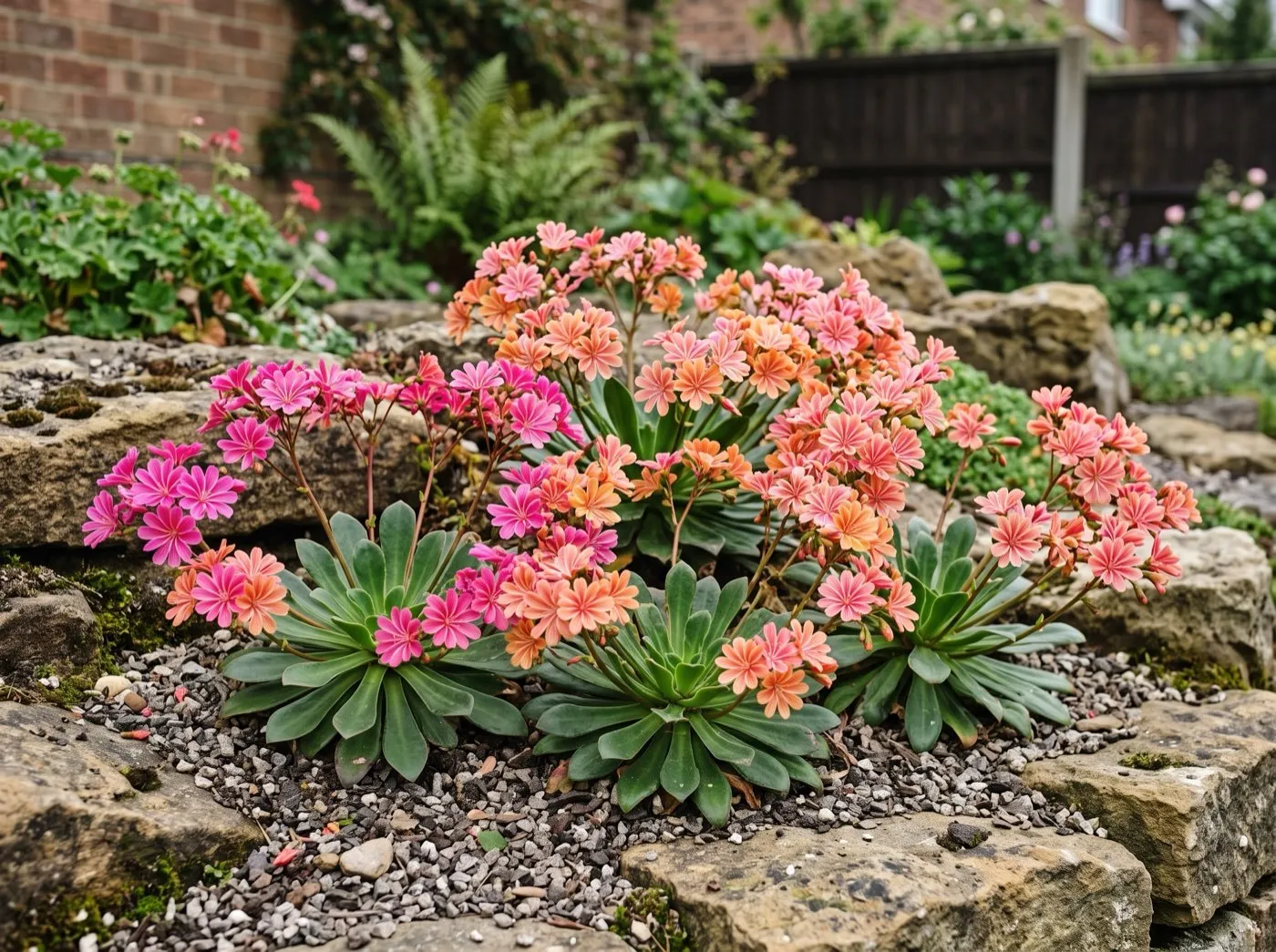 The Sunset Group runs from salmon through magenta, most of them striped. No other rockery plant carries colour this hot.
Why do lewisias rot at the neck?
Lewisia rots at the neck because its rosette funnels water straight into the crown, and the fleshy tissue where leaves meet root cannot stand sitting wet. On a cliff in Oregon that never matters: the plant grows on a near-vertical face, rain sheets off, and snow-melt drains through pure rock. On a flat British border in a mild, damp December, the same rosette becomes a cup. Water pools in the centre, the neck softens, and by spring the whole top lifts off the root like a cork.
Gardeners blame the wrong thing. Lewisia does not die of frost at UK temperatures; it dies of wet plus time. The rot is worst from November to March, when the plant is barely growing and evaporation is close to zero, but a careless watering can that splashes the crown in September starts the same process.
Everything that keeps lewisia alive follows from this one fault:
- Plant at an angle so the rosette sheds water instead of collecting it.
- Keep the neck out of the soil with a deep collar of grit if you must plant flat.
- Water the compost, never the plant.
- Cover the crown in winter while leaving air moving around it.
Do those four things and lewisia is close to indestructible. Skip them and no amount of feeding, potting or fussing will save it.
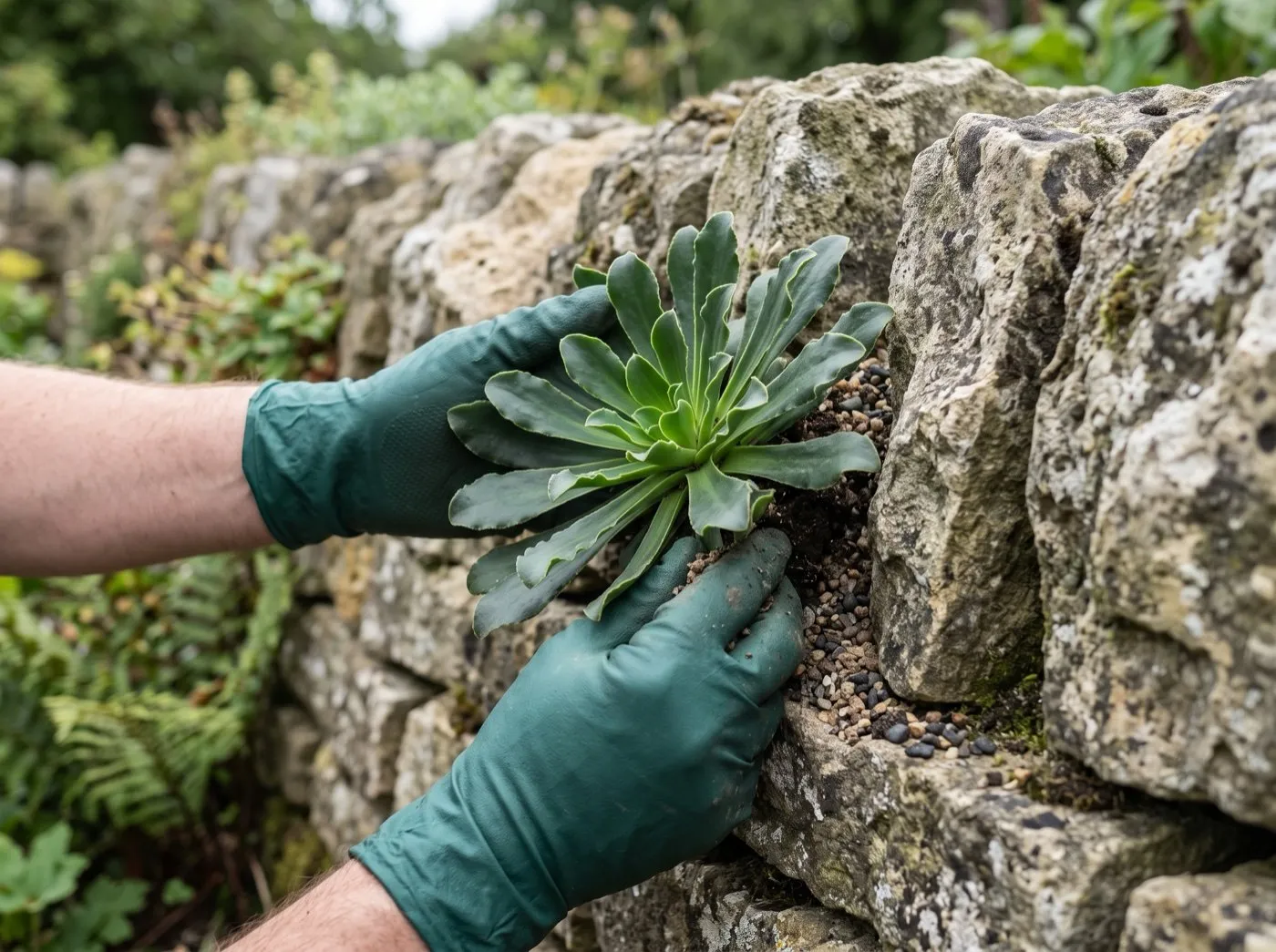 The 45-degree trick. Tilted in a wall joint, the rosette sheds rain the way it would on a cliff face.
Where should you plant lewisia in the UK?
The best home for lewisia is a vertical or steeply angled crevice with morning sun and afternoon shade. Aspect first, then structure.
Aspect. Lewisia wants good light but resents being baked. An east-facing wall or slope, catching sun until midday and shade through the hottest hours, is close to perfect. West-facing works too. Due south can succeed in a crevice with a cool root run, but rosettes in a south-facing pan on a patio scorch in a hot July, the leaves bleaching and the plant stalling. Deep shade is out; flowering collapses and the rosette draws weak and loose.
Soil. Moderately fertile, neutral to slightly acid, and sharply drained. Lewisia dislikes lime, so avoid mortar rubble and chalky pockets; if you are planting into an old mortared wall, pack the joint with a mix of ericaceous compost and grit rather than whatever crumbles out of it. On ordinary garden soil, work in at least a third by volume of 2-6mm grit. If you are not sure how your ground drains, dig the test pit in our soil drainage guide before you commit a £9 plant to it. An open, sunny gravel garden edge can work as well, provided the lewisia goes in on a slope or mound rather than flat ground.
Gardener’s tip: Buy lewisia in flower in May, but do not plant it where it stood in the shop. Garden centres display them flat, packed on wet capillary matting, because they only need the plants to survive six weeks. Your job is the next six years. Tip the rootball on its side the day you plant it and it will never sit in water again.
How to plant lewisia at 45 degrees
Plant lewisia tilted, with the rosette facing outwards and slightly downwards, so rain runs off the leaves and away from the neck. This takes two minutes and is the single biggest thing you can do for the plant. Here is the method for a wall or crevice:
- Pick a joint or crack at least 5cm deep, ideally with a stone above it acting as a small roof. Two to four courses up a wall is better than ground level, where splash-back keeps the rosette wet.
- Soak the plant, then knock it out of its pot and gently tease or wash away loose compost so the rootball slims down enough to slide into the gap.
- Pack the back of the crevice with a 50:50 mix of ericaceous or John Innes compost and grit, pushed in firmly with a dibber or your thumb.
- Slide the root in horizontally or at 45 degrees, rosette proud of the face, and pack more mix around it until nothing wobbles.
- Wedge small stone chips under and around the neck. They lock the plant in place and keep the crown clear of damp compost.
- Water from above the joint, letting moisture soak down to the roots for the first few weeks while it anchors. After that, rain does the job.
Planting into open ground or a raised bed follows the same logic without the wall. Set the plant on a mound or slope, tilt the rootball 30-45 degrees towards the sun, and finish with a grit collar: a 2-3cm layer of coarse chippings tucked right under the rosette leaves, so the neck touches stone, not soil. The collar dries the crown after every shower. It is the flat-planter’s substitute for a cliff.
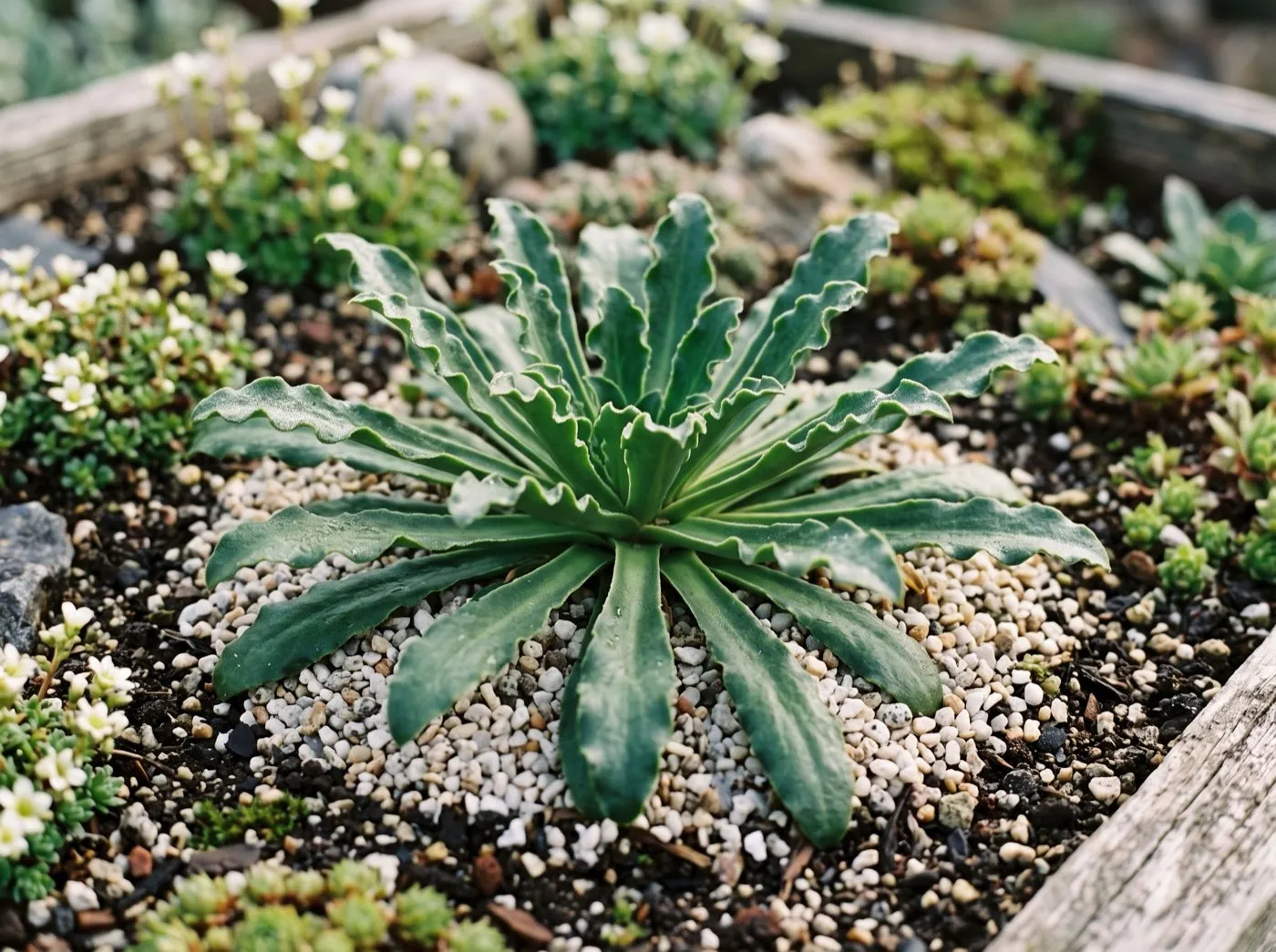 The grit collar: 2-3cm of chippings tucked under the rosette so the neck sits on stone rather than wet compost.
Growing lewisia in troughs and alpine pans
Use a container at least 15cm deep with large drainage holes: a real or hypertufa trough, a terracotta pan, or a wide clay pot. Cover the holes with crocks, then fill with half John Innes No.2 and half 2-6mm horticultural grit. Plant the lewisia on a slight mound or against a piece of tufa or slate set on edge, tilted as ever, and dress the whole surface with 2cm of grit or slate chippings. Raise the container on pot feet so water never queues at the drainage holes.
One container-specific warning: a trough against a house wall under the eaves stays dry all winter, which lewisia loves, but it also misses every shower in summer, so check it weekly from May to September.
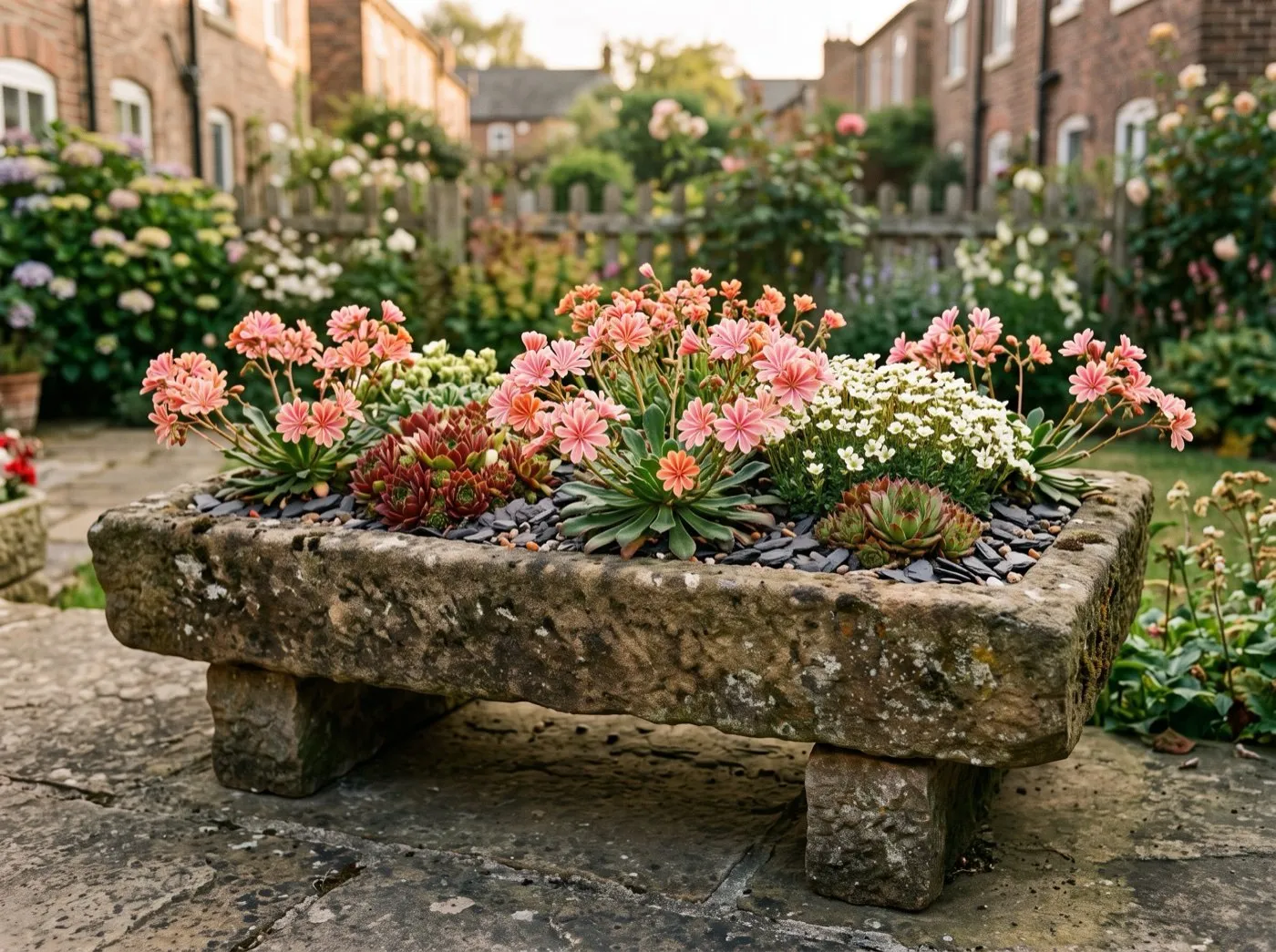 A trough puts you in charge of drainage, angle and winter cover. Lewisia, sempervivums and saxifrage want the same mix.
How do you water and feed lewisia?
Water the compost beside the plant, never the rosette, and let the root zone dry out between drinks. That one sentence covers 90% of lewisia care. The fleshy leaves and thick root store enough water that established plants in the ground need nothing beyond rain in a normal UK summer; they qualify honestly for our list of drought-tolerant plants. Pots and troughs dry faster, so give them a proper soak, once a week in hot spells, whenever the top few centimetres of grit and compost have dried.
When does lewisia flower, and how do you keep it going?
Lewisia flowers from May to June in the UK, with repeat flushes through summer if you deadhead, and the Elise series runs from late spring into autumn. The main display is generous: an established Sunset Group rosette carries several branched stems, each opening dozens of striped stars over three to four weeks.
To stretch the season, cut each spent flower stem off at its base as the last buds fade. Left alone, the plant puts its energy into seed and shuts up shop; deadheaded, it usually pushes a second, lighter flush in midsummer and sometimes a third in early autumn. ‘Little Plum’ reliably adds an autumn flush of its own. Elise, bred for continuity, keeps producing stems as long as you remove the old ones.
If a mature, healthy-looking lewisia refuses to flower, run down this list: too much shade (the commonest cause), compost too rich in nitrogen, a rosette still young and building size, or an over-potted plant sulking in soggy mix. Fix the light and the leanness and flowering follows a year later.
Month-by-month lewisia calendar
| Month | Task |
|---|---|
| January | Keep plants dry under glass or covers; check crowns for rot after mild wet spells |
| February | Ventilate covered plants on mild days; sow species seed outdoors to catch remaining cold |
| March | Remove winter covers late in the month; first careful watering as growth restarts |
| April | Buds rise; water pots as they dry and give a half-strength tomato feed |
| May | Main flowering begins; buy new plants in flower and plant them tilted |
| June | Peak display; deadhead spent stems at the base; detach and pot offsets |
| July | Repeat flushes on deadheaded plants; water troughs weekly in hot spells |
| August | Collect ripe seed if wanted; keep water off rosettes in thundery weather |
| September | Last flushes fade; ease off watering; pot up rooted offsets for the cold frame |
| October | Tidy dead outer leaves; fit the pane of glass or move pans under cover |
| November | Plants rest; keep crowns bone dry and air moving around them |
| December | Do nothing except check covers have not blown off or trapped condensation |
How to propagate lewisia from offsets and seed
Lewisia propagates two ways: offsets detached in early summer for exact copies, and seed for quantity. Both are easy enough that you should never buy the same plant twice.
Offsets are the small side rosettes a mature L. cotyledon produces around its base. In June, expose the base of an offset and cut cleanly through the neck of tissue joining it to the parent with a sharp knife, without lifting the mother plant. Let the cut surface dry for a day, then sit the offset on a pot of half compost, half grit, with the wound just touching the mix and a grit collar around it. Kept lightly shaded and barely moist, offsets root in four to eight weeks. Overwinter the young plants in a cold frame and plant them out, tilted, the following spring; our cold frame guide covers managing young stock like this through winter.
Seed behaves differently depending on strain. Species and Sunset Group seed needs cold to break dormancy: sow fresh in autumn in gritty compost and leave the pots outside all winter, or mix seed with damp sand in the fridge for about six weeks before a spring sowing. Seedlings grow slowly, building a rosette in year one and flowering in their second spring. Elise seed skips all that. Sown at 20-22C in January or February, it needs no cold period and flowers four to five months later, which is why it has become the default strain for anyone starting lewisia on a windowsill. Prick seedlings out into small pots of gritty mix and never let compost sit in their tiny crowns.
Named selections do not come true from seed, so anything special gets increased from offsets only. The Alpine Garden Society is the best rabbit hole in Britain for this genus, with shows, seed exchanges and growers who have kept lewisias alive for thirty years (Alpine Garden Society).
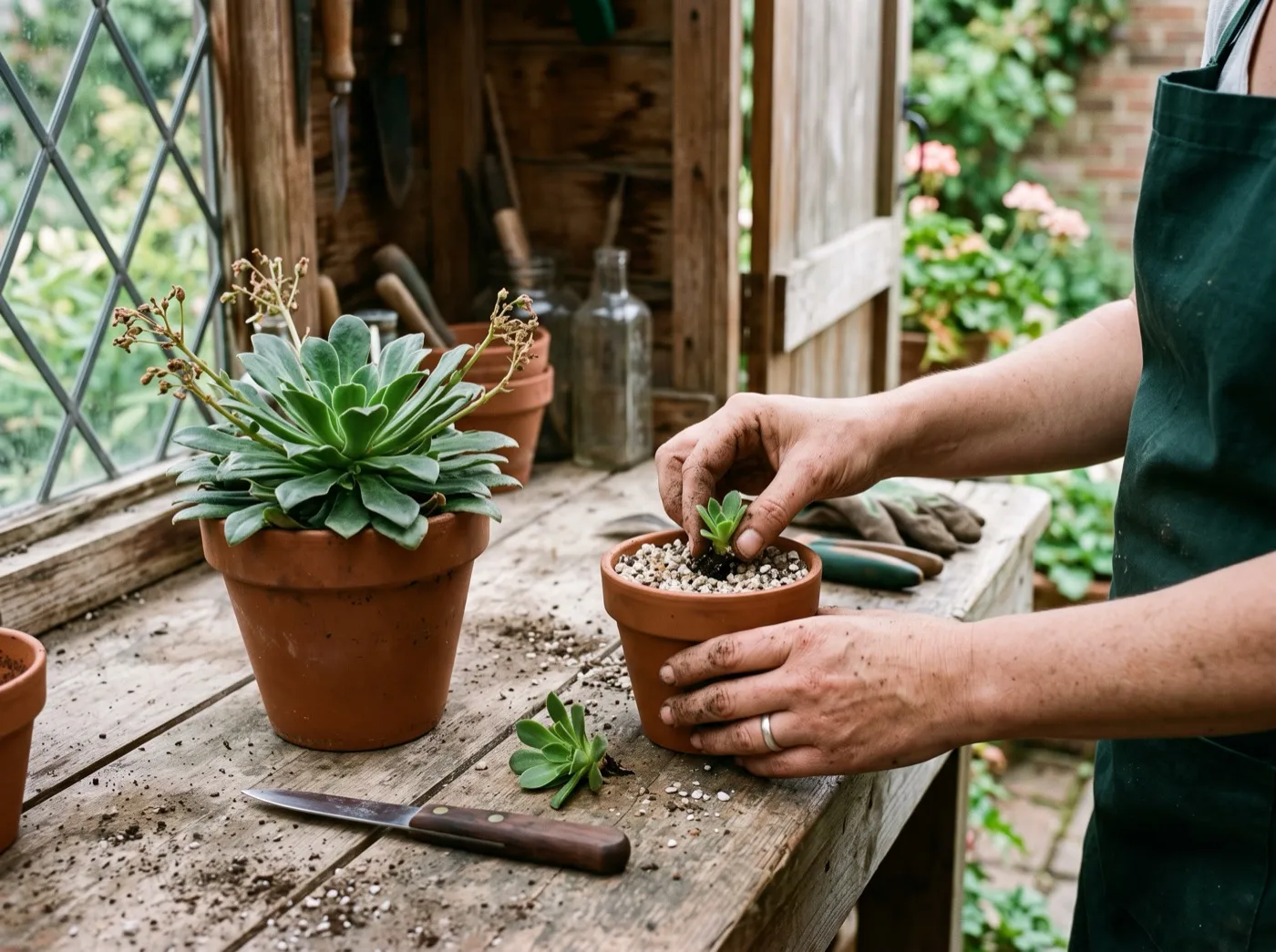 June offsets. Cut them from the parent with a clean knife, dry the wound for a day, then root them in half grit, half compost.
How do you protect lewisia from winter wet?
From November to March, keep rain off the crown while letting air flow freely around the plant. Cold needs no answer at all; a bone-dry lewisia takes -10C without a mark. Wet is the whole battle, and there are three levels of defence.
A pane of glass or clear rigid plastic propped 10-15cm above the plant is the traditional fix for lewisias in walls and rockeries. Rest the pane on bricks or wire legs, angled so water sheds away, and leave all four sides open. The plant sits in a dry, ventilated pocket all winter. Weight the pane down for the January gales. Never wrap lewisia in fleece or closed cloches, because trapped humidity rots a crown as surely as rain does. Plants set properly in a vertical wall face often come through with no cover at all, which is the quiet argument for planting them there.
A cold frame suits potted plants and rooted offsets. Lights on, ends propped open a few centimetres, water withheld: that is the entire regime.
A cold greenhouse or alpine house is the luxury option, and the reason exhibition plants look the way they do. Unheated is correct; lewisia wants cold, dry and ventilated, not warm. Pans go on the bench in October and come out in late March, getting perhaps one light watering a month.
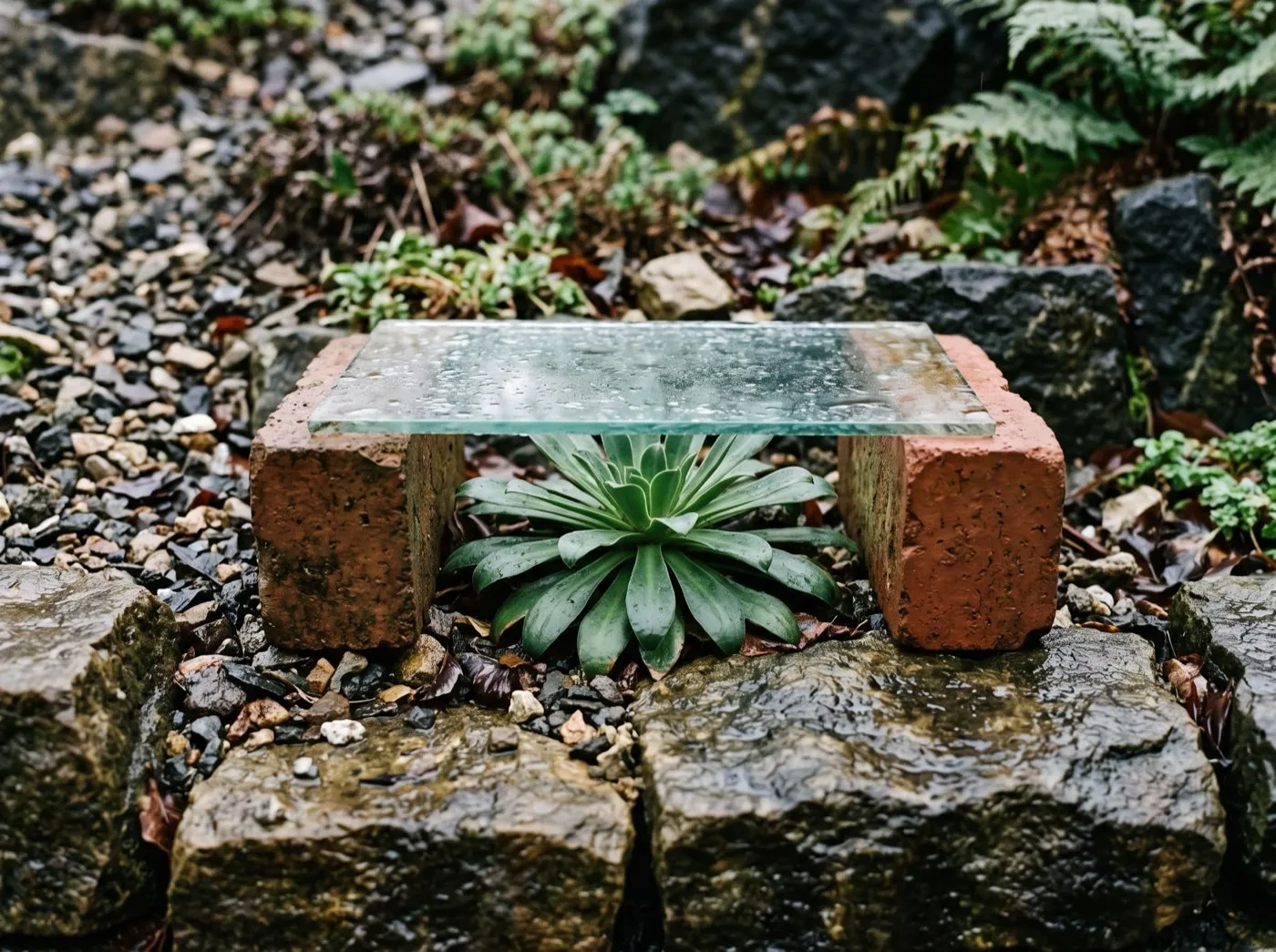 The pane-of-glass method: a dry roof, four open sides, and a brick on top for the January gales.
Common lewisia mistakes
Nearly every dead lewisia traces back to one of five errors, and all five are avoidable.
Planting it flat in open ground
Watering over the rosette
A watering can or hose swept across the top of the plant fills the crown, and in warm weather rot follows within weeks. Water beside the plant or from below, every time, all year.
Rich compost and heavy feeding
Multipurpose compost holds too much water and too much nitrogen. The growth it forces is soft, floppy and rot-prone. Half grit, lean feeding, and the plant stays hard, compact and floriferous.
Ignoring it from November to March
The gardener who plants lewisia in May and thinks about it again in April usually finds a ring of dead leaves around a mush centre. One October job, propping a pane or moving the pan under cover, is the whole winter workload.
Lime-rich pockets and mortar rubble
Lewisia prefers neutral to slightly acid conditions. Old mortared walls and chalky rubble slowly sicken it: leaves yellow, growth stalls. Pack planting crevices with an ericaceous-and-grit mix and it stays deep green.
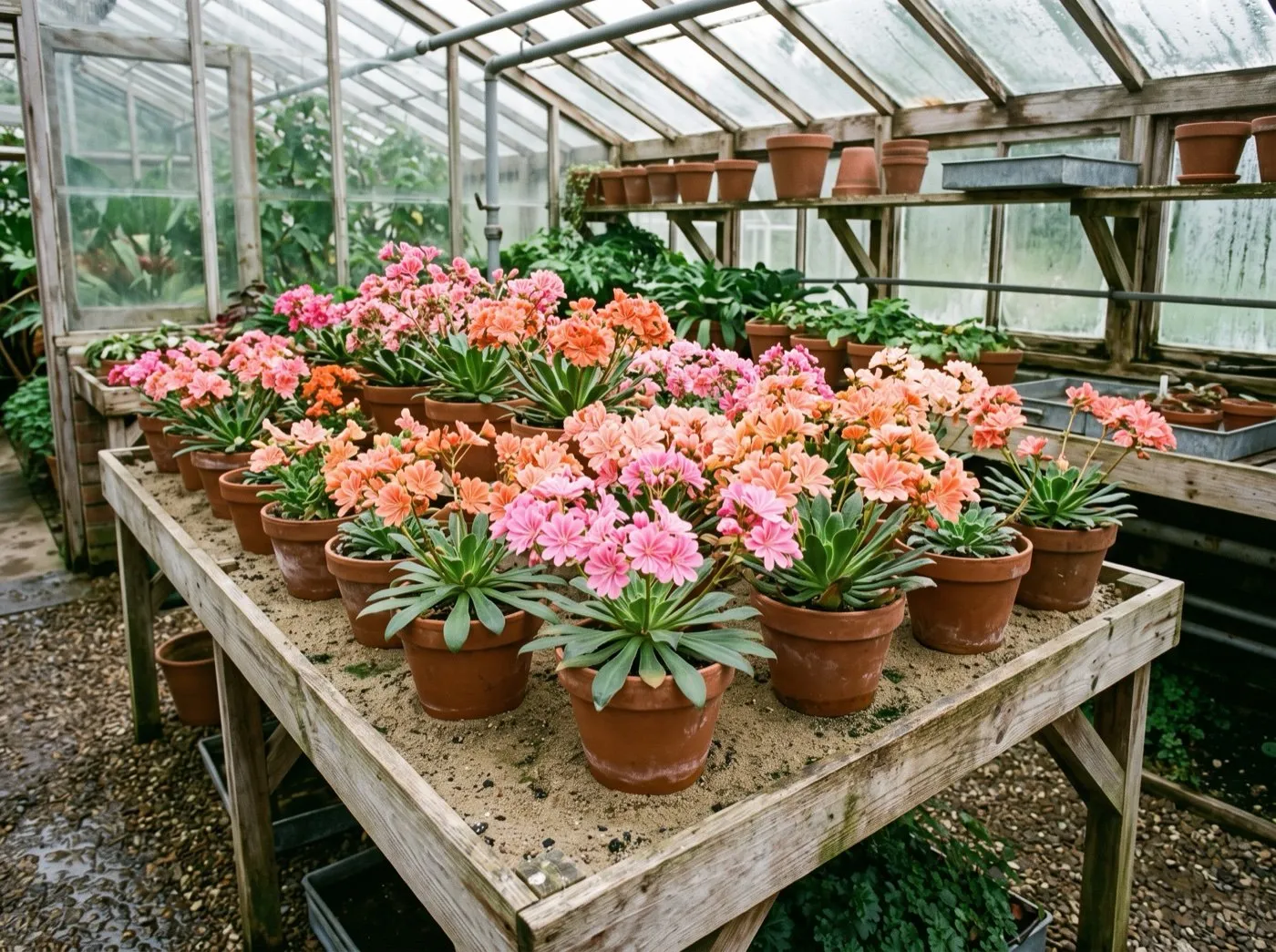 An unheated alpine house is the luxury option: cold, dry and ventilated, exactly the winter lewisia wants.
Frequently asked questions
Why is my lewisia rotting?
Water is sitting in the rosette and rotting the neck, the point where leaves meet root. Lewisia shrugs off cold but not wet. Replant survivors at 45 degrees in a crevice or wall joint, or tuck a 2-3cm collar of grit under the rosette, and never water over the top of the plant. From November to March, keep rain off the crown with a propped pane of glass or a cold frame.
Is lewisia hardy in the UK?
Yes, Lewisia cotyledon is rated RHS H4, hardy to about -10C, and takes most UK winters. Cold is not the problem; a dry lewisia survives hard frost without complaint. Cold combined with wet is what kills it, because saturated compost rots the fleshy neck. Sharp drainage, angled planting and winter rain cover matter far more than temperature.
Is lewisia evergreen?
Lewisia cotyledon and its hybrids are evergreen, holding their fleshy rosettes through winter. That is exactly why winter wet is dangerous: the leaves funnel rain into the crown for twelve months of the year. Some other species behave differently. Lewisia rediviva, the bitterroot, dies down and disappears after flowering, then regrows from the root.
Should I deadhead lewisia?
Yes, snip spent flower stems off at the base as each flush fades. Deadheading stops the plant setting seed and pushes it into repeat flushes through summer. The Elise series responds best of all and will carry flowers into autumn if you keep up with it. Leave one stem to ripen if you want seed to sow.
What is the best compost for lewisia in a pot?
Half John Innes No.2 and half 2-6mm horticultural grit, with a finger-deep grit collar on the surface. Lewisia prefers a neutral to slightly acid mix, so avoid limy compost and hard-water-scaled pots. A terracotta pan or stone trough breathes and dries faster than plastic, which suits the roots. Raise the pot on feet so water clears fast.
How do you water lewisia?
Water the compost at the side of the plant, never over the rosette. A drench-and-dry rhythm suits it: soak the root zone, then leave it until the mix has dried out again. In pots that can mean once a week in a hot spell and not at all in a cool one. From autumn to spring, stop watering almost entirely.
Does lewisia flower in its first year?
The Elise series does, about four to five months after sowing, with no cold period needed. It was bred as a first-year-flowering strain and blooms from spring to autumn. Older seed strains like the Sunset Group usually need a season to build a rosette, plus cold-treated seed, before they flower properly in their second spring.
Once your lewisias are settled in their wall or trough, give them some equally tough flowering company with our guide to growing dianthus and pinks.
Our team produces practical UK gardening guidance from source research, contributor records and established horticultural practice. Editorial standards are overseen by Matt W.