Key takeaways
- Winter wet, not cold, kills most outdoor succulents in the UK, so drainage matters more than minimum temperature
- Sempervivum houseleeks are fully hardy to minus 20C and need no winter cover at all
- Opuntia humifusa and phaeacantha survive minus 20C dry but rot above minus 5C if the crown stays wet
- A raised bed of 50 to 70 percent sharp grit drops local soil moisture enough to save borderline plants
- An overhead rain cover from November to March keeps off winter rain while leaving the sides open for air
- Mild south-west and coastal gardens grow Agave and Echinocereus outdoors that cold northern gardens cannot
Winter wet kills far more hardy cacti and succulents in UK gardens than cold ever does. Sempervivum houseleeks survive minus 20C unprotected, and Opuntia humifusa tolerates the same if its roots stay dry. The whole job is drainage, not heat.
Tender rosette succulents need winter protection, which is why our guide to growing aeonium, including Pink Witch keeps them in pots.
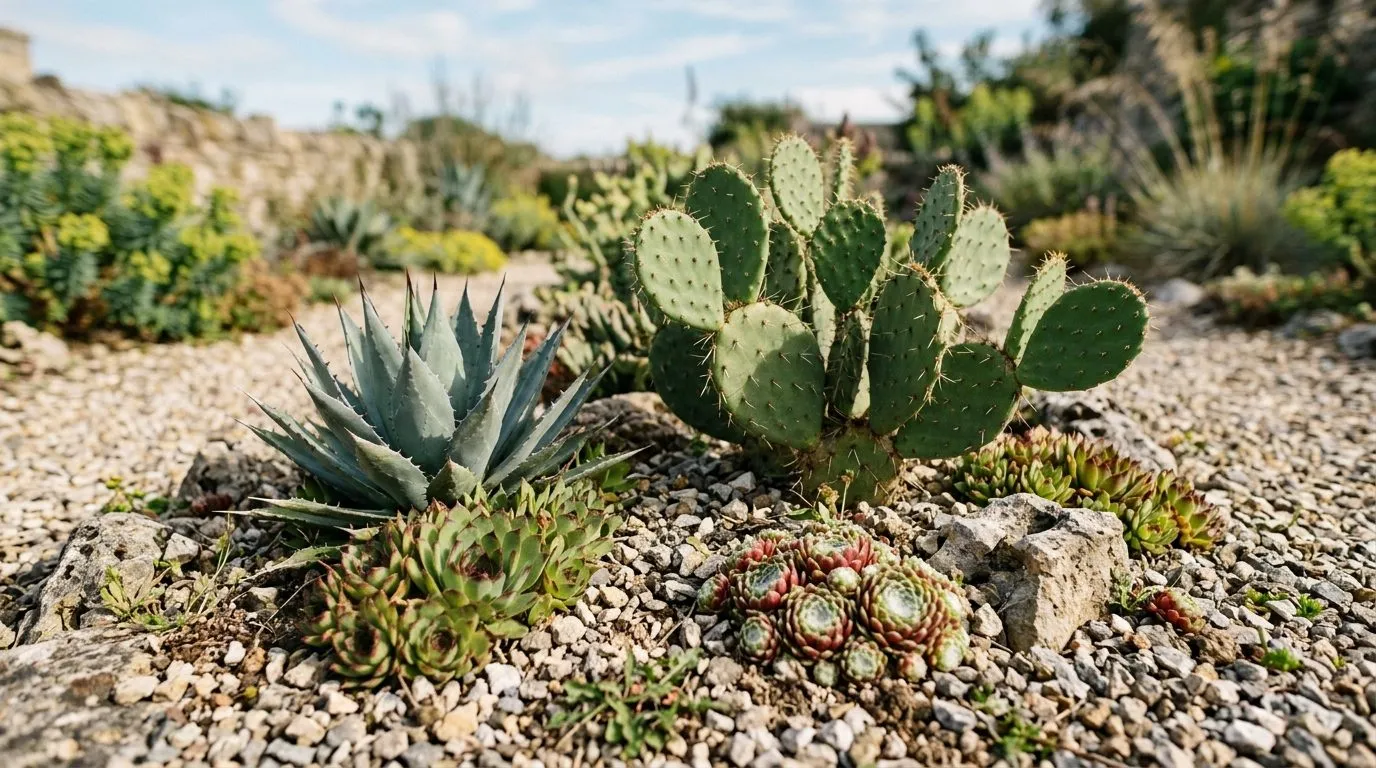
Most gardeners assume a cactus needs warmth to live outside. It does not. A surprising number of cacti and succulents come from high-altitude deserts and prairies where winter nights drop well below freezing. What those plants never face is months of cold rain sitting around their roots. That is the UK problem. Get the water away from the crown and the rest looks after itself.
Why winter wet, not cold, kills succulents
Cold air rarely harms a genuinely hardy succulent, but waterlogged soil rots it from the roots up. A dry Opuntia pad can freeze solid at minus 18C and recover. The same pad sitting in saturated compost at minus 2C turns to mush. Water expands as it freezes, bursting the plant’s cells, and constant damp invites the fungal rots that finish the job.
This is the difference between cold-hardy and wet-hardy. A plant rated to minus 15C on a label is telling you only half the story. That figure usually assumes dry roots. In a soggy UK February, even a tough plant drowns long before the temperature reaches its stated limit. So two things matter more than the minimum temperature: how fast water leaves the soil, and how much rain reaches the crown.
Everything in this guide flows from that single fact. Sharp drainage and overhead cover beat fleece and heaters every time. These are the same principles behind growing other drought-tolerant plants in UK gardens, only pushed harder because succulents store water in their tissues and resent any excess.
Which hardy cacti and succulents survive outdoors
The reliably hardy genera for UK gardens are Sempervivum, Sedum, Delosperma, hardy Opuntia, Echinocereus, Yucca, and a handful of cold-tough Agave. These store water, tolerate frost, and ask only for grit underfoot. The table below gives real minimum temperatures and, most importantly, whether each one survives wet as well as cold.
| Plant | Min temp (dry) | Wet-hardy? | UK regions it suits | Notes |
|---|---|---|---|---|
| Sempervivum (houseleeks) | -20C | Yes | All, including Scotland | The benchmark. Fully hardy, shrugs off rain |
| Sedum (hardy stonecrops) | -20C | Yes | All | Spectabile and acre types tough as old boots |
| Delosperma (hardy ice plant) | -15C | Mostly | South, coastal, sheltered | Flowers all summer; dislikes prolonged wet |
| Opuntia humifusa | -20C | No | South and Midlands, raised beds | Needs dry roots; pads flop in autumn, refill in spring |
| Opuntia phaeacantha | -20C | No | South, mild Midlands | Larger pads; demands overhead cover |
| Opuntia fragilis | -25C | Borderline | Cold and northern gardens | Toughest hardy cactus for Scotland |
| Echinocereus (hedgehog cactus) | -15C | No | South and coastal | Stunning flowers; rots fast if wet |
| Agave montana | -15C | No | South-west, coastal | Hardiest large Agave for the UK |
| Agave parryi | -20C | No | South, sharp drainage | Needs a dry, gravelly slope |
| Yucca filamentosa | -20C | Yes | All | Architectural, very forgiving |
| Cylindropuntia (cholla) | -15C | No | South, raised gritty beds | Spiny; site away from paths |
Read the wet-hardy column first. Anything marked “No” needs the rain-cover routine described below, or a position so freely drained that water never lingers. Sempervivum, Sedum, and Yucca, all marked “Yes”, will grow in an open bed with nothing but added grit.
Sempervivum: the no-fuss starting point
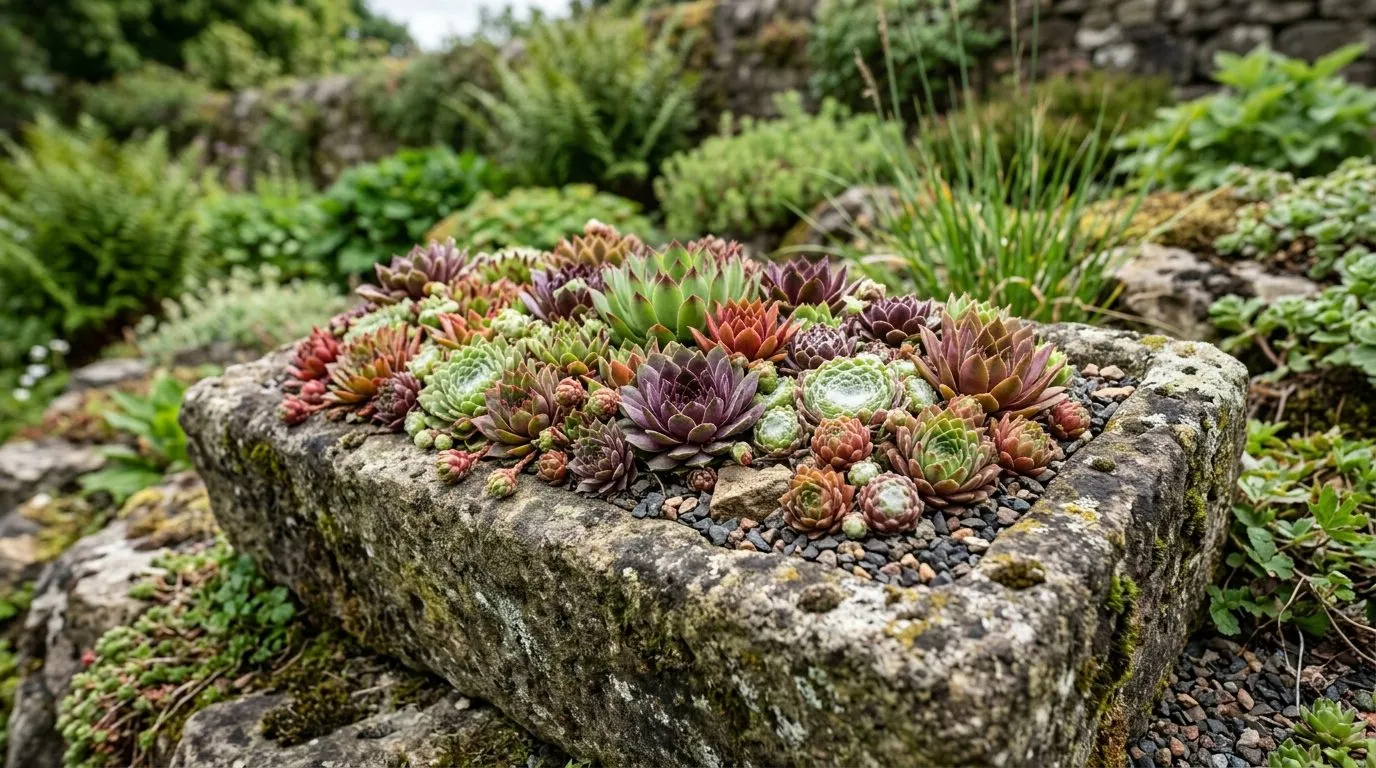
Houseleeks are where every UK succulent grower should begin. They survive minus 20C, ignore rain, and multiply into tight colonies of rosettes. They cope with thin gritty soil on a wall top, a roof, or a stone trough. There are hundreds of named forms in greens, reds, purples, and cobwebbed silvers. Plant them and forget them.
Hardy Opuntia: the prickly pear that lives outdoors
Opuntia is the cactus most people picture, and several species are genuinely hardy here. The pads shrivel and flop forward through autumn. That is not death, it is the plant dehydrating itself so its sap cannot freeze. Come spring it plumps back up and may flower yellow. The catch is the wet. Keep the roots dry and an Opuntia humifusa is bombproof.
How to build a gritty free-draining bed
The core fix is a raised bed of 50 to 70 percent sharp grit, sitting proud of the surrounding soil so water drains away from the crowns. This is non-negotiable on the heavy clay most UK gardens carry. Get the bed right once and the planting is easy.
| Layer | Material | Depth | Purpose |
|---|---|---|---|
| Base | Rubble, broken brick, or coarse hardcore | 10-15cm | Stops the water table rising into the bed |
| Body | 50-70% 6mm grit mixed with topsoil | 25-30cm | Fast-draining root zone |
| Surface | 2-4cm sharp grit or stone chips | 2-3cm | Keeps the crown dry, reflects heat |
Raise the whole structure at least 20cm above ground level, more on clay. A slight slope of around 15 degrees helps rain run off rather than soak in. Use angular 6mm horticultural grit, never builder’s sand, which packs down and holds water. If you are improving a wider area, our soil drainage and structure guide covers the groundwork in detail.
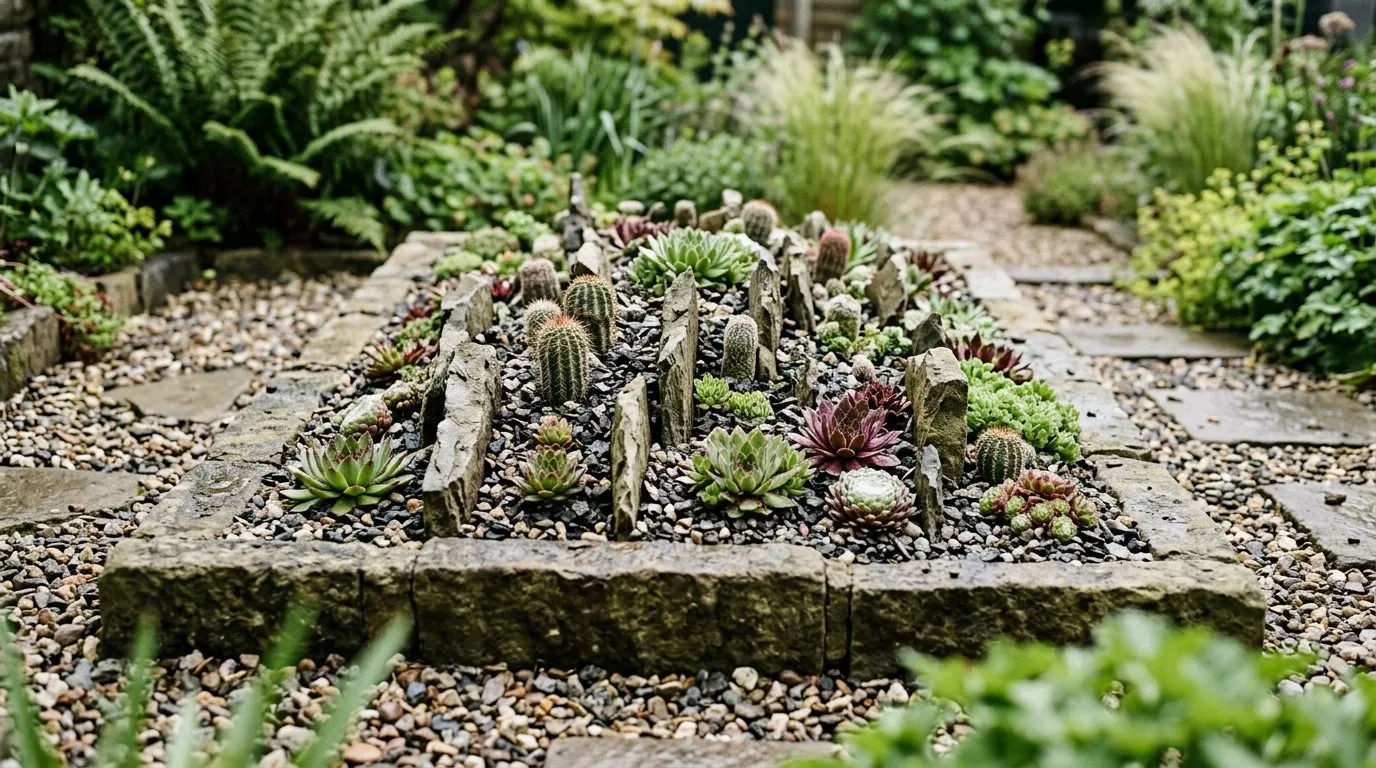
A crevice garden takes this further. Slabs of stone set on edge, packed with grit between them, give roots a cool deep run while the surface stays bone dry. This style suits Sempervivum, Echinocereus, and small Opuntia beautifully. It also looks the part, echoing the structure of a well-made gravel garden where the planting rises out of stone.
Crevice, rockery, and gravel-garden planting
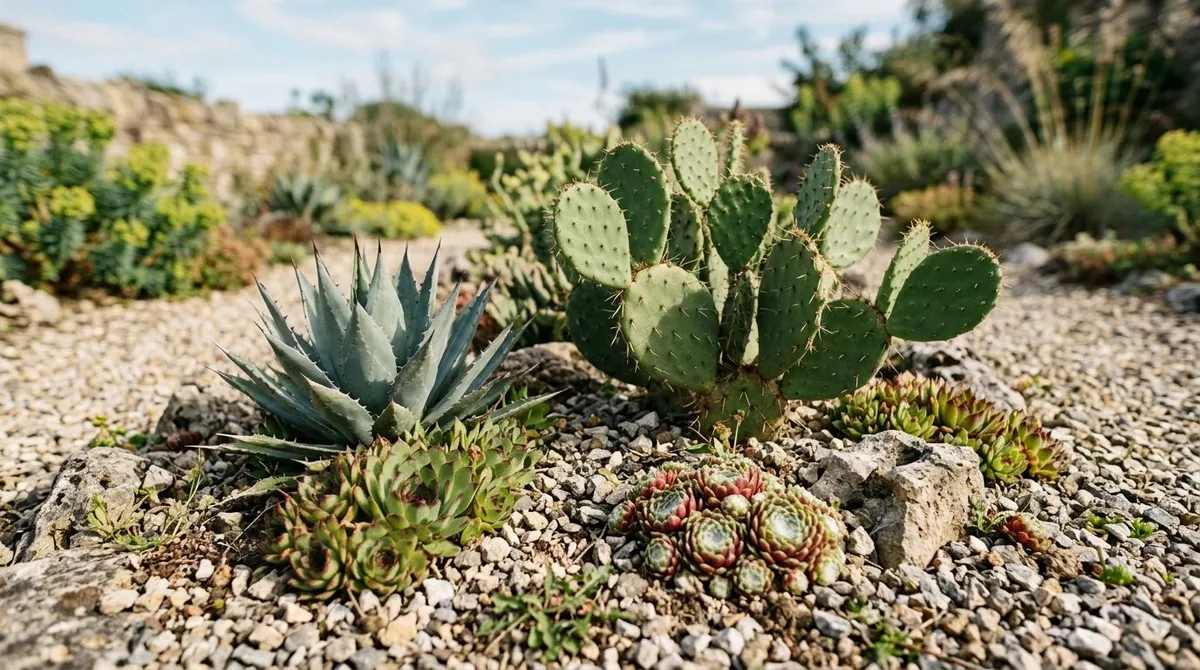
A south-facing rockery or gravel garden gives hardy succulents the heat, sharp drainage, and reflected warmth they crave. These are the natural homes for them in a UK garden. Gravel mulch keeps crowns dry, suppresses weeds, and stores daytime heat that radiates back at night.
Site the planting in the sunniest, driest spot you have, ideally backed by a wall or rock that throws off heat. Tuck rosettes and pads into pockets of pure grit between stones. Avoid hollows where water collects after rain. The look pairs naturally with Mediterranean planting, and the two styles share the same dry, sunny, free-draining brief.
For smaller spaces, an alpine container or stone trough does the same job in miniature. A trough of Sempervivum on a sunny patio is one of the lowest-maintenance plantings in the whole garden.
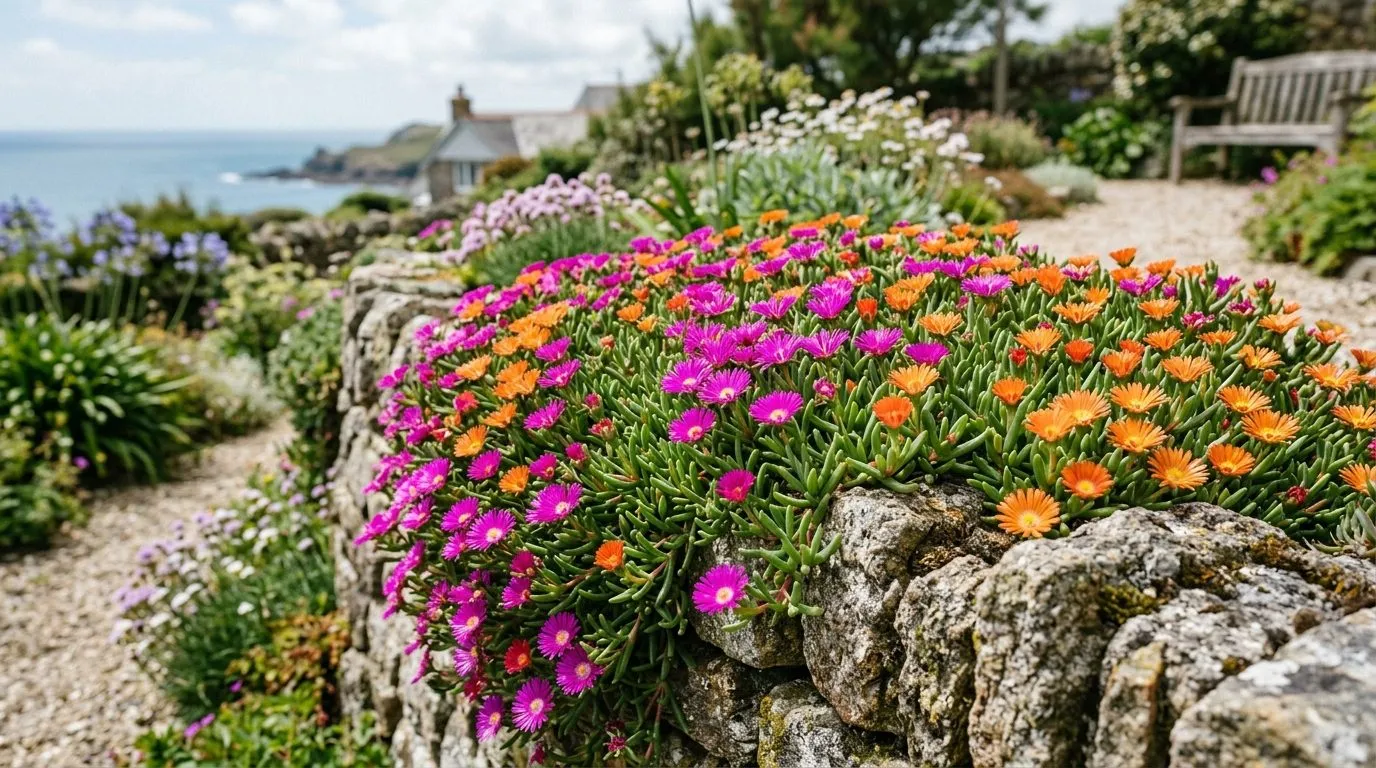
Delosperma, the hardy ice plant, is the exception that earns its place by flowering. It carpets a wall top or bank with vivid daisy-like flowers all summer, then survives to minus 15C if the spot drains hard. It is brilliant tumbling over the edge of a raised bed where excess water can never reach it.
Container culture and winter rain covers
Pots win on drainage but lose on cold, because compost freezes faster in a container than in the ground. Used well, containers let you move borderline plants under cover for winter, which is the simplest way to grow the tender end of “hardy”.
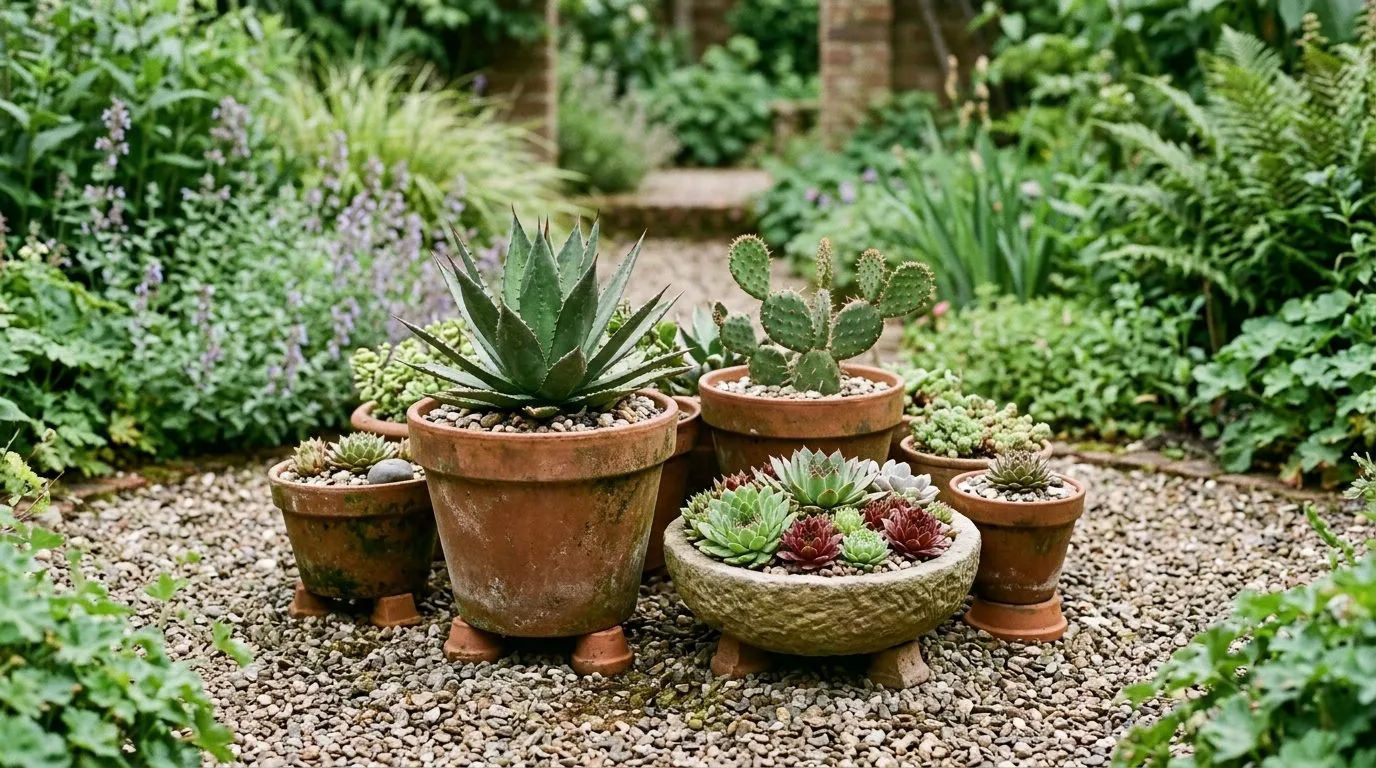
Use terracotta, not plastic, so moisture wicks out through the sides. Fill with a gritty mix of 50 percent grit to 50 percent compost. Stand every pot on feet so the drainage hole never sits in a saucer of water. Through summer this is all you need.
| Factor | Ground (raised bed) | Container |
|---|---|---|
| Drainage | Good once built | Best, fastest |
| Cold protection | Better, soil buffers roots | Worse, roots freeze quickly |
| Winter rain control | Needs an overhead cover | Move it under shelter |
| Flexibility | Fixed | Move to sun or cover at will |
| Best for | Hardiest types, big displays | Borderline Agave, Echinocereus |
The overhead rain cover is the key winter tool for anything marked “No” in the hardiness table. From November to March, rig a clear sheet above the planting while leaving every side wide open. A propped cold-frame lid, a sheet of acrylic on bricks, or a cloche all work. The aim is to keep rain off the crowns, not to trap warmth. Air must move freely or you swap rot for mildew.
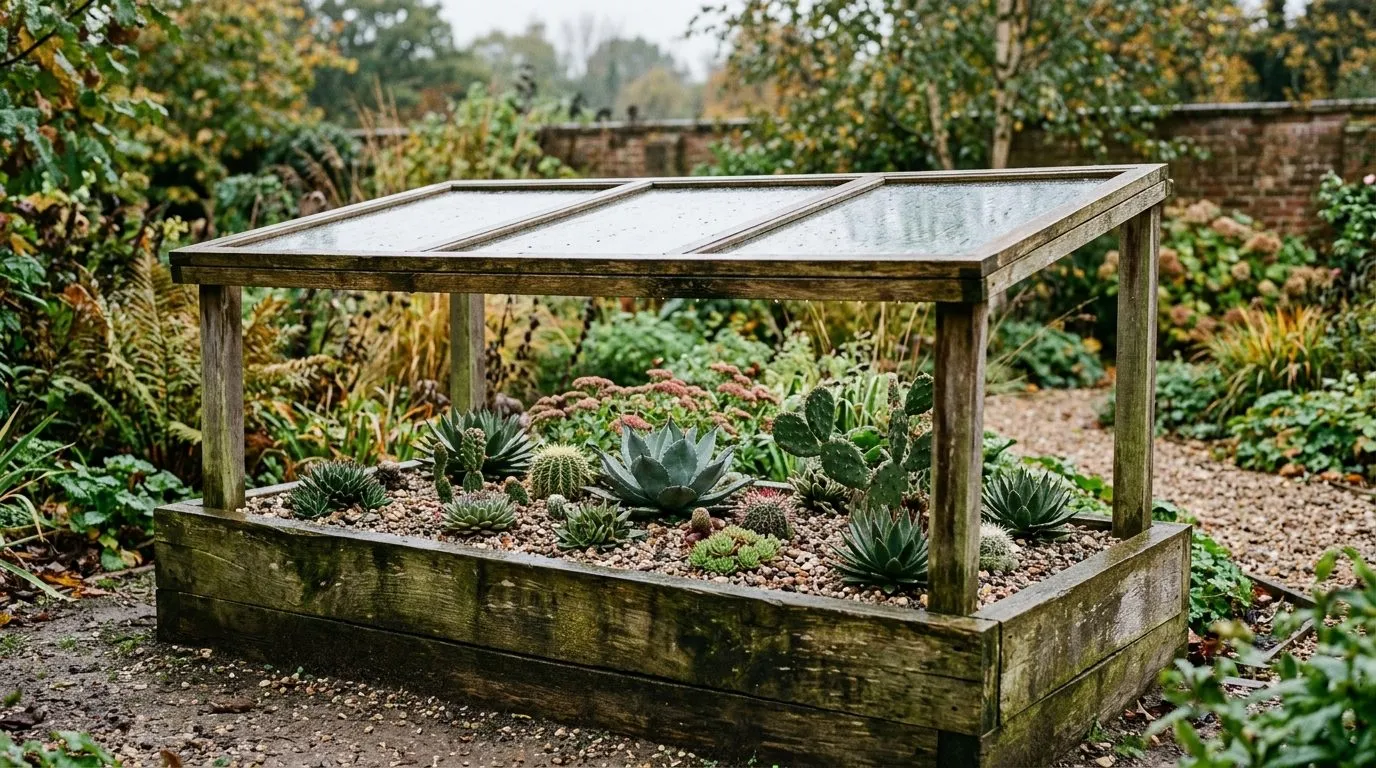
Lift containers of Agave and Echinocereus into an unheated porch, a car-port, or against a house wall under the eaves for the worst months. They do not need heat. They need their compost to stay dry and barely moist until spring.
Regional UK variation: what your garden can grow
Mild south-west and coastal gardens grow Agave and Echinocereus outdoors that cold northern and Scottish gardens cannot keep alive. Your location sets the ceiling on what survives without a greenhouse.
In Cornwall, Devon, Pembrokeshire, and other mild coastal spots, winters rarely drop below minus 5C and frosts are short. Here Agave montana, Echinocereus, and Cylindropuntia grow outdoors year-round with good drainage. The sea keeps the worst cold off.
In the Midlands and most of England, expect minus 8C to minus 12C in a hard winter. Stick to the genuinely hardy core: Sempervivum, Sedum, Yucca, Opuntia humifusa, and Delosperma, all on a raised gritty bed with winter cover for the cacti.
In cold northern England, Scotland, and exposed inland gardens, minus 15C or lower is possible. Opuntia fragilis is the toughest hardy cactus for these conditions. Sempervivum and Sedum thrive. Drop the Agave and Echinocereus, or grow them in pots you can move under cover. For real cold-garden range, pair these with other hardy exotic and tropical plants that handle a northern winter.
Common mistakes that kill outdoor succulents
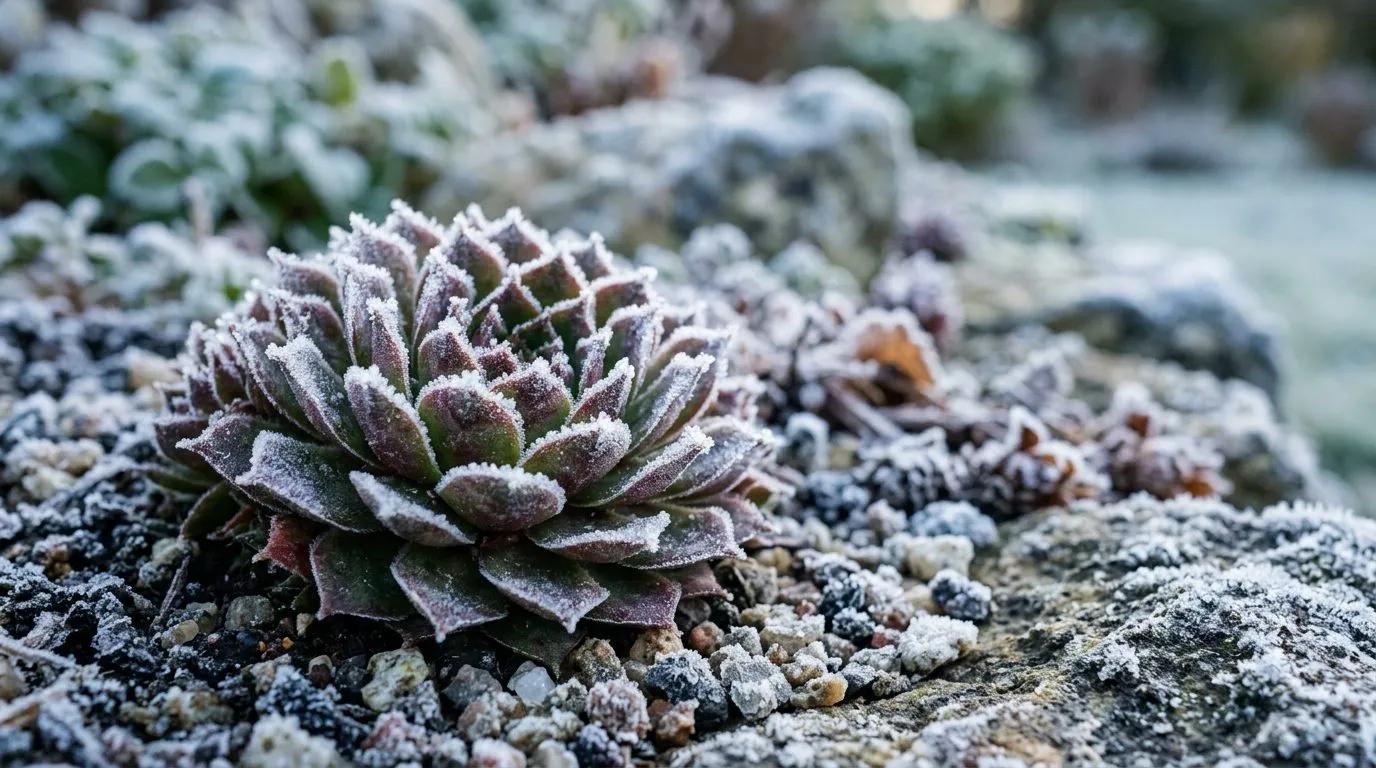
Most outdoor succulent deaths trace back to the same handful of errors, and every one is about water. Avoid these and your survival rate jumps.
Planting in rich compost
Standard multipurpose compost holds far too much water. It stays wet for days and rots roots over winter. Cut it with at least 50 percent grit, or skip it and plant into a gritty topsoil mix. Rich, moisture-retentive soil is the fastest way to lose a hardy cactus.
Skipping the overhead rain cover
People plant a “hardy to minus 15C” cactus, leave it open to the rain, and lose it at minus 3C. The label assumes dry roots. Anything marked “No” in the hardiness table needs a cover from November to March. This is the most common single mistake.
Planting in a hollow or low spot
A dip collects water from the whole surrounding area. Even a hardy plant drowns in a hollow that turns into a puddle after rain. Always plant on a raised mound or slope so water runs away from the crown, never towards it.
Watering in winter
Outdoor succulents need almost no water from October to March. Their roots are barely active and excess moisture rots them. Let them dehydrate naturally. The shrivelled autumn look is healthy, not a sign of thirst.
Choosing cold-hardy over wet-hardy
A plant rated to minus 20C is no use if it cannot stand UK rain. Always check both. Sempervivum and Sedum pass both tests in an open bed. Opuntia and Agave pass the cold test but fail the wet test without sharp drainage and cover.
Frequently asked questions
Can cacti survive winter outdoors in the UK?
Yes, several cacti survive UK winters outdoors if kept dry. Opuntia humifusa and Opuntia phaeacantha tolerate minus 20C when their roots stay dry. The danger is winter rain, not frost. Plant them in a raised gritty bed with overhead rain protection and they come through most UK winters unharmed.
Are succulents hardy in the UK?
Some succulents are fully hardy in the UK, others are not. Sempervivum, Sedum, and Delosperma survive UK winters unprotected. Echeveria, Aeonium, and most Crassula are tender and must come indoors. Always check whether a plant is wet-hardy as well as cold-hardy before planting it outside.
What kills succulents outdoors in winter?
Winter wet kills succulents far more often than cold. Cold air alone rarely harms a hardy succulent. The problem is waterlogged compost freezing and rotting the roots and crown. Sharp drainage and an overhead rain cover prevent almost all winter losses in UK gardens.
Do hardy cacti need to come indoors?
No, fully hardy cacti stay outdoors all year. Opuntia, Echinocereus, and Cylindropuntia species rated to minus 15C or lower stay out if their roots are dry. Tender cacti such as most globular desert species must come into a frost-free greenhouse from October to April.
What is the best drainage for outdoor succulents?
A mix of 50 to 70 percent sharp grit with topsoil drains best. Use 6mm horticultural grit, not builder’s sand, in a raised bed at least 30cm deep. The bed should sit proud of the surrounding ground so water drains away from the crowns rather than pooling around them.
Which succulents survive a Scottish winter outdoors?
Sempervivum and many Sedum survive cold northern and Scottish gardens. They tolerate minus 20C and shrug off frost. Opuntia fragilis is the toughest hardy cactus for cold gardens. Agave and Echinocereus need the milder, drier conditions of southern and coastal gardens to survive outdoors.
How do I protect outdoor succulents from winter rain?
Rig an overhead cover from November to March while leaving the sides open. A clear acrylic sheet on a low frame, an open cold frame lid, or a cloche works well. Keeping rain off the crowns is more important than keeping them warm, so air must still circulate freely.
For deeper botanical detail on individual species and their care, the RHS guide to growing cacti and succulents is a useful companion reference. If you garden mostly under glass or on a windowsill, our separate guide to caring for succulents indoors covers the tender types that never go outside.
Our team produces practical UK gardening guidance from source research, contributor records and established horticultural practice. Editorial standards are overseen by Matt W.