Key takeaways
- Perovskia atriplicifolia was reclassified as Salvia yangii in 2017; gardeners still search both names
- It flowers on new wood, so cut every stem to 15-20cm in April, never in autumn
- Full sun, poor soil and sharp drainage give upright plants; rich or wet ground makes it flop
- Choose by height and flop resistance: 'Blue Spire' 1.2m, 'Little Spire' 70cm, 'Lacey Blue' 60cm
- Leave the silver stems standing all winter for structure and to shield the crown
- Hardy to -15C (H5); wet feet in winter kills far more plants than frost
Russian sage is one of those plants people fall for in a nursery car park and then kill within two years. The airy lavender-blue haze on silver stems looks effortless. The trouble starts when it goes home to rich soil, gets watered, gets fed, never gets pruned properly, and by its second August it is a split, floppy heap held up with string.
It does not have to be like that. Grown the way it wants, on poor soil in full sun with one hard prune a year, Russian sage is close to indestructible. It is drought-proof, shrugs off frost to -15C, feeds bees for three solid months, and asks for almost nothing back.
Is it Perovskia or Salvia? The name change explained
Both names are correct, and that confuses a lot of gardeners. The plant was known for decades as Perovskia atriplicifolia. In 2017 botanists formally reclassified it as Salvia yangii. DNA analysis showed that the small genus Perovskia sat neatly inside the much larger genus Salvia, so the rules of naming folded it in. The RHS, Kew and most serious nurseries now use Salvia yangii, usually printing “(Perovskia)” alongside so people still recognise it.
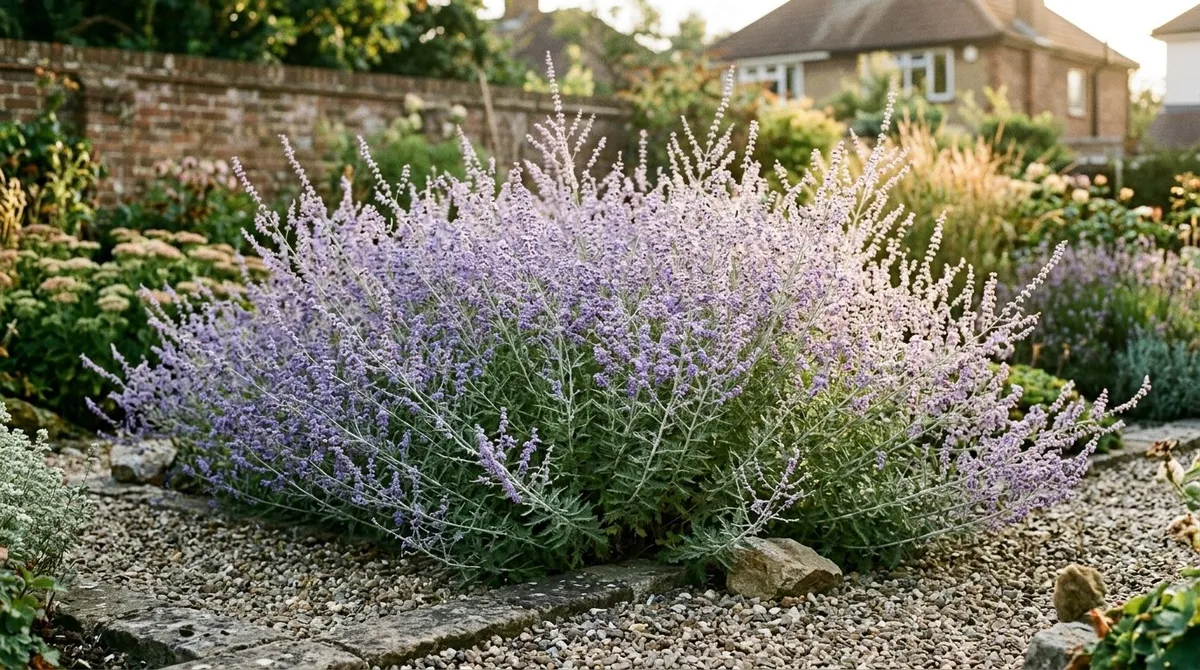
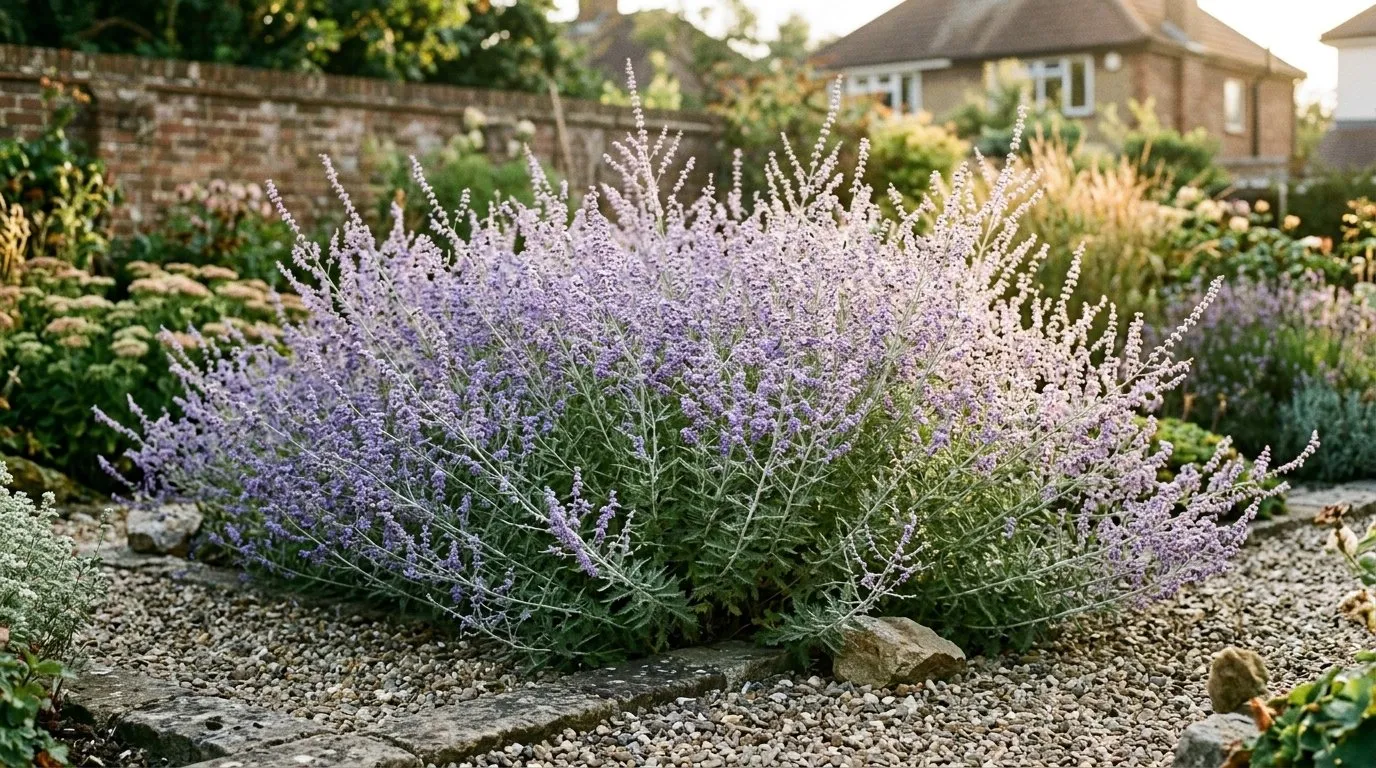 A well-grown drift of Russian sage: lean soil and a hard spring prune keep the silver stems upright under the flower haze.
The one job that makes or breaks Russian sage: the spring prune
Russian sage flowers on new wood, which means the whole plant depends on how you prune it. Every flower spike you get this summer grows from wood the plant makes this spring. Old stems left long produce a sparse, leggy, top-heavy plant. Cut hard, the same plant pushes dozens of strong fresh shoots from low down and carries far more flower on stems that hold themselves up.
The rule is simple. In early to mid-April, once you can see fresh grey-green buds breaking low on the stems, cut every stem down to 15-20cm. Use sharp bypass secateurs and do not be timid. You are leaving short stubs with a few live buds each. Within weeks the plant erupts with new growth, and by July it is a self-supporting dome of silver and blue.
Do this in spring, never autumn. It matters for two reasons. The bleached silver stems are one of the best things about the plant over winter, catching frost and low sun when the border is bare. And cutting the plant to the ground in autumn exposes the crown to months of cold, wet soil, which is exactly what rots it. Leave the stems, enjoy the winter structure, and prune in April.
Gardener’s tip: If you are nervous about cutting so hard, look at the base of the plant in late March. You will see small pairs of new leaves pushing from the woody lower stems. Cut to just above the highest strong pair on each stem, roughly 15cm up. That guarantees you keep live buds while still forcing the thick, bushy regrowth that stops the plant flopping.
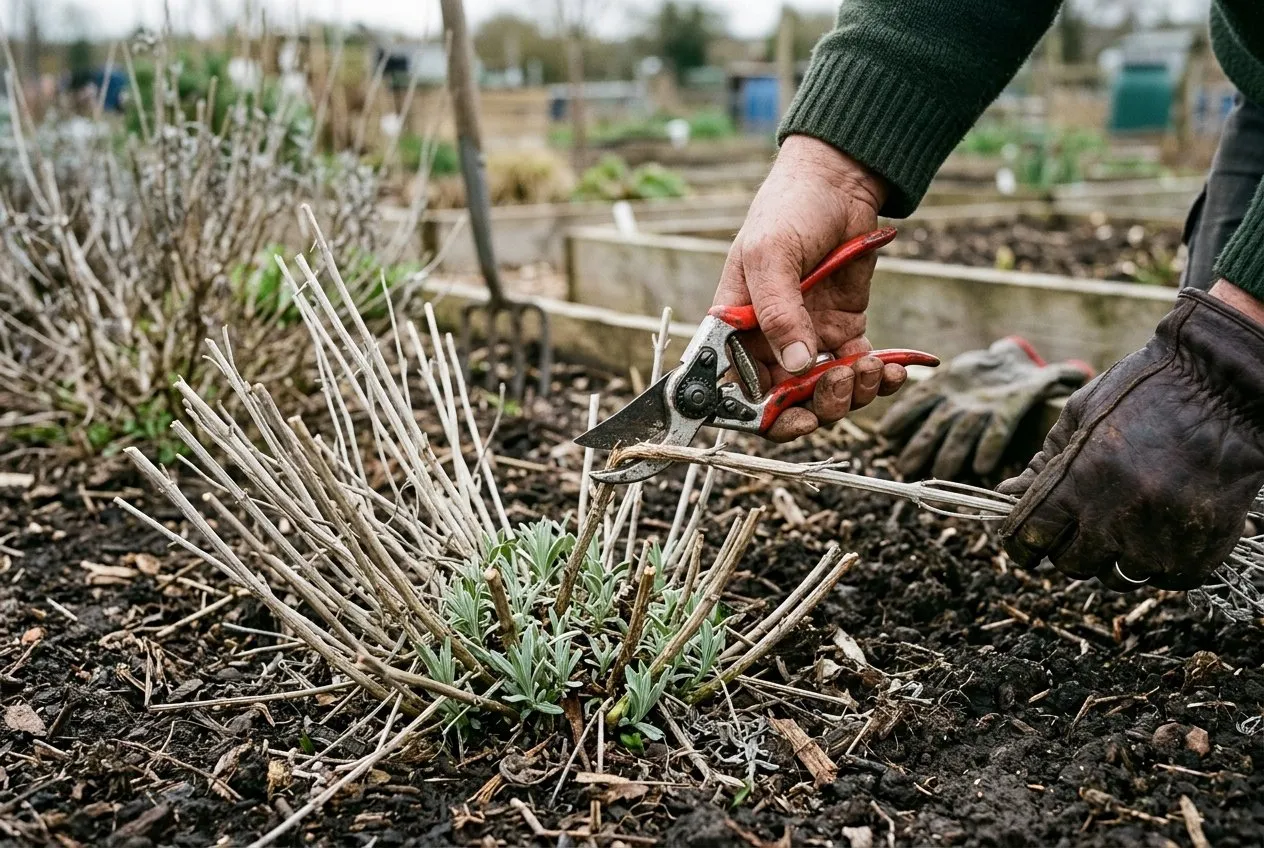 The April prune: cut every stem to 15-20cm above the new basal shoots. This is the single job that keeps the plant upright.
Choosing a variety: height and flop resistance compared
Pick your cultivar by height and how well it stands up, because that decides whether you ever reach for a stake. The species can reach 1.5m and is the floppiest of the lot. Breeders have since selected shorter, sturdier forms, and for most UK borders one of those is the better buy.
‘Blue Spire’ is the one you will see most often and the one that holds the RHS Award of Garden Merit. It is tall, around 1.2m, with the biggest, most generous flower haze. It is also the most likely to flop if you feed it, water it or skip the spring prune. ‘Little Spire’ is a compact selection at about 60-70cm, denser and much more self-supporting, though it can still lean on rich or wet soil. ‘Lacey Blue’ (sold as ‘Lisslitt’) is the shortest and sturdiest, roughly 50-60cm, bred specifically to stay upright without staking. For a windy or exposed garden, or anyone who hates tying things up, start with ‘Lacey Blue’ or ‘Little Spire’.
Russian sage variety comparison
| Cultivar | Height | Habit | Flop resistance | Flowering | RHS AGM |
|---|---|---|---|---|---|
| Species (S. yangii) | 1.2-1.5m | Open, airy | Poor | Jul-Oct | No |
| ’Blue Spire’ | 1.2m | Tall, arching | Moderate | Jul-Oct | Yes |
| ’Little Spire’ | 60-70cm | Compact, upright | Good | Jul-Sep | No |
| ’Lacey Blue’ | 50-60cm | Dense, low | Excellent | Jul-Sep | No |
| ’Blue Steel’ | 1m | Upright | Good | Aug-Oct | No |
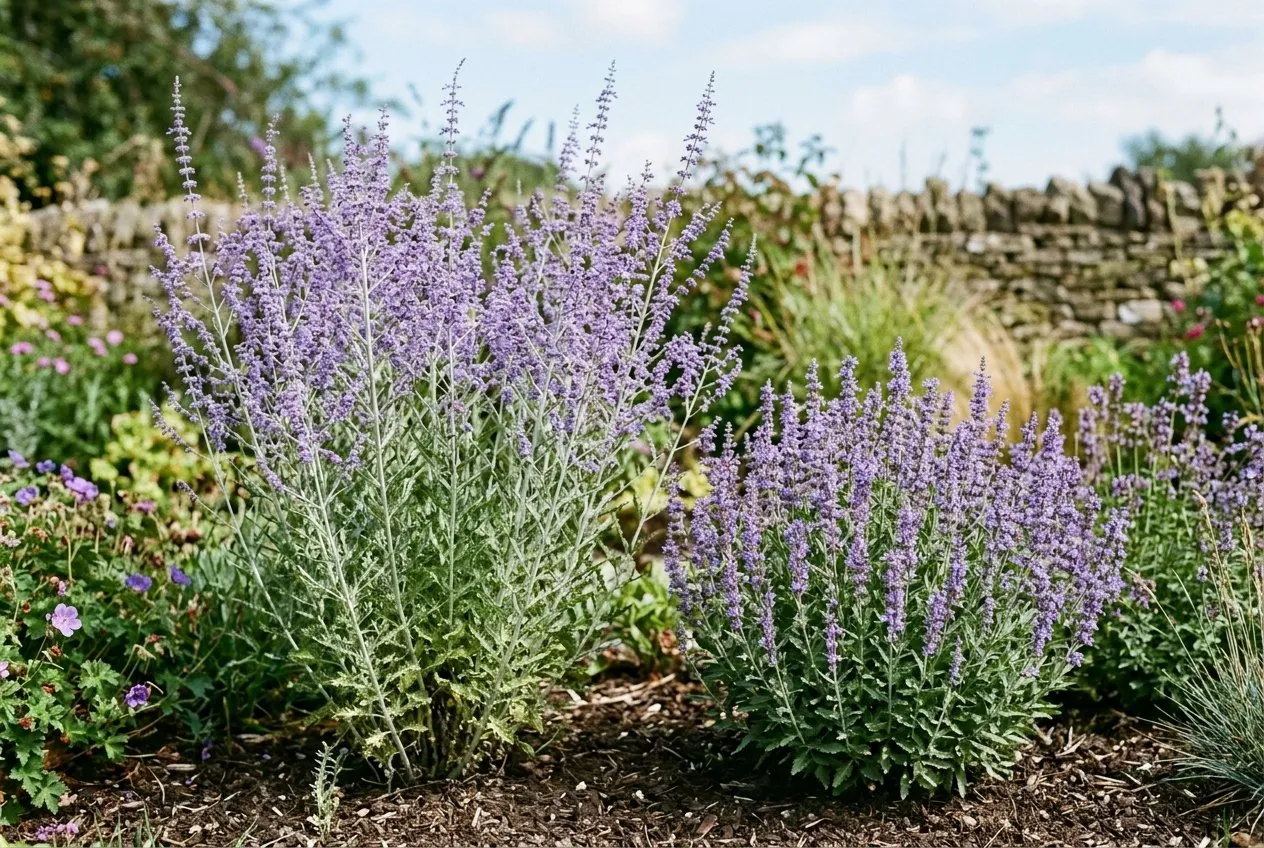 ‘Blue Spire’ (left) against the compact ‘Little Spire’ (right). The shorter cultivar stands up on its own; the tall one needs a hard prune to match it.
Soil and drainage: why poor and dry beats rich and moist
Russian sage wants the opposite of a pampered border plant. Poor, stony, free-draining soil in full sun produces short, tough, upright stems packed with flower. Rich, moist, fertile ground produces soft, sappy, over-tall growth that flops and rots. This is the single most misunderstood thing about the plant, and it is why so many well-meaning gardeners kill it with kindness.
A neutral to slightly alkaline pH is ideal, and it is entirely happy on chalk. Do not add manure or compost to the planting hole. Lean soil is the goal, not fertility.
Warning: Never plant Russian sage in soil that stays wet in winter. Cold does not kill it; waterlogging does. A plant rated hardy to -15C will rot and die at 0C if its roots sit in saturated clay from November to March. If you cannot give it sharp drainage in the ground, grow it in a raised bed or a large gritty pot instead.
How to plant Russian sage for upright, long-lived clumps
Plant Russian sage in spring, from April to early June, so it has the full season to root in before its first winter. Pot-grown plants can go in through summer if you keep them watered for the first few weeks, but avoid autumn planting on cold, wet soil.
Choose the sunniest, driest spot you have. Dig a hole the width of the rootball and no deeper. On clay, mix a couple of handfuls of grit into the base and the backfill, and set the plant slightly proud so its crown sits above the surrounding soil. Firm it in and water once to settle the roots. Space plants 45-60cm apart, closer for the compact cultivars, so air moves freely around the stems and the clumps knit into a drift without crowding.
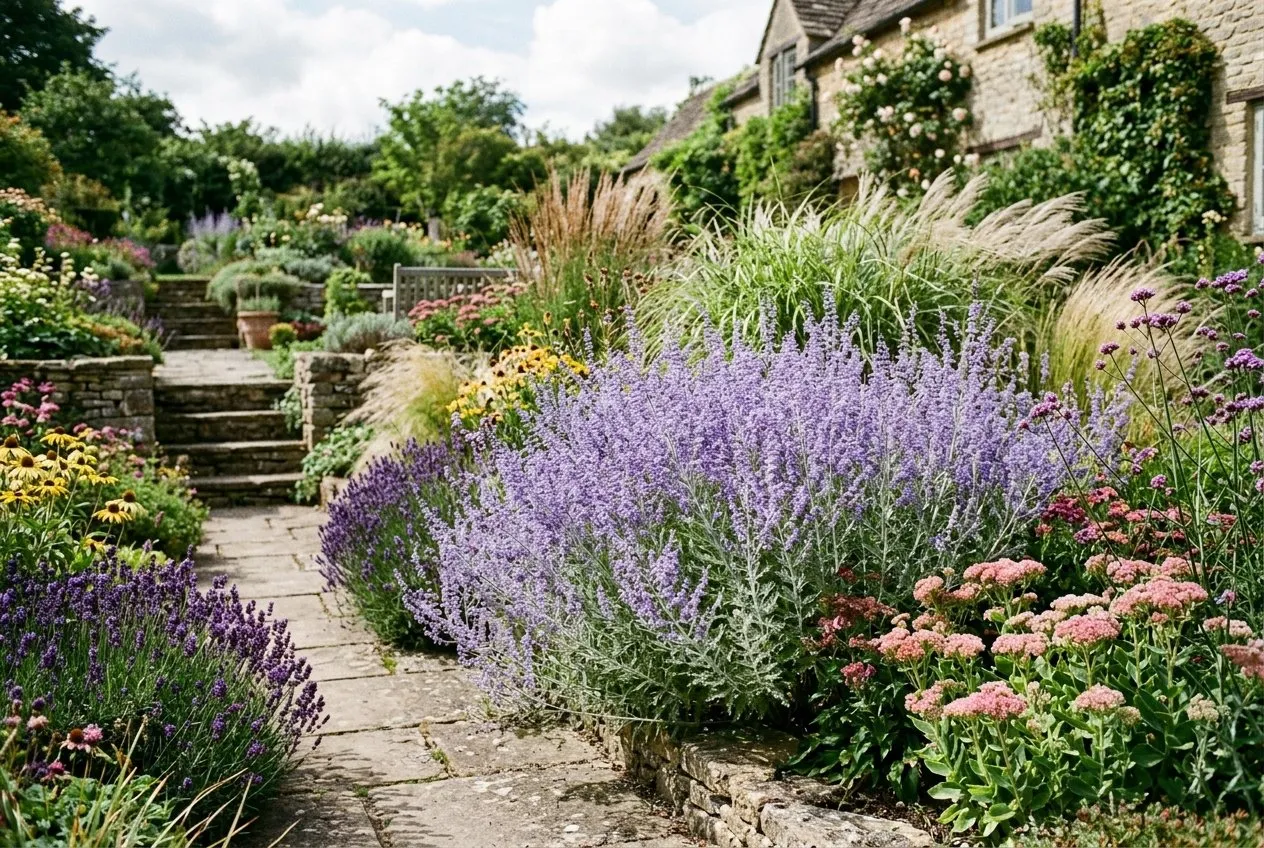 Planted 45-60cm apart in full sun, Russian sage knits into an airy blue drift that reads from across the garden.
Watering, feeding and year-round care
Once established, Russian sage needs almost no watering and no feeding at all. This is a plant that thrives on neglect. Water new plants through their first summer, roughly once a week in dry spells, until the roots take hold. After that first year, leave it alone. It is genuinely drought-proof and will out-perform half the border in a hot, dry July.
Feeding is actively harmful. A dose of fertiliser pushes soft, leafy, over-tall growth that flops and carries fewer flowers. Never feed it. If you mulch, use grit or gravel, not compost. The leaner and meaner you keep the soil, the better the plant stands and the more it flowers. This is one of the very few border plants where doing less genuinely gives you more.
Beyond the April prune, there is no deadheading to do. The flowers fade to a soft silvery grey that still looks good, and the seed heads and bleached stems carry the plant through autumn and winter. Leave everything standing until spring. The whole of the plant’s care fits into one job: cut it hard in April, then step back.
Month-by-month Russian sage calendar
| Month | Task |
|---|---|
| January | Nothing to do; enjoy the frosted silver stems for winter structure |
| February | Leave stems standing; check the crown is not sitting in water |
| March | Look for new basal shoots breaking low on the stems |
| April | The key job: cut every stem hard to 15-20cm above the new shoots |
| May | Clear weeds; take softwood cuttings from strong new shoots |
| June | New growth bulks up fast; water only if newly planted |
| July | First lavender-blue flowers open; bees begin working the spikes |
| August | Peak flowering; take semi-ripe cuttings if you want more plants |
| September | Full flower continues; still no feeding or watering needed |
| October | Last flowers fade to silvery grey; leave everything standing |
| November | Do not cut back; the stems shield the crown and add structure |
| December | Leave stems for winter interest; ensure no water pools at the base |
Why Russian sage floods a border with bees
Russian sage is one of the best late-summer nectar plants you can grow, and that is a big part of why it earns its space. Each long spike carries hundreds of small tubular florets that open in sequence over many weeks. From July into October, when a lot of the border is going over, it is still humming.
Bumblebees are the main visitors, but honeybees and solitary bees work it too, along with hoverflies and the occasional butterfly. Because it flowers for so long and holds up in heat and drought, it plugs the late-summer nectar gap better than almost anything. If you are planting for pollinators, group it with other bee-friendly garden plants so the insects find a concentrated, reliable food source. The Bumblebee Conservation Trust lists long-season, nectar-rich plants like this among the best for supporting bumblebees through late summer (bumblebeeconservation.org).
Never spray it. Aphids occasionally gather on the soft new shoots but rarely cause harm, and ladybirds and hoverfly larvae clear them quickly. A plant this valuable to pollinators should never see an insecticide.
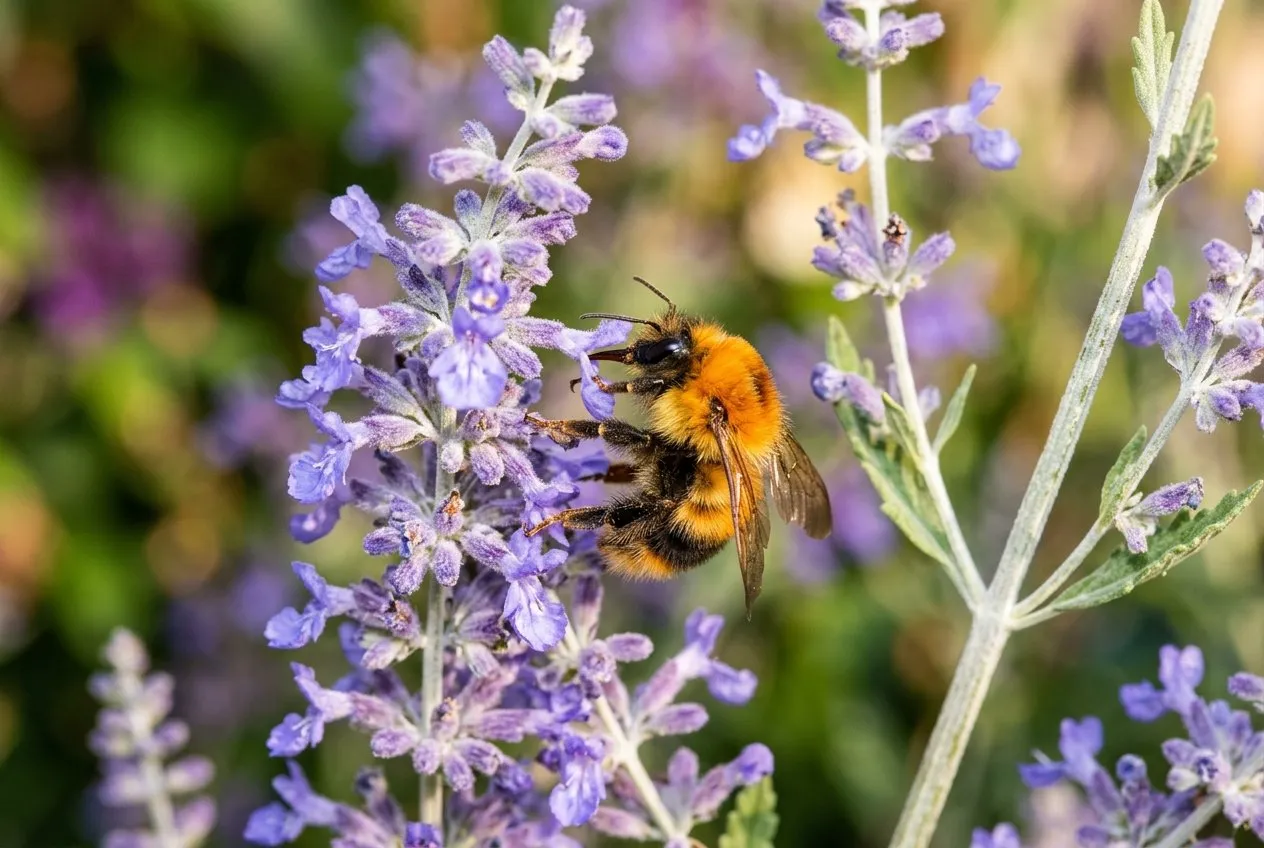 A bumblebee working a spike. The florets open in sequence over weeks, feeding pollinators right through the late-summer gap.
The aromatic silver foliage and winter structure
Half the value of Russian sage has nothing to do with the flowers. The finely cut, silver-grey foliage is aromatic, releasing a sharp, sage-like scent when brushed or crushed. That scent is a bonus for the gardener and a quiet deterrent to grazing deer and rabbits, which tend to leave it alone. The silver colour also lifts and cools hot planting schemes, calming down reds and oranges and sitting quietly with pastels.
The white, square stems are the other half. Left standing through winter, they bleach to a pale silvery skeleton that catches frost and low winter sun. In a bare December border that structure is worth a great deal, which is the practical reason, on top of protecting the crown, that you never cut the plant back in autumn. It gives you a second season of interest for free.
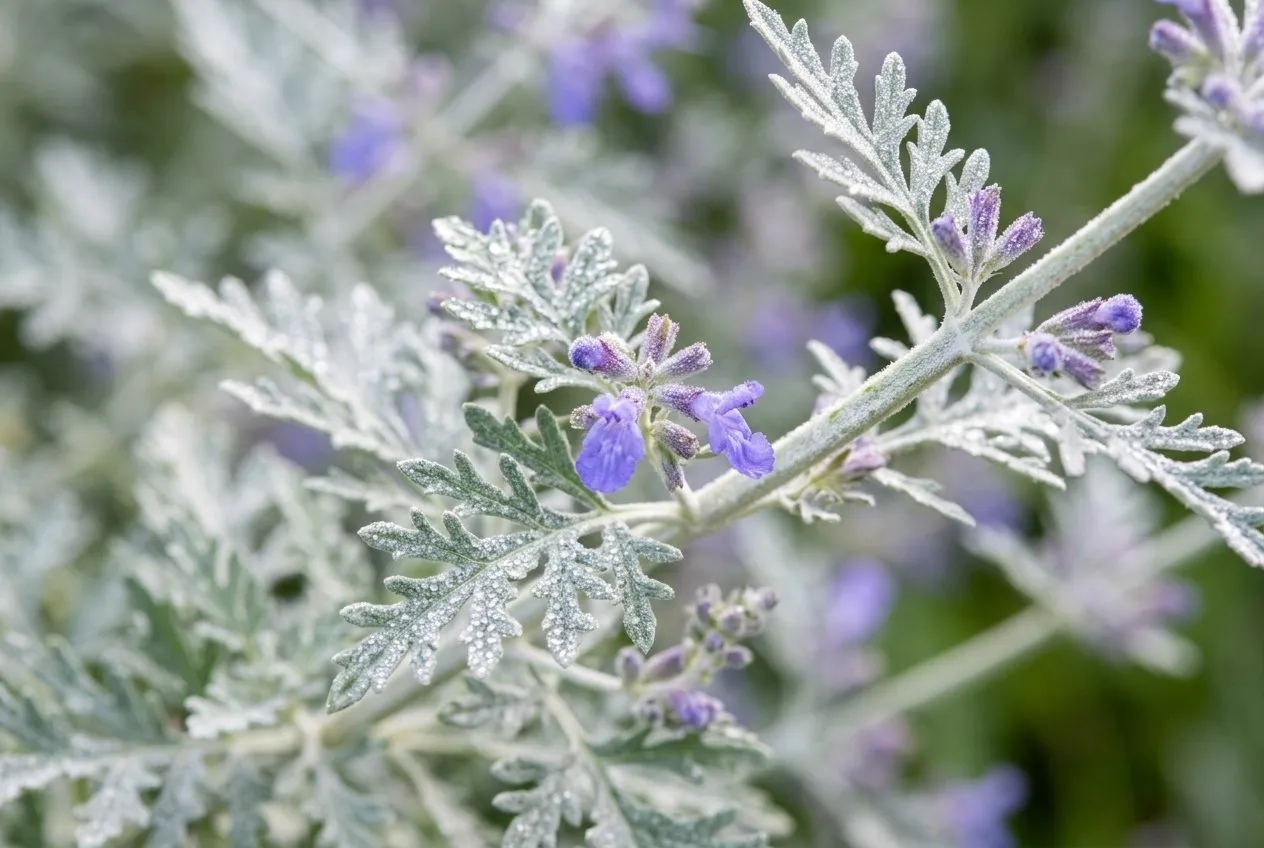 The aromatic silver foliage and white square stems earn their place even before the flowers open.
Propagating Russian sage from cuttings
Russian sage roots readily from cuttings, so one plant quickly becomes a drift for nothing. Two methods work, depending on the time of year. Softwood cuttings in late spring, roughly May, are the fastest to root. Semi-ripe cuttings in summer, July to August, are a little slower but very reliable.
Take a non-flowering shoot 8-10cm long, cut just below a leaf joint, and strip the leaves from the lower half. Push several cuttings around the edge of a pot of gritty, free-draining compost, a 50:50 mix of multipurpose and horticultural grit or perlite. Keep them somewhere bright but out of direct scorching sun, and do not let the compost stay wet. Softwood cuttings usually root within three to four weeks, semi-ripe ones by autumn.
Established clumps also throw up suckers from the spreading roots. In spring you can lift a rooted sucker with a hand fork, pot it on, or replant it straight away. It is the quickest way of all to make new plants, and it is free. If you enjoy raising your own, the same gritty, low-water approach works for its close relatives, covered in our guide to growing salvias in the UK.
Common mistakes when growing Russian sage
Nearly every failed Russian sage traces back to one of a handful of errors. Get these right and the plant is close to foolproof.
Pruning in autumn instead of spring
Cutting the plant to the ground in autumn is the classic mistake. It strips away the winter structure and, worse, exposes the crown to months of cold, wet soil that rot it. Always leave the stems standing over winter and cut hard in April, when the plant flowers on the new wood it makes that spring.
Growing it in rich or moist soil
Fertile, damp ground gives soft, over-tall growth that flops and dies young. Russian sage wants poor, stony, sharply drained soil in full sun. Do not dig manure or compost into the hole, and never feed it. Lean and dry is what keeps it upright and long-lived.
Never pruning, so it goes woody and bare
Skip the spring prune and the plant grows leggy, woody at the base, and sparse up top, flopping open in the middle. A hard April cut to 15-20cm forces the thick, bushy, self-supporting regrowth that carries all the flower. This is not optional maintenance; it is the core of growing it well.
Planting a tall cultivar where a compact one belongs
Putting ‘Blue Spire’ in a windy, exposed or narrow bed sets you up for a staking battle. Match the cultivar to the site. For exposure, small gardens or anyone who dislikes staking, plant the compact ‘Little Spire’ or ‘Lacey Blue’, which stand up on their own.
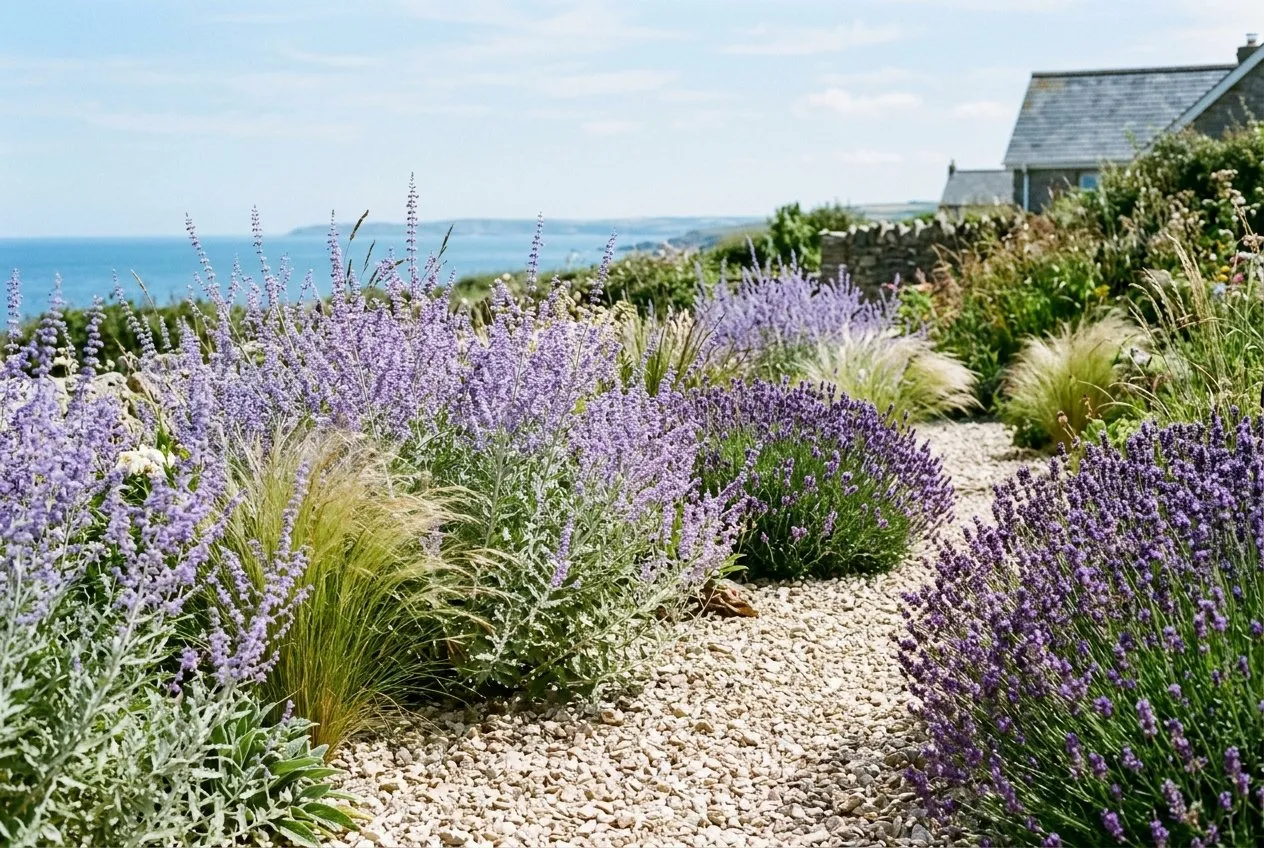 In a sharply drained gravel bed with lavender and grasses, Russian sage gets exactly the lean, sunny conditions it evolved for.
Designing with Russian sage in the border
The airy, see-through habit makes Russian sage one of the most useful design plants going. You can plant it near the front of a border and still see through the haze to what is behind, so it softens and veils rather than blocks. That transparency is why designers love it in prairie and gravel schemes, drifting through grasses and rising between bolder shapes.
Place the tall ‘Blue Spire’ mid-border where its 1.2m haze can carry, and use the compact ‘Little Spire’ or ‘Lacey Blue’ toward the front. Plant in groups of three or five rather than dotting singles about, and the drift reads as a deliberate, confident sweep of blue.
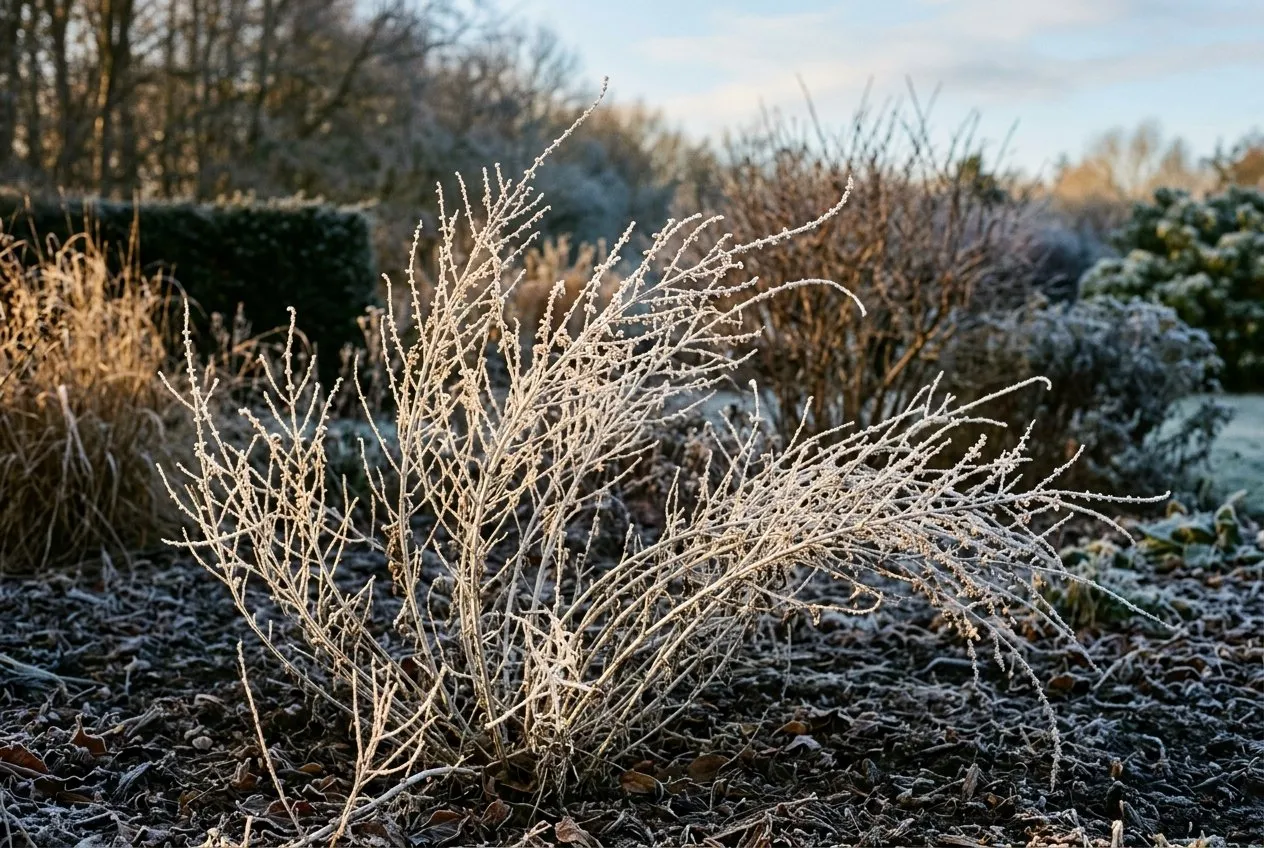 The winter skeleton: leave the bleached silver stems standing until April for structure, frost interest and crown protection.
Frequently asked questions
Is Russian sage a Perovskia or a Salvia?
Both. Botanists moved it from Perovskia atriplicifolia to Salvia yangii in 2017. DNA work showed the old genus Perovskia sat inside Salvia, so the name changed. Nurseries and the RHS now list it as Salvia yangii, often with ‘Perovskia’ in brackets. The plant is identical; only the label moved.
When should I cut back Russian sage?
In early to mid-April, cutting every stem to 15-20cm. Russian sage flowers on new wood, so a hard spring prune gives thicker, self-supporting stems and more flower. Never cut it back in autumn. The silver winter stems protect the crown and give structure, and autumn pruning exposes the base to cold, wet soil.
Why is my Russian sage flopping?
It is usually too rich, too wet, too shady, or unpruned. Soft, lush growth on fertile or damp soil cannot hold itself up. Grow it in full sun on poor, free-draining ground, never feed it, and cut it hard each April. If it still flops, switch to a compact cultivar like ‘Little Spire’ or ‘Lacey Blue’.
Does Russian sage need full sun?
Yes, it needs at least six hours of direct sun a day. Full sun keeps the stems short and upright and drives strong flowering. In shade the plant stretches, leans and flowers poorly, and the silver foliage loses its brightness. It also copes with heat, drought and poor soil better than almost any other border perennial.
Is Russian sage good for bees?
Yes, it is one of the best late-summer bee plants you can grow. The long spikes carry hundreds of small nectar-rich florets that open over many weeks from July to October. Bumblebees, honeybees and solitary bees all work it, and it bridges the late-summer nectar gap when many border plants have finished.
How hardy is Russian sage in the UK?
Very hardy, rated RHS H5, surviving to about -15C. Cold is rarely the problem in Britain. Winter wet is. A plant on heavy, saturated soil rots at the base even in a mild winter, while the same plant on sharp drainage shrugs off hard frost. Fix the drainage and hardiness stops being an issue.
How do I propagate Russian sage?
Take softwood cuttings in late spring or semi-ripe cuttings in summer. Snip non-flowering shoots 8-10cm long, strip the lower leaves, and root them in gritty, free-draining compost. Softwood cuttings in May root fastest. Established plants also throw up suckers you can lift and pot on in spring.
With the drainage and the April prune sorted, Russian sage runs itself; keep the same lean, sunny approach going with our guide to growing lavender in the UK, its perfect partner in a hot, dry bed.
Our team produces practical UK gardening guidance from source research, contributor records and established horticultural practice. Editorial standards are overseen by Matt W.