Key takeaways
- Cold after planting (vernalisation) is the main bolting trigger in the UK
- Use sets under 20mm; large sets bolt far more often
- Plant March to mid-April; very early planting risks a cold snap
- Choose bolt-resistant sets: Sturon, Hercules, Senshyu, Setton
- Snap the flower stalk off low the day you spot it
- Bolted bulbs stay small, go woody, and will not store
Onions bolt when they think winter has come and gone. A cold spell after planting flips a switch inside the bulb and it sends up a flower stalk instead of swelling. The fix is mostly about set choice and timing, not luck. This guide keeps to prevention, variety choice, and the one thing to do the day a stalk appears.
What Actually Makes Onions Bolt
Bolting is the onion flowering early instead of bulking up. The trigger is vernalisation, a cold period the plant reads as a finished winter.
A set is already a small bulb with a tiny flower embryo inside. Give it a run of cold nights after planting and that embryo wakes up. The plant then pours its energy into a seed head, not the bulb.
Four things raise the risk in UK gardens:
- Cold after planting. A frosty fortnight in March is the classic trigger.
- Large sets. Anything thicker than 20mm holds a more developed flower embryo.
- Drought stress. A dry spell checks growth and pushes the plant to flower.
- Very early planting. Late February sets sit through more cold than April ones.
Day length plays a smaller part. UK maincrop onions are long-day types and respond to the lengthening days of May and June, but cold is the lever you can actually pull.
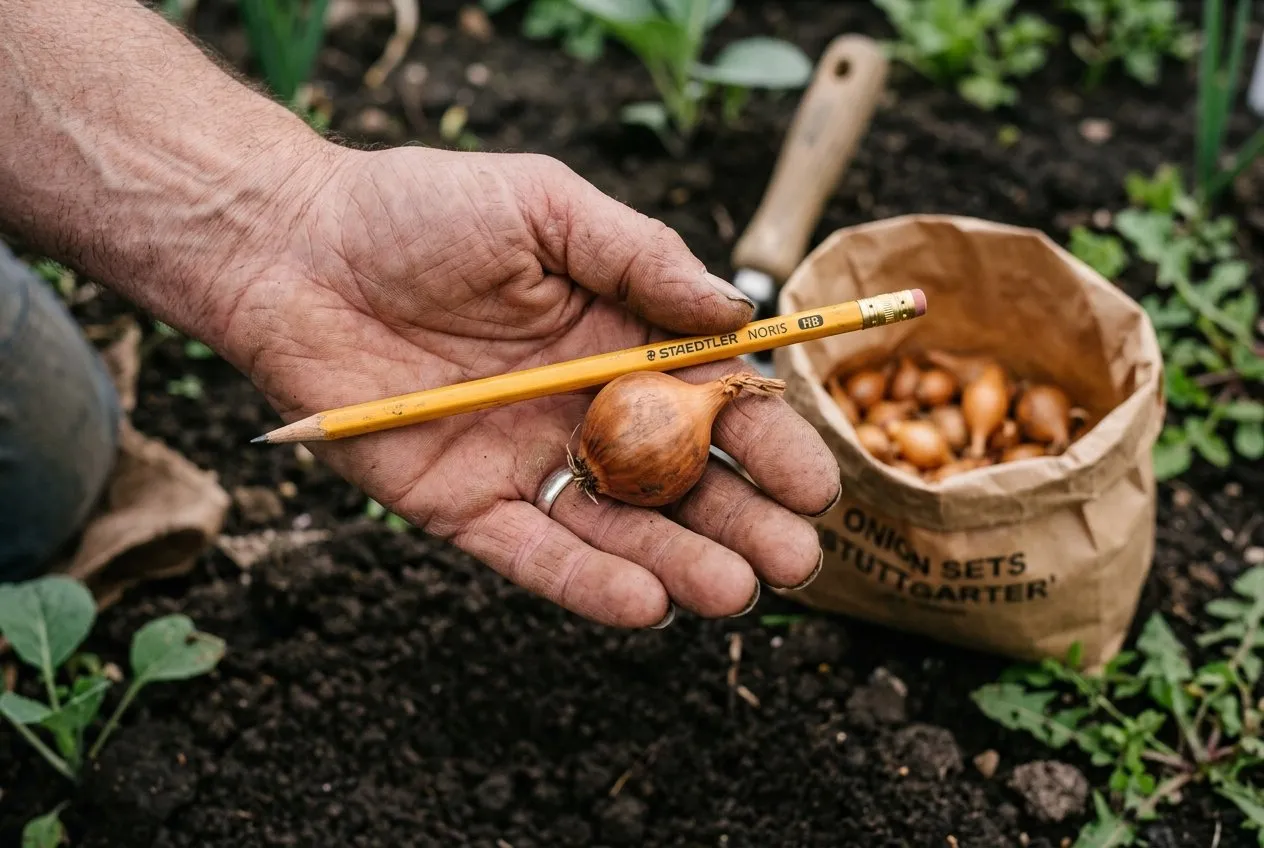 Grading sets by hand at Staffordshire in March. This one is pencil-thick at about 15mm, the sweet spot. Sets fatter than 20mm bolt far more often, so they go in a separate spring-onion row.
Causes of Bolting at a Glance
The pattern is clear. Most bolting comes back to cold and set size. Both are inside your control before a single set goes in the ground.
Choosing Bolt-Resistant Varieties
Variety choice is the easiest win. Some onions are bred to shrug off a cold spring, and heat-treated sets resist best of all.
Heat treatment means the supplier holds the sets at around 30C for several weeks. That warmth kills the embryo flower without harming the growing point. The set then bulks up cleanly with almost no bolting.
| Variety | Type | Bolting resistance | Notes |
|---|---|---|---|
| Sturon | Spring set | Very good | Reliable all-rounder, stores well |
| Hercules F1 | Spring set | Excellent | Heat-treated, large round bulbs |
| Setton | Spring set | Very good | Improved Sturon, good keeper |
| Senshyu Yellow | Autumn set | Excellent | Japanese type, holds through winter |
| Radar | Autumn set | Very good | Early summer harvest, mild flavour |
| Red Baron | Spring set | Moderate | Lovely colour but bolts more readily |
Planting Timing That Avoids the Cold
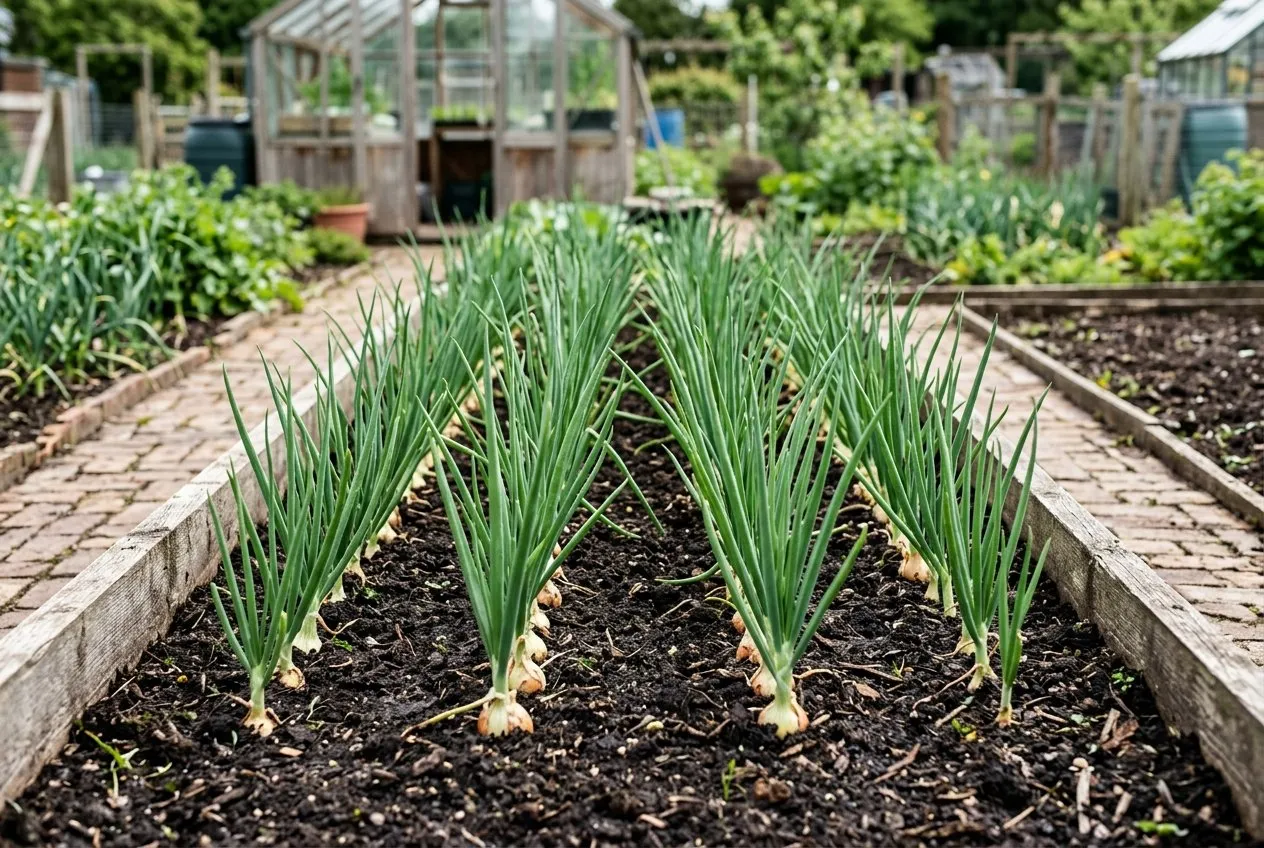
Timing is the second big lever. Plant too early and the sets sit through weeks of cold nights. That is exactly the cold spell that triggers bolting.
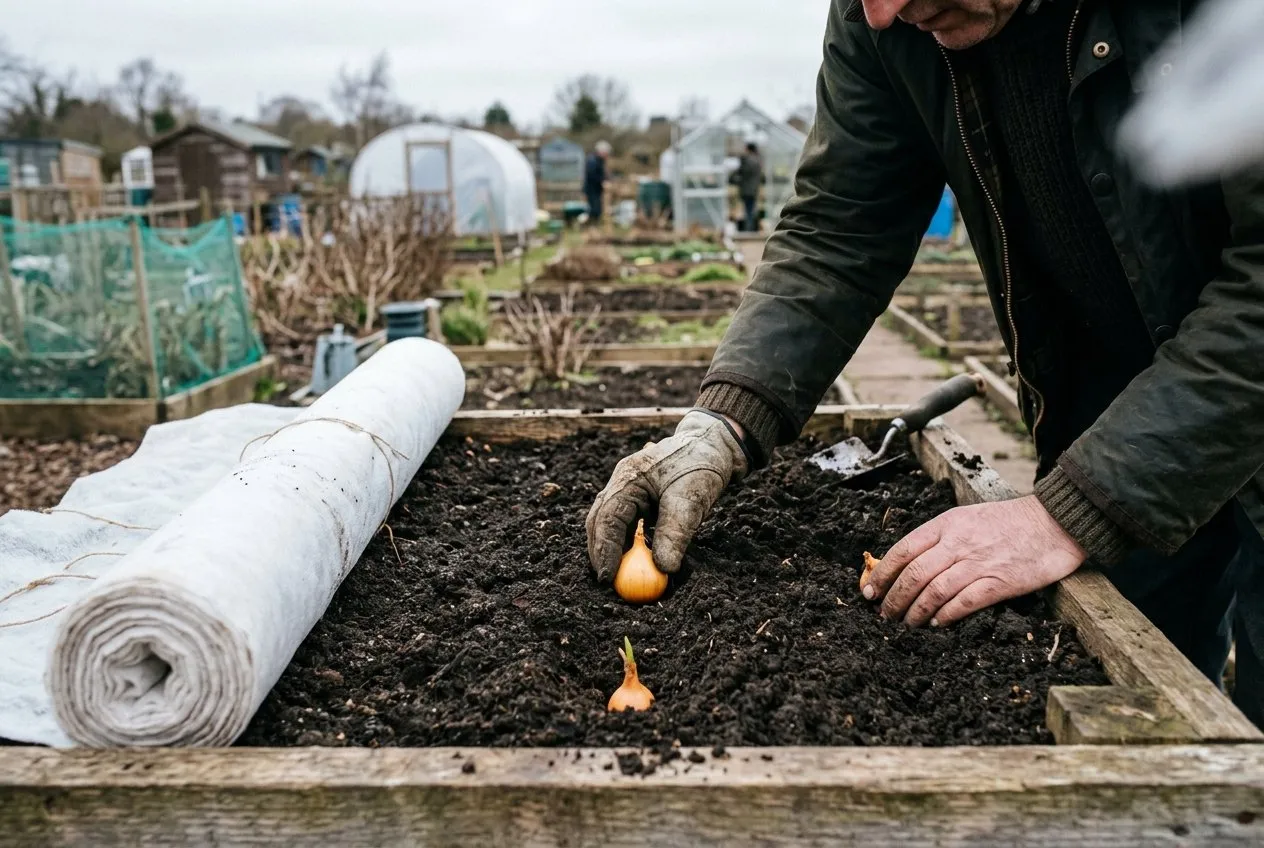
If you plant in February and a hard frost follows, expect bolters. If you must plant early, lay horticultural fleece over the bed on frosty nights. The fleece holds a few degrees and softens the cold signal.
A soil thermometer and a roll of fleece are the two cheapest insurance policies an onion grower can buy. Together they cover the cold risk that drives most bolting.
What to Do the Moment an Onion Bolts
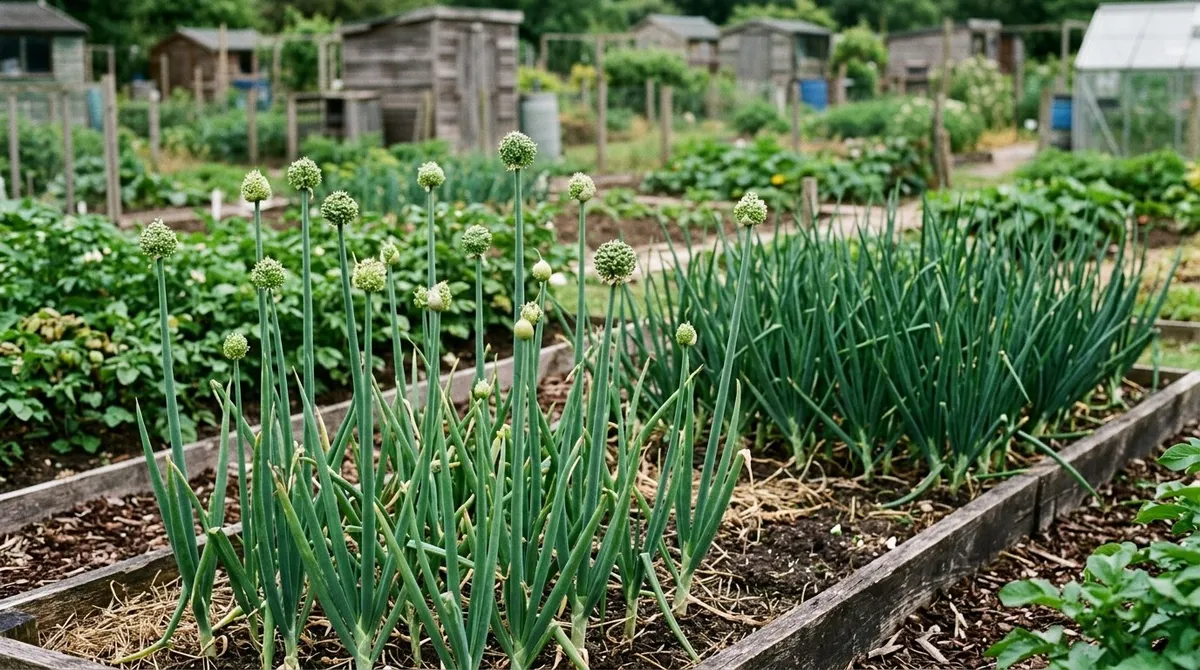
Spotting a bolter early matters. The flower stalk starts as a fatter, rounder shoot in the centre of the plant, often by late May or June.
Act the day you see it. Snap or cut the stalk off as low as you can. This stops the plant wasting energy on a seed head and keeps a little going into the bulb. It will not reverse the bolt, but it limits the damage.
Then mark that plant. A bolted onion has a hard woody core running up the middle and a thinner neck that never seals properly. That open neck lets in rot. It will not keep in store.
So lift the bolted bulbs first and eat them within two weeks. Cut out the woody centre and use the rest in cooking as normal. Save your sound, tight-necked onions for storing.
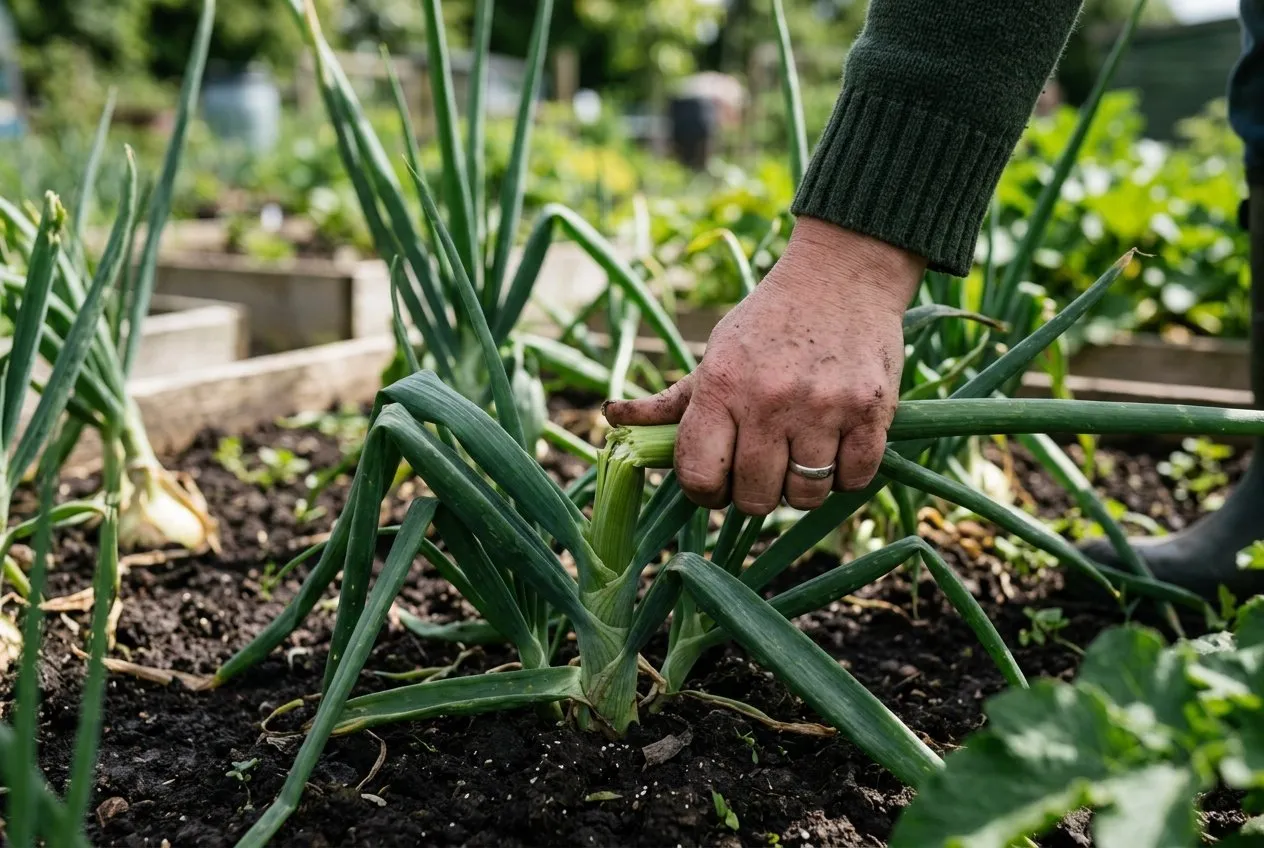 Snapping the flower stalk off low at Staffordshire in June. Catch it the day it shows. The bulb below stays smaller and the neck will not seal, so this one gets eaten within a fortnight, not stored.
At harvest, the difference between a sound onion and a bolter is plain. The bolted ones have a stiff seed stem and a fat open neck; the good ones flop over and seal tight.
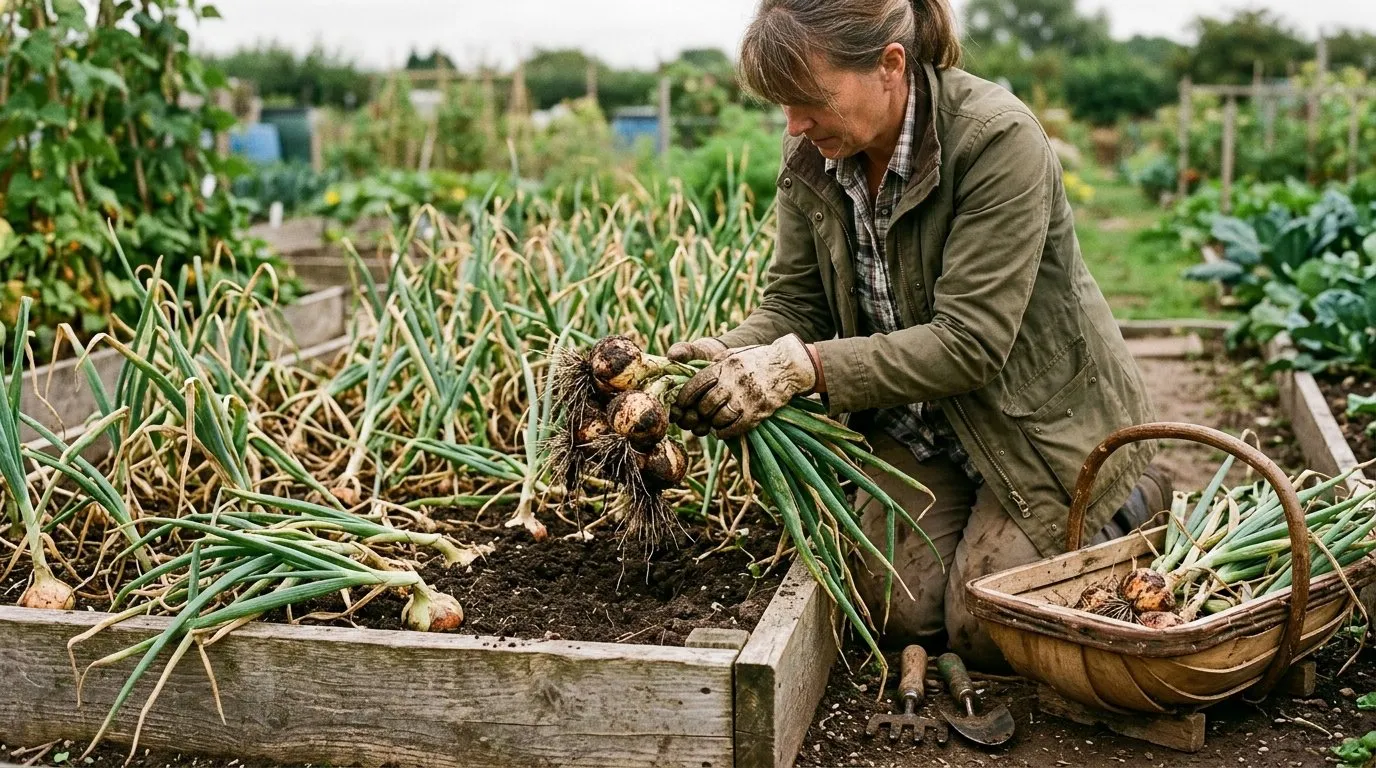 Lifting onions at Staffordshire in August. The flopped, tight-necked bulbs are keepers. Any with a stiff central stem from a bolt got pulled earlier and eaten, never left to cure for store.
Watering and Soil to Keep Growth Steady
Steady growth is the third defence. Any check to a young onion nudges it toward flowering, and drought is the common culprit in a dry UK May.
Onions are shallow-rooted, so they feel dry soil quickly. Water deeply once a week in dry spells rather than a daily splash. Aim for the equivalent of about 15 litres per square metre, then let the surface dry between soaks.
A 3cm mulch of compost or grass clippings holds moisture and keeps weeds down. Weeds compete hard with onions and add to the stress that can trigger bolting.
Stop watering once the bulbs are swelling well in July. From then on you want the foliage to start drying back ready for harvest and curing.
Spring Sets, Autumn Sets and Shallots
The bolting rules shift a little with what you grow and when.
Autumn-planted onions like Senshyu and Radar go in around late September. They are bred to sit through a UK winter and bolt only if planted too early into warm autumn soil. Plant them too soon and they grow too large before winter, then bolt in spring.
Shallots behave much like onions and bolt on the same cold trigger. Our guide on growing shallots successfully in the UK covers their slightly different planting window. Garlic, planted in autumn, follows its own rules, but the same cold-after-planting principle applies.
Whatever you grow, sound storage starts with sound bulbs. Our advice on drying and curing onions properly explains why a well-cured, tight-necked bulb keeps for months while a bolted one rots in weeks.
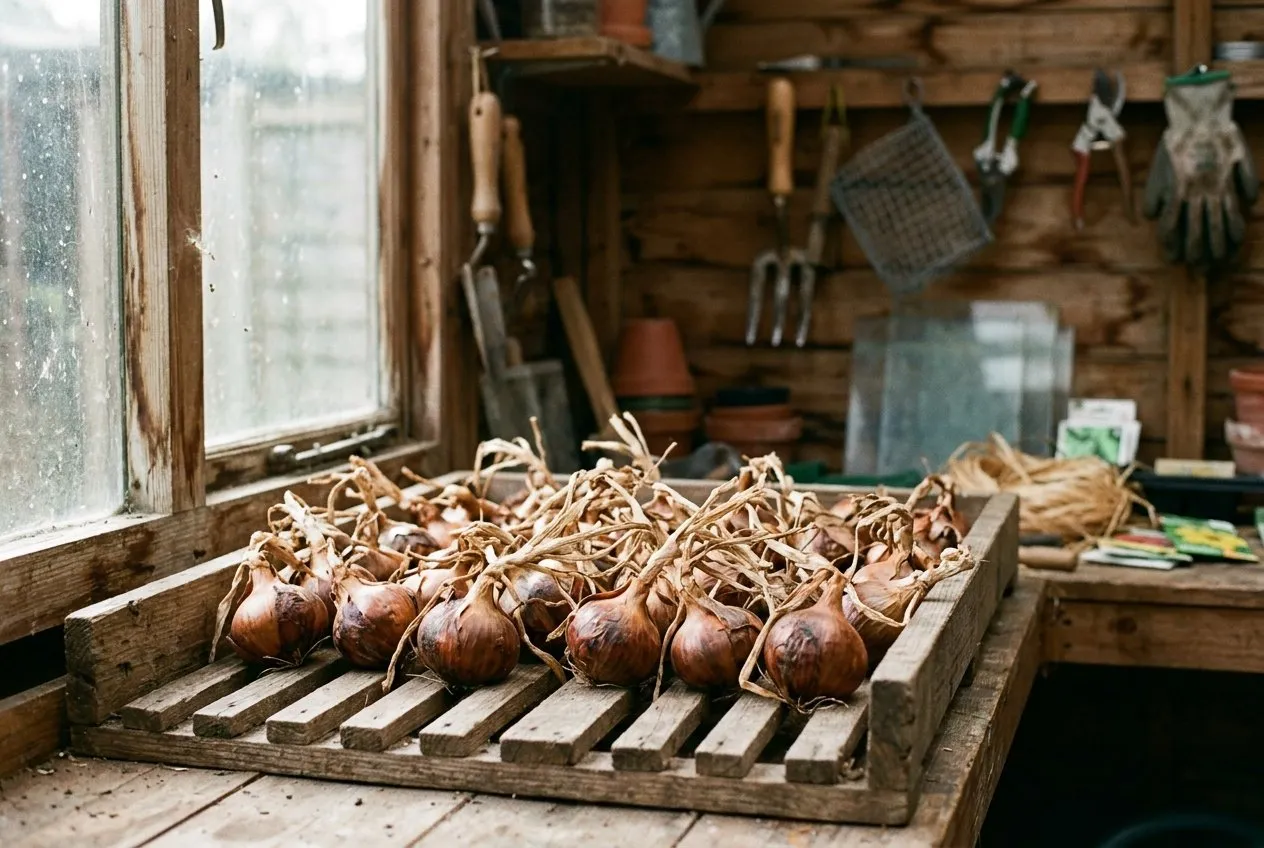 Sound, tight-necked Sturon curing on a slatted tray at Staffordshire in August. These store for months. Any bolted bulb with an open neck never made it to this tray; it was eaten first.
The honest summary is short. Pick small heat-treated sets, plant once the soil warms, keep the water steady, and snap any stalk the day it shows. The RHS growing onions advice is a sound second reference on spacing and feeding.
Frequently asked questions
Why do my onions keep bolting?
Cold weather after planting triggers most onion bolting in UK gardens. The plant reads a cold spell as a passing winter and switches to flowering. Large sets over 20mm and drought stress add to the risk. Choose small sets, plant from mid-March, and pick bolt-resistant varieties.
Can you stop an onion from bolting once it starts?
No, once the flower stalk appears the onion will not reverse. Snap or cut the stalk off low straight away to stop seed forming and keep some energy in the bulb. The bulb stays smaller and will not store. Lift and eat it within two weeks.
Are bolted onions still safe to eat?
Yes, a bolted onion is perfectly safe to eat. Cut out the tough woody core that runs up the centre and use the rest as normal. The flavour is fine but the texture near the stem is fibrous. Use bolted bulbs first because they rot quickly in store.
Which onion varieties are least likely to bolt?
Sturon, Hercules, Senshyu and Setton are reliable bolt-resistant UK choices. Heat-treated sets resist bolting best because the embryo flower has been killed by warm storage. For autumn planting, Senshyu and Radar are bred to hold through a UK winter without bolting in spring.
Do onion sets or onion seed bolt more?
Onion sets bolt more often than seed-grown onions. A set is a small bulb, so it already holds a tiny flower embryo that cold can trigger. Seed-raised onions start fresh each year and rarely bolt. Sets are easier, so most UK gardeners accept the slightly higher bolting risk.
Now plan your onion year
Bolting is one piece of a settled onion patch. Start with the right set and a sensible date in our guide to growing onions in the UK, then choose your variety from the best UK onion varieties compared. When harvest comes, get the keeping right with our advice on storing onions, garlic and shallots. And for the autumn job that sets up next summer, read when to plant garlic in the UK.
Our team produces practical UK gardening guidance from source research, contributor records and established horticultural practice. Editorial standards are overseen by Matt W.