Key takeaways
- Biennials sown May to July flower the following April to June, a full border for the price of a seed packet
- Sow fine seed (foxglove, sweet William) on the surface and never cover it, because it needs light to germinate
- Germination takes 14-21 days at 15-18°C; wallflowers are fastest, honesty the slowest
- Prick out at the first true leaves, line out 15cm apart, then plant final positions in September or October
- Pinch wallflowers at 15cm tall for bushier plants and up to a third more flower spikes
- Never follow brassicas with wallflowers or stocks, because both pick up club root from the same soil
Sow a packet of foxglove seed this week and you buy yourself a border full of flowers next May, at a cost of around 1p a plant. That is the deal biennials offer, and early summer is the moment to take it.
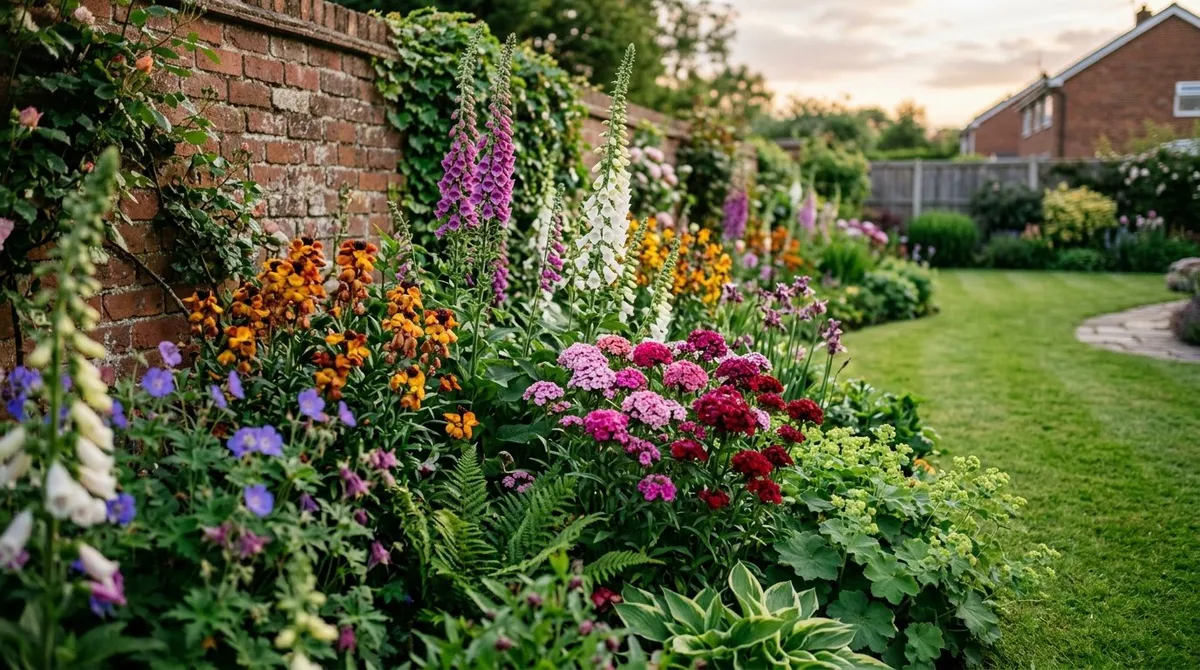
Biennials are the quiet engine of a cottage-style garden. Wallflowers, foxgloves, sweet William, honesty and Canterbury bells all earn their keep by flowering early, before most perennials and annuals get going. The catch is that you sow them a year ahead. Get the timing right now and the plants do the rest while you forget about them. This guide covers when to sow, how to raise strong plants, and the autumn planting that sets up next spring.
What is a biennial, and why sow one now?
A biennial completes its life over two growing seasons. In year one it germinates and builds a leafy rosette and a root system. It overwinters as that rosette. In year two it flowers, sets seed and dies. Sow this summer and you get flowers next spring, roughly nine to twelve months later.
That timing is the whole point. By sowing in June you give the young plants a full summer of growth, so they reach the size they need to trigger flower buds over winter. Skip the summer sowing and there is no shortcut. Garden-centre biennials in autumn are simply someone else’s summer-sown plants, marked up to £4 or more each.
Home-sown biennials work out at pennies. A single £2 packet of foxglove seed holds several thousand seeds. Even at a modest strike rate you raise far more plants than you can use, which is why biennials are the staple of anyone running a cutting garden on a budget. They sit in the growing calendar as a job you do once a year and reap the following spring.
When to sow biennials in the UK
The sowing window runs from May to July across the UK. Within that window, timing shifts the result:
- Late May to mid-June is the sweet spot. Plants have the longest run-up to winter and make the biggest rosettes.
- Late June to mid-July still works well for faster biennials like wallflowers and sweet William.
- After late July is a gamble. Plants may not reach flowering size before the cold shuts growth down, and a weak batch is the usual result.
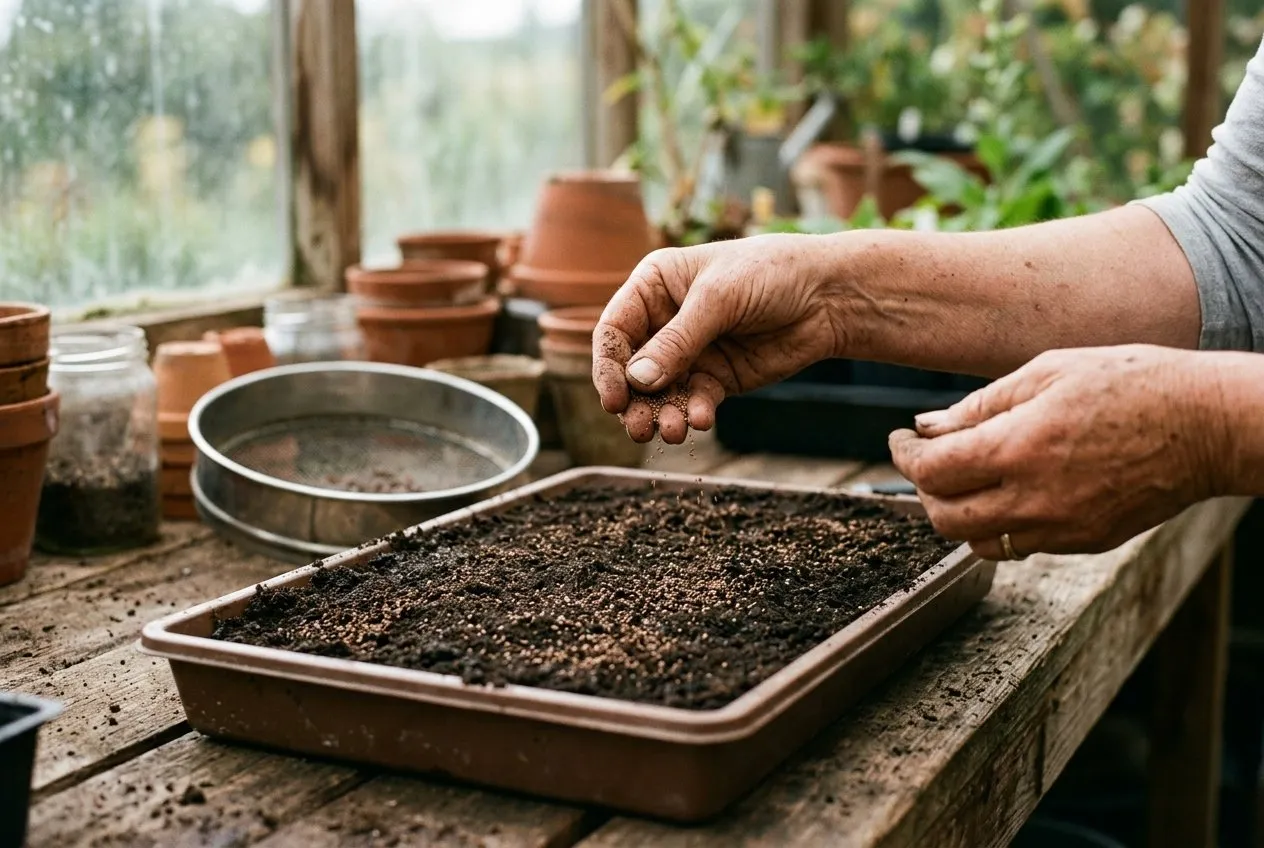 Fine seed like foxglove and sweet William is surface-sown and pressed in, never buried. The seed needs light to germinate.
How to sow biennial seeds step by step
Most biennials are sown the same way. The differences come down to seed size.
- Fill a seed tray with peat-free seed compost and firm it level, about 1cm below the rim. Water it from below first, so you are not washing fine seed about.
- Sow thinly across the surface. For dust-fine seed (foxglove, sweet William, Canterbury bells), scatter it on top and press it down with a flat board. Do not cover it. This fine seed needs light to break dormancy, as the Royal Horticultural Society’s guidance on annuals and biennials confirms.
- Cover larger seed lightly. Wallflower and honesty seed is big enough to take a 5mm layer of sieved compost or vermiculite over the top.
- Label and place in warmth. Aim for 15-18°C in a cold frame, unheated greenhouse or bright windowsill. Direct midday sun bakes the surface, so part shade is better.
- Keep just moist. Water from below or with a fine mist. Germination takes 14-21 days for most, and 7 to 10 days for wallflowers.
If you are short of outdoor space, the same method works inside. The steps in our guide on how to sow seeds indoors carry straight across to biennials.
The best biennials to sow this summer
These are the reliable performers for UK gardens, all sown now for flowers next spring and early summer.
- Wallflowers (Erysimum cheiri): scented spring bedding in hot oranges, reds and bronzes. Fastest to germinate and the classic tulip partner.
- Foxgloves (Digitalis purpurea): tall spires for part shade, loved by bumblebees. They self-seed happily once established.
- Sweet William (Dianthus barbatus): clove-scented domed heads, superb for cutting and long-lasting in a vase.
- Honesty (Lunaria annua): purple spring flowers followed by the papery silver seed discs used in dried arrangements.
- Forget-me-nots (Myosotis): a low blue haze that knits a spring border together and seeds itself for years.
- Canterbury bells (Campanula medium): old-fashioned bells in blue, pink and white for early summer.
- Verbascum and hollyhocks: both often grown as biennials for tall, architectural spikes.
Biennial sowing and spacing chart
| Biennial | Sow by | Flowers | Final spacing | Height |
|---|---|---|---|---|
| Wallflower | mid-July | Apr to May | 25cm | 30-45cm |
| Foxglove | late June | May to Jun | 40-45cm | 90-150cm |
| Sweet William | mid-July | May to Jun | 25cm | 30-50cm |
| Honesty | late June | Apr to May | 30cm | 60-90cm |
| Canterbury bells | early July | Jun to Jul | 30cm | 60-75cm |
| Hollyhock | late June | Jun to Aug | 45cm | 150-250cm |
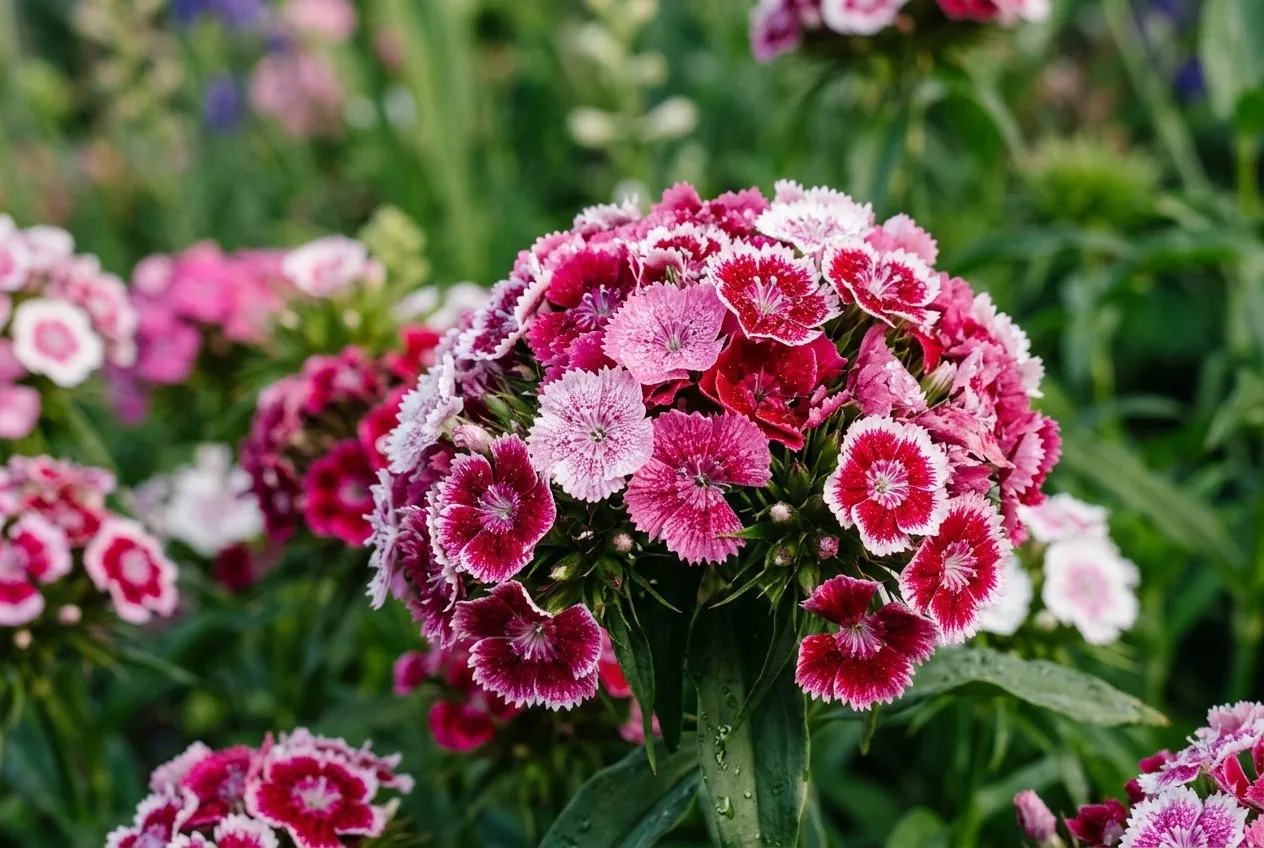 Sweet William sown this June will give domed, clove-scented heads like these next May. They cut and last well in a vase.
Pricking out and growing on through summer
Once seedlings have their first pair of true leaves, prick them out. Hold a seedling by a leaf, never the stem, lever it up with a dibber and move it on. You have two good options:
- Modules or 9cm pots: one seedling each, grown on a bench until autumn.
- A nursery bed: a spare corner of the veg patch, planted 15cm apart in rows.
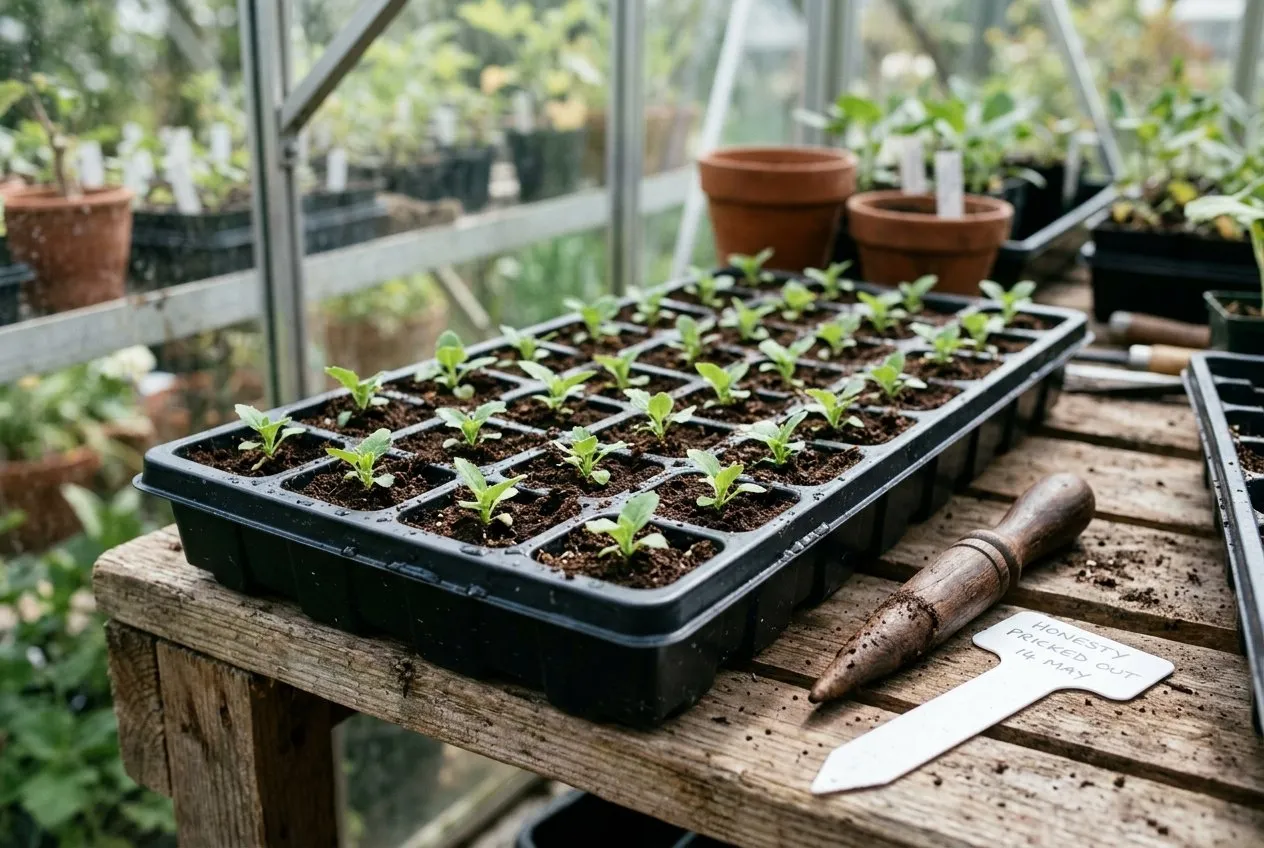 Prick out at the true-leaf stage, one seedling per module. Hold the leaf, not the fragile stem.
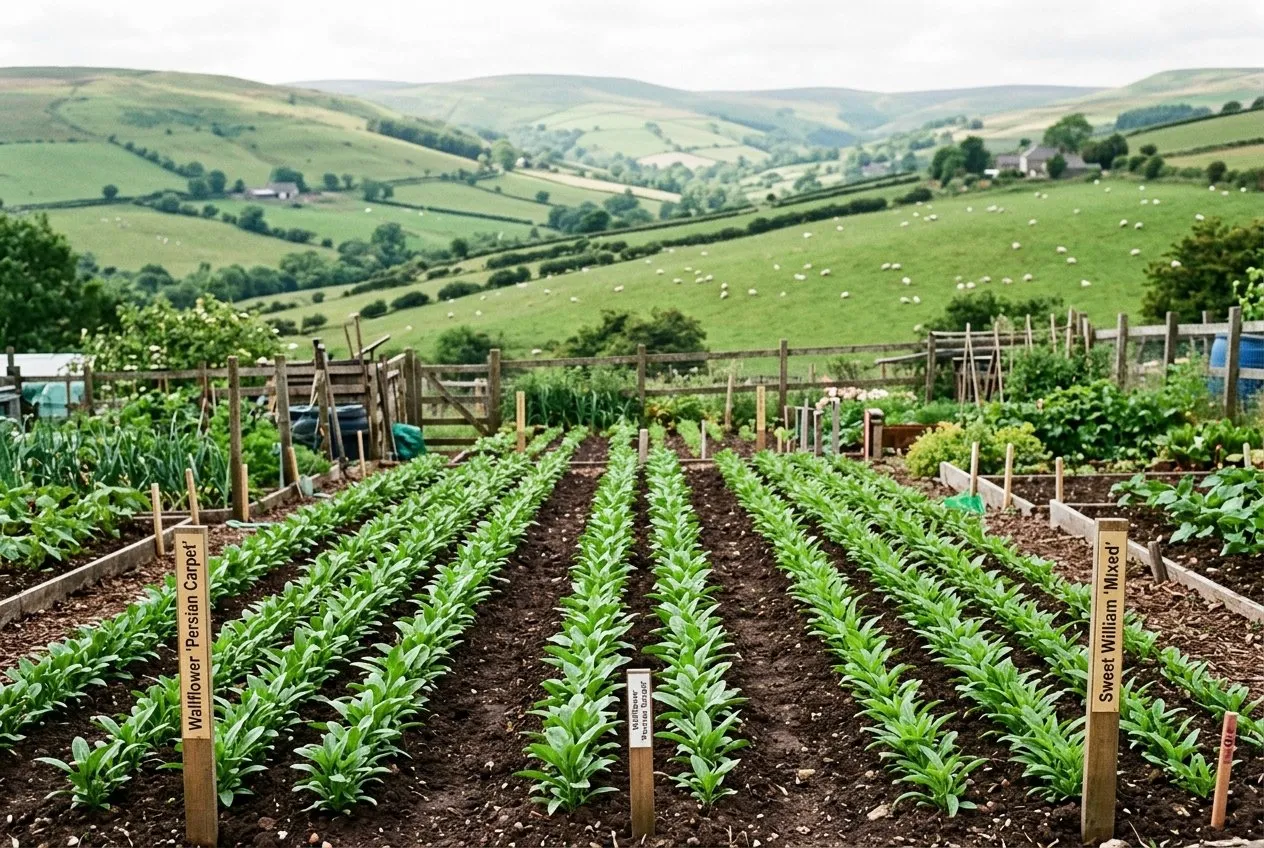 A spare allotment row makes the ideal nursery bed. Lined-out plants build stronger roots than pot-grown ones.
A month-by-month biennial calendar
Planting biennials out in autumn
Move the plants to their final positions in September or October, while the soil is still warm enough for roots to settle before winter. This is the same window used for hardy annual flowers from seed, so the two jobs often overlap.
Lift each plant with as much root as you can, set it at the same depth it grew, and firm it in well. Space according to the chart above: 25cm for wallflowers and sweet William, 40-45cm for foxgloves and hollyhocks. Water in, then largely leave them. Biennials need no winter feed and resent rich soil, which produces soft growth that rots in a wet winter.
 Plant into final positions in September or October. The plants root in over winter and need no feeding until spring.
Common biennial sowing mistakes
Six seasons of trials have turned up the same avoidable errors.
- Burying fine seed. Foxglove and sweet William seed sown under compost simply rots. Surface-sow and press it in.
- Sowing too late. After late July, plants rarely bulk up enough to flower. Mid-July is the hard cut-off.
- Letting trays dry out. A single hot day that dries the surface can kill a tray of germinating seedlings. Water from below.
- Following brassicas with wallflowers. Wallflowers and stocks are in the cabbage family and pick up club root from soil that grew brassicas. Rotate them elsewhere.
- Overfeeding. Lush, soft plants going into winter are the ones that rot. Keep them lean.
Get those right and biennials are close to foolproof. Sow this week, prick out next month, line the plants out for summer, and plant the border in autumn.
 The payoff: wallflowers sown last June, in full scented bloom the following April. A whole border for the price of one seed packet.
Our team produces practical UK gardening guidance from source research, contributor records and established horticultural practice. Editorial standards are overseen by Matt W.