Key takeaways
- Peg strawberry runners into sunken 9cm pots in July and the first half of August
- Take a maximum of five runners per parent, and only the first plantlet on each runner
- Runners root in 4-6 weeks; a gentle tug on the leaves tells you when to sever
- Plant out 35-40cm apart by mid-September for 200-300g of fruit per plant next June
- Replace beds every 3-4 years: a fourth-year plant often crops at half its second-year weight
- Everbearers and alpine varieties make few or no runners, so propagate from summer fruiters
Strawberry runners turn one plant into a dozen for nothing, and July is the month to act. Every established plant spends midsummer throwing out wiry horizontal stems with baby plants along them, each ready to root. Peg a few down now and five parents will hand you 25 free plants by mid-September. Bought bare-root plants cost £1.50-£2.50 each, so a pegged bed saves £30-£60.
There is a right way to do it, though. Take runners from the wrong plants and you multiply disease. Take too many and this year’s parents crop poorly next June. This guide covers pegging into pots versus rooting in the bed, when to sever, how many to take, replacing tired beds on a three to four year cycle, and which varieties runner most freely. For planting, feeding and harvest basics, start with our guide to growing strawberries.
What are strawberry runners and why do plants send them out?
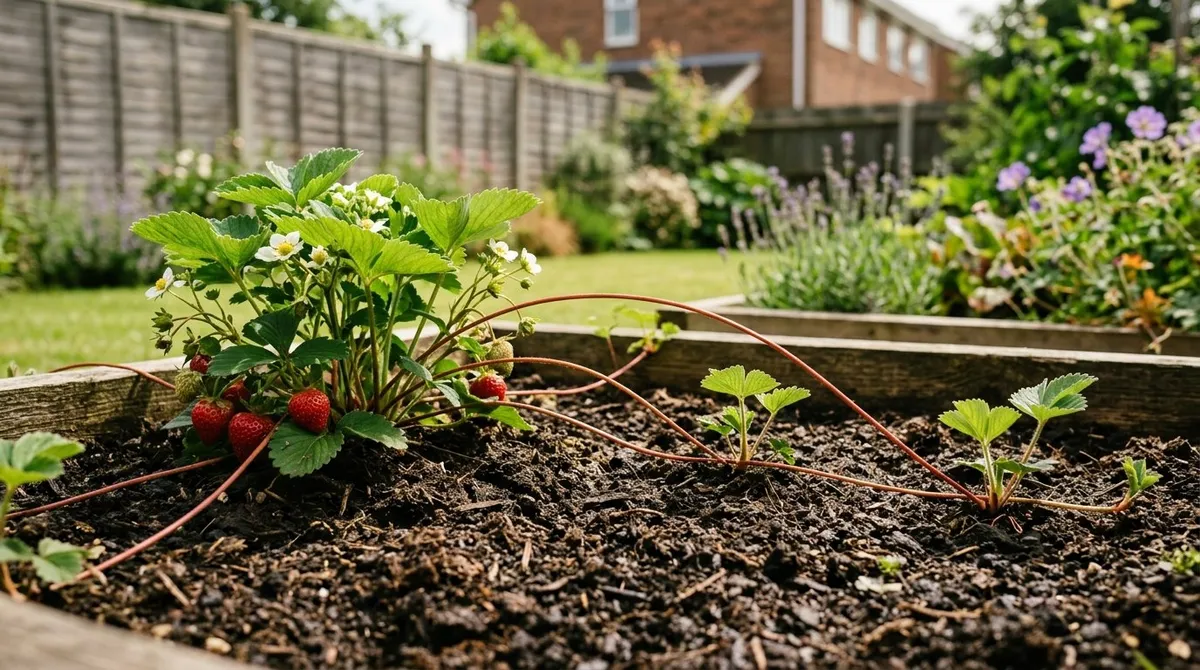
Strawberry runners are stolons, horizontal stems the plant sends out to clone itself. Nodes sit along each runner every 20-30cm, and at each node a tuft of leaves forms, then roots the moment it touches soil. The new plantlet is genetically identical to its parent and crops within a year.
Plants produce runners from June to September, with the heaviest flush in July and August, straight after fruiting. A healthy two-year-old plant can push out ten or more in a season. This is how wild strawberries colonise ground, and it is why a neglected bed turns into a matted carpet within two summers.
For the gardener, a runner is natural layering, the technique the RHS layering guide describes for shrubs, except the plant does most of the work itself. Of everything in our plant propagation guide, this is the easiest method going. No cutting compost, no misting, no real skill.
One rule before you start: only propagate from healthy plants aged one or two years. A parent with mottled, crinkled or oddly blotched leaves may carry virus, and every plantlet inherits it. Choose the plants that cropped hardest this June and mark each one with a cane now.
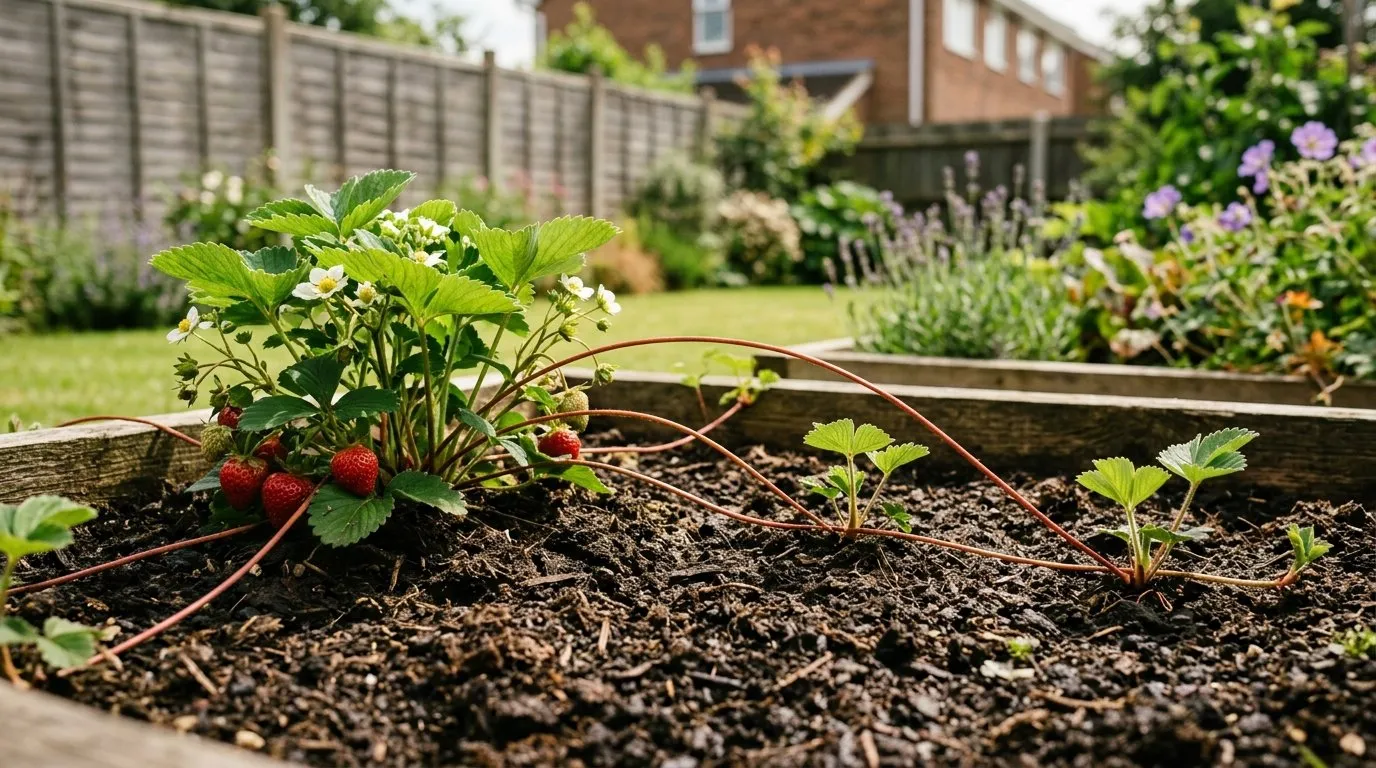 A parent plant sending runners across the bed. Each node roots where it touches soil, and every rooted node is a free plant.
When is the best time to pot up strawberry runners?
Peg strawberry runners down in July and the first half of August. That window gives four to six weeks of warm soil for rooting, so plantlets are ready to sever from late August and settled in their final bed by mid-September. Roots then establish before soil temperatures fall away, and the young plants crop the following June.
Miss the window and the maths turns against you. A runner pegged in early September roots slowly in cooling soil and is rarely ready to move before mid-October. Overwinter latecomers in their pots in a cold frame and plant out in March. They grow away fine, but expect a lighter first crop.
Hold your nerve on the earliest runners too. Stems sent out in June, while fruit is still ripening, are best snipped off at once. Fruit first, then runners is the order that suits both crops.
How do you peg strawberry runners into pots?
Pegging a runner into a sunken pot takes about two minutes. Here is the routine.
- Fill a 9cm pot with peat-free multi-purpose compost and sink it to the rim beside the parent. A 40-litre bag costs £6-£8 and fills around 30 pots.
- Choose the first plantlet on the runner, the one nearest the parent. It is always the largest and roots fastest.
- Pin the node onto the compost with a U-shaped peg. A 15cm length of galvanised wire bent double works, and so does an opened-out paperclip. Bought pegs run £3-£4 a pack.
- Snip off the runner just beyond the pegged plantlet. Growth trailing past it is a drain on the parent, and second or third plantlets make feeble plants.
- Water the pot on every dry day. A 9cm pot sunk in a July bed dries out within 48 hours. This is the step people skip, and it is why pegged runners fail.
Leave the runner attached to its parent throughout. That umbilical stem keeps feeding the plantlet until its own roots take over the job.
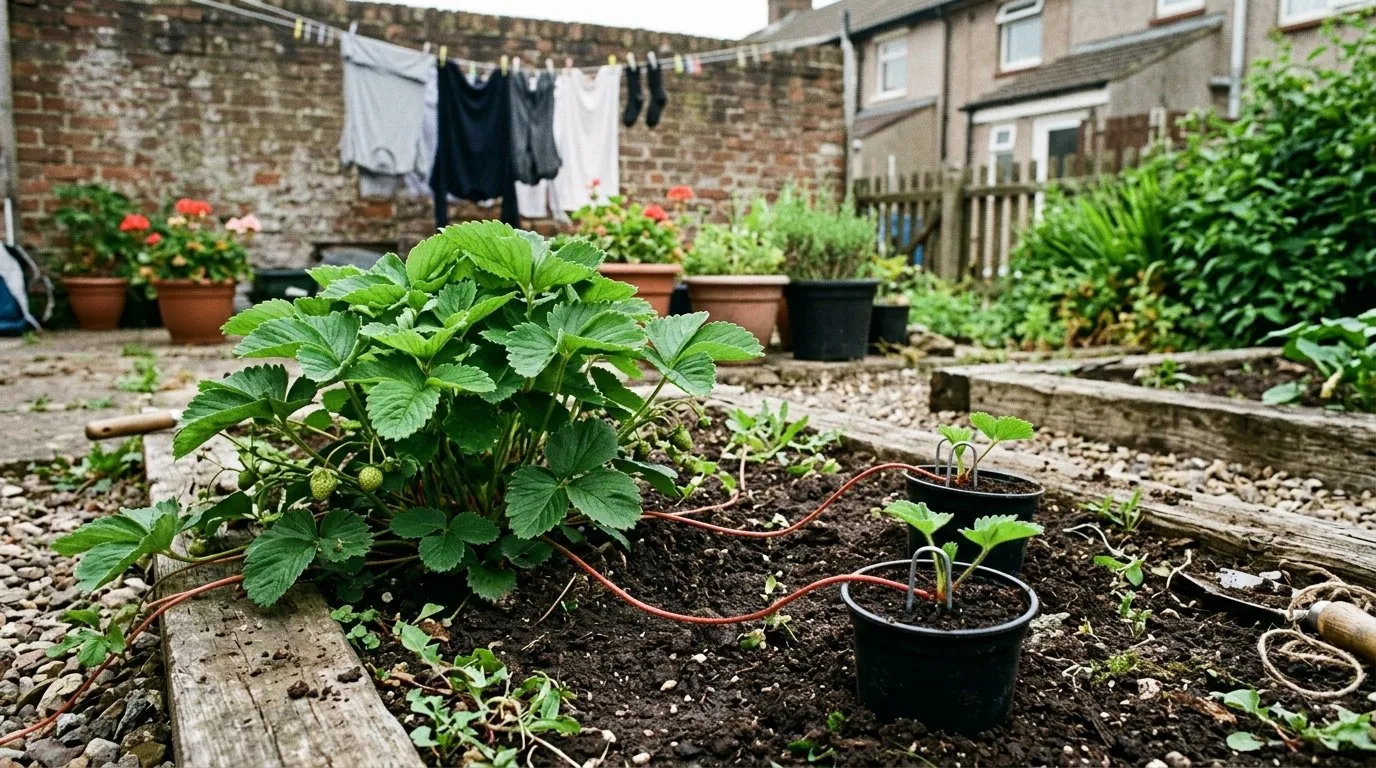 Plantlets pinned into sunken pots with wire pegs. The runner stays attached to the parent until roots have taken.
Should runners root in pots or straight into the bed?
Direct rooting suits a bed being extended. Peg the runner exactly where the new plant should stand and the job is finished in one move. If plantlets are headed for containers, root them in pots and slide them straight over; strawberries take well to window boxes and troughs, and our fruit in pots guide covers compost and feeding for them.
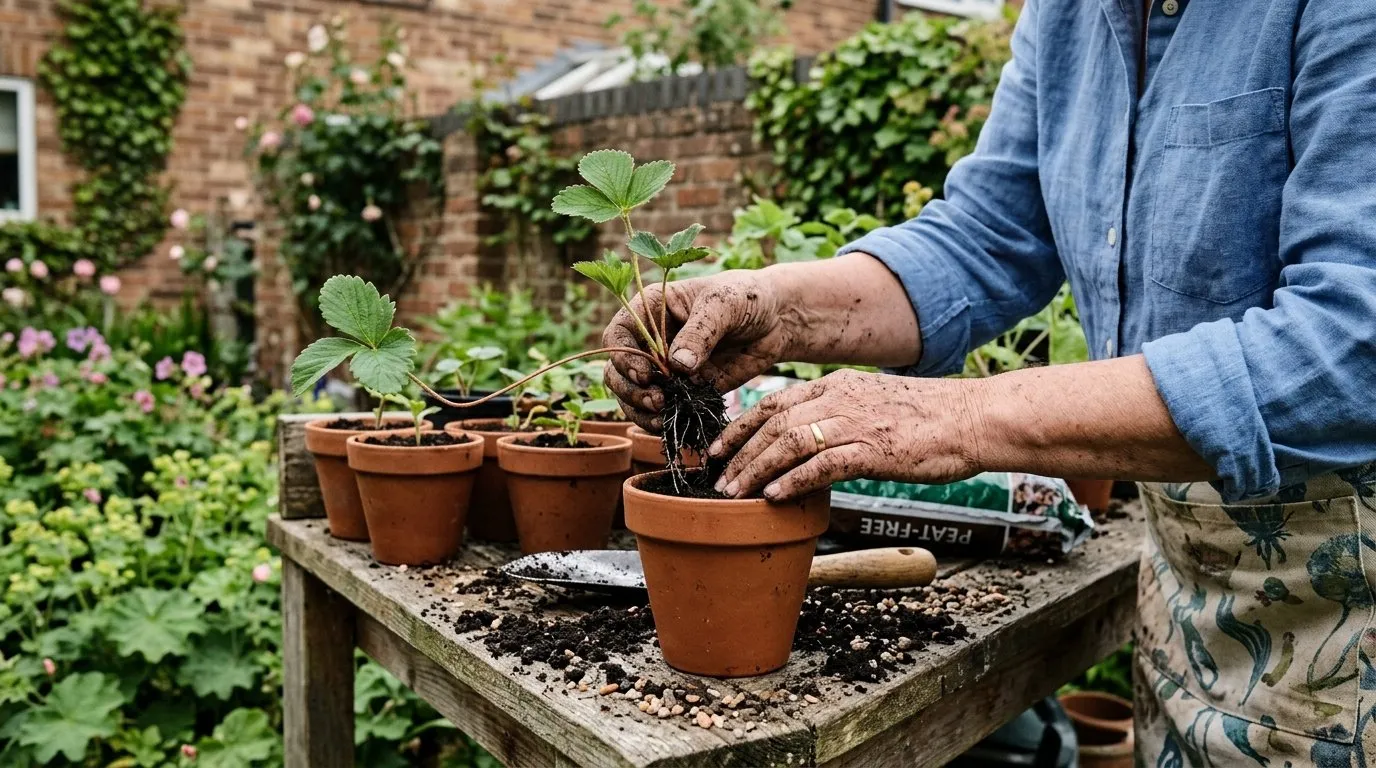 Runners that rooted direct in the bed can be lifted and potted on if the new bed is not ready for them.
How many runners can you take from one plant?
Take no more than five runners from any parent you intend to keep cropping. Every pegged runner is fed by the parent for a month, and a plant supporting eight or ten plantlets ripens a poor crop the next June. Five is the balance point, and it still means five parents yield 25 new plants, a full bed.
Stick to one plantlet per runner. The first node builds a crown 2-3cm across by September. Nodes further along the same stem make progressively smaller plants, often half the size, and they crop like it.
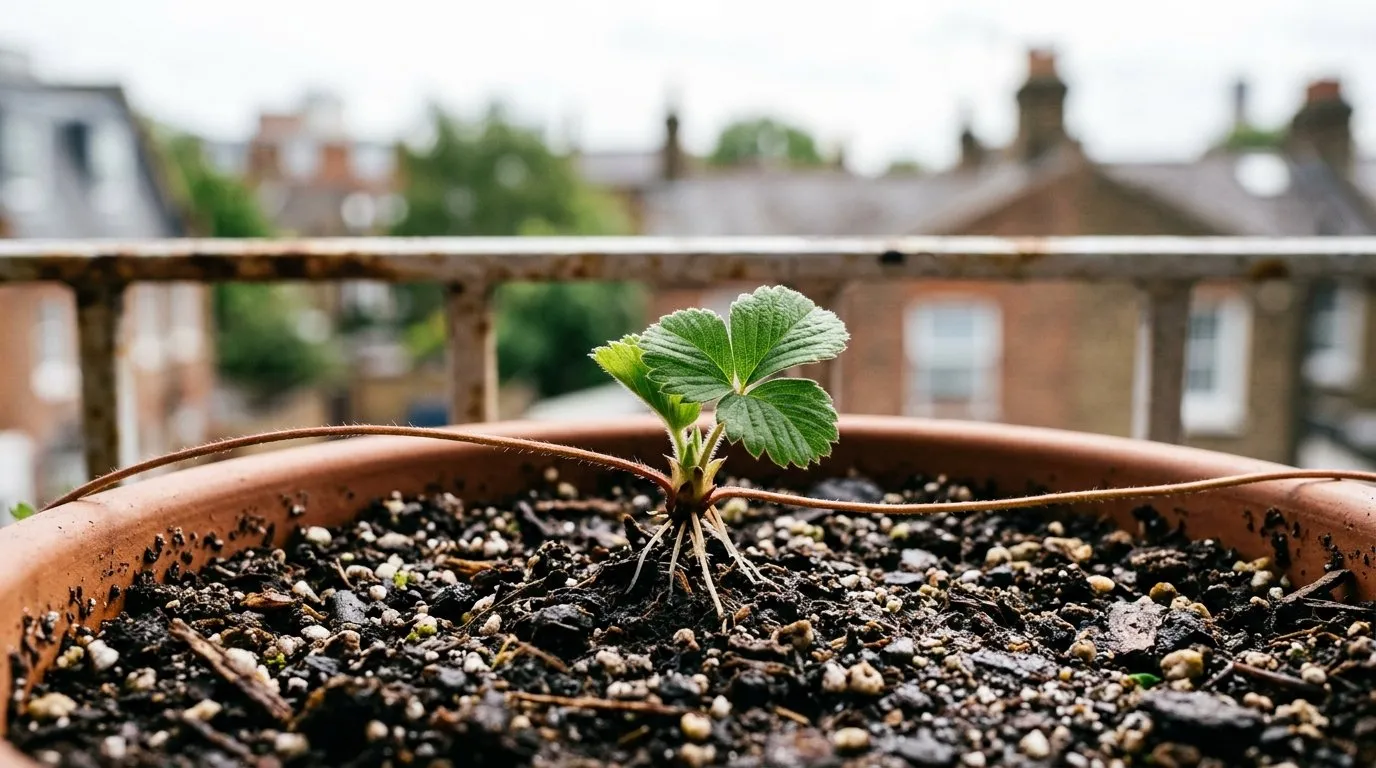 The first plantlet, nearest the parent, is always the strongest. Trim the runner off just beyond it.
When do you cut the runner from the parent plant?
Sever the runner four to six weeks after pegging, once the plantlet has rooted. The test is a gentle tug on the leaves. A plantlet that holds firm in its pot has rooted, and the feeding stem has done its work. One that lifts gets pinned back down and checked again in ten days.
Cut the stem on both sides of the plantlet with scissors or secateurs, close to the young crown, then clear the length running back to the parent. Never pull runners off by hand. The stem tears at the parent’s crown and the wound invites rot.
Leave the severed plantlet growing in its pot for another 7-10 days before moving it. That week on its own roots proves independence, and any plant that flags during it was not ready.
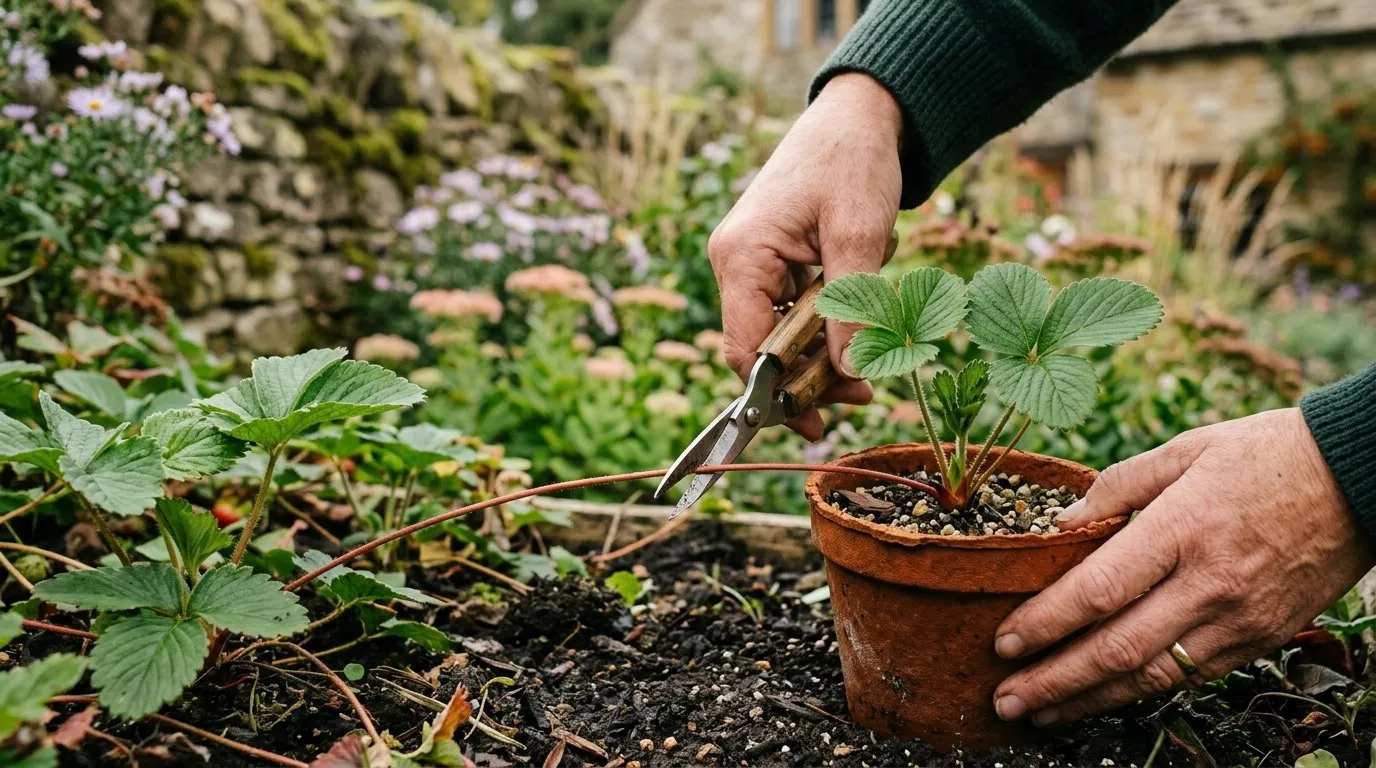 Once the tug test says rooted, cut the runner both sides of the plantlet. Pulling by hand tears the crown.
How do you plant rooted runners into a new bed?
Plant rooted runners 35-40cm apart, in rows 75cm apart, in full sun, on ground that has not grown strawberries, potatoes or tomatoes for three years. Those crops share verticillium wilt, and fresh ground sidesteps it. Fork in a bucket of garden compost per square metre before planting.
Depth decides everything. Set each plant with the crown exactly at soil level. A buried crown rots and a proud one dries out. Firm well, water in with 2 litres a plant, and keep watering weekly into October if the autumn stays dry.
September-planted runners flower the following May and crop in June, typically 200-300g a plant in year one and 400g or more in years two and three. Give the bed 25g per square metre of sulphate of potash in late February. The logic matches our feeding fruit bushes guide: potash for fruit, restraint on nitrogen.
 A new bed planted 35-40cm apart in September. The crown must sit exactly at soil level, neither buried nor proud.
Should you replace strawberry beds every three years?
One honest caveat. Home propagation slowly accumulates virus even from clean-looking parents, because aphids carry it between plants. Every three or four plant generations, buy certified virus-free stock, at £1.50-£2.50 a bare-root plant, and restart the line clean.
Which strawberry varieties produce the most runners?
Summer-fruiting varieties runner most freely, and the older favourites are the most generous of all.
| Variety | Type | Runner output | Worth knowing |
|---|---|---|---|
| ’Cambridge Favourite’ | Summer fruiter | Heavy, 8-12 per plant | The classic beginner’s choice and a fast rooter |
| ’Honeoye’ | Early summer | Heavy | Crops in early June, runners freely after |
| ’Elsanta’ | Mid summer | Moderate to heavy | The supermarket berry, easy to multiply |
| ’Malwina’ | Late summer | Moderate | Stretches picking into early August |
| ’Mara des Bois’ | Everbearer | Few | Superb flavour, poor source of runners |
| ’Albion’ | Everbearer | Very few | Crops to October, rarely spares a runner |
| Alpine strawberry | Species | None from most forms | Raise from seed or divide crowns instead |
Everbearers put their energy into repeat flowering from June to October, so they seldom offer spare runners. Most alpine strawberries never make any. If you grow only these types, buy new stock or divide, because pegging is off the table.
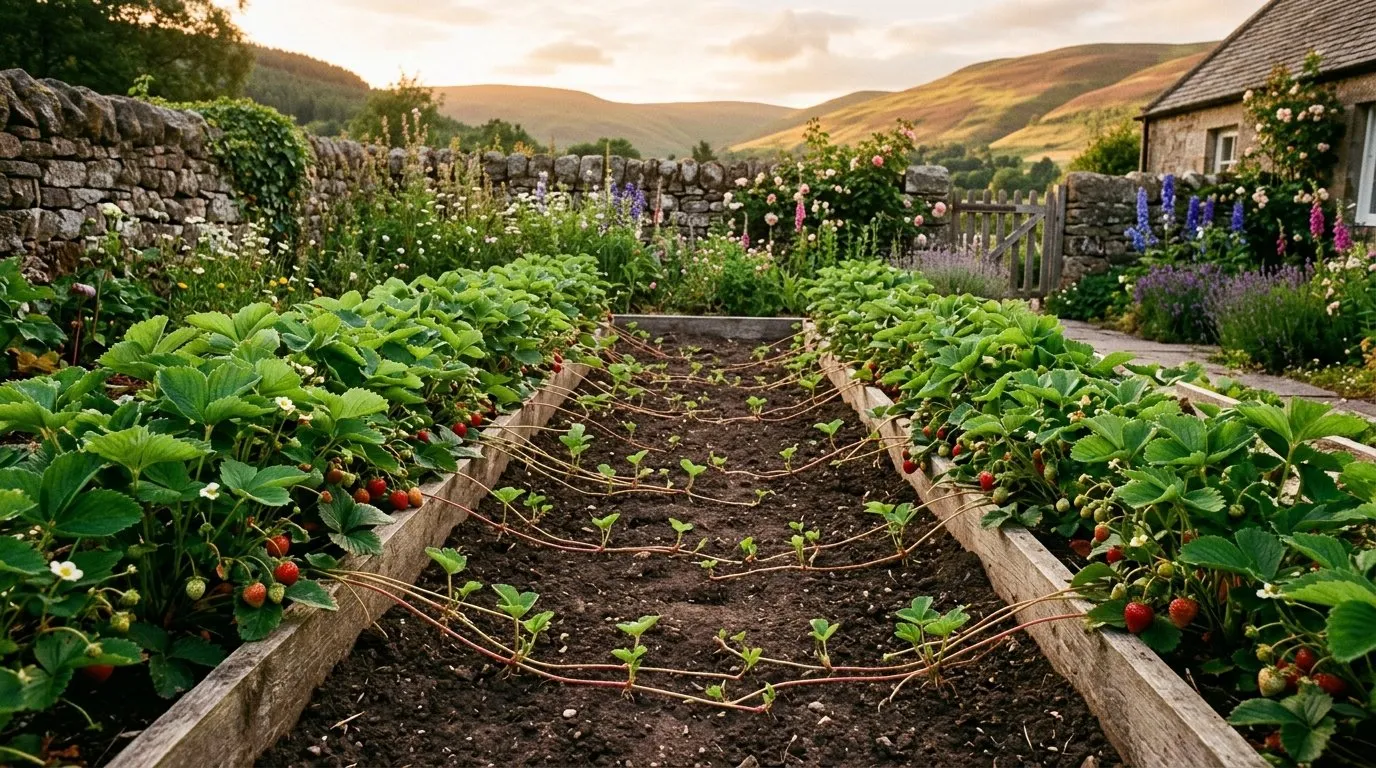 Summer fruiters in full runner production. A healthy two-year-old plant can send out ten or more stems in a season.
What should you do with strawberry runners you don’t want?
Snip unwanted strawberry runners off at the base every two to three weeks through summer. Each one removed sends energy back into the crown just as next year’s fruit buds form in late summer, so tidy plants mean heavier picking next June. On everbearers, remove every runner all season; a plant cropping into October cannot fund both.
Use scissors or secateurs and cut close to the crown. Pulling tears it. Watch the bed edges too, because runners root through the holes in weed matting, into paths and into gravel, and a bed left to please itself becomes a matted tangle of small barren plants within two seasons.
Surplus rooted plantlets are currency. Pot a few up for neighbours, swap them at the allotment, or use a dozen to fill a vertical strawberry tower on the patio. Nobody ever struggles to rehome a strawberry plant.
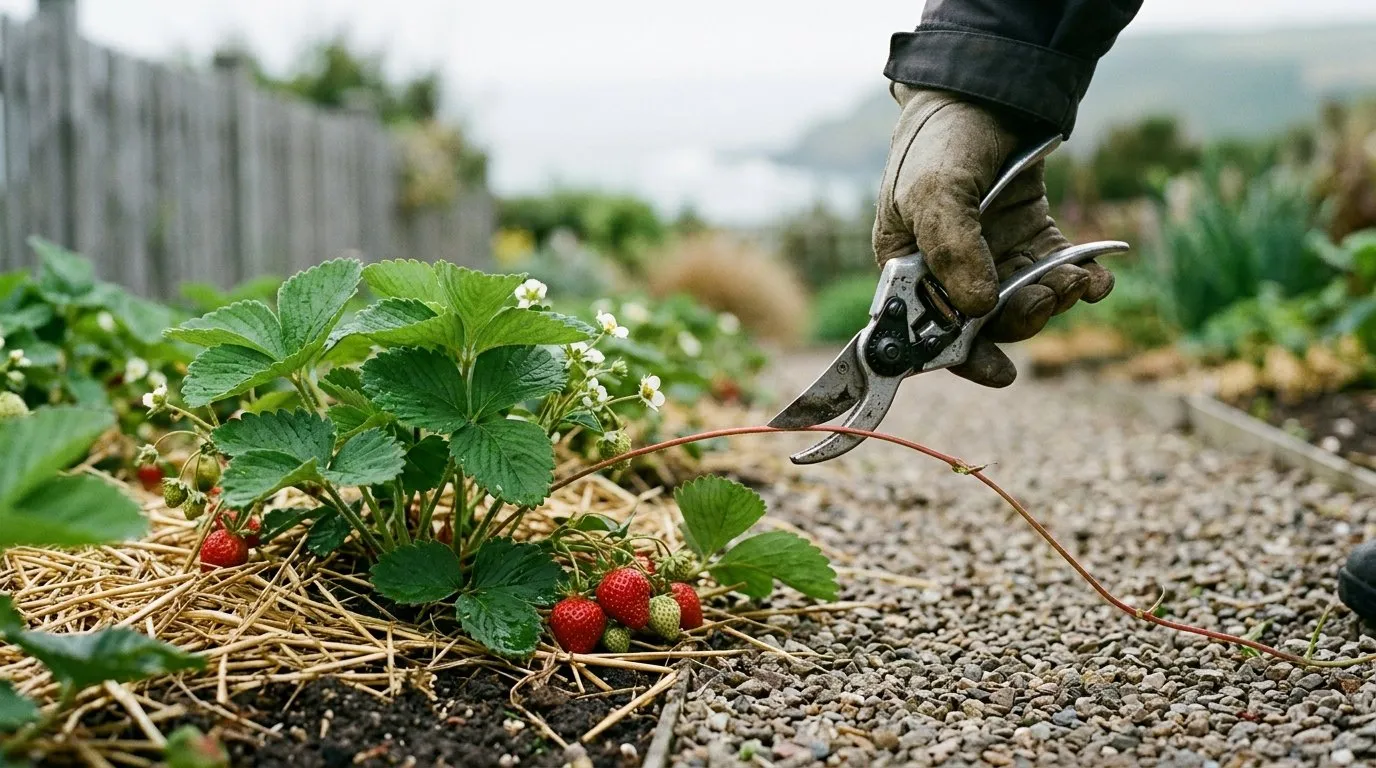 Runners you do not need are cut at the base every fortnight. Left alone, they root into paths and matting.
Frequently asked questions
When should I take runners off strawberry plants?
Peg runners down in July and early August, once fruiting has finished. That timing gives four to six weeks of warm soil for rooting, with young plants ready for their final bed by mid-September. Snip off any runners that appear in June so the parent finishes ripening its crop first.
Can you put strawberry runners straight into the ground?
Yes, runners root perfectly well pegged directly into garden soil. Direct rooting suits extending an existing bed, because the plantlet roots exactly where it will crop. Pots are better when the new bed is elsewhere, since the rootball then moves later without any disturbance.
How long do strawberry runners take to root?
Four to six weeks in warm summer soil. Test by tugging the plantlet gently; if it holds firm, it has rooted and the runner can be severed. Rooting slows sharply from September as soil cools, so late-pegged runners may need overwintering in a cold frame.
Will strawberry runners fruit in their first year?
Yes, runners pegged in July and planted by mid-September crop the following June. Expect 200-300g a plant in that first summer, rising to 400g or more in the second and third years. Remove the first flowers from spring-planted runners so they establish instead of fruiting.
Should I cut the runners off my strawberry plants?
Yes, remove every runner you are not using for propagation. Runners drain the crown just as next summer’s fruit buds are forming in late summer. Snip them at the base every two to three weeks, and on everbearing varieties remove them all season long.
Why does my strawberry plant have no runners?
It is probably an everbearing or alpine variety. Everbearers such as ‘Albion’ and ‘Mara des Bois’ make very few runners because repeat flowering takes the energy instead. Most alpine strawberries produce none at all. Young summer fruiters also runner lightly in their first season.
The pegging habit spreads once it takes hold. The same midsummer thrift that fills a strawberry bed for the price of compost works on the tomato bench too: our tomato cuttings guide turns pinched sideshoots into cropping plants by September.
Our team produces practical UK gardening guidance from source research, contributor records and established horticultural practice. Editorial standards are overseen by Matt W.