Key takeaways
- Most fruit bushes want potassium, not nitrogen, for a heavy crop
- Apply sulphate of potash in late winter or early spring before growth starts
- Too much nitrogen gives lush leaf and soft growth but little fruit
- Mulch thickly after feeding to lock in moisture and feed the soil slowly
- Blueberries are ericaceous: feed acidic, never lime, wood ash or mushroom compost
- A homemade comfrey feed is a free, potassium-rich top-up through summer
A fruit bush given the right feed at the right moment can crop half as much again as a neglected one, and the feed itself costs very little. Yet most soft fruit gets either nothing or the wrong thing, usually a general fertiliser that grows leaf instead of fruit. The secret is potassium, the nutrient that drives flowering and fruiting, applied once in late winter and topped with a thick mulch. This guide covers what to feed, when, and the one group of fruit that breaks all the rules: blueberries.
Get the feeding right and your currants, gooseberries and berries reward you with bigger, glossier crops year after year, from the same bushes, for the price of a bag of potash.
What fruit bushes actually need
Start with the nutrient that matters, because it is not the one most people reach for. Most fruit bushes want potassium, not nitrogen, to crop well, and applying the wrong one is the most common feeding mistake. Potassium drives flowers and fruit; nitrogen drives leaf and stem.
The three main plant nutrients each do a different job. Nitrogen builds green leafy growth, phosphorus feeds roots, and potassium, the K in NPK, supports flowering, fruiting and ripening. A fruit bush has plenty of leaf already; what it needs help with is turning that into fruit, and that is a potassium job.
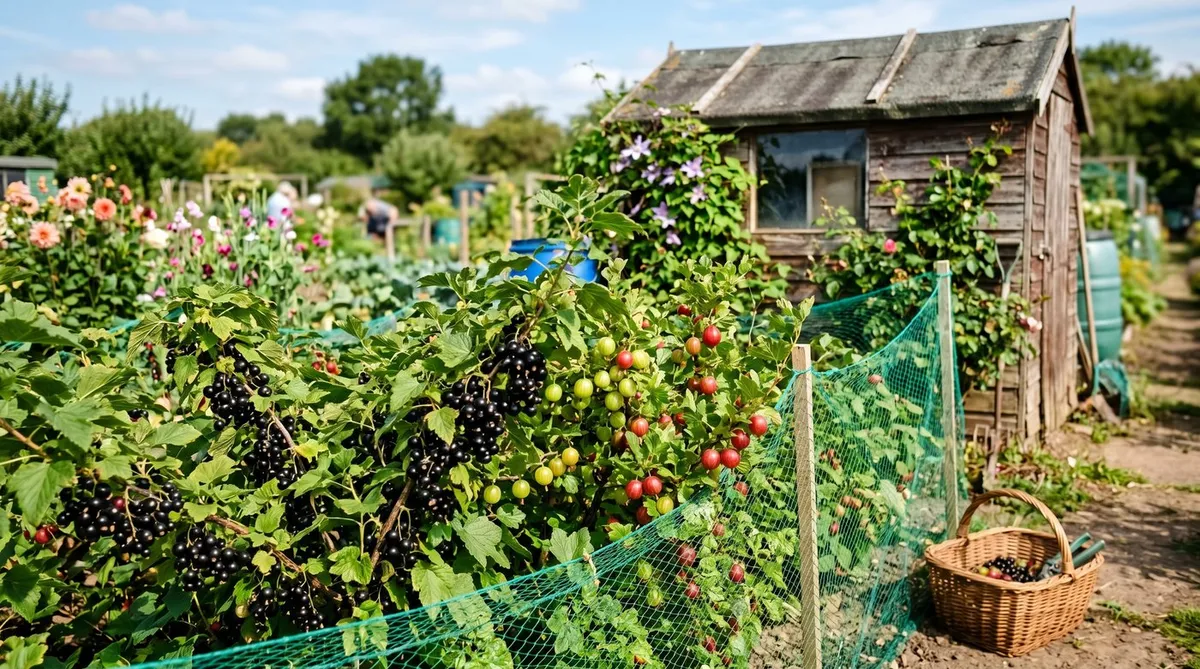
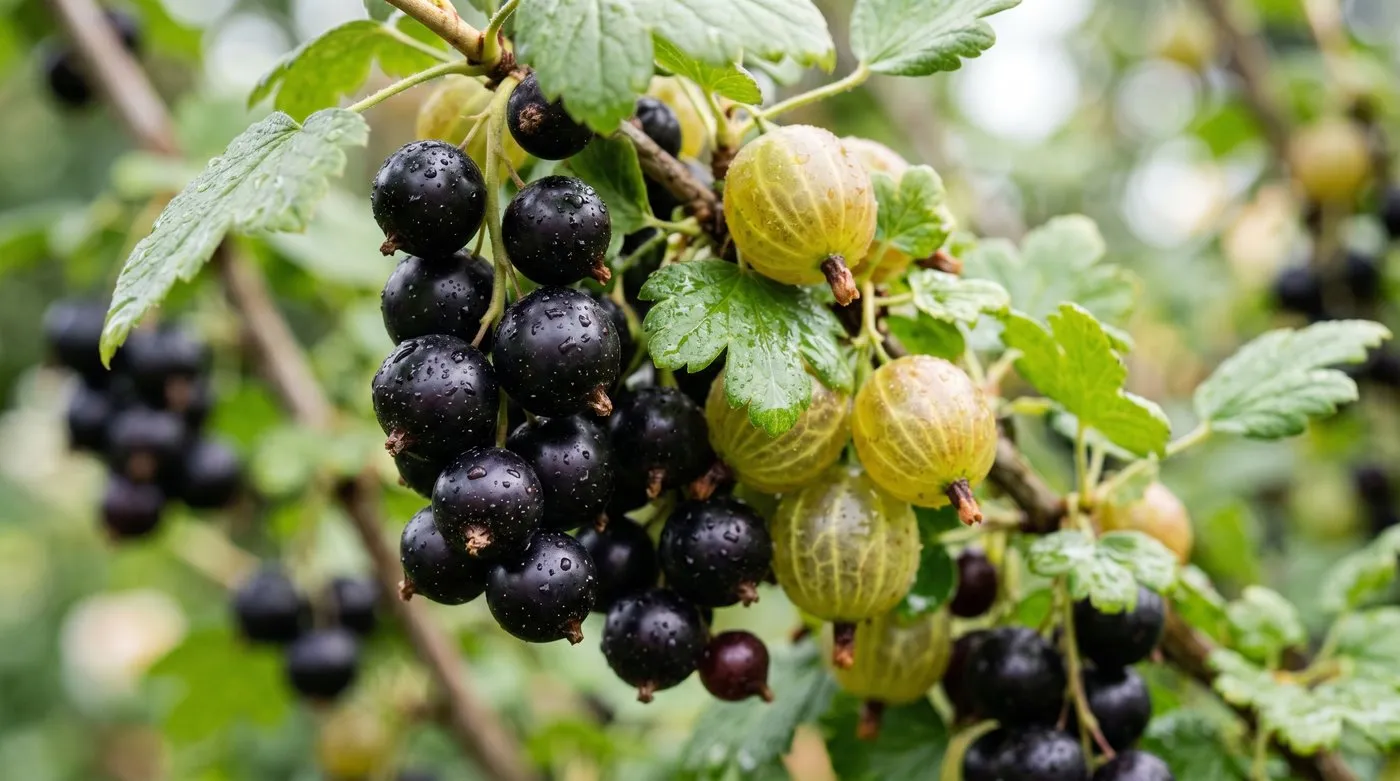 Potassium is the nutrient behind a heavy crop like this. The right feed in spring turns leafy growth into glossy, well-filled strigs of fruit.
When and how to apply potash
Timing is half the battle, so get the feed down before the bush wakes up. Apply sulphate of potash in late winter or early spring, before new growth starts, scattered around the base of each bush and lightly forked in. This puts potassium in place ready for the flowering that decides your crop.
Use about a handful, roughly 30g, per established bush, spread evenly over the root area, which extends out to the edge of the canopy. Keep it off the stems and fork it gently into the surface so it reaches the roots rather than washing away. One application a year is enough for currants, gooseberries and most soft fruit.
A light scattering of wood ash works as a free alternative for currants and gooseberries, since ash is rich in potassium, but it is alkaline, so never use it on blueberries and apply it sparingly. For exact rates, the RHS guide to feeding plants is a reliable reference.
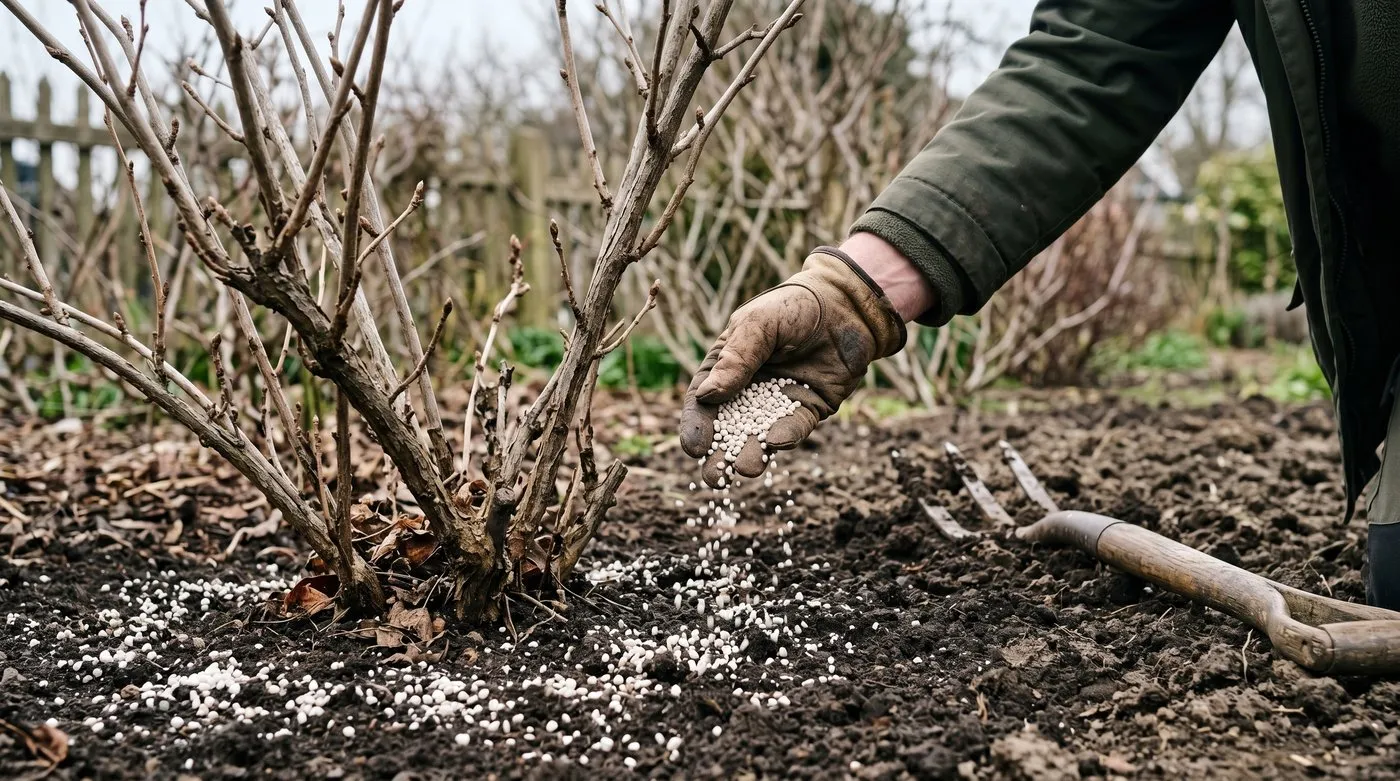 A handful of sulphate of potash around each bush in late winter, forked lightly in, sets up the whole season’s fruiting. Keep it off the stems.
Why blueberries are different
This is the rule that catches everyone out, so it gets its own section. Blueberries are ericaceous, acid-loving plants, and they need an acidic feed, never lime, wood ash or ordinary fertiliser. Treat them like a currant and you will slowly starve them.
Blueberries evolved on acidic soils and need a pH of around 4.5 to 5.5 to take up nutrients. In neutral or alkaline soil their leaves yellow between the veins and they limp along. Feed them an ericaceous fertiliser or sulphur chips in spring, water with rainwater rather than hard tap water, and grow them in ericaceous compost if your soil is not naturally acidic.
Mulch blueberries with pine needles, composted bark or leafmould to keep the soil acidic and damp. Keep wood ash, mushroom compost and garden lime well away. Our full guide to growing blueberries covers their soil and watering needs in detail, and they grow happily in pots of ericaceous compost where your soil is wrong.
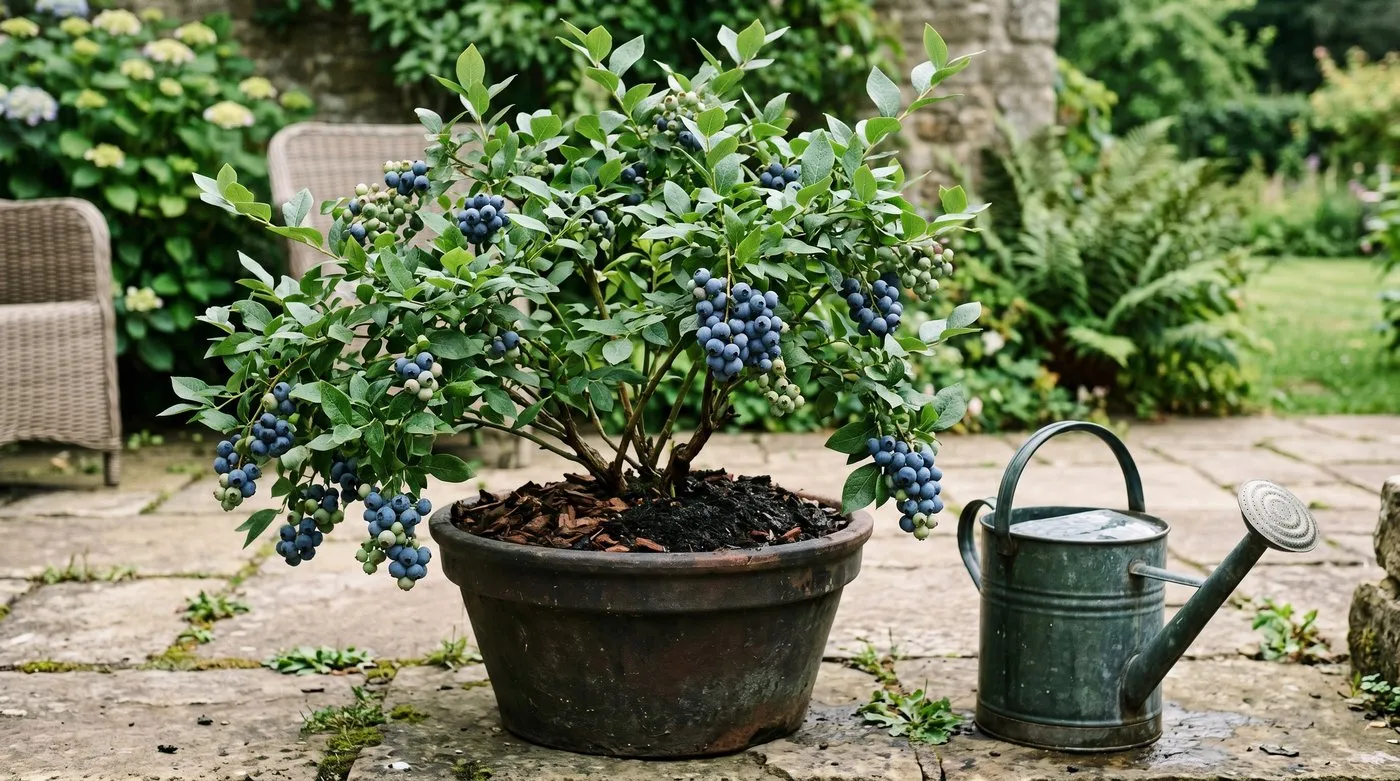 Blueberries break every rule: acidic feed only, rainwater not tap, and an acid mulch of pine needles or bark. Treat one like a currant and it slowly starves.
Gardener’s tip: If a blueberry’s leaves go yellow with green veins, it is not hungry for ordinary feed, it is struggling to take up iron in soil that is too alkaline. The fix is to lower the pH with sulphur or ericaceous feed and switch to rainwater, not to pile on more fertiliser.
Feeding options for fruit bushes compared
There is more than one way to feed soft fruit, and they suit different gardeners. This table compares the main options by cost, effort and what they are best for.
| Feed | Main nutrient | Cost | Best for |
|---|---|---|---|
| Sulphate of potash | Potassium | Low | All currants, gooseberries, berries |
| Wood ash | Potassium (alkaline) | Free | Currants and gooseberries, used sparingly |
| Ericaceous feed | Acidic, balanced | Low | Blueberries, cranberries, lingonberries |
| Comfrey liquid feed | Potassium-rich | Free to make | Summer top-up for heavy croppers |
| Compost or manure mulch | Slow, balanced | Low to free | Soil health and moisture, all bushes |
| General growth feed | High nitrogen | Low | Avoid on fruit, grows leaf not fruit |
Mulching to lock in the benefit
Feeding without mulching wastes half the effort, so the two go together. Mulch each bush thickly with compost or well-rotted manure straight after feeding, to lock in moisture, feed the soil slowly and suppress weeds. A fed bush in dry, bare soil still struggles.
Lay a 5 to 8cm layer of compost, leafmould or well-rotted manure over the root area in spring, after the potash and after rain when the soil is moist. Keep it clear of the stems to avoid rot. The mulch holds water through summer, which matters because fruit swelling needs steady moisture, and it slowly releases gentle nutrients as it breaks down.
For blueberries, use an acidic mulch like pine needles or composted bark instead. Grass clippings and cardboard also work as a base layer under compost, as our guide to mulching with cardboard and grass clippings explains. Steady moisture from a good mulch does as much for crop size as the feed itself.
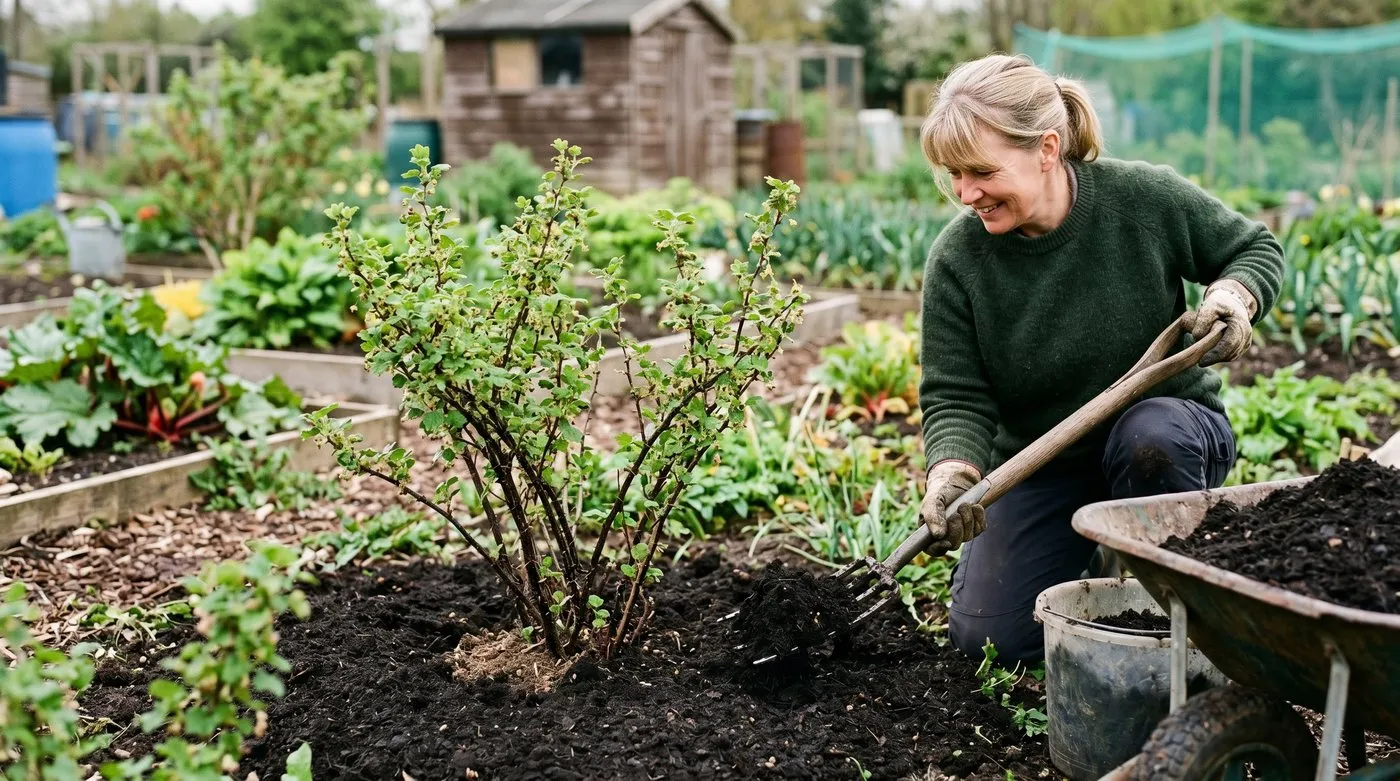 A thick compost mulch after feeding locks in moisture and feeds the soil slowly. Keep it clear of the stems and lay it over damp ground.
A free summer top-up with comfrey
For heavy croppers in poor soil, a summer liquid feed keeps fruit swelling, and you can make it for nothing. A homemade comfrey feed is rich in potassium and makes an ideal free top-up for fruit bushes through the cropping season. It is the same nutrient as potash, in liquid form.
Comfrey leaves draw up potassium from deep in the soil, so steeped in water they make a potent, smelly, potassium-rich liquid. Dilute it roughly one part comfrey liquid to ten parts water and apply around the roots every couple of weeks while the fruit is swelling. It suits currants, gooseberries and raspberries especially.
You can grow your own comfrey in a spare corner for an endless free supply. Our guides to making comfrey and nettle feed and growing and using comfrey cover the recipe and the plant. Use it as a top-up, not a replacement for the spring potash and mulch, which remain the foundation.
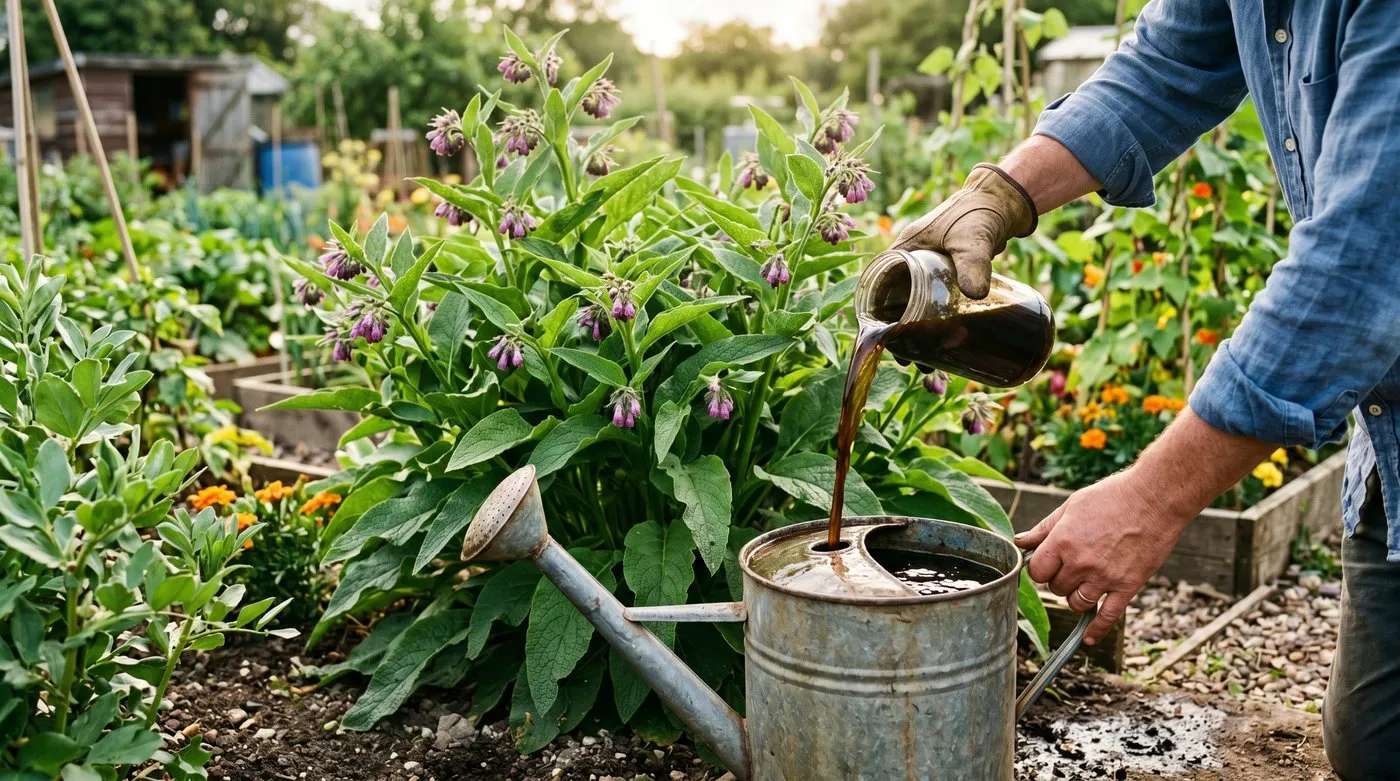 A free, potassium-rich comfrey feed, diluted one part to ten, tops up heavy croppers through summer. It is the same nutrient as potash, in liquid form.
Frequently asked questions
What is the best feed for fruit bushes?
Sulphate of potash is the best feed for most fruit bushes, applied in late winter or early spring. Potassium drives flowering and fruiting, which is exactly what you want from currants, gooseberries and berries. Pair it with a thick mulch of compost or well-rotted manure. Avoid high-nitrogen feeds, which push leafy growth at the expense of fruit.
When should I feed my fruit bushes?
Feed fruit bushes once in late winter or early spring, before new growth starts. This puts potassium in the soil ready for flowering and fruiting. Apply sulphate of potash around the base, then mulch. You can top up with a liquid comfrey feed through summer if the bushes are cropping heavily or growing in poor soil.
Can you use too much fertiliser on fruit bushes?
Yes, too much fertiliser, especially nitrogen, harms fruiting. Excess nitrogen gives lush leaves and soft, sappy growth that crops poorly and attracts aphids and disease. Stick to a potassium-based feed once a year and a mulch. More is not better with fruit bushes; balanced potassium and steady moisture beat heavy feeding every time.
How do you feed blueberries?
Feed blueberries with an ericaceous, acid-loving fertiliser, never ordinary feed, lime or wood ash. Blueberries need acidic soil around pH 4.5 to 5.5, so apply sulphur or an ericaceous feed in spring and water with rainwater, not hard tap water. Mulch with pine needles or composted bark to keep the soil acidic and moist.
Is wood ash good for fruit bushes?
Wood ash suits currants and gooseberries because it is rich in potassium, but use it sparingly and never on blueberries. Ash is alkaline, so it raises soil pH, which acid-loving blueberries hate. For potash-hungry currants and gooseberries, a light scattering in late winter helps, but sulphate of potash gives a more reliable, measured dose.
Our team produces practical UK gardening guidance from source research, contributor records and established horticultural practice. Editorial standards are overseen by Matt W.