Key takeaways
- Yellow rattle is a hemiparasite: it taps grass roots and cuts grass vigour by up to 60%
- Seed must be fresh. Viability collapses within 12 months, so buy or collect this year's crop
- Sow August to November onto scalped grass with 50%+ bare soil showing, at about 1g per m2
- Seed needs a cold winter (below 5C for weeks) to break dormancy, then germinates January to March
- Never feed or fertilise. Low soil fertility favours wildflowers over grass
- Yellow Rattle Day falls mid-July, when ripe seed rattles in the pod before you cut the meadow
Yellow rattle is the one plant that turns a patch of rough grass into a real wildflower meadow. Also called hay rattle, this modest annual (Rhinanthus minor) works underground, tapping into the roots of vigorous grasses and draining their vigour. That single trick, weakening the grass, is what lets slower wildflowers get a foothold instead of being smothered.
Get yellow rattle established and the rest of a meadow follows. Skip it and rank grass usually wins within two seasons. This guide covers what the plant is, how it parasitises grass, and the exact method that works: fresh seed, scalped turf, an autumn sowing and a cold winter. It also explains why most first attempts fail, and how to run the meadow year after year once rattle takes hold.
What yellow rattle is and how it parasitises grass
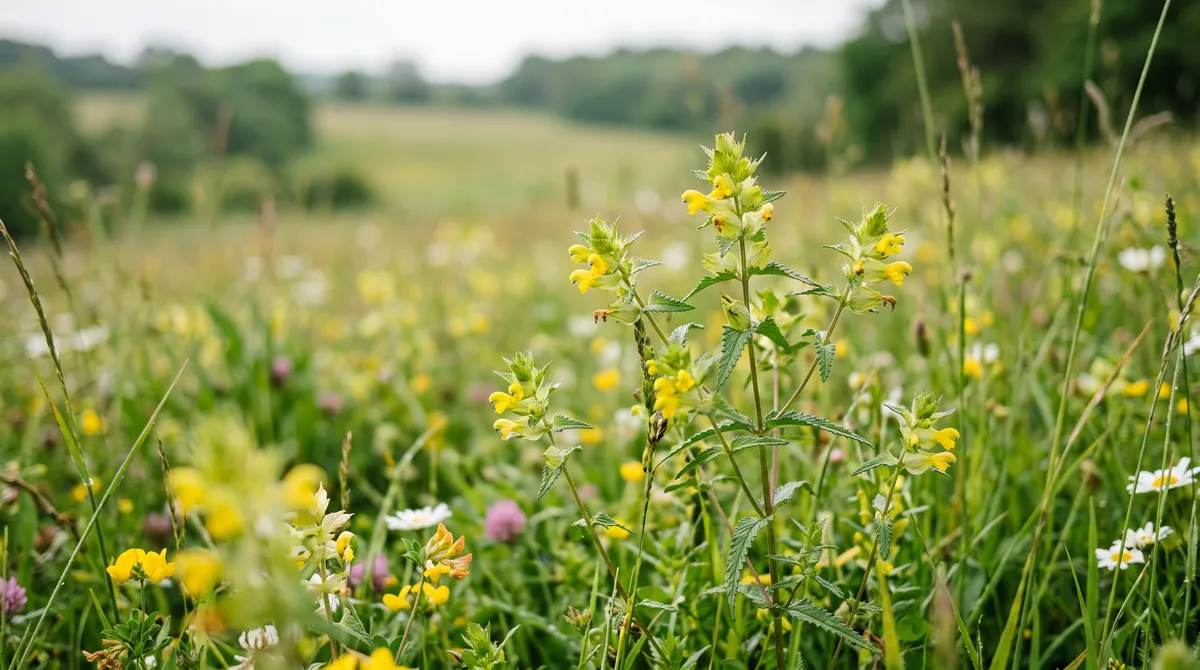
Yellow rattle (Rhinanthus minor) is a native British annual in the broomrape family. It grows 10-50cm tall, with soft yellow hooded flowers from May to July and toothed leaves on a square stem. The English name comes from the ripe seeds, which rattle inside the inflated brown pods by mid-July.
The clever part is below ground. Yellow rattle is a hemiparasite. It photosynthesises like any green plant, but it also sends out root growths called haustoria that clamp onto the roots of neighbouring grasses. Through these connections it siphons off water, minerals and sugars. It targets grasses in particular, and to a lesser extent legumes.
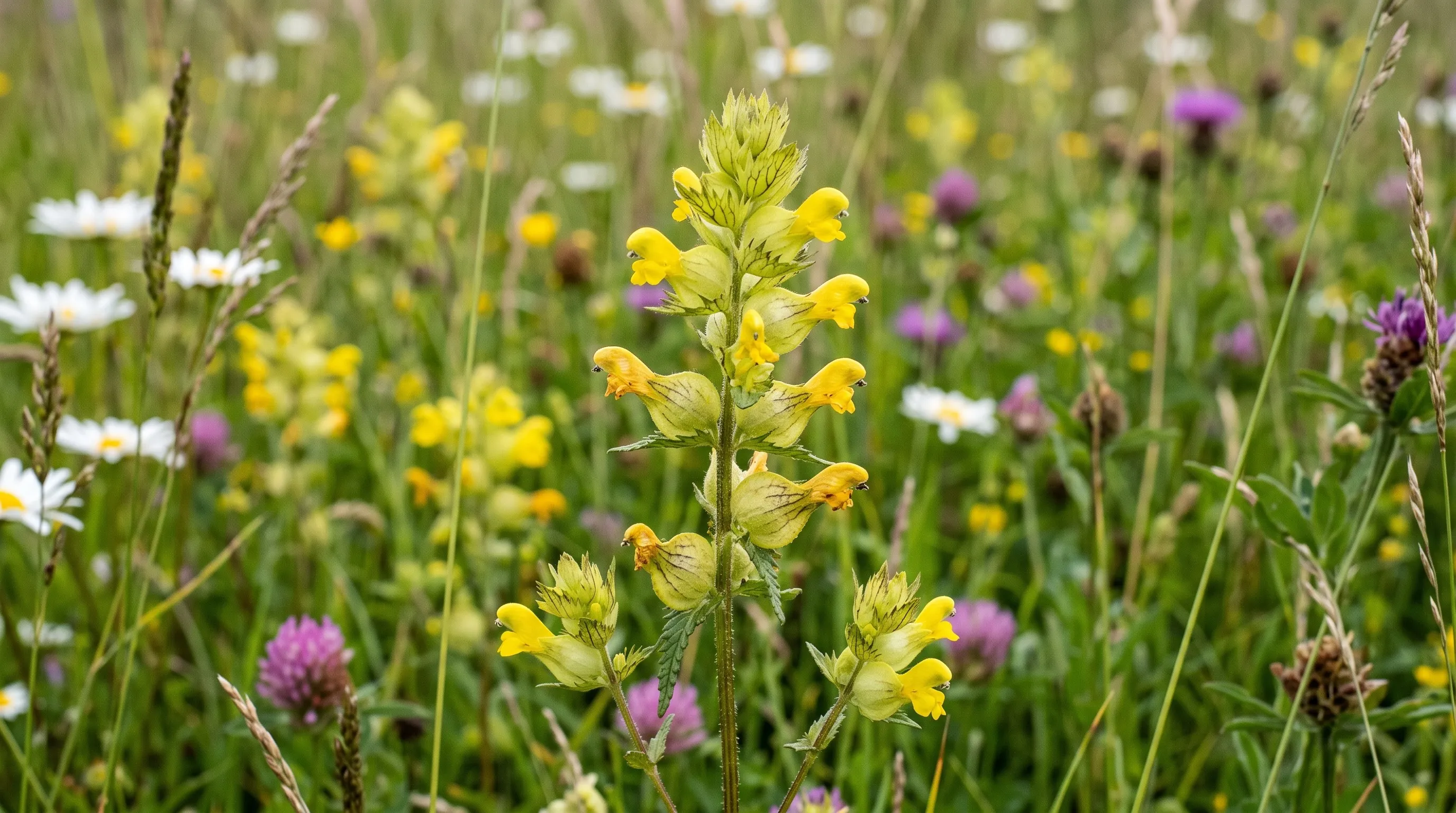 Yellow rattle in flower from May to July. The soft yellow hooded flowers sit on a square stem above toothed leaves.
Why yellow rattle is the meadow maker
A wildflower meadow is really a contest for light and root space, and grass usually wins. Sow a wildflower mix into established turf and the vigorous perennial grasses, ryegrass, cocksfoot, Yorkshire fog, simply outgrow and shade the flower seedlings. Within a couple of years the flowers vanish and you are back to a green sward.
Yellow rattle changes the odds. By parasitising the grass and holding its vigour down, it opens permanent gaps in the sward. Into those gaps go the meadow flowers: ox-eye daisy, common knapweed, bird’s-foot trefoil, red clover, self-heal and dozens more. Studies at meadow restoration sites record species richness rising sharply within three to five years once rattle is present.
It is the low-cost lever that does the work of hours of digging. You could strip turf, import low-fertility topsoil and start bare, which works but is expensive and heavy. Yellow rattle achieves a similar shift in balance for the price of a packet of seed. That is why it earns the nickname meadow maker, and why every serious meadow project starts with it. For the full picture of building a meadow from scratch, see our guide on how to make a wildflower meadow.
Why the seed must be fresh and cold-chilled
This is the section that decides success. Yellow rattle seed is short-lived. Viability drops steeply after harvest and is largely gone within about 12 months. A packet stored warm for two years may give near-zero germination. This alone explains most failed sowings.
Two rules follow. First, buy or collect fresh, current-season seed and sow it the same autumn. Look for a stated harvest year on the packet. If a supplier cannot tell you when it was collected, do not buy it. Second, the seed needs cold to wake up. Fresh yellow rattle is dormant at sowing, and that dormancy only breaks after a prolonged chill.
The requirement is a cold, damp winter: several weeks below about 5C, which a normal UK winter provides outdoors. This is why autumn sowing works and spring sowing usually does not. Seed sown in August to November sits on the soil, takes the winter chill, and germinates from late winter. Spring-sown seed has missed its cold period and mostly sits dormant until the following year, by which time much of it has died. There is no shortcut. You cannot fridge-treat your way around a proper autumn sowing reliably, so work with the seasons instead.
Warning: Never buy yellow rattle seed without a harvest date. Seed more than a year old often gives almost no germination. Old seed is the number one reason meadow sowings fail, and no amount of good ground preparation rescues dead seed.
How to sow yellow rattle onto scalped grass
Preparation matters more than the sowing itself. Yellow rattle needs its seed in firm contact with bare soil and enough light to establish, so the grass must be brutally short with soil showing through.
Start in late summer or early autumn. Cut the grass as short as the mower goes, down to 2-3cm, and remove all the clippings. Then rake hard with a spring-tine rake to tear out the dead thatch and moss until at least 50% bare soil shows. On a lawn, scarifying does this job well. The more open ground you expose, the higher the strike rate.
Sow at about 1g per square metre, roughly a level teaspoon spread over a square metre. Mix the fine seed with dry silver sand to see where it lands and get an even scatter. Broadcast it by hand, then press it in. Walk over the whole area, roll it with a garden roller, or tread it with boards. Do not rake it in and do not cover it with soil. Yellow rattle needs light and surface chill, so burying it stops germination. Then leave it completely alone over winter. For timing across the whole wildflower calendar, our guide on when to sow wildflower seeds puts rattle in context with the rest of a mix.
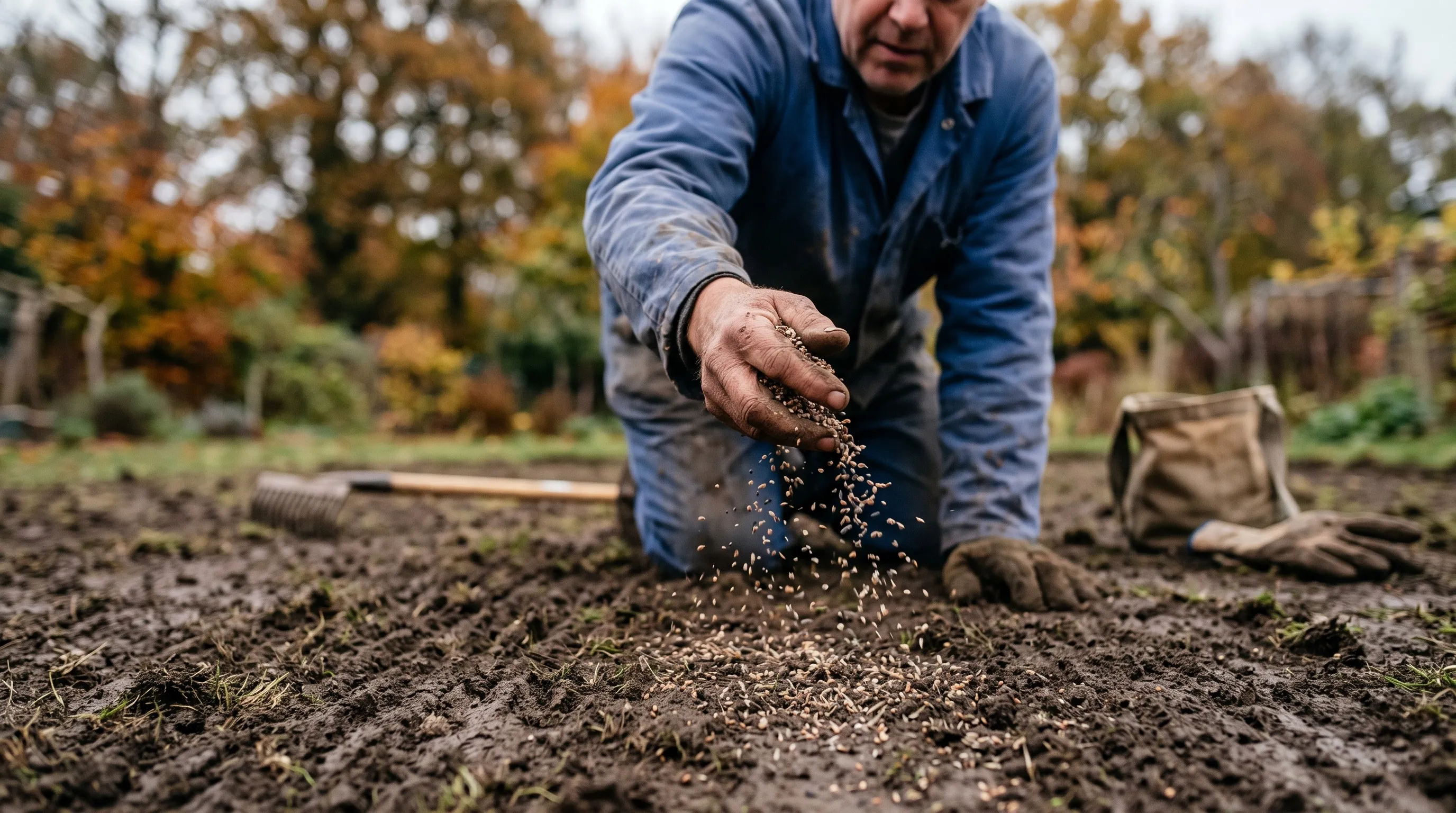 Broadcast seed by hand at about 1g per square metre onto scalped, raked turf. Mixing seed with dry sand helps you spread it evenly.
Getting the grass short enough
The commonest preparation error is leaving the grass too long. Yellow rattle seedlings are small and slow, and tall grass shades them out before they establish. Scalp the sward to 2-3cm and rake until soil is clearly visible across at least half the area. If you can still see a continuous green carpet, it is not short enough.
On rough grass or a former paddock, a strimmer followed by hard raking works. On a lawn, drop the mower to its lowest setting, cut, then scarify twice at right angles. Bare patches are your friend here. A meadow started on open, scalped ground can look bleak in November, but that is exactly the state yellow rattle wants for a strong spring strike.
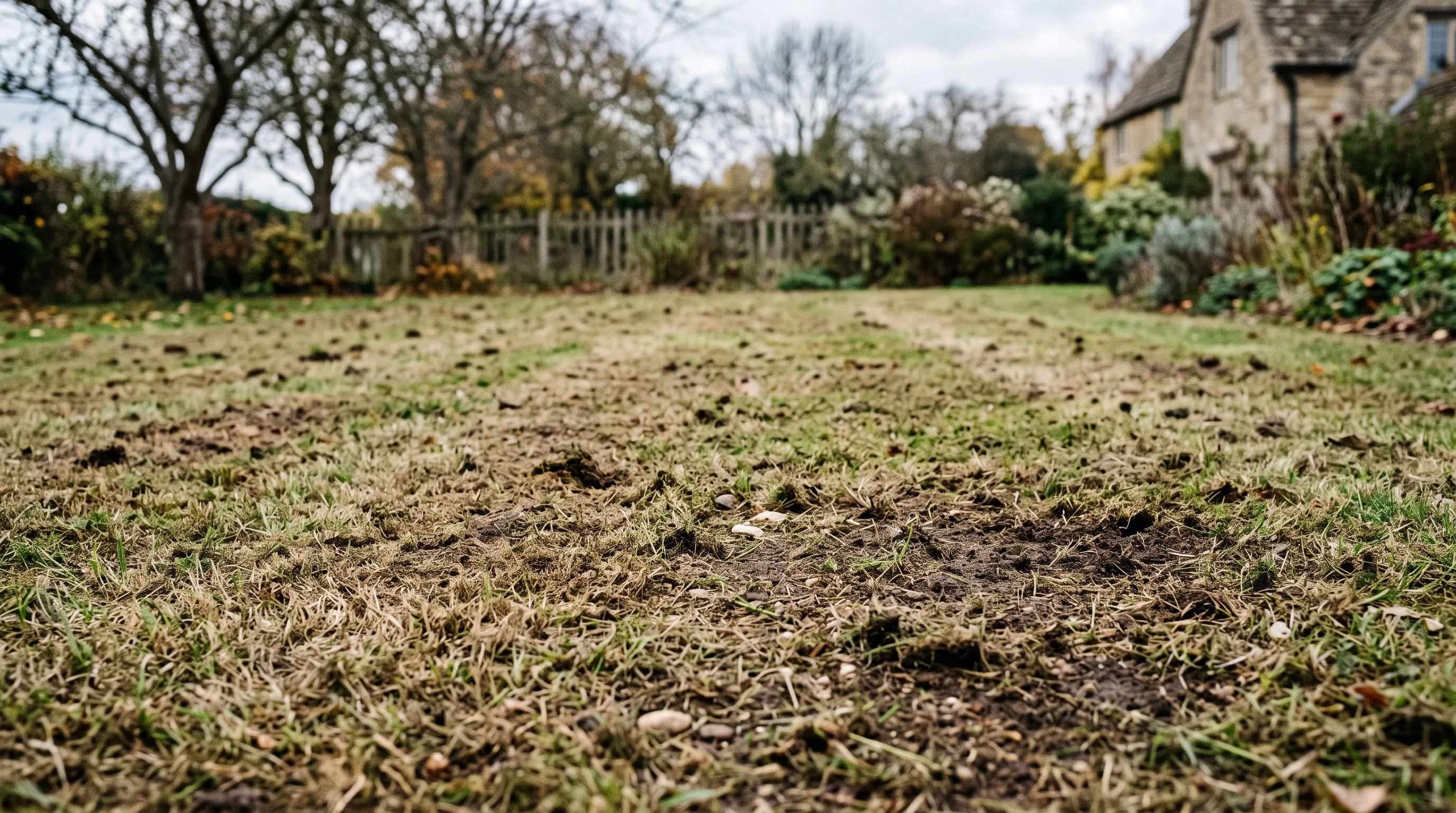 Scalp the grass to 2-3cm and rake hard until half the soil shows. Bare ground gives the seed the contact and light it needs.
Why you must never feed a rattle meadow
Fertility is the hidden enemy of a wildflower meadow. Rich soil grows lush grass, and lush grass beats wildflowers every time, even with yellow rattle present. The whole approach depends on keeping soil fertility low.
That means a firm rule: never feed or fertilise a meadow. No lawn feed, no manure, no compost mulch, no fallen autumn leaves left to rot down. Every added nutrient tips the balance back toward vigorous grass and undoes the work rattle is doing. This is the opposite of normal gardening instinct, where we feed to help plants along.
It also means removing the cut material every year rather than mulching it in place. Leaving cut grass to lie returns its nutrients to the soil and slowly raises fertility. On very rich former lawns or vegetable ground, expect the first two or three years to be grass-dominated while fertility falls. Yellow rattle speeds that fall by suppressing grass, but low fertility and rattle together are what deliver a flower-rich sward. The principle carries across all meadow work, including a small mini-meadow area in a corner of a lawn.
Gardener’s tip: If you are moving from a fed, striped lawn to a meadow, stop all feeding a full year before you sow yellow rattle. Give it a season of no feed and low mowing with the clippings removed, so the soil starts to lean out before the rattle goes in.
Yellow Rattle Day and cutting the meadow
The rhythm of a rattle meadow is set by one date. Around mid-July, the seed ripens and the pods dry to brown parchment. Shake a stem and the loose seeds rattle audibly inside. Meadow keepers call this Yellow Rattle Day, and it is the signal that the annual seed has set.
This matters because yellow rattle is an annual. Each plant germinates, flowers, sets seed and dies within a single year. It has no roots or bulb to return from. The meadow only continues if the plant sets and sheds seed before you cut. So you must wait until the seed has rattled and dropped, usually by late July, before the first cut.
Cut too early and you sweep off the seed before it falls, ending the colony in one stroke. Once the pods have shed, take the hay cut: mow or scythe the whole meadow down to about 5cm, leave the cuttings a day or two for any remaining seed to drop, then rake off and remove all the material. For the finer detail of read-the-plant timing, see our guide on when to cut a wildflower meadow.
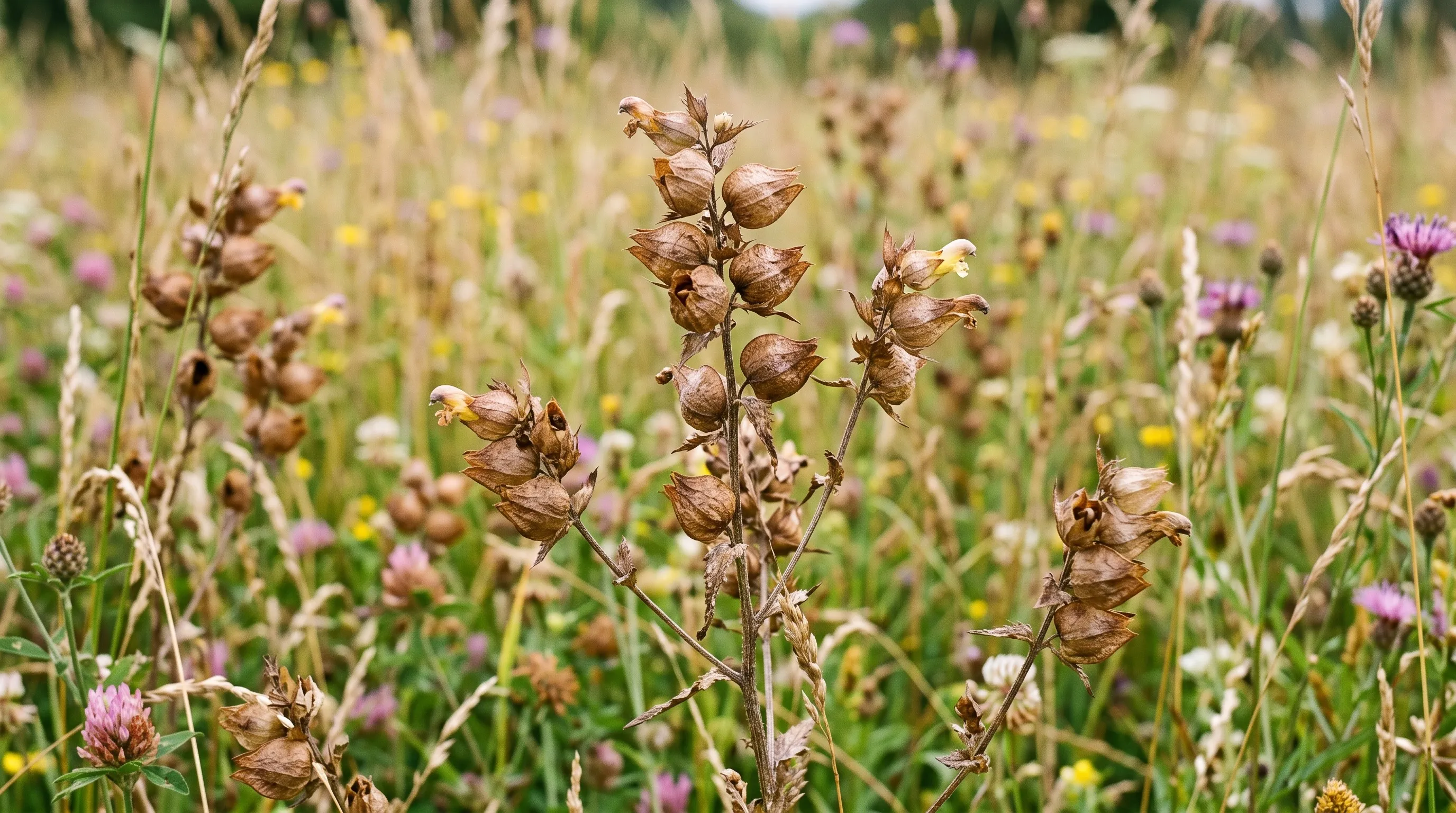 Yellow Rattle Day arrives when the seed rattles in the ripe brown pods, usually mid-July. Wait for this before the first cut.
Sowing method comparison
The pattern is clear. Fresh seed, autumn timing and bare soil are the three factors that decide success. Get all three right and germination is strong. Miss any one, especially seed freshness, and the strike collapses. Plug plants are a useful backup if a seed sowing fails, but they cost far more than a packet.
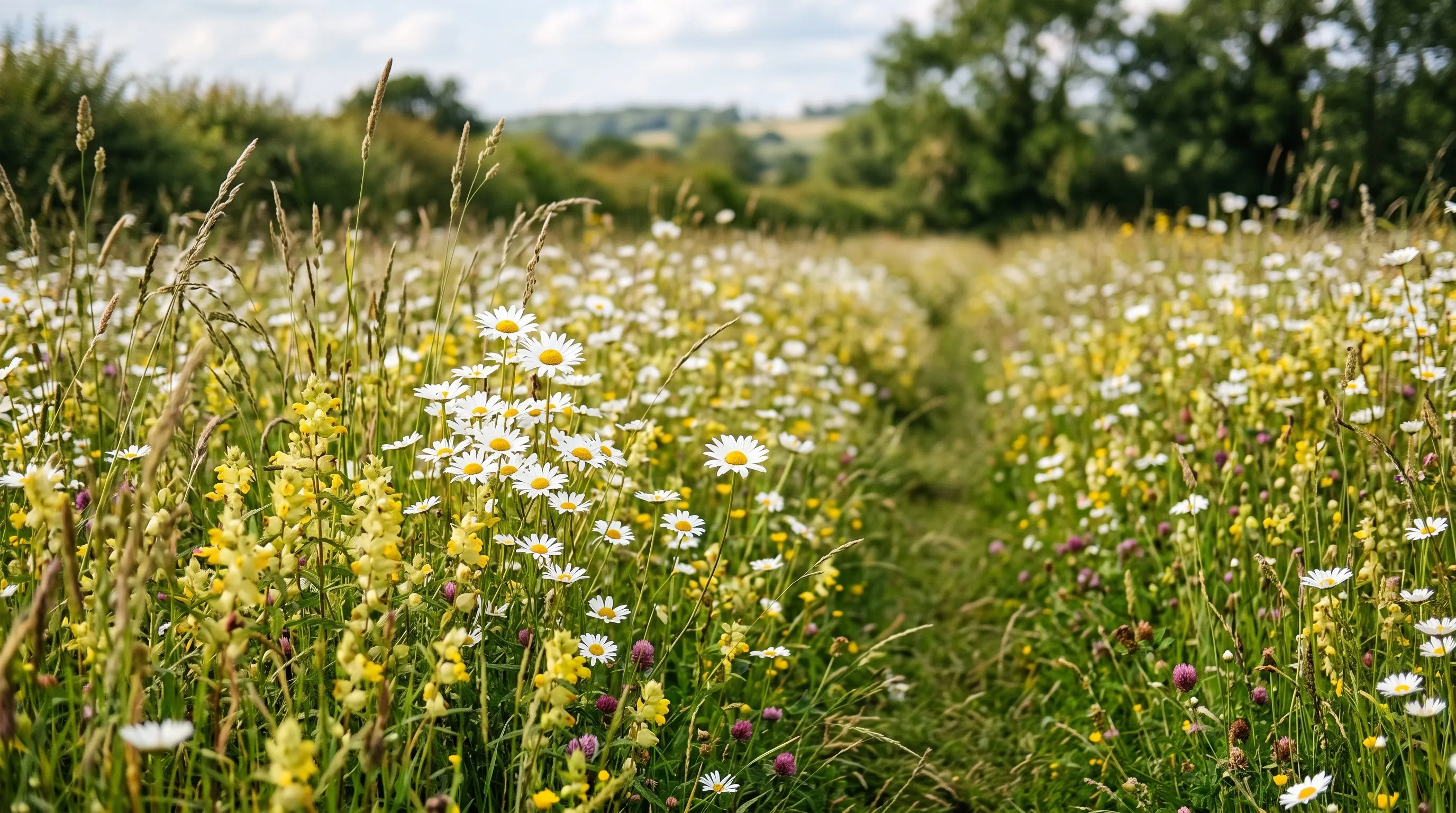 Three years on, yellow rattle has thinned the grass and let ox-eye daisies and other wildflowers establish across the meadow.
Managing the meadow year after year
Once yellow rattle is in, the meadow needs a simple, consistent regime. The aim every year is the same: let the flowers set seed, take one hay cut, remove the material, then keep fertility low.
The core routine is a single late-summer hay cut after Yellow Rattle Day, with all cuttings raked off and removed. Some keepers then give the meadow an autumn tidy cut in September or October to knock back regrowth, again removing clippings. Over winter, leave it uncut so the structure shelters overwintering insects. Do not cut again until the following summer.
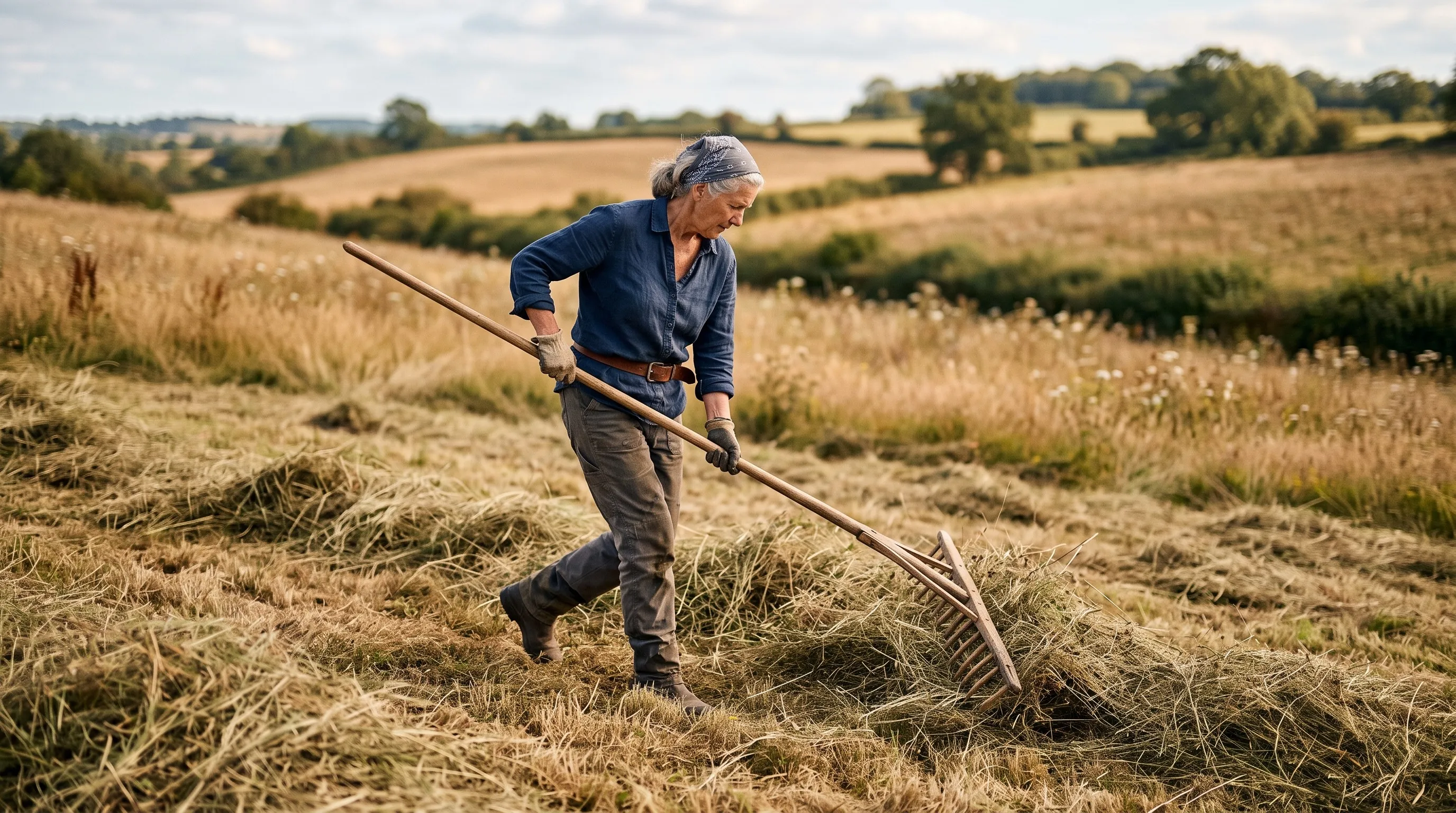 Rake off and remove all cut material after the hay cut. Leaving it to rot down raises fertility and favours grass over flowers.
Letting yellow rattle spread naturally
Yellow rattle spreads slowly on its own, usually a metre or two a year, because the heavy seed simply drops near the parent. You can speed this up. Collect ripe seed on Yellow Rattle Day by running a hand up the stems into a bucket, then scatter it into freshly raked bare patches in new areas the same autumn. Sow it straight away, as stored seed loses viability fast.
Do not sow it too thickly when expanding. Yellow rattle can suppress grass so hard that it leaves open, bare ground where nothing much grows for a season. A light, even scatter into prepared patches gives a natural spread without gaps. Over five years you can move a small colony across a whole meadow this way, at no cost beyond a bucket and an afternoon.
Comparing grass with and without yellow rattle
The visible difference in the sward is the proof the method works. Grass growing free, without rattle, stays dense, tall and lush, forming a closed green canopy that shades the soil. Grass parasitised by yellow rattle is thinner, shorter and paler, with visible gaps at ground level where light reaches the soil and flowers can seed.
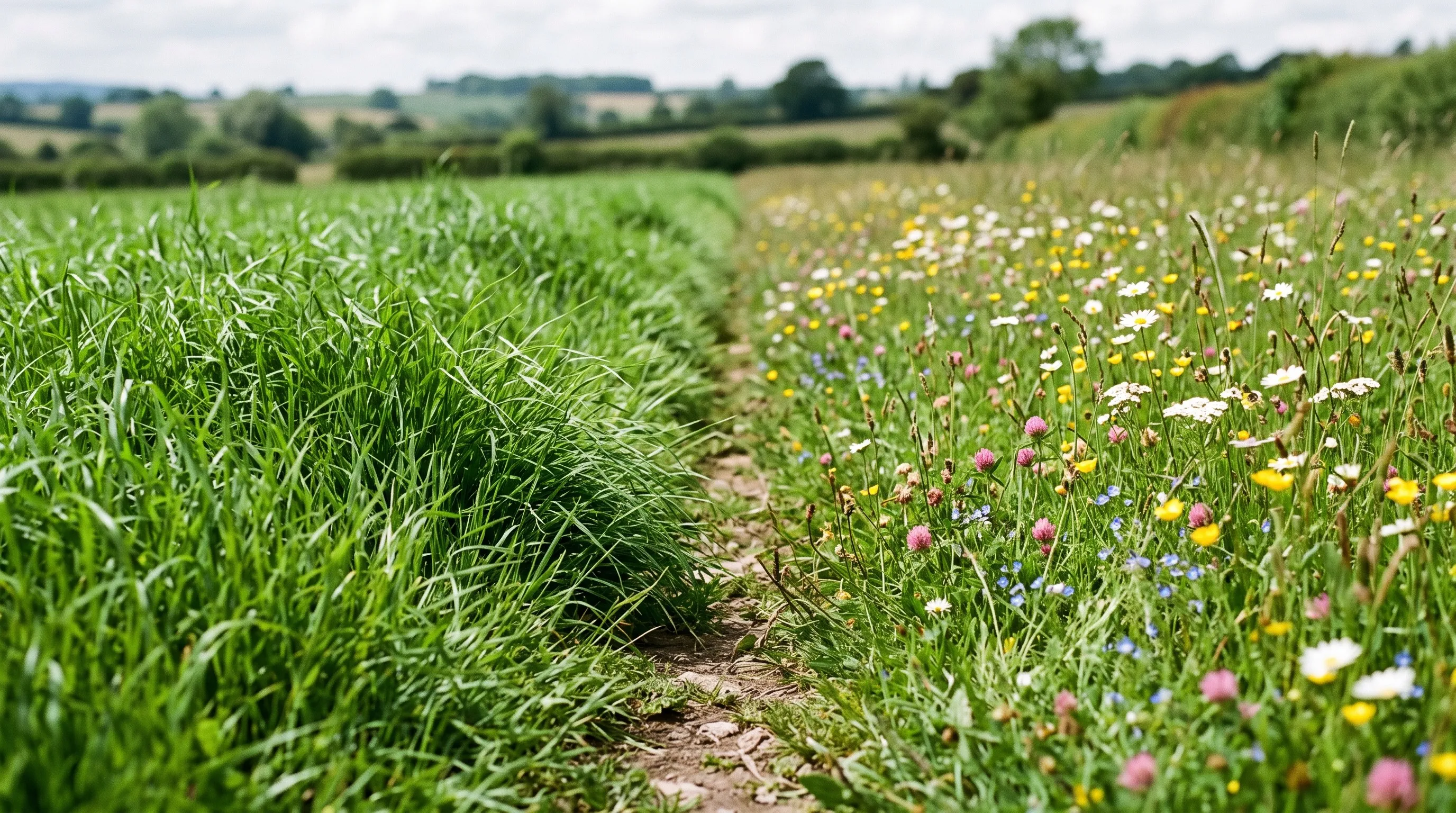 Left, dense grass with no yellow rattle. Right, thinner turf weakened by rattle, with gaps at soil level where wildflowers establish.
Month-by-month meadow calendar for the UK
This calendar covers a yellow rattle meadow through a typical UK year. Adjust by a week or two for Scotland and the far north, or earlier for the mild south-west.
| Month | Task |
|---|---|
| January | Seed lies dormant, taking the winter chill. Leave the meadow completely alone. No cutting. |
| February | Germination begins in milder spots. Seedlings appear as small paired leaves. Keep off the ground. |
| March | Main germination flush. Do not mow or feed. Young rattle plants establishing among the grass. |
| April | Plants grow fast, competing with grass roots. Grass visibly checked in established meadows. |
| May | Flowering starts. First yellow hooded flowers open. Enjoy it, do not cut anything. |
| June | Peak flowering, meadow at its best with ox-eye daisy and knapweed. No cutting yet. |
| July | Seed ripens. Yellow Rattle Day mid-month when pods rattle. Take the hay cut late July after seed drops. |
| August | Complete the hay cut if not done. Rake off and remove all cuttings. Sow fresh seed into bare patches. |
| September | Sow fresh seed onto scalped, raked ground. Optional autumn tidy cut, clippings removed. |
| October | Continue autumn sowing. Scarify to reopen bare soil for reseeding. Remove fallen leaves. |
| November | Final sowing window. Ground preparation for new areas. Then leave the meadow to overwinter. |
| December | Meadow at rest. Seed chilling in the cold. Leave standing for overwintering insects. |
Common mistakes when growing yellow rattle
Most yellow rattle failures come down to the same handful of errors. Avoid these five and your odds jump sharply.
Using old or stored seed
This is the top cause of failure. Yellow rattle seed loses viability within about 12 months, so seed from an undated packet or last year’s leftovers often gives near-zero germination. Always buy or collect fresh, current-season seed and sow it the same autumn. If a packet has no harvest year, do not use it.
Sowing into grass that is too long
Seedlings are small and slow, and long grass shades them out. Scalping to 8-10cm is nowhere near short enough. Cut down to 2-3cm and rake hard until at least half the soil shows. Bare soil contact is what the seed needs, and no amount of good seed rescues a shaggy sward.
Cutting the meadow too early
Yellow rattle is an annual that only returns from seed. Cut before Yellow Rattle Day in mid-July and you remove next year’s seed before it drops, ending the colony. Always wait until the pods rattle and shed, usually late July, before the hay cut.
Feeding the ground
Rich soil grows lush grass that beats wildflowers even with rattle present. Any feed, manure or left-in clippings raises fertility and undoes the work. Never fertilise a meadow, and always rake off and remove the cut hay to keep the soil lean.
Burying the seed
Yellow rattle needs light and surface chill to germinate. Raking seed in or covering it with soil or thatch stops it. Press the seed onto the surface with a roller or your boots, so it makes firm contact but stays on top.
Frequently asked questions
Why is yellow rattle called the meadow maker?
It parasitises grass roots and weakens vigorous grasses by up to 60%. That drop in grass vigour opens gaps and lets slower wildflowers like ox-eye daisy, knapweed and clover establish. Without yellow rattle, rank grass usually smothers a young meadow within two seasons.
When should I sow yellow rattle seed in the UK?
Sow between August and November, onto very short grass. The seed needs several weeks below 5C over winter to break dormancy. Sow too late or in spring and most of the seed will not germinate that year. Autumn sowing onto scalped, raked turf gives the best strike.
Does yellow rattle seed have to be fresh?
Yes, fresh seed is essential. Viability collapses within about 12 months of harvest. Buy seed sold as current-season and sow it the same autumn. Old or long-stored seed is the single most common reason sowings fail, so avoid packets with no harvest date.
How much yellow rattle seed do I need per square metre?
Sow about 1g per square metre. That works out to roughly 0.5 to 1kg per acre. Do not sow too thickly, as yellow rattle can weaken grass so much it leaves bare patches. A light, even scatter pressed into bare soil is all you need.
Do I need to bury yellow rattle seed?
No, never bury it. Press the seed onto the surface so it makes firm contact with soil. Yellow rattle needs light and surface chilling to germinate. Walk over it, roll it, or tread it in, but leave it on top. Burying under soil or thatch stops it germinating.
When can I cut a meadow with yellow rattle?
Cut in late summer, after the seed has dropped, usually late July or August. Wait until the pods rattle and shed, around mid-July. Cut too early and you remove next year’s seed. Always rake off the cut hay to keep fertility low.
Why did my yellow rattle fail to come up?
The usual causes are old seed, too much thatch, or grass left too long. Yellow rattle needs fresh seed, bare soil contact and a cold winter. Feeding the ground or cutting before seed drops also causes failure. Scalp the grass hard, rake off thatch, and sow fresh seed in autumn.
Our team produces practical UK gardening guidance from source research, contributor records and established horticultural practice. Editorial standards are overseen by Matt W.