Key takeaways
- Three main causes: conifer aphid, drought scorch, and Phytophthora root rot
- Aphid browns inner older foliage in late spring, with sticky honeydew
- Drought and wind scorch brown the exposed sunny or windy side
- Phytophthora kills whole plants in patches on wet, badly drained ground
- Most conifers will not regrow from bare brown wood, unlike yew and thuja
- Diagnose the cause first, because the three fixes are completely different
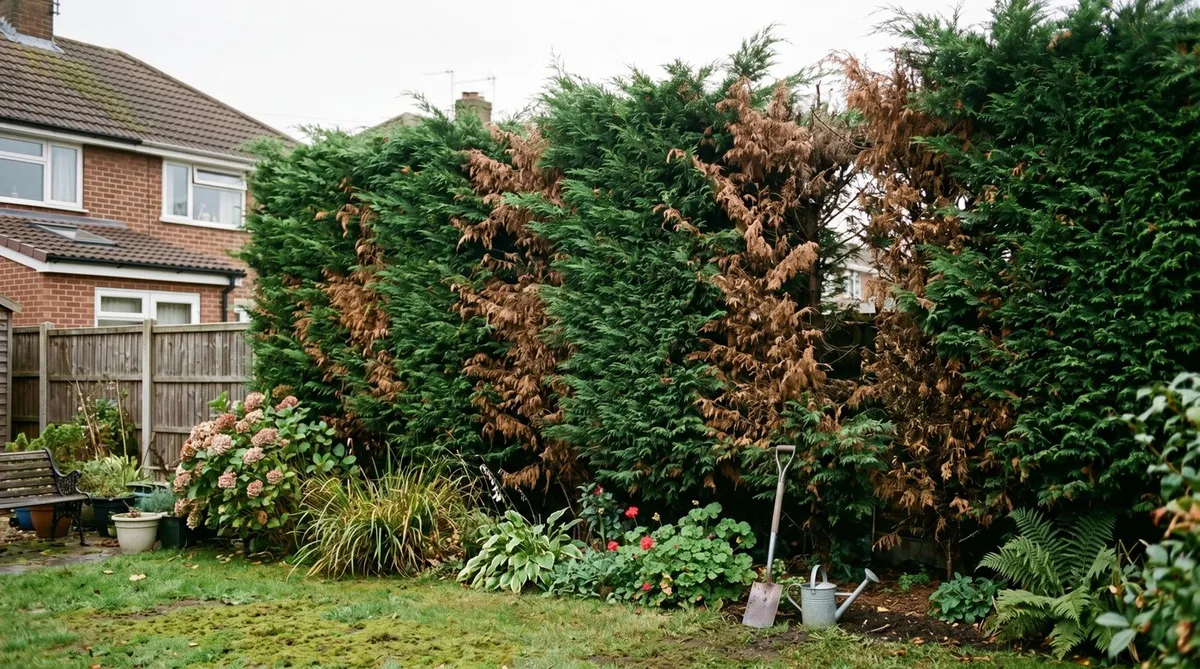
Conifer hedge browning is alarming because, with most conifers, brown is permanent. A leylandii or Lawson cypress that loses a patch of foliage to brown will not green it up again, unlike a deciduous hedge that reshoots. So the brown patch you see in summer is often there to stay. That makes fast, accurate diagnosis the whole game. Three very different causes turn a conifer hedge brown, and each needs a completely different response. This guide shows you how to tell conifer aphid from drought scorch from Phytophthora root rot, and what to do about each. You will learn which conifers can recover and which cannot.
The first job is always to name the cause. Treat the wrong one and the hedge keeps browning while you watch.
Why brown is usually permanent on conifers
The single most important fact about conifer hedges is that most do not regrow from bare brown wood. Understanding this shapes everything you do about browning.
Leyland cypress, Lawson cypress and juniper carry their growth buds only on green, living foliage. Once a section browns and dies, there are no dormant buds in the old bare wood to push out new shoots. The patch stays brown. This is why you cannot cut a leylandii back hard into old wood and expect it to refill, and why a brown patch from any cause tends to be a lasting scar.
The exceptions are yew and thuja, which can reshoot from older wood and recover from hard cutting. For every other common conifer hedge, prevention and early action beat cure, because there is no real cure once the foliage is dead. This limit is the reason an overgrown leylandii is so hard to reduce, as our guide to a conifer hedge that is too big explains.
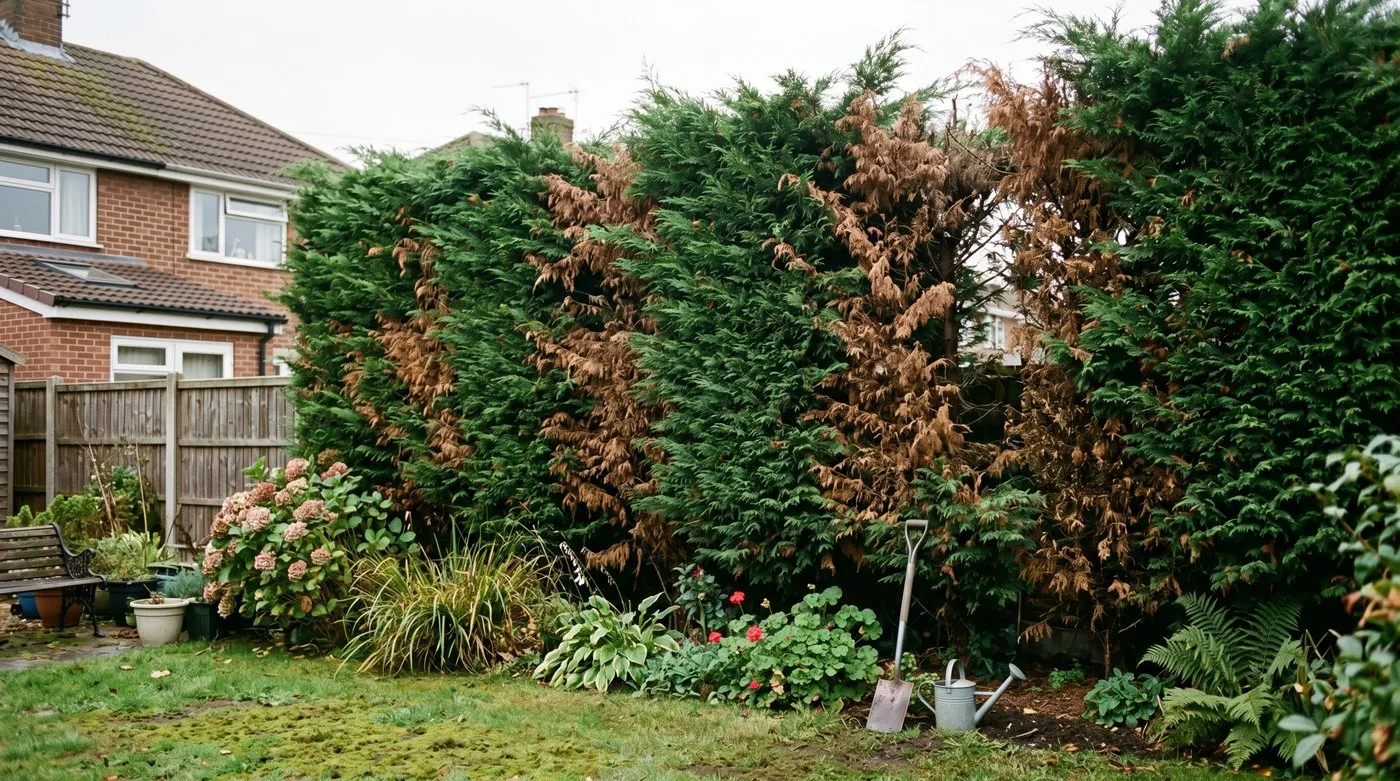 Brown patches on leylandii are usually permanent. The plant carries no buds in bare wood, so diagnosis and early action matter most.
Conifer aphid, the commonest cause of browning
The aphid, Cinara, is a large grey-green insect that feeds on the older, inner foliage in late spring and early summer. It browns the foliage from the inside out, so patches appear on the body of the hedge rather than the new green tips. Two giveaways confirm it: sticky honeydew that the aphids excrete, often with black sooty mould growing on it, and the insects themselves, clustered on the shoots if you part the foliage.
The browning can spread fast across a hedge in a warm spring. Because the dead foliage will not regrow on leylandii, early treatment is the key. Spray at the first sign with an approved insecticide or knock the aphids off with a strong jet of water, and encourage natural predators like ladybirds and lacewings. Our guide to getting rid of aphids covers the control methods in full.
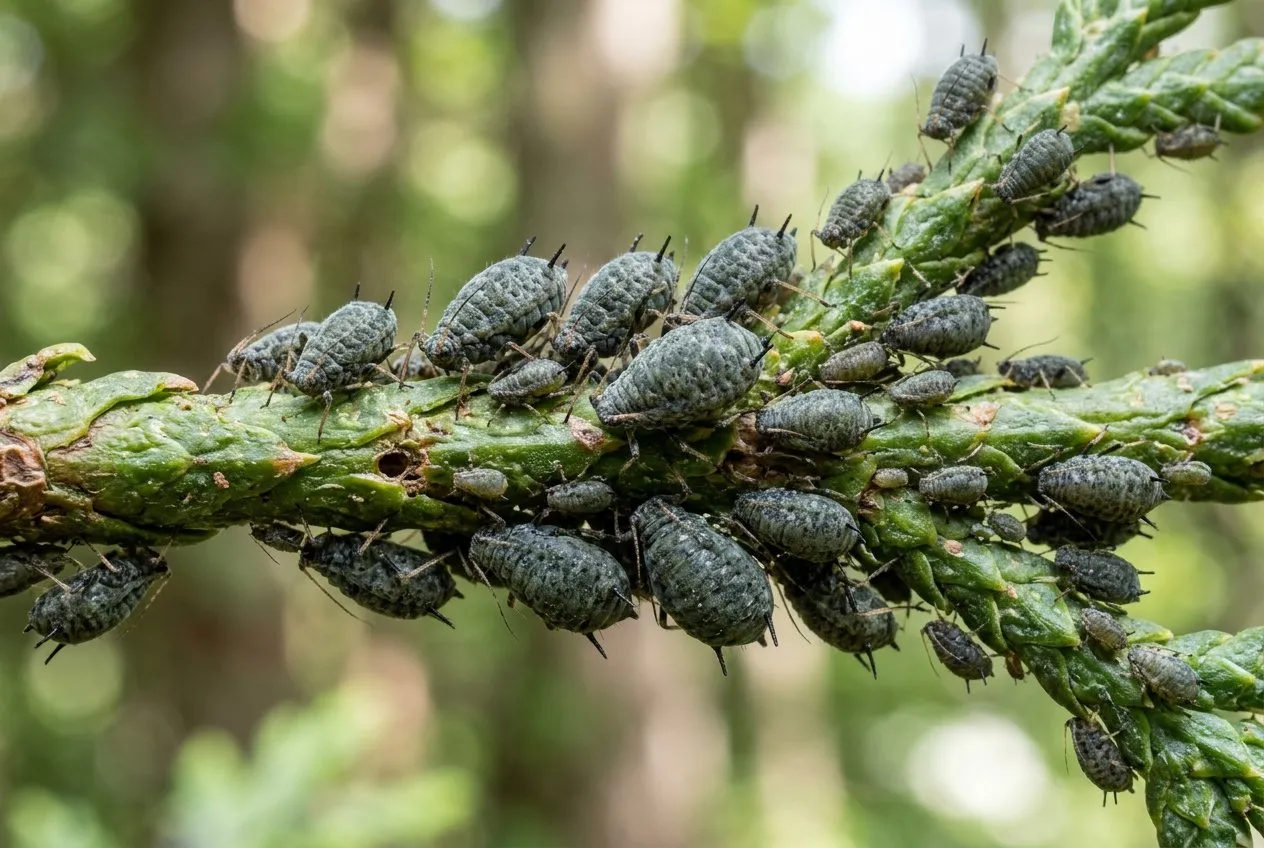 The culprit up close. Large grey-green conifer aphids cluster on the shoots, often hidden until you part the foliage.
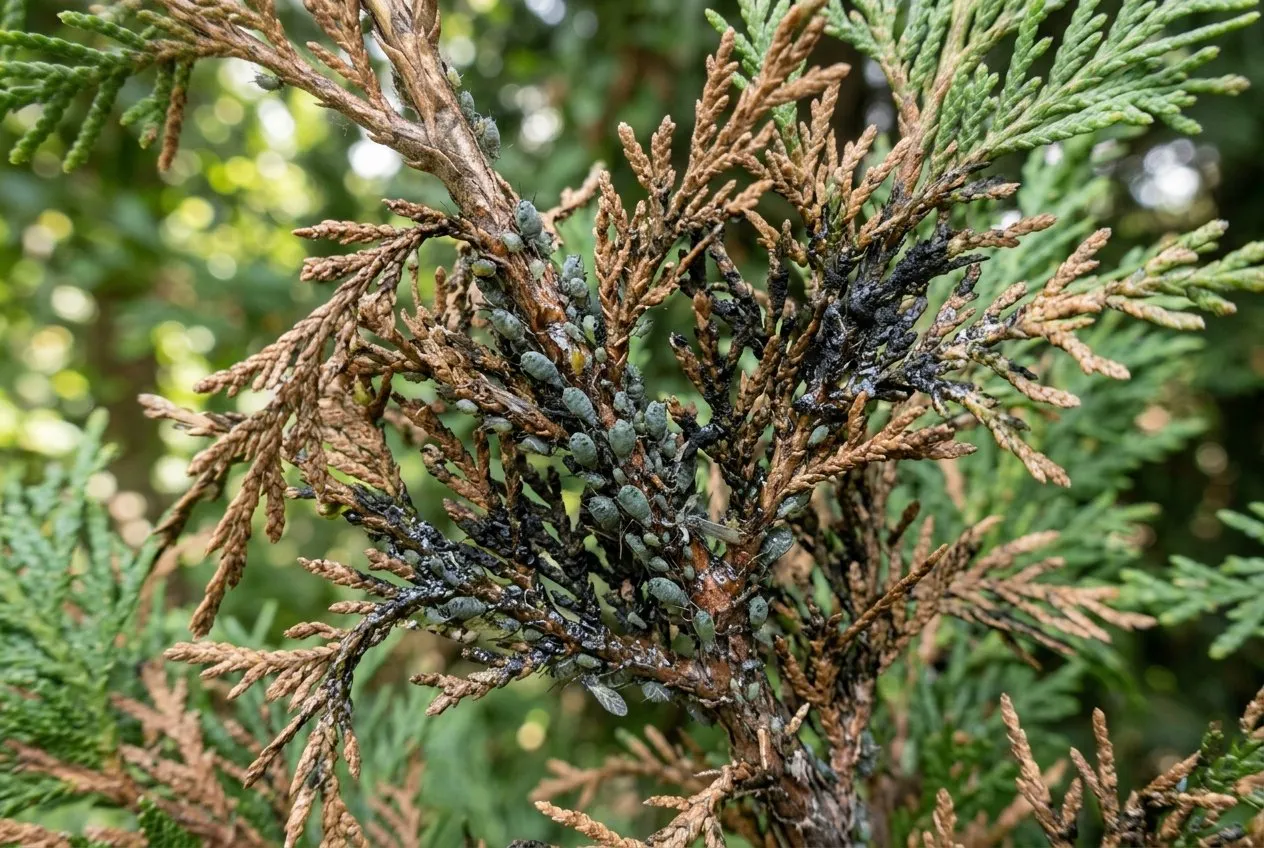 Conifer aphid feeds on older inner foliage. Look for grey-green insects, sticky honeydew and sooty mould to confirm it.
Drought and wind scorch on the exposed side
Drought and wind scorch is the second common cause, and the easiest to tell apart once you know the pattern. It browns the hedge by the exposed face, not from the inside.
The damage shows on the sunny south or west side, or the windward face, where the foliage loses water faster than the roots can replace it. It strikes hardest on newly planted hedges that have not yet rooted deeply, and after dry spells or cold drying winds. A whole exposed section browns fairly evenly, often worst at the top and the most wind-blasted corner.
Unlike aphid damage, there are no insects and no honeydew. The cause is simply water stress. A new conifer hedge needs steady watering for its first two or three years, especially through dry summers, plus a mulch to hold soil moisture. An established hedge usually rides out drought, but a severe dry spell can still scorch the exposed face. Once browned, leylandii will not refill the patch, so watering to prevent scorch is far better than waiting to treat it. Choosing the right spot and spacing at planting helps, as our hedge planting guide sets out.
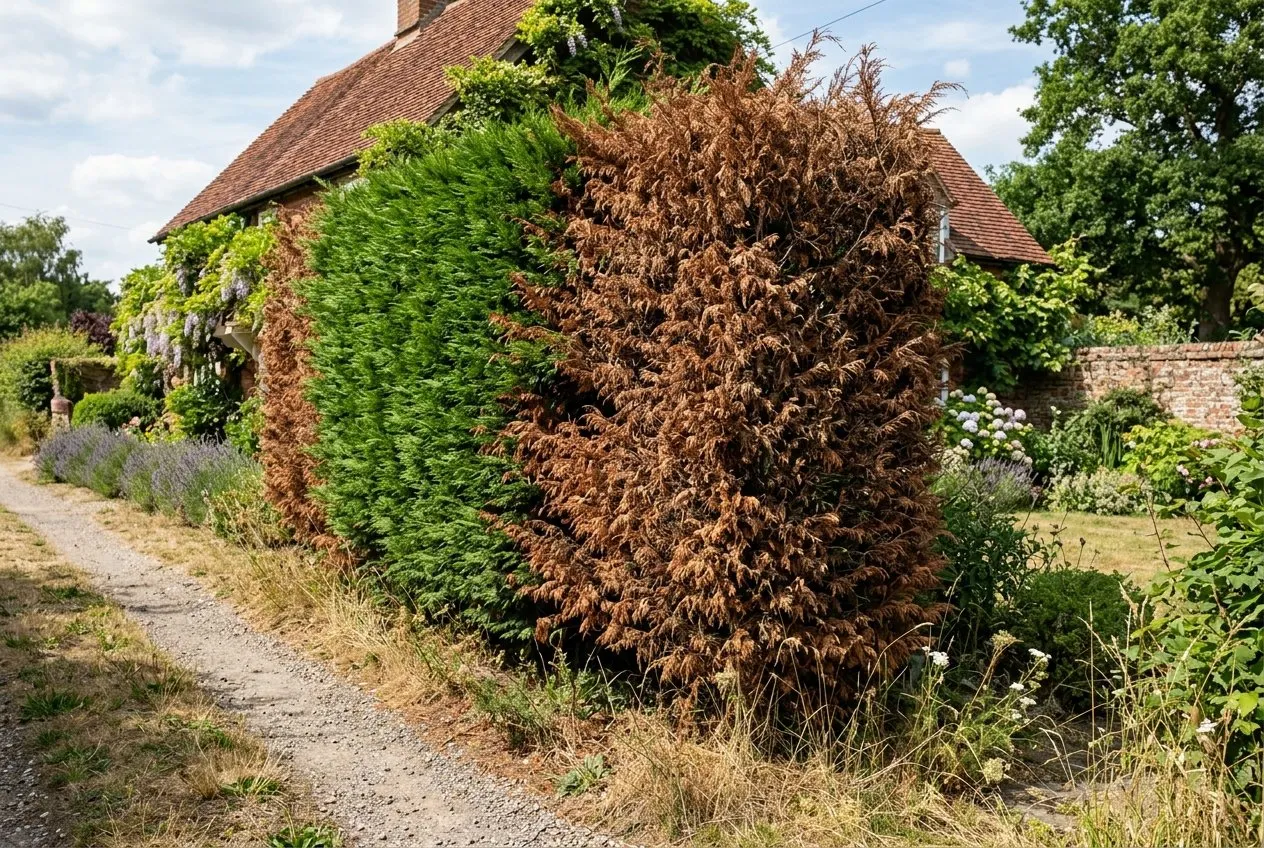 Drought scorch browns the exposed face. No insects, no honeydew, just water stress on the sunniest, windiest side of the hedge.
Phytophthora root rot, the cause that kills
Phytophthora root rot is the least common but most serious cause, because it kills whole plants rather than just browning foliage. It strikes on wet, badly drained ground.
The pattern is distinctive. Whole plants yellow, then brown, then die, usually in a patch where the soil stays wet, such as a dip or a compacted, waterlogged run. The browning works from the base or the roots up, not from the inside out like aphid or the exposed face like drought. Dig at a dying plant and the roots and stem base are dark and rotten, sometimes with a foul smell.
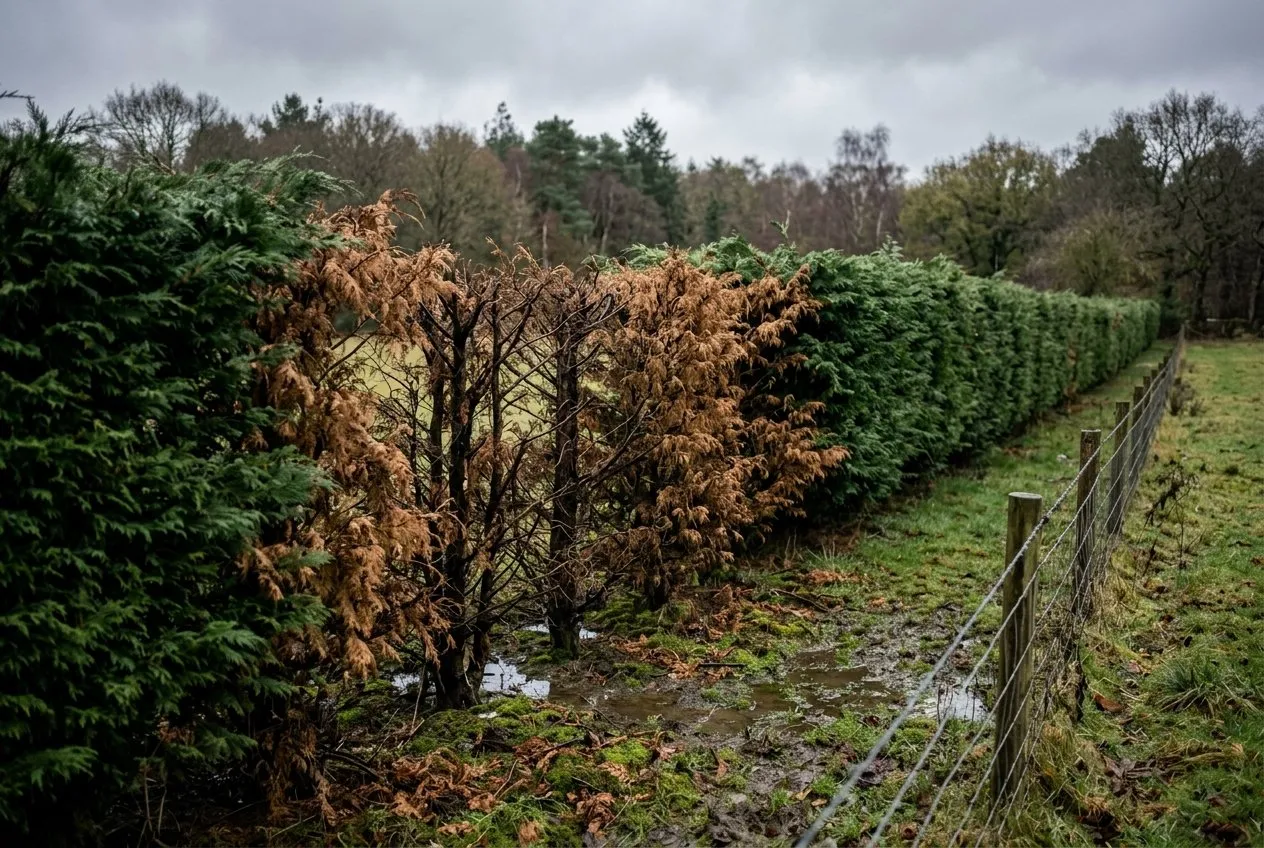 Phytophthora kills whole plants in patches on wet ground. The browning rises from the roots, and no spray will cure it.
Conifer browning causes compared for quick diagnosis
This table sets the three causes side by side so you can diagnose a brown patch fast. Match your pattern to the row, then read across to the cause and the action.
| Sign | Conifer aphid | Drought and wind scorch | Phytophthora root rot |
|---|---|---|---|
| Where it starts | Inner older foliage | Exposed sunny or windy face | Whole plants from the roots up |
| Time of year | Late spring, early summer | After dry spells or cold winds | Any time on wet ground |
| Insects or honeydew | Grey aphids, sticky honeydew | None | None |
| Plants killed | Rarely, just foliage browns | Rarely, just foliage browns | Yes, whole plants die |
| First action | Spray early, knock off aphids | Water and mulch, especially new hedges | Improve drainage, remove dead plants |
The gold standard is to diagnose before you act, because the three fixes share nothing. An insecticide does nothing for drought, watering does nothing for root rot, and draining does nothing for aphids. The fastest single check is to part the browning foliage and look for grey aphids and sticky honeydew, since aphid is the most common cause by far. Rule that in or out first, then use the pattern of where the browning sits to separate drought from Phytophthora.
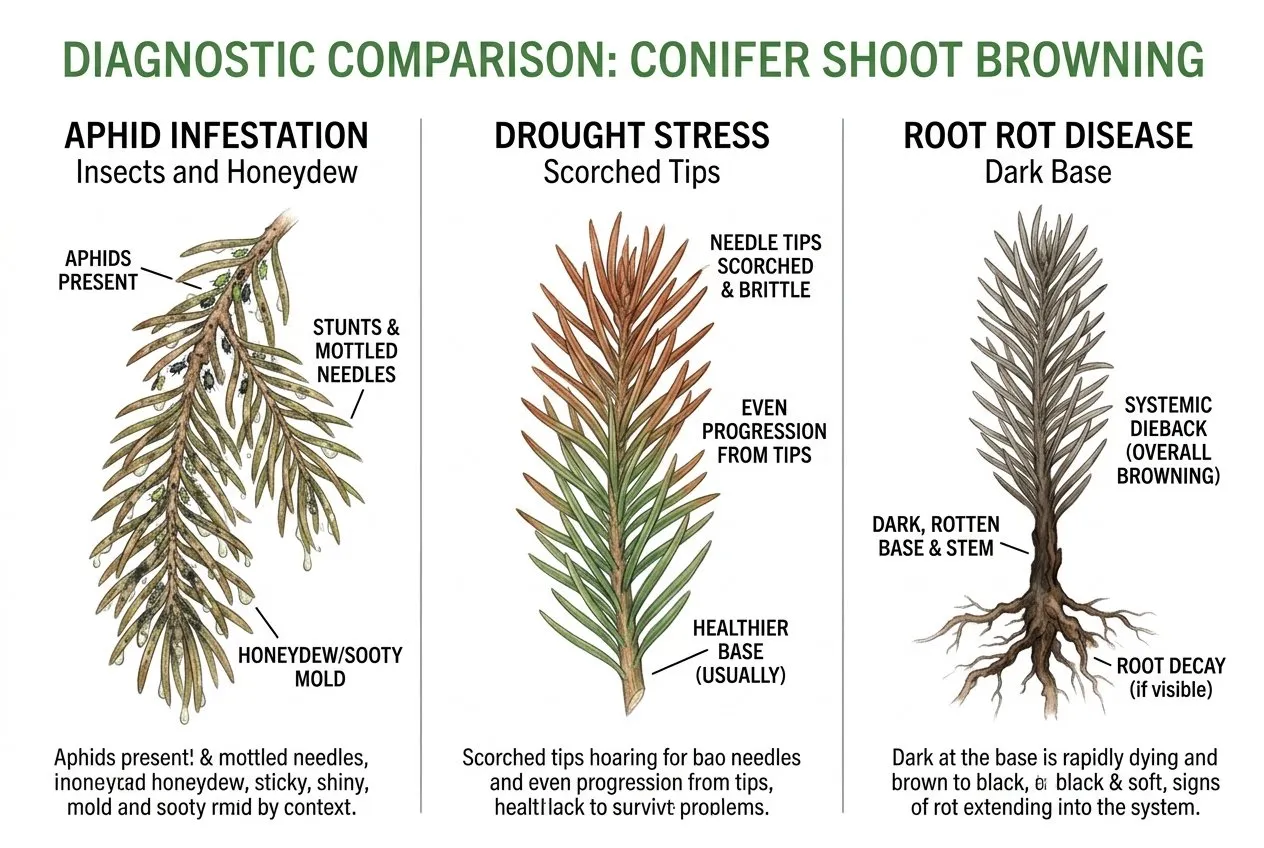 Diagnose by pattern. Aphid browns inner foliage with honeydew, drought browns the exposed face, Phytophthora kills from the roots.
A month-by-month plan for a healthy conifer hedge
Keeping a conifer hedge green follows the seasons, with aphid watch in spring and drought watch in summer. This calendar keeps a UK hedge sound.
| Month | Action |
|---|---|
| January | Check drainage along the hedge, clear standing water from dips |
| February | Inspect for early aphid on mild days, plan spring spraying |
| March | Improve drainage where needed, mulch the root run |
| April | Watch inner foliage closely as aphid season begins |
| May | Peak aphid month, spray at the first sign of browning or honeydew |
| June | Continue aphid checks, water young hedges in dry spells |
| July | Water new hedges deeply, watch the exposed face for scorch |
| August | Keep watering through drought, never let new hedges dry out |
| September | Trim within the legal bird-nesting rules, feed lightly |
| October | Clear fallen debris, check for dieback on wet ground |
| November | Improve drainage before winter wet, lift any dead plants |
| December | Review the year’s brown patches, plan replacements for gaps |
Why prevention beats cure on a conifer hedge
Treating brown patches is mostly damage limitation. The root cause of most lasting hedge damage is that conifers will not regrow bare wood, so the real work is stopping the browning before it happens.
For aphid, that means inspecting in spring and spraying at the first sign, before patches spread across the hedge. For drought, it means watering and mulching new hedges through their first few summers so they never scorch. For Phytophthora, it means getting the drainage right before planting, since the disease only takes hold in wet ground.
Once a patch has browned on leylandii or Lawson cypress, you can cut out the dead wood for tidiness, but the gap stays. For small gaps, training a green shoot across can help over time. For large dead sections or killed plants, the honest answer is to interplant or replace, ideally with a hedge that regrows from old wood. Cherry laurel and yew both reshoot far better than cypress, as our notes on cherry laurel growth rate discuss. Garden Organic’s advice on healthy hedges and soil reinforces the same focus on drainage and prevention.
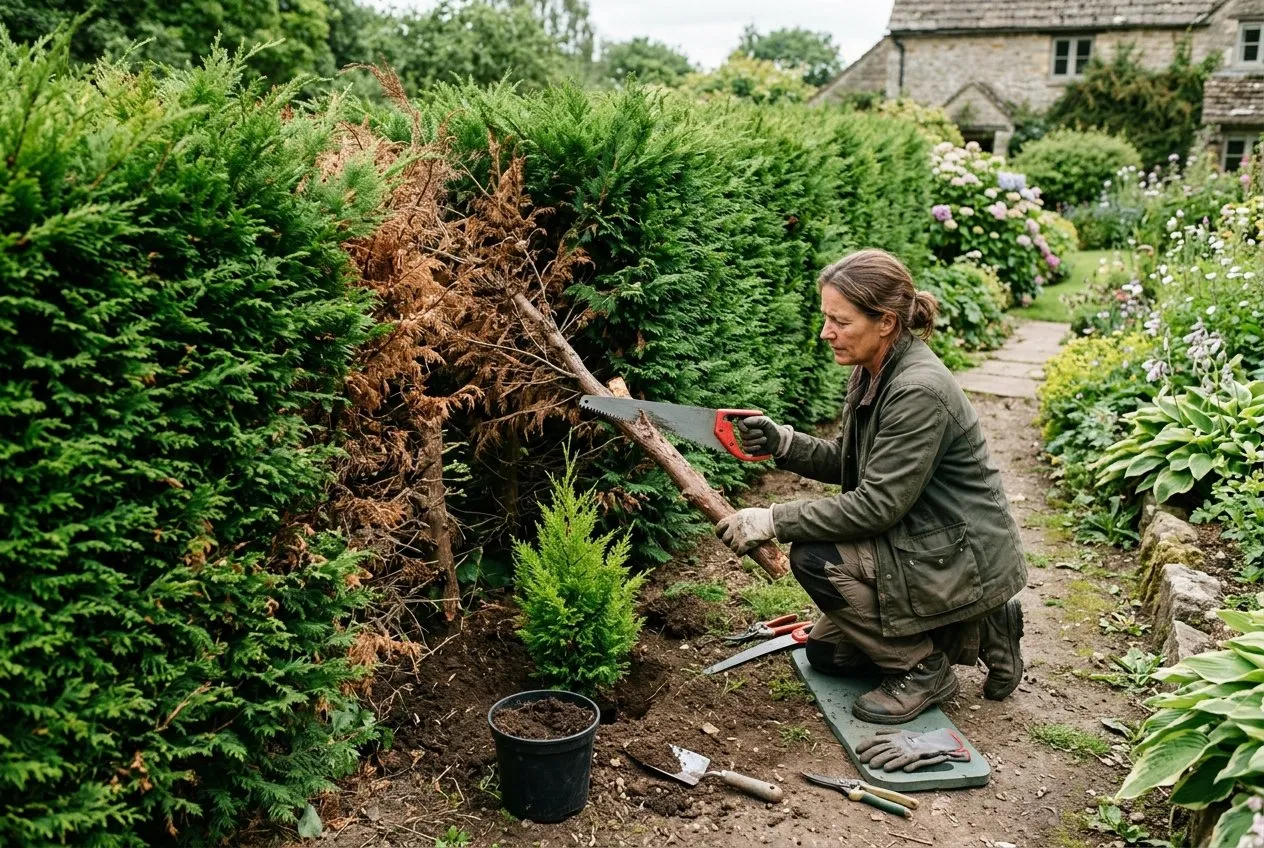 Recovery means replacement, not regrowth. Cut out dead leylandii and interplant, since the bare wood will not green up again.
Common mistakes when a conifer hedge browns
Most conifer hedges are lost to a few avoidable errors. These are the ones that let browning win.
- Assuming it will grow back. Most conifers do not reshoot from bare wood. Act on the cause early, before patches spread.
- Treating the wrong cause. Spraying for aphids when the problem is drought wastes time. Diagnose by pattern first.
- Cutting hard into old wood. Leylandii will not refill a hard cut. Trim only the green outer growth, never back to bare wood.
- Planting conifers on wet ground. Saturated soil invites Phytophthora. Improve drainage or choose a moisture-tolerant hedge.
- Neglecting new hedges in drought. Young conifers scorch fast without water. Water and mulch them through their first few summers.
Related reading: Check whether a browned conifer is legally protected before felling it, see our guide to tree preservation orders explained.
Frequently asked questions
Why is my conifer hedge going brown?
Three causes are most likely: conifer aphid, drought scorch, or Phytophthora root rot. Aphid browns inner foliage in late spring. Drought browns the exposed side. Phytophthora kills whole plants on wet ground. Check for sticky honeydew and grey aphids first.
Will a brown conifer hedge grow back?
Usually not, as most conifers do not reshoot from bare brown wood. Leylandii, Lawson and juniper stay bare where they brown. Yew and thuja are the exceptions and can regrow. This is why catching the cause early, before patches spread, matters so much.
How do I tell aphid damage from drought on a conifer?
Aphid damage starts on older inner foliage with sticky honeydew and grey-green insects. Drought browns the exposed sunny or windy side, often after a dry spell. Aphid spreads from inside out, drought from the most exposed face. Look closely for the insects.
How do I treat conifer aphid?
Spray in spring as soon as you see browning or aphids, before they spread. Use an approved insecticide or a strong jet of water and encourage predators. Treat early, because the brown patches left behind on leylandii will not regrow once the foliage dies.
What is Phytophthora in a conifer hedge?
Phytophthora is a root rot that kills conifers on wet, badly drained ground. Whole plants yellow, brown and die in patches, often in a damp dip. The roots and stem base turn dark. Improve drainage and replace dead plants, as no spray cures it.
Can I save a conifer hedge with brown patches?
Yes, if you fix the cause and the plants are still alive. Treat aphid, improve watering or drainage, and feed. Cut out dead wood, though leylandii will not refill it. For large bare gaps, interplant or replace with a hedge that regrows from old wood.
Now you can diagnose conifer browning and act on the right cause. For tackling a hedge that has grown too large, read our guide to a conifer hedge that is too big, or browse the full problems section for more plant diagnosis.
Our team produces practical UK gardening guidance from source research, contributor records and established horticultural practice. Editorial standards are overseen by Matt W.