Key takeaways
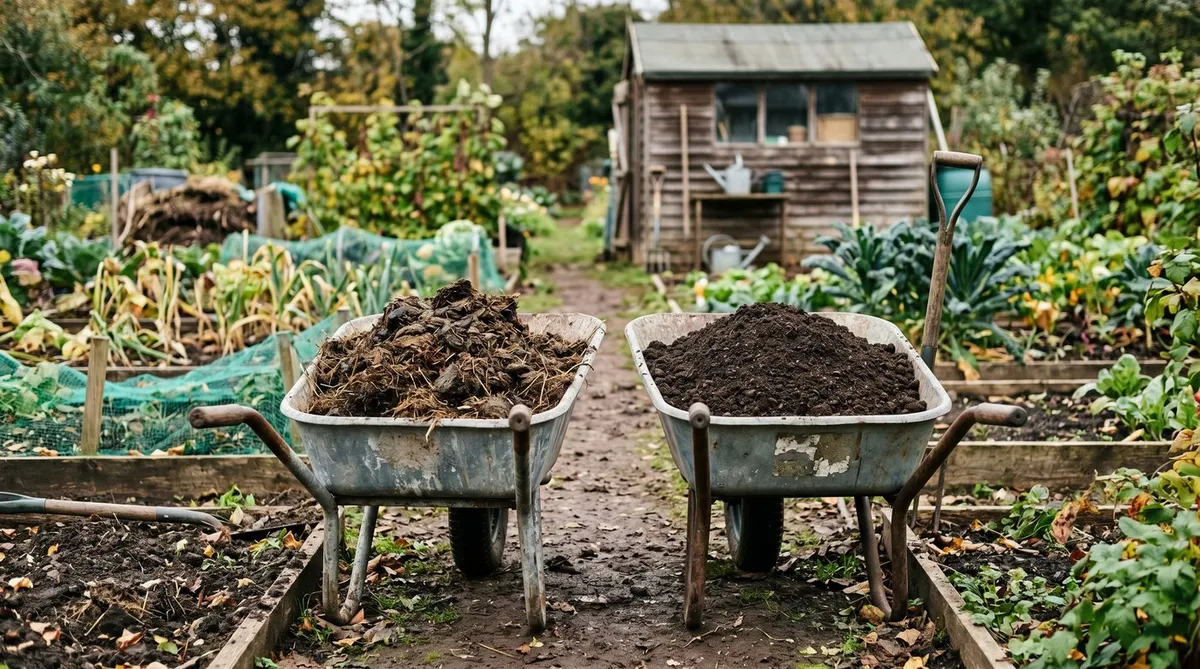
- Horse manure: hotter, coarser, 6-9 month rot, higher weed seed load
- Cow manure: cooler, finer, 9-12 month rot, better moisture retention
- Both supply roughly 0.5-0.7% N when well-rotted, with similar P and K
- Apply 4-6kg per square metre in autumn, never with lime
- Horse manure wins for heavy clay and over-wintered beds
- Cow manure wins for sandy soil, raised beds, and slow-release feeding
A UK gardener with the choice of horse manure or cow manure picks between two organic amendments that behave very differently in the soil. Both deliver bulk organic matter. Both supply 0.5-0.7% nitrogen when well-rotted. The differences are in heat, texture, weed seed load, and how each interacts with soil type. This guide compares horse and cow manure on every measure that affects yield in a UK vegetable plot.
Horse Manure vs Cow Manure NPK Comparison
The two manures sit close on nitrogen but diverge sharply on potassium and texture.
| Manure | Nitrogen (N) | Phosphorus (P) | Potassium (K) | C:N ratio | Texture |
|---|---|---|---|---|---|
| Horse (well-rotted) | 0.7% | 1.4% | 1.2% | 25:1 | Coarse, strawy |
| Cow (well-rotted) | 0.6% | 0.3% | 0.7% | 18:1 | Fine, dense |
| Horse (fresh) | 1.4% | 0.5% | 1.0% | 30:1 | Strawy, wet |
| Cow (fresh) | 0.5% | 0.2% | 0.5% | 19:1 | Sloppy, wet |
Horse manure shows higher phosphorus and potassium than cow manure across both fresh and rotted states. This is because horses eat more grain and concentrated feed than cattle, which raises mineral content in the dung. The straw bedding under horses also drives the carbon-to-nitrogen ratio up to 25:1, close to the ideal for soil application.
Cow manure has a finer particle structure. Its higher water content during fresh application and its denser, lower-straw composition make it pack more tightly into soil pores. This is the basis of its moisture-holding advantage on light soil.
Both manures, when well-rotted, supply roughly 45-50% organic matter by dry weight. Both raise topsoil organic matter by 0.1-0.2% per annual 4kg/m² application across a 5-year programme.
Which Soil Type Suits Which Manure
The soil type below the manure decides 70% of the performance gap.
Loam plots can use either. The decision usually comes down to availability and weed seed risk.
| Soil type | First choice | Reason | Second choice |
|---|---|---|---|
| Heavy clay | Horse | Opens structure, warms faster | Cow + grit |
| Silty clay | Horse | Improves drainage | Cow |
| Loam | Either | Both work equally | Either |
| Sandy loam | Cow | Holds moisture and nutrients | Horse + leafmould |
| Pure sand | Cow | Builds water capacity | Cow + green manure |
| Peaty | Neither | Already high organic matter | Use lime first |
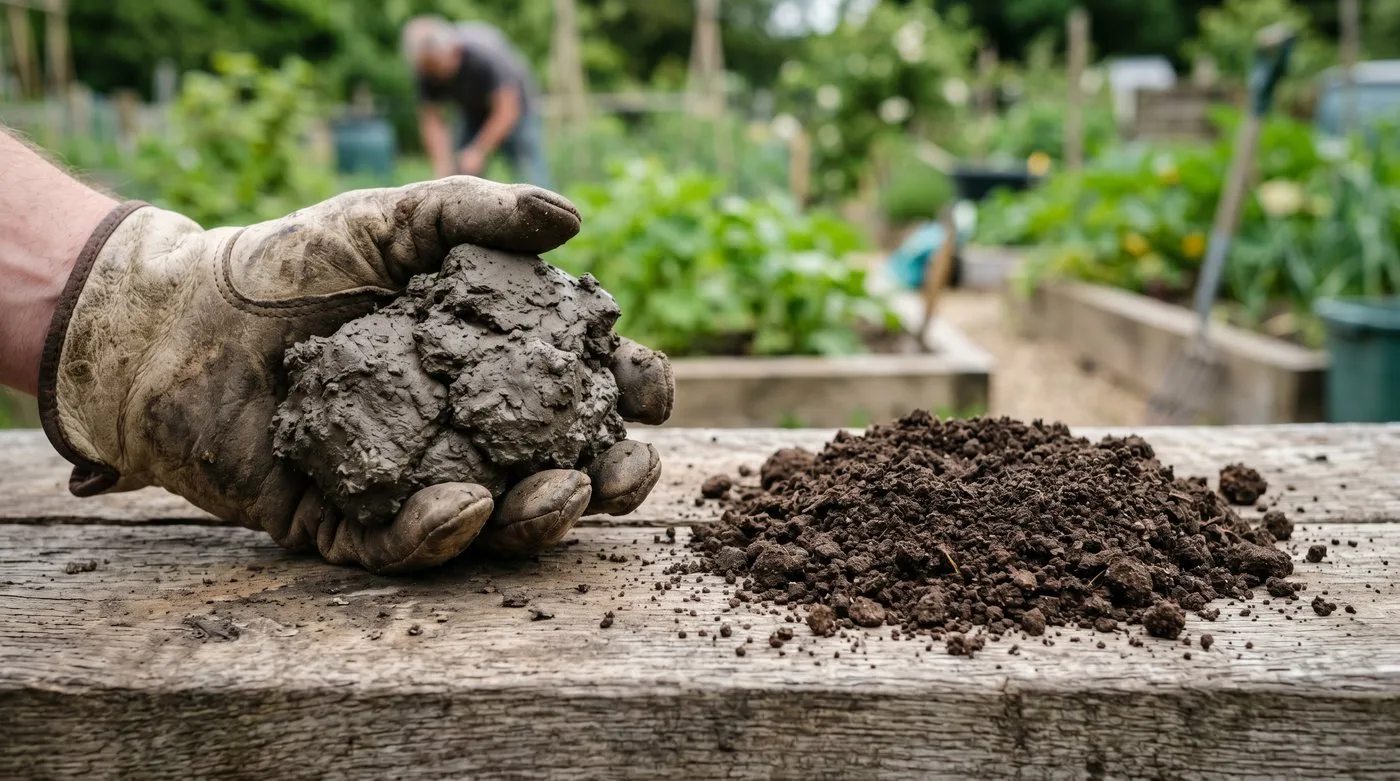 Soil type decides which manure to choose. Heavy clay (left) needs the structure-opening straw of horse manure. Sandy loam (right) needs the moisture-holding density of cow manure.
Weed Seed Load and Aminopyralid Risk
The single biggest reason UK allotment holders abandon horse manure is the weed seed problem.
A 1m² bed top-dressed with raw horse manure typically germinates 80-200 weed seedlings in the following 6-8 weeks. The same square metre under raw cow manure typically germinates 10-25 seedlings. The difference is digestive: a cow’s four-chambered rumen, with 24-48 hour passage time and pH 6.0-7.0, destroys 80-95% of viable seeds. A horse’s simple stomach, 8-12 hour passage time and acidic gut, destroys only 40-60%.
The fix is hot composting. A horse manure heap that reaches 60C for at least 3 consecutive days will kill 95%+ of weed seeds. Achieving 60C requires a heap of at least 1m³ with 60-70% moisture and 25:1 C:N ratio. Turn weekly for the first month.
The second risk in horse manure is aminopyralid herbicide carry-over. Aminopyralid is sprayed on UK hay and silage fields for ragwort and thistle control. It passes intact through horses and persists in manure for 18-24 months. Symptoms on the receiving crop include:
- Cupped, claw-shaped tomato leaves
- Stunted potato and bean growth
- Curled, distorted lettuce
- Failed germination of legumes
Before accepting any horse manure, ask the supplier two questions: “Where does the hay come from?” and “Is the field sprayed with weedkiller?” If the answer is unclear, run a bioassay test: mix one part suspect manure with three parts compost in a small pot, sow a broad bean, and watch for distortion over four weeks.
Cow manure rarely carries aminopyralid in the UK because dairy cows eat mostly grass silage from short-rotation leys, not hay from sprayed long-term pasture. Beef cattle on bought-in hay are the exception. Always check the source.
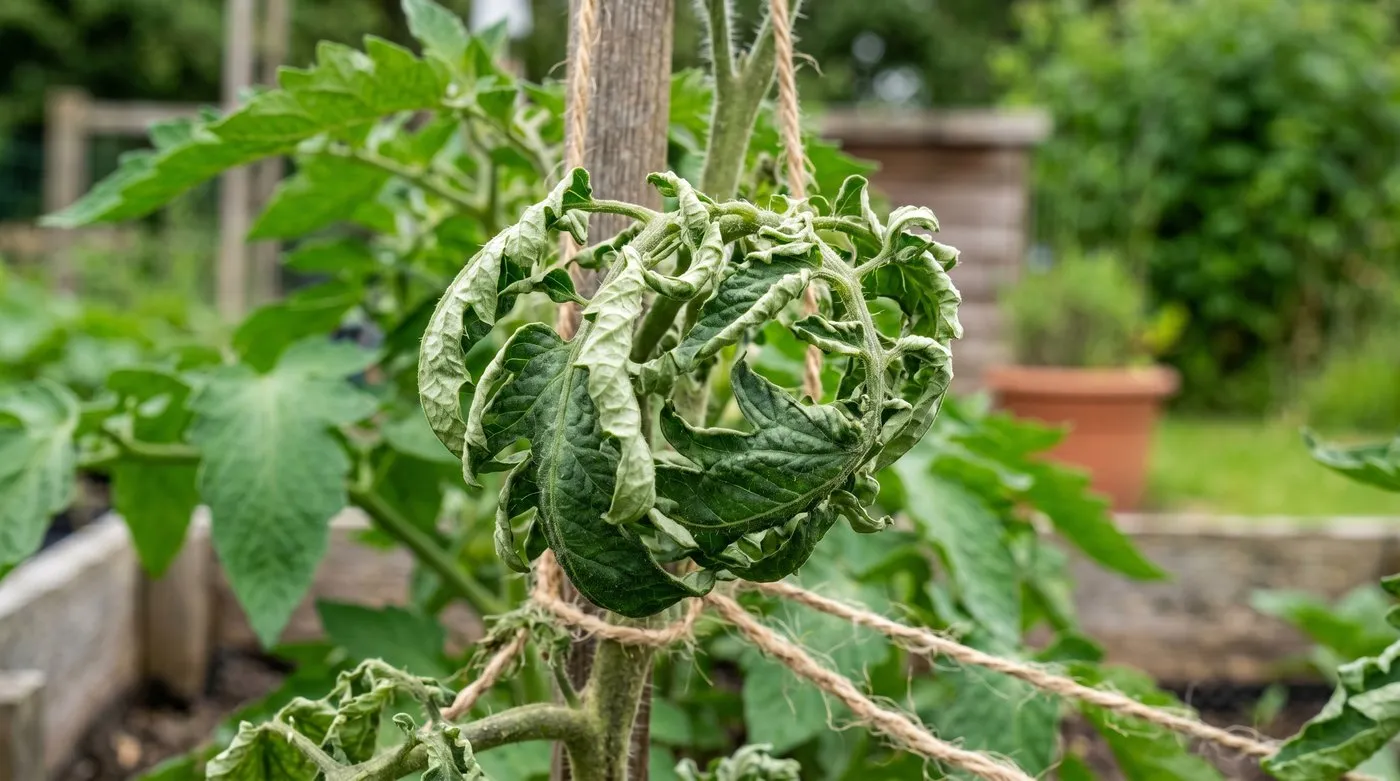 Aminopyralid damage on tomato leaves caused by contaminated horse manure. The cupping and curling appear 3-5 weeks after planting. Affected crops rarely recover the same season.
How Long Each Manure Takes to Rot Down
Manure is ready to use when it stops steaming, smells earthy (not ammonia), and crumbles in the hand. Both horse and cow manure pass through the same stages but at different speeds.
| Stage | Horse manure | Cow manure | Visual sign |
|---|---|---|---|
| Fresh | 0-4 weeks | 0-6 weeks | Pale, wet, ammonia smell |
| Heating | 4-12 weeks | 6-16 weeks | Steam visible, 50-65C internal |
| Cooling | 3-6 months | 4-8 months | Dark brown, structure breaking |
| Mature | 6-9 months | 9-12 months | Black, crumbly, earthy smell |
| Over-rotted | 18+ months | 24+ months | Sour, dusty, nutrients leached |
Speed of rot depends on heap size, moisture, turning frequency, and bedding type. A well-managed horse manure heap on straw can reach mature stage in 5 months. A poorly managed wet pile takes 18 months. Cow manure is consistently slower because the finer particles hold water and exclude air, slowing aerobic decomposition.
Both manures lose 25-35% of original mass during the heating stage as water and CO2 escape. Plan delivery volume accordingly: a tonne of fresh horse manure becomes roughly 650kg of finished compost.
A heap that has gone sour (acid smell, slimy texture, anaerobic) can be revived by turning, adding fresh straw, and reducing watering. Discard the heap only if the smell is sewage-like or if there is visible black mould throughout.
How Much Horse or Cow Manure to Apply
The UK standard rate for both manures on vegetable beds is 4-6kg per square metre per year. Heavier rates risk salt build-up and nitrogen lock-up.
| Use | Rate per m² | Frequency | Timing |
|---|---|---|---|
| Vegetable beds (annual) | 4-6kg | Yearly | Autumn dig-in |
| Roses and shrubs | 50mm mulch | Yearly | Late winter |
| Fruit bushes | 75mm mulch | Yearly | Late winter |
| Top-fruit (apples, pears) | 50mm mulch | Every 2 years | Autumn |
| Lawn (top-dress) | 2kg | Every 2-3 years | Spring |
| New beds (initial improvement) | 10-15kg | One-off | Autumn |
| Compost heap activator | 1kg per 10kg green waste | As needed | Year-round |
For a typical UK allotment plot of 250 square metres on a 4-bed rotation, the annual manure requirement is 400-500kg of well-rotted material. That is roughly one large trailer load (1 cubic metre) split across the plot.
A standard builder’s wheelbarrow holds 60-80kg of well-rotted manure or 90-120kg of fresh. One barrow load covers 12-15 square metres at the standard rate.
Never apply manure inside the same season as lime. The ammonia reaction releases nitrogen to the air. Split by at least 12 weeks, ideally a full growing season. The standard UK rotation puts manure in October and lime in February, on different beds in the same cycle.
 Standard autumn application: 4-6kg per square metre, forked across the bed and left for winter rain to wash nutrients into the rootzone. Spring dig incorporates the remainder.
Where to Source Horse and Cow Manure in the UK
Both manures are widely available across the UK but at very different prices.
Horse manure is often free. UK livery yards and riding schools produce more than they can spread on their own land. Many post “free manure” signs at the gate. Expect to load and transport yourself. A small trailer load (300-400kg) takes 30-45 minutes to fork. Search Facebook Marketplace, Gumtree, or local allotment association noticeboards. The British Horse Society lists 8,500 livery yards in the UK; most are within 15 miles of any allotment.
Cow manure is harder to source free. UK dairy farms slurry-pump muck straight onto fields and rarely stockpile for collection. Beef cattle farms with strawed yards are the better source. Expect to pay £30-£60 per tonne delivered locally. Bagged cow manure from garden centres costs £4-£8 for 40 litres, roughly 30kg, which works out to £133-£267 per tonne.
For a 250m² plot needing 400-500kg per year, the cost breakdown is:
| Source | Annual cost | Effort |
|---|---|---|
| Free livery horse manure (self-collect) | £0-£15 fuel | High |
| Local horse manure (delivered) | £40-£80 | Low |
| Strawed beef manure (delivered) | £60-£120 | Low |
| Bagged garden centre cow manure | £50-£130 | Low |
| Commercial soil conditioner (bagged) | £80-£200 | Low |
 A well-managed UK allotment manure heap. Carpet cover holds nitrogen in and stops rain washing nutrients out. Steam rising indicates active heating in the centre of the heap.
Always inspect before loading. Mature manure should be dark, crumbly, earthy-smelling, with no visible fresh dung. If you see white moulds or pink streaks, the heap has fungal issues and is best avoided. If you smell strong ammonia, the heap is too fresh and needs another 4-8 weeks before use.
Read the Defra agricultural waste regulations for context on what farmers can and cannot store, which affects what is offered locally. Garden-scale collections under 1 tonne are unregulated.
Common Mistakes With Horse and Cow Manure
Mistake 1: applying fresh manure to growing beds. Fresh manure releases ammonia, burns roots, and locks up nitrogen as soil microbes consume it. Always rot for 6-12 months first. The exception is a winter top-dressing on empty beds, which allows the ammonia to dissipate before planting.
Mistake 2: ignoring aminopyralid risk. A single contaminated horse manure load can destroy a season of tomatoes, potatoes, beans and lettuce. The damage looks like a virus and is often misdiagnosed. The 4-week broad bean bioassay test costs nothing and prevents the problem entirely.
Mistake 3: using cow manure on root crops without sieving. The finer particles of cow manure can hold pockets of partly rotted material that cause carrot forking and parsnip splitting. Either rot for a full 12 months, sieve to 10mm before application, or apply only the autumn before a non-root crop.
Mistake 5: stockpiling manure in the open through summer. Uncovered piles lose 40-60% of nitrogen to rain leaching over a UK summer. Cover with old carpet, tarpaulin, or 200mm of straw to hold nutrients in. The leachate also pollutes nearby drains and waterways.
When to Apply Each Manure Month-by-Month
| Month | Horse manure task | Cow manure task |
|---|---|---|
| January | Spread on dormant fruit beds | Spread on dormant fruit beds |
| February | Mulch roses, top-dress strawberries | Mulch roses (if dense crumb desired) |
| March | Stop applying. Beds being planted | Stop applying. Beds being planted |
| April | No applications | No applications |
| May | Side-dress potatoes during earthing-up | Side-dress brassicas if low nitrogen |
| June | No applications. Watch for aminopyralid | No applications |
| July | Source supply for autumn delivery | Source supply for autumn delivery |
| August | Begin loading and stacking fresh stocks | Begin loading and stacking fresh stocks |
| September | Cover heaps, prepare beds | Cover heaps, prepare beds |
| October | Main application on cleared beds | Main application on cleared beds |
| November | Continue applying through to first frost | Continue applying through to first frost |
| December | Cover heaps. Plan next year’s rotation | Cover heaps. Plan next year’s rotation |
The October-November application window is the cornerstone of UK manuring. Winter rain washes soluble nutrients into the rootzone over 4-5 months, leaving the bed ready for spring planting.
For a UK gardener with access to only one source, the simpler rule still applies: horse for heavy soil and root-free beds, cow for sandy soil and brassica or leaf crops. Either way, well-rotted manure at 4-6kg per square metre per year is the foundation of a productive UK vegetable plot.
Our animal manures compared guide covers chicken, pig and sheep alongside horse and cow if you have wider source options. The best fertilisers for UK gardens guide shows where bagged feeds fit alongside bulk manure.
Frequently asked questions
Is horse manure or cow manure better for UK vegetable gardens?
Horse manure suits heavy clay and warming beds early. Cow manure suits sandy soil and holding moisture. Both supply similar NPK when well-rotted. Choose by soil type: horse for clay, cow for sand. For mixed loam, either works at 4-6kg per square metre.
How long does horse manure take to rot down compared to cow manure?
Horse manure rots in 6-9 months. Cow manure takes 9-12 months. Horse manure heats faster because of higher straw bedding content and lower moisture. Both are ready when the heap stops steaming, smells earthy, and crumbles in the hand.
Does horse manure have more weed seeds than cow manure?
Yes. Horse manure typically carries 4-10 times more viable weed seeds than cow manure. The horse digestive tract destroys fewer seeds than the cow’s four-chambered stomach. Hot-composting horse manure for 8+ weeks kills most weed seeds.
Can I put fresh horse manure or cow manure on my garden?
Never apply fresh manure to growing beds. Fresh manure burns roots, releases ammonia gas, and locks up nitrogen. Stack fresh manure for 6-12 months until it is dark, crumbly and smells earthy. Fresh manure can only be used as a winter top-dressing on empty beds.
Can horse manure carry the herbicide aminopyralid?
Yes. Aminopyralid persists in horse manure if horses have eaten contaminated hay or silage. Symptoms include cupped tomato leaves and stunted potatoes the spring after application. Always ask your supplier whether the hay supply is sprayed. Bracken-only bedding is the safest indicator.
Now plan your soil-improvement year
Our team produces practical UK gardening guidance from source research, contributor records and established horticultural practice. Editorial standards are overseen by Matt W.