Key takeaways
- Acanthus mollis grows 1.2-1.5m tall with mauve and white flower spikes from July to August
- Roots spread laterally up to 2.4m and any 50mm fragment left in the ground will regrow
- Plant in deep loam at least 450mm deep with 1m spacing between crowns for best display
- Hardy to minus 15C (RHS H5) but emerging spring shoots are slug magnets needing weekly defence
- Propagation is fastest from 75mm root cuttings taken November to February, rooted in 8-10 weeks
- The leaf shape inspired the Corinthian column capital in ancient Greece around 450 BC
Acanthus, commonly known as Bear’s Breeches, is the architectural backbone of the late summer perennial border. The tall mauve and white flower spikes and the dark, deeply lobed leaves give a Mediterranean feel to UK gardens that few other hardy plants can match. The genus contains around 30 species, with four reliably grown in British conditions: Acanthus mollis, A. spinosus, A. hungaricus, and A. dioscoridis subsp. perringii.
Acanthus has been gardened since antiquity. The leaves of A. spinosus were stylised by Greek sculptors into the Corinthian column capital around 450 BC, and the plant has been a heritage garden staple ever since. In a modern UK border, it earns its place with a long flowering window from July to August, evergreen foliage in mild winters, and the kind of structural presence that holds a planting together. The only catch is the root system. Treat acanthus carelessly and it will run through your border like couch grass.
Which acanthus species to grow in the UK
There are four species worth growing in British gardens, and the choice depends on your soil depth, exposure and how much space you can give the plant. A. mollis is the safe default for most gardens. The others suit specific conditions.
Acanthus mollis is the workhorse species. It reaches 1.2-1.5m in flower with broad glossy leaves up to 600mm long. The leaf margins are softly scalloped rather than spiny, which gives it the species name (mollis means soft). It is the most shade-tolerant of the group and the most widely sold. The cultivar ‘Rue Ledan’ has pure white flower spikes instead of the species mauve-and-white.
Acanthus spinosus has narrower, more deeply cut foliage with spiny tips on each leaf segment. This is the architecturally sharpest species and the one carved into Corinthian capitals. Spikes reach 1.5-1.8m, taller than mollis, and the flowers carry a darker purple hood. A. spinosus needs more sun than mollis to flower freely and is slightly less hardy at RHS H4.
Acanthus dioscoridis subsp. perringii is a compact species from Turkey reaching just 60-75cm in flower, with bright rose-pink hooded flowers rather than the typical mauve. It needs sharp drainage and a sunny position. Hardy to RHS H5 but resents winter wet, so suits gravel gardens or raised beds.
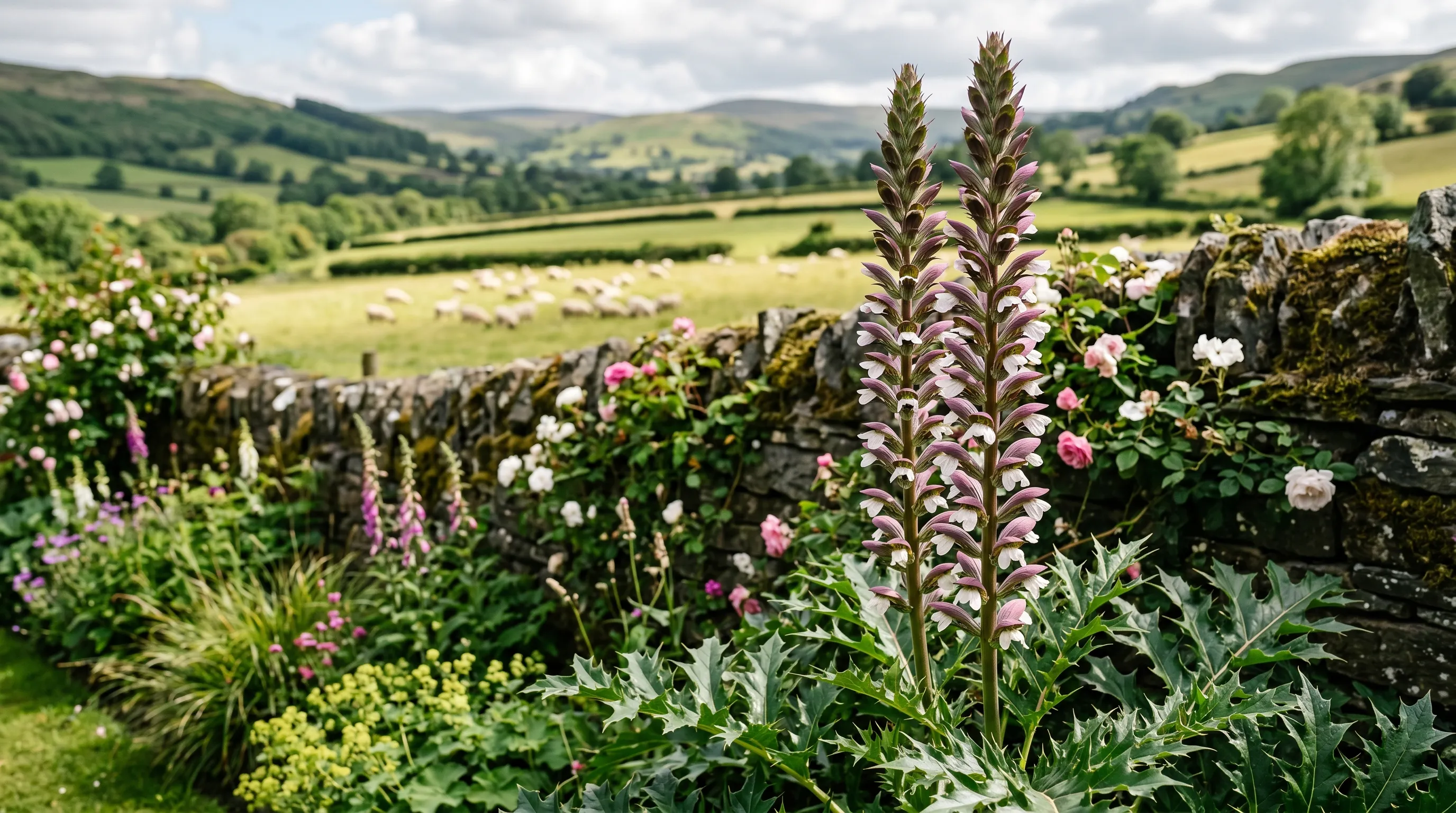 Acanthus spinosus carries narrower, spinier foliage than A. mollis and flowers 200-300mm taller. The species name spinosus refers to the small spines tipping each leaf segment.
Where to plant acanthus in a UK garden
Acanthus comes from the warm rocky hillsides of the eastern Mediterranean, North Africa and the Caucasus. Translating that to a UK border means giving it three things: deep soil, full sun to partial shade, and protection from winter waterlogging.
Aspect matters less than people assume. A. mollis flowers well on a north-facing wall provided the wall faces an open sky and the plant gets at least four hours of direct sun in midsummer. A south or west aspect produces stiffer spikes and richer colour but slightly smaller leaves.
Drainage is the limiting factor in heavy soils. Acanthus tolerates clay better than most Mediterranean perennials, but a planting hole filled with waterlogged subsoil will rot the crown over winter. On heavy ground, work 50mm of horticultural grit into the bottom of the planting hole and another 50mm into the backfill.
Gardener’s tip: Plant acanthus at least 1m from the edge of a path or lawn. The lateral roots reach 2.4m within five years, and pieces broken by mowing or edging produce new plants you did not ask for.
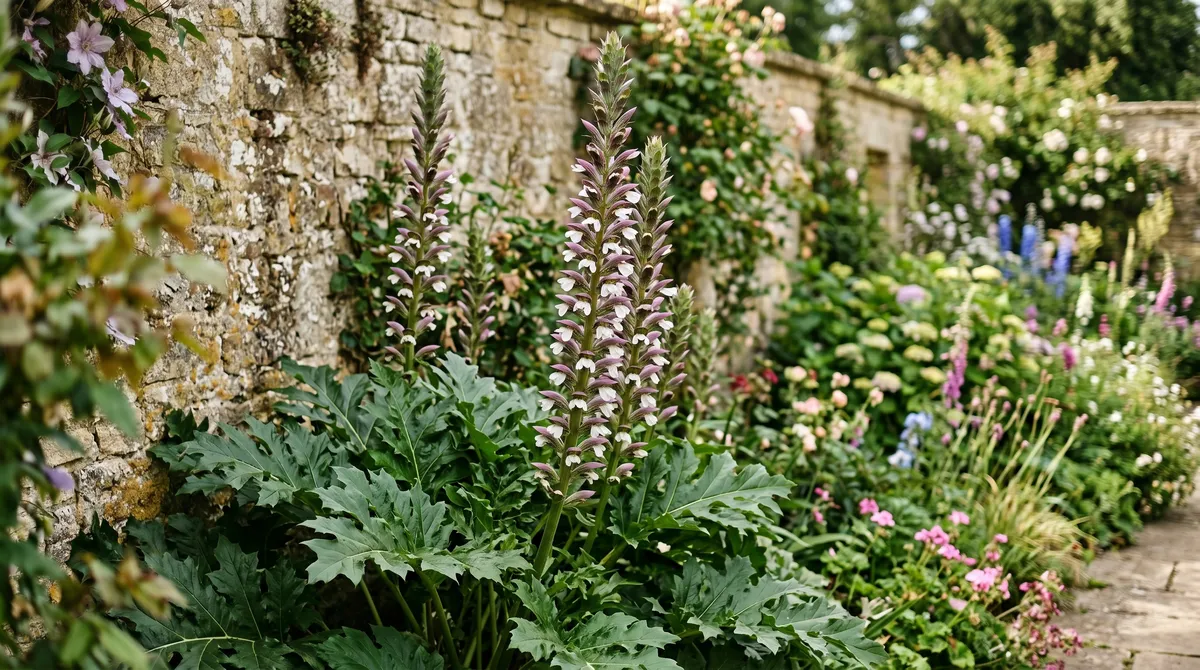
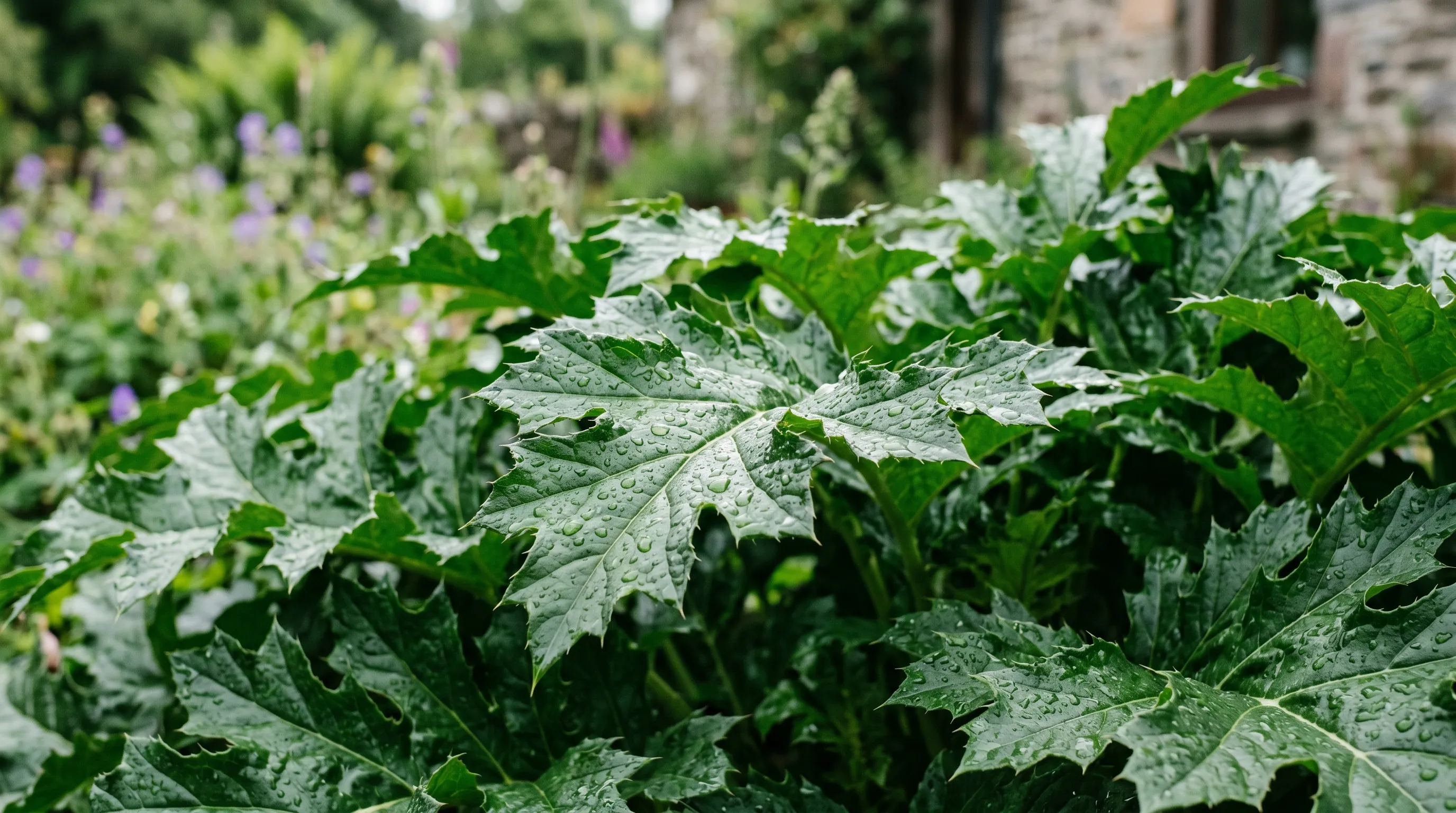 The architectural leaves of Acanthus mollis grow up to 600mm long and 200mm wide. This leaf shape inspired the carved Corinthian column capitals of ancient Greece around 450 BC.
How to plant acanthus step by step
Plant acanthus in spring (March to May) or early autumn (September to October). Spring planting is safer on heavy soils because the crown is not sitting in cold wet ground. Container-grown plants establish faster than bare root divisions.
Dig a planting hole 600mm wide and 450mm deep. Even on good soil, the roots need a settled run. Fork another 200mm into the base of the hole to break any pan. Mix the excavated soil 50:50 with well-rotted garden compost and add a handful of bone meal at the base.
Set the crown so the top of the rootball sits level with the surrounding soil. Burying the crown by 25mm or more causes rot. Firm in with the heel of your boot, water in with 10 litres per plant, then mulch with 50mm of bark chip leaving a 50mm gap around the crown.
Spacing is critical. Plants need 1m of clear space on each side to develop their full architectural shape. Closer planting produces a thicket of leaves and fewer flower spikes. Allow 1.2m between an acanthus and any other strong-growing perennial.
How to control the root spread
The aggressive root system is the one thing that puts gardeners off acanthus, and the reason most plant labels carry a quiet “spreads freely” warning. Understanding the root structure makes control straightforward.
A mature acanthus has three root types: the central fleshy taproot (the energy store, up to 50mm thick), the lateral feeder roots running 100-300mm below the surface, and the thinner foraging roots near the surface. New shoots emerge from any node along the lateral roots. A 50mm root fragment left after digging is enough to regrow a full plant within two years.
If your acanthus is already established and spreading, the realistic options are:
- Lift and replant inside a barrier in autumn. Dig a 600mm-radius circle, lift the whole clump, install the barrier in the prepared hole, and replant the divided crown.
- Persistent excavation. Lift in March, sieve every fragment of root over 25mm out of the soil, then check the bed monthly through the next two growing seasons. Removes 85-90% of regrowth.
- Glyphosate spot treatment on new shoots from suckers, applied between June and August when sap is flowing back to the roots. Three applications over two seasons clears most colonies but root fragments below 200mm often survive.
The combination most gardeners settle on is lifting, replanting inside a barrier, and spot-treating any escaped suckers for the following two seasons.
 Acanthus roots spread laterally up to 2.4m within five years. A 600mm vertical galvanised steel barrier installed at planting time is the most reliable long-term control.
How to feed and water acanthus through the year
For the first two years, water 15 litres per plant once a week from May to September unless the week brings more than 25mm of rain. From year three, watering is only needed in droughts longer than 21 days. Overwatering causes more problems than underwatering: soft leaves, weaker stems, and increased slug damage.
Feeding is light. Mulch with 50mm of well-rotted compost or leaf mould in March each year. Add a handful of bone meal in October as the plant draws nutrients back into the roots. Avoid high-nitrogen feeds, which produce flop-prone leaves at the expense of flower spikes.
Warning: Never use fresh manure on or near acanthus. The fast nitrogen pulse triggers leafy growth that collapses in the first August rainfall and increases the chance of powdery mildew. Composted manure aged over twelve months is fine in moderation.
Pruning and tidying through the seasons
Acanthus is low maintenance once placed correctly. Three timed jobs cover the year.
March is the moment to mulch and tidy. Clear any old leaves blackened by winter frost, fork lightly around (not through) the crown, and apply 50mm of compost mulch leaving a clear ring around the crown itself.
September is when to cut spent flower spikes. Once the spikes have lost their structural value (usually after the first frost has blackened them), cut them off at 50mm above the crown with secateurs. Leaving them through autumn for the seed heads is fine and useful for winter interest, but the seeds shed and germinate readily in nearby beds.
Late October to November is leaf tidying. Remove the worst weather-damaged leaves but leave at least four healthy ones per crown. They protect the crown from frost and contribute to next year’s energy store. In mild winters (south coast, sheltered London gardens) much of the foliage stays green right through.
In hard winters the entire top growth blackens. This looks alarming but means nothing. Cut the dead foliage to 50mm above the crown in March and new growth emerges from the base within four weeks once soil temperature reaches 8C.
For more on the timing of cuts on companion perennials, see our Chelsea chop perennials guide.
How to propagate acanthus from root cuttings
Root cuttings are by far the fastest and most reliable method. Division of the crown works but is brutal on the parent plant. Seed is slow (three to four years to flowering) and named cultivars do not come true from seed.
Take cuttings between November and February when the plant is fully dormant. Pick a mild dry day with no frost in the next 48 hours.
Procedure:
- Lift a section of the root ball with a fork. You only need a 200mm-wide piece off the edge of the clump, not the whole plant.
- Wash off the soil so you can see the roots clearly.
- Select roots 8-15mm thick. Thinner roots produce weaker plants; thicker ones are slower to break.
- Cut into 75mm lengths. Make a flat cut at the top (nearest the crown) and a sloping cut at the bottom. This stops you planting them upside down.
- Push each cutting vertically into a gritty 50:50 compost-and-perlite mix, with the flat top flush to the surface.
- Top dress with 10mm of horticultural grit, water once, and place in an unheated coldframe or cold greenhouse.
Cuttings root within 8-10 weeks at 5-10C. New leaves appear by April and the cuttings are ready to pot on into 2-litre pots by May. They flower in their third growing season.
Yield is generous. A single 200mm-wide section of crown produces 20-30 viable cuttings, more than enough to share with neighbours or fill a new bed.
 Take 75mm root cuttings from November to February. Cut flat at the top and slanted at the bottom so you cannot plant them upside down.
Acanthus species comparison
| Species | Height in flower | Leaf type | Hardiness | Best aspect | Notes |
|---|---|---|---|---|---|
| A. mollis | 1.2-1.5m | Broad, glossy, softly scalloped | RHS H5, -15C | Full sun to partial shade | Most widely grown, shade tolerant |
| A. spinosus | 1.5-1.8m | Narrow, deeply cut, spined tips | RHS H4, -12C | Full sun preferred | Tallest spikes, the Corinthian leaf |
| A. hungaricus | 1.0-1.2m | Matt, finely divided | RHS H6, -20C | Full sun, exposed sites | Hardiest, best for Scotland |
| A. dioscoridis perringii | 60-75cm | Small, divided, silver-grey | RHS H5, -15C | Full sun, sharp drainage | Pink-flowered, compact, gravel-bed |
Pest and disease defence
Acanthus has two real enemies in UK gardens: slugs on emerging spring shoots and powdery mildew on summer foliage.
Powdery mildew appears as a grey-white dusty coating on the upper leaf surface from late July onwards, particularly on plants in shaded positions or after a dry spring followed by warm humid weather. It is rarely fatal but disfigures the foliage.
For a fuller list of UK-proven pest-resistant perennials see our drought tolerant plants guide.
Companion planting and design ideas
Acanthus pairs well with plants that share its taste for sun and well-drained soil, and which can hold their own against the spreading roots. The architectural shape works against finer-textured neighbours.
Reliable companions:
- Stipa gigantea for a tall airy contrast to the heavy acanthus foliage
- Yarrow Achillea for flat yellow flower heads against the vertical mauve spikes
- Sedum Autumn Joy for late summer succulent contrast
- Miscanthus sinensis and other grasses for prairie planting
Plants to keep at distance (at least 1.5m away or behind a root barrier):
- Astrantia major gets smothered (we know from experience)
- Alchemilla mollis competes for surface roots
- Bulbs of any kind: acanthus roots push them aside
- Slow-growing low perennials: outcompeted within two seasons
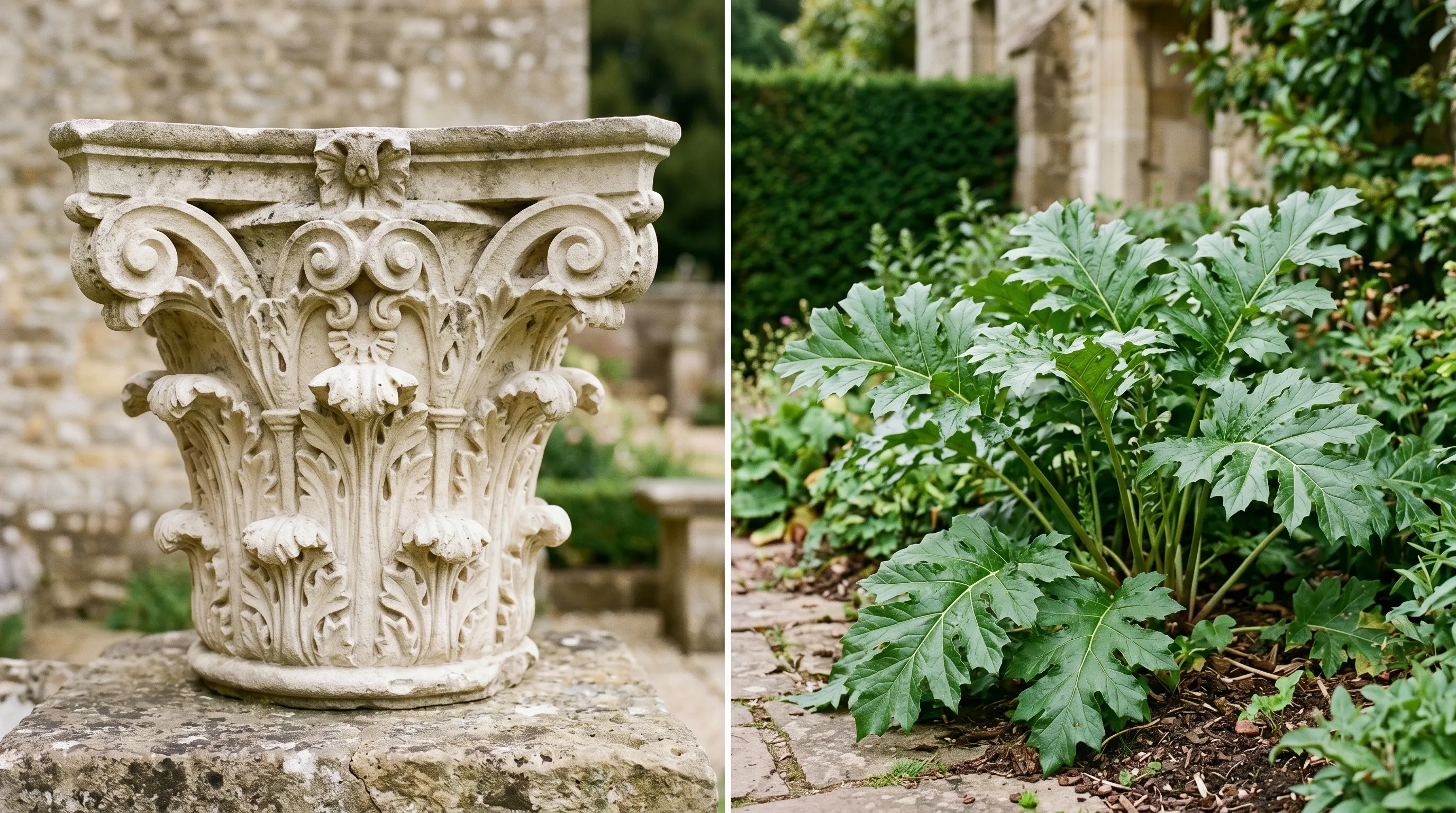 The leaves of Acanthus spinosus were stylised by Greek sculptors into the Corinthian column capital around 450 BC, attributed to Callimachus of Corinth. The botanical original is on the right.
Common mistakes when growing acanthus
Planting in shallow soil. Acanthus needs at least 450mm of decent soil depth. In a thin clay cap over rubble or chalk, plants stunt and rarely flower. Always check soil depth with a long screwdriver before committing.
Planting too close to valued perennials. The roots reach 2.4m within five years. Anything within 1m of an acanthus is at risk of being smothered. Plan the position with that radius in mind, or install a barrier.
Forking through the crown for spring tidy-up. Damaged roots and snapped fragments left in the soil regrow as new plants. Tidy around the crown by hand or with a small hand fork, never with a border fork driven through it.
Cutting leaves off in summer. Acanthus foliage is the energy factory feeding next year’s flowers. Removing healthy leaves in summer to “tidy” the plant reduces flowering by 30-50% the following year. Leave the leaves alone until autumn.
Feeding with high-nitrogen lawn fertiliser. The leaves grow soft and floppy, the flower spikes lean over by July, and mildew risk doubles. Stick to compost mulch and bone meal.
Month-by-month acanthus calendar
| Month | Task |
|---|---|
| January | Take root cuttings on mild dry days. Order any new cultivars for spring planting. |
| February | Continue root cuttings. Plan position of any new plants and order root barrier material. |
| March | Apply Nemaslug as soon as soil hits 5C. Cut back any winter-blackened foliage to 50mm. Mulch with 50mm compost. |
| April | Watch for emerging shoots. Repeat nematode application six weeks after first treatment. Slug-pick at dusk three times weekly. |
| May | Pot on root cuttings into 2L pots. Stop slug treatment if damage is under 5% of new leaves. Spike emergence begins late month. |
| June | Spikes elongate to 0.6-1.0m. Water if rainfall under 25mm for the week. Avoid overhead watering. |
| July | Flowering begins from base of spike upwards. Peak display weeks 2-4. |
| August | Flowering continues. Watch for powdery mildew in shaded plants. Apply milk-water spray if needed. |
| September | Cut spent spikes if collapsed or unsightly. Leave decorative seed heads if wanted. Sow seed under cover for new species. |
| October | Apply bone meal at one handful per plant. Plant new acanthus while soil is still warm. |
| November | Lift and divide overgrown clumps. Install root barriers around contained replants. |
| December | Take first root cuttings of the season on mild days. Tidy weather-damaged outer leaves. |
Frequently asked questions
Is acanthus invasive in UK gardens?
Acanthus is not legally invasive but spreads aggressively from roots. Any 50mm fragment of root left in the soil regrows into a new plant, and lateral spread reaches up to 2.4m within five years. Treat it like horseradish or Japanese anemone: plant it where you accept it will dominate, or install a 600mm vertical root barrier at planting time.
When does acanthus flower in the UK?
Acanthus flowers from early July to late August in most of the UK. Spikes appear from the centre of the leaf clump in mid-June, open from the base upwards over four weeks, and hold their structural seed heads into November. Plants need to be at least three years old to flower reliably.
How do you stop acanthus spreading?
Install a 600mm vertical root barrier of galvanised steel or pond liner around the plant at planting time. Lift and divide the crown every four years and pot up any roots wandering outside the barrier. Glyphosate kills regrowth but root fragments below 200mm often survive a single application.
Why is my acanthus not flowering?
The most common cause is the plant being under three years old or growing in too much shade. Other causes are recent root disturbance, late spring slug damage to the central crown, or planting in shallow soil under 300mm deep. Acanthus needs a settled root run and a full summer to set flower buds.
How do you propagate acanthus?
Take 75mm root cuttings from November to February. Lift a section of root with a fork, cut into pencil-thick lengths, and push vertically into gritty compost with the top flush to the surface. Keep cool and moist. Cuttings root in 8-10 weeks and produce flowering plants in their third year. For more on the Greek architectural use of the leaves see the Royal Horticultural Society acanthus profile.
Now you’ve mastered acanthus
Now you’ve mastered the architectural side of the border, read our guide to the best perennial plants for UK gardens for the next step in building a long-season scheme. If you are pairing acanthus with grasses for a prairie look, the Miscanthus sinensis growing guide is also worth a read.
Our team produces practical UK gardening guidance from source research, contributor records and established horticultural practice. Editorial standards are overseen by Matt W.