Key takeaways
- Hardy biennial sown direct in September for strongest plants or March to May for same-year flowers
- Colour gradient on one bed: white, dusty pink, antique pink, burgundy, near-black across the same packet
- Plants reach 90-120cm with lace umbels 80-120mm wide and need light staking on exposed sites
- Cutting yield: 24-32 stems per square metre across a 10-12 week harvest window
- Vase life is 7-10 days when cut just before all umbel florets open and stems are seared in boiling water
- Self-seeds prolifically and feeds hoverflies that eat aphids on neighbouring beans, roses, and brassicas
Daucus carota ‘Dara’ is the cut-flower variety that turned UK flower farmers’ heads in the early 2010s. It looks like a wild umbellifer, behaves like an old-fashioned cottage flower, and produces stems that florists pay a premium for. Yet you can grow it from a £3 seed packet on any sunny patch of soil.
What is Daucus Dara and why has it taken over UK cut-flower beds?
Daucus carota ‘Dara’ is a cultivated form of the European wild carrot, bred and selected for ornamental use. It first reached UK seed catalogues around 2010 and is now the most planted ornamental umbellifer in British cutting gardens. The plant is a true biennial, but in UK growing conditions it behaves like an annual when spring-sown.
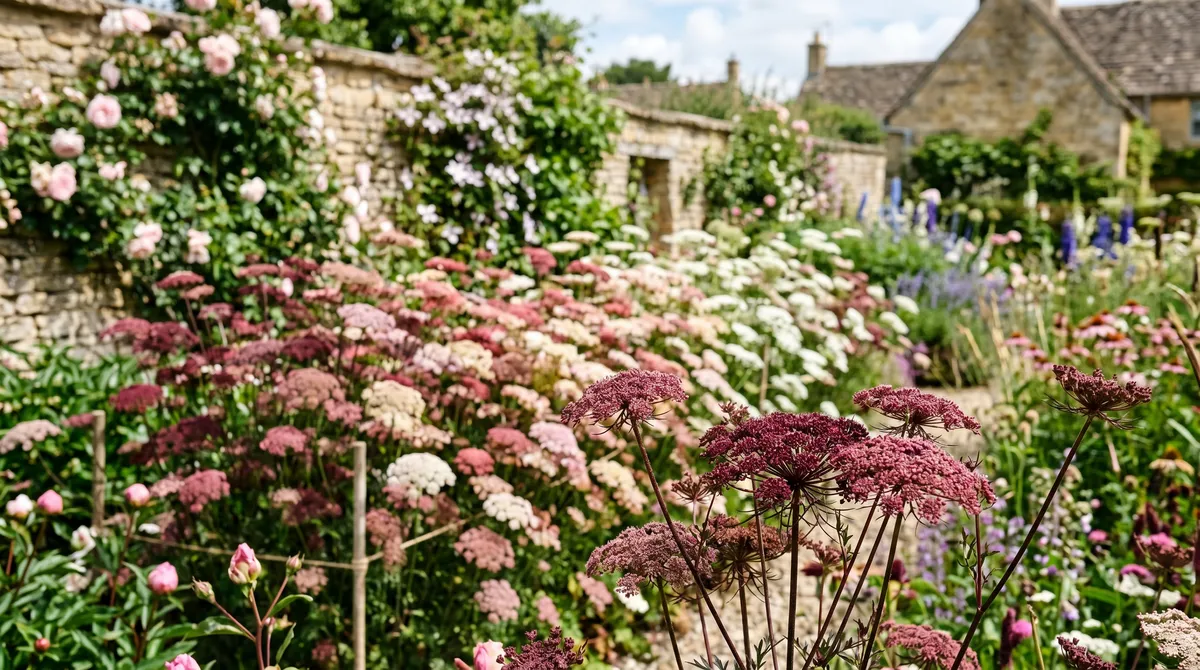
The flowers appear as flat lace umbels 80-120mm across, identical in shape to wild Queen Anne’s Lace but in a striking colour range. Inside a single packet you get white, dusty pink, antique rose, deep burgundy, and a small percentage of near-black umbels. The colour gradient on one bed is the diagnostic feature that no other UK cutting flower offers.
Florists value Dara because the lace structure adds airy, naturalistic filler to bouquets in a colour palette that suits both modern minimalist and old-fashioned cottage styles. It pairs especially well with dahlias, cosmos, and ornamental grasses. For UK growers, the appeal is high yield, long harvest, and reliable self-seeding.
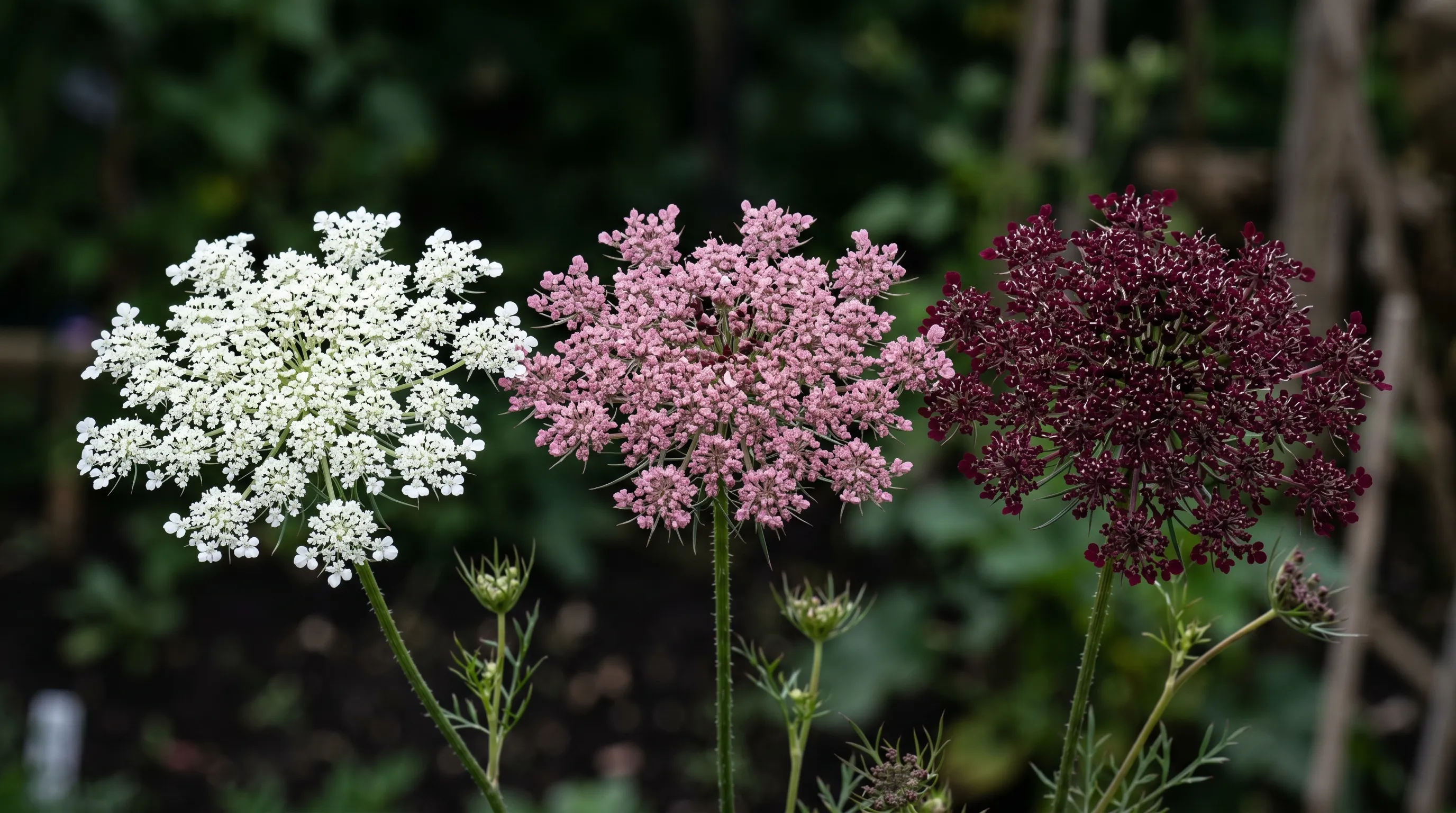 The colour gradient inside a single Daucus Dara seed packet: white, dusty pink, and deep burgundy umbels growing in the same bed.
When to sow Daucus Dara in the UK
There are two sowing windows: autumn (September to early October) and spring (March to May). The choice changes plant height, stem strength, and flowering date.
Autumn sowing for the strongest stems
September sowing is the gold standard on most UK sites. Sow direct outdoors between 1 September and 10 October. Seedlings emerge in 14-21 days, form a basal rosette by November, and overwinter with no protection. Hardy to around minus 12C with mulch.
Spring sowing for safe results
If you garden on heavy waterlogged soil or in an exposed northern site, spring sowing is the safer option. Sow direct from mid-March to mid-May. Germination takes 14-21 days at 15-18C. Aim for a soil temperature of at least 10C before sowing. In Staffordshire that means late March in a normal year, mid-April in a cold spring.
Spring-sown plants flower from late July. Stems are shorter but the failure rate is much lower in cold wet conditions. For an overview of the seasonal sowing rhythm see our seed sowing calendar UK.
Sowing method
Daucus Dara seed needs light to germinate. Do not bury the seed. Rake the surface to a fine tilth, scatter seed thinly, press in lightly with a board, and water with a fine rose. Sow at a final spacing of 250-300mm between plants. Thin in two stages, first at the seedling stage then again at 100mm height.
A 1g packet contains around 700 seeds. One packet covers a 2m² bed at proper spacing with surplus for backup.
Soil, site and feeding
Daucus Dara is genuinely undemanding. It evolved on poor European chalk grassland and farmland, so rich, well-fed beds produce floppy, oversized plants with weaker stems. The ideal site is:
- Full sun: minimum six hours direct sun in summer
- Free-draining soil: heavy clay needs grit and compost added before sowing
- pH 6.0-7.5: neutral to slightly alkaline preferred
- No added fertiliser: high-nitrogen feeds cause floppy stems and lush leaf growth at the expense of flowers
For weaker-stemmed flowers like cornflowers and cosmos that often need staking, see our notes on pinching out cut flowers.
Variety and flower colour comparison
‘Dara’ is sold by most UK seed houses but there are several related ornamental umbellifers worth knowing.
| Variety | Height | Umbel colours | Best use | Notes |
|---|---|---|---|---|
| Daucus carota ‘Dara’ | 90-120cm | White, pink, burgundy gradient | Cut flowers, mid-border | Most planted UK ornamental umbellifer |
| Daucus carota ‘Black Knight’ | 80-100cm | Deep burgundy to near-black | Cut flowers, dark border schemes | Less white in the colour mix than Dara |
| Ammi majus ‘Graceland’ | 80-110cm | Pure white only | Cut flowers, white gardens | True annual, easier in cold springs |
| Ammi visnaga ‘Green Mist’ | 70-90cm | Lime green, ageing white | Filler in summer bouquets | Sturdier stems than Ammi majus |
| Orlaya grandiflora | 50-70cm | Pure white with large outer florets | Front of border, posies | Showy outer petals, shorter than Dara |
Dara is the best all-rounder for UK growers because of its colour range, height, and reliable self-seeding. Black Knight is the better choice for moody, dark planting schemes but you lose the pale pinks and whites. Ammi majus is the safer bet on cold, exposed sites where Dara struggles to overwinter.
How to harvest Daucus Dara for the longest vase life
Cut stage is the most important variable for vase life. Cut too early and stems wilt within 48 hours. Cut too late and florets drop on the kitchen table.
The harvest window is narrow: about three days per umbel. Cut when the umbel is roughly 80 percent open with a small cluster of unopened florets still visible in the centre. The stem should feel firm at the cut point.
The harvest method that works
- Cut in the cool of the morning, ideally before 9am
- Use a sharp clean knife or florist’s snips, not secateurs (which crush the stem)
- Cut at an angle 50mm above a side shoot to encourage further branching
- Strip all foliage below the eventual water line
- Sear the cut stem end in just-boiled water for 7 seconds then plunge into cold water for at least 2 hours
For more on conditioning techniques across cut flower types see conditioning cut flowers for vase life.
Yield expectations
Why every veg plot should grow a row of Daucus Dara
Daucus Dara is the single best companion plant for a UK veg garden because adult hoverflies feed on the open umbels and their larvae eat aphids on adjacent crops.
A single larva of the common hoverfly Episyrphus balteatus eats 200-400 aphids over its two-week feeding stage. Open umbel flowers like Dara, fennel, and dill are exactly the right shape for the short hoverfly mouthparts. Closed tubular flowers like foxgloves and salvias do not feed hoverflies.
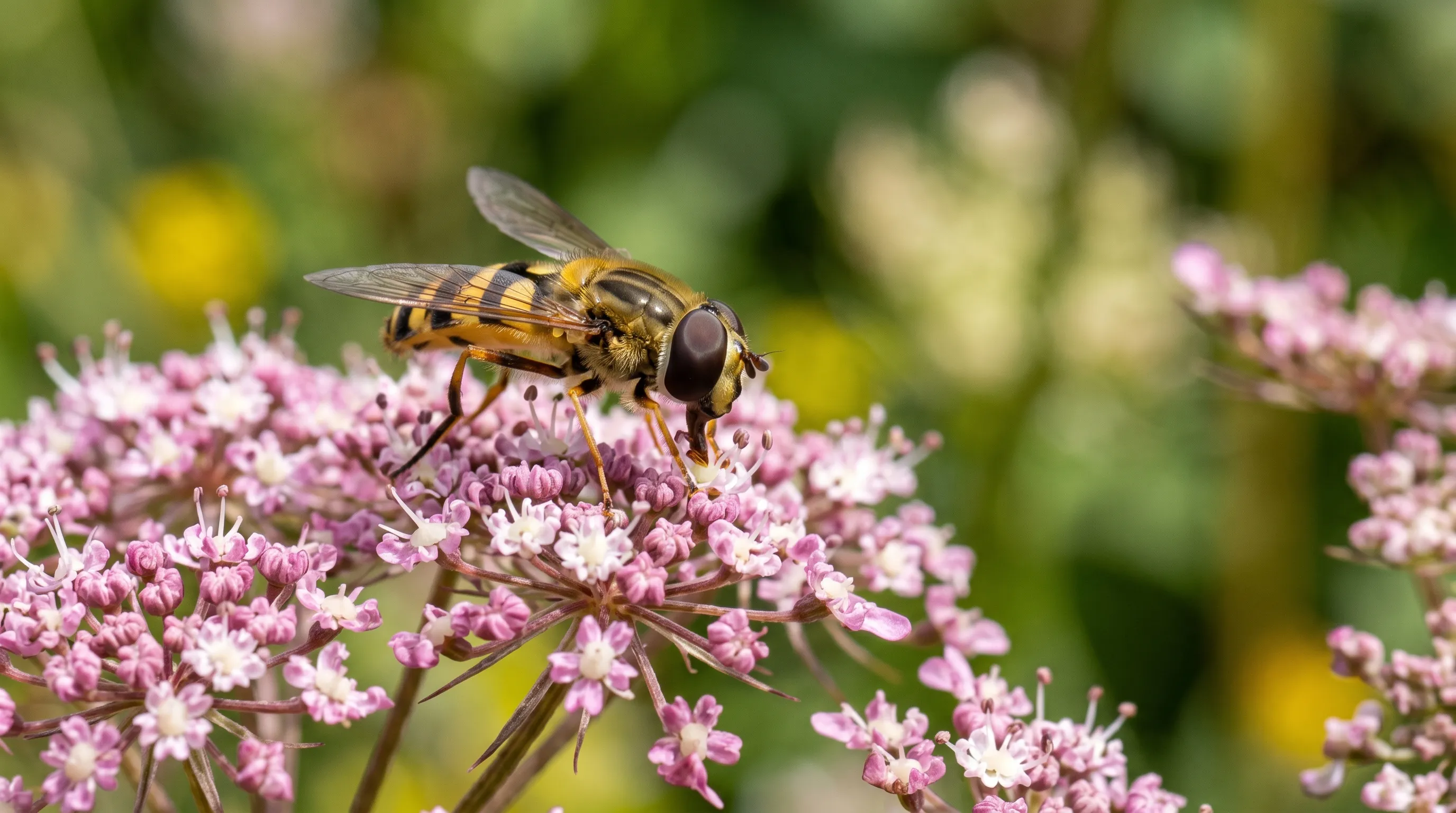 A marmalade hoverfly (Episyrphus balteatus) feeding on a pink Daucus Dara umbel in a Greater London garden. Larvae from this species eat 200-400 aphids each.
Gardener’s tip: Sow a 2m strip of Daucus Dara alongside every veg bed that suffers from aphids. The strip costs under £4 in seed and self-seeds for free in following years. By August the hoverfly numbers on the umbels are visibly higher than on any other flower in the garden.
Self-seeding behaviour and how to manage it
Daucus Dara is one of the most reliable self-seeders in any UK cutting garden. Allow two or three umbels to set seed in August. Seed drops in September and germinates the same autumn or the following spring.
To manage self-seeding:
- Want more: leave the umbels until they brown and shatter, allowing seed to drop naturally
- Want fewer: deadhead all umbels by mid-August before they ripen
- Want a specific colour: collect ripe seed only from the colour you favour, but expect mix to reassert over generations
For more low-maintenance flowering plants see self-seeding plants for easy UK gardens.
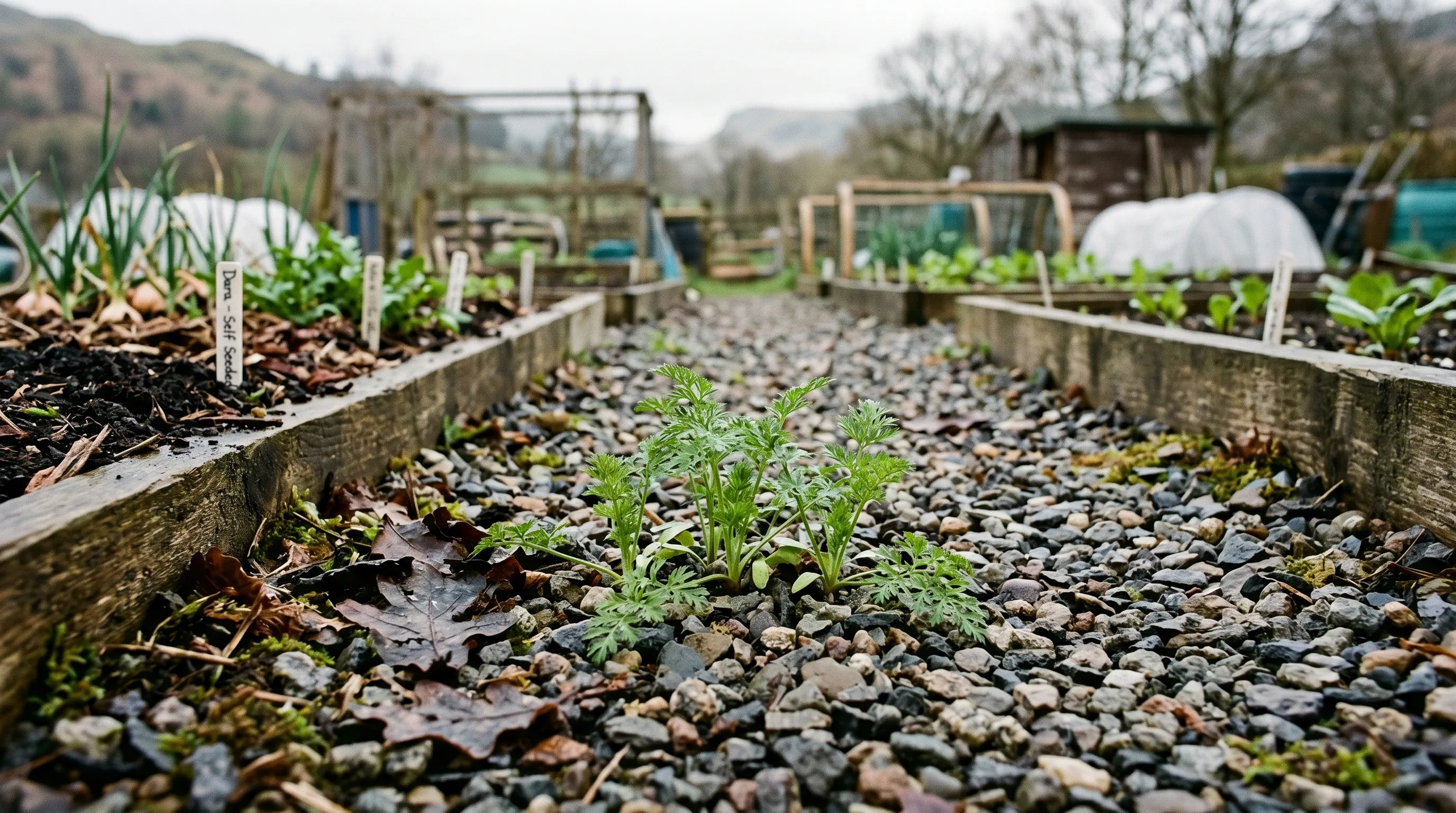 Self-sown Daucus Dara seedlings emerging through a gravel path between vegetable beds. Year three of self-seeding at a Lake District allotment.
Common mistakes
Burying the seed
Sowing into rich, recently manured beds
Daucus Dara evolved on poor European chalk grassland. Sowing into a recently manured bed produces lush, floppy plants with weak stems and reduced flower production. Use a bed that has not been fed for at least 12 months, or fork in grit rather than compost before sowing.
Cutting at the wrong stage
Cutting umbels too early (when fewer than 60 percent of florets are open) gives stems that wilt within 48 hours. Cutting too late (when seed has set) gives florets that drop on the kitchen table within a day. The sweet spot is 80 percent open with a small unopened cluster in the centre.
Skipping the boiling water sear
Letting it spread unchecked into veg beds
Self-seeding is a feature, not a flaw. But uncontrolled self-seeding turns a vegetable bed into a Dara forest within two years. Deadhead at least 70 percent of umbels by mid-August in any bed where you need clear ground for crops.
Month-by-month Daucus Dara calendar
| Month | Task |
|---|---|
| January | Order seed from a reputable UK supplier. One 1g packet covers 2m² |
| February | Prepare beds: fork in grit on heavy soil, no compost or manure |
| March | First spring sowing window opens once soil temperature reaches 10C |
| April | Main spring sowing month for most UK sites. Press seed into surface, do not bury |
| May | Thin spring sowings to 100mm. Transplant module-raised seedlings to final 250-300mm spacing |
| June | Pinch out main growing tip when plants reach 30cm. Stake exposed sites with twiggy pea sticks |
| July | First cut from autumn-sown plants from late June. Spring sowings start cutting from mid-July |
| August | Peak harvest. Cut every 3 days. Allow 2-3 umbels to ripen for self-seeding |
| September | Autumn sowing window opens 1 September to 10 October. Sow direct outdoors |
| October | Last cuts. Cut down spent stems but leave self-sown seedlings undisturbed |
| November | Autumn-sown rosettes visible. No protection needed in most UK gardens |
| December | Rest. Self-sown seedlings sit dormant under mulch |
Cost breakdown for a 4m² Daucus Dara cutting bed
| Item | Cost (UK 2026) | Notes |
|---|---|---|
| 1g seed packet (Chiltern Seeds) | £3.95 | Covers 2m² at proper spacing |
| Horticultural grit (40 litre bag) | £8.50 | Forked into heavy soil before sowing |
| Twiggy hazel pea sticks (bundle of 10) | £6.00 | Stake exposed sites at 40cm height |
| Florists snips | £14.00 | Buys for life. Felco preferred |
| Total first year | £32.45 | Yields 96-128 stems per 4m² bed |
| Total year two onwards | £0 | Self-seeded plants need no investment |
A retail florist sells comparable Daucus stems at £1.20-£1.80 each. A first-year 4m² bed produces around £125-£185 worth of stems at retail value. Year two onwards, the bed is essentially free.
Cut bouquet design with Daucus Dara
Daucus pairs naturally with almost any UK summer cut flower. Best partners include dahlias (especially Cafe au Lait and decorative types), cosmos, cornflowers, scabious, antirrhinums, and ornamental grasses like Panicum or Stipa.
- 2 stems Daucus Dara (one burgundy, one pink)
- 1 stem Cafe au Lait dahlia
- 1 stem deep red cornflower
- 1 stem Panicum ‘Frosted Explosion’ grass
Bind at the natural binding point with twine, recut all stems at 45 degrees, plunge into cold water. The bouquet holds 8-10 days in a vase if the Daucus stems were seared on cutting.
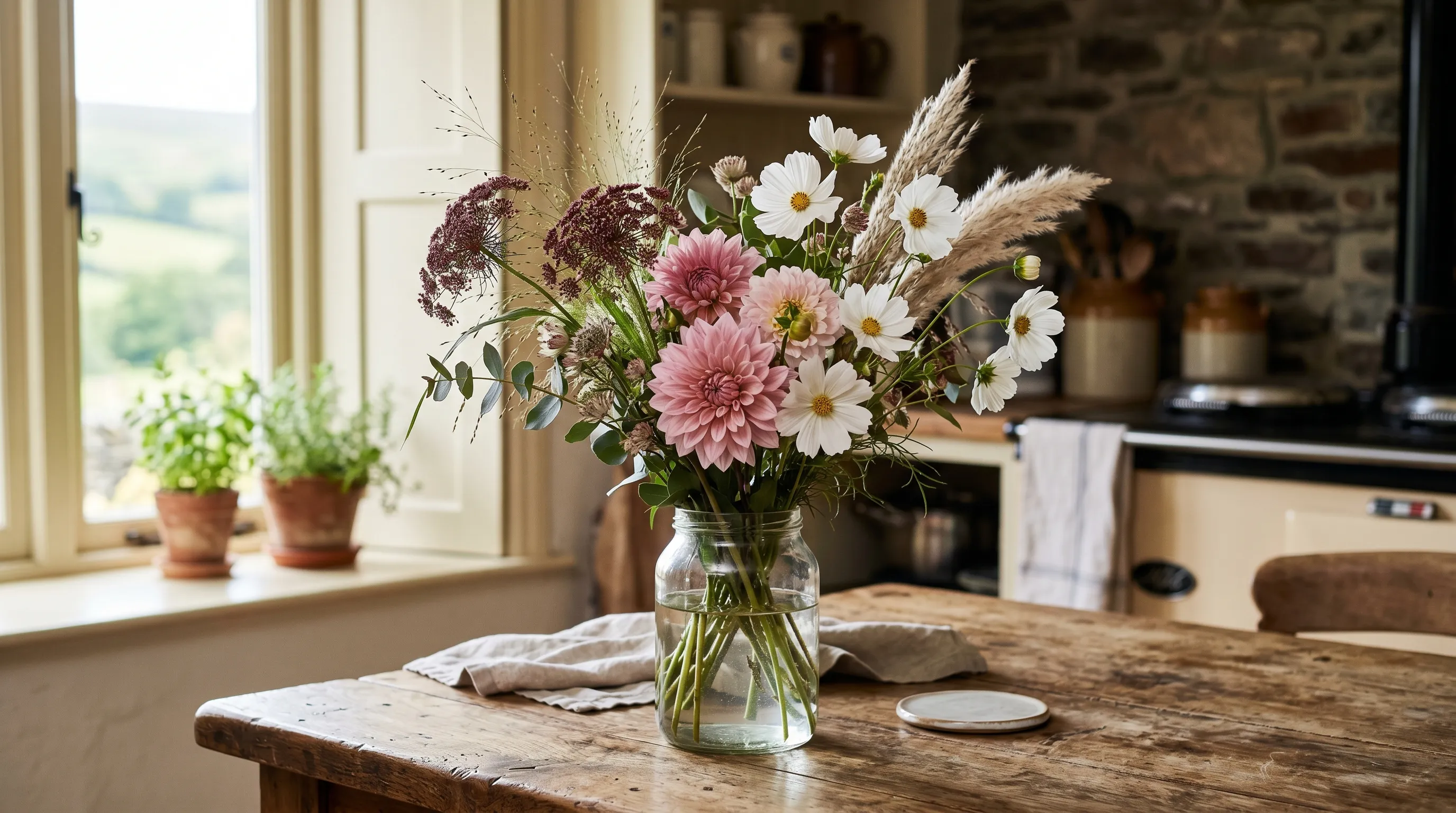 A five-stem hand-tied posy of Daucus Dara, Cafe au Lait dahlia, cornflower, and Panicum grass in a Welsh farmhouse kitchen.
Where Daucus Dara fits in a UK cut-flower year
A well-planned UK cutting garden has flowers from May to October. Daucus Dara sits in the late June to mid September slot, alongside dahlias, cosmos, sweet peas, and antirrhinums. It bridges the gap between the early hardy annuals (cornflower, calendula, ammi) and the late summer dahlias.
If you grow Dara, dahlias, and a couple of repeat-flowering cornflowers, you have a continuous cut-flower supply from late June until the first frosts in October.
The Plantlife conservation charity lists Daucus carota as a key UK pollinator nectar plant, confirming its dual role as a cut flower and a wildlife resource.
Frequently asked questions
When should I sow Daucus Dara seeds in the UK?
Sow Daucus Dara direct outdoors in September for the strongest plants, or in March to May for same-year blooming. Autumn-sown seedlings overwinter as small rosettes and flower from late June. Spring sowings flower from late July. Germination takes 14-21 days at 15-18C. Seed needs light to germinate so press into the surface rather than burying.
How tall does Daucus Dara grow?
Daucus Dara reaches 90-120cm tall in UK gardens, with the strongest stems from autumn-sown plants. Spring-sown plants are usually 80-100cm. Plants in rich soil grow taller and floppier. Light staking with twiggy pea sticks at 40cm height keeps stems upright on exposed sites. Plants form a basal rosette in year one and bolt to full height in year two.
What is the vase life of Daucus Dara?
Cut Daucus Dara stems last 7-10 days in a vase when harvested at the right stage and conditioned properly. Cut when the umbel is about 80 percent open but still has unopened florets in the centre. Strip lower foliage. Sear the cut stem ends in boiling water for 7 seconds then plunge into cold water for 2 hours before arranging.
Does Daucus Dara self-seed in UK gardens?
Yes, Daucus Dara self-seeds freely once established and returns reliably year after year on most UK soils. Allow a few umbels to set seed in August. Seed drops in September, germinates that autumn or the following spring. Second-generation seedlings drift toward lighter colours, so oversow with fresh packet seed every 2-3 years to keep the burgundies.
Will Daucus Dara attract pests to my vegetables?
No, Daucus Dara is one of the most beneficial companion plants for UK veg gardens because its umbels feed adult hoverflies that eat aphids. A single hoverfly larva eats 200-400 aphids over two weeks. Planting Dara among beans, brassicas and roses cuts aphid populations sharply by midsummer. The flowers also attract lacewings, parasitic wasps and solitary bees.
Next steps
Our team produces practical UK gardening guidance from source research, contributor records and established horticultural practice. Editorial standards are overseen by Matt W.