Key takeaways
- Semi-succulent trailing vine; trails 1-2 metres with silver marbled heart leaves
- Bright indirect light keeps marbling tight and leaves close together
- Water like a succulent: let the gritty mix dry fully; overwatering is the main killer
- Use a free-draining cactus or gritty mix, never standard peat compost wet
- Keep above 10-15C; it is a UK windowsill plant, not frost hardy
- Propagate free from cuttings in water, the butterfly method, or strands laid on compost
String of hearts (Ceropegia woodii) is one of the easiest trailing houseplants to grow, as long as you treat it like the semi-succulent it is. It throws out thin purple stems hung with silver-marbled heart-shaped leaves, and a happy plant trails well past a metre. This guide covers light, watering, the right gritty mix, temperature, the problems people hit, and the easy free propagation that makes it spread.
What String of Hearts Actually Is
String of hearts is a semi-succulent trailing vine from southern Africa.
The botanical name is Ceropegia woodii. The leaves are small, heart-shaped and patterned with silver marbling on a dark green base. The undersides often flush purple, and the wiry stems are purple too. Those leaves are slightly fleshy because they store water, which is why the plant copes with neglect far better than with fuss.
Key features:
- Thin trailing stems that reach 1-2 metres, sometimes more
- Heart-shaped leaves around 10-15mm wide with silver marbling
- Purple stems and purple-flushed leaf undersides
- Small tube-shaped pink-purple flowers in summer on mature plants
- Aerial tubers (“beads”) that form along the stems
It is sold as a hanging or shelf plant, and that is how it looks best. Let it trail. If you grow houseplants and want trailing texture, it earns a place in any collection of indoor plants.
How Much Light String of Hearts Needs
Bright indirect light, and as much of it as you can give.
This is the single biggest factor in how the plant looks. In good light the leaves sit close together, the marbling is sharp and silvery, and the purple in the stems deepens. In poor light the stems stretch, the gaps between leaves widen, and the colour fades to plain green. That stretched, sparse look is called leggy growth, and it does not reverse.
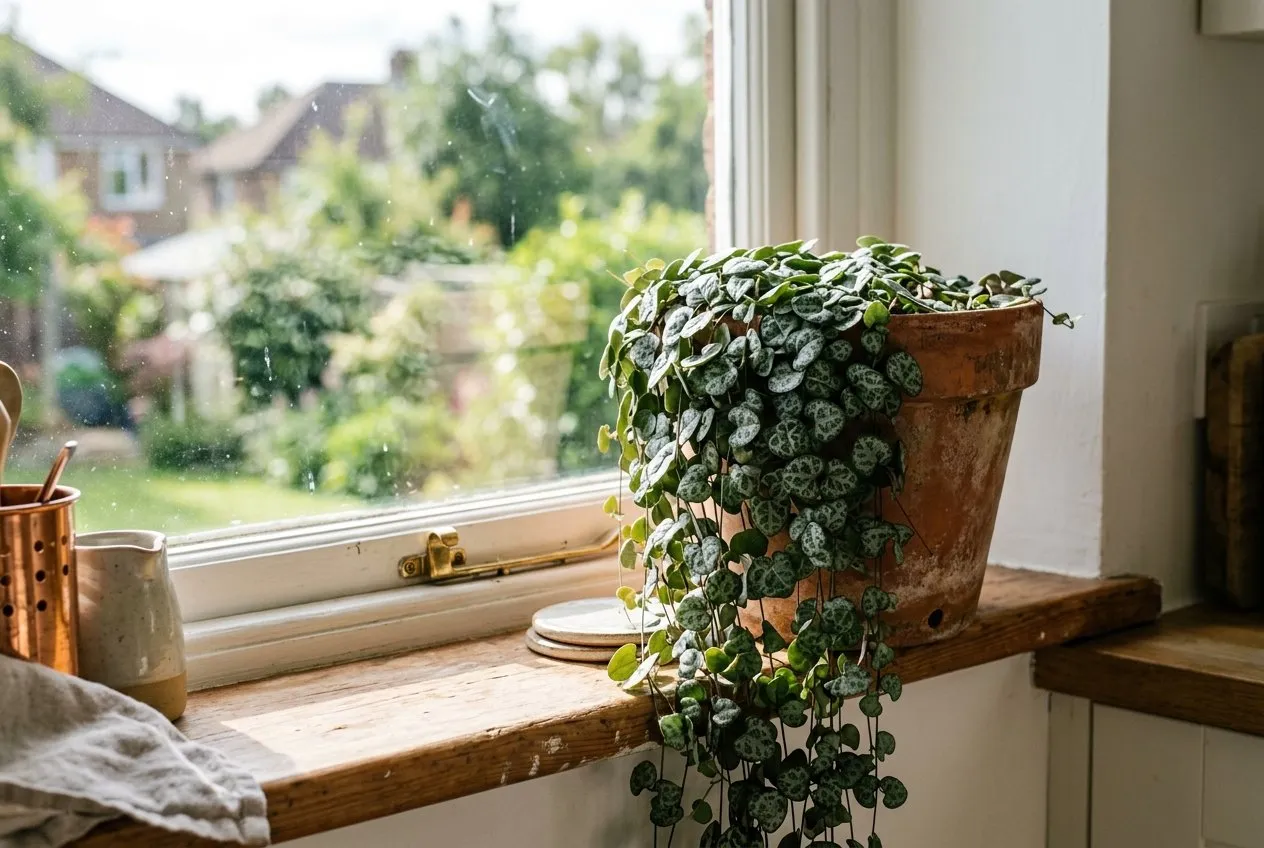 A south-facing kitchen sill at Staffordshire. The leaves sit tight and the marbling is bold. This is what enough light looks like.
If your only bright spots are taken, it does cope better than many trailing plants in dimmer rooms, alongside the genuinely shade-tolerant options in our low-light houseplant guide.
Watering: The Part Most People Get Wrong
Water it like a succulent, not like a leafy houseplant.
The reliable signal is the leaves. When they feel slightly soft and look faintly wrinkled, the plant has used its stored water and is ready. Firm, plump leaves mean wait. Far more string of hearts die from overwatering than from drought.
Watering signs:
| What you see | What it means | What to do |
|---|---|---|
| Plump, firm leaves | Plenty of stored water | Do not water yet |
| Slightly soft, faintly wrinkled leaves | Ready for water | Water thoroughly, let it drain |
| Yellowing leaves, soft mushy stems | Overwatered; rot starting | Stop watering; take cuttings; repot dry |
| Many shrivelled, crispy leaves | Genuinely underwatered | Soak and let drain; recovers fast |
Always water until it runs from the drainage holes, then empty the saucer. Never leave it standing in water.
The Right Compost and Pot
Use a free-draining gritty mix and a pot with drainage holes.
The pot must have drainage holes. A small pot is fine; this plant has a modest root system and does not mind being a little snug. Feed sparingly only during the growing months, from April to September, with a half-strength balanced or cactus feed roughly once a month. Stop feeding entirely in winter. For the wider rules on feeding indoor plants, see our houseplant feeding guide.
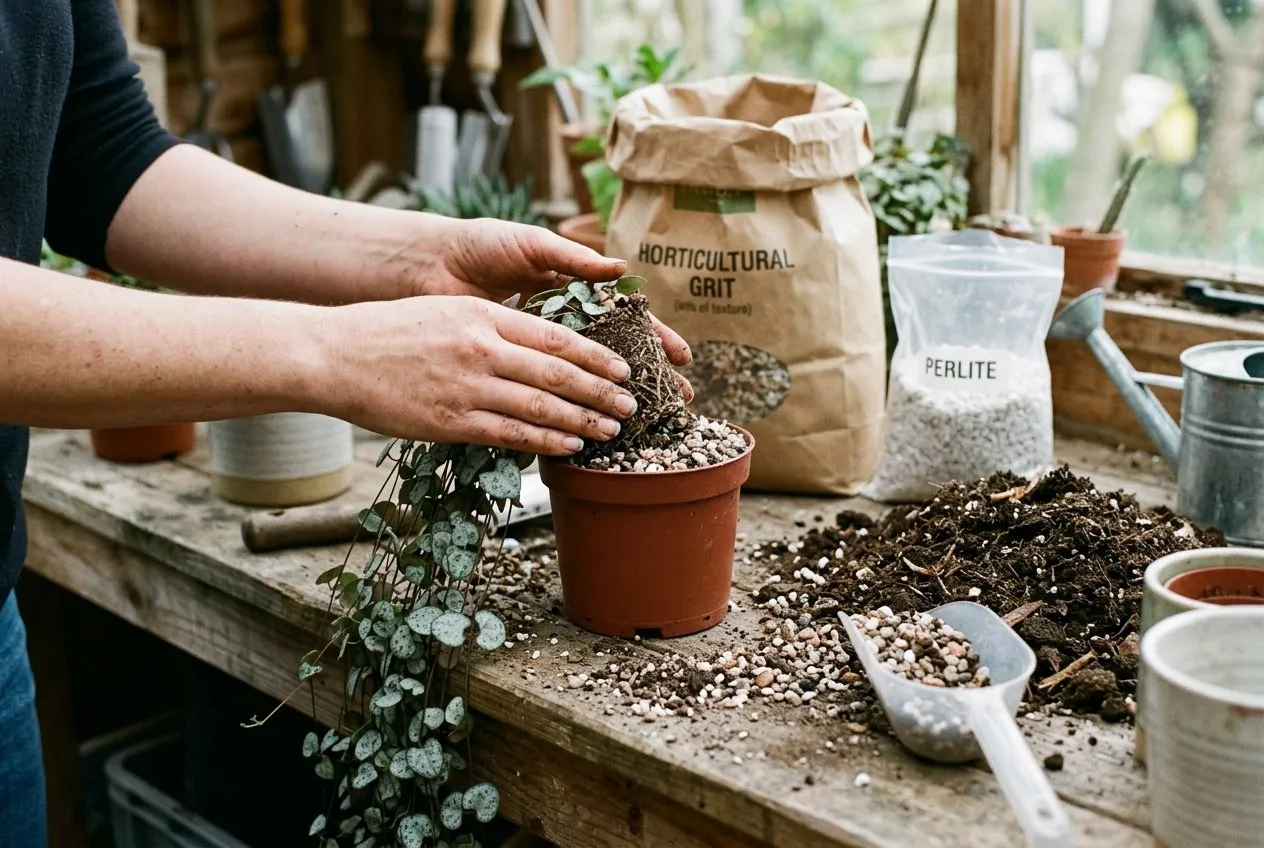 Repotting into a gritty mix at Staffordshire. Two parts peat-free compost, one part grit. This is what stops the roots sitting wet.
It rarely needs repotting; once every two or three years is plenty. The general method is the same as any other houseplant, covered in our repotting guide.
Temperature and Where to Keep It
Keep it above 10-15C; it is not frost hardy.
String of hearts is a warm-climate plant and a UK windowsill is its natural home here. Normal room temperatures suit it all year. It can spend the warmest weeks outdoors, roughly June to August, in a bright, sheltered spot. Bring it back inside before night temperatures fall below 10C.
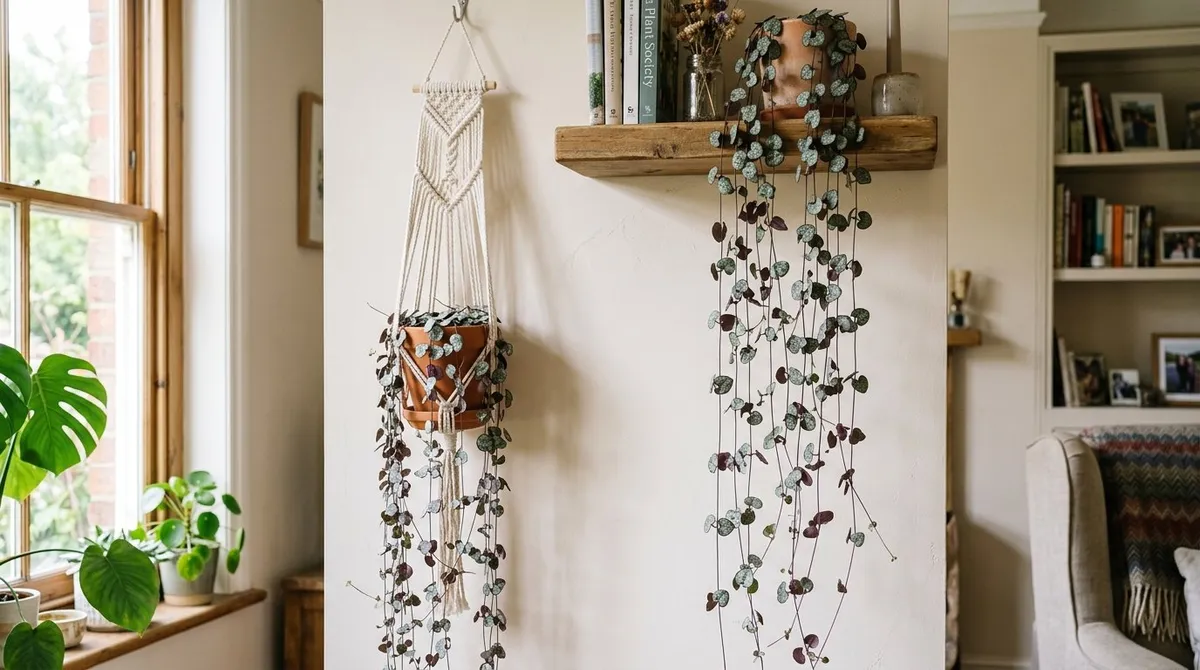
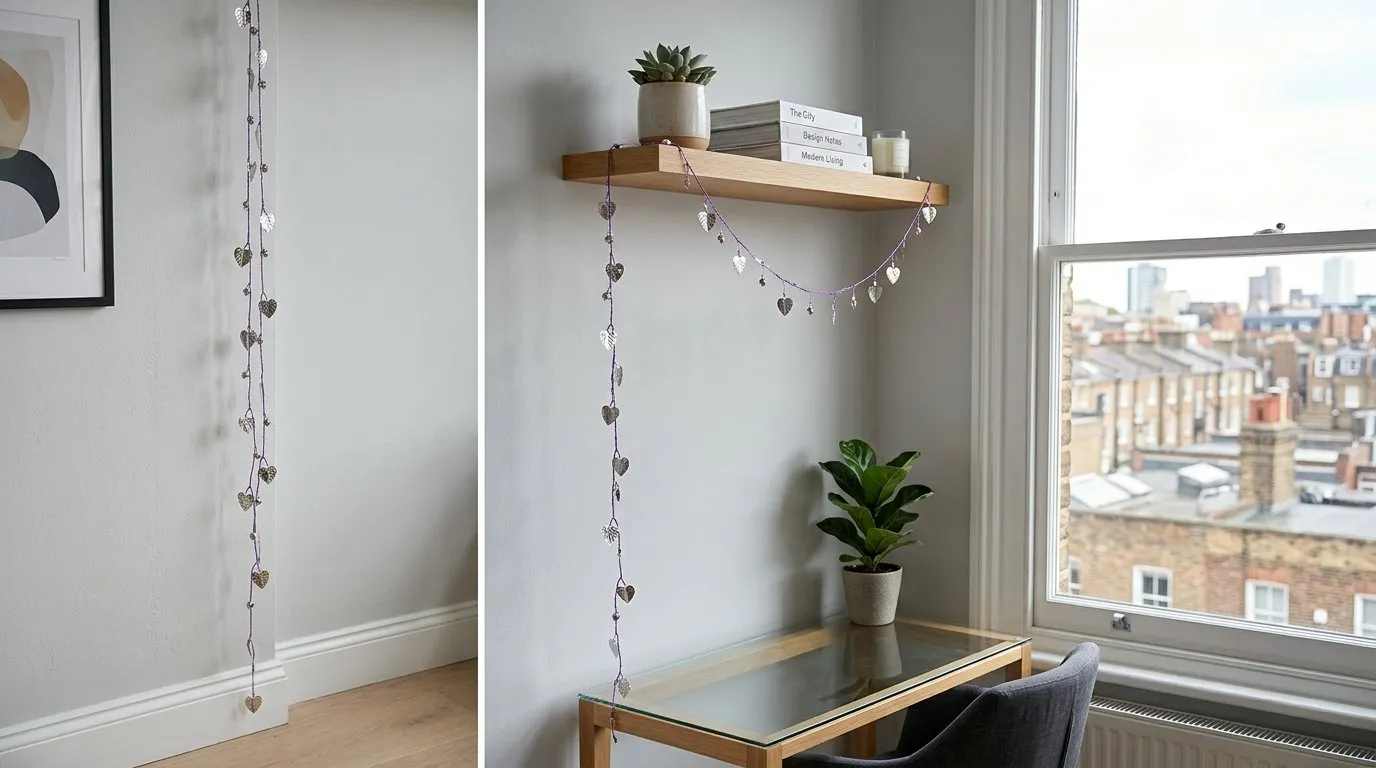 A long trail in a city flat. Grown on a bright sill then hung high to show the strands off. It earns its place as a trailing plant.
As a trailing species it works beautifully in a hanging pot or macrame holder, alongside the other options in our hanging houseplant guide.
Common Problems and How to Fix Them
Almost every problem traces back to water or light.
Mushy, brown, collapsing stems. This is rot from overwatering or a wet mix. Stop watering. Cut back to firm, healthy stem. Re-root the good cuttings in water and bin the soft material. Switch to a gritty mix.
Yellowing leaves. Usually overwatering, especially in winter. Let the mix dry fully and water far less.
Leggy growth, bare stems, fading marbling. Too little light. Move it to your brightest window. New growth comes back tight; old bare stems stay bare, so trim them and propagate the tips.
Mealybug. White cottony pests in the leaf joints. Dab them off with a cotton bud dipped in surgical spirit, and check weekly until clear.
Fungus gnats. Small flies from compost that stays too wet, another reason to let the mix dry. Our fungus gnat guide covers the full fix.
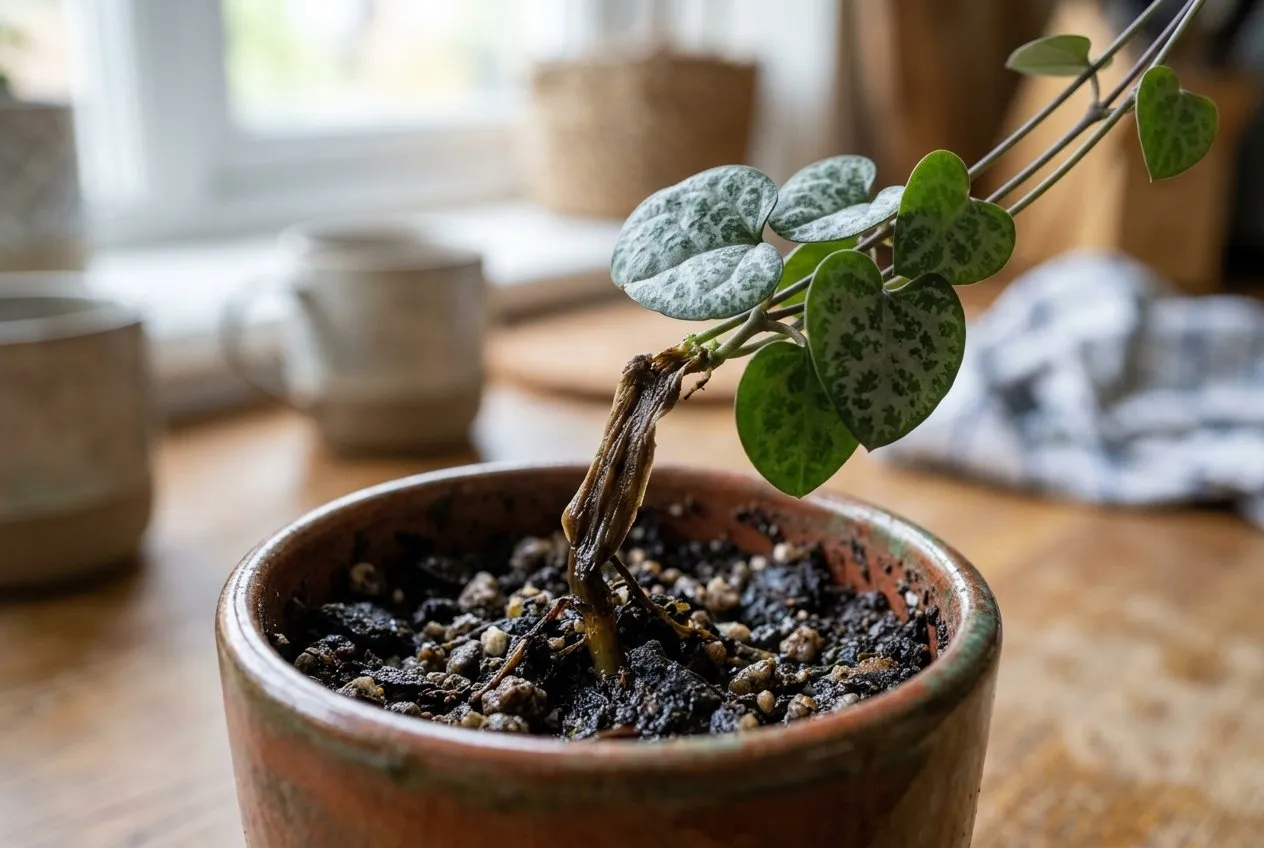 The look of rot: a soft, browning stem at the base from too much water. Cut back to firm growth and re-root the healthy tips. The plant is rarely lost if you act fast.
How to Propagate String of Hearts
Propagation is genuinely easy, and there are three reliable methods.
The three methods, in order of how foolproof they are:
- Water propagation. Cut a 10-15cm length of stem, strip the lowest leaves, and stand the bare end in a jar of water on a bright sill. Roots appear in two to three weeks. Pot up into gritty mix once roots reach 2-3cm.
- Butterfly method. Cut sections of stem so each piece has a node and ideally a bead. Lay them on top of damp gritty mix, leaves up, and press the nodes lightly into the surface. They root where they touch the compost.
- Strands on compost. Lay whole trailing strands across the surface of a pot of damp gritty mix, leaving them attached to the parent if you like. Roots form at each node, and you cut the new plants free once established.
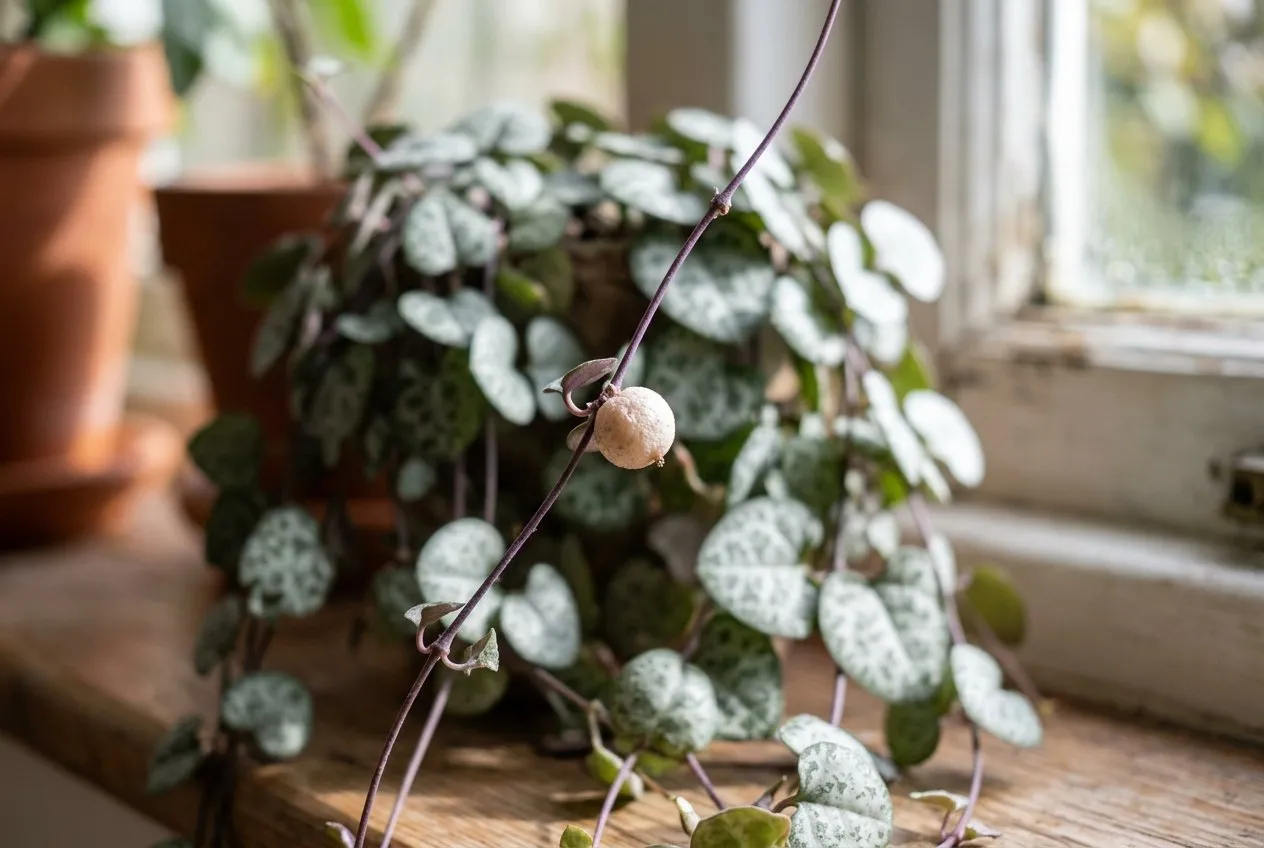 An aerial tuber, or bead, on a stem. These store water and root readily, which is why the butterfly method works so well.
For a wider look at trailing plants for shelves and hangers, our hanging plant guide covers companions. The RHS also has sound general advice on growing and caring for houseplants.
Frequently asked questions
How often should I water string of hearts?
Roughly every 10-14 days in summer, monthly in winter. Let the gritty mix dry out fully first. String of hearts stores water in its semi-succulent leaves and tubers. Soft, slightly wrinkled leaves mean it is ready for water. Far more plants die from overwatering than from drought.
Why is my string of hearts leggy with big gaps between leaves?
Not enough light; the stems stretch toward the window. Move it to your brightest spot, ideally a south or east-facing windowsill. With strong light the leaves sit closer together and the silver marbling stays bold. Leggy growth never tightens back up, but new growth in better light will be compact.
What are the little beads on the stems?
Aerial tubers, sometimes called beads. They form along the stems and store water. You can plant them in compost to grow new plants, or leave them. They are part of the butterfly propagation method and one reason string of hearts is so easy to multiply for free.
Can string of hearts live outside in the UK?
No, not through winter; it is not frost hardy. It can go outside in a sheltered, bright spot from June to August. Bring it back indoors before nights drop below 10C. For most of the UK year it is a windowsill or conservatory houseplant.
Why are my string of hearts stems going mushy and brown?
That is rot, almost always from overwatering or a mix that holds water. Stop watering immediately. Cut back to firm, healthy stem and re-root the cuttings in water. Switch to a gritty cactus mix and a pot with drainage holes. Let it dry fully between every water from now on.
Now grow your wider houseplant collection
String of hearts is a gateway plant; once it succeeds, more follow. To raise free plants from it, our propagation guide covers the wider methods. To keep the rest of your shelf fed correctly, see the houseplant feeding guide. For the dry-loving relatives, our succulent care guide follows the same watering logic. And for trailing companions to hang alongside it, browse our hanging houseplant picks.
Our team produces practical UK gardening guidance from source research, contributor records and established horticultural practice. Editorial standards are overseen by Matt W.