Key takeaways
- Only mophead and lacecap Hydrangea macrophylla change colour
- Blue needs acid soil below pH 5.5 plus available aluminium
- Apply aluminium sulphate at 25g per 4.5 litres, March to May
- Water with rainwater, never hard tap water
- White hydrangeas and paniculata cannot be turned blue
- Full change takes a season; one bush can be blue and pink at once
Keeping a hydrangea blue is not luck. It comes down to two things in the soil: acidity below pH 5.5 and aluminium the roots can actually reach. Get both right on the correct type of hydrangea and the flowers turn a clean blue. Get either wrong and you get pink, no matter how much colourant you buy.
After six seasons of feeding the same mophead at Staffordshire, the rules are simple. Only some hydrangeas change colour. Blue needs acid soil plus aluminium. It takes a full season to show.
Which Hydrangeas Actually Change Colour
Most hydrangeas cannot change colour at all. Only the mophead and lacecap forms of Hydrangea macrophylla shift between blue and pink. The same goes for the mountain hydrangea, H. serrata. These carry the pigment that reacts to aluminium.
White-flowered types have no pigment to move. That includes ‘Annabelle’ (H. arborescens) and the panicle hydrangeas (H. paniculata) like ‘Limelight’ and ‘Vanille Fraise’. You can drench an ‘Annabelle’ in colourant for years and it stays white, then fades to lime-green and dusky pink on its own schedule.
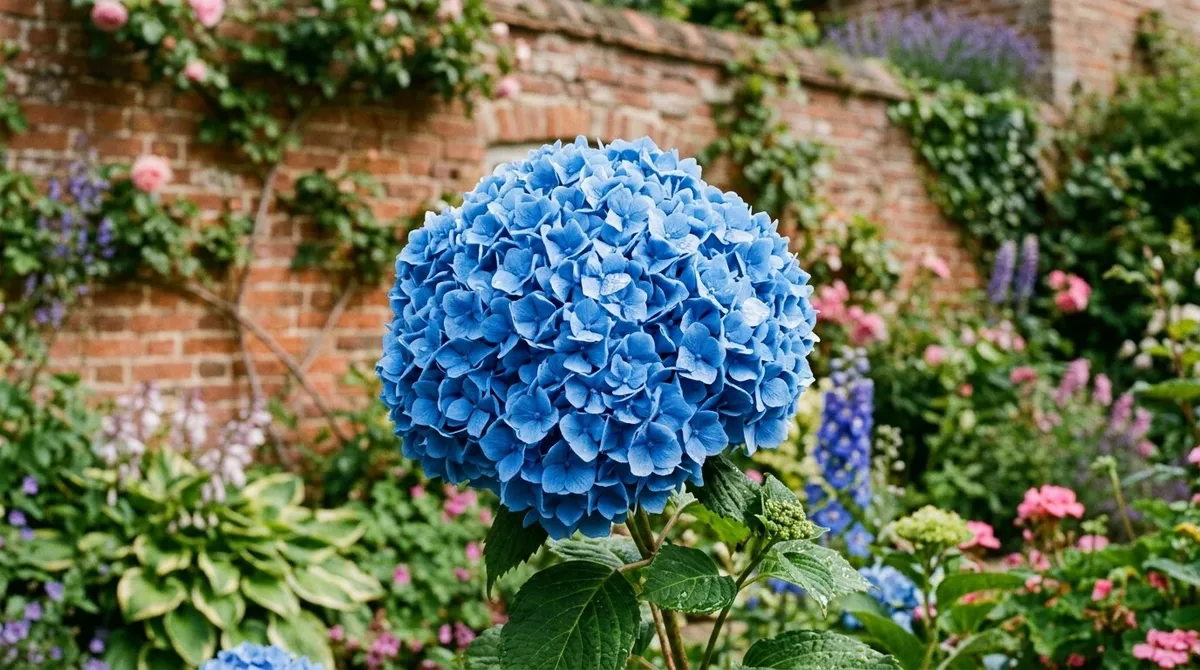
So before you spend a penny, identify your plant. A rounded ball of small florets that goes pink or blue is a mophead macrophylla. A flat plate with a ring of large florets is a lacecap. A cone-shaped flower head is a paniculata and will never go blue.
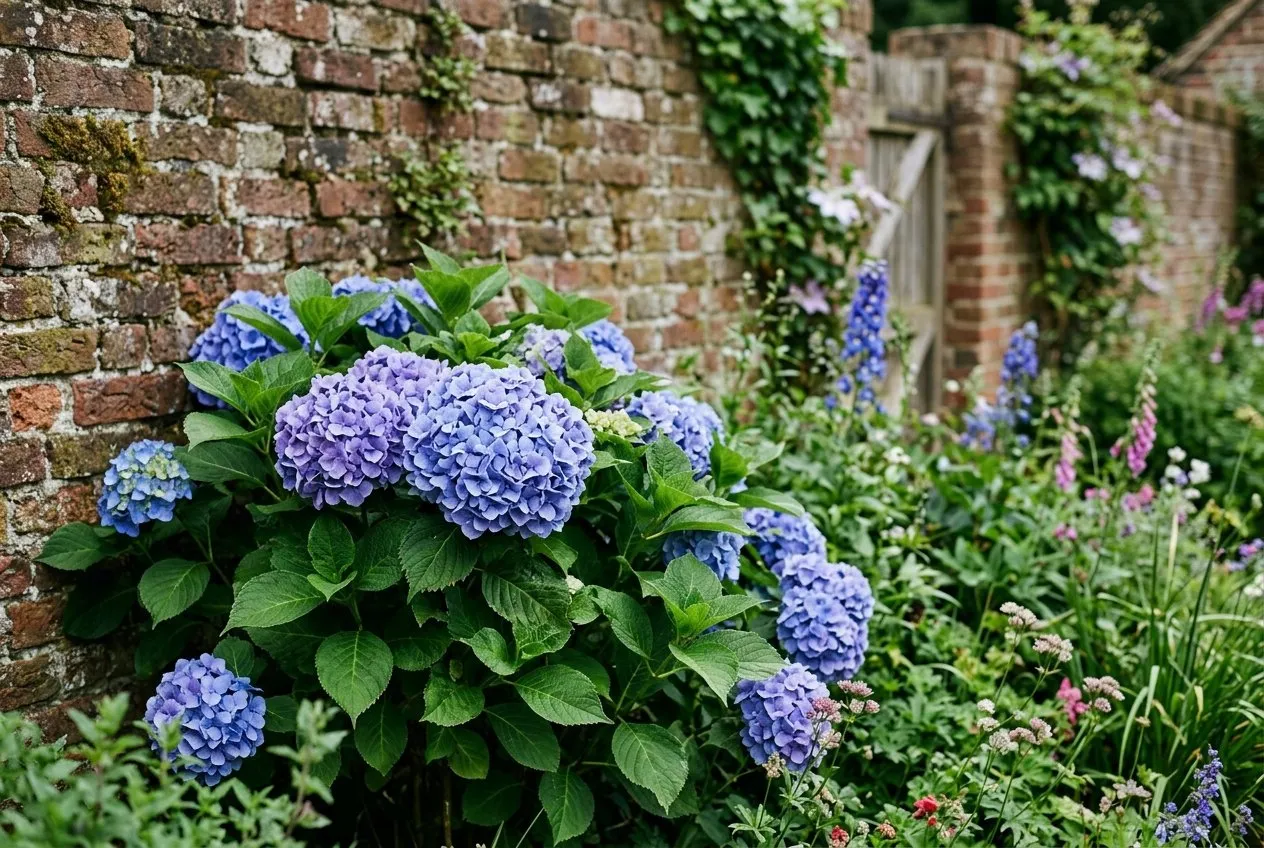 A mophead Hydrangea macrophylla in a Staffordshire cottage border in July. Rounded ball of small florets. This is the only common type that turns reliably blue with acid soil and aluminium.
Why Acid Soil And Aluminium Turn Flowers Blue
Blue is not a pigment the plant makes on demand. The flower always holds the same pigment, but its colour depends on whether aluminium gets into the floret. In acid soil, aluminium dissolves and the roots take it up, and the flower reads blue. In alkaline soil, aluminium locks into insoluble forms the roots cannot use, and the same flower reads pink.
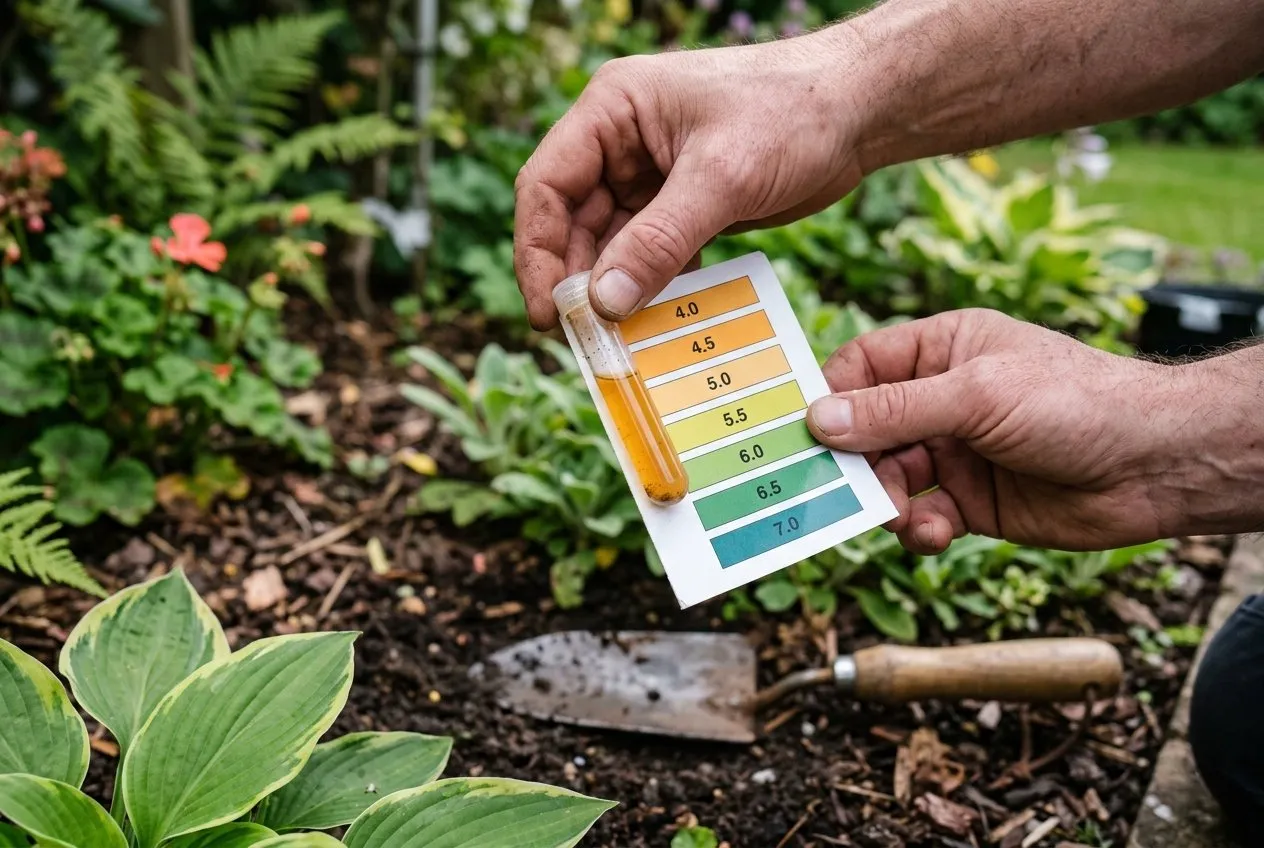
The pH threshold matters. Below about pH 5.5 you get blue. Around pH 6 to 6.5 you get muddy purples and mauves. Above pH 7, on chalky ground, you get clear pink. Aluminium must be present as well as the acidity. Sandy acid soils can be low in aluminium, so you may need acid pH and added aluminium to get there.
| Soil pH | Aluminium available | Flower colour |
|---|---|---|
| Below 5.5 | Yes | Blue |
| 5.5 to 6.5 | Partial | Purple or mauve |
| 6.5 to 7 | Limited | Pink-purple |
| Above 7 (chalk) | Locked up | Pink |
If you garden over chalk or limestone, blue is an uphill fight in open ground. Growing in pots with ericaceous compost is the honest answer there. If you would rather lower the pH of a border than switch to pots, our guide on how to make soil more acidic covers sulphur dosing and ericaceous beds in full.
How To Apply Aluminium Sulphate, And When
Timing is everything. Apply from March to May, every two to four weeks, while the plant is in active growth and setting up for the season. Stop by midsummer. Soak the soil first if it is dry, so you do not scorch the roots with concentrated solution. Three or four applications across spring is plenty for an established bush.
A working spring routine:
- Test the soil pH in late February and note the reading
- Mix 25g aluminium sulphate per 4.5 litres of rainwater
- Water the soil well first if it has been dry
- Apply the solution evenly around the drip line in March
- Repeat every two to four weeks until late May
- Mulch with ericaceous compost or composted bark
- Re-test in autumn and judge the flower colour next July
Wear gloves, keep it off the foliage, and store the powder dry. This is a soil treatment, not a foliar spray.
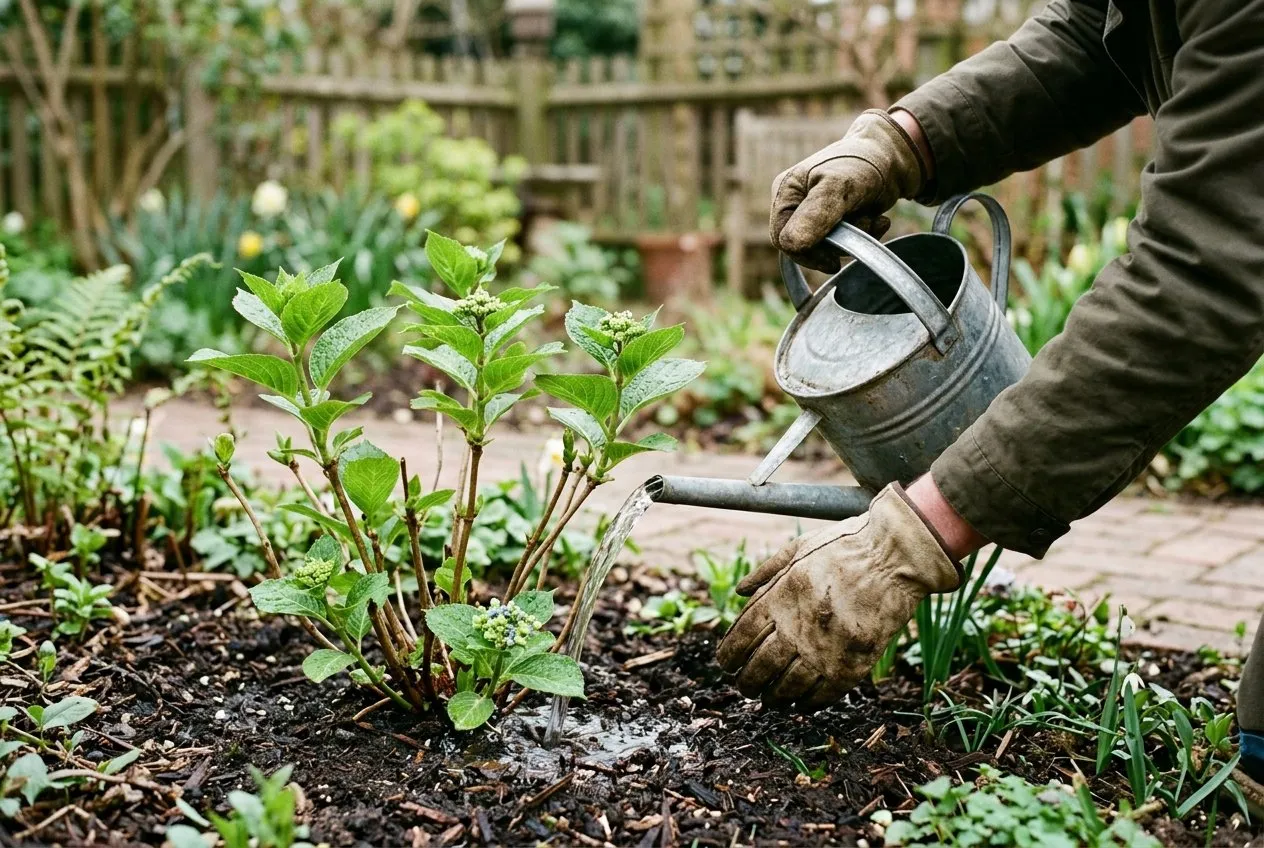 Applying dissolved aluminium sulphate around the roots of a Staffordshire mophead in late March. Soak the soil first, then water the solution evenly around the drip line. Repeat through to late May.
Why Tap Water Turns Hydrangeas Pink
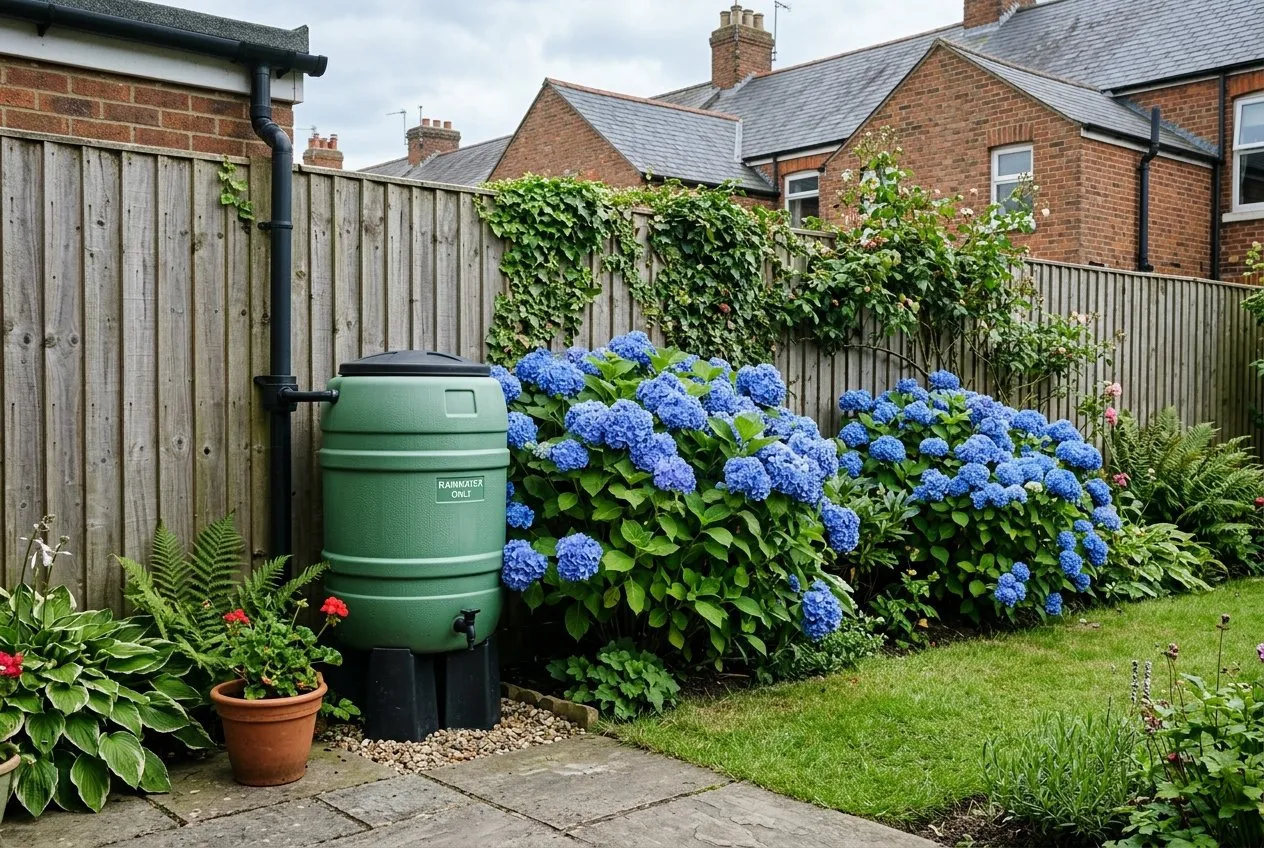
Hard tap water is one of the quietest reasons a hydrangea drifts back to pink. Across much of the West Midlands and the south-east, mains water is high in calcium carbonate. Every can of it nudges the soil more alkaline and undoes your spring colourant.
If you only have tap water in a drought, let it stand overnight, and lean harder on the ericaceous mulch and the aluminium sulphate to push back. But rainwater is the cheap, simple fix. It costs nothing once the butt is in.
Keeping Hydrangeas Blue In Pots
Pots give you total control over the soil, which makes them the surest route to blue on chalky ground. Plant into ericaceous (lime-free) compost, never multipurpose. Multipurpose compost is near-neutral and will not hold the acidity.
Use a container at least 40cm wide so the roots do not cook or dry out. Top up with fresh ericaceous compost each spring and keep the aluminium sulphate routine going, since pot compost flushes nutrients fast with watering. Feed only with a low-phosphate ericaceous feed. Garden centres sell hydrangea-specific feeds that suit this.
Watch the watering in summer. A pot in full sun can need a daily soak in July, and that is a lot of rainwater. Site the pot in light shade with sun for part of the day. That cuts the watering load and stops the flowers bleaching.
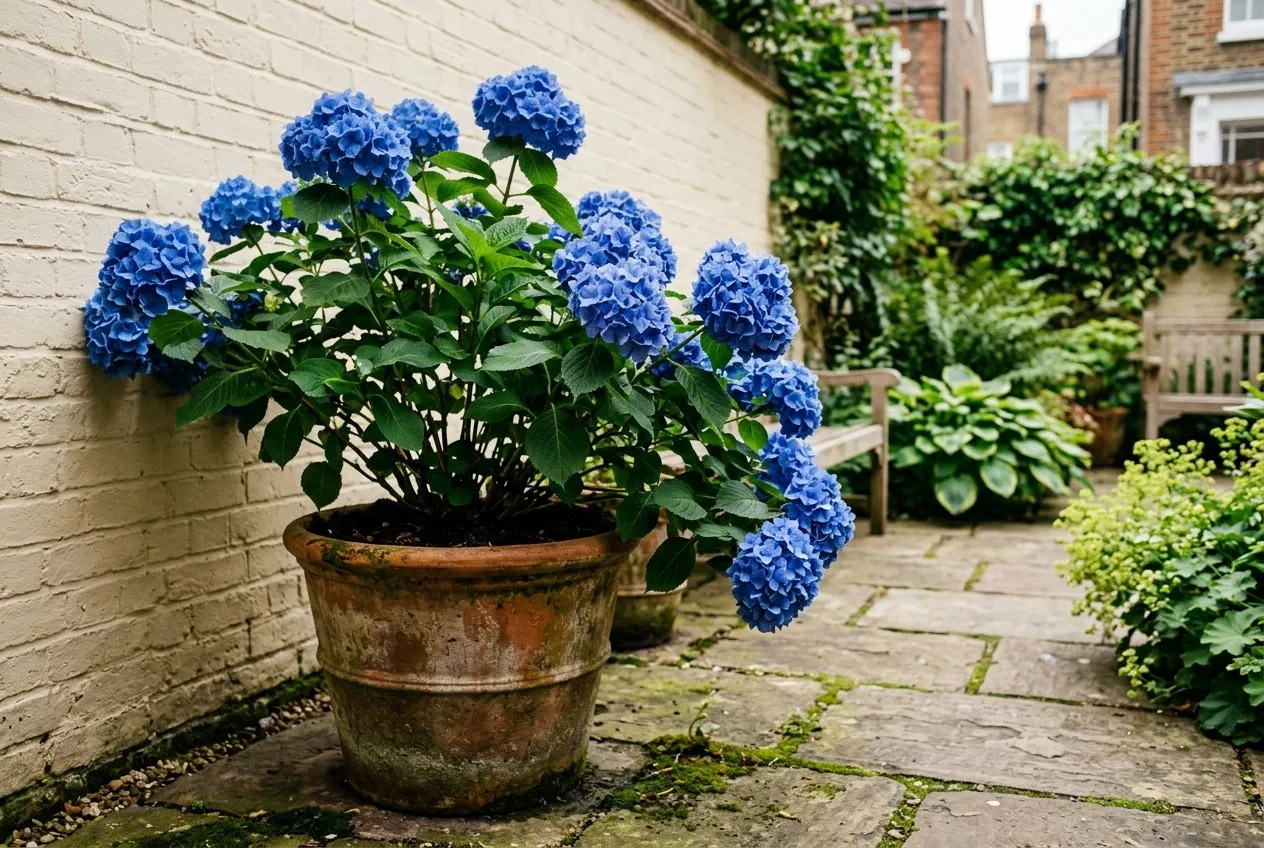 A potted blue mophead in ericaceous compost in a city courtyard. Pots give full control of soil acidity, which makes them the reliable route to blue where the open ground is chalky.
Feeds And Mistakes That Wreck Blue Colour
Phosphorus is the silent killer of blue. Many general fertilisers, rose feeds and tomato feeds are high in phosphate, and phosphate locks aluminium out of reach of the roots. Feed your blue hydrangea with one of those and you fight your own colourant. Stick to a low-phosphate ericaceous feed.
Bonemeal, mushroom compost and garden lime all raise pH and ruin blue. Keep them well away. Wood ash is alkaline too, so do not spread it round a blue bush.
Common mistakes that turn blue back to pink:
- Feeding rose or tomato food near the plant (high phosphorus)
- Watering with hard tap water in a chalk or limestone area
- Adding lime, bonemeal, mushroom compost or wood ash
- Treating a white or paniculata hydrangea that cannot change
- Expecting a colour change in weeks rather than a full season
One more oddity worth knowing. A single bush can flower blue on one side and pink on the other. The roots on the acid, aluminium-rich side make blue florets; the roots reaching neutral soil make pink. Even watering and treatment across the whole root run evens it out over a season or two.
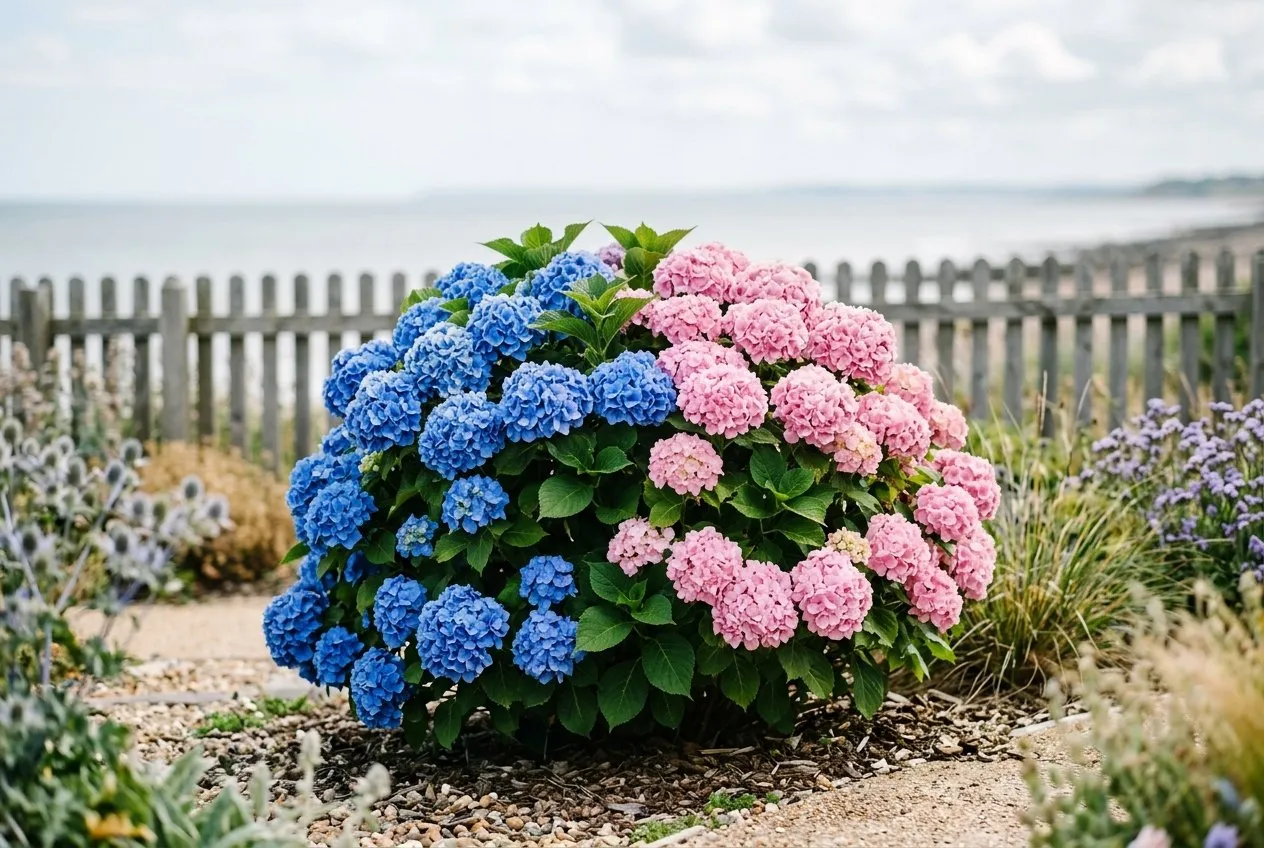 One mophead, two colours, in a seaside garden. The acid, aluminium-rich side flowers blue; the rest stays pink. Uneven soil across the root run is the cause, and even treatment fixes it.
The RHS hydrangea growing guide covers pruning and siting alongside the colour science. For the broader picture, our guide to changing hydrangea colour covers shifting pink to blue and back the other way.
Frequently asked questions
Why is my hydrangea pink when I want it blue?
Your soil is alkaline or low in available aluminium. Blue needs acid soil below pH 5.5 plus free aluminium for the roots. Pink hydrangeas grow on neutral to chalky ground. Test the soil pH first, then add aluminium sulphate in spring to push it acid.
What do I add to make hydrangeas blue?
Aluminium sulphate, sold as hydrangea colourant or blueing compound. Apply 25g dissolved in 4.5 litres of rainwater around the roots, every two to four weeks from March to May. Repeat each spring. Never use lime or bonemeal near the plant.
How long does it take to turn a hydrangea blue?
A full season at least, often two. Start treatment in March and judge the colour the following July. New flower buds set in late summer, so the colour you feed for now shows up in next year’s blooms. Quick fixes do not work.
Can you make a white hydrangea blue?
No. White hydrangeas have no pigment to change colour. Varieties like ‘Annabelle’ and most paniculata types stay white whatever the soil pH. Only mophead and lacecap Hydrangea macrophylla, and some mountain hydrangeas, respond to aluminium.
Why is one hydrangea bush blue and pink at the same time?
Soil acidity and aluminium vary across the root run. One side may sit over acid, aluminium-rich ground while the other meets neutral soil. The roots in the acid patch make blue florets; the rest stay pink. Even watering and treatment evens it out over a season or two.
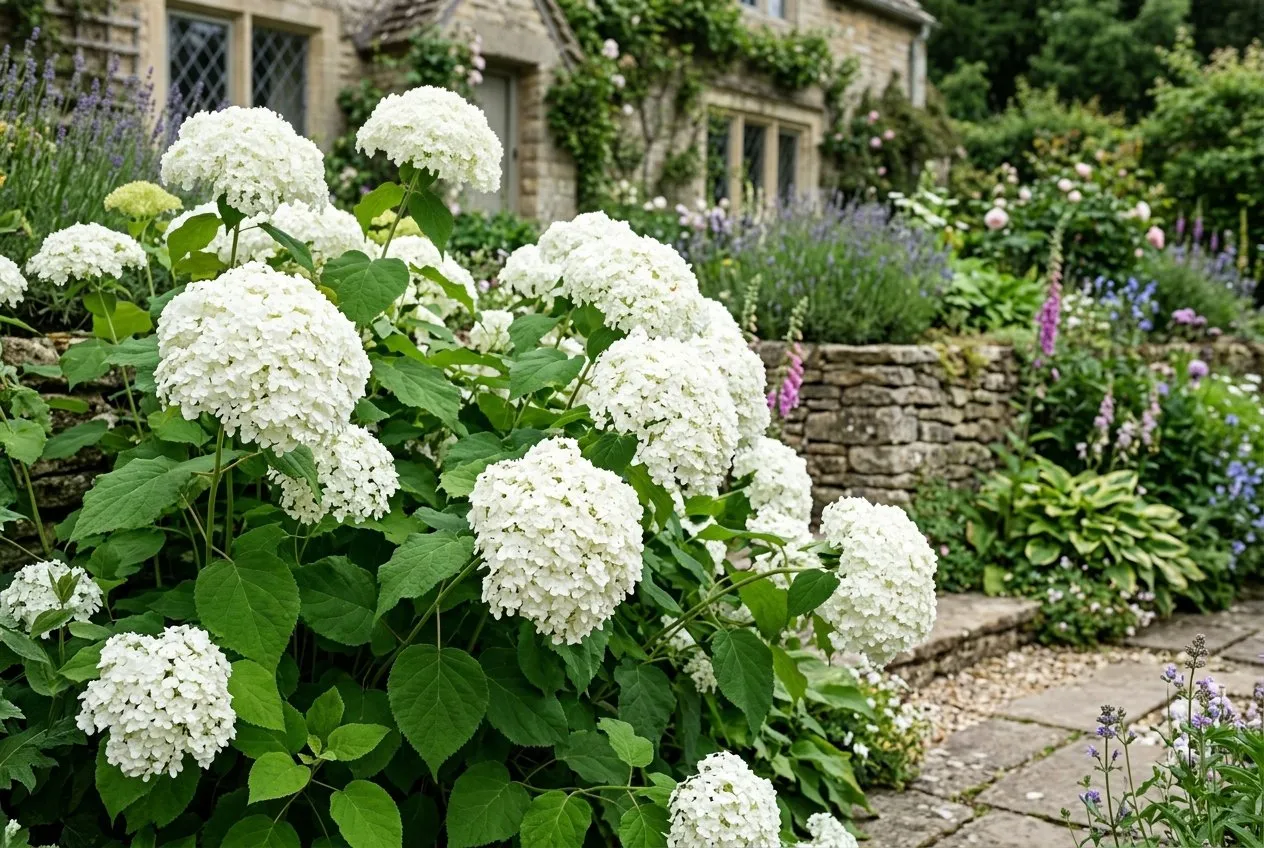 A white ‘Annabelle’ (Hydrangea arborescens) at Staffordshire in July. No pigment means no colour change. Aluminium sulphate does nothing here. Only mophead and lacecap macrophylla types turn blue.
Now plan the wider hydrangea year
Our team produces practical UK gardening guidance from source research, contributor records and established horticultural practice. Editorial standards are overseen by Matt W.