Key takeaways
- Stake in spring at 20-30cm growth, never after the plant has flopped
- Set support height to about two-thirds of the plant's final height
- Grow-through rings and link stakes suit clump-forming perennials
- Use single canes and figure-of-eight ties for tall spikes like delphiniums
- Pea sticks are the cheapest, most natural support for airy plants
- A collapsed perennial never fully recovers its shape, so act early
The tall stars of the summer border, delphiniums, peonies, asters, and heleniums, share one weakness: their stems cannot always hold up their flowers. One August downpour splays an unstaked clump flat, leaving a bare gap in the middle and a tangle of broken stems. The fix is simple and cheap, but the timing is everything. Stake in spring, while the shoots are short, and the plant grows up through the support and hides it. Stake in summer, after a collapse, and you are tying up a ruined shape. This guide covers when to stake, how high, and which of the four main support methods suits each type of plant.
Get it right and the supports vanish into the planting. Get the timing wrong and no method can rebuild a flattened clump.
Why tall perennials flop and when to act
Perennials flop for three reasons, and understanding them tells you when to intervene. The first is top-heavy growth: double peonies and large delphinium spikes carry more flower weight than their stems evolved to hold, especially the lush, soft growth that rich garden soil produces. The second is rain load, where water sits in the blooms and foliage and the extra weight bends the stems past recovery. The third is wind, which rocks tall stems until they snap or splay at the base.
The critical point is that stem tissue does not un-bend. Once a stem has lain over and set, propping it back up leaves a permanent kink and a gappy centre. This is why the timing of support beats the choice of method. Set the support in spring, at 20-30cm of growth, and the stems harden in an upright position with the support inside the clump. By flowering time the foliage hides the structure entirely. Wait until June and you are reacting to damage that has already happened.
Gardener’s tip: Walk the border in early April with a bundle of supports in hand. Anything that reached knee height or taller last year needs staking now, before it grows another foot and becomes impossible to support invisibly.
How high to set the support
Match the support height to about two-thirds of the plant’s final height. A helenium that finishes at 120cm wants its ring or stakes at roughly 80cm. Set it too low and the top third of the plant flops over the rim like an untidy fringe. Set it too high and the bare support shows above the foliage all season.
Because you are staking in spring when the plant is short, you have to know the mature height in advance. Check last year’s growth or the plant label. For grow-through rings that adjust, start them low over the emerging shoots and raise them in stages as the plant grows, locking them at the two-thirds mark. This staged raising is what keeps the stems contained from the base up, rather than letting them escape early and then bend.
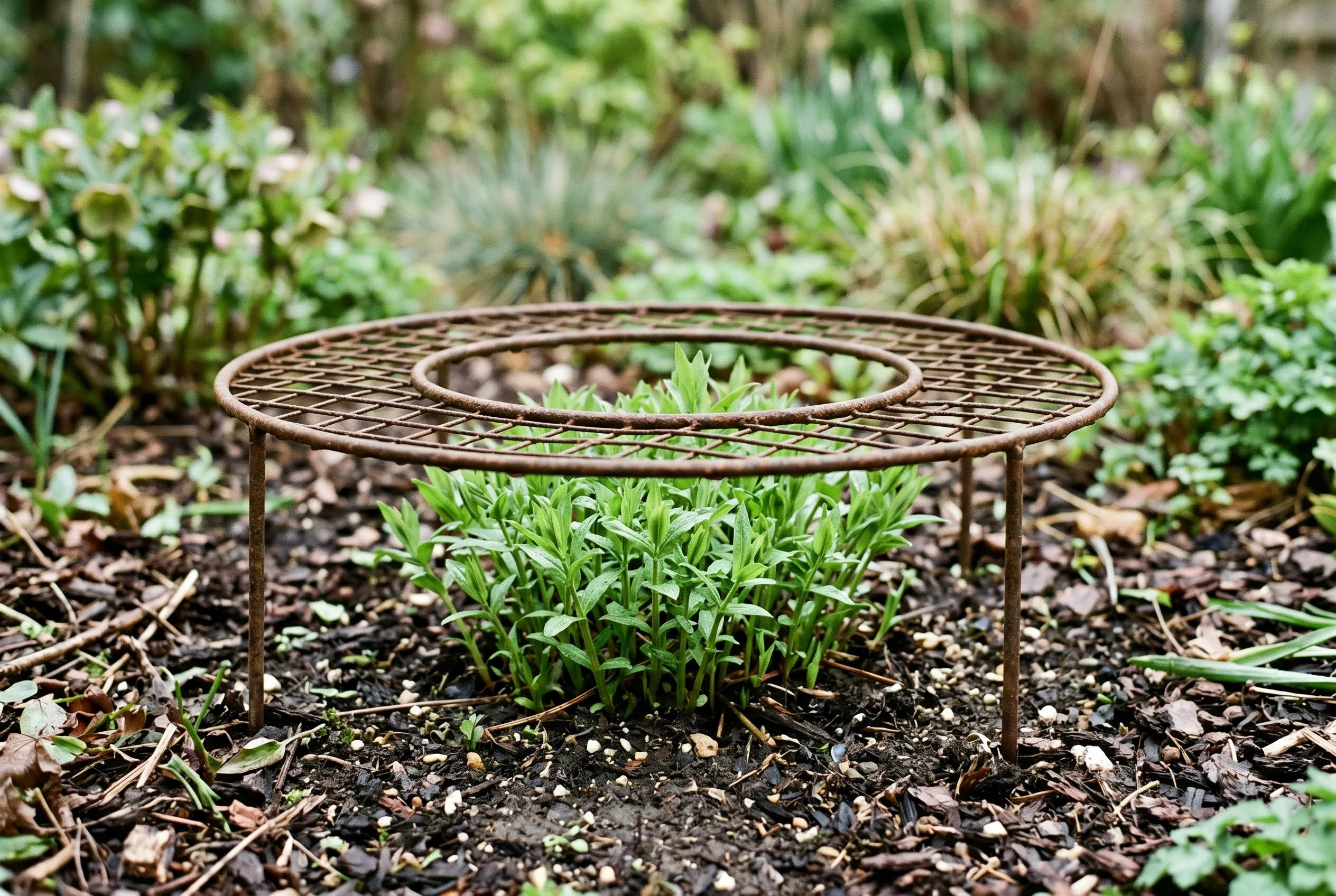 Set grow-through rings early, while shoots are short. Raise the ring in stages so the plant grows up through the grid.
The four main staking methods
Different plants need different support. The shape of the plant, clump or spike, decides which method works.
| Method | Best for | How it works | Cost | Visibility when grown |
|---|---|---|---|---|
| Grow-through ring | Peonies, asters, heleniums | Plant grows up through a gridded ring | Moderate | Hidden |
| Link stakes | Variable clumps, irregular gaps | Interlocking stakes form a custom cage | Moderate | Mostly hidden |
| Single cane and tie | Delphiniums, lupins, tall spikes | Each spike tied to its own cane | Low | Cane partly visible |
| Pea sticks (brushwood) | Airy plants, hardy geraniums | Twiggy network plants grow through | Free | Fully hidden |
The grow-through ring is the gold standard for clump-forming perennials because the support sits inside the plant and disappears. Link stakes are the most flexible, since you build the cage to fit the clump and add sections as needed. Single canes are the only thing that holds heavy vertical spikes, as a ring cannot stop a delphinium spike toppling in wind. Pea sticks are the cheapest and most natural, ideal for softer, airier plants. Our guide to the best perennial plants for UK gardens flags which of your plants fall into each group. And if staking has become a chore, veronicastrum delivers the same vertical spires on stems stiff enough to stand unaided.
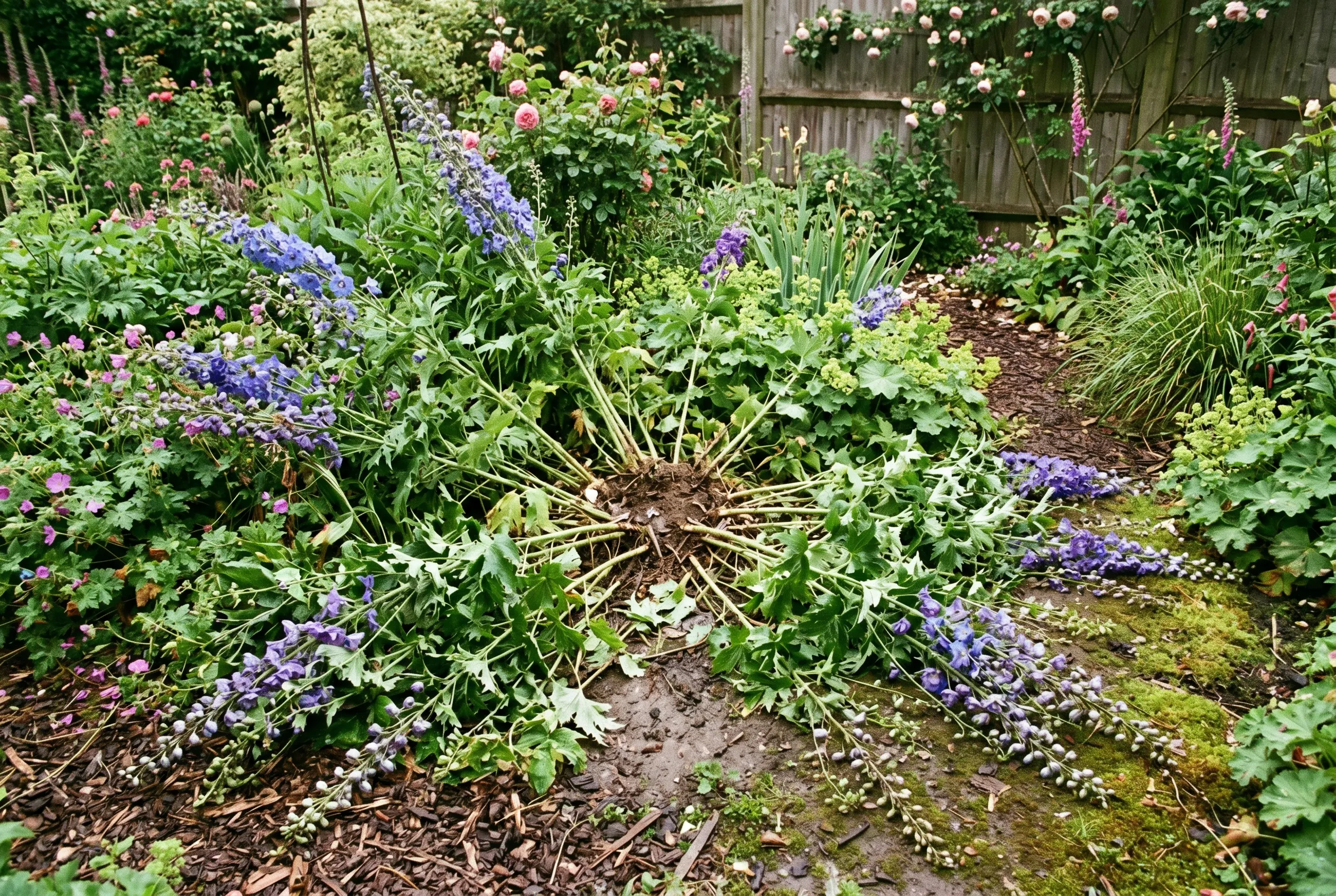 The result of staking too late: an unsupported clump splayed open by rain, with a bare centre and bent stems that will not straighten.
Staking spikes: delphiniums and lupins
Tall flower spikes need their own individual cane, not a ring. A single delphinium spike can reach 1.8m and catch the wind like a sail, and no shared support holds it. Push a sturdy bamboo cane in close to each main spike early, then tie the stem to it at two or three points as it grows, roughly every 30cm.
Use a figure-of-eight tie: loop the soft twine around the cane, cross it over, then loop the stem, so a cushion of twine sits between cane and stem. This stops the stem chafing against the hard cane in wind. Never tie tight, straight loops that strangle the stem as it thickens. Soft jute twine or proper plant ties work; avoid wire or thin string that cuts in. For growing these plants well in the first place, see our guides to growing delphiniums and sweet peas, which need the same vertical support.
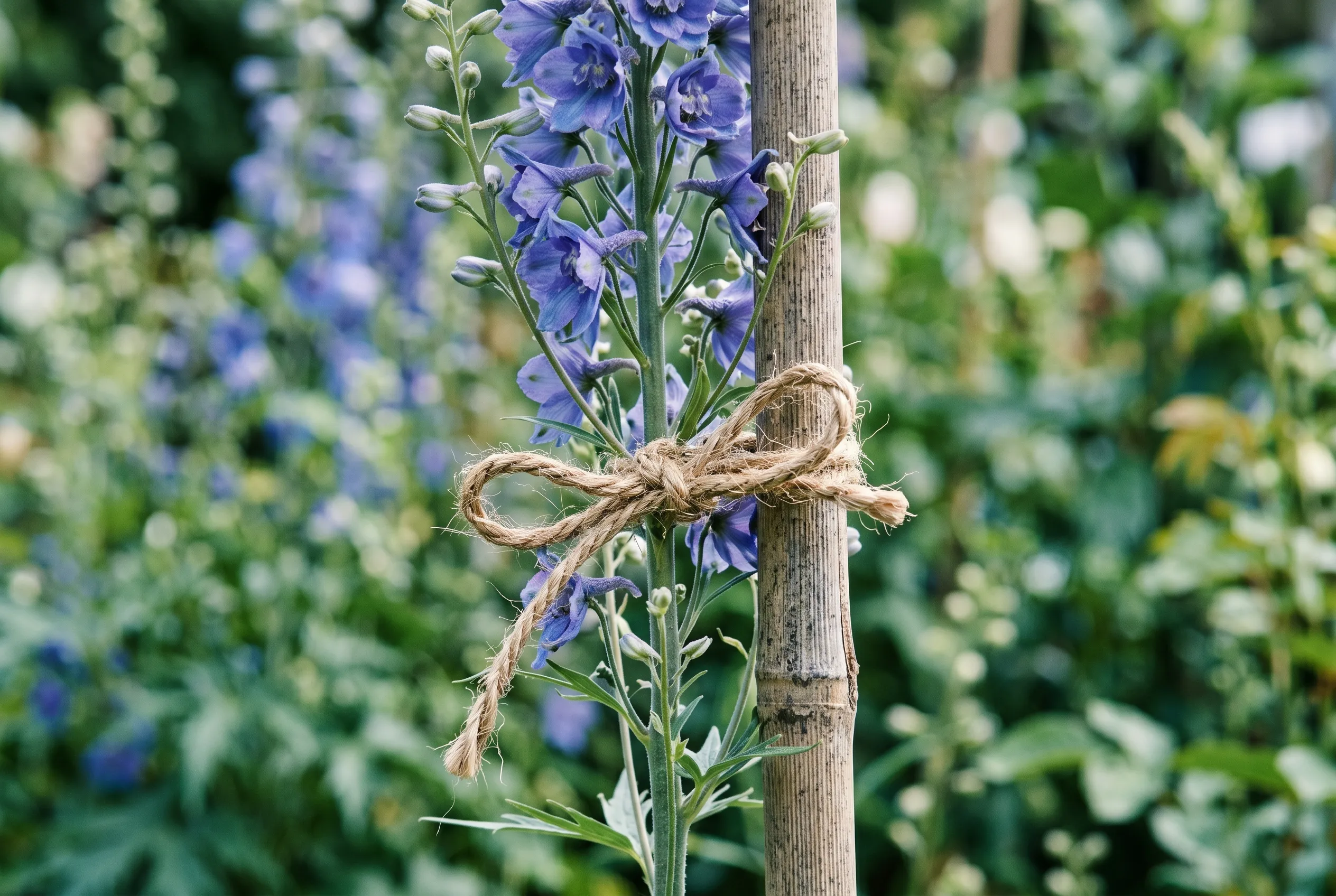 A figure-of-eight tie cushions the stem against the cane. Tie loosely so the stem can thicken without being strangled.
The cheap and natural option: pea sticks
For the lowest cost and the most natural look, use pea sticks, the twiggy prunings of hazel, birch, or any shrub with a branching habit. Push them firmly into the soil among the emerging shoots in spring, angled slightly inward so the tips meet over the centre of the clump. The plant grows up through the twiggy network and is held from within, completely hidden by midsummer.
Pea sticks suit airy, multi-stemmed plants: hardy geraniums, asters, baby’s breath, and similar. Save your own prunings from winter shrub work and the support costs nothing. The trick is height: cut them about 10cm shorter than the plant’s final height so the flowers stand clear above the twigs. Replace them yearly, since they become brittle after a season outdoors.
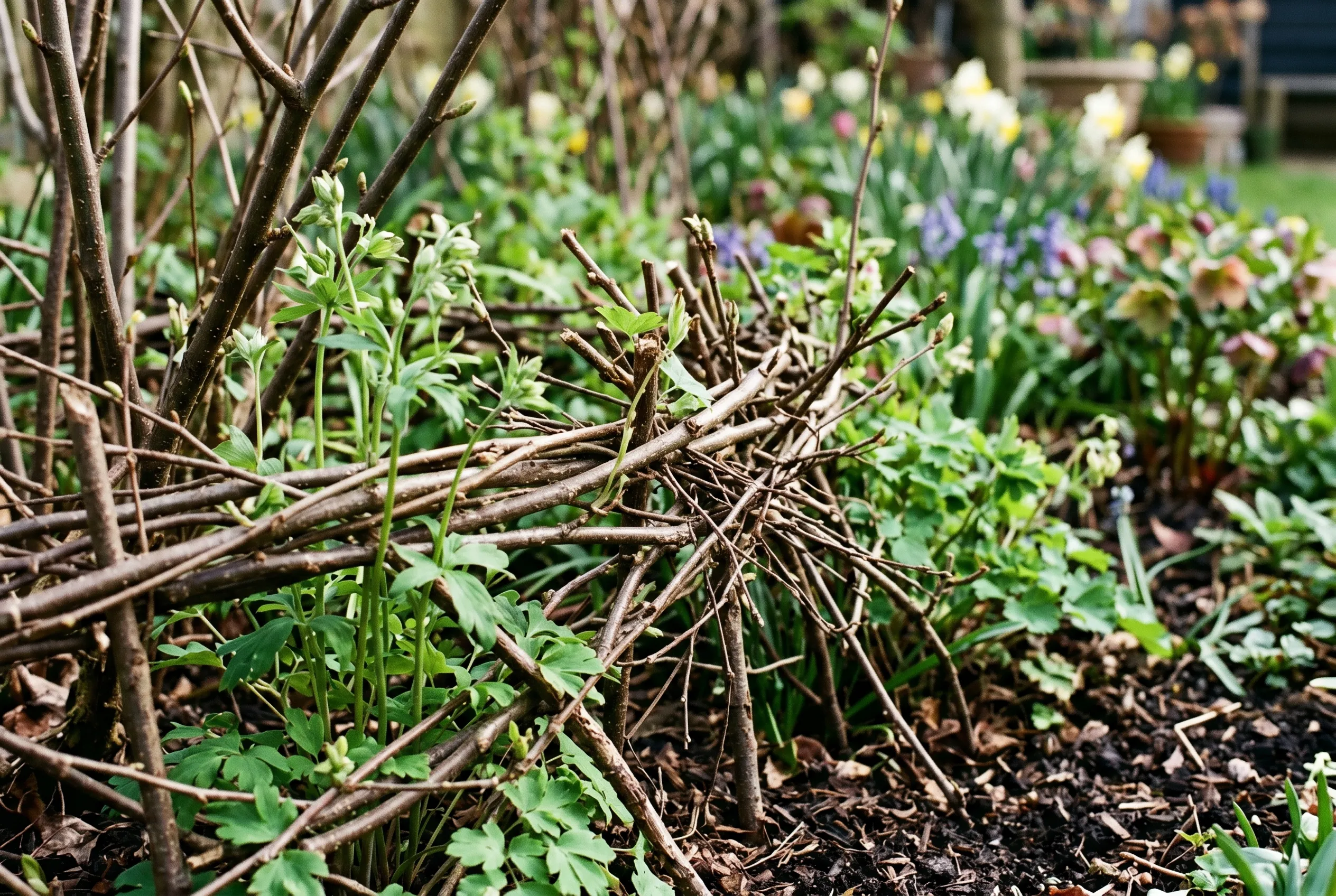 Pea sticks pushed in early give airy perennials a hidden, free support. The plants grow up through the twiggy network.
Which UK perennials need staking
Not every perennial needs support. Knowing which do saves work and keeps the border looking natural. As a rule, the taller, the heavier-flowered, and the softer the growth, the more likely a plant is to flop in a British summer.
The reliable floppers that almost always need support are delphiniums, large-flowered peonies, tall asters, heleniums, lupins, and top-heavy dahlias in exposed spots. Plants in rich, moist soil flop sooner than the same variety on lean ground, because they put on softer, taller growth. Plants in shade also stretch and lean toward the light, so a delphinium in a shady corner needs support more than one in full sun.
Common staking mistakes to avoid
The same few errors spoil more borders than bad weather does.
- Staking too late. The biggest mistake by far. Support set after a flop only ties up a ruined shape. Stake at 20-30cm in spring.
- Support too short. A ring at half the plant’s height lets the top flop over the rim. Aim for two-thirds.
- Tying too tight. Tight loops strangle thickening stems and snap them in wind. Always tie loosely in a figure of eight.
- One ring for a spike plant. Delphiniums and lupins need individual canes. A shared ring cannot hold heavy vertical spikes.
- Ugly visible canes. A forest of bare canes looks worse than a flop. Use grow-through supports the foliage can hide, or place canes discreetly.
Pair early staking with the Chelsea Chop on suitable plants, which reduces height and the need for support on asters, sedums, and heleniums. The Royal Horticultural Society’s advice on supporting plants sets out the same spring-timing principle.
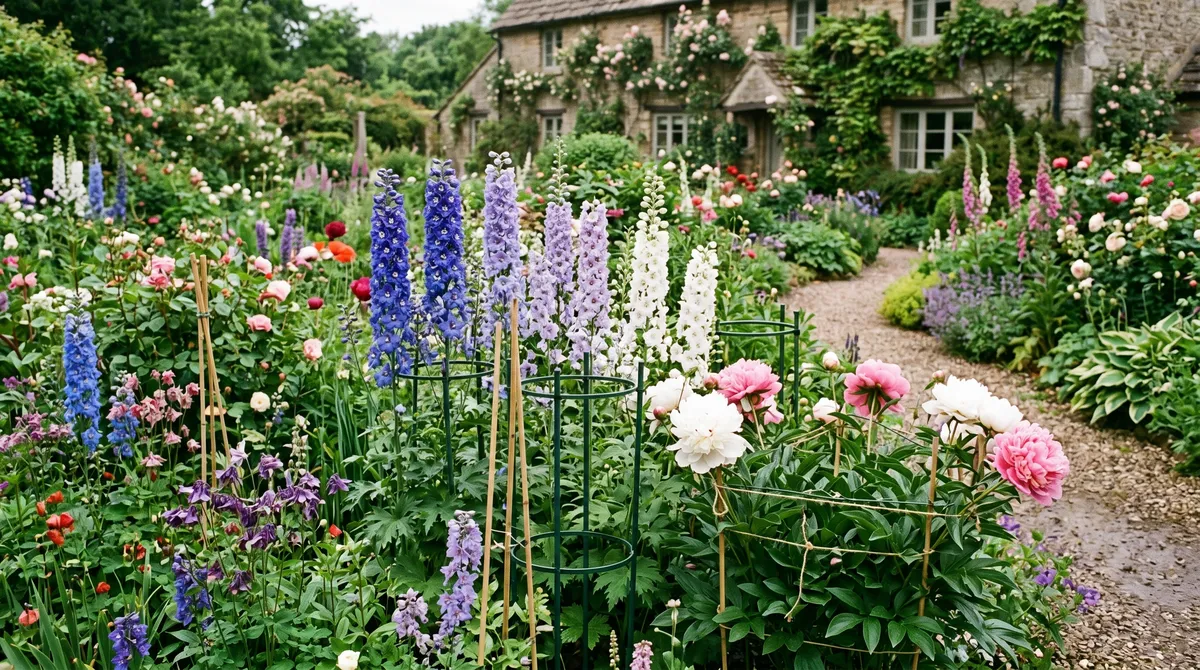
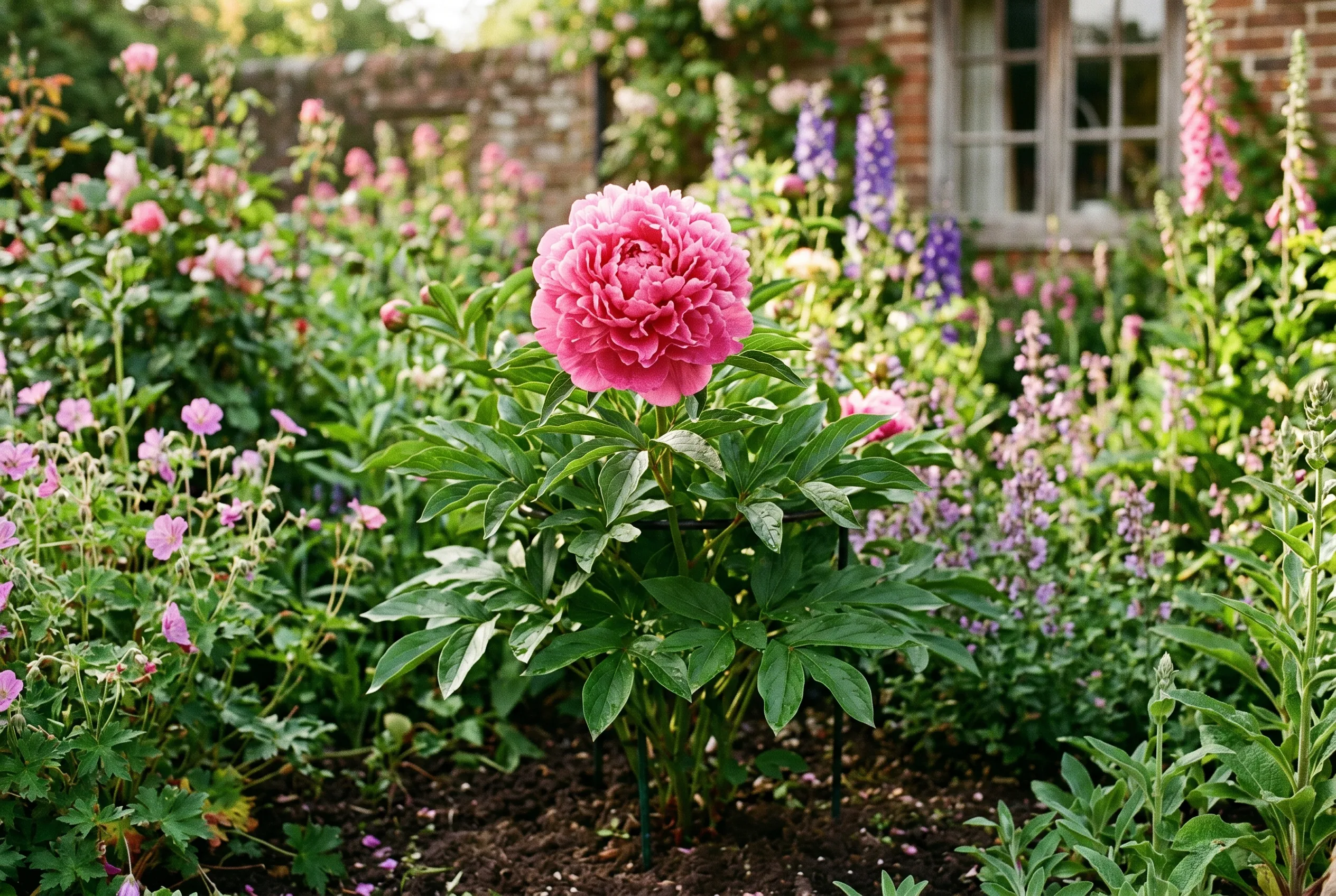 The goal: a heavy peony held perfectly upright with the support completely hidden inside the foliage.
Frequently asked questions
When should you stake tall perennials?
Stake in spring when shoots reach 20-30cm, well before flowering. The plant then grows up through the support and hides it. Staking after a perennial has collapsed never fully restores its shape, so early support is far more effective than a late rescue.
How do you stake perennials without it looking ugly?
Use grow-through rings or link stakes set early. The plant grows up through them and the foliage hides the support by flowering time. Choose green or dark metal supports, set them at two-thirds of final height, and the structure disappears into the planting.
What is the best support for delphiniums?
Individual canes with soft figure-of-eight ties suit delphiniums best. Each tall flower spike needs its own cane, tied at two or three points as it grows. A single ring cannot hold the heavy spikes upright in wind, so stake each stem separately.
Do peonies need staking?
Yes, most large-flowered peonies need support. Their heavy double blooms collapse the stems after rain. Set a grow-through ring or peony hoop over the crown in early spring as the red shoots emerge, so the plant grows up through it.
Can you stake a perennial that has already flopped?
You can prop it up, but it never fully recovers its shape. Splayed stems stay bent and the centre gap remains. Gather the stems gently into a ring or tie them to a cane, then stake earlier next year. Prevention beats any rescue.
What can I use instead of buying plant supports?
Twiggy hazel or birch pea sticks are the cheapest option. Push them in among emerging shoots in spring and the plants grow through the network. Prunings from shrubs and hedges work well and look natural, costing nothing if you save your own.
Our team produces practical UK gardening guidance from source research, contributor records and established horticultural practice. Editorial standards are overseen by Matt W.