Key takeaways
- Sterilising hits 100C and above and kills everything. Pasteurising at 60 to 82C kills pathogens but keeps beneficial microbes
- Oven method: heat soil to 82C core temperature, hold 30 minutes, measured with a meat thermometer
- Microwave small batches at roughly 90 seconds per kilogram of moist soil on full power
- UK solarisation reaches only 45 to 55C in the top 5cm, so it suppresses rather than sterilises
- Steam pasteurising at 70 to 82C kills damping-off fungi while sparing many beneficial bacteria
- Cool soil completely for 24 to 48 hours before sowing, and re-inoculate sterilised soil with fresh compost
There is a real difference between sterilising and pasteurising, and getting it wrong wastes effort. We will compare the oven, steam, microwave, boiling water and solarisation methods, with the temperatures and timings that matter. You will also learn the root cause behind recurring damping-off, and the permanent fix that beats sterilising every batch by hand.
Why sterilise garden soil and compost at all
Soil sterilising solves a short list of specific problems, and it is worth knowing exactly which. The main reason UK gardeners sterilise is damping-off, the disease that fells seedlings at soil level within days of germination. It is caused by soil fungi, mainly Pythium and Rhizoctonia, that thrive in reused or contaminated compost. Heat treatment kills them outright.
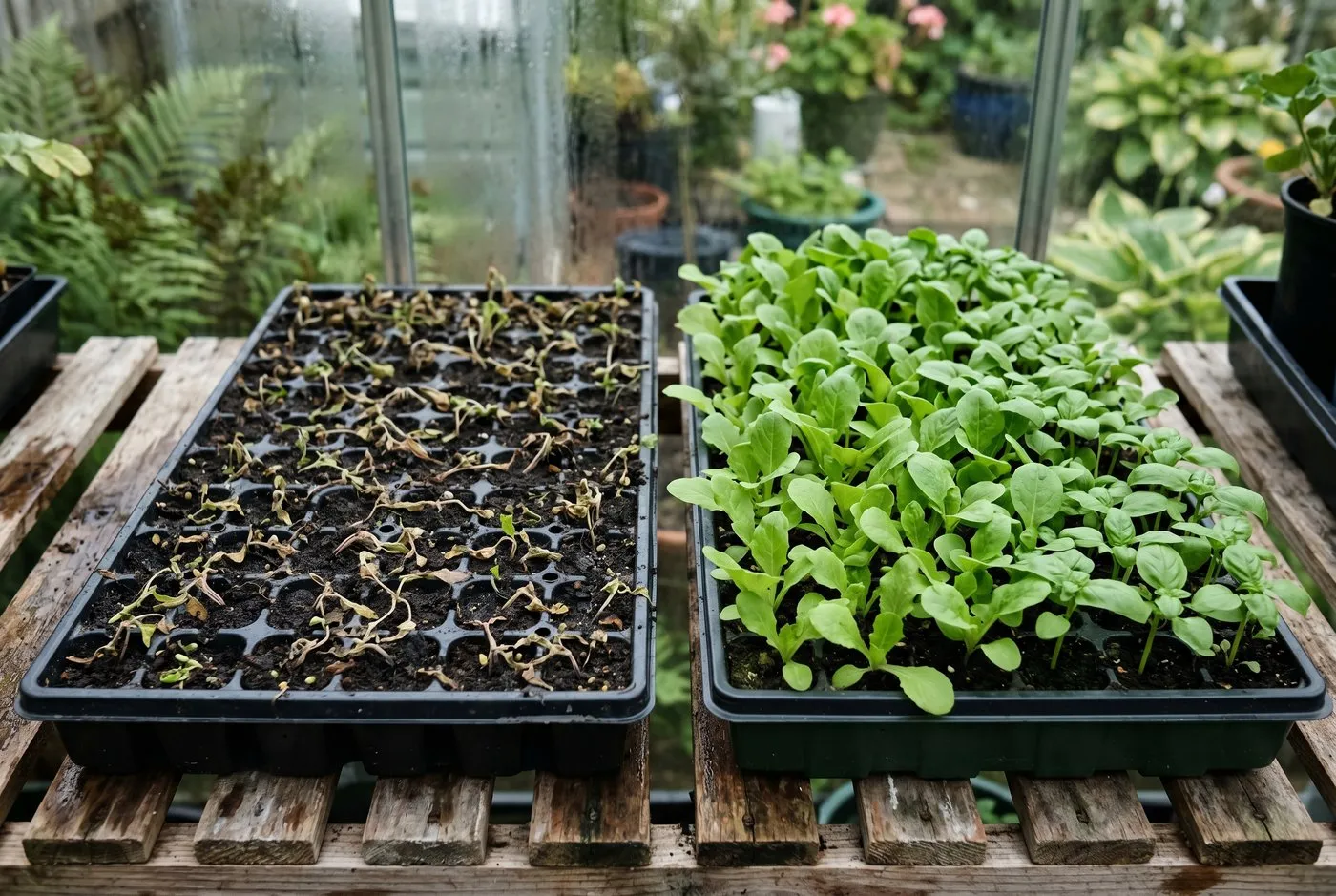 Damping-off on the left: stems pinched and toppled at soil level. The healthy tray on the right was sown into pasteurised compost.
Pasteurise or sterilise: the 60C decision that changes everything
The single most useful idea here is that you usually want to pasteurise, not sterilise. The two words describe different temperatures and different outcomes for your soil biology. Sterilising means heating soil to 100C or above, which kills every living thing including the beneficial bacteria and fungi that protect young roots. Pasteurising means holding the soil at 60 to 82C, hot enough to kill pathogens but cool enough to spare many of the good microbes.
Why does this matter? A fully sterile soil is a blank canvas. Any pathogen that drifts back in finds no competition and colonises fast. A pasteurised soil keeps a living defence layer that crowds out returning disease. For ordinary seed sowing, pasteurising at 82C wins almost every time. Reserve full 100C sterilising for soil you know carries a virus such as tobacco mosaic, or for a bed that has suffered a serious soil-borne disease. The home oven method below targets 82C precisely for this reason.
How the heat actually kills pathogens
| Organism or target | Dies at temperature | Hold time | Notes |
|---|---|---|---|
| Most weed seeds | 60 to 70C | 30 min | A few hard-coated seeds survive to 80C |
| Sciarid and vine weevil larvae | 60 to 65C | 30 min | Eggs need closer to 70C |
| Damping-off fungi (Pythium, Rhizoctonia) | 75 to 82C | 30 min | The key target for seed sowing |
| Most bacterial pathogens | 82 to 95C | 20 min | Some spore-formers survive higher |
| Soil-borne viruses (e.g. tobacco mosaic) | 100C+ | 30 min | The reason full sterilising exists |
The practical takeaway is that 82C held for 30 minutes clears the everyday enemies: weed seeds, larvae and damping-off fungi. You only push to 100C when a virus or a stubborn bacterial disease is in play. Going hotter than needed is not a bonus. Above 90C the soil starts to release manganese and ammonia at plant-toxic levels, and the structure breaks down into a dense, airless mass.
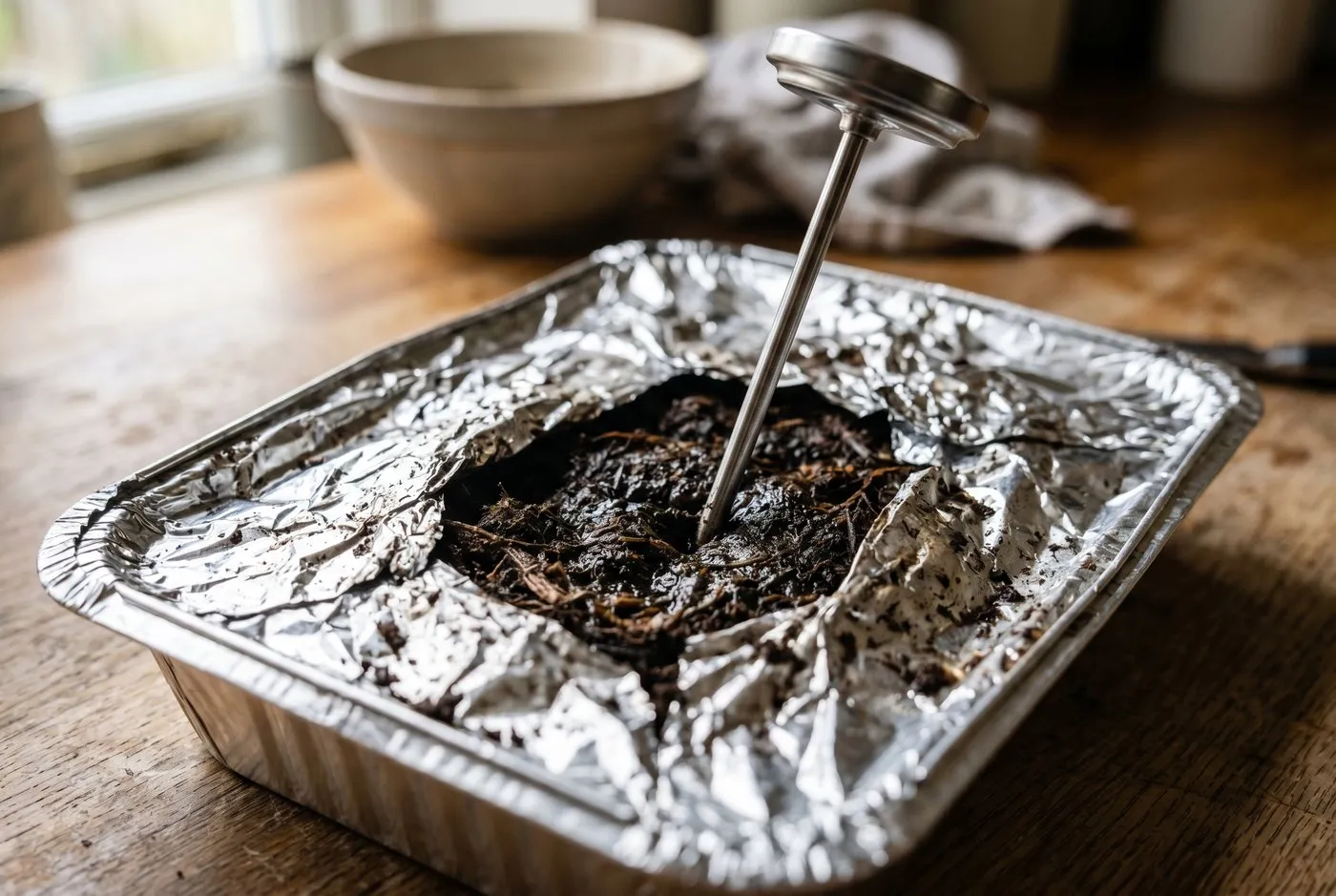 The core temperature, read on a probe pushed into the deepest part of the tray, is the only number that matters.
Oven baking: the gold-standard home method
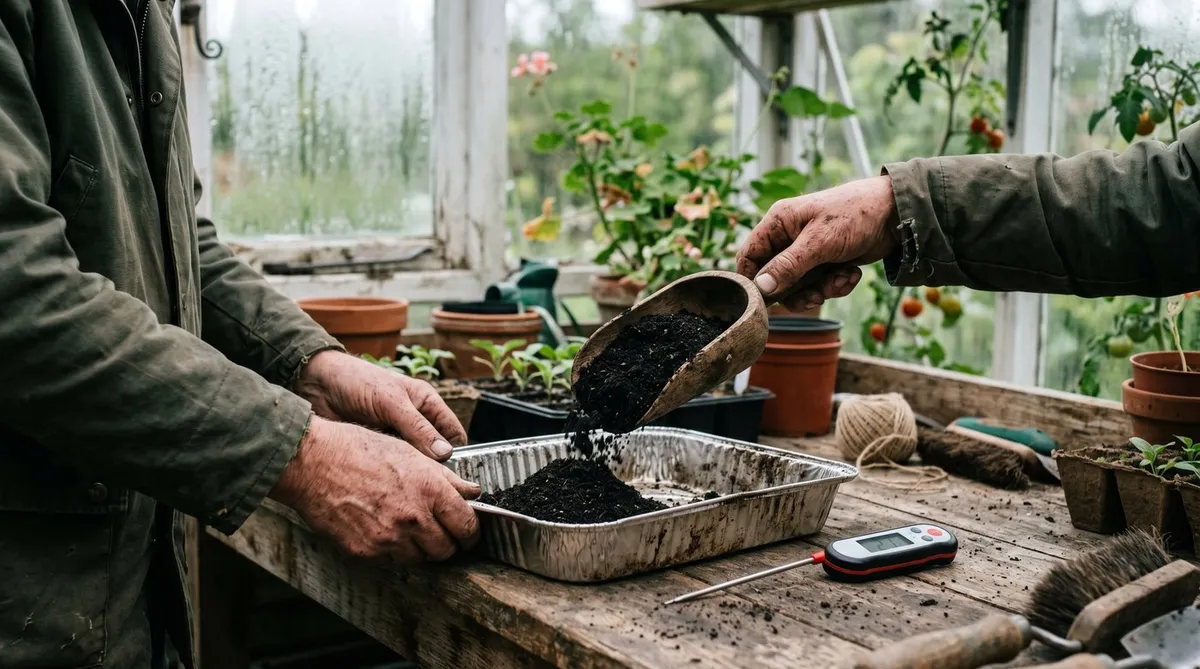
For most UK gardeners the oven is the best tool, because it gives precise, repeatable control of the core temperature. Spread sieved, moist soil 7 to 8cm deep in a foil tray, cover with foil, push a meat thermometer into the centre and set the oven to 90 to 95C. When the core hits 82C, hold it there for 30 minutes. The full step list is in the how-to block at the top of this guide.
Warning: Oven-baking soil smells strongly earthy and slightly sulphurous, and the smell lingers in a kitchen for hours. Open a window, run the extractor fan, and pick a time when nobody is cooking food straight after.
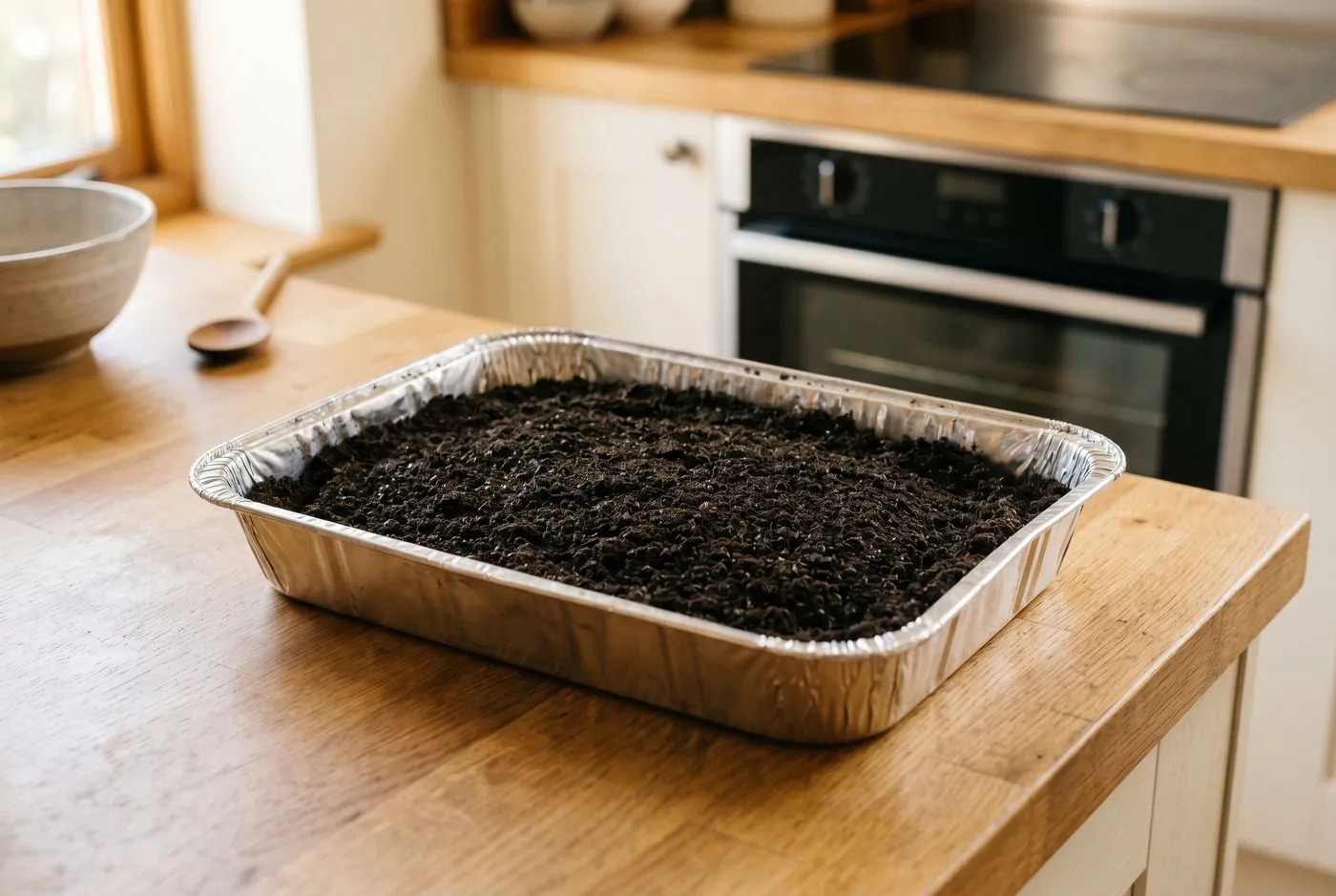 Spread the moist soil no deeper than 8cm. Deeper trays leave a cold core where damping-off fungi survive.
Microwave method for small batches
The microwave is the fastest option for a small quantity, and it suits anyone sterilising just enough for a few modules. Place moist soil in a microwave-safe container, leave the lid loose to vent steam, and run on full power at roughly 90 seconds per kilogram of moist soil. A typical 1kg batch hits pasteurising temperature in around a minute and a half.
The method has firm limits. Do not microwave dry soil, because without moisture it can overheat and even ignite fine organic matter. Never include any metal, including foil or trays with metallic trim. Stir and re-probe between bursts on larger amounts, as microwaves heat unevenly and create hot and cold zones. Aim for a core of 80 to 82C, then let the container stand covered for two minutes so residual heat finishes the job. The microwave is excellent for topping up a single module tray, but tedious for anything above 4 or 5 litres. For that volume, the oven wins.
Steam pasteurising: best for keeping good microbes
The home version is simple. Put 5cm of water in a large pan, sit a steamer basket or colander lined with cloth above it, add the moist soil, and steam with the lid on for 30 minutes once steam is flowing freely. Check the core with a probe. A pressure cooker works too: 15 minutes at full pressure pasteurises a small batch thoroughly. Steam suits gardeners who reuse their own homemade compost and want to keep its living edge. It also pairs well with our diy potting compost recipe, where you steam the loam component and blend it back with fresh, unsterilised leaf mould and grit.
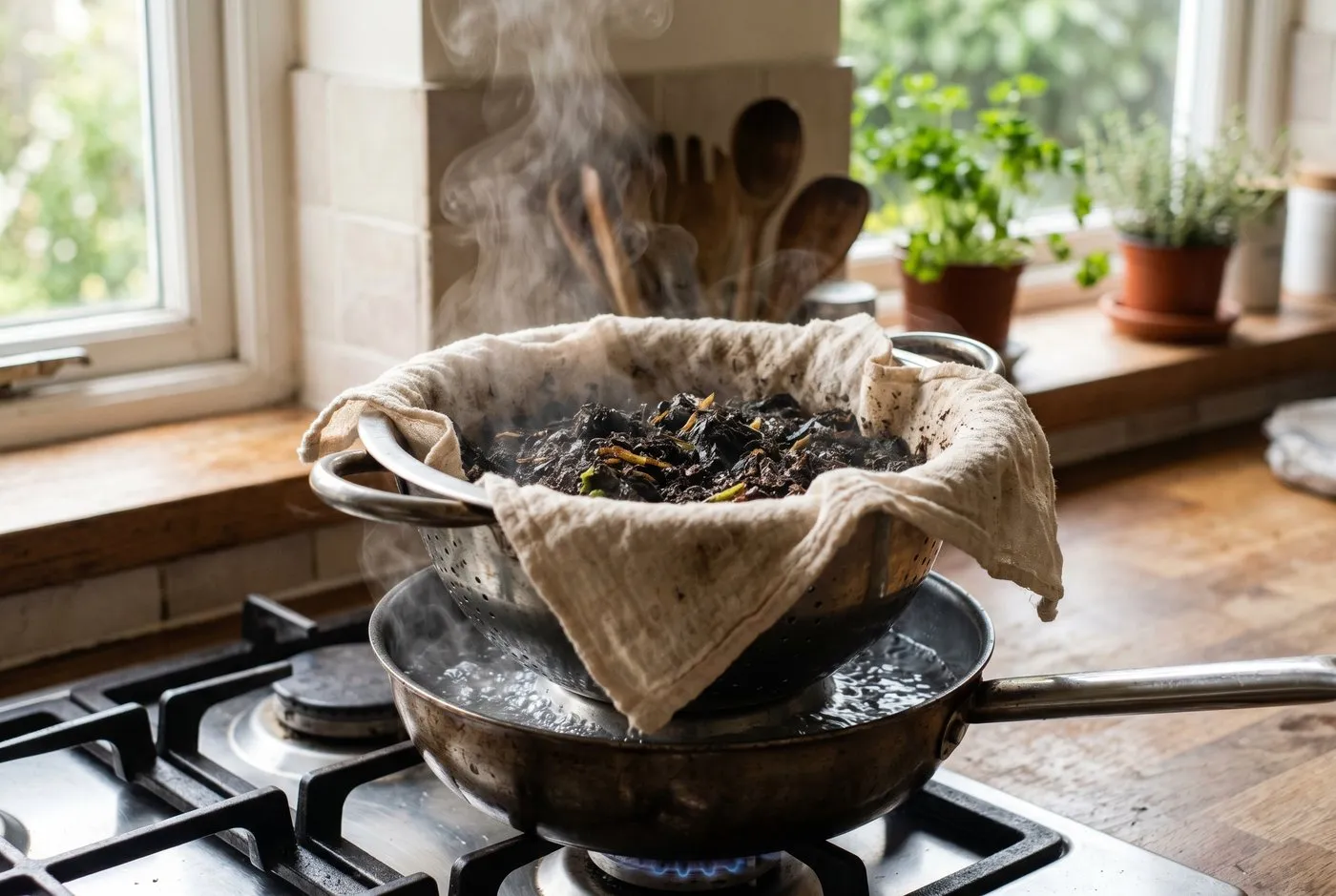 Steam holds soil in the 70 to 82C band that kills pathogens while sparing the most beneficial microbes.
Boiling water drench and solarisation: the outdoor options
Two methods treat soil where it sits, with mixed results in the UK. The boiling water drench is the blunt instrument: pour freshly boiled water over a small area or container of soil until it is saturated and steaming. It pasteurises the top few centimetres and kills surface weed seeds and seedlings. It is handy for a single raised-bed patch or a tray, but the heat dissipates within minutes and barely reaches below 5cm.
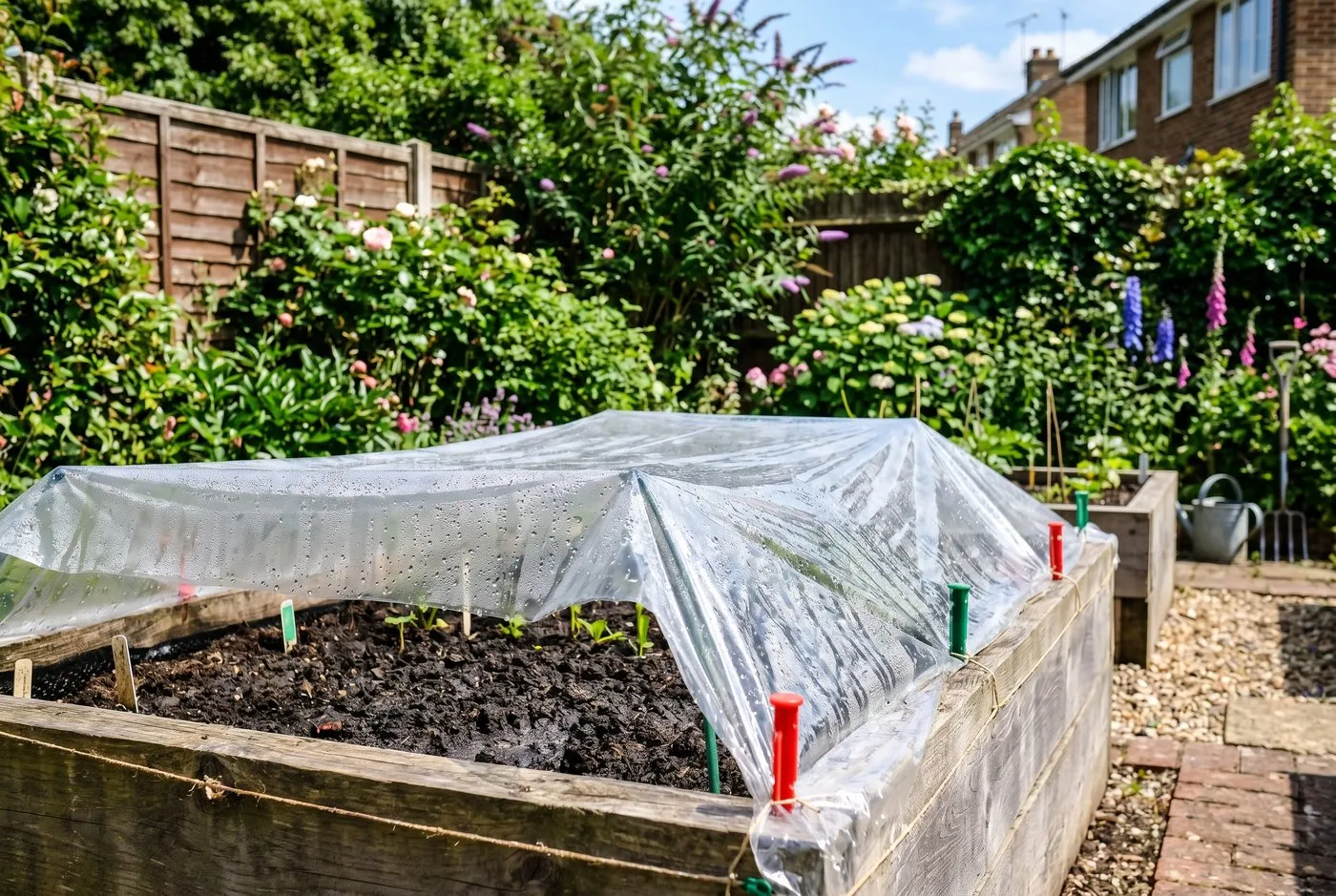 Clear polythene traps heat, but UK summers only push the top 5cm to 45 to 55C, so solarisation suppresses rather than sterilises.
Method hierarchy: which to use and when
| Method | Temp / Time | What it kills | Keeps good microbes? | Effort | Role |
|---|---|---|---|---|---|
| Oven baking | 82C core, 30 min | Weed seeds, fungi, larvae, most bacteria | Partly | Medium | Primary (best home control) |
| Steam / pressure cooker | 70-82C, 30 min | Weed seeds, fungi, larvae | Yes, best retention | Medium | Primary (microbe-friendly) |
| Microwave | 80-82C, 90 sec/kg | Weed seeds, fungi, larvae | Partly | Low | Primary for small batches |
| Boiling water drench | ~100C surface only | Surface weeds and fungi | No (surface only) | Low | Supplementary (spot use) |
| Solarisation (UK) | 45-55C, 4-6 weeks | Some surface weed seeds | Yes | Very low | Supplementary (suppression only) |
The gold-standard method is oven baking to 82C core for 30 minutes. It gives the most reliable, repeatable kill of the common problems while still sparing some beneficial life, and the only kit you need is a foil tray and a 5 GBP thermometer. Steam runs a close second and wins outright if keeping the soil biology alive is your priority. Solarisation is the weakest option in our climate and should never be your only line of defence.
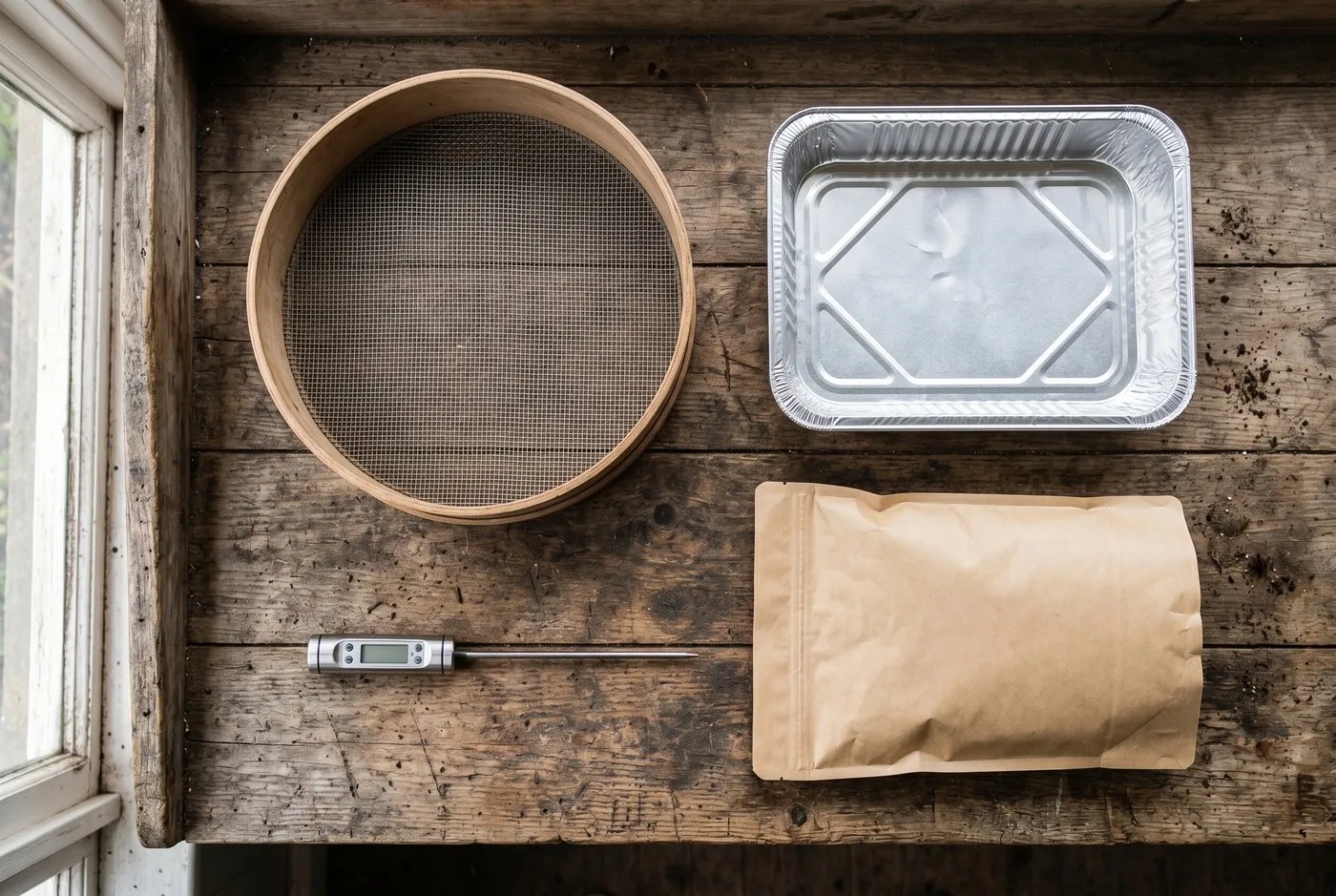 The full home kit: a sieve, a foil tray, a meat thermometer and a low oven. No specialist equipment needed.
Cooling and re-inoculating before you sow
Sterilising is only half the job. How you cool and refill the soil decides whether the benefit lasts. Let the treated soil cool completely for 24 to 48 hours before sowing. Soil above 30C cooks tender roots and seedling stems, so patience here protects everything you just worked for. Keep the tray covered while it cools so airborne spores do not settle straight back onto sterile soil.
Then re-inoculate. A fully sterilised soil has no living defence, and pathogens recolonise an empty soil fast. Mix in around 10 percent by volume of fresh, healthy garden compost or worm cast once the soil is below 30C. Those living microbes reintroduce the beneficial bacteria and fungi that crowd out returning disease. This step is exactly why we favour pasteurising over full sterilising: pasteurised soil keeps more of its own biology and needs less topping up. Once cooled and inoculated, the soil is ready for sowing or for hardening off your seedlings as they grow on.
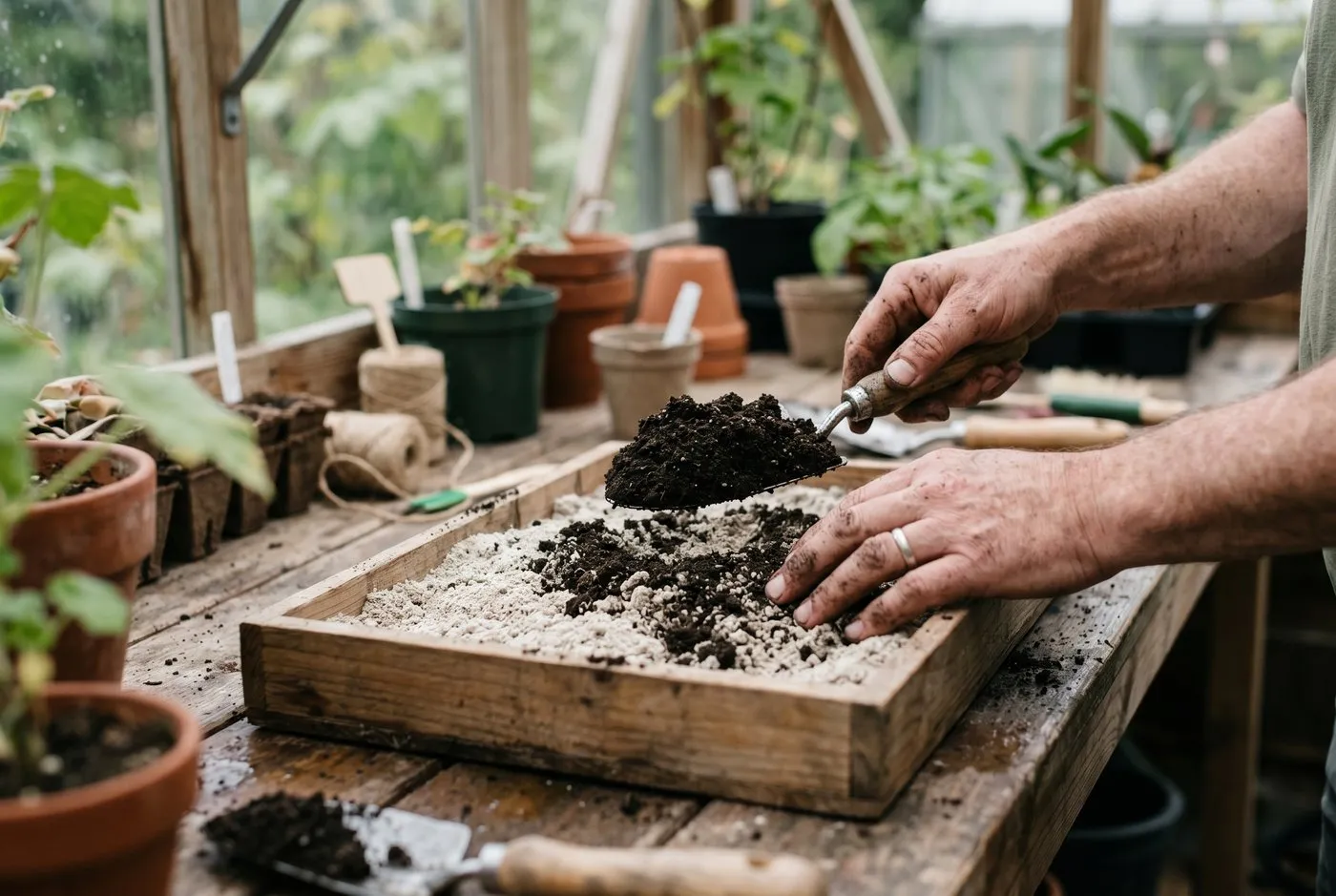 Once the soil drops below 30C, mix in roughly 10 percent fresh compost to rebuild a living microbe layer before sowing.
The real reason damping-off keeps coming back
If damping-off and sciarid flies recur every spring, the underlying cause is almost always the same: reusing old peat-based compost or contaminated homemade compost. Spent compost from last year’s pots holds resting fungal spores, fungus gnat eggs and a soggy, airless structure that favours Pythium. Each time you reuse it you re-seed the problem. Sterilising every batch by hand treats the symptom, not the cause.
The permanent prevention is hygiene at source. Sow into fresh, sterile seed compost rather than reused multipurpose. Wash pots and trays in hot soapy water between sowings to clear clinging spores. Use clean rainwater butts that are not full of decaying leaves, and avoid overwatering, which is the condition damping-off needs most. If sciarid flies are the recurring pest, a drench of beneficial nematodes targets the larvae in the compost directly. Get the hygiene right and you rarely need to sterilise at all.
Gardener’s tip: Keep one bag of fresh seed compost sealed and dry, used only for sowing. Treat your reused compost as soil improver for established beds, never for seeds. That one habit prevents most damping-off without an oven in sight.
When not to bother sterilising at all
Sterilising is not always worth the smell and the effort, and knowing when to skip it saves time. Fresh, sealed bagged compost is already clean. Sterilising it kills good microbes for no benefit, so use it straight from the bag. If your seedlings keep failing and you have a few pounds spare, buying fresh seed compost is often quicker and more reliable than baking trays of old soil.
Skip sterilising for established beds too. You cannot practically treat a whole border, and the soil food web there is doing valuable work. For weed control in a bed, mulching and hand-weeding beat any heat treatment. Reserve sterilising for the specific case it suits: small batches of reused or homemade compost destined for seed trays and modules, where damping-off has bitten before. Homemade leaf mould is another product you should never sterilise, as our leaf mould guide explains: its quiet fungal life is the whole point of it.
Common mistakes to avoid
Undercooking the core temperature
Overheating past 90C
Going too hot is as bad as too cold. Above 90C the soil releases manganese, ammonia and soluble salts at levels that poison young roots, and the structure collapses into a dense, airless block. Seedlings sown into overcooked soil yellow and stall. Keep the oven at 90 to 95C and never let the core exceed 90C. Hotter is not safer, it is worse.
Sowing into warm or non-inoculated soil
Two finishing errors undo good sterilising. Sowing while the soil is still above 30C cooks roots and stems, so always cool for 24 to 48 hours first. And sowing into bare sterile soil invites fast recolonisation by whatever pathogen drifts in. Mix in 10 percent fresh compost once cool, so a living microbe layer is in place before any seed germinates. These two steps protect the whole batch. Healthy soil also reduces other root problems, including some causes of root-bound seedlings.
Frequently asked questions
What temperature kills weed seeds and pathogens in soil?
Most weed seeds and fungi die at 60 to 82C held for 30 minutes. Damping-off fungi like Pythium and Rhizoctonia die around 82C. Bacterial and viral pathogens need 100C and above to be reliably killed. Soil-borne viruses such as tobacco mosaic survive pasteurising, so use 100C if a virus is suspected.
What is the difference between sterilising and pasteurising soil?
Sterilising reaches 100C and kills every living thing in the soil. Pasteurising stays at 60 to 82C and kills pathogens while sparing many beneficial microbes. For seed sowing, pasteurising is usually better because it leaves a partly living soil. Full sterilisation is for serious disease problems where nothing should survive.
Can I sterilise compost in the oven?
Yes, bake moist compost to 82C core temperature and hold for 30 minutes. Spread it 7 to 8cm deep in a foil tray, cover with foil and use a meat thermometer pushed into the centre. Set the oven to 90 to 95C, not higher, to avoid scorching. Expect a strong earthy smell during baking, so ventilate the kitchen.
Does soil solarisation work in the UK?
Solarisation only partly works in the cool UK climate. Clear polythene over moist soil for 4 to 6 weeks in high summer reaches just 45 to 55C in the top 5cm. That suppresses weed seeds and some fungi near the surface. It rarely sterilises, and pathogens deeper than 10cm usually survive. Treat it as a suppression method, not a cure.
Do I need to sterilise bought bagged compost?
No, fresh sealed bagged compost is already clean and needs no treatment. Sterilising adds nothing and can waste good microbes. Only sterilise garden soil, reused compost, or homemade compost that may carry weed seeds or disease. If your seedlings keep failing, switching to fresh bagged seed compost is often easier than sterilising.
How do I re-inoculate sterilised soil with good microbes?
Mix in a small amount of fresh garden compost or worm cast after the soil cools. Add roughly 10 percent by volume of mature, healthy compost once the soil is below 30C. The living compost reintroduces beneficial bacteria and fungi that outcompete any returning pathogens. Wait 24 to 48 hours before sowing so the soil settles and biology starts to recover.
Sterilising soil is a precise job, not a guess: heat moist soil to 82C, hold 30 minutes, cool, then re-inoculate. Get the hygiene right at source and you will rarely need to do it at all. For more on keeping young plants disease-free under cover, read our guide to organic greenhouse pest control, and browse the rest of our how-to guides for seed-sowing season. Authoritative advice on seed hygiene is also available from Garden Organic and the RHS.
Our team produces practical UK gardening guidance from source research, contributor records and established horticultural practice. Editorial standards are overseen by Matt W.