Key takeaways
- Stripes are an optical effect: light grass leans away from you, dark grass leans toward you
- A roller costs £40 to £120, but a DIY striking board costs £8 to £15 in timber
- Cut at 25-40mm and mow weekly in growing season for the sharpest contrast
- Cylinder mowers stripe best, hover mowers worst, rotary mowers sit in the middle
- A drag mat made from a rubber doormat and rope can be built in 20 minutes
- Always mow a header strip at each end first, then run straight lines down the lawn
How lawn stripes actually work
Lawn stripes are an optical illusion, not a difference in cut height. Every blade in a stripe is cut to the same length. What changes is the way each blade leans.
When you push a mower, the deck and any weight behind it press the grass over in the direction you walk. Grass bent away from your eye shows you the flat back of each blade. That reflects more light, so the row looks pale and silvery. Grass bent toward your eye shows you the cut tips and the shaded base. That absorbs more light, so the row looks dark green.
Walk up the lawn, the grass leans up and looks light. Walk back down, the grass leans down and looks dark. Alternating those passes gives you the classic light-dark-light banding. The same patch of lawn can look pale from one end and dark from the other. Stand at the far end and the colours swap.
This matters because it tells you what you are really trying to do. You are not cutting a pattern. You are bending grass in straight, consistent rows. Anything that flattens the grass evenly will stripe a lawn, roller or not.
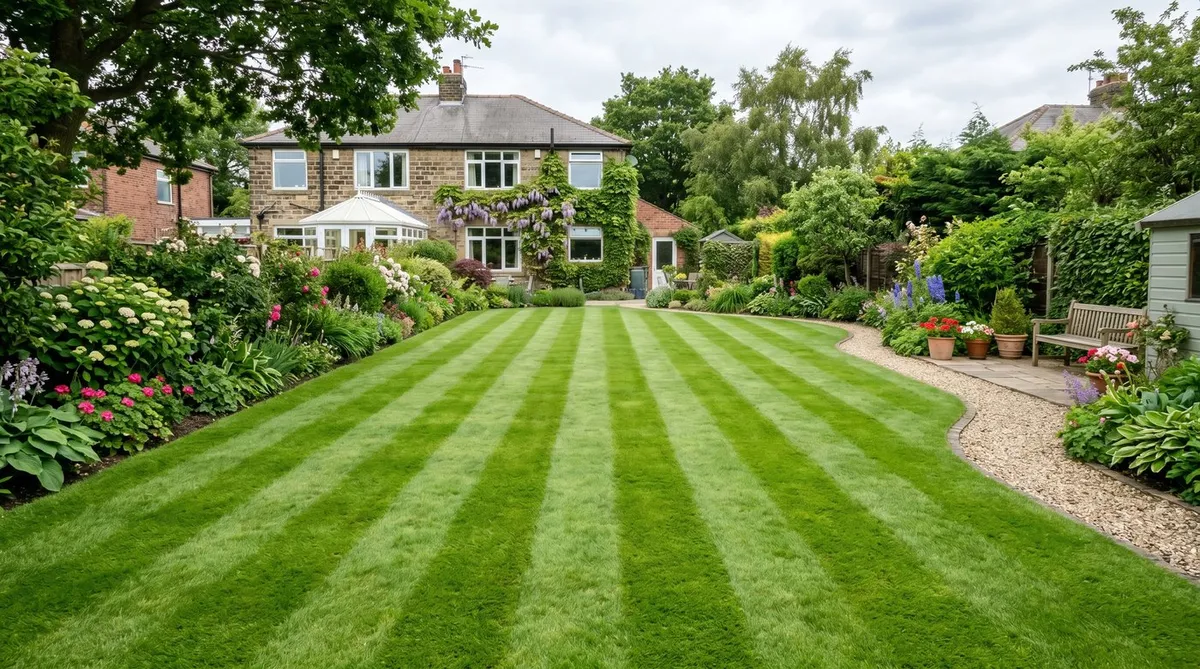
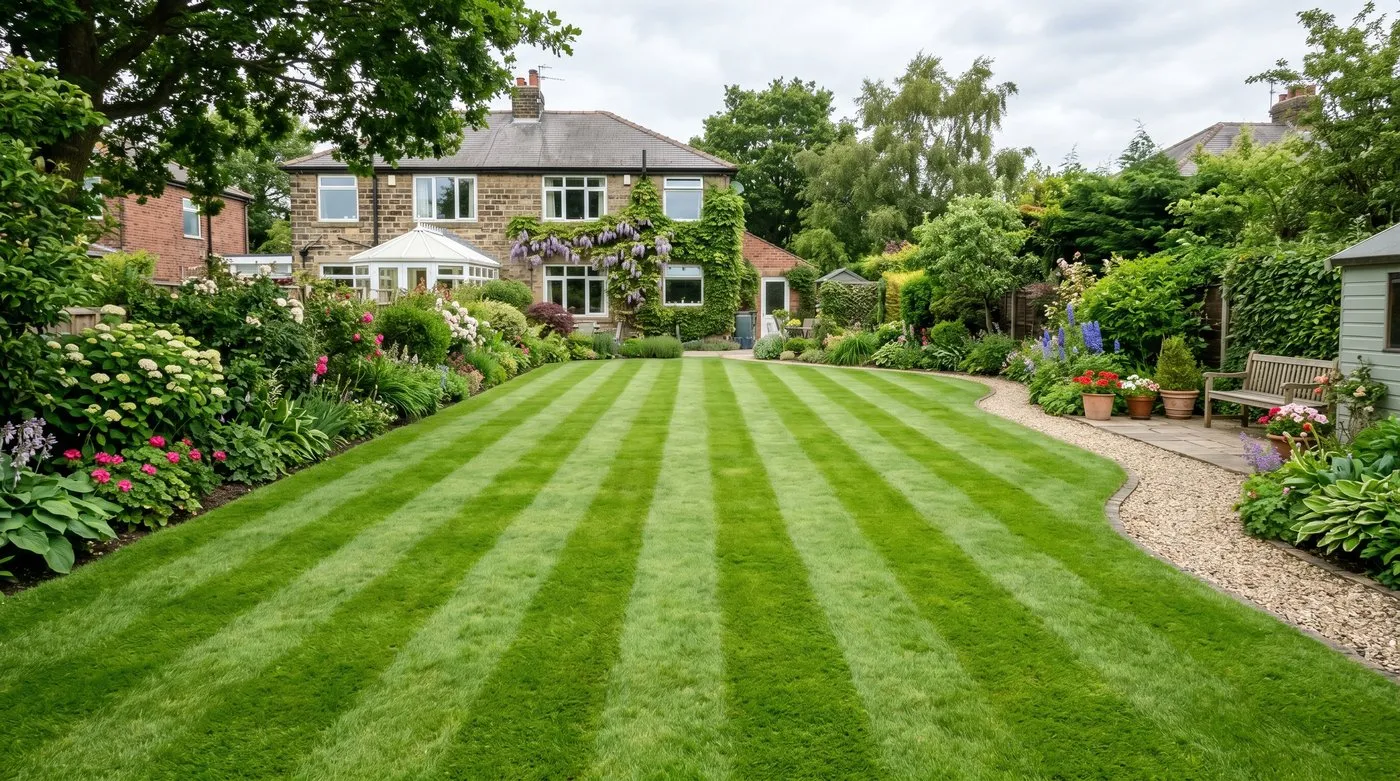 A rollerless rotary mower fitted with a homemade striking board produced these bands on a West Yorkshire suburban lawn. The contrast comes from light, not cut height.
Gardener’s tip: Check your stripes on a bright, slightly overcast day. Flat, even light shows the lean best. Harsh midday sun in July washes out the contrast and makes good stripes look weak.
What the roller on a mower actually does
A rear roller does one job: it presses the grass flat in the direction of travel. That is the whole reason striping mowers carry one.
The roller sits behind the cutting blades. As the mower moves forward, the cylinder rolls over the freshly cut grass and pushes every blade the same way. A wide, heavy roller gives a firm, even press. That is why cylinder mowers with full-width rear rollers leave the crispest stripes of any machine.
A roller also smooths the surface and gives a clean finish at the lawn edge. On a striping mower it doubles as the height-adjustment mechanism, riding over the turf and setting how low the blades sit.
But here is the point most people miss. The roller is not magic. It is just a way of flattening grass in a straight line. A plank of wood dragged behind the mower flattens grass too. So does a stiff doormat with a brick on it. The roller is convenient, not essential. Once you understand that, a rollerless mower stops being a problem and becomes a starting point.
Can you stripe a lawn without a roller? Yes
You have three practical routes. Build a striking board that drags behind your mower. Build or buy a drag mat. Or buy a hover or rotary mower with a clip-on striping kit. All three bend the grass the same way a roller does.
The lesson is simple. The roller is the easy way, not the only way. A homemade striker gets you most of the look for a tenth of the cost.
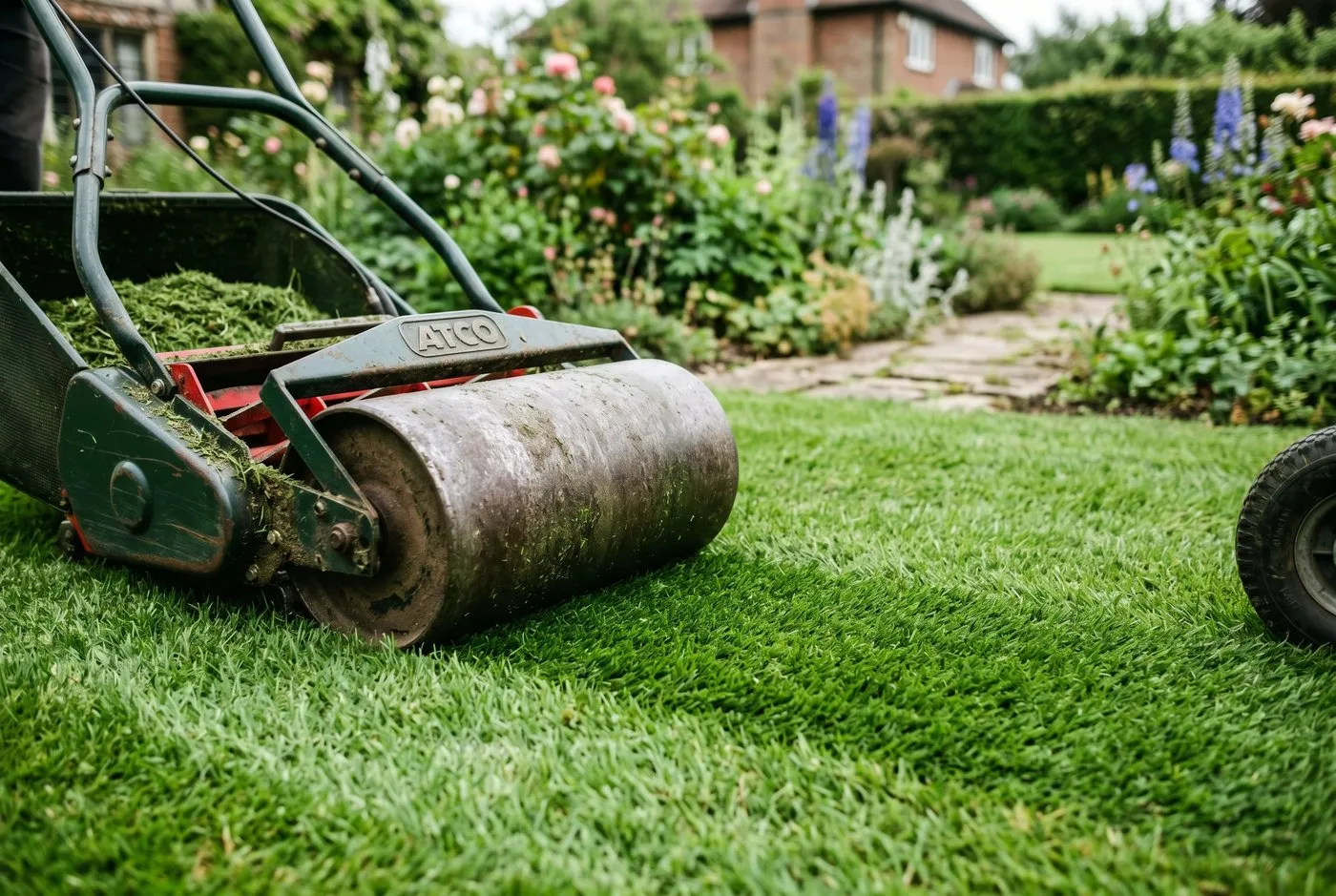 A rear roller on a cylinder mower flattens each row in one direction. On this Aberdeenshire lawn the band behind the roller already shows the pale lean a striker board copies.
Gardener’s tip: Do not stripe a lawn you have just sown or one in drought stress. Pressing dry, brittle grass snaps blades and leaves bruising rather than stripes. Wait until the turf is green and growing.
How to build a striking board or drag mat
A striking board is a weighted bar dragged behind the mower to bend the grass flat. You can build one in 20 minutes from timber or guttering.
The simplest version is a length of 90mm plastic guttering, cut to your mower’s deck width, capped at both ends, and part-filled with dry sand for weight. Drill two holes near the top, run a rope through, and tie it to the mower handle so it drags along the ground behind the deck. Total cost in 2025: around £9 for the guttering and a bag of sand you probably already have.
A timber version works just as well. Take a length of 75mm by 25mm planed softwood, the same width as your mower. Screw a smaller batten on top for stiffness. Add two eye bolts and a rope. Cost is £8 to £15 depending on the timber.
The drag mat is even easier. Take a heavy rubber-backed doormat or a section of horse stable mat, around 60cm by 90cm. Attach a rope to one end and clip it to the mower. The mat slides over the cut grass and presses it down. A stable mat offcut costs £15 to £30. A rubber doormat from a DIY store costs £8 to £12.
| Method | Materials | Cost (2025) | Build time | Stripe strength |
|---|---|---|---|---|
| Guttering striking board | 90mm gutter, sand, rope, end caps | £8 to £12 | 20 minutes | Strong |
| Timber striking board | Planed softwood, eye bolts, rope | £10 to £15 | 30 minutes | Strong |
| Rubber doormat drag mat | Heavy rubber-backed mat, rope | £8 to £12 | 10 minutes | Moderate |
| Stable mat drag mat | Rubber stable mat offcut, rope | £15 to £30 | 15 minutes | Strong |
| Shop-bought lawn striper | Bolt-on roller kit for your mower | £30 to £60 | Fit only | Very strong |
The trick with any of these is the rope length. Too short and the striker lifts off the ground over bumps. Too long and it wanders sideways. Aim for the striker to sit flat about 20cm to 30cm behind the rear of the mower deck. Adjust the weight until it presses firmly without dragging the mower to a halt.
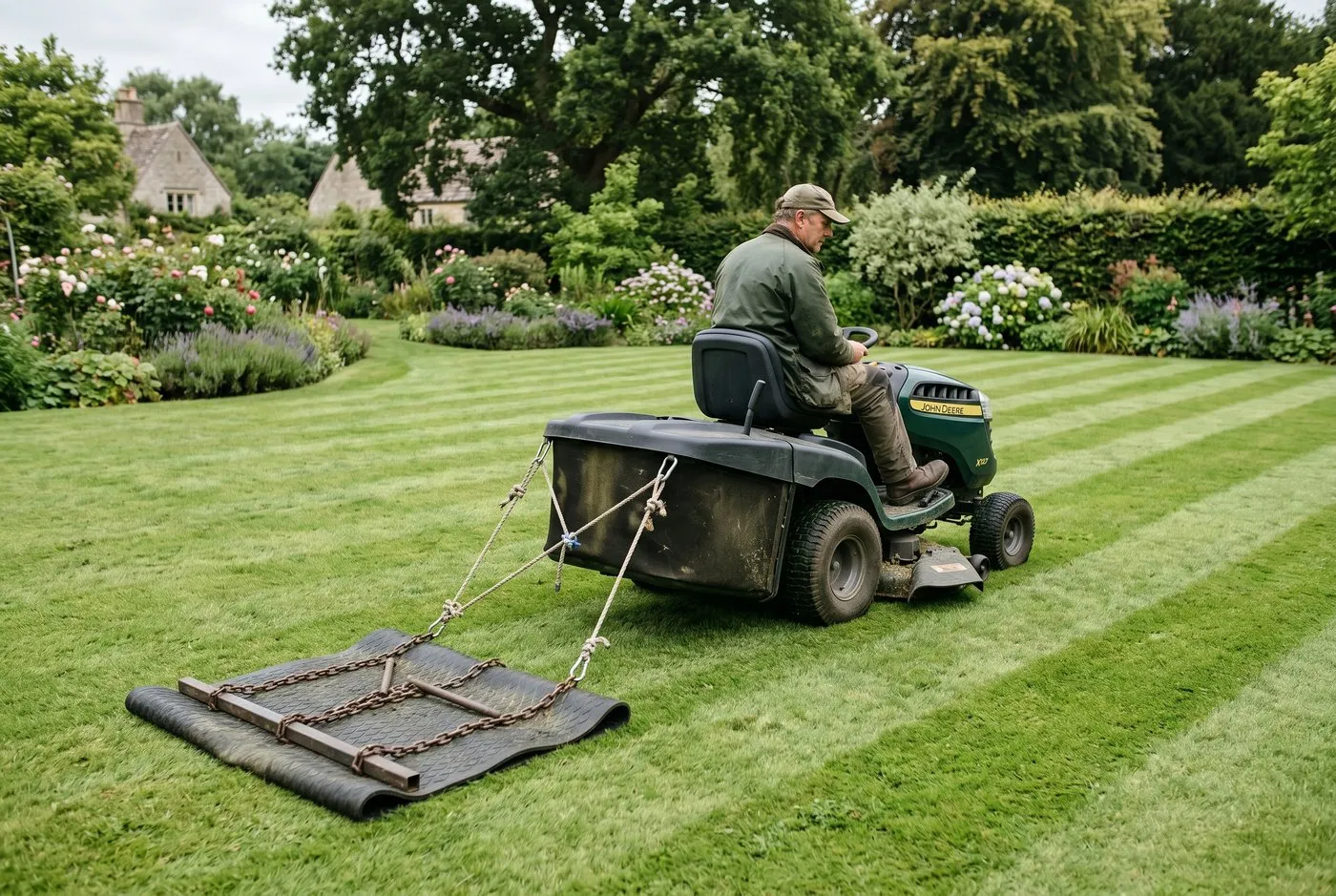 A stable-mat drag mat costs under £30 and presses the grass flat as you walk. This one is striping a sandy seaside lawn in a Cornish coastal garden.
After you have built one, think about lawn condition. A striker works best on a healthy, dense sward. If your grass is thin or patchy, the stripes look uneven. It pays to feed your lawn through spring so the turf is thick enough to hold a clean lean. A run-down lawn stripes poorly no matter what you drag behind the mower.
Which mowers stripe and which do not
Cylinder mowers stripe best, hover mowers stripe worst, and rotary mowers sit between the two. The difference comes down to whether the machine flattens the grass.
A cylinder mower cuts with a spinning reel against a fixed blade, and almost all carry a full-width rear roller. That roller gives the cleanest, sharpest stripes you can get. This is what greenkeepers use.
A rotary mower cuts with a blade spinning flat under the deck. Some have a rear roller, many do not. A rollerless rotary leaves faint stripes from the weight of the rear wheels alone. Add a striking board or a bolt-on roller kit and it stripes nearly as well as a cylinder mower.
A hover mower floats on a cushion of air and touches nothing. On its own it leaves no stripe at all. A few models take a clip-on striking kit, which helps, but the floating design fights against you.
Robot mowers are a special case. Most cut a random pattern and leave no stripes. A handful of premium models now mow in straight lines and a couple carry a small rear roller, but they stripe weakly compared with a pushed mower and striker.
| Mower type | Has rear roller? | Stripe quality | Typical price | Best for |
|---|---|---|---|---|
| Cylinder (reel) | Yes, full width | Excellent | £250 to £900 | Fine, flat ornamental lawns |
| Rotary with roller | Yes | Very good | £150 to £400 | Family lawns wanting stripes |
| Rotary plus DIY striker | Added on | Good | £80 plus £10 | Budget striping |
| Plain rotary | No | Faint | £80 to £250 | General cutting, weak stripes |
| Hover | No | None to faint | £40 to £120 | Slopes and rough edges |
| Robot mower | Rarely | Weak | £400 to £2,500 | Hands-off cutting |
The takeaway is clear. You do not need to buy a cylinder mower to stripe. A plain rotary plus a £10 striker beats a hover mower and gets close to a roller mower. Match the height of cut to the mower type too, because a cylinder mower cuts lower and crisper than a rotary.
The mowing technique that makes stripes sharp
Sharp stripes come from straight lines and a consistent direction, not from the machine alone. Sloppy steering ruins even a roller mower’s work.
Start by mowing a header strip across both ends of the lawn. This is a single pass at each end where you will turn the mower. It gives you clean room to turn without churning the stripes.
Now pick a straight reference. A fence, a path edge, or a washing line works. Line your first full stripe up against it and walk straight, keeping your eyes 3 to 4 metres ahead, not at your feet. Looking ahead keeps the line true. Looking down makes you wander.
Mow the second stripe in the opposite direction, overlapping the first by a couple of centimetres so you leave no uncut gap. The reverse direction is what creates the contrast. Continue back and forth across the lawn, turning in the header strip each time.
Finish by mowing the header strips themselves, around the edge, to tidy the turns. The whole effect depends on you only ever bending grass in two directions: up the lawn and down it.
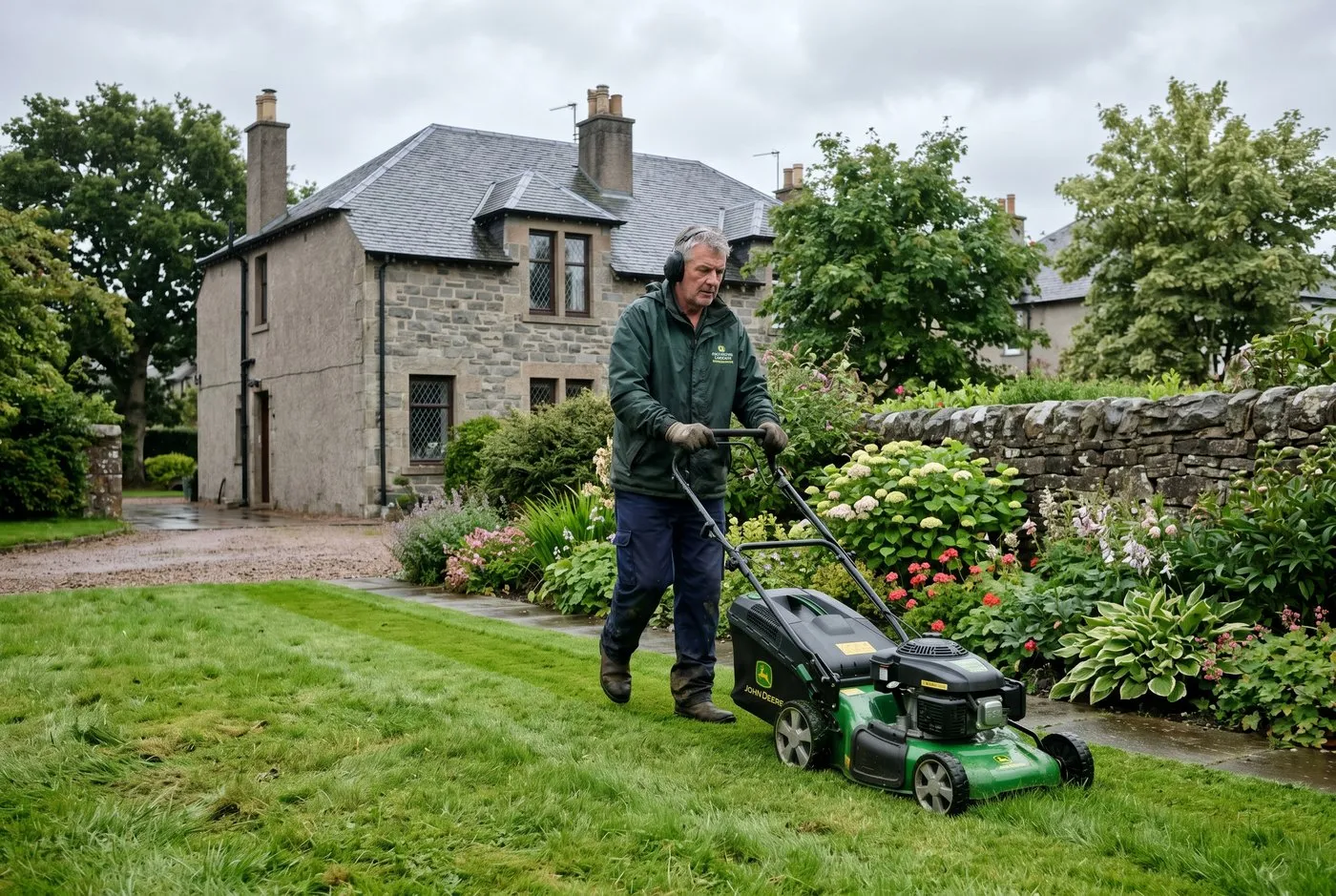 Fixing your eyes on a fixed point ahead keeps each pass dead straight. This London town garden uses the boundary fence as a guide for the first stripe.
For a checkerboard, mow the whole lawn in stripes one way first. Then mow it again at 90 degrees to the first set. The second pass bends grass across the first, and where the two directions cross you get squares of light and dark. A checkerboard takes twice as long and uses twice the grass-bending, so reserve it for a lawn in good condition.
Curved and diagonal patterns work too once you are confident. A diagonal stripe across a square lawn looks larger than straight stripes. Curves around a flower bed soften a formal layout. Both rely on the same rule: bend the grass consistently along each line.
If you want a refresher on the basics of cutting before you start patterning, the guide on when to mow your lawn covers timing, frequency and weather, which all feed into stripe quality.
Height and frequency that hold the pattern
Cut between 25mm and 40mm and mow weekly in summer for stripes that last. Height and timing matter as much as the striker.
Grass that is too short cannot hold a lean. Below about 20mm there is not enough blade to bend, and the stripes go faint. Grass that is too long flops over under its own weight and the lines blur. The sweet spot for most UK lawns is 25mm to 40mm. A fine ornamental lawn can go to 25mm. A family lawn is happier at 35mm to 40mm.
Set the height once and keep it there all season. Changing the cut height mid-season disrupts the lean and the stripes lose their edge. The one-third rule still applies: never remove more than a third of the leaf in a single cut, or you stress the grass and the pattern suffers.
Frequency keeps stripes crisp. In May and June, when UK grass grows fastest, mow every five to seven days. A weekly cut keeps the lean fresh and the contrast strong. Stretch to a fortnight and the grass straightens up between cuts, blurring the bands. In high summer drought, raise the cut to 40mm and mow less often to protect the turf, accepting softer stripes for a few weeks.
Feeding and surface care support the look. A lush, dense sward stripes far better than a hungry one. Working through a lawn care calendar keeps feeding, mowing and maintenance in step through the year. In autumn, a job to top-dress the lawn evens out the surface, which helps the striker press uniformly the following spring. The RHS sets out sensible mowing heights and seasonal timing in its lawn maintenance advice, worth a read before you set your cut height.
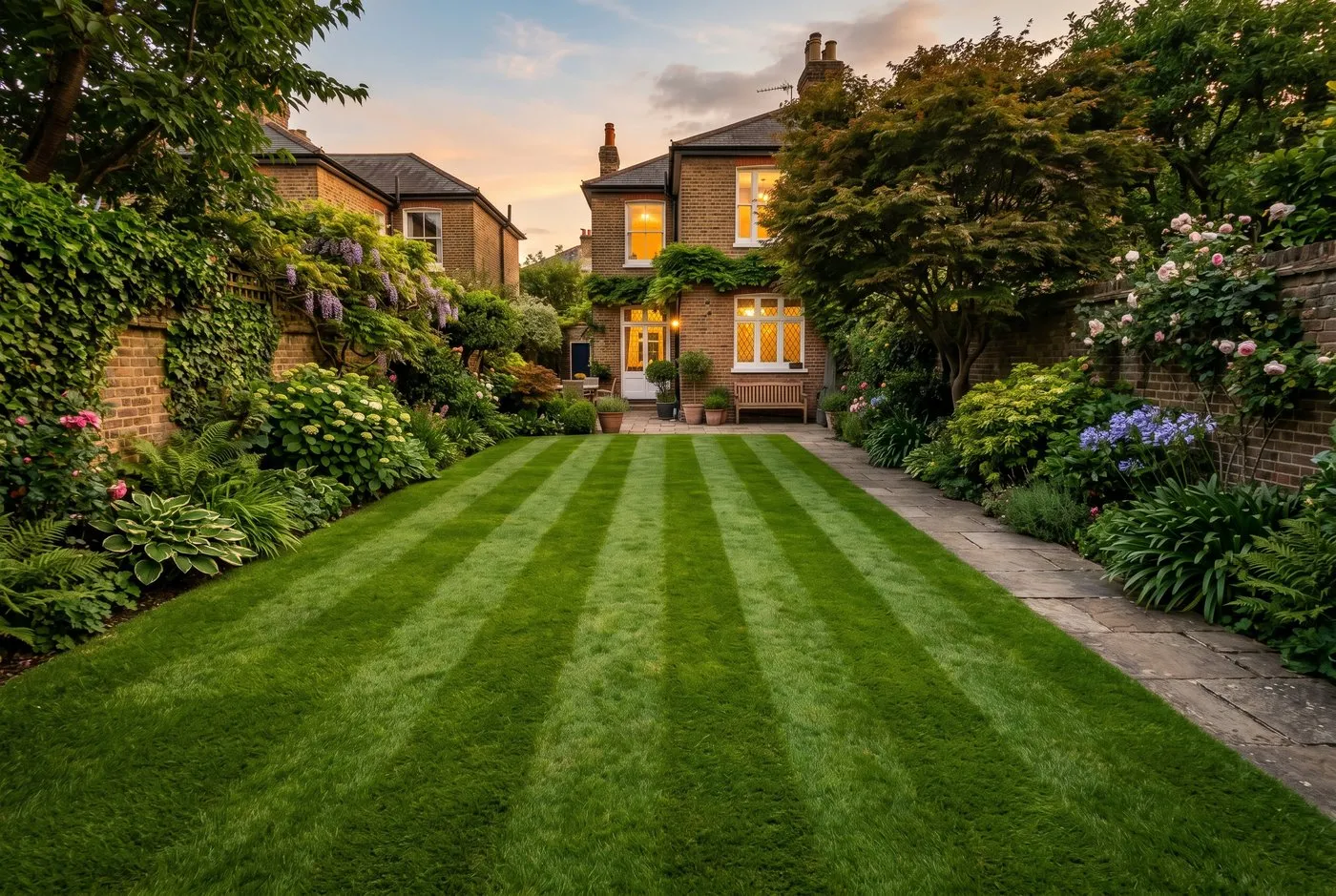 Five seasons of weekly cutting at 35mm with a homemade striker produced these even bands on a Yorkshire suburban lawn, photographed from the upstairs landing.
Gardener’s tip: Photograph your stripes from an upstairs window. From ground level they always look weaker than they are. The raised angle shows the true contrast and helps you spot any wavy lines to fix next time.
Common striping mistakes and how to fix them
Most striping failures come from wandering lines, the wrong cut height, or stressed grass. Each has a simple fix.
The most common mistake is steering by watching your feet. This produces wavy stripes that look amateurish from a distance. Fix it by picking a point at the far end of the lawn and walking toward it, eyes up.
The second is cutting too short. Grass below 20mm has no blade to bend, so the stripes vanish. Raise the cut to 30mm or more and the lean returns.
The third is mowing too rarely. Leave it a fortnight in June and the grass straightens, washing out the pattern. Switch to weekly cuts in the growing season.
A fourth is striping a weak or stressed lawn. Thin, drought-hit or scalped turf stripes patchily. Get the lawn healthy first. A spring routine to scarify and aerate thickens the sward and improves the surface. If you are striping for the first time after winter, time it with the first cut after winter once the grass is actively growing, never on cold, dormant turf.
The last common error is uneven striker weight. If one side of your board or mat is heavier, that side bends the grass more and the stripes look lopsided. Balance the weight, level the rope, and check the striker sits flat behind the deck.
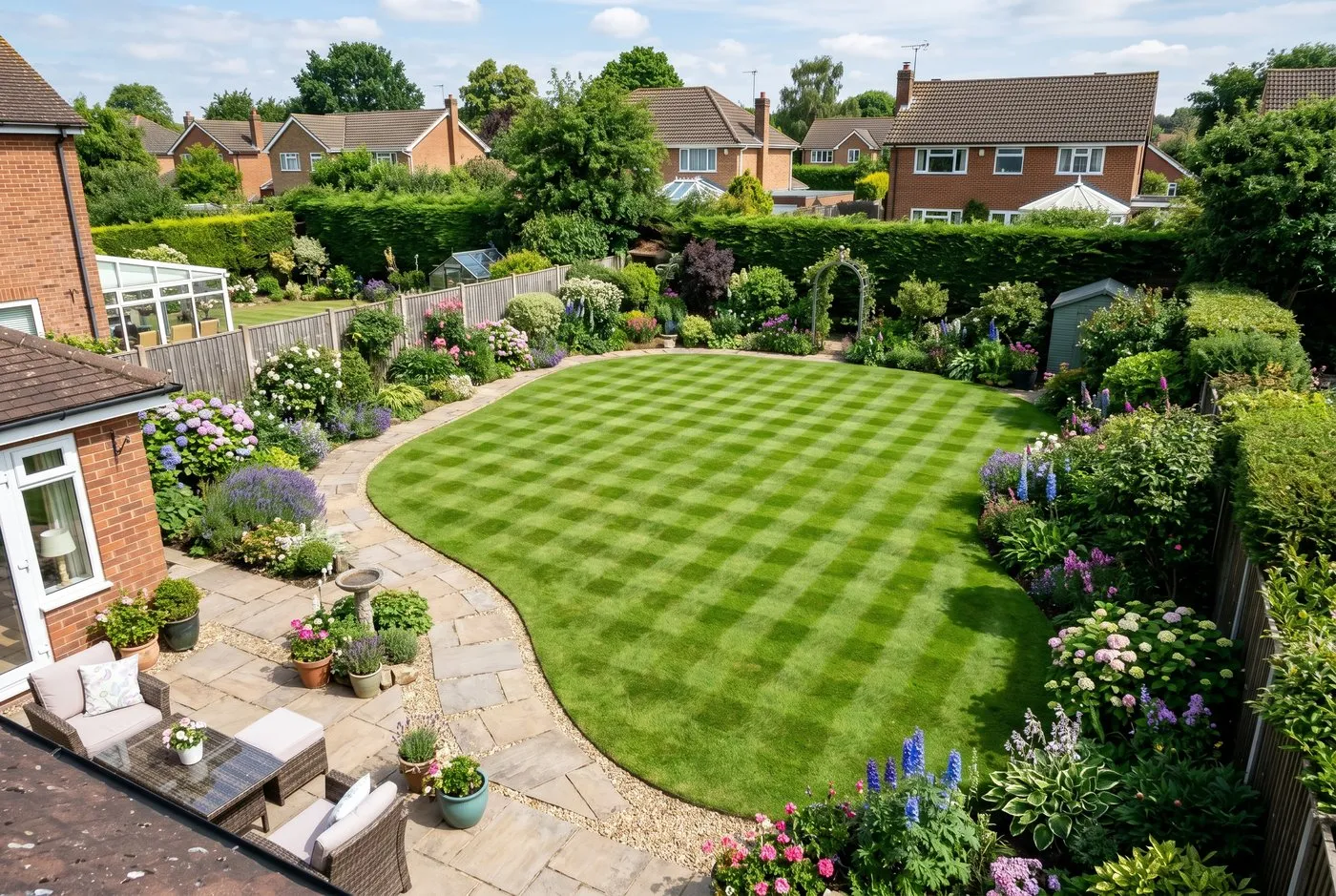 A checkerboard needs two passes at 90 degrees and a dense, healthy sward. This Perthshire lawn beside a drystone wall took two mowings and a homemade striking board.
Get those right and a rollerless mower will stripe a lawn that stops passers-by. The roller never was the secret. Bending grass in straight, consistent lines is, and a £10 board does that as well as a £450 machine.
Next step
Once your stripes are holding, keep the turf in shape with a proper feeding routine. Read the guide on how to feed your lawn for the timing and products that keep a striped lawn thick and green through the UK growing season.
Our team produces practical UK gardening guidance from source research, contributor records and established horticultural practice. Editorial standards are overseen by Matt W.