Key takeaways
- Instant 3-4 week establishment vs 18-24 months for seed-sown meadow
- Lay onto stone-free, low-nutrient soil (mature compost or topsoil)
- Suppliers: Wildflower Turf Ltd, Lindum, Meadowmania, British Seed Houses
- Cost £8-£15 per m² delivered
- Cut high (50-75mm) once a year in late summer
- Reseeds itself annually with proper management
Wildflower turf gives UK gardeners an instant meadow within 3-4 weeks of laying. The pre-grown matrix of perennial and annual UK native species establishes 20-30 times faster than seed-sown alternatives. This guide covers when to lay, the critical low-nutrient soil prep, the laying technique, and the first-year management that turns a turf into a thriving year-on-year meadow.
Wildflower Turf vs Seed-Sown Meadow
| Method | Establishment | Cost per m² | Best for | Failure rate |
|---|---|---|---|---|
| Wildflower turf | 3-4 weeks to flower | £8-£15 delivered | Small areas, instant impact | Low (5-15%) |
| Seed-sown meadow | 18-24 months to peak | £0.20-£1 per m² | Large areas, patient project | High (30-50%) |
| Yellow rattle on existing lawn | 2-3 years | £0.50-£2 per m² | Lawn conversion | Moderate (20-40%) |
| Plug planting | 6-12 months | £2-£5 per m² | Targeted species mix | Low-moderate |
For UK gardens under 50m² where the meadow needs to be flowering this summer, wildflower turf is the right choice. Above 100m², the cost of turf becomes significant and seed-sown becomes the practical option.
For seed-sown meadow alternative, our seeded meadow guide covers the longer-term project method.
Site and Soil Preparation
The most important step. Get this right and the meadow lasts decades.
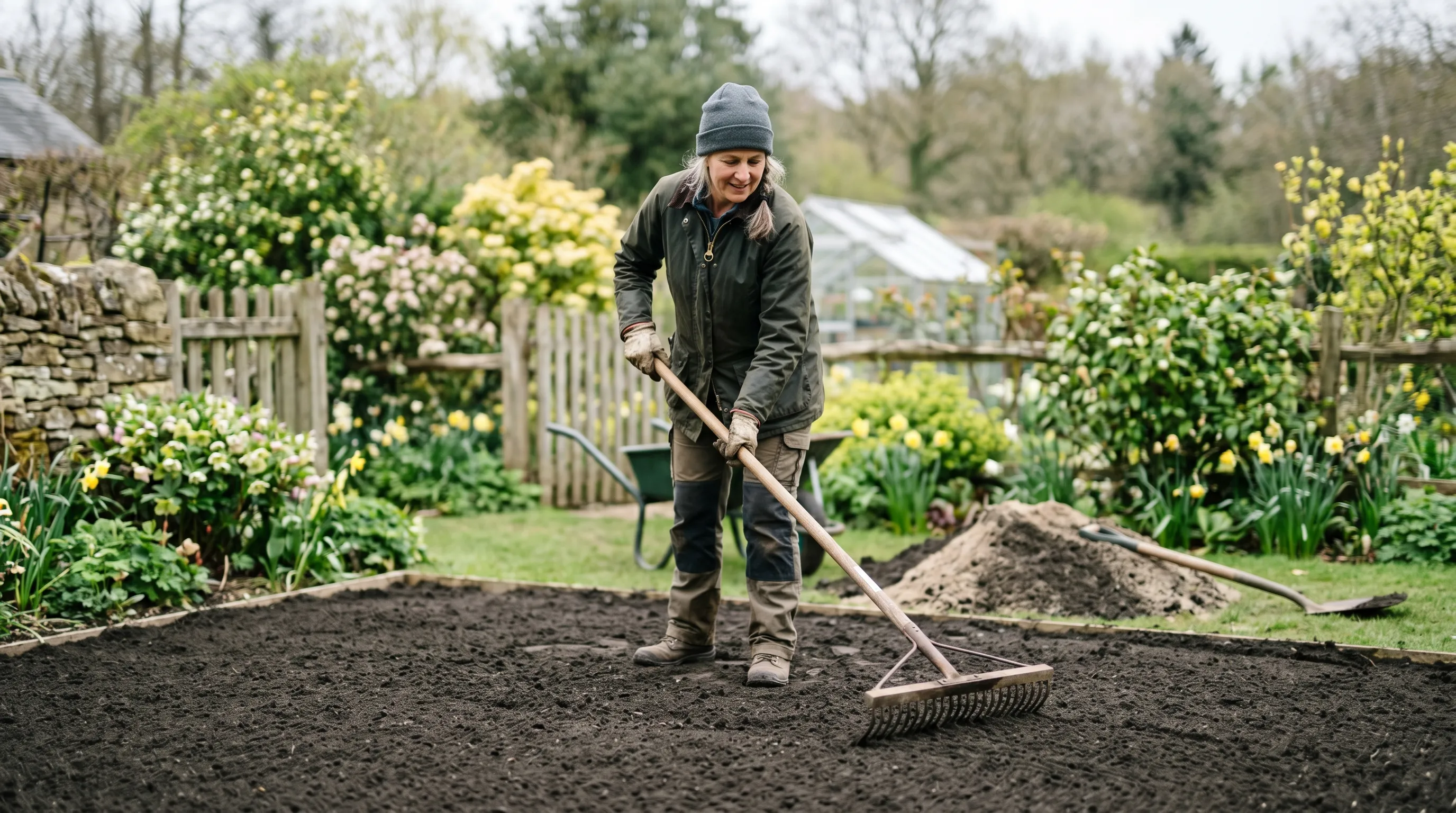
Step 1: clear the site. Remove all existing vegetation. Strip turf if converting lawn. Spray glyphosate at least 3 weeks before laying if heavy weed pressure (allow regrowth and respray). Mechanical strip works for small areas; hire a turf cutter for areas over 20m².
Step 2: strip topsoil. Remove the top 50mm of topsoil. UK garden topsoil contains too much nitrogen and phosphorus for wildflower meadows. Replace with a low-nutrient base.
- 5:1 sharp sand to garden compost (best for wildflower dominance)
- 3:1 sand to topsoil (acceptable, slightly more grass)
- Pure subsoil (works but slow to establish)
Apply the new layer 50-75mm thick and level firm. The bed should compress slightly under foot but spring back.
Step 4: level and firm. Rake level. Firm with the back of a rake or by walking the whole area. The surface should be smooth, level, and firm enough to stand on without sinking.
Step 5: water lightly. Wet the prepared base 12-24 hours before laying. The turf bonds to moist soil within hours; dry soil takes weeks.
Laying the Turf
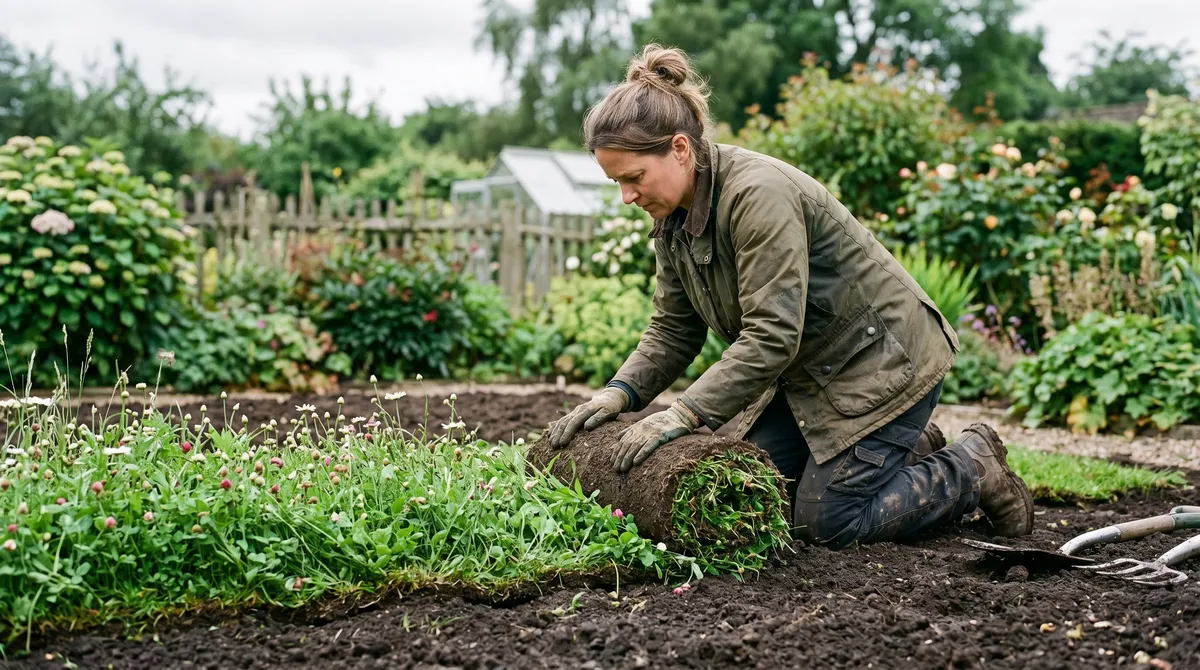
Wildflower turf arrives in rolls (typical 1m x 2m, 8kg per roll) on the day of laying. Plan to lay within 24 hours of delivery.
Method:
- Carry rolls to the site by wheelbarrow (rolls are heavy)
- Start at the longest straight edge
- Lay the first roll along the edge, butt-jointed against the next roll
- Press the turf down firmly with hands or a turfing tool
- Cut second-row rolls to stagger the joints (brickwork pattern)
- Trim edges with sharp knife to fit the bed shape
- Press all joints firmly together; gaps allow weeds
Critical step: firm pressure on each roll ensures good soil-to-turf contact. Air gaps prevent root growth into the underlying soil. Walk on the laid turf or use a turf roller after laying.
The Staffordshire 40m² installation took 2 hours for 2 people including base preparation. Cost in 2020: £400 for the turf, £40 for sand and compost.
Watering and Establishment
The first 6 weeks decide success.
Week 1: Water daily, 5-10mm of water (10 litres per m²). The newly-laid turf must not dry out. Apply through a fine rose to avoid washing soil from joints.
Week 2-3: Water every other day, 8-12mm per session. Roots are establishing into the underlying soil.
Week 4-6: Water twice weekly, 12-15mm per session. Roots reaching 50-100mm into the soil.
Week 7+: Water only if 14+ days without rain. By now the meadow is self-supporting.
The Staffordshire installation in May 2020 received average UK spring rain for 4 of the 6 establishment weeks, requiring manual watering on only 8 days. Drier spring or summer installations need 4-6 watering sessions per week through the establishment window.
Signs of successful establishment:
- Visible new growth on the turf within 7-10 days
- Turf cannot be lifted from the soil after 4-6 weeks
- Flowering begins 3-4 weeks after laying for early species
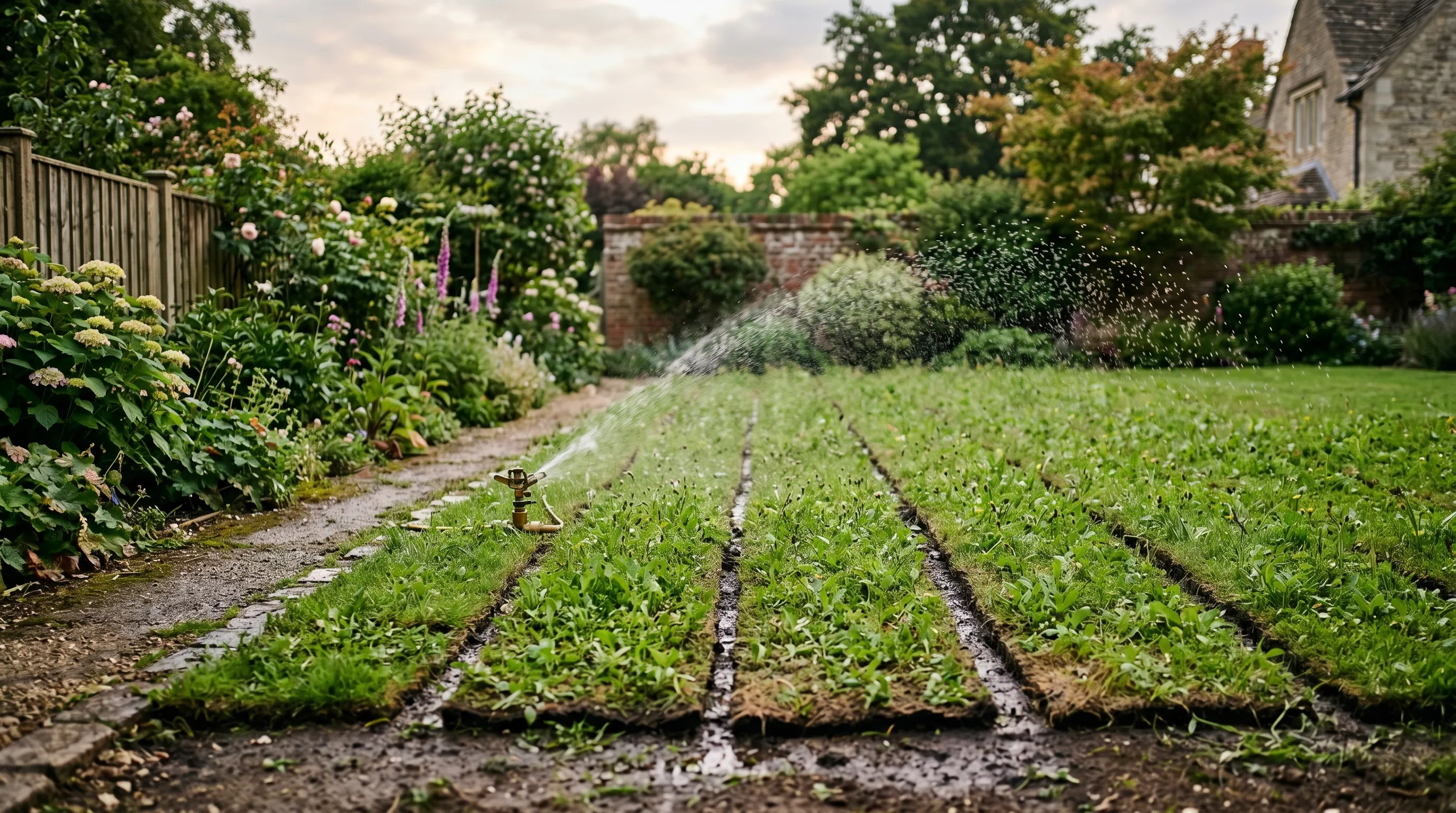 The Staffordshire installation 5 days after laying. Roll joints still visible but the turf is bonding to the underlying soil. Daily watering for 6 weeks is essential for establishment. Apply through a fine rose to avoid washing soil from joints.
What Species You Get
UK wildflower turf typically contains 25-40 native species mixed with low-fertility-tolerant grasses.
Typical flowering species:
- Oxeye daisy (Leucanthemum vulgare)
- Field poppy (Papaver rhoeas)
- Cornflower (Centaurea cyanus)
- Black knapweed (Centaurea nigra)
- Yarrow (Achillea millefolium)
- Birdsfoot trefoil (Lotus corniculatus)
- Red clover (Trifolium pratense)
- White clover (Trifolium repens)
- Cowslip (Primula veris)
- Self-heal (Prunella vulgaris)
- Lady’s bedstraw (Galium verum)
- Yellow rattle (Rhinanthus minor)
Yellow rattle is the key species. It is hemiparasitic on grass roots, suppressing grass vigour and letting flowers dominate. Without yellow rattle, the grass eventually crowds out the flowers.
Typical grass species (low-fertility tolerant):
- Common bent (Agrostis capillaris)
- Sweet vernal grass (Anthoxanthum odoratum)
- Crested dog’s-tail (Cynosurus cristatus)
- Sheep’s fescue (Festuca ovina)
For specialist UK habitats (chalk grassland, acid heathland, woodland edge), specialised wildflower turf mixes are available from suppliers like Lindum and Wildflower Turf Ltd.
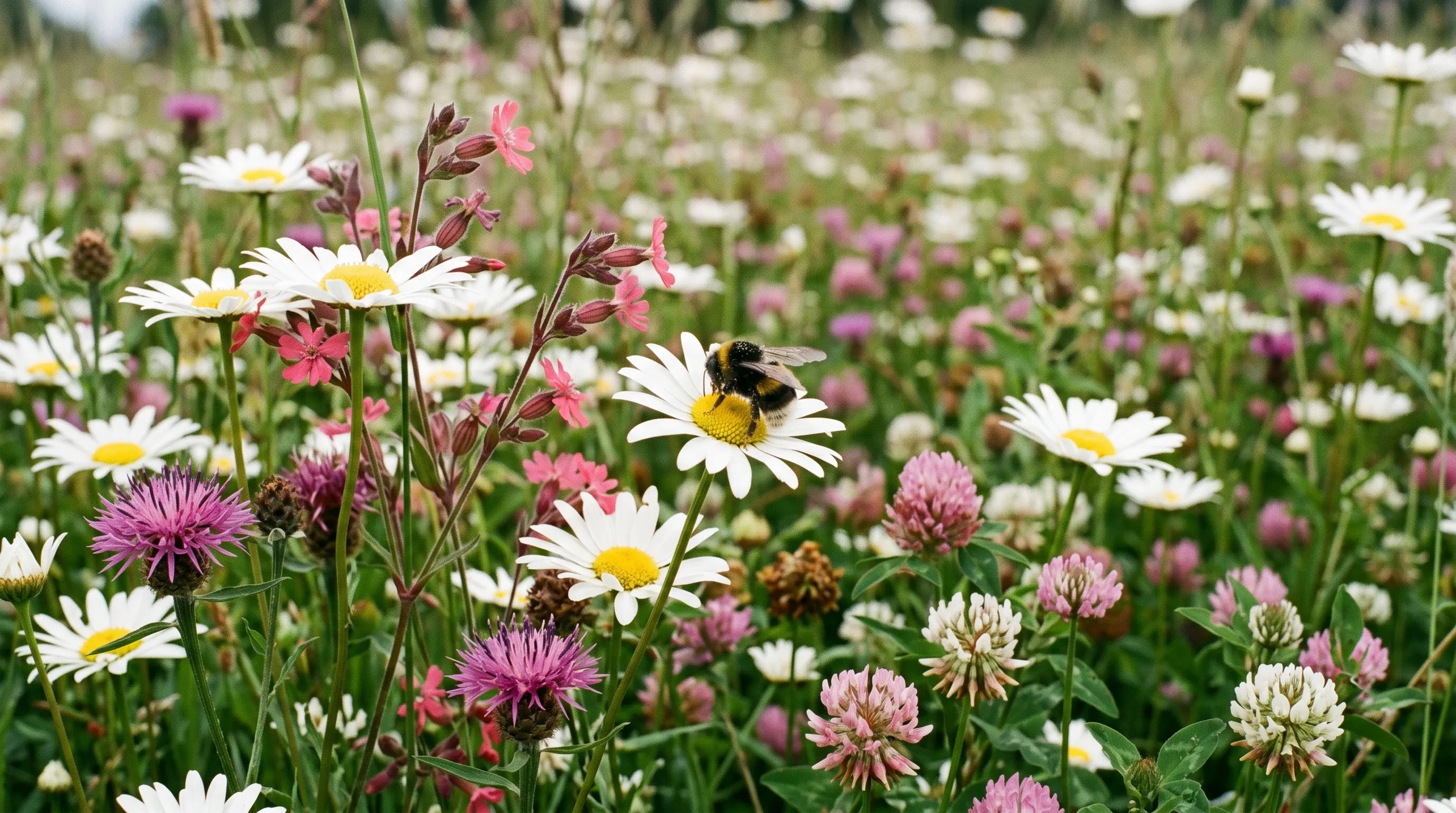 The Staffordshire turf in peak flower 6 weeks after laying. Oxeye daisy, knapweed, clover and birdsfoot trefoil all in bloom. The yellow rattle (visible as small bell-shaped flowers) suppresses grass dominance and lets wildflowers thrive.
Annual Maintenance
A wildflower meadow needs surprisingly little ongoing care.
The annual cut:
- One cut in late summer (August-September) after main flowering
- Cut to 50-75mm (use a brush cutter or scythe for small areas)
- Leave the cut hay on the surface for 3-5 days (allows seed drop)
- Then rake off and remove the hay
- Compost off-site or use as mulch elsewhere
The hay must be removed. Leaving it adds nutrients back to the soil, defeating the low-fertility regime that lets wildflowers dominate.
No other maintenance:
- No feeding (any nitrogen feed promotes grass over flowers)
- No irrigation after establishment (drought favours flowers over grass)
- No weed killer (wildflowers may look like weeds)
- No reseeding (yellow rattle and self-seeders maintain density)
The Staffordshire meadow has self-perpetuated for 5 years from a single autumn cut per year. Species composition has shifted (some early species fading, others increasing) but total cover remains 90%+ throughout.
For the wider UK meadow maintenance approach, our meadow cutting guide covers the timing detail across UK regions.
Common Mistakes With UK Wildflower Turf
Mistake 1: laying onto fertile garden soil. Grass overruns the flowers within 18 months. Always strip topsoil and use low-fertility base.
Mistake 2: laying over existing lawn. Lawn grasses outcompete wildflowers. Always clear the site fully first.
Mistake 3: feeding the meadow. Any fertiliser promotes grass over flowers. Never feed.
Mistake 4: cutting too short. Cutting below 50mm damages crown growth and reduces flowering the following year. Always cut high.
Mistake 5: leaving the cut hay. Returns nutrients to soil and shades emerging seedlings. Always remove hay within 5 days of cutting.
For seed-sown meadow alternative, our seeded meadow guide covers the longer-term method. For maintaining established meadows, our cutting guide covers timing detail.
Wildflower Turf Calendar UK Month-by-Month
| Month | Wildflower turf task |
|---|---|
| January | Plan site preparation; order soil amendments |
| February | Strip turf and topsoil if not done in autumn |
| March | First spring laying window opens. Prep new sites |
| April | Peak spring laying. Daily watering for new installations |
| May | Establishment care for spring-laid turf |
| June | First flowering on spring-laid installations |
| July | Peak summer flowering and pollinator activity |
| August | Annual late-summer cut (after main flowering ends) |
| September | Autumn laying window. Cut hay removed |
| October | Last laying window before winter |
| November | No new laying. Existing meadow dies back naturally |
| December | Plan next year’s site additions |
Frequently asked questions
When can I lay wildflower turf in the UK?
Spring (March-May) and autumn (September-October) are the best windows. Avoid winter freezes and peak summer drought. The turf needs 4-6 weeks of consistent watering to establish, so plan around UK rainfall patterns or commit to manual watering.
What soil do I need for wildflower turf?
Stone-free, low-nutrient soil. Strip topsoil and replace with a 5:1 mix of sharp sand to garden compost or low-fertility topsoil. Fertile soil produces grass-dominated swards within 18 months. Low fertility is the secret to wildflower dominance.
How much does wildflower turf cost in the UK?
£8-£15 per square metre delivered. Suppliers include Wildflower Turf Ltd, Lindum, Meadowmania, and British Seed Houses. Compare to £0.20-£1 per m² for direct seeding. Turf suits small areas (under 100m²) where waiting is not acceptable.
How do I maintain wildflower turf after laying?
One annual cut in late summer (August-September) at 50-75mm. Remove the cut hay after 3-5 days. No feeding, no irrigation after establishment. The yellow rattle within most wildflower mixes will suppress grass dominance naturally.
Will wildflower turf come back next year?
Yes. Most UK wildflower turf is perennial species that flower year on year. Annual species (like field poppy) reseed themselves. After the first 12 months, the meadow self-perpetuates with minimal intervention beyond the late summer cut.
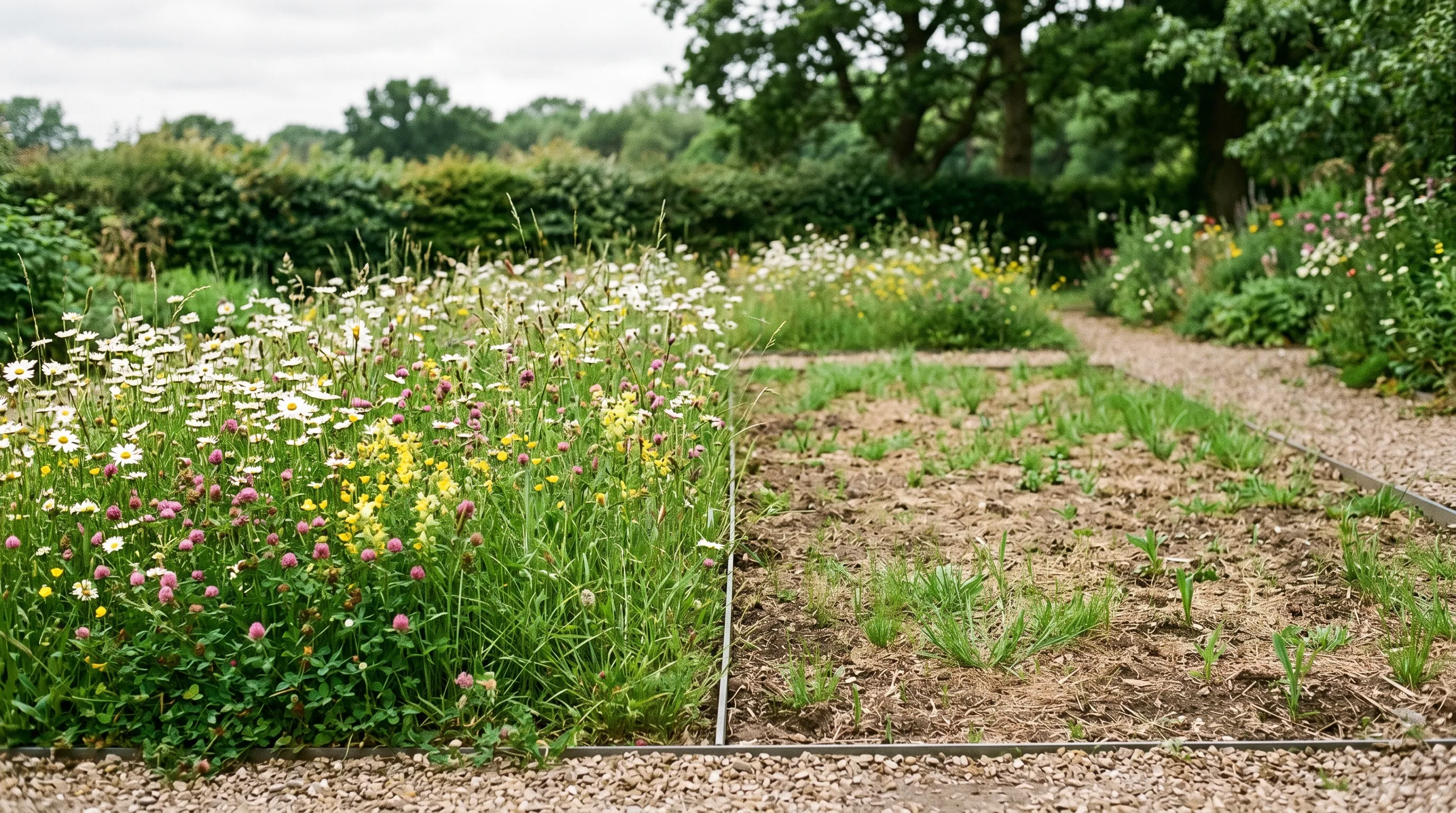
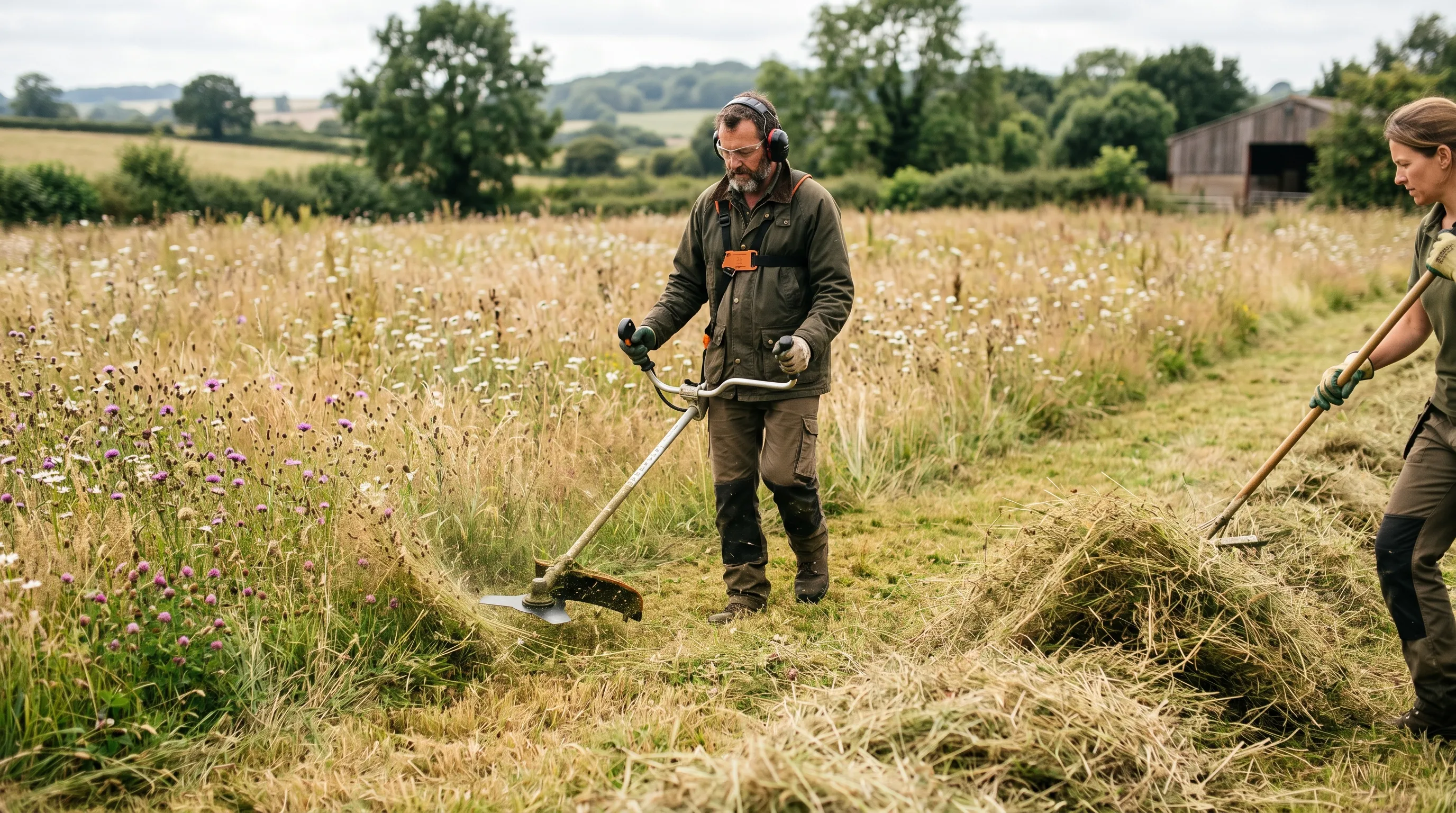 The annual August cut on the Staffordshire installation. Brush cutter set to 60mm. Hay left for 5 days to drop seed, then raked off completely. The single ongoing maintenance task for the year.
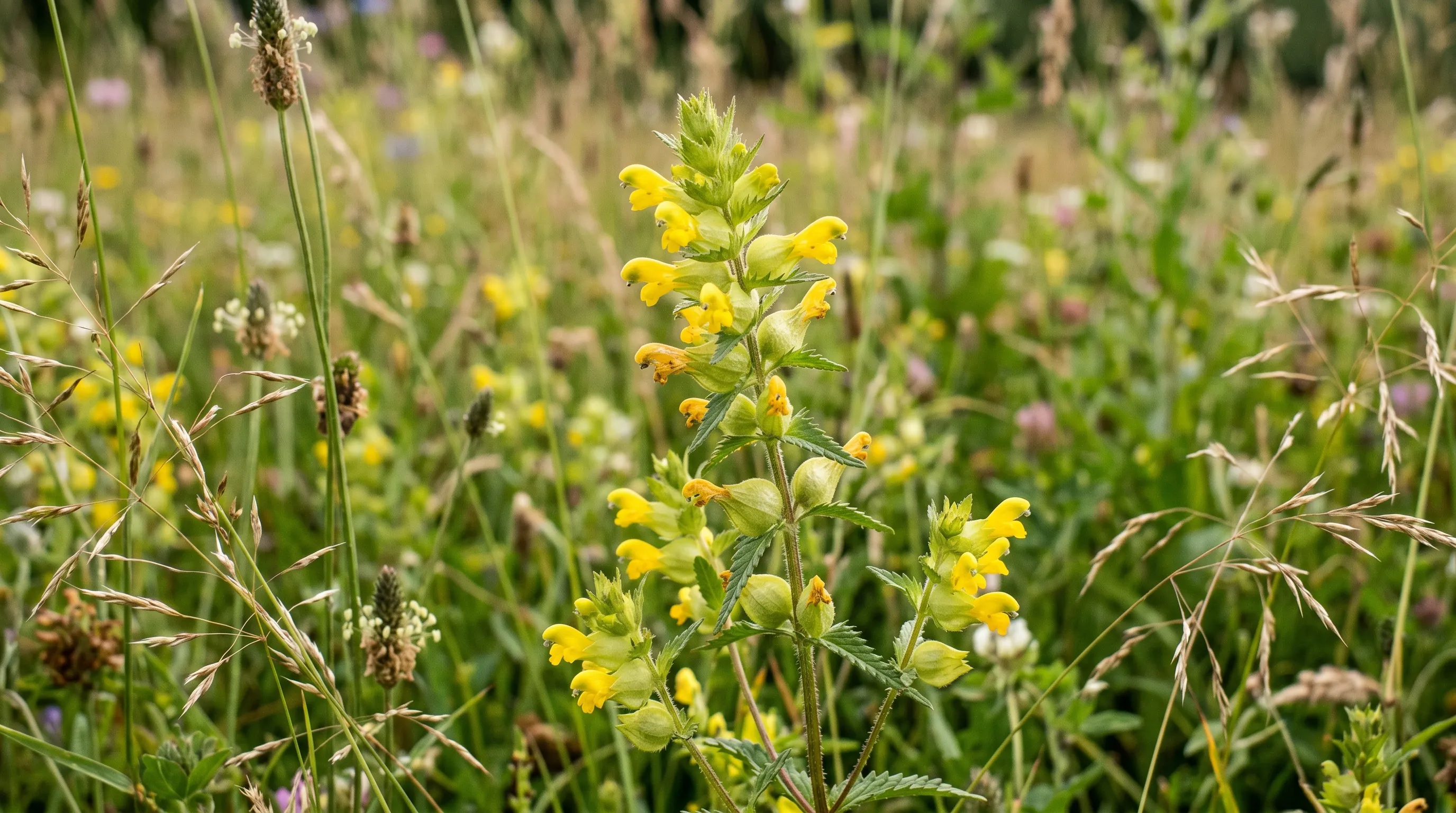 Yellow rattle (Rhinanthus minor) in flower. This hemiparasitic plant attaches to grass roots and reduces grass vigour, allowing wildflowers to dominate. The key species in any successful UK wildflower meadow turf.
Now plan the wider wildflower garden
Our team produces practical UK gardening guidance from source research, contributor records and established horticultural practice. Editorial standards are overseen by Matt W.