Key takeaways
- Marking with a hosepipe lets you judge a curved bed shape before cutting a single edge
- The cardboard smother method kills grass in 8-12 weeks, fastest in warm summer months
- Stacked turf rots into usable loam in 8-12 months grass-side-down under a sheet
- Make beds at least 60cm wide and dig soil to 30cm so roots have room
- Cut and plant in March to April or September to October when soil is warm and moist
Cutting a flower bed into an existing lawn is the single best way to add colour and structure to a plain garden. Making a flower bed in an existing lawn comes down to two decisions: what shape you want, and how you remove the turf. Get the shape right first, because a bed that flows with the garden looks deliberate, while a lopsided one looks like an accident. The turf can come out fast with a spade, faster with a hired machine, or slowly with no digging at all.
Marking the shape before you cut anything
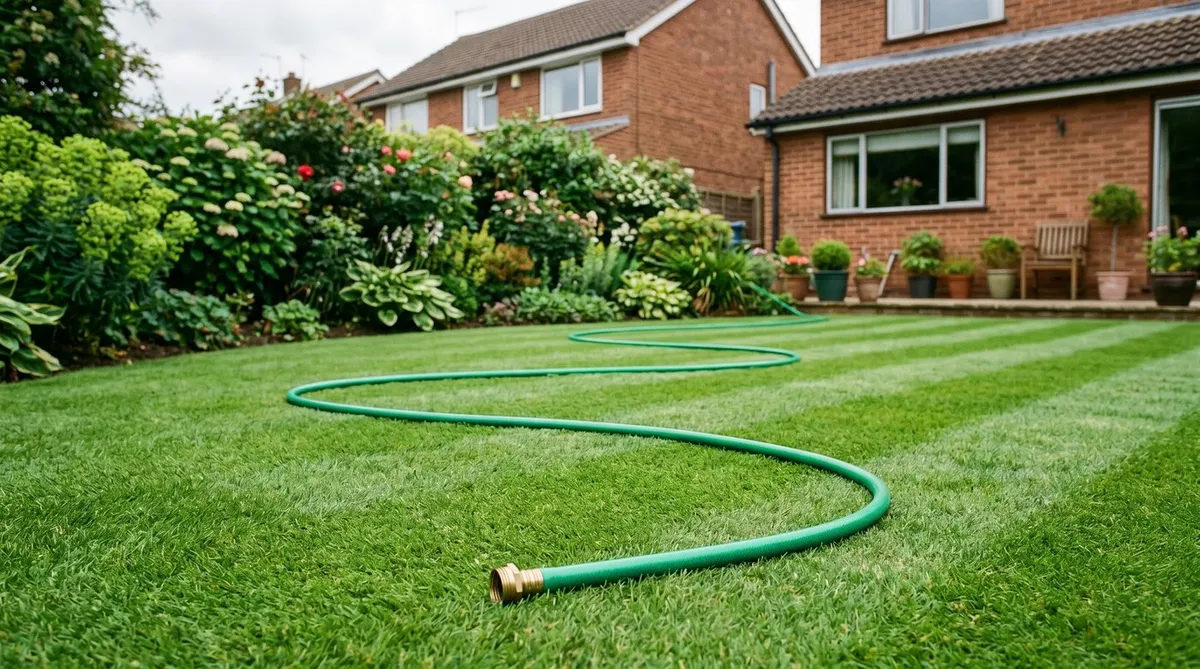
The most important step happens before any turf moves. Lay a garden hosepipe on the lawn to mark the outline of your new bed. A hose holds a smooth curve, bends without sharp kinks, and moves in seconds when you change your mind. The Royal Horticultural Society’s advice on planning new borders is a useful reference for proportion and scale.
Walk indoors and look at the line from the window you use most. Most beds are viewed from the house far more than from the garden. Adjust the hose until the curve pleases you from that angle. For a long bed against a fence, a gentle wave reads better than a dead-straight line.
For an island bed sitting in open lawn, keep the curves broad. Tight wiggles look fussy and are a nightmare to mow around. As a rule, make a border at least 60cm wide, ideally 1.2m or more, so you can layer plants front to back. Once the shape is settled, nick along the hose edge with a spade or trickle dry sand to fix the line before you lift the hose.
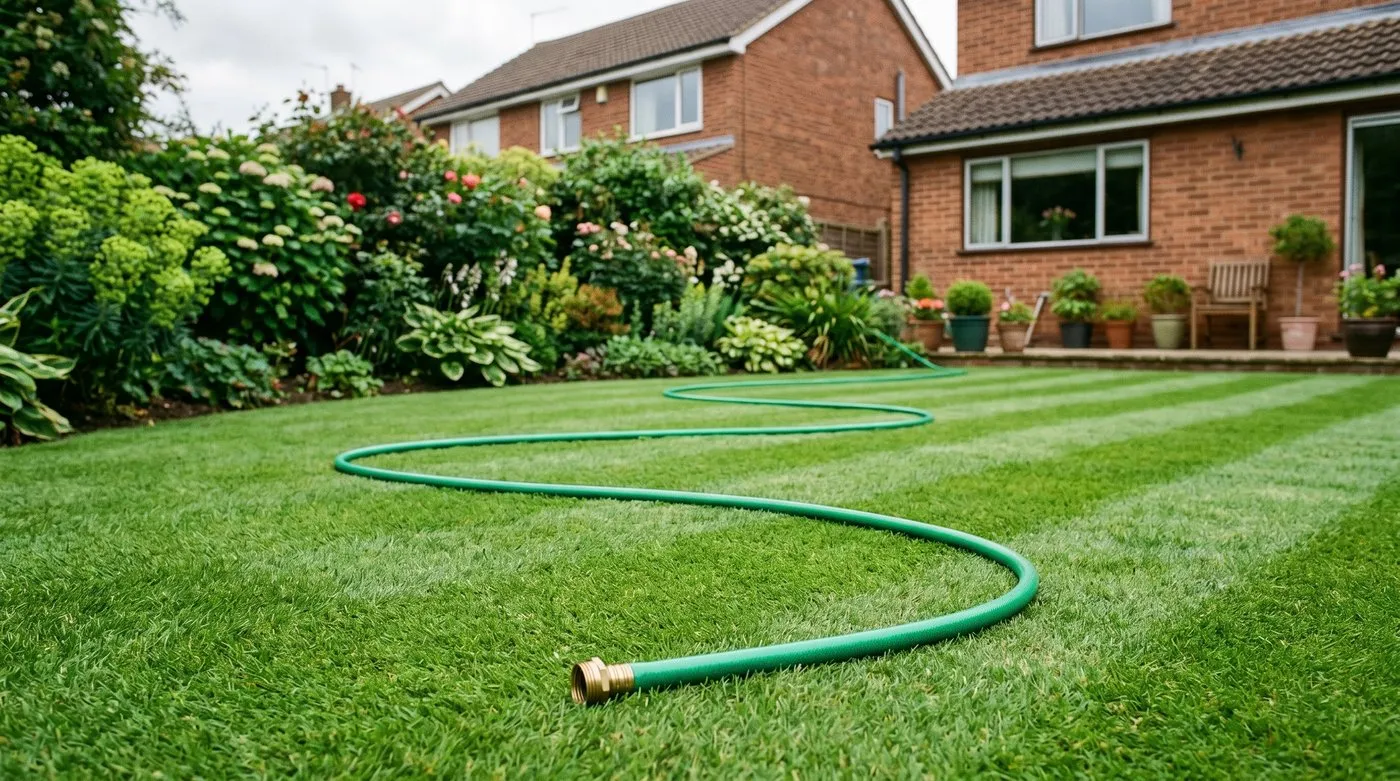 A hosepipe marks a smooth curve in seconds and moves as often as you need until the shape looks right.
How to remove turf with a spade, the fast dig-out method
The dig-out method gives you a plantable bed the same day. Once your line is marked, cut the turf into strips about 30cm wide with a half-moon edging iron or a sharp spade. Strips this width roll up neatly and are light enough to carry.
Slide the spade under each strip at a shallow angle, 3-4cm below the surface, to lift the grass with its roots but little soil. Skimming too deep wastes good topsoil and makes the strips heavy. Too shallow and the grass roots stay in the bed. Aim to keep the blade just beneath the root mat.
Once the turf is off, you have bare soil ready for the next stage: improving it before you plant.
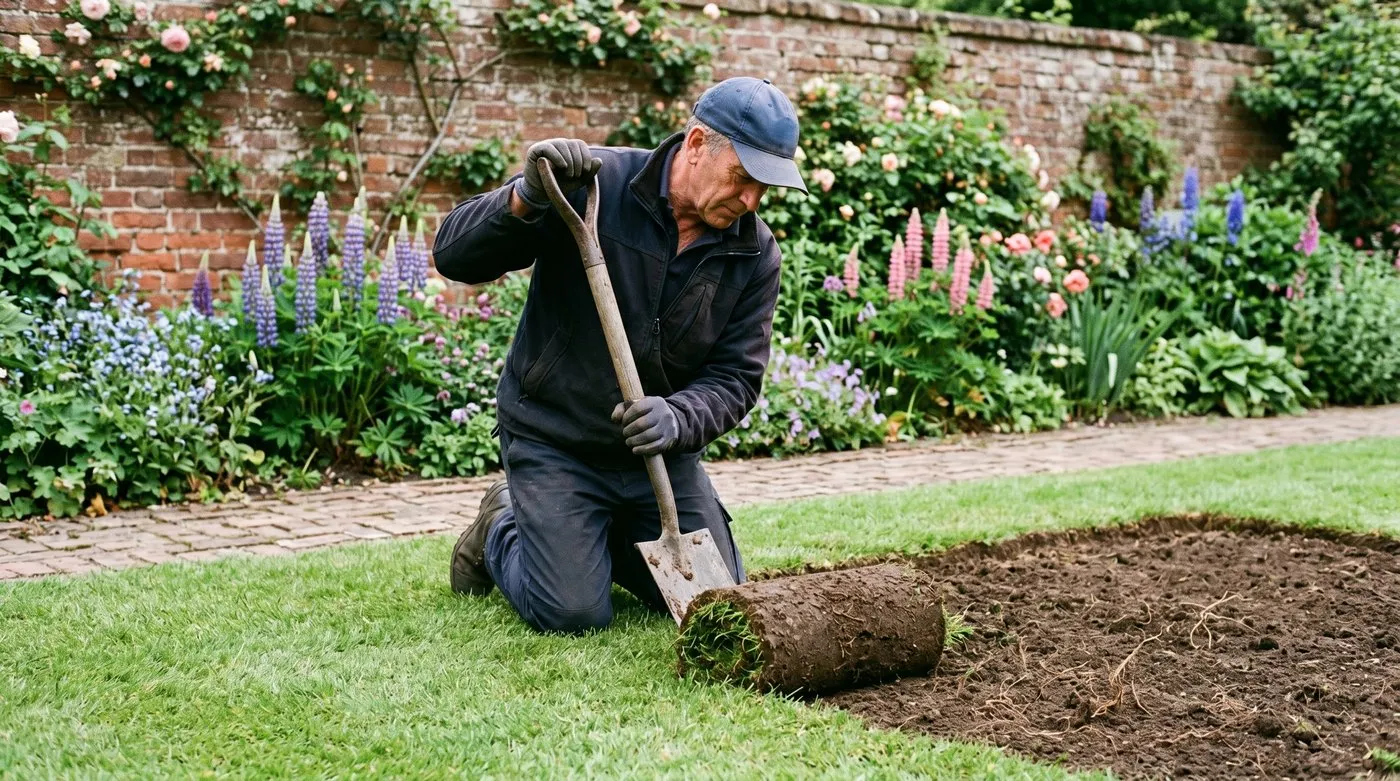 Slide the spade 3-4cm under the turf to lift the grass and roots while keeping most of the topsoil in the bed.
When a turf cutter is worth hiring
Hire costs run about 40-55 pounds a day from most UK tool-hire shops, plus a deposit. Below roughly 10 square metres the spade usually wins, because hire fees and collection time outweigh the saved effort. Above that, your back and your afternoon are worth the rental.
Turf cutters struggle on slopes, soft waterlogged ground, and lawns full of stones or tree roots. They also cut a uniform depth, so they take more topsoil than careful spade work. Set the blade to the shallowest setting that still lifts clean strips. On a flat, dry lawn over 15 square metres, the machine is the clear choice.
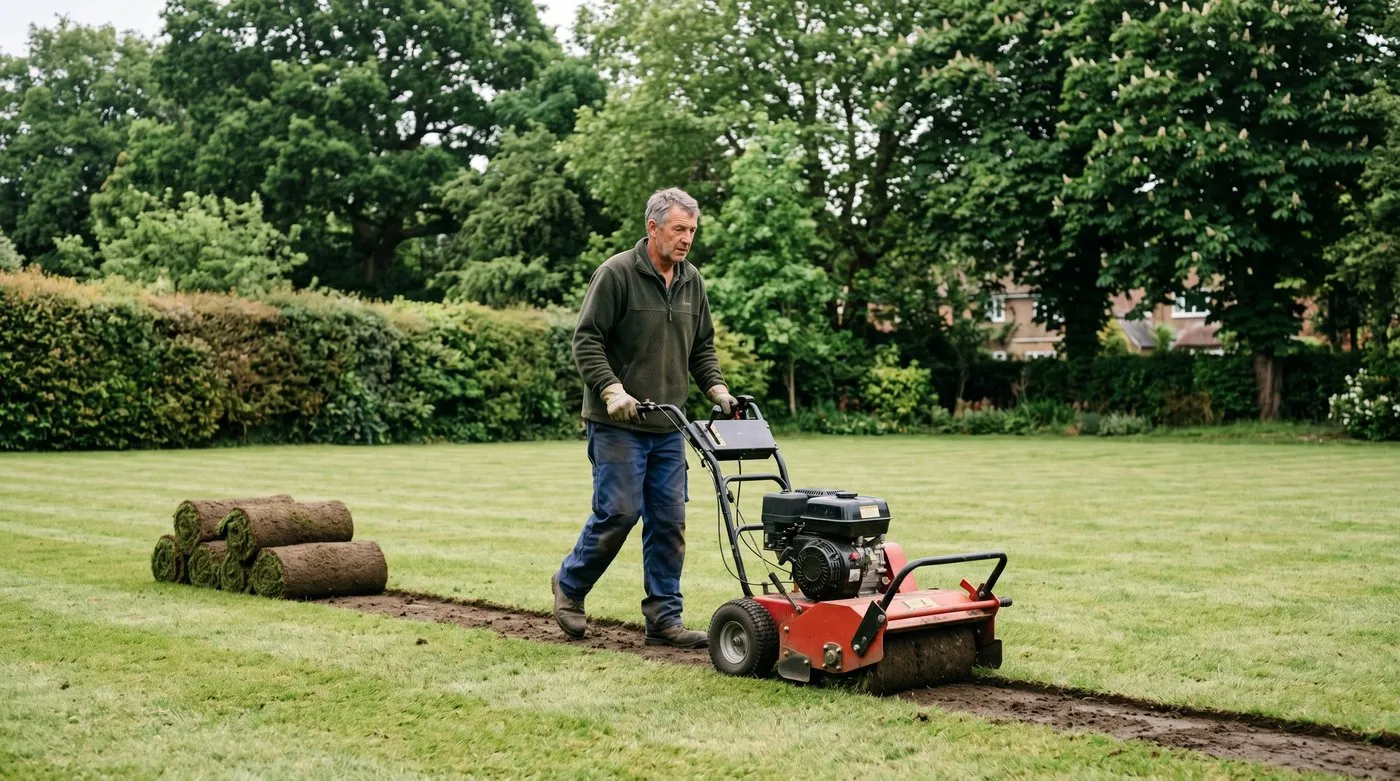 A hired turf cutter slices uniform strips fast, earning its rental on beds above roughly 10 square metres.
The no-dig cardboard smother method for patient gardeners
If you can wait a season, the cardboard smother method removes no turf at all and builds soil as it works. It suits anyone who dislikes digging, has a bad back, or wants to follow no-dig gardening principles from the start.
Mark the bed, then mow the grass short. Lay sheets of plain brown cardboard over the whole area, overlapping every joint by 15cm so no light reaches the grass. Remove tape and glossy print first. Wet the cardboard thoroughly, then cover it with 8-10cm of mulch: garden compost, well-rotted manure, or bark.
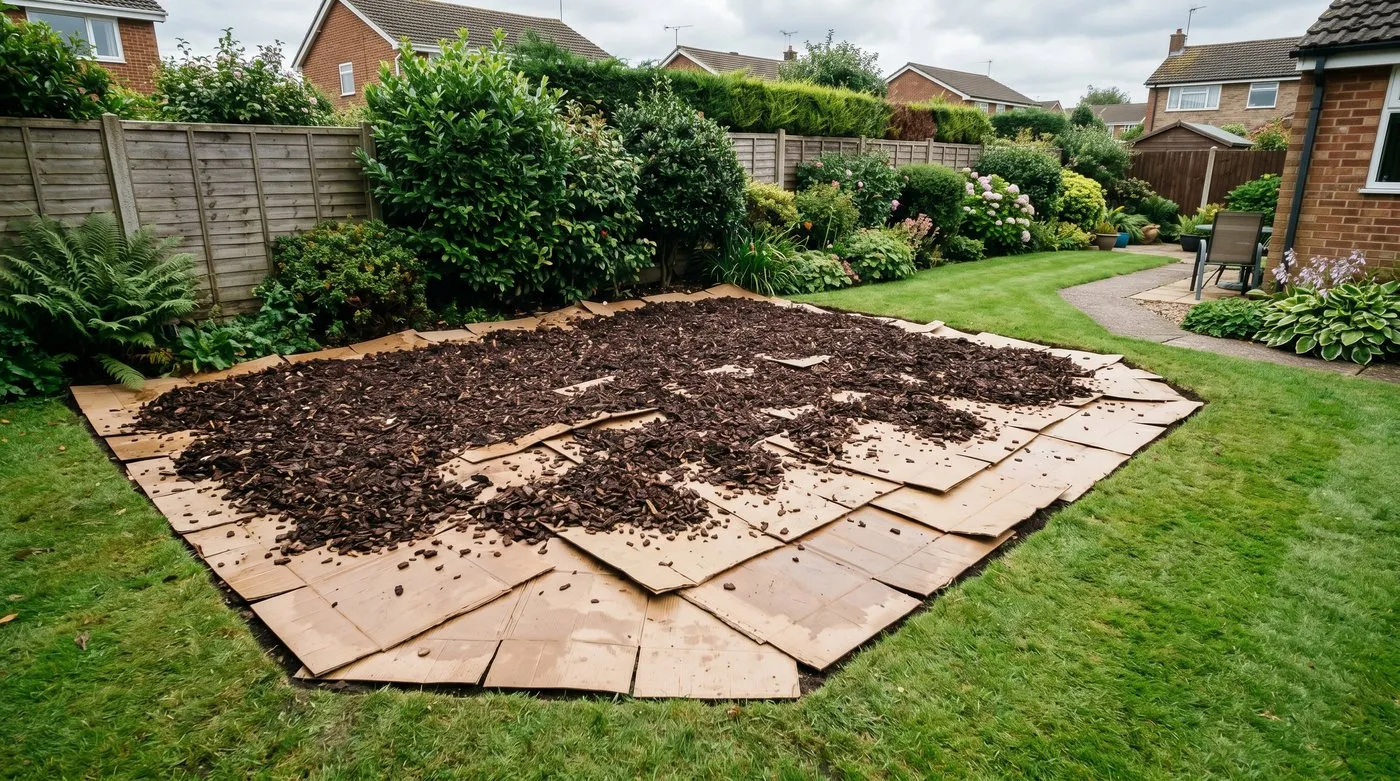 Overlapping cardboard under 8-10cm of mulch starves the grass of light and rots down into the bed.
What to do with the turf you lift
Lifted turf is a resource, not rubbish. Stack the strips grass-side-down in a hidden corner, layered like bricks into a neat pile no more than a metre high. Grass against grass means the green layers die and rot rather than knitting back into a living turf wall.
Never bin live turf or dig it into the new bed. Buried grass regrows from underground rhizomes and competes with your plants for years. Stacking is the only tidy way to recycle it. If you have heavy ground, the rotted loam is gold for improving clay soil elsewhere in the garden.
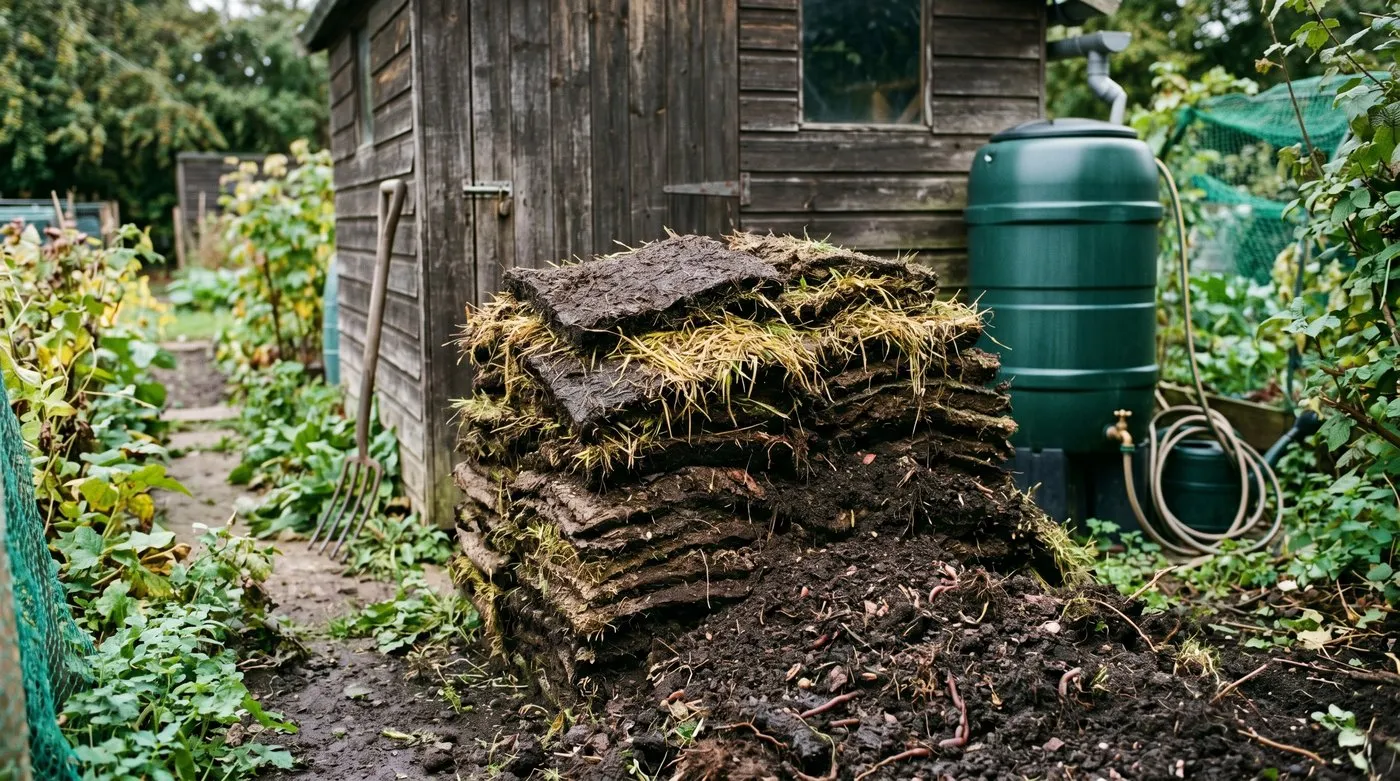 Turf stacked grass-side-down and covered breaks into fibrous loam within a year, ready to reuse.
How deep to dig and how to prepare the soil
A flower bed lives or dies on its soil depth. For most herbaceous perennials, fork the soil to at least 30cm deep once the turf is off. Shrubs, roses, and deep-rooted plants want 40-45cm of workable soil so roots can drive down and find water in dry spells.
After lifting turf, the soil below is often compacted from years of mowing and foot traffic. Drive a fork in and lever it back and forth across the whole bed to break the pan. Pull out perennial weed roots such as bindweed and couch grass as you go, since any fragment regrows.
Spread a 5-7cm layer of garden compost or well-rotted manure and fork it into the top 20cm. This feeds the soil, improves drainage on clay, and holds moisture on sand. If you have no compost yet, our guide to making compost shows the cold, fast, and hot routes. Rake the bed level and let it settle for a week before planting if you have time.
Comparing the three turf-removal methods
No single method beats the others outright. The right choice depends on bed size, your timeline, and how much you want to dig. The table ranks each by effort and overall convenience for a typical UK border.
| Method | Effort | Time to ready | Cost | When to choose | Convenience |
|---|---|---|---|---|---|
| No-dig cardboard smother | Low | 8-12 weeks | 0-20 pounds (mulch) | You can wait a season, dislike digging | Best for patience |
| Spade dig-out | High | Same day | Free | Beds under 10m2, want to plant now | Best for small beds |
| Petrol turf cutter | Medium | Same day | 40-55 pounds hire | Beds over 10m2, level ground | Best for large beds |
| Glyphosate spray | Low | 2-3 weeks | 8-15 pounds | Last resort, large weedy areas | Chemical, avoid near wildlife |
The cardboard smother is the gold standard where time allows, because it removes no soil, kills grass completely, and feeds the bed in one move. The spade wins for instant small beds. The cutter earns its hire on anything large and flat.
Edging the bed so grass stays out
A crisp edge is what makes a new bed look professional rather than home-made. Cut a clean vertical edge along the lawn side with a half-moon iron, slicing straight down to about 10cm deep. Angle the cut slightly away from the grass to make a shallow trench the lawn cannot creep across.
Maintain a 5-7cm gap of bare soil between the grass and your plants. Grass spreads sideways by rhizomes and stolons, so a bare strip and a sharp edge slow that invasion. Recut the edge two or three times a year with the half-moon iron to keep the line crisp.
For a permanent barrier, sink a physical edging strip of metal, stone, or thick plastic along the line, set 2-3cm proud of the soil. This stops creeping grass cold and saves recutting. A clean edge also keeps mowing simple, since you can run the mower wheel right along the lawn side.
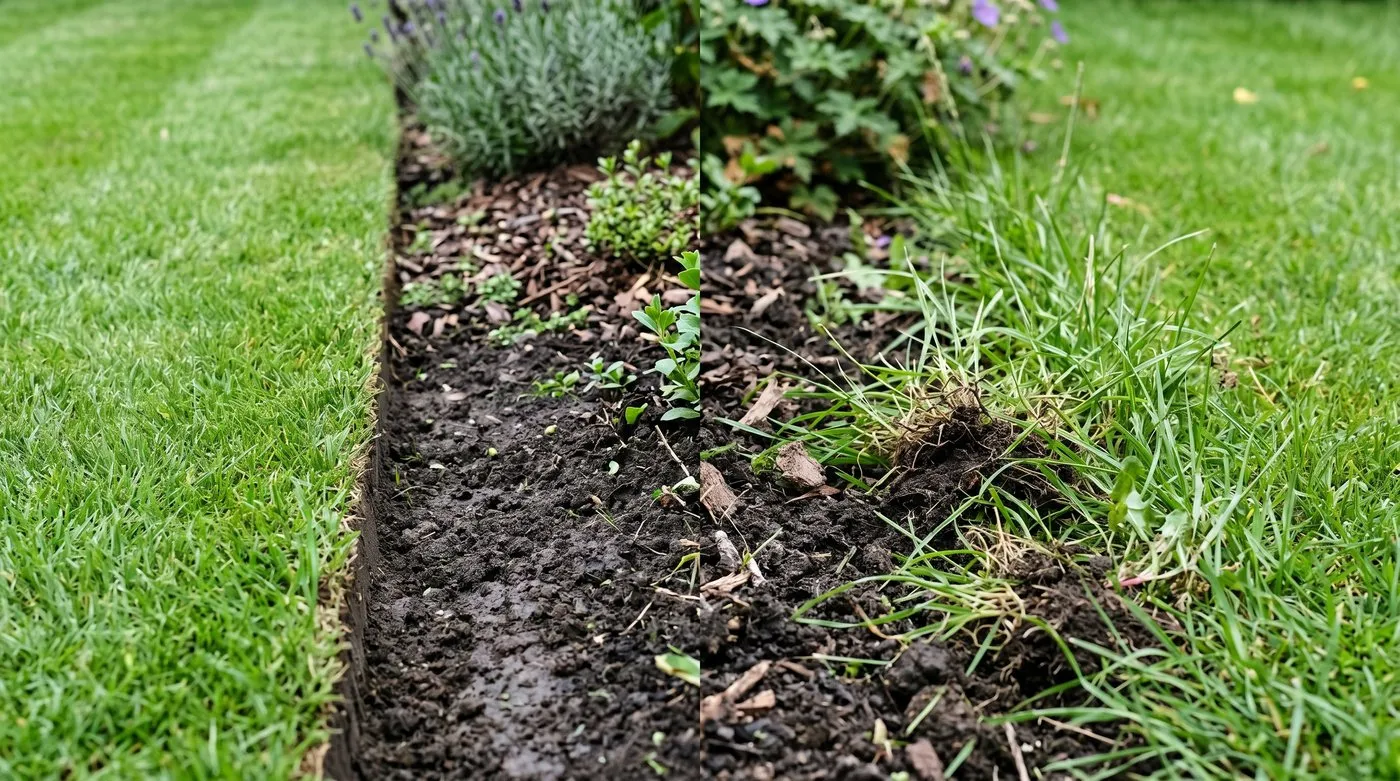 A clean vertical edge on the left holds the line and blocks grass creep, unlike the ragged edge on the right.
Common mistakes when cutting a bed into a lawn
A new bed fails in predictable ways. Avoid these and yours will settle in fast.
- Making the bed too narrow. A 30cm strip looks mean and cannot hold layered planting. Cut beds at least 60cm wide, and 1.2m or more for a proper border. Narrow beds also dry out faster.
- Digging live turf into the soil. Buried grass regrows from rhizomes for years. Always lift and stack the turf, or kill it first with cardboard. This is the most common reason new beds fill with grass.
- Skipping soil prep. The soil under a lawn is compacted and low in organic matter. Forking it to 30cm and adding compost is not optional. Skip it and your plants sulk for two seasons.
- Cutting in midsummer drought. Hard, dry soil resists the spade and new plants struggle to root. Wait for March to April or September to October when soil is warm and moist.
- Leaving a ragged edge. A torn edge invites grass straight back into the bed. A clean vertical cut and a maintained gap keep the boundary sharp.
Gardener’s tip: Cut the lawn short before you mark the bed. A shaved surface shows the hosepipe line clearly and makes the half-moon iron bite cleanly. Long grass hides the edge and the blade skids over it.
When to cut a new bed: month-by-month
Timing decides how fast your bed establishes. UK soil is workable and warm enough for planting in spring and early autumn. The table shows what to tackle each month for a smooth result.
| Month | What to do |
|---|---|
| January | Plan the bed shape on paper. Order tools and a half-moon iron. Lay cardboard smother now for a spring bed. |
| February | Mark out the shape with a hosepipe on a dry day. Start lifting turf if the ground is not frozen or sodden. |
| March | Prime season to dig out turf and prepare soil. Soil warms and dries enough to fork. Plant hardy perennials. |
| April | Finish soil prep and plant the bulk of perennials and shrubs. Cut a clean edge once the bed is planted. |
| May | Mulch the planted bed to lock in moisture. Recut the lawn edge. Water new plants through dry spells. |
| June | Avoid cutting new beds now if drought sets in. Keep existing new beds well watered and weeded. |
| July | Lay cardboard smother over a future bed; summer heat kills grass fastest, in 8-10 weeks. |
| August | Continue smother beds. Plan autumn planting. Keep edges trimmed and beds weed-free. |
| September | Second prime season. Dig out turf and plant. Warm soil and autumn rain aid root establishment. |
| October | Plant spring bulbs and bare-root shrubs into the new bed. Lift and stack turf for next year. |
| November | Mulch beds for winter protection. Stacked turf continues rotting under its cover. |
| December | Rest. Review the bed shape from indoors and plan changes for the new year. |
What to plant in your new flower bed
Once the soil is ready, plant for layers and a long season of interest. Put tall plants such as delphiniums and grasses at the back of a border, mid-height perennials in the middle, and low edging plants at the front. For an island bed, place the tallest in the centre.
Match plants to your soil. On heavy ground, our list of the best plants for clay soil covers reliable performers that thrive where others rot. Group plants in odd-numbered clumps of three or five for a natural look rather than dotting singles about.
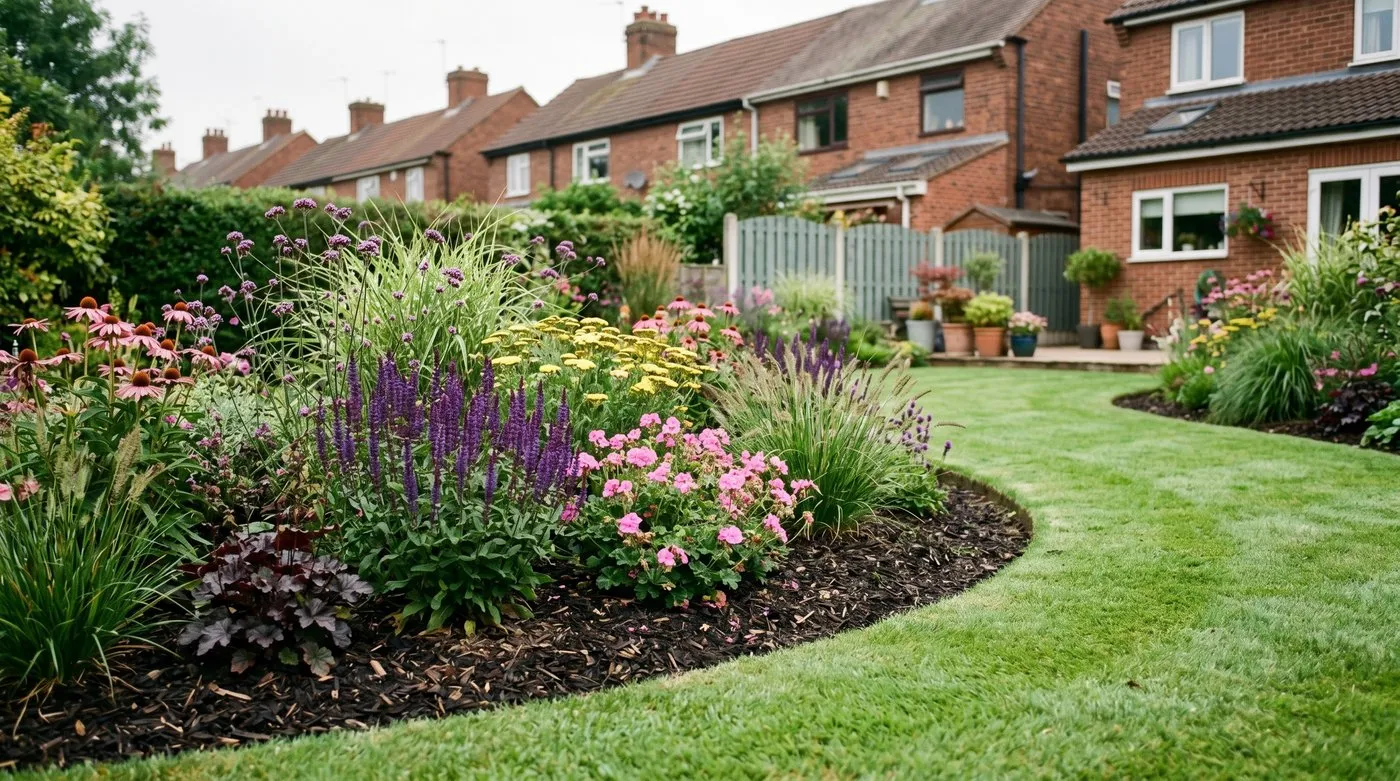 A finished island bed with layered planting and a crisp mulched edge, cut from a plain suburban lawn.
Now you’ve learned how to cut a flower bed into a lawn, read our guide on the full range of how-to gardening projects to plan your next job, or learn how to lay turf if you ever need to reverse the process and bring grass back.
Frequently asked questions about making a flower bed in a lawn
What is the easiest way to make a flower bed in a lawn?
Smothering the grass with cardboard and mulch is the easiest method. You lay overlapping cardboard over the marked area, cover it with 8-10cm of mulch, and wait 8-12 weeks. No digging is needed. The grass dies, worms pull the cardboard down, and you plant straight through it.
How do you mark out a curved flower bed?
Lay a garden hosepipe on the lawn to draw the curve. A hosepipe holds a smooth shape and bends without kinking on gentle curves. Adjust it until the line looks right from the house window. Then trace along it with a spade or mark it with sand before you cut.
How deep should a flower bed be?
Dig the soil to at least 30cm deep for most perennials. Shrubs and roses need 40-45cm of workable soil. Remove the turf layer first, then fork over the soil below and add compost. Shallow beds dry out fast and limit root growth.
When is the best time to cut a new flower bed in the UK?
March to April or September to October are the best months. The soil is warm and moist, so new plants establish quickly. Avoid making beds in midsummer drought or in winter when wet soil compacts and roots sit cold and idle.
Should I remove the turf or dig it in?
Remove the turf rather than digging it in. Buried grass regrows from rhizomes and competes with your plants for years. Either lift it and stack it to rot, or kill it first with the cardboard smother method. Digging live turf into a bed almost always brings the grass back.
How do I stop grass growing back into the new bed?
Cut a clean vertical edge and maintain a 5-7cm gap of bare soil. Recut the edge with a half-moon iron two or three times a year. A physical edging strip of metal or stone stops creeping grass rhizomes crossing into the bed.
Can I plant straight after laying cardboard over grass?
Yes, you can plant through cardboard immediately if you add enough soil. Lay the cardboard, cover it with 15cm of topsoil or compost, and plant into that. For bare-root or deep-rooted plants, wait the full 8-12 weeks for the grass to die first.
What should I do with the turf I remove?
Stack it grass-side-down in a hidden corner to rot into loam. After 8-12 months the pile breaks down into a fine, fibrous topsoil you can reuse. Cover the stack with black plastic to speed decay and stop weeds seeding into the top.
Our team produces practical UK gardening guidance from source research, contributor records and established horticultural practice. Editorial standards are overseen by Matt W.